highlike

Ryan S. Jeffery – An Engineer / Not a Camera – United States

AN ENGINEER / NOT A CAMERA

Ryan S. Jeffery


FILE SÃO PAULO 2026: Inter-creativity – Art and Technology – VIDEO ART SHORT
Electronic Language International Festival


An Engineer / Not a Camera – United States

The production of a computer chip is the most complex technical human achievement to date. Photolithography, a critical step in this process, relies directly on the older science of optics and photography, which are centuries old. Today, generative AI and computer-generated imagery are nearly indistinguishable from those made with a camera. Once a method for capturing an image of the world, the science of optics is now used to build machines that can make images of the world without seeing it.

BIO

Ryan S. Jeffery’s work with the moving image sits at the intersection between documentary, art, and media studies. Grounded in an analysis of aesthetics and politics, his work considers how technology, ideology, and political economy shape one another. His work has appeared in FIDMarseille, Transmediale, EMAF, and UNCCC, as well as The New York Times, e-flux, and Filmmaker Magazine.
INGRESS (GLOBAL AUGMENTED REALITY GAME)

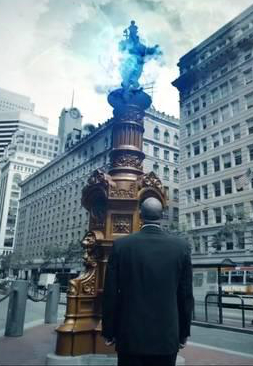
Ingress uses the mobile device GPS to locate and interact with “portals” that are in proximity to the player’s real-world location. The portals are physical points of interest where “human creativity and ingenuity is expressed,” often manifesting as public art such as statues and monuments, unique architecture, outdoor murals, historic buildings, local community hubs and other displays of human achievement. The game uses the portals as elements of a science fiction backstory along with a continuous open narrative provided through various forms of media.

Engineered Arts

AMECA
“Multiply the power of artificial Intelligence with an artificial body. Ameca is the physical presence that brings your code to life. The most advanced lifelike humanoid you can use to develop and show off your greatest machine learning interactions. This robot is the digital interface to the real world.” Engineered Arts
.
“A U.K. robotics firm called Engineered Arts just debuted the first videos of its new humanoid robot, which is able to make hyper-realistic facial expressions. It’s a pretty stunning achievement in the world of robotics; it just also happens to be absolutely terrifying.
Named Ameca, the robot’s face features eyes, cheeks, a mouth, and forehead that contort and change shape to show off emotions ranging from awe to surprise to happiness. One of the new videos of Ameca shows it waking up and seemingly coming to grips with its own existence for the first time ever.” Neel V.Patel

Fito Segrera

The form of becoming
In this abstract system, each intelligent agent is embodied as a motor, the states in its environment is represented as an angular range of rotation and the actions as one of two directions in which each agent can move a linear actuator. Each linear system holds a segment of a long black string, this translates as a point in the represented line. Once the system runs, each agent learns, from informational equivalents of pain and pleasure, to move towards the highest values within its environment, this means ultimately to displace its position from point A to B. In order for an agent to learn, it needs time, generations of exploration, each agent will get punished for bad decisions and rewarded for appropriate ones. Every time a learning generation is finished, a light will blink for that particular agent, indicating the end of a cycle and the achievement of new knowledge; the agent becomes more intelligent. Once all agents learned to be and stay in point B, the system, as a collective, has successfully mutated into a stable, balanced, symmetric and silent form; a straight line. Finally, after a few seconds, the sculpture forgets, all agents are rebooted and the cycle of creation, chaos and order restarts, this time with a totally different and unique behavior.

Adrien M / Claire B et Mourad Merzouk

Pixel
A Small tease of the hour long presentation Intertwining body movement with technology is no easy feat. The Dance show is 11 dancers in a virtual and living visual environment. It took the collaborative artistic efforts of artists Adrien Mondot, Claire Bardainne from Adrien M/Claire B Company and Mourad Merzouk from his dance company Käfig to bring to life Pixels. A work on illusion combining energy and poetry, fiction and technical achievement, hip hop and circus.

VALENTIN RUHRY

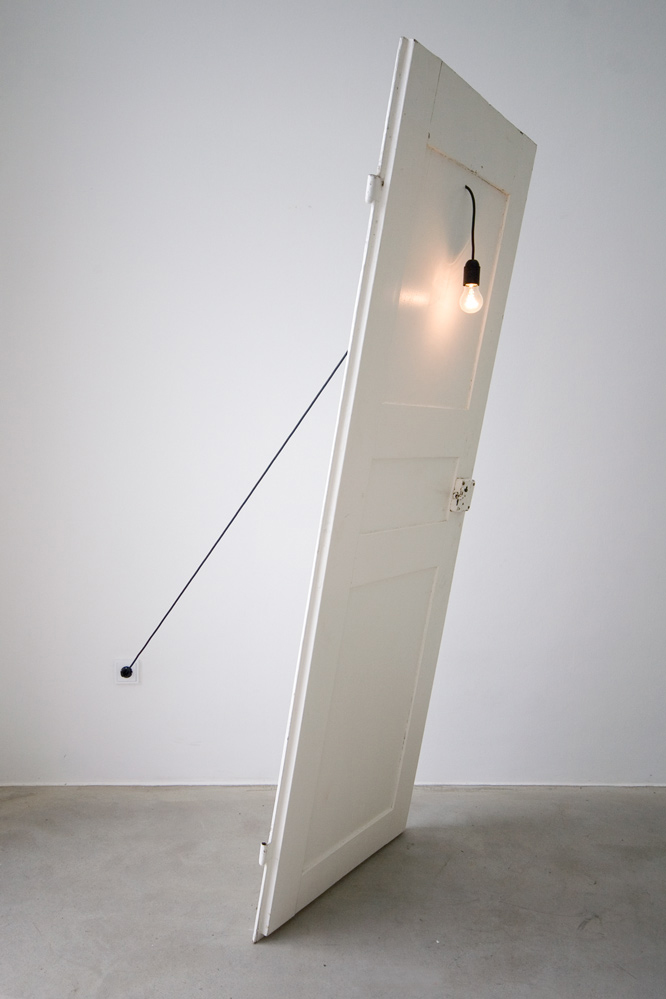
Valentin Ruhry, born in Graz, Austria in 1982, has worked primarily in sculpture. In an analytical, scientific approach, he creates works inspired by technological achievements though it is often the out-dated, obsolete ideas once believed to be visionary that inspire him. Regularly examining the formal and aesthetic aspects of objects, one of his major themes is light and its modulation of volume as well as physically measureable qualities such as tension, force, and friction.

SARAH BUCHANAN

سارة بوكانان
Empire of the Clouds is a dramatic futuristic representation of aviation achievements, throughout the past, present and future. Inspired by the true design innovation and achievement from machines of flight throughout the entirety of the concept. Focusing on model making to gain a unique perspective and develop an understanding of the overwhelming human drive, almost obsession, to achieve what we cannot do naturally, to fly. Passionate about research Buchanan has a meticulous attitude towards uncovering all elements in a concept. In this collection it enabled a distinctive perspective to a large subject, creating a concept based around model making and accessibility of a globally collective dream.

Florian Hafele

弗洛里安·海福樂
フロリアンハーフェレ
Флориан Хафель

The central theme of artist Florian Hafele, born 1979, is the observation of the body, which reflects many questions about our social environment and its related phenomena. Hafele’s work translates into sculptures of deformed creatures, human as well as object, which develop a multi-interpretable essence through various contortions. Embracing this aspect a variety of his works deal with performance in our social environment like the “Champion” which is a synonym for the over-strained human, in an achievement oriented society, or the exhausted tools which treat themselves to a break.