highlike

EDUARD HAIMAN AND VADIM SMAKHTIN

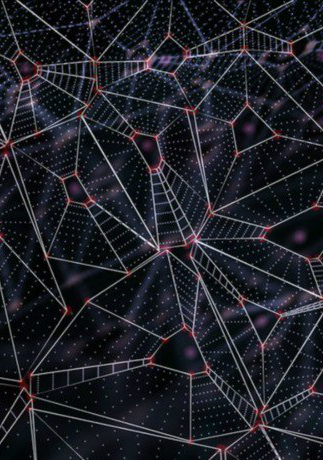
Struct- Generative Realtime Audio-Visual Environment

The target of “Struct” was to create installation which could make immersive environment inside the space of public event dedicated to the opening of the office of an architectural company UNK Projects. It was planned to make this installation fully autonomic during the several hours as well as there was an idea to hold the public interested and immersed into the space of environment during the all period of time.

The main conception of the installation is to create the second alternative scale inside the internal space of the office. It was realized screen projection for this with the size of 18×4 meters and taken almost whole the length of the interior. The Animated surface was projected as the extension of the super-graphic situated on the facade of office`s building. The external graphic was created by Vladimir Garanin. The first one layer is the super-graphic onto the facade and another one layer is the real-time generative graphic inside the interior. The visual image and algorithmic sound of the whole structure are connected each other and are forming the whole organism.
Moritz Simon Geist – Entropy – Germany

ENTROPY

Moritz Simon Geist


FILE SÃO PAULO 2026: Inter-creativity – Art and Technology – MUSIC
Electronic Language International Festival


Phytomorphic Topologies – Canada / United States / France

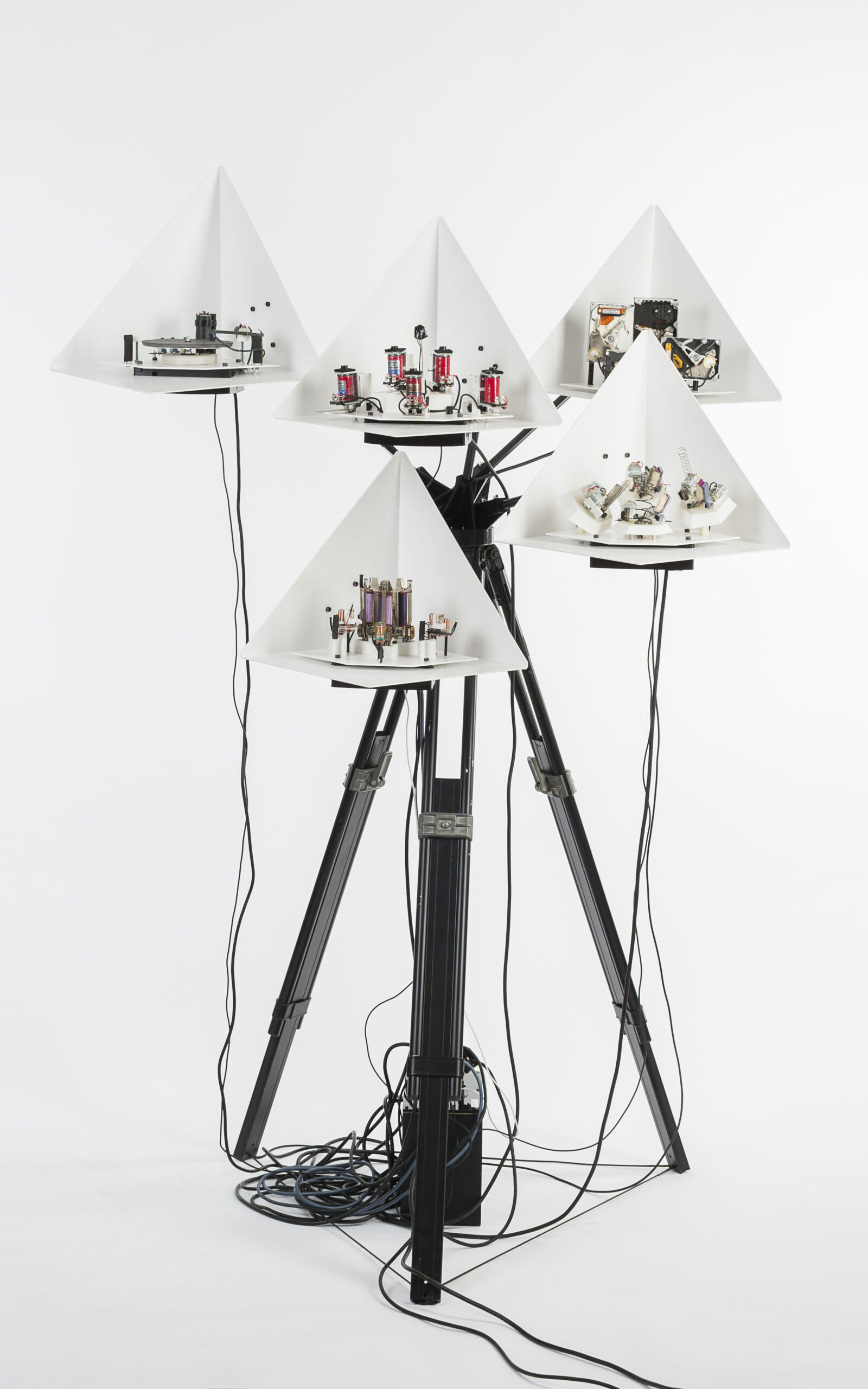
Entropy is a robotic music video built entirely around Tripods One, Moritz Simon Geist’s system of custom-built sound robots. Every sound is generated live by physical machines: a pneumatic hi-hat, a futuristic kalimba, a drone guitar, and mechanical tone generators. The result is machine-made techno in which the choreography of the robots is as central as the music. The Tripods One system is on permanent display at the Ars Electronica Center in Linz.

BIO

Moritz Simon Geist is a German visual artist, researcher, and music producer working at the intersection of robotics, physical sound, and algorithmic agency. He builds robotic instruments and autonomous sound sculptures, from the MR-808 (2012) to Tripods One (2017). His work has been shown at the Venice Biennale, Ars Electronica, ZKM, and the MIT Museum.

Gerald Trimmel – GARGANTUA (20250302) – Austria

GARGANTUA (20250302)

Gerald Trimmel


FILE SÃO PAULO 2026: Inter-creativity – Art and Technology – VIDEO ART SHORT
Electronic Language International Festival


GARGANTUA (20250302) – Austria

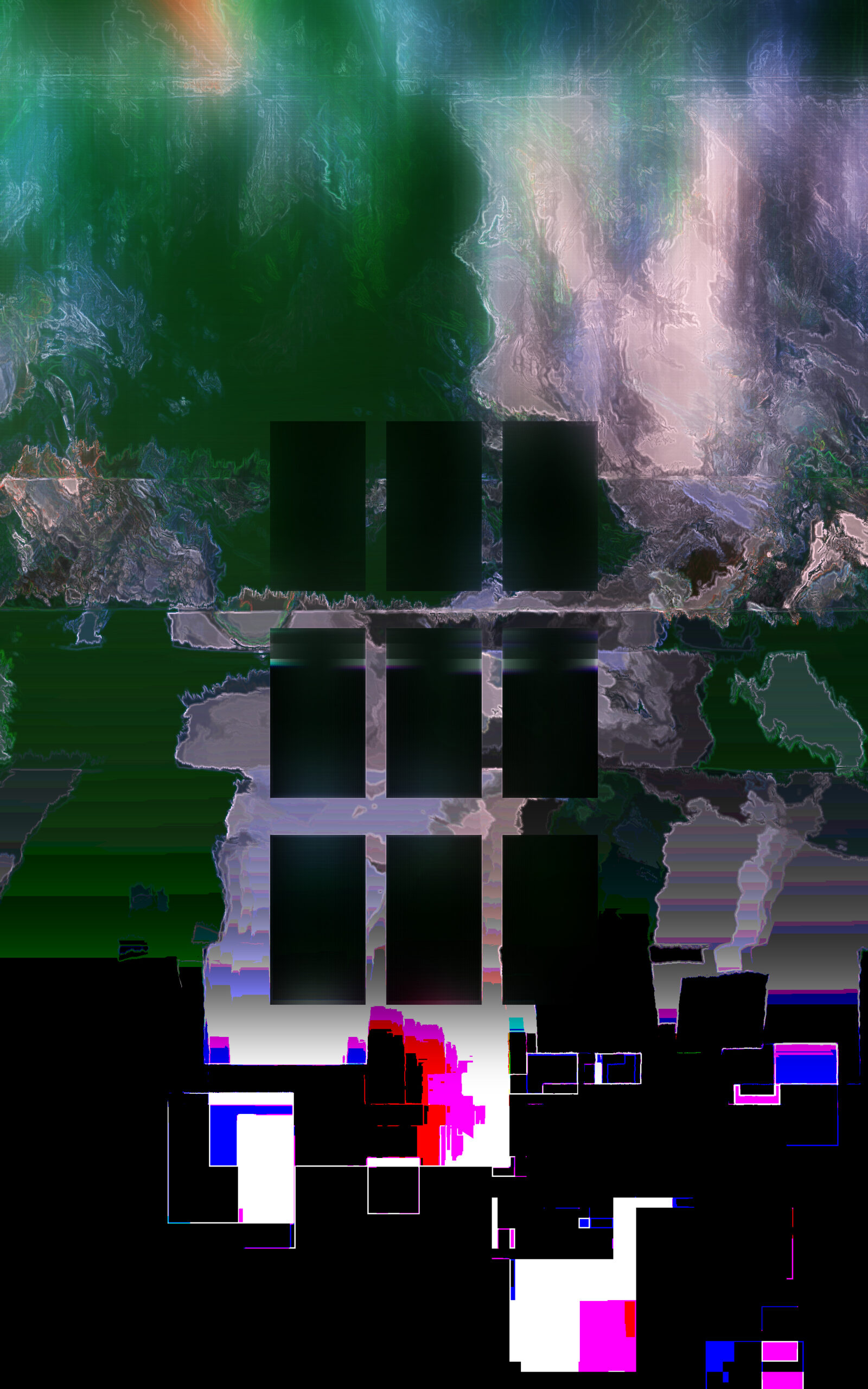
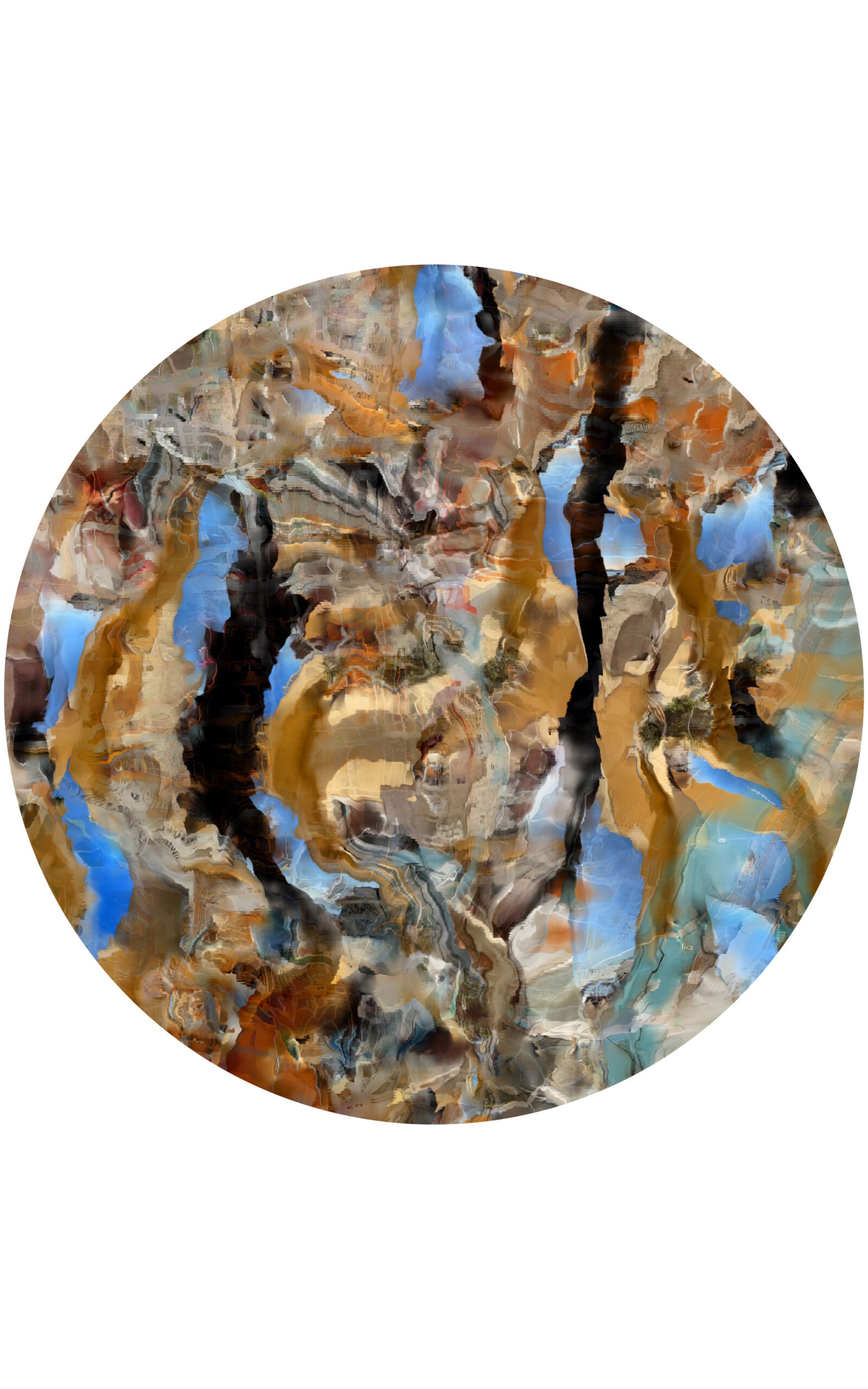
GARGANTUA (20250302) is a dynamic Cybernetic Canvas exploring AI-based image transformation as a metabolic process. Hybrid source materials—osmotic paintings, scans, chemical micro-scenarios, and dismantled diagrams—are processed through algorithmic recombination into a continuously shifting circular field. The work stages an unstable dialogue between visual matter and electroacoustic sound, forming a dense system of feedback, drift, and perceptual unrest.

BIO

Gerald Trimmel is a Vienna-based media artist, composer, and art therapist. His work explores transformation processes between analog material, digital systems, and AI-based image generation, often in circular audiovisual formats (Cybernetic Canvas). Recent presentations include Chongqing (China), ArteScienza Festival (Rome), and The Wrong Biennale (São Paulo | online).

Marcello Mercado – The Hypergaussian Wars – Germany / Argentina

THE HYPERGAUSSIAN WARS

Marcello Mercado


FILE SÃO PAULO 2026: Inter-creativity – Art and Technology – VIDEO ART FULL LENGTH
Electronic Language International Festival


The Hypergaussian Wars – Germany / Argentina

The Hypergaussian Wars is a non-interactive, AI-generated audiovisual work presented as a single-channel video. The project consists of a continuous 60-minute sequence exploring war not as a narrative event, but as a statistical and algorithmic deformation of perception. The work operates as a continuous audiovisual flow, allowing viewers to enter and exit at any point, without linear structure or user interaction.

BIO

Marcello Mercado is an interdisciplinary artist working with artificial intelligence, digital video, sound, and experimental cinema. His practice explores algorithmic processes, perception, and the relationship between technology and contemporary forms of conflict. He lives and works between Argentina and Germany.

Tianyun Yu – Project: Salvation – United Kingdom

PROJECT: SALVATION

Tianyun Yu


FILE SÃO PAULO 2026: Inter-creativity – Art and Technology – CINEFILE | Short
Electronic Language International Festival


Project: Salvation – United Kingdom

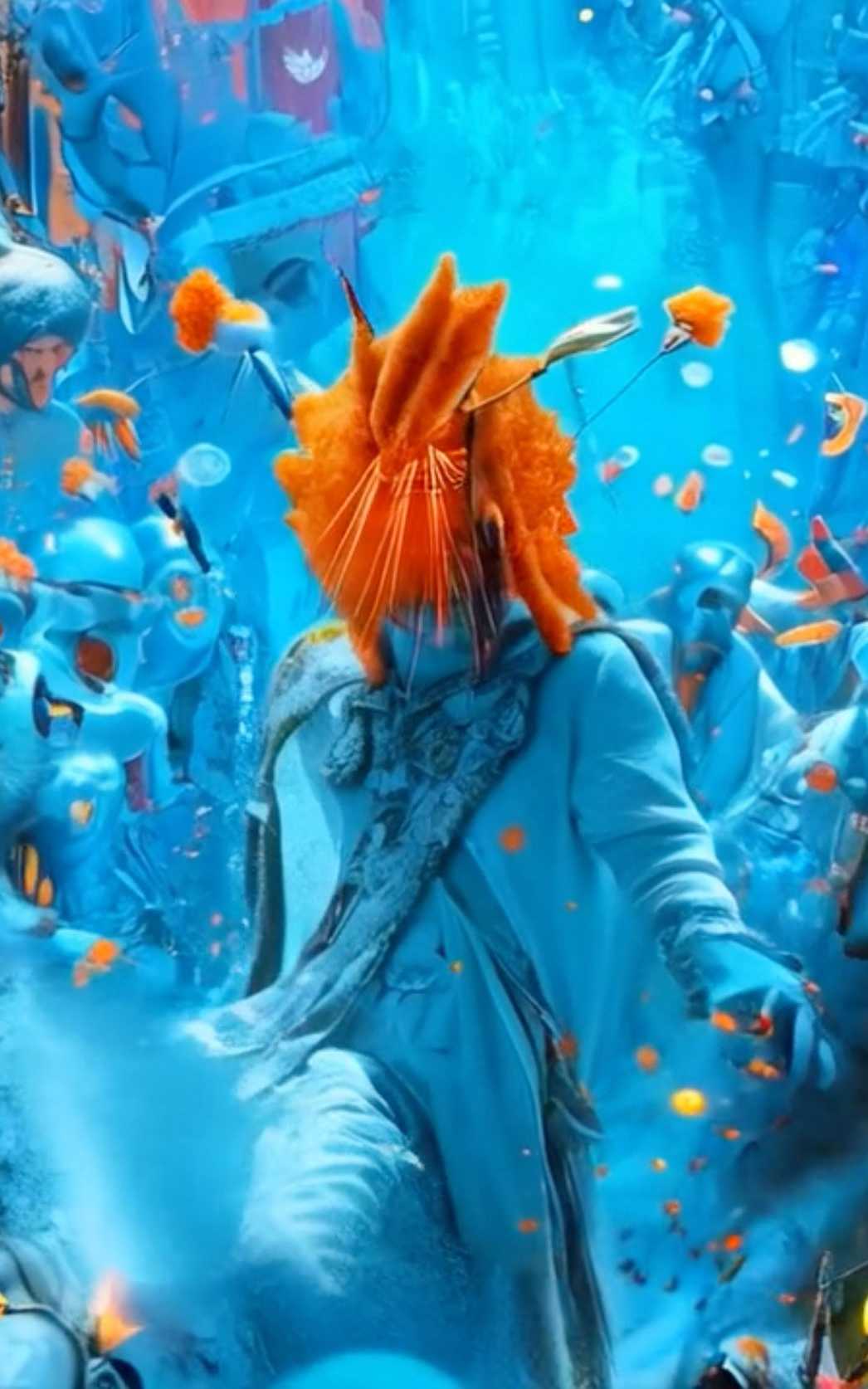
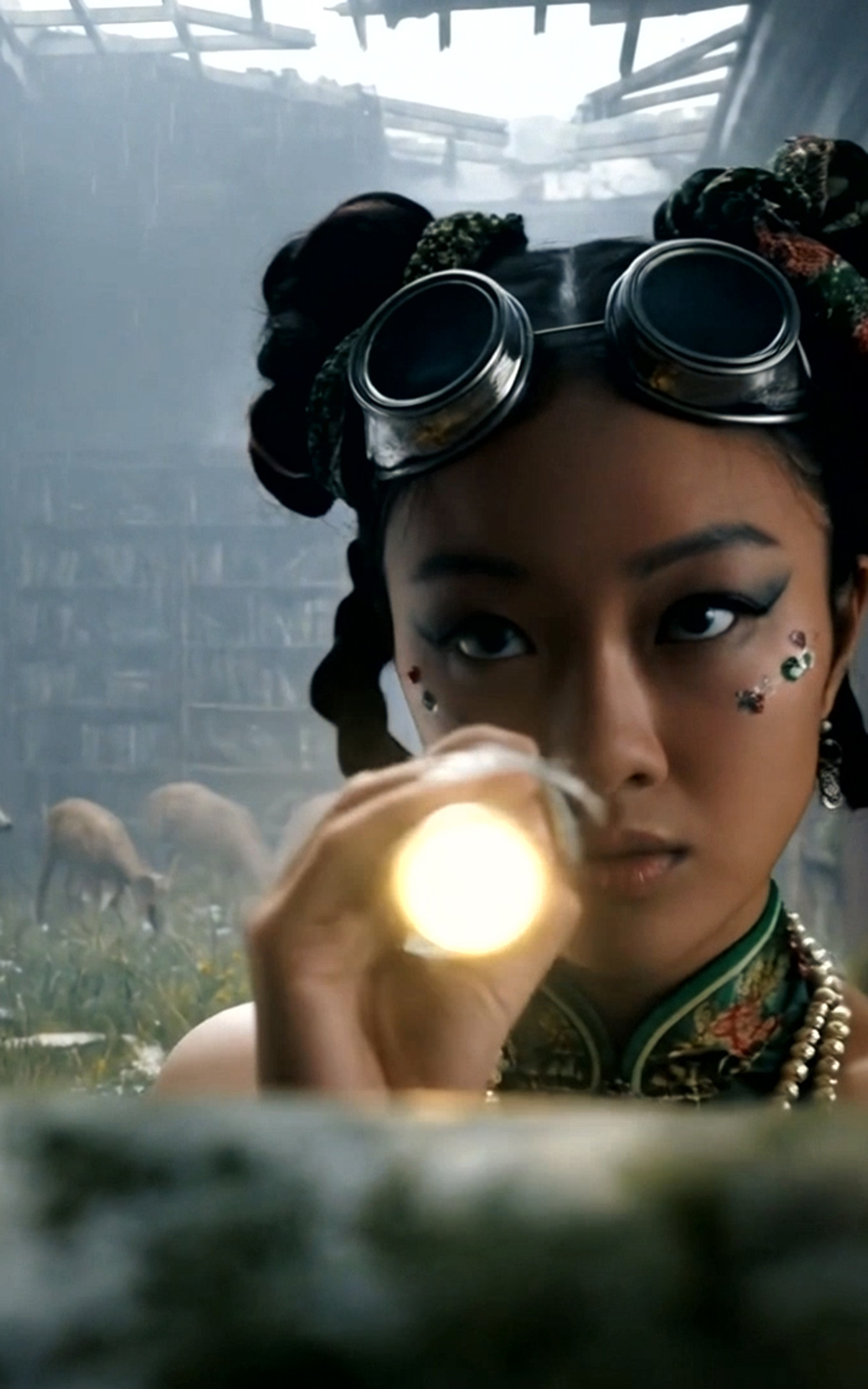
This cinematic short demonstrates the power of multi-modal AI storytelling, utilizing Gemini, Google Nano Banana, Veo3, Kling O1, and Suno to blend high-fidelity visuals with emotional sound, redefining the future of digital production. The work explores survival in a world halted by energy shortages. Following her mother’s lost research, a lone survivor reactivates an ancient station, transforming a barren wasteland into a symbol of hope.

BIO

Tianyun Yu is a multidisciplinary designer and creative technologist operating at the intersection of visual communication and computational arts. With an MFA from Computational Arts, Goldsmiths and a BA background from the China Academy of Art, she synthesizes artistic intuition with rigorous algorithmic thinking.

Kazuhiro Tanimoto – Sea of code – Japan

SEA OF CODE

Kazuhiro Tanimoto


FILE SÃO PAULO 2026: Inter-creativity – Art and Technology – Randomic Dimension
Electronic Language International Festival


Sea of code – Japan

Sea of Code is a JavaScript work that generates animation and sound as a flow linking past, present, and future. Simple 8-color forms drift, expand into richer color and organic complexity, and at times reveal gaps within the flow. Inspired by Hiroshi Kawano’s idea of computer art as autonomous beauty, it uses palette-free color generation and Markov-chain melodies derived from classical music. Its title evokes a sea of code through which computer art, often marginal, is still carried forward.

BIO

Kazuhiro Tanimoto is a chemist in materials R&D and a generative audiovisual artist. He builds real-time systems that harness computation, exploring algorithmic transformation through cellular automata and processes of generation, change, and collapse tied to material and social phenomena. His work is included in Rhizome ArtBase, in Art Blocks Curated, and exhibited in New York and beyond.

Non-Linear – Transmissions into the Void – India

TRANSMISSIONS INTO THE VOID

Non-Linear


FILE SÃO PAULO 2026: Inter-creativity – Art and Technology – Installations
Electronic Language International Festival


Transmissions into the Void – India

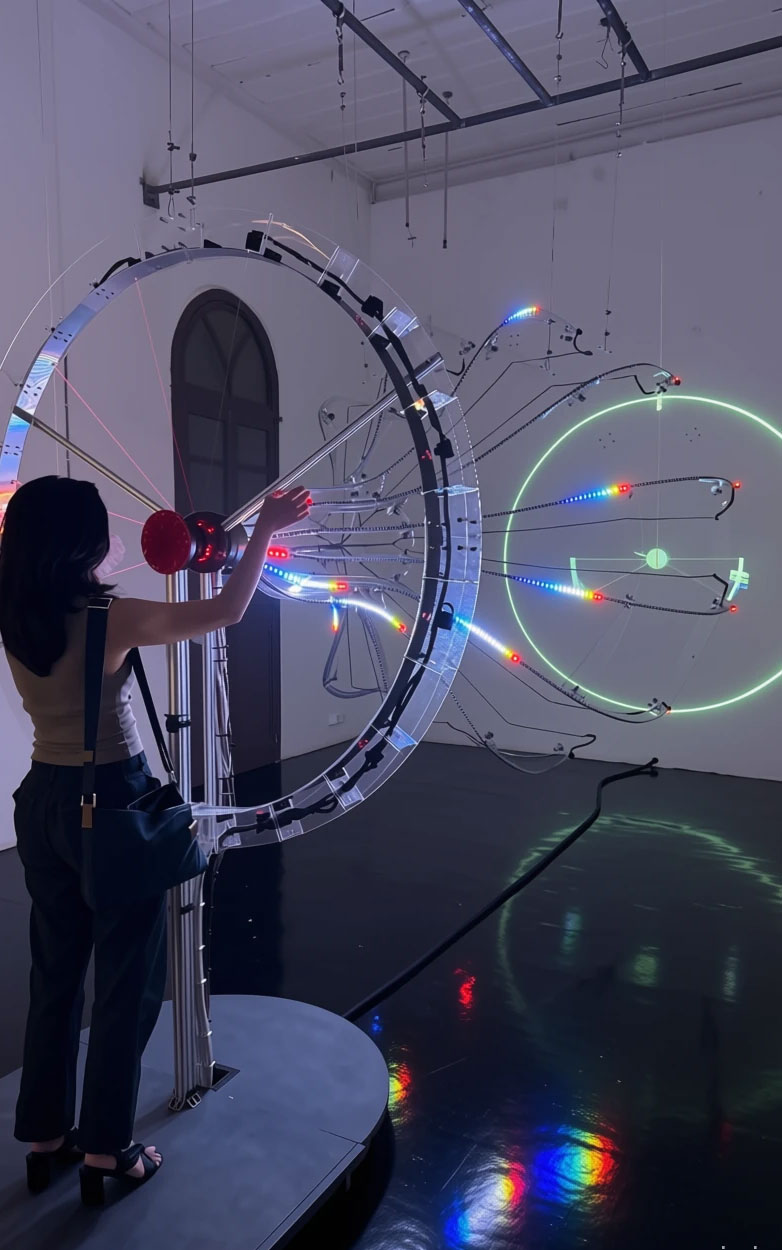
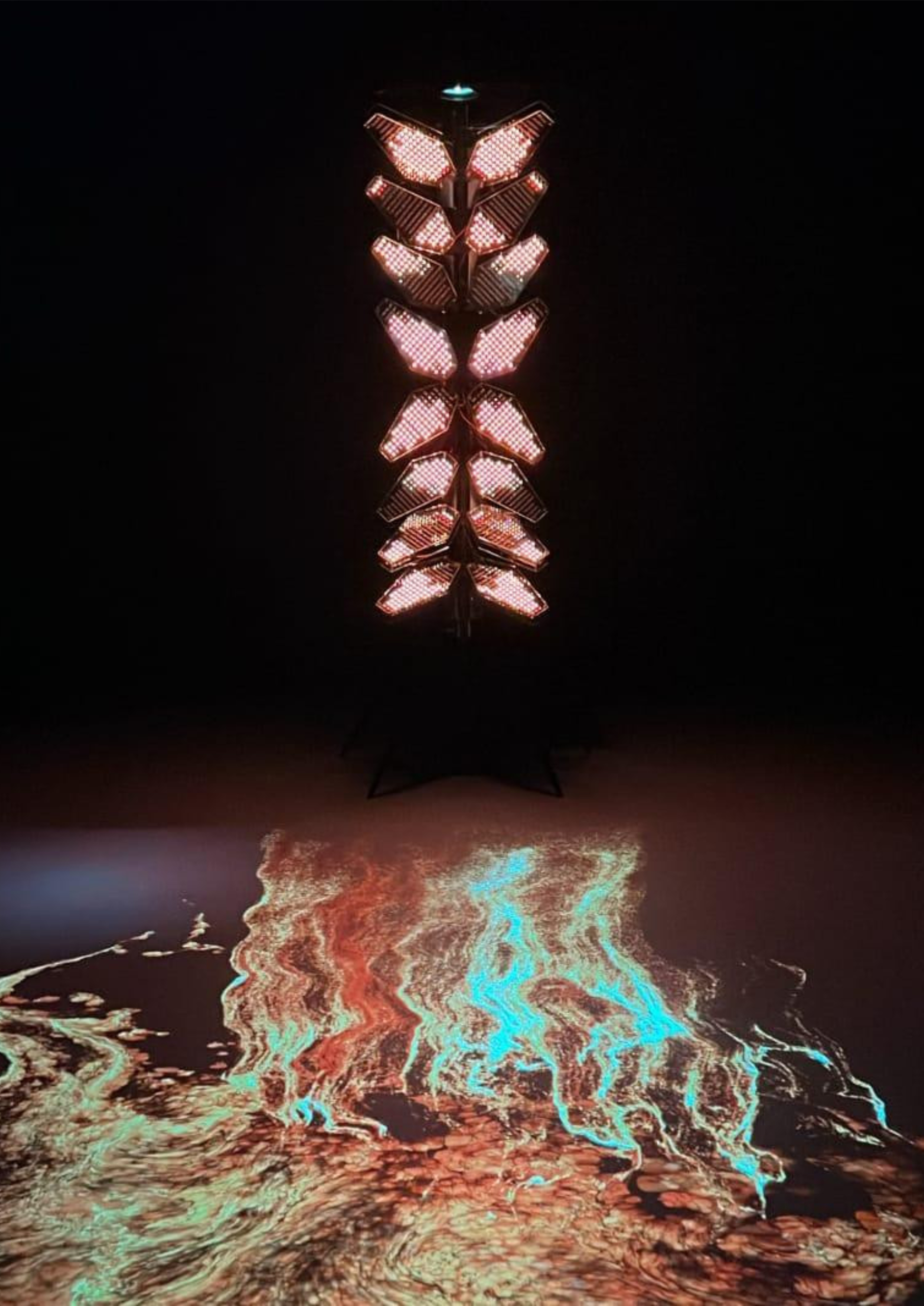
Transmissions into the Void explores the temporal nature of improvisation and the inevitable decay of information, transforming the space into an immersive sound and light machine. Influenced by science fiction and the modular design principles of modern engineering, the room becomes a dynamic interface between viewer and technology. Ultimately, the piece serves as a meditation on the temporal fragility of all information and data—whether biological, digital, or analog—and how time irreversibly erodes it.

BIO
Non-Linear is the creative project of Dennis Peter, an interaction designer and artist redefining the intersection of technology, nature, and creative expression. With a background in architecture and an ever-evolving curiosity, his work spans kinetic installations, generative art, and algorithmic music. From hacking old calculators as a child to crafting immersive, interactive experiences, Dennis continuously expands the boundaries of digital creativity.

FILE SÃO PAULO 2025: SYNTHETIKA – Arthur Boeira e Gustavo Milward

Aquarela de Íons

Arthur Boeira e Gustavo Milward

FILE SÃO PAULO 2025: SYNTHETIKA – Arte e Tecnologia
Festival Internacional de Linguagem Eletrônica


Aquarela de Íons – Brazil

Aquarela de Íons is an artwork-device that translates solar flares and magnetic activity cycles into forces within the exhibition space. Inspired by satellites, the sculpture captures real-time data of solar activity, creating a data-driven artwork that reacts to the presence of viewers in an immersive and generative environment. The system translates spatial information into sound, light, and image, establishing an interface between the cosmos and human territory. The piece invites reflection on the impact of space weather—an aurora borealis brought to life, transforming astronomical data into an aesthetic experience.

BIO

Arthur Boeira has been conducting transdisciplinary research since 2015, exploring the philosophy of science and technology as applied to artistic practices. Gustavo Milward (Drawlim) specializes in interactive art and algorithmic narratives, investigating the relationship between body, space, and code.

Stelarc

StickMan
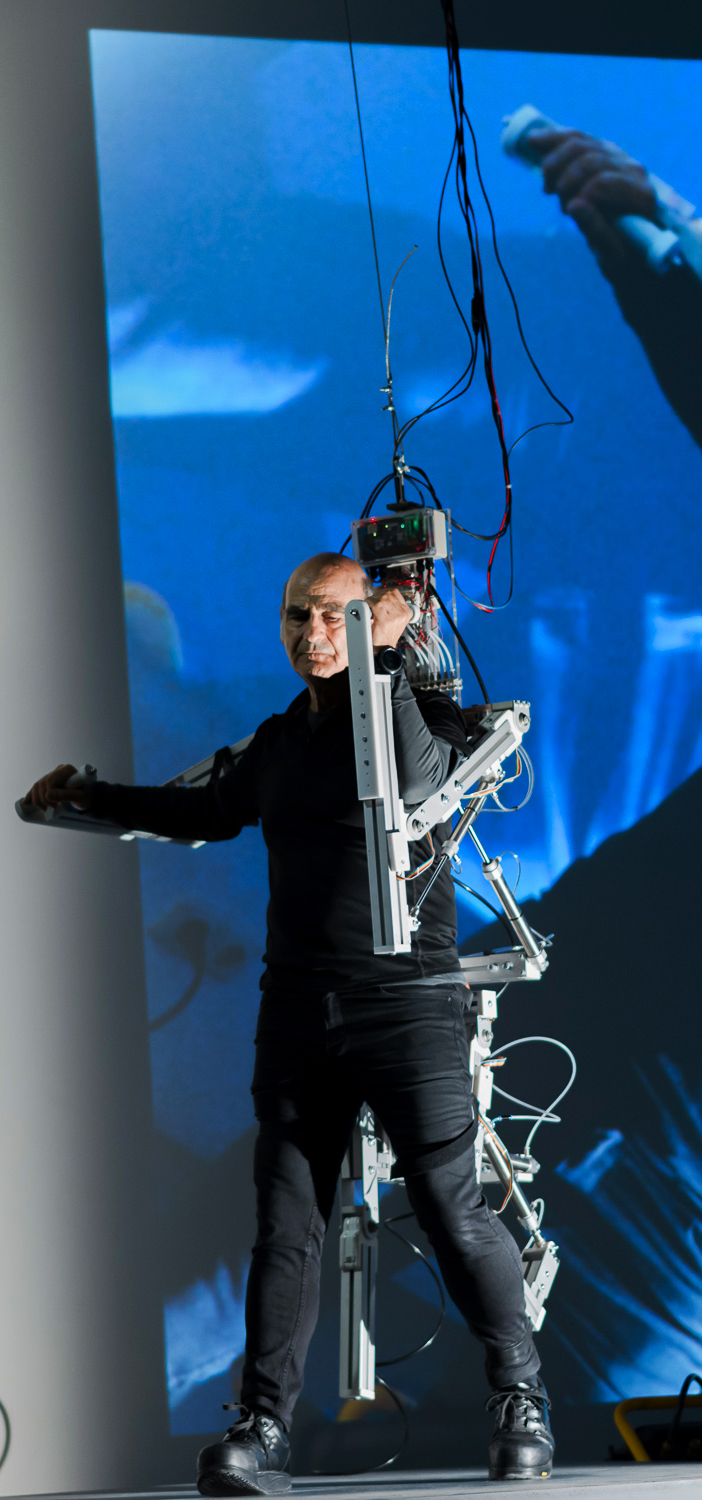
StickMan is a minimal but full-body exoskeleton that algorithmically actuates the artist with 6 degrees-of-freedom. It is a gesture generating system capable of 64 possible combinations. Sensors on StickMan generate sounds that augment the pneumatic noise and register the limb movements. A ring of 6 speakers directs and circulates the sounds.

Jeremy Rotsztain

BECHA-KPACHA
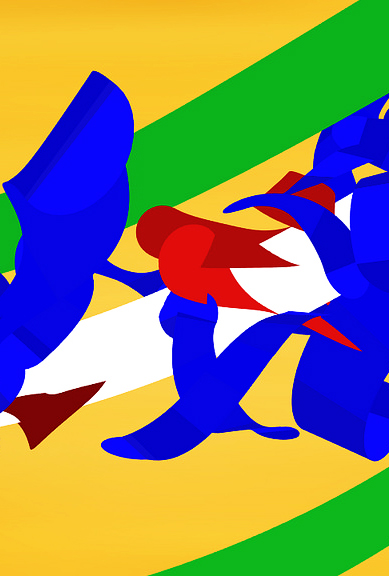
BECHA-KPACHA is an algorithmic music video for the electronic musician COH. The song’s tittle (pronounced Vesna Krasna) was taken from an old Russian poem and roughly translates “Spring the beautiful”, though it can also mean “Spring the red.” The animation reference’s traditional Russian folk patterns, commonly known as Hohloma. In these patterns, colorful plant leaves expand and twist around one another while fruit grows along side. These patterns were a starting point for this sound-responsive animation.

VTOL

Until I die
This installation operates on unique batteries that generate electricity using my blood. The electric current produced by the batteries powers a small electronic algorithmic synth module. This module creates generative sound composition that plays via a small speaker. The blood used in the installation was stored up gradually over 18 months. The conservation included a number of manipulations to preserve the blood’s chemical composition, color, homogeneity and sterility to avoid bacterial contamination. The total amount of blood conserved was around 4.5 liters; it was then diluted to yield 7 liters, the amount required for the installation. The blood was diluted with distilled water and preservatives such as sodium citrate, antibiotics, antifungal agents, glucose, glycerol etc. The last portion of blood (200ml) was drawn from my arm during the performance presentation, shortly before the launch of the installation.

Zeitguised

geist.xyz
A synthetic ghost shifts simulated textiles from passive matter to live organisms. They behave like apparitions in an artificial choreography, with movements that are imaginary yet familiar. Like a constant metamorphosis, the same sequence gets transformed over and over again. At each step, all aspects of the designs are modified, from algorithmic pattern to color scheme to fabric behaviour. The results are meandering layers of style changes. A linear montage shows the intricate details. Shuffled layers of metronomic sounds emphasize the transformation fluctuating in and out of sync.

Onformative

True/False
True/False is a kinetic sculpture composed of arrays of circular black metal segments set in mechanical columns. Interlocking and rotating around fluorescent light tubes, the cylinders cover or expose the light to display an endless number of patterns. The transformation of the sculpture is based on the shifting elements and their correlation to each other. As the segments do not move independently, for any of the cylinders on a column to change, the segments affected must work in unison to achieve the command. Reminiscent of devices originally used for calculations, such as Turing machines, the sound originates from the mechanical movement of the moving parts thus making the algorithm audible. The rhythm of »true/false« is captivating as variations in the visual choreography result in distinctive changes in its soundscape. Through the generation of algorithmic patterns and the repetition of endless tasks, »true/false« transforms itself into something more than the sum of its elements to reveal the beauty hidden within a basic algorithm.

Martina Menegon

when you are close to me i shiver
sound design: Alexander Martinz
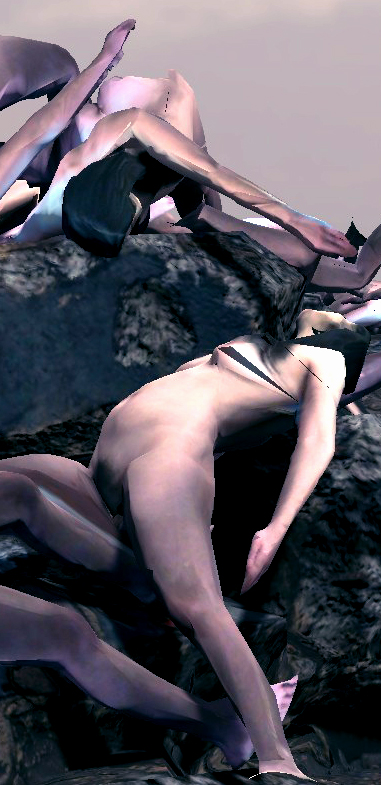
“when you are close to me I shiver” is an algorithmically controlled live simulation, a real-time generated virtual reality that takes place in a version of the future in which humans, out of desperation, gather in masses on the last remaining piece of land. Inspired by the walrus scene in the documentary “Our Planet” narrated by David Attenborough and produced by Silverback Films, the project proposes an intense scenario encompassing our environmental and personal crises. It reflects on how we identify and connect ourselves in different realities while addressing the human condition in a world in ecological and therefore social crisis. On the tablets, virtual cameras scan the environment from various point of views, like surveillance drones. On the main screen, a similar camera randomly targets and focuses on different situations while a familiar voice-over narrates the tragic story.

JOYCE HINTERDING

Field and Loops

Loops and Fields, is a collection of drawings that resonate sympathetically to the electromagnetic fields within the gallery. These graphite drawings function as graphic antennas and explore the qualities and inherent nature of a combination of hand-drawn and mathematically generated forms. Delving into algorithmic structures, fractals and the chaotic nature of the hand drawn line, these drawings are an exploration of conductive materials and the possibilities for drawing electronic components. When connected to a sound system they make audible their interior activity and reveal the energy that exists in the immediate environment.Relying on the basic principles of the directional loop antenna, the drawings in Loops and Fields, like any receiving antenna, convert an electromagnetic wave into a voltage; the loop antenna is particularly sensitive to magnetic fields and outputs a voltage proportional to that field. Monitoring this activity allows us to experience the local fields and generates a site-specific and dynamic aural landscape.The different shapes and line qualities that make up the algorithmically generated and stencilled drawings come from thinking about the possibilities of extending a line. Fractal mathematics and the research into fractal antennas has focused on reducing the overall size and space an antenna needs to occupy. My interest is in the frequency range at the lower regions of the spectrum, where the wavelength is large; so my interpretation of recent antenna design research has led me to explore the possibilities for drawing antennas that can receive large wavelengths, on something the size of a standard piece of fine art paper.