highlike

Hiroya Sakurai – The Stream XIV – Japan

THE STREAM XIV

Hiroya Sakurai


FILE SÃO PAULO 2026: Inter-creativity – Art and Technology – VIDEO ART SHORT
Electronic Language International Festival


The Stream XIV – Japan

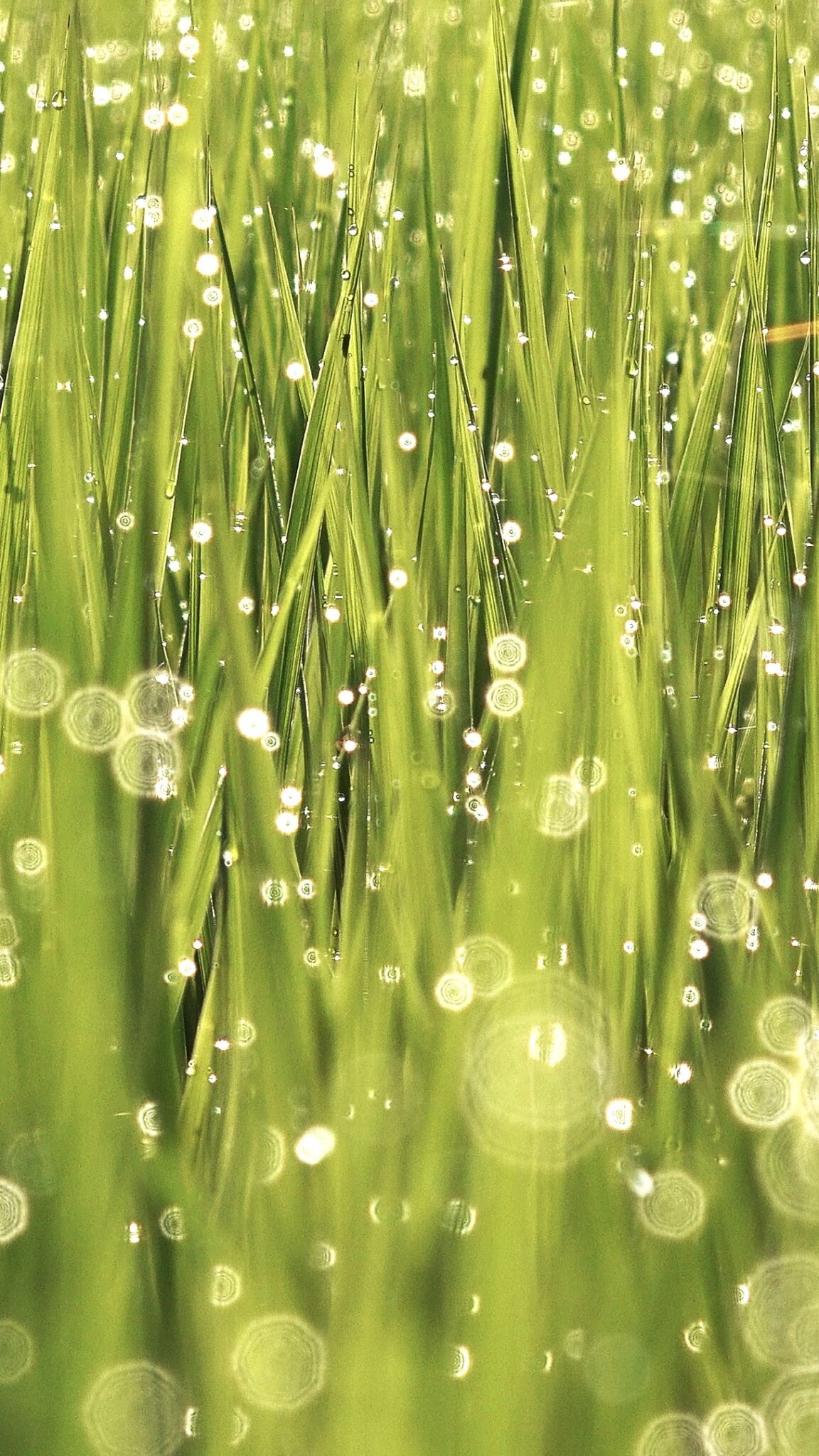
The artist observed how the landscape transforms when the wind blows through the fields. By using a wind chime, he perceived the invisible presence of the wind through sound, and through the ripples of wind that arose in the fields, he also captured its presence visually.

BIO

Born in Yokohama, Japan. Emeritus Professor at Seian University of Art and Design. Sakurai’s work can be found in the collections of the National Gallery of Canada and J. Paul Getty Trust. Sakurai was awarded at 35th Asolo Art Film Festival (2016), Italy, 39th Tokyo Video Festival, 18th FILE 2017, São Paulo (2017) and 56th Ann Arbor Film Festival. 

Eugenia Bakurin

La trahison des tapis
The title is a reference to the famous work by René Magritte “The Treachery of Images”. Even though the video installation alludes to it, the viewer is immediately aware that this is not a real carpet. What you see is an animation, a digital carpet, its contemporary variant. However, the patterns of the replica show that it could have been made in the west of Iran. The movements, which appear surreal, are reminiscent of a state of intoxication. Whether this was triggered by drugs, or only arose from the lively imagination of a tired child, is left to the speculation of the viewer. The work reflects the importance of traditional arts and crafts in the modern digital world. It is the first of a series of digital carpets.
The animation has a realistic resolution of 4k, is 03:55 minutes, and runs in an infinite loop on a 65-inch display.

Matt Mullican

Untitled

“This work arose from Mullican’s preoccupation with urban space and the creation of virtual cities and worlds. Mullican works with the symbols and old concepts that were used in the explanation of the world. The five parts of this work resemble archive boxes or type cases, which address the reduced character of virtual models. The containers could, however, also make us think of industrial complexes. They point to the loss of old concepts of the world and build on the creation of utopian ideals that remain valid for all time.” Teresa Lošonc

RAYMOND QUENEAU

雷蒙格诺
レイモン·クノー
רמונד קנה
Раймонд Кено
OULIPO
Cent mille Milliards de poèmes
Since its arrival (the Oulipo), the rules of the group were set out as follows: “We define potential literature as the search for new forms and structures that can be used by writers in the way they will most like.” “Potential” refers to something that exists in power in literature, that is, that is found within language and that has not necessarily been explored. The favorite tool for study and production is the contrainte, an arbitrary formal restriction that can create new procedures, new forms and literary structures that can generate poems, novels, texts. Over the years, dozens of different contraintes have been explored, from those somehow related to the riddle, such as the palindrome, the acrostic, the lipogram, of which the playful aspect has certainly not been underestimated, with forms more directly related to the codes of exact sciences, such as combinatorial calculus, set theory or graph theory. Among the numerous definitions of the Oulipo provided by the members themselves, one is very elegant and significant: “An Oulipiano is a mouse that builds the labyrinth from which it is proposed to come out later”. Queneau often explained that some of his works might seem simple pastimes, simple jeux d’esprit (mind games), but he remembered that topology or number theory also arose, at least in part, from what was once called “funny mathematics“.