highlike

Tassio Caetano – Linha Tênue – Brazil

LINHA TÊNUE

Tassio Caetano


FILE SÃO PAULO 2026: Inter-creativity – Art and Technology – VIDEO ART SHORT
Electronic Language International Festival


Linha Tênue – Brazil

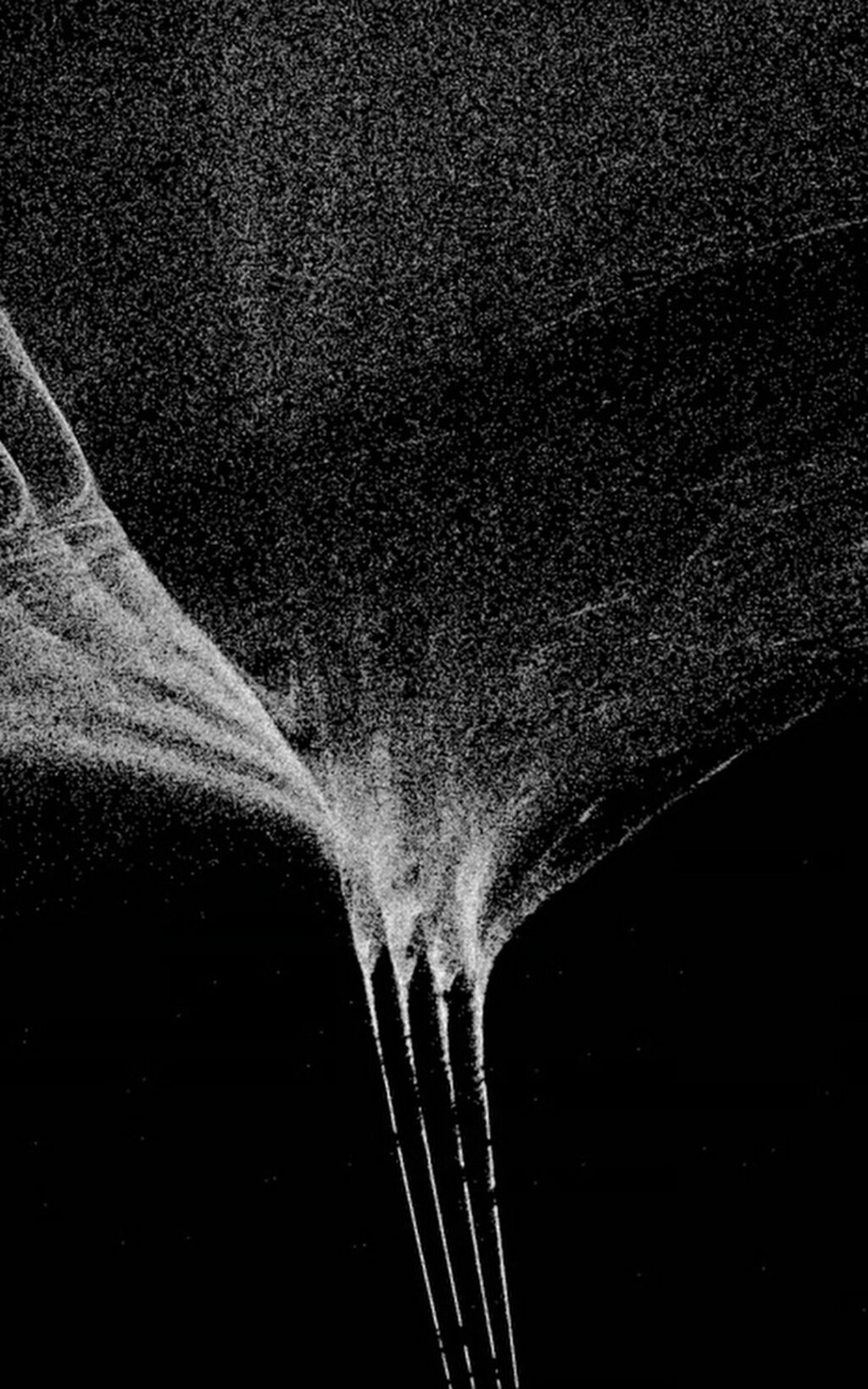
Linha Tênue is an audiovisual work that transforms the line into the protagonist, revealing its ambiguity and ability to unfold between form, gesture, and autonomy. Each stroke moves, connects, dissolves contours, creates figures, and establishes temporal relationships flowing between image and sound. The work invites viewers to experience the tension between structure and freedom, perceive details multiplying through continuous movement, and immerse themselves in a sensory universe.

BIO

Born in Brasília, the artist graduated in Composition from the University of Brasília and is currently pursuing postgraduate studies at UNESPAR. His recent research focuses on electroacoustic, visual, and multimedia composition, with works presented at festivals in Brazil, Latin America, Europe, and the United States.
Galina Bleikh – The Sleep of Reason Produces Monsters – Israel

THE SLEEP OF REASON PRODUCES MONSTERS

Galina Bleikh


FILE SÃO PAULO 2026: Inter-creativity – Art and Technology – VIDEO ART SHORT
Electronic Language International Festival


The Sleep of Reason Produces Monsters – Israel

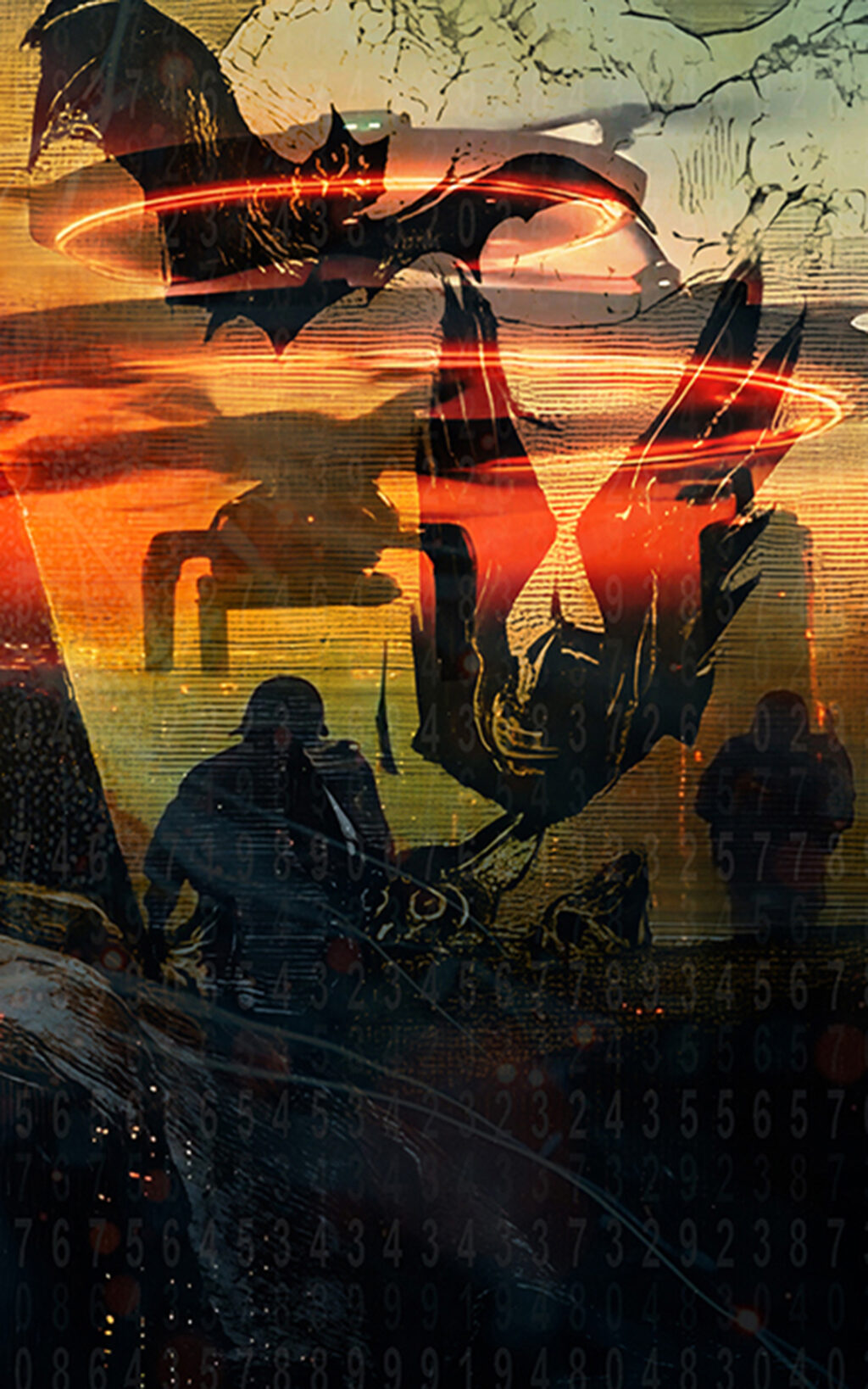
Inverting Goya’s warning, AI Ballet asks: if reason’s sleep produces monsters, what emerges from AI’s eternal wakefulness? The installation explores algorithmic mind control through surveillance and behavioral prediction. Empty halls with silent pianos symbolize obsolete human creativity, while text evolving from “AI” to “GOD” reveals algorithms’ quasi-religious authority. Using AI-generated choreography, the work questions who controls our consciousness and whether autonomy survives.

BIO

Galina Bleikh is a multidisciplinary artist at the intersection of art, technology, and science. She holds an MA from Stieglitz Academy, St. Petersburg, and has been based in Jerusalem since 1993. Her practice spans AI, generative, bio, and digital art. Bleikh exhibits internationally at venues including CICA Museum (South Korea), NordArt (Germany), Haifa Museum of Art, Art Asia Miami, etc.

Dudu Okun – Todo Caos se Transforma – Brazil

TODO CAOS SE TRANSFORMA

Dudu Okun


FILE SÃO PAULO 2026: Inter-creativity – Art and Technology – VIDEO ART SHORT
Electronic Language International Festival


Todo Caos se Transforma – Brazil

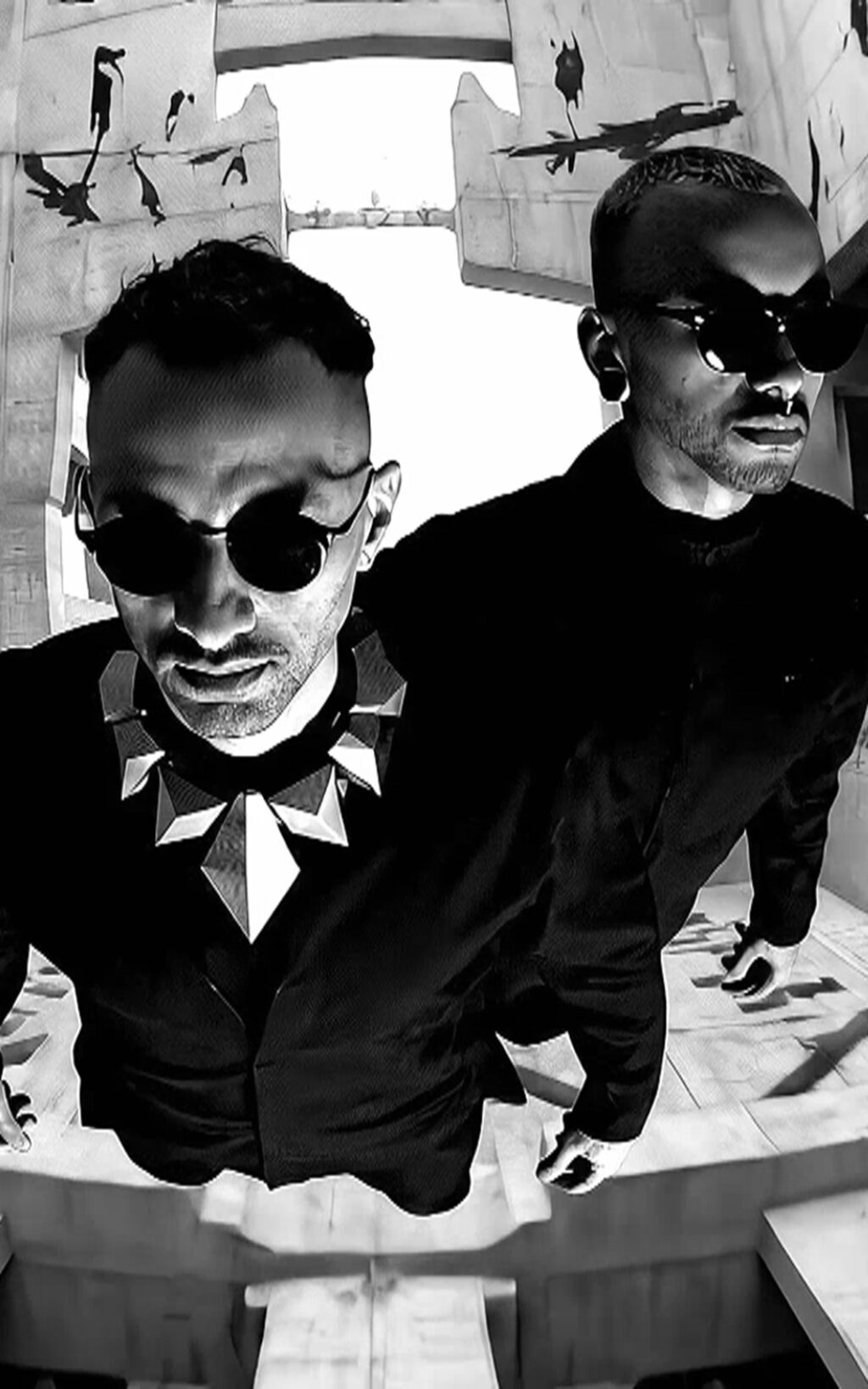
With an aesthetic inspired by surrealist cinema and fashion films, the music video Todo Caos se Transforma embodies the art and technology research developed by the duo Dudu Okun. The music combines analog and digital elements, while the visual universe (sets, costumes, and characters) was entirely conceived using AI. The project explores diverse production methods, seeking to humanize technologies in a poetic intersection between electronic music, digital languages, and visual arts.

BIO

Dudu Okun is an independent band from São Paulo that fuses music and visuals in an experimental aesthetic. The duo, formed by Rodrigo Martins and Thiago Alves, moves between Afro-diasporic electronica, alternative rock, and synthpop. Focusing on autonomy, the project uses digital languages ​​to create dreamlike atmospheres where sound, image, and performance merge in search of new ways of existing through art.

FILE 2026 – Registration Open for Robotics Art Festival – Art and Technology

FILE 2026

Robotics and AI Art Festival: Mechanical, autonomous, and intelligent systems as aesthetic agents. The works explore movement, behavior, and interaction between humans and machines.  Sensors, actuators, and artificial intelligence structure the experience. These creations raise questions about autonomy, artificial life, and technological ethics. The machine becomes a palpable presence in the artistic space.

Applications were open until February 19, 2026. Access  the application form.

FILE 2026 | GENERAL REGULATIONS

FLORIAN HECKER

فلوريان هيكر
フロリアン·ヘッカー
Sound Installation

Event, Stream, Object

In his installations, live performances and publications, Florian Hecker deals with specific compositional developments of post-war modernity, electroacoustic music as well as other, non-musical disciplines. He dramatizes space, time and self-perception in his sonic works by isolating specific auditory events in their singularity, thus stretching the boundaries of their materialization.
Their objectual autonomy is exposed while simultaneously evoking sensations, memories and associations in an immersive intensity. Some of his works incorporate psycho-acoustic phenomena, disorienting listeners’ spatial perceptions and expanding their conception about sound. Hecker’s most recent recording, Speculative Solution ( Editions Mego, 2011), brings together Hecker’s sonic practice and psychoacoustic experimentation with philosopher Quentin Meillassoux’s concept of ‘hyperchaos’ – the absolute contingency of the laws of nature.
During his residency at MIT, Florian Hecker will research a new sound piece that takes the concept of the “auditory chimera” as point of departure. Originally developed at MIT by Bertrand Delgutte, senior research scientist at the MIT Research Laboratory of Electronics, the concept of the auditory chimera inspires an exploration of the relationship between pitch perception and sound localization. Hecker will create a text and sound piece that incorporates the recordings of material read by students. Using an anechoic chamber he will work with students to explore the experiential nature of psycho-acoustic practice.

ANDREAS HAIDER AKA MUK

Skia

file festival
As natural as the daily sunshine, one’s shadow, formerly a constant companion, now often escapes from attention. A silhouette of our physical form, one’s shadow is no more than a flat, disembodied reduction of the contours of one’s self.The installation skia examines the interplay of our shadows and our conscious awareness of our physical displacement of space. In this closed-circuit installation, visitor´s images are manipulated and projected as artificial shadows.What does it mean if one’s shadow suddenly frees itself and develops an alien autonomy? And what has such an estrangement in common with the multiple identities of the post modern ego?

Ani Liu

Eyeris
Eyeris is a cultural prosthetic that renders the user dependent on human touch for sight. While many of today’s digital devices extend our abilities to connect with each other, disability of our current digital devices can been seen through our loss of tangible human interaction. I made this piece in trying to explore the importance of human interdependency in a society living under the myth of autonomy driven by technological symbiosis between man and computer. Eyeris is a mechanically operated electronic device powered by digital input that is deliberately over-engineered to call attention to the social behavioral conditioning imposed on us through less discreet technological devices that we assimilate on a daily basis.

OPN Studio

Give my Creation… Life!
Give my creation… Life! Is a project which links Art, Science and Technology. It is based on the generation of energy through the heart beating, with the aim of granting autonomy to a machine. During the research of this subversive goal, multiple issues have been addressed, such as the extension of a removed organ´s life, its artificial feeding of nutrients and its use as a source of natural energy, among others.

Arvid Jense and Marie Caye

S.A.M. The Symbiotic Autonomous Machine
As machines gain more autonomy and importance in human life, they are still given no agency in our society. Could a legalization of their status create a shift towards a more collaborative relationship with humans? S.A.M. 1, 2 & 3 are a Symbiotic Autonomous Machines challenging those ideas. It employs water kefir grains or kombucha to produce a beverage, acting as small scale automated food production systems.

Jesper Just

CORPORÉALITÉS
Corporealités is a large-scale work exploring the autonomy of ballet through the immersive elements of sculpture and video. At the heart of a piece is Just’s film, displayed across a series of LED-panels strewn about the space, where close up shots of dancers from the American Ballet Theatre show their bodies affixed to electrotherapy patches. As the muscles displayed on the panels contract, notes of Fauré’s Op. 50 seem to play in tandem, providing an ominously invisible link between the film and physical space.

Marlene Monteiro Freitas

Guintche
This piece derives from a person I drew as a memento of a concert. I called it Guintche and meanwhile it grew, acquired self-life, autonomy, rebelled. Guintche is a word in creole, cape-verdean spoken language. more…

Hansi Raber & Andreas Lutz

Algorithm Cinema
Daemon

FILE FESTIVAL

Machines and artificial intelligence have permeated virtually every aspect of our lives and consistently are about to conquer the last bastions of human autonomy. Do machines represent the more contemporary, ultimately perhaps even better humanoids and mankind gradually gets absorbed by this perfect system?
The audio-visual installation “Daemon” analyzes the never-sleeping and permanent alertness of an artificial intelligence.
FILE LED SHOW