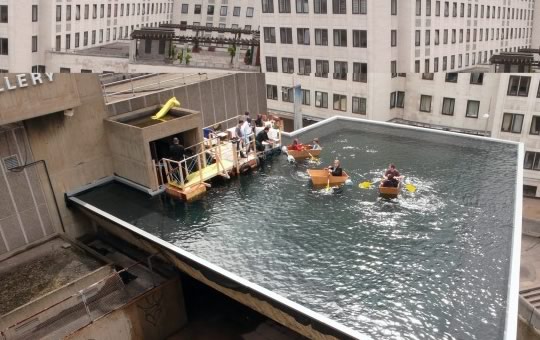
PSYCHO BUILDINGS
Gelitin
Gelitin
Timothy Weaver & Xavier Barriga-Abril
FILE SÃO PAULO 2026: Inter-creativity – Art and Technology – MUSIC
Electronic Language International Festival
contrapuntoEnteógeno – Ecuador / United States
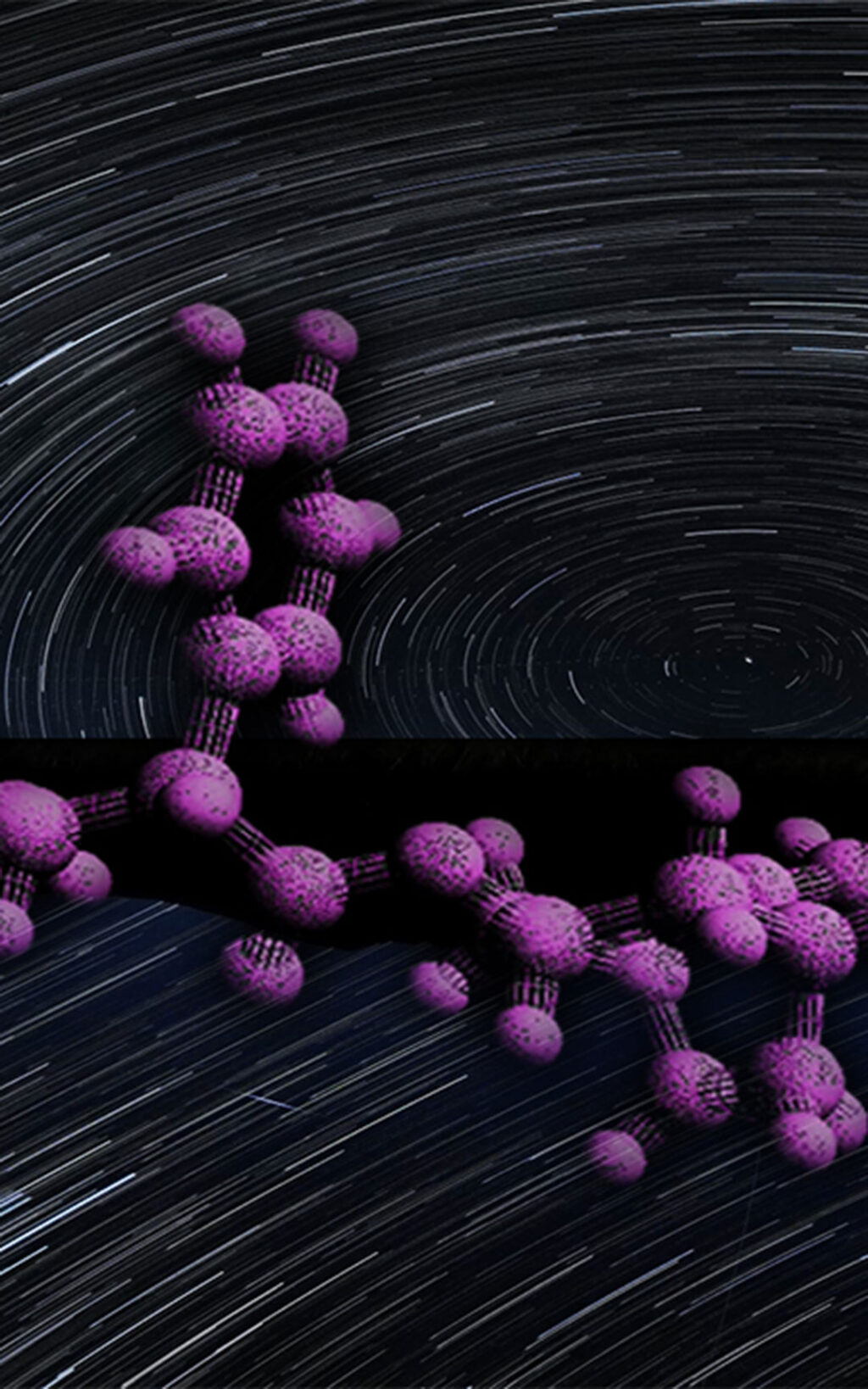
contrapuntoEnteógeno is an entheogenic plant biosonification composed in counterpoint from North & South American ecosystems. Brugmansia arborea (Andean cloud forest) and Datura innoxia (New Mexican desert) generate bioimpedances and scopolamine entheogens under celestial influences. In situ, Eurorack analog synthesis transmediates bioelectrical plant signals into ecogenerated electroacoustic sound, negotiating agencies between human and beyond-human/plant expression.
BIO
Timothy Weaver is a biomedia artist, microbiologist and bioenvironmental engineer focused on restoring ecological memory through speculative inquiry at the art-science interface. He is Professor Emeritus of Emergent Digital Practices at the University of Denver.
Xavier Barriga Abril is an Equatorian designer/artist/researcher exploring posthuman interactive systems through creative coding and electronic fabrication.
IN MEMORIAM
Tribute to Timothy Wayne Weaver: A Life Dedicated to Art, Science, and Knowledge
FILE—Electronic Language International Festival—honors the legacy of Timothy Wayne Weaver, artist, researcher, and professor whose career fostered a meaningful dialogue between art, science, and technology, inspiring artists, researchers, and audiences alike.
Throughout his career, Timothy developed an interdisciplinary practice that brought together art, science, and environmental responsibility. His work explored the complex relationships between human beings, nature, and technology, guided by experimentation, rigorous research, and a deep commitment to the creation and dissemination of knowledge.
FILE is grateful for Timothy’s intellectual generosity, enduring curiosity, and dedication to building new dialogues across disciplines, contributions he also shared with our audiences and our community. His work and legacy will continue to resonate in the memory of the festival and in the lives of all those touched by his practice.
Moritz Simon Geist
FILE SÃO PAULO 2026: Inter-creativity – Art and Technology – MUSIC
Electronic Language International Festival
Phytomorphic Topologies – Canada / United States / France
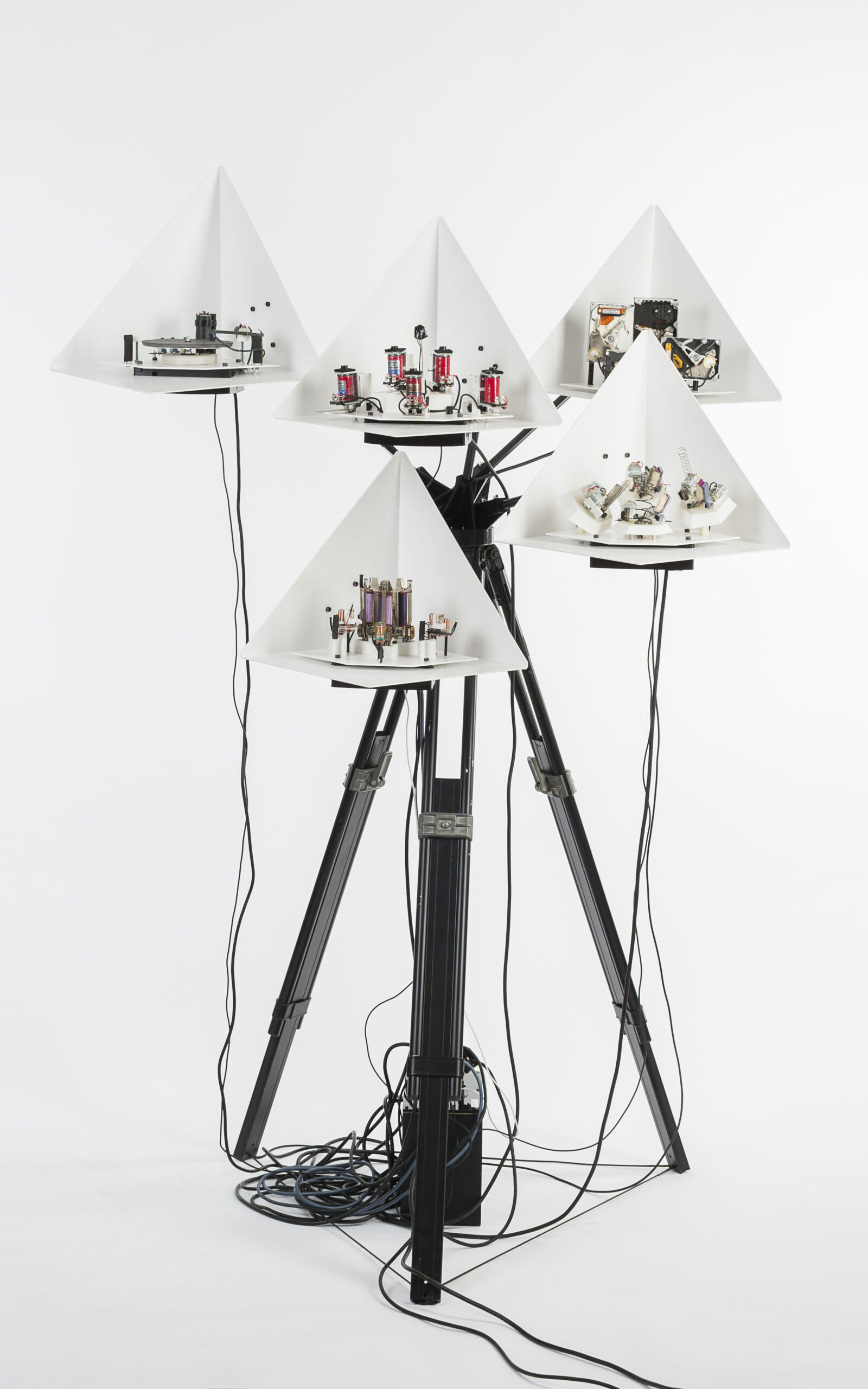
Entropy is a robotic music video built entirely around Tripods One, Moritz Simon Geist’s system of custom-built sound robots. Every sound is generated live by physical machines: a pneumatic hi-hat, a futuristic kalimba, a drone guitar, and mechanical tone generators. The result is machine-made techno in which the choreography of the robots is as central as the music. The Tripods One system is on permanent display at the Ars Electronica Center in Linz.
BIO
Moritz Simon Geist is a German visual artist, researcher, and music producer working at the intersection of robotics, physical sound, and algorithmic agency. He builds robotic instruments and autonomous sound sculptures, from the MR-808 (2012) to Tripods One (2017). His work has been shown at the Venice Biennale, Ars Electronica, ZKM, and the MIT Museum.
Ryan S. Jeffery
FILE SÃO PAULO 2026: Inter-creativity – Art and Technology – VIDEO ART SHORT
Electronic Language International Festival
An Engineer / Not a Camera – United States
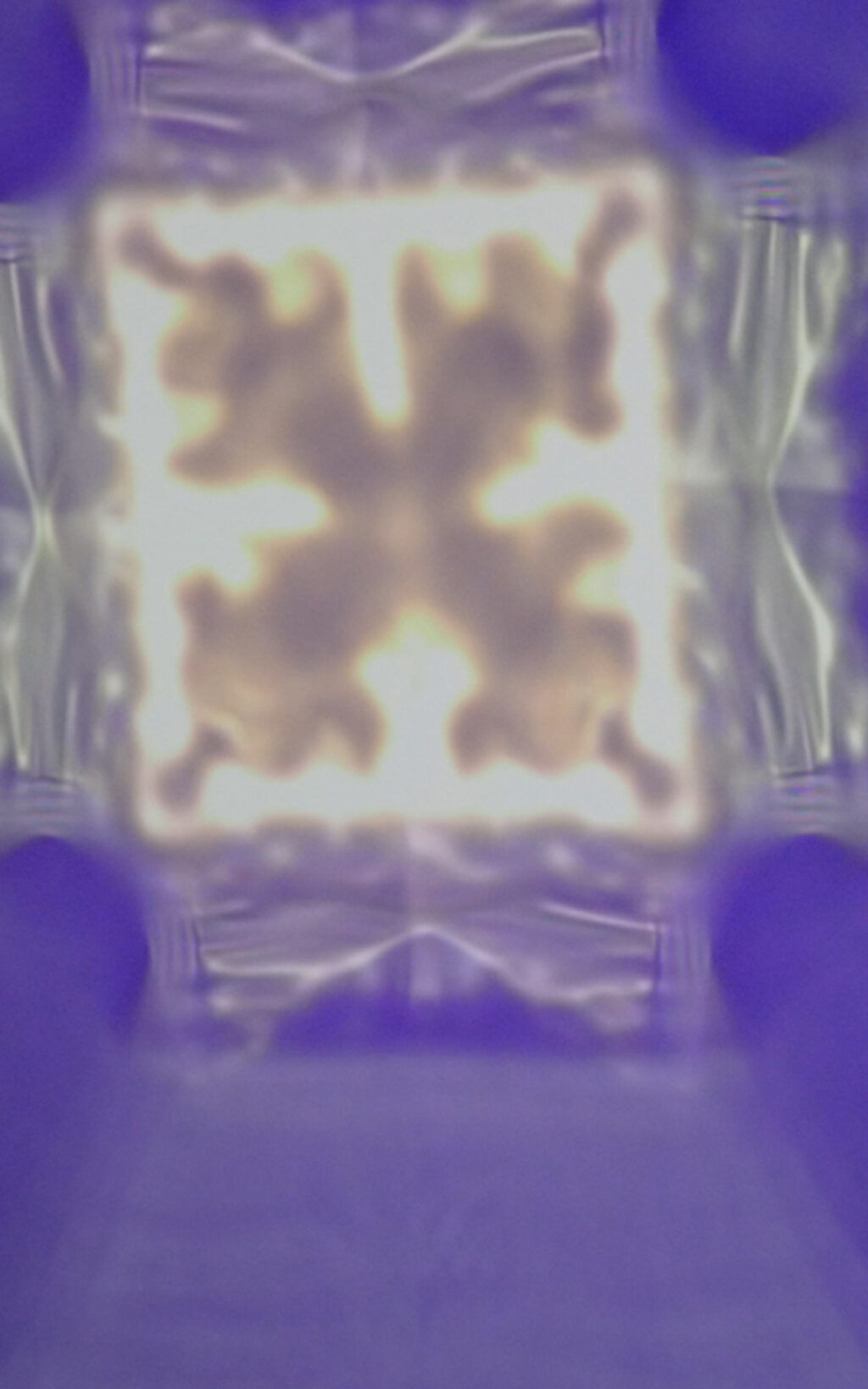
The production of a computer chip is the most complex technical human achievement to date. Photolithography, a critical step in this process, relies directly on the older science of optics and photography, which are centuries old. Today, generative AI and computer-generated imagery are nearly indistinguishable from those made with a camera. Once a method for capturing an image of the world, the science of optics is now used to build machines that can make images of the world without seeing it.
BIO
Ryan S. Jeffery’s work with the moving image sits at the intersection between documentary, art, and media studies. Grounded in an analysis of aesthetics and politics, his work considers how technology, ideology, and political economy shape one another. His work has appeared in FIDMarseille, Transmediale, EMAF, and UNCCC, as well as The New York Times, e-flux, and Filmmaker Magazine.
Beihua Guo
FILE SÃO PAULO 2026: Inter-creativity – Art and Technology – VIDEO ART SHORT
Electronic Language International Festival
Beihua Shoots the Bomb – China
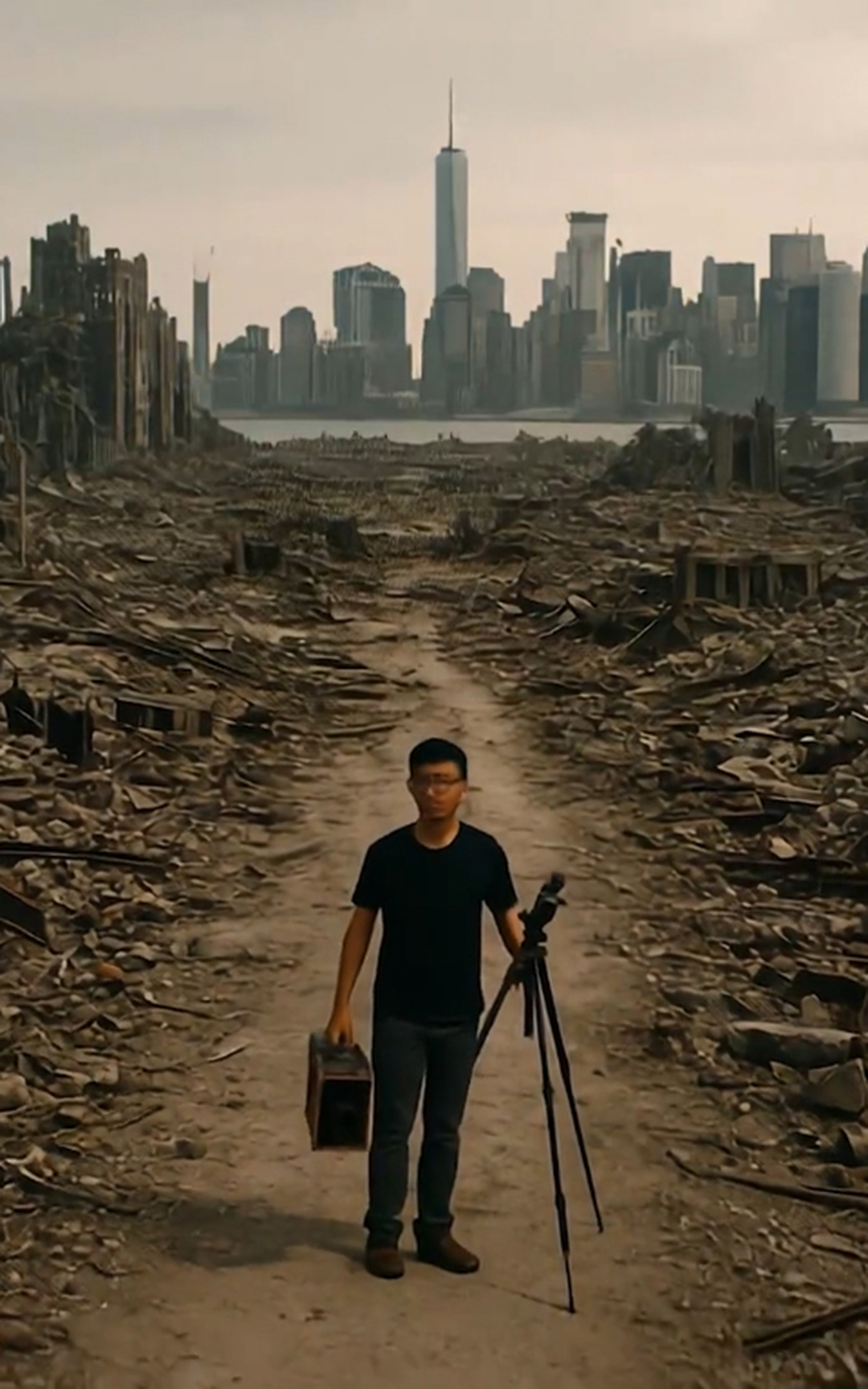
Want to learn how to photograph a nuclear explosion? Curious how to build a successful art career while making ambitious, high-stakes work? This tutorial covers tips, tools, and just enough theory to survive a critique. Bring your camera and a curious mind.
BIO
Beihua Guo is a visual artist working in photography, video, and installation. He is pursuing an MFA in Photography, Video, and Imaging at the University of Arizona (home to the O’odham and the Yaqui). His work investigates how histories are remembered, buried, or erased, particularly in landscapes marked by colonialism, extraction, and displacement.
Mengyu Huang, Dafni Katrakalidi, Martha Masli, Nguyễn Xuân Mẫn & Wenji Wang
FILE SÃO PAULO 2026: Inter-creativity – Art and Technology – Discrete Architecture
Electronic Language International Festival
PizzaBot – Vietnam
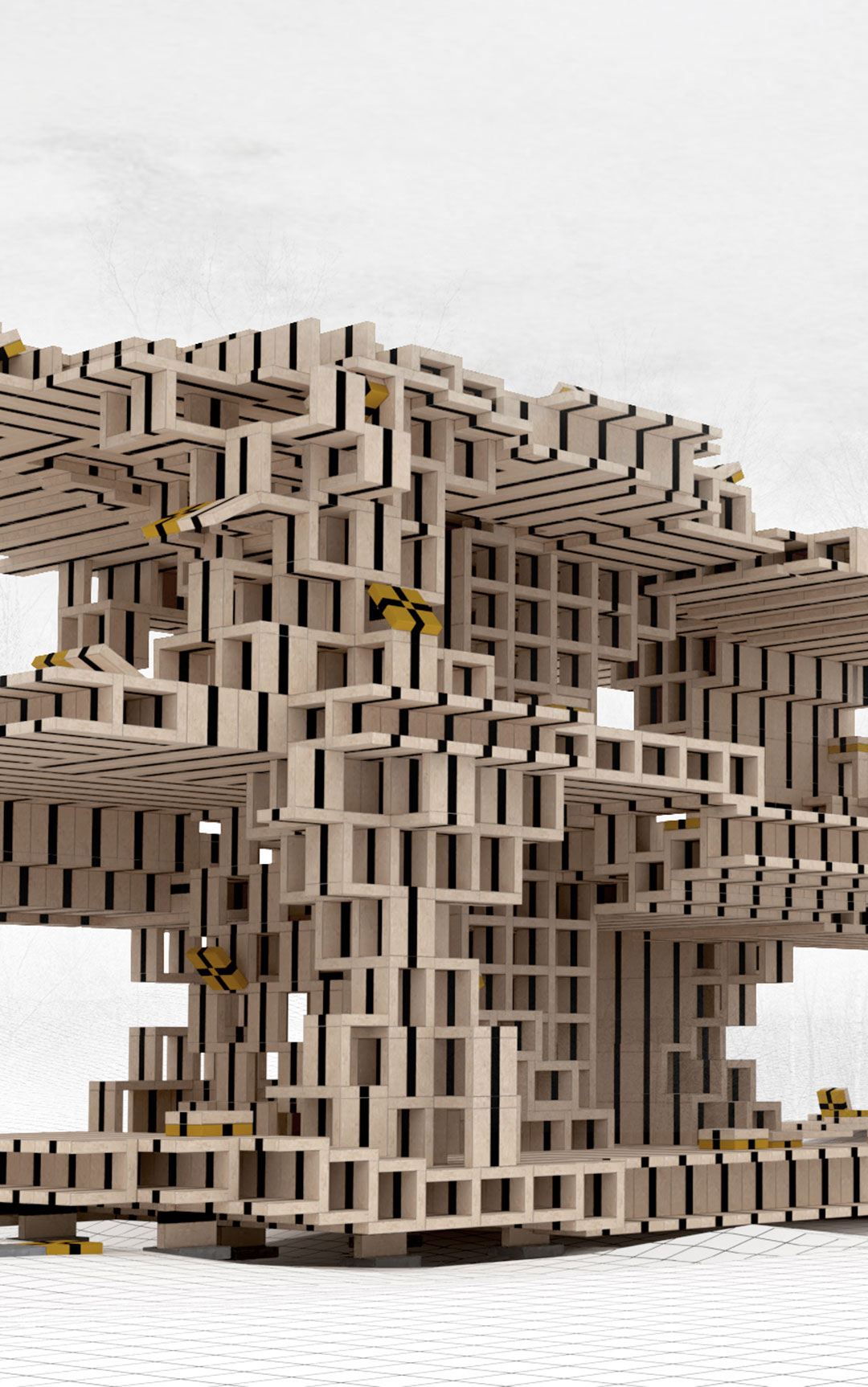
PizzaBot explores architectural automation using identical geometries for building blocks and assembly robots. By utilizing digital materials and discrete assembly, the project redefines construction through part-to-whole relationships. Shaped like a box, this “relative robot” moves along its own structure using one-axis motion to manipulate matching passive elements. Coordination of numerous bots is managed via a BIM application for task planning and collision avoidance, while machine learning aids navigation. Prototypical habitats show how this system creates site-specific assemblies that adapt to terrain and achieve large spans.
BIO
Nguyễn Xuân Mẫn is an architect, computational designer, and founder of XMArchitect. With a Master’s from The Bartlett, UCL, his practice bridges advanced computational research, seen in projects like PizzaBot, with sustainable architecture. Guided by Digital Regionalism, he currently focuses on developing green modular homes in Vietnam using upcycled materials and local heritage.
Credits: Mengyu Huang, Martha Masli, Wenji Wang, Dafni Kalatradi
David Dória, Keshav Ramaswami & Kiko Zhang
FILE SÃO PAULO 2026: Inter-creativity – Art and Technology – Discrete Architecture
Electronic Language International Festival
Public Parts – Brazil / United Kingdom
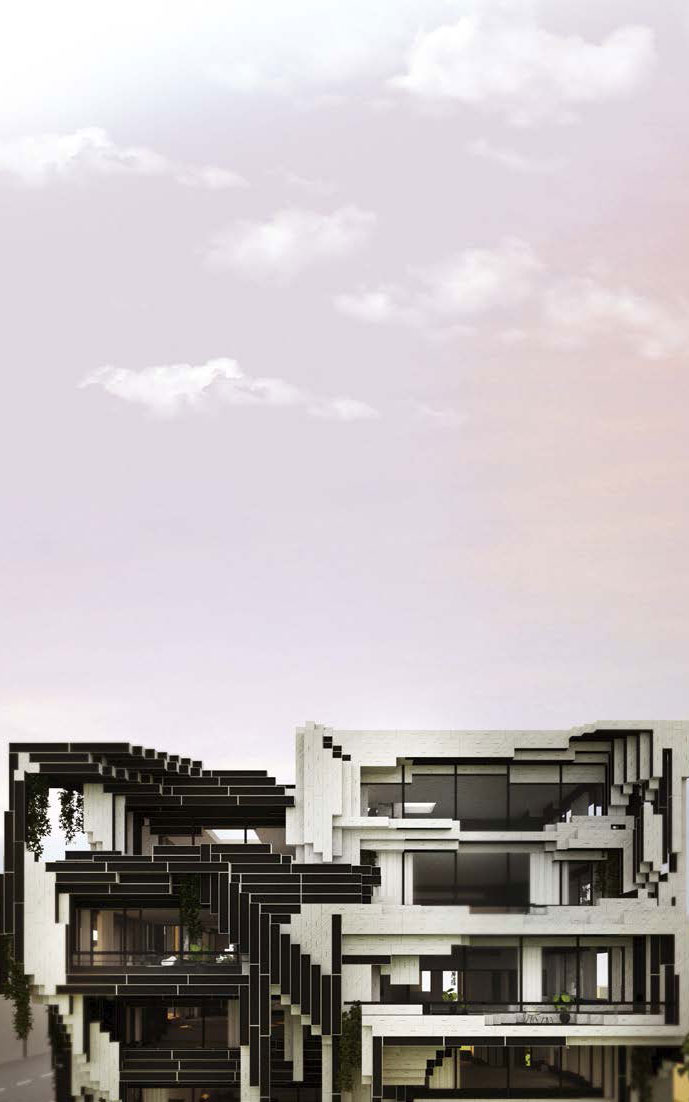
Public Parts is a platform for communal living. Seeking to challenge the neoliberal model that currently dominates the gig economy through an approach to the re-socialization of housing, the platform employs automation and machine intelligence to produce reconfigurable buildings.
Co-authors: Keshav Ramaswami and Xuan “Kiko” Zhang
Tutors: Mollie Claypool, Gilles Retsin, Manuel Jimenez Garcia, Kevin Saey, Sonia Magdziarz, Alessandro Bava
BIO
David Dória is an architect and urban designer whose work explores the convergence of digital technologies and architecture, with a particular focus on their theoretical and political implications for the discipline. His research spans automation, artificial intelligence applications in architecture, computational design, and digital fabrication. He holds a Bachelor’s degree in Architecture and Urbanism from the Federal University of Sergipe and an MArch in Architectural Design from the Bartlett School of Architecture, UCL.
Zoey Tan, Claudia Tanskanen, Qianyi Li & Xiaolin Yin
FILE SÃO PAULO 2026: Inter-creativity – Art and Technology – Discrete Architecture
Electronic Language International Festival
VersaTile INT – United Kingdom
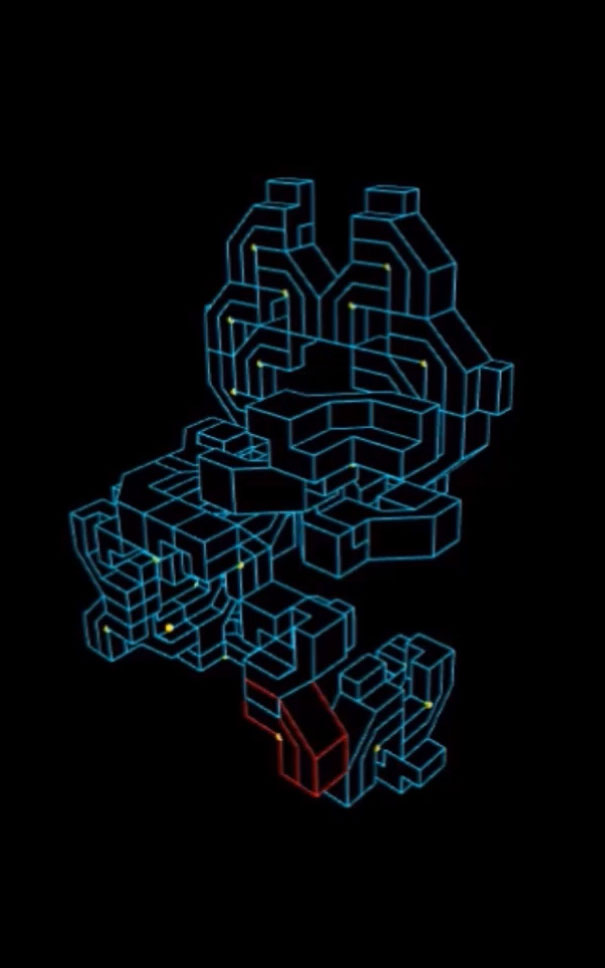
VersaTile research project questions what it means for architecture to be digital and explores how humans and robots can collaborate in an architectural process.The response is a system based on a plywood building block that can be coded and assembled by robots. It is both digital and physical, capable of automation, optimisation, customisation and human input.
BIO
ARB registered architect and previously an intern of Sir Peter Cook and Yael Reisner, Claudia has been involved with award winning international projects at Hassell, 10 Design and WilkinsonEyre. The VersaTile research project continues to inspire and shape her interests in the field.
Zoey Hwee Ting Tan is a practicing architect working across residential, tourism, and hospitality projects. She is interested in the relationship between construction methodologies and architectural quality, questioning how beauty, craft, and material expression can be retained within increasingly efficiency-driven modes of production.
Arnhildur Pálmadóttir & Arnar Skarphéðinsson
FILE SÃO PAULO 2026: Inter-creativity – Art and Technology – Discrete Architecture
Electronic Language International Festival
Lavaforming – Iceland
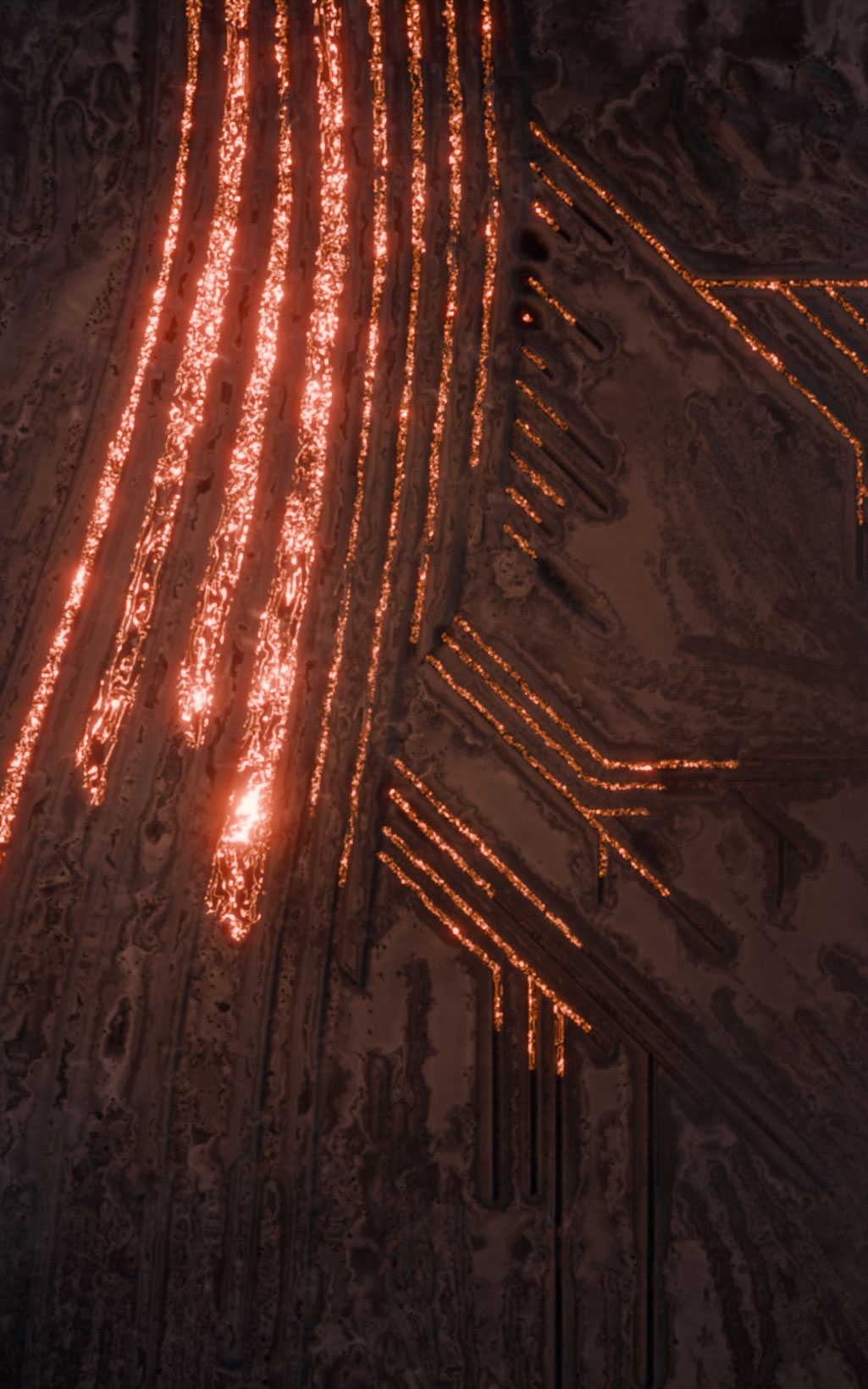
Lavaforming is the technique of harnessing volcanic eruptions to shape new architecture. A single effusive eruption provides enough building material for an entire city. In a matter of weeks, the foundations are laid without harmful mining or reliance on non-renewable energy. In this short-film, we travel a hundred years into the future to visit the city of Eldborg. Through the eyes of its future inhabitants, we learn how the development of this technique, alongside the collapse of the climate, ushered in an era of radical change driven by architectural innovation.
BIO
Sukanya Mukherjee is a designer and filmmaker based out of Los Angeles, CA. With a focus in speculative design, her work lives in the overlaps between film and architecture which she considers innate extensions of one another. Lavaforming is her second short-film, previously exhibited in the Icelandic Pavilion at the 2025 Venice Biennale of Architecture and is currently being shown at the Reykjavik Art Museum.
Arnar Skarphéðinsson is an architect and filmmaker based in Reykjavík, Iceland. His work focuses on architecture’s ability to visualize different futures through filmmaking techniques and video game technology. He is the co-creator of Lavaforming, which was previously exhibited in the Icelandic Pavilion at the 2025 Venice Biennale of Architecture and is currently being shown at the Reykjavik Art Museum.
Arnhildur Pálmadóttir is an architect and founder of s.ap arkitektar. She approaches projects through innovative thinking and interdisciplinary collaboration, with focus on research and circular innovation in the construction industry. Arnhildur also works on experimental projects including the Lavaforming project, Iceland’s contribution to the 2025 Venice Architecture Biennale. Arnhildur and s.ap architects have received numerous awards and international nominations, and their work has been featured widely in both Icelandic and international media.
Director: Sukanya Mukherjee, Arnar Skarphéðinsson. Writer: Andri Snær Magnason. Executive Producer: Arnhildur Pálmadóttir . Animators: Sukanya Mukherjee, Arnar Skarphéðinsson. Sound: Kjartan Thors Hagedorn-Olsen. Music: Jack Armitage. Mixing and Mastering: Josh Wilkinson. Voices: Edda Björg Eyjólfsdóttir, Úlfur Hansson, Andri Snær Magnason, Melkorka Ólafsdóttir, Helga Lára Þorsteinsdóttir. Costume Design: Björg Skarphéðinsdóttir
Kazuhiro Tanimoto
FILE SÃO PAULO 2026: Inter-creativity – Art and Technology – Randomic Dimension
Electronic Language International Festival
Sea of code – Japan
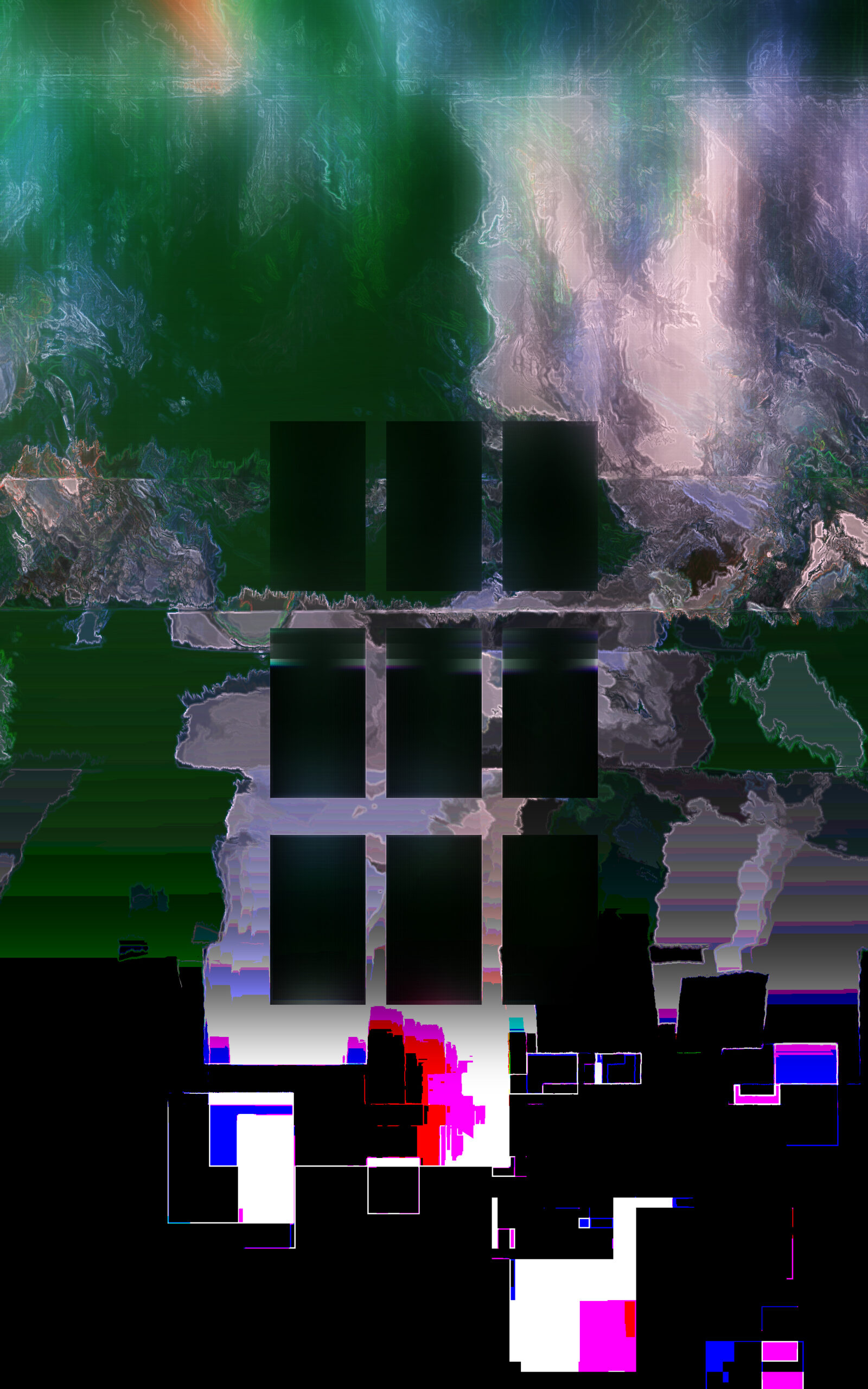
Sea of Code is a JavaScript work that generates animation and sound as a flow linking past, present, and future. Simple 8-color forms drift, expand into richer color and organic complexity, and at times reveal gaps within the flow. Inspired by Hiroshi Kawano’s idea of computer art as autonomous beauty, it uses palette-free color generation and Markov-chain melodies derived from classical music. Its title evokes a sea of code through which computer art, often marginal, is still carried forward.
BIO
Kazuhiro Tanimoto is a chemist in materials R&D and a generative audiovisual artist. He builds real-time systems that harness computation, exploring algorithmic transformation through cellular automata and processes of generation, change, and collapse tied to material and social phenomena. His work is included in Rhizome ArtBase, in Art Blocks Curated, and exhibited in New York and beyond.
David Young
FILE SÃO PAULO 2026: Inter-creativity – Art and Technology – Randomic Dimension
Electronic Language International Festival
Q(a,v,7,m,m2,d4a-21,7,16,13,31,55) – United States
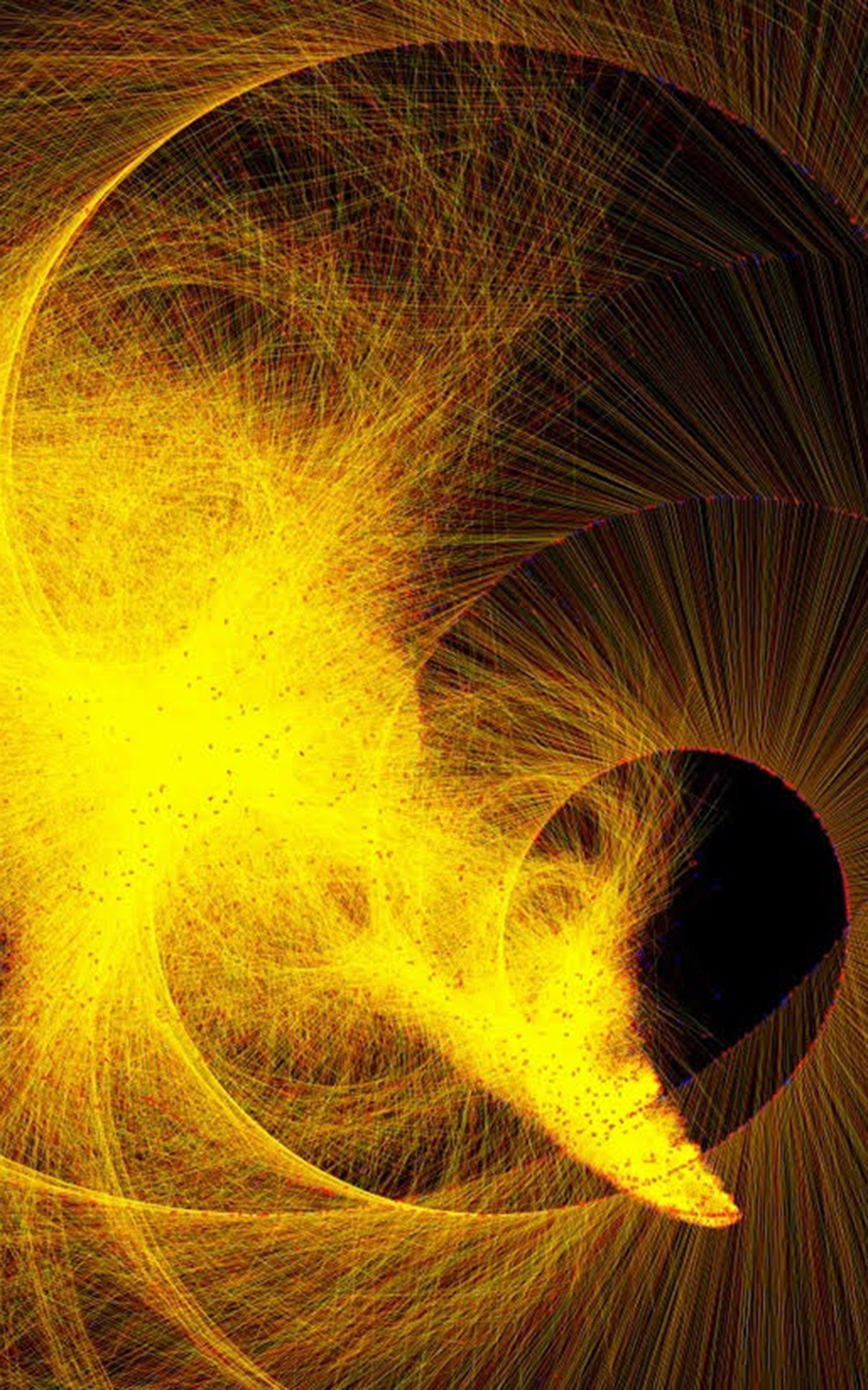
Q(a,v,7,m,m2,d4a-21,7,16,13,31,55) is a quantum drawing generated from actual quantum computer data—entangled qubit values and noise from decoherence, when quantum states collapse into classical reality. Custom code written to interrogate this data searches for visual patterns within quantum behavior. Rather than explaining phenomena, the work creates conditions for felt encounter—building non-mathematical intuition through direct engagement with what these machines produce.
BIO
David Young is a computational artist and researcher investigating quantum computing and AI through aesthetic rather than mathematical means. His work is held in the collections of Kunstmuseum Bonn and Kunstsammlungen Chemnitz and has been featured in Artforum. He holds an MS from MIT Media Lab. He lives and works in New York.
Fun and Awe
FILE SÃO PAULO 2026: Inter-creativity – Art and Technology – Augmented Realities
Electronic Language International Festival
Operator – United Arab Emirates
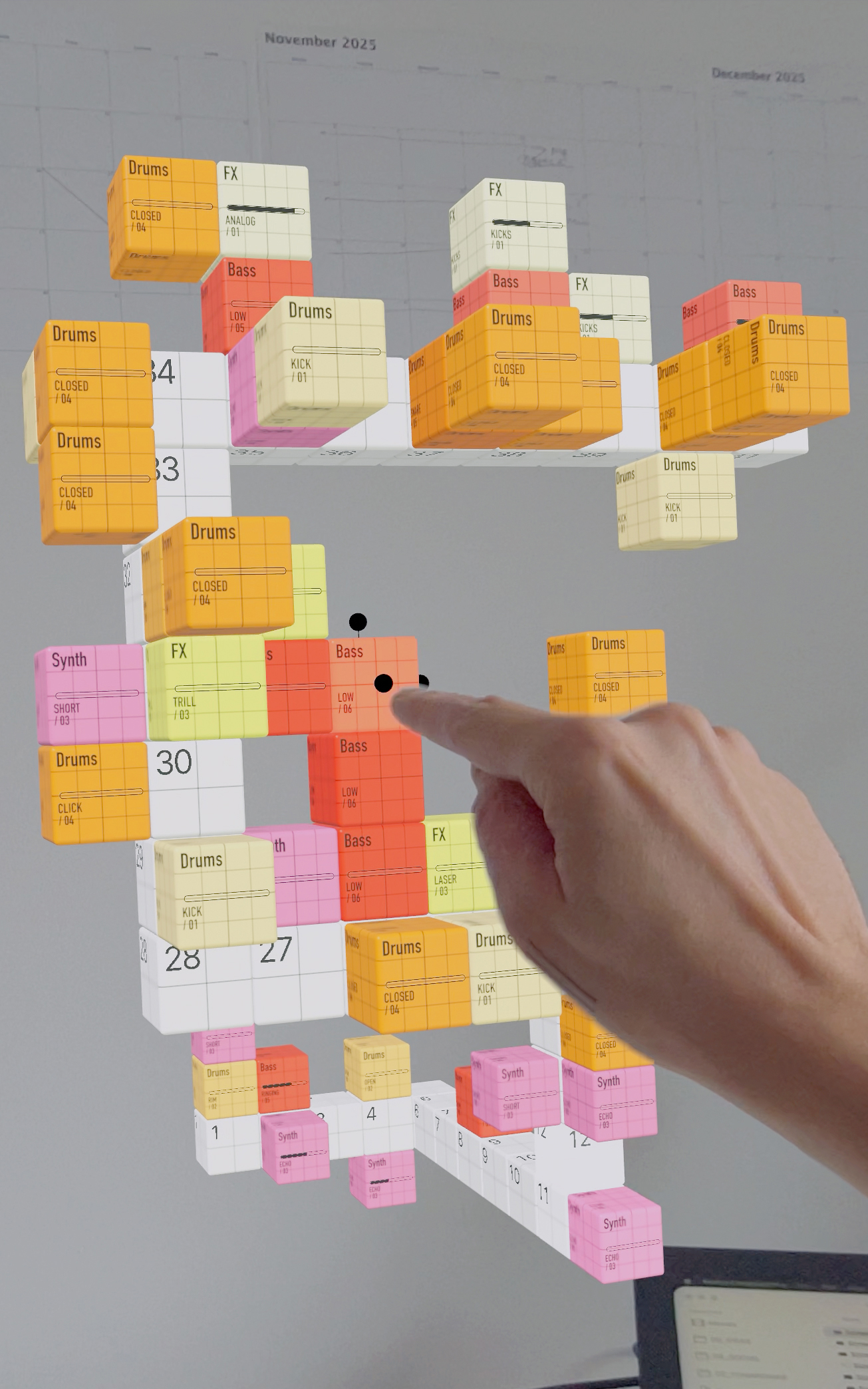
OPERATOR is an XR music production tool for Apple Vision Pro. Inspired by industrial design and architectural models, it allows for an intuitive interactive experience that is closer in its mechanics to arranging the building blocks than it is to using the audio production software. The app uses the language of simple spatial interactions and moves away from the traditional flat-screen experience — each created composition exists as a sculpture integrated into a real space through the XR mode.
BIO
A studio with a diverse experience that includes artists, engineers, writers, and designers, they build applications, design interactions, and develop concepts for XR that are focused on humans and our shared experience. Our boutique-sized team, founded by designer and director Maxim Zhestkov, explores the possibilities of the XR medium independently and in collaboration with brands.
Xenoangel
FILE SÃO PAULO 2026: Inter-creativity – Art and Technology – Installations
Electronic Language International Festival
Soft waters – France / England / Serbia
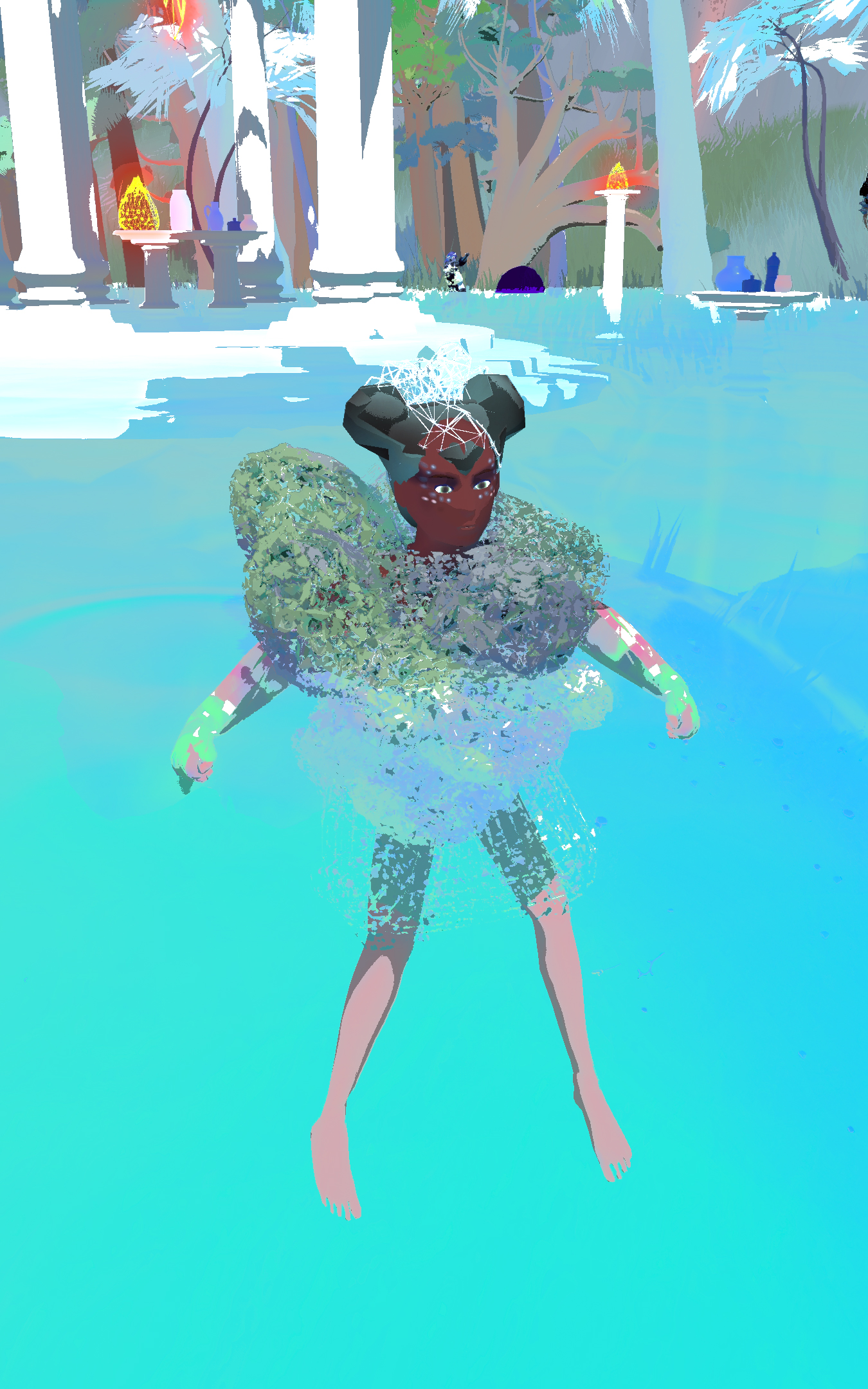
Soft Waters is a real-time interactive artwork that uses the accessible language of videogames alongside eco-feminist writings in an experimental and playful way. The artwork follows the story of a water goddess on a lake in the mouth of an ancient volcano. The story is set between the moment the volcano went dormant and the afterparty of a solar punk eco-rave, sometime in the near future. The project is an exploration of non-linear time through the circulation of watery bodies.
BIO
As an artist duo Xenoangel, Marija and Sam explore new relationships between humans and non-humans. Their practice is based on world building and their work intersects disciplines such as real-time generative animation, videogames, painting, physical installation, writing, and music.
Weidi Zhang & Rodger Luo
FILE SÃO PAULO 2026: Inter-creativity – Art and Technology – Installations
Electronic Language International Festival
A Walled City – China / United States
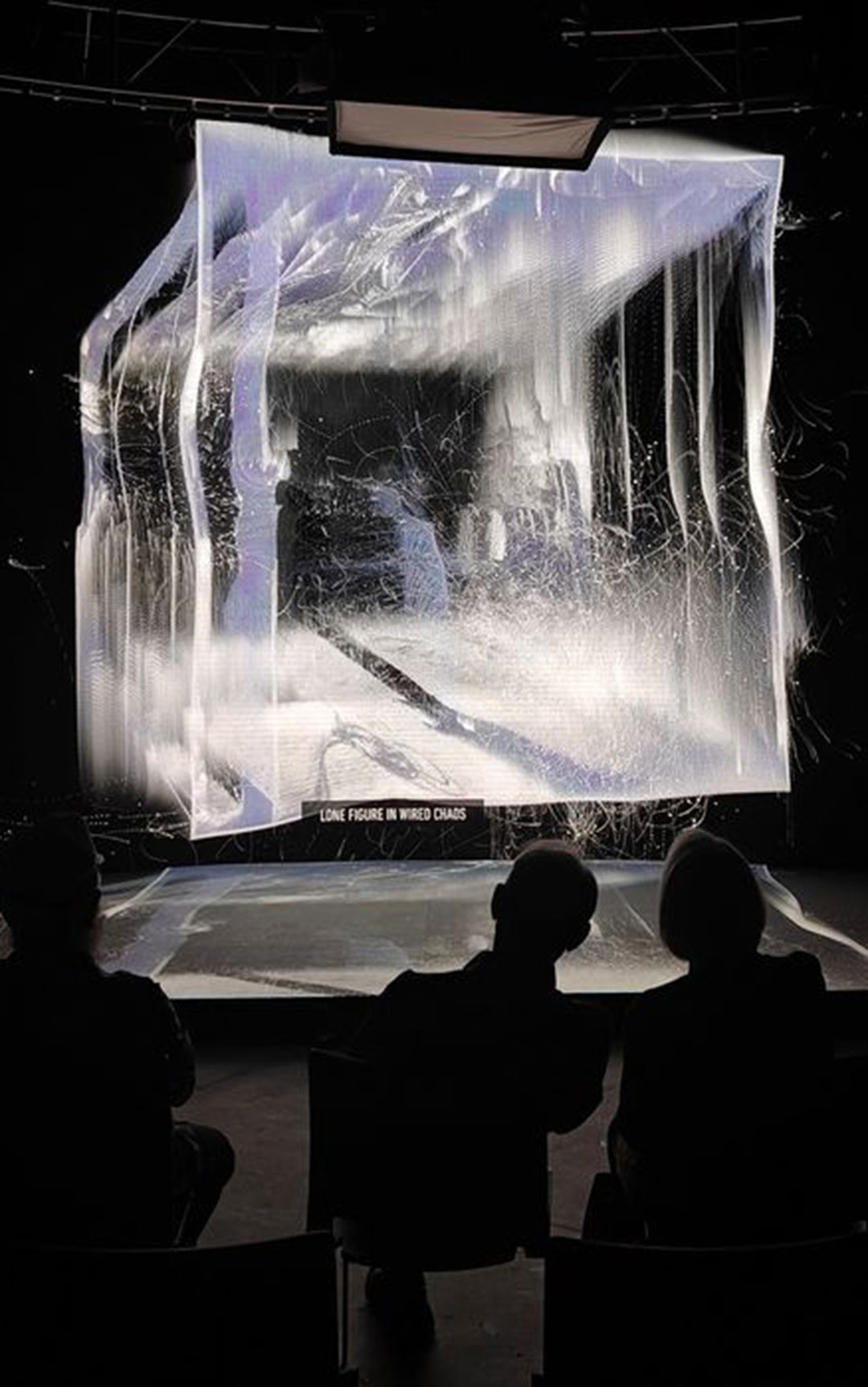
A Walled City is an interactive AI installation that transforms personal and collective visual memories into a decentralized city. Grounded in the spatial logic, zoning, and aesthetics of the historical Kowloon Walled City (Hongkong), a self-built hyper-dense enclave that grew in a legal and political void from the 1950s to 1993, the work builds a multi-agent AI system to turn participant-uploaded images into architectural chambers, forming a living structure where data, memory and history converge.
BIO
Weidi Zhang is a new media artist and designer based in Los Angeles and Phoenix. She is a tenure-track Assistant Professor of Immersive Experience Design at the Media and Immersive eXperience (MIX) Center at Arizona State University.
Lepša Studio
FILE SÃO PAULO 2026: Inter-creativity – Art and Technology – Installations
Electronic Language International Festival
MiMicrocosmos – Czech Republic
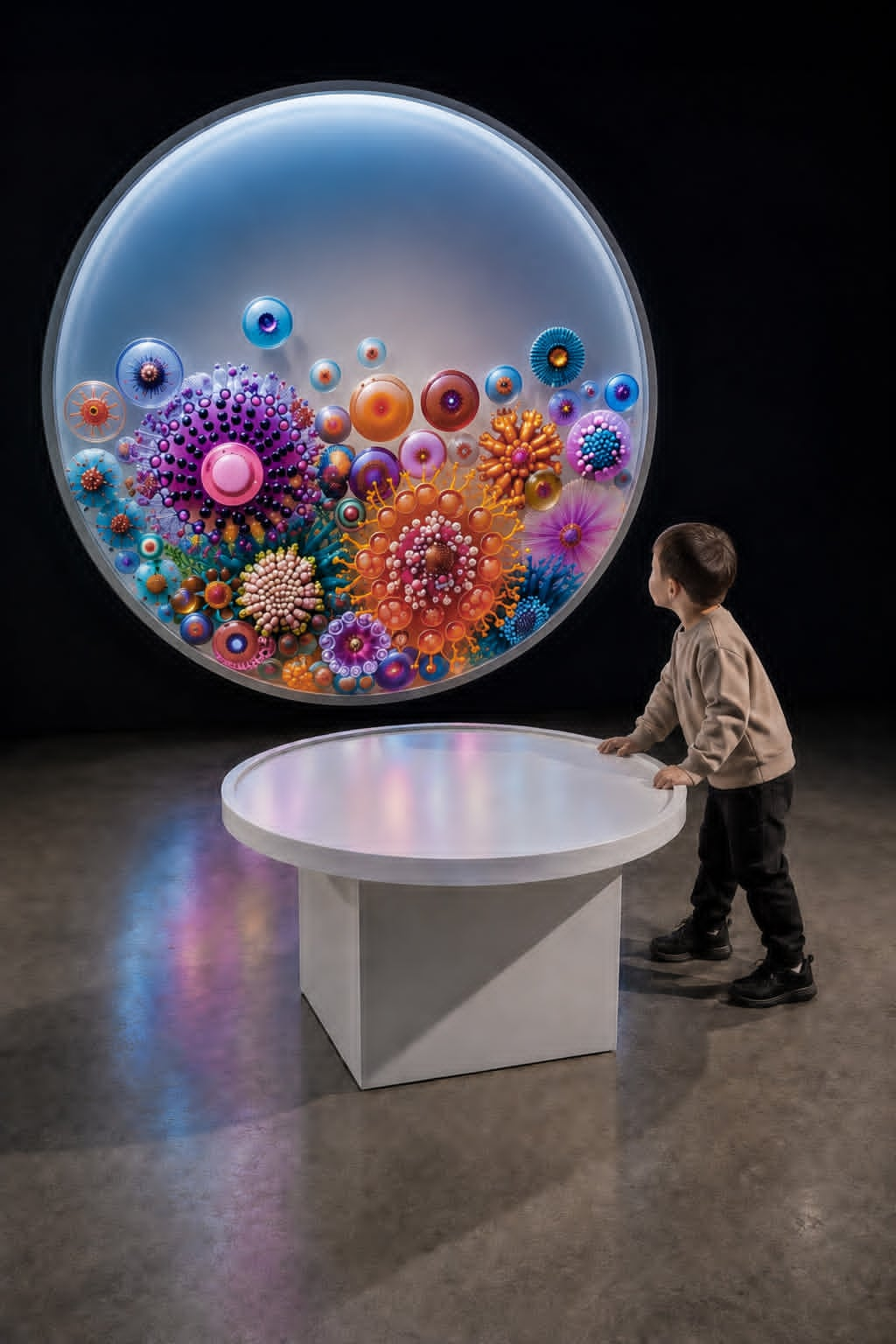
Interactive installation inspired by a world that we normally see only under a microscope. It is a physical game with a childish design that, when rotated, transforms the installation into a playful and intuitive experience.
BIO
Lepša Studio is a creative collective that brings together fine art, scenography, spatial design, and contemporary technology. The studio was founded in 2026 as a new creative project building on the team’s long-standing collaborative experience. The studio’s key principles are originality, experimentation, interdisciplinary collaboration, and a focus on site-specific work. The creators of the MiMicrocosmos installation are Josef Lepša, Jiří Rouš, Marek Volf, and Michal Vrba.

LED SHOW Festival: a program dedicated to exhibiting digital works specifically designed for the Digital Art Gallery, an LED panel located on the facade of the FIESP building, Avenida Paulista, 1313. The festival investigates the relationship between moving image, light, architecture, and the city, exploring the expressive potential of luminous devices as an artistic medium. The works dialogue with the three-dimensionality of the facades, the urban scale, and the flows of public space, transforming the building into a narrative and sensory support. By integrating technology, art, and urban context, the LED SHOW proposes immersive visual experiences that reconfigure the perception of collective space and expand the field of contemporary audiovisual art. Download the technical specifications of the LED Show file.
Applications were open until February 19, 2026. Access the application form.

Ingress uses the mobile device GPS to locate and interact with “portals” that are in proximity to the player’s real-world location. The portals are physical points of interest where “human creativity and ingenuity is expressed,” often manifesting as public art such as statues and monuments, unique architecture, outdoor murals, historic buildings, local community hubs and other displays of human achievement. The game uses the portals as elements of a science fiction backstory along with a continuous open narrative provided through various forms of media.

night lights
In this installation YesYesNo teamed up with The Church, Inside Out Productions and Electric Canvas to turn the Auckland Ferry Building into an interactive playground. Our job was to create an installation that would go beyond merely projection on buildings and allow viewers to become performers, by taking their body movements and amplifying them 5 stories tall.
We used 3 different types of interaction – body interaction on the two stages, hand interaction above a light table, and phone interaction with the tracking of waving phones. There were 6 scenes, cycled every hour for the public.

Parmenides I
The work continues to build on a visual language rooted in ideal geometries, and a prismatic interplay of light and pattern. The cascading faceted surface carries an implied motion, rolling away from the spectator with meditative ease. This energy potential is given breath by luminescent washes which crash, ebb and flow with internal symmetry.
While best understood directly and perceptually, Dev’s work presents an infinitely reproducible formal structure and lucid logic that can be known universally without empirical knowledge. Light and projection become representative of perceptual knowledge by directly invoking temporal optical phenomenon, but a pure idealized form remains intact. It is this interplay that reproduces the sublime conflict in the viewer, who must choose to ride this crest uncertainly and find exhilaration in the balance.
Metropolis
Metropolis is a 1927 German expressionist science-fiction film directed by Fritz Lang. Set in the year 2026, Metropolis takes place in a dystopian society where wealthy industrialists rule from vast tower complexes, oppressing the workers who live in the depths below them.
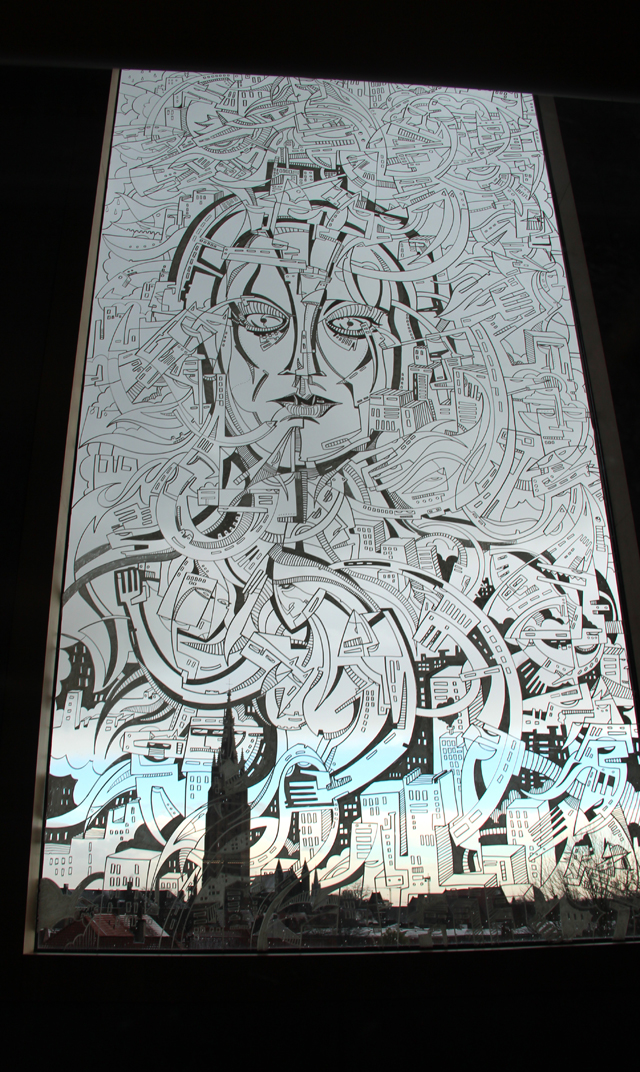
The drawing is placed on the largest window of the ‘Concertgebouw’ (Concert building) in Bruges with the perfect backdrop of the city. There are many different perspectives to the work wich has the effect of a changing picture throughout the day.

GRAFFITI ANALYSIS
SCULPTURES
Graffiti Analysis is an extensive ongoing study into the motion of graffiti. Custom software designed for graffiti writers creates visualizations of the often unseen motion involved in the creation of a tag. Motion data is recorded, analyzed and archived in a free and open database, 000000book.com, where writers can share analytical representations of their hand styles. Influential graffiti artist such as SEEN, TWIST, AMAZE, KETONE, JONONE, and KATSU have had their tags motion captured using the Graffiti Analysis software. All tags created in Graffiti Analysis are saved as Graffiti Markup Language (GML) files, a new digital standard used by other popular graffiti applications such as Laser Tag and EyeWriter. Graffiti Analysis 3.0 is an open source project that is available online for free in OSX, Windows and Linux. Graffiti writers are invited to capture and share their own tags, and computer programmers are invited to create new applications and visualizations of the resulting data. What Martha Cooper did for archiving graffiti on film, and Chalfant/Silver did for archiving graffiti in video, Graffiti Analysis intends to do for archiving graffiti in code. The project aims to build the worlds largest archive of graffiti motion, and bring together two seemingly disparate communities that share an interest hacking systems, whether found in code or in the city.
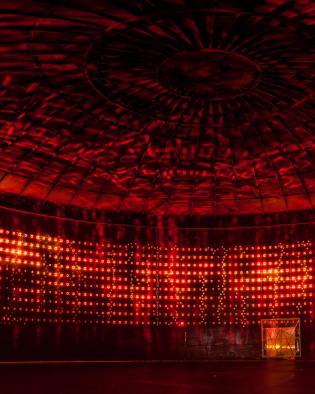
Silo 468 Light Art Helsinki
INTERACTIVE LIGHT ART FOR URBAN REDEVELOPMENT SILO 468 HELSINKI Disused oil silo has been converted into mesmerizing light art piece and a public space with the aid of swarm intelligence and interactive lighting. The project is a conversion of oil silo into light art piece and a public space designed by Madrid based Lighting Design Collective (LDC). It sits by the sea facing central Helsinki, Finland. Prevailing winds well known to residents are strongly present. The natural light, wind and the movement of light on the water formed the principles for the lighting concept. Walls are perforated with 2012 holes referring to the Helsinki World Design Capital 2012 year. The lighting signifies the start of a major urban redevelopment for the City of Helsinki. It functions to draw focus to unknown district and creates a landmark and a marketing device for the City. Maybe most importantly through the use of natural and artificial light it created a unique civic space for the citizens to use. Furthermore, it set a precedent for a new district for 11000 people to become the “district of light”. During the first years the silo is mainly viewed from distance when the area starts to get build. 1280 LED domes in 2700K white are fitted inside the silo behind the cut-outs and visible from several kilometres away. LDC developed a bespoke software using swarm intelligence and nature simulating algorithms that refresh responding to parameters such as wind speed, direction, temperature, clear night and snow. System dials out every 5 minutes for new data. The patterns are fluid, natural in feel and never repeat. They are slow but speed up in relation to the wind speeds creating constantly changing mural of light. At midnight the exterior turns deep red for 1 hour. The colour refers to the former use of the silo as a container of energy. At 02:30 when the last ferry goes past to Suomenlinna lights go off. The interior gains importance as the area gets populated. Inside is painted deep red. Daylight seeps through the pattern derived from original rust patterns on the walls. North facing wall has no perforations. 450 steel mirrors moved by winds are fitted behind the holes. With sunlight the silo appears to glimmer and sparkle like surface of water.The warm white LED grid reflects light indirectly via the red walls into the space. The moving patterns read as halos racing across the walls. The Silo is a civic space for the citizens of Helsinki. Floor was added and rigging infrastructure, power, water and emergency & cleaning lighting. Light intervention has created a new space for people.

Struct- Generative Realtime Audio-Visual Environment
The target of “Struct” was to create installation which could make immersive environment inside the space of public event dedicated to the opening of the office of an architectural company UNK Projects. It was planned to make this installation fully autonomic during the several hours as well as there was an idea to hold the public interested and immersed into the space of environment during the all period of time.
The main conception of the installation is to create the second alternative scale inside the internal space of the office. It was realized screen projection for this with the size of 18×4 meters and taken almost whole the length of the interior. The Animated surface was projected as the extension of the super-graphic situated on the facade of office`s building. The external graphic was created by Vladimir Garanin. The first one layer is the super-graphic onto the facade and another one layer is the real-time generative graphic inside the interior. The visual image and algorithmic sound of the whole structure are connected each other and are forming the whole organism.

IED Partnership
FILE SÃO PAULO 2025: SYNTHETIKA – Art and Technology – LED SHOW
Electronic Language International Festival
Surfaces – Brazil
Concrete beams, glass, brick walls, cement… Buildings are built to last, to withstand time. LED screens, on the other hand, thrive on the light they emit—they turn on, blend, and fade. They are ephemeral. When a building is clad in LEDs, the permanent and the transient meet, between what already is and what might become. In the iconic FIESP building on Avenida Paulista, surface design transforms architecture into a field of experimentation. There, students from IED SP explore new possibilities for this building’s existence, redefining the structure through animated light and design.
BIO
Students of the Bachelor’s degree in Graphic and Digital Design at the Istituto Europeo Di Design (IED SP) have come together to create a collective work of animations inspired by surface design, its redefinition, and media materialization, seeking to explore language for visual communication projects. IED is an international training and research network in Design, Fashion, Visual Communication, and Creative Management.

A Dreamscape Cartography
Marc Samper
FILE SÃO PAULO 2025: SYNTHETIKA – Art and Technology
Electronic Language International Festival
A Dreamscape Cartography – Spain
A Dreamscape Cartography is a 3D digital artwork created from scans and navigated via Blender. The piece reimagines the ancient ritual of dream incubation, fusing inner realms with virtual environments. Using scans of abandoned houses in the Cyprus Security Zone, it creates a space that blends dreamlike and physical dimensions. Narrated by texts by Paul Celan, the work seeks to build a bridge between imaginary and lived experiences, inspiring new connections between space, memory, and existence.
BIO
Marc Samper is a visual artist, experimental filmmaker, and photographer from Barcelona, currently based in Paris. Graduated in Philosophy from the University of Barcelona and with a Master’s in Cinema from Pompeu Fabra University, his work investigates the ontology and phenomenology of images in global media, speculative metaphysics, and the intersection between mysticism and technology.

Kenji Kojima
FILE SÃO PAULO 2025: SYNTHETIKA – Art and Technology – Video Art
Electronic Language International Festival
Begins with Chaos — Lascaux – United States
The environment is filled with chaotic information. Sensory organs build the world by extracting only certain elements from this chaos—such as visual and auditory data—acting like filters. It is as if the world is constructed using the “key” of a specific sense, decoding a hidden code. All information is recorded in binary form. The artist transforms this binary data into new formats, turning it into artworks. To do so, a one-time-use key was used to encrypt and decrypt the colors within the image data.
BIO
Kenji Kojima was born in Japan and moved to New York in 1980, during the rapid rise of personal computers. He began creating digital art, exploring the connections between perception, cognition, technology, music, and visual art. His works have been exhibited in New York City and at media art festivals around the world.
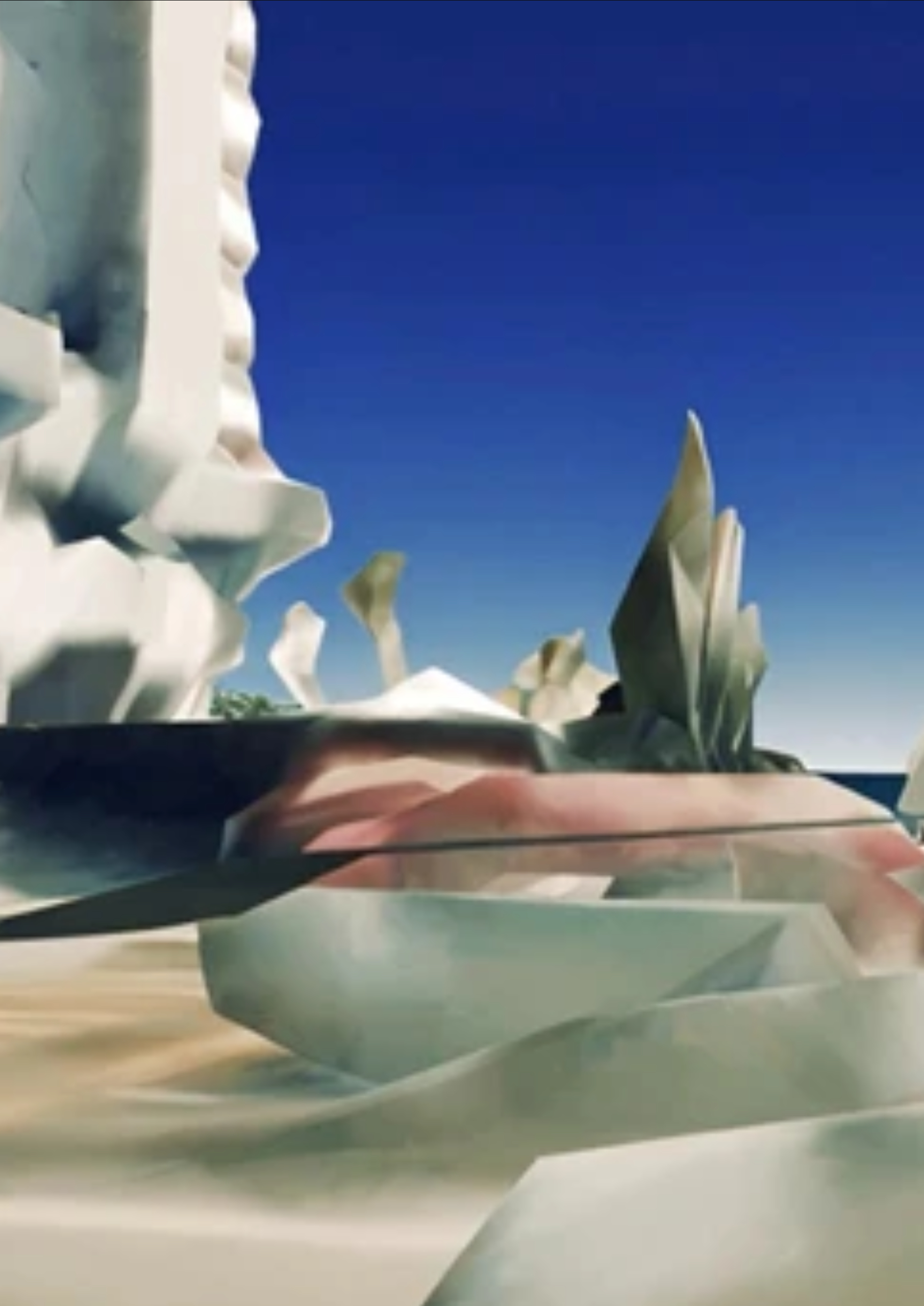
Barbara Oettinger
FILE SÃO PAULO 2025: SYNTHETIKA – Art and Technology – Video Art
Electronic Language International Festival
What future will we build upon the ruins of the present? – Chile
What future will we build upon the ruins of the present? is a short film that embarks on a symbolic and poetic exploration of faults and glit ches in the fabric of reality, both physical and virtual. It delves into how these disruptions can act as catalysts, transforming our understanding of the world we inhabit.
BIO
Barbara Oettinger is a visual artist and filmmaker from Chile. She has participated in various exhibitions and scre enings in cultural centers, galleries, and museums in South America, North America, Europe, Asia and Oceania. Recently, she received a scholarship from the Chilean government (ANID) to pursue a PhD in Creative and Critical Practice at the University of Sussex in Brighton, UK.

Seongmin Kim
FILE SÃO PAULO 2025: SYNTHETIKA – Art and Technology – Cine SYN
Electronic Language International Festival
Green Light – South Korea
With the ecosystem destroyed after a nuclear war, Mari, a survivor, does everything she can to rebuild it. When she encounters a robot soldier in an abandoned city, everything changes.
BIO
Seongmin Kim is an animation film director. Born in South Korea, he studied 3D animation and earned a master’s degree in digital media. He has worked on several projects at VFX and animation companies in South Korea. Green Light was completed in 2016 with the support of KOCCA, and has won awards at numerous film festivals, both national and international.
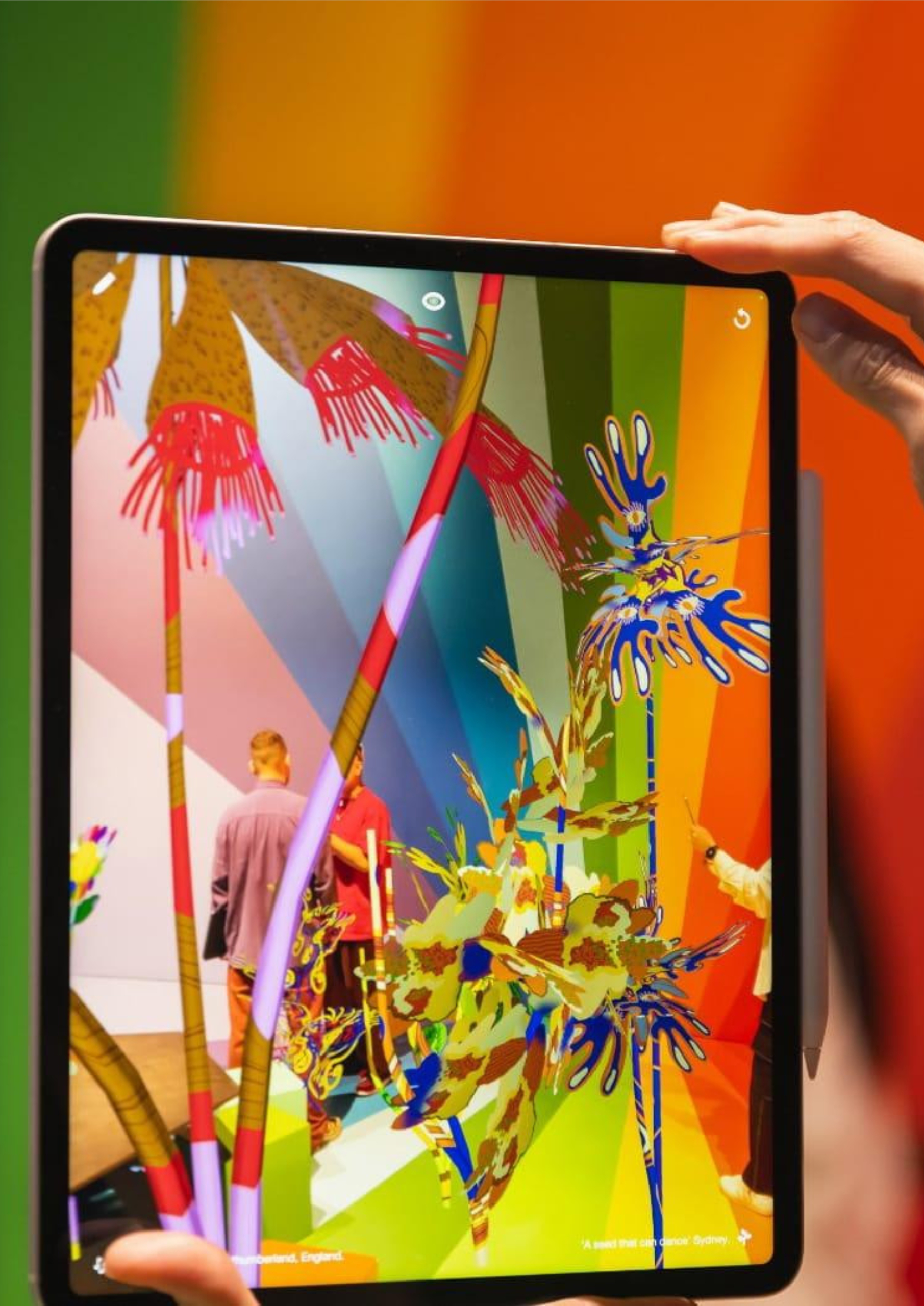
Tin&Ed
FILE SÃO PAULO 2025: SYNTHETIKA – Art and Technology – Installations
Electronic Language International Festival
Deep Field – United States
An augmented reality experience where visitors draw fantastical plants that instantly bloom into immersive 3D structures within the space. As people contribute their creations, a collective digital landscape begins to take shape. Layers of recordings of endangered, extinct, and elusive species compose a responsive and evolving soundscape, developed by The Listening Planet.
BIO
Tin & Ed are New York-based artists whose work explores the interconnection of life across biological, geological, and cosmic systems. Through speculative world-building, they reveal connections that transcend human time, spatial boundaries, and sensory thresholds. Their practice spans sculpture, immersive and interactive installations, creating environments that invite audiences to shift perspective and inhabit the world beyond the limits of human perception. Technology is not used as spectacle, but as a perceptual tool that makes the invisible felt and the distant intimately present.
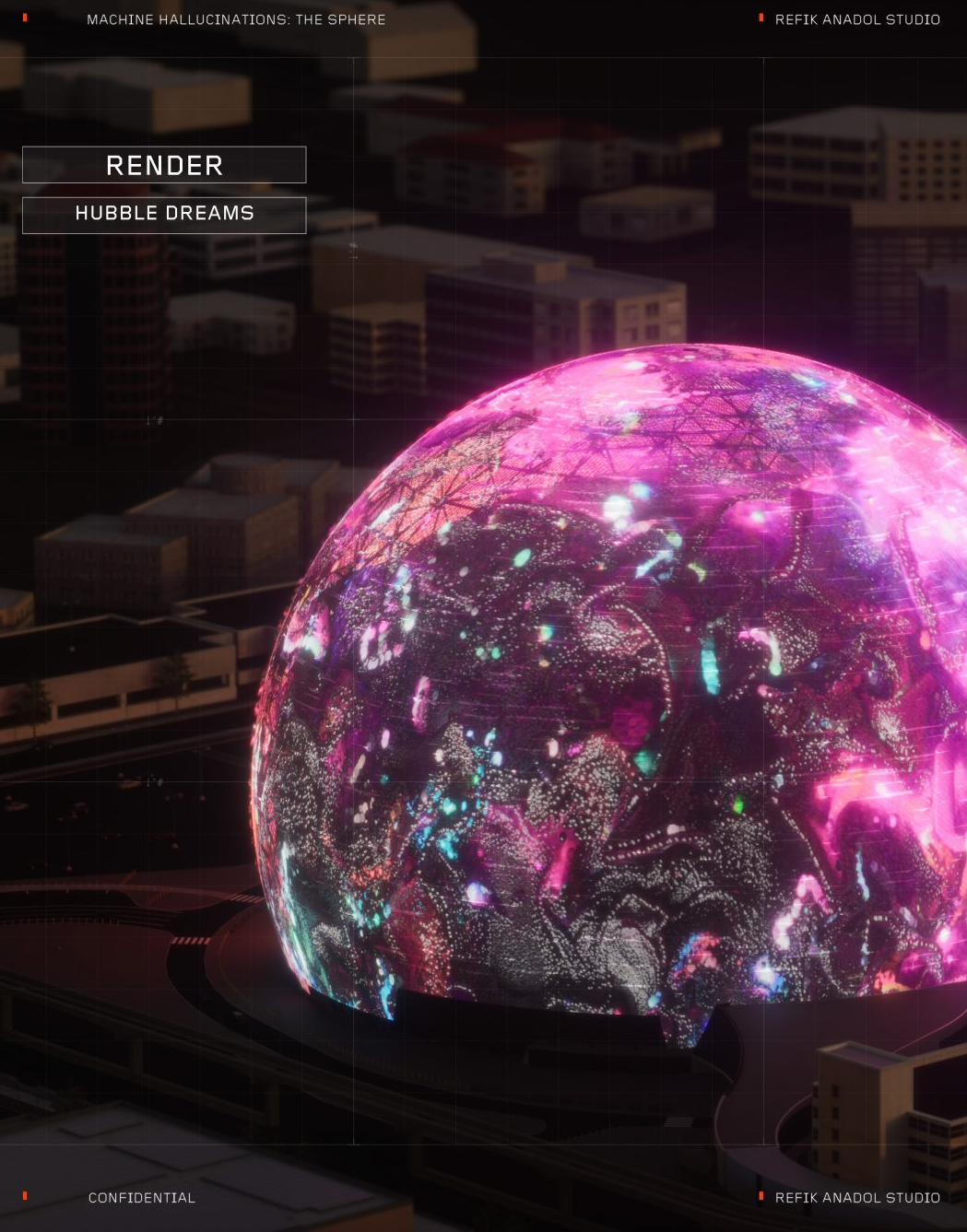
Machine Hallucinations — Sphere
The artwork presents a series of AI Data Sculptures that incorporates vivid pigments, shapes, and patterns, aiming to create a collective, meditative, and multisensory experience. This immersive experience simulates the rhythms of various environments and invites the visitors to imagine alternative realities constructed by invisible data movements around them.
Machine Hallucination: The Sphere features dynamic visualizations of data that are based on vast archives containing visual imageries of space and nature while celebrating the unique architecture of The Sphere. For this project, Anadol and his team used these themed datasets as the building blocks for the three distinct chapters of the artwork and trained a unique AI model with subsets of the collected image archives. After the training, when idle and unsupervised, the “machine mind” generates new aesthetic visuals and color combinations through unique lines drawn by algorithmic connections.

Hivemind
Hivemind is a knowledge game for artists to navigate the inner workings of their practice. The game is part of the Serpentine R&D Platform’s continued effort to reimagine how artists and institutions can bring audiences into the research phases of their work. Created by Trust members Calum Bowden, Will Freudenheim and Joanna Pope, the game allows for narrativised walkthroughs by artists of their back-end working environments. The artists approached the creation of Hivemind with this question in mind: how can you build a game that allows artists to archive and share, not only a finished artwork, but the tools, data and experiments they’ve built to bring their work into existence?

The Orb
The Orb is a nimble architecture of experience and light. Against the grand staging of the new Charleston East building—an architecture of lightness in its own right—this pavilion performs as a complementary structure: one developed from the computational protocols and spirit of play that guide the work that happens on the premises. This system of many parts in ultra-thin aluminum will perform as an icon and a point of engagement for both Google employees and the Mountain View public.

saccade
OUCHHH STUDIO
Neuroscientific-Installation
We are invited to São Paulo for our vertical light and sound installation which will transform the facade of São Paulo’s one of the most important architecture which is Fiesp Led Building.
We started this project with the idea that Neuroscience and simultaneous movement of both eyes between two or more phases of fixation in the same direction algorithms, and we transform the high-resolution led screen into a media canvas which transformed into living architecture.

The Megastructure Compendium
Science & Futurism
In the future humanity may build enormous structures, feats of mega-engineering that may rival planets or even be of greater scope. This episode catalogs roughly 100 major types of Megastructure, from those that are cities in space to those that rival galaxies.

MAN-NAHĀTA
Computational growth across material and urban scales offers a framework for design through self-organization, enabling the generation of vast, diverse forms exhibiting characteristics like those that emerge through the biological growth processes found in Nature. In this project, we construct an oriented volume spanned by surface normals of the shape at every point. The value of the oriented volume drives the iterative deformation of the shape. Depending on the parameterization of this process, we can obtain distinctly different growing forms. Importantly, the emergence of these forms is driven only by the time evolution of a geometric operator acting on the shapes iteratively, thereby connecting geometry and growth through an algorithm. To form the Man-Nahata landscape, the buildings of the urban landscape are transformed through repeated morphological closing operations, where the field of influence follows a gradient from the center to the outskirts of a circular region.
Роман Ермаков
live sculpture
Our perception — the only true reality. Creation as a feeling that generates the image, expressed in the form. Beauty manifesto calling to go beyond that limit imagination. The aesthetics of art can not be reduced to a clear set of building blocks with which you can strengthen or weaken the perception of contrast. Beauty should not be subjected to analysis, that is communication and the call to participate in the transformation of the emotional to the visible.The process of creating — is the alignment of the mosaic, many repetitions of simple and pure elements, which form a collection, harmonious in its incompleteness.
O’Neill cylinder
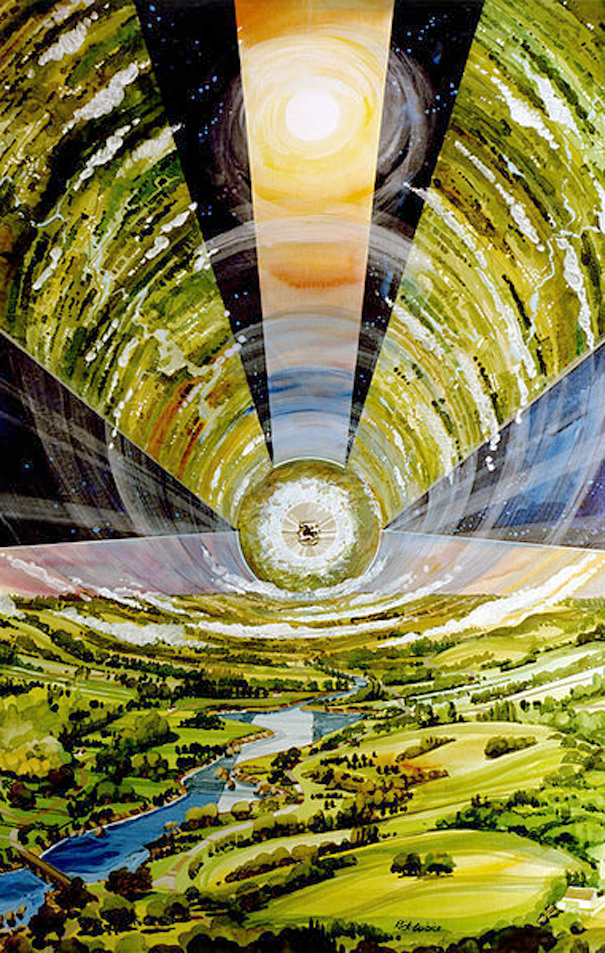
O’Neill was inspired by the papers written by his students. He began to work out the details of a program to build self-supporting space habitats in free space.Among the details was how to provide the inhabitants of a space colony with an Earth-like environment. His students had designed giant pressurized structures, spun up to approximate Earth gravity by centrifugal force . With the population of the colony living on the inner surface of a sphere or cylinder, these structures resembled “inside-out planets”. He found that pairing counter-rotating cylinders would eliminate the need to spin them using rockets.This configuration has since been known as the O’Neill cylinder.

sofi
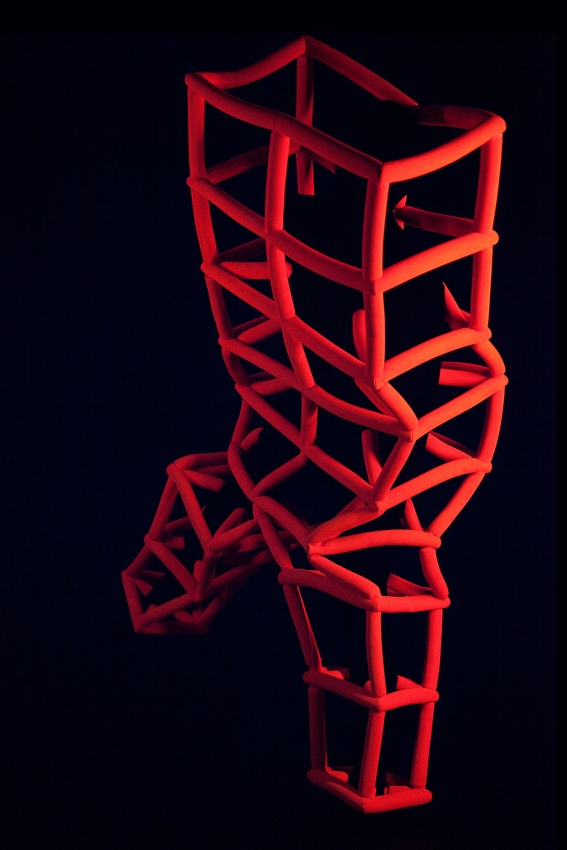
in analysis of the modern skyscraper there is traditionally an aesthetic agenda that localizes itself in a “shoes” or “hat” location. The tower typology has ignored the possibility of a center distortion. This distortion acts as an aesthetic element as well as an organizational(programmatic) locator. By designing from the middle out there is a chance for the building to better blend with its context by keeping the processional elements in the center. Entrance and roof conditions mimic their tower brothers and give a moments rest in the exuberance of design. This proposal creates a center distortion and layers form through a simulation of gravity and the“claspyness” of the outer skin. The inner void acts as a way of creating a Secretary oriented office program rather than a traditional first floor security, freeing up the center of the building to the public. The project looks to rationalize itself through components rather than a monolithic form.
Matilda Home
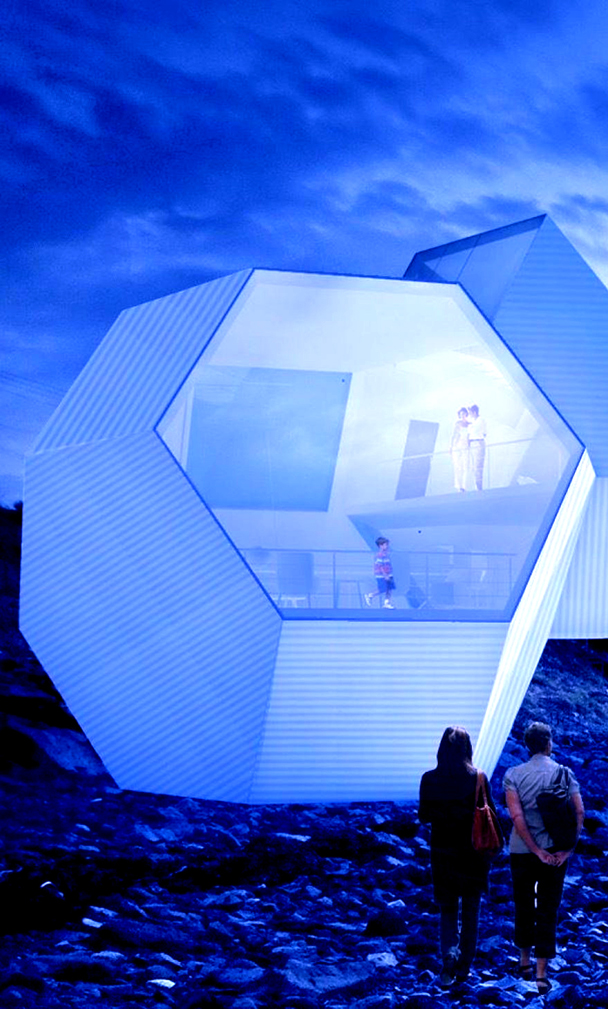
The idea to bring design also in common life attracted us. This is a new concept of habitat of house. It’s a mobile home it can be everywhere around the world; everybody can be a client. It’s a modular unit so many of them can be added together like a cloud. It can even be a city .This is not an object, it is a concept, it can be a city, a landscape or simply an home. Easy to build, it can be done in different materials more or less expensive. Matilda is a completely different space since nowadays we don’t need so much storage space, you just need to have a screen. The only thing is important is to have a nice place to eat, to seat and to sleep but also this can be done with something you close when you don’t need

بوب ويلسون
鲍伯·威尔逊
בוב וילסון
ロバート·ウィルソン
밥 윌슨
БОБ УИЛСОН
Arvo Pärt
Adam’s Passion
Estonian Arvo Pärt is one of the three most performed contemporary composers worldwide. His music has been described as contemplative, sacred, and timeless. “Time for us is the time of our own lives. It is temporary. What is timeless is the time of eternal life. Like the sun, we cannot look at these two directly, but my intuition tells me that the human soul is connected to both of them—time and eternity,” says Pärt. Much like Robert Wilson’s own universe, where time and space are the basic architecture of everything, it is as if these two artists have been waiting to collaborate with one another! ADAM’S PASSION will be a journey into the worlds of sound, light, visual art and performance. It will celebrate Arvo Pärt’s 80th birthday—all in a spectacular venue, the Noblessner Foundry, a vast, old industrial building by Tallinn’s harbo

ИВ БЭЙЛИ
ENTASIS DANCE IV
My work is based on the concepts of balance and coordination. The body interests me as a perceiving mechanical structure. I use my own body as a primary tool to create pieces that experiment with equilibrium through physical, mechanical, plastic and conceptual means. My studio practice is rooted in the tradition of the artist engineer. I design and build suspended and pendular constructions that can sustain their own weight and mine as I perform with them. By climbing and inverting on the structures, I challenge my own perception and creative process.
Three Supermarkets
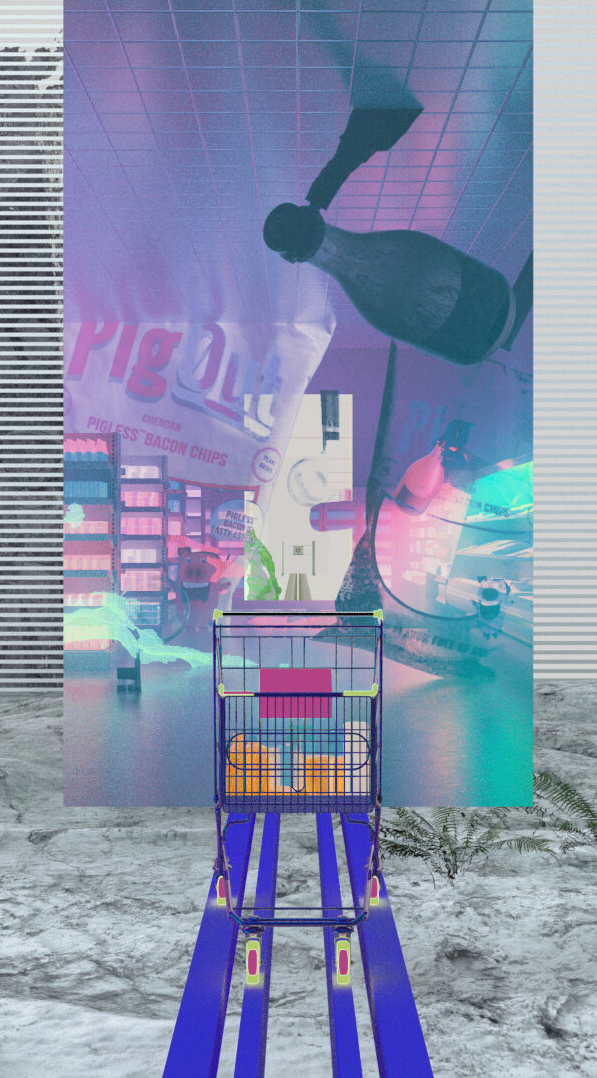
Three Supermarkets is an infinite loop film with a shopping cart riding across multiple coexisting fictional supermarkets. As the first episode of the Phygital Supermarket Trilogy, this film explores the hybrid compositing of the emerging physical and digital media and techniques. The production process of this film uses industrial-grade six-axis Staubli robot arm as shooting equipment, green screen shooting, volumetric video capture, photogrammetry, Cinema 4D Mograph, Redshift shading & rendering, 2D/3D compositing, and other custom build techniques and workflows. Familiar but neglected objects, such as apples and snack bags, were scanned as either static models or animated model sequences from the physical world to the digital space.

Anarchitecture
splitting house
“Of the many shows at the fabled 112 Greene Street gallery—an artistic epicenter of New York’s downtown scene in the 1970s—the Anarchitecture group show of March 1974 has been the subject of the most enduring discussion, despite a complete lack of documentation about it. Anarchitecture has become a foundational myth, but one that remains to be properly understood. Stemming from a series of meetings organized by Gordon Matta-Clark and reflecting his long-standing interest in architecture, the Anarchitecture exhibition was conceived as an anonymous group statement in photographs about the intersection of art and building. But did it actually happen? It exists only through oblique archival traces and the memories of the participants. Cutting Matta-Clark investigates the Anarchitecture group as a kind of collective research seminar, through extensive interviews with the protagonists and a dossier of all the available evidence. The dossier includes a collection of Matta-Clark’s aphoristic “art cards,” the 96 photographs that were produced by the various participants for possible inclusion in the exhibition, and images from a recently unearthed video of Matta-Clark’s now famous bus trip to see Splitting in Englewood, New Jersey.” Mark Wigley

DATA
In “DATA”, SpY offers a reflection on the rapid and widespread inclusion of algorithms in numerous aspects of our lives. In this audio-visual work, digital abstraction is used to explore and interpret how predictive tools operated through algorithms and artificial intelligence are highly beneficial in terms of aspects such as communication, research and medicine, but can also lead us to lose some of our freedoms if they are not used ethically.
Through this immersive audio-visual format, SpY explores new tools such as the holographic fabrics used to give the graphics an amazing sense of weightlessness. A 15-metre high screen made from this fabric was installed in one of Madrid’s smallest streets between the walls of the buildings.

Aerial Assemblies
Self-Assembly is a process by which disordered parts build an ordered structure through local interaction. We have demonstrated that this phenomenon is scale-independent and can be utilized for self-constructing and manufacturing systems at nearly every scale. We have also identified the key ingredients for self-assembly as a simple set of responsive building blocks, energy and interactions that can be designed within nearly every material and machining process available. Self-assembly promises to enable breakthroughs across every applications of biology, material science, software, robotics, manufacturing, transportation, infrastructure, construction, the arts, and even space exploration.
カロリナ・ソアベッカ
Каролина Собечка
Wildlife
FILE FESTIVAL
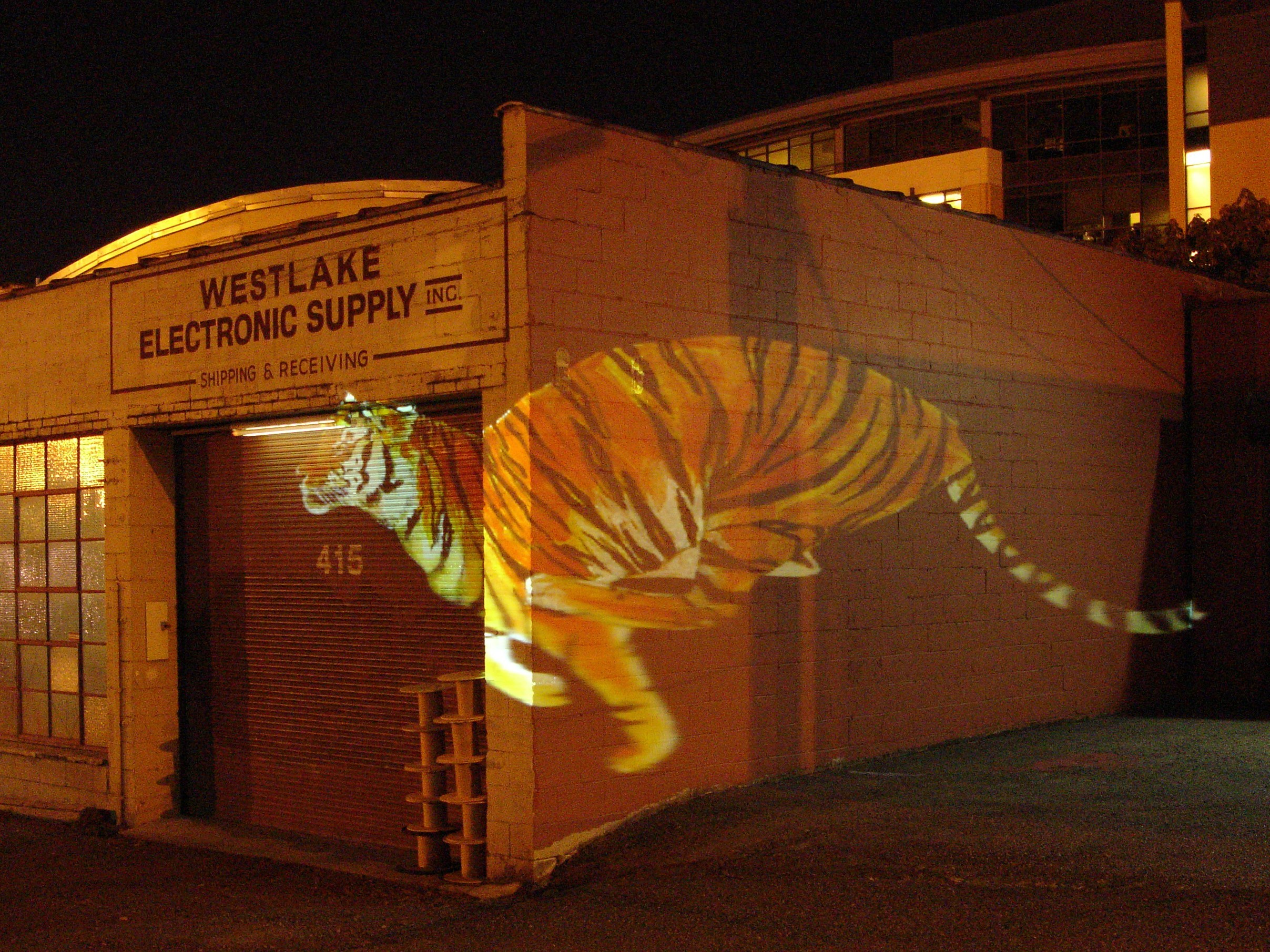
At night a projection from a moving car is shone on the buildings. The car projects a video of a tiger whose movements are programmed to correspond to the speed of the car: as the car moves, the tiger runs along it speeding up and slowing down with the car, as the car stops, the tiger stops also. The framerate of the movie corresponds to the speed of the wheel rotation, picked up by a sensor. The viewers are elevated from the everyday reality through this element of fantasy into a world with more dimensions, possibilities and perhaps beauty.


This research used stigmergy behaviour, another example of agency-based systems, which could be programmed to be highly adaptive to local data. What is most intriguing and attractive in this case, is contrasting organic aesthetics emerging from algorithms like stigmergy, with its plant like formations, and the hyper-rationalisation and genericity of voxelised geometry. Different resolutions were introduced in the facade panels, by using an octree algorithm. The result is a building skin that from afar looks like a plant, but in close up has almost Minecraft-like aesthetics coming from a multi-resolution voxel field. Organic stigmergy (stígma + ergon) partly plays a role in the distribution of data through the facade field, rather than generating geometry. It leaves its imprint in the density of geometry

Loop of Wisdom
Architecture studio Powerhouse Company has created a reception building topped with a circular walking trail as part of a development in Chengdu, China. The structures beneath the walking trail will act as a sales pavilion and reception block for the new Unis Chip City development in Chengdu’s Tianfu New District, which is under construction in the southern part of the city. Powerhouse Company connected these two structures with a bright red rooftop walkway, named Loop of Wisdom, which is designed to make the reception block more useable than if it was a standalone building.

Replica
We begin with a tour of a virtual 3D model of the London house-cum-museum built by 19th-century architect Sir John Soane. The journey traverses the five floors of the museum’s meticulously restored rooms, each filled with original and duplicate fragments of antiquity. Sir John Soane (1753-1837) was one of the foremost British architects of the Regency era, a Professor of Architecture at the Royal Academy, and a dedicated collector of paintings, sculpture, architectural fragments and models, books, drawings and furniture. Soane was awarded the Royal Academy’s prestigious Gold Medal for Architecture, as a result receiving a bursary (funded by King George III) to undertake a Grand Tour of Europe. His travels to the ruins of Ancient Rome, Paestum and Pompeii would inspire his lifelong interest in Classical art and architecture. As an enthusiastic collector, later in life he began to repurpose his home at Lincoln’s Inn Fields as a Museum for students of architecture. With a collection containing thousands of objects ranging from Ancient Egyptian antiquities and Roman sculpture to models of contemporary buildings, Soane’s house had become a Museum by the time of his death.