highlike

Driessens & Verstappen – E-volved Formula #23 – Netherlands

E-VOLVED FORMULA #23

Driessens & Verstappen


FILE SÃO PAULO 2026: Inter-creativity – Art and Technology – Randomic Dimension
Electronic Language International Festival


E-volved Formula #23 – Netherlands

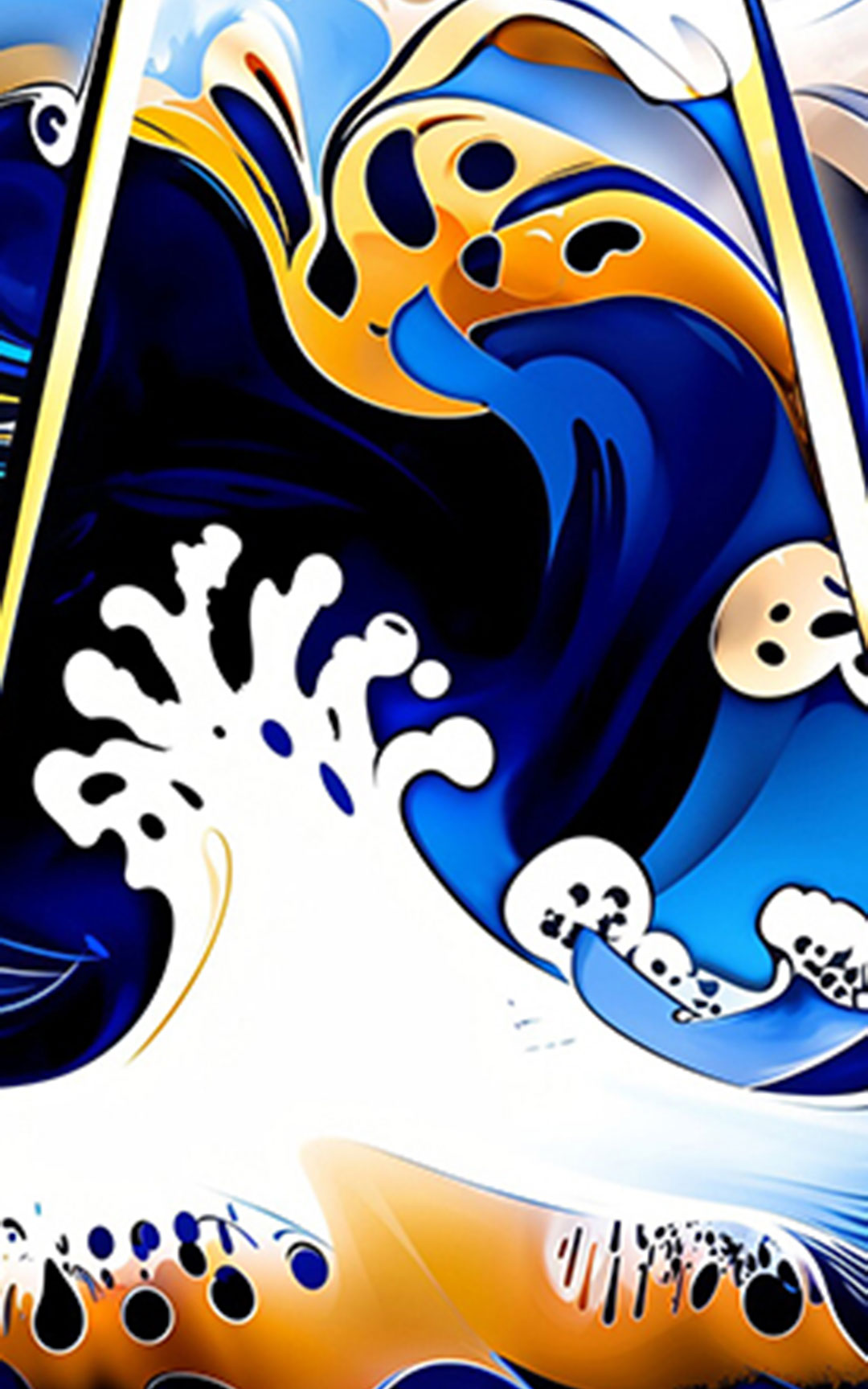
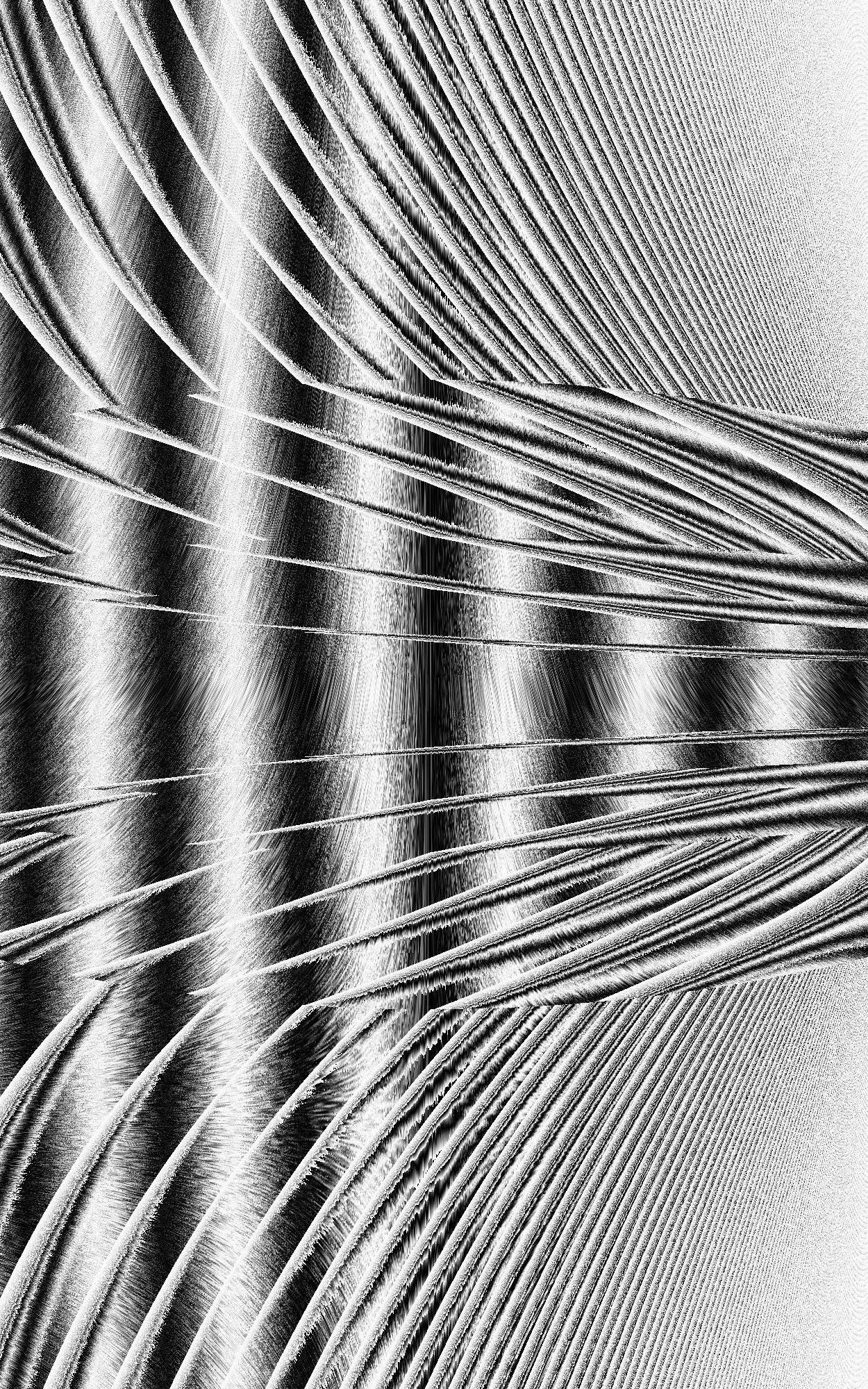
E-volved Formula #23 was “cultivated” using evolutionary software. Mathematical elements are linked together into formulas and displayed. These visualizations are evaluated, and through a process of variation and selection, each new generation adapts better to the viewer’s taste. The collaboration between a breeding machine and a human “gardener” yields results that neither could create on its own. The machine has no sense of aesthetics; for humans, the complex formulas are incomprehensible.

BIO

Driessens & Verstappen have worked together since 1990. In their generative art, they explore the significance of both physical and computer algorithms. The duo has participated in numerous exhibitions; their work is held in collections including Centre Pompidou, MoMA Frankfurt, and Boijmans Van Beuningen. They were awarded by Telefónica (Spain) and Witteveen+Bos (Netherlands).

Driessens & Verstappen

Breed
Breed (1995-2007) is a computer program that uses artificial evolution to grow very detailed sculptures. The purpose of each growth is to generate by cell division from a single cell a detailed form that can be materialised. On the basis of selection and mutation a code is gradually developed that best fulfils this “fitness” criterion and thus yields a workable form. The designs were initially made in plywood. Currently the objects can be made in nylon and in stainless steel by using 3D printing techniques. This automates the whole process from design to execution: the industrial production of unique artefacts.
Computers are powerful machines to harness artificial evolution to create visual images. To achieve this we need to design genetic algorithms and evolutionary programs. Evolutionary programs allow artefacts to be “bred”, rather than designing them by hand. Through a process of mutation and selection, each new generation is increasingly well adapted to the desired “fitness” criteria. Breed is an example of such software that uses Artificial Evolution to generate detailed sculptures. The algorithm that we designed is based on two different processes: cell-division and genetic evolution.

Isabelle Andriessen

Dissonant Equilibrium
Isabelle Andriessen is a visual artist born in the Netherlands (1986). She studied at the School of the Arts Institute of Chicago and the Gerrit Rietveld Academie (NL), where she received her BFA in 2013. Currently she is an MFA candidate at Malmö Art Academy (SE). She lives and works in Amsterdam and Malmö. She is a recipient of the Prins Bernhard Cultuurfonds Fellowship. Her work consists sculpture, installation and performance and has been presented in places like Optical Pavilion, Moscow, Unfair, Amsterdam and Mediamatic Amsterdam. Her work has been presented in online art magazines like Metropolis M and Mister Motley. In July 2014 her work has been mentioned in VOGUE Russia. Recently she has been collaborating with the Dutch National Ballet. Her recent work concern the sensory experience examined through light installations and performances.

Patrick Grandi – Circularité – Brazil / France

CIRCULARITÉ

Patrick Grandi


FILE SÃO PAULO 2026: Inter-creativity – Art and Technology – LED SHOW
Electronic Language International Festival


Circularité – Brazil / France

Circularité is a flow. Kirigami LED shapes rotate and intertwine on the FIESP facade, like a painting that never dries. A permanent cycle between structure and chaos.

BIO

Born in São Paulo in 1978, Patrick spent almost 15 years working in advertising as a freelance 3D artist. He created his first projection mapping in 2015 and, since then, has produced dozens of mappings in France, as part of the Video Mapping Festival in Lille, China (Shining Lights), Japan, Guatemala (Festival de la Luz), Belgium (Bright Festival).

Walter Van Beirendonck

Van Beirendonck schloss seine Studien 1980 an der Königlichen Akademie der Schönen Künste in Antwerpen ab. Er gehört zu der Gruppe der Antwerp Six, zu der die Künstler Dirk van Saene, Dries Van Noten, Ann Demeulemeester, Marina Yee (Alle Abschlussjahrgang 1981) und Dirk Bikkembergs (Jahrgang 1982) gehören.
Seit 1983 entwirft Van Beirendonck seine eigenen Modekollektionen, die sich durch ungewöhnliche Farbkombinationen, Einflüsse durch die Volkskunst verschiedener Nationen sowie grafische Ausdrucksweisen auszeichnen.

john houshmand

arch
John Houshmand creates exquisite art pieces that combine wood, glass, acrylic, and steel into stunning furnishings. He works and selectively harvests trees from, as well as mills and kiln dries wood at his 900-acre, upstate New York farm. He believes that trees are becoming lost in our world of mass furniture production. Much like our philosophy at RWF, John strives to show what wood really looks like.

WALTER VAN BEIRENDONCK

the red list
Nato a Brecht, Belgio, nel 1957, Walter Van Beirendonck studia design della moda presso la Royal Academy of Fine Arts di Antwerp dal 1978 al 1981. Nel 1981 si laurea insieme alla classe che diverrà conosciuta come la “Antwerp Six”, ovvero un gruppo di stilisti diventati particolarmente influenti nel campo della moda, che comprende anche Ann Demeulemeester, Dries van Noten, Dirk Van Saene, Dirk Bikkembergs e Marina Yee.