highlike

David Ricardo Romero Alvis – Danza de piedras y caminos – Colombia

DANZA DE PIEDRAS Y CAMINOS

David Ricardo Romero Alvis


FILE SÃO PAULO 2026: Inter-creativity – Art and Technology – LED SHOW
Electronic Language International Festival


Danza de piedras y caminos – Colombia

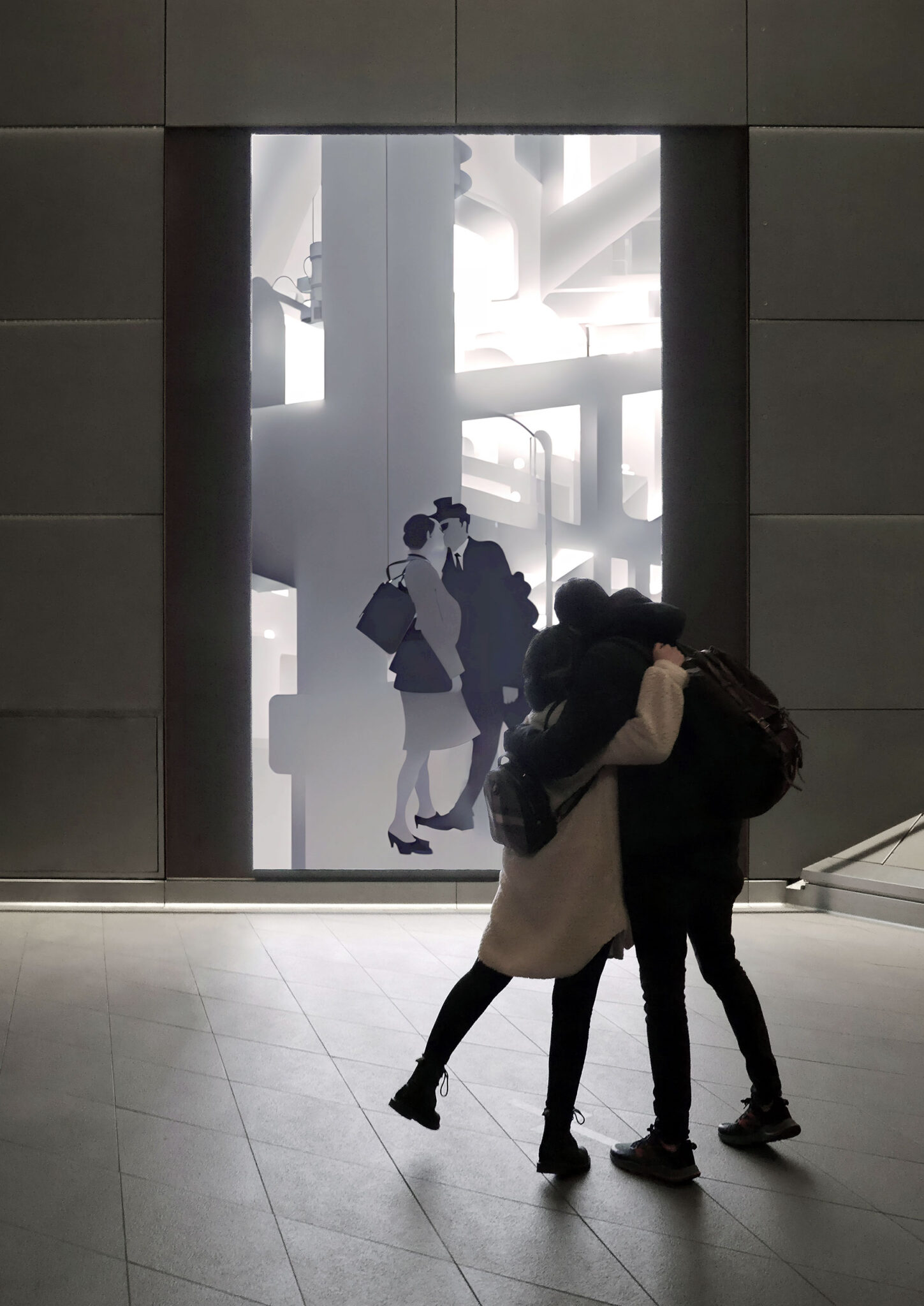
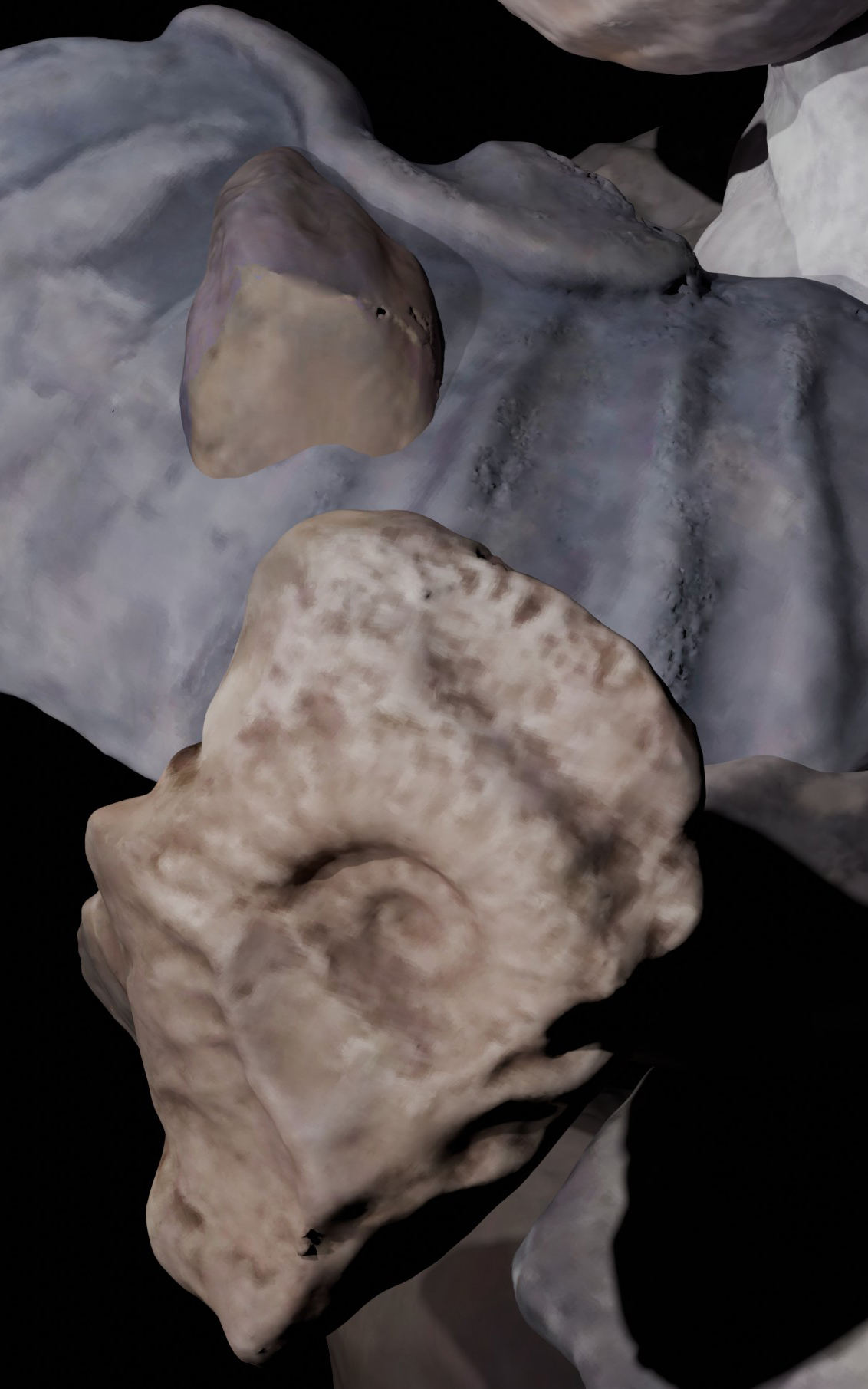
The work emerges from walking. It is built from 3D scans of enchanted stones found along paths, rivers, and Indigenous trails that were paved during the colonial period—ancestral and sacred routes within what is now Colombian territory.

BIO

David Ricardo is a 26-year-old Colombian artist interested in the dialogue between “natural” forms and virtual and electronic spaces. Through a vital materialist approach, he affirms the complexity of forms as a starting point for other possibilities of life and perception.

Zack Nguyen – The Space Between Becomes Us – United States / Vietnam

THE SPACE BETWEEN BECOMES US

Zack Nguyen


FILE SÃO PAULO 2026: Inter-creativity – Art and Technology – VIDEO ART SHORT
Electronic Language International Festival


The Space Between Becomes Us – United States / Vietnam

The Space Between Becomes Us is a meditation on how the artist believes we come into being through one another—how the unseen space between us might carry memory, feeling, and healing. This work reflects a desire not for answers, but for mutual understanding. For the kind of peace that emerges when we let ourselves listen and become, together.

BIO

Zack Nguyen is a hybrid artist and independent curator based in Dallas and active in Berlin. Working across moving image, performance, sound, and new media installation, his practice explores nowness, identity, and the lived body as sites of healing and connection. His work balances minimal form with emotional intensity and has been exhibited internationally across Europe, Asia, and the U.S. 

Guli Silberstein – MATERIALIVE – United Kingdom

MATERIALIVE

Guli Silberstein


FILE SÃO PAULO 2026: Inter-creativity – Art and Technology – VIDEO ART SHORT
Electronic Language International Festival


MATERIALIVE – United Kingdom

Data, body, pixels, fluids, neural networks and nature, all moshed up through a unique combination of generative AI and algorithmic datamoshing. Morphing videos in the uncanny valley, MATERIALIVE becomes a poem for human and nature (co)existence and its processing by organic forces and technological powers. A hybrid emerges: an audiovisual documentary of the hyperreal, or perhaps a living form born from the history of our dreams and hallucinations. A material, perhaps maternity, for thought.

BIO

Guli Silberstein is a London-based digital/AI video artist working for more than two decades. Since earning a Master’s degree in Media Studies from The New School in 2001, he has specialised in VFX, glitch art and AI, exploring how ideas and stories translate into moving forms. His work has been showcased and awarded at festivals and exhibitions worldwide.

Galina Bleikh – The Sleep of Reason Produces Monsters – Israel

THE SLEEP OF REASON PRODUCES MONSTERS

Galina Bleikh


FILE SÃO PAULO 2026: Inter-creativity – Art and Technology – VIDEO ART SHORT
Electronic Language International Festival


The Sleep of Reason Produces Monsters – Israel

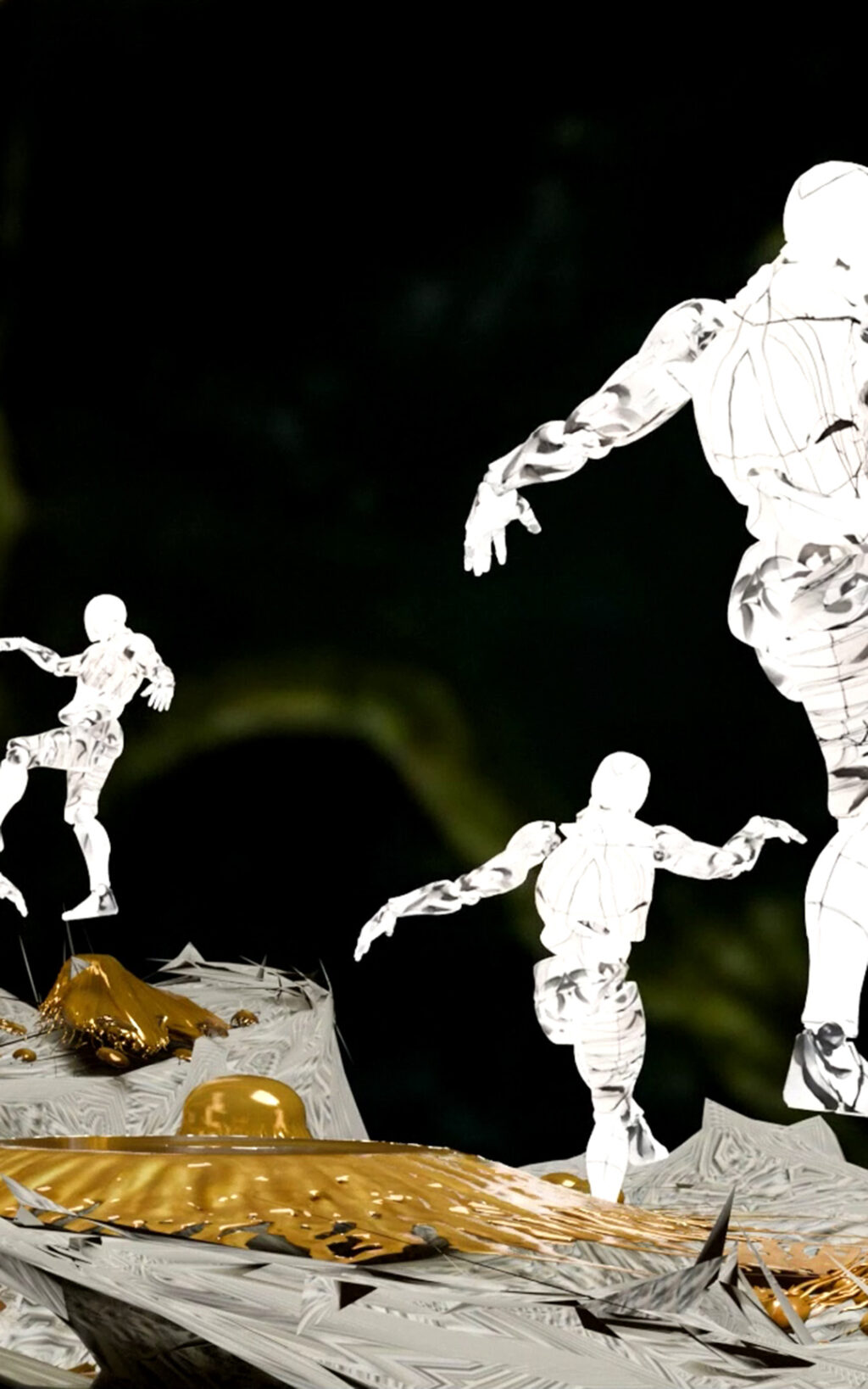
Inverting Goya’s warning, AI Ballet asks: if reason’s sleep produces monsters, what emerges from AI’s eternal wakefulness? The installation explores algorithmic mind control through surveillance and behavioral prediction. Empty halls with silent pianos symbolize obsolete human creativity, while text evolving from “AI” to “GOD” reveals algorithms’ quasi-religious authority. Using AI-generated choreography, the work questions who controls our consciousness and whether autonomy survives.

BIO

Galina Bleikh is a multidisciplinary artist at the intersection of art, technology, and science. She holds an MA from Stieglitz Academy, St. Petersburg, and has been based in Jerusalem since 1993. Her practice spans AI, generative, bio, and digital art. Bleikh exhibits internationally at venues including CICA Museum (South Korea), NordArt (Germany), Haifa Museum of Art, Art Asia Miami, etc.

Brad Necyk & Jason Silva – The Psychedelic Puppet Show – Canada

THE PSYCHEDELIC PUPPET SHOW

Brad Necyk & Jason Silva


FILE SÃO PAULO 2026: Inter-creativity – Art and Technology – Animation
Electronic Language International Festival


The Psychedelic Puppet Show – Canada

The Psychedelic Puppet Show is a surreal satire that confronts the mental health crisis through absurdity and childlike wonder. When Edgar is admitted to a psychedelic puppet hospital, he undergoes bizarre, revelatory treatments that unravel his understanding of sanity itself. As the line between therapy and control dissolves, a playful rebellion emerges—challenging the authority of Western psychiatry and imagining liberation through imagination.

BIO

Jason Silva is a futurist, filmmaker, and Emmy-nominated host of Brain Games on National Geographic. Creator of Shots of Awe, his work explores technology, consciousness, and human potential through cinematic philosophy.

Dr. Brad Necyk is an artist, filmmaker, and writer with a PhD in psychiatry. His work bridges mental health, creativity, and emerging media.

mole^3 – Reincarnation – Japan

REINCARNATION

mole^3


FILE SÃO PAULO 2026: Inter-creativity – Art and Technology – Randomic Dimension
Electronic Language International Festival


Reincarnation – Japan

Forms constructed from the same number of vertices gradually transform into multiple configurations, eventually returning to their original state. Each transition reveals a continuous process of transformation, where structure persists through change. Identity emerges here as something unfixed—capable of becoming many forms, yet remaining fundamentally one.

BIO

mole^3 (mole cubed) is a Japanese printmaker and visual artist who creates algorithm-based moving-image works and woodblock prints. Her practice explores the translation of the structural logic and bodily, tactile sensibilities of printmaking into code, as well as the inverse process of materializing code-based generation into physical forms.

FILE 2026 – Registration Open for Art and Technology Festival

FILE 2026

Registration is now closed for participation in  FILE – Electronic Language International Festival 2026 , one of the most important events dedicated to art and technology. FILE invites Brazilian and international artists , as well as researchers, educators, and creators , to submit original artistic works and educational proposals — lectures, workshops, and training activities — focused on contemporary technological poetics.

Applications were open until February 19, 2026 .

With 26 years of experience , FILE is a non-profit cultural organization dedicated to promoting creation, research, and experimentation in Art and Technology , bringing together artists, scientists, programmers, and thinkers around exhibitions, events, and publications. The selected projects will be part of the FILE 2026 program, scheduled to take place at the FIESP Cultural Center in São Paulo, between August 19 and October 11, 2026,  with the possibility of parallel activities in other Brazilian states.

The call welcomes proposals in a wide variety of languages ​​and formats, intended for indoor or outdoor environments , in which the aesthetic experience emerges from the encounter between interfaces, data, space, and body . FILE 2026 seeks projects that propose new forms of perception, interaction, and critical and poetic reflection , expanding the debate on the aesthetic, cultural, social, and sensory impacts of contemporary technologies.

Access the registration form.

FILE 2026 – Registration Open for Installation Festival – Art and Technology

FILE 2026

Art and Technology Festival | Installations: artistic systems, indoor  or  outdoor , in which the aesthetic experience emerges from the dynamic relationship between interface, data, environment, and body.  Digital technologies, technologies with artificial intelligence, metamaterial technologies, random technologies, sensors, algorithms, and responsive systems are employed by the artist as structural elements of the work, which is completed in the encounter between the work and the participant.

Applications were open until February 19, 2026. Access  the application form.

FILE 2026 | GENERAL REGULATIONS

FILE SÃO PAULO 2025: SYNTHETIKA – Tim Murray-Browne

SELF ABSORBED

Tim Murray-Browne

FILE SÃO PAULO 2025: SYNTHETIKA – Art and Technology – Installations
Electronic Language International Festival


SELF ABSORBED – Scotland

SELF ABSORBED is an interactive installation exploring how AI interprets human identity. A custom model reads the visitor’s body, linking each pose to generative audiovisual output. Unlike human-designed interfaces built on reductive abstractions, this interaction emerges from unsupervised machine learning, forming a connection with a multidimensional, non-linear, and non-representational digital space.

BIO

Tim Murray-Browne is an interactive artist and creative coder. He creates installations and performances using the moving body to shape immersive experiences. His work questions what aspects of our humanity are lost as we entangle ourselves with the bureaucratic mechanics of AI and digital technologies.

FILE SÃO PAULO 2025: SYNTHETIKA – Frederik De Wilde

Hunter and Dog

Frederik De Wilde

FILE SÃO PAULO 2025: SYNTHETIKA – Art and Technology – Installations
Electronic Language International Festival

Hunter and Dog – Belgium

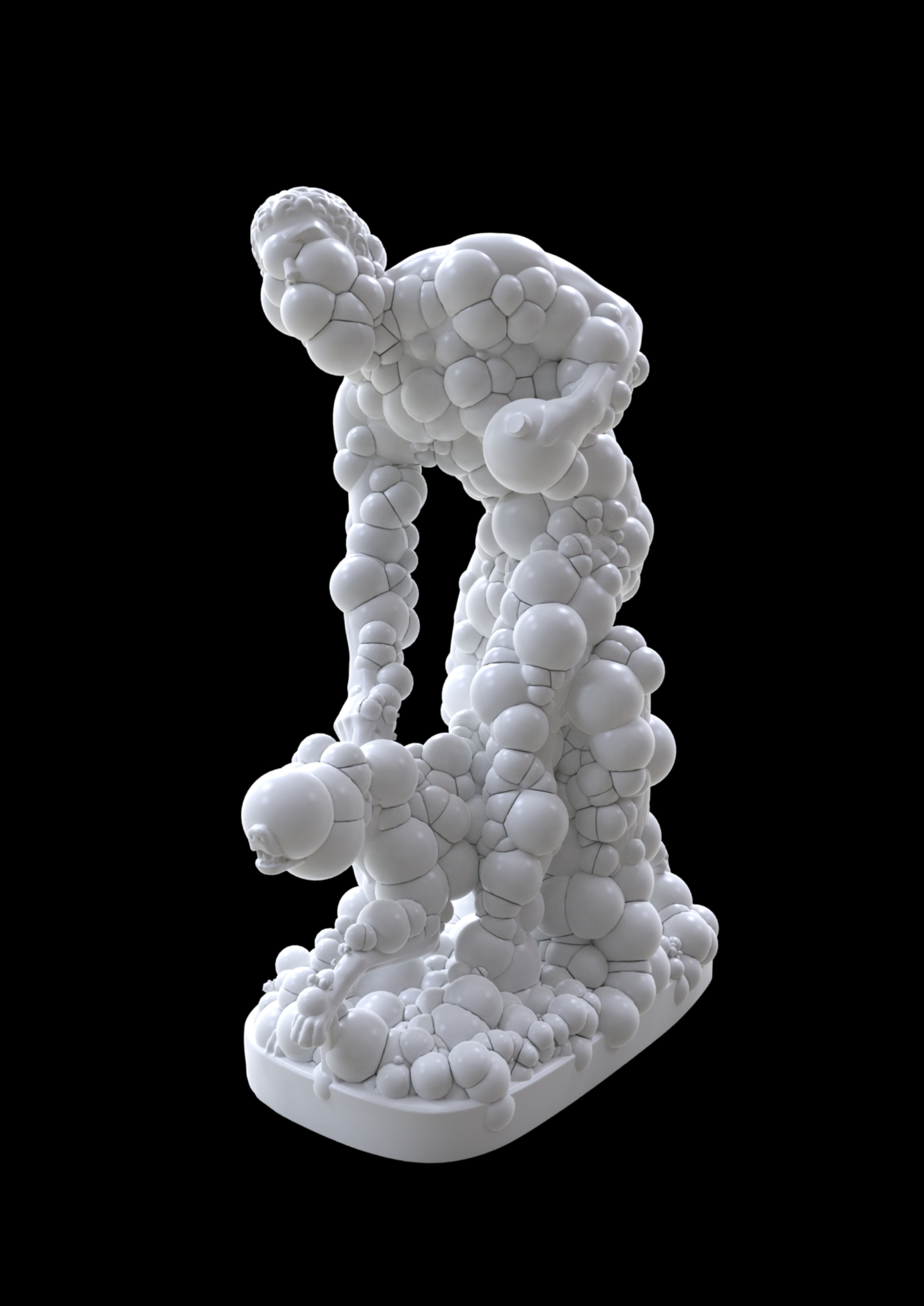
Genetic and evolutionary algorithms reinterpret an existing artwork. De Wilde uses digital scans and custom genetic and evolutionary algorithms as a deconstruction technique to reinterpret and update the nineteenth-century work Hunter and Dog from sculptor John Gibson R. A. (1790–1866).

Frederik De Wilde’s Hunter and Dog interrogates the intersections of human evolution, genetic engineering, and the hybridization of technology and biology. De Wilde reinterprets the historical sculpture through the lens of post-evolutionary theory, engaging with contemporary debates on CRISPR, synthetic biology, and the implications of human-directed genetic modification. CRISPR, the revolutionary gene-editing technology, has introduced an unprecedented rupture in the trajectory of evolution. No longer constrained by the slow mechanisms of natural selection, humans now possess the ability to intervene directly in their own genetic blueprint, marking a shift toward a post-Darwinian paradigm. This technological power, however, is not neutral; it emerges from a historical lineage of scientific inquiry deeply entangled with colonialism. The history of genetic manipulation is inseparable from colonial bioprospecting, eugenics, and exploitative medical experimentation on marginalized populations. Colonial regimes treated bodies—both human and non-human—as sites of intervention, control, and optimization, a logic that persists in contemporary biotechnological frameworks. Post-colonial discourse reveals how genetic engineering risks perpetuating these legacies, reinforcing power asymmetries between those who wield biotechnological control and those subjected to its consequences. CRISPR, while offering the promise of eradicating disease and expanding human potential, also raises ethical concerns about genetic stratification, bio-capitalism, and the commodification of life itself. De Wilde’s work visualizes these tensions, making visible the processes of cell division and morphogenesis—the very biological mechanisms now subject to human intervention. Hunter and Dog does not merely depict the transformation of a neoclassical form but speculates on the future of the human body as a site of engineered evolution. From a decolonial perspective, the artwork questions who has the authority to edit life and to what ends. It challenges the techno-utopian narratives that frame genetic modification as an inevitable progress while obscuring its social, ethical, and ecological implications. By hybridizing art, science, and technology, Hunter and Dog compels us to confront the uncertainties of a CRISPR-driven future: Will genetic editing reinforce existing inequalities, or can it be decolonized and democratized? How do we navigate this post-natural frontier without losing the human—and more-than-human—dimensions of our existence? De Wilde’s work invites us into this speculative space, where the hunter, the dog, and the algorithm coalesce into a vision of a world where biology is no longer destiny, but a site of contested agency.

Where are we going from here? 

BIO

Frederik De Wilde fuses art, science, and tech. Known for his Blackest-Black works that inspired Kapoor’s Vantablack, he has shown at Venice Biennale, BOZAR, MAAT, Pompidou, and ZKM, winning awards like Ars Electronica.
QUBIT AI: Matthias Oostrik

The Forgettable Art Machine

FILE 2024 | Installations

International Electronic Language Festival

The Forgettable Art Machine is an artificial intelligence-driven video installation. When facing the panel, the public has their image captured, starting a cycle of analysis, creation and destruction. From this data, a composite emerges, slowly transforming the visitors’ image into a generative visualization. Once the cycle is complete, the composition is deleted, waiting for a new audience to be captured.

Bio

Matthias Oostrik works at the intersection of digital art, installation art, cinema and architecture. His works establish unpredictable relationships between people and their surroundings. Using digital technology, his installations allow visitors to reshape their environment and their relationships with each other. Oostrik collaborates with renowned professionals and, above all, with his audience, who often become an integral part of his work.

Credits

Co-production: Zester
IA Music: Than van Nispen

GUTO NÓBREGA

Breathing
File Festival
Breathing is a work of art based on a hybrid creature made of a living organism and an artificial system. The creature responds to its environment through movement, light and the noise of its mechanical parts. Breathing is the best way to interact with the creature.
This work is the result of an investigation of plants as sensitive agents for the creation of art. The intention was to explore new forms of artistic experience through the dialogue of natural and artificial processes. Breathing is a pre-requisite for life, and is the path that links the observer to the creature.Breathing is a small step towards new art forms in which subtle processes of organic and non-organic life may reveal invisible patterns that interconnect us.Breathing is a work of art driven by biological impulse. Its beauty is neither found isolated on the plant nor in the robotic system itself. It emerges at the very moment in which the observer approaches the creature and their energies are exchanged through the whole system. It is in that moment of joy and fascination, in which we find ourselves in a very strange dialogue, that a life metaphor is created.Breathing is the celebration of that moment.

THOM KUBLI

FILE SAO PAULO 2017
BLACK HOLE HORIZON
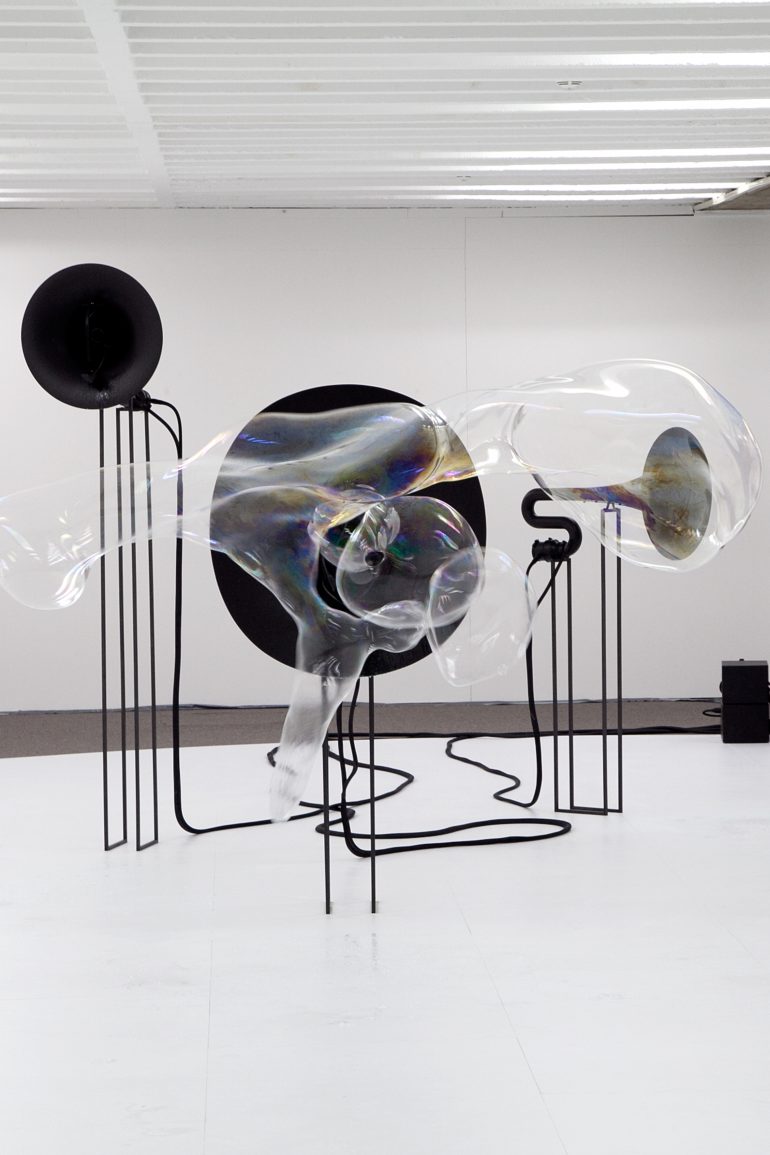
The nucleus of the installation is the invention of an apparatus resembling a ship horn. With the sounding of each tone, a huge soap bubble emerges from the horn. It grows while the tone sounds, peels off the horn, lingers through the exhibition space and finally bursts at an erratic position within the room.

Ricardo Barreto & Raquel Fukuda

Chess Auto-Creative (Self-Replicating)
.

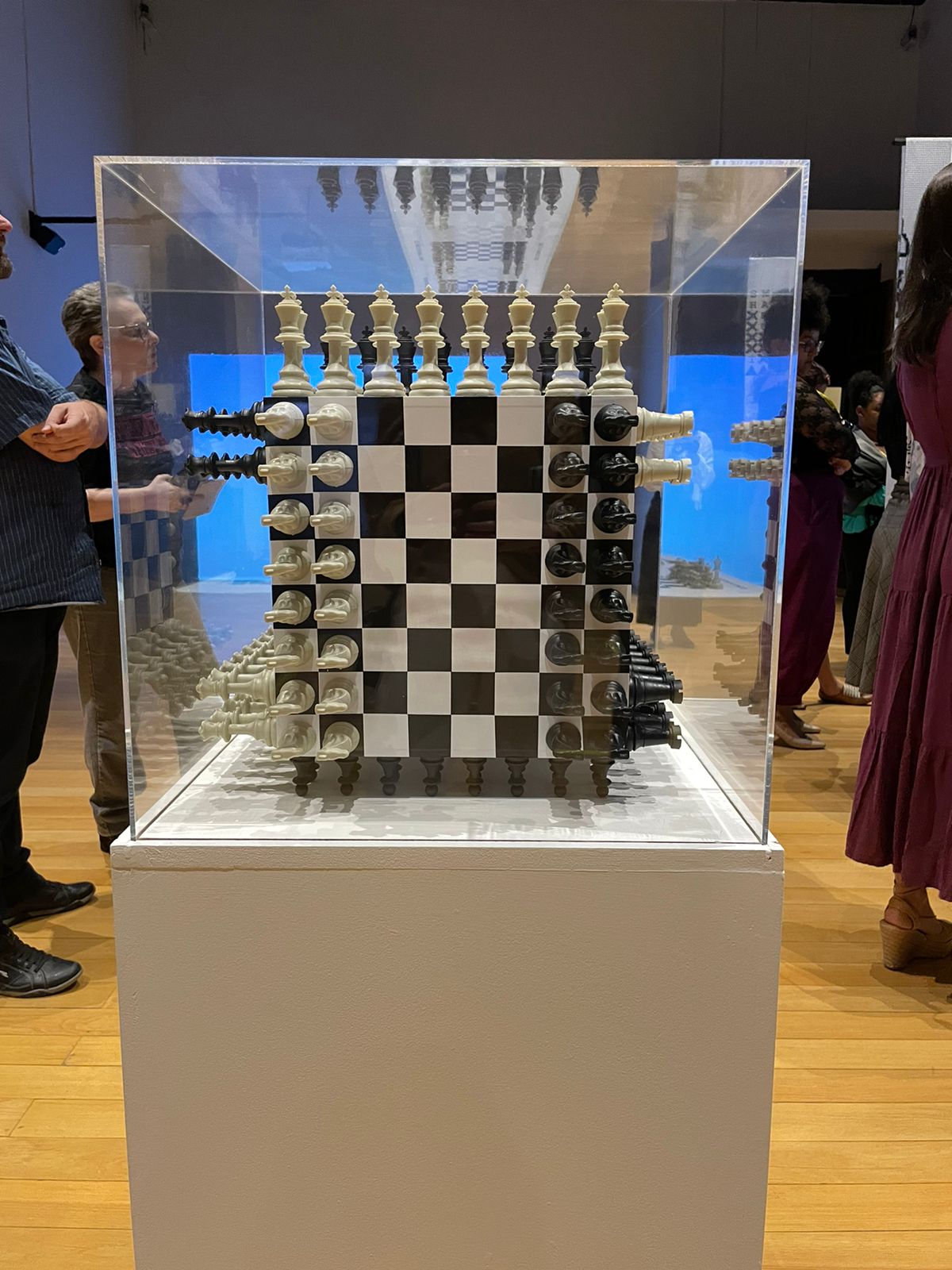
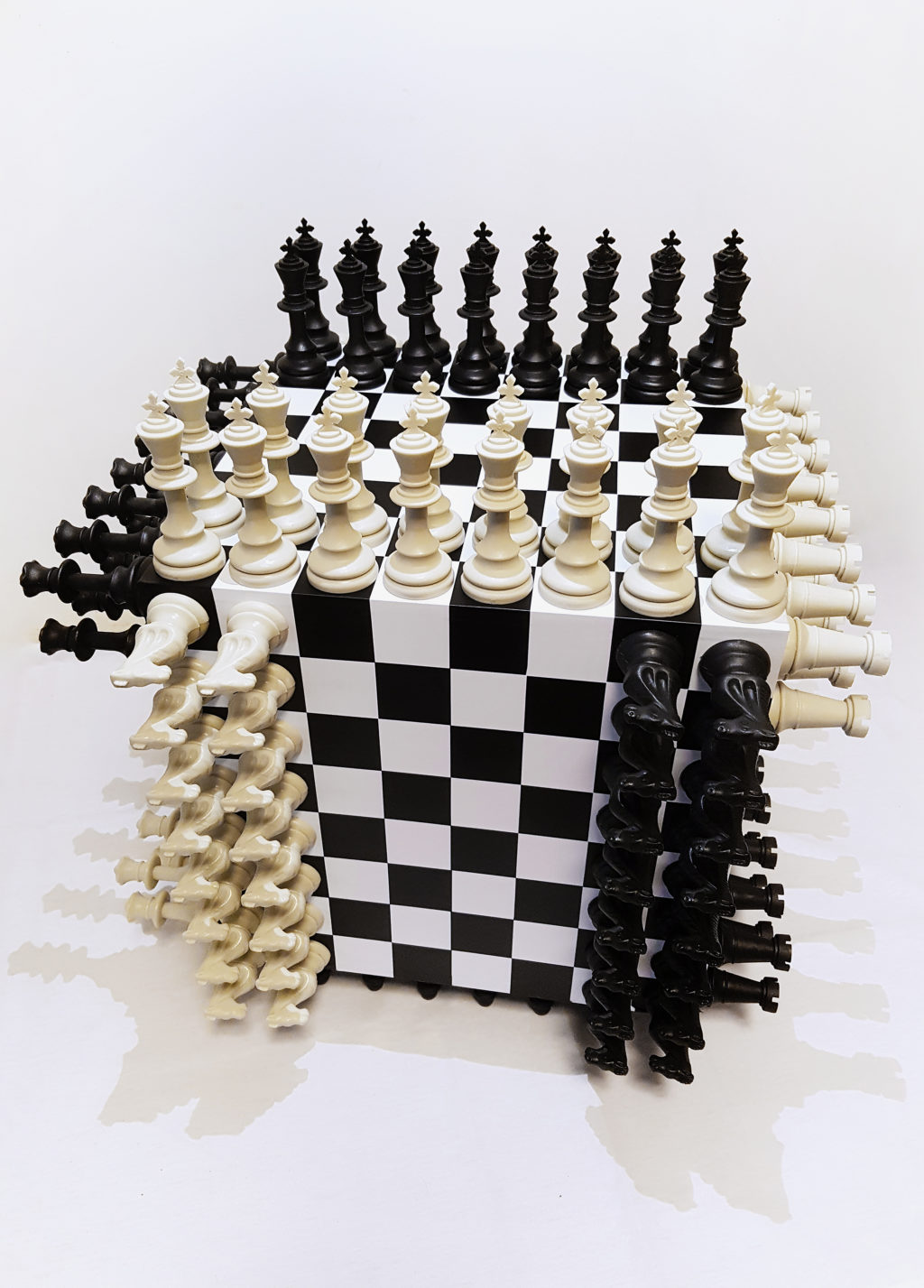
‘Chess Auto-Creative (CHEAC)’, takes the form of a cube where each face corresponds to an 8 x 8 chessboard. The six chessboards can also be arranged in a line to make them easier to see. There are 16 white pieces and 16 black pieces on each of the chessboards, made up of elements such as: kings, queens, bishops, knights, castles and pawns, each of which moves according to the rules of the game. However, instead of the pieces being arranged as normal, they are first set out in patterns where each element is repeated […]Each time a piece is moved to a new position, symmetrically or asymmetrically, a new variation of proto-chess is produced – in other words, a new game emerges. All games generated in this way are, in principle, variations of proto-chess – including the official chess game itself. This means that ‘Chess Auto-Creative’ is not a variant of the official chess game, but its origin.

FILE SAO PAULO 2019

MEMO AKTEN

Body Paint
File Festival

The interaction is simple, movement creates paint. Hidden in the simplicity are layers of subtle details. Different aspects of the motion: size, speed, acceleration, curvature, all have an effect on the outcome: strokes, splashes, drips, spirals; and is left up to the users to play and discover. The installation is designed to work with any number of people and is scalable to cover small or large areas. While the installation is suitable for a single user, when multiple users are present a new dynamic emerges. A user-to-user interaction is born when the audience starts playing with each other via the installation, throwing virtual paint on each other, trying to complete or destroy each other’s paintings.

Encor Studio

Initiation
Initiation is an open-end ceremony initiating the audience to the cult of infinity. The gigantic human-machine-interface is driven by the officiants controlling ancestral tools. As time seems to suspend itself, the crowd emerges into an ever hypnotizing state of oscillation. In this place the swing of the pendulum acts as the ever stimulating vector to guide the audience onto higher grounds.

SEBASTIAN WOLF

Brume
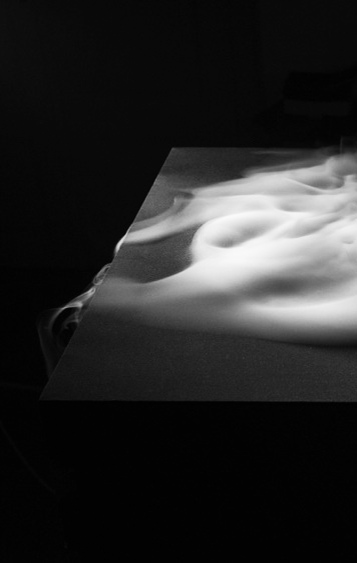
In the collaborative work Brume fog emerges from and self-organizes on the surface on a sculptural element, congealing with light into an elusive stratum. The installation utilizes a series of ultrasonic transducers that generate thick clouds of dense, yet extremely lightweight water vapor. Fog is produced in an inner chamber contained within an enclosure that is outfitted with a porous surface. A small radial blower inside the apparatus gently pumps air into the inner chamber lifting the fog through the membrane, whereby it “settles” on the surface. Viewed from a distance, the fog appears as a visualized mass of air circumscribing the perimeter of the enclosure.

olafur eliasson

オラファー·エリアソン
اولافور الياسون
奥拉维尔·埃利亚松
אולאפור אליאסון
ОЛАФУР ЭЛИАССОН
The unspeakable openness of things
The title of the exhibition, The unspeakable openness of things, is a phrase that philosopher Timothy Morton uses when describing art and it resonates strongly with the artist. Eliasson describes how “Art exists both in and beyond the realm of language. Before the form of an artwork emerges, there’s a not-quite-graspable feeling that flows into the artistic process – and that remains in the finished work as something that cannot be fully expressed. At the same time, the artwork is fundamentally open to visitors. It is ready to listen to them, and able to host their questions and experiences.”

Haru Ji and Graham Wakefield

Infranet
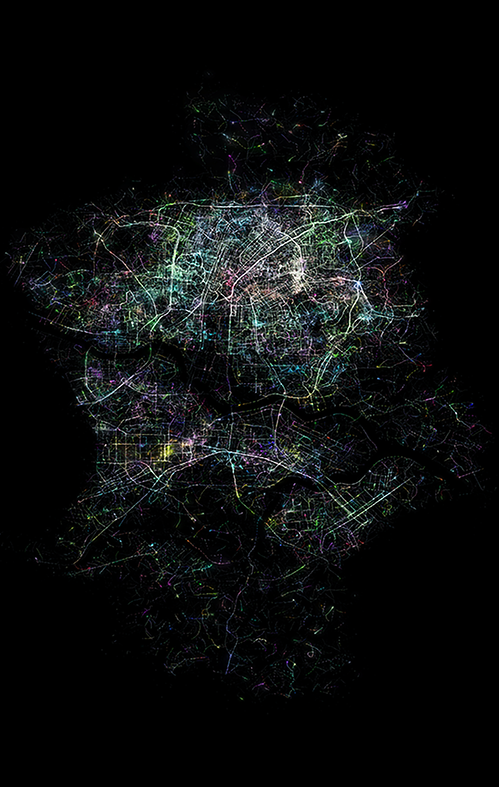
Infranet is a generative artwork realized through a population of artificial lifeforms with evolutionary neural networks, thriving upon open geospatial data of the infrastructure of the city as their sustenance and canvas. Born curious, these agents form spatial networks through which associations spread in complex contagions. In this city as organism, the data grounds an unbounded, decentralized, open-ended, and unsupervised system. Non-human beings flourish in this environment by learning, discovering, communicating, self-governing, and evolving. The invitation is to witness, through immersive visualization and sonficiation of this complex adaptive system, how a new morphologic landscape emerges as a possible but speculative city.

KRISTA VAN DER NIET

Криста ван дер Ниет

The work of Krista van der Niet emerges from a dreamlike state of mind, whereby her imagination brings the things around her to life. She seems to glide along the lightness of things and grasps the beauty of the pure object. During the making process objects gain a metaphysical layer of meaning. She is the guiding factor for the viewpoint of her audience, in order to convey her perception. At this moment the sculptor becomes a photographer and you stand still together with her.

Ricardo Barreto and Raquel Fukuda

Chess Auto-Creative (Self-Replicating )
‘Chess Auto-Creative (CHEAC)’, takes the form of a cube where each face corresponds to an 8 x 8 chessboard. The six chessboards can also be arranged in a line to make them easier to see. There are 16 white pieces and 16 black pieces on each of the chessboards, made up of elements such as: kings, queens, bishops, knights, castles and pawns, each of which moves according to the rules of the game. However, instead of the pieces being arranged as normal, they are first set out in patterns where each element is repeated […]Each time a piece is moved to a new position, symmetrically or asymmetrically, a new variation of proto-chess is produced – in other words, a new game emerges. All games generated in this way are, in principle, variations of proto-chess – including the official chess game itself. This means that ‘Chess Auto-Creative’ is not a variant of the official chess game, but its origin.

FILE SAO PAULO 2019

Mai Yamashita + Naoto Kobayashi

infinity
filefestival
“Paths are made by walking.” In order to determine whether the above phrase was actually true, Yamashita and Kobayashi kept running in a park for five days. In the fast-forward movie compiled from digital photographs taken one per second, a path with the shape of infinity gradually emerges as they move in high-speed.

David Lynch

Дэвид Линч
ديفيد لينش
大卫·林奇
デビッドリンチ
데이비드 린치
Дэвид Линч
Eraserhead
The Man in the Planet (Jack Fisk) pulls levers in his home in space, while the head of Henry Spencer (Jack Nance) floats in the sky. A giant spermatozoon-like creature emerges from Spencer’s mouth, floating into the void. The Man in the Planet appears to control the creature with his levers, eventually making it fall into a pool of water.
cinema

Krista van der Niet

КРИСТА ВАН ДЕР НИЕТ
The work of Krista van der Niet (1978) emerges from a dreamlike state of mind, whereby her imagination brings the things around her to life. She seems to glide along the lightness of things and grasps the beauty of the pure object. During the making process objects gain a metaphysical layer of meaning. She is the guiding factor for the viewpoint of her audience, in order to convey her perception.

Zhu Pei and UNRBANUS

Digital Beijing
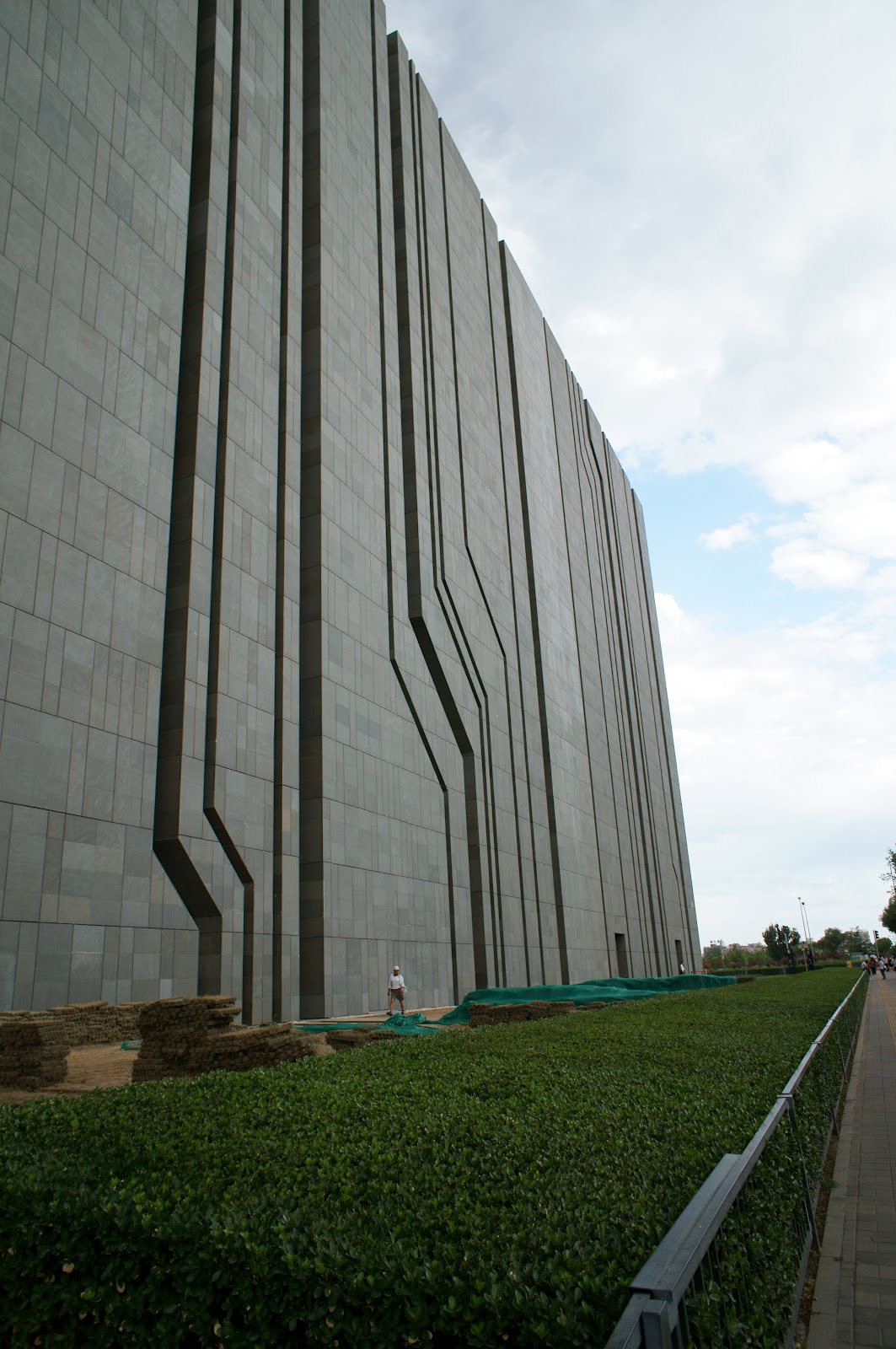
The Digital Beijing building begins to explore what will occur in the digital epoch. The building served as the control and data centre for the 2008 Olympics. The concept for Digital Beijing was developed through reconsideration and reflection on the role of contemporary architecture in the information era. Resembling that omnipresent symbol, the bar code, the building emerges from a serene water surface. The façade itself is detailed to resemble an integrated circuit board.

LIANE LANG

Spectres
Lang explores the power of the figurative sculpture in this as in many other projects, its use as a tool for propaganda or political power. Her work with ancient statues draws attention to the object itself, which emerges from their original use and purposes as a thing in itself, through the passage of time.more…

Ralf Baecker

Putting The Pieces Back Together Again

The kinetic installation “Putting the Pieces Back Together Again” is a complex system with self-organizing and emergent behaviour, at the same time it is an artistic inquiry and meditation on contemporary scientific methodology. The installation investigates non-hierarchical communication and collective behaviour by implementing such a system physically through many electro-mechanical actors.
The Installation consists of 1250 stepper motors arranged in a two dimensional grid of two by two meters. Each motor is equipped with a pointer made from white acrylic glass. The radii of the pointers are chosen to intersect with the pointers of its neighbours. All motors are excited with the same alternating current that let them move initially in a random direction. Each actor is at the same time sensing its environment. In the event of a collision the pointers reverse their turning direction. This is achieved through a custom motor control circuit. Through the interplay of many entities a complex behaviour emerges on the surface of the installation. By manipulating the signals during runtime the system will form spontaneous pattern on its surface. It seems like they are negotiating it’s position with nearby actors. By this the system is showing behaviour of self-organization. The installation drifts through various activation levels during its run time by this it constantly evolves new formations and constellations (crystallization).

Cerith Wyn Evans

СЕРИС ВИН ЭВАНС
ケリス·ウィン·エヴァンス
Form in Space…By Light

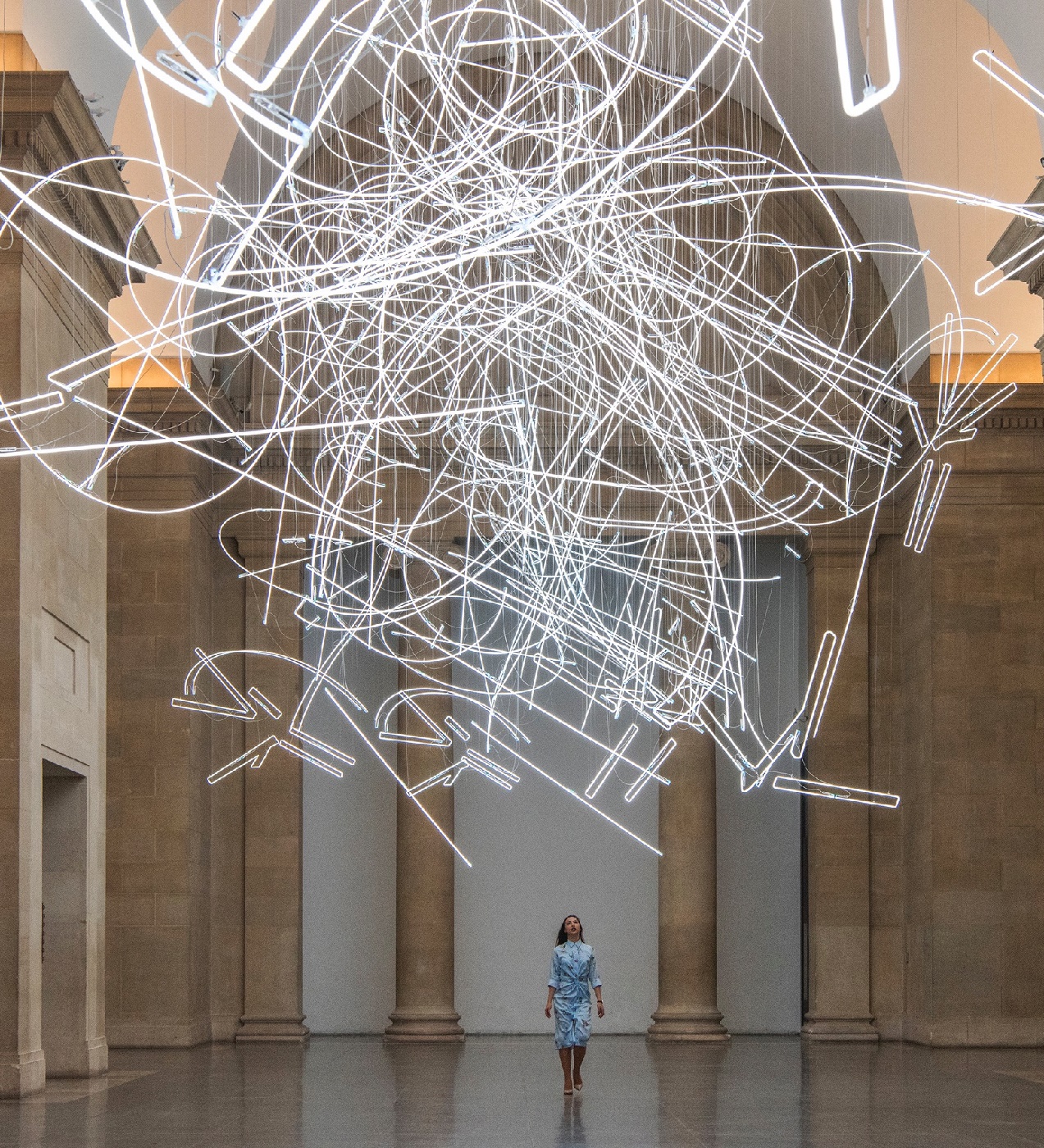
‘Cerith’s installation sits beautifully within the space, unfolding as you walk through,’ explains Clarrie Wallis, Tate’s Senior Curator of Contemporary British Art. The neon experience builds, from a single ‘peep hole’ ring in the South Duveens, through which you can glimpse swirls of radial light and an imposing octagon in the central gallery. The fractured neon fragments look like frantically drawn sparkler-lines on fireworks night.But there’s method and logic within these celestial scribbles. Hidden in the design are references to a host of highbrow sources, from Japanese ‘Noh’ theatre, to Marcel Duchamp’s The Bride Stripped Bare by her Bachelors, Even (The Large Glass), 1915-23. Don’t worry if you missed them. The beauty of rendering precise (verging on obscure) references in such a celebratory neon explosion allows for multiple – if not endless – interpretations.Each way you look at the sprawling 2km of neon tubing, a different shape or symbol emerges. No small thanks to the elegant way in which the structures have been painstakingly suspended. ‘There were over 1000 fixing points, and obviously we couldn’t drill 1000 holes in the Grade II listed building,’ Wallis explains. ‘We had to work with structural engineers very intensely, so as to be completely happy and convinced that we would be able to remove it without damaging the fabric of the building.’Though it seems too soon to be discussing the installation’s removal, Wallis has a point. It’s a visibly fragile, delicate sculpture – whose impermanence makes it more intriguing. As it is a site-specific sculpture, it can’t be recreated elsewhere. What’s more, because the neon tubes are filled with a constantly moving stream of pulsing, vibrating gasses, visitors will never see the same sculpture twice.

PAUL CHAN

1st light

Paul Chan’s work summons the darkness that envelops us despite the greedy illumination of our cities. Evoking our world on the verge of disintegration, it celebrates the light that emerges in too much light.
The fight is no longer the fight between day and night that inaugurates Murnau’s Faust, but that between the light of the spirit and the light of things. In this shadow theater, under the auspices of a telegraph pole shaped like the Golgotha ​​cross, we witness the rise of the objects of our consumerist societies.
Phones, I-Pods, scooters, whole trains rise to the sky, saved, as the shadows of men fall, hurled to the abyss, like the suicide bodies of “September 11” victims falling from burning towers.
The image, gradually modified along the continuum of projection, carries with it the prophecies of the Apocalypse rehashed by American fundamentalist movements, and the obvious disgrace of a society that celebrates its materialist cult.

Ballet Preljocaj

AND THEN, ONE THOUSAND YEARS OF PEACE
And Then, One Thousand Years of Peace is a huge, ambitious monolith of a work. First created by Angelin Preljocaj for the Bolshoi Ballet in 2010, it takes inspiration from the vision of apocalypse conjured by St John in the biblical Book of Revelation.There are no horses galloping across the stage or horned beasts. But Preljocaj sets himself a barely less daunting task: choreographing the essential meaning of apocalypse, as a cataclysm so profound it lays bare the very essence and history of human nature.Preljocaj launches his work with a shattering opening sequence. Ten women drive through hard, slicing, geometric formations; lights flash, electro-percussive music reverberates; and the air becomes as thick and swarming as a tropical thunderstorm as the movement accelerates towards its convulsive climax.Out of this intensity emerges a Garden of Eden tranquillity, where men lope and flutter in delicately animalistic moves, and two women in white tunics play like lazy cherubs.

Mette Ingvartsen

The Artificial Nature Project
In The Artificial Nature Project a new encounter between human and non- human performers emerges from the following questions:What does it mean to make a choreography for materials where human movement is no longer in the center of attention?How can one address the force of things, materials, objects and matters as something that acts upon humans?What is the relationship between the animate and the inanimate world?
The outcome is a performance that literally throws things around. Materials fly through the air giving rise to a landscape that constantly transforms itself. Throughout the performance the view is persistently changing: a calm contemplative site may turn into an energetic chaos of stuff being projected into space. Or, a flood wave becomes a storm of confetti whirling through the air, rushing over the stage. The theater stage gets covered with and traversed by various objects and raw materials, creating a disastrous mess of small, thick, light, big, heavy, thin, breakable and resistant things.

Cao Fei

曹斐
ツァオ·フェイ
Чао Фей
Haze and Fog

Cao Fei’s ‘Haze and Fog’ is a new type of zombie movie set in modern China made by one of the most important Chinese artists working today. Working with film, photography, installation and performance Cao Fei probes her personal and cultural relationship to metropolitan China.Rather than positioning activity as good vs evil, Cao Fei’s major new video commission explores how the collective consciousness of people living in the time of what the artist calls “magical metropolises” emerges from seemingly tedious, mundane, day-to-day life. This magic reality is created through a struggle at the tipping point between the visible and the invisible.

Studio Nucleo

CARBONIFEROUS table

Carboniferous is a table that cuts through space, definite and strong.Its many layers of black surface together create a shape, a crystallization of a quick movement, crushing, leading the eye towards the future.The honeycomb cardboard, covered with fiber glass and resin is finished off with layers of carbon fiber.The carbon fiber composes and traces the design, the movement into its unique strength.
In Carboniferous you get the feeling that the top surface does not necessarily represent the ideal landing platform.On another perspective the landing surface generates the powerful and matherical base.
Carboniferous is flowing and exploding, like an aggressive wind with a clear direction.As the earth below, coal is extracted into a new form, the result of sediment build-up of plants,
and also the secrecy and conspiracy of the Carbonari, from underground and from the depth of their hiding places,which emerges a few decades later into the tricolore (the three colours of the Italian flag).
Coal, a dense network of plant remains, and Italy, a mix of cultures and different latitudes.Italian amalgam of different origins, Italy particle edges, Italy multiform, Italy tangle of angles,Italy blunt, concave and convex, Italy Alpine wedge, Italy coal.Sediment of a combustion that melted and transfigured particles.

POSTCOMMODITY

Do You Remember When?

The hole and exposed earth of Do You Remember When? becomes a spiritual, cultural and physical portal – a point of transformation between worlds – from which emerges an Indigenous worldview engaging a discourse on sustainability. The block of concrete on the pedestal – the foundation of the institution constructed on top of tribal lands – functions as a trophy celebrating Indigenous intervention in opposition to a Western scientific worldview. The closed-circuit audio broadcast of a Pee Posh social dance song performed by the collective provides the psychosocial soundtrack of the transformation process. The work shifts the sustainability from a focus dominated by Western science to a balanced approach inclusive of Indigenous knowledge systems.