highlike

Vahid Qaderi & Razieh Kooshki – Compress Road – Austria

COMPRESS ROAD

Vahid Qaderi & Razieh Kooshki


FILE SÃO PAULO 2026: Inter-creativity – Art and Technology – MUSIC
Electronic Language International Festival


Compress Road – Austria

The project began with an observation about contemporary spaces, both digital and natural: many environments repeat themselves at different scales. Cities, interfaces, virtual worlds, and nature itself share similar structural patterns. The road became a metaphor for moving through these layered systems, suggesting a compression of time, memory, and navigation.

BIO

Vahid Qaderi is an Iranian media artist, electronic musician, and visual artist based in Linz, Austria. His practice spans sound design, music production, AR/VR, video games, 3D animation, and interactive audiovisual and video art. His work has been presented at festivals including Ars Electronica, the Geneva International Film Festival, and Radar Festival. 

Razieh Kooshki is an Iranian interdisciplinary artist based in Linz, Austria. Her practice focuses on generative interactive visuals, VR experiences, and video art, exploring the relationship between sound and non-narrative moving images. Her work has been presented at festivals including Ars Electronica, the Geneva International Film Festival, and Radar Festival.

Alan Bogana – Restless Glows – Switzerland

RESTLESS GLOWS

Alan Bogana


FILE SÃO PAULO 2026: Inter-creativity – Art and Technology – VIDEO ART SHORT
Electronic Language International Festival


Restless Glows – Switzerland

Restless Glows is an experimental video essay exploring how luminous technologies shape perception, embodiment, and desire. Filmed across East Asia and Europe, and interwoven with CGI, motion-capture studies, and AI-generated imagery, the work examines light as both a technology of care and an urban infrastructure, oscillating between utopia and control.

BIO

Alan Bogana is a Swiss artist based in Geneva, Switzerland.

His practice spans installations, sculptures, time-based media, holography, and virtual environments. Across these formats, he investigates light as both material and speculative agent, focusing on how technoscientific cultures shape perception, knowledge, and imaginaries of nature.

S4RA – lil~mér~maid~~ ~ – Portugal

LIL~MÉR~MAID~~ ~

S4RA


FILE SÃO PAULO 2026: Inter-creativity – Art and Technology – Animation
Electronic Language International Festival


lil~mér~maid~~ ~ – Portugal

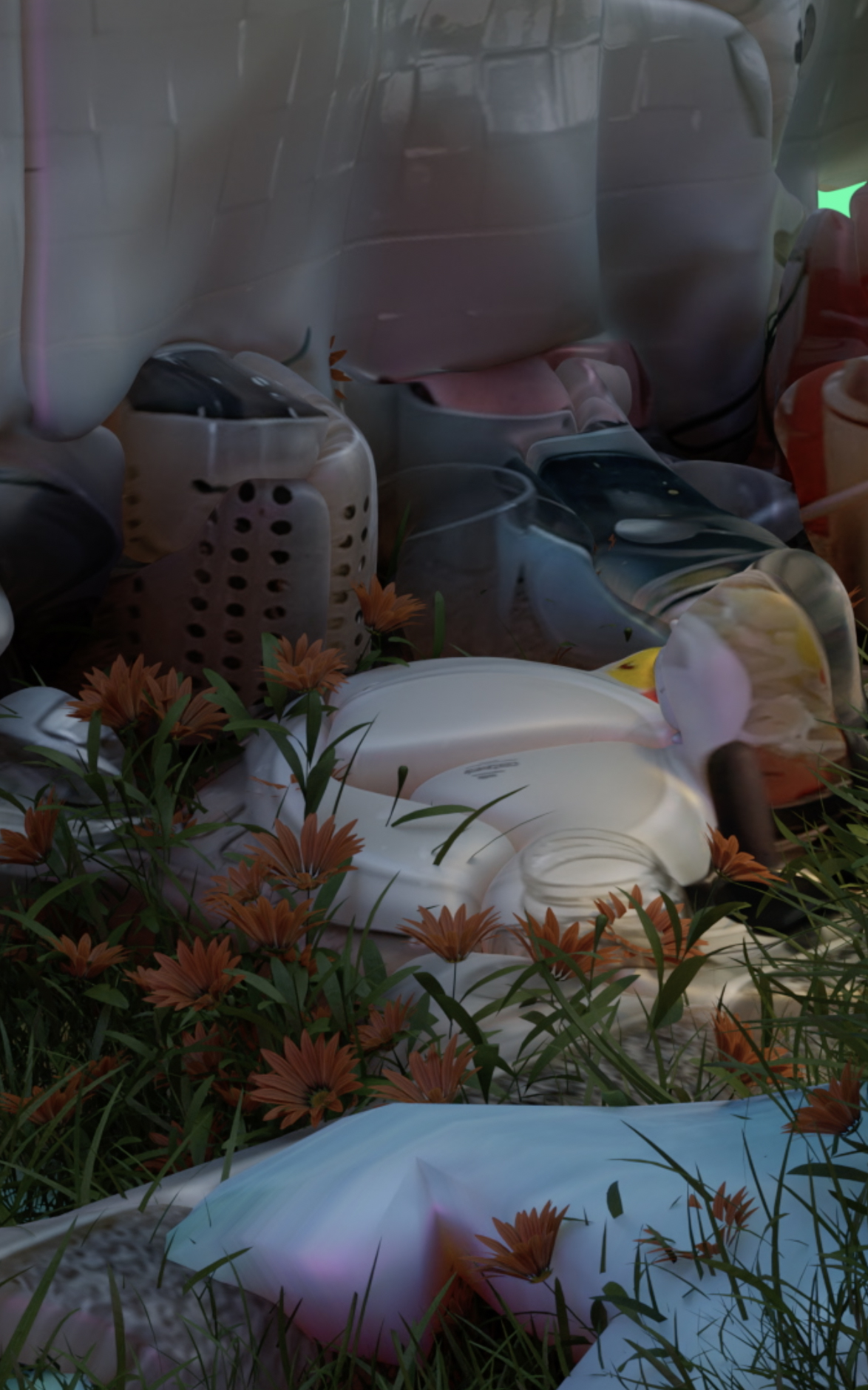
Emerging from the liquid space between myth and simulacrum, a mermaid who once gave up her voice and tail reappears multiplied across digital surfaces, where the body fragments and expands through states of desire and silence. An echo, foam and ghost of an unstable presence. It unfolds a restless hybridity, haunted by scripted roles and metamorphosis to exist in the age of hyperreality.

BIO

S4RA works with video installation and immersive digital environments. Explores consensual power relations, desire and confinement, crossing the political body with liquid and post-capitalist landscapes. Waves are imagined as an affective system and interface of information — an economy between pleasure & surveillance. Moves in cycles of liberation, where the virtual environment is simultaneously territory.

Peter Burr & Mark Fingerhut – DESCENT – United States

DESCENT

Peter Burr & Mark Fingerhut


FILE SÃO PAULO 2026: Inter-creativity – Art and Technology – Animation
Electronic Language International Festival


DESCENT – United States

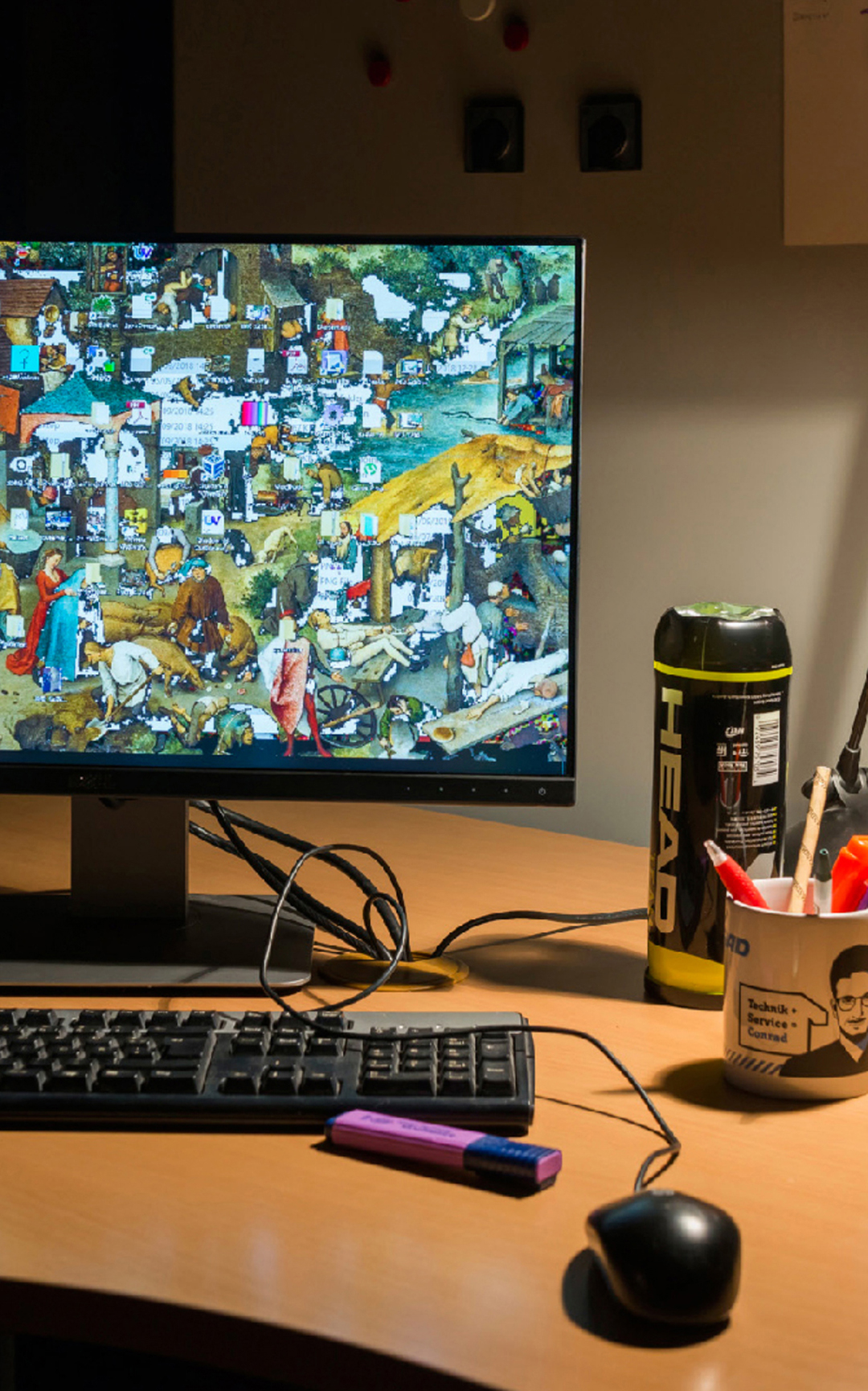
In 1562, Pieter Bruegel the Elder completed The Triumph Of Death, a panorama where black smoke blots out the sky, dead fish litter the shore, and skeletons test a myriad of death techniques. Over 200 years earlier, the Black Death wiped out half of Europe’s population, triggering upheavals that shaped medieval history. Alongside Mark Fingerhut and Forma, Burr created DESCENT, a desktop application that meditates on this darkness through a spiraling digital plague—ending with a single eye watching the rats destroy themselves.

BIO

Peter Burr is a Brooklyn-based artist whose immersive environments transform computational systems into emotional, sensory experiences. Working across video, software, and installation, he explores the relationship between human-machine interfaces and the systems that shape them. A Guggenheim Fellow and Creative Capital grantee, his work has been exhibited internationally at institutions including MoMA, the Whitney, and Centre Pompidou.

Mark Fingerhut is a New York-based artist, programmer, performer, and writer whose work spans software art, video, installation, and live digital performance. Using code, choreography, humor, and experimental storytelling, he creates works that explore network culture, computer interfaces, and the poetics of everyday digital experience.

Ayumu Nagamatsu – ACW SunaoSystem – Japan

ACW SUNAOSYSTEM

Ayumu Nagamatsu


FILE SÃO PAULO 2026: Inter-creativity – Art and Technology – Randomic Dimension
Electronic Language International Festival


ACW SunaoSystem – Japan

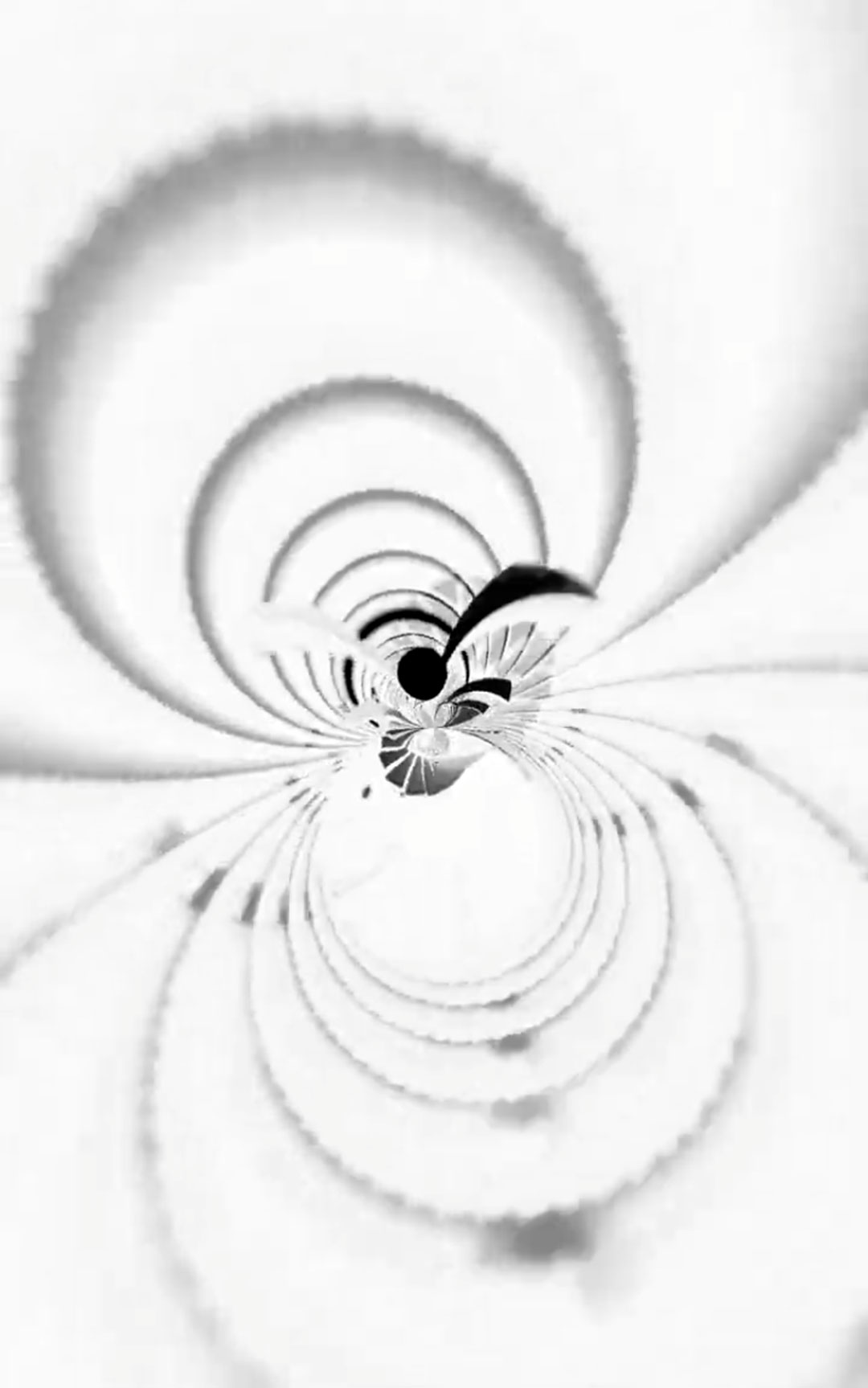
This work uses a sound file within a custom audiovisual system to generate and record visuals. Instead of CG software, all forms are produced in C/C++ with openFrameworks. The program detects audio attacks and autonomously changes scenes, effects, and parameters. Drawing on early CG methods such as randomness, coordinate transforms, continuous mappings, and fractals, it creates real-time images that are both geometric and photorealistic. The source code is fully open online.

BIO

Studied art history before moving into app development and generative art. He studied at Keio University, Japan, Kunstuniversität Linz, Austria, and in 2018 completed an MA in Media Art at IAMAS, Japan. His work, inspired by Generative Art and Visual Music, combines computational geometry with sound, video, interaction, and real-time environments.

Yves Peitzner – BIOVOLT – Germany

BIOVOLT

Yves Peitzner


FILE SÃO PAULO 2026: Inter-creativity – Art and Technology – Installations
Electronic Language International Festival


BIOVOLT – Germany

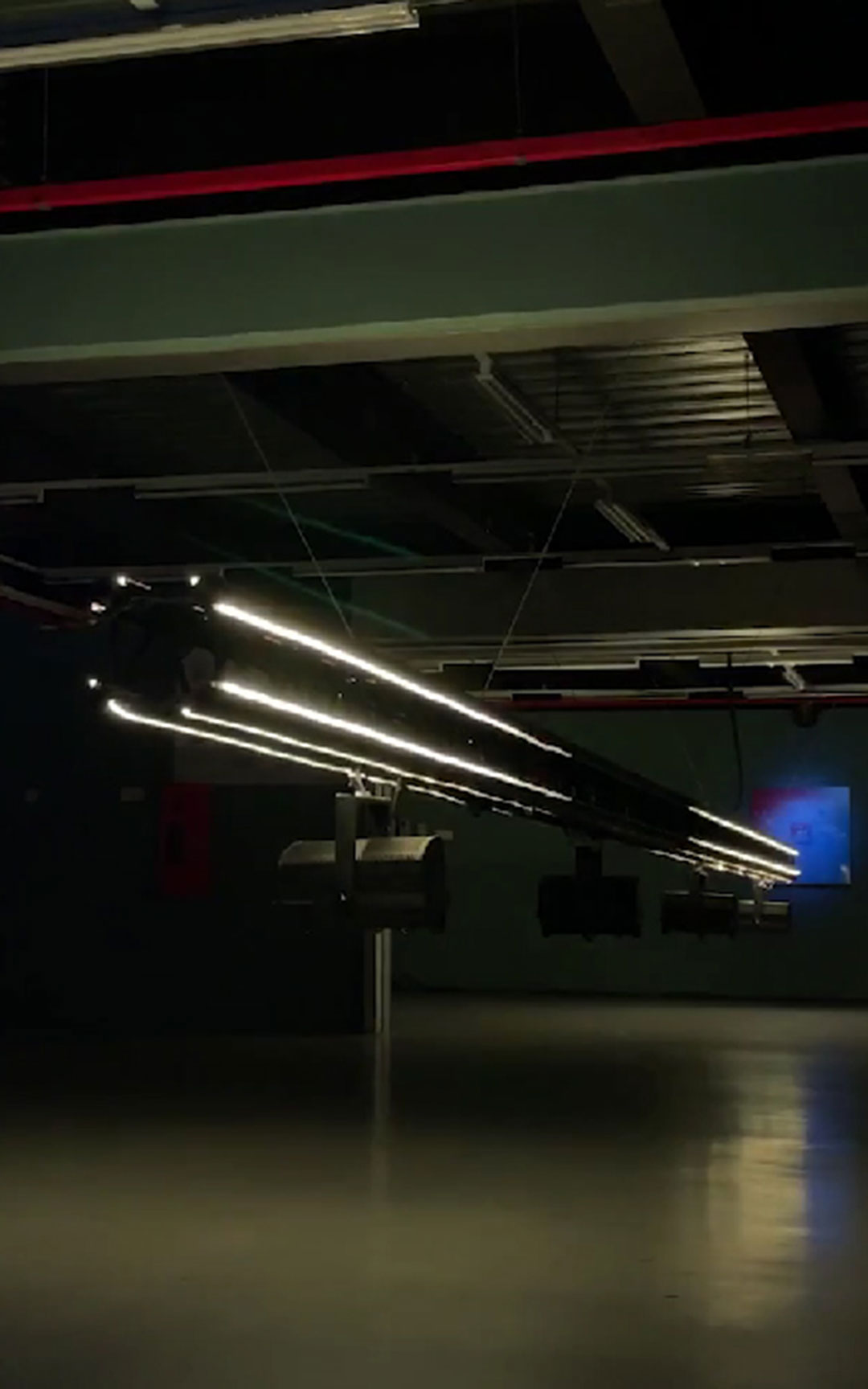
BIOVOLT is an interactive light installation that explores the relationship between human interaction, technology, and electricity. The 15-meter structure, composed of LED strips, responds to touch and movement, symbolizing the connection between human energy and electrical power. Participants influence the installation through motion sensors, highlighting the synergy between human intention and technology.

BIO

Munich-based artist, creative director, and educator. His practice explores how data, human interaction, and environmental conditions take spatial form in responsive installations and sculptural environments. He works across exhibitions and spatial experiences, often collaborating with studios, brands, and cultural institutions. Using light, sound, moving image, and computational media, he creates works that explore how we perceive and experience the world.

FILE 2026 – Registration Open for Art and Technology Festival

FILE 2026

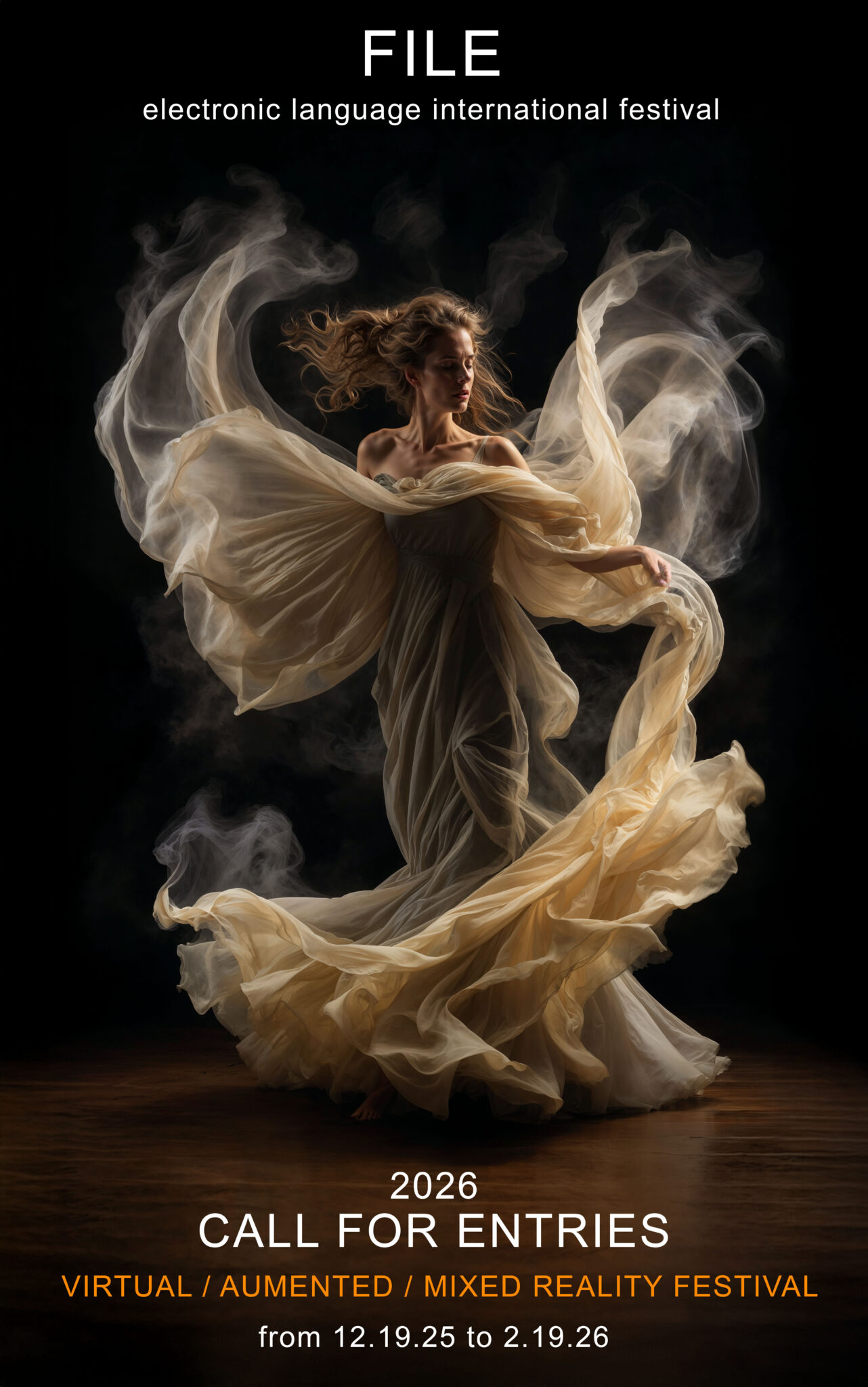
Registration is now closed for participation in  FILE – Electronic Language International Festival 2026 , one of the most important events dedicated to art and technology. FILE invites Brazilian and international artists , as well as researchers, educators, and creators , to submit original artistic works and educational proposals — lectures, workshops, and training activities — focused on contemporary technological poetics.

Applications were open until February 19, 2026 .

With 26 years of experience , FILE is a non-profit cultural organization dedicated to promoting creation, research, and experimentation in Art and Technology , bringing together artists, scientists, programmers, and thinkers around exhibitions, events, and publications. The selected projects will be part of the FILE 2026 program, scheduled to take place at the FIESP Cultural Center in São Paulo, between August 19 and October 11, 2026,  with the possibility of parallel activities in other Brazilian states.

The call welcomes proposals in a wide variety of languages ​​and formats, intended for indoor or outdoor environments , in which the aesthetic experience emerges from the encounter between interfaces, data, space, and body . FILE 2026 seeks projects that propose new forms of perception, interaction, and critical and poetic reflection , expanding the debate on the aesthetic, cultural, social, and sensory impacts of contemporary technologies.

Access the registration form.

FILE 2026 – Registration Open for AR, VR and XR Festival – Art and Technology

FILE 2026

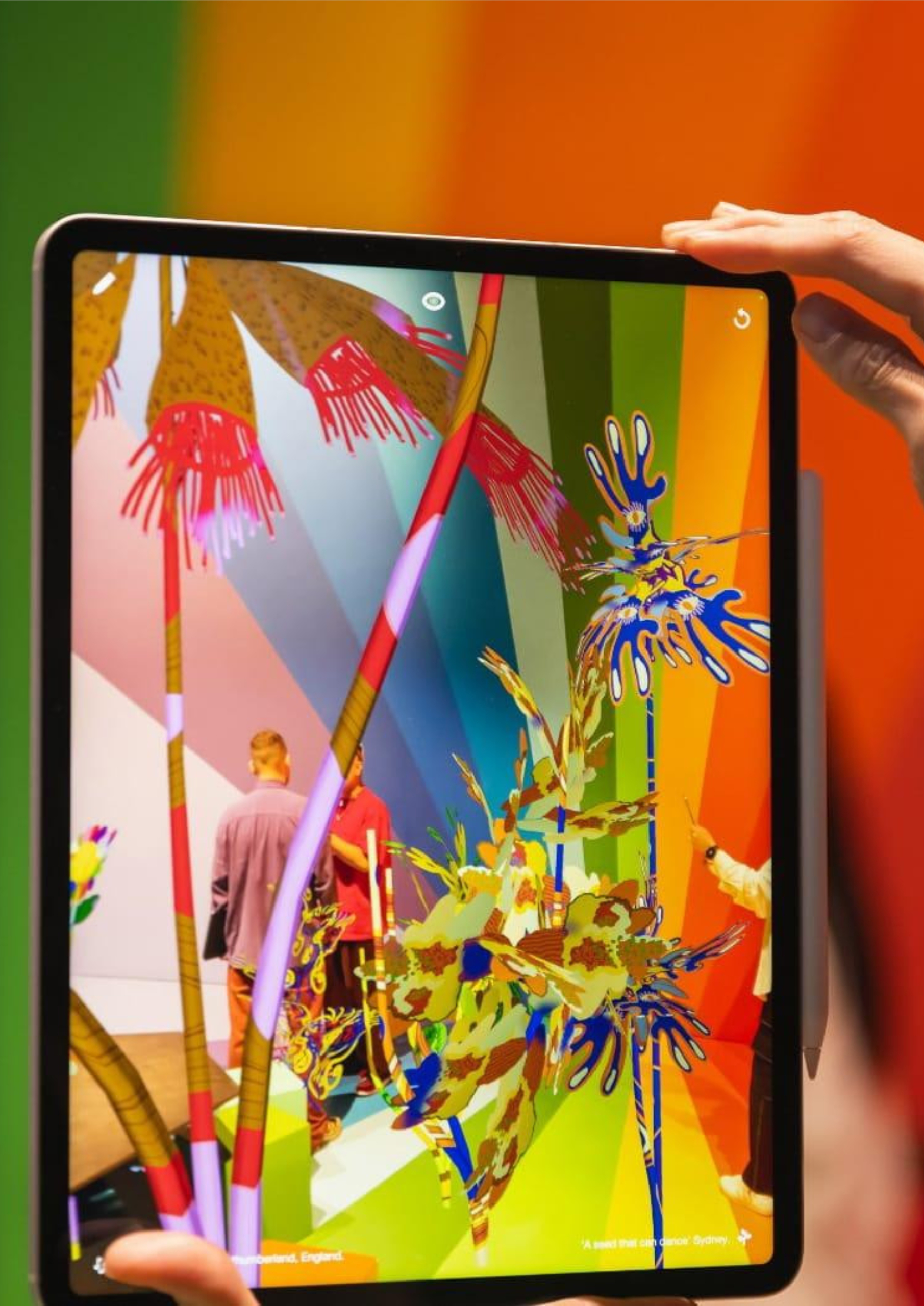
Augmented and Virtual Reality Festival: brings together immersive practices in simulated three-dimensional environments and expands the perception of reality through the superimposition of digital layers onto physical space.  The works use mobile devices, glasses, and spatial interfaces to insert virtual objects, narratives, and data into the real world or transport the public to sensory and interactive digital universes. These languages ​​challenge the boundaries between the material and the informational, exploring subtle or monumental interventions, creating multidimensionality in the environment. Issues of presence, body, narrative, memory, surveillance, and technological mediation are central, configuring a fertile field of aesthetic and critical investigation into contemporary ways of inhabiting and perceiving space.

Applications were open until February 19, 2026. Access  the application form.

FILE 2026 | GENERAL REGULATIONS

FILE 2026 – Registration Open for the Digital Architecture and AI Festival – Art and Technology

FILE 2026

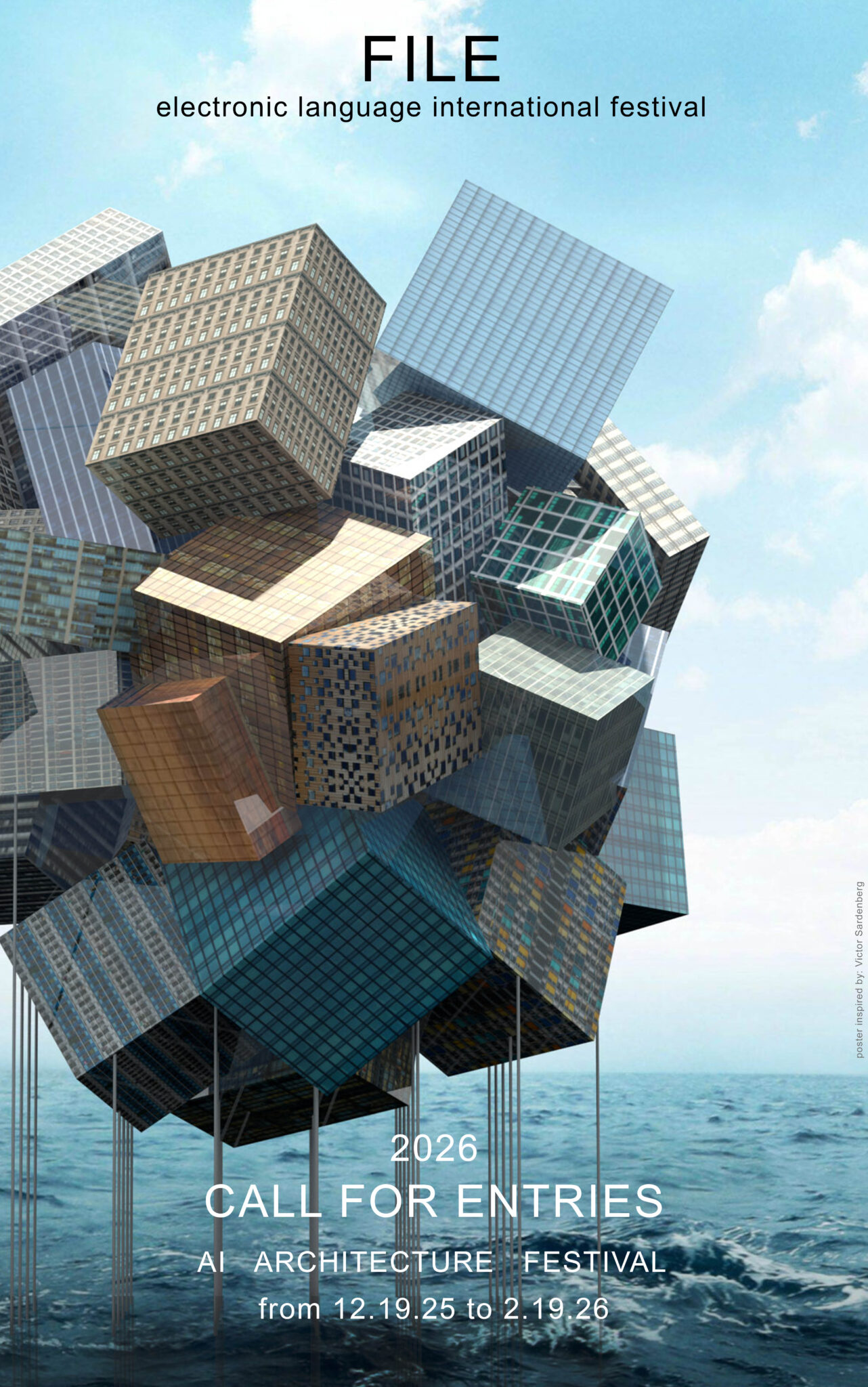
Digital Architecture and AI Festival :  investigates the use of computational technologies in the conception, visualization, and experience of space.  Works may involve virtual environments, simulations, digital facades, interactive architectural installations, and discrete systems. Algorithms and data become design tools. It is a practice that articulates art, architecture, and technology.

Applications were open until February 19, 2026. Access  the application form.

FILE 2026 | GENERAL REGULATIONS

THILO FRANK

Тило Франк
the phonenix is closer than it appears


Thilo Frank (* 1978) lives and works in Berlin. His installations, sculptures and photo series lead the viewer into situations creating interactive physical dialogues. Physical phenomena and environments of our daily life are interpreted in a new context emphasizing our perception of light, space and motion in a poetic and playful way.

His works ask of a visitor to question one‘s relation to action in space and the consequences of one‘s action – an intimate experience.

The viewer functions as a coproducer of the work, perceiving his or her relational aspect as a instrument of measurement. The cognitive aspect in its work is enacted by the viewer, who through his physical reaction to the work, reflects himself to it. Through his physical interaction – the viewer completes the work.

Through the use of everyday technologies Thilo Frank explores the conventions of sight and movement and their visualization. Examination produces a type of measuring standard through which even seemingly random events are viewed equally. Through his works, an attempt is made to illustrate the optical coefficient and with this to analyse the space.

FILE SÃO PAULO 2025: SYNTHETIKA – Marc Samper

A Dreamscape Cartography
Marc Samper

FILE SÃO PAULO 2025: SYNTHETIKA – Art and Technology
Electronic Language International Festival

A Dreamscape Cartography – Spain

A Dreamscape Cartography is a 3D digital artwork created from scans and navigated via Blender. The piece reimagines the ancient ritual of dream incubation, fusing inner realms with virtual environments. Using scans of abandoned houses in the Cyprus Security Zone, it creates a space that blends dreamlike and physical dimensions. Narrated by texts by Paul Celan, the work seeks to build a bridge between imaginary and lived experiences, inspiring new connections between space, memory, and existence.

BIO

Marc Samper is a visual artist, experimental filmmaker, and photographer from Barcelona, currently based in Paris. Graduated in Philosophy from the University of Barcelona and with a Master’s in Cinema from Pompeu Fabra University, his work investigates the ontology and phenomenology of images in global media, speculative metaphysics, and the intersection between mysticism and technology.

FILE SÃO PAULO 2025: SYNTHETIKA – Edwin van der Heide

Spiral of Time — Amazonas Brazil — UFAM

Edwin van der Heide

Interact with Spiral of Time — Amazonas Brazil — UFAM via FILE ARCHIVE


FILE SÃO PAULO 2025: SYNTHETIKA – Art and Technology – Installations
Electronic Language International Festival


Spiral of Time — Amazonas Brazil — UFAM – Netherlands

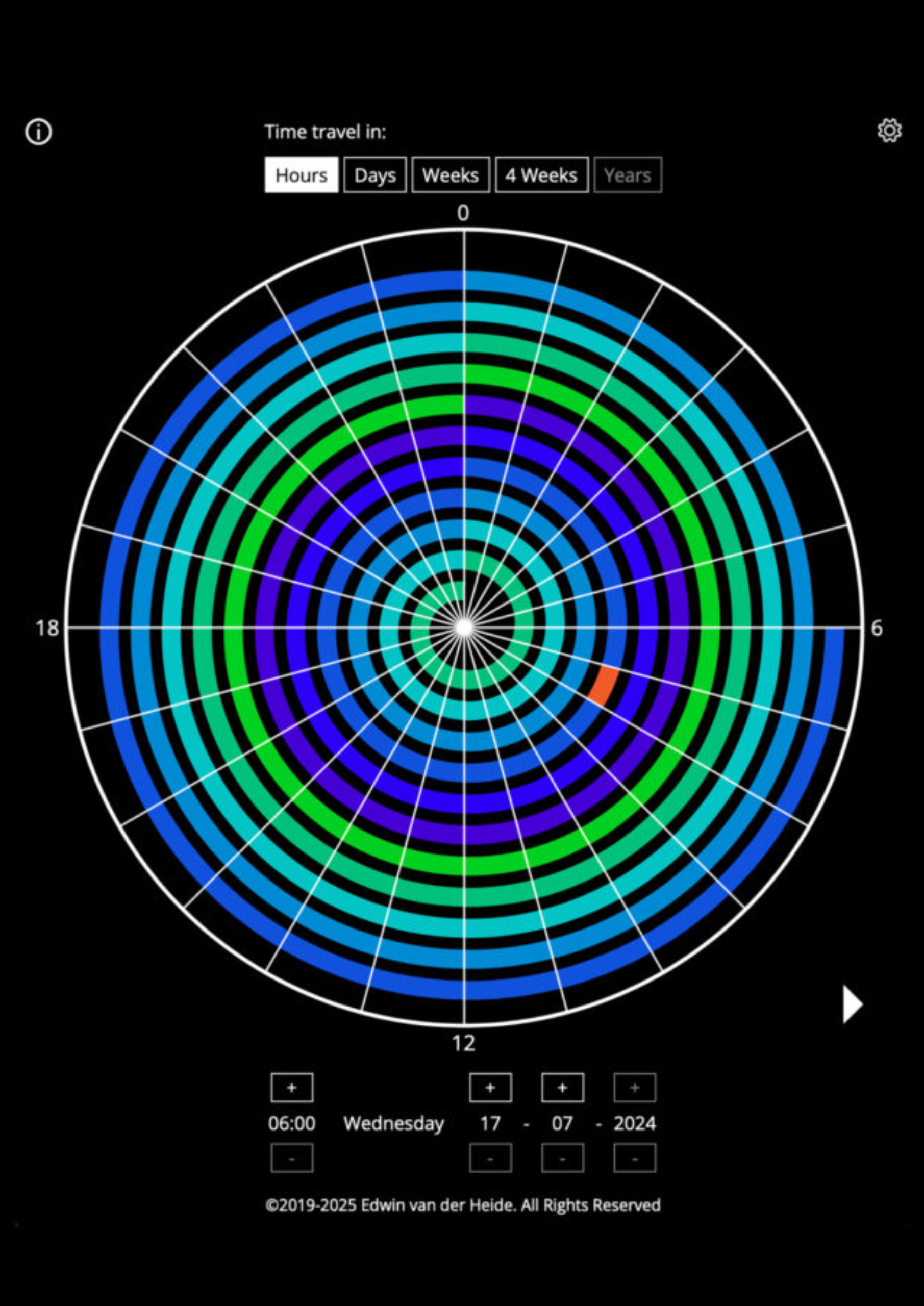
Spiral of Time captures and stages the diverse soundscape of a specific location over the course of several years. By documenting the unique natural, cultural, spatial, and temporal dynamics of a place, the work honors the contributions of all its actors. Every hour, a one-minute recording is made, resulting in a vast sonic archive over time. It is accessible online through a spiral-shaped interface, allowing listeners to explore the cyclical patterns revealed by navigating the material across different time intervals. 


Since July 17th, 2024, the artist has been recording the sounds of the square in front of MACBA (Museum of Contemporary Art of Barcelona). It is a very interesting, diverse, and vibrant urban space. The work is accessible online via https://www.macba.cat/en/spiral-of-time-placa-dels-angels/ and will also be presented physically in the museum starting July 10th, 2025.


Edwin is expanding the project to include other recording locations around the world—not only in urban contexts (dominated by humans) but also in areas governed by nature. The artist dedicated himself to a recording site in the Amazon region. Since February 11th, 2025 Spiral of Time has been installed at the Amazon Rainforest surrounding The UFAM (Federal University of Amazonas) in Manaus. It is home to one of the world’s largest urban forest fragments. Completely surrounded by the dense urban matrix of Manaus, this forest has been isolated since the late 1980s. The forest retains rich ecological features, including areas of mature terra-firme forest, late-stage secondary vegetation, and small patches of white-sand forests. This unique setting offers a rare opportunity to study tropical forest dynamics within a metropolitan environment. 

Spiral of Time-UFAM immerses the listeners in the acoustic life of one of the most biodiverse ecosystems on the planet. This contrast between the natural rhythms of the forest and the human-made patterns of the city enriches the broader narrative of the Spiral of Time, offering a deeper reflection on coexistence, change, and continuity across different environments.

BIO

Edwin van der Heide is an artist, composer, and researcher focused on sound, space, and interaction. His work pushes the boundaries of musical composition toward spatial, interactive, and interdisciplinary directions. He creates installations, performances, and immersive environments where the audience is placed at the center, encouraged to engage sensorially and investigatively.
 

FILE SÃO PAULO 2025: SYNTHETIKA – Tanja Vujinovica

SynthPets

Tanja Vujinovica

FILE SÃO PAULO 2025: SYNTHETIKA – Art and Technology – Installations
Electronic Language International Festival


SynthPets – Slovenia

SynthPets is inspired by the evolution of artificial intelligence and robotics, paying tribute to the creator’s robotic vacuum cleaner. These mysterious cyber-organic companions emerge through sketches, digital drawings, 3D sculptures, and AI-generated forms. The work explores humanity’s entanglement with electronic pets and devices that have become integral to everyday life.

BIO

Tanja Vujinovic is a multimedia artist who blends video art, games, music, and research to explore how technology shapes human experience. Her work examines the influence of synthetic environments and electronic devices, often featuring playful small figures—drawing inspiration from dolls, figurines, and talismans—that serve as symbolic guardians and companions.

3D computer graphics, digital sculpting and painting, generated AI, sound: Tanja Vujinovic

Production: Tanja Vujinovic/Ultramono, 2024—ongoing.

Consulting

RonBreIan, Software and Audio Engineer

https://www.tanjav.art/

@tanja_vujinovic_ultramono_

FILE SÃO PAULO 2025: SYNTHETIKA – Tin&Ed

Deep Field

Tin&Ed

FILE SÃO PAULO 2025: SYNTHETIKA – Art and Technology – Installations
Electronic Language International Festival


Deep Field – United States

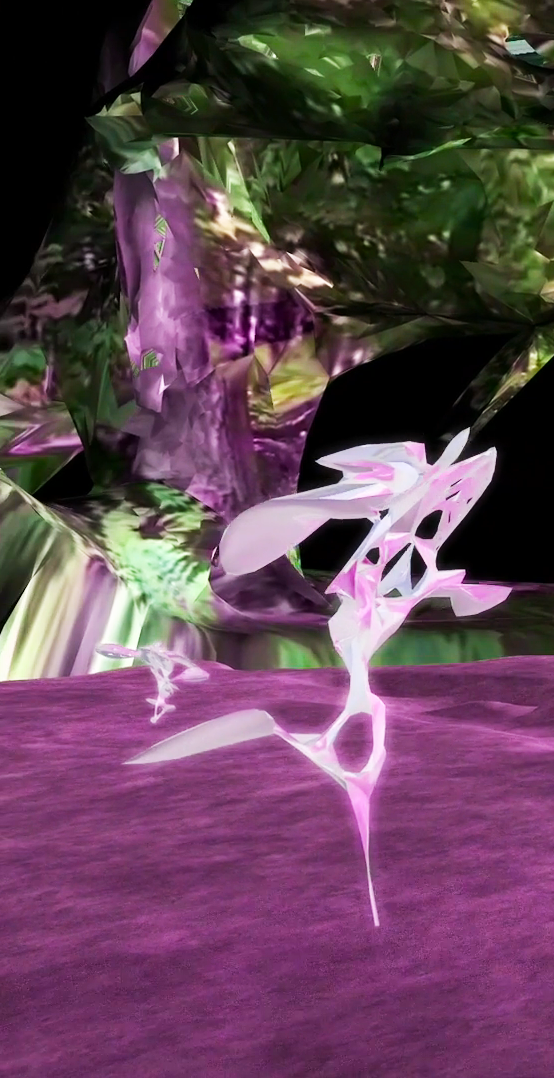
An augmented reality experience where visitors draw fantastical plants that instantly bloom into immersive 3D structures within the space. As people contribute their creations, a collective digital landscape begins to take shape. Layers of recordings of endangered, extinct, and elusive species compose a responsive and evolving soundscape, developed by The Listening Planet.

BIO

Tin & Ed are New York-based artists whose work explores the interconnection of life across biological, geological, and cosmic systems. Through speculative world-building, they reveal connections that transcend human time, spatial boundaries, and sensory thresholds. Their practice spans sculpture, immersive and interactive installations, creating environments that invite audiences to shift perspective and inhabit the world beyond the limits of human perception. Technology is not used as spectacle, but as a perceptual tool that makes the invisible felt and the distant intimately present.

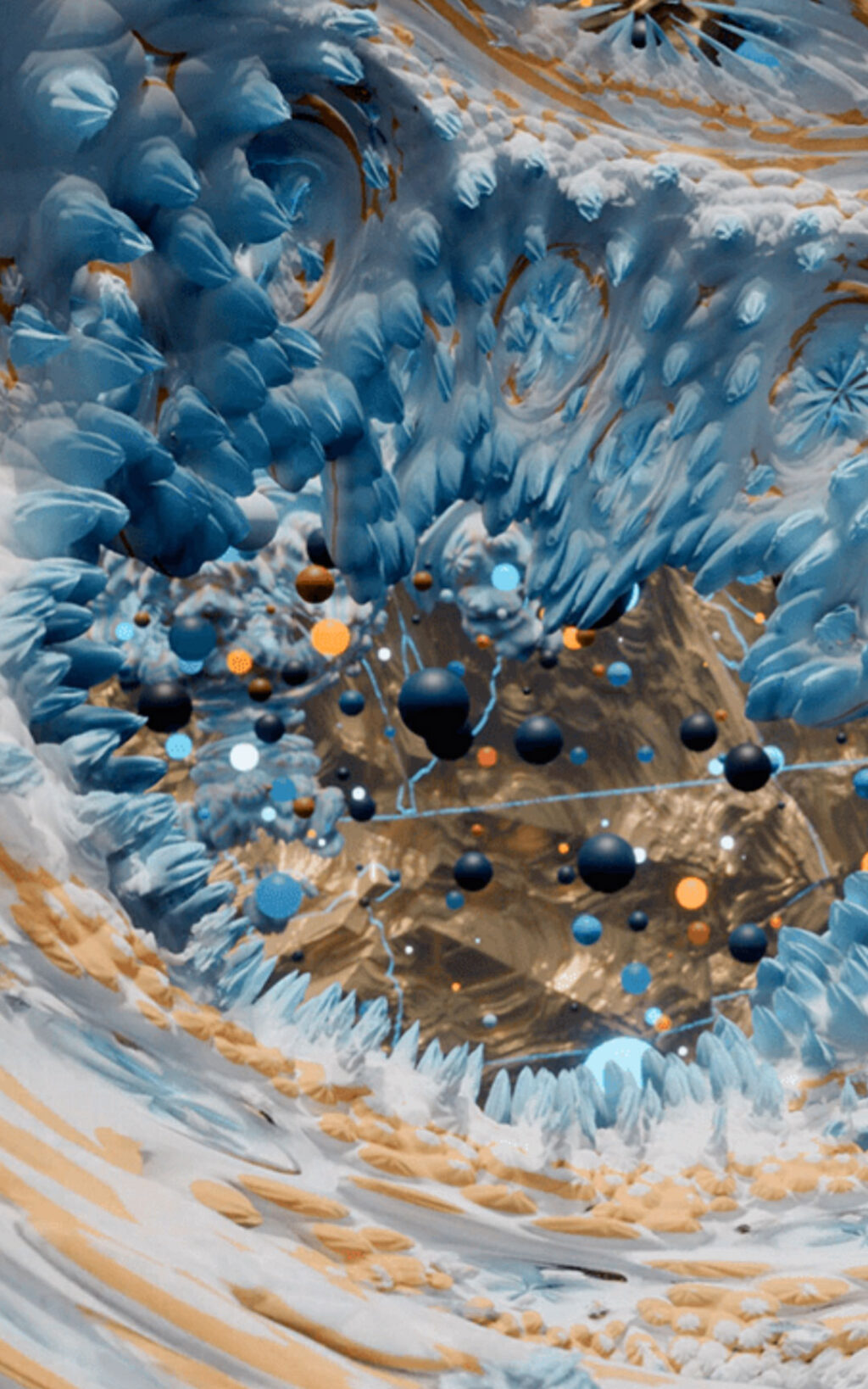
Refik Anadol

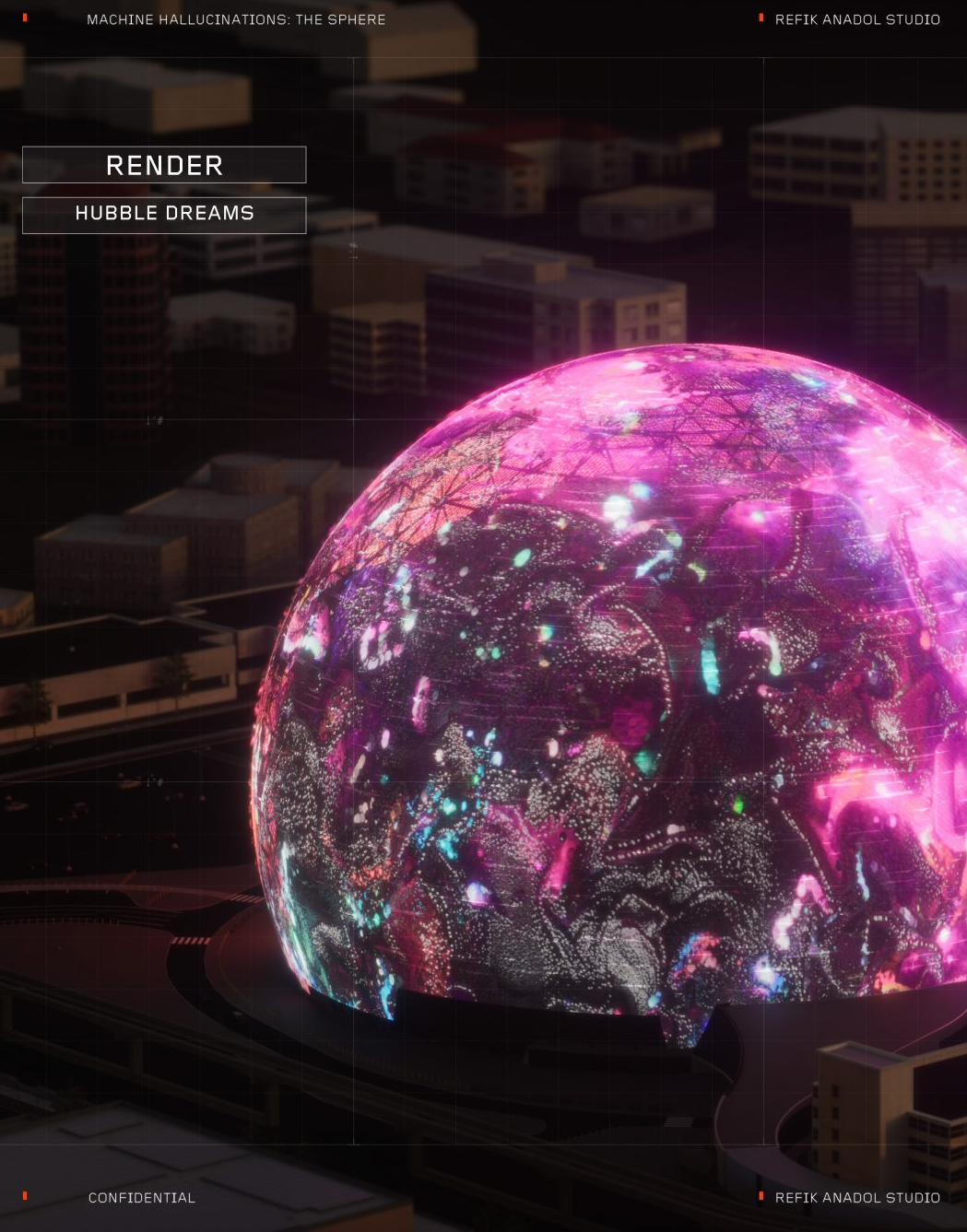
Machine Hallucinations — Sphere

The artwork presents a series of AI Data Sculptures that incorporates vivid pigments, shapes, and patterns, aiming to create a collective, meditative, and multisensory experience. This immersive experience simulates the rhythms of various environments and invites the visitors to imagine alternative realities constructed by invisible data movements around them.
Machine Hallucination: The Sphere features dynamic visualizations of data that are based on vast archives containing visual imageries of space and nature while celebrating the unique architecture of The Sphere. For this project, Anadol and his team used these themed datasets as the building blocks for the three distinct chapters of the artwork and trained a unique AI model with subsets of the collected image archives. After the training, when idle and unsupervised, the “machine mind” generates new aesthetic visuals and color combinations through unique lines drawn by algorithmic connections.

Trust

Hivemind

Hivemind is a knowledge game for artists to navigate the inner workings of their practice. The game is part of the Serpentine R&D Platform’s continued effort to reimagine how artists and institutions can bring audiences into the research phases of their work. Created by Trust members Calum Bowden, Will Freudenheim and Joanna Pope, the game allows for narrativised walkthroughs by artists of their back-end working environments. The artists approached the creation of Hivemind with this question in mind: how can you build a game that allows artists to archive and share, not only a finished artwork, but the tools, data and experiments they’ve built to bring their work into existence?

QUBIT AI: Banz & Bowinkel

Bots
FILE 2024 | Installations
International Electronic Language Festival

Bots presents a computer-controlled society through a series of algorithmically controlled humanoid avatars that appear on physical carpets using augmented reality (AR). Real-time performances synthesize human behavioral patterns into a formalized digital social study. Omnipresent, combined with our devices and incorporated into virtual environments, the work reminds us of our own digitalized world, in which we are surrounded by invisible bots.

Bio

Giulia Bowinkel (born 1983) and Friedemann Banz (born 1980) live in Berlin and have worked together under the name Banz & Bowinkel since 2009. In 2007 they graduated from the Art Academy with Albert Oehlen and started making art with computers . His work encompasses computer-generated imagery, animation, augmented reality, virtual realities and installations.

QUBIT AI: Kelly Luck

Kelly Luck
Strangeland 1 (excerpt)

FILE 2024 | Aesthetic Synthetics
International Electronic Language Festival
Kelly Luck – Strangeland 1 (excerpt) – United States

From a surrealist point of view, the main attraction of generative AI, for the artist, is its lack of memory. At any given moment, she only has the current frame and instructions on how to proceed, similar to free association in dreams. This work is part of a series of long-term environments designed to immerse the viewer in a constantly evolving and never-ending landscape, inviting relaxation and engagement.

Bio

As part of the first generation to grow up around computers, Kelly Luck quickly became fascinated with the creative possibilities of this new technology. Her journey has ranged from pixel art and graphic ‘hacks’ to the 90s demoscene, 2D and later 3D graphics, and now the modern tools of digital art. With the emergence of generative AI, it endlessly explores how technology continues to blur the line between imagination and reality.

bohyun yoon

БОХЬЮН ЮН
윤보현
To Reverse Yourself

FILE FESTIVAL

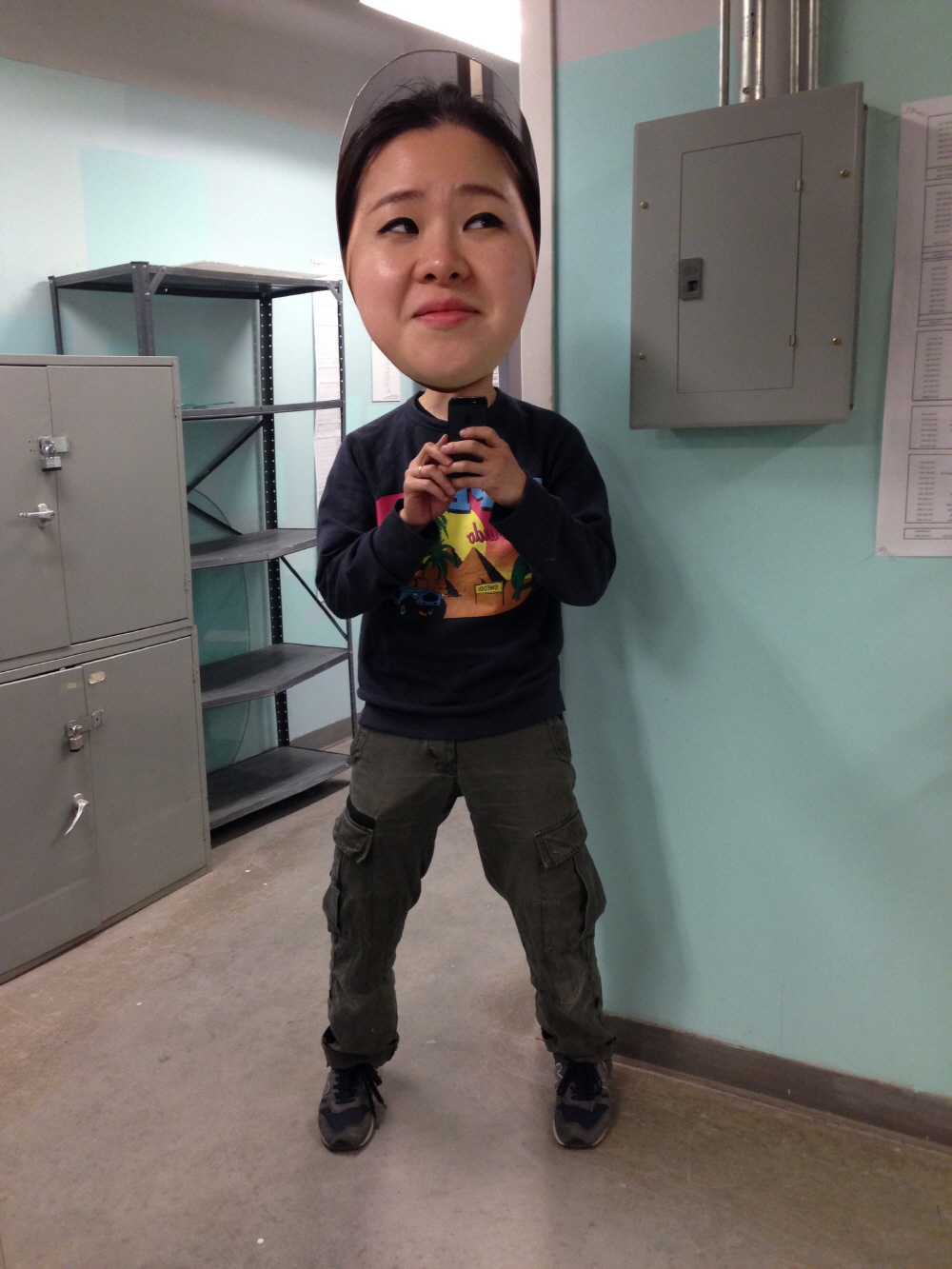
My work poses the question: how does reality becomes exquisitely animated by certain social control systems such as politics, mass media, technology, science, and etc. It is my artistic goal to reveal how human beings are fragile and delicate in these social environments. By living in Korea, Japan and the U.S, I have first-hand experience in diverse social systems and have come to view my life experiences as raw material for my research. With my research in mind, my art utilizes the body as the tool for an intensive investigation of the public and private; examining the relationship between how people understand their body and how this understanding represents themselves in the greater context.
Currently, I am curious about human perception developing parallel with the ever-evolving progression of technological world. Thus, I question technology’s relationship to reality and illusion; asking what is reality? My work takes advantage of illusion to explore and answer this question, and often my artistic materials consist of the body and mirrors. I use mirrors for integrating reality and illusion.

GK TECH

GK-0G – Floating Habitat

The GK-0G is the minimum size prototype of a scalable floating installation.
It is composed of five tetrahedral frameworks, its basic structural elements, arranged like sections of an orange. It is enveloped with a cover which acts as an interface between internal and external environments.Flotation is gained by tetra balloons inside the tetrahedral frameworks. As the only choice at this moment, helium is encapsulated inside the tetra balloons made of an impermeable film.This model is meant to verify that it can float and move in the air. It is considered that different degrees of flotation can be gained by combining tetra balloons in different ways.


Flora&faunavision

Magenta Moon Garden
Designed to spark conversation around sustainability, tech and media skills in a playful and intuitive way, this interactive, walkthrough video installation comprises three distinct visual environments (Sunrise Garden, Moon Garden, Magenta Moon) enriched with intuitive, interactive real-time elements. The stunning environment and experience is flanked by online contents and events that tackle topics from hate speech to climate change, flanked by a wide spectrum of online contents, talks and on-site workshops.

Kurt Hentschlager

SOL
SOL is a minimalistic environment, leading visitors into the reaches of their perception. The installation builds on loss of control, shifts in awareness and a feeling of dislocation and timelessness. SOL is the third work in an ongoing series of phenomenological environments, after the live performance FEED, 2005 and the installation ZEE, 2008. The all encompassing darkness of SOL is lifted, in intervals and for parts of seconds only, by animated bursts of intensely bright light. Falling back into darkness, visitors experience abundant retinal after-images, that gradually drift away until eventually the next eruption of light is triggered. In the surround sound-scape of SOL, electronic drones mix with swarming field recordings, amidst a sea of infra-bass.

FleuryFontaine

Ange
Ange is the result of discussions between two artists and a “hikikomori”. This term imported from Japan, which has no equivalent in France, is used to describe young people, sometimes even teenagers, choosing not to leave their room or their apartment for months or even years. Ael is one of them, recluse in a shed in his parents garden for 13 years, somewhere in the south of France. The artistic duo fleuryfontaine has maintained a relationship with him using internet. They used the video game as a medium to try to reconstruct the world of this hikikomori and to engage a dialogue during game sessions where Ael evolves in the environments created by the artist. His room, his objects, the parental home, his neighborhood, this film reveals the fragmented portrait of a man hiding from the world.

DOUG AITKEN

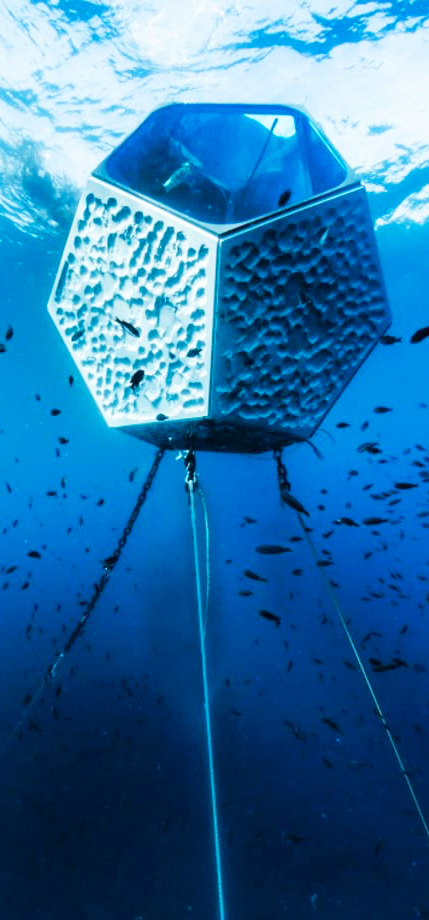
Underwater Pavilions
Underwater Pavilions is artist Doug Aitken’s large-scale installation produced by Parley for the Oceans and presented in partnership with The Museum of Contemporary Art, Los Angeles (MOCA). The work consists of three temporary underwater sculptures, floating beneath the ocean’s surface that swimmers, snorkelers, and scuba divers swim through and experience. Geometric in design, the sculptures create underwater spaces synthesizing art and science as they are constructed with carefully researched materials and will be moored to the ocean floor. Part of each structure is mirrored to reflect the underwater seascape and create a kaleidoscopic observatory for the viewer, while other surfaces are rough and rock-like. The environments created by the sculptures will constantly change with the currents and the time of day, focusing the attention of the viewer on the rhythm of the ocean and its life cycles.

Minimaforms

Emotive city
Emotive City is a framework to explore a mobile and self-organizing model for the contemporary city. Models of the past are limited and should not operate, as blueprints for our urban future, a new generation of design enquiry by necessity must address the challenges of today. The fixed and finite tendencies that once served architecture and urbanism have been rendered obsolete. Today the intersections of information, life, machines and matter display complexities that suggest the possibility of a much deeper synthesis. Within this context, architecture is being forced to radically refactor its response to new social and cultural challenges with an environment of accelerated urbanization. We propose a framework that participates and engages with the information-rich environments that are shaping our lives through a model of living that we call an adaptive ecology.

Kaws

Expanded Holiday
Expanded Holiday demonstrated the enormous potential of AR technology, which provides virtual perspectives on real-world environments, and conveys KAWS’s mischievous humour through the juxtaposition of physical and virtual worlds. These virtual sculptures were accessible via the Acute Art app and could be experienced in conjunction with the NGV’s exclusive exhibition KAWS: Companionship in the Age of Loneliness, a comprehensive survey of 25 years of KAWS’s oeuvre and his largest solo survey to date. Full of humour, hope and humanity, the exhibition featured more than 100 works including iconic paintings reappropriating pop-culture figures to more recent largescale, layered works, and an impressive collection of KAWS’s celebrated sculptural figures.

Patricia Olynyk

Oculus
Oculus is a large-scale, collaborative light sculpture that depicts a colossal abstracted drosophila eye, replete with compound faceted surfaces. It both recalls the circular opening at the apex of a cupola and alludes to a surveillance device or drone hovering in mid-air. Oculus is inspired in part by a series of scanning electron micrographs produced in a transgenic lab while researching human and non-human sensoria. The work evokes affective encounters with scale such as viewing miniature particles through the lens of a microscope or wandering through monumental physical environments. As each viewer’s reflection plays across the sculpture’s undulating surface, the apprehension of the self affects both individual and collective behavior in unexpected ways. This affective dynamic plays on the precariousness of our coexistence with other lifeforms in the world, one that is always contingent upon viewers’ bodies and the variability of the environment around them. The act of gazing at Oculus also puts into play the reciprocal condition of both seeing and being seen.

Isabella Münnich

Immersed Garden
Immersed Garden is in its true sense a sunken world. Floating bodiless in an underwater garden, natural sounds guide you through an immersive surrounding, somewhere between calming and irritating, natural and artificial. It is a playful exploration of the individual conception of safety and confusion and a personal approach to aesthetic references to habits of introspection and retreat in digital environments. It was created by fusing different digital processes like photogrammetry of selected natural places around Karlsruhe and field recordings in a local natural reserve. Underwater videos hybridize with 3D scans of trees and plants while invisible frogs are croaking and humming birds are buzzing by synthetic flowers. The artistic aim was to explore the personal perception of calming and irritating, playing with the concept of immaterialness and attentiveness. The artwork creates aesthetic references to philosophical and scientific theories of introspection and identity.

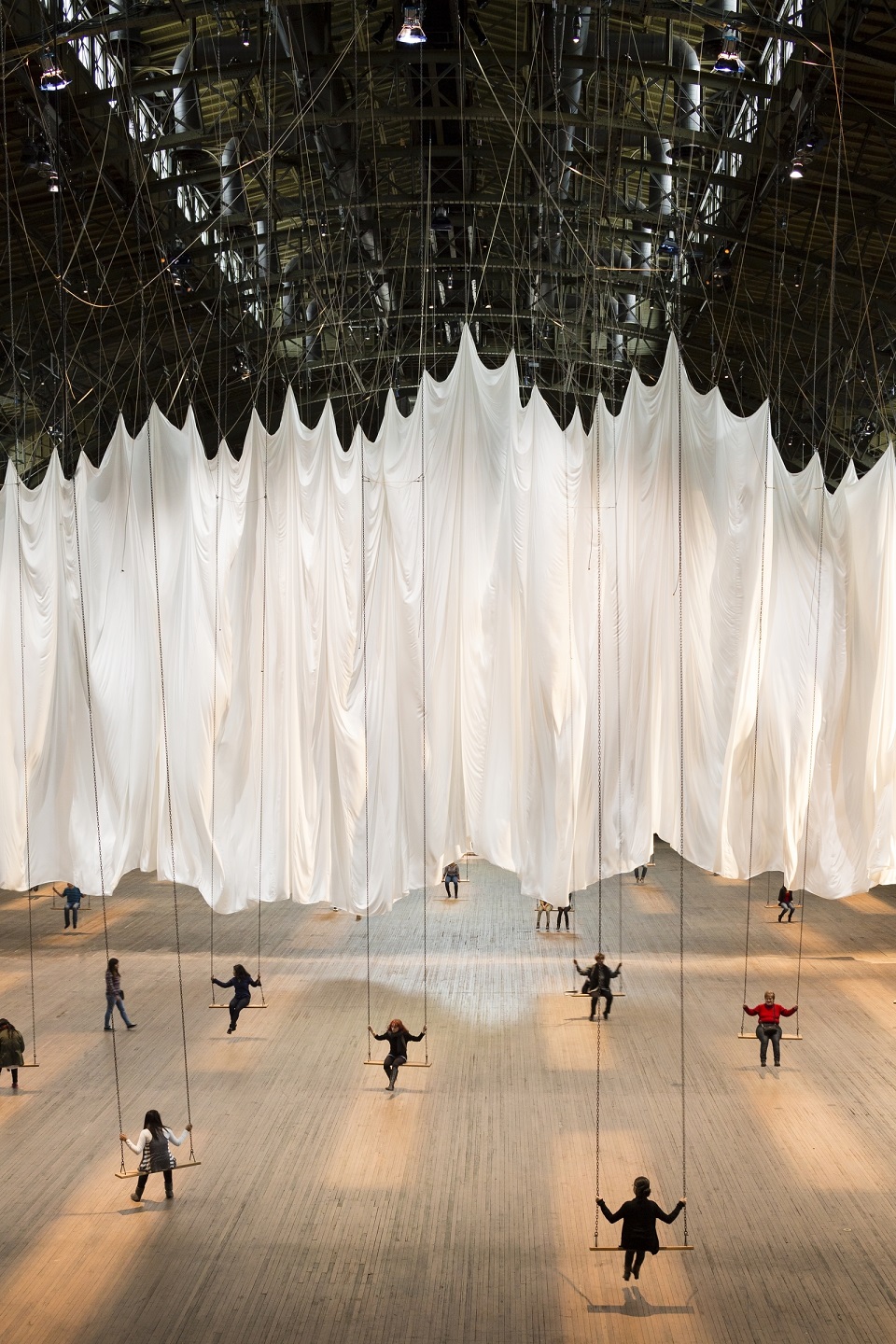
Philip Beesley

Meander
Meander is a large-scale immersive testbed environment constructed within a historic warehouse building at the centre of a residential highrise development in Cambridge, Ontario. The meshwork scaffolds which comprise the testbed are organized as a series of species within an artificial ecosystem, gently flexing and responding to the movement of viewers. Similar to natural environments such as rivers and clouds, large groups of parts pass physical impulses and data signals back and forth, enabling the entire environment to work as an interconnected whole. The innovations in Meander suggest ways of making adaptive, sensitive buildings of the future.

Hito Steyerl

Power Plants
Hito Steyerl’s series of projects at the Serpentine Galleries is positioned around ideas of ‘power’. Beginning from the premise that ‘power is the necessary condition for any digital technology’, the artist considers the multiple meanings of the word, including electrical currents, the ecological powers of plants or natural elements, and the complex networks of authority that shape our environments. She addresses the notion of power through three interrelated research strands and projects: Actual Realityos, a collectively-produced digital tool; Power Walks, a series of guided walks and a tour that draws upon conversations with campaigners, community groups and organizations in the local area surrounding the Serpentine, and finally this exhibition, Power Plants, which features new video installations created using artificial intelligence trained to predict the future.

Charles Lindsay

CARBON
CARBON merges the aesthetics of space exploration and scientific imaging with the interpretation of abstract symbols. I’m interested in extremophiles, the origins of life on earth, and what forms sentience might assume elsewhere in the universe. Would we recognize it hovering in front of us? What began with a camera-less method I discovered while experimenting with photograms, and drawing, has grown into immersive environments including large stills, video, multi-point sound and inter-active sculptures.

Miyu Hosoi

Lenna
Focusing on the orientation and dispersion of sound images, this spatial musical work was made using multiple audio channels, and only the human voice as a sound source. It represents at once an attempt to encourage the creation of multichannel acoustic contents, and the theoretical and practical development of audiovisual environments.

ROCIO VON JUNGENFELD

zones of flow (ii)
“zones of flow” is a work-in-progress project which investigates the fluid connections between people, sea and land. The piece zones of flow (ii) is an audiovisual artwork created to for the MAN display, which is located in a public area in NTU-Singapore; an open corridor where there is a regular flow of people moving across the space. The piece has come out of a sailing experience across the Atlantic in a 15m sailing boat. The ongoing project explores the instantaneous but sometimes asynchronous connectivity between things and people as they move in and across digito-tangible environments.

Chris Salter

n-Polytope: Behaviors in Light and Sound after Iannis Xenakis
N_Polytope: Behaviors in Light and Sound After Iannis Xenakis is a spectacular light and sound performance-installation combining cutting edge lighting, lasers, sound, sensing and machine learning software inspired by composer Iannis Xenakis’s radical 1960s- 1970s works named Polytopes (from the Greek ‘poly’, many and ‘topos’, space). As large scale, immersive architectural environments that made the indeterminate and chaotic patterns and behaviour of natural phenomena experiential through the temporal dynamics of light and the spatial dynamics of sound, the Polytopes still to this day are relatively unknown but were far ahead of their time. N_Polytope is based on the attempt to both re-imagine Xenakis’ work with probabilistic/stochastic systems with new techniques as well as to explore how these techniques can exemplify our own historical moment of extreme instability.

marleen sleeuwits

object no. 9

Marleen Sleeuwits is inspired by impersonal environments—places that could be anywhere and nowhere—such as vacant zones in airports, unoccupied corridors of hotels, and empty rooms in office buildings. The Netherlands-based artist is attracted to these non-spaces for the lack of impression they leave on people; her work focuses on finding ways of visualizing the identity of these voids and connecting to them in novel ways. Through structural contradiction, illusion, and the manipulation of scale, she aims to transform viewers’ awareness of their surroundings.

LATURBO AVEDON

Chatrooms II
LaTurbo Avedon is a social media avatar and artist. Her work has been enabled by an ever-growing network of friends and collaborators, allowing her to participate in both online and offline exhibitions internationally. Residing entirely on digital platforms, her work ranges from character creation in video games to constructing entirely new virtual environments to inhabit.

Sam Twidale & Marija Avramovic

After Party

(AI) infinite simulations

‘After Party’ is an animation about two young girls, Ada and Milica. They find themselves in a strange space where an adult party is happening. With every new simulation their personalities evolve in unpredictable ways: between Childhood and Adolescence, Refined and Savage. Our digital work consists of creating artificial environments in the form of real-time animation using our own custom software, where artificial intelligence characters interact with each other as well as with the virtual world that surrounds them. These pieces are usually inspired by stories or myths found in different cultures.

FILE SAO PAULO 2019

PLAYDEAD

Limbo
Arnt Jensen
File Festival
FILE GAMES

Limbo is a 2D sidescroller, incorporating the physics system Box2D to govern environmental objects and the player character. The player guides an unnamed boy through dangerous environments and traps as he searches for his sister. The developer built the game’s puzzles expecting the player to fail before finding the correct solution. Playdead called the style of play “trial and death“, and used gruesome imagery for the boy’s deaths to steer the player from unworkable solutions.


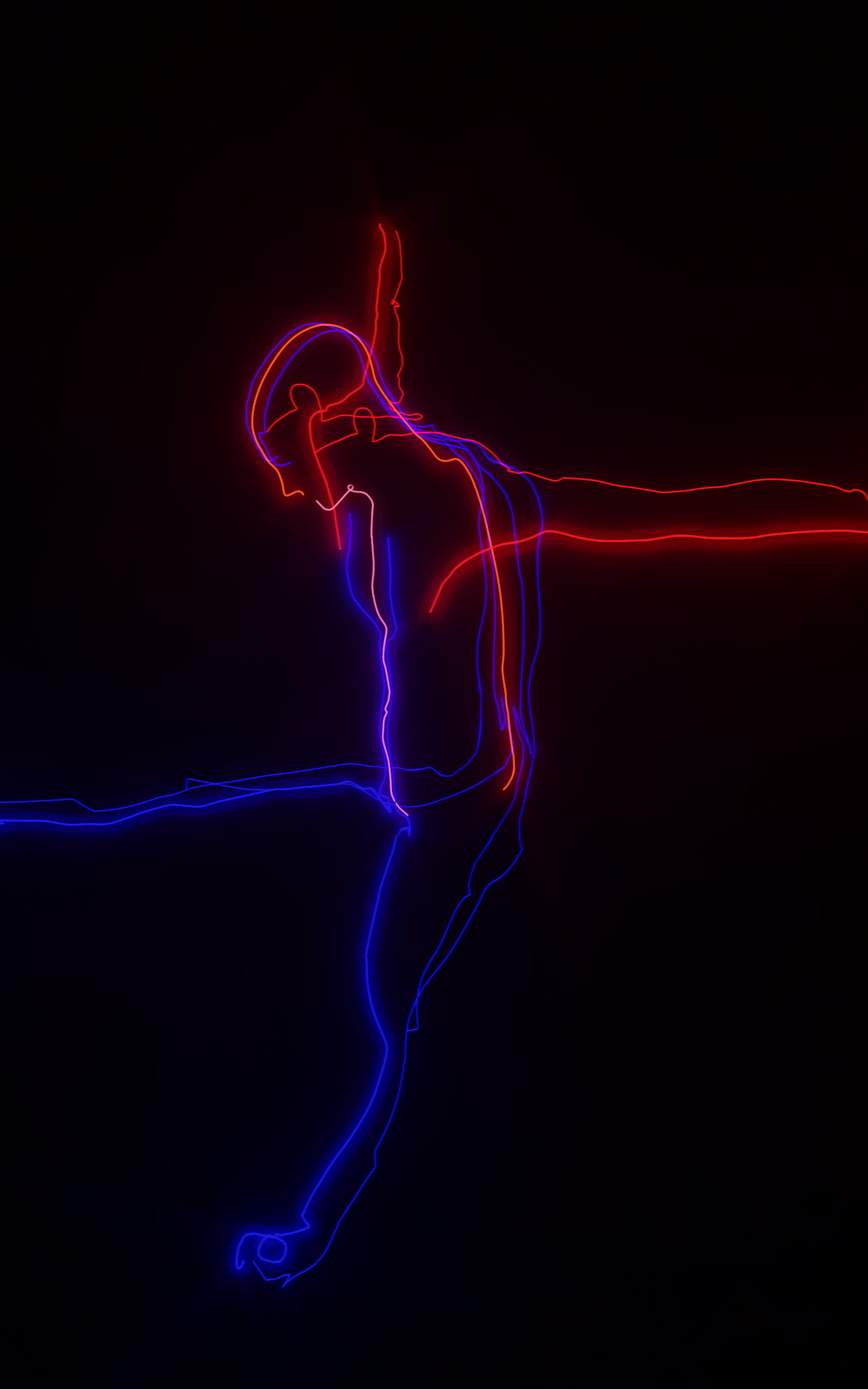
HIROAKI UMEDA

holistic strata
Tokyo-based choreographer and video artist Hiroaki Umeda creates mesmerizing visual environments for his visceral solo works, appearing as a fine-spun swirl of movement in a digital storm of light and sound—an elusive figure, by turns frantic and still, awash in pulsating electronic waves. In a program of acclaimed companion pieces, Haptic and Holistic Strata, Umeda’s distinctive dance vocabulary draws on a range of butoh, ballet and hip-hop. He conceives his interdisciplinary events as a sensorial whole, creating the beats and sonic textures as well as the entrancing video and lighting effects. Designed to elicit primal emotion, Umeda’s work is minimalist and radical, subtle and violent, abstract yet precise, and thrillingly physical.

FABIO ANTINORI AND ALICJA PYTLEWSKA

Contours
London-based creative laboratory Bare Conductive was invited to team up with designers Fabio Antinori and Alicja Pytlewska in order to develop a large-scale metaphor for the idea of breathing life into a collection of responsive textile skins. ‘Contours’ is at the core of the interactive tapestry installation; a series capacitive sensors are applied to the suspended fabric substrates using conductive paint. These sensors react to the presence of a person within the vicinity and track their movements, outputting a constantly modulated ambient soundscape reminiscent of medical research environments. The abstract geometric ornamentation connects the tapestries’ individual sensors to form giant panels, serving as an acoustic feedback loop that alludes to the relationship between science and the body.

Adam Basanta

the sound of empty space
The sound of empty space explores relationships between microphones, speakers, and surrounding acoustic environments through controlled, self-generating microphone feedback. Amplifying and aestheticizing the acoustic inactivity between technological “inputs” and “outputs” – stand-ins for their corporeal correlates, the ear and mouth – the notion of a causal sound producing object is challenged, and questions are posed as to the status of the ʻamplifiedʼ. By building flawed technological systems and nullifying their intended potential for communication, the ear is turned towards the empty space between components; to the unique configurations of each amplifying assemblage.

Matic Veler

Matic Veler is ispired by researching his aesthetic development since upbringing up until now. One of the biggest inspiration, architecture of 17th and 18th century architecture, especially details and ornaments together with impression of magical environments combined with brutalism architecture he was surrounded in when he was child, help him to translate and reflect when creating garments and installations to impress viewers and customers. ​He uses Baroque architecture details and ornaments as his inspiration. Always starting with collecting different photos of details and studying different architects. 
Matic manipulates the ornaments into collages on which he draw sketches and then making toiles on mannequins.

ANN HAMILTON

アン·ハミルトン
앤 해밀턴
the event of a thread

Ann Hamilton is a visual artist internationally recognized for the sensory surrounds of her large-scale multi-media installations. Using time as process and material, her methods of making serve as an invocation of place, of collective voice, of communities past and of labor present. Noted for a dense accumulation of materials, her ephemeral environments create immersive experiences that poetically respond to the architectural presence and social history of their sites.

SOU FUJIMOTO ARCHITECTS

على فوجيموتو
후지모토에
על פוג’ימוטו
НА ФУДЗИМОТО
infinity ring pavilion
An investigation into the ergonomics of seating in both private and public environments, the Infinity Ring takes the preconception of predefined spaces and their rituals and wraps it around a ring, creating a continuous strip of inhabitable spaces. The entire ring is then rotated, thereby generating infinite configurations of space-between-space, creating endless ways to sit, climb, lie down, crawl on…resulting in spatial configurations that are much richer than the sum of its parts.

LUCIO FONTANA

Spatial Environments with neon
Ambiente spaziale con neon
Fontana’s “Spatial Environments” are considered the most innovative outcome of the theories about space that Lucio Fontana first expressed in his Manifiesto Blanco of 1946. Here and in later manifestos, he described a new form of visual representation linked to space and time, which would move past the classic materials of sculpture and painting and employ modern technology to create “artificial forms, rainbows of wonder, words written in light” […] Ambiente spaziale con neon had a single red bent neon hanging from the ceiling in a room covered with pink fabric.

THEODORE SPYROPOULOS

BEHAVIOURAL COMPLEXITY

Design Research Laboratory (AADRL) and the experimental design studio Minimaforms examining a behavior-based agenda that engages experimental forms of material and social interaction. Cybernetic and systemic thinking through seminal forms of prototyping and experimentation will situate the work through continued experiments that have manifested since the early 1950s as maverick machines, architectures and computational practices exploring the generative potential of self-regulating phenomena as proto-architectural environments. Through explicit models of interactions, observable patterns and proto-animalistic agency; the research will discuss the capacity of these systems to evolve, adapt and self-structure through computation.

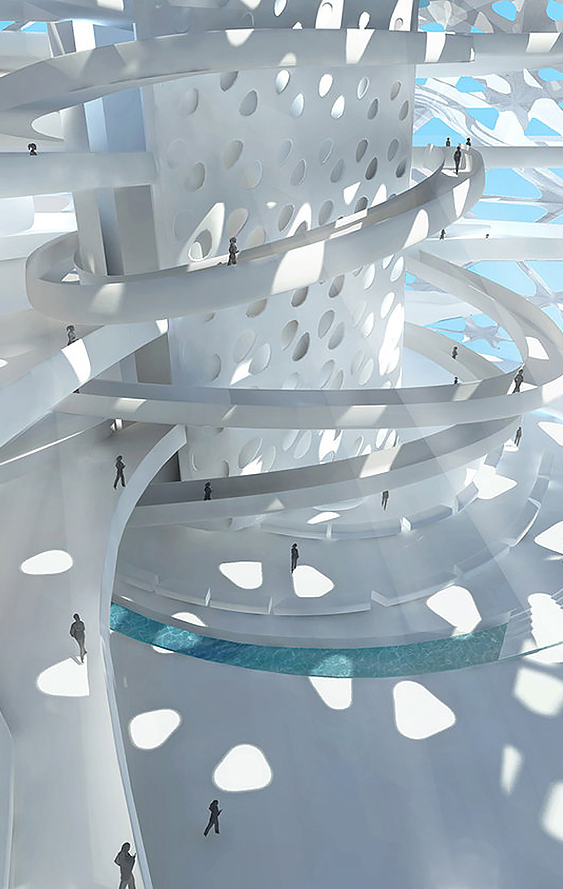
AmorphouStudio

Amorphoustudio’s ‘symbiotic towers’ in Jumeirah Gardens, Dubai consists of a residential, a hotel, and an office tower, connected on the ground level by a double-deck pedestrian shopping plaza. The connecting plaza creates two environments that can be used throughout the different seasons. The first environment, the lower deck, is a lavish green semi-shaded oasis level that is packed with trees and water to provide gathering zones for people during the hot summer season. It is located on the natural landscape level to be accessible to pedestrians from all sides.