highlike

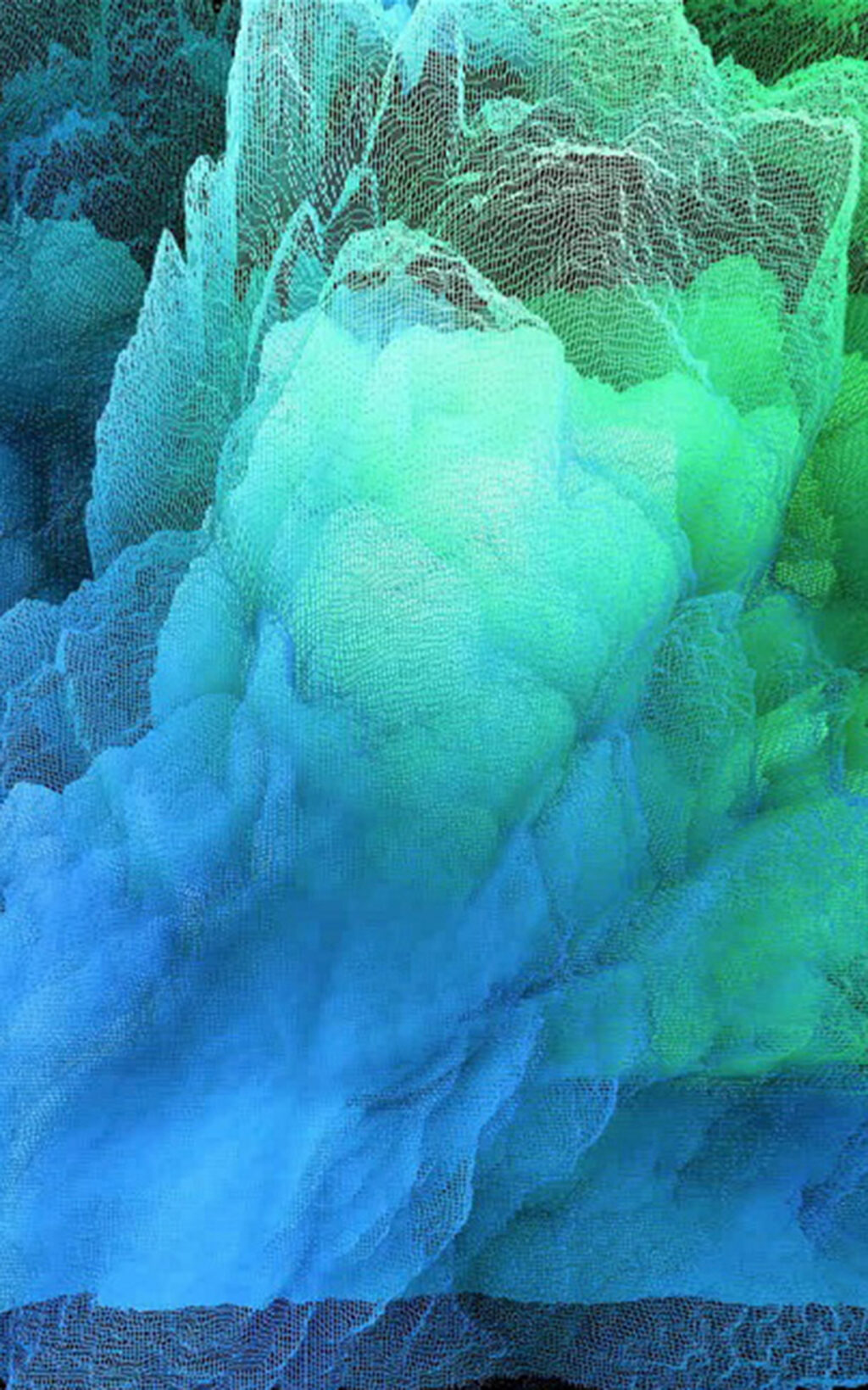
Moonth – Perception Vortex – Russia

PERCEPTION VORTEX

Moonth


FILE SÃO PAULO 2026: Inter-creativity – Art and Technology – VIDEO ART SHORT
Electronic Language International Festival


Perception Vortex – Russia

Perception Vortex is an attempt to visualize the processes of perception. Memories create an ever-changing environment where perception continuously evolves. The source material consists of my old photographs of flowers and abstract objects. Time distorts them in my memory; they dissolve, giving rise to new forms. The texture and color of the original images are transformed within the three-dimensional space of the digital environment, which is conceptualized as the materiality of memory.

BIO

Moonth is a new media artist Michael Mesiats based in Saint Petersburg, Russia. Since 2016 he has been working as a self-taught new media artist focusing on creating abstract systems with their own internal logic. His works have been shown at Creative Code Festival in New York, Athens Digital Arts Festival, CTM Cyberia in Berlin and other festivals and exhibitions.
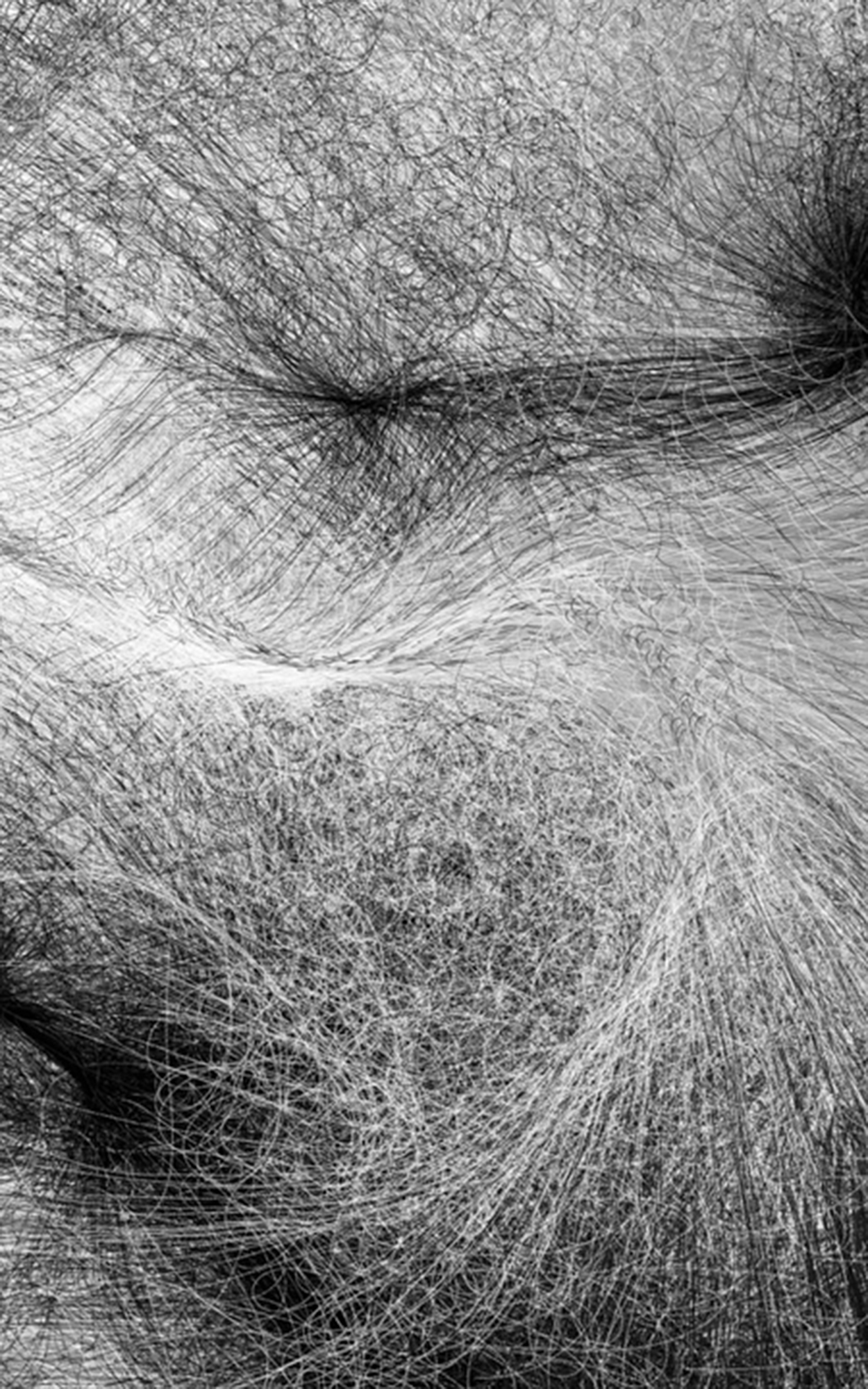
Casey Reas – MicroImage – United States

MICROIMAGE

Casey Reas


FILE SÃO PAULO 2026: Inter-creativity – Art and Technology – Randomic Dimension
Electronic Language International Festival


MicroImage – United States

The MicroImage (2003–2008) software consists of machines interacting in real time to create ever-changing surfaces, scaling the system until the surface becomes a dense field. As thousands of lines accumulate, new formations emerge: clusters, swarms, and textures that oscillate between microscopic and cosmic registers. The resulting images suggest natural systems without representing them directly—visualizations of behavior rather than depictions of form.

ALEXANDRA DEMENTIEVA

Drama House
File Festival

“Drama house” is a house when the simple ring at the doorbell can have unpredictable consequences; event, one is stranger then another and in the same time all, what happens with habitants belongs to everyday life. Sometimes these circumstances are a little bit exaggerated. Spectator stands in front of low fence with a door-gate. There are 8 doorbells on it. The act of ringing provokes an action in an apartment window. Based on chance and the choices that viewers make, the project explores the contemporary trends in the construction of a narrative and the interplay between diverse informative sub-layers effected through the impact of digital, non-linear media. It also questions the very process of story telling and at the same time considers the way of audience reading. It investigates the differences of individual and collective perception. In other words, the sequence and choices that each viewer selects reflect his own perspectives and behavioral patterns, thus makes the viewer much more than an active participant. By interacting with the installation the viewer is engaged in the creative process: re-telling the ever-changing story through the utilization of the primary capability of the digitization: reshaping the information. Therefore, each participant walks away with a unique, slightly different vision, each shaped according to his own choices and directions. Interactive media and the digital environment of the DH and its narrative function through a recognizable metaphor that makes access to the information meaningful: a house as a conceptual society model and an apartment as a private space. This reference transforms the objects and stories in the project into the metaphors and reminds us of the art cultural function: as a site of memory of the social collective imagination and as a site of representation and power.

MIRAIKAN

GeoCosmos II during earthquake


The Geo-Cosmos does more than allow visitors to see the ever-changing face of our world; it has screened a variety of content, creating visuals of events happening on the Earth’s surface, so visitors can experience the “world of today.” Together with researchers and creators from Japan and overseas, we have also explored the possibilities of expression by making the best use of this spherical display’s special characteristics .

Synarcade Audio-Visuals

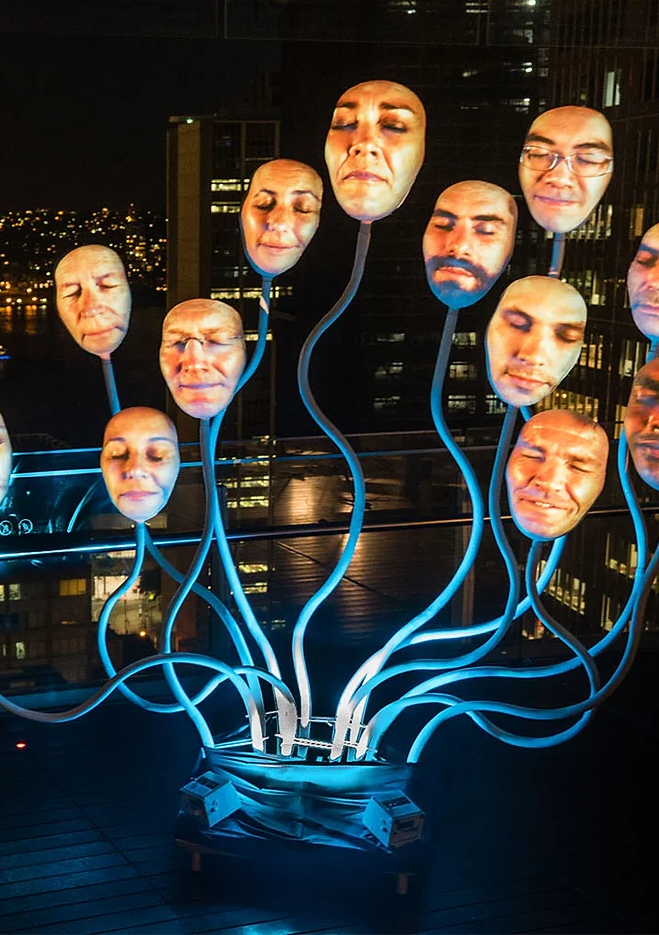
The Museum of Faces

Designed to record and tell the stories of the local community and beyond, this futuristic invention by Synarcade Audio-Visuals is an astonishing communal forum of the city at a unique moment of growth and change.
Visitors are invited to approach the work and press a glowing button to make the faces come alive and speak. Then, they can step into a special Video Capture Booth and contribute their own face, voice, and story to become part of the ever-changing Museum.
The Museum of Faces is based on Synarcade Audio-Visuals’ award-winning invention, The Lumiphonic Creature Choir, an eerie mechanical choir that can sing together in unison, beatbox, or recite poetry at the touch of a button. The Lumiphonic Creature Choir has performed to sell-out audiences in Melbourne, Croatia, New York, and at TEDxSydney 2018.

QUBIT AI: Verbo Pluriel (aka volt46) & XWave

Squid

FILE 2024 | Interator – Sound Synthetics
International Electronic Language Festival
Verbo Pluriel (aka volt46) & XWave – Calamar – United States and France

The Calamar music video is comprised of AI-generated clips that are sequenced and synchronized to create a hypnotic, ever-changing landscape.

Bio

Verbo Pluriel is an electronic music producer who has been active in the NFT scene since 2020 under the name volt46. X-Wave is also an NFT producer that trains its own AI models to generate collections. Although they never met in person, their participation in the web 3.0 art collective Based Ghouls led to their collaboration.

Credits

Music: Calamar (Kraken Mix) by Verbo Pluriel
Music Video: volt46
AI Video Generation: XWave

Mark Ramos & Ziyang Wu

Networked Ecosystem
In Networked Ecosystem, natural phenomena have been replaced by digital and artificial systems as forces that drive development: Electricity/battery = sustenance, WIFI signals = nutrition, Lidar data = fire/heat. Data Organisms populate this digital ecosystem as native life forms in the form of bots, AI’s, and avatars. Visitors to this networked landscape develop new kinds of digital senses to experience data as environmental changes, and interact with the simulated world and each other in an ever-changing online environment.

Sean Kerr and Judy Darragh

In Kahoots
“In Kahoots is an ever-changing 3D experience that in a sense feeds on itself – by reworking the artists’ source material, the algorithm constantly regenerates its own sounds and images into new art. This is the first time In Kahoots has been to Christchurch – but really, everyone who visits will experience a first. In Kahoots encourages people to literally be a part of a truly unique work of art, and create lifelong memories for audiences of all ages. It’s fun for kids, and food for thought for everyone looking for a little extra.” Nathan Pōhio

Alex Verhaest

À la folie/To Insanity

Gregor and Grete don’t understand one another anymore. Their common language, which used to be based on love, has disappeared. She accuses him of becoming a sickening crustacean, while he says she’s degenerated into some kind of mollusc. Through a failing memory and ever-changing versions of the same story, the viewer and characters become embroiled in a false history.

Jeppe Hein

Path of silence
Inspired by the remarkable topography of the landscape of the Kistefos Sculpture Park, the stepped slope and terraces beside the Industry Museum, where the power and energy of water is directly visible and gives the site a special quality, a free form is adapted to the shape of this landscape, thus creating a dialogue between the place and the object. The sculpture is defined by an extensive mirror labyrinth that encloses three spaces of silence: A contemplative space, where an enclosure of high mirror steles promotes an upward glance to the sky, a natural space, where a tree inside the sculpture links the inside with the outside and an active space where walls of water appear and disappear, thus offering ever-changing perspectives of the surroundings.

Phillip K Smith

Open Sky
Using giant sheets of mirror-polish stainless steel, Smith’s structure reflects the ever-changing sky. He describes that ‘Open Sky’ is “inspired by the constant shifts in light, color, and form that are presented in the natural and built environment.” The piece is designed to get visitors at the design week to interact with the natural environment and to spark a sense of adventure.

Joris Strijbos

DARK ECOLOGY

IsoScope

IsoScope is a kinetic audiovisual outdoor installation, a sensorial experience in which the audience wanders through rotating lights and an ever-changing sonic cloud. This new work by Dutch artist Joris Strijbos consists of multiple robotic wind objects interacting with each other and with their surroundings. Strijbos aimed at creating a human-constructed phenomenon, an abstract entity which, like most natural phenomena, can only be experienced in certain weather conditions. IsoScope can be seen as a proposition for a new kind of machinic and artificial lifeform. IsoScope was commissioned by Sonic Acts for the second Dark Ecology Journey (2015) and realised in collaboration with Jeroen Molenaar, Daan Johan and Erfan Abdi.

Where Dogs Run

Smell of faces
This unique, ever-changing pattern is visualized in a facial composite. This is how it works: when a person approaches the analyzer, sniffing tubes “sniff” him, then gas analyzers process the information, which then passes to a computer program that translate air composition data into data concerning the shape and position of facial features (the components of a facial composite). As a result, a person sees a face of their smell that is conditional, in no way related to their actual physical appearance.

ROB MULHOLLAND

روب مولهولاند
罗布穆赫兰
롭 멀홀랜드
ロブマルホランド
Роб Малхолланд

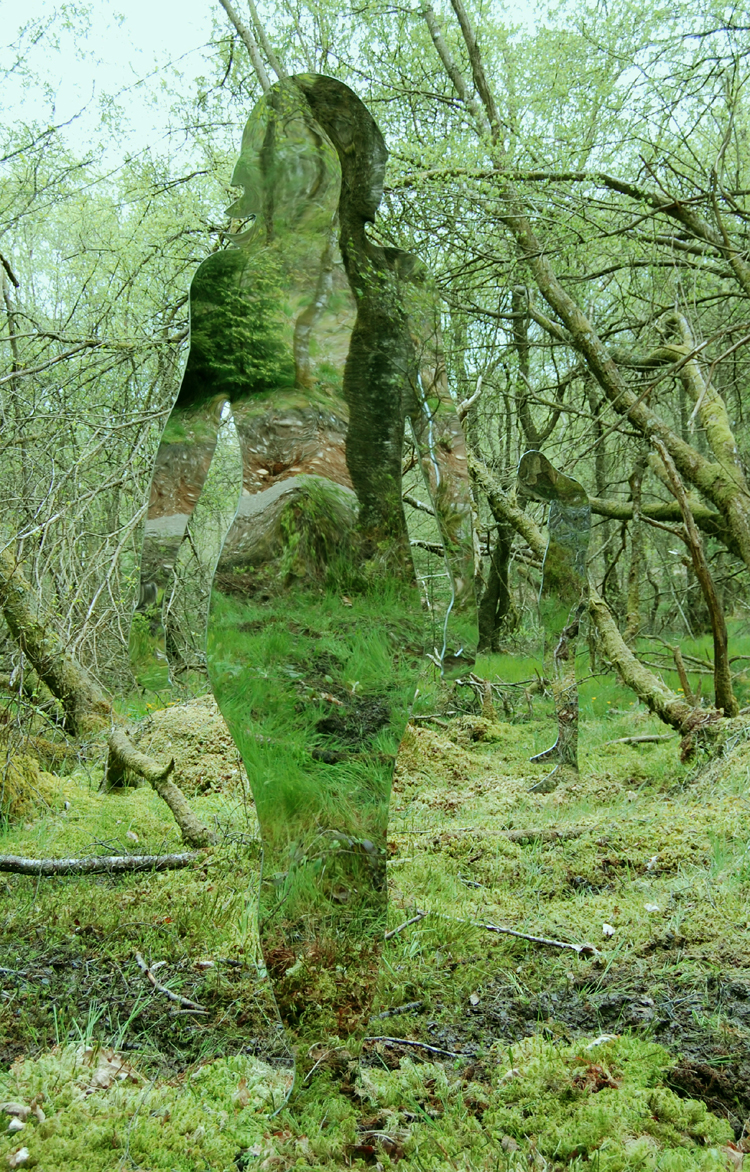
Rob studied at Edinburgh College of Art and graduated with a BA [Hon ] degree in 1986[…] His work explores the human relationship with the wider environment. His approach is not judgmental, more reflective and questioning about the ever-changing world around us. The human desire to leave a trace of ones-self for future generations has always intrigued him. It’s a driving force to create and leave a semblance of our-selves as individuals and as a society. The reflective figures ask us to look again and consider the symbiotic relationship we have with our natural and man-made environment.

Mattia Paco Rizzi + Jessica Bergstein-Collay

Taumascopio
‘Taumascopio’ is an art installation designed and realized by parisian architect-artist mattia paco rizzi for the 2014 kanal playground festival in brussels, belgium. the structure is completely covered with mirrors and as a result, offers a complete visual camouflage along the molenbeek’s canal. as its exterior panels fold, the overall massing creates a kaleidoscopic effect that reacts to heat. during the temperature’s evolution throughout the day, the surfaces present an ever-changing reflective effect. ‘the ‘taumascopio’ invites us to reflect in poetic vein on public space, like a box of delights that gives us multiple visions and allows us to see the city differently,’ says rizzi. ‘the mosaic of reflections sends our thoughts in new directions and invite us to create new ideas.’

TACITA DEAN

Turbine Hall

The Turbine Hall of Tate Modern is plunged into deep black gloom. At its east end, like the stained glass window of a cathedral, is a giant vertical screen. It is framed at the edges with sprocket holes, so we feel we are looking at a vast reel of film. In the centre, an ever-changing series of images: a snail on a wind-wobbled leaf, the powerful spume of a fountain, a chimney loosing trails of vapour. Sometimes the image is of the back wall of the Turbine Hall itself, but with its gridded form coloured in red, yellow and blue so it resembles a Mondrian. Or with a giant egg apparently floating from ceiling to floor.

TOYO ITO

تويو ايتو
伊东丰雄
טויו איטו
伊東豊雄
도요 이토
Tower of Winds
During the day the perforated metal panels that cover the Tower of Winds reflect the city image and make the design appear humble and simple. But during the night, it gets lit up in an ever-changing combination of light intensity and colors. Using computer software, the lighting follows the wind speed and noise levels changing the Tower’s appearance accordingly. The Tower of Winds features more than 1300 light bulbs and 42 flood lights and neon rings (on each floor). The small lights change their colors according to the wind’s noise level and the rings change their intensity according to its speed.
Basically, the Tower of the Winds by Toyo Ito is a wind indicator in a constant relationship with the city and the natural environment, a junction between the two. It is placed at the train station area, welcoming the passengers arriving in Yokohama and its functional role is accommodating another natural element. Surprisingly the Tower of Winds houses the water tanks for the air-conditioning system of the underground mall below. The Tower is not a new construction, but a re-designing of an old concrete tower that already existed there since the ‘60s.

GILES ASKHAM

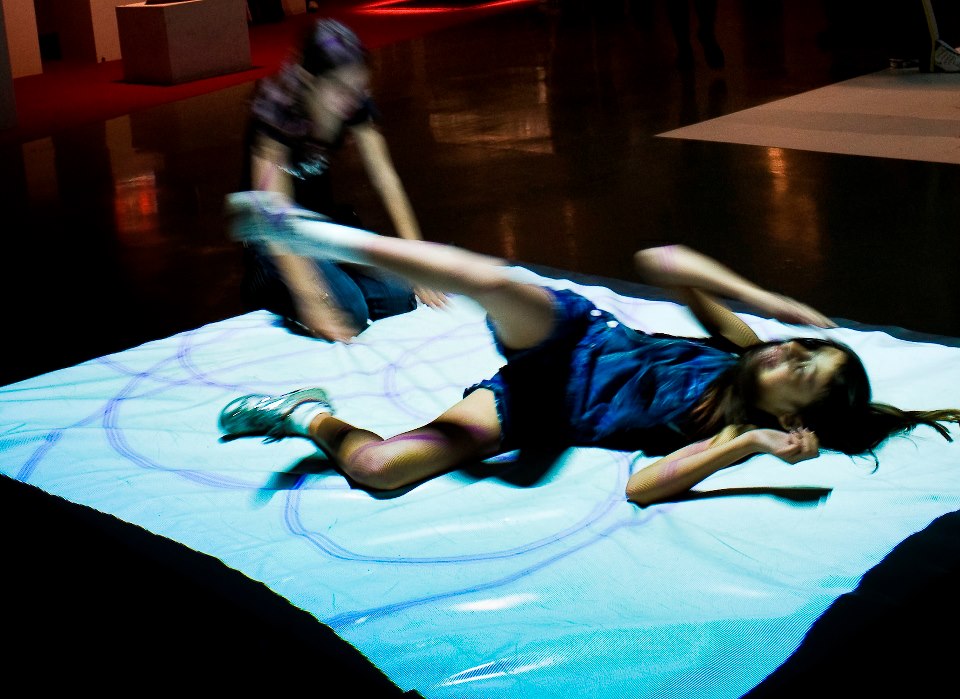
Aquaplayne
file festival

Aquaplayne lays out a new field of expression by extending the framework for immediate experience. The horizontal plane bypasses recognition and “sets up” an interactive surface, making a play of art by providing the viewer with instant access to the creative flow. In the movement from observation to participation we interface with an intelligent canvas through the automatic rendering of action into effect. The “body in motion” plays across a field of sensation, making the ripples of possibility appear as an ever-changing artwork. Unlike the action painter, whose technique is to offload creative energy in the painterly gesture, the activator retrieves what has already been deposited as data and brings it to the surface, aquaplaning on a stream of information. The virtual is restored to the actuality of expression, brought back to life in the flux between cause and effect, between code and composition. The calibrated experience of Aquaplayne is the art of permutation, the programmed initiative played and replayed as the artwork in formation.