highlike

Nicole L’Huillier and Sands Fish

Telemetron
Nicole L’Huillier and Sands Fish decided to explore how design and creativity might evolve as we begin to do more than merely survive in space. The Telemetron is a unique musical instrument that takes advantage of the poetics of zero gravity, and opens a new field of musical creativity. The project attempts to expand expression beyond the limits of Earth-based instruments and performers. Leveraging sensors, data transmission and capture (for performance after flight), as well as their experience as composers and performers, Sands and Nicole explore a new body language for music.

Jeff Shore and Jon Fisher

Cliff Hanger

Jeff Shore and Jon Fisher started their collaborative practice in 2002. Trained as a visual artist, Jeff Shore develops the visible sculptures and mechanisms, while Jon Fisher builds the electronics, writes the software, and creates the original soundtracks; for this he uses both digital and analog audio sources. The result of their collaboration is a series of kinetic devices and installations that generate live animated video and musical compositions. Similar to cinema storytelling, the movement in the pieces relate to the accompanying soundtrack or animation, and similar to a theater of automata, the pieces create precise and captivating sequential events. Bridging high and low-tech devices and instruments, the collaborative team creates mechanically activated moments of wonder, explores the relationship between automatism and chance, and comments on the impact of technology interfaces in our lives.

An-Ting Chang & Ian Gallagher – Underwater – England / Taiwan

UNDERWATER

An-Ting Chang & Ian Gallagher


FILE SÃO PAULO 2026: Inter-creativity – Art and Technology – MUSIC VIDEO PERFORMANCE
Electronic Language International Festival


Underwater – England / Taiwan

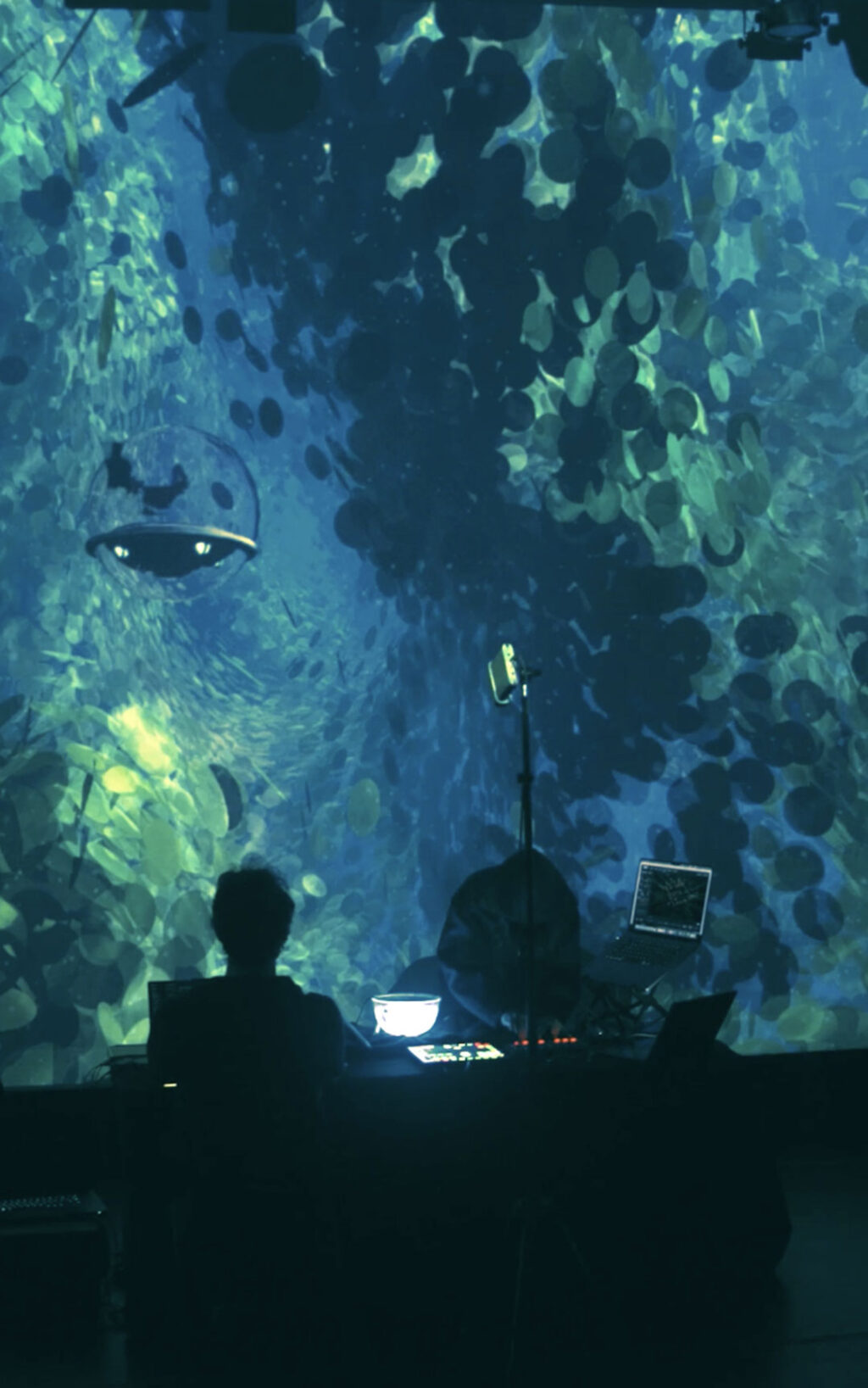
Have you heard that fish talk? Do you know the underwater world is super noisy, like a market full of life and communications? Underwater is a new live performance project that explores the acoustic world of marine life by composer An-Ting and creative technologist Ian Gallagher. We want to share with people the vibrancy and mystery of the natural world, and reconnect them through a collective experience with the non-human communications that our “civilized” society might have made us numb to.

BIO

An-Ting (composer) and Ian Gallagher (creative technologist) are collaborators specializing in blending cutting-edge arts and technology. Their collaborations include every dollar (2021), winner of Arts Council England’s Digital Culture Award for Storytelling, and HOME X (2023), which premiered at the Barbican with a sold-out run and was nominated for the UK Theatre Awards’ Digital Innovation.

Peter Burr & Mark Fingerhut – DESCENT – United States

DESCENT

Peter Burr & Mark Fingerhut


FILE SÃO PAULO 2026: Inter-creativity – Art and Technology – Animation
Electronic Language International Festival


DESCENT – United States

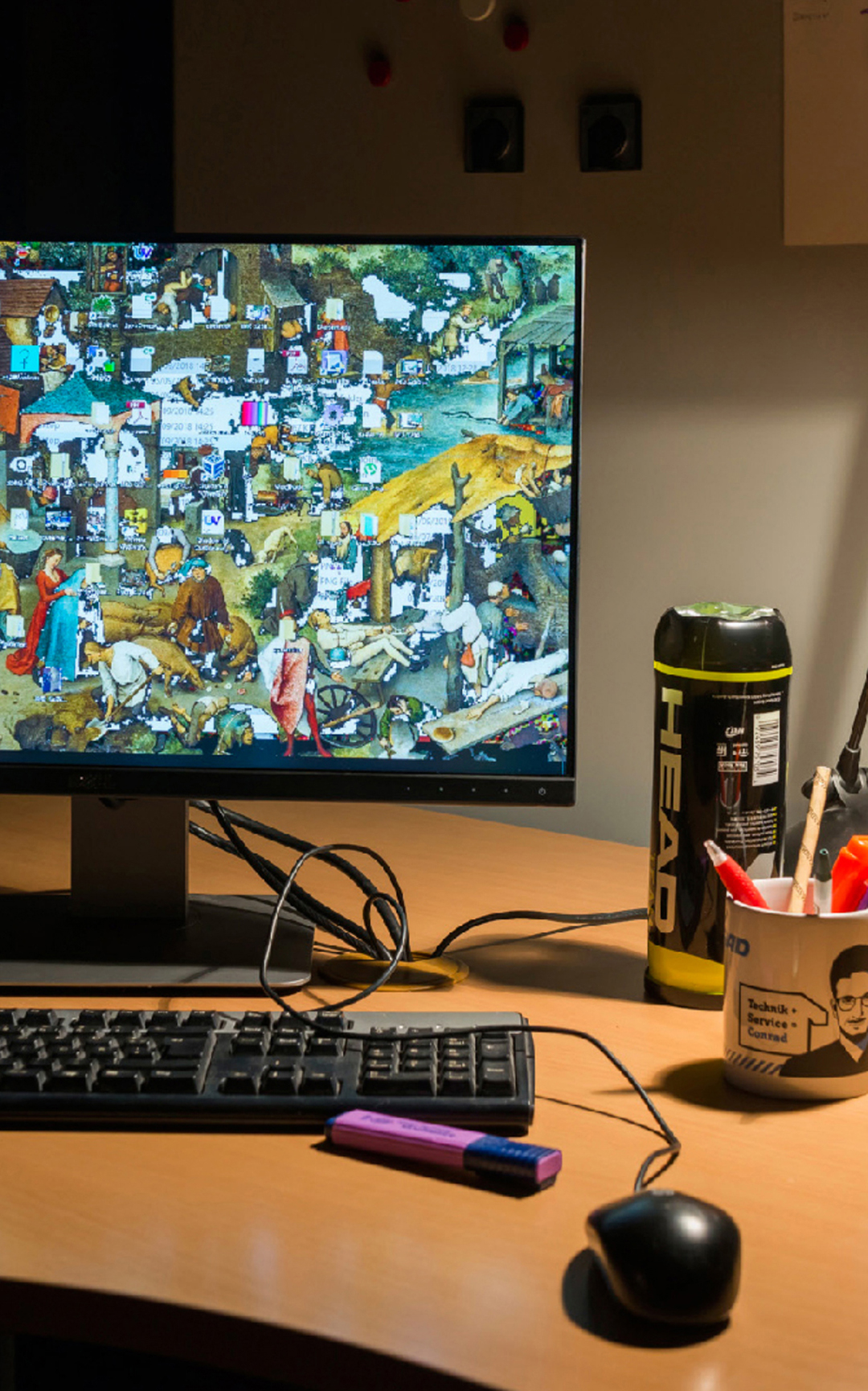
In 1562, Pieter Bruegel the Elder completed The Triumph Of Death, a panorama where black smoke blots out the sky, dead fish litter the shore, and skeletons test a myriad of death techniques. Over 200 years earlier, the Black Death wiped out half of Europe’s population, triggering upheavals that shaped medieval history. Alongside Mark Fingerhut and Forma, Burr created DESCENT, a desktop application that meditates on this darkness through a spiraling digital plague—ending with a single eye watching the rats destroy themselves.

BIO

Peter Burr is a Brooklyn-based artist whose immersive environments transform computational systems into emotional, sensory experiences. Working across video, software, and installation, he explores the relationship between human-machine interfaces and the systems that shape them. A Guggenheim Fellow and Creative Capital grantee, his work has been exhibited internationally at institutions including MoMA, the Whitney, and Centre Pompidou.

Mark Fingerhut is a New York-based artist, programmer, performer, and writer whose work spans software art, video, installation, and live digital performance. Using code, choreography, humor, and experimental storytelling, he creates works that explore network culture, computer interfaces, and the poetics of everyday digital experience.

Parse/error – FEATHERS – France

FEATHERS

Parse/error


FILE SÃO PAULO 2026: Inter-creativity – Art and Technology – Installations
Electronic Language International Festival


FEATHERS – France

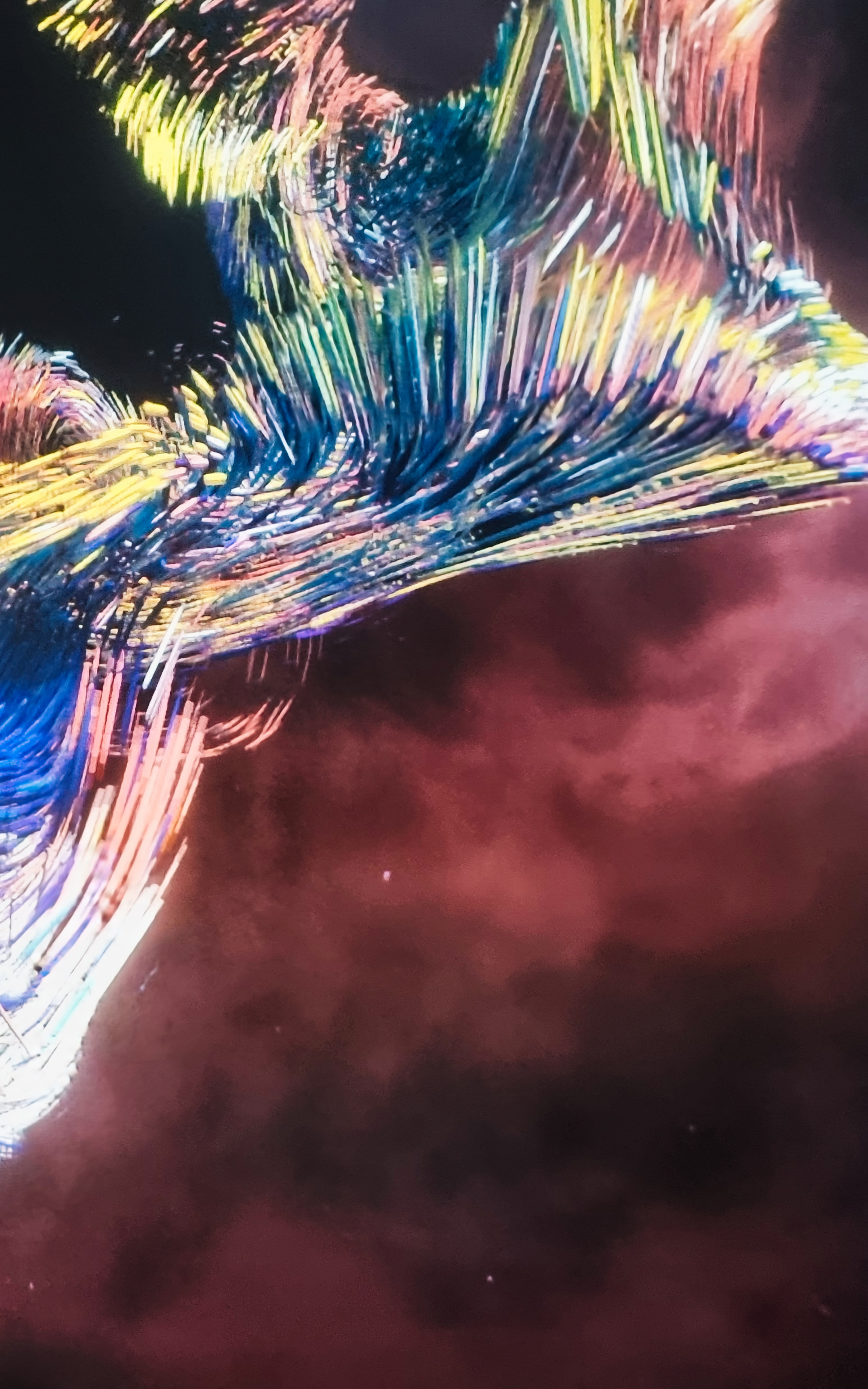
FEATHERS is a delicate encounter between human and digital, entering into dialogue with the viewer by reacting to their hand movements, modulating shape, rhythm, and colors. A gentle and immersive sensory pause, inspired by organic movements of nature, like schools of fish, bringing to life thousands of simple shapes evolving in symbiosis. It questions the place of the individual within a collective whole, how trajectories intersect, leave a trace, and influence one another.

BIO
Parse/Error (Fabien Bouchard) explores the boundary between art, design, and technology, recreating emotions from omnipresent data flows. With a background in biology and information technology, he works at the interface between technology and human sensitivity, questioning our relationship with the digital world through immersive installations, generative art, light sculptures, and real-time data.

Tobias Stretch

Weird Fishes
Radiohead

Tobias Stretch made this beautiful and mesmerising stop motion animation for Radiohead’s track ‘Weird Fishes’. Tobias’ natural light stop motion technique conjures a phantasmagorical and intimate world. Grotesque yet endearing puppets traversing the hinterlands in some bizarre pilgrimage. Tactile and beautiful.

Robert Breer

Float
The Floats – or floating sculptures – that Robert Breer took up producing again at the end of the 1990s, emerged in 1965. The word “float” meaning something floating – a marker, fishing float or buoy – and which also describes those carnival vehicles whose pretend wheels give them the appearance of floating above the tarmac, enabled Robert Breer to apply this principle to works of a new genre. Primary shapes, neutral colours and, for the most recent, an industrial aspect, the Floats were then made with polystyrene, foam, painted plywood, and, more latterly, out of fibreglass. At first glance, these simple structures appear immobile. In fact, they are moving, imperceptibly, within the space they inhabit. Motorised and on mini-rollers – which raise them slightly above ground, giving them an air of weightlessness – they glide unbeknown to the visitor, following random paths that are interrupted by the slightest obstacle that they encounter.

Nina Katchadourian

Survive the Savage Sea

When I was seven years old, my mother read a book aloud to me titled Survive the Savage Sea (1973). It was the true story of the Robertsons, a family of farmers in England who sold all their possessions to buy a sailboat with the intent of sailing around the world for several years. In June 1972, the Robertsons lost their sailboat in a remote part of the Pacific Ocean when a pod of Orca smashed the hull, leaving the four adults and two children adrift for 38 days. After their inflatable life raft grew too leaky to be safe, they abandoned it for their nine-foot fiberglass dinghy, Ednamair, a vessel so small that with everyone aboard only six inches of the boat remained above the waterline. The family navigated to areas where they could collect rainwater and survived by finding ways to catch sea turtles, dorado, and flying fish until they were spotted and rescued by the crew of a Japanese fishing boat.

video

Constanza Silva

Silverfish Stream
file festival

The sound generated by the friction of the metallic robots against the floor, like that created by the contact between man and machine, is registered, altered and played in real time by the spheres, each with its own tonality, and amplified in the room. What is generated is a stream of multisensory information (visual, auditive, tactile), natural environment for mechanic creatures.

localStyle (Marlena Novak & Jay Alan Yim) in collaboration with Malcolm MacIver

Scale
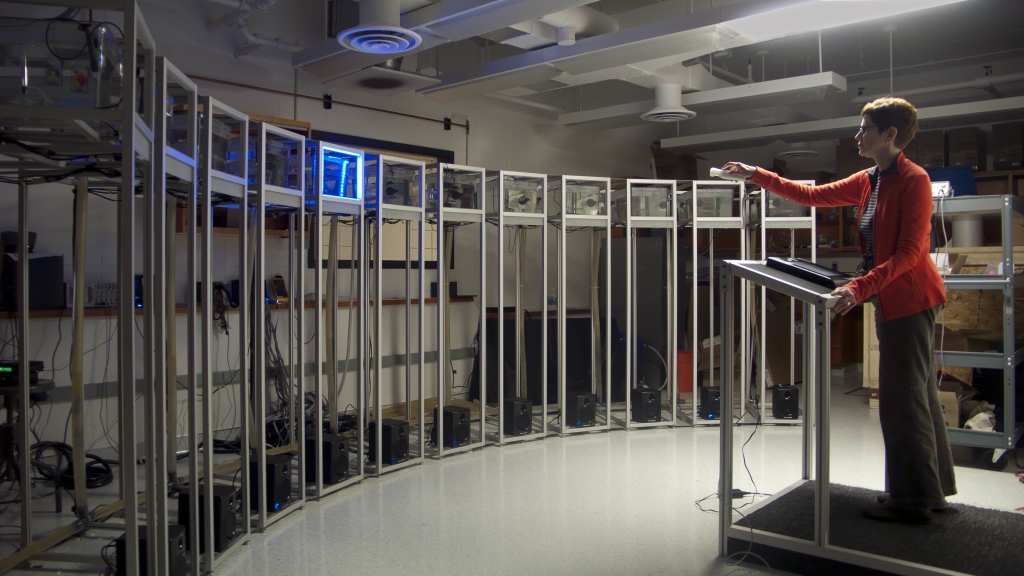
‘scale’ is an interspecies art project: an audience-interactive installation that involves nocturnal electric fish from the Amazon River Basin. Twelve different species of these fish comprise a choir whose sonified electrical fields provide the source tones for an immersive audiovisual environment. The fish are housed in individual tanks configured in a custom-built sculptural arc of aluminum frames placed around a central podium. The electrical field from each fish is translated into sound, and is thus heard — unprocessed or with digital effects added, with immediate control over volume via a touchscreen panel — through a 12-channel surround sound system, and with LED arrays under each tank for visual feedback. All software is custom-designed. Audience members interact as deejays with the system. Amongst the goals of the project is our desire to foster wider public awareness of these remarkable creatures, their importance to the field of neurological research, and the fragility of their native ecosystem.The project leaders comprise visual/conceptual artist Marlena Novak, composer/sound designer Jay Alan Yim, and neural engineer Malcolm MacIver. MacIver’s research focuses on sensory processing and locomotion in electric fish and translating this research into bio-inspired technologies for sensing and underwater propulsion through advanced fish robots. Novak and Yim, collaborating as ‘localStyle’, make intermedia works that explore perceptual themes, addressing both physical and psychological thresholds in the context of behavior, society/politics, and aesthetics.

toyo ito

تويو ايتو
伊东丰雄
טויו איטו
伊東豊雄
도요 이토
Palladian Basilica
This is the imagery evoked by Ito at the Palladian Basilica: “The austere hall has dissolved into a fluid volume, inside which float luminous and almost vital algae for the dozens of visitors who “swim” and group around, like fish in a fluorescent abyss, or in an urban “aquarium” “.

Stephen Scott

Bowed Piano
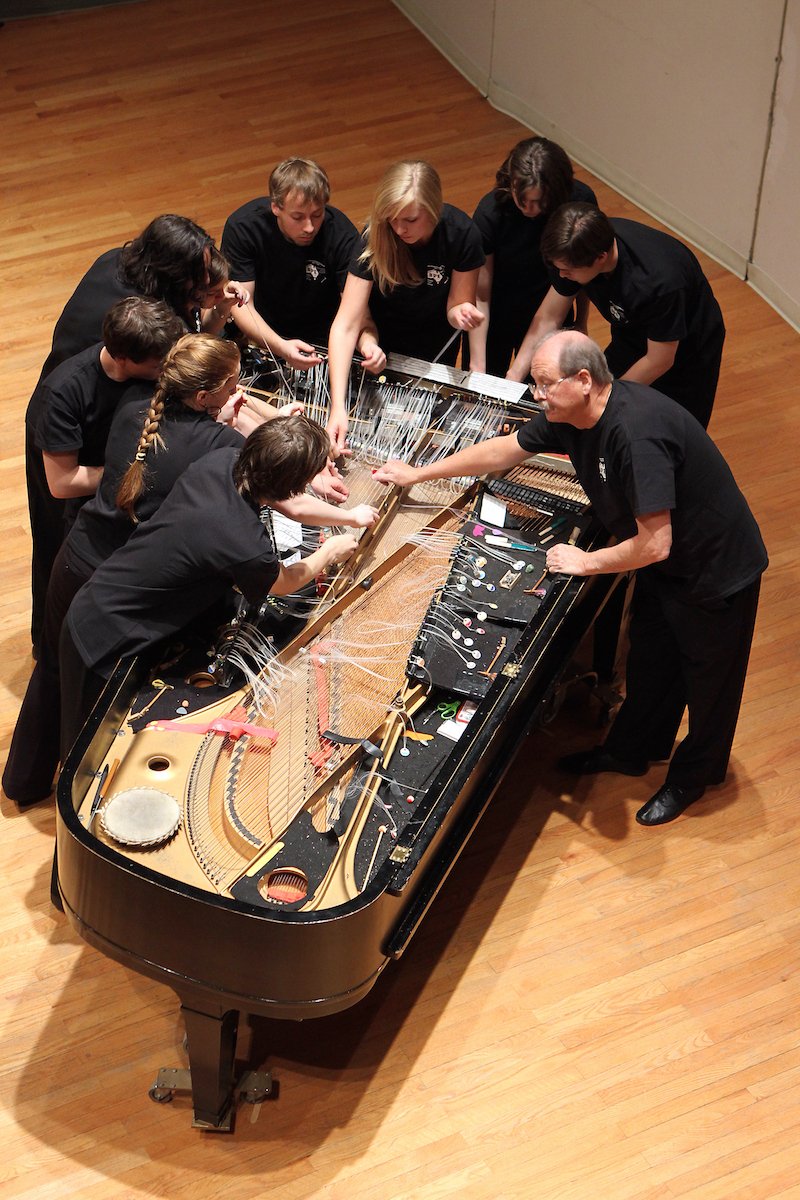
Few chamber groups deploy their musicians as oddly as the Bowed Piano Ensemble. The 10 players, students led by the composer Stephen Scott, stand around, and sometimes under, a concert grand, armed with items of all kinds — nylon fishing line, piano hammers, guitar picks, strips of paper, rolls of plumber’s tape — and reach into the instrument to draw sounds from its strings.

Mihai Grecu

coagulate
Mihai Grecu’s video work Coagulate is a visually immersive journey into a world of water which behaves against the laws of nature. This choreography of fluids explores absence, presence and aquatic distortions. In this world, man breathes water and fish breath air. Water seems impervious to gravity. Rather than narrative, Coagulate is based on sensation and atmosphere.

juuke schoorl

Rek
With ‘Rek’ (stretch in Dutch) I explore the aesthetic possibilities of the human skin through a mixture of image capturing techniques. By manipulating this curious stretchable material with various low budget materials like nylon fishing rope and cello tape I am able to temporarily shape it into surprising textures and shapes. Highlighting not only it’s flexibility and adaptability but also it’s function as our own biological upholstery that aside from it’s protective capabilities could also serve as a medium for aesthetic expression, possibly in the form of a dress less fashion.

JILL SCOTT

Electric retina
The Electric Retina is a “neuromedia” sculpture which combines retinal research with interactive media art and metaphorical associations in order to explore the complexity of visual perception. Based on her residency in Neurobiology at the Institute of Zoology, University of Zurich, Scott gained a deeper insight into the genetic control of visual system development and function by analysis of zebra fish mutants, which are used as the main phenotypes for human eye disease research.

TOM FRIEDMAN

Фридмен, Том
톰 프리드먼
トム・フリードマン

Tom Friedman’s art has been exhibited extensively in the United States and internationally. The quirky, and flawlessly executed work tends to defy categorization. While his art is often linked to 1960s Conceptualism and Minimal art, Friedman invents his own visual language through his almost obsessive attentiveness to detail and his striking ability to transform the familiar into the unexpected. He uses common household materials such as aluminum foil, spaghetti, fishing line, hair, Styrofoam, and Play-Doh to create works that rearrange the viewer’s perceptions of the everyday environment.

Leslie Henshaw

Chromatophores Collection
“Chromatophores are the cells that give some creatures of nature the miraculous ability to change their colour to protect themselves,” says Leslie. “Like chameleons, jellyfish, cuttlefish and frogs they can change from muted tones into brightly coloured and vibrant stripes or patches of colours that are mesmerising. With this collection I imagined what it would be like if humans could perform this amazing feat with their hair.”

Luca Francesconi

pane pane pane vino canale di scolo
Working with materials often sourced from the artist’s immediate environment such as stones, shells, vegetables, flowers but also dried fishes or reptiles, LUCA FRANCESCONI holds an intense fascination with the natural world and the countless manifestations of human culture within it. Uniting organic, artistic, and technological forms, FRANCESCONI makes the relationships between natural, found and modified forms imprecise while liberating marginalized materials and narratives.

Doug Aitken

ダグエイケン
道格·艾特肯
Underwater Pavilions
At around 12 feet in diameter, each one is big enough to swim through, for divers and fish alike. Aitken sculpted the pavilions from mirrors and artificial rock, and collaborated with a range of specialists to submerge them in the local dive park and moor them to the ocean floor. But building and installing these structures wasn’t easy. Aitken wants his exhibit to raise awareness about the declining health of the oceans.

QUIET ENSEMBLE

조용한 앙상블
Quintetto
Quintetto is an installation based on the study of casual movement of objects or living creatures used as input for the production of sounds. The basic concept is to reveal what we call “invisible concerts” of everyday life. The vertical movements of the 5 fishes in the aquarius is captured by a videocamera, that translates (through a computer software) their movements in digital sound signals. We’ll have 5 different musical instruments creating a totally unexpected live concert.

Milo Moire

FLUID ECSTASY
by Peter Palm
is an artistic underwater video work by Peter Palm, which he realized on the island of Mauritius with the conceptual artist Milo Moiré. Filled with a naive sexuality, this short film lasting just under six minutes reveals surreal, grace-filled perspectives on the female nude. Beneath the surface, within the concealing element of water, nothing remains concealed.
The title “Fluid Ecstasy” describes a trance-like, natural bliss in the flow of merging.
“Fluid Ecstasy” presents a metaphysically ambivalent ambience that documents our prenatal state of becoming in the form of a visual metaphor. In an analogous notion of being, “being” is understood as that in which everything partakes, though in various ways. The origin of all life lies in water. Peter Palm shows the nude Milo Moiré in a peaceful world, comparable to our “being” in the womb prior to our birth.
Both Milo Moiré and Peter Palm have done without technical aids, with one exception … flippers, which make reference to the metamorphosis from fish to Homo sapiens.
The video was created during numerous dives.

Richard Nicoll

Fiber Optic Dress
At the intersection of fashion and digital innovation comes wearable tech. Giving analog clothing and accessories a futuristic upgrade, it promises to completely redefine their form and function. One of the most stunning examples of the tech-chic trend is a headline-making dress dubbed the “jellyfish.” Created by designer Richard Nicoll, it appeared to float down the runway at London Fashion Week exuding the same phosphorescent glow of the eerily gorgeous sea creatures that inspired it. (Except his dress used strings of fiber optics—no stinging tentacles here!)

TAKAHIRO MATSUO

تاكاهيرو ماتسو
松尾高弘
타카히로 마츠오
Такахиро Мацуо
Noctiluca
Swimming in a glowing, underwater sea of jellyfish would be a really beautiful experience. But, with limited access to the deep sea, this interactive installation by artist Takahiro Matsuo could be considered a backup to that kind of actual encounter. The dark blue room, a reminder of the oceanic abyss, is a seamlessly flowing design in which viewers can appreciate the beauty of these fascinating creatures without having to actually run the risk of a jellyfish sting.

Tobias Putrih

Re-projection: Hoosac

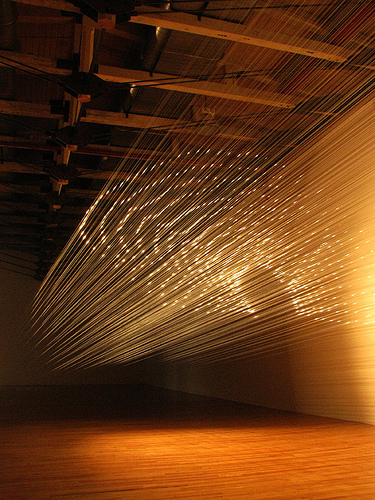
Influenced by the utopian projects — and notable failures — of innovative artists and designers such as Buckminster Fuller, Frederick Kiesler, and Charles Eames, Tobias Putrih likens his works to experiments, or design prototypes. His use of cheap materials, including egg crates, cardboard, and plywood signify both a sense of potential and impending collapse. Many of the artist’s works reference the architecture and spectacle of the cinema: a space suspended between fantasy and reality, image and environment. With Re-projection: Hoosac Putrih distills the cinema to its most basic element: fishing line stretched across the gallery mimics the conical trajectory of a beam of light. A spotlight hits the strands of monofilament which in turn become a screen, reflecting an image in illuminated dots. Inspired by the Hoosac Tunnel just east of North Adams — a storied, engineering marvel that draws ghost-hunters to the area — Putrih’s tunnel is, likewise, both real and a representation, an optical trick that invites both wonder and investigation.

Marc Quinn

مارك كوين
마크 퀸
מארק קווין
МАРКА КУИННА
The Selfish Gene

RADIAL AND BLAUS

MID AND PLAYMODES
radial and blaus
‘radial’ and ‘blaus’ are two interactive lighting installations, both a result of the collaboration between catalonia-based digital research collectives MID (media interactive design) and playmodes. ‘blaus’ introduces the abstract realm of three dimensional geometry through the mediums of audio and illumination – this could manifest as a cube or a blossoming flower, a grid or a jellyfish, a mutant framework of reflecting lights which submerge the audience into a multi-faceted universe, driven by hidden forces of the architecture. ‘blaus’ is an immersive space where audio-visual elements relate
intimately to impact on the visitor. the process led the designers to build most of the software and hardware elements themselves, by means of algorithm design, digital fabrication techniques and craft handwork. on the hardware side, the use of open source technologies, such as arduino, allowed us to create a flexible electronic system easily addressable by opensound – control data. ‘duration open source software by
james george was used in order to independently control, compose, and play a full score for the laser diodes, servomotors, lights and music.on the sound design side, all music and sound effects are made through the use of audio programming environments such as predate and reactor.
custom digital instruments are made in order to exactly match the resonant frequency of the space and its harmonics.
‘blaus’ is an immersive space where audio-visual elements relate intimately to impact on the visitor.

POTLATCH

Gretchen at the Potlatch Feast

“Potlatch is a festive event within a regional exchange system among tribes of the North pacific Coast of North America, including the Salish and Kwakiutl of Washington and British Columbia.”
The potlatch takes the form of governance, economy, social status and continuing spiritual practices. A potlatch, usually involving ceremony, includes celebration of births, rites of passages, weddings, funerals, puberty,and honoring of the deceased. Through political, economic and social exchange, it is a vital part of these Indigenous people’s culture. Although protocol differs among the Indigenous nations, the potlatch could involve a feast, with music, dance, theatricality and spiritual ceremonies. The most sacred ceremonies are usually observed in the winter.
Within it, hierarchical relations within and between clans, villages, and nations, are observed and reinforced through the distribution of wealth, dance performances, and other ceremonies. Status of families are raised by those who do not have the most resources, but distribute the resources. The host demonstrates their wealth and prominence through giving away the resources gathered for the event, which in turn prominent participants reciprocate when they hold their own potlatches.
Before the arrival of the Europeans, gifts included storable food (oolichan [candle fish] oil or dried food), canoes, and slaves among the very wealthy, but otherwise not income-generating assets such as resource rights. The influx of manufactured trade goods such as blankets and sheet copper into the Pacific Northwest caused inflation in the potlatch in the late eighteenth and earlier nineteenth centuries. Some groups, such as the Kwakwaka’wakw, used the potlatch as an arena in which highly competitive contests of status took place. In rare cases, goods were actually destroyed after being received. The catastrophic mortalities due to introduced diseases laid many inherited ranks vacant or open to remote or dubious claim—providing they could be validated—with a suitable potlatch.
Sponsors of a potlatch give away many useful items such as food, blankets, worked ornamental mediums of exchange called “coppers”, and many other various items. In return, they earned prestige. To give a potlatch enhanced one’s reputation and validated social rank, the rank and requisite potlatch being proportional, both for the host and for the recipients by the gifts exchanged. Prestige increased with the lavishness of the potlatch, the value of the goods given away in it.

RYAN HABBYSHAW

carnival aquarium

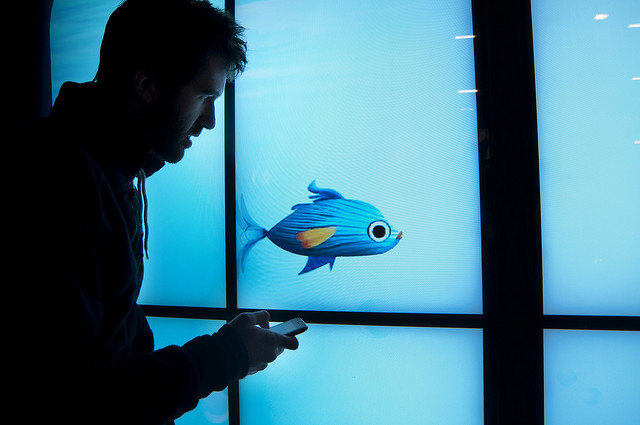
The interactive aquarium is installed in store front windows in 6 cities across the US. Using computer vision the seascape will react to the motion of a user, seaweed will sway and fish will scatter. Users can then dial in with any mobile device and create a fish using their voice. As they connect in realtime the sounds they make are analyzed and create a dynamically generated fish. You can then enter that fish into the aquarium and use your key pad to eat various pieces of fish food that will transform and morph your fish into creatures. The application will remember the state of your fish so that when you call back later you can evolve your fish even further.

CARSTEN HÖLLER

卡斯滕·奥莱
Карстен Хеллер
Aquarium

Aquarium proposes the direct contemplation of the link between the human being and the animal kingdom far from any anthropocentric perspective. For this, the artist arranged a fish tank with three holes underneath, so that the spectators could notice – lying down – the behavior of aquatic life from another point of view, influenced by the hypnotic pattern created by the fish in the water. The public, being “submerged” and exposed only to what they can see inside the tank and the sounds that can seep in from the outside, are immersed in a separate reality.