highlike

Richard McCormick – GeoSonic – United Kingdom

GEOSONIC

Richard McCormick


FILE SÃO PAULO 2026: Inter-creativity – Art and Technology – MUSIC
Electronic Language International Festival


GeoSonic – United Kingdom

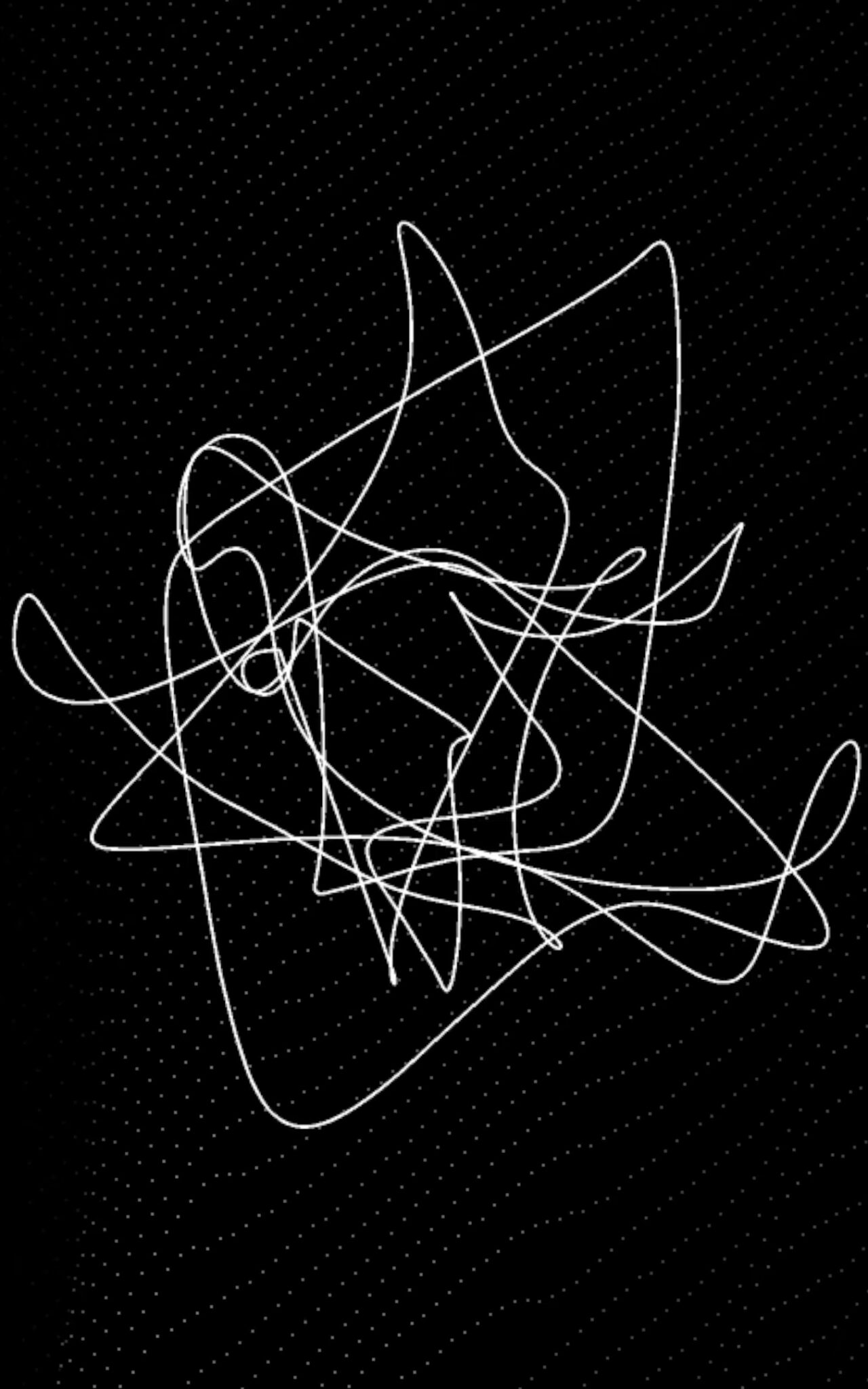
GeoSonic is an audiovisual piece that takes sound from the earth, and other materials and creates visual representations of them with the use of an oscilloscope. Conceptually, the piece is aimed to highlight the fragile nature of the Earth, how each day more and more erodes away. There is a point at which each section breaks or fades to nothing. This is an intentional choice to emphasise the scale of what we are losing and have already lost.

BIO

Richard McCormick is a composer, visual artist and sound designer with previous work ranging from film scores, electroacoustic, audiovisual and his own electronic music. Having studied a Masters in Music Composition at Sheffield University, Richard’s work expanded and developed exponentially under the tutelage of Adrian Moore.
Matthew Biederman & Pierce Warnecke – Phytomorphic Topologies – Canada / United States / France

PHYTOMORPHIC TOPOLOGIES

Matthew Biederman & Pierce Warnecke


FILE SÃO PAULO 2026: Inter-creativity – Art and Technology – MUSIC
Electronic Language International Festival


Phytomorphic Topologies – Canada / United States / France

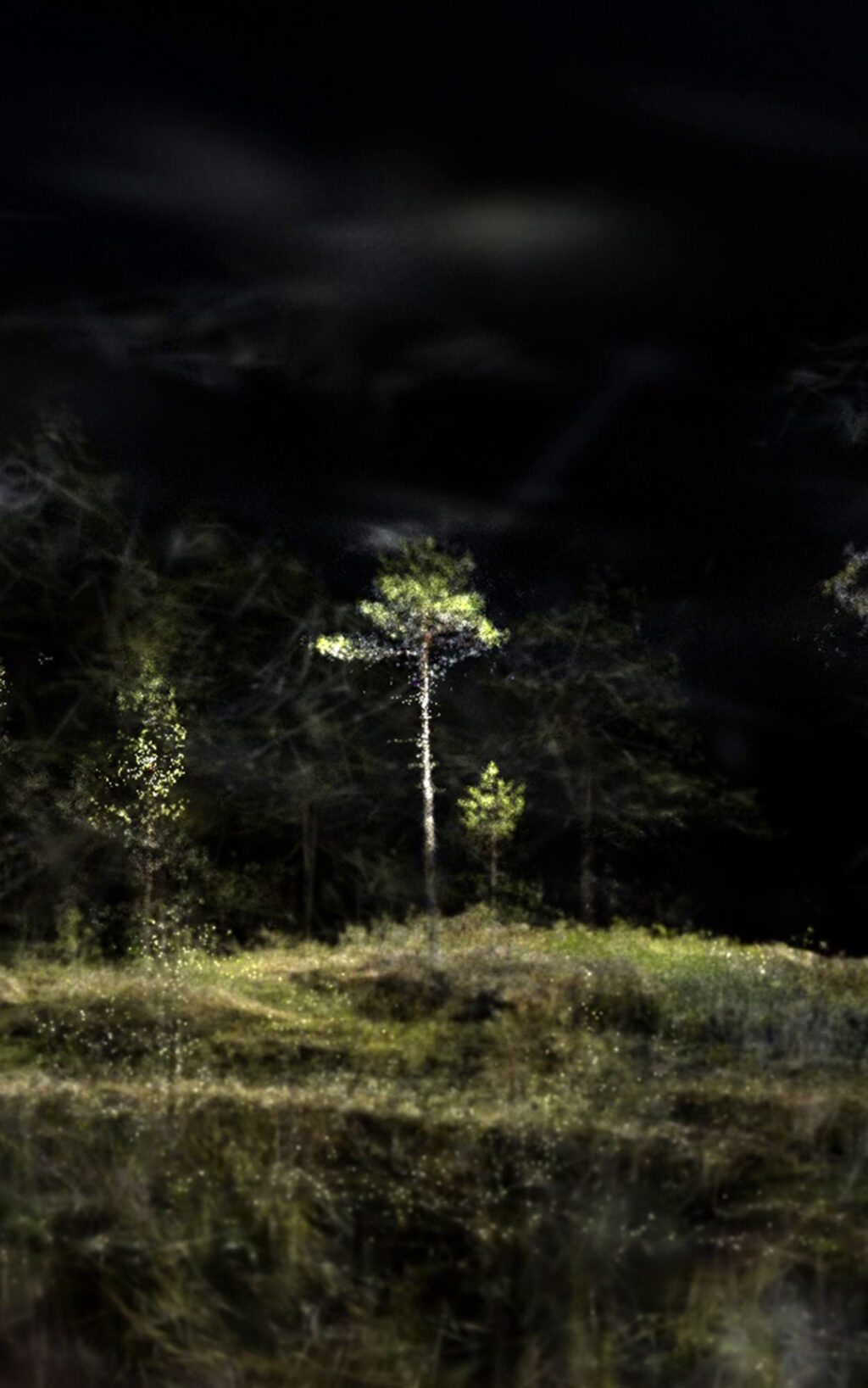
Phytomorphic Topographies is a suite of audiovisual works which investigates fragile ecosystems of protected wilderness spaces through three-dimensional (photogrammetry) visual representations and near-field audio recordings. The work explores these zones’ capacity as a compositional tool in order to foster novel views and reflections rather than simple representations, thereby bringing attention and consideration to both the visible and often overlooked life structures around us.

BIO

Pierce Warnecke is a multidisciplinary digital artist at the intersection of experimental music, digital arts and video art. He has presented his work in the form of performances, concerts and installations at Rewire, Mutek, GRM, ZKM, ManiFeste (IRCAM), CTM, Elektra, KW Institut, La Biennale Nemo, Sonic Acts, Martin Gropius Bau, MAC Montreal, Gray Area SF, Scopitone, LEV Festival, Semibreve, etc. 

Matthew Biederman is an artist exploring perception, media saturation, and data systems since the mid-1990s. He has received major awards and held residencies at institutions including the Center for Experimental Television and CMU’s CREATE Lab. In 2007, he co-founded the Arctic Perspective Initiative. His work has been exhibited internationally at major biennales, festivals, and museums.

KRIS VERDONCK

I / II / III / IIII

In I/II/III/IIII, choreographer and visual artist Kris Verdonck transforms the stage into a life-size dollhouse. Four female ICK-dancers – not unlike marionettes – are floating in mid-air, suspended from a huge machine. A solo, a duet, a trio and a quartet follow one another in this choreography of identical movements. A game of surrendering to the machine and at the same time, searching for control. The images evoked by I/II/III/IIII are confusing and ambiguous: the dancers almost look like graceful, fragile swans … but they also remind us of animal carcasses being dragged along, floating angels, falling human bodies and everything in between.

DORETTE STURM

FILE SAO PAULO 2017
THE BREATHING CLOUD
“The Breathing Cloud” is a monumental floating organism. The work transforms a space by its motion, light, and rhythmic breathing. With this light art the phrase “let a room come to life” gets a new meaning. The clouds skin looks fragile and soft, and the movements are rhythmic, yet random, so the whole room feels like a living being. The technology is designed so that the strong LED modules and the mechanism support the pervasive breathing. It gets physically bigger and smaller and embraces with its bright light space.

bohyun yoon

БОХЬЮН ЮН
윤보현
To Reverse Yourself

FILE FESTIVAL

My work poses the question: how does reality becomes exquisitely animated by certain social control systems such as politics, mass media, technology, science, and etc. It is my artistic goal to reveal how human beings are fragile and delicate in these social environments. By living in Korea, Japan and the U.S, I have first-hand experience in diverse social systems and have come to view my life experiences as raw material for my research. With my research in mind, my art utilizes the body as the tool for an intensive investigation of the public and private; examining the relationship between how people understand their body and how this understanding represents themselves in the greater context.
Currently, I am curious about human perception developing parallel with the ever-evolving progression of technological world. Thus, I question technology’s relationship to reality and illusion; asking what is reality? My work takes advantage of illusion to explore and answer this question, and often my artistic materials consist of the body and mirrors. I use mirrors for integrating reality and illusion.

FUSE

FRAGILE
Fragile is an audio-visual installation that aims to investigate the relationship between stressful human experience and the transformations that occur in our brain. Recent scientific research has shown that neurons belonging to different areas of our brain are affected by stress. In particular stress causes changes in neuron circuitry, impacting their plasticity, the ability to change through growth and reorganization.
Our process exploits the scientific data provided by the Society for Neuroscience and elaborates this information trying to show the effect of external interactions on our nervous system and ultimately on our relationship with the outside world. In order to achieve this we developed an artwork composed of different digital representations following one another, branching into 5 screen projections.

STUDIO DRIFT

Futuro Fragile
Con Fragile Future III, DRIFT fonde natura e tecnologia in una scultura di luce multidisciplinare. Il progetto è una visione critica ma utopica sul futuro del nostro pianeta, in cui due evoluzioni apparentemente opposte hanno stretto un patto per sopravvivere.

Ann Veronica Janssens

Hot Pink Turquoise
Janssens’ works range wide, but they can all be described as sculptures that use the space as a stage for sensory activity. The simple white architecture of Louisiana’s South Wing becomes a resonating surface for Janssens’ both fragile and dizzying art – fragile because the works and their components are very simple while their effect elevates them above the material. Janssens herself often uses the word ‘fluid’ to describe the effect of her works – even for example when they consist of a 6.5 metre long iron girder polished at the top so the room is reflected and it is hard to fix your gaze on the object. Janssens seeks no control of either works or viewers, for as the Dutch theorist Mieke Bal has said, Janssens’ artworks are at one and the same time object and event. Many of the works in the exhibition can evoke the sensation of standing at the threshold of something. They stress transitions and transformations between on the one hand a material level – evoked by glass, colour, liquids and not least light – and on the other hand a dynamic experience of time and space.

Masaki Fujihata

Orchisoid

“Mobility, technological invention, and artistic invention “It’s not just about putting new media into art, or even making new media art. It is about making new media as an artist, about being an artist in new media. Therefore, if it is not only a question of renewing art by injecting it with new means, new tools, new subjects, it may be a matter of shifting its borders to the point of considering experiments, technological inventions, such as art-related events, as part of the artistic project ”. In my opinion, here is how to re-found art and breathe new life into it for years to come! Fujihata’s work leads us to think of Art as “technical conduct”. In this conduct, technique is not instrumentalised, it is therefore freed from having to serve FOR something, it does not have to be effaced in front of what it serves. But this notion is very “fragile” as Pierre-Damien Huyghe points out to us. Indeed, if the technique “is no longer used for” it is no longer “necessary”. We must therefore consider that what is not necessary is precisely what is useful. Highlighting the usefulness in a technique without going through a notion of service is precisely what is at stake in Masaki Fujiata’s artistic position. In his work, it is about exploring the possibilities of a group of techniques so that they do not end up in the use where they are usually agreed. At the heart of Fujihata’s work we are dealing with techniques rich in possibilities. The artist has an artistic conduct which does not seek the means to do something with these techniques but which seeks to discover them. The artist positions himself as a discoverer making both learned and humorous attempts … “Jorane Rest

Neri Oxman and MIT Develop Programma

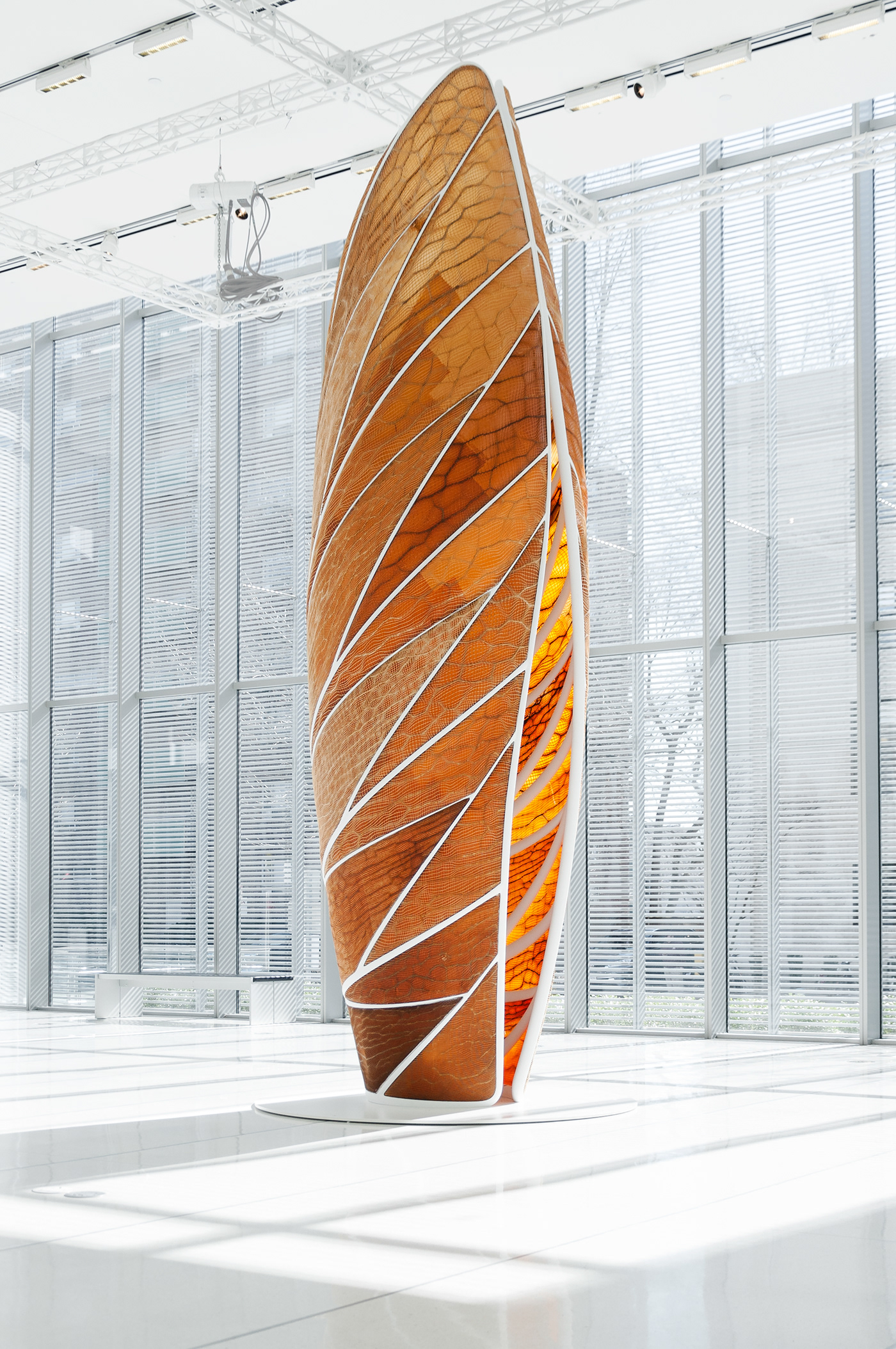
Aguahoja

La variedad de formas y comportamientos exhibidos por estas piezas refleja la forma en que se expresan en la naturaleza, donde un material como la quitina puede componer tanto el exoesqueleto de los crustáceos como las paredes celulares de los hongos. A diferencia del acero y el hormigón, los materiales compuestos formados por estos materiales están en constante diálogo con su entorno. Algunos artefactos exhiben cambios dramáticos en la conformación en respuesta a la humedad y el calor, mientras que otros se oscurecen o aligeran a medida que cambian las estaciones. Algunos son frágiles y transparentes con una textura vítrea, mientras que otros permanecen flexibles y resistentes como el cuero. A pesar de su diversidad emergente, estos artefactos comparten una calidad común: en la vida, sus propiedades están mediadas por la humedad; en la muerte se disocian en el agua y regresan al ecosistema.

DORETTE STURM

La nuvola che respira
“La nuvola che respira” è un monumentale organismo galleggiante. L’opera trasforma uno spazio con il suo movimento, la luce e la respirazione ritmica. Con questa arte leggera la frase “lascia che una stanza prenda vita” assume un nuovo significato. La pelle delle nuvole sembra fragile e morbida, ei movimenti sono ritmici, ma casuali, quindi l’intera stanza sembra un essere vivente. La tecnologia è progettata in modo che i potenti moduli LED e il meccanismo supportino la respirazione pervasiva. Diventa fisicamente più grande e più piccolo e abbraccia con il suo spazio di luce brillante.

TIM KNOWLES

Disegni ad albero
Tim Knowles è un artista multidisciplinare britannico. Sebbene neghi di essere ossessionato dal vento, questo elemento ha ispirato molto il suo lavoro, gli piacciono le sue proprietà e la sua mancanza di controllo. Tree Drawing è un ottimo esempio del lavoro di Tim Knowles, appende dei pennarelli sui rami di un albero e aspetta che il disegno venga eseguito dal vento o dalla brezza sui rami. La cosa bella di questo lavoro è che puoi sentire le proprietà intrinseche dell’albero, che può essere flessibile, rigido, leggero, fragile.

Tim Knowles

Tree Drawings
Tim Knowles est un artiste pluridisciplinaire britannique. Même s’il se défend d’être obsédé par le vent, cet élément a beaucoup inspiré son travail, il aime ses propriétés et son absence de contrôle. Tree Drawing est un très bel exemple du travail de Tim Knowles, il accroche des feutres aux branches d’un arbre et attend que le dessin se fasse sous l’impulsion du vent ou de la brise sur les branches. Ce qui est beau dans cette oeuvre c’est qu’on peut ressentir les propriétés intrinsèques de l’arbre, qui peut être souple, rigide, léger, fragile.

LETHA WILSON

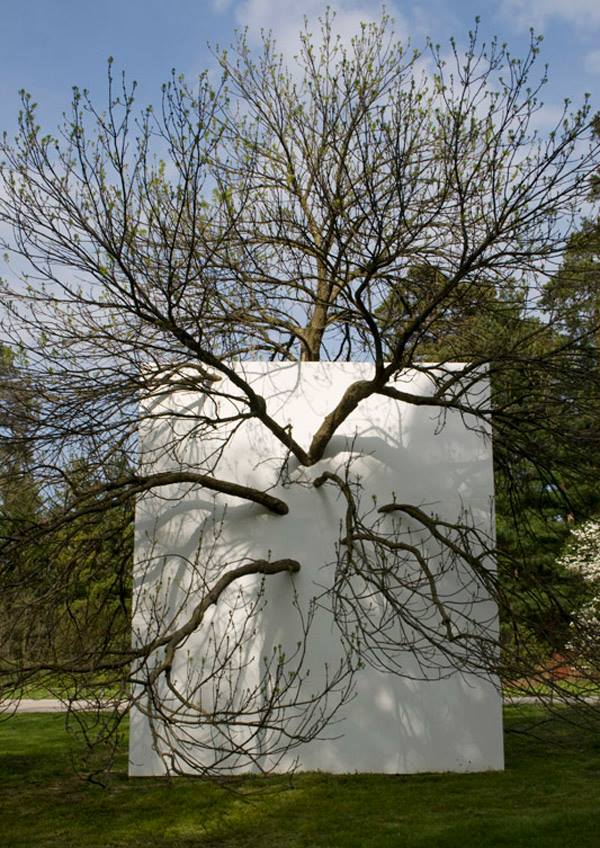
Wall in Blue Ash Tree

“I think that nature as a subject is often seen as something outdated or cliché in contemporary art and especially in nature photos. But I think there is still a lot of scope to play and push the boundaries, “Letha Wilson said. She thus dust off the subject through installations, videos and photo-sculptures and breathe new life into the gallery.
Using photography as a material in its own right, she shakes up conventions and does not hesitate to manipulate her photographs and associate them with other elements such as wood, paint, light or more recently, concrete, giving them a new dimension. One way for her to suggest that the viewer question the desire to be elsewhere and the representation of nature. Letha plays on the fragile balance that exists between the beauty of her images and their sculptural strength and thus creates relationships between nature, objects, exhibition space and wild landscapes. »Géraldyne Masson.

Nao Tamura

Lexus Interconnection
There are forces in nature that are beyond the control of mankind. We have learned how fragile we are in the face of such forces. However, we have also learned the importance of accepting nature and learning to live in harmony with it. Interconnected and interdependent, there is a constant give-and-take in nature. Life does not rest. Our collective motion, nature’s response to our movements is essential to our planet’s delicate balance. When we are one with nature, we are at our most powerful. Our movement together gives us life. Our movement forward creates the next generation of ideas. Life is always more amazing in motion.

MONOCOLOR

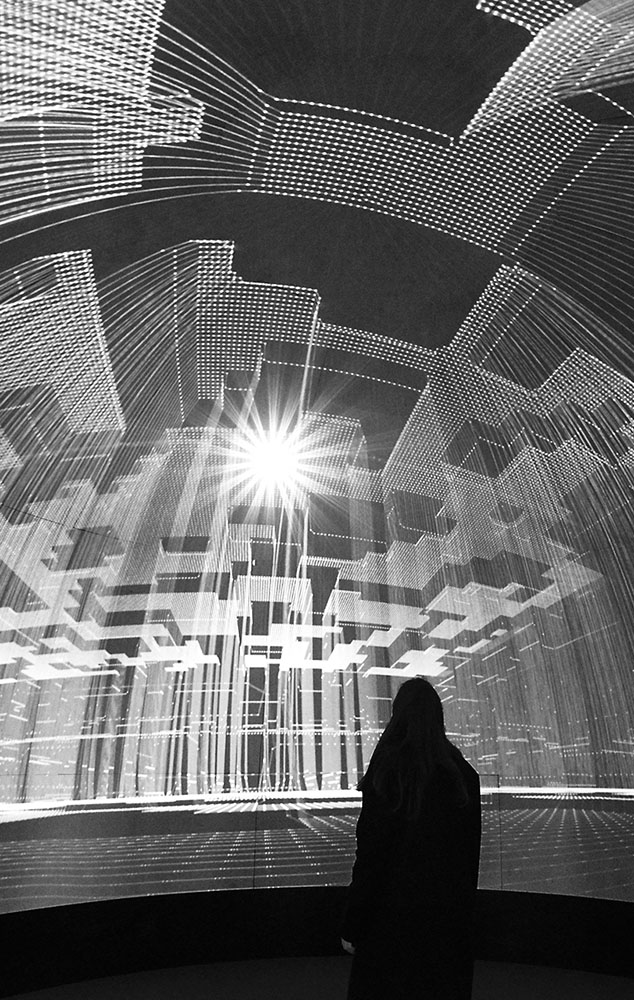
Latent Space
In Latent Space fine lines weave virtual spaces around the viewers. The architecture that manifests is highly fragile — the space grows, shrinks, collapses. The acoustic dimension is also deeply spatial — slowly morphing soundscapes float around the dome, enveloping the observers in sound and image. The omnipresence of the virtual realm is transposed into the physical space of the dome to unmask the often proclaimed boundlessness of digital space. The work tests and investigates the spatial effects of the dome, which serves as a metaphor for the virtual net that always surrounds us.

ANGELIKA LODERER

Angelika Loderers work is refering to the basic research of form and space. She uses fragile, everyday materials that are derived from the vocabulary of domesticity and combine them with sort of traditional sculptural techniques. In the process the play between chance and control defines the aesthetics of her work. The experimenting with attidudes – via a very specific amalgam of materials, shapes and objects- brings forth a new, metaphysical result. “In transience, fragility and decline, I see the formal expressions to which I refer in my designs, and which to some extent provide the framework conditions for my processoriented work. From the abundance on offer, however fragile and vulnerable in composition, the elements fall into place, becoming worthless once again when dismantled.”

MYEONGBEOM KIM

МИЕОНГБЕОМ КИМ
김명범
Myeong Beom Kim is from Seoul, Korea. He produces otherworldly installations and sculpture works that juxtapose man-made elements with nature to create surreal dream spaces. Utilising suspension as a common motif, his works are constantly poised in a state of ambiguous wonderment. Within his installations, living things are held inside the fragile confines of light bulbs and helium balloons replace tree foliage, literally uplifting the tree and its roots.

LILIBETH CUENCA RASMUSSEN

Through photographs, sculpture, video, song, costume and performance, Cuenca explores the fragile structure of political hegemony and patriarchal domination.

Santiago Villanueva

The Slow Motion Band
Villanueva began his training and initiation in1984 from 1986-1995 he worked as an artist and teacher with Abraham Dubckovsky the Argentine sculptor and architect planner. His work: causes, produces and creates visual and physical impressions and sensory pleasures, space and forms that are capable of enclosing and hiding something and demarcating soluble volumes. The pieces are of respectful sizes, clean lines and defined but at the same time fragile, silky smooth but yet again clear due to the materials used. As he describes it, art linked to the intimate experiences of the body and time, in search of an interior portrait joined with beauty resulting in essential interlocutor.

Michal Strach

Structures by Catherine Wales were inspirational when it comes to the aspect of percieving space around the body. They are fragile, but three dimensional. Despite not being very spectacular in terms of texture of colour they are eye-catching because of the shapes they create. They embrace the space around the body and therefore somehowe extend the personal space of the person who wears it. Michal Strach added movement to it and put life into the jewelery, but also an interesting interaction between the object and the wearer, as it makes the piece different with every gesture.

KIM JOON

韩国艺术家
김 준 예술가
КИМ ДЖУН
fragile mermaid

“Kim Joon uses the technique of “skinning” against perfected illusion and toward an erotic but uncanny dislocation. In doing so the artist undermines the value of conformity in both embodiment and consumption. These bodies are not sealed packages, they are uneven surfaces reflecting our conflicted self-creation—in the artist’s words, “multi-layered composites of desire and will, emotion and action, pain and pleasure of self and other… a complex system of complicit activities”

Emily Motto

Эмили Мотто
My Cell

I make playful sculptures that perform and evolve throughout, and beyond, my creation – especially in terms of their shape, and the physicality of the unstable materials that I build them from. When creating parasites I was inspired by how the materials I made and used fed off each other’s properties; the net, dough and string of my recent sculpture series structurally supporting each other, and these responses creating new, and often quite fragile, forms

Vincent Ganivet

Fontaine I
Vincent Ganivet (b. 1976, lives and works in Ile-Saint-Denis) maps out a territory halfway between accident and equilibrium, work of art and found object. Going back to elementary forms (the circle) or architectural principles (the keystone), he renders their orthodoxy fragile by putting them into a state of instability.

Christian-Pontus Andersson

Cry Me the Sorrows
The work of Christian Pontus Andersson balances between kitch and stringent form, creating a contrast between the extravagant homoerotic appearances of the figures and the fragile material of which they are made.

JONATHAN SITTHIPHONH

“Les machines de Jonathan Sitthiphonh pourraient rappeler l’univers S.F. – les robots exosquelettes dans les films de James Cameron, notamment. Par leur archaïsme, elles pourraient aussi rappeler l’ingénierie léonardienne. Coincées entre le mythe d’Icare et le post-humain, elles matérialisent un rêve de dépassement des limites humaines. Mais sans l’exaucer. L’entreprise de l’artiste est ambitieuse, motivée. Il réalise minutieusement, à la main et avec des matériaux de récupération, ces prothèses en perfectionnement. Malgré les prouesses, elles restent fragiles et inefficaces, vouées à l’inertie. […]

Neil Mendoza

Eggsistential Angst
“I thought it would be fun to pit a large metal machine against a small fragile object,” says Mendoza. “When people look at the egg darting around on a long stick to avoid the pendulum they seem to see it like a Looney Tunes cartoon with the big lumbering pendulum forever chasing the egg but never quite catching it.”

Yong Sun Jang

장용선
dark matter

A number of striking sculptures from the first solo exhibition of Korean artist Jang Yong Sun entitled Particles of Dark Matter. Sun welds thousands of steel rings to form these amoeba-like structures that despite having the appearance of being precariously fragile must be extremely heavy.

TRACY FEATHERSTONE

Wearable Structure: Yellow Pod
Tracy Featherstone is an Associate Professor of Art at Miami University. A SFA Scholarship and Teaching grand allowed Featherstone to travel to Ghana, West Africa in order to initiate a body of sculptural work dealing with the theme of personal environment. The language of home such as furniture, textiles, and construction is used to express the awkward, fragile, and tenuous hold on stability and structure in her work. The sculptures, wearable or free-standing, are frenzied attempts to create order from an ultimately unpredictable surrounding.

Cerith Wyn Evans

СЕРИС ВИН ЭВАНС
ケリス·ウィン·エヴァンス
Form in Space…By Light

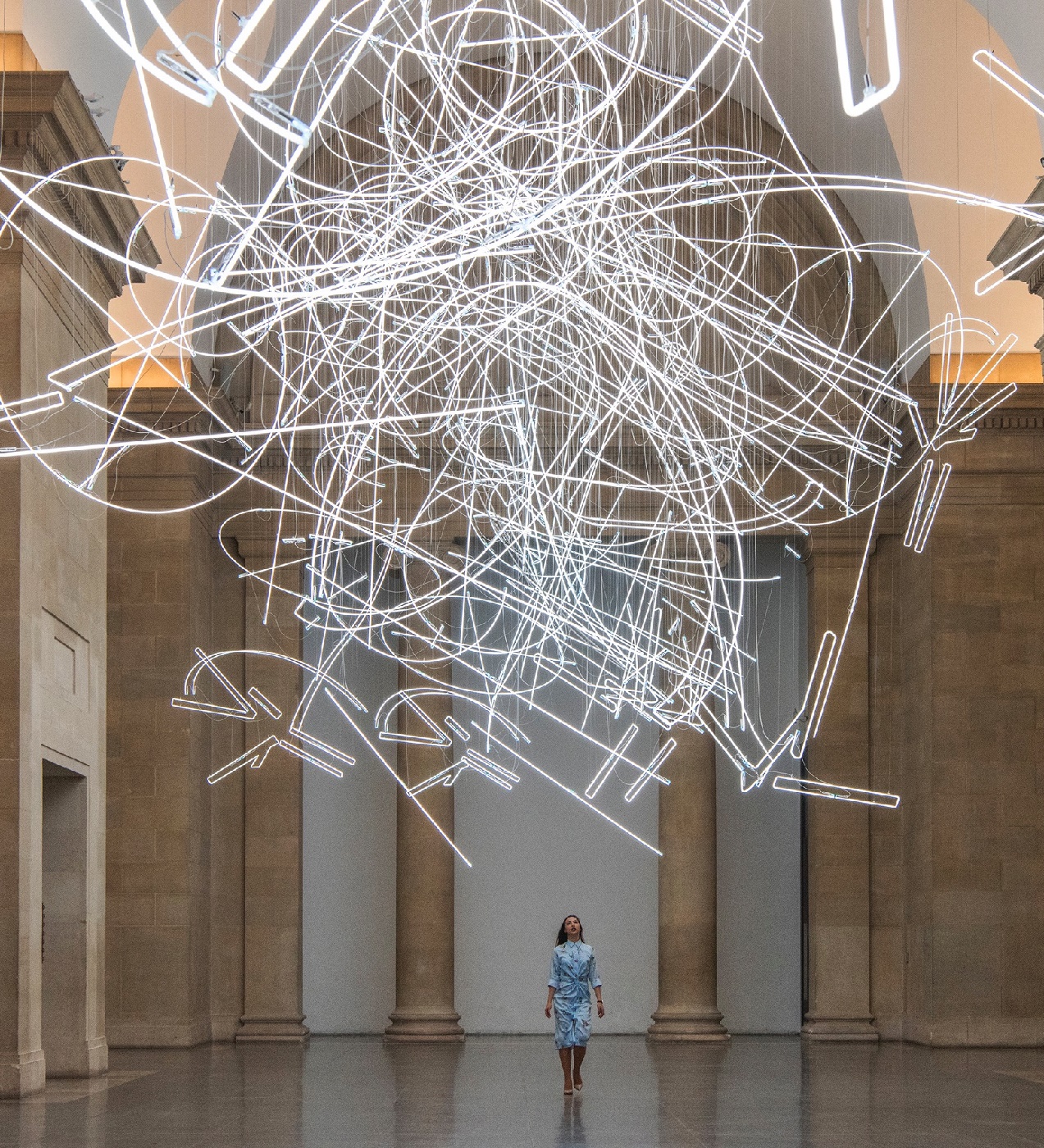
‘Cerith’s installation sits beautifully within the space, unfolding as you walk through,’ explains Clarrie Wallis, Tate’s Senior Curator of Contemporary British Art. The neon experience builds, from a single ‘peep hole’ ring in the South Duveens, through which you can glimpse swirls of radial light and an imposing octagon in the central gallery. The fractured neon fragments look like frantically drawn sparkler-lines on fireworks night.But there’s method and logic within these celestial scribbles. Hidden in the design are references to a host of highbrow sources, from Japanese ‘Noh’ theatre, to Marcel Duchamp’s The Bride Stripped Bare by her Bachelors, Even (The Large Glass), 1915-23. Don’t worry if you missed them. The beauty of rendering precise (verging on obscure) references in such a celebratory neon explosion allows for multiple – if not endless – interpretations.Each way you look at the sprawling 2km of neon tubing, a different shape or symbol emerges. No small thanks to the elegant way in which the structures have been painstakingly suspended. ‘There were over 1000 fixing points, and obviously we couldn’t drill 1000 holes in the Grade II listed building,’ Wallis explains. ‘We had to work with structural engineers very intensely, so as to be completely happy and convinced that we would be able to remove it without damaging the fabric of the building.’Though it seems too soon to be discussing the installation’s removal, Wallis has a point. It’s a visibly fragile, delicate sculpture – whose impermanence makes it more intriguing. As it is a site-specific sculpture, it can’t be recreated elsewhere. What’s more, because the neon tubes are filled with a constantly moving stream of pulsing, vibrating gasses, visitors will never see the same sculpture twice.

CORY ARCANGEL

Untitled Kinetic Sculpture #2
The old train station, having itself become a contemporary art museum, presents another kinetic sculpture within the exhibition dedicated to Cory Arcangel: “Untitled Kinetic Sculpture #2”. It is majestic and almost as banal as it is intriguing. Banal because it is composed of two columns of shelves on rollers and intriguing because these literally dance, synchronised in their bending. It takes a bit of time to get used to the work. The time needed to convince oneself that it is not an hallucinatory vision but shelves very much like every day ones, except for the fact that they are not inert. Powered by electricity, they are animated by perpetual undulatory movements that sublimate them while conferring upon them their status as a work of art. Though made of metal, they seem as supple and graceful as dancers and almost fragile, but with a regularity that is entirely robotic.

MATT PYKE

Мэтт Пайк
Supreme Believers

Sur l’écran de 25 mètres, des images très grand format de danseurs traversent l’espace immaculé. Ils luttent avec acharnement contre un ouragan infernal, matérialisé par des formes numériques arrachées au corps du danseur. On ne sait ce qu’il veut, gracieux et fragile, mais on comprend son besoin impérieux d’atteindre l’autre bout de l’écran. « J’aime le côté Sisyphe du personnage. Son incapacité à renoncer, s’amuse Pyke. Nous avions juste construit un plan incliné pour donner l’illusion que le danseur lutte contre le vent, alors qu’il ne fait que rechercher son équilibre. Je suis resté très old school. »

Robert Henke

lumiére
a complete new version, the result of performing Lumière for more than one year, condensed into a more sophisticated, more complex, more fragile, more massive synaesthetic experience! photos and more info online in early February.Based on self written software, this work on the edge of concert and site specific installation finds previously unseen beauty and minimalistic elegance in a commonly underrated medium. High power lasers draw complex morphing shapes and connect points in space. Lumière combines precise geometric figures with floating organic structures, presenting the archaic sign language of an alien culture communicating via emerging and disappearing traces of extremely bright light.Percussive and textural sonic events provide a counterpoint to the visual rhythm, resulting in a multi sensorial experience which at times is fragile and quiet, at others massive and overwhelming. Each Lumière performance is a unique and site specific real time exploration of synchronicity and divergence, of light and darkness at the limits of perception.

REBECCA HORN

ريبيكا هورن
רבקה הורן
レベッカ·ホルン
레베카 호른
Ребекка Хорн
Cinema Verite
À son cœur fragile se trouve une itération du Gesang des Lichts (auch: Cinéma Vérité). À l’approche du spectateur, un serpent de cuivre jette une flaque d’eau noire sur le sol de la galerie, projetant une flaque de lumière ondulante sur le mur.