highlike

Anabela Costa – Burning – France

BURNING

Anabela Costa


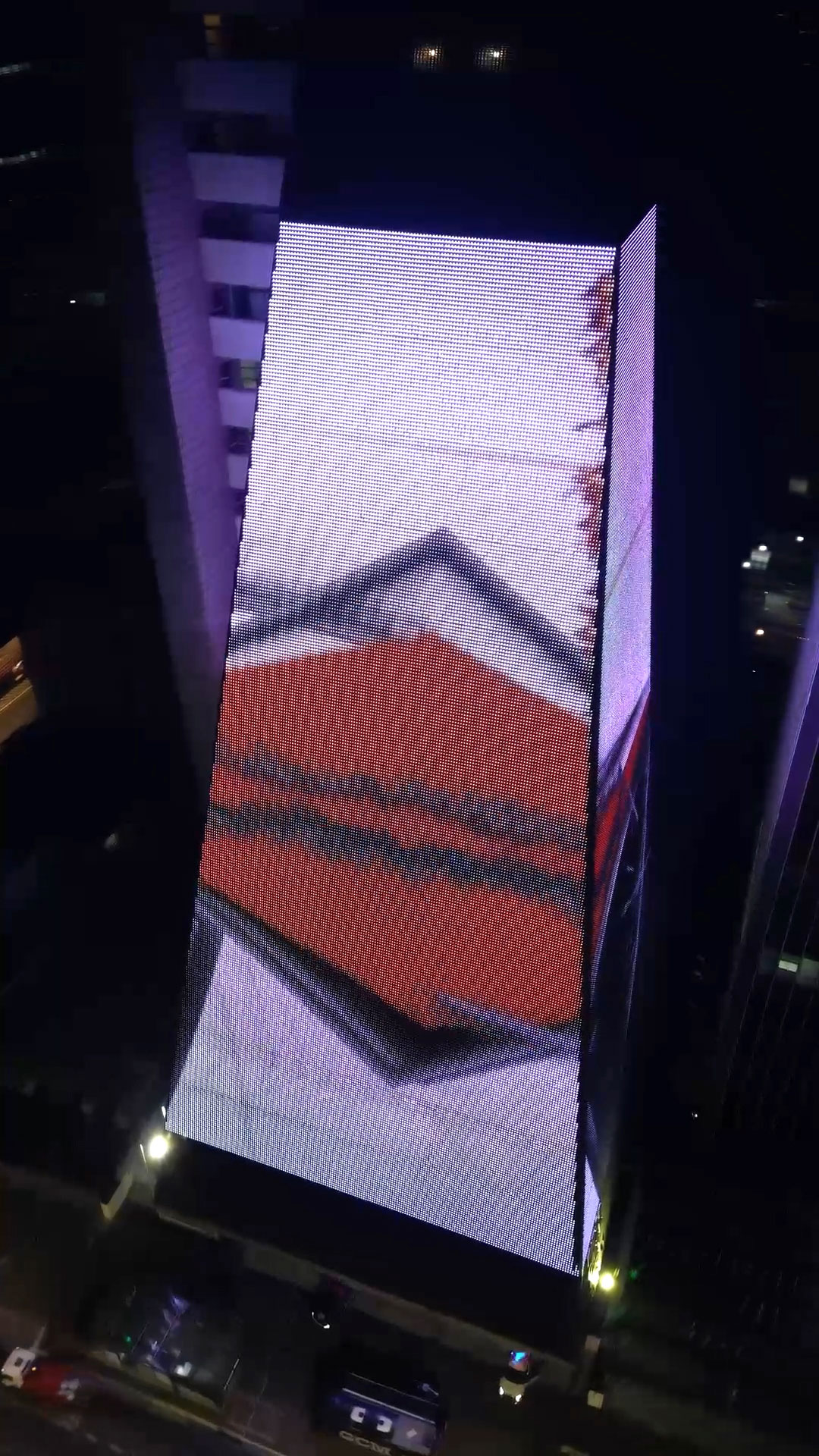
FILE SÃO PAULO 2026: Inter-creativity – Art and Technology – LED SHOW
Electronic Language International Festival


Burning – France 

Gently burning.

BIO

Anabela Costa is a visual artist; her work was subject of several solo exhibitions. 

From the eighties she becomes interested in digital image and moves progressively towards it. 

Since 2000 she is conducting research in the field of experimental film, based on two axes: the moving image—the aesthetics of representation of movement—, and the formalization of thematic and scientific concepts. 

She made a few experimental animation combining these two research areas: Web, TIME, LIQST_liquid state, and Landscape, In Motion, which were programmed and awarded in international festivals devoted to avant-garde cinema, animation, media arts and video-arts.

CHARLES SOWERS

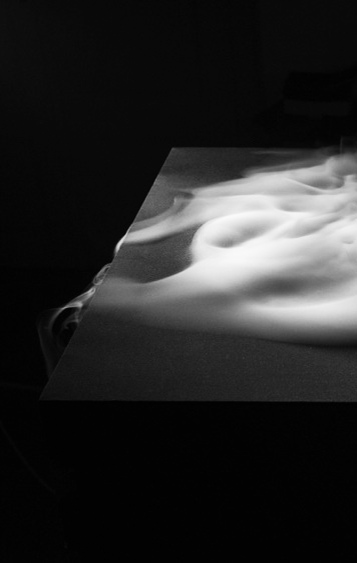
Illuminated Fog
Device for viewing the complex motions and patterns in fog.

A mesmerizing and gently turbulent movement of fog is revealed in stark visual contrast to a plain black background. The structure and motion of the fog make visible the complex interactions of ambient air currents and viewer movement.

ANDY LOMAS

Morphogenetic Creations
Created by a mathematician, digital artist and Emmy award winning supervisor of computer generated effects – Andy Lomas, Morphogenetic Creations is a collection of works that explore the nature of complex forms that can be produced by digital simulation of growth systems. These pieces start with a simple initial form which is incrementally developed over time by adding iterative layers of complexity to the structure.The aim is to create structures emergently: exploring generic similarities between many different forms in nature rather than recreating any particular organism. In the process he is exploring universal archetypal forms that can come from growth processes rather than top-down externally engineered design.Programmed using C++ with CUDA, the series use a system of growth by deposition: small particles of matter are repeatedly deposited onto a growing structure to build incrementally over time. Rules are used to determine how new particles are created, and how they move before being deposited. Small changes to these rules can have dramatic effects on the final structure, in effect changing the environment in which the form is grown. To create these works, Andy uses the GPU as a compute device rather than as a display device. All the data is held in memory on the GPU and various kernel functions are called to do things like apply forces to the cells, make cells split, and to render the cells using ray-tracing. The simulations and rendering for each of the different animated structures within this piece take about 12 hours to run, Andy explains. By the end of the simulations there are over 50,000,000 cells in each structure.The Cellular Forms use a more biological model, representing a simplified system of cellular growth. Structures are created out of interconnected cells, with rules for the forces between cells, as well as rules for how cells accumulate internal nutrients. When the nutrient level in a cell exceeds a given threshold the cell splits into two, with both the parent and daughter cells reconnecting to their immediate neighbours. Many different complex organic structures are seen to arise from subtle variations on these rules, creating forms with strong reminiscences of plants, corals, internal organs and micro-organisms.

MARC FORNES

WORLD EXPO 2017 ASTANA
This surface is ultra-thin: just 6 mm of aluminum. If an egg were scaled up to the same height Minima | Maxima, it would be much thicker. Towards the base of the structure, the rolling surface begins to softly corrugate, its zig-zag angles gently rising into a full pleat as they meet the ground platform. The visual threshold of this transition — from pleated base to smooth and doubly-curved, continuous surface — is subtle, yet its structural effect is significant in achieving the height of 43′.

Philip Beesley

Meander
Meander is a large-scale immersive testbed environment constructed within a historic warehouse building at the centre of a residential highrise development in Cambridge, Ontario. The meshwork scaffolds which comprise the testbed are organized as a series of species within an artificial ecosystem, gently flexing and responding to the movement of viewers. Similar to natural environments such as rivers and clouds, large groups of parts pass physical impulses and data signals back and forth, enabling the entire environment to work as an interconnected whole. The innovations in Meander suggest ways of making adaptive, sensitive buildings of the future.

SEBASTIAN WOLF

Brume
In the collaborative work Brume fog emerges from and self-organizes on the surface on a sculptural element, congealing with light into an elusive stratum. The installation utilizes a series of ultrasonic transducers that generate thick clouds of dense, yet extremely lightweight water vapor. Fog is produced in an inner chamber contained within an enclosure that is outfitted with a porous surface. A small radial blower inside the apparatus gently pumps air into the inner chamber lifting the fog through the membrane, whereby it “settles” on the surface. Viewed from a distance, the fog appears as a visualized mass of air circumscribing the perimeter of the enclosure.

TEUN VONK

FILE SAO PAULO 2017
THE PHYSICAL MIND
“The Physical Mind” is Vonk’s attempt to let participants experience the relation between their physical and mental states by applying physical pressure to the body. The installation consists of two inflatable objects in-between which a participant lays down to subsequently get lifted up and be gently squeezed between the curves of the two objects. While the lifting creates an unstable feeling, this stressful sensation is soon thereafter contrasted with the secure feeling of being gently squeezed between two soft objects. Besides this experience for participants, the installation also evokes feelings of empathy amongst bystanders who witness participants undergo the experience.

Akane Moriyama + Jasper Carlsen

Reflected Roof
A series of fans gently shape the textile into a sequence of changing forms that although programmed will never exactly repeat. The daylight, cast from above, falls onto and through the fabric and as it’s angle changes throughout the day creates ever changes in colour, shadow and reflection.

Carl Kleiner

Карлом Кляйнером
Tulips Postures
Carl Kleiner creates sleek editorial content for fashion and lifestyle brands, and that sensibility shows in his photo and video series Postures which features artfully arranged tulips. Using minimal metal rods, bent at strategic ends and angles, Kleiner showcases the graceful curves of the flowers’ long necks and gently ruffled petals and leaves. A further sense of movement is instilled through the stop-motion video, which combines still photos of the blossoms’ subtle changes into a dramatic dance.

AKANE MORIYAMA

茜森山
森山茜
cubic prism

Gently responding to wind movements and rain drops, ‘cubic prism’ by stockholm-based designer akane moriyama is a large cube-based structure made out of three different colors of textiles. suspended between two buildings at the goldsmith hall in the university of texas, austin, the piece reacts to environmental factors, as the geometry of a rigid cube is replaced with soft semi-transparent fabrics.

Jimmy Robert

Metallica
Robert typically uses photographic portraiture as a starting point for his works on paper, gently breaking down divisions between two and three dimensions, image and object. In some cases Robert uses found photographs that he tears, collages, tapes, and crumples before digitally scanning them and pinning them to the wall […] Extending into the space of the gallery, these works create a relationship to the viewer’s body while underscoring a sense of impermanence.