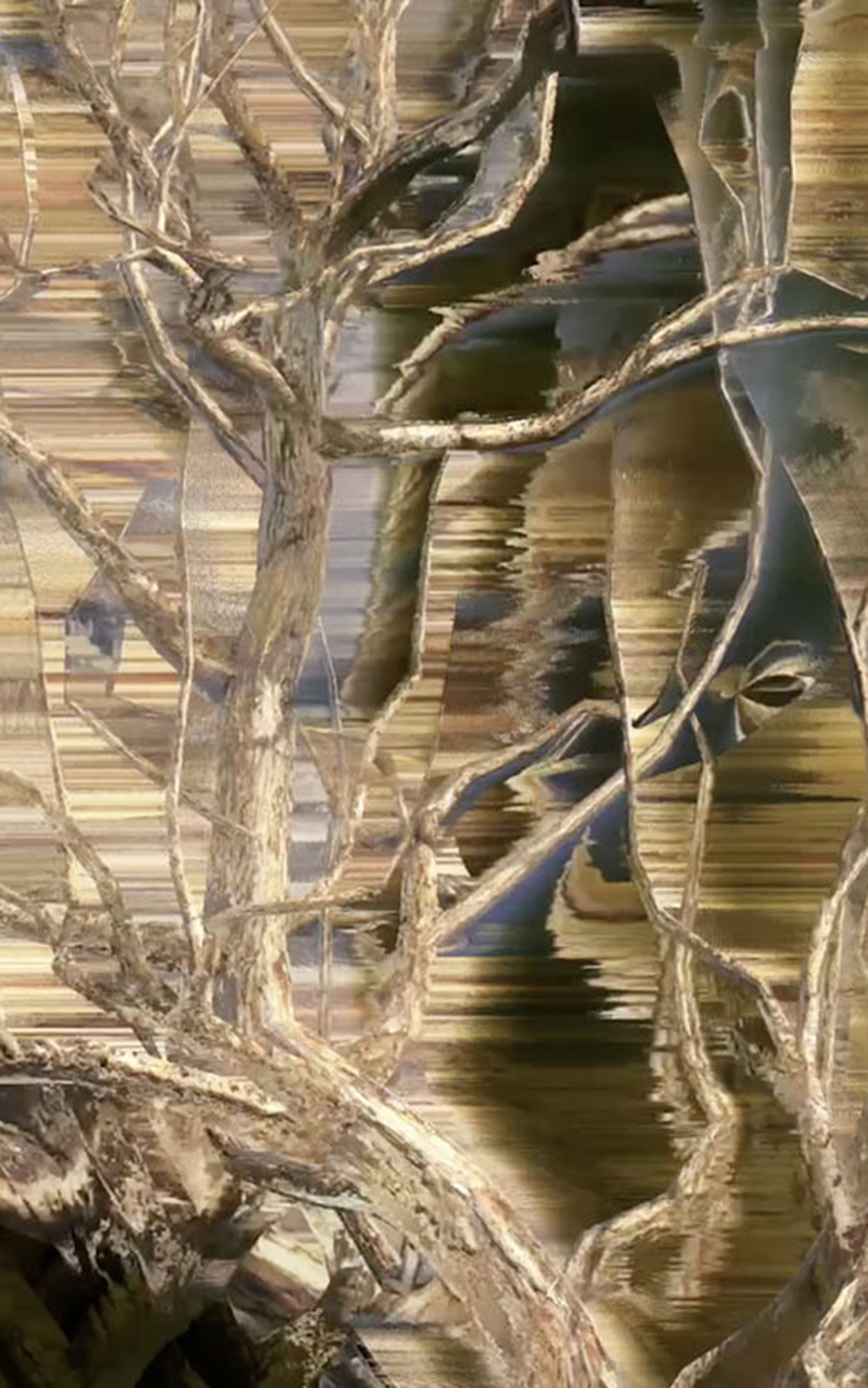
Barry Whittaker – Climate Control – United States
CLIMATE CONTROL
Barry Whittaker
FILE SÃO PAULO 2026: Inter-creativity – Art and Technology – LED SHOW
Electronic Language International Festival
Climate Control – United States
Climate Control imagines how technological frameworks translate living ecosystems into manageable forms—objects to be optimized, collected, and modified, often without fully understanding what is lost in the process.
BIO
Barry Whittaker is a multimedia artist, designer, musician, and Professor of Art at the University of Toledo. His work explores themes of mythology, language, miscommunication, and cultural hybridization through technology and collaboration. Whittaker creates mediated experiences that serve as platforms for exploring, modifying, and questioning human activities and the world around us.
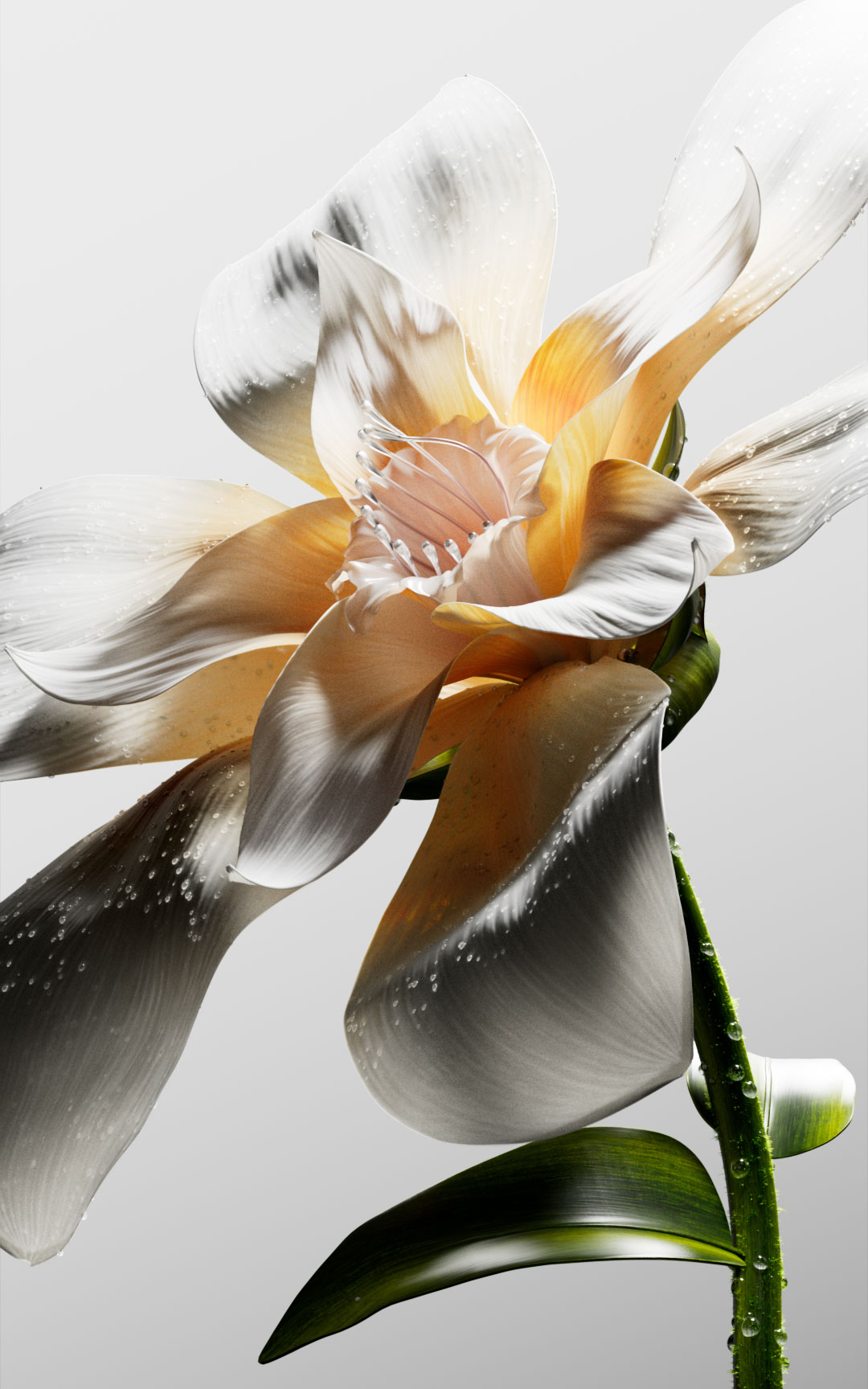
La Boom Studio – Fluid Matters – Serbia
FLUID MATTERS
La Boom Studio
FILE SÃO PAULO 2026: Inter-creativity – Art and Technology – LED SHOW
Electronic Language International Festival
Fluid Matters – Serbia
Fluid Matters explores how liquid and light can materialize sensations without stable form. Organic references are reimagined through digital processes and merge with fluid motion to create a hybrid entity that exists between recognition and the artificial. The work reveals what lies beyond direct perception and allows the invisible to surface for a moment.
BIO
La Boom is a boutique art studio based in Europe, creating multimedia experiences worldwide. We turn ideas into full audiovisual projects and craft show concepts for events and artists. Every project is carefully chosen and developed with hands-on creativity by Elizabeth Mamonova (Art Director) and Almira Zakieva (Creative Director).
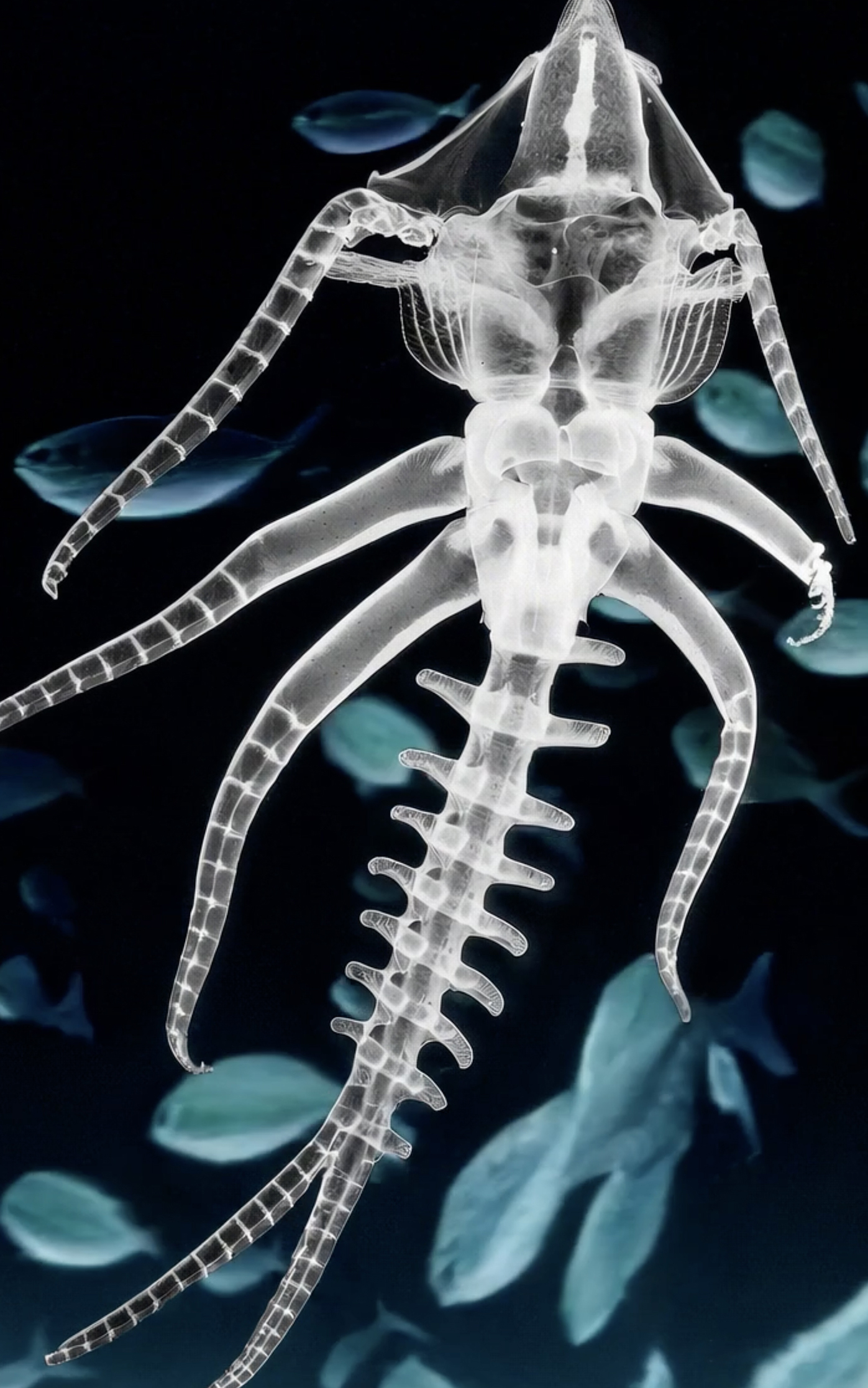
Patricia Borges – TECHNOPOETICS – Brazil
TECHNOPOETICS
Patricia Borges
FILE SÃO PAULO 2026: Inter-creativity – Art and Technology – LED SHOW
Electronic Language International Festival
TECHNOPOETICS – Brazil
TECHNOPOETICS presents hybrid beings in continuous metamorphosis, between biological and technological life. In an accelerated evolutionary fiction, the disposal of electronic components in the sea triggers the transmission of mutant bacteria into algae, plants, fungi, mollusks, insects, and other marine forms. The work explores identity and possibility, engaging with art and machine learning.
BIO
Patricia Borges is a visual artist whose practice combines photography, video, installation, and experimental processes. She is currently pursuing a doctorate in Arts & Design at PUC-Rio and, through photochemical and digital processes, explores impermanence and transformation.
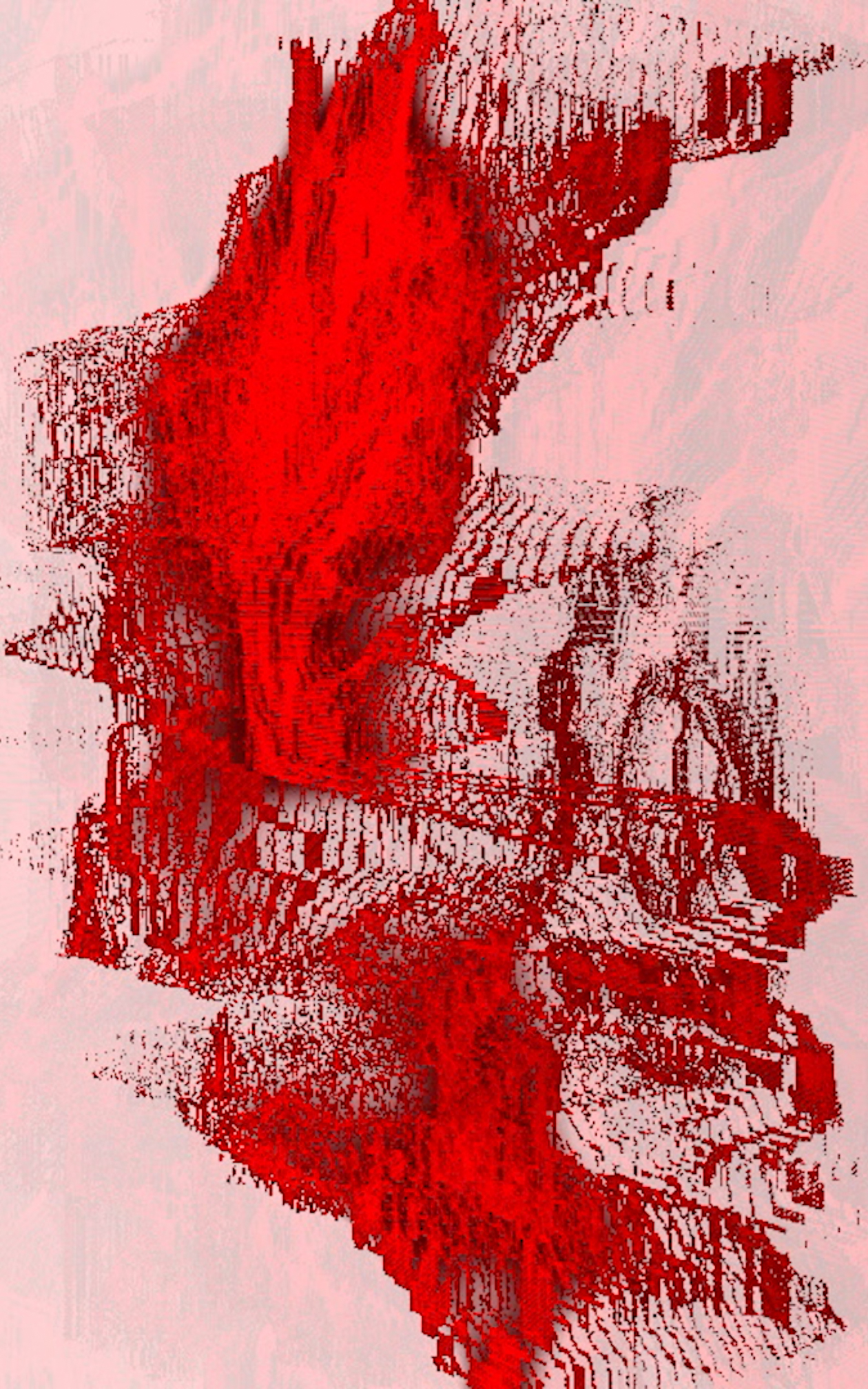
Bowen Wu – Mixobloodify – England
MIXOBLOODIFY
Bowen Wu
FILE SÃO PAULO 2026: Inter-creativity – Art and Technology – MUSIC
Electronic Language International Festival
Mixobloodify – England
Mixobloodify originates from research on hybridizing the traditional Chinese pipa with electronic music to form a new digital language. Through this process, the artist became interested in broader ideas of hybridity, including cross-cultural identity, cultural conflict and self-acceptance. The work follows Homi Bhabha’s notion of the “third space”, treating artistic creation as a site where different cultural backgrounds meet and transform.
BIO
Bowen Wu is a Glasgow-based composer and audiovisual artist working with sound art, electroacoustic music, moving image and live electronics, often using archival material and spatial listening. His works have been presented internationally. He holds an MSc from the University of Edinburgh and is currently a PhD researcher at the University of Glasgow.
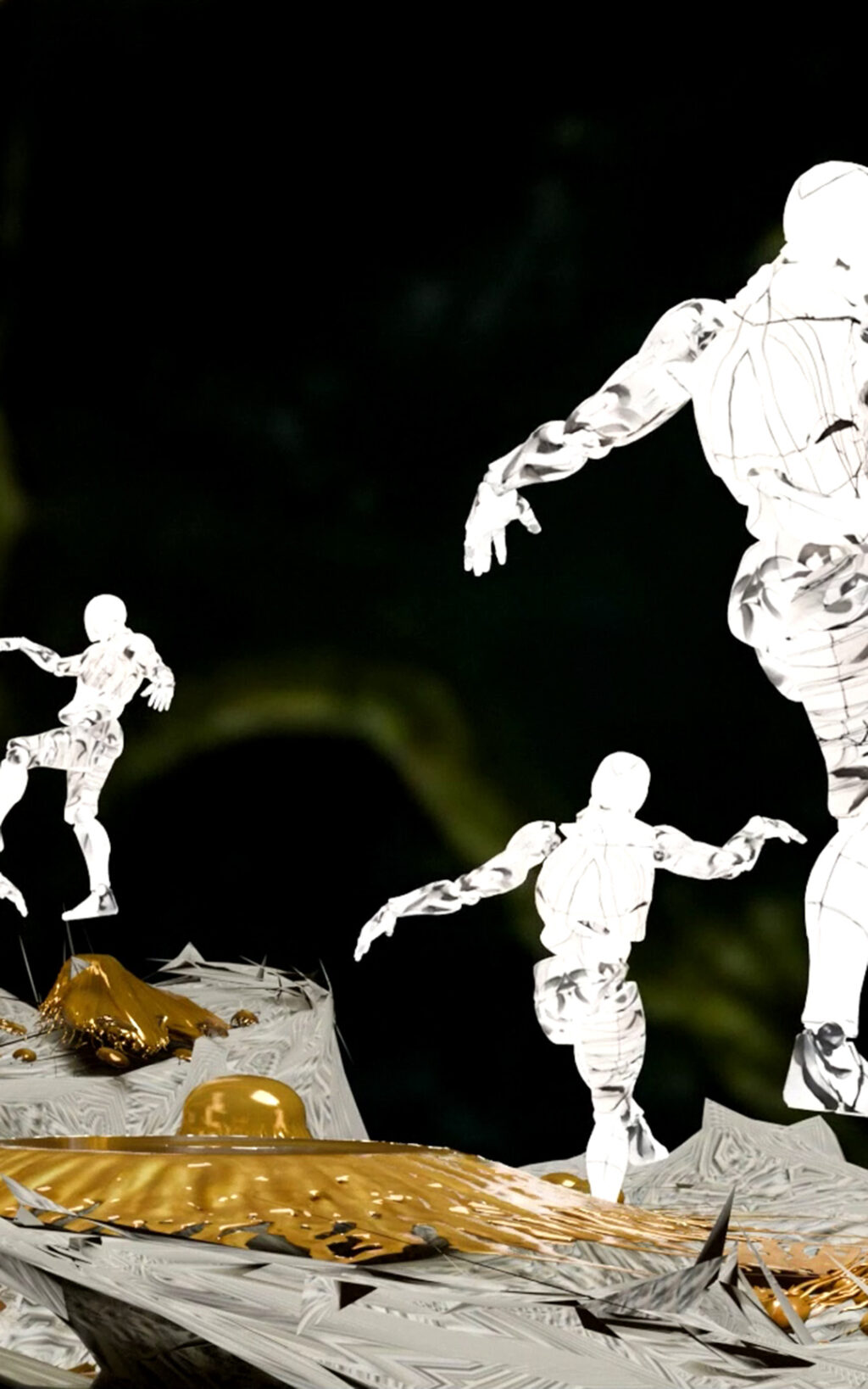
Zack Nguyen – The Space Between Becomes Us – United States / Vietnam
THE SPACE BETWEEN BECOMES US
Zack Nguyen
FILE SÃO PAULO 2026: Inter-creativity – Art and Technology – VIDEO ART SHORT
Electronic Language International Festival
The Space Between Becomes Us – United States / Vietnam
The Space Between Becomes Us is a meditation on how the artist believes we come into being through one another—how the unseen space between us might carry memory, feeling, and healing. This work reflects a desire not for answers, but for mutual understanding. For the kind of peace that emerges when we let ourselves listen and become, together.
BIO
Zack Nguyen is a hybrid artist and independent curator based in Dallas and active in Berlin. Working across moving image, performance, sound, and new media installation, his practice explores nowness, identity, and the lived body as sites of healing and connection. His work balances minimal form with emotional intensity and has been exhibited internationally across Europe, Asia, and the U.S.
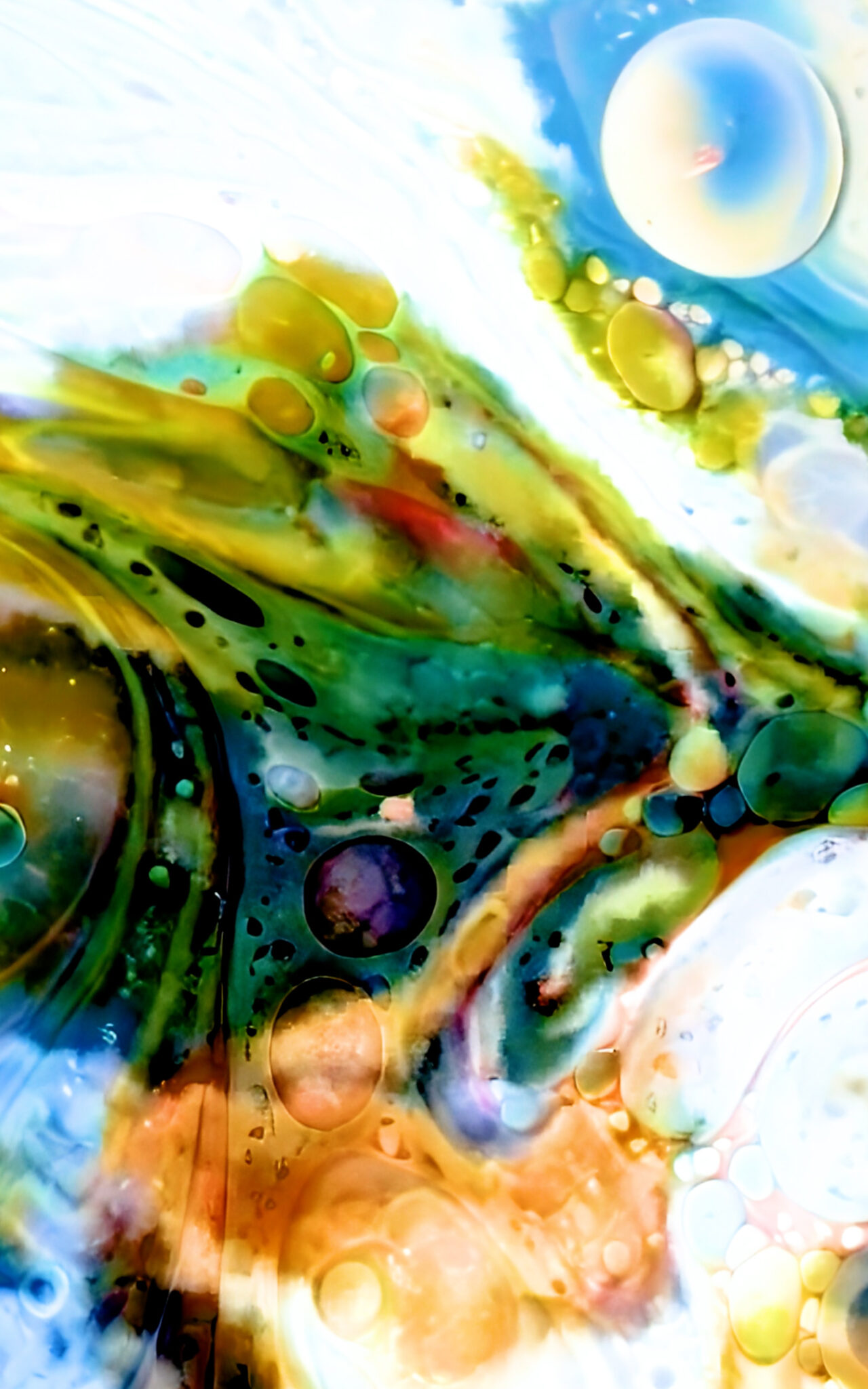
Guli Silberstein – MATERIALIVE – United Kingdom
MATERIALIVE
Guli Silberstein
FILE SÃO PAULO 2026: Inter-creativity – Art and Technology – VIDEO ART SHORT
Electronic Language International Festival
MATERIALIVE – United Kingdom
Data, body, pixels, fluids, neural networks and nature, all moshed up through a unique combination of generative AI and algorithmic datamoshing. Morphing videos in the uncanny valley, MATERIALIVE becomes a poem for human and nature (co)existence and its processing by organic forces and technological powers. A hybrid emerges: an audiovisual documentary of the hyperreal, or perhaps a living form born from the history of our dreams and hallucinations. A material, perhaps maternity, for thought.
BIO
Guli Silberstein is a London-based digital/AI video artist working for more than two decades. Since earning a Master’s degree in Media Studies from The New School in 2001, he has specialised in VFX, glitch art and AI, exploring how ideas and stories translate into moving forms. His work has been showcased and awarded at festivals and exhibitions worldwide.
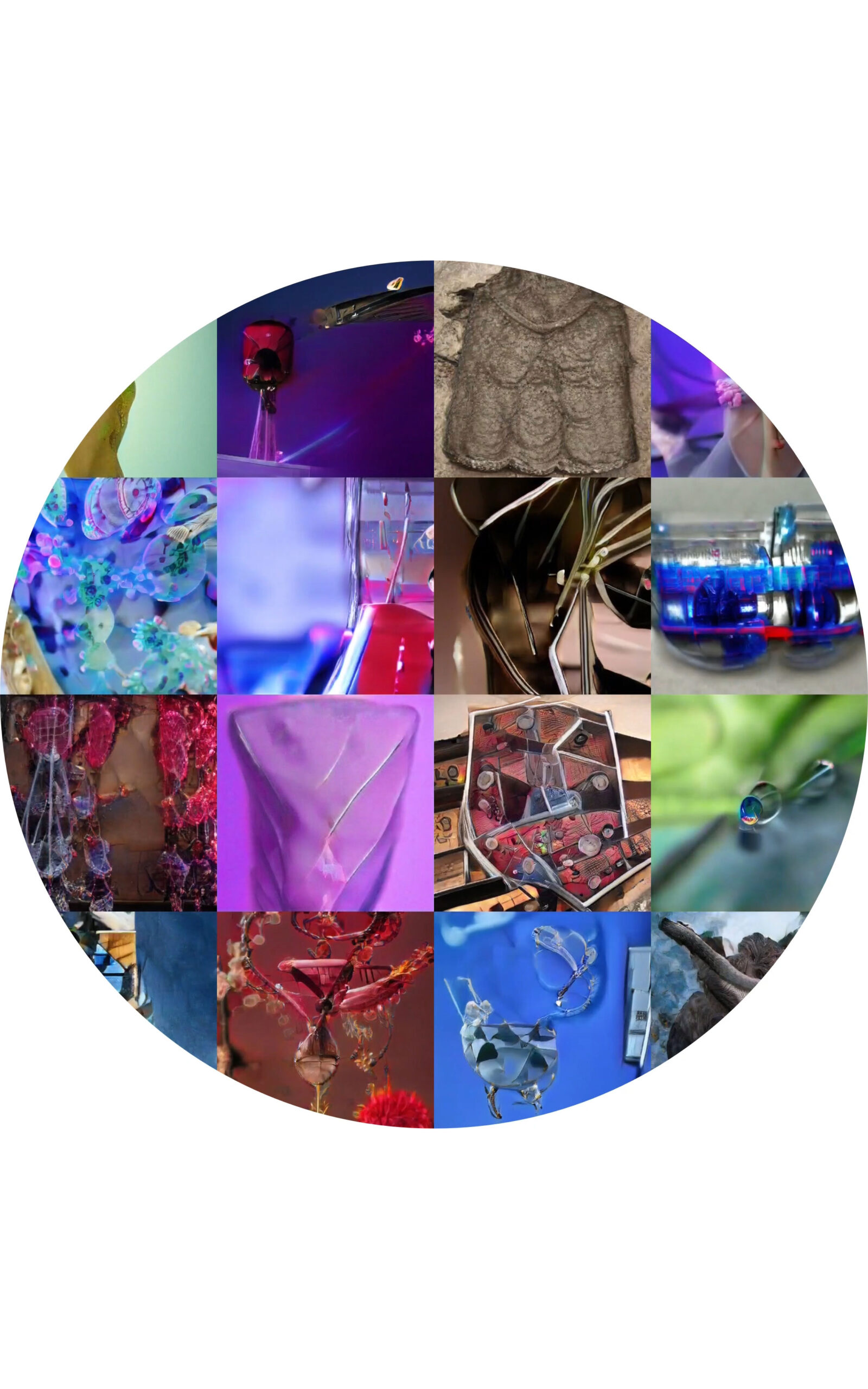
Gerald Trimmel – WAYWARD APPROXIMATIONS (20250518) – Austria
WAYWARD APPROXIMATIONS (20250518)
Gerald Trimmel
FILE SÃO PAULO 2026: Inter-creativity – Art and Technology – VIDEO ART SHORT
Electronic Language International Festival
WAYWARD APPROXIMATIONS (20250518) – Austria
WAYWARD APPROXIMATIONS (20250518) is a dynamic Cybernetic Canvas in the form of an audiovisual tondo. A 4×4 matrix of parallel morphing image streams generates hybrid worlds between biology, technology, and textile structures. Recurring synchronization moments create unexpected homogenization as an anomaly within proliferation. Image and sound form autonomous poles connected through structural resonance.
BIO
Gerald Trimmel is a Vienna-based media artist, composer, and art therapist. His work explores transformation processes between analog material, digital systems, and AI-based image generation, often in circular audiovisual formats (Cybernetic Canvas). Recent presentations include Chongqing (China), ArteScienza Festival (Rome), and The Wrong Biennale (São Paulo | online).
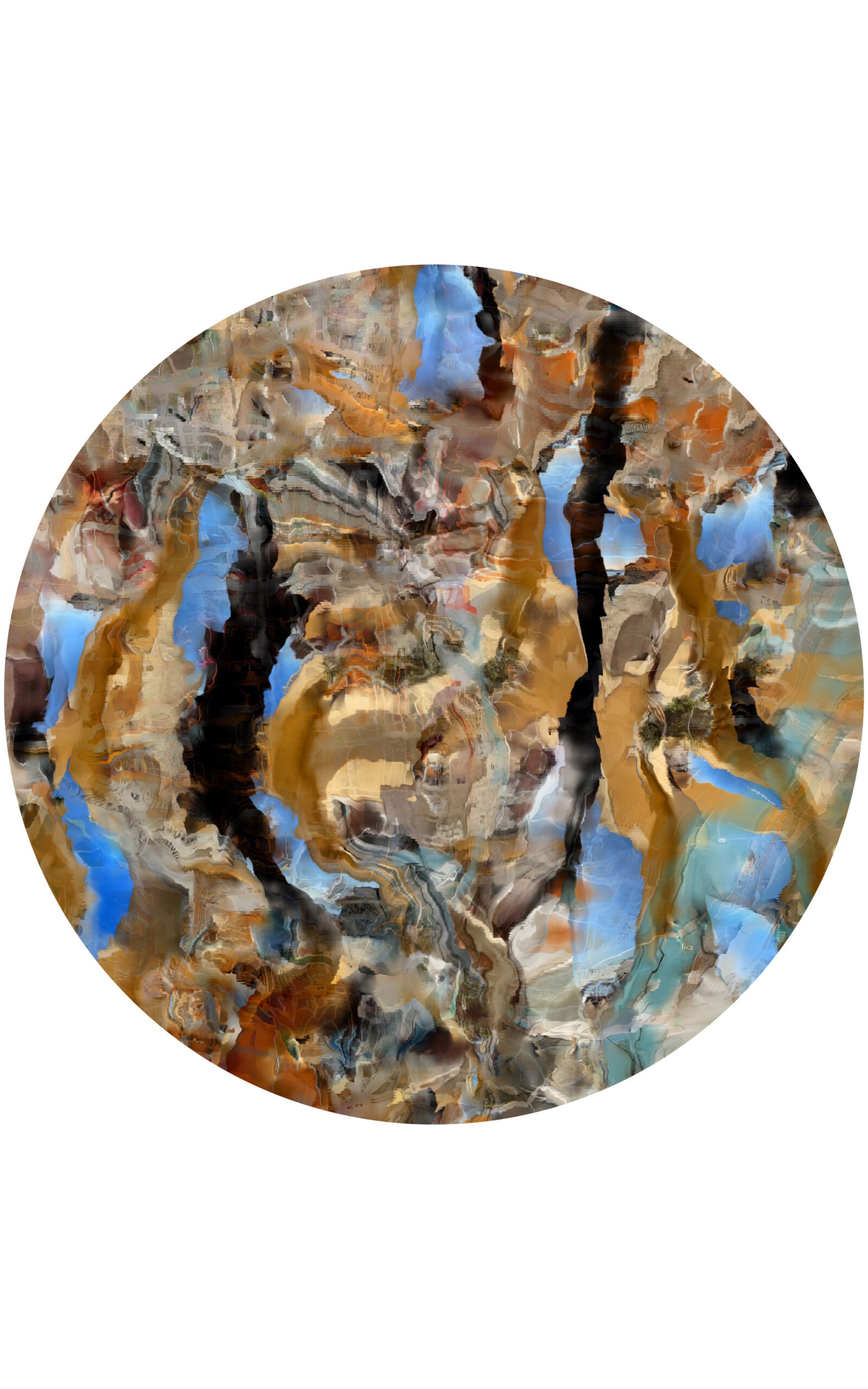
Gerald Trimmel – GARGANTUA (20250302) – Austria
GARGANTUA (20250302)
Gerald Trimmel
FILE SÃO PAULO 2026: Inter-creativity – Art and Technology – VIDEO ART SHORT
Electronic Language International Festival
GARGANTUA (20250302) – Austria
GARGANTUA (20250302) is a dynamic Cybernetic Canvas exploring AI-based image transformation as a metabolic process. Hybrid source materials—osmotic paintings, scans, chemical micro-scenarios, and dismantled diagrams—are processed through algorithmic recombination into a continuously shifting circular field. The work stages an unstable dialogue between visual matter and electroacoustic sound, forming a dense system of feedback, drift, and perceptual unrest.
BIO
Gerald Trimmel is a Vienna-based media artist, composer, and art therapist. His work explores transformation processes between analog material, digital systems, and AI-based image generation, often in circular audiovisual formats (Cybernetic Canvas). Recent presentations include Chongqing (China), ArteScienza Festival (Rome), and The Wrong Biennale (São Paulo | online).
Alvaro Collar – Rorschach’s Garden – Spain
RORSCHACH’S GARDEN
Alvaro Collar
FILE SÃO PAULO 2026: Inter-creativity – Art and Technology – VIDEO ART SHORT
Electronic Language International Festival
Rorschach’s Garden – Spain
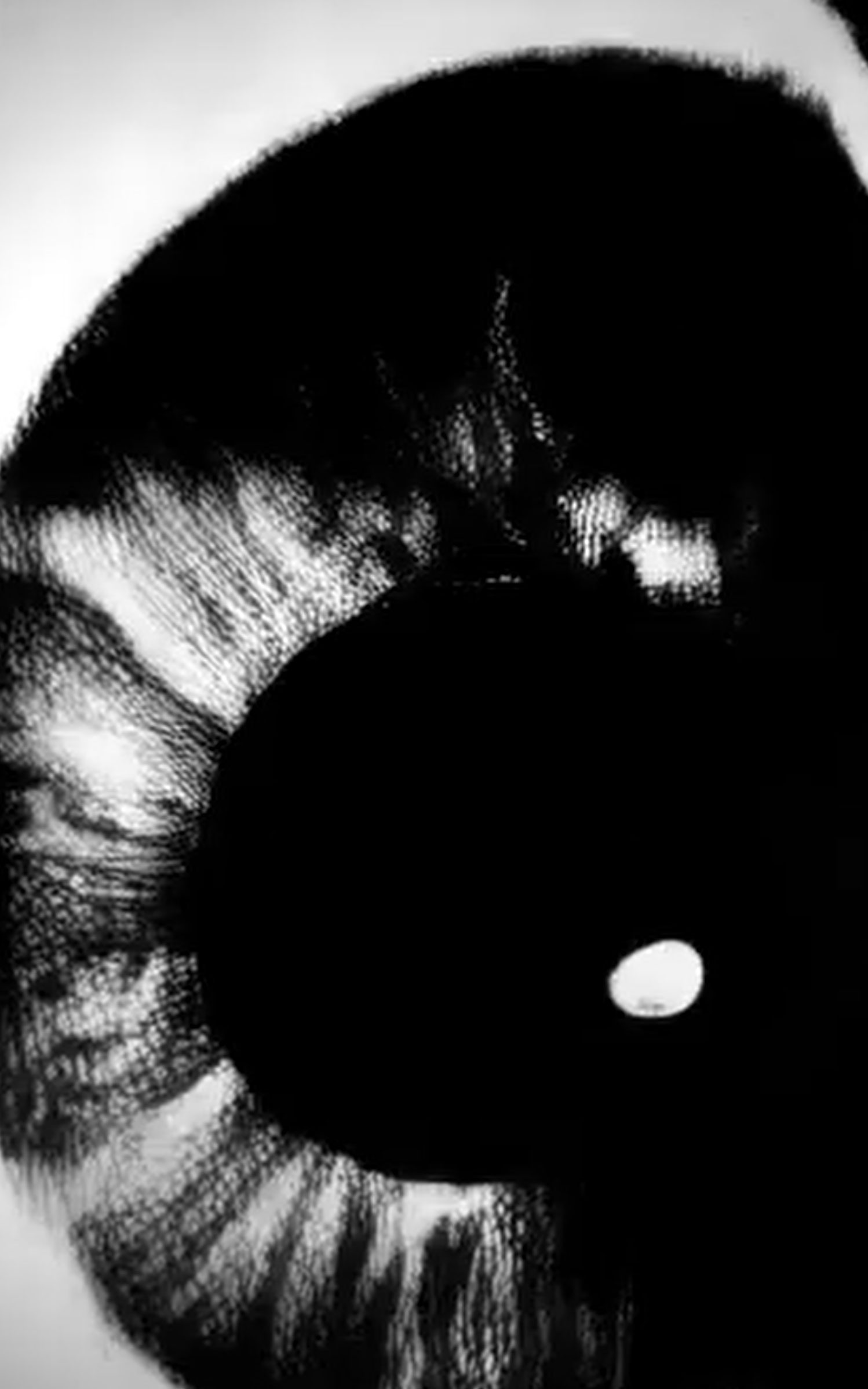
Rorschach’s Garden examines embodiment at quantum scales—identity as superposition, both observer and observed. Degraded video and AI animation create a secret garden of crypto-fauna: organisms flickering between states, trembling with unrealized forms.
The work interrogates bodily multiplicity through quantum uncertainty. Garden biota exists as probability clouds—here/not-here, collapsed/uncollapsed—embodying hybrid physical-digital existence.
BIO
Experimental filmmaker and video artist working at the intersection of low-resolution aesthetics, contemporary moving image, and computational creativity. Founding member of Haz! collective; AVAM associate.
Work exhibited internationally at Ars Electronica (Austria), Hanshan Art Museum (China), Medialab Madrid (Spain), Ibrida Festival (Italy), and NYC Electroacoustic Music Festival, amongs others.
S4RA – lil~mér~maid~~ ~ – Portugal
LIL~MÉR~MAID~~ ~
S4RA
FILE SÃO PAULO 2026: Inter-creativity – Art and Technology – Animation
Electronic Language International Festival
lil~mér~maid~~ ~ – Portugal
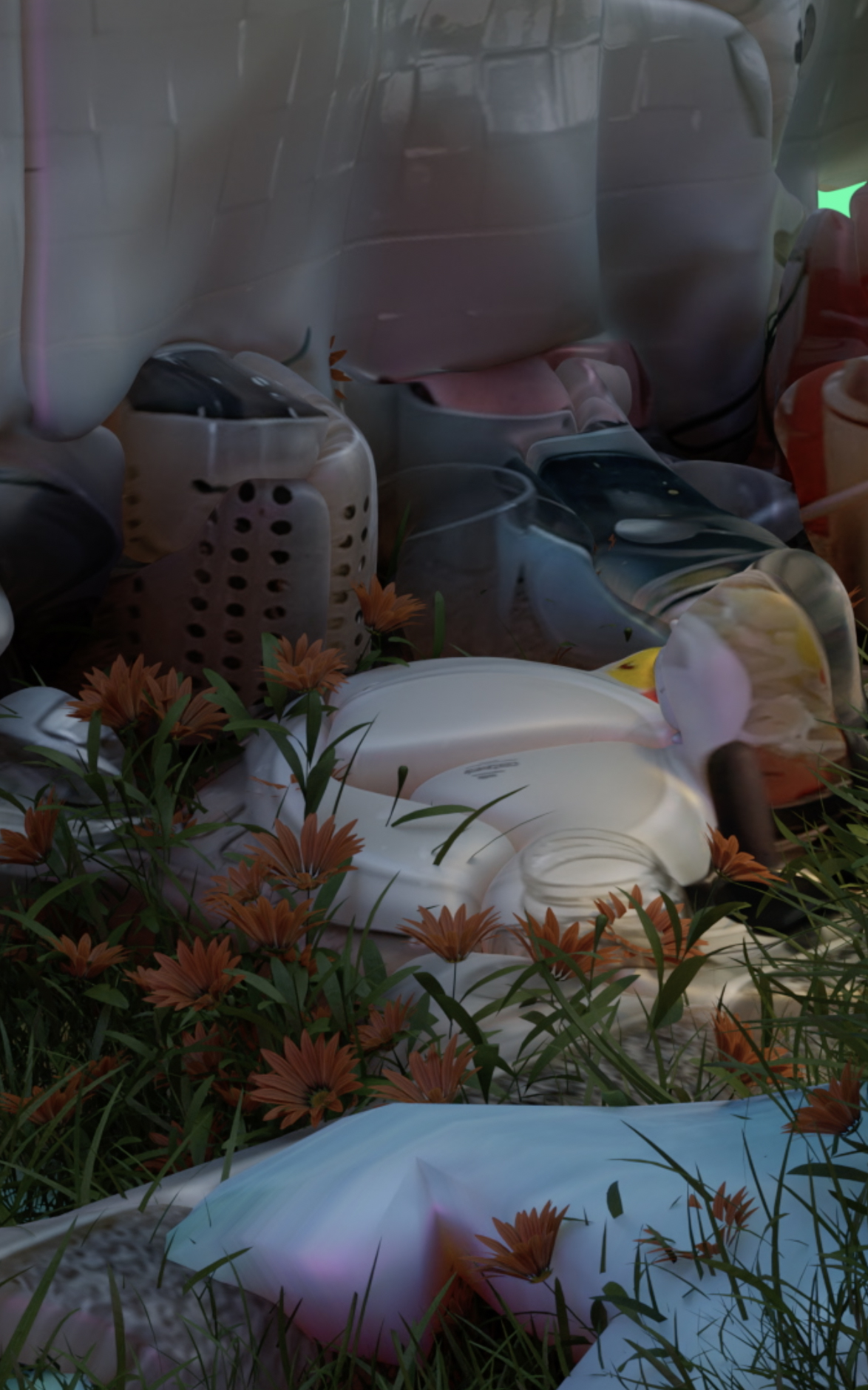
Emerging from the liquid space between myth and simulacrum, a mermaid who once gave up her voice and tail reappears multiplied across digital surfaces, where the body fragments and expands through states of desire and silence. An echo, foam and ghost of an unstable presence. It unfolds a restless hybridity, haunted by scripted roles and metamorphosis to exist in the age of hyperreality.
BIO
S4RA works with video installation and immersive digital environments. Explores consensual power relations, desire and confinement, crossing the political body with liquid and post-capitalist landscapes. Waves are imagined as an affective system and interface of information — an economy between pleasure & surveillance. Moves in cycles of liberation, where the virtual environment is simultaneously territory.
Helena Nikonole – Speculative Species Evolution – Germany
SPECULATIVE SPECIES EVOLUTION
Helena Nikonole
FILE SÃO PAULO 2026: Inter-creativity – Art and Technology – Animation
Electronic Language International Festival
Speculative Species Evolution – Germany
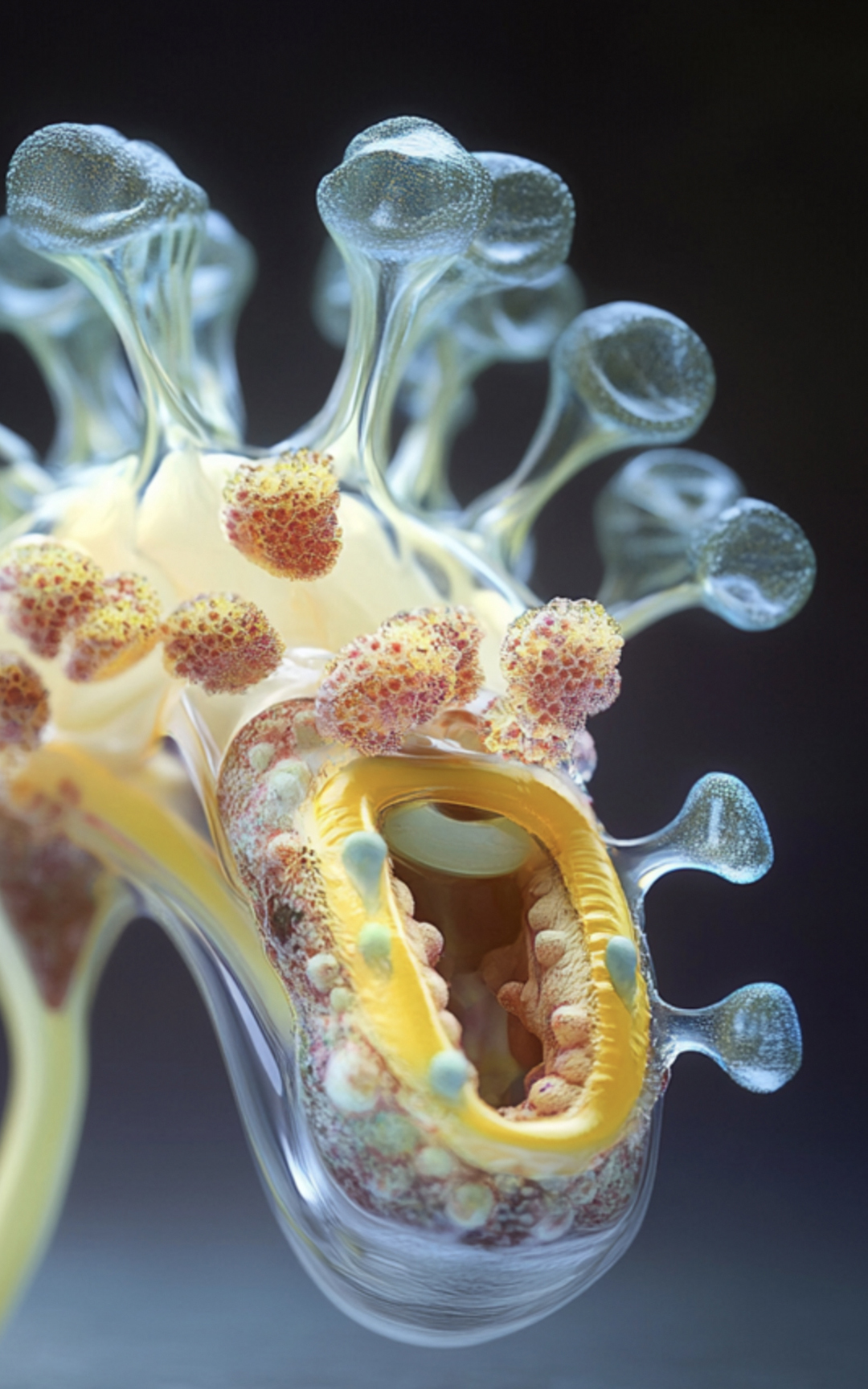
Speculative Species Evolution is an art and research project exploring how life might evolve through AI, human intervention, and the Anthropocene. Using generative AI and evolutionary theory, it imagines new life forms — from silicon-based organisms to alien biological trajectories — shaped by climate change, synthetic biology, and post-natural ecosystems. The project exists through AI-generated images, animations, and public workshops where participants co-author future evolutionary narratives.
BIO
Helena Nikonole is a Berlin-based new media artist, curator, researcher, and educator working across AI, hacktivism, hybrid art, and biosemiotics. Moving between post-human futures, activist counter-technologies, and critical approaches to innovation, she is currently pursuing a PhD on LLMs and political ideologies at the University of Applied Arts Vienna.

FILE 2026 – Registration Open for Digital Animation and AI Festival – Art and Technology
Animation Festival | Digital Animations and AI Animations: investigate movement as an expressive language, using computational tools and experimental aesthetics. The works can explore abstract or figurative narratives, often hybridized with data, algorithms, and simulations. Technology expands the formal and temporal possibilities of animation. It is a field that articulates art, cinema, and computer graphics. Movement becomes a means of visual thought.
Applications were open until February 19, 2026. Access the application form.
FILE 2026 | GENERAL REGULATIONS

CHRISTOPHE LUXEREAU
Ombre
Après des études d’art classique en peinture (école des Beaux-Arts) et en architecture (génie civil), Christophe Luxereau se consacre à la photographie à partir de 1986. Il travaille l’image numérique dès 1995 pour développer le thème de la relation à la machine électronique.
Cette relation établit de nouveaux codes, d’autres comportements et de nouvelles icônes. Le photographe est un cinéphile, famillier de la cyberculture et des maîtres de science-fiction, base de son univers visuel. Le monde, la mode, qu’il côtoie de façon professionnelle lui inspire des hybridations entre design et haute-couture.
Son travail porte ainsi une réflexion sur l’idée de la beauté artificielle véhiculée par la publicité cosmétique et de luxe. La pratique du graphisme 2D et 3D accentue la réalité virtuelle de ses créations. Toujours en prospection, chaque série est une étape, une expérience technique et esthétique.
Chacune de ses expositions donne lieu à une mise en espace des oeuvres pour immerger le spectateur au coeur de ses visions. Ainsi il créé mobilier, ambiances sonores et lumineuses sous forme de sho-room pour société robotique ou chapelle dédiée au culte de ses madones.

FILE SÃO PAULO 2025: SYNTHETIKA – Clarissa Ribeiro
Afterlives-Chimeras: Wetland Carbonized Memories
Clarissa Ribeiro
FILE SÃO PAULO 2025: SYNTHETIKA – Art and Technology – WORKSHOP
Electronic Language International Festival
Afterlives-Chimeras: Wetland Carbonized Memories – Brazil
Afterlives-Chimeras: Wetland Carbonized Memories reimagines ancient Egyptian animal mummification through the lens of ecological tragedy. Inspired by Brazilian swamps and the destruction of wildlife caused by agribusiness, mining, and the steel industry, the project uses AI (Krea.AI and Meshy.AI) to create hybrid creatures from images of charred animals. The chimeras, 3D printed with PLA, reminiscent of mummified linen, symbolize loss, transformation, and the urgency of ecological balance.
BIO
Clarissa Ribeiro is an Assistant Professor of Visual Arts at USP and former Director of Roy Ascott’s Technoetic Arts Studio in Shanghai. A PhD holder with a Fulbright postdoctoral degree, she intersects art, science, and technology in morphogenetic practices, adopting animism as a way to navigate ecologies as cosmologies.

FILE SÃO PAULO 2025: SYNTHETIKA – Hernan Roperto
RUÍDO/SINAL (Ruído Visual e o Fluxo Infinito de Dados)
Hernan Roperto
FILE SÃO PAULO 2025: SYNTHETIKA – Arte e Tecnologia
Festival Internacional de Linguagem Eletrônica
RUÍDO/SINAL (Ruído Visual e o Fluxo Infinito de Dados) – Argentina
“Todo ambiente tem um ruído de fundo dominante. Tudo que se destaca visualmente será um sinal” — Jorrit Tornquist.
Convivemos com desinformações, bombardeio de informações e distrações constantes, criando um ambiente caótico e sobrecarregado. Este projeto interpreta metaforicamente o ruído visual como uma representação do fluxo infinito de dados em que estamos imersos, convidando à reflexão sobre como navegamos neste mar de dados e a sua influência em nossa percepção e compreensão do mundo.
BIO
Hernán Roperto é um VJ, artista audiovisual e engenheiro. Especializado em design visual para performances ao vivo, incluindo vídeo em tempo real, design de projeção, mapping e programação criativa. Seus projetos foram apresentados em vários festivais internacionais, como FILE (SP, Brasil), Live Performance Meeting (Roma, Itália), Mutek Argentina, Haptic Hybrid (NY), Biennale Esch.

FILE SÃO PAULO 2025: SYNTHETIKA – CNDSD & Iván Abreu
Pre(N)atura | Fonocene
CNDSD & Iván Abreu
FILE SÃO PAULO 2025: SYNTHETIKA – Art and Technology – Shorts Films AI
Electronic Language International Festival
Pre(N)atura | Fonocene – Mexico
Speculative audiovisual project inspired by postnatural studies, designed to explore the era of the Fonocene—a period where both human and non-human sounds define sensory experiences and interspecies interactions. In this narrative, Chthulucene beings, hybrid creatures, emerge to challenge traditional forms of communication, using listening as a tool to activate our awareness of interdependence.
BIO
Iván Abreu is a Mexican-Cuban interdisciplinary artist who uses science, design and technology to create works that question human interaction and social systems. Malitzin Cortés, (CNDSD), is a Mexican artist who explores the intersection of sound, technology and speculative architecture. Her work combines live coding, audiovisuals and critical narratives.
FILE SÃO PAULO 2025: SYNTHETIKA – Frederik De Wilde
Hunter and Dog
Frederik De Wilde
FILE SÃO PAULO 2025: SYNTHETIKA – Art and Technology – Installations
Electronic Language International Festival
Hunter and Dog – Belgium
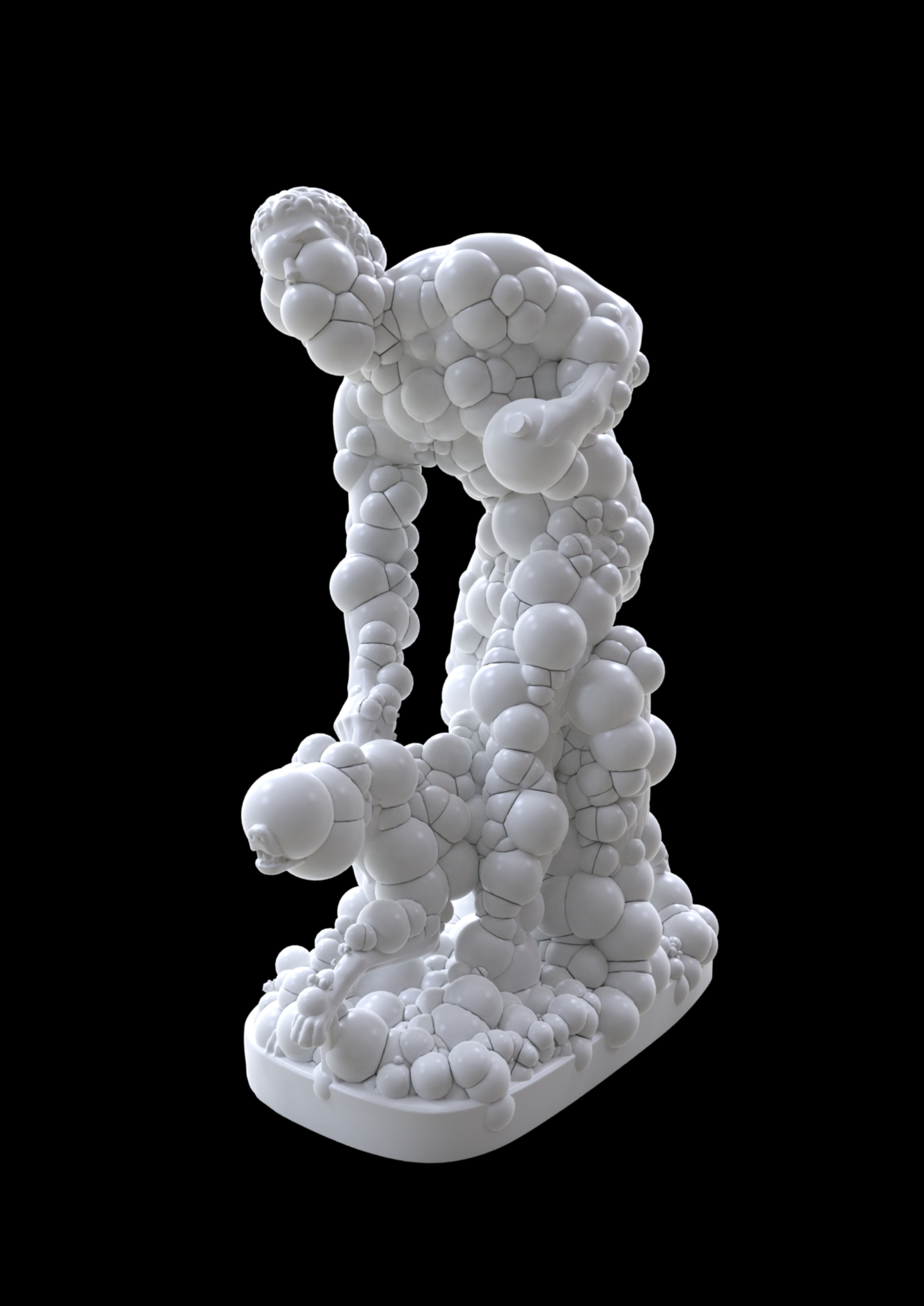
Genetic and evolutionary algorithms reinterpret an existing artwork. De Wilde uses digital scans and custom genetic and evolutionary algorithms as a deconstruction technique to reinterpret and update the nineteenth-century work Hunter and Dog from sculptor John Gibson R. A. (1790–1866).
Frederik De Wilde’s Hunter and Dog interrogates the intersections of human evolution, genetic engineering, and the hybridization of technology and biology. De Wilde reinterprets the historical sculpture through the lens of post-evolutionary theory, engaging with contemporary debates on CRISPR, synthetic biology, and the implications of human-directed genetic modification. CRISPR, the revolutionary gene-editing technology, has introduced an unprecedented rupture in the trajectory of evolution. No longer constrained by the slow mechanisms of natural selection, humans now possess the ability to intervene directly in their own genetic blueprint, marking a shift toward a post-Darwinian paradigm. This technological power, however, is not neutral; it emerges from a historical lineage of scientific inquiry deeply entangled with colonialism. The history of genetic manipulation is inseparable from colonial bioprospecting, eugenics, and exploitative medical experimentation on marginalized populations. Colonial regimes treated bodies—both human and non-human—as sites of intervention, control, and optimization, a logic that persists in contemporary biotechnological frameworks. Post-colonial discourse reveals how genetic engineering risks perpetuating these legacies, reinforcing power asymmetries between those who wield biotechnological control and those subjected to its consequences. CRISPR, while offering the promise of eradicating disease and expanding human potential, also raises ethical concerns about genetic stratification, bio-capitalism, and the commodification of life itself. De Wilde’s work visualizes these tensions, making visible the processes of cell division and morphogenesis—the very biological mechanisms now subject to human intervention. Hunter and Dog does not merely depict the transformation of a neoclassical form but speculates on the future of the human body as a site of engineered evolution. From a decolonial perspective, the artwork questions who has the authority to edit life and to what ends. It challenges the techno-utopian narratives that frame genetic modification as an inevitable progress while obscuring its social, ethical, and ecological implications. By hybridizing art, science, and technology, Hunter and Dog compels us to confront the uncertainties of a CRISPR-driven future: Will genetic editing reinforce existing inequalities, or can it be decolonized and democratized? How do we navigate this post-natural frontier without losing the human—and more-than-human—dimensions of our existence? De Wilde’s work invites us into this speculative space, where the hunter, the dog, and the algorithm coalesce into a vision of a world where biology is no longer destiny, but a site of contested agency.
Where are we going from here?
BIO
Frederik De Wilde fuses art, science, and tech. Known for his Blackest-Black works that inspired Kapoor’s Vantablack, he has shown at Venice Biennale, BOZAR, MAAT, Pompidou, and ZKM, winning awards like Ars Electronica.
QUBIT AI: Klaus Obermaier, Stefano D’Alessio & Martina Menegon
EGO
FILE 2024 | Installations
International Electronic Language Festival
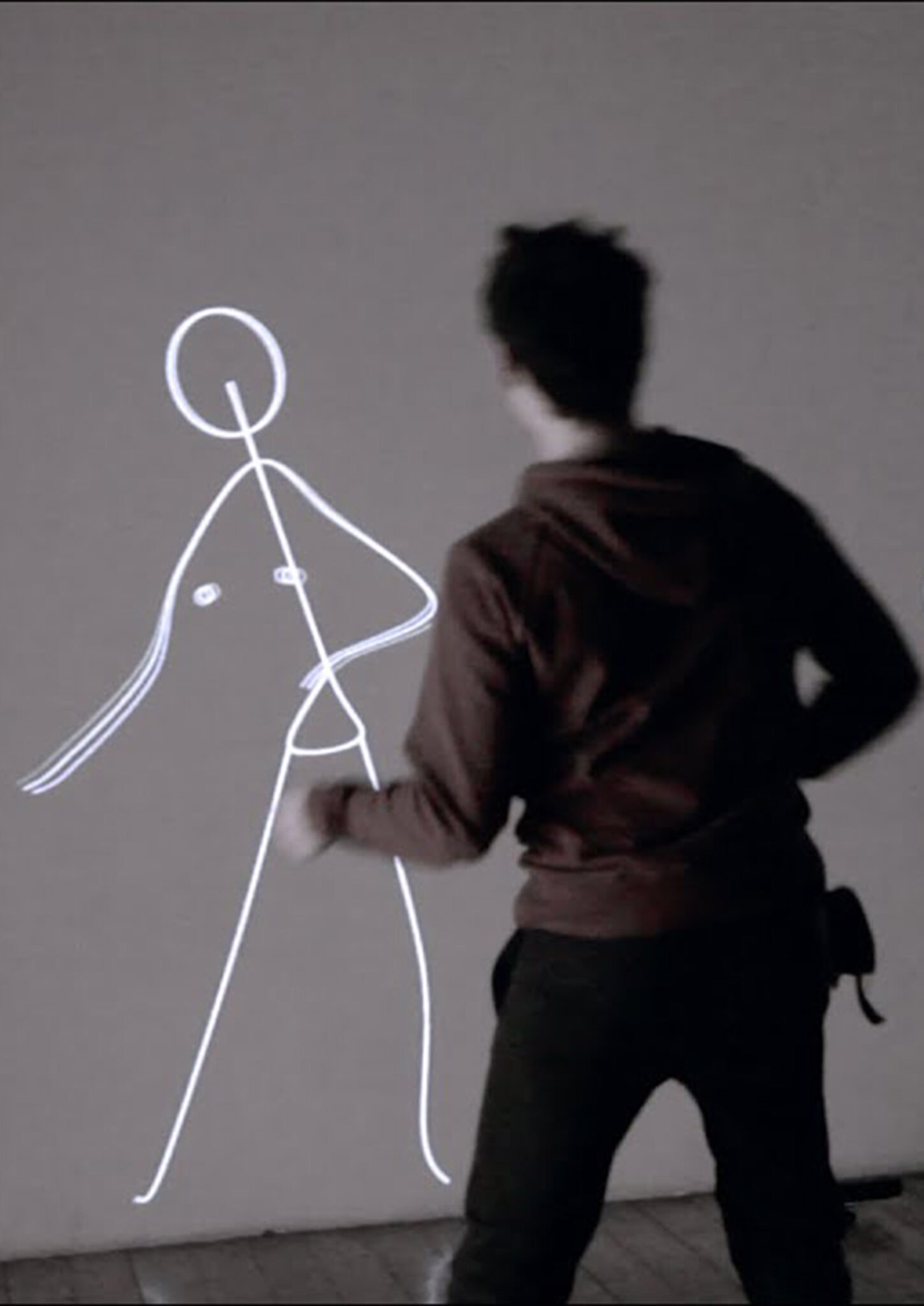
The mirror stage in psychology explains how the Ego forms through objectification, where one’s visual appearance comes into conflict with emotional experience, a concept called ‘alienation‘ by psychoanalyst Jacques Lacan. The interactive installation EGO reenacts and reverses this process by distorting the mirror image based on the user’s movements, highlighting the tension between the real and the symbolic, the Ego and the It, subject and object.
Bio
Klaus Obermaier is an interdisciplinary artist, director and composer who creates innovative works in the performing arts, music and installations using new media. Stefano D’Alessio researches social issues induced by the internet and explores how the web and its derivatives influence human behavior and the body. Martina Menegon creates intricate assemblages of physical and virtual elements, exploring the contemporary self and its hybrid corporeality.

QUBIT AI: Infratonal
Useless Hands
FILE 2024 | Aesthetic Synthetics
International Electronic Language Festival
Infratonal – Useless Hands – France
When our hands become useless, what will we choose to do with them? We can use AI to visualize the unthinkable, the strangely familiar yet indescribable forms and structures. Generative AI could be used as an amplifier of our ability to explore abstraction and surrealism rather than a simple mirror of our usual perceptions.
Bio
Infratonal is an artistic project led by Louk Amidou, a Paris-based multidisciplinary artist who works at the intersection of digital arts, electronic music and interaction design. He uses algorithms to create hybrid visual and sound pieces which aim to be performed by the human gesture as intangible instruments. He questions the artwork’s nature at the age of AI and the relationship between the artist and the algorithm.

Beeple
Human One
This is the story of the first human born in the metaverse. Human One is the first dynamically changing hybrid digital/ physical artwork. The artwork is an ongoing journey that will continue to evolve over the course of the artist’s life.

Vincent Leroy
Echo Lens
Emerald Lake, Canada
Hybrid, Vincent Leroy’s work oscillates between the real and the virtual, the natural and the artificial, drawing its inspiration from both nature, which often sites his work, and from the digital world. Whether its kinetic sculptures, immersive installations or monumental works, movement is almost always Vincent Leroy’s raw material. The kind of movement that inspires life, amazement, and a permanently shifting viewpoint.
Kino
MIT Media Lab, Stanford University
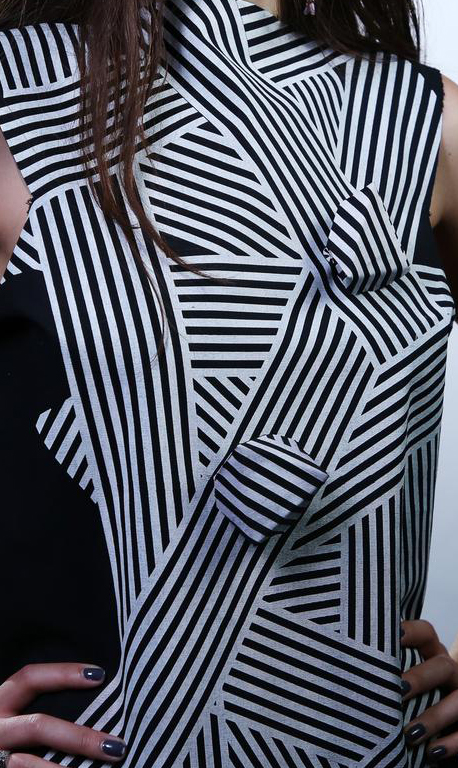
This work explores a dynamic future where the accessories we wear are no longer static, but are instead mobile, living objects on the body. Engineered with the functionality of 18 robotics, this “living” jewelry roams on unmodified clothing, changing location and reconfiguring appearance according to social context and enabling multitude presentations of self. With the addition of sensor devices, they transition into active devices which can react to environmental conditions. They can also be paired with existing mobile devices to become personalized on-body assistants to help complete tasks. Attached to garments, they generate shape-changing clothing and kinetic pattern designs–creating a new, dynamic fashion.
It is our vision that in the future, these robots will be miniaturized to the extent that they can be seamlessly integrated into existing practices of body ornamentation. With the addition of kinetic capabilities, traditionally static jewelry and accessories will start displaying life-like qualities, learning, shifting, and reconfiguring to the needs and preferences of the wearer, also assisting in fluid presentation of self. We envision a new class of future wearables that possess hybrid qualities of the living and the crafted, creating a new on-body ecology for human-wearable symbiosis.

Sara Sadik
Ultimate Vatos
Les vidéos, performances, installations et photographies de Sara Sadik prennent la forme de mangas, de jeux vidéo, de docu-fictions ainsi que de films d’animation CGI. Ce faisant, l’artiste aux racines maroco-algériennes explore les manifestations de ce qu’elle appelle « Beurcore« – la culture des jeunes qui a émergé parmi les membres de la classe ouvrière de la diaspora nord-africaine. Beurcore définit à la fois une identité hybride et un mouvement collectif constitué à travers la musique comme le rap et le hip-hop, la langue, la mode, des symboles spécifiques et les médias sociaux.

Van Grimde Corps Secrets
Eve 2050
Nous sommes en 2050, dans un monde ou être humain ne signifie plus la même chose. Les avancées technologiques et biomédicales des 30 dernières années ont bouleversé le statut du corps et redéfini les identités. Certains humains ont embrassé les progrès technologiques, jusqu’à augmenter leurs corps avec des dispositifs artificiels. D’autres ont préféré s’hybrider avec d’autres espèces, faisant du biologique et du vivant leur technologie à eux. D’autres encore chérissent et honorent le corps originel, refusant toute modification corporelle ou n’ayant pas les moyens de s’augmenter. La web série Eve 2050 nous emmène au cœur de ce monde étonnant à travers 5 épisodes qui suivent le parcours d’Eve. Personnage symbolique, de toutes origines culturelles, à la fois enfant et adulte, homme, femme, transgenre, être de chair, virtuel ou artificiel. Eve 2050 propose un voyage inédit vers les corps et les êtres de demain.

Dragan Ilic
Re)Evolution
With the machine programed to draw, the robot becomes a medium for interaction and for “symbiosis” with the artist, creating a kind of “hybrid body” of man and machine, whose nervous system and brain waves administer “software commands” to the robot during the drawing performance. A key actor in the exhibition will be the new model of the KUKA KR 210 robot, that has a multi-functioning performative role: from drawing, experimental dance, music – through the production of industrial sound, and a six channel video projection that documents Ilić’s projects.

Marjan Moghaddam
Mit 3D-CG in Spielfilmqualität und Motion Capture improvisierter Performance kreiert Marjan Moghaddam seit 2008 filmische und fantastische virtuelle Welten, die von ihren charakteristischen digitalen Körpern bevölkert werden. Diese Körper sind manchmal maschinell, organisch, hybrid oder energiebasiert, als unterbrochene und diskontinuierliche Figuren, die unser hybrides virtuelles und physisches Leben repräsentieren. Diese Szenen und Figuren ähneln filmischen Gemälden mit Videospiel-Ästhetik und Spezialeffekten für das postdigitale Zeitalter.

GUTO NÓBREGA
Breathing
File Festival
Breathing is a work of art based on a hybrid creature made of a living organism and an artificial system. The creature responds to its environment through movement, light and the noise of its mechanical parts. Breathing is the best way to interact with the creature.
This work is the result of an investigation of plants as sensitive agents for the creation of art. The intention was to explore new forms of artistic experience through the dialogue of natural and artificial processes. Breathing is a pre-requisite for life, and is the path that links the observer to the creature.Breathing is a small step towards new art forms in which subtle processes of organic and non-organic life may reveal invisible patterns that interconnect us.Breathing is a work of art driven by biological impulse. Its beauty is neither found isolated on the plant nor in the robotic system itself. It emerges at the very moment in which the observer approaches the creature and their energies are exchanged through the whole system. It is in that moment of joy and fascination, in which we find ourselves in a very strange dialogue, that a life metaphor is created.Breathing is the celebration of that moment.
Nix Liu Xin
Three Supermarkets
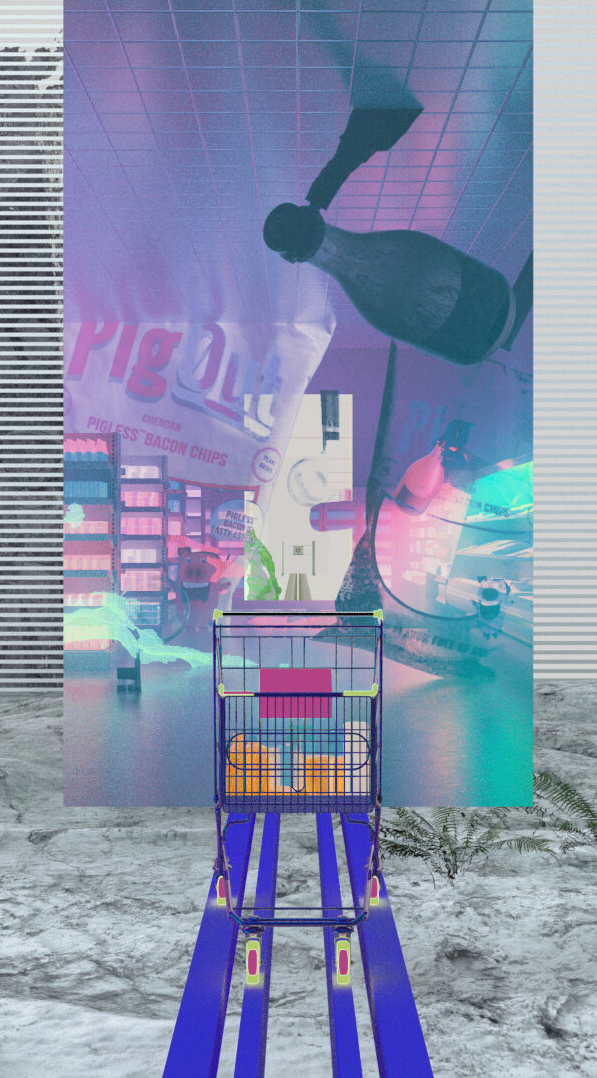
Three Supermarkets is an infinite loop film with a shopping cart riding across multiple coexisting fictional supermarkets. As the first episode of the Phygital Supermarket Trilogy, this film explores the hybrid compositing of the emerging physical and digital media and techniques. The production process of this film uses industrial-grade six-axis Staubli robot arm as shooting equipment, green screen shooting, volumetric video capture, photogrammetry, Cinema 4D Mograph, Redshift shading & rendering, 2D/3D compositing, and other custom build techniques and workflows. Familiar but neglected objects, such as apples and snack bags, were scanned as either static models or animated model sequences from the physical world to the digital space.

Bill Vorn
Copacabana Machine Sex
Copacabana Machine Sex is een 30 minuten durende burleske muzikale robotvoorstelling met uitsluitend biomorfe machines als acteurs, muzikanten en dansers. Mijn doel is niet om een echt cabaret na te bootsen, maar om een metaforisch spektakel te bedenken als antwoord op de vraag: “Wat zou er gebeuren als machines op een cabaretpodium zouden staan?” Esthetisch gezien is de set een vreemde hybride mix tussen de klassieke Broadway-kitsch en de donkere industriële look van mijn eerdere werken. Zoals het meeste van mijn werk is het een verkenning van robotachtige vormen en bewegingen door middel van muziek, geluid en licht.

Caroline Rothwell
Infinite Herbarium
Infinite Herbarium heeft tot doel onze ervaring van de uitgestrekte, diverse botanische wereld uit te breiden – door connectiviteit te creëren met planten en hun bedreigde ecosystemen. Via een proces van interactief leren en kunstproductie worden de ontmoetingen van deelnemers met echte planten gefilterd door datasets en historische archieven met behulp van een combinatie van Machine Learning (ML)-technieken. Verbindingen tussen botanie, data en kunst leiden tot fantasierijke ontmoetingen met merkwaardige hybride soorten – het creëren van een digitale weerspiegeling van de constante stroom van levende systemen.

STUDIO INI
Urban imprint
“If there is to be a “new urbanism… it will no longer be concerned with the arrangement of more or less permanent … but for the creation of enabling fields….that refuse to be crystallized into definitive form; it will no longer be about meticulous definitions, the imposition of limits, but about expanding notions, denying boundaries, not about separating and identifying entities, but about discovering hybrids; it will no longer be obsessed with the city but with the manipulation of infrastructure for endless intensifications and diversifications, shortcuts and redistributions – the reinvention of psychological space.”, Dutch architect + Harvard Professor, Koolhaas 959, writer of Delirious New York. URBAN IMPRINT is how we design a piece of this new urbanism, an augmented materiality , as we define it. An environment that is a ‘blank canvas’ to be reshaped by the future self.
VTOL
Letzter Atemzug
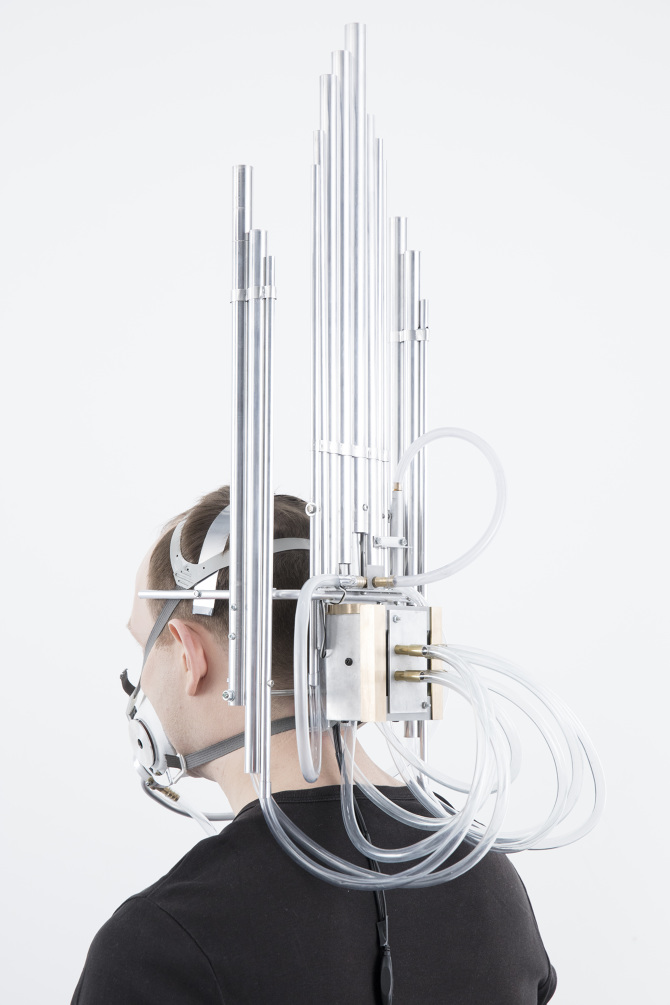
Ich verstehe passive Instrumente als verschiedene Multimedia-Objekte, für die weniger Management als Koexistenz erforderlich ist, basierend auf Beziehungen, die aus einer gegenseitigen „hybriden“ Symbiose hervorgehen. Das Funktionsprinzip des Objekts ist recht einfach: Die ausgeatmete Luft (ihr Druck und ihre Durchflussrate) aktiviert den generativen Prozess, der von den Ausatmungsparametern abhängt und von der Luftbewegung im Organ gesteuert wird. Das Objekt erfordert keine spezielle Spieltechnik, obwohl jede Änderung der Atmung (entweder vorsätzlich oder durch physiologische Faktoren verursacht) direkt von der Spieldynamik und auch von allen anderen Parametern abhängt, die zur Erzeugung des Schallflusses verwendet werden.

Jonathan Pepe
EXO-BIOTE
The Exo-biote project aims to invent a typology of possible forms and movements by diverting “soft robotics” technologies. The installation features moving sculpture-objects. These hybrid objects swell with air and seem to be alive, to breathe. These components are part of a whole, they belong to the same body, one whose humours and pulsing organs we can observe. A spasmodic choreography leads the viewer on an inner journey, into the meanders of one of those absurd reasoning processes that logicians calls “apagogies” by proposing hypothetical prostheses for the consumer market. It is as if the objects presented here were commodities, objects ready to use, mass-produced surrogate organs.
Isabella Münnich
Immersed Garden
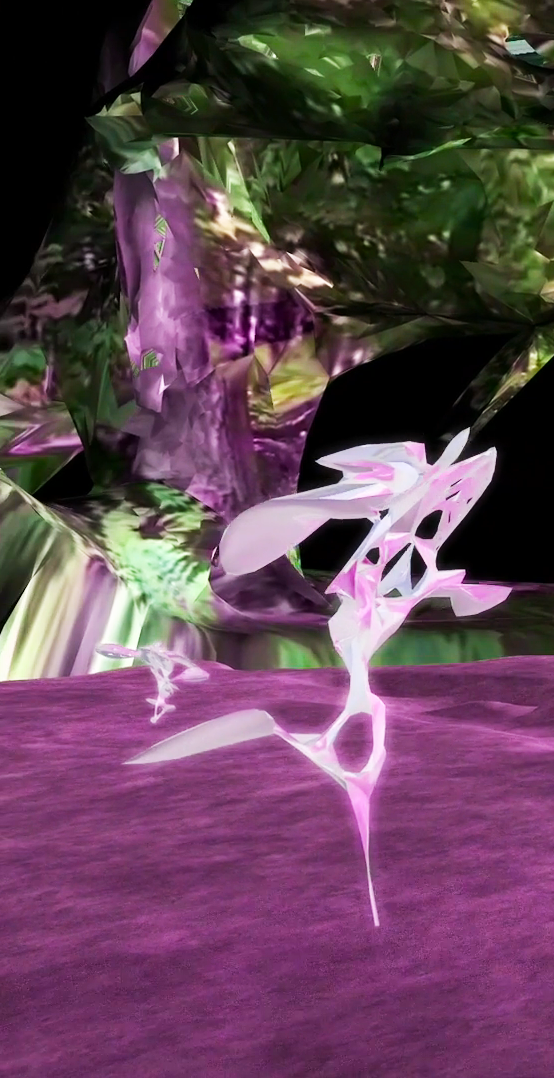
Immersed Garden is in its true sense a sunken world. Floating bodiless in an underwater garden, natural sounds guide you through an immersive surrounding, somewhere between calming and irritating, natural and artificial. It is a playful exploration of the individual conception of safety and confusion and a personal approach to aesthetic references to habits of introspection and retreat in digital environments. It was created by fusing different digital processes like photogrammetry of selected natural places around Karlsruhe and field recordings in a local natural reserve. Underwater videos hybridize with 3D scans of trees and plants while invisible frogs are croaking and humming birds are buzzing by synthetic flowers. The artistic aim was to explore the personal perception of calming and irritating, playing with the concept of immaterialness and attentiveness. The artwork creates aesthetic references to philosophical and scientific theories of introspection and identity.
Takuya Matsunobu and Yasuaki Kakehi
Coworo
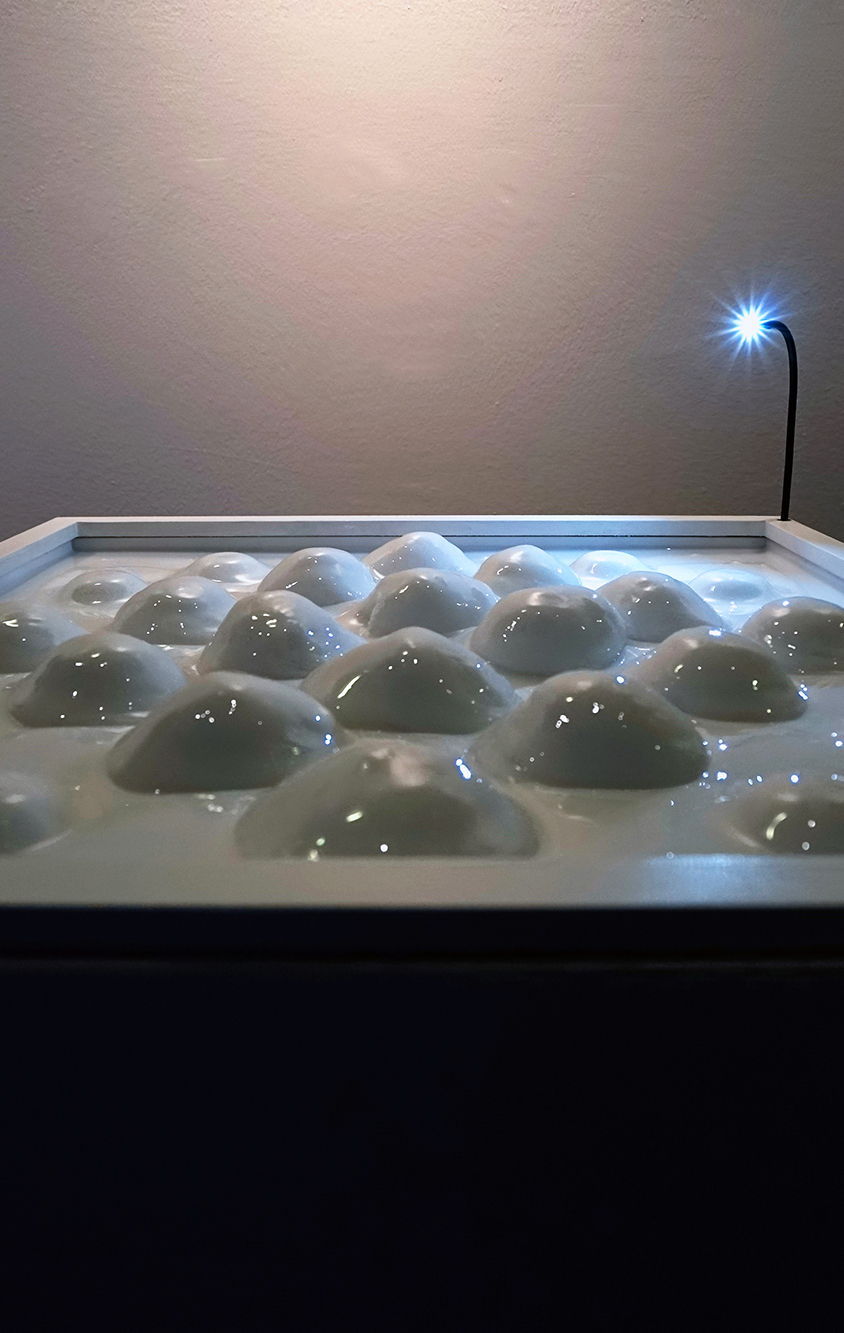
Coworo is an installation with a shape changing liquid that loses its texture under a spotlight and looks almost solid. After a while, bubbles appear on the surface and disappear again, as if it were breathing. The waves gradually change their size, position, and frequency and develop into physical, continual, kinetic, three-dimensional animations that extend beyond the discrete 2D pixel pattern. Through the hybrid combination of the digitally programmed machine and the organic properties of the physical material, the object creates a constant flux of ephemeral shapes and patterns.

Mika Tajima
New Humans
In New Humans, emergent gatherings of synthetic humans rise from the surface of a black ferrofluid pool. Appearing to morph like a supernatural life form, these dynamic clusters of magnetic liquid produced by machine learning processes are images of communities of synthetic people–hybrid profiles modeled from actual DNA, fitness, and dating profile data sets sourced from public and leaked caches. The work questions how we can radically conceptualize the “user profile” to embody a self whose bounds are indefinable and multiple. Generative algorithm using machine learning (GAN, T-SNE) and fluid simulation (Navier Stokes), countour generation (OpenCV), user profile data caches (DNA, fitness, and dating), software production (Processing), ferrofluid, custom electromagnet matrix, custom PCB control system, computer, steel, wood, aluminum.

Assocreation
Solar Pink Pong
file festival
Solar Pink Pong” is a hybrid of street and video game. Players of this game can interact with an animated pink sunlight reflection on the street using their bodies and shadows. The device that makes this game possible can be mounted on utility poles or building sides.

vtol
last breath
I understand passive instruments to be different multimedia objects that do not require management so much as co-existence with them based on relations born of a mutual “hybrid” symbiosis. The operating principle of the object is fairly simple – the exhaled air (its pressure and flow rate) activates the generative process, which depends on the exhalation parameters and is managed by the air movement in the organ. The object does not require any special game technique, although any change in the breathing (either premeditated or caused by physiological factors) is directly dependent on game dynamics and also on all the other parameters used to generate the sonic flow.
Lionel Hun and Pixel n’Pepper
Black and White
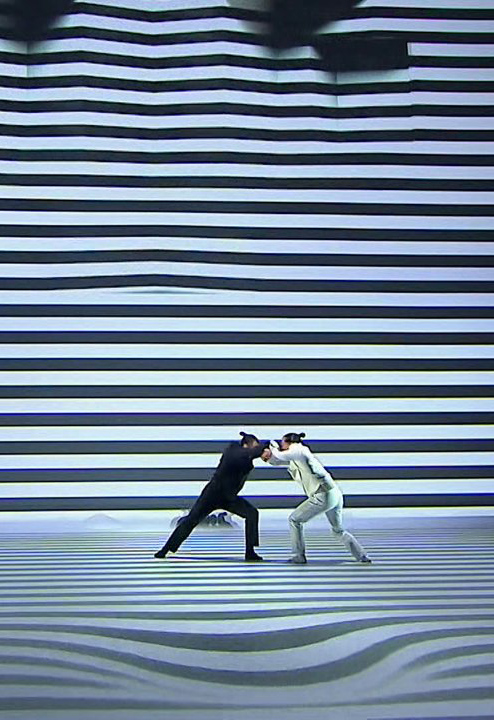
Dedicated to the design and distribution of live shows combining the arts in all its forms, Compagnie Hybride offers a fusion of aesthetics. It is positioned at the crossroads of creativity where the bodies and new technology meet. Land on which confronts, body language and visual arts, in order to promote a work interdisciplinary research, choreography and artistic innovation. Through its creations, productions, performances, films, exhibitions, installations, educational workshops and event services, Compagnie Hybride, carried primarily by a desire to exchange, sharing, research and development, has a mandate to create and disseminate its designs in the artistic and cultural networks nationally and internationally.
PHILIP BEESLEY
菲力浦 畢斯雷
Hylozoic Ground
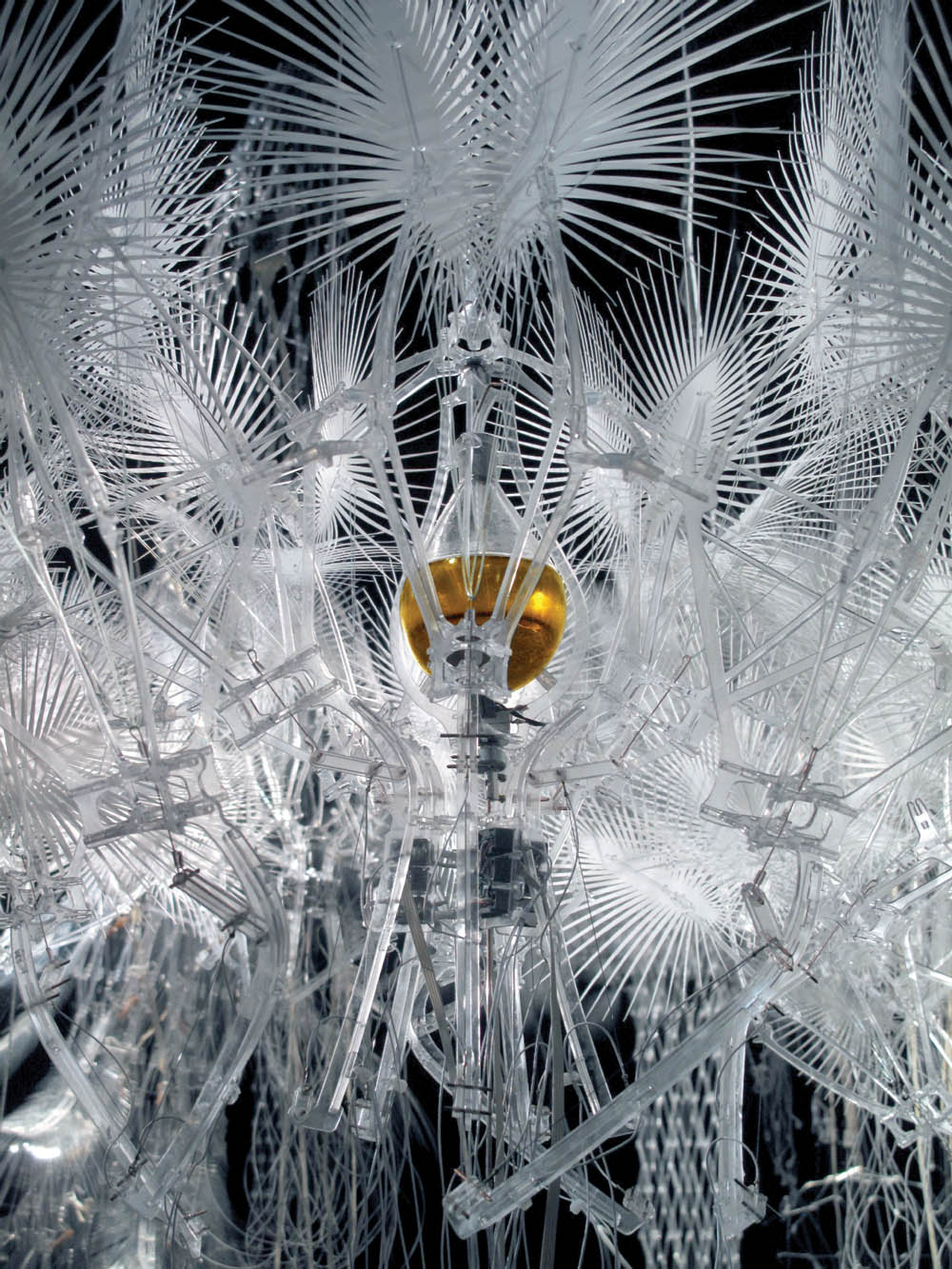
The project’s title refers to ‘hylozoism’, the ancient belief that all matter has life. Hylozoic Ground offers a vision for a new generation of responsive architecture. The Hylozoic Ground environment can be described as a suspended geotextile that gradually accumulates hybrid soil from ingredients drawn from its surroundings. Akin to the functions of a living system, embedded machine intelligence allows human interaction to trigger breathing, caressing, and swallowing motions and hybrid metabolic exchanges. These empathic motions ripple out from hives of kinetic valves and pores in peristaltic waves, creating a diffuse pumping that pulls air, moisture and stray organic matter through the filtering Hylozoic membranes.

Karina Smigla-Bobinski
Ada
File Festival
Similar to Tinguely’s “Méta-Matics”, “ADA” is an artwork with a soul. It acts itself. At Tinguely’s it is sufficient to be an unawarely struggling mechanical being. He took it wryly: the machine produces nothing but its industrial self-destruction. Whereas “ADA”, by Karina Smigla-Bobinski, is a post-industrial “creature“, visitor-animated, creatively acting artist-sculpture, self-forming artwork, resembling a molecular hybrid, such as a one from nanobiotechnology. It develops the same rotating silicon-carbon-hybrids, midget tools, miniature machines able to generate simple structures. “ADA” is much larger, esthetically much more complex, an interactive art-making machine.

MIT Media Lab
Hybrid living materials (HLMs)
A method for printing 3D objects that can control living organisms in predictable ways has been developed by an interdisciplinary team of researchers at MIT and elsewhere. The technique may lead to 3D printing of biomedical tools, such as customized braces, that incorporate living cells to produce therapeutic compunds such as painkillers or topical treatments, the researchers say.

KATE COOPER
Rigged
A hybrid of consumer associations, ranging from the glossy iconography of the TV commercial and the sterility of video game graphics to the luminosity of the department store poster and the smell of freshly opened cosmetics, create a subconscious lure. Her use of CGI technology in her artistic practice surpasses a simple study of digital textures (think nostalgic glitch-making) to occupy a full-fleshed, hyperreal space, usually reserved to corporate giants in advertising or entertainment.

Thomas Glassford
Afterglow Hybrid Pendant 3

Saya Woolfalk
ChimaTEK- Hybridity Visualization System

Lars Jan
Holoscenes
Lars Jan is a director, media artist and artistic director of Early Morning Opera, a Los Angeles-based art lab specializing in live performance. Along with co-producers MAPP International Productions, Early Morning Opera is currently developing HOLOSCENES, a hybrid of performance, installation and public spectacle featuring a series of rituals gathered from sacred and secular spheres and performed in a triptych of hydraulically-animated, jumbo aquariums.
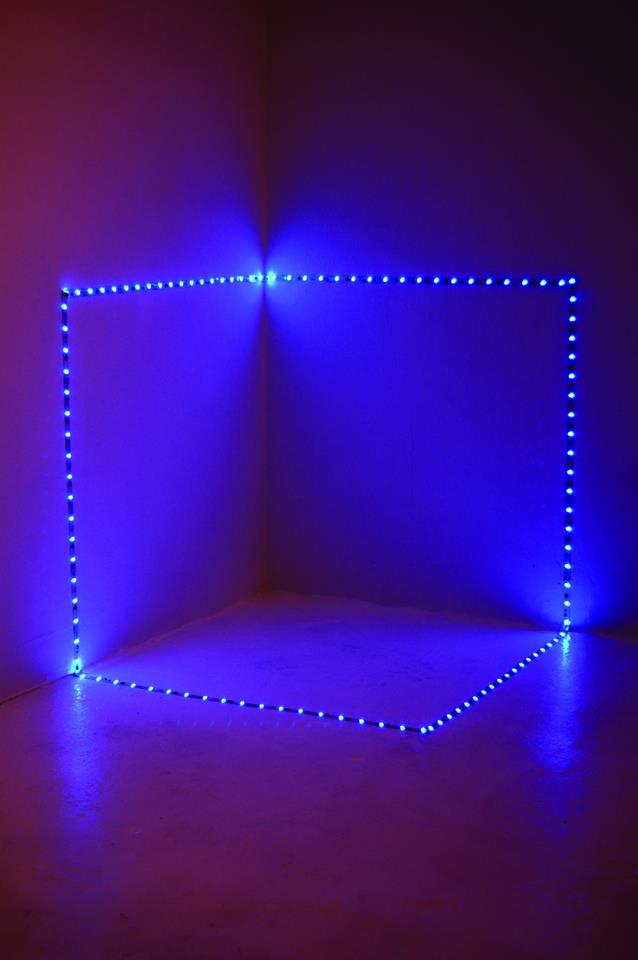
PETER HAMMAR
Time Space Cube
Peter Hammar is a visual artist who creates mixed media collage paintings and installations. His work is in Flux and the status of the work is in question, fragmented, dislocated and failing, exploring the Meta qualities of art, mixing unusual materials with traditional practices. Multiple shaped collage canvases morph into hybrids in an attempt to re-address an ongoing query upon the visually apparent versus the embodied. Found objects altered and juxtaposed and by so, give a new order and meaning to installations that engage in a dialogue within the architectural space.

Akram Khan
Kaash
Inspired by Akram Khan’s early training in the Indian classical dance form Kathak, and the hybrid language that organically emerged when Akram’s kathak training encountered contemporary dance in his teens, a vision began to form, fuelled by a desire to learn and create through collaboration with the very best people across all the disciplines in the arts.
The rules were simple: take risks, think big and daring, explore the unfamiliar, avoid compromise and tell stories through dance that are compelling and relevant, with artistic integrity.
.

NICK ERVINCK
Olnetop
OLNETOP has something monstrous, a hybrid shape in which one can recognize various elements. The work is not clearly defined but points in different directions. The imagery used is clearly inspired by macro photographic images of splashing water, and thus sculpturally interprets the encounter between nature and technology.