highlike

Nueve Voltios – Farol Infinito – Colombia

FAROL INFINITO

Nueve Voltios


FILE SÃO PAULO 2026: Inter-creativity – Art and Technology – LED SHOW
Electronic Language International Festival


Farol Infinito – Colombia

FAROL INFINITO presents an immersive journey in which sound and visual art intertwine to bring to life a poetic and sensory work. Carefully crafted in every detail, its narrative takes the lighthouse as a device for communication and navigation and, from a mythological perspective, explores the infinite fire it contains, a symbol of science and technology, understood as humanity’s ability to harness the forces of nature for the development of civilizations.

BIO

Leonardo González Quevedo, born in 1977, is an architect with 18 years of experience as a video artist and VJ. His audiovisual practice has focused primarily on the creation, development, and design of visual, trans architectural, transmedia, and stage-based languages, implemented in large-scale events, art exhibitions, and television. | Maria José Marulanda, born in 1987, is a singer, industrial designer, and composer with 15 years of experience as a sound artist and producer. Her sonic practice focuses primarily on the creation, development, and design of electronic, transmedia, and stage-based sound languages, presented in large-scale events, concerts, and television broadcasts.
Patrick Grandi – Circularité – Brazil / France

CIRCULARITÉ

Patrick Grandi


FILE SÃO PAULO 2026: Inter-creativity – Art and Technology – LED SHOW
Electronic Language International Festival


Circularité – Brazil / France

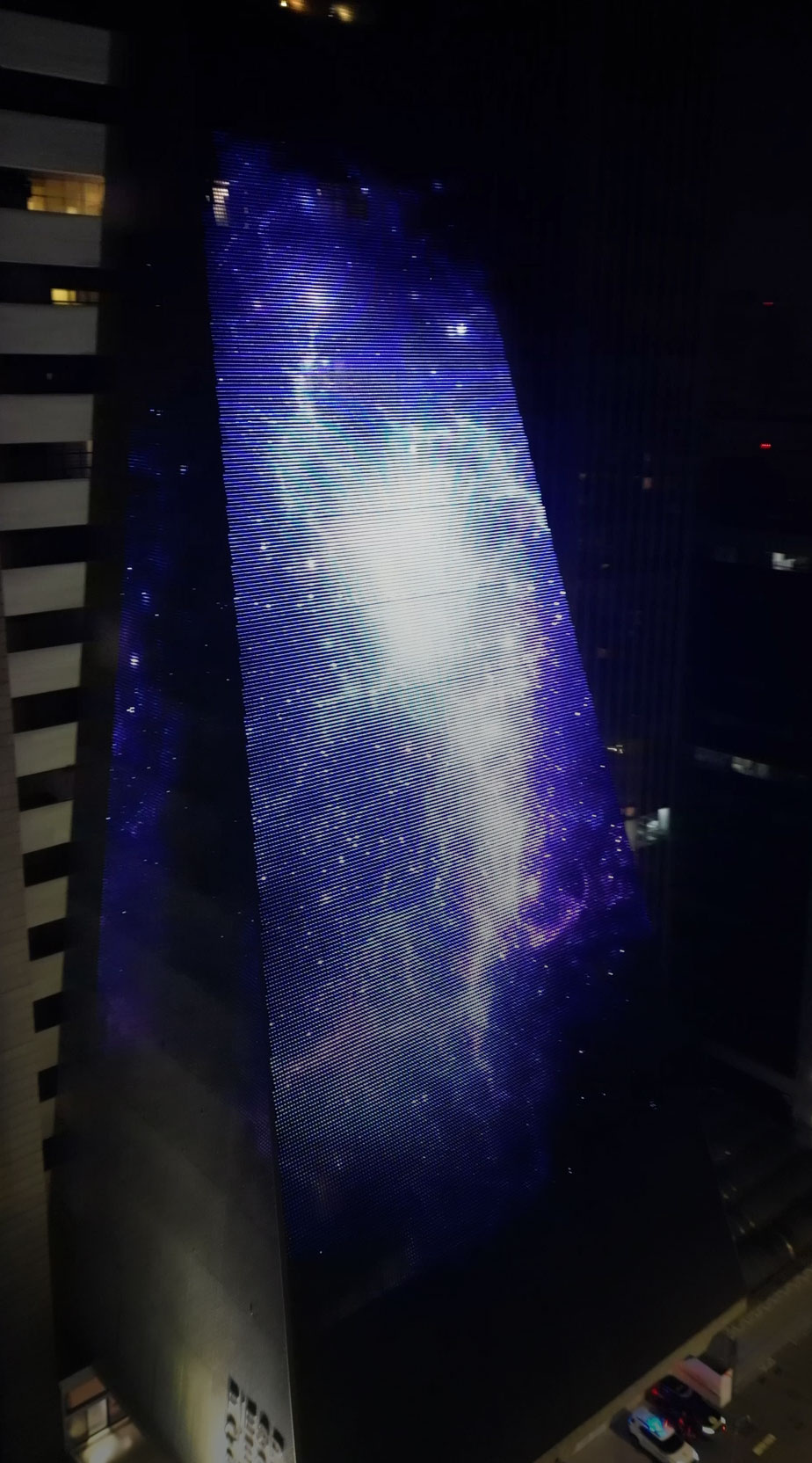
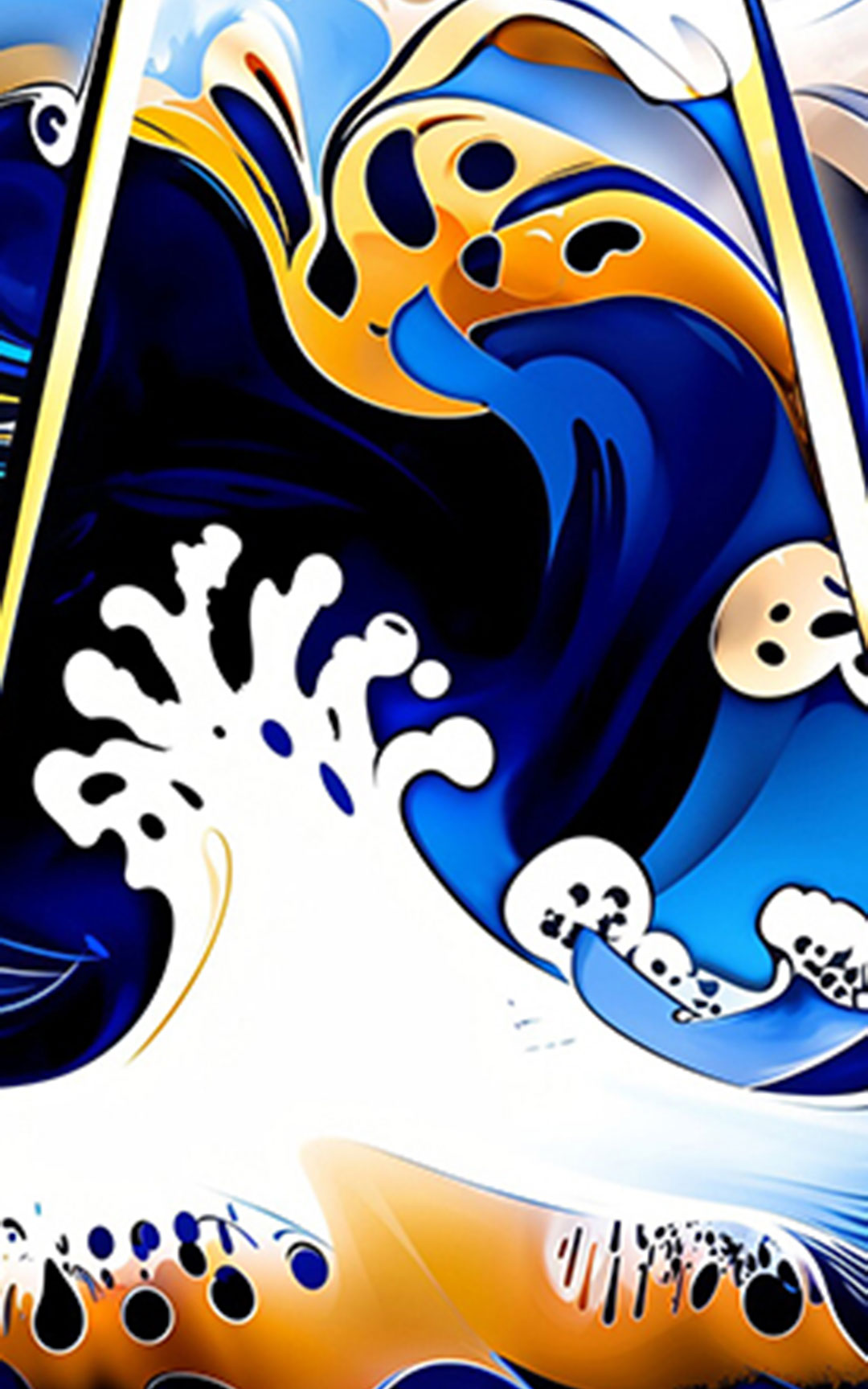
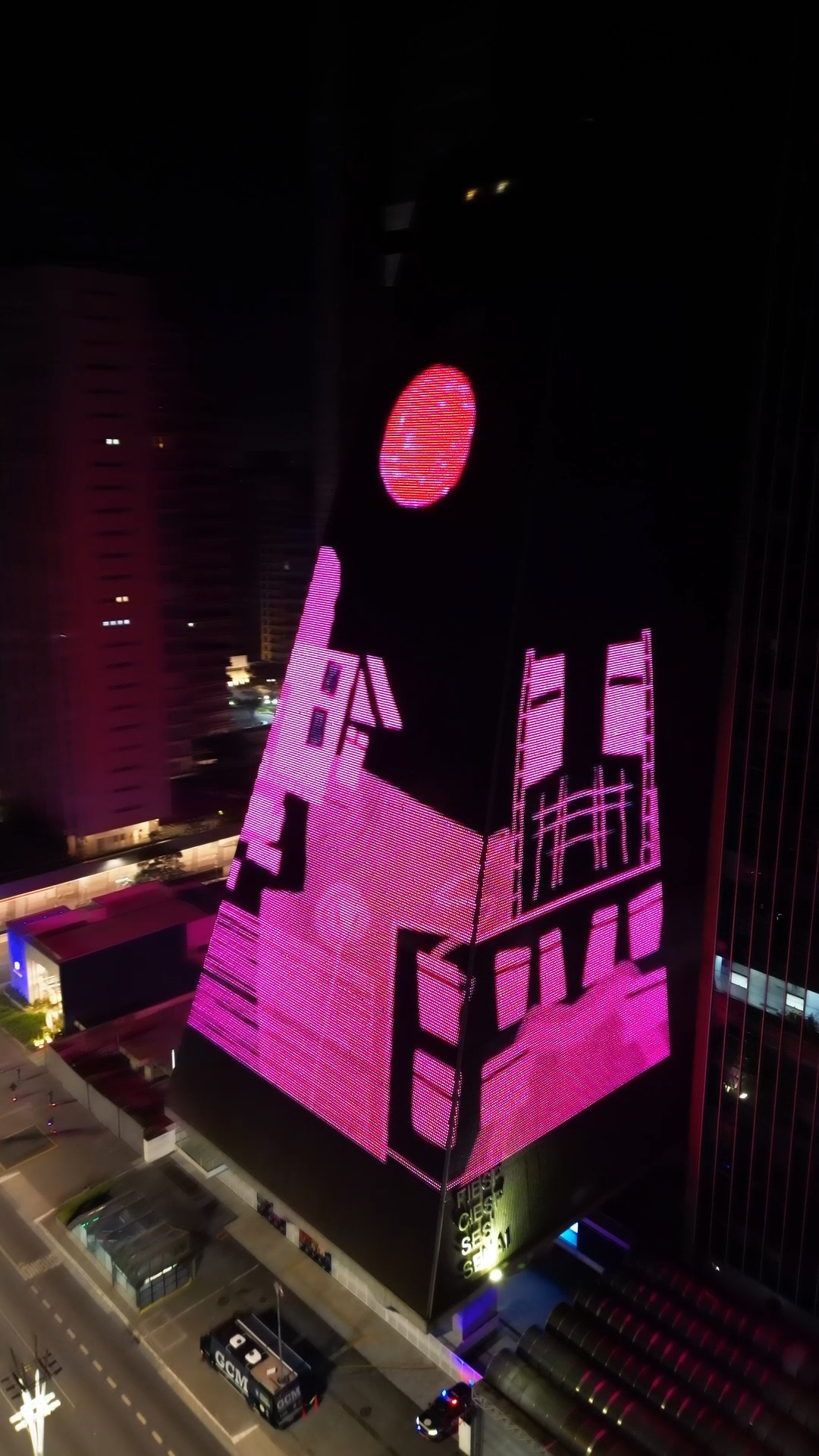
Circularité is a flow. Kirigami LED shapes rotate and intertwine on the FIESP facade, like a painting that never dries. A permanent cycle between structure and chaos.

BIO

Born in São Paulo in 1978, Patrick spent almost 15 years working in advertising as a freelance 3D artist. He created his first projection mapping in 2015 and, since then, has produced dozens of mappings in France, as part of the Video Mapping Festival in Lille, China (Shining Lights), Japan, Guatemala (Festival de la Luz), Belgium (Bright Festival).

Escola de Comunicações e Artes da Universidade de São Paulo (ECA-USP) – Feito à Mão – Brazil

FEITO À MÃO

Escola de Comunicações e Artes da Universidade de São Paulo (ECA-USP)


FILE SÃO PAULO 2026: Inter-creativity – Art and Technology – LED SHOW
Electronic Language International Festival


Feito à Mão – Brazil

Feito à Mão (Handmade, in Portuguese) brings together three works developed from the same question: where do the boundaries between craftsmanship and automation lie? These two modes of production intertwine in a narrative thread that begins with the earth itself—Gaia—and incorporates electronic techniques that transform life and the urban landscape, challenging our notions of what it means to be handmade. Between turning the soil, reshaping the urban environment, and fragmenting the languages of art, discussions emerge about the role of manual processes in relation to new technologies within today’s artistic landscape.

BIO

Support
Grupo de Pesquisa e Extensão Realidades – ECA-USP

Advising
Profa. Dra. Silvia Laurentiz 

Collaboration
Jo Seraph
Leona Machado

Participants
Alex Avramides Levin
Angélica Sofía García Perez
Antônia Laureano Suarez
Bruna Krunfli
Cristiana Cruz
Hugo Alves Paiva
Isaac Duarte Bender
Isabelle Telles Matias
Isabella Carvalho de Melo
Lúcia Yoojung Moon
Maria Muniz Fleury de Camargo
Pietro Galastre Atore
Raphael Delaroli Bezerra Couto
Raquel de Souza Oliveira
Reginaldo Aquino
Ryan Gonçalves
Tainá Delfino

Isabell Bullerschen – Ipseria – Switzerland

IPSERIA

Isabell Bullerschen


FILE SÃO PAULO 2026: Inter-creativity – Art and Technology – Augmented Realities
Electronic Language International Festival


Ipseria – Switzerland

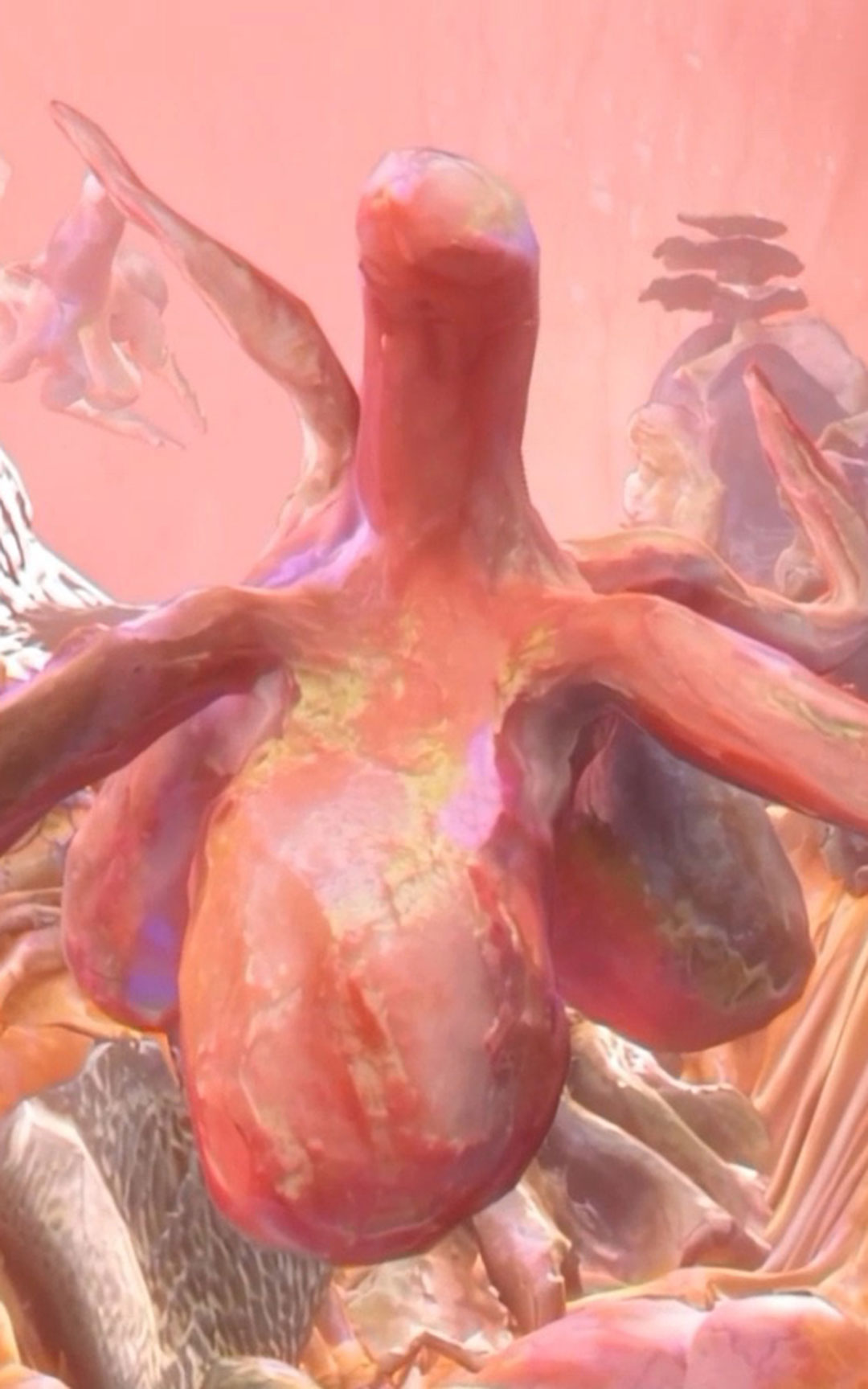
An unusual experience awaits recipients: a virtual reality with no digitally-generated content. ipseria and its virtual environment have their origin in the physical realm. Various materials like clay, plasticine and latex have been modeled, as well as organic materials, such as lichen or slime molds, have been collected and cultivated. By using 3D scanners the sculpted, collected, and grown elements were digitized, then processed in the 3D program Houdini and finally combined in the gaming software Unity to create a 360° VR experience. Hence, the virtual and physical worlds are intertwined.

BIO

Isabell Bullerschen (she/her) is interested in slimy organisms and the construction and blending of realities. Through installations and videos, she explores the potential that lies in the deconstruction and rewriting of narratives. She employs a meta-surgical method in which her work serves as a scalpel to dissect anthropocentrism. 

CREDITS

Concept/Script/Direction/Modelling/3D Scans/Production: Isabell Bullerschen

3D Animation: Florian Baumann 

Game Design: Sebastiaan Cator

Programming: Arno Justus

Sound: Aske Lyck Pedersen and Paloma López & Leslie García (interspecifics)

Voice Over: Netanya Woodard, Molly Schaad 

Flute: Chantal Dubs

Scent: Andreas Wilhelm 

Seating: Jope Schneider

Project Advisor: Roger Meier

With the support of: Swiss Art Council Pro Helvetia, Kanton Zürich Fachstelle Kultur, Stadt Zürich Kultur, Ernst Göhner Stiftung

FILE SÃO PAULO 2025: SYNTHETIKA – Jorge Bandera

Disconnection

Jorge Bandera

FILE SÃO PAULO 2025: SYNTHETIKA – Art and Technology – LED SHOW
Electronic Language International Festival


Disconnection – Colombia

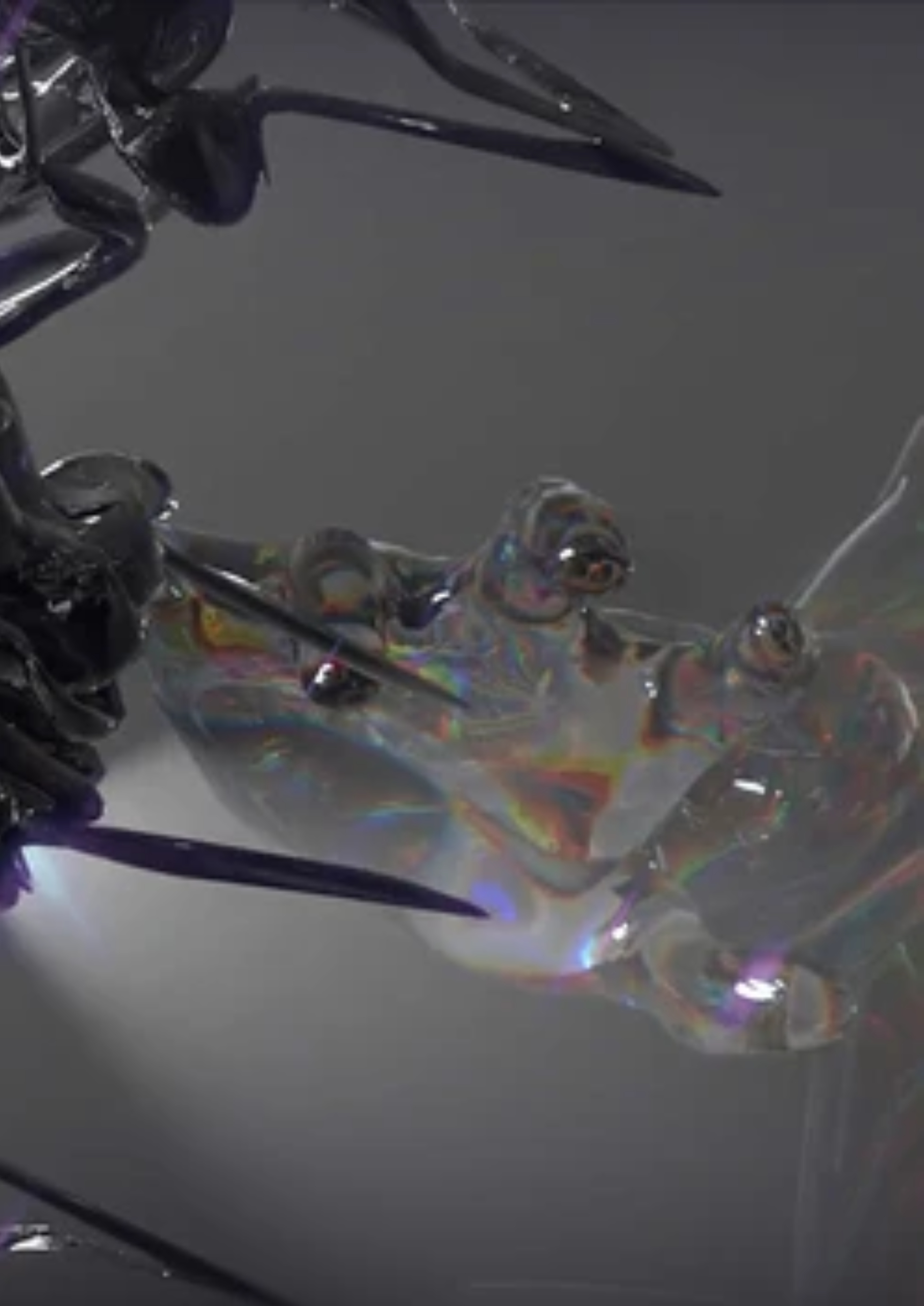
Desconexion explores the transformation of energy. The piece intertwines spiritual and scientific perspectives—grounded in the Law of Conservation of Energy and Einstein’s Theory of Relativity. Symbolizing the continuous metamorphosis of life, the work reveals the eternity of energy, where the end of each cycle marks a new beginning.

BIO

Jorge Bandera is a multimedia designer and assistant professor at the Universidad de los Andes in Bogotá, Colombia. A specialist in design, interactivity, animation, and immersive experiences, he has collaborated with institutions such as Google, Teatro Mayor, and the Ministry of Culture. He is also an advocate of interdisciplinary co-creation in education.

FILE SÃO PAULO 2025: SYNTHETIKA – Jiatong Yao

ChromaPause

Jiatong Yao

FILE SÃO PAULO 2025: SYNTHETIKA – Art and Technology – CGI VIDEOS
Electronic Language International Festival


ChromaPause – China

ChromaPause is an experimental film that explores the relationship between urban life, posthuman identity, and the yearning for nature in a digitalized world. Futuristic flowers bloom in a surreal mesh, symbolizing the balance between the organic and the synthetic. Posthuman figures merge with the technological landscape, embodying the convergence of humanity and technology. The work invites pause and reflection in this pulsating universe.

BIO

Jiatong Yao connects art, technology, and culture, exploring XR, 3D, AI, and interactive computing. He reflects on the transformation of the modern self through technology, creating immersive experiences that intertwine humanity and the digital age. With a background in computer science and technical art, he develops innovative projects on the impacts of information on society. 

QUBIT AI – International Electronic Language Festival – Art and Technology

QUBIT AI | quantum & synthetic ai
Electronic Language International Festival

July 3rd to August 25th
Tuesday to Sunday, 10am – 8pm
FIESP Cultural Center

Design: André Lenz
Image: Iskarioto Dystopian AI Films – Athena

QUBIT AI

In its 25 years of existence, the International Electronic Language Festival (FILE) is an internationally renowned Brazilian project that since 2000 has explored the intersection between art and technology. With more than two decades of history, the festival stands out for fostering exhibition spaces and debate about artistic innovations driven by disruptive and innovative technologies, inviting the public to get involved with experimental forms of art that challenge the boundaries of conventionality. Currently, two of these technologies stand out in the contemporary scenario: the accelerated development of quantum computing and artificial intelligence corroborated by synthetic data.

Quantum computing, an emerging revolution in the technological field, offers a new range of creative possibilities for contemporary artists. This new era allows the exploration of unprecedented frontiers through a new computational format that consists mainly of quantum superposition and entanglement, a new field of exploration for synthetic computer science, as well as for the arts in general; on the other hand, artificial intelligence, fueled by synthetic data, offers artists a new way of making and understanding art, opening up space for new forms, concepts and artistic expressions.

Entitled QUBIT AI, the exhibition delves into this unexplored territory presenting a selection of works of art resulting from the connection between artistic creation and technology, proposing a theoretical reflection on what the interrelationship between quantum computers and synthetic artificial intelligence will be.

Visitors will be invited to experience immersive installations, experimental videos, digital sculptures and other forms of interactive art, which intertwine reality and imagination. The exhibition encourages reflections on the influence of technology on art and contemporary society, while at the same time providing an environment to compare already established technological arts (analog and digital) with the possible futures of art in the synthetic era, enhanced by quantum computing. The QUBIT AI exhibition at FILE SP 2024 transcends the mere presentation of works of art; it is a journey to the limits of human creativity, driven by the convergence of art, science and technology.

Ricardo Barreto and Paula Perissinotto
co-organizers and curators of FILE
International Electronic Language Festival


QUBIT AI: AESTHETIC SYNTHETIC FILE – São Paulo 2024 – Art and Technology

FILE 2024

QUBIT AI | quantum & synthetic ai
Electronic Language International Festival
July 3rd to August 25th
Tuesday to Sunday, 10am – 8pm
FIESP Cultural Center

Design: André Lenz
Image: Iskarioto Dystopian AI Films – Athena

QUBIT AI

In its 25 years of existence, the International Electronic Language Festival (FILE) is an internationally renowned Brazilian project that since 2000 has explored the intersection between art and technology. With more than two decades of history, the festival stands out for fostering exhibition spaces and debate about artistic innovations driven by disruptive and innovative technologies, inviting the public to get involved with experimental forms of art that challenge the boundaries of conventionality. Currently, two of these technologies stand out in the contemporary scenario: the accelerated development of quantum computing and artificial intelligence corroborated by synthetic data.

Quantum computing, an emerging revolution in the technological field, offers a new range of creative possibilities for contemporary artists. This new era allows the exploration of unprecedented frontiers through a new computational format that consists mainly of quantum superposition and entanglement, a new field of exploration for synthetic computer science, as well as for the arts in general; on the other hand, artificial intelligence, fueled by synthetic data, offers artists a new way of making and understanding art, opening up space for new forms, concepts and artistic expressions.

Entitled QUBIT AI, the exhibition delves into this unexplored territory presenting a selection of works of art resulting from the connection between artistic creation and technology, proposing a theoretical reflection on what the interrelationship between quantum computers and synthetic artificial intelligence will be.

Visitors will be invited to experience immersive installations, experimental videos, digital sculptures and other forms of interactive art, which intertwine reality and imagination. The exhibition encourages reflections on the influence of technology on art and contemporary society, while at the same time providing an environment to compare already established technological arts (analog and digital) with the possible futures of art in the synthetic era, enhanced by quantum computing. The QUBIT AI exhibition at FILE SP 2024 transcends the mere presentation of works of art; it is a journey to the limits of human creativity, driven by the convergence of art, science and technology.

Ricardo Barreto and Paula Perissinotto
co-organizers and curators of FILE
International Electronic Language Festival

QUBIT AI: FILE QUANTUM WORKSHOP 2024 – São Paulo – Art and Technology

FILE 2024

QUBIT AI | quantum & synthetic ai
Electronic Language International Festival
July 3rd to August 25th
Tuesday to Sunday, 10am – 8pm
FIESP Cultural Center

Design: André Lenz
Image: Iskarioto Dystopian AI Films – Athena

QUBIT AI

In its 25 years of existence, the International Electronic Language Festival (FILE) is an internationally renowned Brazilian project that since 2000 has explored the intersection between art and technology. With more than two decades of history, the festival stands out for fostering exhibition spaces and debate about artistic innovations driven by disruptive and innovative technologies, inviting the public to get involved with experimental forms of art that challenge the boundaries of conventionality. Currently, two of these technologies stand out in the contemporary scenario: the accelerated development of quantum computing and artificial intelligence corroborated by synthetic data.

Quantum computing, an emerging revolution in the technological field, offers a new range of creative possibilities for contemporary artists. This new era allows the exploration of unprecedented frontiers through a new computational format that consists mainly of quantum superposition and entanglement, a new field of exploration for synthetic computer science, as well as for the arts in general; on the other hand, artificial intelligence, fueled by synthetic data, offers artists a new way of making and understanding art, opening up space for new forms, concepts and artistic expressions.

Entitled QUBIT AI, the exhibition delves into this unexplored territory presenting a selection of works of art resulting from the connection between artistic creation and technology, proposing a theoretical reflection on what the interrelationship between quantum computers and synthetic artificial intelligence will be.

Visitors will be invited to experience immersive installations, experimental videos, digital sculptures and other forms of interactive art, which intertwine reality and imagination. The exhibition encourages reflections on the influence of technology on art and contemporary society, while at the same time providing an environment to compare already established technological arts (analog and digital) with the possible futures of art in the synthetic era, enhanced by quantum computing. The QUBIT AI exhibition at FILE SP 2024 transcends the mere presentation of works of art; it is a journey to the limits of human creativity, driven by the convergence of art, science and technology.

Ricardo Barreto and Paula Perissinotto
co-organizers and curators of FILE
International Electronic Language Festival

QUBIT AI: FILE OPENING LECTURE 2024 – São Paulo – Art and Technology

FILE 2024

QUBIT AI | quantum & synthetic ai
Electronic Language International Festival
July 3rd to August 25th
Tuesday to Sunday, 10am – 8pm
FIESP Cultural Center

Design: André Lenz
Image: Iskarioto Dystopian AI Films – Athena

QUBIT AI

In its 25 years of existence, the International Electronic Language Festival (FILE) is an internationally renowned Brazilian project that since 2000 has explored the intersection between art and technology. With more than two decades of history, the festival stands out for fostering exhibition spaces and debate about artistic innovations driven by disruptive and innovative technologies, inviting the public to get involved with experimental forms of art that challenge the boundaries of conventionality. Currently, two of these technologies stand out in the contemporary scenario: the accelerated development of quantum computing and artificial intelligence corroborated by synthetic data.

Quantum computing, an emerging revolution in the technological field, offers a new range of creative possibilities for contemporary artists. This new era allows the exploration of unprecedented frontiers through a new computational format that consists mainly of quantum superposition and entanglement, a new field of exploration for synthetic computer science, as well as for the arts in general; on the other hand, artificial intelligence, fueled by synthetic data, offers artists a new way of making and understanding art, opening up space for new forms, concepts and artistic expressions.

Entitled QUBIT AI, the exhibition delves into this unexplored territory presenting a selection of works of art resulting from the connection between artistic creation and technology, proposing a theoretical reflection on what the interrelationship between quantum computers and synthetic artificial intelligence will be.

Visitors will be invited to experience immersive installations, experimental videos, digital sculptures and other forms of interactive art, which intertwine reality and imagination. The exhibition encourages reflections on the influence of technology on art and contemporary society, while at the same time providing an environment to compare already established technological arts (analog and digital) with the possible futures of art in the synthetic era, enhanced by quantum computing. The QUBIT AI exhibition at FILE SP 2024 transcends the mere presentation of works of art; it is a journey to the limits of human creativity, driven by the convergence of art, science and technology.

Ricardo Barreto and Paula Perissinotto
co-organizers and curators of FILE
International Electronic Language Festival


Ed Atkins

Get Life/Love’s Work
This new project focuses on the ways bodies and technologies are intertwined, particularly in the field of digital communication and telepresence. As always in Atkins’s work, technology is analyzed as a theoretical and even allegorical interrogation of itself, rather than in any literal terms.

DUMBTYPE

LIEBHABER (LOVERS)
Computergesteuerte Fünfkanal-Video- / Toninstallation mit fünf Videoprojektoren, einem Achtkanal-Soundsystem und Diaprojektoren […] Als Bild  schlägt ein Liebespaar häufig eine Burg der Ausgrenzung vor. Mit der sexuellen Befreiung der letzten Jahrzehnte hat das Wort nun mehr mit körperlicher Kopplung zu tun als mit der Erhabenheit der „wahren Liebe“. AIDS hat dieser Paarung eine neue Dimension der Vorsicht hinzugefügt. Die lebensgroßen Tänzer in Lovers haben kein Leben mehr. Die nackten Figuren werden auf die schwarzen Wände eines quadratischen Raums projiziert und haben eine spektrale Qualität. Ihre Bewegungen sind einfach und sich wiederholend. Sie gehen hin und her, laufen und rennen mit tierischer Anmut. Ihre Handlungen werden im Laufe der Zeit vertraut, so dass es eine Überraschung ist, wenn zwei der durchscheinenden Körper in einer virtuellen Umarmung zusammenkommen. Diese angeblichen Liebhaber – mehr überlappend als berührend – sind physisch nicht miteinander verflochten.

JACQUES LESEC & CHRIS MARTIN

INDUSTRIAL CREEPER

On the site we envision a antagonistic dialogue between the seemingly biologic units and its abiotic architectural foundation. The units find a home intertwined amongst the predictable regularity of the steel configuration remeniscent of a deteriorating and outdated technological era whose remnants can be found scattered across downtown Los Angeles. These old industrial artifacts, derived from sheer function, act as an all too familiar platform by which the occupant interacts with this new synthetic ecological system. Throughout the site, we see the units stretched and twisted in an extraodinary demonstration of elasticity. In this way, the building lingers in a constant state of mediation between the past and the future; succombing to the complex configuration of the aggressive industrial creeper.

LECH MAJEWSKI

Лех Маевский
THE MILL & THE CROSS

Rutger Hauer THE MILL & THE CROSS dir. Lech Majewsk Pieter Bruegel’s epic masterpiece The Way To Calvary depicts the story of Christ’s Passion set in Flanders under brutal Spanish occupation in the year 1564, the very year Bruegel created his painting. From among the more than five hundred figures that fill Bruegel’s remarkable canvas, THE MILL & THE CROSS focuses on a dozen characters whose life stories unfold and intertwine in a panoramic landscape populated by villagers and red-caped horsemen. Among them are Bruegel himself (played by Rutger Hauer), his friend and art collector Nicholas Jonghelinck (Michael York), and the Virgin Mary (Charlotte Rampling). T

Rina Banerjee

She’s my country

The Indian born, New York City based artist Rina Banerjee has a love of materials, heritage textiles, ethnicity and fashion, colonial objects and furnishings, historical architecture, and their ability to disguise, animate, locate their inherent meanings in her art work. While sculptures and drawings, paintings use a fusion of cultures and unravel our connected experiences an explosion of differences alternate the way we receive our identity. Banerjee says her work explores “specific colonial moments that reinvent place and identity as complex diasporic experiences intertwined and sometimes surreal.”

Ryota Matsumoto

the Indistinct Notion of an Object Trajectory

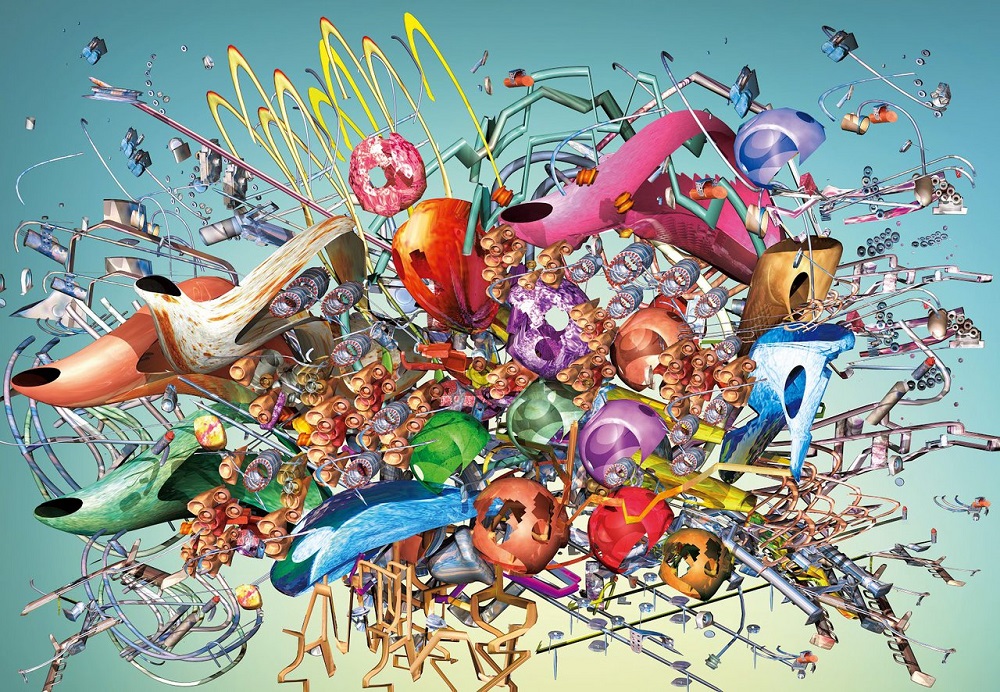
Ryota Matsumoto’s drawings develop and demonstrate the hybrid/multi-layered process where varying scale, juxtaposition of different forms, intertwined textures/tones are applied to reinvent and question the spatial conditions of architectural drawings. His work explore a hybrid drawing technique combining both traditional media (ink, acrylic, and graphite) and digital media (algorithmic processing, scripting and image compositing with custom software ) .
FILE FESTIVAL

Ryota Matsumoto

First Subtle Sign of Evolving Drones

Architecture, Art & Design – Ryota Matsumoto’s drawings develop and demonstrate the hybrid/multi-layered process where varying scale, juxtaposition of different forms, intertwined textures/tones are applied to reinvent and question the spatial conditions of architectural drawings. His work explore a hybrid drawing technique combining both traditional media (ink, acrylic, and graphite) and digital media (algorithmic processing, scripting and image compositing with custom software ) .
.