highlike

Grupo Labirintus – Micélio – Brazil

MICÉLIO

Grupo Labirintus


FILE SÃO PAULO 2026: Inter-creativity – Art and Technology – LED SHOW
Electronic Language International Festival


Micélio – Brazil

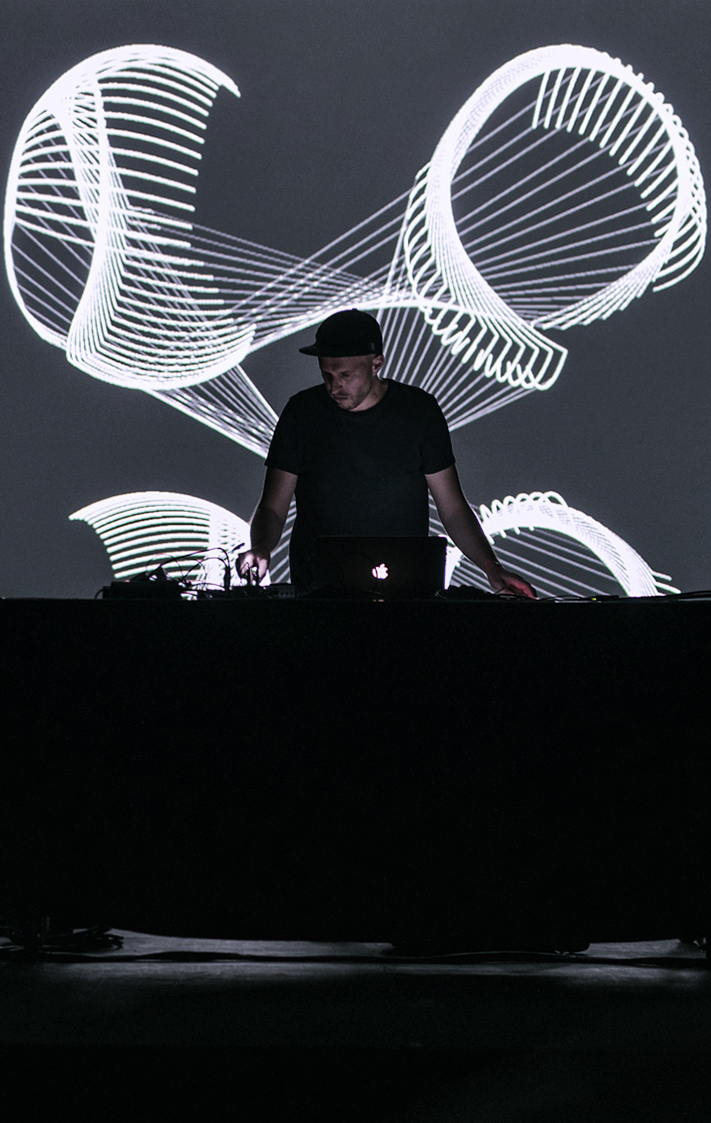
Inspired by the fungal networks described by Merlin Sheldrake, Micélio is an audiovisual investigation that reinterprets the city. The work converts urban photography into a “mycelial database” through computational processes, decomposing architectural rigidity. This system metabolizes raw information, culminating in a video art installation where the city transcends static concrete, revealing itself as a continuous flow of energy and regeneration.

BIO

Being the artistic arm of InterLab21_CCM (PUC-SP/CNPq), Labirintus Group articulates theoretical research and aesthetic experimentation under the coordination of Lucia Leão. Aligned with the UN SDGs, the collective creates affective cartographies, installations, and digital platforms that address the climate emergency and social inequalities. 
FILE 2026 – Registration Open for AR, VR and XR Festival – Art and Technology

FILE 2026

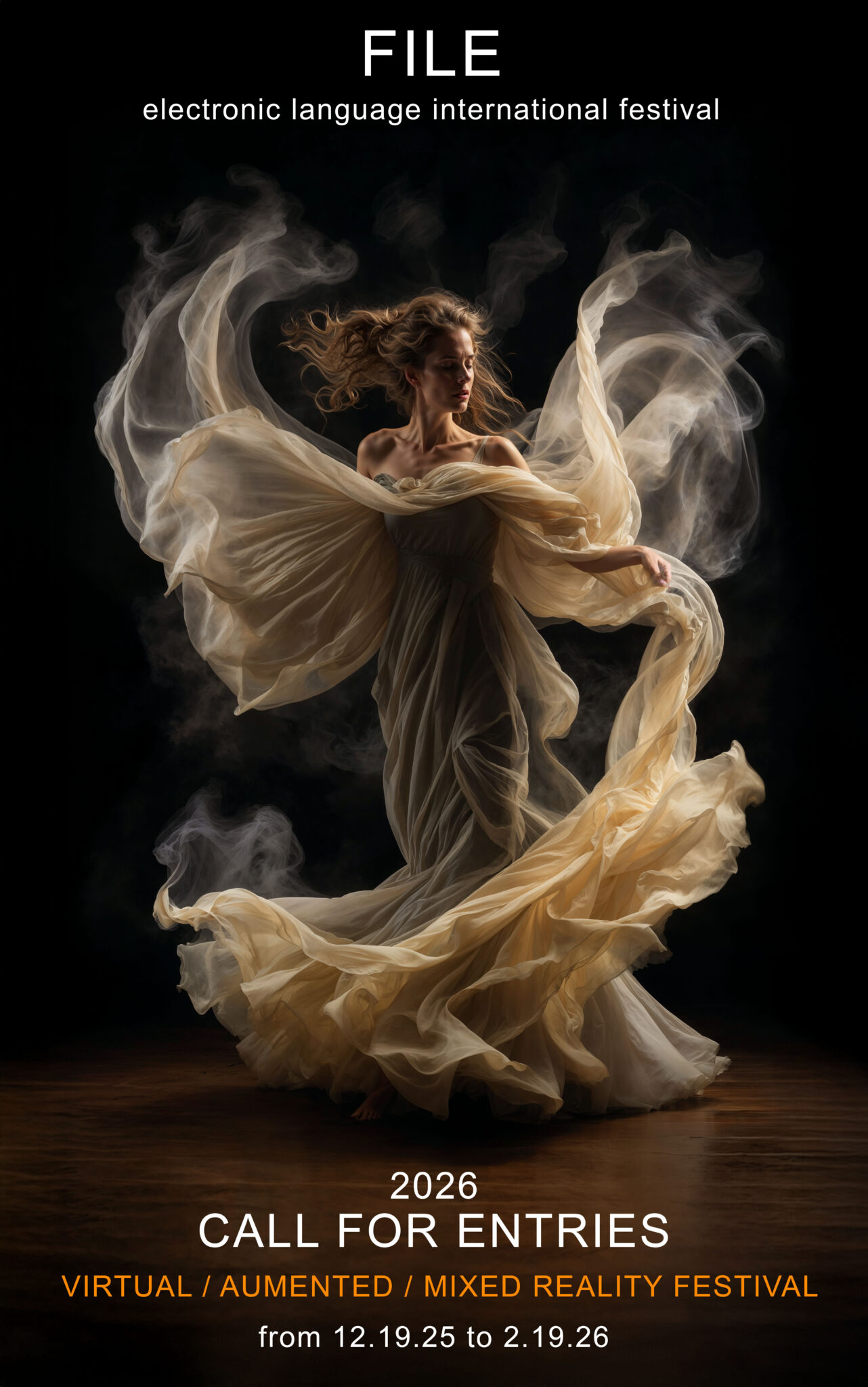
Augmented and Virtual Reality Festival: brings together immersive practices in simulated three-dimensional environments and expands the perception of reality through the superimposition of digital layers onto physical space.  The works use mobile devices, glasses, and spatial interfaces to insert virtual objects, narratives, and data into the real world or transport the public to sensory and interactive digital universes. These languages ​​challenge the boundaries between the material and the informational, exploring subtle or monumental interventions, creating multidimensionality in the environment. Issues of presence, body, narrative, memory, surveillance, and technological mediation are central, configuring a fertile field of aesthetic and critical investigation into contemporary ways of inhabiting and perceiving space.

Applications were open until February 19, 2026. Access  the application form.

FILE 2026 | GENERAL REGULATIONS

FILE SÃO PAULO 2025: SYNTHETIKA – ECA-USP Partnership

Micromacro

ECA-USP Partnership

FILE SÃO PAULO 2025: SYNTHETIKA – Art and Technology – LED SHOW
Electronic Language International Festival

Micromacro – Brazil

In the LED SHOW category, the partnership between FILE and the Visual Arts Program of the Department of Fine Arts of the School of Communications and Arts at the University of São Paulo resulted in works developed under the guidance of Prof. Dr. Silvia Laurentiz, and with the collaboration of Dimitri Lomonaco. This partnership seeks to reaffirm the connection between the Festival and the University, stimulating the production of art in new media: a unique opportunity to access languages, cutting-edge technologies, and innovative resources for reflection and experimentation in the artistic environment and across cultural circles. Micrômacro is a compilation of independent videos, developed based on the following synopsis:

What distinguishes the whole from the part? Where is the limit between “we” and “I”? At what point do I separate myself? This work is a collection of investigations into the indivisible length of the split, the boundary between what separates and what unites. Micromacro is the result of this division. A significant unity of contrast. Part/Whole of the world. Present in each part, everywhere, chrono-micro-macro-macro between us.

bohyun yoon

БОХЬЮН ЮН
윤보현
To Reverse Yourself

FILE FESTIVAL

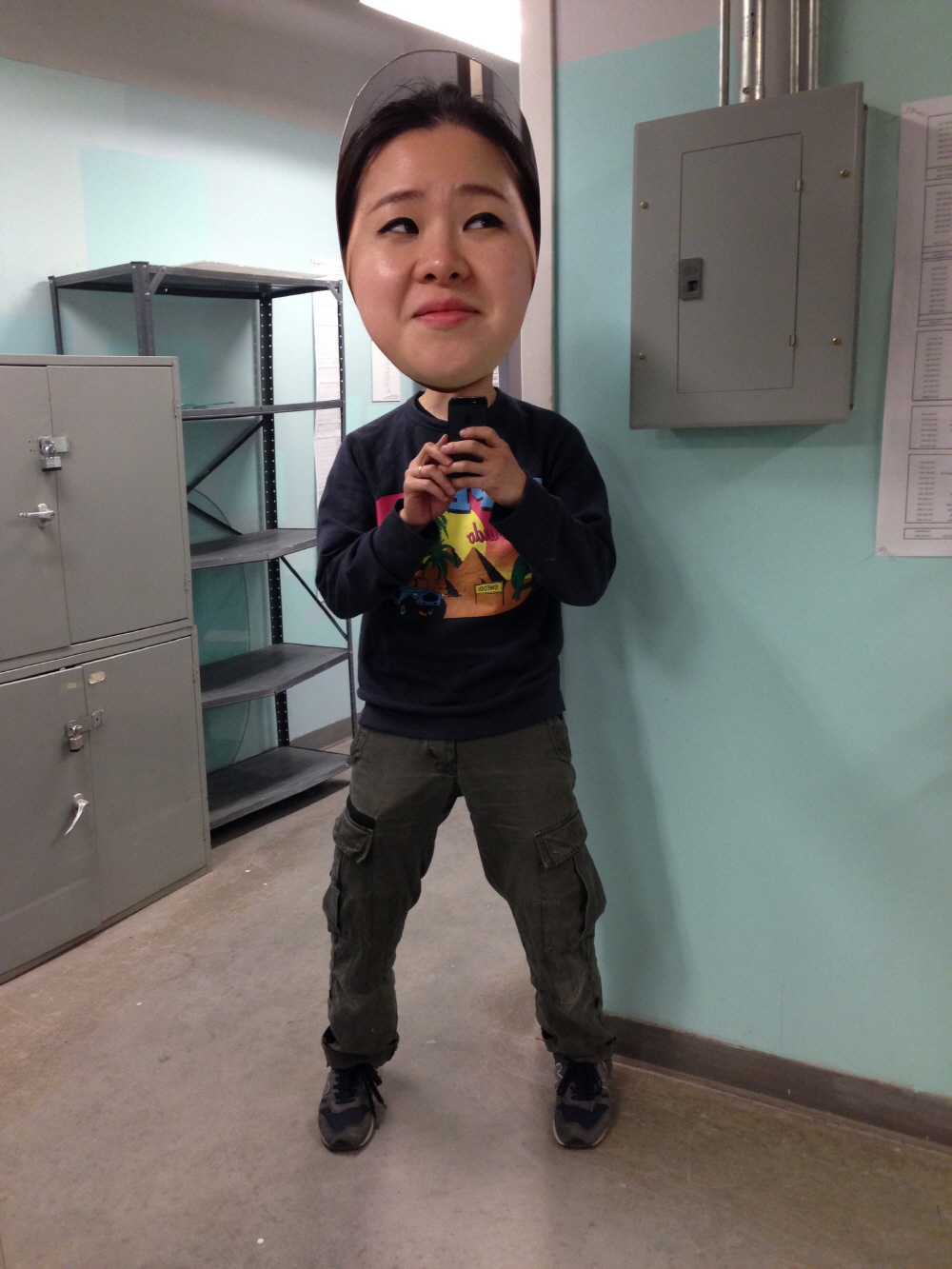
My work poses the question: how does reality becomes exquisitely animated by certain social control systems such as politics, mass media, technology, science, and etc. It is my artistic goal to reveal how human beings are fragile and delicate in these social environments. By living in Korea, Japan and the U.S, I have first-hand experience in diverse social systems and have come to view my life experiences as raw material for my research. With my research in mind, my art utilizes the body as the tool for an intensive investigation of the public and private; examining the relationship between how people understand their body and how this understanding represents themselves in the greater context.
Currently, I am curious about human perception developing parallel with the ever-evolving progression of technological world. Thus, I question technology’s relationship to reality and illusion; asking what is reality? My work takes advantage of illusion to explore and answer this question, and often my artistic materials consist of the body and mirrors. I use mirrors for integrating reality and illusion.

GUTO NÓBREGA

Breathing
File Festival
Breathing is a work of art based on a hybrid creature made of a living organism and an artificial system. The creature responds to its environment through movement, light and the noise of its mechanical parts. Breathing is the best way to interact with the creature.
This work is the result of an investigation of plants as sensitive agents for the creation of art. The intention was to explore new forms of artistic experience through the dialogue of natural and artificial processes. Breathing is a pre-requisite for life, and is the path that links the observer to the creature.Breathing is a small step towards new art forms in which subtle processes of organic and non-organic life may reveal invisible patterns that interconnect us.Breathing is a work of art driven by biological impulse. Its beauty is neither found isolated on the plant nor in the robotic system itself. It emerges at the very moment in which the observer approaches the creature and their energies are exchanged through the whole system. It is in that moment of joy and fascination, in which we find ourselves in a very strange dialogue, that a life metaphor is created.Breathing is the celebration of that moment.

DI MAINSTONE AND TIM MURRAY-BROWNE

Serendiptichord

The result of a cross-disciplinary investigation spanning fashion, technology, music and dance, the Serendiptichord is a wearable musical instrument that invites the user (or movician) to explore a soundscape through touch and movement. This curious device is housed in a bespoke box and viewed as part of a performance. Unpacked and explored on and around the body, the Serendiptichord only reveals its full potential through the intrepid curiosity of its wearer. Adhering to the body like an extended limb, this instrument is best described as choreophonic prosthetic. Referencing the architectural silhouette of a musical instrument and the soft fabrication of fashion and upholstery, it is designed to entice the movician to explore its surface through touch, physical manipulation and expressive movement. Although this acoustic device can be mastered alone, it also holds subtle openings for group interaction.

Spencer Finch

Спенсер Finch
سبنسر فينش
斯宾塞·芬奇
스펜서 핀치
ספנסר פינץ’
Спенсер Финч

In Finch’s universe if you wait a few hours, the sun may very well change a leaden hue into gold. Like the ancient practitioners of the hermetic arts, who saw changes as the most fundamental truth of the universe, the artist doesn’t always provide an answer in his investigations. For Finch art can do more; it can “ignite our capacity for wonder.”

kenneth snelson

Needle Tower
“Inspired by architect Buckminster Fuller’s interest in the geometry of structure, Snelson’s experiments led to a prototype for a “floating compression structure.” Fuller subsequently credited Snelson with having invented a new structural principle which the architect named tensegrity, a contraction of the words tension and integrity.
These investigations into the physical properties of structure became more fully realized as an art form beginning in the 1950s. Snelson created sculptures consisting of tubes and cables. Cylinders of steel seemingly dance through space in defiance of gravity, yet it is the structural competition between tension and compression which underlies their construction. Snelson finds beauty in bringing these forces of nature into balance: the rigid compression tubes pushing outward, the flexible tension cables pulling inward. His sculptures would maintain their structural integrity beyond gravity, in the vacuum of outer space.” Joelle Burrows

Refik Anadol

Quantum memories
Quantum Memories is Refik Anadol Studio’s epic scale investigation of the intersection between Google AI Quantum Supremacy experiments, machine learning, and aesthetics of probability. Technological and digital advancements of the past century could as well be defined by the humanity’s eagerness to make machines go to places that humans could not go, including the spaces inside our minds and the non-spaces of our un- or sub-conscious acts. Quantum Memories utilizes the most cutting-edge, Google AI’s publicly available quantum computation research data and algorithms to explore the possibility of a parallel world by processing approximately 200 million nature and landscape images through artificial intelligence. These algorithms allow us to speculate alternative modalities inside the most sophisticated computer available, and create new quantum noise-generated datasets as building blocks of these modalities. The 3D visual piece is accompanied by an audio experience that is also based on quantum noise–generated data, offering an immersive experience that further challenges the notion of mutual exclusivity. The project is both inspired by and a speculation of the Many-Worlds Interpretation in quantum physics – a theory that holds that there are many parallel worlds that exist at the same space and time as our own.
REVITAL COHEN & TUUR VAN BALEN

The Immortal
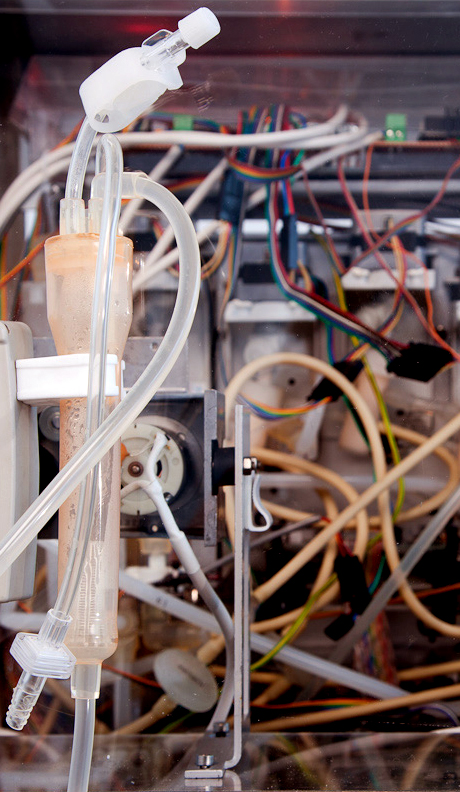
A number of life-support machines are connected to each other, circulating liquids and air in attempt to mimic a biological structure.
The Immortal investigates human dependence on electronics, the desire to make machines replicate organisms and our perception of anatomy as reflected by biomedical engineering.
A web of tubes and electric cords are interwoven in closed circuits through a Heart-Lung Machine, Dialysis Machine, an Infant Incubator, a Mechanical Ventilator and an Intraoperative Cell Salvage Machine. The organ replacement machines operate in orchestrated loops, keeping each other alive through circulation of electrical impulses, oxygen and artificial blood.
Salted water acts as blood replacement: throughout the artificial circulatory system minerals are added and filtered out again, the blood gets oxygenated via contact with the oxygen cycle, and an ECG device monitors the system’s heartbeat. As the fluid pumps around the room in a meditative pulse, the sound of mechanical breath and slow humming of motors resonates in the body through a comforting yet disquieting soundscape.Life support machines are extraordinary devices; computers designed to activate our bodies when anatomy fails, hidden away in hospital wards. Although they are designed as the ultimate utilitarian appliances, they are extremely meaningful and carry a complex social, cultural and ethical subtext. While life prolonging technologies are invented as emergency measures to combat or delay death, my interest lies in considering these devices as a human enhancement strategy.This work is a continuation of my investigation of the patient as a cyborg, questioning the relationship between medicine and techno- fantasies about mechanical bodies, hyper abilities and posthumanism.

Nathalie Gebert

On Framing Textile Ambiguities
The installation On Framing Textile Ambiguities is the output of a critical investigation on social and technical developments that led to the current local technological situation. As a series of machines, the installation presents itself as a group. They share the same thread and are made from the same components. Each machine is build around a frame, through which the thread is running. Though they are finding various meanings in the encoding due to differences in the widths of the frames.

SOU FUJIMOTO ARCHITECTS

على فوجيموتو
후지모토에
על פוג’ימוטו
НА ФУДЗИМОТО
infinity ring pavilion
An investigation into the ergonomics of seating in both private and public environments, the Infinity Ring takes the preconception of predefined spaces and their rituals and wraps it around a ring, creating a continuous strip of inhabitable spaces. The entire ring is then rotated, thereby generating infinite configurations of space-between-space, creating endless ways to sit, climb, lie down, crawl on…resulting in spatial configurations that are much richer than the sum of its parts.

Dan Flavin

Untitled (to Barnett Newman) two
Dan Flavin was an American artist and pioneer of Minimalism, best known for his seminal installations of light fixtures. His illuminated sculptures offer a rigorous formal and conceptual investigation of space and light, wherein the artist arranged commercial fluorescent bulbs into differing geometric compositions. “I like art as thought better than art as work,” he once said. “I’ve always maintained this. It’s important to me that I don’t get my hands dirty. It’s not because I’m instinctively lazy. It’s a declaration: art is thought.”

Toyin Ojih Odutola

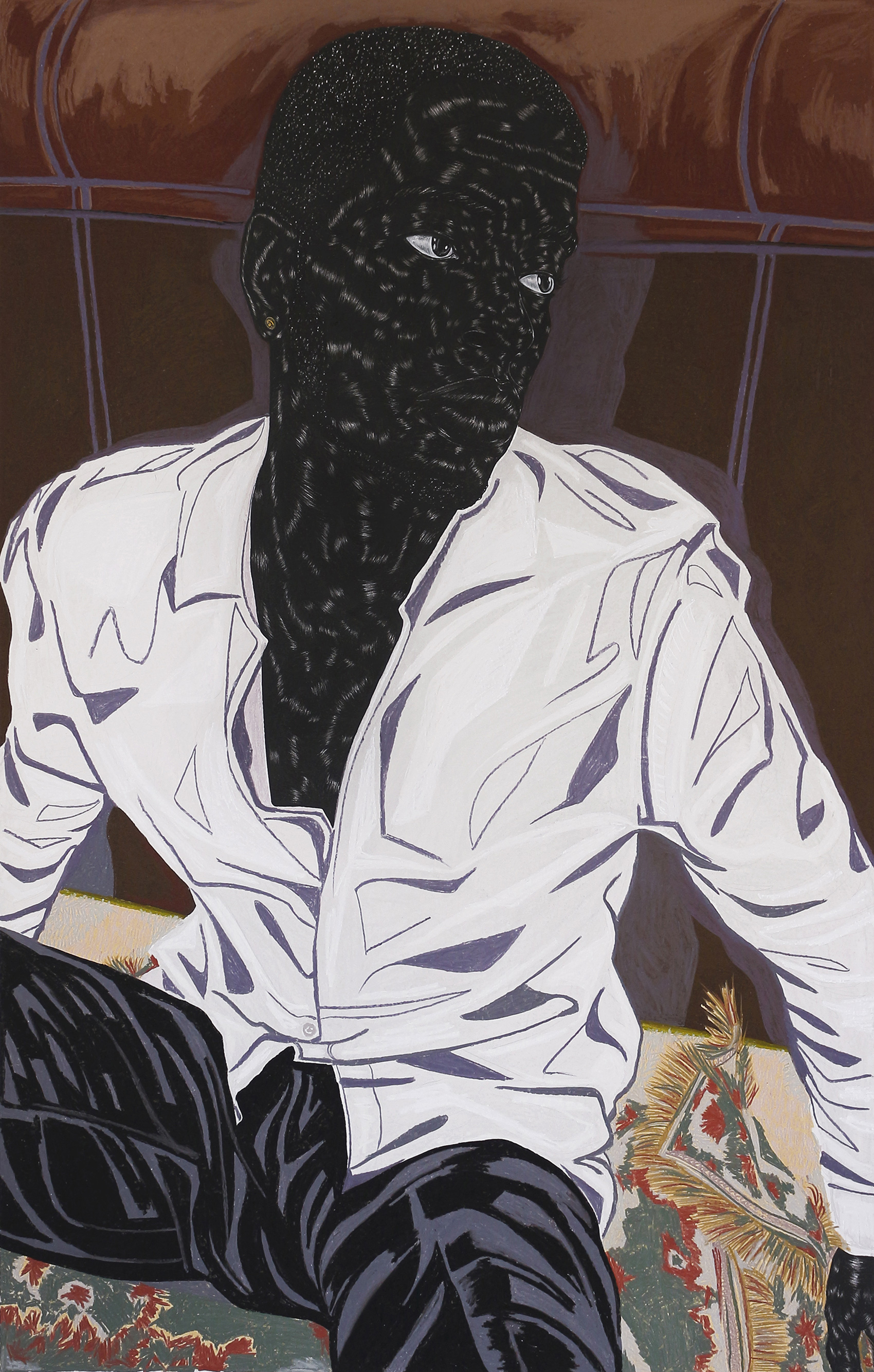
“The skin in the drawings I create was initially an investigation into what skin felt like, to live in that space and the way that affects how the skin is defined, how it is read, how it creates parameters for movement and possibility. I wanted to analyze that through the platform and vehicle of skin, to have it serve as an access point.”

LAURA LAY

Fulk Me
Laura Lay is an emerging Sydney designer and curator. Her investigations into the frameworks that structure our understanding of design has led her to establish He Made She Made – a concept gallery aiming to showcase and promote the work of Australian creatives within the realm of design/art. Lay’s individual practice has developed through a diverse range of study and professional experience. With a background in spatial design and visualisation, she continues to develop a highly personalised visual language informed by user experience and interaction.

Pascale Marthine Tayou

Plastic tree
Tree branches of various distances and dimensions grow horizontally from the surface, inverting the usual experience and traditional relationship we have with trees. rather than leaves, the bark bears brightly colored plastic bags on its edges, crudely tied to each organic limb. While the work stands as a visual symbol of the harmful effects of pollution and consumerism on the environment, ‘plastic tree’ is also an investigation towards the artistic qualities of plastic as a medium, and its incorporation with natural materials.

Rothschild Eva

Cages
Rothschild’s practice involves both conceptual and socio-political ideas alongside traditional approaches to making sculpture. Through an investigation into form and materiality, her works balance, stack, wrap and knot materials around geometric shapes and structures – such materials that often appear to transcend their physical limitations, hover between representation, symbolism and actual form. By deliberately destabilizing physical and visual characteristics in her work, Rothschild not only questions the aesthetics of art, in particular minimalism, but also those of belief in social liberation and spiritual movements.

Isabel Nolan

A fixture for a solar storm
The startling objects of Isabel Nolan’s art take wildly unpredictable forms, — but they are at the same time the fully consistent outcomes of a singular, searching artistic sensibility. Nolan’s works evolve out of almost scholarly processes of investigation — intensive enquiries into cosmological and botanical phenomena, perhaps, or analytical scrutiny of literary and historical texts. These contrasting means of representing reality (and of comprehending its infinitely various components) provide divergent points of departure for Nolan as she attempts to somehow account for the enduring strangeness of the world, even in its most intimately familiar forms.

Marguerite Humeau

Echoes
Marguerite Humeau’s design is used to explore the means by which knowledge is generated in the absence of evidence, or in the impossibility of either reaching or analysing the object of investigation. Humeau weaves factual events into speculative narratives, therefore enabling the unknown to erupt in grandiose splendour. The work is presented as a series of live science fictions: semi-real, synthetic, supernatural events.

Gillian Wearing

Me as Eva Hesse
Throughout the past two decades, Gillian Wearing’s films, photographs and sculptures have investigated public personas and private lives. Since the beginning of her career, the artist has drawn from techniques of theater, reality television and fly-on-the-wall documentary-making to construct narratives that explore personal fantasies and confessions, individual traumas, cultural histories, and the role of the media. Anonymity through elaborate masks, costumes and role-play has remained a critical part of Wearing’s practice and influential investigation of the ways in which individuals present themselves to others when the self is temporarily concealed.

alexandra zierle and paul carter

Absent Engagement
Alexandra Zierle (DE) and Paul Carter’s (UK) collaborative work is interdisciplinary, multi-sensory and often site/context responsive, spanning performance, happenings and interventions, sound, video and installation. Through their collaborative practice, Zierle & Carter critically examine different modes of communication and what it means to be human, addressing notions of belonging, dynamics within relationships, and the transformation of limitations. Their work sites an embodied investigation into human interactions and encounters, acting as an invitation to venture into the spaces in-between the external and internal, permanent and transient, spoken and unheard. The work fundamentally explores society’s conventions, traditions, and rituals, often flipping them on their head, reversing orders, and disrupting the norm.

Rowan Smith

dot matrix loop
Rowan Smith’s work takes the form of a multidisciplinary semiotic investigation into the ways in which cultural signs and signifiers can be read as artefacts. He examines how the meaning embedded in these artefacts fluctuates (and frequently deteriorates) in relation to ever-shifting sociopolitical contexts; often assuming a self-critical position which responds to his locality.

Holger Kilumets

Study of a Female Nude II
Kilumets’s practice is an investigation of photography as a medium and, in particular, it’s role as a representational device. His ongoing research is concerned with questions such as what are the underlying mechanisms of photographic representation and how do photographic images influence our perception and understanding of the world.

SARAH MAPLE

Sarah Maple’s artwork is unfailingly bold and brave, not for the coy or faint of heart. These unflinching, occasionally even controversial, investigations into what it is to be a woman and a Muslim in 21st century Britain are made joyful by her own very personal brand of boisterous, tongue-in-cheek humour. more…

ANTONY GORMLEY

Энтони Гормли
أنتوني غورملي
葛姆雷
アントニー·ゴームリー
Another Place (100 cast iron figurative sculptures)
Antony Gormley has over the past 30 years revitalised the human form in sculpture through a radical investigation of the body as a place of memory and transformation. “I am interested in the body”, he says, “because it is the place where emotions are most directly registered. When you feel frightened, when you feel excited, happy, depressed somehow the body registers it.”

ICD and ITKE Research Pavilion

bionic research pavilion

The Institute for Computational Design (ICD) and the Institute of Building Structures and Structural Design (ITKE) of the University of Stuttgart have constructed another bionic research pavilion. The project is part of a successful series of research pavilions which showcase the potential of novel design, simulation and fabrication processes in architecture. The project was planned and constructed within one and a half years by students and researchers within a multi-disciplinary team of architects, engineers and biologists.
The focus of the project is a parallel bottom-up design strategy for the biomimetic investigation of natural fiber composite shells and the development of novel robotic fabrication methods for fiber reinforced polymer structures. The aim was the development of a winding technique for modular, double layered fiber composite structures, which reduces the required formwork to a minimum while maintaining a large degree of geometric freedom. Therefore, functional principles of natural lightweight structures were analyzed and abstracted in cooperation with the University of Tübingen and the Karlsruhe Institute of Technology. Through the development of a custom robotic fabrication method, these principles were transferred into a modular prototype pavilion.

Tobias Putrih

Re-projection: Hoosac

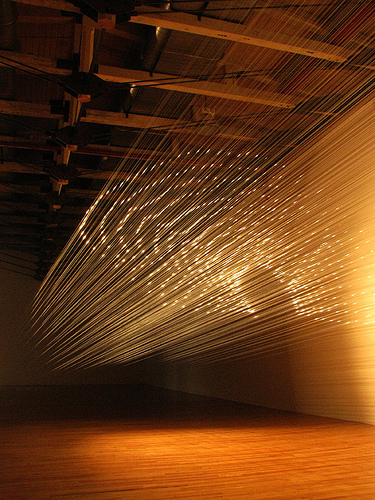
Influenced by the utopian projects — and notable failures — of innovative artists and designers such as Buckminster Fuller, Frederick Kiesler, and Charles Eames, Tobias Putrih likens his works to experiments, or design prototypes. His use of cheap materials, including egg crates, cardboard, and plywood signify both a sense of potential and impending collapse. Many of the artist’s works reference the architecture and spectacle of the cinema: a space suspended between fantasy and reality, image and environment. With Re-projection: Hoosac Putrih distills the cinema to its most basic element: fishing line stretched across the gallery mimics the conical trajectory of a beam of light. A spotlight hits the strands of monofilament which in turn become a screen, reflecting an image in illuminated dots. Inspired by the Hoosac Tunnel just east of North Adams — a storied, engineering marvel that draws ghost-hunters to the area — Putrih’s tunnel is, likewise, both real and a representation, an optical trick that invites both wonder and investigation.

Dan Flavin

monument for V. Tatlin

Dan Flavin était un artiste américain et pionnier du minimalisme, surtout connu pour ses installations phares de luminaires. Ses sculptures lumineuses offrent une investigation formelle et conceptuelle rigoureuse de l’espace et de la lumière, dans laquelle l’artiste a arrangé des ampoules fluorescentes commerciales en différentes compositions géométriques. «J’aime mieux l’art en tant que pensée que l’art en tant qu’œuvre», a-t-il dit un jour. «J’ai toujours maintenu cela. Il est important pour moi de ne pas me salir les mains. Ce n’est pas parce que je suis instinctivement paresseux. C’est une déclaration: l’art est pensé. »

AYA HAIDAR

Stitching The Stories We Dare To Tell
My investigation of the limitations of a visual language within fine art leads me to explore the fundamental elements of language that contribute to a story. This overlap plays on one’s senses of memory and imagination. I place myself at the centre of the work, both physically as the object and emotionally as the subject.

ANDREW LYMAN

Alone Together

The phrase Alone Together describes a nature of personal relationships and relating to one another that I have found to be characteristic of an experience the generation I am a part of encounters, if not others as well. The phrase in context of communication calls upon the experience and realization that your mental state is completely unique and solitary. There is a push to connect with others as well as to find someone to spend your life with, and along with this push comes the expectation of a complete and total togetherness. There is an eventual point of realization and discovery of your own mental state and its perpetual solitude, transcending physical closeness with others. The photographs in the series evoke contemplation of this experience, through imagery of the mundane, capturing a quiet departure into a somewhat bizarre disconsolate self-investigation. The photographs play with the association of Alone Together to intimacy and love, with an alternate interpretation or redefinition according to newfound phenomenon.

ROBERT MORRIS

Untitled’ 1965
“Morris’ work concerns the relation of what we see to what we know. He sometimes described his practice of this period as a series of ‘investigations,’ a term that implies an almost scientific purpose. Yet the work possesses other implications. For example, Morris spoke of his progress as having been framed by philosophical doubt. In this sense, he saw his work as propositional in nature, each object representing an experiment, a ‘what-if’ proposition”.Bernard Ceysson

GRAZIELE LAUTENSCHLAEGER AND RITA WU

De novo, Ercilia
File Festival
Nous prenons le processus de création comme un acte d’investigation. De l’invention de la structure physique, en passant par la collecte et l’analyse des sons utilisés, à la programmation du design d’interaction, il était très courant pour nous de nous demander: qu’est-ce qui émerge de la matière poétique de la ville, quand on la vit?
Et sur la base de l’attention portée au processus, nous avons constaté que, d’une part, les articulations abstraites telles que les pensées, les réflexions et les idées créatives étaient formalisées grâce à l’utilisation de divers matériaux et outils de l’univers numérique; de l’autre, l’expérimentation de cette diversité d’éléments a nourri et reformaté le monde des idées. C’est dans ce modus operandi, dans le transit entre le concret et l’abstrait, dans le flux du va-et-vient, que «De Novo, Ercília» a acquis sa première forme, une forme qui ne devient pas pérenne, qui devient autonome dans le temps, avec chaque nouvelle interaction.

UVA UNITED VISUAL ARTISTS

ユナイテッド·ビジュアルアーティスト
美国视觉艺术家
Always/Never
Always/Never is the result of UVA’s recent investigations of the perception of time.
Always/Never is a grid of pyramidal elements inspired by the sundial, each passing through time at a different rate.
Changing patterns of light and shadow create the illusion of a fluid surface; shifting combinations of colours from nature recall different times of day.