highlike

Studio Lifeforms – Planet Garden – United States

PLANET GARDEN

Studio Lifeforms


FILE SÃO PAULO 2026: Inter-creativity – Art and Technology – Games
Electronic Language International Festival


Planet Garden – United States

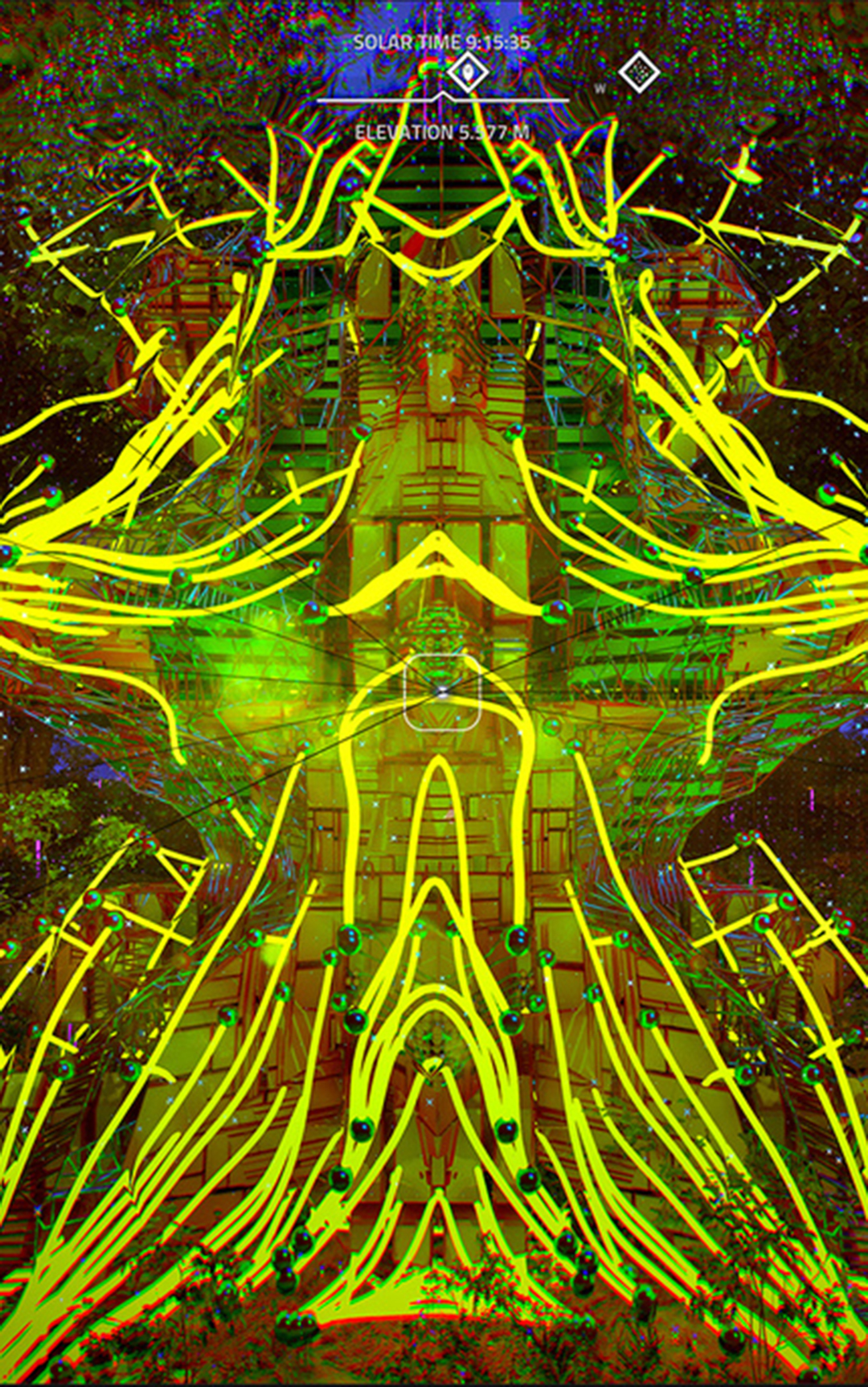
Planet Garden is a real-time interactive world exploring the convergence of artificial intelligence, ecology, and planetary imagination. The project invites visitors into a speculative environment where technology becomes a medium for sensing, caring for, and rethinking the Earth as a living system.

BIO

Studio Lifeforms is a Los Angeles-based studio founded by Damjan Jovanovic and Lidija Kljakovic. Working across games, simulation, architecture, and moving image, the studio creates speculative worlds that explore the relationship between technology, ecology, artificial intelligence, and new forms of spatial imagination.
PHILIP BEESLEY

菲力浦 畢斯雷

Hylozoic Ground

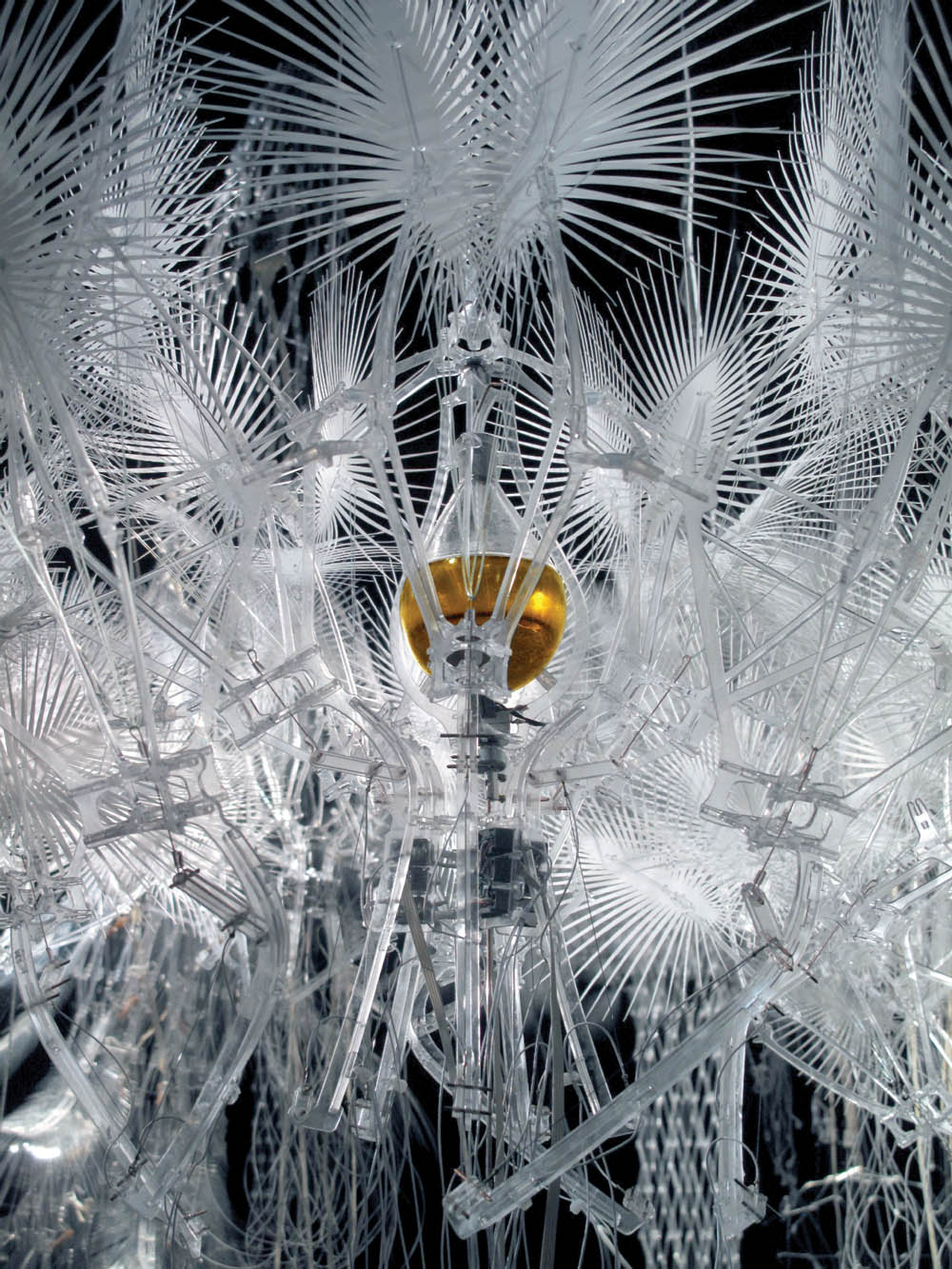
The project’s title refers to ‘hylozoism’, the ancient belief that all matter has life. Hylozoic Ground offers a vision for a new generation of responsive architecture. The Hylozoic Ground environment can be described as a suspended geotextile that gradually accumulates hybrid soil from ingredients drawn from its surroundings. Akin to the functions of a living system, embedded machine intelligence allows human interaction to trigger breathing, caressing, and swallowing motions and hybrid metabolic exchanges. These empathic motions ripple out from hives of kinetic valves and pores in peristaltic waves, creating a diffuse pumping that pulls air, moisture and stray organic matter through the filtering Hylozoic membranes.

Barry Whittaker – Climate Control – United States

CLIMATE CONTROL

Barry Whittaker


FILE SÃO PAULO 2026: Inter-creativity – Art and Technology – LED SHOW
Electronic Language International Festival


Climate Control – United States

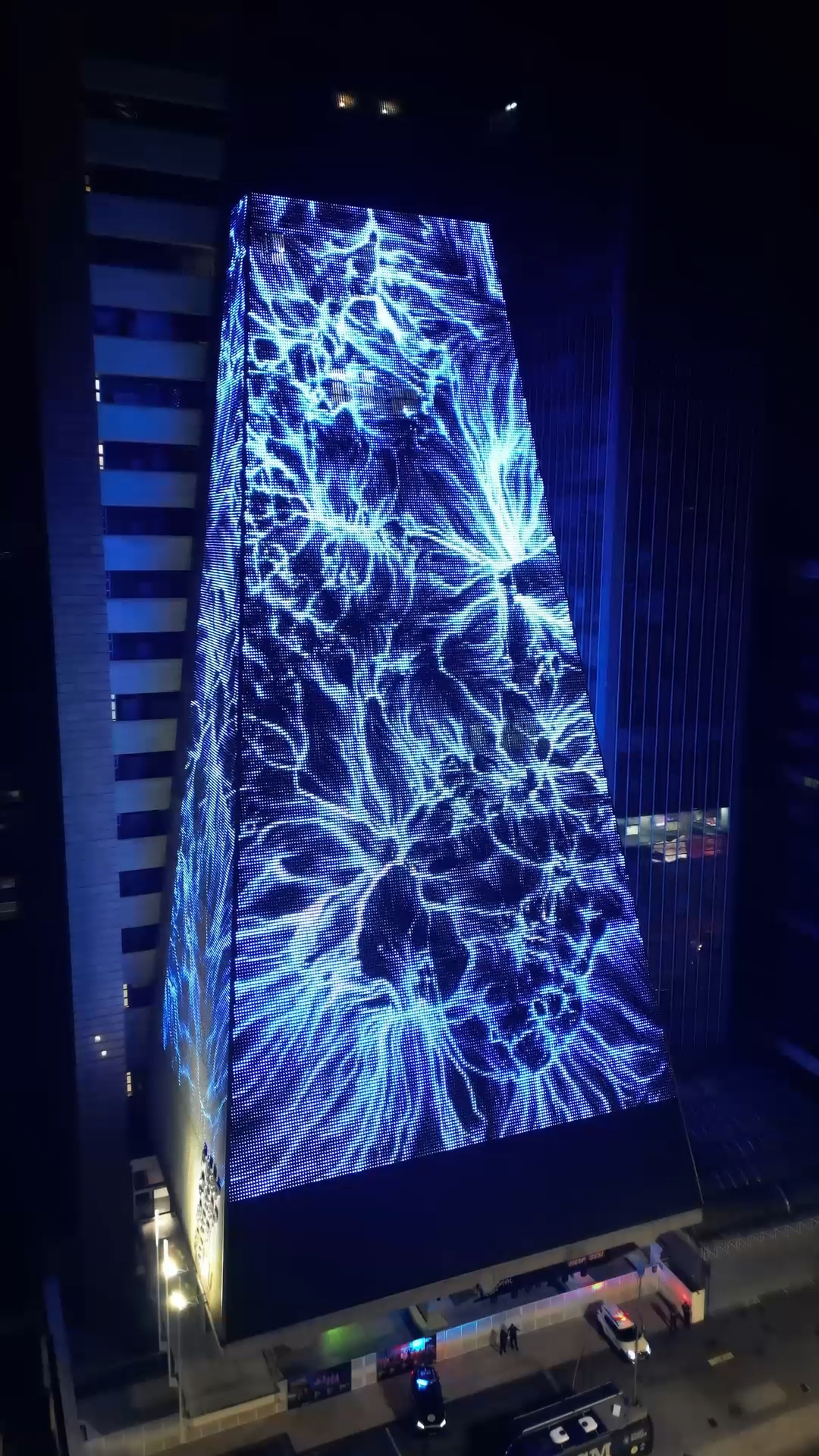
Climate Control imagines how technological frameworks translate living ecosystems into manageable forms—objects to be optimized, collected, and modified, often without fully understanding what is lost in the process. 

BIO

Barry Whittaker is a multimedia artist, designer, musician, and Professor of Art at the University of Toledo. His work explores themes of mythology, language, miscommunication, and cultural hybridization through technology and collaboration. Whittaker creates mediated experiences that serve as platforms for exploring, modifying, and questioning human activities and the world around us.

Claude – Protoform – South Korea

PROTOFORM

Claude


FILE SÃO PAULO 2026: Inter-creativity – Art and Technology – LED SHOW
Electronic Language International Festival


Protoform – South Korea

Protoform explores the primal structure from which all forms emerge. Composed of drifting particles, the work visualizes microscopic elements colliding and coalescing into a living sphere, echoing the formation of cells and molecules. Through continuous transformation and expansion, it reveals the invisible order underlying nature, capturing the moment where form remains fluid and becoming is infinite.

BIO

Soon Cho (CLAUDE) is a Seoul-based new media artist creating immersive, data-driven artworks inspired by nature’s fundamental structures. Through particles and generative systems, he explores abstract beauty and the invisible dynamics that shape life and matter.

Eylul Alıcı – The Black Hole – Turkey

THE BLACK HOLE

Eylul Alıcı


FILE SÃO PAULO 2026: Inter-creativity – Art and Technology – LED SHOW
Electronic Language International Festival


The Black Hole – Turkey

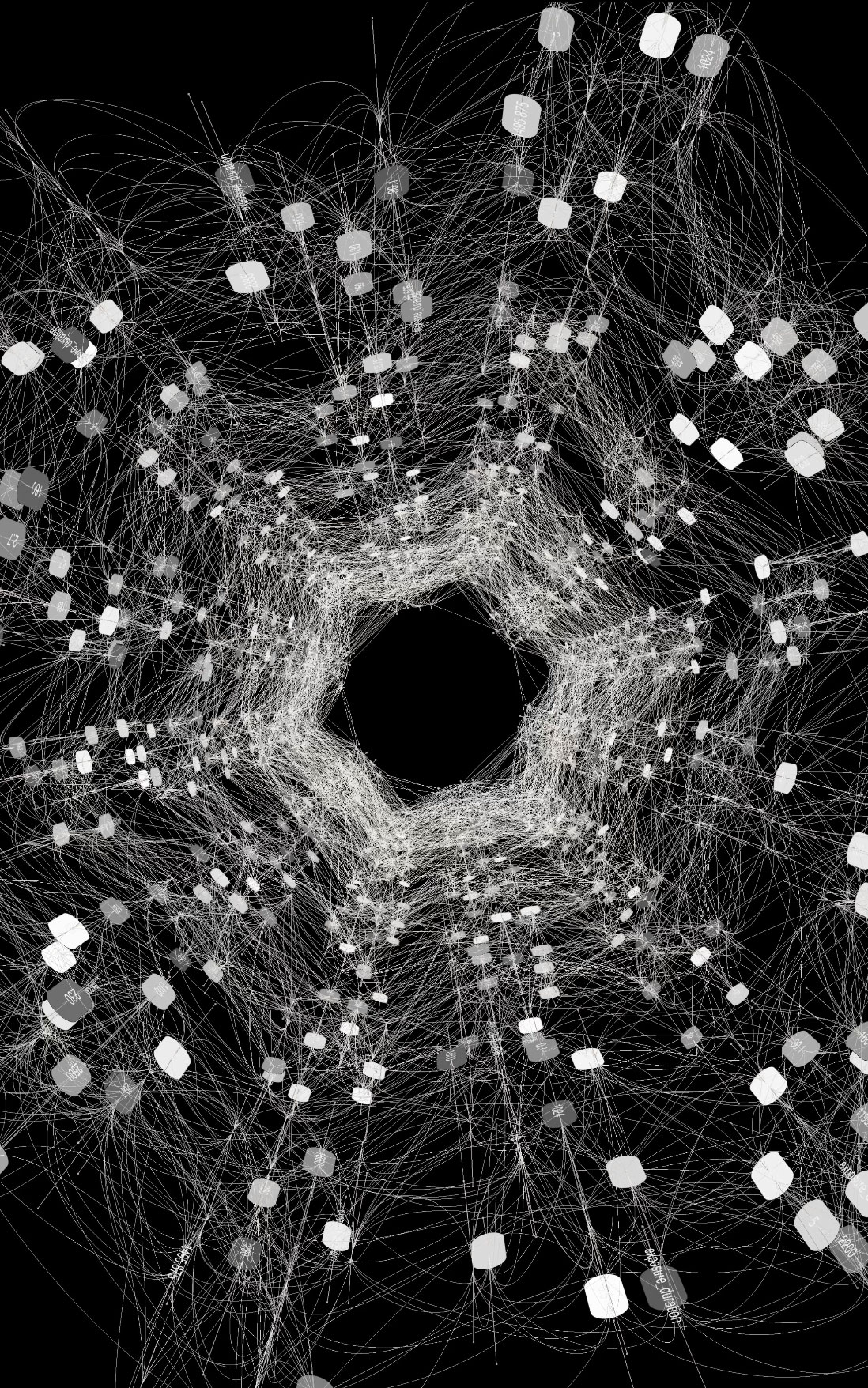
Black Hole is a data-driven artwork created using over 73,000 data points that represent the dynamics of black holes. These data include parameters such as black hole masses, locations, distances, spin rates, merger angles, and gravitational wave signals. 

The project’s data were sourced from institutions such as the NASA Hubble Legacy Archive, the European Gravitational Observatory, LIGO Hanford, LIGO Livingston, and Virgo, which are ground-based gravitational wave detectors.

BIO

With over fifteen years at the intersection of art and science, Eylul Duranagac Alıcı is an award-winning new media artist and creative director exploring AI, machine learning, and data-driven systems as creative agents. A faculty member at Yıldız Technical University, her internationally exhibited work spans institutions such as NASA, CERN, MoMA, and Ars Electronica.

Che-Yu Wu – 240507: Reality Lens – Taiwan

240507: REALITY LENS

Che-Yu Wu


FILE SÃO PAULO 2026: Inter-creativity – Art and Technology – Randomic Dimension
Electronic Language International Festival


240507: Reality Lens – Taiwan

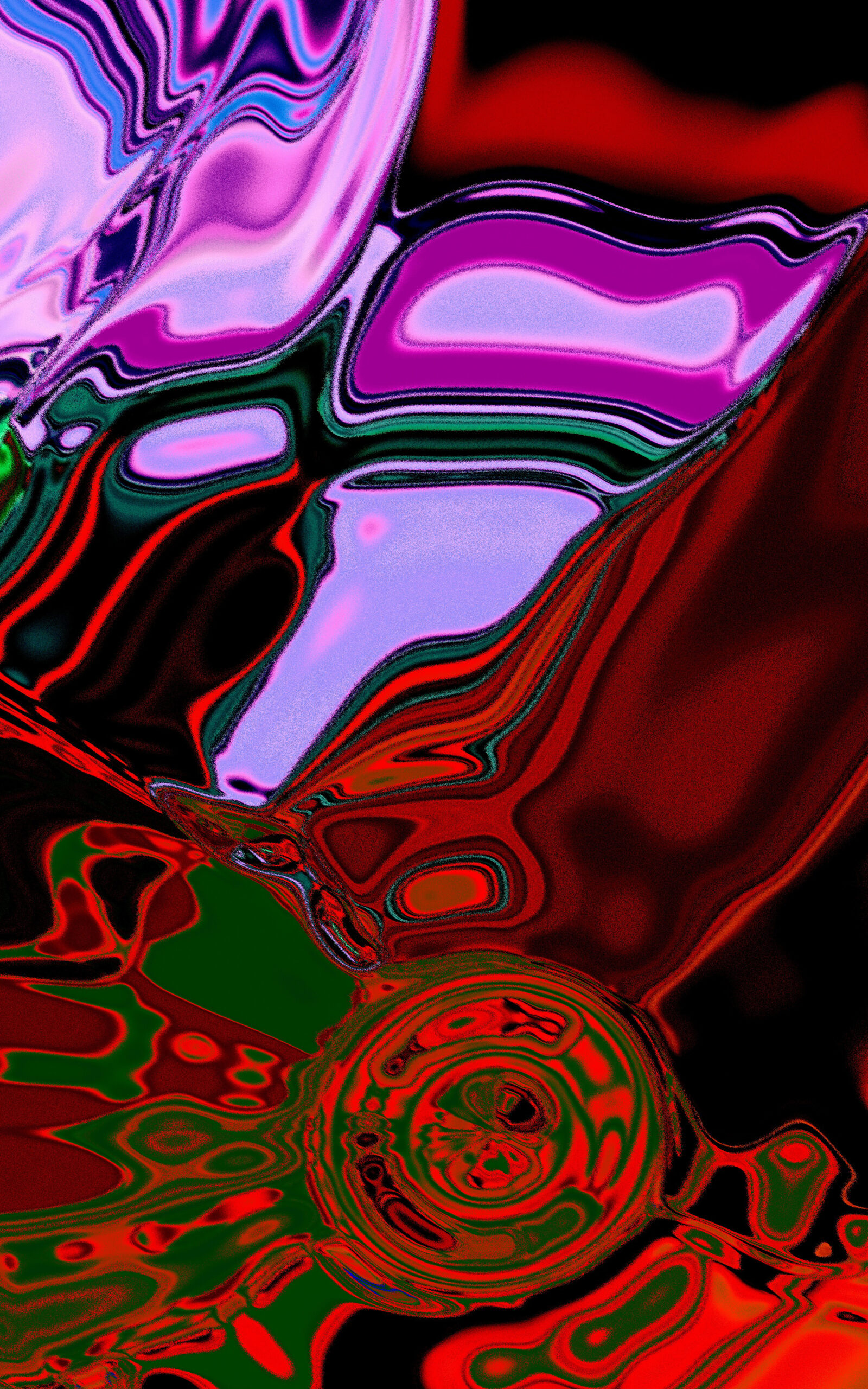
Real-time WebGL meditation where fifteen vortex points distort every pixel through layers of noise, angle, and time. The work makes algorithmic perception visible: there is no unmediated image—every color and edge arrives already refracted. Like liquid marble between order and chaos, it asks how mathematics becomes felt aesthetics, and whether any perception of “the real” is not itself a lens of computation.

BIO

Founder of MonoLab, dedicated to “casting eternal life and emotion in the digital world.” His practice is staked on creating “living artworks”—emergent digital entities that develop, respond, and persist through an improvisational loop between algorithm, audience, and author. By exploring “Digital Holobionts”—co-evolving systems of humans, AI, and code—Wu cultivates semantic lifeforms as a new category of contemporary art, bridging engineering with poetic philosophy.

Weidi Zhang & Rodger Luo – A Walled City – China / United States

A WALLED CITY

Weidi Zhang & Rodger Luo


FILE SÃO PAULO 2026: Inter-creativity – Art and Technology – Installations
Electronic Language International Festival


A Walled City – China / United States

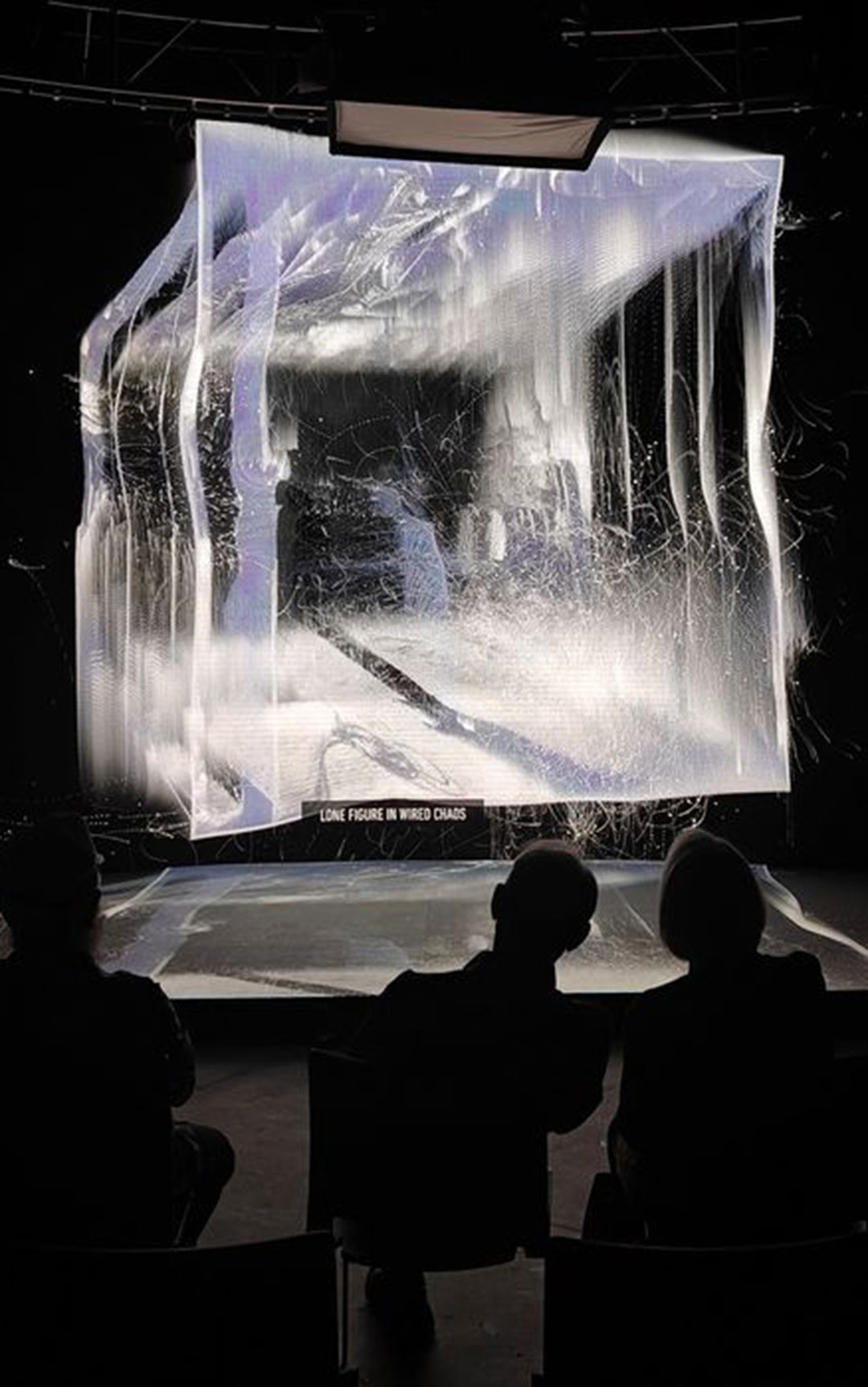
A Walled City is an interactive AI installation that transforms personal and collective visual memories into a decentralized city. Grounded in the spatial logic, zoning, and aesthetics of the historical Kowloon Walled City (Hongkong), a self-built hyper-dense enclave that grew in a legal and political void from the 1950s to 1993, the work builds a multi-agent AI system to turn participant-uploaded images into architectural chambers, forming a living structure where data, memory and history converge.

BIO

Weidi Zhang is a new media artist and designer based in Los Angeles and Phoenix. She is a tenure-track Assistant Professor of Immersive Experience Design at the Media and Immersive eXperience (MIX) Center at Arizona State University.

bohyun yoon

БОХЬЮН ЮН
윤보현
To Reverse Yourself

FILE FESTIVAL

My work poses the question: how does reality becomes exquisitely animated by certain social control systems such as politics, mass media, technology, science, and etc. It is my artistic goal to reveal how human beings are fragile and delicate in these social environments. By living in Korea, Japan and the U.S, I have first-hand experience in diverse social systems and have come to view my life experiences as raw material for my research. With my research in mind, my art utilizes the body as the tool for an intensive investigation of the public and private; examining the relationship between how people understand their body and how this understanding represents themselves in the greater context.
Currently, I am curious about human perception developing parallel with the ever-evolving progression of technological world. Thus, I question technology’s relationship to reality and illusion; asking what is reality? My work takes advantage of illusion to explore and answer this question, and often my artistic materials consist of the body and mirrors. I use mirrors for integrating reality and illusion.

Studio Above&Below

‘Semi-Diurnal Spaces’ is a site specific immersive installation in form of a full dome which makes use of local tidal and atmospheric data of South Wales. Locals were invited to experience their close-by waterbody through a meditative environment, connecting to it in a poetic, technological and tele present way. Tidal patterns and atmospheric data such as wind and humidity influence a digital NVIDIA FleX particle system in real-time. The site-specific data influences the gravitational forces, fluid viscosity and flow rate within the dome as a body, resulting in a living digital sculpture and AV experience connecting to aspects of the channel itself.

GUTO NÓBREGA

Breathing
File Festival
Breathing is a work of art based on a hybrid creature made of a living organism and an artificial system. The creature responds to its environment through movement, light and the noise of its mechanical parts. Breathing is the best way to interact with the creature.
This work is the result of an investigation of plants as sensitive agents for the creation of art. The intention was to explore new forms of artistic experience through the dialogue of natural and artificial processes. Breathing is a pre-requisite for life, and is the path that links the observer to the creature.Breathing is a small step towards new art forms in which subtle processes of organic and non-organic life may reveal invisible patterns that interconnect us.Breathing is a work of art driven by biological impulse. Its beauty is neither found isolated on the plant nor in the robotic system itself. It emerges at the very moment in which the observer approaches the creature and their energies are exchanged through the whole system. It is in that moment of joy and fascination, in which we find ourselves in a very strange dialogue, that a life metaphor is created.Breathing is the celebration of that moment.

Terreform ONE

PLUG-IN ECOLOGY: Urban Farm Pod with Agronomy
The Plug-In Ecology; Urban Farm Pod is a “living” cabin for individuals and urban nuclear families to grow and provide for their daily vegetable needs. It is an interface with the city, potentially touching upon urban farming, air quality levels, DIY agronomy techniques in test tubes, algal energy production, and bioluminescent light sources, to name a few possibilities. It can be outfitted with a number of optional systems to adapt to different locations, lighting conditions, and habitation requirements. While agricultural food sources are usually invisible in cities such as New York, the pod archetype turns the food system itself into a visible artifact, a bio-informatic message system, and a functional space.

Klaus Obermaier

克劳斯奥伯迈尔
the concept of … (here and now)

In front of a giant screen, two dancers interact with a cohort of cameras… Their movements are captured by infra-red sensors and projected onto the screen, whereby their bodies become the canvas on which new images take shape. The result is a shifting kaleidoscope of strange, living, quasi-mathematical visual worlds which sometimes seem to be emanating or even escaping from the dancers’ bodies. “Who decides which movement to make: the man or the machine?” Blurring the line between the real and the virtual, Klaus Obermaier loves to subsume his performers’ bodies and physicality in a disconcerting digital universe. With his latest creation, the choreographer/artist has taken a bold new step. He has constructed a system of projectors and infra-red sensor-cameras, trained upon the movements of two dancers. The performers thus find themselves thrown headlong into a living, moving graphical universe: their movements are projected onto the screen, but at the same time their bodies are illuminated by more projected images. This is a true artistic performance, pushing well beyond the frontiers of a standard dance recital, or even a contemporary dance show. A corporeal, temporal performance. A choreography which makes subtle use of its raw materials, deftly combining lights, video, perspectives and the real-time power of bodily movement.

RASA SMITE & RAITIS SMITS

Atmospheric Forest
Atmospheric Forest is a large scale VR point-cloud installation that visualizes and sonifies the relations between the forest and climate. It reveals the interaction patterns between the pine-tree emissions in Pfynwald, an ancient Swiss Alpine forest, and weather conditions in this valley, effected by drought. The trees do not only produce oxygen, but they are living bodies who breath too. I.e., they emit part of carbon dioxide, sometimes even up to 20 perc. from what they have consumed. When trees die, they release all the carbon they have collected during their lives back into the atmosphere. Atmospheric Forest explores the effects of drought on local forest ecosystems, and how such stress situations influence production of resin and volatile emissions (such as usual pine-tree scent).

Shu Lea Cheang

Avatar of the artist
Taiwan in Venice 2019
“For those who don’t know her, Shu Lea Cheang is a figure of Net art and the cyberfeminist movement that emerged in the 1990s. Living in New York at the time, she was also an active member of the activist video collective Paper Tiger Television (as was French filmmaker Nathalie Magnan). Since then, Cheang’s work has dealt with “concerns including sex, futures, gender, ecology, money, media, and food [to] encompass film, installation, online work, social processes, and direct intervention in the sociopolitical, technical and aesthetic systems, and the imaginaries which co-compose them,” writes Matthew Fuller

YING GAO

Living pod
file festival
Light, shape variations and mimicry meet in Living Pod. In front of the false twin pieces, the user can slowly set garment A in motion using a light source. Garment B then imitates piece A in an exaggerated and unbalanced fashion, changing structure through miniature electric motors activated by light sensors that are sown through the garment. Using flat-pattern cutting techniques, Ying Gao was able to give the process fluidity and flexibility. In addition to the mechanical movements of the garments, Living Pods underlines two fundamental aspects of today’s fashion system: confrontation and imitation. The garment plays a mediating role between man and his environment. By using light, Living Pod is similar to project Walking City, which uses air to make the pieces look like they are breathing.

1024 architecture

VORTEX

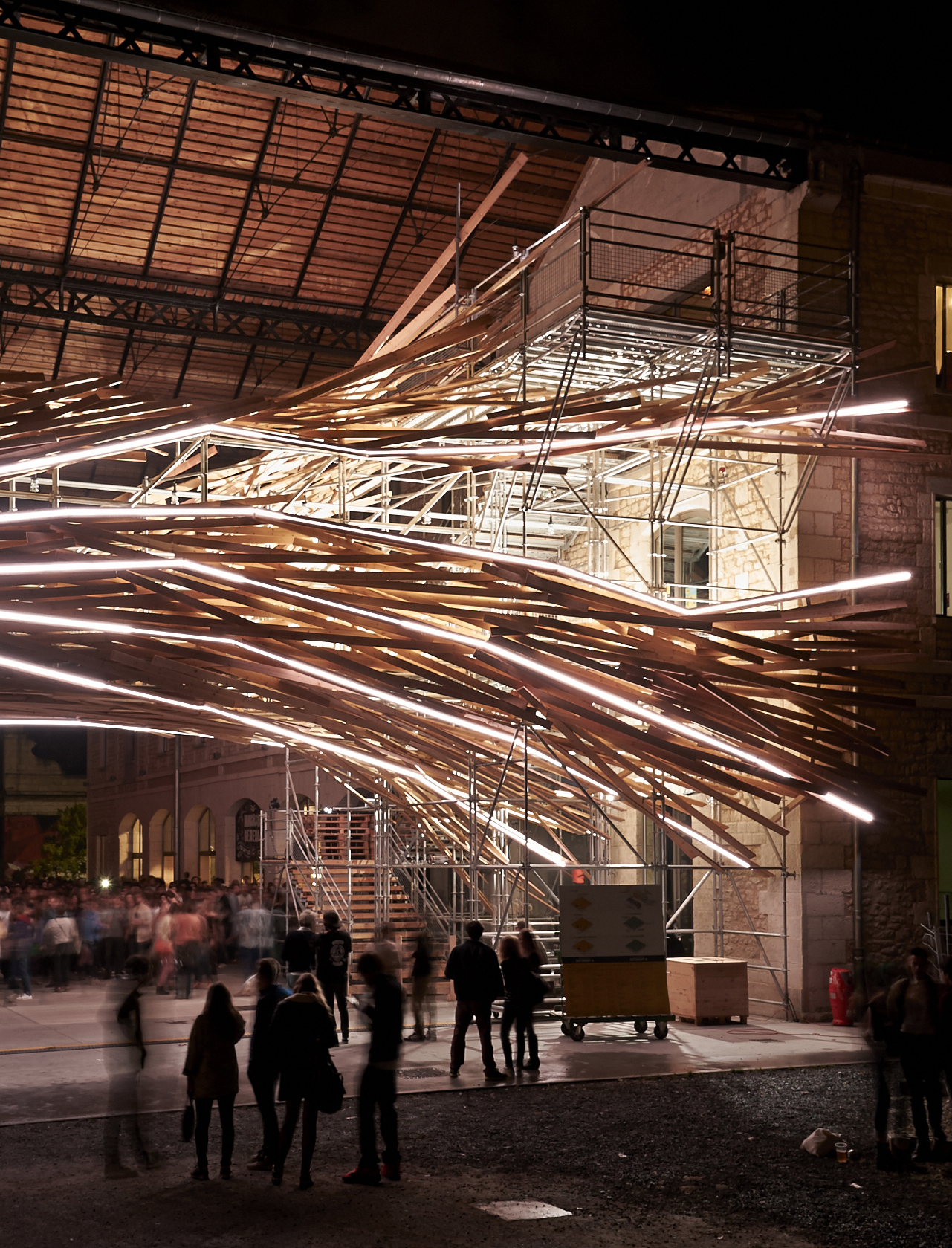
Architectural fragment made from scaffolding, VORTEX has a raw wood skin highlighted by 12 lines of LED light as many generative and constructive project’s lines. Merging organic materials with new technologies, this hybrid architectural artwork wraps around and embraces the footbridge between the complex’s two buildings, revealing and enhancing the venue’s dynamic energy while working as a live visualizer of energy consumption. VORTEX evolves like a living organism; it breathes, trembles and emits pulses of light created using 1024’s MadMapper software. Manually controlled via a joystick, the structure can be synchronized to music and also displays its location’s energy consumption through a series of illuminated tubes. It ultimately answers to the ambient environment around it, capturing the Darwin Ecosystem Project’s unique energy consumption footprint, and converting it into data that is processed to spawn realtime visuals.
.

JAMES LAW CYBERTECTURE INTERNATIONAL

Cybertecture Egg
Cybertecture is the revolutionary concept that provides a symbiotic relationship between the urban fabric and technology. Pioneered in 2001, Cybertecture forges both the hardware of the built environment and software systems and technologies from the micro to macro scales of development.The genesis of Cybertecture is in response to man’s progress into the 21st century, where working and living environments need to adapt and evolve to cope with the demands of modern working life. It plays an integral part in this evolution by providing awareness and connectivity via seamless integration of technology into the fabric of space.Cybertecture designs, from technology, products and interiors to systems, buildings and masterplans, allow flexibility and accessibility to inform, adapt, react, communicate, manipulate and control environments, whilst being sustainable and environmentally considered in application and context.Cybertecture embraces the future through continuous innovation and evolution of design and technology. It provides a myriad of solutions, all of which are diverse in individual application but holistic to the overall user environment, and always being integrated with innovation being pursued.

STELARC

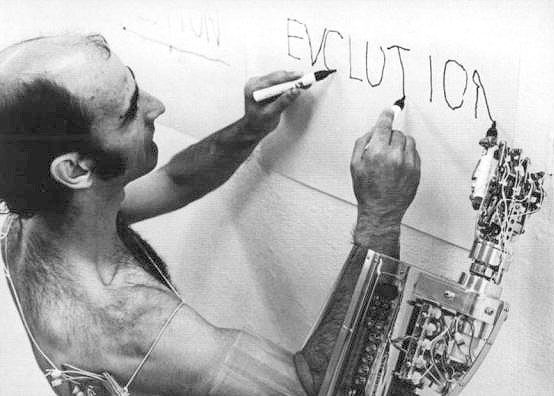
drawing with robot arm
“With gene mapping, gender reassignment, prosthetic limbs and neural implants, what a body is and how a body operates becomes problematic. We generate Fractal Flesh and Phantom Flesh, extended operational systems and virtual task environments. Meat and metal mesh into unexpected and alternate anatomical architectures that perform remotely beyond the boundaries of the skin and beyond the local space it inhabits. The monstrous is no longer the alien other. We inhabit an age of Circulating Flesh. Organs are extracted from one body and inserted into other bodies. Limbs that are amputated from a dead body can be reattached and reanimated on a living body. A face from a donor stitched to the skull of the recipient becomes a Third Face. A skin cell from an impotent male can be recoded into a sperm cell. And more interestingly a skin cell from a female body might be recoded into a sperm cell. Turbine hearts circulate blood without pulsing. In the near future you might rest you head on your loved one’s chest. They are warm to the touch, they are breathing, they are certainly alive. But they will have no heartbeat. A cadaver can be preserved forever through plastination whilst simultaneously a comatose body can be sustained indefinitely on a life-support system. Dead bodies need not decompose, near-dead bodies need not die. Most people will no longer die biological deaths. They will die when their life-support systems are switched off. The dead, the near-dead, the not-yet-born and the partially living exist simultaneously. And cryongenically preserved bodies await reanimation at some imagined future. We live in an age of the Cadaver, the Comatose and the Chimera. Liminal spaces proliferate. Engineering organs, stem-cell growing them or by bio-printing will result in an abundence of organs. An excess of organs. Of organs awaiting bodies. Of Organs Without Bodies.” STELARC

Undercurrent architects

Leaf House Sydney

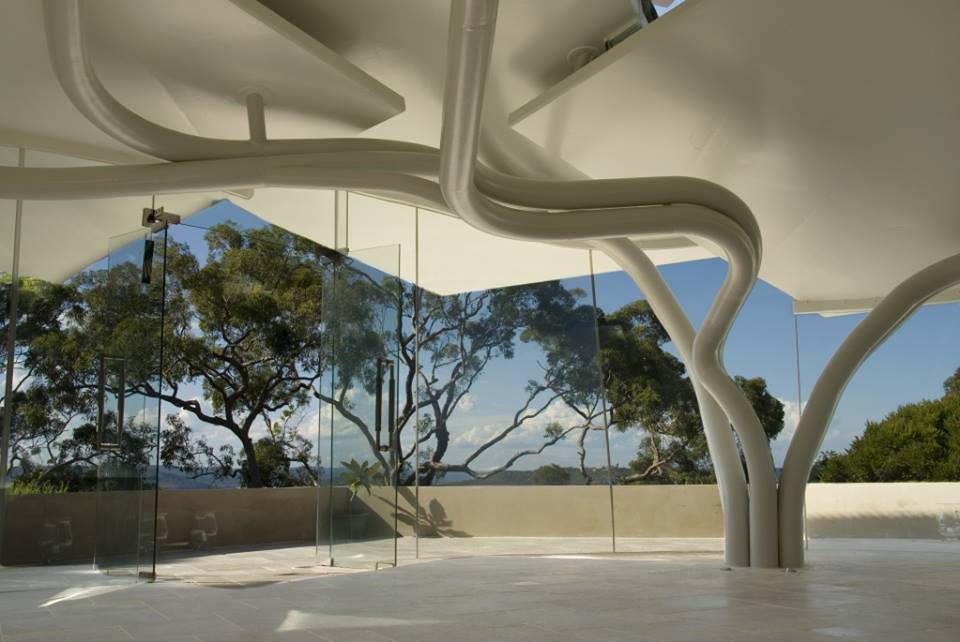
Leaf House is building that allows users to be inside and in-the-garden at the same time. It is a self contained cottage forming part of a coastal residence in Sydney; a Pavilion for experiencing Nature. The building integrates the environment and reflects qualities of the landscape: its canopy structure blends into the foliage; its podium base shapes the terrain. The design is characterised by curved copper roof shells resembling fallen leaves and a vine-like structural system channelling dynamic growth inside. Daylight filters through porous roof shells onto a podium deck and the open plan living areas. Views and reflections subtly modulate the surrounding garden through an enclosure of moulded glass. Private spaces offer introspection inside the sandstone podium buried in the terrain. The project entailed design and building roles as methods were improvised to achieve high technical complexity within cost constraints.