highlike

Richard McCormick – GeoSonic – United Kingdom

GEOSONIC

Richard McCormick


FILE SÃO PAULO 2026: Inter-creativity – Art and Technology – MUSIC
Electronic Language International Festival


GeoSonic – United Kingdom

GeoSonic is an audiovisual piece that takes sound from the earth, and other materials and creates visual representations of them with the use of an oscilloscope. Conceptually, the piece is aimed to highlight the fragile nature of the Earth, how each day more and more erodes away. There is a point at which each section breaks or fades to nothing. This is an intentional choice to emphasise the scale of what we are losing and have already lost.

BIO

Richard McCormick is a composer, visual artist and sound designer with previous work ranging from film scores, electroacoustic, audiovisual and his own electronic music. Having studied a Masters in Music Composition at Sheffield University, Richard’s work expanded and developed exponentially under the tutelage of Adrian Moore.

John Butler – The Magic Robot – England

THE MAGIC ROBOT

John Butler


FILE SÃO PAULO 2026: Inter-creativity – Art and Technology – Full-length
Electronic Language International Festival


The Magic Robot – England

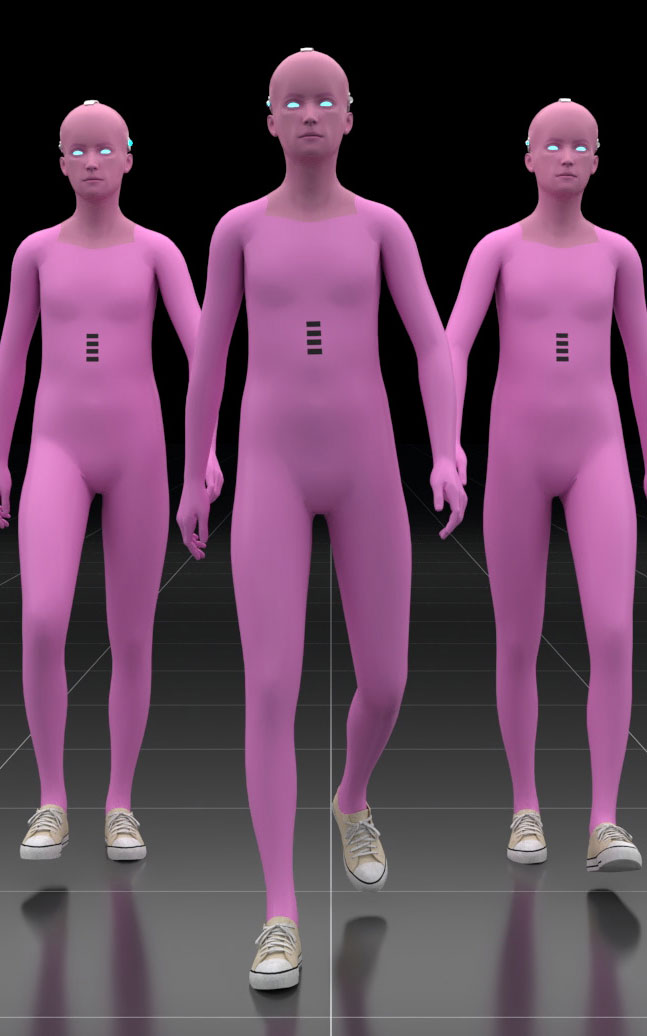
A tale of technological unemployment, only this time it’s the robots who are losing their jobs.

Loosely based on Upton Sinclair’s ‘The Jungle’, the Magic Robot traverses the worlds of bonded labour, industrial espionage, fine art and spirituality in his search for ‘Self‘. The Magic Robot is a work of Bureaucratic Science Fiction, confirming that we are living in a spreadsheet, not a simulation.

BIO

Studied Drawing & Painting and Electronic Imaging at Duncan of Jordanstone College of art, Dundee.

Lives and works in Glasgow as 3D animator. His personal work makes extensive use of CGI, motion capture, and, lately, ‘Interrogative Fashion’.

Has exhibited and screened media art work extensively in the UK and abroad, and has produced work for broadcast in UK for BBC2 and Channel 4.

Sophia Bulgakova – INEVITABLY BLUE – Ukraine

INEVITABLY BLUE

Sophia Bulgakova


FILE SÃO PAULO 2026: Inter-creativity – Art and Technology – Installations
Electronic Language International Festival


INEVITABLY BLUE – Ukraine

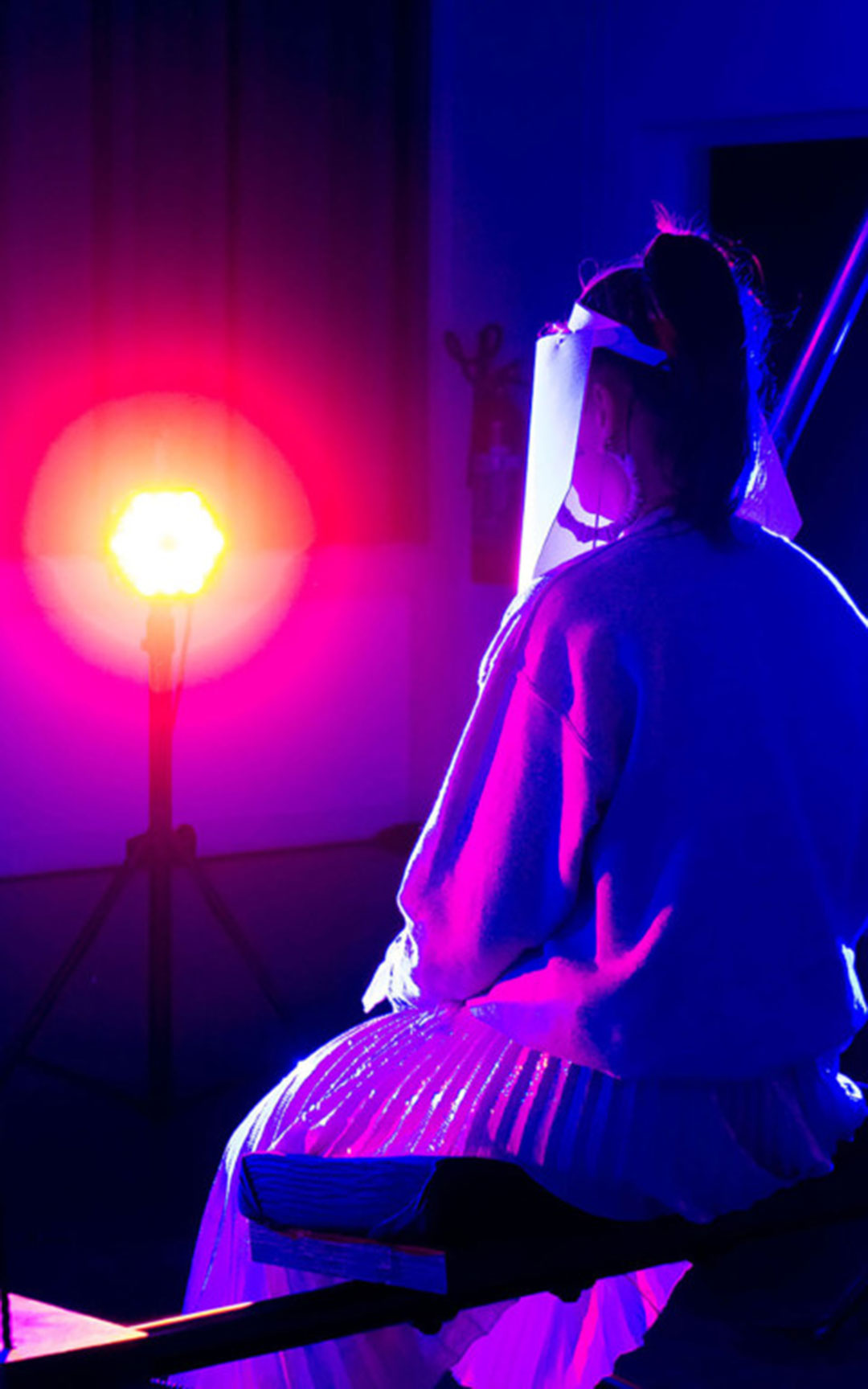
Interactive installation that invites the audience, one by one, to participate and get inside the composition of coloured light and levitative movements of the swing. The participant undergoes, losing the senses of reception, perception, and proprioception, entering a space that only consists of colour, own thoughts, projections, and imaginations.

BIO
Sophia Bulgakova (born 1997, Odesa, Ukraine) is an ArtScientist, interdisciplinary artist and activist currently based in the Netherlands. She works with art, technology, and contemporary social structures, focusing on the relationship between cultural identities, perception, and imagination. Through various sensorial inputs in her installations and performances, she engages viewers, impacting their ways of perceiving reality and exploring new possibilities beyond it.

FILE SÃO PAULO 2025: SYNTHETIKA – Daito Manabe and Kyle McDonald

TRANSFORMIRROR

Daito Manabe and Kyle McDonald

FILE SÃO PAULO 2025: SYNTHETIKA – Art and Technology – Installations
Electronic Language International Festival

Transformirror – Japan |  United States

When everything is imagined by AI—from music and images to prompts and titles—what’s it like to look in the mirror? This seminal study of real-time image generation, made possible in 2023 with Stable Diffusion XL-Turbo and Stable Audio, explores the future of media and interactivity. Can we better understand these systems by interacting with them physically, in real time?

BIO

Kyle McDonald creates immersive audiovisual installations and performances using computer vision, machine learning, and creative programming techniques to explore connections and shared futures between human beings. Daito Manabe combines technology and physical expression in collaborations such as Perfume and ELEVENPLAY with MIKIKO. Founder of Rhizomatiks, he has directed projects such as the closing ceremony of the Rio 2016 Olympics.


FILE SÃO PAULO 2025: SYNTHETIKA – Frederik De Wilde

Hunter and Dog

Frederik De Wilde

FILE SÃO PAULO 2025: SYNTHETIKA – Art and Technology – Installations
Electronic Language International Festival

Hunter and Dog – Belgium

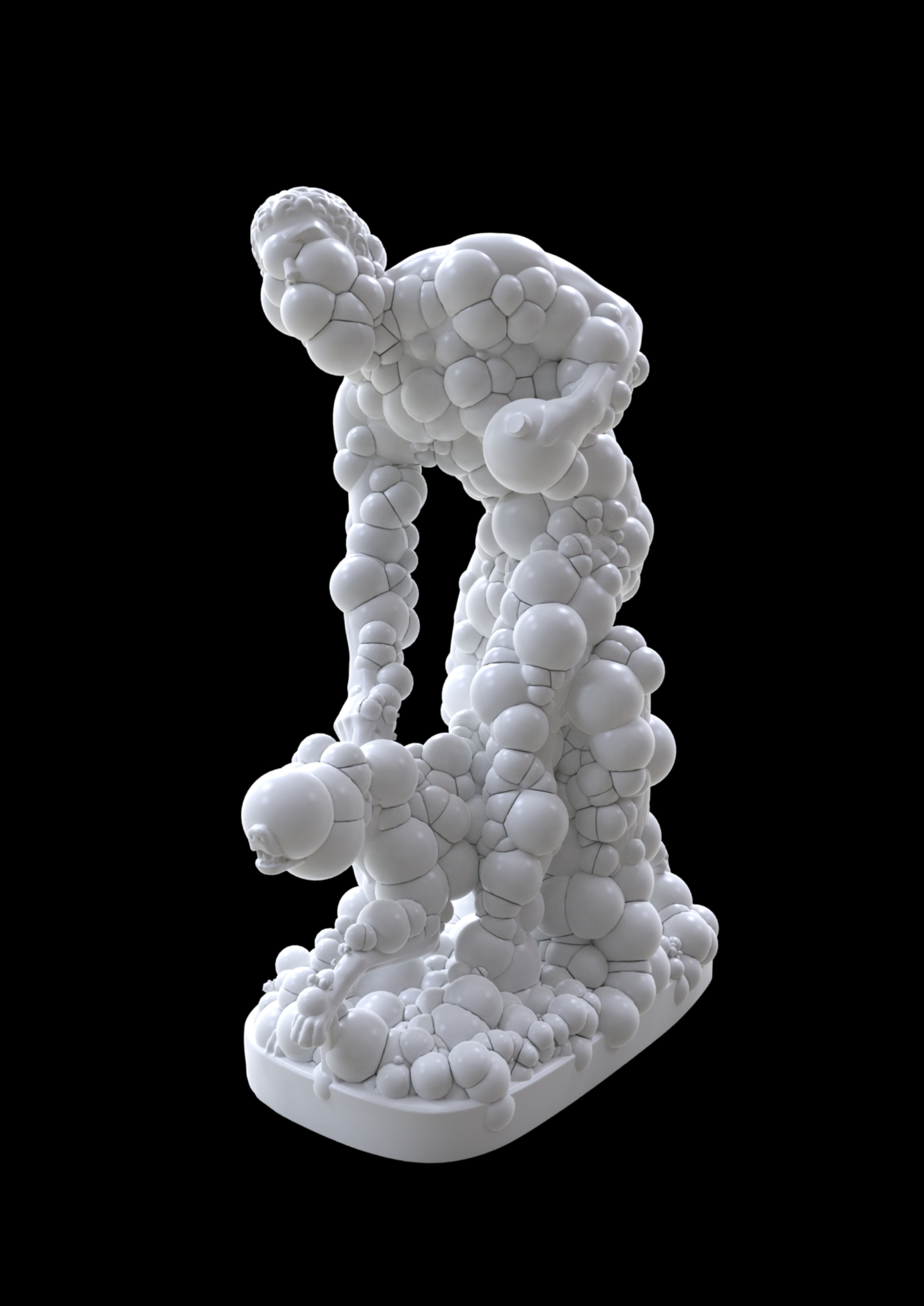
Genetic and evolutionary algorithms reinterpret an existing artwork. De Wilde uses digital scans and custom genetic and evolutionary algorithms as a deconstruction technique to reinterpret and update the nineteenth-century work Hunter and Dog from sculptor John Gibson R. A. (1790–1866).

Frederik De Wilde’s Hunter and Dog interrogates the intersections of human evolution, genetic engineering, and the hybridization of technology and biology. De Wilde reinterprets the historical sculpture through the lens of post-evolutionary theory, engaging with contemporary debates on CRISPR, synthetic biology, and the implications of human-directed genetic modification. CRISPR, the revolutionary gene-editing technology, has introduced an unprecedented rupture in the trajectory of evolution. No longer constrained by the slow mechanisms of natural selection, humans now possess the ability to intervene directly in their own genetic blueprint, marking a shift toward a post-Darwinian paradigm. This technological power, however, is not neutral; it emerges from a historical lineage of scientific inquiry deeply entangled with colonialism. The history of genetic manipulation is inseparable from colonial bioprospecting, eugenics, and exploitative medical experimentation on marginalized populations. Colonial regimes treated bodies—both human and non-human—as sites of intervention, control, and optimization, a logic that persists in contemporary biotechnological frameworks. Post-colonial discourse reveals how genetic engineering risks perpetuating these legacies, reinforcing power asymmetries between those who wield biotechnological control and those subjected to its consequences. CRISPR, while offering the promise of eradicating disease and expanding human potential, also raises ethical concerns about genetic stratification, bio-capitalism, and the commodification of life itself. De Wilde’s work visualizes these tensions, making visible the processes of cell division and morphogenesis—the very biological mechanisms now subject to human intervention. Hunter and Dog does not merely depict the transformation of a neoclassical form but speculates on the future of the human body as a site of engineered evolution. From a decolonial perspective, the artwork questions who has the authority to edit life and to what ends. It challenges the techno-utopian narratives that frame genetic modification as an inevitable progress while obscuring its social, ethical, and ecological implications. By hybridizing art, science, and technology, Hunter and Dog compels us to confront the uncertainties of a CRISPR-driven future: Will genetic editing reinforce existing inequalities, or can it be decolonized and democratized? How do we navigate this post-natural frontier without losing the human—and more-than-human—dimensions of our existence? De Wilde’s work invites us into this speculative space, where the hunter, the dog, and the algorithm coalesce into a vision of a world where biology is no longer destiny, but a site of contested agency.

Where are we going from here? 

BIO

Frederik De Wilde fuses art, science, and tech. Known for his Blackest-Black works that inspired Kapoor’s Vantablack, he has shown at Venice Biennale, BOZAR, MAAT, Pompidou, and ZKM, winning awards like Ars Electronica.
Neri Oxman

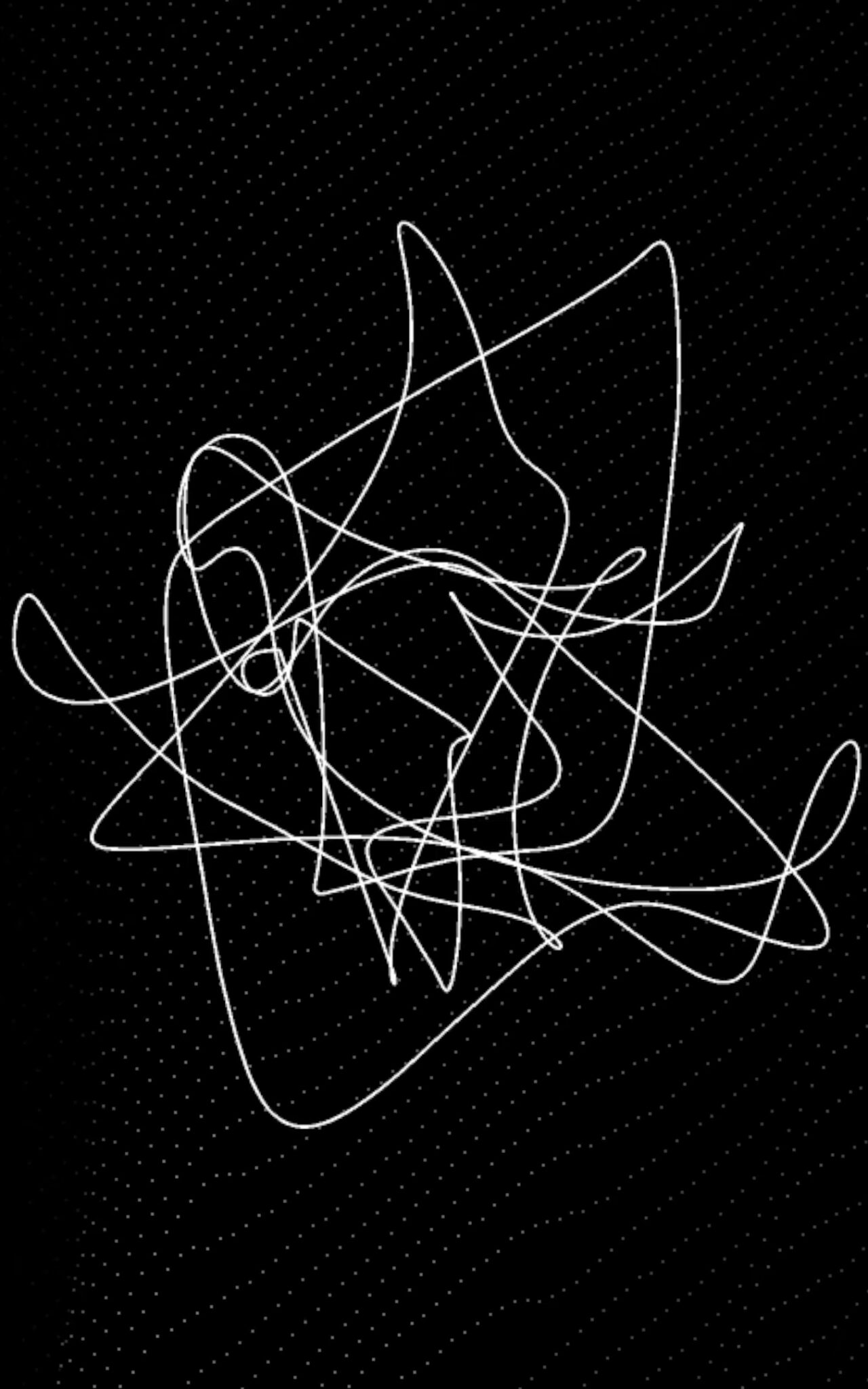
MAN-NAHĀTA
Computational growth across material and urban scales offers a framework for design through self-organization, enabling the generation of vast, diverse forms exhibiting characteristics like those that emerge through the biological growth processes found in Nature. In this project, we construct an oriented volume spanned by surface normals of the shape at every point. The value of the oriented volume drives the iterative deformation of the shape. Depending on the parameterization of this process, we can obtain distinctly different growing forms. Importantly, the emergence of these forms is driven only by the time evolution of a geometric operator acting on the shapes iteratively, thereby connecting geometry and growth through an algorithm. To form the Man-Nahata landscape, the buildings of the urban landscape are transformed through repeated morphological closing operations, where the field of influence follows a gradient from the center to the outskirts of a circular region.

FUJIKO NAKAYA

中谷芙二子

fog sculptures
ok-offenens kulturhaus linz

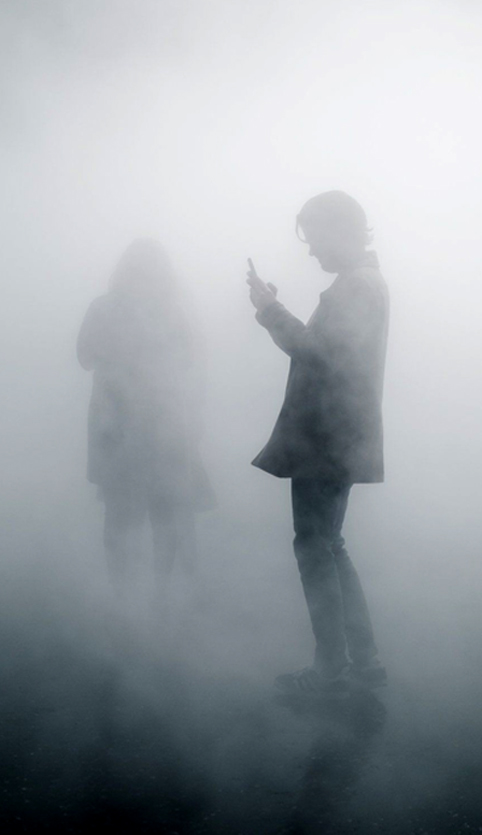
In 1970 Nakaya created her first fog sculpture when commissioned by the group Experiments in Art and Technology (E.A.T) to make a work for the Pepsi Pavillion of the Osaka World Exposition. In creating a work of white mist enclosing the building, Nakaya became the first artist to have used fog as a sculptural medium. E.A.T is an organisation devoted to facilitating working relationships between artists and engineers. Nakaya worked with American engineer Thomas Mee to create the fog for her Osaka commission, the technique for which she has continued to use, with minor moderations, for her subsequent fog sculptures since.Whilst Nakaya has also worked in film and video, it is her use of fog for which she is best known. Nakaya has used pure-water fog to create installations, performances, stage-sets and environmental park designs, often collaborating with other artists or with performers, choreographers and composers. Nakaya’s interest in fog has developed from its relation to our visual sense. In a thick fog we become disorientated, frustrated at our inability to see. In this way, Nakaya’s sculptures activate our other senses, to compensate for our loss of sight.

JALOO

Ah! Pain!
Always the fear of losing
Feel the fear of not being you
But now, I know and it hurts
And I will wander until you know too
I’ve always been a bad hero
Always being saved by you
But now that it’s gone
I know my best is gone too
Ah! Pain! Ah! Pain!
Don’t leave me, I beg you, stay
Surrounds me, comforts me, fixes me
Ah! Pain! Ah! Pain!
You were all that was left in me
It’s what makes me alive without you here
I always feel like it will be
Always time erasing you
And now it’s so late
And the longing comes, invades, burns
I always think about you
I always think to myself “What about you?”
And I don’t want to forget you
And the wound doesn’t close, doesn’t close
Ah! Pain! Ah! Pain!
Don’t leave me, I beg you, stay
Surrounds me, comforts me, fixes me
Ah! Pain! Ah! Pain!
You were all that was left in me
It’s what makes me alive without you here, here
Ah! Pain! Ah! Pain!
Ah! Pain! Ah! Pain!
Don’t leave me, I beg you, stay
Surrounds me, comforts me, fixes me
Ah! Pain! Ah! Pain!
You were all that was left in me
It’s what makes me alive without you here

Pangenerator

Hash2ash
Installation touches on the themes of selfie-culture, and the fear of permanently losing the digital records of our lives due to technical failures, impermanence of data storage, or simply because of the obsolescence of the old digital file formats. Even with such compulsive overproduction of the images of ourselves we might end up with nothing but the blank memories of our past. Even the data on ourselves will eventually fade away… The installation consist of the display that prompts you to take a selfie on your phone, which it renders in digital particles on its large 1×1 meter screen. Then a moment later, your face scatters and falls apart and the real black gravel starts to fall at the bottom of the screen in perfect synchrony with the digital simulation. Gradually a dark mound builds up at the foot of the construction.

GYÖRGY LIGETI

ג’רג’ ליגטי
Дьердь Лигети
ジェルジ·リゲティ
Le Grand Macabre

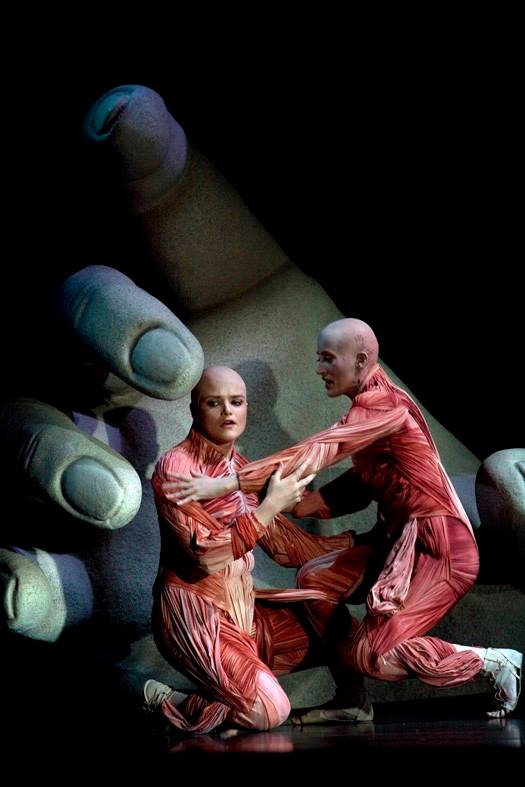
In the mid-70s, Ligeti wrote his only opera, Le Grand Macabre, loosely based on the 1934 play, La Balade du grand macabre, by Michel De Ghelderode. It is a work of absurd theatre that contains many eschatological references.After having seen Mauricio Kagel’s anti-operatic work Staatstheater, Ligeti came to the conclusion that it was not possible to write any more anti-operas.[citation needed] He therefore resolved to write an “anti-anti-opera”, an opera with an ironic recognition of both operatic traditions and anti-operatic criticism of the genre. From its brief overture, a mixture of rhythmic sounds scored for a dozen car horns, to the closing passacaglia in mock classical style, the work evolves as collage of sonorities ranging from a grouping of urban sounds to snippets of manipulated Beethoven, Rossini and Verdi.

GUDA KOSTER

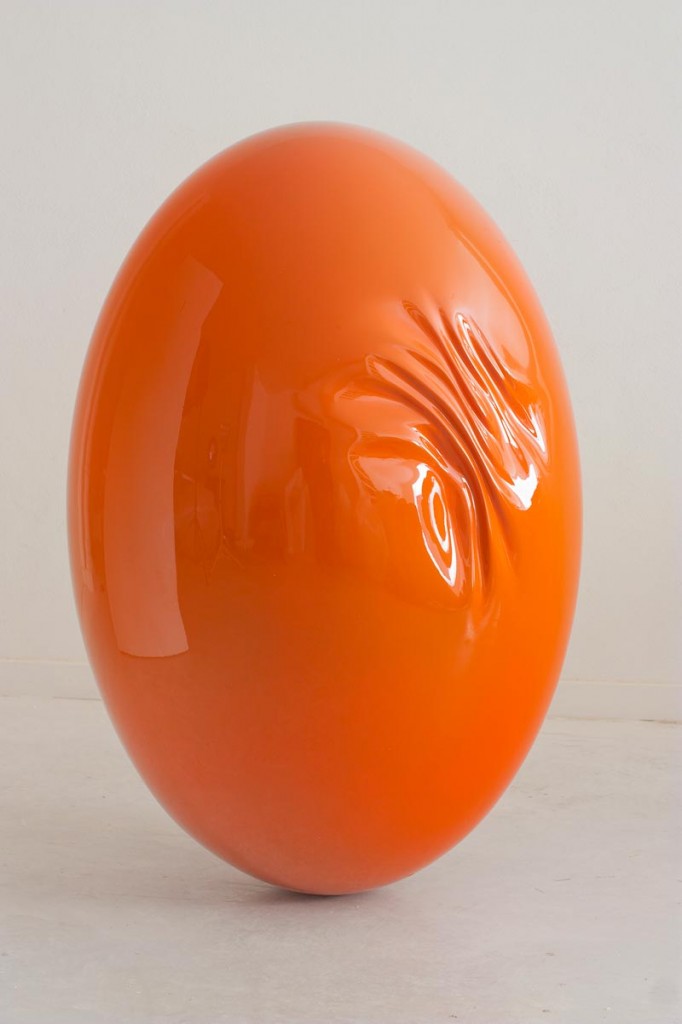
Losing Control
Guda Koster (Amsterdam) werkt al een leven lang met textiel, en daar is sinds enige jaren de fotografie als medium bijgekomen. Het is werk dat zich begeeft in het gebied tussen mode, beeldhouwkunst, fotografie en performance. Kort gezegd maakt ze foto’s waarin zij zelf figureert als drager van textiele vormen die niet of nauwelijks wat met ‘kleding’ te maken hebben. De ruimtelijke situaties in het atelier worden, eenmaal gefotografeerd, vrijwel platte beelden.

cristina coral

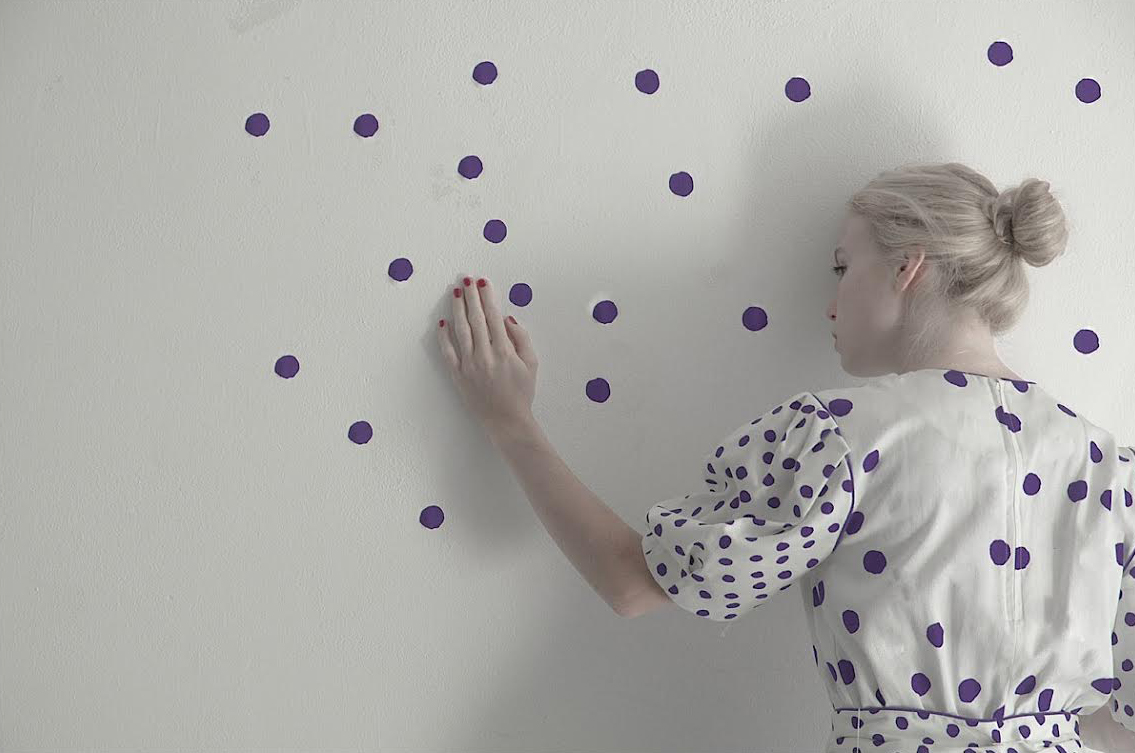
Losing dots
via highlike submit

Cristina loves experimenting with light, colours, space, and female figures to create poetic photographs. At the first glance, the images seems to be rather static, but they embody a rich story behind every singular detail. The muses, which are mysterious young ladies, are captured by the artist in a minimal environment.

Santiago Villanueva

The Slow Motion Band
Villanueva began his training and initiation in1984 from 1986-1995 he worked as an artist and teacher with Abraham Dubckovsky the Argentine sculptor and architect planner. His work: causes, produces and creates visual and physical impressions and sensory pleasures, space and forms that are capable of enclosing and hiding something and demarcating soluble volumes. The pieces are of respectful sizes, clean lines and defined but at the same time fragile, silky smooth but yet again clear due to the materials used. As he describes it, art linked to the intimate experiences of the body and time, in search of an interior portrait joined with beauty resulting in essential interlocutor.

girl walk

all day
Girl Walk // All Day is a 71-minute Kickstarter-funded dance epic set to Girl Talk’s 2010 album All Day. The piece was filmed all over New York City, which people started to figure out several months ago when a very excitable girl was spotted losing her mind on the Staten Island Ferry. The movie is premiering in 12 chunks on New York blog Gothamist from now until mid-January and is definitely worth your time (unless you hate fun).

OTA+

Taipei Museum of Contemporary Art
This building proposal challenges the traditional definition of a museum and the conventional relationship between building and site. The ground floor of the building is reduced to a nominal footprint, enclosing only enough space for basic services, structure and ticketing functions. The ground plane is primarily reserved for exterior public space, including an art park, Hall of Fame, and garden walk. The bulk of the program and building mass are split by the open ground floor. Half of the building is coupled with the earth while the other half hovers in the air. The purpose is twofold; to minimize the damaging effects of extreme local weather by harnessing environmental flows toward productive outcomes and to re-conceptualize the identity of a modern art museum. The manicured roof plane of the below ground program is pocketed with water absorbing vegetation and catchment systems, while the hovering museum above expands to form open atriums, allowing diffuse light to brighten the space and passive airflow to comfortably condition the building.The program of the museum is interconnected. The Contemporary Museum of Art, Children’s Museum of Art and Administration are located within the floating mass. The lecture hall, parking, art resource center, library and classrooms are located below ground. The programs below ground are easily accessible and directly connected through vertical circulation tubes, providing both structural support for the floating mass above and space for movement systems, such as escalators, stairs and elevators between levels. All of the below ground programs are flooded with diffuse light passing through skylights that penetrate the landscape.

Clausthome & Martins Ratniks

UNKNOWN PLANET
The Latvian sound artists collective “Clausthome” (Lauris Vorslavs, Girts Radzins) and video artist Martins Ratniks will present a sound and video modulation performance unclosing saturated sound landscapes and collages of the electromagnetic waves, created by scanning and retranslating a real-time audio and video signal modulations. In their daily practices “Clausthome” collective is engaged in experiments with modulations and sound feedback as well as in collecting diverse radioa signals and scanning of radio frequences. Martins Ratniks is one of most renowned Latvian video artists, whose experiments in the field of art and technologies has been acknowledged both in Latvia and abroad. This will not be the first collaboration between “ Clausthome” and Martins Ratniks, previously they have been working togeher on such projects as “ Spectrosphere” (2006) and “ Unknown Planet” (2012).

GREGOR GAIDA

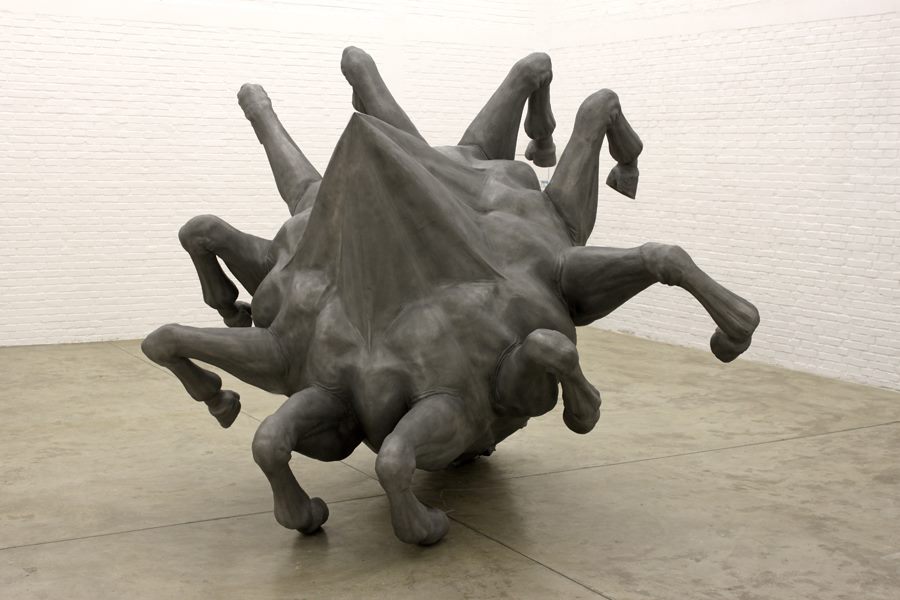
Polygonal Horse II
Gregor Gaida’s sculptures have something almost unreal, in them surrealism is powerful, there is transfiguration, symbol and narration; creates incredibly exciting sculptures in which even the elements: wood, resin and concrete mix without losing their contrasting nature. Its themes can be seen as three-dimensional snapshots, with fictional protagonists fighting and being advanced, extracted and distant from their original framework of action. In his sculptures, Gaida literally shapes this approach and stories without finishing them; many of his subjects are also physically cut in half, incomplete and, therefore, to be completed.

KYLE MCDONALD

Face Substitution

Faces is an interactive installation result of the work on face substitution in collaboration with Arturo Castro

“The installation is based on the idea of wishing for a new identity: when the subject first steps up, they see their face unmodified. After closing their eyes to make a wish and opening them again, they discover they are wearing a new face. The result is a mixture of a playful, surprising and some times scary experience.This installation takes advantage of the unique experience of slowly recognizing yourself as someone else playing also with the concept of the uncanny valley by showing a face that perfecly matches the visitors facial expresion but still has some lighting and texturing imperfections. This elicits everything from laughter, to surprise, or repulsion.Knowing that it takes approximately one second for someone to respond to a completely unexpected event, we store a photograph at 1.5 seconds after the swap — capturing that moment of realization.”Arturo Castro