highlike

Barry Whittaker – Climate Control – United States

CLIMATE CONTROL

Barry Whittaker


FILE SÃO PAULO 2026: Inter-creativity – Art and Technology – LED SHOW
Electronic Language International Festival


Climate Control – United States

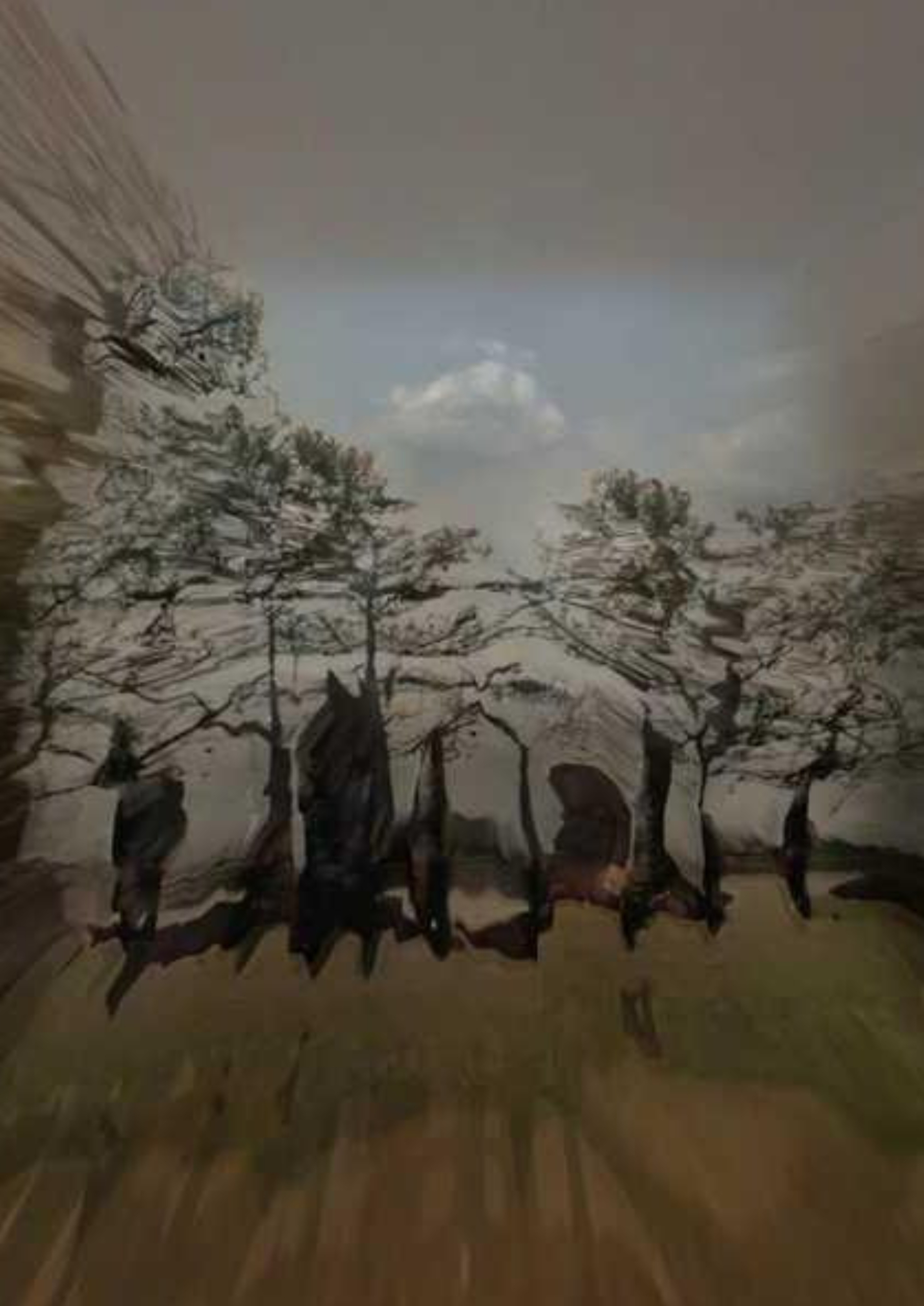
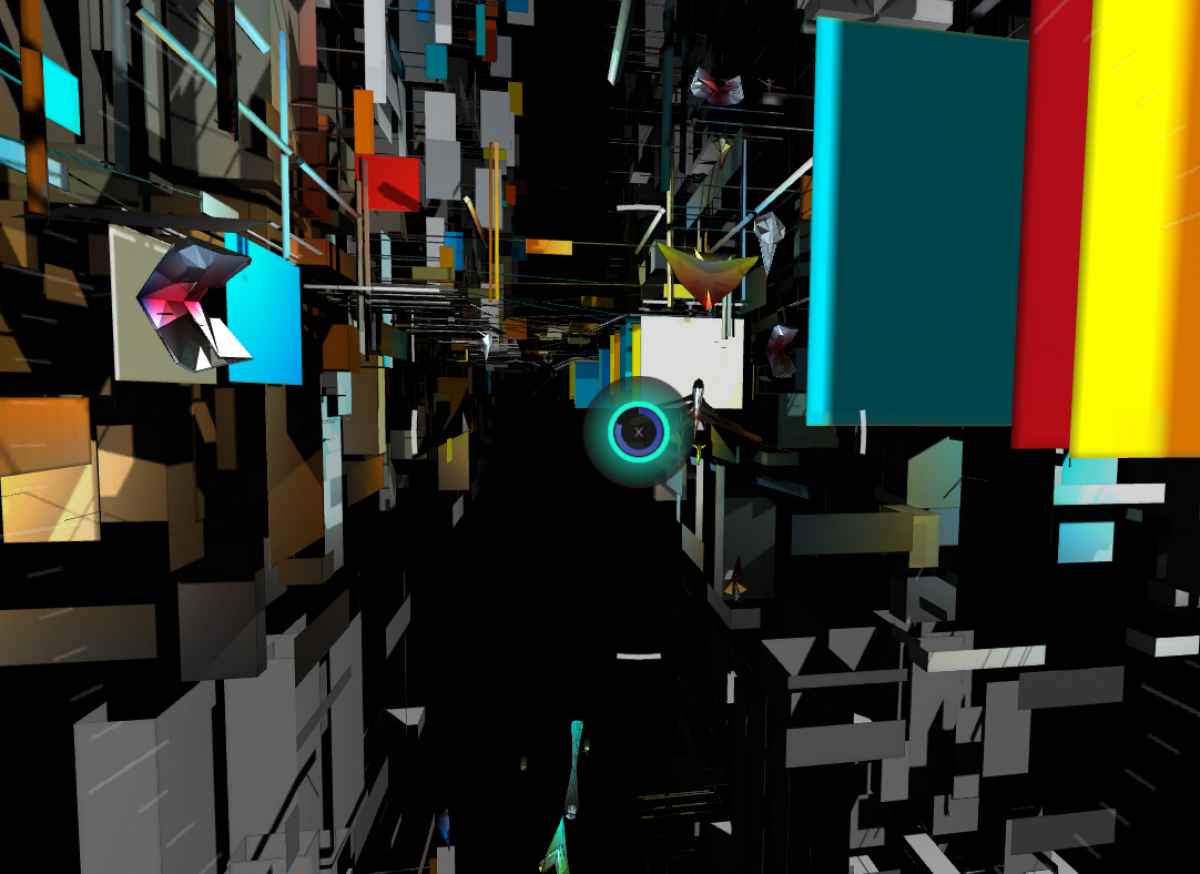
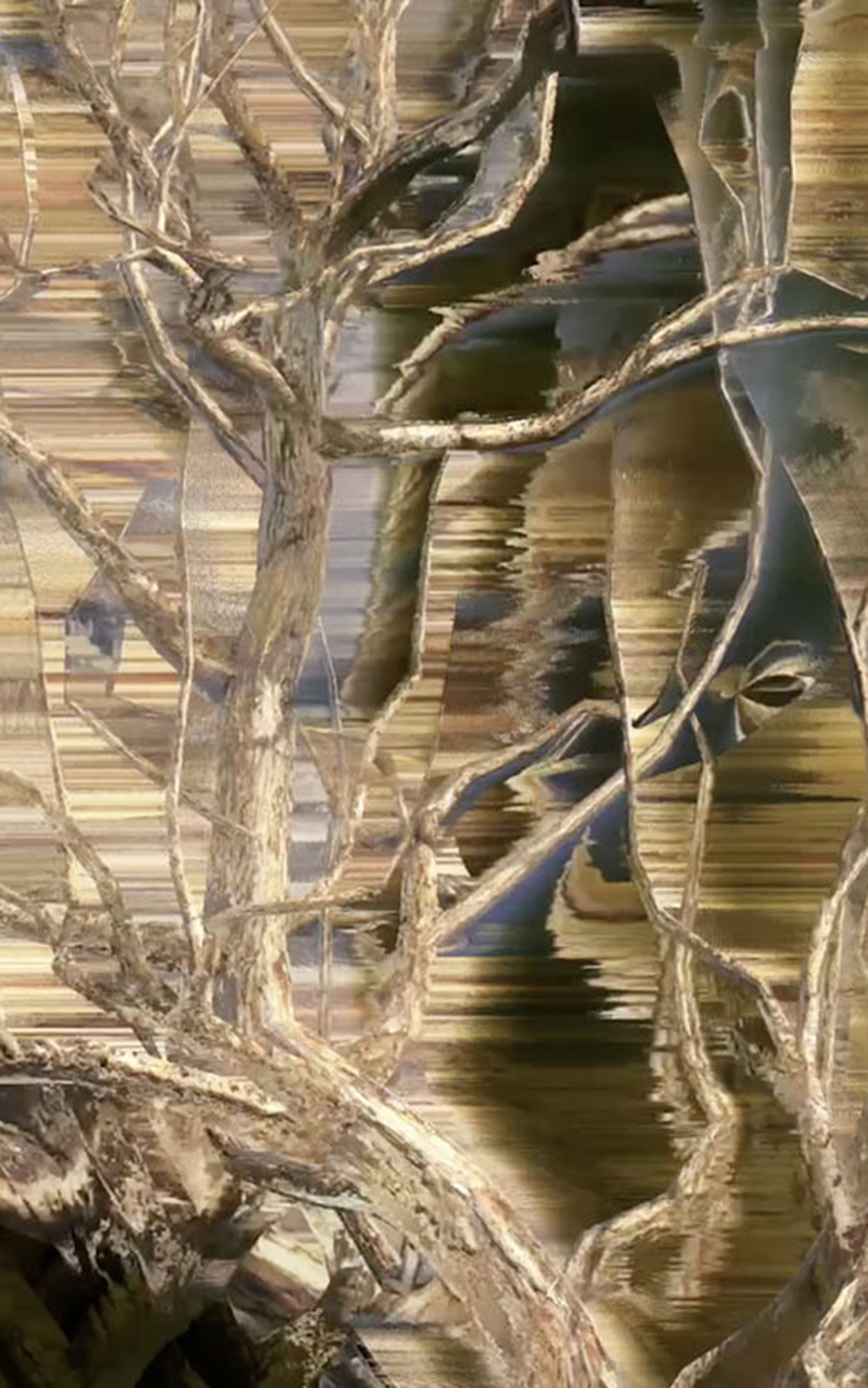
Climate Control imagines how technological frameworks translate living ecosystems into manageable forms—objects to be optimized, collected, and modified, often without fully understanding what is lost in the process. 

BIO

Barry Whittaker is a multimedia artist, designer, musician, and Professor of Art at the University of Toledo. His work explores themes of mythology, language, miscommunication, and cultural hybridization through technology and collaboration. Whittaker creates mediated experiences that serve as platforms for exploring, modifying, and questioning human activities and the world around us.
Richard McCormick – GeoSonic – United Kingdom

GEOSONIC

Richard McCormick


FILE SÃO PAULO 2026: Inter-creativity – Art and Technology – MUSIC
Electronic Language International Festival


GeoSonic – United Kingdom

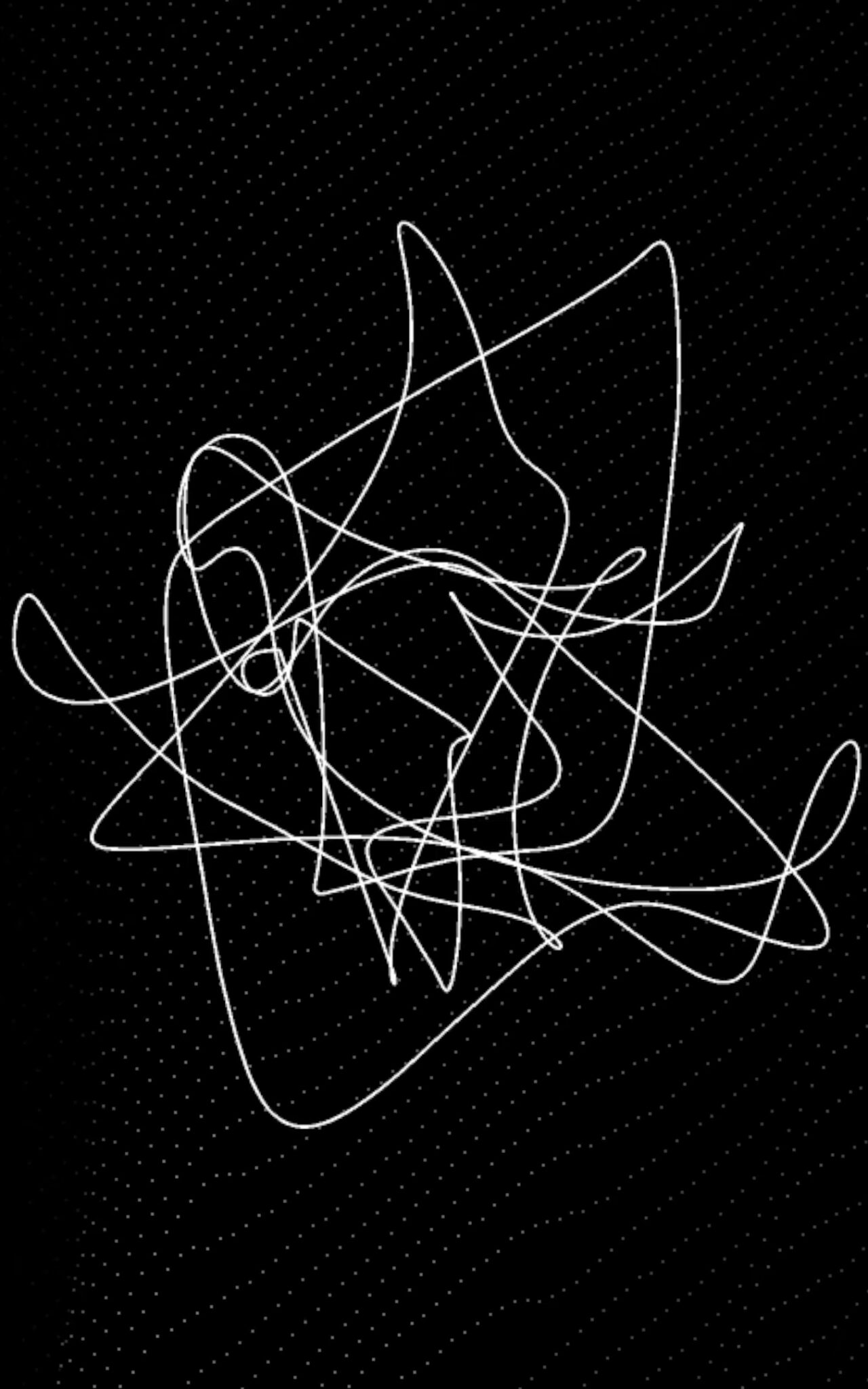
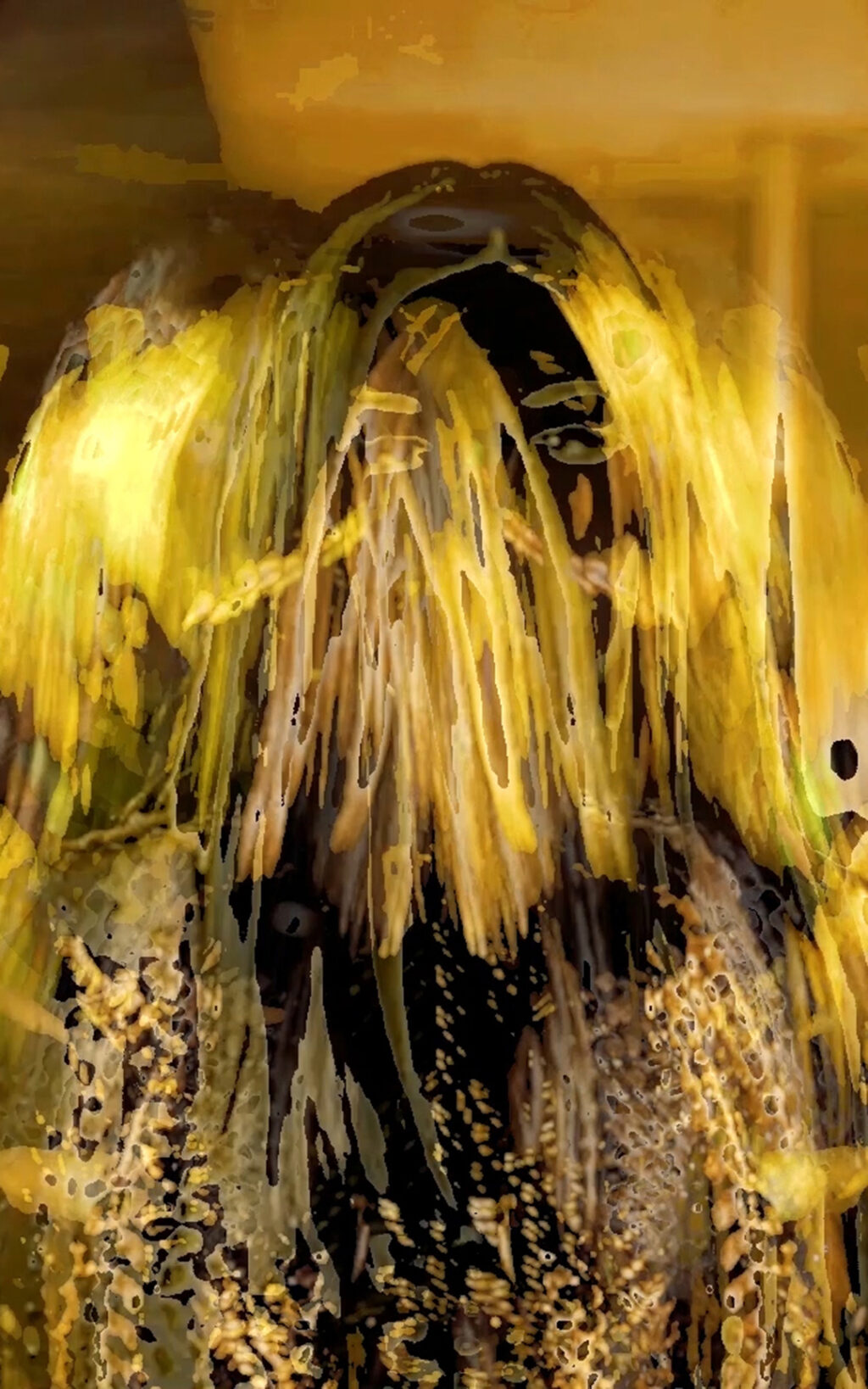
GeoSonic is an audiovisual piece that takes sound from the earth, and other materials and creates visual representations of them with the use of an oscilloscope. Conceptually, the piece is aimed to highlight the fragile nature of the Earth, how each day more and more erodes away. There is a point at which each section breaks or fades to nothing. This is an intentional choice to emphasise the scale of what we are losing and have already lost.

BIO

Richard McCormick is a composer, visual artist and sound designer with previous work ranging from film scores, electroacoustic, audiovisual and his own electronic music. Having studied a Masters in Music Composition at Sheffield University, Richard’s work expanded and developed exponentially under the tutelage of Adrian Moore.

Jean-Michel Rolland – Amours perdues : la culpabilité – France

AMOURS PERDUES : LA CULPABILITÉ

Jean-Michel Rolland


FILE SÃO PAULO 2026: Inter-creativity – Art and Technology – VIDEO ART SHORT
Electronic Language International Festival


Amours perdues : la culpabilité – France

Amours Perdues (Lost Loves) is a series of videos produced a few months after the passing of the artist’s wife. This tormented period was filled with numerous emotions and questions that gave birth to these videos. Whether art therapy or simply a form of catharsis, this work helped him to accept a painful reality.

BIO

Jean-Michel Rolland is a French artist. A long time a musician and a painter, he brings together his two passions—the sound and the image—in digital arts since 2010. Through video artworks, he questions temporality, a genuine fourth dimension inherent to moving image, as well as the duality between his two favorite mediums, the sound and the visual.

Tianyun Yu – Project: Salvation – United Kingdom

PROJECT: SALVATION

Tianyun Yu


FILE SÃO PAULO 2026: Inter-creativity – Art and Technology – CINEFILE | Short
Electronic Language International Festival


Project: Salvation – United Kingdom

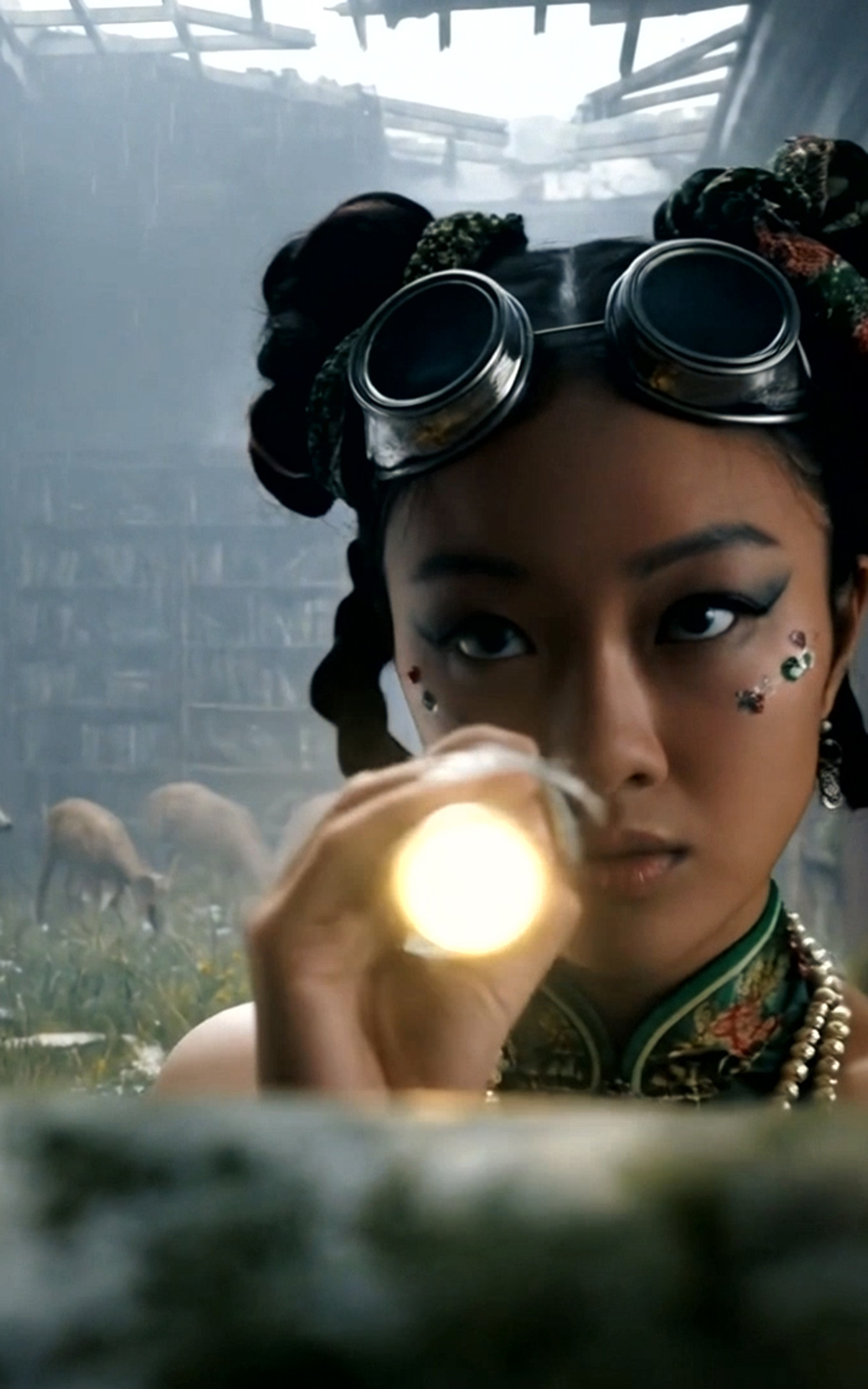
This cinematic short demonstrates the power of multi-modal AI storytelling, utilizing Gemini, Google Nano Banana, Veo3, Kling O1, and Suno to blend high-fidelity visuals with emotional sound, redefining the future of digital production. The work explores survival in a world halted by energy shortages. Following her mother’s lost research, a lone survivor reactivates an ancient station, transforming a barren wasteland into a symbol of hope.

BIO

Tianyun Yu is a multidisciplinary designer and creative technologist operating at the intersection of visual communication and computational arts. With an MFA from Computational Arts, Goldsmiths and a BA background from the China Academy of Art, she synthesizes artistic intuition with rigorous algorithmic thinking.

FILE SÃO PAULO 2025: SYNTHETIKA – Erika Kassnel-Henneberg

Deep Paula

Erika Kassnel-Henneberg

FILE SÃO PAULO 2025: SYNTHETIKA – Art and Technology – Shorts Films AI
Electronic Language International Festival


Deep Paula – Germany

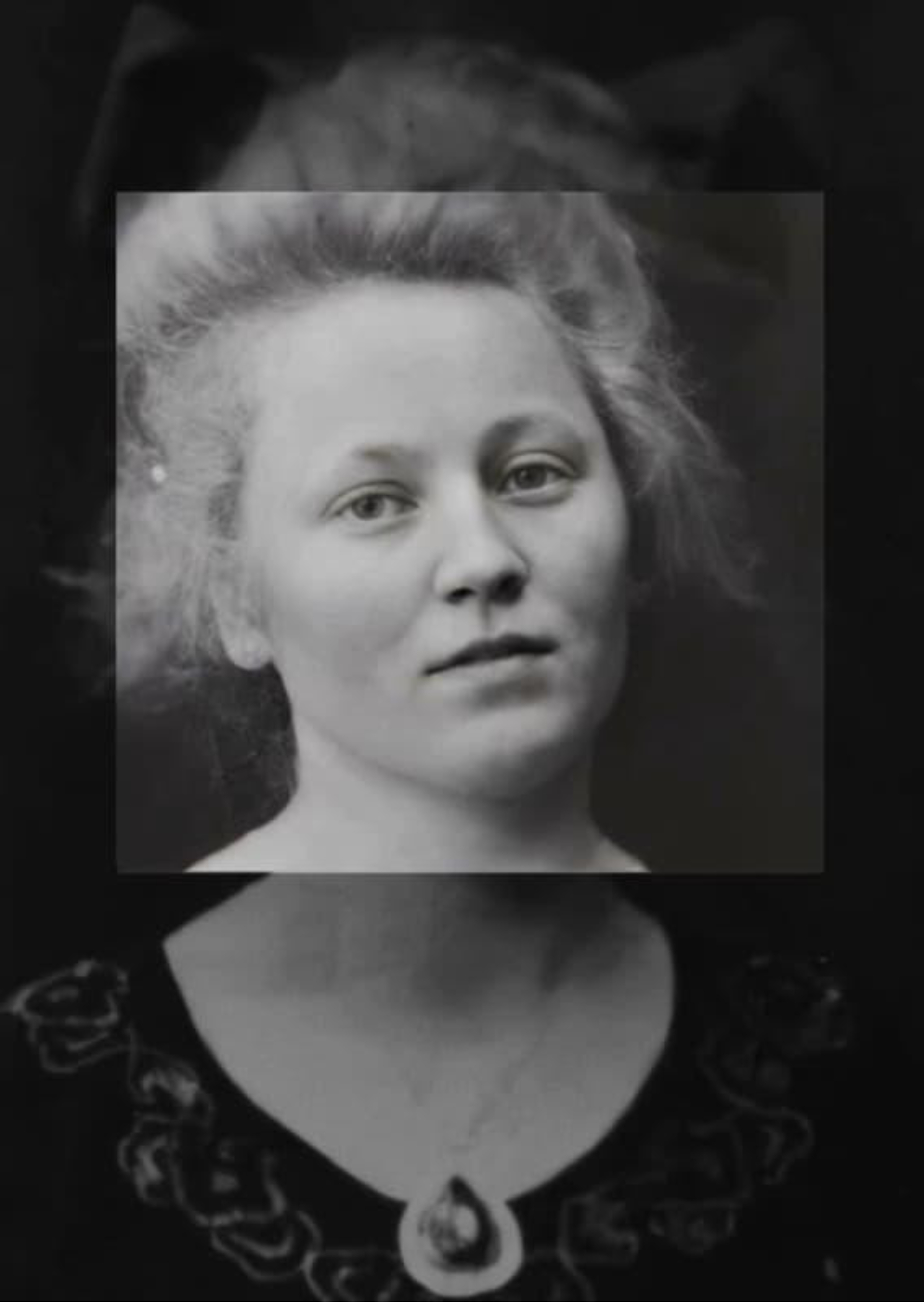
An old photograph is “brought to life” by artificial intelligence. What happens when flawed memory gives way to artificial vividness? Today, a perfect, seemingly alive digital self can be created. Will we become eternal puppets wandering the web? Who pulls the strings? And if a lost loved one is replaced by a digital twin, what becomes of grief?

BIO

Erika Kassnel-Henneberg (1973) is a conceptual artist. Her work explores a new humanism in the face of digital complexity. She investigates memory through AI-driven data analysis and questions perception as a construct between reality and fiction.

Music: AI-generated.

FILE SÃO PAULO 2025: SYNTHETIKA – Tim Murray-Browne

SELF ABSORBED

Tim Murray-Browne

FILE SÃO PAULO 2025: SYNTHETIKA – Art and Technology – Installations
Electronic Language International Festival


SELF ABSORBED – Scotland

SELF ABSORBED is an interactive installation exploring how AI interprets human identity. A custom model reads the visitor’s body, linking each pose to generative audiovisual output. Unlike human-designed interfaces built on reductive abstractions, this interaction emerges from unsupervised machine learning, forming a connection with a multidimensional, non-linear, and non-representational digital space.

BIO

Tim Murray-Browne is an interactive artist and creative coder. He creates installations and performances using the moving body to shape immersive experiences. His work questions what aspects of our humanity are lost as we entangle ourselves with the bureaucratic mechanics of AI and digital technologies.

QUBIT AI: Marc Vilanova

Shell of

FILE 2024 | Installations
International Electronic Language Festival
Marc Vilanova – Cascade – Spain

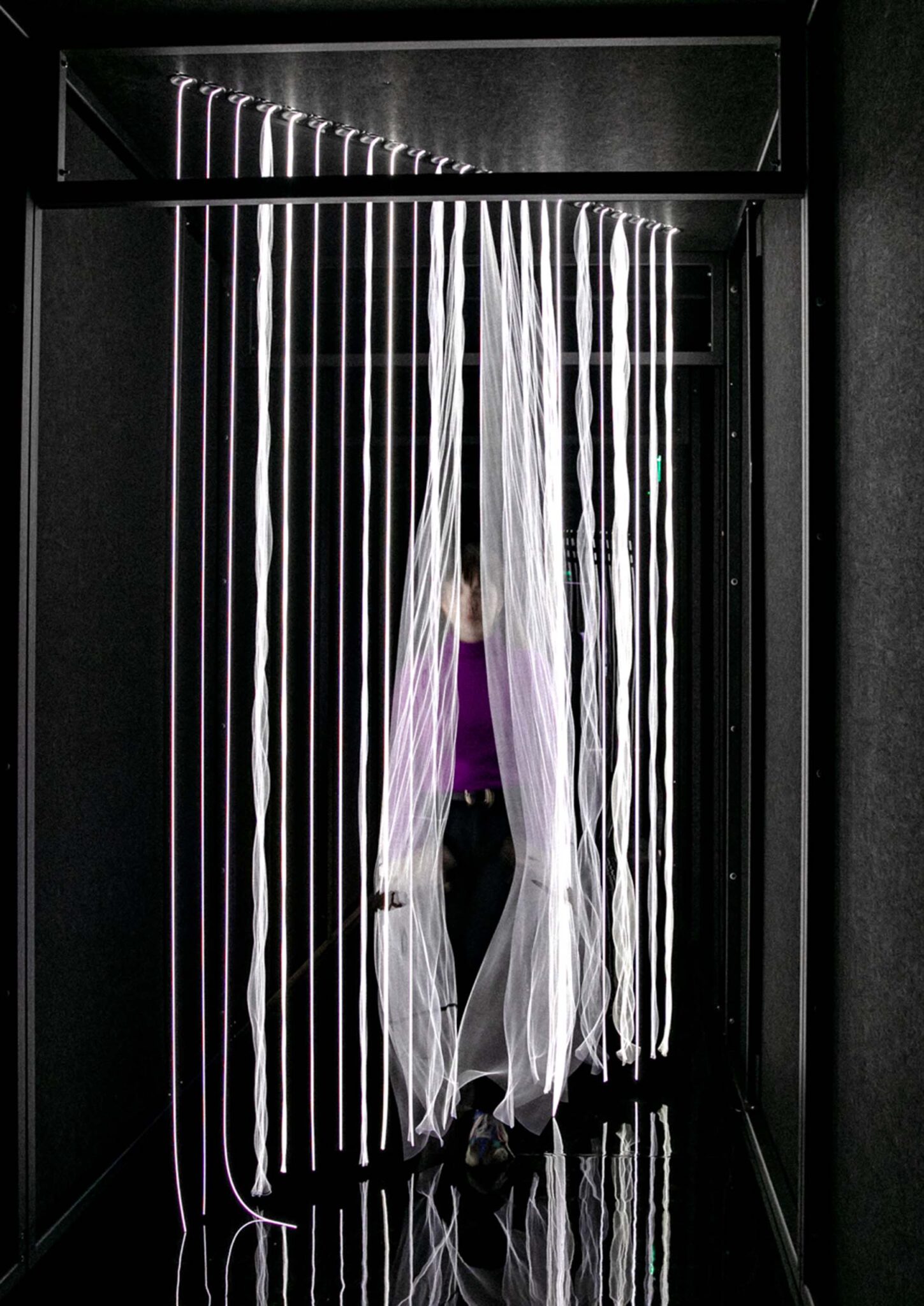
Waterfalls are a continuous source of infrasonic frequency found in nature. Although inaudible to humans, they play a crucial role in ecosystems, especially for migratory birds who use them as a compass. However, many waterfalls have lost their frequencies due to climate change. The work creates an immersive experience in which the audience interacts with the visualization of sound waves, experiencing the vibration of sound through illuminated strings.

Bio

Marc Vilanova is a sound and visual artist who works at the intersection of art, science and nature. Vilanova’s artistic production has always been led by a spirit of innovation fueled by an interest in new media. His practice combines sound/light installations, performance, and sculpture.

Credits

This work was partially carried out within the scope of the EMAP program at gnration, with the support of the Creative Europe Culture Programme, the Avatar Center in Quebec City and the Ramon Llull Institute.

Photo:
Eloise Coomber

Sang Jijia

As it were
As it were, Sang Jijia’s first creation for GöteborgsOperans Danskompani, is about communication – about the joy of getting through to someone else, but also about everything that gets lost or is misunderstood. As humans, we share the same space but are detached from one another. We know what we want to say, but intentions can become confused.

CAI GUO-QIANG

蔡国强
Цай Го-Цян
Endless

In dieser Installation namens Endless schafft der in New York lebende Künstler Cai Guo Qiang eine ruhige Atmosphäre, in der klassische Holzschiffe auf grünen, nebligen Wasserwellen schweben. Die Schiffe scheinen mitten im Meer verloren zu treiben, während eine Wellenmaschine ruhige Wellen erzeugt und eine Nebelmaschine den Raum mit einem verschwommenen Dunst füllt. Während die Schiffe langsam und endlos im Wasser schaukeln, befinden sich die Betrachter in einer ruhigen, reflektierenden Atmosphäre. Der Künstler bezieht zwei Arten von Schiffen als Aussage über die Interaktion zweier Welten ein. Zwei Houri-Boote, die normalerweise in der Golfregion zu sehen sind, sind jeweils etwa 244 Zoll lang, während ein chinesisches Fischerboot, das seit Jahrhunderten in Qanzhou eingesetzt wird, 800 Zoll lang ist. Die beruhigende Umgebung, die von Cai Guo Qiang geschaffen wurde, löst meditative Gedanken über alte Kulturen und Traditionen aus, die an einem Ort zusammenkommen, während die physische Repräsentation zweier Welten, Ost und Naher Osten, in einem endlosen Meer friedlicher Bewegung nebeneinander schwebt.

Balazs Kicsiny

Winterreise
Captured moments are central in Kicsiny’s installations. His characters are simultaneously frozen still and in motion. In some works this paradox becomes literal, as in the installation Winterreise that depicts two priests skiing in different directions using the same skis, which makes forward motion impossible. The figures seem lost, isolated and their journey endless. In their hands they hold Jacob’s staffs, navigational instruments used in the 17th century. The work alludes to the continuous search for one’s place in life.

STUDIO DRIFT

Herumtreiber
Drifter fordert den Betrachter auf, unser Verhältnis zu unserer oft als statisch und leblos akzeptierten Lebensumgebung zu überdenken. Es erzeugt ein Gefühl des Unglaubens und der Verschiebung und erzeugt Spannungen zwischen Menschlichkeit und Natur und Chaos und Ordnung. Losgelöst von unseren Erwartungen schwankt die Arbeit zwischen dem Möglichen und Unmöglichen.

xenakis

EONTA
“Eonta (beings) is so entitled as a homage to the ancient Greek philosopher and poet Parmenides. The original printed form of the title word is Cypriot orthography of Creto-mycaenean origin, lost for over 24 centuries and only recently deciphered. Eonta, written in Berlin during 1963-64, was first performed at the Domaine Musical concerts in Paris, conducted by Pierre Boulez, in December 1964. It makes use of stochastic music (based on the theory of probabilities) and symbolic music (based on logistics). Some of the instrumental parts, notably the piano solo at the opening, were calculated on an IBM 7090 computer at the Place Vendôme, Paris.”
(Iannis Xenakis)

STEPHEN CORNFORD

Binatone Galaxie
Eine Installation für gebrauchte Kassettenspieler, die ihre Obsoleszenz nicht als Ende, sondern als Gelegenheit betrachtet, ihr Funktionspotential zu überdenken. Als Wiedergabegeräte abgelöst, werden sie zu eigenen Instrumenten. Das Ersetzen des aufgezeichneten Inhalts jedes Bandes durch ein Mikrofon gibt uns die Möglichkeit, stattdessen die rhythmischen und resonanten Eigenschaften dieser einst allgegenwärtigen Plastikschalen zu hören. Binatone Galaxy rückt den Rahmen in den Mittelpunkt, in dem eine Generation ihre Lieblingsplatten gekauft hat, und enthüllt die Akustik der Kassette und die Stimmen der Maschinen selbst.

Larissa Sansour

Monument for Lost Time
Commissionato dalla Danish Arts Foundation per la 58a Biennale di Venezia, Monument for Lost Time prende un oggetto psicologico dalla finzione di In Vitro e lo converte in un fatto fisicamente imponente. La sfera è verniciata in Black 2.0, una tonalità così nera che non viene riflessa la luce. Questo trasforma la sfera in un’illusione ottica, rendendola virtualmente assente, ma allo stesso tempo intimidatoria e opprimente, come incarnazione di un trauma ereditato. I pavimenti sono in cemento, con piastrelle intervallate prodotte da una Anan Tiles di Nablus, creando un intervento architettonico. Le pareti sono grigio chiaro e un paesaggio sonoro basato su vibrazioni a bassa frequenza fa da sfondo.

LORENZ POTTHAST

The Decelerator Helmet
The technique of the Decelerator extends the awareness of time and transforms the concept of present in a constructed, artificial state. On a different Level the helmet dramatically visualizes how slowing down under all circumstances causes a loss of actuality and as idea is inconsistent with it´s Environment. Technical enhancement as a tool to give us control about our perception, asks the question how far this influence can go, before we are all lost in how we want to see reality. The Decelerator unintentionally explores how aspects of this shift to a personalized perception could change our view of the world.

ANN-SOFI SIDÉN

Same Unknown
Ann-Sofi Sidén hat zuvor Menschen in Videoarbeiten wie “Warte Mal!”, “Wer hat es dem Zimmermädchen erzählt?” und “Im Vorbeigehen”. “Same Unknown” unterscheidet sich von ihren früheren Arbeiten dadurch, dass es keinen Dialog oder räumlichen Kontext gibt. Hierarchien wurden aufgelöst, jeder ist gleich, aus seinem Kontext gerissen, aber in einer Art klinischem Hyperrealismus vereint: Jeder Blick, jeder Oberkörper, jede Hüfte, jede geballte Hand und jeder angespannte Muskel, jeder Schritt hat eine spezifische Bedeutung. Wie eine Geschichte ohne Anfang oder Ende. Zusammen bilden sie eine Art fließendes Dokument, Hieroglyphen, die von menschlichen Körpern in westlicher Mode geformt wurden. „Gleiches Unbekanntes“ wurde ab 2008 mit Unterstützung der Bürger der Stadt Reggio Emilia in Italien für die Ausstellung „Mensch, alle too human “, für Fotografea Europea, 2008. Die Videoarbeit wurde dort als ortsspezifische Installation gezeigt und ist nun in der Kunstsammlung der Stadt enthalten.

amalia ulman

Excellences and Perfections

“Sie ist eine multidisziplinäre Künstlerin, die von frühen Webarbeiten und Online-Performances bis hin zu neuen Stücken, die skulpturale Formen annehmen und Installationen, Fotografien und Performance-Acts beinhalten, je nach Projekt, Ausstellung oder Werk unterschiedliche Techniken anwendet. Er versucht, ein Gespräch und eine kritische Spannung zwischen Konzept und Gerät zu erzeugen. Eines seiner Netzkunstprojekte ist Excellences and Perfections. In den sechs Monaten des Jahres 2014 hat Ulman eine Geschichte über Instagram-Posts erstellt, die nicht seine eigene war, obwohl er sie mit seinem Namen signiert hat. Es erzählte von den Erfahrungen eines Zwanzigjährigen, der in der Stadt Los Angeles Erfolg haben wollte. Sie löste sich von ihrem Freund, injizierte Botox, nahm Drogen, unterzog sich einer Schönheitsoperation, erlitt einen Nervenzusammenbruch und tauchte wieder auf, nachdem sie den Tiefpunkt erreicht hatte. Sie erstellte einen vollständigen Bericht mit Hashtags und dem Image und der Ähnlichkeit der Profile vieler Mädchen ihres Alters, die sie im sozialen Netzwerk gefunden hatte. Während sie Tausende von Anhängern mit ihrer Fiktion begeisterte, hatte sie das Projekt bereits mehreren künstlerischen Institutionen in vorgeschlagen Nueva York und stellte es schließlich in der Tate Modern und WhiteChapel Gallery in London aus. So führte er in der Kunstwelt eine Debatte darüber, ob Instagram in Museen eintreten sollte.” Carlos Trilnick

TUNDRA

Nomade
Inspiriert vom Konzept der digitalen Nomaden des 21. Jahrhunderts und basierend auf verschiedenen Stücken und Algorithmen aus TUNDRAs früheren hochgelobten audiovisuellen Installationen, die weltweit von den USA bis nach China uraufgeführt wurden, bringt NOMAD die polare Atmosphäre verschiedener ortsspezifischer TUNDRA-Installationen in eine zufällig wechselnde Abfolge von visuellen Themen und Mustern, ausgelöst durch live gespielten Sound.

Nina Katchadourian

Survive the Savage Sea

When I was seven years old, my mother read a book aloud to me titled Survive the Savage Sea (1973). It was the true story of the Robertsons, a family of farmers in England who sold all their possessions to buy a sailboat with the intent of sailing around the world for several years. In June 1972, the Robertsons lost their sailboat in a remote part of the Pacific Ocean when a pod of Orca smashed the hull, leaving the four adults and two children adrift for 38 days. After their inflatable life raft grew too leaky to be safe, they abandoned it for their nine-foot fiberglass dinghy, Ednamair, a vessel so small that with everyone aboard only six inches of the boat remained above the waterline. The family navigated to areas where they could collect rainwater and survived by finding ways to catch sea turtles, dorado, and flying fish until they were spotted and rescued by the crew of a Japanese fishing boat.

video

Abel Gance

Napoleon

Kevin Brownlow’ restoration

Gance embarked on his greatest project, a six-part life of Napoléon. Only the first part was completed, tracing Bonaparte’s early life, through the Revolution, and up to the invasion of Italy, but even this occupied a vast canvas with meticulously recreated historical scenes and scores of characters. The film was full of experimental techniques, combining rapid cutting, hand-held cameras, superimposition of images, and, in wide-screen sequences, shot using a system he called Polyvision needing triple cameras (and projectors), achieved a spectacular panoramic effect, including a finale in which the outer two film panels were tinted blue and red, creating a widescreen image of a French flag. The original version of the film ran for around 6 hours. A shortened version received a triumphant première at the Paris Opéra in April 1927 before a distinguished audience that included the future General de Gaulle. The length was reduced still further for French and European distribution, and it became even shorter when it was shown in America. Napoleon is a silent film directed by Abel Gance, dramatising the youth and early career of Napoleon Bonaparte. Its most complete screening, said to be nine hours long, took place in Paris in 1927 – but this version was subsequently lost. British film-maker Kevin Brownlow saw a version as a schoolboy and subsequently restored the film to close to its original length from various prints. His restoration was first shown in London in 1980 with a score by Carl Davis.

Marcos Mauro

Pasionaria

Pasionaria represents the consequences of our current way of life, as conceived by choreographer Marcos Morau. A future where human beings would have lost their vitality through individualism and transhumanism. The gloomy universe of the spectacle thus seems sanitized of all affect, all passion, and consequently, humanity. All that remains is the labor force that is tirelessly busy vacuuming or handling packages of products. Ringing phones, doors or other objects constantly capture the attention of the protagonists who have become puppets. Manipulated by outside forces, instead of being driven by their deep desires, the humans of this dystopia merge into simple working robots.

Ben Katz & Jared Di Carlo

The Rubik’s Contraption
“That was a Rubik’s cube being solved in 0.38 seconds. The time is from the moment the keypress is registered on the computer, to when the last face is flipped. It includes image capture and computation time, as well as actually moving the cube. The motion time is ~335 ms, and the remaining time image acquisition and computation. For reference, the current world record is/was 0.637 seconds. The machine can definitely go faster, but the tuning process is really time consuming since debugging needs to be done with the high speed camera, and mistakes often break the cube or blow up FETs. Looking at the high-speed video, each 90 degree move takes ~10 ms, but the machine is actually only doing a move every ~15 ms. For the time being, Jared and I have both lost interest in playing the tuning game, but we might come back to it eventually and shave off another 100 ms or so.” Ben Katz

Peppercorn

Upload not complete
The work magnifies the process of virtual and real fusion, which is the process of uploading human consciousness to digital space. When the visual perception has been lost, can people still recognize the body through the touch and sound of wind, sound and vibration everywhere? Experiencers use non-visual senses, experience media art, and cooperate with the Taiwanese Non-Visual Aesthetic Education Association to create a digital space where the computer can fully understand the location of the experiencer in the space, allowing the experiencer to listen, move, touch objects, feel the vibration and come to know the space.

Jascha Dormann

Sounds of Silence
Inside the exhibition, there’s not a word of written text, and few traditional photos or videos. Instead, you get abstract spatial graphics. Tracking systems respond as you navigate the exhibit, and an unseen voice hints at what you might do. There’s a snowy cotton-like entry, radio-like sound effects, and then a pathway to explore silence from the start of the universe until this century.

Jonas Eltes

Lost in Computation
A multilingual conversation between two Chatbot AIs (Artificial Intelligence) trained in Swedish and Italian, translated through Google Translate, exploring how the multiple layers of computation in today’s digital landscape distorts our communication.

Marnix de Nijs

Lost Dimension
Lost Dimension Non-dimensional Cities is an immersive cinematic experience in which participants journey through an endlessly unfolding virtual cityscape that expands over all axes. This dimensionless cityscape is constructed from a large collection of point clouds and sounds. While the user is standing on the controller pod and navigates through this virtual world, a sense of physical instability takes over and the platform becomes an anchor to hold on to. The building blocks of the world are generated from depth map information and panoramic photographs obtained from Google Street View’s API. Depending on the user’s position in the virtual world these blocks are dynamically repositioned on a three-dimensional grid. By subtle manipulation of motion and sound, perspective distortion and shifts in balance Lost Dimension unquestionably re-calibrates the viewer’s perception of dimensionality.

Joaquin Fargas

Glaciator
Glaciator is an installation composed by one to four solar robots that help to compress and crystallize the snow, this process turns snow into ice that is fixed to the glacier mass. The mission of these robots is to help to accelerate the ice formation process on glaciers, allowing them to grow with the addition of snow, regaining the mass they lost as a result of the melting of ice. Its final mission is to raise awareness about the climate change, the melting of the ices and its consequences on the planet.

Fayçal Baghriche

Souvenir
Being self-lighted, at the same time that it rotates on its own axis, the object distorts that which it apparently seeks to represent. Therefore, the presence of an inner light, associated with the rapid movement produced by the globe’s motorization, is responsible for abstracting any border line. By fostering the internal luminosity of a planet, which is pure darkness, the work relegates the value of representation to a second level and gives rise to a set of ideas disconnected from the real. In this sense, Souvenir is a means of reconsidering in what way the demarcations that define the geopolitical scenario of this tiny globe are lost in the Earth’s infinite rotativity.

Alex Da Corte

St. Vincent – New York

.

.

New York isn’t New York
Without you, love
So far in a few blocks
To be so low
And if I call you from First Avenue
Where you’re the only motherfucker in the city
Who can handle me

New love
Wasn’t true love
Back to you, love
So much for a home run
With some blue bloods
If I last-strawed you on 8th Avenue
Where you’re the only motherfucker in the city
Who can stand me

I have lost a hero
I have lost a friend
But for you, darling
I’d do it all again
I have lost a hero
I have lost a friend
But for you, darling
I’d do it all again

New York isn’t New York
Without you, love
Too few of our old crew
Left on Astor
So if I trade our ‘hood
For some Hollywood
Where you’re the only motherfucker in the city who would
Only motherfucker in the city who would
Only motherfucker in the city who’d forgive me

I have lost a hero
I have lost a friend
But for you, darling
I’d do it all again
I have lost a hero
I have lost a friend
But for you, darling
I’d do it all again

Kid Koala and K.K. Barret

NUFONIA MUST FALL
Kid Koala’s celebrated “live animated graphic novel”. Directed by oscar-nominated production designer K.K. Barrett (Her, Lost In Translation, Being John Malkovich). Performed, filmed, edited and scored in real time by a team of 15 performers including puppeteers, cinematographers, a string quartet and Kid Koala on piano/turntables. A romantic story about a robot on the verge of obsolescence.

Reynold Reynolds

The Lost
three screen version
The Lost is based on material filmed in Berlin in the thirties. Turbulent times during the rise of the Nazi regime put a halt to the production of the film. Reynolds discovered, remade and completed the film between 2011-2013.

Jan Maarten Voskuil

Pointing Inside
Voskuil bespannt die mit wenig Farbe bezogene Leinwand auf die eigens hergestellten Rahmen so, dass die Malerei nun dreidimensional wird und die Form einer Skulptur erhält. Im Unterschied zu seinen früheren Arbeiten werden die Objekte mit einem unregelmäßigen Grundriss von der Symmetrie losgelöst. Auf diese Art und Weise zerlegt Jan Maarten Voskuil die monochrome Oberfläche und verleiht dieser unterschiedliche Farbschattierungen. Jan Maarten Voskuil lebt und arbeitet in Haarlem, in Niederlanden. Er kreiert Raummalerei basierend auf den geometrischen Prinzipien.

RACHEL PERRY WELTY

雷切尔·佩里韦尔蒂
Lost In My Life
American artist Rachel Perry Welty makes use of the scads of everyday items we tend to throw away in her new ‘Lost in my Life’ series. She layers the often overlooked items to create a whole new textured landscape. “Most of us don’t pay much attention to the mundane objects we use everyday,” explains Welty, “like the twist ties that hold the plastic wrap on our bread and the broccoli together or the little paper cups that we pull out of a water dispenser.”

DOMINIQUE PETRIN

Pazzazz
Dominique Pétrin brings the image to its highest degree of saturation and develops an intense dialogue between images, their support, and their configuration. Pazzazz is a Greco-Roman fresco that recalls the music-hall of the 70s. Excess, wealth, and decadence are represented in an ornamental style that is almost threatening. Between dreams and apparitions, the optical illusion is lost in a maze of pleasure and abuse, enjoyment and intoxication.

john houshmand

arch
John Houshmand creates exquisite art pieces that combine wood, glass, acrylic, and steel into stunning furnishings. He works and selectively harvests trees from, as well as mills and kiln dries wood at his 900-acre, upstate New York farm. He believes that trees are becoming lost in our world of mass furniture production. Much like our philosophy at RWF, John strives to show what wood really looks like.

RACHEL PERRY WELTY

雷切尔·佩里韦尔蒂
Lost In My Life

American artist Rachel Perry Welty makes use of the scads of everyday items we tend to throw away in her new ‘Lost in my Life’ series. She layers the often overlooked items to create a whole new textured landscape.

RÉMY CLÉMENTE AND MORGAN MACCARI

Реми Клемента и Моргана Маккари
The Duramen Series

DURAMEN is a series of handmade wooden sculptures. Born of a simple impulse, the one to break with conventional ways of exhibiting, BONSOIR PARIS and its team have imagined a series of frames so strongly mistreated that they have become unrecognizable. Their wish is to break the properties of the compound, a form of compromise as minimal and it is efficient. They found a subtle twist while remaining faithful to a primitive form of revolt, without getting lost in vain styles effects.

RACHEL PERRY WELTY

雷切尔·佩里韦尔蒂
Lost In My Life

Consumismo delirante? L’arte è il miglior modo per ingannarlo. Fra i tanti esempi di artisti che si stanno affacciando nel mondo dell’arte del riciclaggio ce n’è uno in particolare: Rachel Perry Welty. Le opere di questa artista straordinaria è di assemblaggio tra essere umano e riciclaggio, contornando ed amalgamando la persona di ricevute, etichette adesive, fil di ferro plastificati, ma anche scarti virtuali quali aggiornamenti di Facebook, e-mail indesiderate, registrazioni di messaggi sbagliati in segreteria e chi ne ha più ne metta. Insomma, riciclo a 360°.

MIKE HEWSON

Майк Хьюсон
Homage To The Lost Spaces (Government Life Building Studio Series)

Ο Αυστραλός καλλιτέχνης και πολιτικός μηχανικός Mike Hewson, που ζει και εργάζεται στο Port Hedland της δυτικής Αυστραλίας, θέλησε να αποτίσει φόρο τιμής σε ένα από τα παλιότερα κτίρια της Νέας Ζηλανδιας, το οποίο καταστράφηκε άσχημα από τους σεισμούς του Φεβρουαρίου 2012.

The Chinese Room

Dan Pinchbeck, Robert Briscoe, Jessica Curry, Jacky Morgan, Nigel Carrington, Ben Andrews & Samuel Justice
Dear Esther

“A deserted island… a lost man… memories of a fatal crash… a book written by a dying explorer.”

“Dear Esther” is a ghost story, told using first-person gaming technologies. Rather than traditional game-play the focus here is on exploration, uncovering the mystery of the island, of who you are and why you are here. Fragments of story are randomly uncovered when exploring the various locations of the island, making each journey a unique experience.

file festival

LIAM YOUNG + JOHN CALE + FIELD.io.

City of Drones

City of Drones is an interactive digital environment developed by musician John Cale, speculative architect Liam Young and digital artists FIELD. Charting the story of a lost drone drifting through an abstract cityscape, players are invited to pilot a virtual craft and remotely explore this imaginary world. Samples from Cale’s original soundscape compositions echo across the landscape as we see the city through the eyes of the drone, buzzing between the buildings, drifting endlessly, in an ambient audio visual choreography. The City of Drones digital environment accompanies Loop, 60hz, an immersive live music and drone performance. John Cale, known for experimenting with different industrial sounds in his practice, once tuned his instruments to the hum of refrigerator motors. Cale in collaboration with Liam Young now explore the soundscape of a new generation, the distant rumble of drone propellers, to be set against the visual spectacle of Young’s choreographed flying machines. Typically associated with militarised applications, each drone is repurposed here as both disembodied instrument and dynamic audio infrastructure.

MIKE HEWSON

Майк Хьюсон
Homage To The Lost Spaces (Government Life Building Studio Series)