highlike

MICHAEL GOTTE ET VELDANA SEHIC

Clavilux
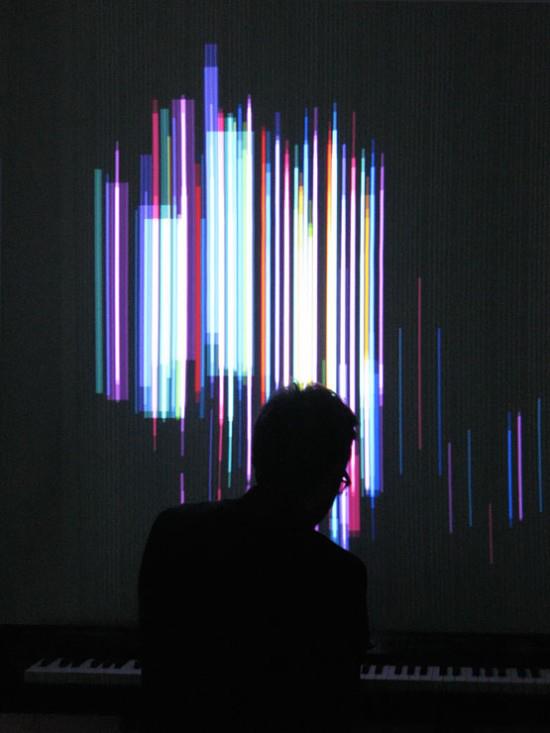
Clavilux 2000 is a subtle music visualization installation that represents the playing of sounds by way of a simultaneous animation that can be interpreted. For every note played on the keyboard, a stripe appears of which the dimensions, position and color correspond to the way the particular key was stroke.

QUBIT AI: Matthias Oostrik

The Forgettable Art Machine

FILE 2024 | Installations

International Electronic Language Festival

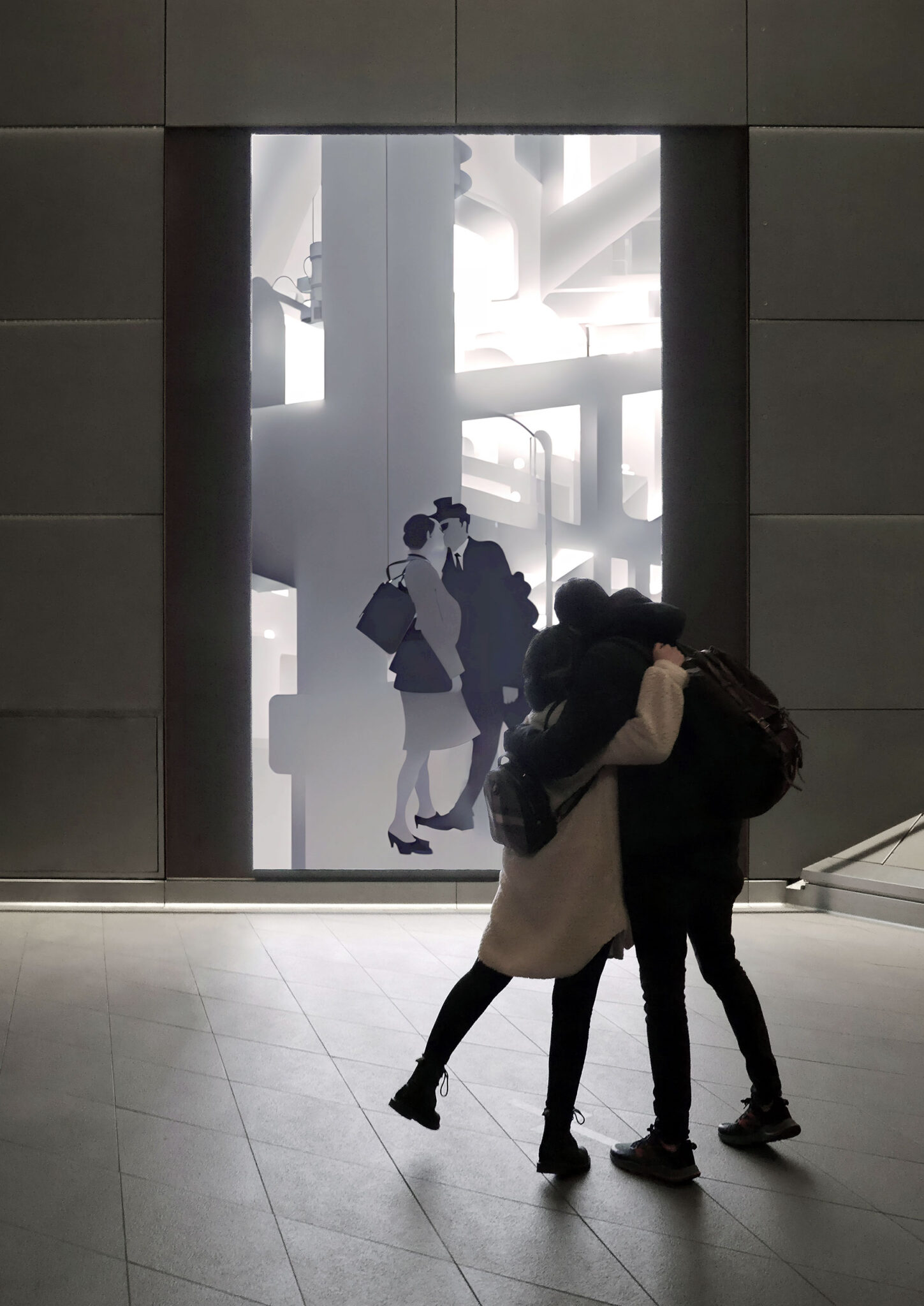
The Forgettable Art Machine is an artificial intelligence-driven video installation. When facing the panel, the public has their image captured, starting a cycle of analysis, creation and destruction. From this data, a composite emerges, slowly transforming the visitors’ image into a generative visualization. Once the cycle is complete, the composition is deleted, waiting for a new audience to be captured.

Bio

Matthias Oostrik works at the intersection of digital art, installation art, cinema and architecture. His works establish unpredictable relationships between people and their surroundings. Using digital technology, his installations allow visitors to reshape their environment and their relationships with each other. Oostrik collaborates with renowned professionals and, above all, with his audience, who often become an integral part of his work.

Credits

Co-production: Zester
IA Music: Than van Nispen
Maki Namekawa

Pianographique
Pianographique is a series of collaborations of real time visual artist Cori O’Lan and Maki Namekawa. The visualisations are not videos that are more or less synchronous to the music and it is also not the musician’s playing to prefabricated material, they are jointly created together in the moment of the performance. As with most of Cori O’Lan’s visualizations, all graphic elements are derived directly from the acoustic material, i.e. the sound of the music. For this purpose, the piano is picked up with microphones and these signals are then transformed by the computer into a multitude of information about frequency, pitch, volume, dynamics, etc… This information, in turn, is used to control the graphics computer, create graphical elements or modify them in many ways. Since these processes take place in real time, there is a direct and expressive connection between the music and visual interpretation. The visualization is actually not “created” by the computer but much more by the music itself – the computer is rather the instrument, the brush operated, played by the music.

Brian Eno & Peter Chilvers

Bloom
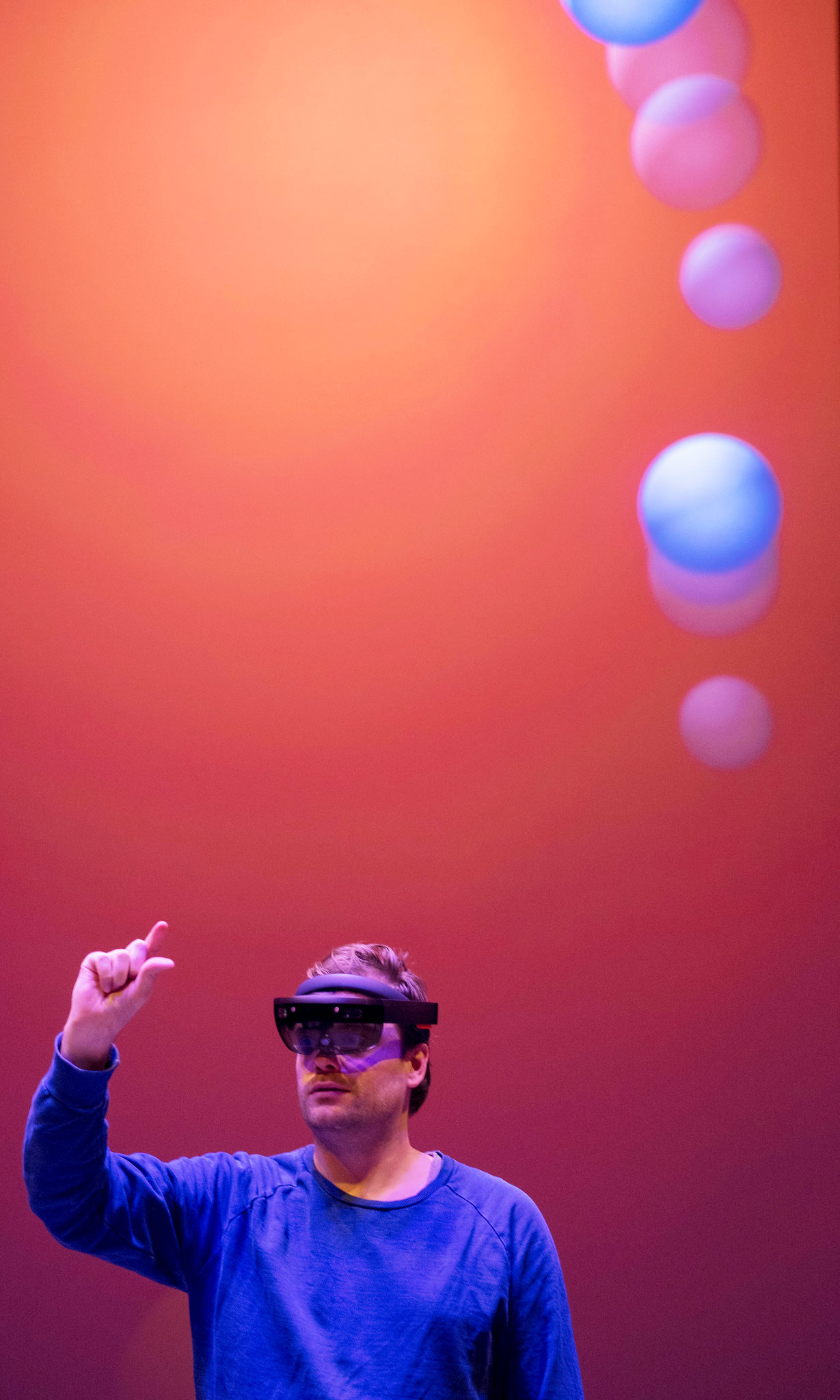
Requiring no musical or technical ability, the egalitarian and user-friendly Bloom app enabled anyone of any age to create music, simply by touching the screen. Part instrument, part composition and part artwork, Bloom’s innovative controls allowed users to create elaborate patterns and unique melodies by simply tapping the screen. A generative music player took over when Bloom was left idle, creating an infinite selection of compositions and their accompanying visualizations. This version uses mixed reality with HoloLens.