highlike

Mikey Peterson – Terra’s Tomb – United States

TERRA’S TOMB

Mikey Peterson


FILE SÃO PAULO 2026: Inter-creativity – Art and Technology – VIDEO ART SHORT
Electronic Language International Festival


Terra’s Tomb – United States

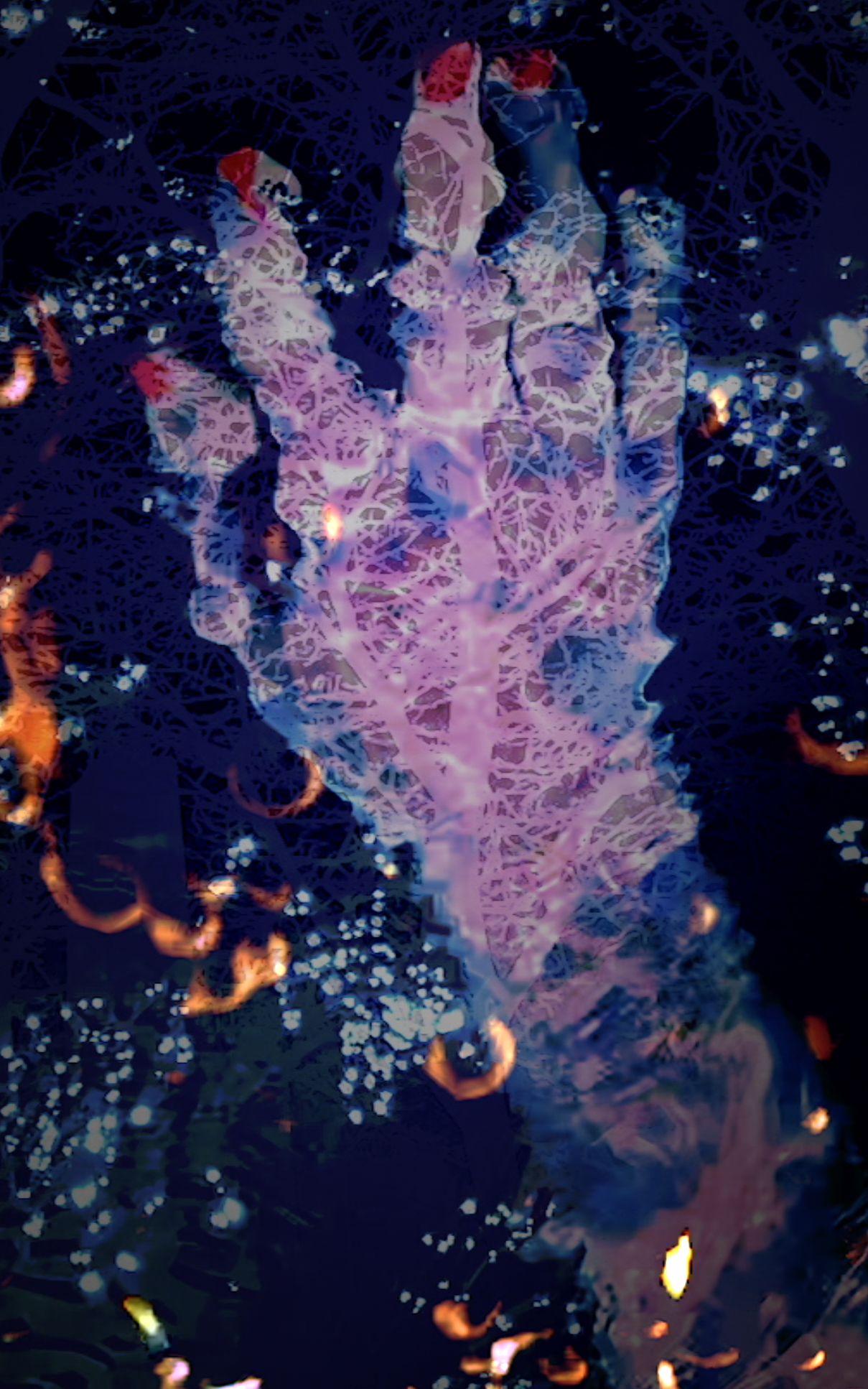
As we slowly move through organic textural fields, we experience the unlocking of a new place that lies somewhere between the physical, the virtual, the scientific, and the spiritual. Here we encounter what is both strange and familiar—a world where we entwine with nature’s fluid states—triggering surreal transformations that can mirror our minds’ narratives and release the invisible specters that define our present and alter our future. 

BIO

Mikey Peterson’s imagery aims to disturb our self-perception and sense of place. Footage is taken out of its natural context and manipulated to relay other truths about the world that it is from—unveiling connections between memory, environmental preservation, environmental degradation, and the human condition. He has shown at museums, galleries and festivals all over the world.

Clouds Architecture Office

AVATAR X Lab
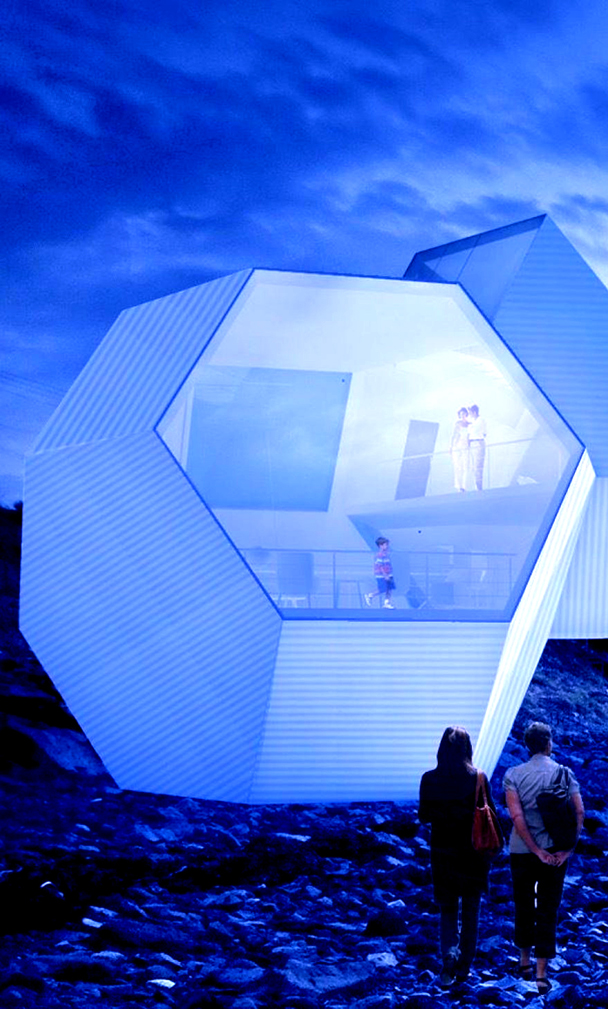
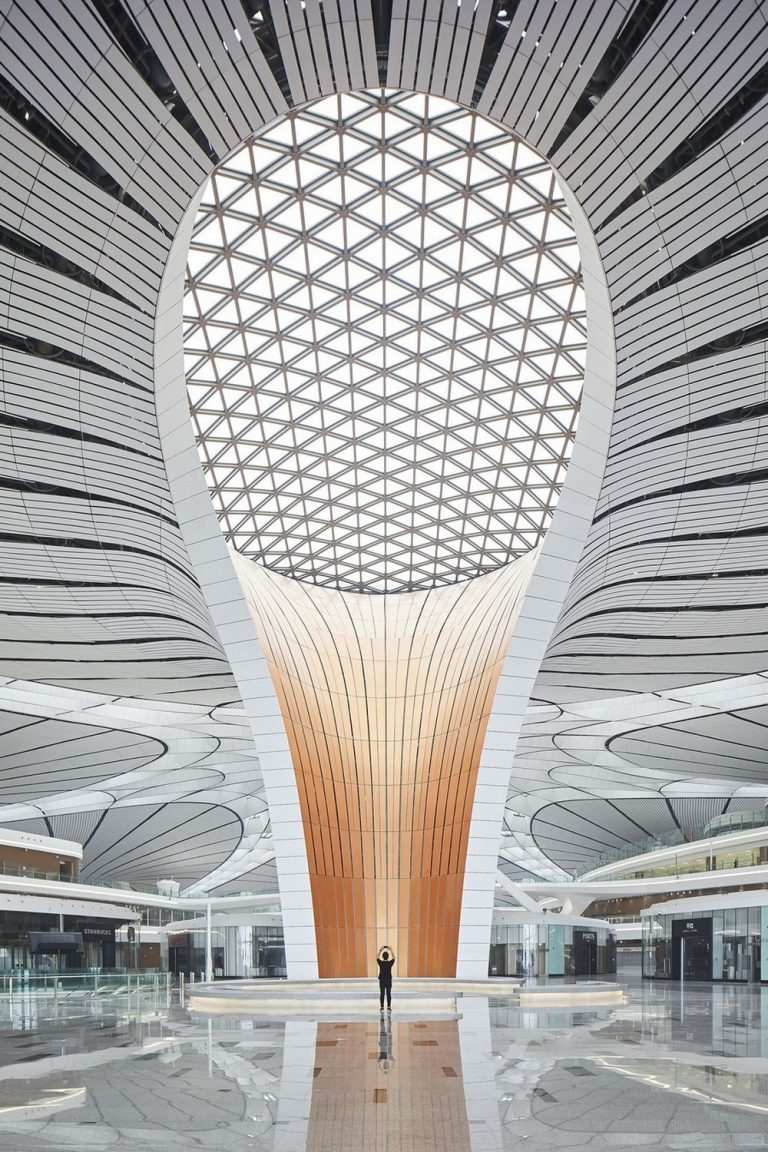
The project is a partnership between ANA Holdings Inc. and Japan Aerospace Exploration Agency (JAXA); a part of AVATAR X, a collaborative program for the advancement of space exploration and development. ANA and JAXA are both experts at launching vehicles into the atmosphere, the feeling of suspension or ‘being in the air’ is natural for both entities. The AVATAR X Lab Building is designed as a suspended building floating above a moon-like crater. The multi-story structure floats eighteen meters above the crater bottom, and is accessible by a bridge. When astronauts board a spacecraft they cross a bridge; when we board a plane we walk across a jet bridge between the terminal and airplane. This is our last contact with familiar ground before taking off for someplace new. The suspended building embodies this crossing of thresholds: after passing over the bridge you are transported to a new place, the AVATAR X Lab Building, where technological innovation will change how we see the world.
JAN VERCRUYSSE

Les Paroles

According to Jan Vercruysse, art no longer has a place in this world. As a result, he seeks, through his work, a new place for art and new conditions in which to work. His earliest photographic works recreated historical subjects, such as self-portraits, still lifes and mythological scenes. Gradually, he evolved a sculptural vocabulary of narrow rooms, empty frames and bases without objects. The sacred spaces created by Vercruysse in these works are known as Chambres or Tombeaux and represent the artist’s last-ditched attempts to create art that refers only to itself. His later works, such as plaster pianos, blue Murano glass musical instruments and bronze and ceramic turtles, achieve a perfect equilibrium between conceptual conviction and aesthetic concerns, and also reflect a real pleasure of making.

Chang Gi Lee – Artificial Emotion – South Korea

ARTIFICIAL EMOTION

Chang Gi Lee


FILE SÃO PAULO 2026: Inter-creativity – Art and Technology – VIDEO ART SHORT
Electronic Language International Festival


Artificial Emotion – South Korea

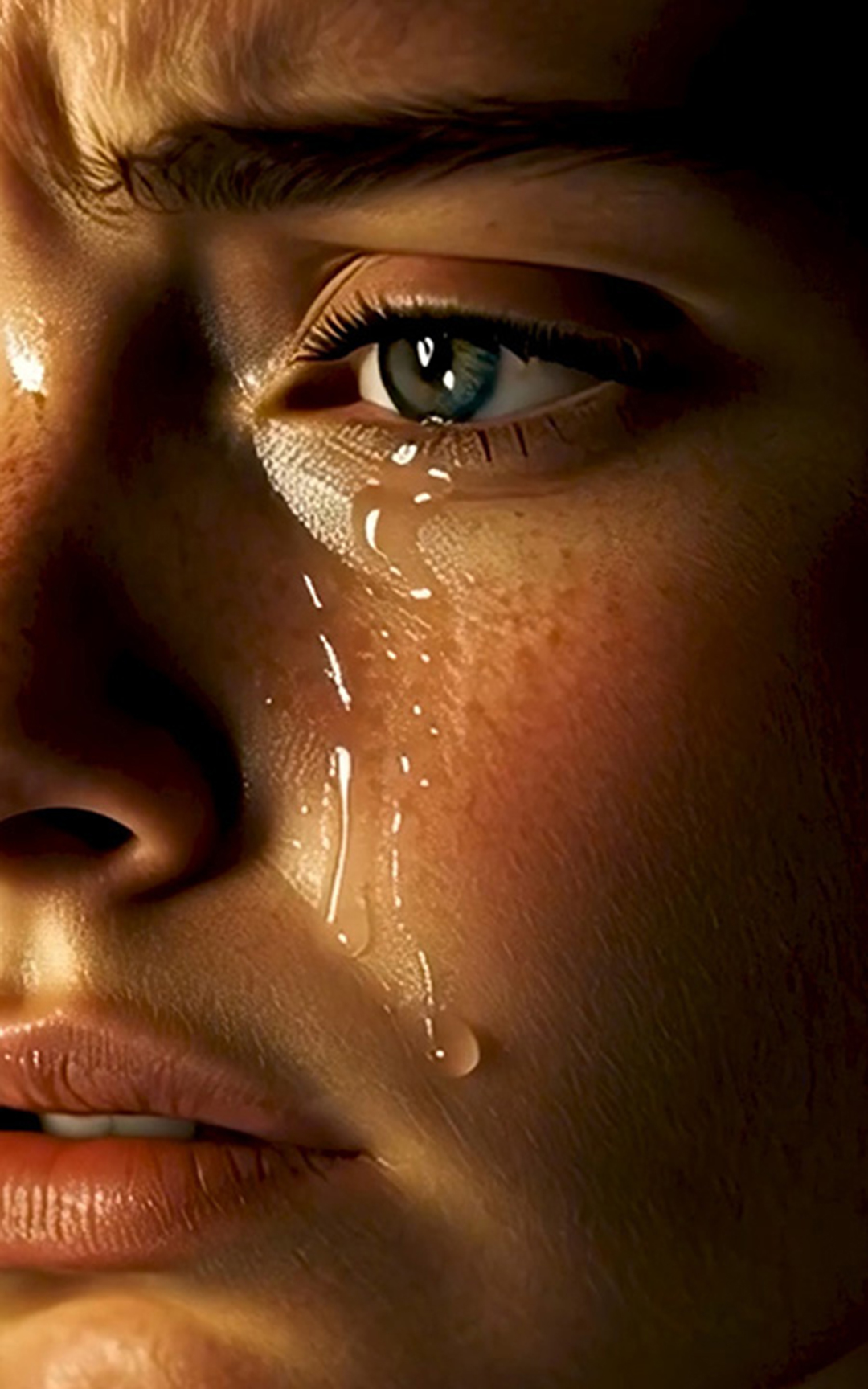
Can artificial intelligence replace human emotion as well as intellect? This work originates from this fundamental inquiry. The creative process involves presenting photographs to an AI and prompting it to visualize the perceived emotions as humanoid figures. Through this experience, the audience is confronted with the profound gap between their own intuitive feelings and the machine’s algorithmic interpretation and expression.

BIO

Chang Gi Lee is a media artist investigating the boundaries between nature, humanity, and AI. Holding an MS from KAIST and an MFA in Media Art, he combines technical precision with philosophical inquiry. Winner of the Alan Turing Award in Chicago and ISEA presenter, his work is showcased globally in New York and Paris.

Sandrine Deumier – DEEP-SKIN – à fleur de peau – France

DEEP-SKIN – À FLEUR DE PEAU

Sandrine Deumier


FILE SÃO PAULO 2026: Inter-creativity – Art and Technology – Animation
Electronic Language International Festival


DEEP-SKIN – à fleur de peau – France

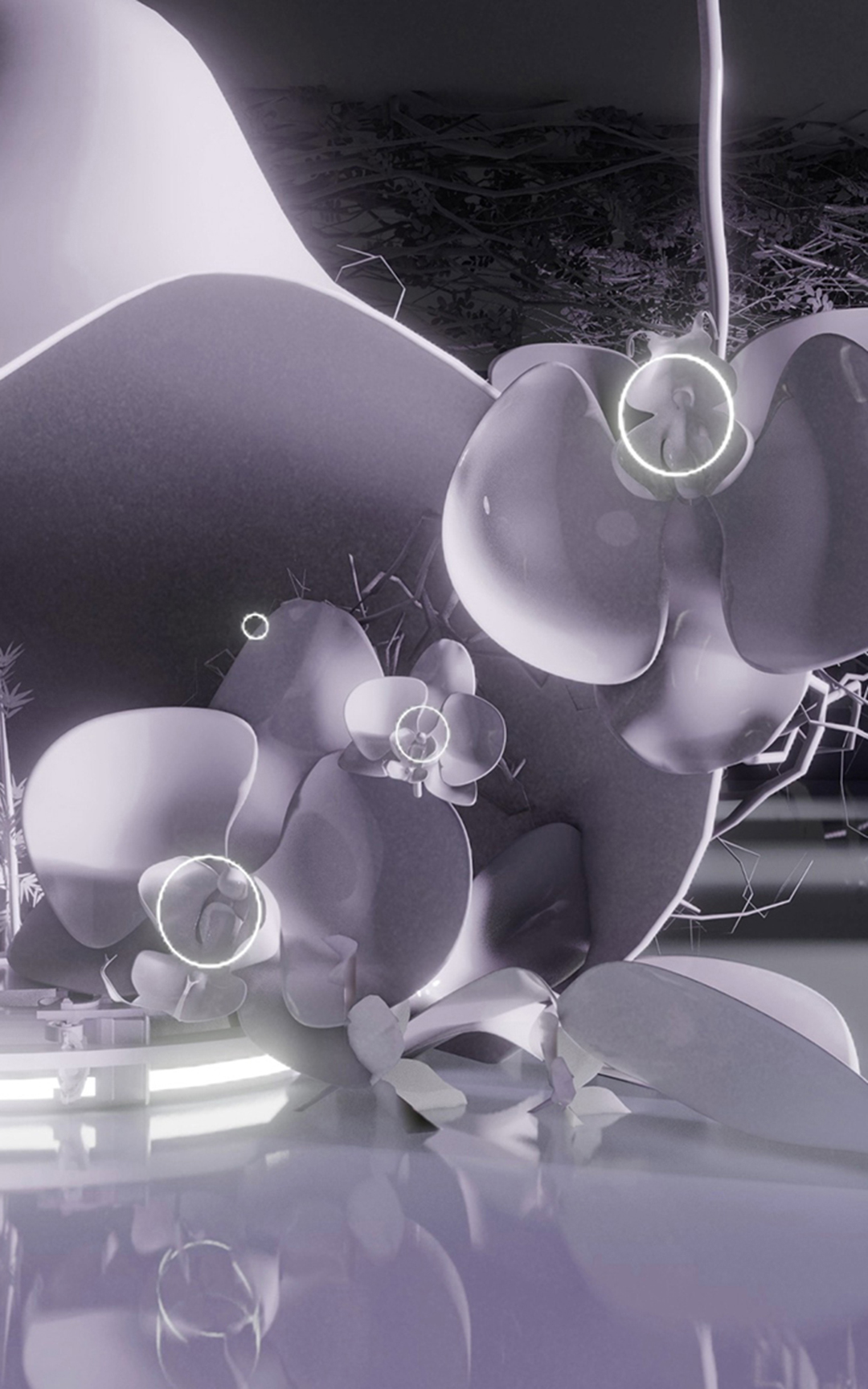
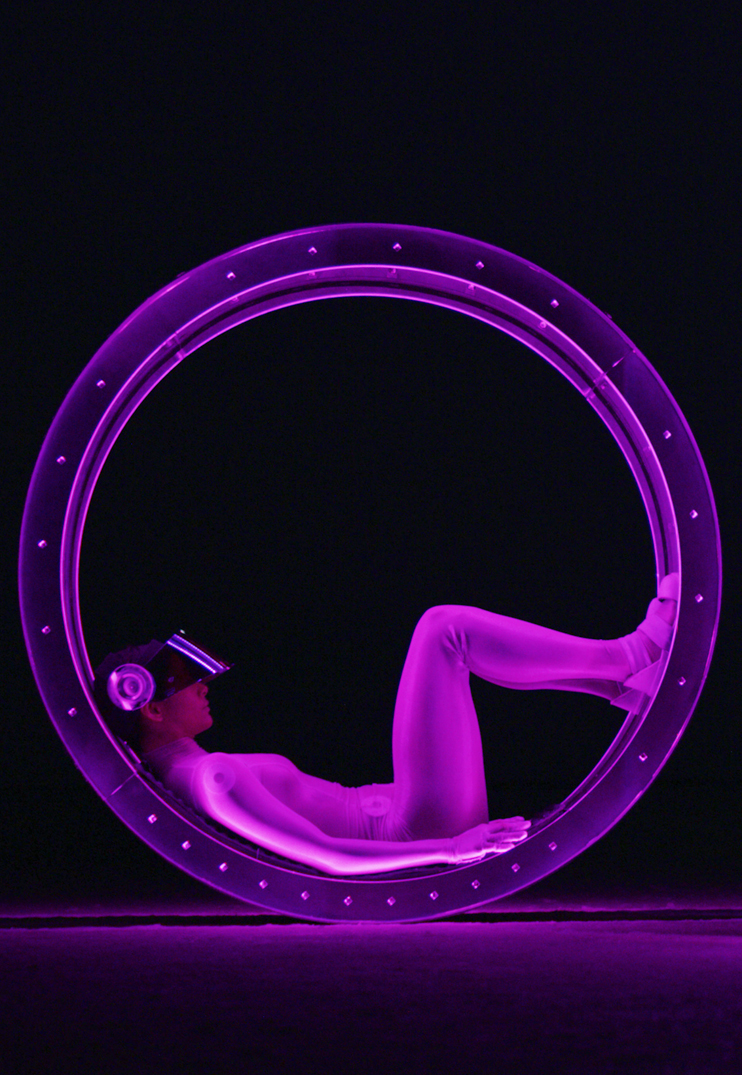
DEEP-SKIN – à fleur de peau is a speculative fiction in which two characters engaged in an online dialogue have the opportunity to explore a new form of intimacy where touch would no longer have a reason to exist, but where other modes of relationship would be put in place through another skin, more capable of emotionally and psychologically touching the human spirit: a kind of even more tactile skin, connected to new emotional depths.

With the support of Absolute Art AIR (Taiwan)

BIO

Sandrine Deumier is a multidisciplinary artist working in the fields of performance, poetry and video art whose work investigates post-futurist themes through the development of aesthetic forms related to digital imaginaries.

FILE 2026 – Registration Open for Art and Technology Festival

FILE 2026

Registration is now closed for participation in  FILE – Electronic Language International Festival 2026 , one of the most important events dedicated to art and technology. FILE invites Brazilian and international artists , as well as researchers, educators, and creators , to submit original artistic works and educational proposals — lectures, workshops, and training activities — focused on contemporary technological poetics.

Applications were open until February 19, 2026 .

With 26 years of experience , FILE is a non-profit cultural organization dedicated to promoting creation, research, and experimentation in Art and Technology , bringing together artists, scientists, programmers, and thinkers around exhibitions, events, and publications. The selected projects will be part of the FILE 2026 program, scheduled to take place at the FIESP Cultural Center in São Paulo, between August 19 and October 11, 2026,  with the possibility of parallel activities in other Brazilian states.

The call welcomes proposals in a wide variety of languages ​​and formats, intended for indoor or outdoor environments , in which the aesthetic experience emerges from the encounter between interfaces, data, space, and body . FILE 2026 seeks projects that propose new forms of perception, interaction, and critical and poetic reflection , expanding the debate on the aesthetic, cultural, social, and sensory impacts of contemporary technologies.

Access the registration form.

FILE SÃO PAULO 2025: SYNTHETIKA – Erika Kassnel-Henneberg

Deep Paula

Erika Kassnel-Henneberg

FILE SÃO PAULO 2025: SYNTHETIKA – Art and Technology – Shorts Films AI
Electronic Language International Festival


Deep Paula – Germany

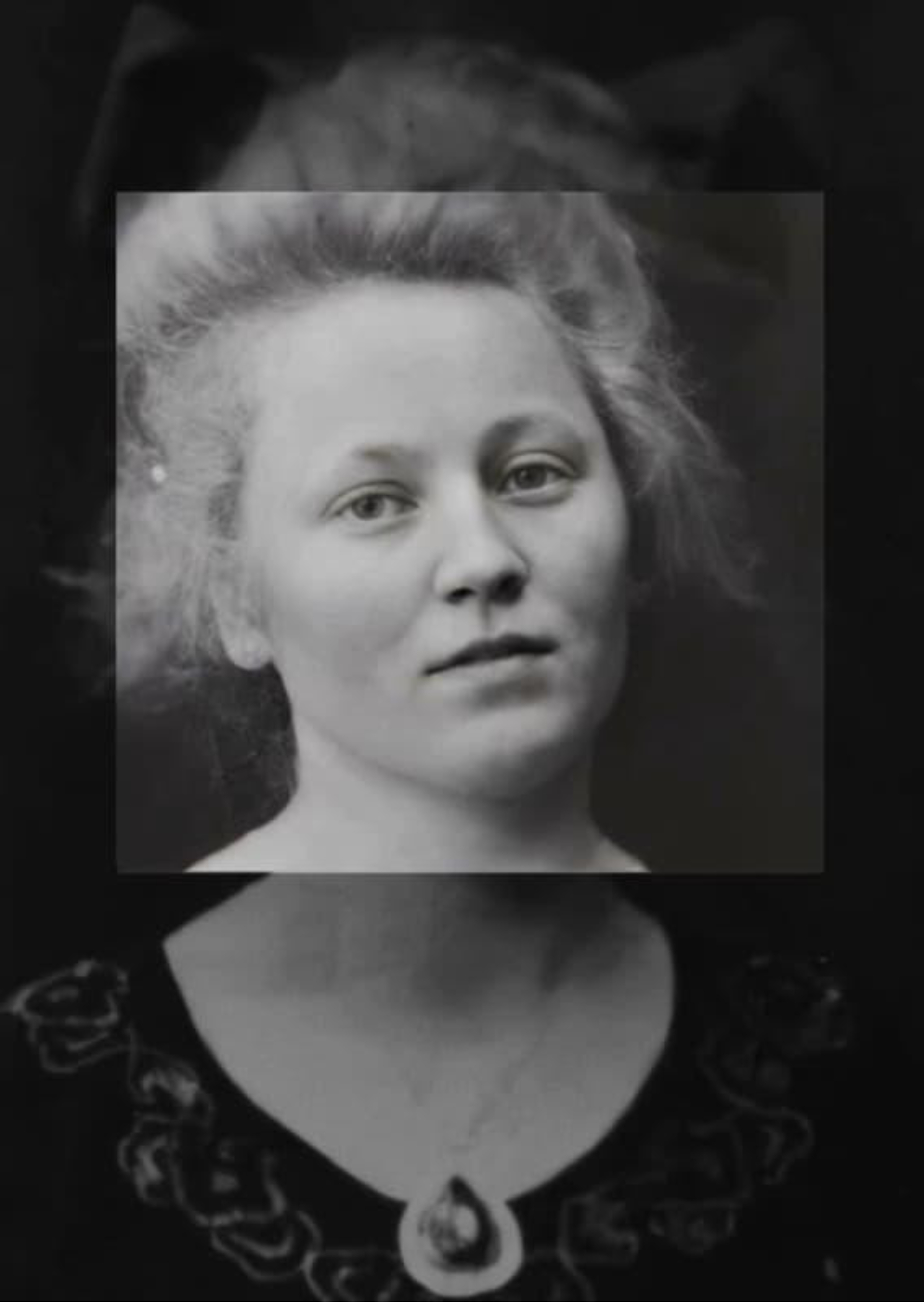
An old photograph is “brought to life” by artificial intelligence. What happens when flawed memory gives way to artificial vividness? Today, a perfect, seemingly alive digital self can be created. Will we become eternal puppets wandering the web? Who pulls the strings? And if a lost loved one is replaced by a digital twin, what becomes of grief?

BIO

Erika Kassnel-Henneberg (1973) is a conceptual artist. Her work explores a new humanism in the face of digital complexity. She investigates memory through AI-driven data analysis and questions perception as a construct between reality and fiction.

Music: AI-generated.

Synthetika: the age of artificial creativity | FILE 2025

Synthetika

Unlike Hegel, who called the set of ideas of a given era the “spirit of the times” (Zeitgeist), we could call our era “Zeitsynthetik” (the time of the synthetic). In the classical period, art was inseparable from religion, whose essence was spirituality; in modernity, spirituality was replaced by the ideologies of grand narratives (capitalism and socialism). The classical arts invented poetics and aesthetics: the beautiful and the sublime. Modern art invented the avant-garde that proposed to be revolutionary, its driving force was the dialectic of the new without the old, and on the other hand, postmodernists mixed everything with everything, including the old with the new. Today we live in the era of synthetic technologies, the era of disruptive technologies. In which the new of modernity is no longer sufficient or surprising. Syntheticity is the new vector: synthetic algorithms; synthetic virtual realities; synthetic intelligences. The driving force behind synthetic art is: 1) the fusion of new art and technological innovation, and 2) the inter-creativity between the artist and artificial creativity. Prompt engineers strategically simulate personas for AIs in order to move away from triviality and thus obtain more creative results. Synthetic intelligences are no longer just instruments, but partners of artists in the construction of a creative and innovative symbiosis.

Art and culture are going through a moment in which creativity ceases to be just human, it becomes artificial; syntheticity thus prospects a post-culture, a new FORM: the form SYNTHETIKA.

Ricardo Barreto

Curator and co-founder of FILE

Electronic Language International Festival

BREAKFAST

Interwoven Existence

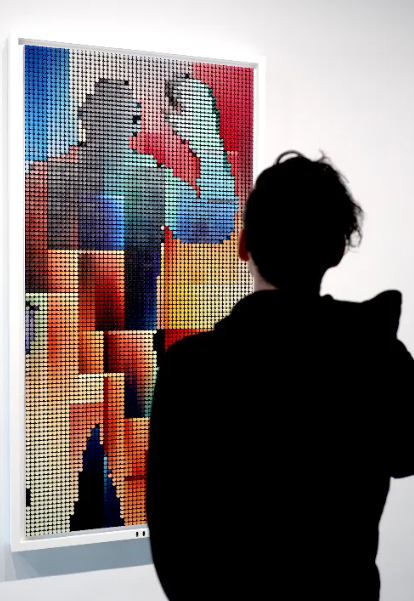
The artwork draws inspiration from the concept that individual human beings are interconnected rather than isolated. It is a visual representation of collective strength and diversity. The artwork is divided into sections of various sizes and colors, each symbolizing the diverse origins of people around the world.
As viewers approach the artwork, it becomes interactive, reflecting their image across the piece. Upon stepping away, a recording of their interaction is placed into one of the sections, symbolizing the randomness of a given person’s birthplace and socioeconomic position. Subsequently, recorded video clips of previous viewers are displayed in adjacent sections, integrating new viewers into the existing community of participants.

QUBIT AI: Marc Lee & Shervin Saremi

Speculative Evolution, Prototype 1

FILE 2024 | Installations
International Electronic Language Festival
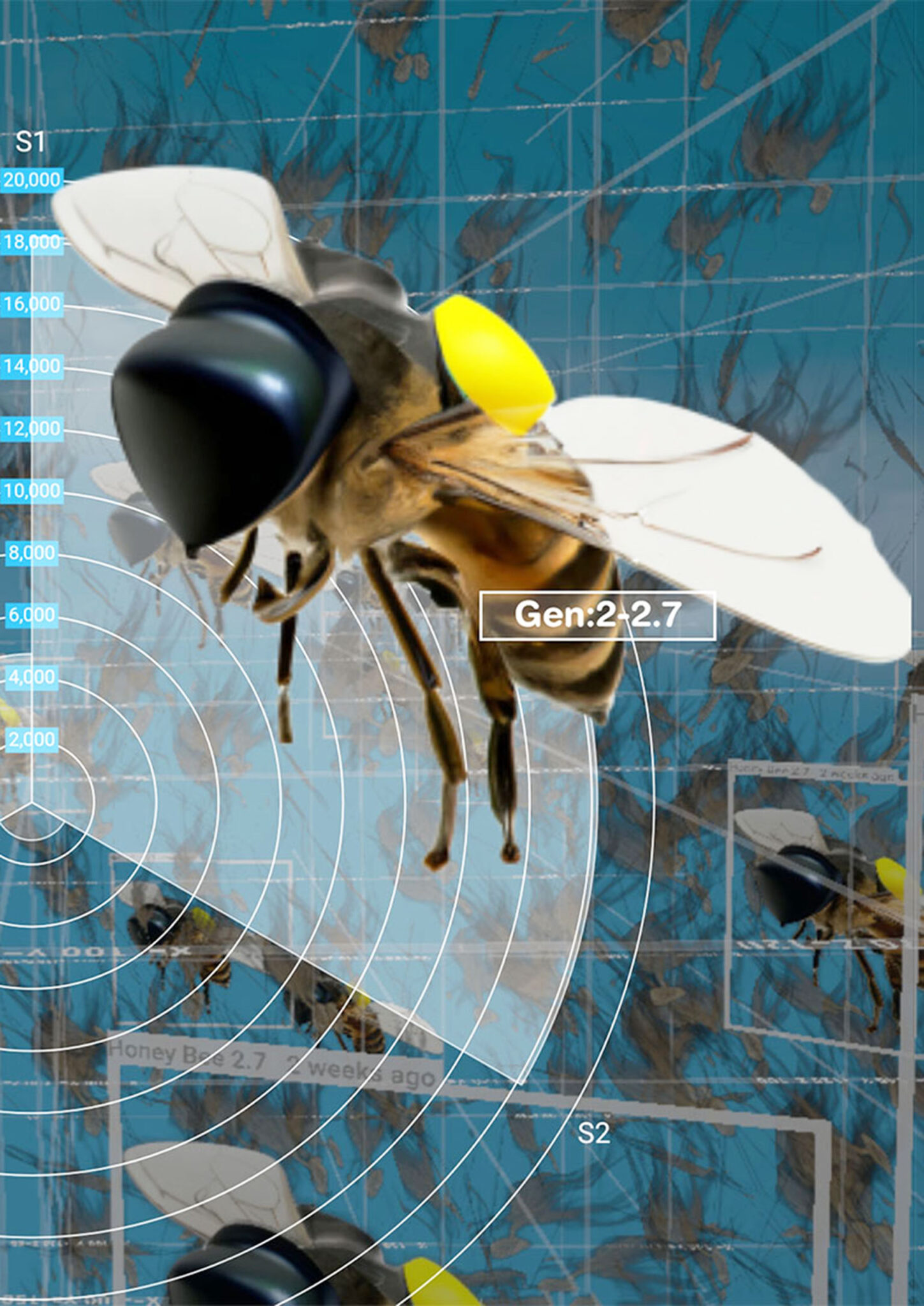
Speculative experiment on a future ecosystem under strict control. The narrative takes place in a simulation, 30 years in the future, where artificial intelligence and synthetic biology collaborate to optimize an environment for cultivated species. An AI-powered simulator helps visitors generate new species to balance the ecosystem. Inspiration comes from the book Under the White Sky by Elizabeth Kolbert and artists’ stories about life on a damaged planet.

Bio

Marc Lee is a Swiss artist focused on real-time rendered audiovisual installations, AR, VR and mobile applications, critically exploring creative, cultural, social, ecological, political and speculative themes. His work has been exhibited in important museums and new media art spaces. Shervin Saremi is an Iranian musician and audio engineer specializing in sonic computing, procedural sound design and production. Currently researching immersive audio at UdK Berlin.

NOVA BIENAL RIO of art and technology

The NOVA BIENAL RIO is an autonomous and independent event that transcends the scope of a conventional international exhibition; it is a call to innovation and imagination. Under the theme “New Aesthetic and Supercreativity,” we invite you on a journey through the world of art driven by technology. Hosted by the city of Rio de Janeiro, it takes place at both the iconic Museu do Amanhã and Praça Mauá, reshaping the interaction of the public with art. As you enter the NOVA BIENAL, you will be invited to explore unique aesthetic expressions, looking towards the future through digital and technological lenses. Access NOVA.

Theo Triantafyllidis

Ritual
An undisclosed location. Dry land under a scorching sun. Something abominable has happened here in recent memory. Now a ritual is taking place. The remains of what was once human are flickering in darkness. Nature is reclaiming what is hers. She is savage and unforgiving. She is laughing at us. Her sinister laughter echoes in the emptiness. Ritual re-imagines the notion of site-specificity within the mediated landscape. The digital and physical work for this exhibition sit in a forgotten mining town somewhere in the California desert. The viewer is invited to interact with Triantafyllidis’ new live simulation, sculptures and custom electronics blurring the line between the real life and online experience

Ei Wada

Toki Ori Ori Nasu – Falling Records

FILE FESTIVAL


In this work, open reel tape recorders are placed on top of high pedestals and, as they play back, the magnetic tape unspools down into plastic receptacle below. The tape that accumulates in the container piles up as time passes, weaving an unusual pattern in the space. When the tape stops accumulating it is wound back up at high speed to a symphonic soundtrack. The pattern that had existed until then is extinguished and a new pattern is then woven.

STUDIO FUKSAS

Matilda Home
The idea to bring design also in common life attracted us. This is a new concept of habitat of house. It’s a mobile home it can be everywhere around the world; everybody can be a client. It’s a modular unit so many of them can be added together like a cloud. It can even be a city .This is not an object, it is a concept, it can be a city, a landscape or simply an home. Easy to build, it can be done in different materials more or less expensive. Matilda is a completely different space since nowadays we don’t need so much storage space, you just need to have a screen. The only thing is important is to have a nice place to eat, to seat and to sleep but also this can be done with something you close when you don’t need

matthew bird

parallaxis
In a new moving-image work by Melbourne-based artist and architect Matthew Bird, two bodies move across the land, working with large cylindrical instruments. We witness them map and survey a terrain analogous to universal physical and psychological locations, each revolution marking a paradoxical attempt to pin an earthly position through perpetual movement. Playing on the human need to understand our relationship to the people and places around us, Parallaxis considers the potential for architectural processes and measurements to act as a foundation for structures of understanding.

Jon McCormack

Colourfield
Colourfield is an evolutionary ecosystem of colour. Colour agents try to exist in a simple universe by producing colours that are suited to their environment. This environment is determined by the other agents and the colours they produce. Entering into complex feedback cycles, Colourfield presents an evolving palette of shifting colours. Different configurations emerge based on the strategies the ecosystem discovers for co-existance and co-dependency. Harmonious configurations often remain stable for a short while, before eventually being replaced by new relations, better able to survive in the ever shifting environment.

Mark Ramos & Ziyang Wu

Networked Ecosystem
In Networked Ecosystem, natural phenomena have been replaced by digital and artificial systems as forces that drive development: Electricity/battery = sustenance, WIFI signals = nutrition, Lidar data = fire/heat. Data Organisms populate this digital ecosystem as native life forms in the form of bots, AI’s, and avatars. Visitors to this networked landscape develop new kinds of digital senses to experience data as environmental changes, and interact with the simulated world and each other in an ever-changing online environment.

Yonakani: Young ah Seong, Takuji Narumi & Tomohiro Akagawa

Thermotaxis
file festival
The term “Thermotaxis” signifies a movement of a living organism in response to heat stimulation. A thermal spot has power to encourage people to gather together like open fires in winter or water places in summer. The work “Thermotaxis” characterizes the open space as invisible thermal spots by providing people with thermal information. Our work aims to create a new spatial structure for communication not by architectural approach but by using information technology.

Laura Splan

Disrupted Domains
Disrupted Domains features new animations created with molecular visualization software and SARS-CoV-2 structures displayed in Quorum at the Science Center. The animations were developed in remote collaboration with uCity Square biotech company Integral Molecular for Splan’s Science Center Bioart Residency while “sheltering in place” for COVID-19. The work in the exhibition is part of Precarious Structures, Splan’s project that explores the interconnectedness of cultural and biological systems during the coronavirus pandemic. Accompanying soundscape by Frank Masciocchi recorded in collaboration with Splan over Zoom.
VIDEO

Refik Anadol

Quantum Memories: Nature Studies
Technological and digital advancements of the past century could as well be defined by the humanity’s eagerness to make machines go to places that humans could not go, including the spaces inside our minds and the non-spaces of our un- or sub-conscious acts. These unique pieces of the “Quantum Memories” series exhibit arresting visuals and colors that speculate the probability of reaching invisible spaces. They are composed in collaboration with a generative algorithm enabled by artificial intelligence (AI) and quantum computing, a new form of computing that exploits the unusual physics of the subatomic world. It turns the visual data that flows around us into an artwork that represents our collective and digitized memories of nature and encourages the viewer to imagine the potential of this computing technology for the future of art, design, and architecture.

REMTY ELENGA

ALL THE SCREENS IN MY HOUSE

Her nearby environment and the observations she makes in it form the starting point for Remty Elenga (Los Angeles, 1987) in creating new work. In doing this she likes to explore how we give meaning to various layers of reality, looking for contradictions in time and place, the visible and invisible, between what is real and what isn`t.

WALTER DE MARIA

The Lightning Field

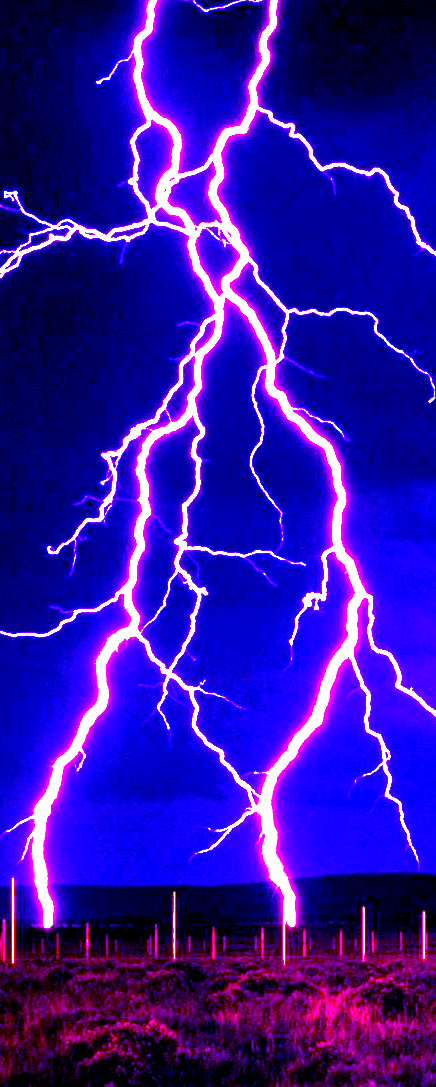
His last large-scale work “The Lightning Field”, a Land Art project built on a semi-desert plain in New Mexico, in the United States, between 1971 and 1977, consists of four hundred meters high, placed in a geometric matrix strict. This area is often plagued by storms and these metal stakes serve to attract the rays, accentuating the dramatic spirit and the scale of the place.

Marte Marte Architekten

State Gallery

Like a dancing cube shimmering in titanium, the new State Gallery of Lower Austria is placed between the picturesque inner cities of Krems and Stein, and links these with the surrounding natural and river landscape. The spherical curvature and the strongly outward-projecting external walls presented a challenge: titanium shingles and glass panes were individually produced, having been calculated in 3D. Inside, light-flooded areas alternate with daylight-free levels that can be used as required. The project is a strong illustration of the capabilities of the Vorarlberg architectural practice of Marte.Marte.

PETRA CORTRIGHT

HELL_TREE

Petra Cortright est une artiste Internet qui réalise des vidéos, des animations gif et des images fixes. Sa page d’accueil ressemble à une page html datée avec un tas de smileys et une liste de son travail: travail authentique, expérimental et nostalgique avec beaucoup de paillettes, d’étincelles, de collages et de personnages faisant des images. Tout au long du site Web, il y a des animations de souris amusantes, par exemple des étincelles qui suivent votre pointeur lorsque vous vous déplacez sur l’écran. Une autre chose intéressante est un cadre qui est attaché à votre pointeur afin que vous puissiez placer le cadre sur un portrait. Cortright a étudié à la Parsons School of Design de New York et au California College of the Arts de San Francisco. Aujourd’hui, elle vit et travaille en Californie. Elle a exposé à l’international dans des galeries telles que Gloria Maria Gallery (Milan) et Spencer Brownston (New York) entre autres. Récemment, Cortright a exposé avec sa série SO WET à la Preteen Gallery de Mexico.

Refik Anadol

Quantum memories
Quantum Memories is Refik Anadol Studio’s epic scale investigation of the intersection between Google AI Quantum Supremacy experiments, machine learning, and aesthetics of probability. Technological and digital advancements of the past century could as well be defined by the humanity’s eagerness to make machines go to places that humans could not go, including the spaces inside our minds and the non-spaces of our un- or sub-conscious acts. Quantum Memories utilizes the most cutting-edge, Google AI’s publicly available quantum computation research data and algorithms to explore the possibility of a parallel world by processing approximately 200 million nature and landscape images through artificial intelligence. These algorithms allow us to speculate alternative modalities inside the most sophisticated computer available, and create new quantum noise-generated datasets as building blocks of these modalities. The 3D visual piece is accompanied by an audio experience that is also based on quantum noise–generated data, offering an immersive experience that further challenges the notion of mutual exclusivity. The project is both inspired by and a speculation of the Many-Worlds Interpretation in quantum physics – a theory that holds that there are many parallel worlds that exist at the same space and time as our own.

Kohei Nawa

Throne
This work attempts to express that premonition as an immense “floating vacant throne”. If instances of power and authority have ruled since ancient times, and the pyramids provide one example—we must ask what the future will hold. Created with reference to the forms of festival floats and portable shrines that appear in the rituals and festivities of the East, the sculpture fuses today’s 3D modeling techniques with gold leaf applications that date back to ancient Egypt. In the frontal center is an empty room, space enough for a 2 to 3-year-old child to sit, suggesting that the new intelligence is still in a young state. Shining, spherical mirrors placed at the center in front and back. Made of platinum foil, they represent “the eyes overlooking the world”, where the frontal one faces the future and the back reflects into the past.

MOMOYO TORIMITSU

鳥光桃代
Miyata Jiro
“Miyata Jiro” by Momoyo Torimitsu is a life size replica of the typical Japanese businessman. Sporting a suit, glasses, and a receding hair line complete with a comb-over, Miyata has mechanically crawled the metropolises of New York, London, Amsterdam, Paris, Rio de Janeiro, and Sydney. With the aid of the artist in full nurse costume, the duo engages street and business life (Miyata has crawled the likes of Wall Street and La Defense — epicenters of business cultures as well as typical touristic destinations). The performance and audience reactions were videotaped and photographed and six monitors at the Dikeou Collection play the respective videos, each identified by a small flag for the country in which the crawl took place.

Liam Young

Where the City Can’t See
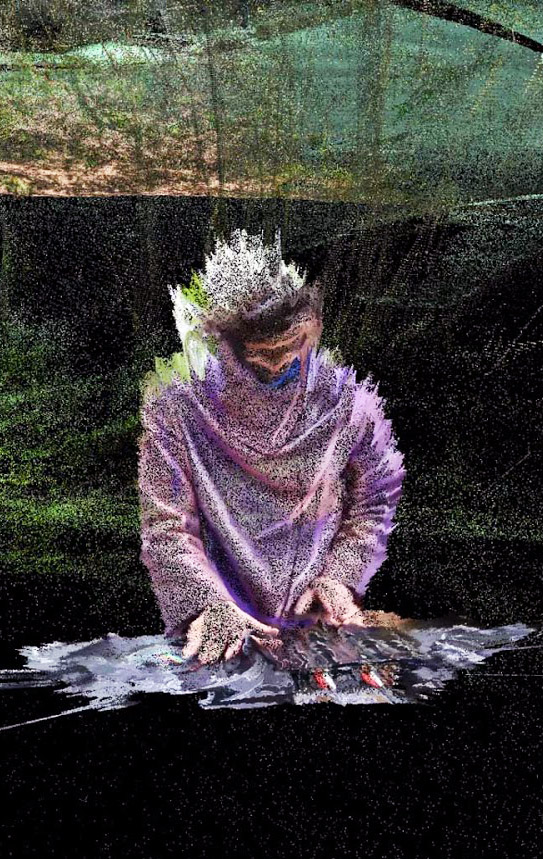
Directed by speculative architect Liam Young and written by fiction author Tim Maughan, ‘Where the City Can’t See’ is the world’s first narrative fiction film shot entirely with laser scanners, designed in collaboration with Alexey Marfin. The computer vision systems of driverless cars google maps, urban management systems and CCTV surveillance are now fundamentally reshaping urban experience and the cultures of our city. Set in the Chinese owned and controlled Detroit Economic Zone (DEZ) and shot using the same scanning technologies used in autonomous vehicles, we see this near future city through the eyes of the robots that manage it. Exploring the subcultures that emerge from these new technologies the film follows a group of young car factory workers across a single night, as they drift through the smart city point clouds in a driverless taxi, searching for a place they know exists but that the map doesn’t show.

Fito Segrera

The form of becoming
In this abstract system, each intelligent agent is embodied as a motor, the states in its environment is represented as an angular range of rotation and the actions as one of two directions in which each agent can move a linear actuator. Each linear system holds a segment of a long black string, this translates as a point in the represented line. Once the system runs, each agent learns, from informational equivalents of pain and pleasure, to move towards the highest values within its environment, this means ultimately to displace its position from point A to B. In order for an agent to learn, it needs time, generations of exploration, each agent will get punished for bad decisions and rewarded for appropriate ones. Every time a learning generation is finished, a light will blink for that particular agent, indicating the end of a cycle and the achievement of new knowledge; the agent becomes more intelligent. Once all agents learned to be and stay in point B, the system, as a collective, has successfully mutated into a stable, balanced, symmetric and silent form; a straight line. Finally, after a few seconds, the sculpture forgets, all agents are rebooted and the cycle of creation, chaos and order restarts, this time with a totally different and unique behavior.

Trisha Brown

Newark & M.G
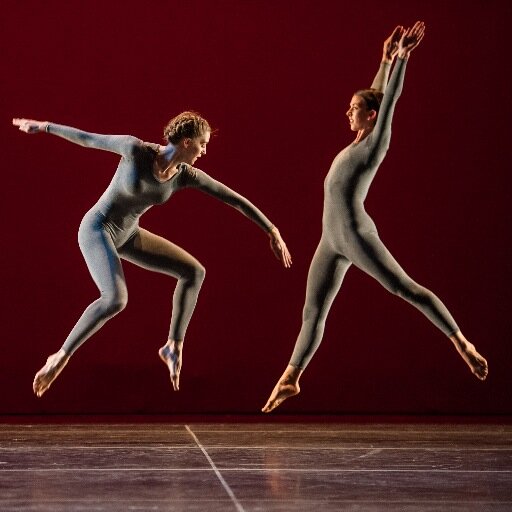
La place de Trisha Brown dans l’histoire de la création Outre-Atlantique est unique : après Martha Graham et sa modern dance, Merce Cunningham qui dynamite les codes, Trisha Brown va s’imposer dans un courant, la danse postmodern qui a influencé nombre de chorégraphes actuels. La danse ici est jaillissante, faite de duos de plus en plus complexes avec bien sûr ce jeu des équilibres instables comme autant de coups d’arrêt au geste. Le plus souvent, sous nos yeux, un couple d’interprètes voit surgir un autre tandem dans un incessant jeu de déconstruction des lignes. Des marches, des courses, des dialogues féconds s’instaurent en scène. Newark est pour beaucoup une des grandes pièces de Trisha Brown.

Studio Tish

Vanishing Places
Vanishing Places is an audio-visual installation that investigates dialogues and tensions between the real and artificial. In keeping with the studios recent experiments with real-time generative visuals, Vanishing Places brings a new iteration of the intersection of digital life-simulating systems and organic interaction.

Ed Atkins

Safe Conduct
Take off your shoes, place your belongings in the tray and empty your pockets. What happens when we unquestioningly subject to airport security regulations – or other, less overt protocols in society? This is one of the questions addressed by artist Ed Atkins in a new work produced especially for the x-rummet venue at the SMK. The video work Safe Conduct by British artist Ed Atkins is a burlesque of airport security instruction videos. Atkins mixes appropriated and CGI footage of the artist’s own devising, set to Ravel’s ‘Bolero’. A carousel of protocol, rendered bodies – both literally and metaphorically – abattoirs and metal detectors.

POULENC

פולנק
プーランク
Karen Vourc’h
La Voix Humaine

La Voix humaine is the first “lyric tragedy” to take place entirely over the telephone. The argument is simple: this is a woman’s last conversation with the man she loves, as he prepares to marry another. Story of a suicide attempt, distressing cuts, interference: so many stages in this modern telecommunications ordeal where passionate love follows
new ways and deviations.“If you don’t like me and if you were clever,” the woman said to the man, “the phone would become a scary weapon. A weapon which leaves no traces, which does not make noise … “

Patrick Monte & Brian Questa

Anomy, for U.S.and Mexican News
Anomy, for U.S.and Mexican News uses news media RSS feeds in real time in combination with data sanitization and sound synthesis algorithms in order to create visual displacement and generate a non-linear musical score. Through immersion, adjacency, perpetuity, uncertainty, and content in real time, it offers a contemplative experience with mass media, censorship, and language in contemporary society. Information containing the letter “e” in news briefs from eleven different sources in English and Spanish will be redacted—each triggering a musical note. Inspired by lipogrammatic literature and concrete poetry, this piece uses the lipogram to call attention to subjectivity and control in mainstream news media. The result is both a rhythmically diverse sound piece and a visual document that continuously evolves along with the flow of information published by Mexican and American news outlets.

BJOERN SCHUELKE

Space observer
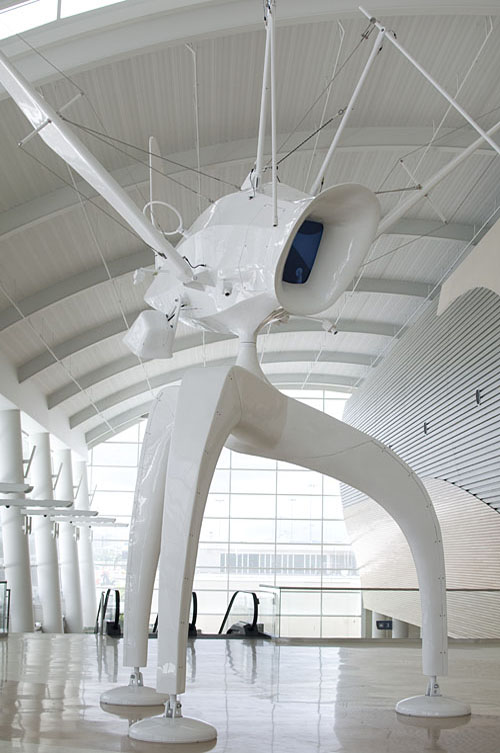
This huge sculpture is placed in California’s Mineta San Jose airport, where high-tech art welcomes the passengers. At the top of the escalator at the new Terminal B you will find Schuelke’s absurd machine. This giant three-legged sculpture explores the interactivity between humans and modern technology. It will quietly rotate with the aid of two propeller-tripped arms. And its ‘eye’ reveals images picked up from embedded cameras.

Daito Manabe

真鍋 大 度
Perfume

Perfume is Japan’s top techno-pop girl trio – Nocchi, Kashiyuka and Aa-Chan – whose music and synchronised dance sessions have won them a global online fan base. This year they have had their first sellout European tour. Their distinctive sound is the work of Japanese electronic music guru Yasatuka Nakata who has been their music producer since 2003. Their stunning performance at the Lions International Festival of Creativity at Cannes recently was the result of their collaboration with leading Japanese techno-artist Daito Manabe. Manabe is one of a new generation of programmers whose genre-crossing work has placed him at the cutting edge of techno-art-music-performance. His art embraces dynamic sensory programming, projection mapping and body capture; lasers, robots and sonar.

MARK HANSEN & BEN RUBIN

“Moveable Type”

In the entrance hall of the New York Times Building there is an installation made by Mark Hansen and Ben Rubin “Moveable Type” with hundreds of small monitors where fragments of the newspaper’s electronic files, words, phrases, quotations, places, crosswords, etc… permanently appear in an endless series of combinations.
.

ANGELIKA LODERER

Angelika Loderers work is refering to the basic research of form and space. She uses fragile, everyday materials that are derived from the vocabulary of domesticity and combine them with sort of traditional sculptural techniques. In the process the play between chance and control defines the aesthetics of her work. The experimenting with attidudes – via a very specific amalgam of materials, shapes and objects- brings forth a new, metaphysical result. “In transience, fragility and decline, I see the formal expressions to which I refer in my designs, and which to some extent provide the framework conditions for my processoriented work. From the abundance on offer, however fragile and vulnerable in composition, the elements fall into place, becoming worthless once again when dismantled.”

NBBJ

The Spheres
nest
The Spheres, a dynamic new workplace at the heart of the Amazon headquarters in downtown Seattle, today opened to members of the press and select Amazon employees.

Genesis Belanger

Acquiesce
Genesis Belanger twists and stretches familiar objects into surreal scenarios with her stoneware, porcelain, and concrete sculptures. The Brooklyn-based artist frequently depicts detached limbs, misplaced teeth, and unusually located food in her work. One sculpture shows a mustard-topped hot dog disappearing into a handbag with a mouth-like zipper; another series dispenses rocks from dysfunctional quarter candy machines. This spring, a stoneware desk topped with flaccid pens, a tape-like tongue dispenser, and a drawer full of coping mechanisms was on view in the New Museum’s store window gallery.

Peter Jones

colourscape
Colourscape is a large labyrinth of colour and light. It’s a sculpture of pure colour that the public actually go inside. Everyone puts on a coloured cape to become part of the colour experience and enters into a new world where one can freely explore the potentials of light, colour and space. There’s also music, dance and theatre taking place inside. Originally created by artist Peter Jones in the early 70s, Colourscape is a walk-in structure of nearly 100 interlinked chambers.

JENNY HOLZER

珍妮•霍尔泽
ג’ני הולצר
ジェニー·ホルツァー
제니 홀저
ДЖЕННИ ХОЛЬЦЕР

For more than thirty years, Jenny Holzer has presented her astringent ideas, arguments, and sorrows in public places and international exhibitions, including 7 World Trade Center, the Reichstag, the Venice Biennale, the Guggenheim Museums in New York and Bilbao, and the Whitney Museum of American Art. Her medium, whether formulated as a T-shirt, as a plaque, or as an LED sign, is writing, and the public dimension is integral to the delivery of her work. Starting in the 1970s with the New York City posters, and up to her recent light projections on landscape and architecture, her practice has rivaled ignorance and violence with humor, kindness, and moral courage

PHILLIP TOLEDANO

فيليب توليدانو
菲利普托莱达诺
פיליפ טולדנו
フィリップ·トレダノ
Филипп Толедано

Phillip Toledano est un photographe pour le moins multiculturel puisqu’il est né à Londres d’une mère franco-marocaine et d’un père américain. Selon lui, les photographies devraient ressembler à des phrases non terminée de façon à toujours laisser place aux questions. Sa méthode consiste souvent en un mixage entre la photographie et diverses installations mises en scène. Les travaux de Phillip Toledano sont déjà parus dans de nombreux titres comme Vanity Fair, The New-York Times magazine, The New-Yorker, Esquire, GQ, Le Monde, etc.

Rina Banerjee

She’s my country

The Indian born, New York City based artist Rina Banerjee has a love of materials, heritage textiles, ethnicity and fashion, colonial objects and furnishings, historical architecture, and their ability to disguise, animate, locate their inherent meanings in her art work. While sculptures and drawings, paintings use a fusion of cultures and unravel our connected experiences an explosion of differences alternate the way we receive our identity. Banerjee says her work explores “specific colonial moments that reinvent place and identity as complex diasporic experiences intertwined and sometimes surreal.”

JOHAN ROSENMUNTHE

Off-II
“In this project I have downloaded pictures of ‘friends’ that I only know through the Internet, and given them a new context. The persons are only visible through a digital representation, while the surroundings are as analog as possible. The sceneries are photographed places that invited to interaction – places that missed the company of human beings. The milieu adds a new meaning to the way the digital personas act, and gives their simplified characteristics meaning and personality again, by adding a setting to their digital components.”

Antony Gormley

Энтони Гормли
أنتوني غورملي
葛姆雷
アントニー·ゴームリー
Event Horizon, Hong Kong

“Event Horizon engages the desire to look up and look again at familiar places in a new way. Within the condensed environment of Hong Kong, the tension between the palpable, perceivable and imaginable is heightened. My intention is to get the sculptures as visible as possible against the sky, allowing each to be seen as a body against light and space, entering in and out of visibility to those walking the streets. The installation should have no defining boundary.”

Ljiljana Majkić

Cinque Terre

Ljiljana Majkic from Sarajevo is presenting her collection for winter 2011-2012. Collection was named CINQUE TERRE like the Mediterranean coastal town which has inspired her to create this collection as it is a place of unique beauty and architecture with warm coloured, simple geometric facades.This collection has simple, sculptural form, poetic spirit and eclectic character and it was created with a same passion and commitment as the previous one. Her search for new, original design and new shapes has resulted in a series of sensual models.Overall visual experience of her models is the desire to create something that will last longer than one season, so creating for Ljiljana is not only following the trend, or restrict what the trend is set as a rule. Her fashion is characterised by the expression of eclectic styles, and free artistic and creative expression.

tracy featherstone

Wearable Structure: Tudor Collar
The traditional role of structure or stability becomes mobile when placed on the figure allowing the individual to indulge in the illusion of stability. The mobile/wearable element of the work further subverts attempts of control and order. Similar to the way water will carve a new path around an obstruction, participant finds new ways to move about daily routines in ordinary fashion.

ROB MULHOLLAND

روب مولهولاند
罗布穆赫兰
롭 멀홀랜드
ロブマルホランド
Роб Малхолланд
Tide Flow – Time Flow

The themes of ‘sense of place’ and ‘ancestry ‘ persist in many of the works[…] This new development in his work reflects his interest in the passing of time as the images projected are in slow motion. A single drop of water takes minutes to fall and disperse. The mood is poignant and atmospheric and allows us just a brief reprieve from the frenetic world.