highlike

Ryan S. Jeffery – An Engineer / Not a Camera – United States

AN ENGINEER / NOT A CAMERA

Ryan S. Jeffery


FILE SÃO PAULO 2026: Inter-creativity – Art and Technology – VIDEO ART SHORT
Electronic Language International Festival


An Engineer / Not a Camera – United States

The production of a computer chip is the most complex technical human achievement to date. Photolithography, a critical step in this process, relies directly on the older science of optics and photography, which are centuries old. Today, generative AI and computer-generated imagery are nearly indistinguishable from those made with a camera. Once a method for capturing an image of the world, the science of optics is now used to build machines that can make images of the world without seeing it.

BIO

Ryan S. Jeffery’s work with the moving image sits at the intersection between documentary, art, and media studies. Grounded in an analysis of aesthetics and politics, his work considers how technology, ideology, and political economy shape one another. His work has appeared in FIDMarseille, Transmediale, EMAF, and UNCCC, as well as The New York Times, e-flux, and Filmmaker Magazine.
QUBIT AI: Gabriela Barreto Lemos

Quantum Photography

FILE 2024 | Quantico
International Electronic Language Festival
Gabriela Barreto Lemos – Quantum Photography – Brazil

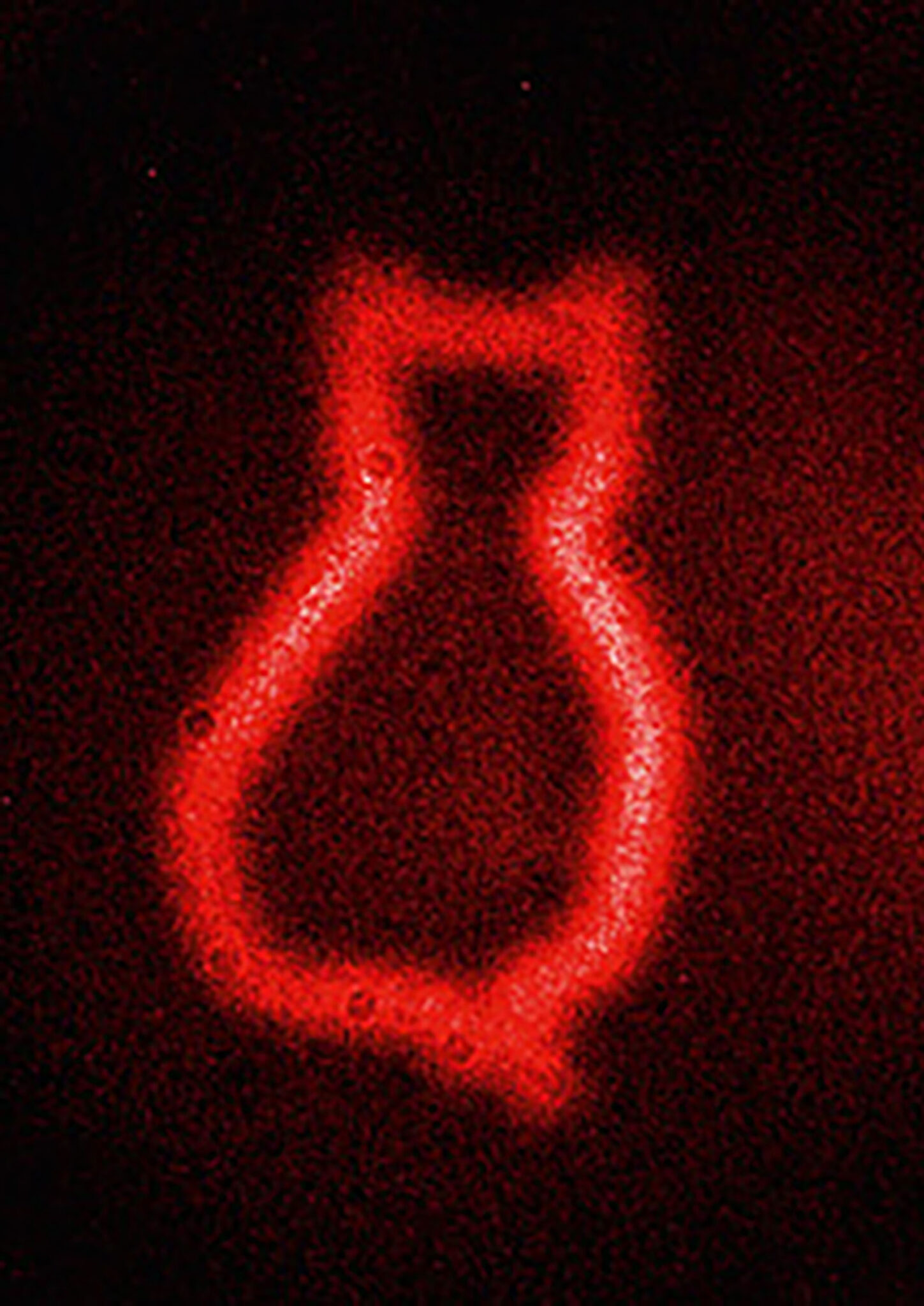
Quantum photography technique that allows you to record images without light passing through the object.

Typically, a beam of light interacts with an object; In this same beam, the image of that object is formed, which is recorded on a camera, on paper or directly into the eye. This research used two quantumly entangled photon beams. An infrared photon was directed at a silicon wafer engraved with the image of a cat. The other photon, red, was sent on a different trajectory, did not pass through the silicon plate and was detected by an EMCCD (electron-multiplying charge-coupled device – a photographic camera with sensitivity to very low intensity light). The image of the cat engraving was recorded by the camera, which only detected the red light, which did not touch the engraving. It is the first time that an image has been captured in a beam of light that has not interacted with the object that produced the image.

The experiment, led by researcher Gabriela Barreto Lemos, was carried out at the Institut für Quantenoptik und Quanteninformation in Vienna, 2014.

The technique has potential for applications in indirect image capture, from medicine to quantum computing.

Bio

Professor at the Federal University of Rio de Janeiro, in Brazil, whose research focus is on quantum optics, with an emphasis on quantum foundations, quantum images and quantum information. Additionally, she is involved in interdisciplinary creative projects and promoting inclusion and diversity in science.

Credits

Gabriela Barreto Lemos
Vienna Center for Quantum Science and Technology
Institut für Quantenoptik und Quanteninformation
Group of Anton Zeilinger

MAXIM ZHESTKOV

Optics Art Film
Optics è un film d’arte sperimentale di Maxim Zhestkov che esplora il comportamento della luce artificiale e del colore negli ambienti digitali. Mescolando lo spazio della galleria architettonica con sculture di vetro digitali generate al computer, incontriamo rifrazioni animate, aberrazioni cromatiche, riflessi colorati e altre condizioni che sono impossibili nella realtà. Una serie di prove ed esplorazioni ci guida attraverso diverse condizioni ottiche del luminoso e colorato universo digitale.

Richard Nicoll

Fiber Optic Dress
At the intersection of fashion and digital innovation comes wearable tech. Giving analog clothing and accessories a futuristic upgrade, it promises to completely redefine their form and function. One of the most stunning examples of the tech-chic trend is a headline-making dress dubbed the “jellyfish.” Created by designer Richard Nicoll, it appeared to float down the runway at London Fashion Week exuding the same phosphorescent glow of the eerily gorgeous sea creatures that inspired it. (Except his dress used strings of fiber optics—no stinging tentacles here!)