highlike

BASICODE – Histerese – Brazil

HISTERESE

BASICODE


FILE SÃO PAULO 2026: Inter-creativity – Art and Technology – LED SHOW
Electronic Language International Festival


Histerese – Brazil

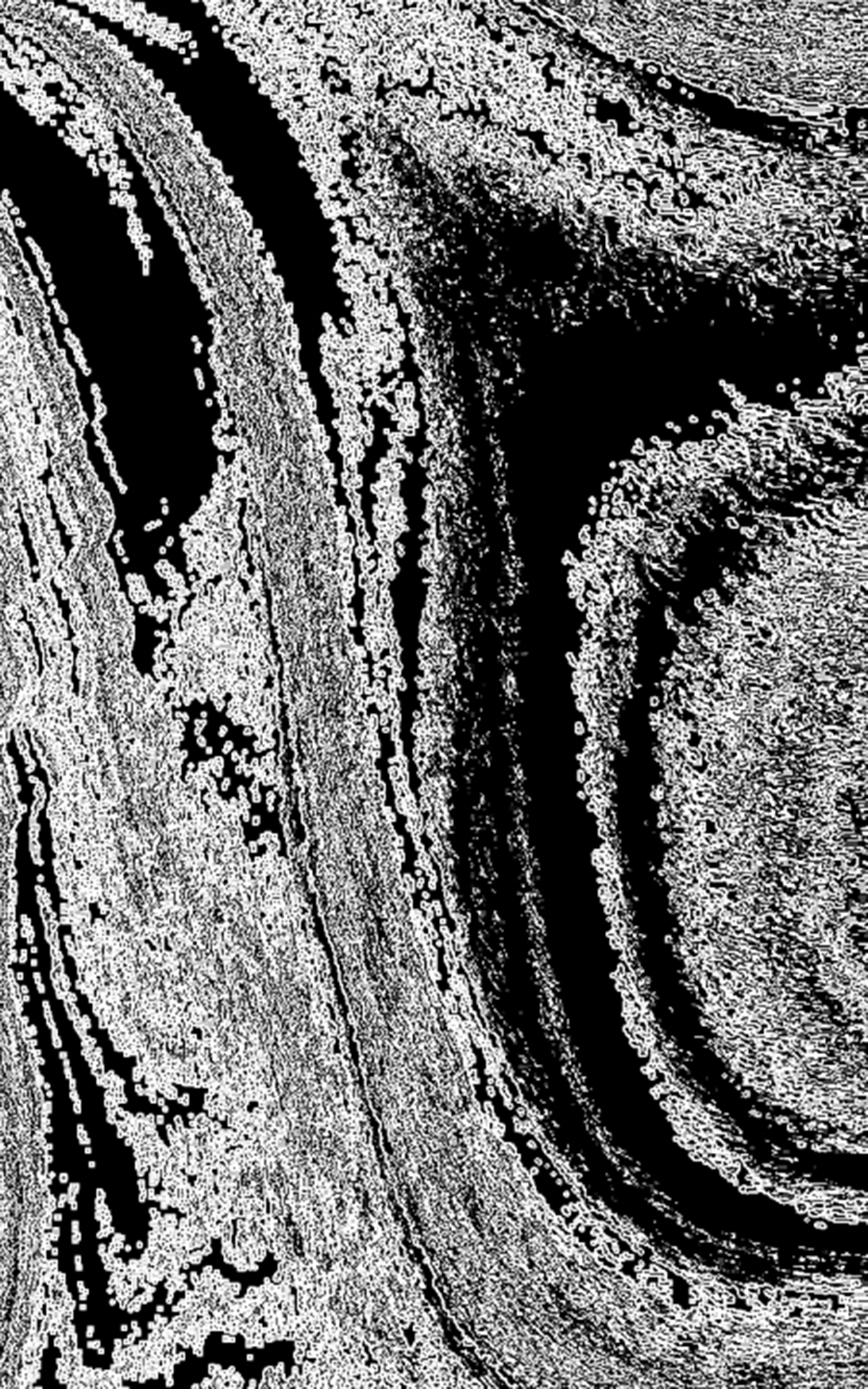
Histerese is a generative video in which a vector map controls the displacement of pixels in an image. Through a feedback loop, the movements accumulate in the system; the image becomes an accumulation of drifts, an overlay of memory itself in motion.

The work invites thinking about advective processes as movements that carry information: vectors of influence that displace ideas and shape the information flows through which contemporary culture itself operates.

BIO

BASICODE is an experimental research and creation project in art and technology. It operates in the expanded field of audiovisuals, dedicating itself to the study and production of real-time audiovisual performances. Starting in 2018 as an academic research project at the State University of Paraná, the project explores the fields of expanded audiovisual, visual music, and intermedia.
Affar Oppip – Paisagem Mental – Brazil / Italy

PAISAGEM MENTAL

Affar Oppip


FILE SÃO PAULO 2026: Inter-creativity – Art and Technology – Animation
Electronic Language International Festival


Paisagem Mental – Brazil / Italy

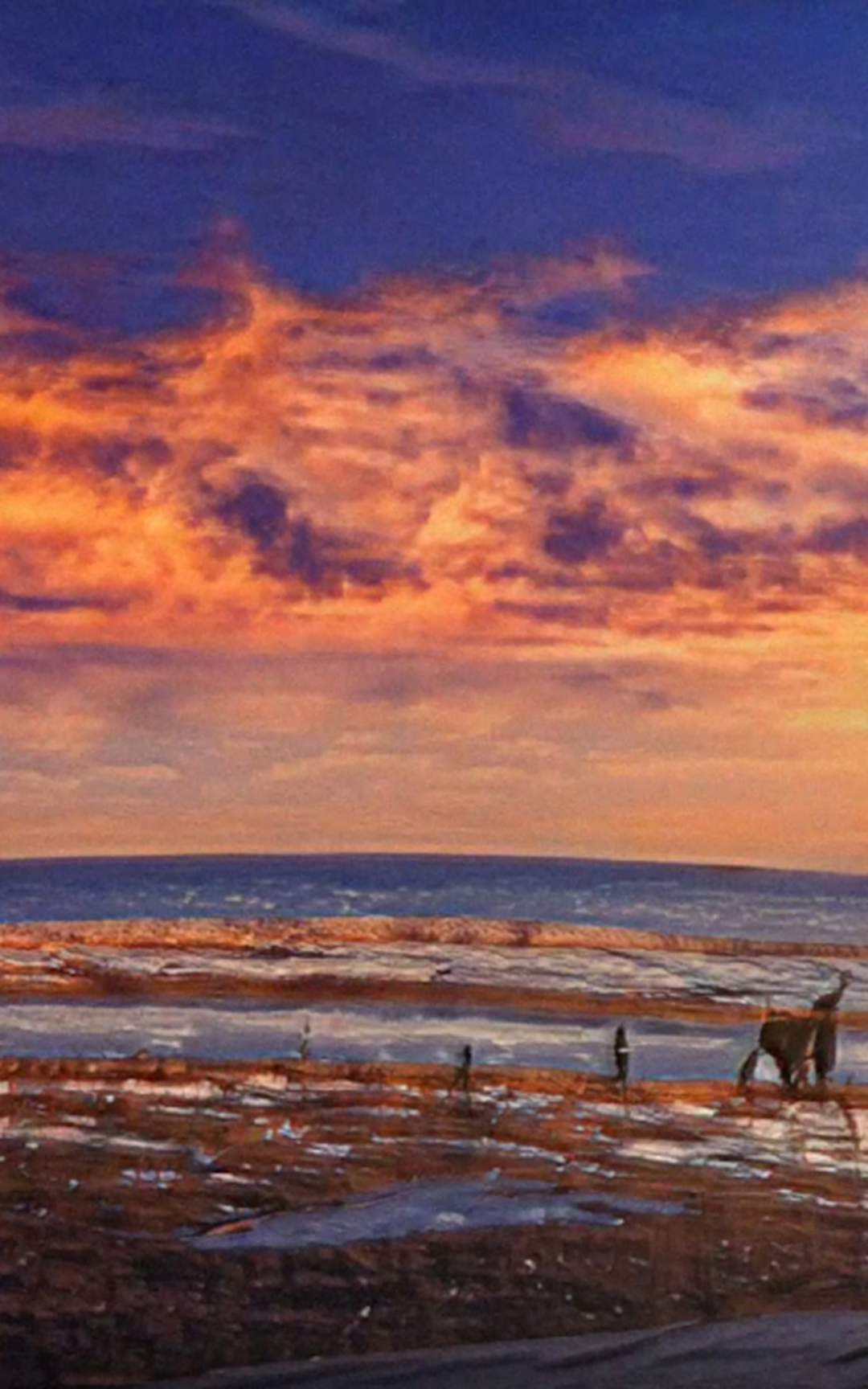
Composed of 12 static works produced during a psychiatric hospitalization (2021-2022), images generated by GAN interpolation, manipulations of “Trenzinho do Caipira” (a traditional Brazilian children’s song), personal recordings, and soundscapes of São Paulo, Paisagem Mental (Mental Landscape) explores the non linearity of human thought, highlighting its flows, speeds, and conflicts in interaction with the structural logic of algorithms.

BIO

Affar Oppip is a visual artist based in São Paulo, active since 2011. His research encompasses glitch art, generative processes, and experiences in the South American metropolis. Through glitches, noises, and overlays, he investigates memory, conflict, and technology, exploring new perspectives, interpretations, and reflections.

Seohyo – Tidal Tessellation – South Korea

TIDAL TESSELLATION

Seohyo


FILE SÃO PAULO 2026: Inter-creativity – Art and Technology – Randomic Dimension
Electronic Language International Festival


Tidal Tessellation – South Korea

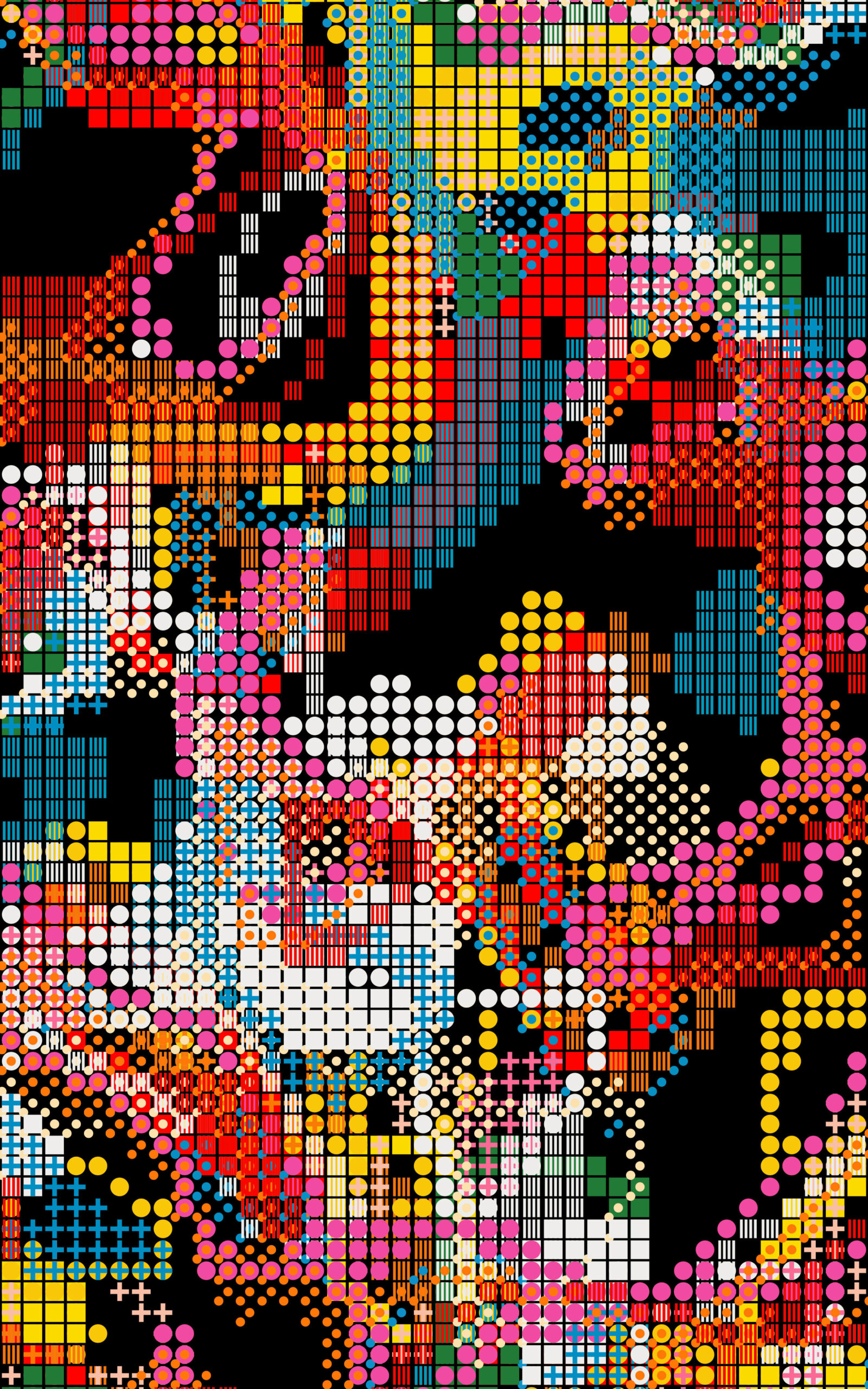
Tidal Tessellation is a generative animation reinterpreting urban flow as fluid movement. The artist projects the energy of city crowds onto the ebb and flow of tides. Using Perlin noise, geometric grids deform according to organic rules, overlaying natural rhythms onto rigid architecture. This work transforms static LED screens into breathing canvases where natural order permeates everyday life, harmonizing the city’s pulse with algorithmic vitality.

BIO

Seohyo  is a generative artist and educator exploring the intersection of algorithmic order and randomness. She expands public art by utilizing urban LED screens as canvases for code-based abstractions. Rather than focusing on static outputs, she emphasizes the generative process to let art naturally permeate everyday life, capturing the living pulses of the city through data and logic.

Diébédo Francis Kéré

Installation from Brightly Colored Thread for First U.S

“Conceptually, the installation takes inspiration from the contrasting city plan geometries of the African village and the American city. Overlaying the organic+plan of Gando with the rigid grid of Philadelphia, Kéré shows that despite the two cities’ obvious differences, underneath you can find many similarities in how the societies use architecture to provide a gradient of social spaces ranging from the individual and private to the collective and public” Patrick Lynch

Alma Haser

birdgirl
It’s hard to pin down what media German artist Alma Haser actually works with: Her series involve photography, cut-up collages, rephotographing prints, and weaving together multiple images to strike a balance of time and space. Take I Always Have To Repeat Myself, for example. Each piece layers two or more prints either physically (weaving or overlaying strips of different photographs to add a sense of depth and dimension) or within a new frame—a number of the pieces feature sitters manipulating photographs of themselves, playing with perspective to offer and dizzying and disorienting fresh take on portraiture and image making.

NAJA & DEOSTOS

ECTOPLASMATIC HOUSING
File Festival
‘Ectoplasmatic Housing’ aims to speculate about how architecture can mediate the pervasiveness of the contemporary ‘infocalypse’ age. An architectural experiment of physical and digital space through the use of interactive design and augmented reality.

Browsing through a domestic safari of Trojan savannas or sterilised virus forests while contemplating the emergence of thousands of cheap-friends-facebook flowers blossoming among the pulsating cocoons of dying obsolete apps… Quantum reality theories are ripe for the picking from wiki branches of tweeting pink daily hit dwarfing trees…
Ectoplasmatic Housing aims to speculate about how architecture can mediate the pervasiveness of the contemporary ‘infocalypse’ age. It cultivates data for a spatial interactive second nature manifestation. It grows, blossoms, dies and haunts. Overlayed with the physical this unstable ectoplasmatic nature may shift radically into a rapid nuke ecology of nightmares.