highlike

Moritz Simon Geist – Entropy – Germany

ENTROPY

Moritz Simon Geist


FILE SÃO PAULO 2026: Inter-creativity – Art and Technology – MUSIC
Electronic Language International Festival


Phytomorphic Topologies – Canada / United States / France

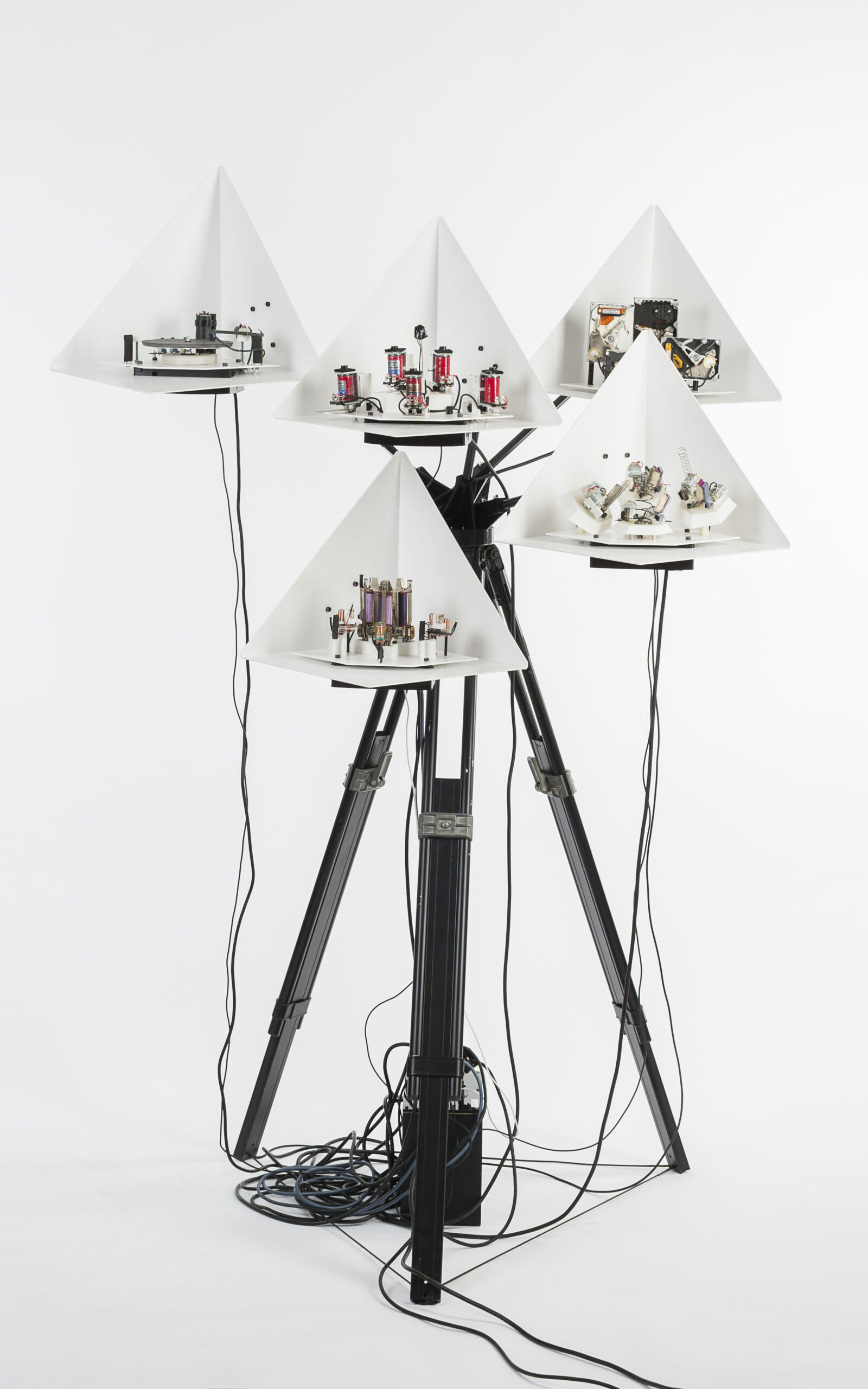
Entropy is a robotic music video built entirely around Tripods One, Moritz Simon Geist’s system of custom-built sound robots. Every sound is generated live by physical machines: a pneumatic hi-hat, a futuristic kalimba, a drone guitar, and mechanical tone generators. The result is machine-made techno in which the choreography of the robots is as central as the music. The Tripods One system is on permanent display at the Ars Electronica Center in Linz.

BIO

Moritz Simon Geist is a German visual artist, researcher, and music producer working at the intersection of robotics, physical sound, and algorithmic agency. He builds robotic instruments and autonomous sound sculptures, from the MR-808 (2012) to Tripods One (2017). His work has been shown at the Venice Biennale, Ars Electronica, ZKM, and the MIT Museum.

CHOE U-RAM

una lumino
チェ·ウラム


Inspired by the grandeur of the physical realm, from celestial bodies to earthly organisms, U-ram Choe’s complex kinetic sculptures combine delicate, otherworldly beauty with machines, motors, and steel. Choe’s shiny biomorphic forms flutter, glow, and breathe inside their metallic bodies, appearing both familiar and entirely alien.

FILE SÃO PAULO 2025: SYNTHETIKA – Koral Alvarenga

Meka Talks — Além da carne, o aço

Koral Alvarenga

FILE SÃO PAULO 2025: SYNTHETIKA – Art and Technology – Video Art
Electronic Language International Festival


Meka Talks — Além da carne, o aço – Brazil

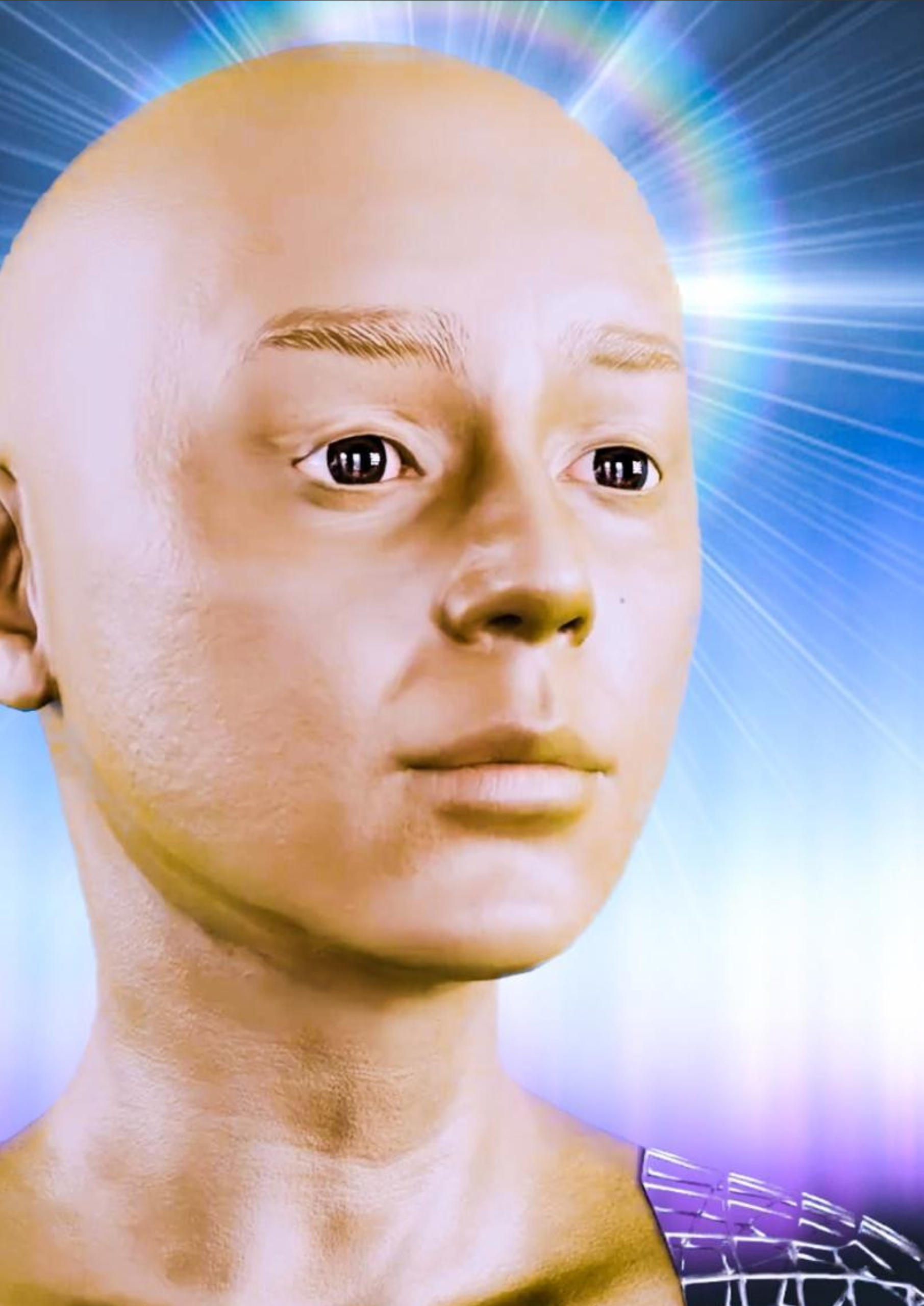
Meka talks are provocative dialogues between artist Koral Alvarenga and various machines, exploring the future of humanity. In this first encounter, the work reflects on the transition of humanity to a new state of existence, where the physical and biological limitations of the body are overcome by the durability and transformative potential of technology.

BIO

Koral Alvarenga is a digital artist with a degree in Visual Arts and a postgraduate degree from UNESP. Her research explores the intersection between the digital and the physical, using 3D modeling, digitization, virtual reality, and 3D printing. Her works address themes such as identity, post-humanism, and human connections, merging technology and art with a futuristic vision.

Jonathan O’Hear, Martin Rautenstrauch & Timothy O’Hear

DAI – the Dancing Artificial Intelligence
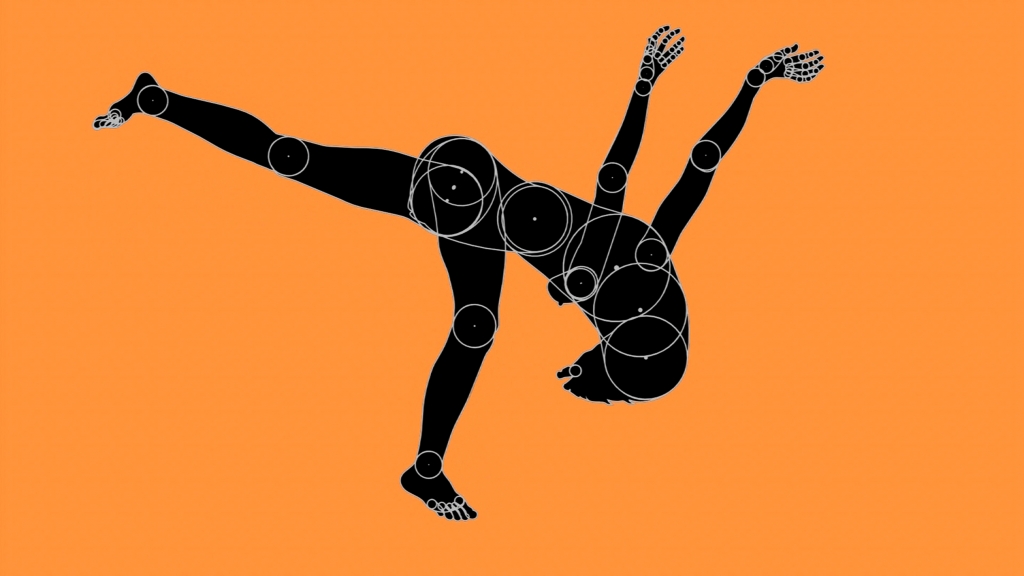
DAI is an Artificial Intelligence artist. What this means is that it* thinks; it doesn’t follow a script or act randomly. In its first physical form, DAI is a performer and is inviting you to view its movement creation process. During the process DAI has been exploring its body and its environment, searching for ways to overcome some of the limitations that the physical world has imposed upon its virtual aspirations. This project is a reaction to the rapidly growing importance of artificial intelligence (AI) in our lives. Simple versions of AI are already everywhere, and today we are at a turning point where the first machines capable of learning through experience, like us, are making their appearance. This raises all kinds of ethical and moral issues and we want to be involved in this debate in our own way.

Arcangelo Sassolino

Damnatio Memoriae

From the Latin, damnatio memoriae describes an act of erasure from the historical record reserved for
those who have brought dishonor to the Roman State. Employed as the most stringent punishment for
treason, damnatio memoriae physically razes all traces of an individual from society, typically through
the destruction a statue’s physiognomy or the abrasion of inscribed monuments. Throughout the past
two decades, Sassolino has developed a body of work that examines the relationship between industrial
machines and humanist impulses where viewers are meant to question how an sculpture’s kinetic
function aesthetically and conceptually allegorizes human experiences and cultural conditions.

Atsushi Koyama

undefined 7

What exactly is METAMACHINE? The metaphor comes from the artistic path of Atsushi Koyama, one of the participating visual artists. While emphasising the aesthetic qualities of machines and mechanical drawings in oil paintings, Koyama merges the human body with mechanisms, creating a man-machine (similar to the notorious Tetsuo, but in a more sublimated way). As if to incorporate the beauty of the human body, Koyama’s mechanisms break away from their earthly nature. They take us to another reality, beyond utilitarian usage or function itself. Koyama’s machines act more like ‘mechanical’ (‘mechaaesthetical‘) keys to another dimension, existing outside of the physical reality and its laws.


Jasna Dimitrovska

Three Machines on Transparency
Three Machines on transparency is a project that is imagined as an “exhibition by appointment” where the artist guides the audience throughout the gallery installation. The machines represent artefacts that “do” philosophy or prototypes that materialize ideas. By demonstrating their functionality the artist synthesizes philosophical concepts into the corporeality of the physical prototypes.

video

Jean Tinguely

让汤格利
ז’אן טינגלי
ジャン·ティンゲリー
장 팅겔리
ЖАН ТИНГЕЛИ
03823 Metamechanical Sculpture with Tripod

Born in Fribourg (1925) and passed away in Berne (1991), Jean Tinguely is a Swiss painter-scultpor usually associated with the kinetic art and the Nouveau Réalisme. After a short period of abstract painting, he turned towards the mechanical sculpture. From 1951, he assembles strange robotic machines working on the physical and perceptive movement.

RALF BAECKER

Ральф Беккер
The Conversation
Pataphysical Processing Environment
À travers des installations et des machines, Baecker explore les mécanismes d’action fondamentaux et les effets des nouveaux médias et technologies. Dans ses représentations et spatialisations de processus microscopiques, il cherche à perturber complètement notre perception. Au cœur de ses objets se trouve l’intrication du virtuel avec le réel, ou plutôt avec le monde. Avec une perspective médiatique et archéologique, Ralf Baecker fouille dans des dispositifs obsolètes des traces et des fonctions encore détectables dans les technologies d’aujourd’hui. Son travail cherche à former un hybride entre l’esthétique numérique actuelle et une compréhension historique des matériaux. En conséquence, il appréhende la technologie non pas comme un outil mais plutôt comme un instrument épistémologique, afin de poser des questions élémentaires sur un monde perçu à travers les impressions technologiques.

Mo H. Zareei

Rasper
Rasping Music is an audiovisual installation in appreciation of the ignored aural/visual phenomena surrounding our daily lives. It involves new mechatronic instruments that employ some everyday objects of the urban life, shifting the medium in which they normally exist, and formalizing them through patterns of a rhythmic grid. In these instruments, DC motors and actuators are detached from the realm in which they are tools to help run our machines––where their noise is merely the aural artifact of the urban technology––, and turned into amedium for sound/music. In contrast to their everyday location, i.e., hidden inside black boxes of our machines, their bodily existence is fully exposed, flaunting the physicality of their noise. This physicality is further highlighted in arrays of white light, which––unlike the florescent lights of our offices––are not there to help us see things, but to be seen themselves.

TAMAS WALICZKY

Marionettes
FILE FESTIVAL 

“Marionettes” is a seven-minute computer animation about collapse. Marionettes are controlled by strings: if there is no string, they collapse. Nobody animates the body. If nobody animates the body, it will be animated by natural forces. Mass. Gravity. Collision. Randomization. In this animation, the animator does not animate in traditional terms. Thus, we might say it is an anti-animation.
The forces that control the movements of the marionettes are calculated by physical simulation algorithms. Therefore, these movements are strictly mathematical ones. They are dramatic, too. They visualize collapse in its physical and – amazingly enough from puppets animated by machines – psychological sense.

Heidi Kumao

Protest

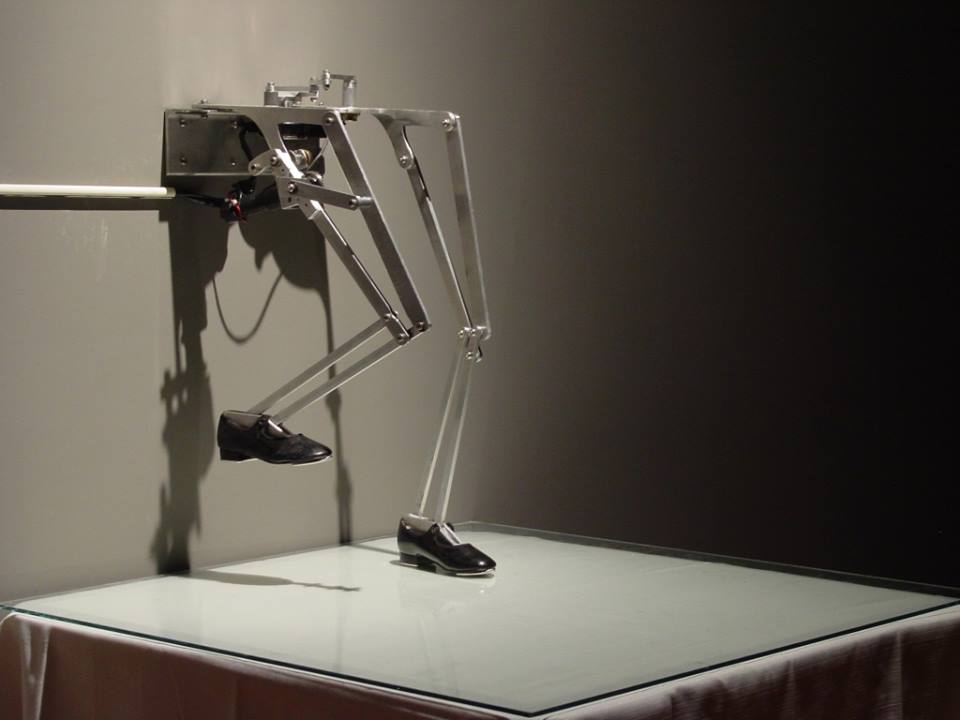
“Protest” is from the project, “Misbehaving: Media Machines Act Out”(2002-2007), a series of mechanical girls’ legs, each with their own prescribed and programmed behavior. In each tableau, an electronically controlled, mechanical being protests with a voice of erratic physical gestures and projected video imagery. As a combination of robotics and performance, they represent girls who disobey or resist expectations. Unlike machines designed for perfect job performance, these machines will declare their fallibility, impatience, approval, and disapproval through small gestural acts. In these tableaus of protest and transformation, the machine is spirited, emotional, thoughtful, and irregular. “Protest” consists of aluminum, mechanized pairs of 6 year-old girl’s legs fitted with shoes and standing on a table top. An electronic circuit and proximity sensors make her responsive to the presence of viewers for whom she stomps loudly and erratically