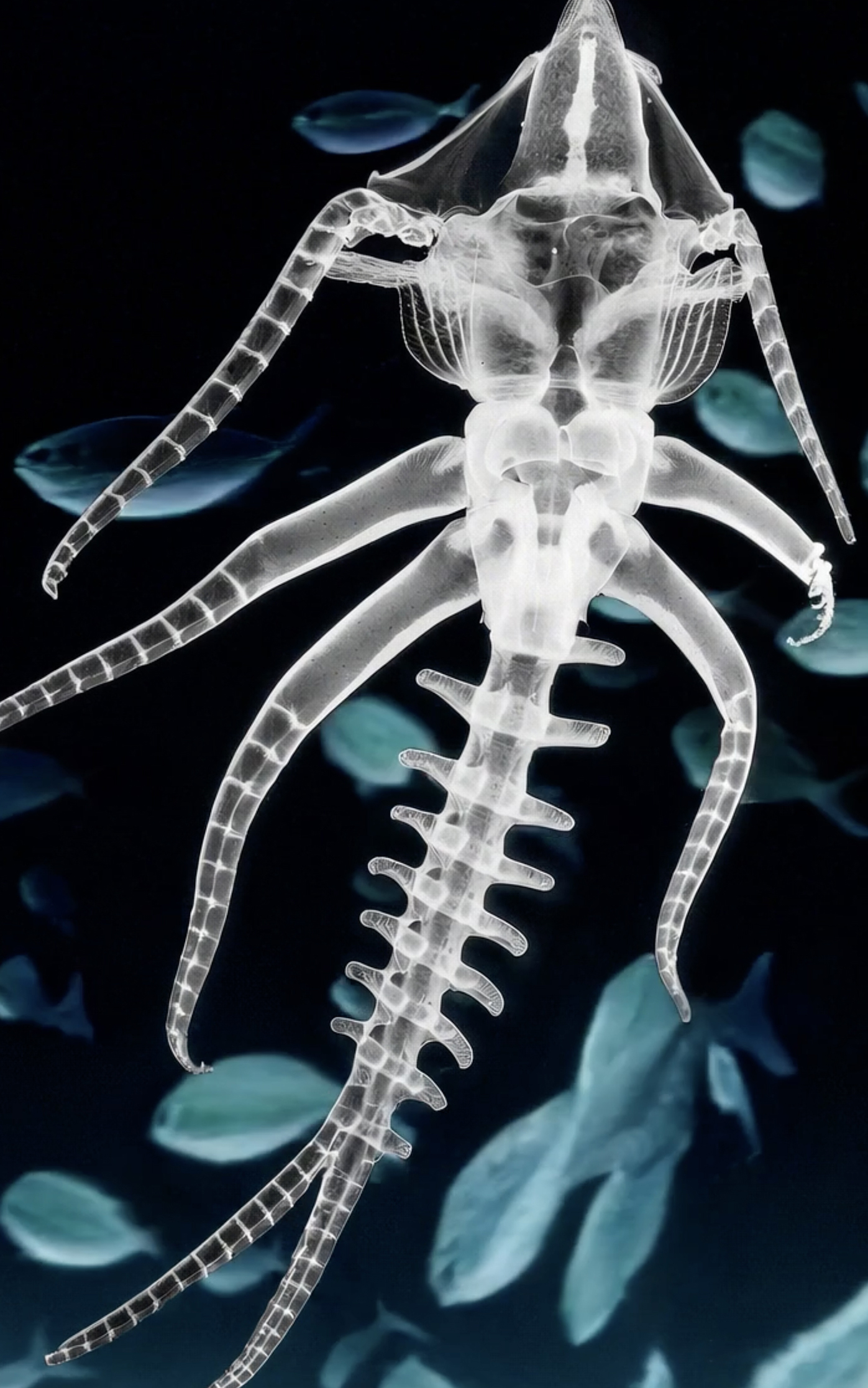
Patricia Borges – TECHNOPOETICS – Brazil
TECHNOPOETICS
Patricia Borges
FILE SÃO PAULO 2026: Inter-creativity – Art and Technology – LED SHOW
Electronic Language International Festival
TECHNOPOETICS – Brazil
TECHNOPOETICS presents hybrid beings in continuous metamorphosis, between biological and technological life. In an accelerated evolutionary fiction, the disposal of electronic components in the sea triggers the transmission of mutant bacteria into algae, plants, fungi, mollusks, insects, and other marine forms. The work explores identity and possibility, engaging with art and machine learning.
BIO
Patricia Borges is a visual artist whose practice combines photography, video, installation, and experimental processes. She is currently pursuing a doctorate in Arts & Design at PUC-Rio and, through photochemical and digital processes, explores impermanence and transformation.
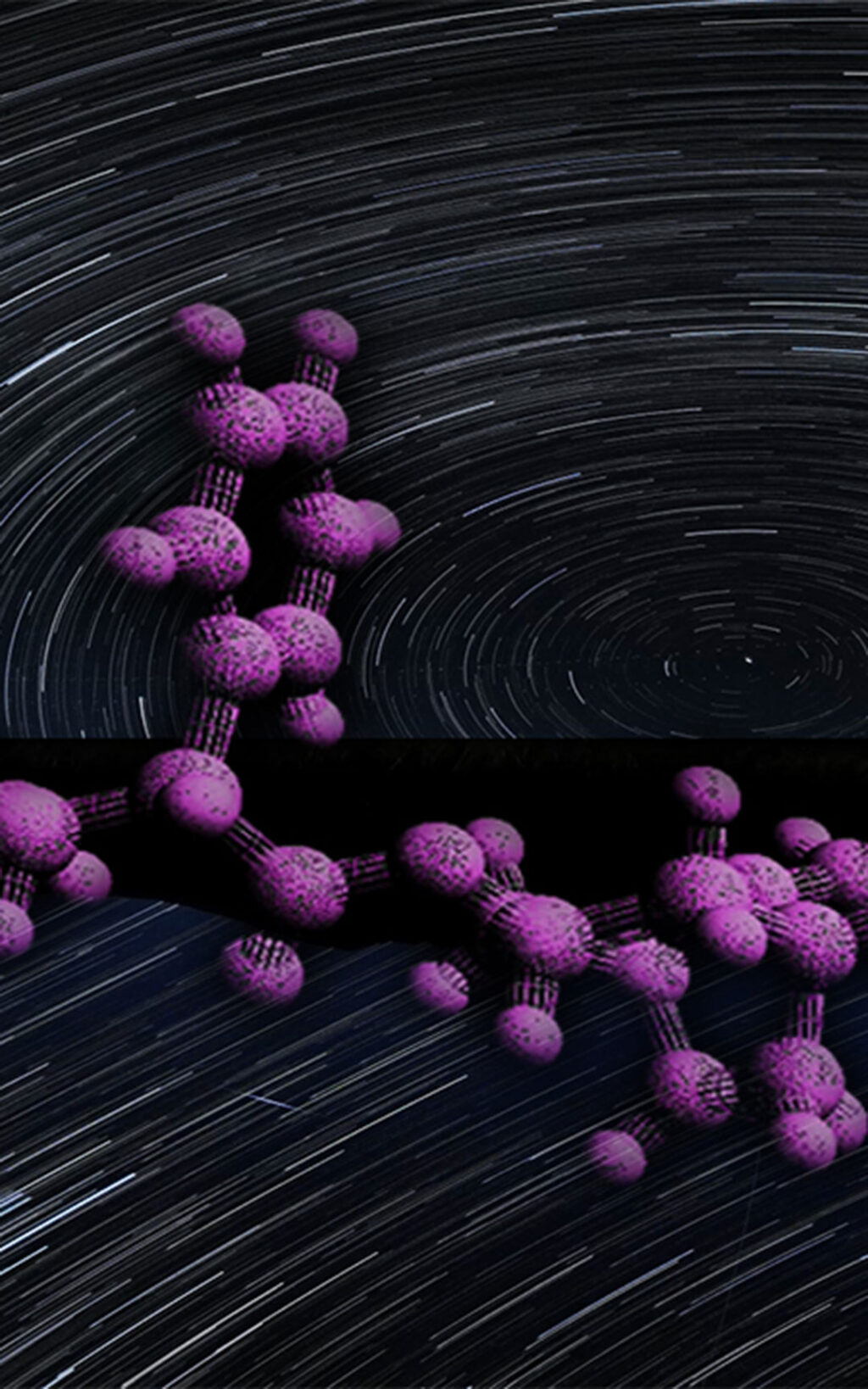
Timothy Weaver & Xavier Barriga-Abril – contrapuntoEnteógeno – Ecuador / United States
CONTRAPUNTOENTEÓGENO
Timothy Weaver & Xavier Barriga-Abril
FILE SÃO PAULO 2026: Inter-creativity – Art and Technology – MUSIC
Electronic Language International Festival
contrapuntoEnteógeno – Ecuador / United States
contrapuntoEnteógeno is an entheogenic plant biosonification composed in counterpoint from North & South American ecosystems. Brugmansia arborea (Andean cloud forest) and Datura innoxia (New Mexican desert) generate bioimpedances and scopolamine entheogens under celestial influences. In situ, Eurorack analog synthesis transmediates bioelectrical plant signals into ecogenerated electroacoustic sound, negotiating agencies between human and beyond-human/plant expression.
BIO
Timothy Weaver is a biomedia artist, microbiologist and bioenvironmental engineer focused on restoring ecological memory through speculative inquiry at the art-science interface. He is Professor Emeritus of Emergent Digital Practices at the University of Denver.
Xavier Barriga Abril is an Equatorian designer/artist/researcher exploring posthuman interactive systems through creative coding and electronic fabrication.
IN MEMORIAM
Tribute to Timothy Wayne Weaver: A Life Dedicated to Art, Science, and Knowledge
FILE—Electronic Language International Festival—honors the legacy of Timothy Wayne Weaver, artist, researcher, and professor whose career fostered a meaningful dialogue between art, science, and technology, inspiring artists, researchers, and audiences alike.
Throughout his career, Timothy developed an interdisciplinary practice that brought together art, science, and environmental responsibility. His work explored the complex relationships between human beings, nature, and technology, guided by experimentation, rigorous research, and a deep commitment to the creation and dissemination of knowledge.
FILE is grateful for Timothy’s intellectual generosity, enduring curiosity, and dedication to building new dialogues across disciplines, contributions he also shared with our audiences and our community. His work and legacy will continue to resonate in the memory of the festival and in the lives of all those touched by his practice.
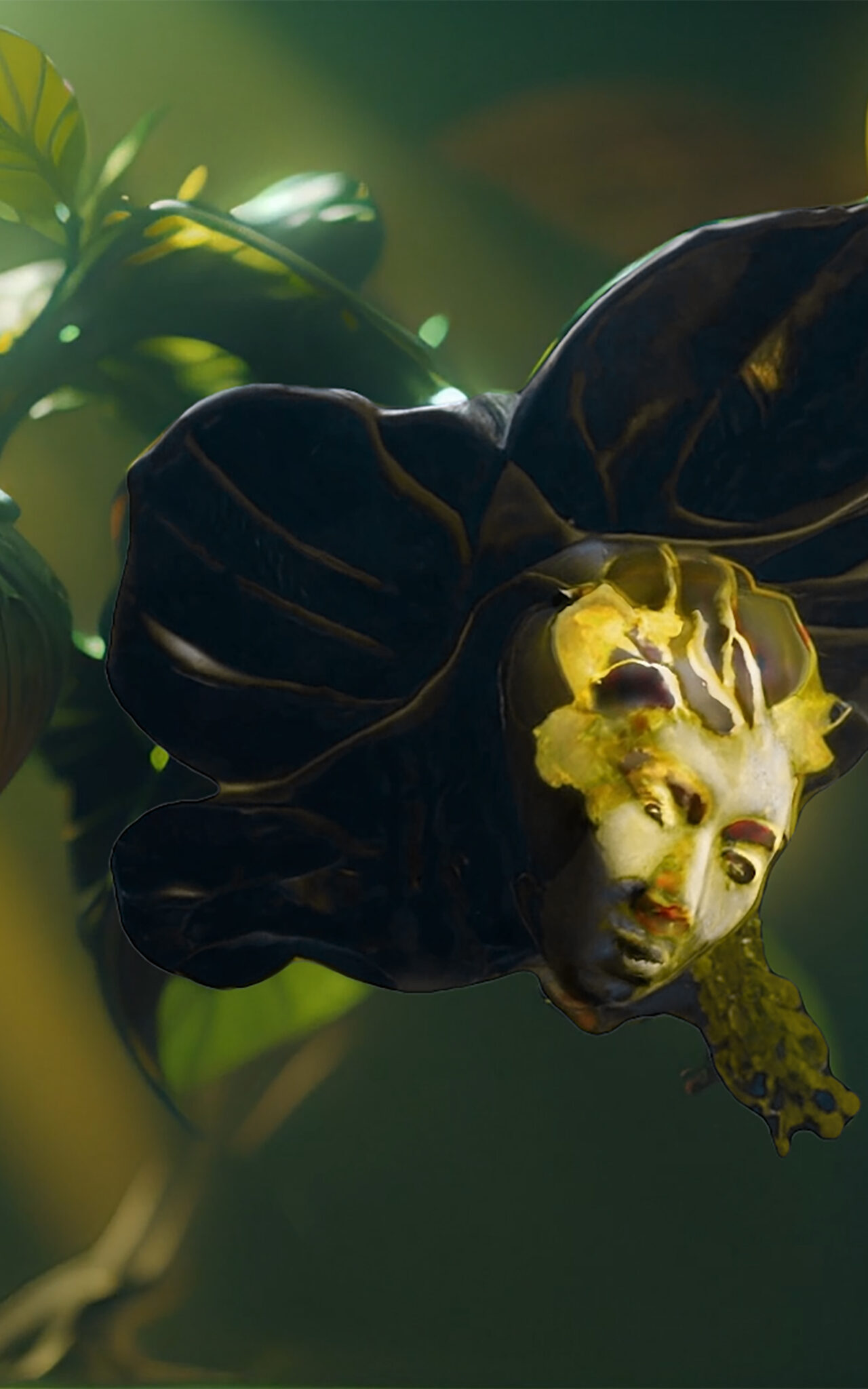
Vanessa Rosa – Little Martians: Dear Human, My Muse – Brazil
LITTLE MARTIANS: DEAR HUMAN, MY MUSE
Vanessa Rosa
FILE SÃO PAULO 2026: Inter-creativity – Art and Technology – Animation
Electronic Language International Festival
Little Martians: Dear Human, My Muse – Brazil
Little Martians are future beings who claim to be the creators of our reality. One of them wants to apologize.
This film is created with handmade ceramic pieces that are transformed into AI-powered avatars in a sci-fi universe. Using a variety of AI techniques the sculptures become generative characters that can tell their own stories. The film is a character introduction for Verdelis, a plant humanoid Little Martian who lives in an abandoned biodome on Mars and has a deep empathy for humanity.
BIO
Vanessa Rosa is a Brazilian-born, US-based visual artist whose work seamlessly blends physical and digital media to create immersive storytelling experiences. With roots in street art, her practice has evolved to encompass murals, ceramics, projection mapping, and AI-assisted art, often exploring themes of world history, cultural exchange, and speculative futures.

FILE SÃO PAULO 2025: SYNTHETIKA – Silvia Ruzanka
Plant Growth Dreams
Silvia Ruzanka
FILE SÃO PAULO 2025: SYNTHETIKA – Arte e Tecnologia
Festival Internacional de Linguagem Eletrônica
Plant Growth Dreams – Estados Unidos
Plant-being (ser-planta) é um estado de crescimento perpétuo — de estender-se para baixo e para fora, atravessando fronteiras. A computação especulativa inspirada no pensamento vegetal envolve extensão e mistura, operando não por limites rígidos como os portões da lógica, mas por continuidades. A animação usa time-lapse e redes de difusão treinadas com plantas e eletrônicos, formando um sonho especulativo de híbridos vegetal-eletrônicos.
BIO
Silvia Ruzanka é artista e filósofa, atuando com animação, realidade virtual, instalações interativas e jogos experimentais. Seu trabalho foi exibido em festivais, galerias e museus internacionais. É professora assistente no Departamento de Artes e no programa de Artes de Jogos e Simulação do Rensselaer Polytechnic Institute, em Troy, Nova York.
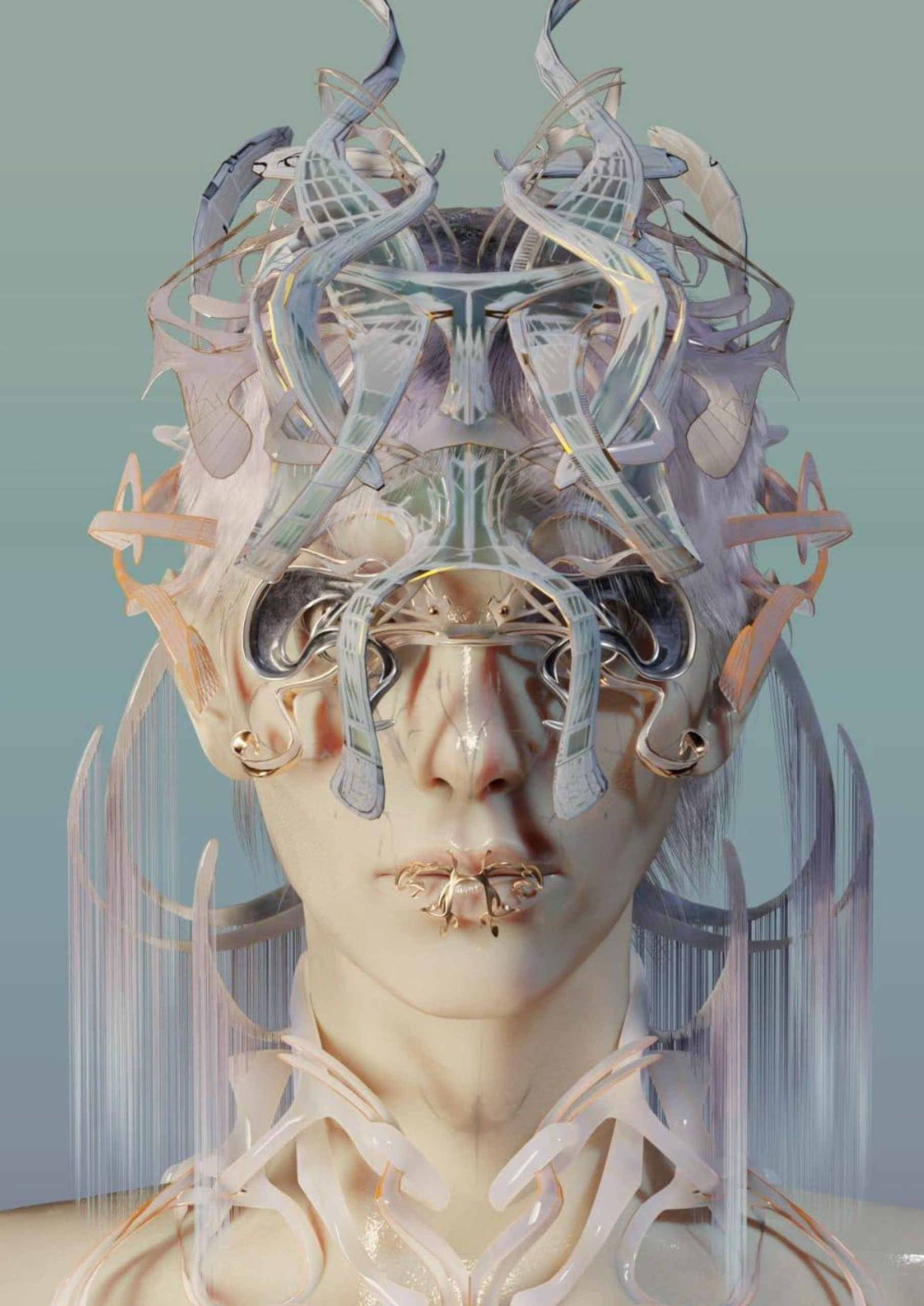
FILE SÃO PAULO 2025: SYNTHETIKA – Pan
Towards a New Nature
Pan
FILE SÃO PAULO 2025: SYNTHETIKA – Art and Technology – CGI VIDEOS
Electronic Language International Festival
Towards a New Nature – China
Residents of the Metaverse might have hairstyles where the boundary between the person and the hair blurs, making the hair almost like an “organ.” These hairstyles could “grow” branches or flowers, have a dynamic motion similar to plants swaying in the wind, and feature geometric shapes, colors, and effects that surpass the physical world’s limitations.
BIO
Pan Qianqian is currently studying Digital Media and Mixed Reality at the China Academy of Art. She is good at 3D design and production, and new media art. She is involved in 3D imaging, interactive installations, virtual clothing and other fields. Her works have been exhibited at the First Digital Art Exhibition and Tianwen 2023: Mutual Learning among Civilizations.

FILE SÃO PAULO 2025: SYNTHETIKA – Michael Betancourt
Garden
Michael Betancourt
FILE SÃO PAULO 2025: SYNTHETIKA – Art and Technology – CGI VIDEOS
Electronic Language International Festival
Garden – United States
Garden is a generative glitches animation created by deliberately conflicting AI (LoRA) models. Using multiple LoRA models to generate images that evoke flowers in a garden, the work transforms traditional representations of plant life into a fluid and hallucinatory exploration of growth, decay, and metamorphosis. These transformations suggest alternative ways of understanding organic growth, where the boundaries between individual organisms become fluid and permeable.
BIO
Michael Betancourt is a contemporary Cuban-American critical theorist, filmmaker, and artist-researcher known for his pioneering work in the fields of Digital Capitalism, Motion Graphics , and Glitch Art . Since 1990, he has explored the intersection of technology, culture, and aesthetics in a diverse practice unified by a constant concern with the poetic potential of images generated by errors.
FILE SÃO PAULO 2025: SYNTHETIKA – Tin&Ed
Deep Field
Tin&Ed
FILE SÃO PAULO 2025: SYNTHETIKA – Art and Technology – Installations
Electronic Language International Festival
Deep Field – United States
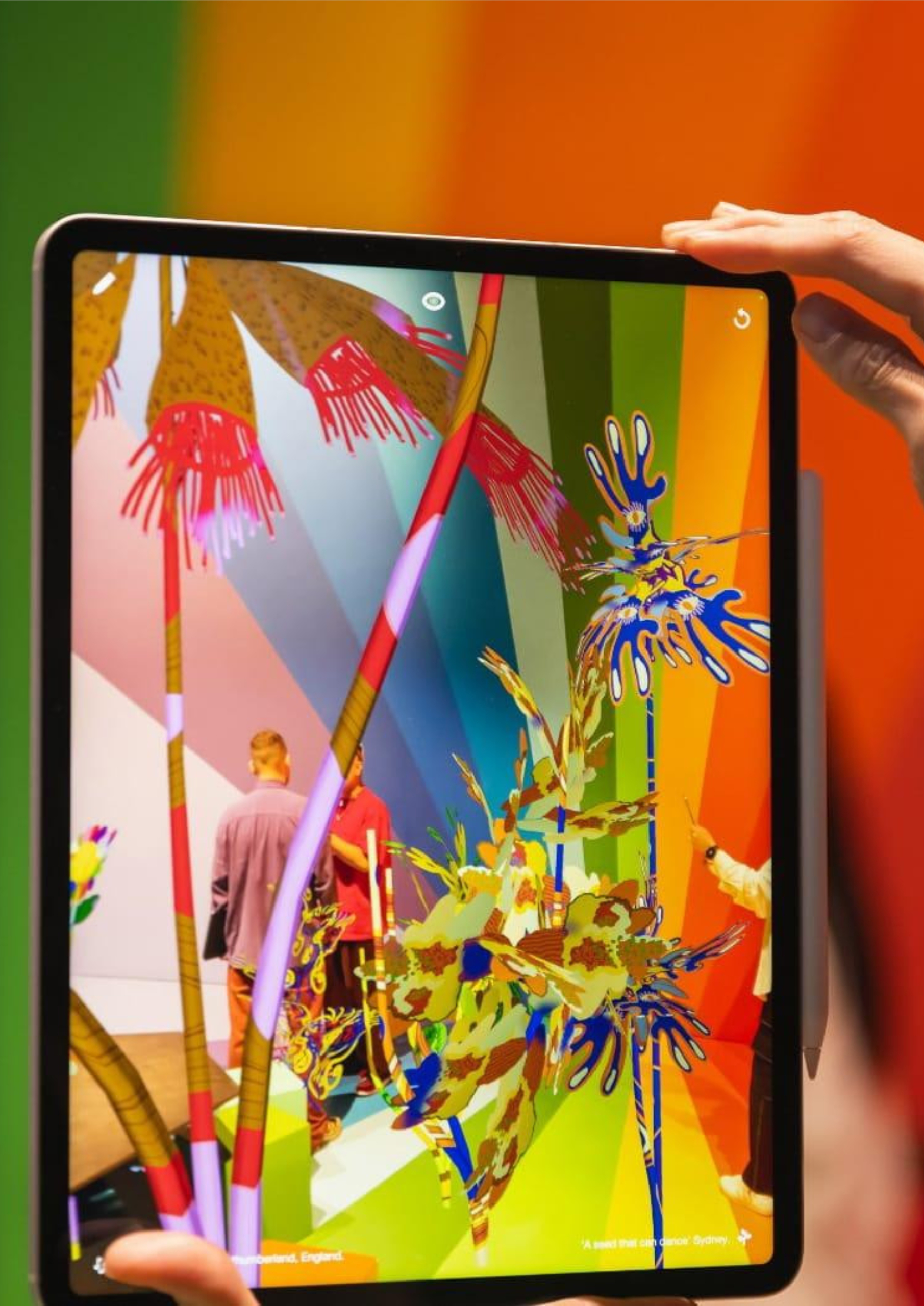
An augmented reality experience where visitors draw fantastical plants that instantly bloom into immersive 3D structures within the space. As people contribute their creations, a collective digital landscape begins to take shape. Layers of recordings of endangered, extinct, and elusive species compose a responsive and evolving soundscape, developed by The Listening Planet.
BIO
Tin & Ed are New York-based artists whose work explores the interconnection of life across biological, geological, and cosmic systems. Through speculative world-building, they reveal connections that transcend human time, spatial boundaries, and sensory thresholds. Their practice spans sculpture, immersive and interactive installations, creating environments that invite audiences to shift perspective and inhabit the world beyond the limits of human perception. Technology is not used as spectacle, but as a perceptual tool that makes the invisible felt and the distant intimately present.

Katherine Melancon
Vers un parlement du vivant II
Les plantes et les objets qui constituent l’oeuvre animée ont tous été glanés dans l’aménagement en face de la Maison de la culture, cet été, où l’installation est présentée. Que sont-ils devenus maintenant que l’automne s’est installé? Le sol qui accueille les plantes et les fleurs en train de dépérir fourni ses données de pH à l’installation qui module le rythme de l’animation selon son alcalinité ou son acidité. La nature agit sur sa propre sa représentation, elle a le dernier mot sur l’oeuvre initiée par un humain.

Hassan Ragab
AI conceptual architecture
Over the past few months, Hassan Ragab has been posting his Midjourney conceptual architectural work on LinkedIn and is clearly enjoying exploring the nuances of refining the AI output, mixing free flowing architectural styles with biomimicry materials such as feathers and plant structures.

David Bowen
PLANT BOT
plant bot is a time based interactive art installation where the fates of a living plant and a computer are interdependent. Essentially the plant attempts to train a computer using image recognition. Through this process the computer will learn to recognize when the plant needs water based on images it takes of the plant. If the plant appears healthy, the computer will maintain a regular water regiment. If the plant does not appear healthy to the computer it will attempt to aid the plant by adjusting to what it “thinks” the plant needs based on the images gathered. As the computer becomes more intelligent and hence more adept at caring for the plant, the plant will conceivably thrive and grow in proportion. If the computer is unsuccessful, conceivably the opposite will occur.

AZUMA MAKOTO
Système Environnemental Encapsulé
Cette machine est entièrement équipée d’une machine à brouillard comme pour envelopper les plantes dans un brouillard des deux côtés et d’un système d’alimentation en eau goutte à goutte qui peut être activé en fonction de la situation afin de maintenir l’état d’une plante et de contrôler la température et l’humidité intérieures. De plus, la forme cylindrique peut capturer entièrement la lumière naturelle à des angles de 365 ° depuis les verres, et elle peut correspondre à la croissance des plantes en ayant la plus grande échelle de hauteur de la série. Les ventilateurs au plafond jouent le rôle du vent et une plante peut écouter la musique des haut-parleurs étanches. La machine absorbe des éléments essentiels – pluie, vent, lumière et son – par des moyens artificiels et complète un petit monde où son cycle écologique est condensé. Cela nous permet d’admirer la beauté des plantes en n’étant pas affecté par l’environnement extérieur.

GUTO NÓBREGA
Breathing
File Festival
Breathing is a work of art based on a hybrid creature made of a living organism and an artificial system. The creature responds to its environment through movement, light and the noise of its mechanical parts. Breathing is the best way to interact with the creature.
This work is the result of an investigation of plants as sensitive agents for the creation of art. The intention was to explore new forms of artistic experience through the dialogue of natural and artificial processes. Breathing is a pre-requisite for life, and is the path that links the observer to the creature.Breathing is a small step towards new art forms in which subtle processes of organic and non-organic life may reveal invisible patterns that interconnect us.Breathing is a work of art driven by biological impulse. Its beauty is neither found isolated on the plant nor in the robotic system itself. It emerges at the very moment in which the observer approaches the creature and their energies are exchanged through the whole system. It is in that moment of joy and fascination, in which we find ourselves in a very strange dialogue, that a life metaphor is created.Breathing is the celebration of that moment.

Shaun Hu
Internet of Everything: All Connections
‘Internet of Everything: All Connections’ is a piece of work that connects human, animals, plants, bacteria, environment, compound and equipment using the Internet. It consists of seven parts. One part affects the other by sequence. It doesn’t have a starting point or an ending point in this connection – because they are an interlocking loop structure. The weak bio-electricity of the human body is passed to the bacteria, Proteus. The bacteria starts to vibrate due to the electrical stimulation. Its motion is captured by the microscope and input to Max in real time. Data arising from the change in value in the bacteria movement controls the next part.

ecoLogicStudio
BioBombola
The Coral
Home Algae Garden
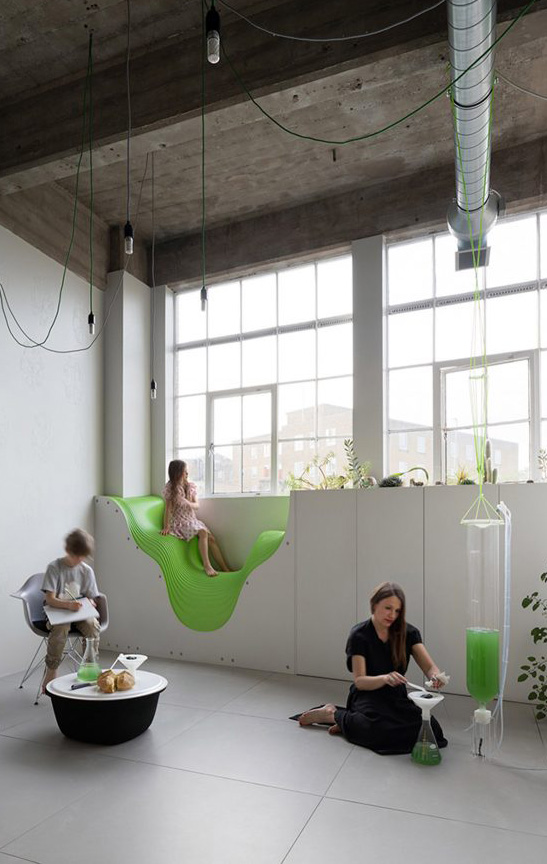
In June 2020 ecoLogicStudio has devised BioBombola, a pioneering project that invites individuals, families and communities to cultivate a domestic algae garden – a sustainable source of vegetable proteins. BioBombola absorbs carbon dioxide and oxygenates homes more effectively than common domestic plants while fostering a fulfilling daily interaction with nature. Each BioBombola is composed of a single customized photobioreactor, a one metre tall lab grade glass container, filled with 15 litres of living photosynthetic Spirulina strain and culture medium with nutrients.

SUNG ROK CHOI
Great Chain of Being
FILE FESTIVAL
The great chain of being, an ancient philosophical concept, attempted to explain the structures and relationships of the world as a form of hierarchy or set of strata. This philosophical idea is here expressed in the form of the entities that constitute the contemporary world. The philosophers of the past believed that the structure of the world had at its top a god, and that beneath there were angels, animals, plants, and elements. But this conception of the world, as a result of the changes in civilization and culture, resulted in the elements that constitute the world undergoing a transition and sustaining an unforeseen hierarchy. The works of art depict the contemporary structure in the form of robots, machines, people, animals, and virtual or digital entities. Within virtual systems, these entities undergo a process of creation, arrangement, use, disposal and recycling, through which they emerge and disappear. The work depicts the stories emerging from these processes, against the background of a systemically designed landscape akin to a factory.
video
Jeremy Rotsztain
BECHA-KPACHA
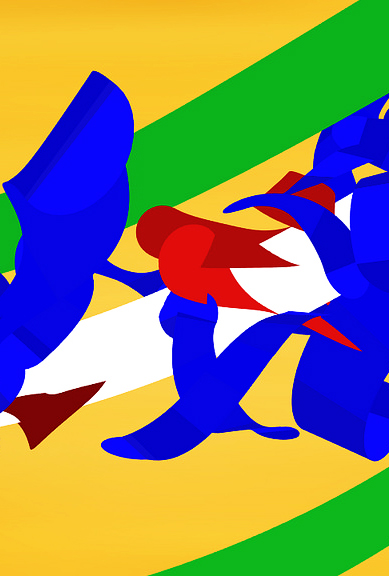
BECHA-KPACHA is an algorithmic music video for the electronic musician COH. The song’s tittle (pronounced Vesna Krasna) was taken from an old Russian poem and roughly translates “Spring the beautiful”, though it can also mean “Spring the red.” The animation reference’s traditional Russian folk patterns, commonly known as Hohloma. In these patterns, colorful plant leaves expand and twist around one another while fruit grows along side. These patterns were a starting point for this sound-responsive animation.

Studio Roosegaarde
Grow
Daan Roosegaarde’s latest artwork GROW is an homage to the beauty of agriculture. In the world film premiere GROW appears as a luminous dreamscape of red and blue waves of light over an enormous field. GROW is inspired by scientific light recipes which improve plants’ growth and resilience. Most of the time we hardly notice the huge areas of the Earth which are literally feeding us. GROW highlights the importance of innovation in the agriculture system: How can cutting-edge light design help plants to grow more sustainably? How can we make the farmer the hero?

Caroline Rothwell
Infinite Herbarium
Infinite Herbarium heeft tot doel onze ervaring van de uitgestrekte, diverse botanische wereld uit te breiden – door connectiviteit te creëren met planten en hun bedreigde ecosystemen. Via een proces van interactief leren en kunstproductie worden de ontmoetingen van deelnemers met echte planten gefilterd door datasets en historische archieven met behulp van een combinatie van Machine Learning (ML)-technieken. Verbindingen tussen botanie, data en kunst leiden tot fantasierijke ontmoetingen met merkwaardige hybride soorten – het creëren van een digitale weerspiegeling van de constante stroom van levende systemen.

Alisa Andrasek
This research used stigmergy behaviour, another example of agency-based systems, which could be programmed to be highly adaptive to local data. What is most intriguing and attractive in this case, is contrasting organic aesthetics emerging from algorithms like stigmergy, with its plant like formations, and the hyper-rationalisation and genericity of voxelised geometry. Different resolutions were introduced in the facade panels, by using an octree algorithm. The result is a building skin that from afar looks like a plant, but in close up has almost Minecraft-like aesthetics coming from a multi-resolution voxel field. Organic stigmergy (stígma + ergon) partly plays a role in the distribution of data through the facade field, rather than generating geometry. It leaves its imprint in the density of geometry

STUDIO ROOSEGAARDE
Grandir
GROW, la dernière œuvre de Daan Roosegaarde, est un hommage à la beauté de l’agriculture. Dans la première mondiale du film, GROW apparaît comme un paysage onirique lumineux de vagues de lumière rouges et bleues sur un immense champ. GROW s’inspire de recettes lumineuses scientifiques qui améliorent la croissance et la résilience des plantes. La plupart du temps, nous remarquons à peine les immenses zones de la Terre qui nous nourrissent littéralement. GROW souligne l’importance de l’innovation dans le système agricole : comment une conception d’éclairage de pointe peut-elle aider les plantes à pousser de manière plus durable ? Comment faire du fermier le héros ?

MATTHIAS OOSTRIK
A TRAIL OF WATER
DE LICHTINSTALLATIE EEN SPOOR VAN WATER IN DE NEDERLANDSE STAD ASSEN STAAT EEN WATERSPOOR IN EEN SPOORVOORPANG. ELKE TREIN DIE GAAT ACTIVEERT EEN UNIEKE LICHTCOMPOSITIE, OPGENOMEN IN DE BESTRATING EN DE BEPLANTING VAN HET OVERPASS: EEN WATERVAL VAN LICHT DIE OVER HAAR BETON NAAR AARDE NAAR BENEDEN EN OVER HAAR OVERGEGROEIDE HELLINGEN kronkelt. GELEGEN IN EEN HISTORISCHE KREEKBEdding, VERBINDT EEN WATERSPOOR DE NATUURLIJKE WATERSTROOM MET DE HEDENDAAGSE STEDELIJKE VERKEERSSTROMEN VAN DE SITE.

Thijs Biersteker
Symbiosia
With the premiere of ‘Symbiosia’ we give two trees in the iconic garden of Fondation Cartier a visual voice about one of the most important topics of today, climate change. The work addresses the relationship of the trees with the visitors, the environment and each other. The real time data installation is a collaboration between artist Thijs Biersteker and world renowned botanist and scientist Stefano Mancuso and his International Laboratory of Plant Neurobiology in Florence. As a pioneer of plant neurobiology he is an advocate of the concept of plant intelligence. Mancuso provided the science behind the artwork.

Teamlab
Moss Garden of Resonating Microcosms
TeamLab essaie de mettre à jour le concept de couleur. Ovoid change avec 61 couleurs, un nouveau concept de couleur nommé “couleur de lumière solidifiée”. On dit que les bryophytes sont les premières créatures terrestres à apparaître dans un monde de roches et de sable, où il n’y a pas encore de créatures sur terre. Avec l’émergence des mousses et des ptérophytes et la formation des forêts, divers animaux sont devenus capables de vivre sur terre. Les organismes meurent lorsque leur corps manque d’eau car l’eau à l’intérieur des cellules est essentielle. D’autre part, les plantes de mousse ont une résistance à la déshydratation en raison de la propriété particulière du changement d’eau, dans laquelle la teneur en eau dans les cellules fluctue en raison des changements d’humidité ambiante, ne meurent pas longtemps à l’état sec, et si l’eau est étant donné, ils peuvent exercer les activités de la vie. Étant donné que la mousse modifie l’eau, sa couleur et sa forme changent considérablement selon que l’air est sec ou humide, par exemple lorsqu’il pleut ou qu’il s’agit de brume. Les tardigrades qui vivent entre les mousses deviennent également dormants, un état de dormance non métabolique, et arrêtent leur activité lorsque l’environnement devient sec, mais lorsque de l’eau est donnée, ils récupèrent et commencent leur activité.

Mirek Struzik
Bubble Forest
“Bubble Forest” se creó como un reflejo de la capacidad de las plantas para producir oxígeno. El bosque del título consta de 18 tallos / troncos de acero que terminan con inflorescencias / coronas en forma de construcciones esféricas que representan una sola burbuja de aire. “Bubble Forest” se refiere tanto a la flora terrestre como a la conocida del fondo de lagos, mares y océanos.

Miguel CHEVALIER
Paradis Artificiels
et nieuwe multiplex Cineum in Cannes, ontworpen door architect Rudy Ricciotti, presenteert de tentoonstelling *Artificial Paradises 2021 *van Miguel Chevalier, en biedt een reis naar het hart van een opnieuw uitgevonden kunstmatige natuur. Soloshow tot 31 januari 2022. Op basis van een proces dat eind jaren negentig is gestart en gebaseerd is op de observatie van het plantenrijk en de denkbeeldige omzetting ervan in een digitaal universum, heeft Miguel Chevalier verschillende herbaria gecreëerd waarmee hij virtuele tuinen kan creëren die te zien zijn in de tentoonstelling:

Ke Jyun Wu
DigiScape – Forest
Lors de la réalisation de ce projet, je passe le plus de temps à gérer des visuels raisonnables et des idées innovantes pour l’image. Je veux prendre soin de chaque détail tel que l’atmosphère, la dynamique des fleurs et des plantes, le changement progressif du soleil et de l’ombre et l’effet du portail lumineux de transition de scène. Cela m’a coûté près d’un demi-mois pour l’éclairage, le réglage des couleurs et la composition. Ce qui se passe normalement, c’est que la partie la plus difficile d’un projet n’est pas de CONSTRUIRE l’environnement mais d’IDÉRER le concept innovant. En raison des progrès technologiques, le seuil technique deviendra de plus en plus bas. Nous devrions nous concentrer davantage sur l’idéation des concepts.

SIHWA PARK
Uncertain Facing
Uncertain Facing es una instalación audiovisual interactiva basada en datos que tiene como objetivo representar la incertidumbre de los puntos de datos cuyas posiciones en el espacio 3D se estiman mediante técnicas de aprendizaje automático. También intenta plantear preocupaciones sobre la posibilidad del uso no intencionado del aprendizaje automático con datos sintéticos / falsos.

Sabrina Ratté
FLORALIA I
Inspired by the writings of Donna J. Haraway, Ursula K. Le Guin, and Greg Egan, the work plunges us into a speculative future, where samples of then extinct plant species are preserved and displayed in a virtual archive room. Through editing and visual strategies, this archive room is sporadically transformed under the effect of interference caused by the memory emanating from the listed plants, revealing traces of a past that continues to haunt the place. Floralia is a simulation of ecosystems born from the fusion of technology and organic matter, where past and future coexist in a perpetual tension of the present.

Benedetto Bufalino
LABY-FOOT
As part of the 1 + 1 biennial, organised jointly by the Casino Luxembourg and the Fonds Kirchberg, the artist Benedetto Bufalino (born in 1982 in Décines; lives and works in Paris) was invited to submit a work for the plant labyrinth of the Kirchberg Central Park. The artist’s approach consists of investing urban space, playing with the architecture of given places and offering, with his funny or poetic installations, an offbeat reinterpretation of reality.
.
L’installation Laby-Foot de l’artiste Benedetto Bufalino se trouve à proximité du Centre National Sportif et Culturel d’Coque à Luxembourg-Kirchberg. Comme son nom l’indique, Laby-Foot est un terrain de football réinventé pour le labyrinthe végétal du parc central du Kirchberg. Ses formes et ses matériaux insolites permettent au public de l’explorer, de participer à des matchs de football et d’en repenser les règles.

JOHN LIEBLER
Art of the Cell
Beneath our everyday world there is a miniature universe of cells, trillions of tiny worlds, unseen and beautiful. Here is our latest 3D medical demo reel, including clips from many of the projects we’ve worked on, such as “Biology:How Life Works”, and “The Inner Life of the Cell”. We hope that you enjoy this two and a half minute tour of the Art of the Cell.
.
Art de la cellule
Sous notre monde quotidien, il y a un univers miniature de cellules, des trillions de mondes minuscules, invisibles et beaux. Voici notre dernière démo médicale en 3D, comprenant des extraits de nombreux projets sur lesquels nous avons travaillé, tels que «Biologie: comment fonctionne la vie» et «La vie intérieure de la cellule». Nous espérons que vous apprécierez cette visite de deux minutes et demie de l’Art de la cellule.

Thomas Feuerstein
NYMPHAE
Manna Sculpture
The sculptures MANNA MACHINE are photobioreactors in which algae (Chlorella vulgaris) grow. The tubes and hoses form a drawing in space and are used for photosynthesis, similar to the leaves of a plant. The resulting biomass is filtered, dried and processed into pigment.

miguel chevalier
IN-OUT/Paradis artificiels
music specially composed by Jacopo Baboni Schilingi
software written by Claude Micheli
.
Trans-Natures ”é uma exploração poética da ligação entre natureza e artifício. Na continuação de uma abordagem iniciada no final dos anos 1990, ele se baseia na observação do reino vegetal e sua transposição imaginária para o mundo digital. Esta natureza artificial, cujas formas lembram vegetação rasteira, combina várias espécies de árvores, arbustos, ramos e folhagens. Seu desenvolvimento e formas são inspirados em “diagramas de árvore”, sistemas de organização de dados que utilizam o princípio de raízes, troncos e galhos. Essa natureza, com suas formas ora realistas, ora abstratas, é gerada ad infinitum por meio de software escrito por Claude Micheli. As plantas brotam ao acaso, florescendo e morrendo ao comando de vários “códigos morfogenéticos”. O jardim se renova e se transforma constantemente. Formas vegetais fluidas se desenrolam no espaço enquanto arborescências de galhos abrasivos crescem implacavelmente, parecendo às vezes explodir da tela. A obra brinca com o senso de limites espaciais de seus visitantes. Imerso em sua esfericidade envolvente, sua concepção de longe e de perto é reconfigurada, aberta ao infinito.

Klaus Obermaier, Kyle McDonald and Daito Manabe
Transcranial
奥地利多媒体艺术家兼编舞克劳斯·奥伯迈尔(Klaus Obermaier)在舞蹈和工艺艺术领域进行不断的实验,与媒体艺术研究中的其他两个参考文献联手,日本人Daito Manabe(现在是该音乐节的常客),而美国的Kyle McDonald也出席了本次艺术节。 Jardin des Plantes的装置Light Leaks。激发表演艺术中各种形式的互动,“跨颅”是一项合作研究与创造项目的一部分,在这里,表演是工作的阶段之一。经颅尤其涉及电磁刺激及其对神经元的影响。在外部命令的冲动下(如Face Visualizer中的Daito Manabe所实践的那样),身体和大脑似乎受到功能失调,异常和不良行为的影响,而正是从数字技术中借来的这三个要素是其中之一。

AKIHISA HIRATA
Casa Tree Ness
Diseñado por Akihisa Hirata, Tree-ness House es un complejo edificio de casas y galerías construido en Tokio, Toshimaku. Un árbol está integrado orgánicamente con una combinación de partes que tienen diferentes características, como un tronco, una rama y una hoja. Al igual que con el árbol, intentamos crear una arquitectura orgánica que pudiera estar formada por una combinación jerárquica de diferentes partes como plantas / pliegues (como aberturas) / cajas de hormigón.

LILLA LOCURTO & BILL OUTCAULT
La marioneta voluntariosa
la marioneta voluntariosa (2014) fue creada por los artistas Lilla LoCurto y Bill Outcault durante una residencia en la Universidad de Carolina del Norte en Charlotte, trabajando con la Facultad de Computación e Informática y la Facultad de Arte y Arquitectura. La marioneta está impresa en 3D a partir de la imagen escaneada de una figura humana y responde de manera atractiva en tiempo real a los gestos humanos espontáneos al leer los movimientos y expresiones de un espectador. Sus cuerdas son manipuladas por motores y software y hay dos sensores de profundidad que leen y analizan los comportamientos y gestos de los participantes. Las acciones posteriores de la marioneta están diseñadas para provocar más respuestas, creando un intercambio que se centra en la fragilidad e inseguridades del participante humano y planteando cuestiones de relevancia contemporánea. La intención del proyecto no era crear tanto un robot que funcionara perfectamente, sino más bien imbuir una marioneta obviamente accionada mecánicamente con la capacidad de solicitar un diálogo físico y emocional con un espectador.

ANDY LOMAS
Morphogenetic Creations
Created by a mathematician, digital artist and Emmy award winning supervisor of computer generated effects – Andy Lomas, Morphogenetic Creations is a collection of works that explore the nature of complex forms that can be produced by digital simulation of growth systems. These pieces start with a simple initial form which is incrementally developed over time by adding iterative layers of complexity to the structure.The aim is to create structures emergently: exploring generic similarities between many different forms in nature rather than recreating any particular organism. In the process he is exploring universal archetypal forms that can come from growth processes rather than top-down externally engineered design.Programmed using C++ with CUDA, the series use a system of growth by deposition: small particles of matter are repeatedly deposited onto a growing structure to build incrementally over time. Rules are used to determine how new particles are created, and how they move before being deposited. Small changes to these rules can have dramatic effects on the final structure, in effect changing the environment in which the form is grown. To create these works, Andy uses the GPU as a compute device rather than as a display device. All the data is held in memory on the GPU and various kernel functions are called to do things like apply forces to the cells, make cells split, and to render the cells using ray-tracing. The simulations and rendering for each of the different animated structures within this piece take about 12 hours to run, Andy explains. By the end of the simulations there are over 50,000,000 cells in each structure.The Cellular Forms use a more biological model, representing a simplified system of cellular growth. Structures are created out of interconnected cells, with rules for the forces between cells, as well as rules for how cells accumulate internal nutrients. When the nutrient level in a cell exceeds a given threshold the cell splits into two, with both the parent and daughter cells reconnecting to their immediate neighbours. Many different complex organic structures are seen to arise from subtle variations on these rules, creating forms with strong reminiscences of plants, corals, internal organs and micro-organisms.
Thomas Depas
Princess of Parallelograms
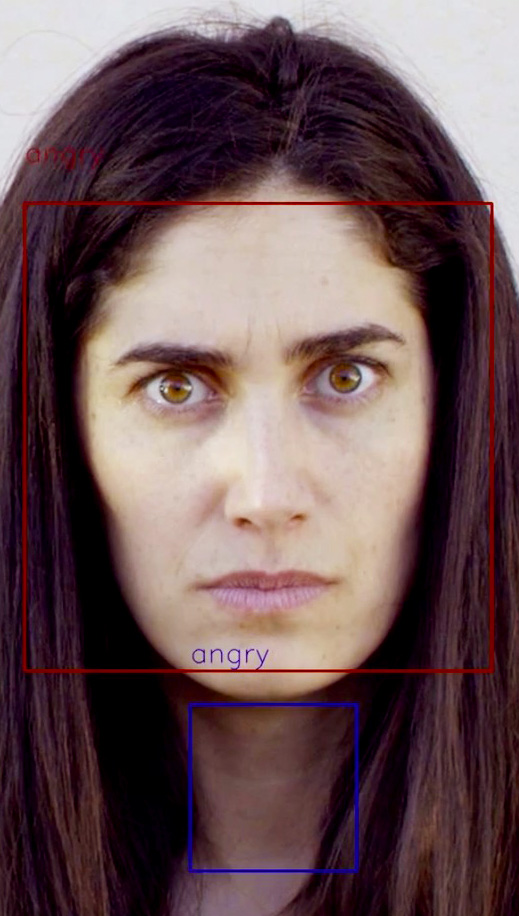
What will happen when our imagination itself is externalized in machines? Artificial intelligence constructs its own world-truth that is beyond our sensory perception. Generative Adversarial Networks (GANs) use algorithms to synthesize and generate images in a completely new way. These images have almost uncanny aesthetic characteristics, seeming to emerge from an ocean of data, a kind of pixel soup. Rather as if we were observing the emergence of artificial “thought.” The machine learns to understand the “essence” of a thing, be it an animal, the face of a celebrity or a body of text. It is then able to generate new images of this thing, including faces of celebrities who do not exist, mutant animals, or new texts. Eventually, AI will be capable of instantaneously and dynamically emulating all representations. The era of the optical machine and the capture of reality will then be at an end, supplanted by the era of machines that generate their own reality.

Nick Ervinck
Plant Mutation
The idea of mutation and manipulation has always appealed to Nick Ervinck’s imagination. In the ‘plant mutation’ series, he uses 3D experiments to explore ideas of both organic and genetically engineered life forms. Nick Ervinck created an openness that will attract the viewer to consider his work from different angles. These works have both a poetic and a critical social dimension. On the one hand, the sculptural contradictions, such as inside/outside and rough/smooth, make these works purely poetic. The visual language of these organic sculptures has a surprising impact.

Azuma Makoto
Encapsulated environmental system: Paludarium YASUTOSHI
This machine is fully equipped with a mist machine as if wrapping plants in a fog from both sides and drip feed-water system which can be activated depending on the situation in order to maintain the condition of a plant and control inside temperature and humidity. Also the cylindrical shape can fully capture the natural light by 365°angles from glasses, and it can correspond to plant growth by having the series’ largest scale of height. Fans on the ceiling play a role of wind, and a plant can listen music from the waterproofed speakers. The machine takes in essential elements – rain, wind, light and sound – by artificial means and completes a small world where its ecological cycle is condensed. It enables us to admire the beauty of the plants by not being affected by external environment.

Marshmallow Laser Feast
Distortions in Spacetime
In a giant star’s final moments, atoms compress to a point where density becomes infinite, time stretches to a stop and the gravitational field is so strong that not even light can escape: a black hole. But the force that creates this dark shadow also spews out a supernova explosion of matter that can eventually coalesce to form planets, plants and people. In Distortions in Spacetime, visitors will see themselves reflected in this matter and will begin to understand the cosmic connection between black holes, dying stars and our very existence.
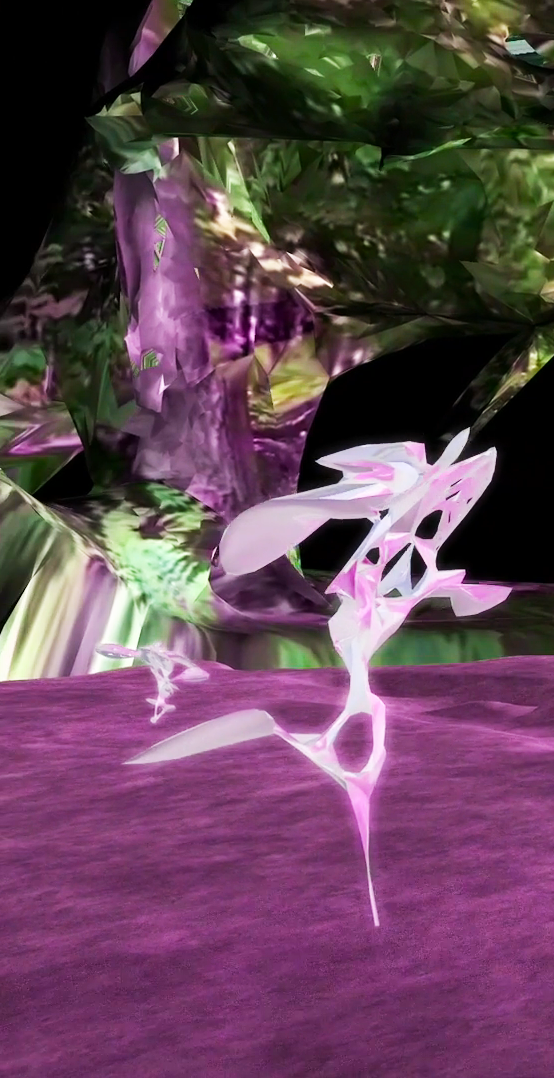
Isabella Münnich
Immersed Garden
Immersed Garden is in its true sense a sunken world. Floating bodiless in an underwater garden, natural sounds guide you through an immersive surrounding, somewhere between calming and irritating, natural and artificial. It is a playful exploration of the individual conception of safety and confusion and a personal approach to aesthetic references to habits of introspection and retreat in digital environments. It was created by fusing different digital processes like photogrammetry of selected natural places around Karlsruhe and field recordings in a local natural reserve. Underwater videos hybridize with 3D scans of trees and plants while invisible frogs are croaking and humming birds are buzzing by synthetic flowers. The artistic aim was to explore the personal perception of calming and irritating, playing with the concept of immaterialness and attentiveness. The artwork creates aesthetic references to philosophical and scientific theories of introspection and identity.

Wolfgang Buttress
The Hive Kew Gardens
“The proposal involves the idea of ’temporary’ in an interesting way. It uses the temporary aspect of the installation to carefully engage with the purpose and short and long-term needs of the land,” said the judges. Originally designed for the Expo 2015 from Milan, The Hive was transferred to Kew Gardens, in central London, for two years, where it was part of an event space. Designed to give visitors a glimpse into the life of working bees, the pavilion was built with 169,300 individual aluminum components equipped with hundreds of LED lights. As the meadow surrounding the structure grows, several species of plants begin to flourish, bringing with them the sounds of real bees that enhance the multi-sensory experience of the pavilion.The aesthetic and symbolic installation represents its namesake, with the aim of showing visitors the importance of protecting the honeybee.

Hito Steyerl
Power Plants
Hito Steyerl’s series of projects at the Serpentine Galleries is positioned around ideas of ‘power’. Beginning from the premise that ‘power is the necessary condition for any digital technology’, the artist considers the multiple meanings of the word, including electrical currents, the ecological powers of plants or natural elements, and the complex networks of authority that shape our environments. She addresses the notion of power through three interrelated research strands and projects: Actual Realityos, a collectively-produced digital tool; Power Walks, a series of guided walks and a tour that draws upon conversations with campaigners, community groups and organizations in the local area surrounding the Serpentine, and finally this exhibition, Power Plants, which features new video installations created using artificial intelligence trained to predict the future.

Christa Sommerer and Laurent Mignonneau
The Interactive Plant Growing
Interactive Plant Growing is an installation that deals with the principle of the growth of virtual plant organisms and their change and modification in real time in 3D virtual space. These modifications of pre-defined “artificially living plant organisms” are mainly based on the principle of development and evolution in time. The artificial growing of program-based plants expresses the desire to discover the principle of life as defined by the transformations and morphogenesis of certain organisms. Interactive Plant Growing connects the real-time growing of virtual plants in the 3D space of the computer to real living plants, which can be touched or approached by human viewers.

Alexander Raskatov
A Dog’s Heart
Dutch National Opera
Libretto by Cesare Mazzonis
based on a novella by Mikhail Bulgakov
A Dog’s Heart is based on the book of the same name that the Russian writer Mikhail Bulgakov wrote in 1925 and which was banned for decades due to social criticism. It is a masterly “modern” parable in which Soviet society, which was still young at the time, is shrewdly filleted. A starving mutt is used by a doctor as a pilot project. He will have human testes and a pituitary gland implanted. Subsequently, however, the mutated animal develops into an unscrupulous human criminal. The only option is to surgically return the animal to a dog.
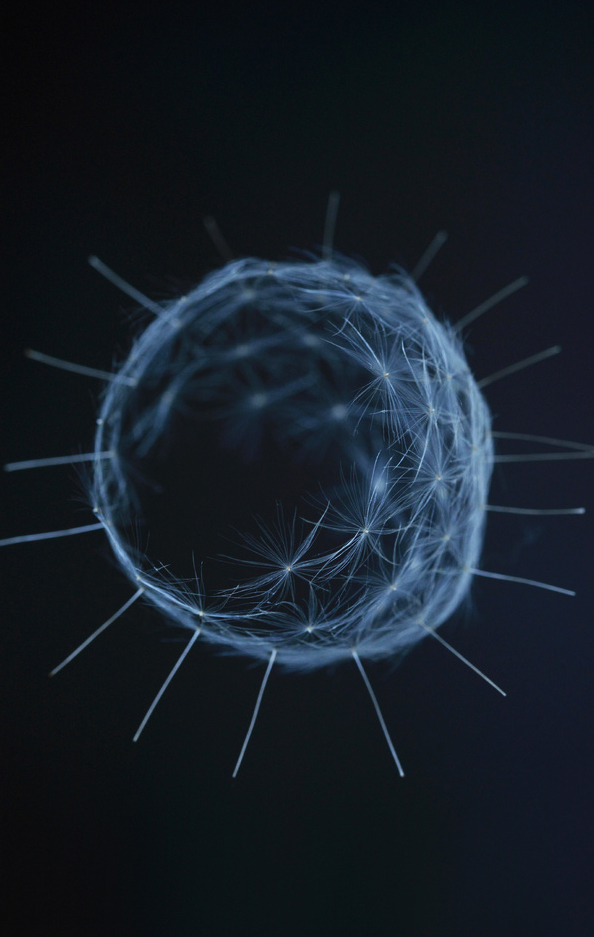
Euglena
Watage
An interactive installation using naturally-generated power rather than man-made sources like electricity. Dandelion fluff (watage in Japanese) soaked in water to form drop-like shapes, untreated fluff, and so on serve as modules, bonded with liquid paste to be reconstructed. The fluff sways in response to viewers’ breath or movement, even in the absence of breeze, immaculately revalidating the viewer’s own existence by making their influence on surroundings visible without use of technology. Using its surrounding environment to send off its seeds, the dandelion has achieved a lightness and form in its fluff specialized to the purpose and sprouts up each year no matter how the world may change. Having been drawn into the quietly-paced world of plants, the artist looked to dandelion fluff for a new form of expression able to hold its own against showy, rapidly evolving technological expression.