highlike

EXTRAWEG

INFLUENCER
“There is a certain kind of social criticism in each publication, but they do not correspond to specific facts. I enjoy playing with common situations and presenting them in an ambiguous and uncomfortable way. For me, it is not important to focus on the content too much in one direction because I seek to agitate the spectator and force them to think for themselves. They must find their own explanation to what they are seeing,” Extraweg

.

„In jeder Veröffentlichung steckt eine gewisse Art von Gesellschaftskritik, aber sie entsprechen nicht bestimmten Tatsachen. Es macht mir Spaß, mit alltäglichen Situationen zu spielen und sie mehrdeutig und unbequem darzustellen. Mir ist es nicht wichtig, den Inhalt zu sehr in eine Richtung zu fokussieren, denn ich versuche den Zuschauer zu agitieren und zum Mitdenken zu zwingen. Sie müssen ihre eigene Erklärung für das Gesehene finden.“ Extraweg

.

« Il y a une certaine forme de critique sociale dans chaque publication, mais elles ne correspondent pas à des faits précis. J’aime jouer avec des situations courantes et les présenter de manière ambiguë et inconfortable. Pour moi, ce n’est pas important de trop se concentrer sur le contenu dans un sens car je cherche à agiter le spectateur et à le forcer à penser par lui-même. Ils doivent trouver leur propre explication à ce qu’ils voient » Extraweg

EXTRAWEG

Pleasure
« Il y a une certaine forme de critique sociale dans chaque publication, mais elles ne correspondent pas à des faits précis. J’aime jouer avec des situations courantes et les présenter de manière ambiguë et inconfortable. Pour moi, ce n’est pas important de trop se concentrer sur le contenu dans un sens car je cherche à agiter le spectateur et à le forcer à penser par lui-même. Ils doivent trouver leur propre explication à ce qu’ils voient » Extraweg

Extraweg

STEP INTO THE NEW MATTER

“C’è un certo tipo di critica sociale in ogni pubblicazione, ma non corrisponde a fatti specifici. Mi piace giocare con situazioni comuni e presentarle in modo ambiguo e scomodo. Per me non è importante concentrarsi troppo sul contenuto in una direzione perché cerco di agitare lo spettatore e costringerlo a pensare da solo. Devono trovare la propria spiegazione a ciò che stanno vedendo”, Extraweg

.

“每个出版物都有某种社会批评,但它们并不对应具体的事实。 我喜欢处理常见的情况,并以模棱两可和不舒服的方式呈现它们。 对我来说,将内容过多地集中在一个方向上并不重要,因为我试图激怒观众并迫使他们自己思考。 他们必须找到自己对所见所闻的解释,”Extraweg

IAIN CRAWFORD

伊恩·克劳福德
איאן קרופורד
이안 크로포드

Iain loves to capture images that have a strong graphic and textural quality, often searching out the graphical symmetry in chaos, while still maintaining the personality and emotion of the subject. His career has lead him to shoot campaigns for many of the world’s top brands and receive commissions from a host of top international magazines.
ANDRÉ BROESSEL AND RAWLEMON

spherical glass solar energy generator concept
Rawlemonの太陽エネルギー設計者は、太陽光(および月光)を最大10,000回集中させることができる球形の太陽追跡ガラスグローブを作成しました。同社は、そのß.toricsシステムは従来の2軸太陽光発電設計よりも35%効率的であり、完全に回転する耐候性の球体は月明かりから電気を集めることさえできると主張しています。
ß.toricsシステムは、バルセロナを拠点とするドイツの建築家AndréBroesselによって発明されました。彼は、建物の壁に埋め込んで、窓とエネルギー発生器の両方として機能できるソーラーシステムを作成しようとしました。しかし、このプロジェクトは、太陽光効率の機能だけでなく、月のエネルギーを生成するように設計されています。
球体は、拡散した月光を安定したエネルギー源に集中させることができます。未来的なß.toricsシステムは、そのすっきりとした美しいデザインで大きな注目を集めています。 (太陽光発電の大きな可能性にもかかわらず、私たちはあまり多くの美しい太陽光発電技術を見たことがありません)。建築家がこれらのエネルギー生成オーブを代替エネルギーアジェンダや将来の建物の設計にどのように組み込むかを楽しみにしています。

Grupo Labirintus – Micélio – Brazil

MICÉLIO

Grupo Labirintus


FILE SÃO PAULO 2026: Inter-creativity – Art and Technology – LED SHOW
Electronic Language International Festival


Micélio – Brazil

Inspired by the fungal networks described by Merlin Sheldrake, Micélio is an audiovisual investigation that reinterprets the city. The work converts urban photography into a “mycelial database” through computational processes, decomposing architectural rigidity. This system metabolizes raw information, culminating in a video art installation where the city transcends static concrete, revealing itself as a continuous flow of energy and regeneration.

BIO

Being the artistic arm of InterLab21_CCM (PUC-SP/CNPq), Labirintus Group articulates theoretical research and aesthetic experimentation under the coordination of Lucia Leão. Aligned with the UN SDGs, the collective creates affective cartographies, installations, and digital platforms that address the climate emergency and social inequalities. 

Fran Orallo – digital scenery #01 – Spain / United Kingdom

DIGITAL SCENERY #01

Fran Orallo


FILE SÃO PAULO 2026: Inter-creativity – Art and Technology – VIDEO ART SHORT
Electronic Language International Festival


digital scenery #01 – Spain / United Kingdom

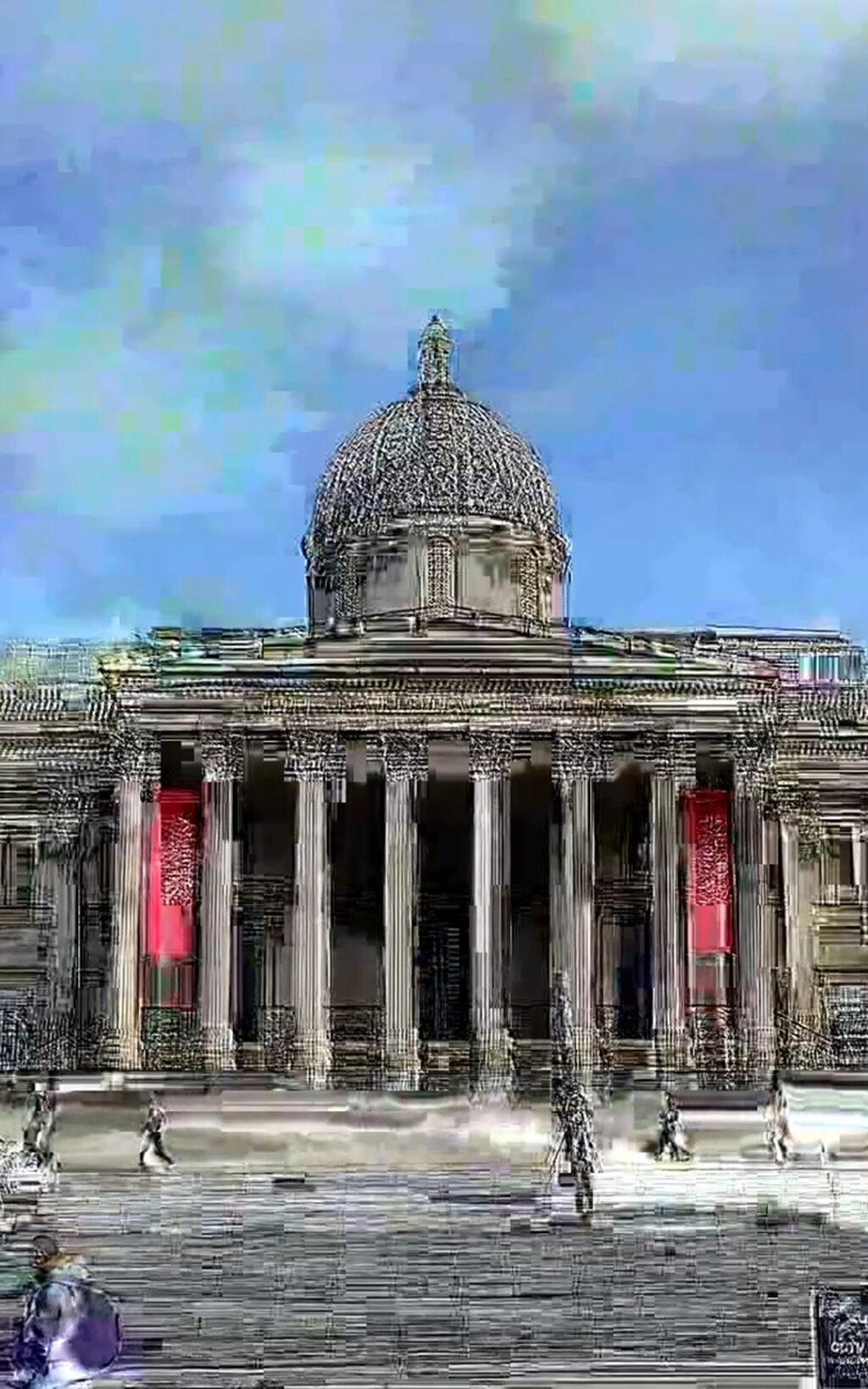
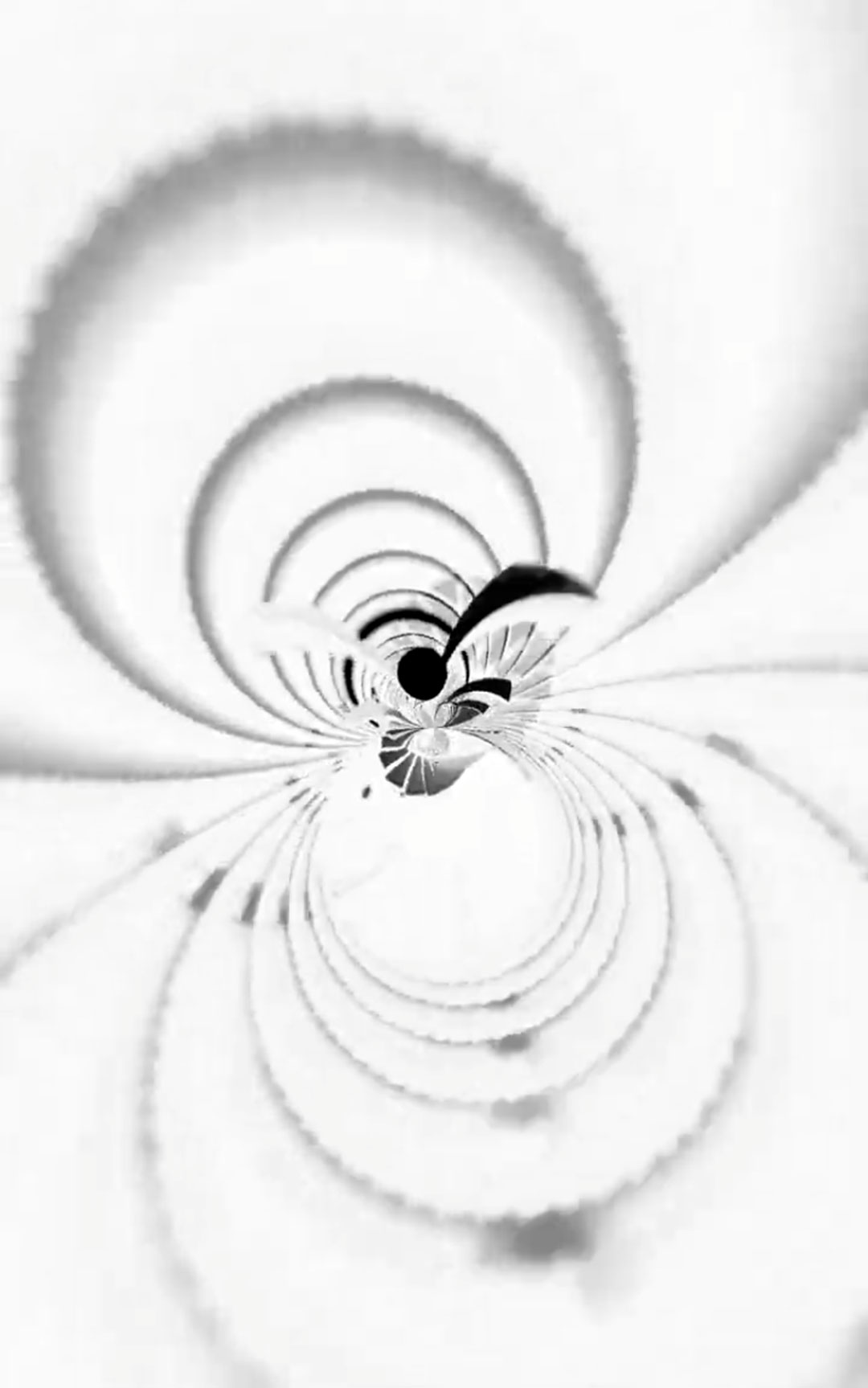
The project consists of a series of video fragments drawn from a personal archive developed over several years. Each fragment has undergone processes of digital manipulation through glitch techniques, with the aim of generating visual compositions based on error and a strong pictorial dimension, reaching levels of formal abstraction.

BIO

Fran Orallo has exhibited his work in Spain and internationally, participating in biennials, group exhibitions, and festivals in more than 50 countries. His work has been shown in both public and private institutions such as IVAM (Valencia, Spain), Vostell Malpartida Museum (Cáceres, Spain), MAC—Museum of Contemporary Art of Santiago de Chile (Chile)—, La Neomudéjar (Madrid, Spain).

Cho Juyoun – Unfaded – South Korea

UNFADED

Cho Juyoun


FILE SÃO PAULO 2026: Inter-creativity – Art and Technology – VIDEO ART SHORT
Electronic Language International Festival


Unfaded – South Korea

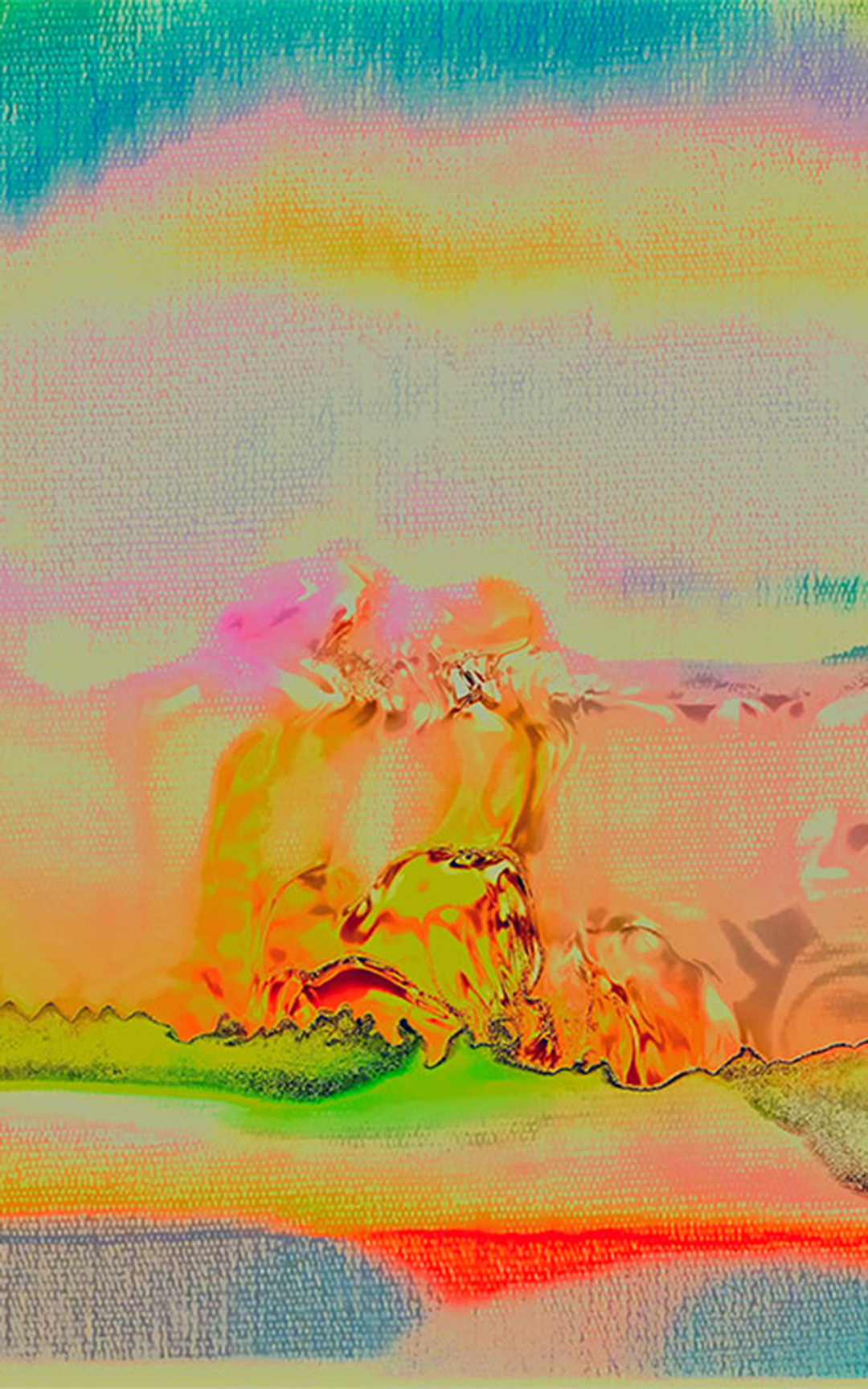
We carry memories that flow and expand like contour lines, forming emotional landscapes of warmth and coldness. Not only people, but objects, history, and even ancient trees hold these flowing memories. Every experience, whether joyful or painful, accumulates like layers of sediment, eventually hardening into rock and drawing unique ridges. The artist wishes to speak to all beings that gather and transform these memories into shape—especially to you, a small yet precious existence, still flowing and growing.

BIO

Born in Seoul (1982), she debuted in 2008. Her early works explored loss and isolation through canvas deconstruction. Since 2019, she has integrated digital animation, culminating in her Borderline series (2023–), which examines the intersection of painterly depth and digital immateriality. Her current practice spans media art and animation, reflecting a focus on cross-genre experimentation.

John Butler – The Magic Robot – England

THE MAGIC ROBOT

John Butler


FILE SÃO PAULO 2026: Inter-creativity – Art and Technology – Full-length
Electronic Language International Festival


The Magic Robot – England

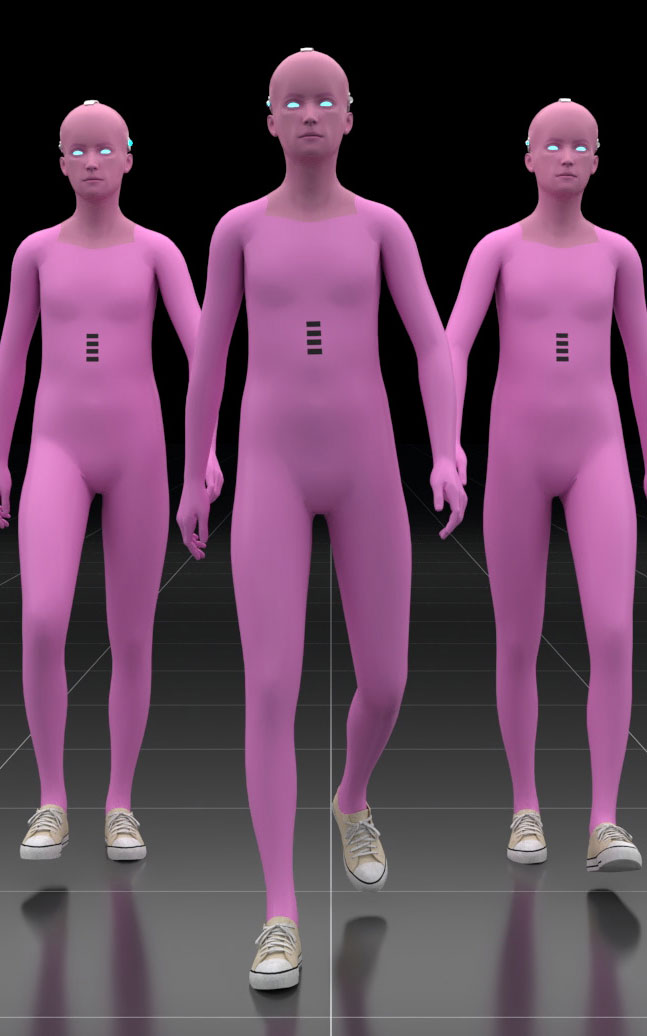
A tale of technological unemployment, only this time it’s the robots who are losing their jobs.

Loosely based on Upton Sinclair’s ‘The Jungle’, the Magic Robot traverses the worlds of bonded labour, industrial espionage, fine art and spirituality in his search for ‘Self‘. The Magic Robot is a work of Bureaucratic Science Fiction, confirming that we are living in a spreadsheet, not a simulation.

BIO

Studied Drawing & Painting and Electronic Imaging at Duncan of Jordanstone College of art, Dundee.

Lives and works in Glasgow as 3D animator. His personal work makes extensive use of CGI, motion capture, and, lately, ‘Interrogative Fashion’.

Has exhibited and screened media art work extensively in the UK and abroad, and has produced work for broadcast in UK for BBC2 and Channel 4.

Milton Montenegro – Hallucination – Brazil

HALLUCINATION

Milton Montenegro


FILE SÃO PAULO 2026: Inter-creativity – Art and Technology – Animation
Electronic Language International Festival


Hallucination – Brazil

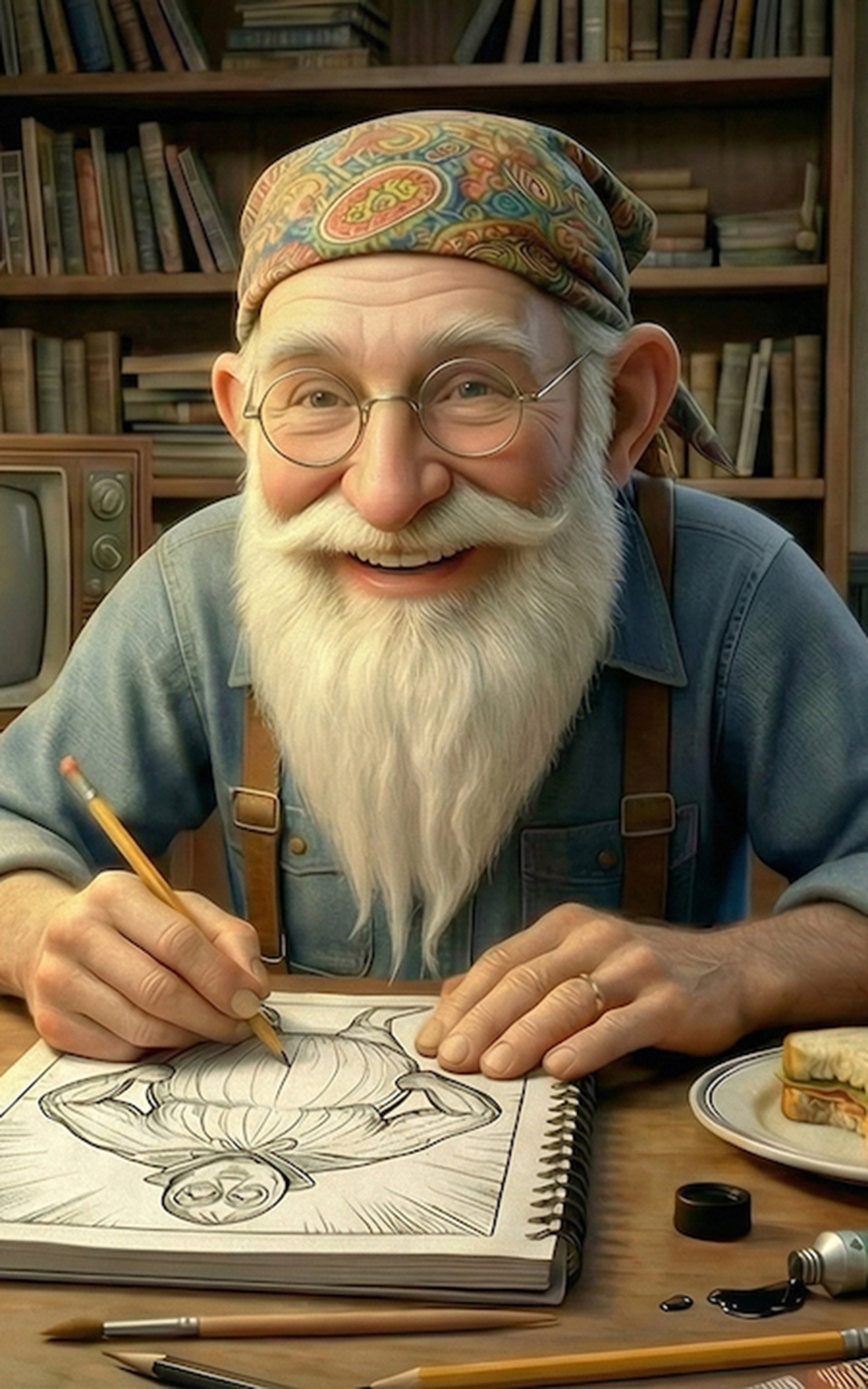
When veteran cartoonist Joe K. is falsely accused of plagiarism, his life turns into a Kafkaesque nightmare.

His only hope is Onion-Man, the odd superhero he has been drawing for decades, who magically escapes from the comic books into the real world.

Together, they must outwit an authoritarian AI and unleash the deadliest of superpowers to avoid prison.

BIO

Michael Betancourt is a distinguished Cuban-American (Latinx) critical theorist, moviemaker, and research artist known for his work in the fields of digital capitalism, motion graphics, and Glitch Art; a pioneer of Glitch Art, he has made visually seductive digital art since 1990 that brings the visionary tradition into the present by glitching still and moving images. 

Axol – Soulmate – China

SOULMATE

Axol


FILE SÃO PAULO 2026: Inter-creativity – Art and Technology – Animation
Electronic Language International Festival


Soulmate – China

A soulmate-seeking journey through four symbolic spaces traces One’s transformation from incompleteness to self-realization, as they shed layers of desire, identity, and illusion to uncover the raw self within.

BIO

Axol is a multidisciplinary artist working across animation, media arts, filmmaking, and performance. Based in China / Japan, their practice centers on bodies and their relation to constructed systems and space, examining modes of (hetero/appearance/etc.) normativity within contemporary East Asian contexts.

Yoshi Sodeoka – Spike – Japan / United States

SPIKE

Yoshi Sodeoka


FILE SÃO PAULO 2026: Inter-creativity – Art and Technology – Randomic Dimension
Electronic Language International Festival


Spike – Japan / United States

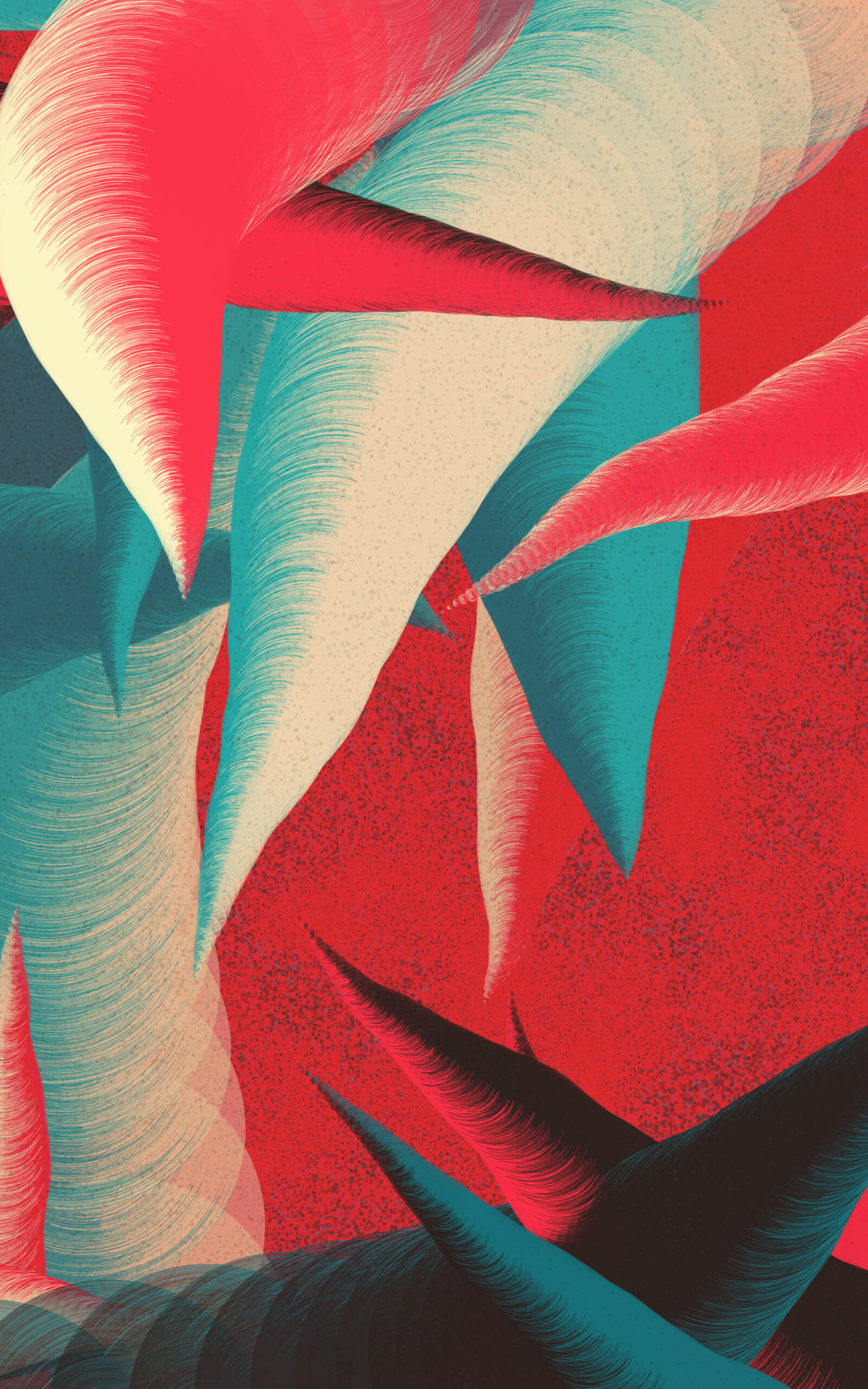
A collaboration between Max Cooper and Yoshi Sodeoka, Spike pairs polyrhythmic electronic sound with generative visuals inspired by reaction-diffusion systems. Abstract, organism-like forms emerge, mutate, and self-organize through feedback processes, moving between control and unpredictability. The work explores growth, transformation, and the dynamics of evolving systems.

BIO

Yoshi Sodeoka is a New York-based artist working across video, animation, and sound. His practice explores generative systems, video feedback, and diagrammatic visual languages. Drawing from nature, mathematics, and computation, his work examines evolving structures and perceptual experience through immersive installations and moving image. Music by Max Cooper.

David Young – Q(a,v,7,m,m2,d4a-21,7,16,13,31,55) – United States

Q(A,V,7,M,M2,D4A-21,7,16,13,31,55)

David Young


FILE SÃO PAULO 2026: Inter-creativity – Art and Technology – Randomic Dimension
Electronic Language International Festival


Q(a,v,7,m,m2,d4a-21,7,16,13,31,55) – United States

Q(a,v,7,m,m2,d4a-21,7,16,13,31,55) is a quantum drawing generated from actual quantum computer data—entangled qubit values and noise from decoherence, when quantum states collapse into classical reality. Custom code written to interrogate this data searches for visual patterns within quantum behavior. Rather than explaining phenomena, the work creates conditions for felt encounter—building non-mathematical intuition through direct engagement with what these machines produce.

BIO

David Young is a computational artist and researcher investigating quantum computing and AI through aesthetic rather than mathematical means. His work is held in the collections of Kunstmuseum Bonn and Kunstsammlungen Chemnitz and has been featured in Artforum. He holds an MS from MIT Media Lab. He lives and works in New York. 

Casey Reas – Still Life – United States

STILL LIFE

Casey Reas


FILE SÃO PAULO 2026: Inter-creativity – Art and Technology – Randomic Dimension
Electronic Language International Festival


Still Life – United States

The Still Life software works (2015–2023) transpose the still-life tradition in painting into a generative, computational register. Each of the ten works generates a kinetic still life composed of one type of Platonic solid—the tetrahedron, cube, octahedron, dodecahedron, or icosahedron—realized in both RGB and HSB color systems. Long regarded as elemental structures of matter, these logical and essential forms link antiquity’s metaphysical geometry to the pragmatic origins of computer graphics.

BIO

Casey Reas is an artist and educator based in Los Angeles. His work spans software, prints, drawings, and installations that explore the relationship between computational systems and contemporary visual culture. Reas co-founded Processing (2001), the Processing Foundation (2012), and Feral File (2020). He is a professor in UCLA’s Department of Design Media Arts.

Ayumu Nagamatsu – ACW SunaoSystem – Japan

ACW SUNAOSYSTEM

Ayumu Nagamatsu


FILE SÃO PAULO 2026: Inter-creativity – Art and Technology – Randomic Dimension
Electronic Language International Festival


ACW SunaoSystem – Japan

This work uses a sound file within a custom audiovisual system to generate and record visuals. Instead of CG software, all forms are produced in C/C++ with openFrameworks. The program detects audio attacks and autonomously changes scenes, effects, and parameters. Drawing on early CG methods such as randomness, coordinate transforms, continuous mappings, and fractals, it creates real-time images that are both geometric and photorealistic. The source code is fully open online.

BIO

Studied art history before moving into app development and generative art. He studied at Keio University, Japan, Kunstuniversität Linz, Austria, and in 2018 completed an MA in Media Art at IAMAS, Japan. His work, inspired by Generative Art and Visual Music, combines computational geometry with sound, video, interaction, and real-time environments.

Anna Carreras – Arrels #64 – Spain

ARRELS #64

Anna Carreras


FILE SÃO PAULO 2026: Inter-creativity – Art and Technology – Randomic Dimension
Electronic Language International Festival


Arrels #64 – Spain

Arrels has a strong relationship to the Spanish landscape, connecting drawing, code, and repetitive loops to the environment through a cycle of growth and decay.

With nature as its inspiration, it becomes a carefully choreographed generative animation. In Arrels, growing roots in the colors of earth and sky collide in a vibrant dance. New growth in the arid soil overtakes the old, and the cycle continues.

BIO

Anna Carreras is a generative artist focusing her work on the use of algorithms to create visuals that depict generic concepts, foster memories, and evoke new discussions.

Working from scratch, she codes “dumb” minimal procedural systems that explore the intrinsic characteristics of the medium, showing how simple rules can produce complex, unexpected, beautiful results that question our understanding of technology, life, and relationships.

Zach Lieberman – Body Sketches – United States

BODY SKETCHES

Zach Lieberman


FILE SÃO PAULO 2026: Inter-creativity – Art and Technology – Installations
Electronic Language International Festival


Body Sketches – United States

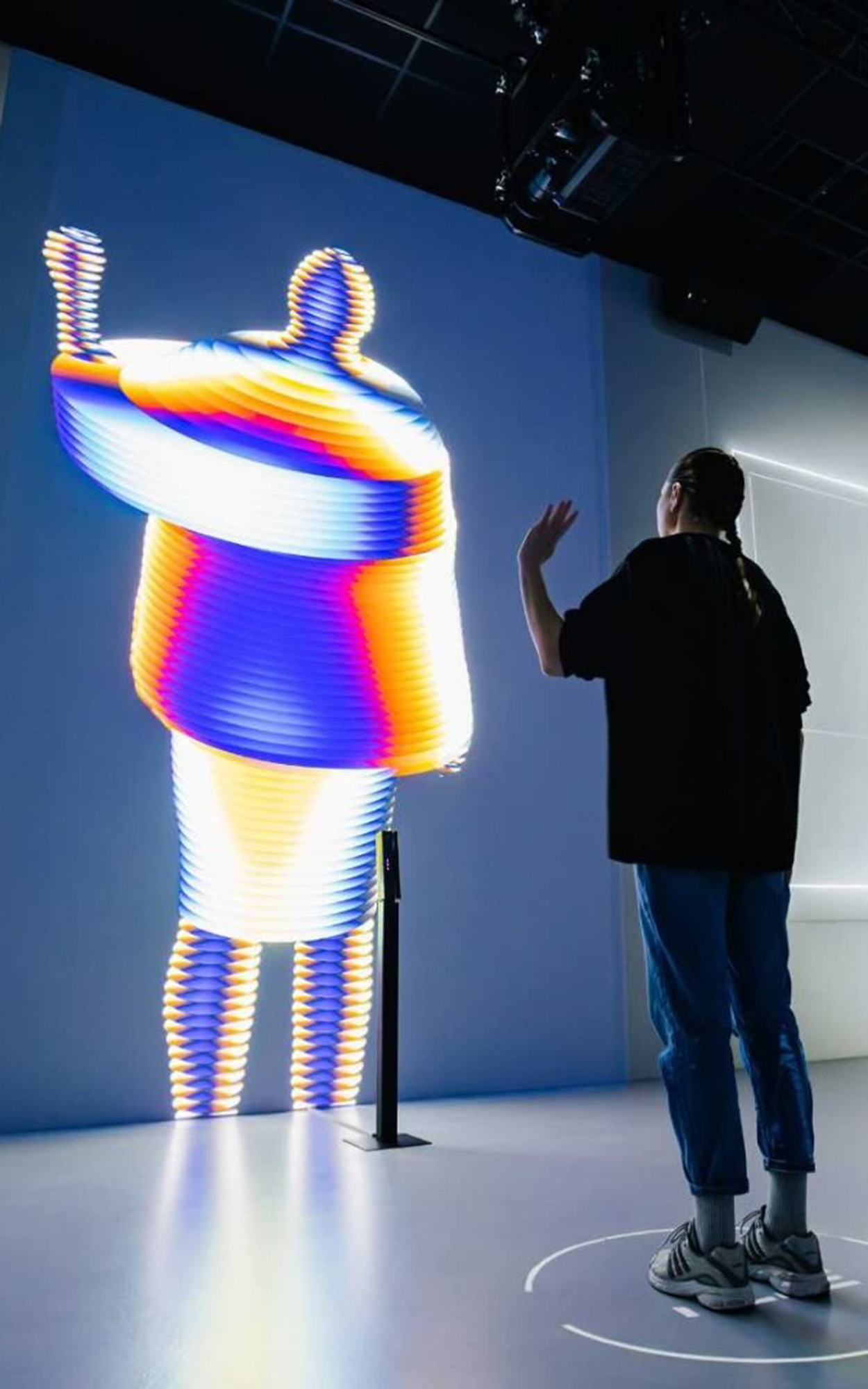
American artist Zachary Lieberman explores the poetry of code. In this interactive installation, visitors’ movements and gestures are transformed into digital drawings generated in real time. Every interaction is unique and disappears in the same moment the spectators change position. 

Within the exhibition, the work serves as a metaphor of a personal imprint in the future. Every visitor leaves a trace that instantly changes the environment around them, becoming part of a shared story.

BIO

Zach Lieberman is a pioneer of creative coding, turning invisible forces into interactive digital poetry.

DIEGO STOCCO

Диего Стокко
custom built orchestra


I always been fascinated by the raw musical power that an orchestra can express, so, after creating a series of videos where I’m performing a multi-track piece with an instrument I designed, I decided to take the concept a step farther and create my own orchestra made of unusually unique instruments. The project started by handcrafting a diverse selection of instruments, then I wrote a composition where I could fit them all in and finally performed each part.

STROOK

Metropolis


Metropolis is a 1927 German expressionist science-fiction film directed by Fritz Lang. Set in the year 2026, Metropolis takes place in a dystopian society where wealthy industrialists rule from vast tower complexes, oppressing the workers who live in the depths below them.

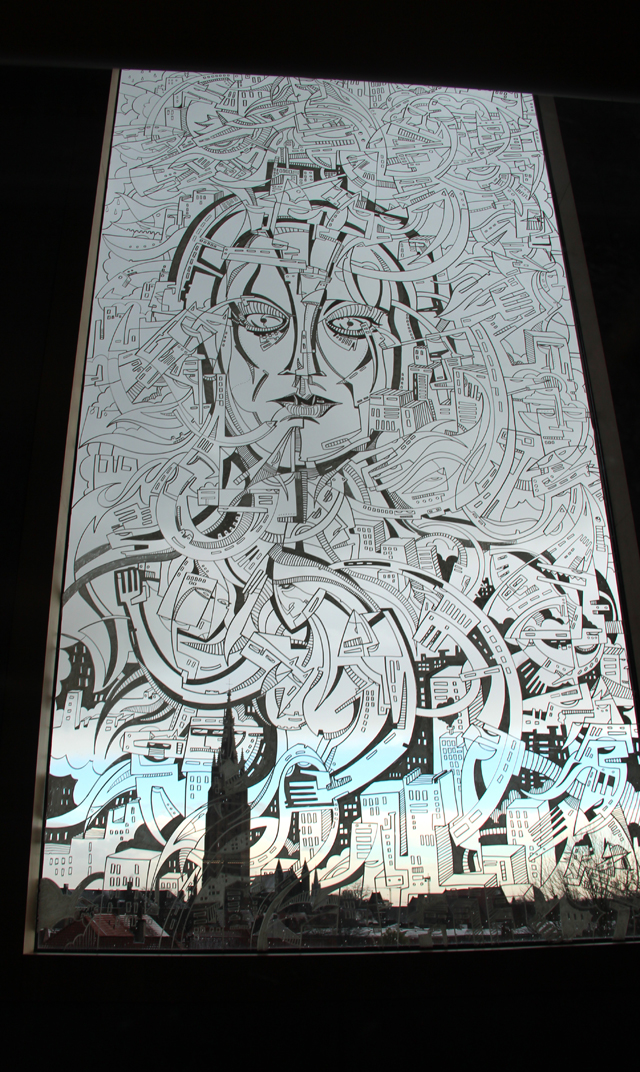
The drawing is placed on the largest window of the ‘Concertgebouw’ (Concert building) in Bruges with the perfect backdrop of the city. There are many different perspectives to the work wich has the effect of a changing picture throughout the day.

TRISHA BROWN

تريشا براون
트리샤 브라운
トリシャブラウン
Триши Браун
floor of the forest
Trisha Browns Boden des Waldes – teils Skulptur, teils Tanzstütze, teils Performance – wird im Rahmen von Dance / Draw präsentiert und verfügt über einen 12 x 14 Fuß großen Stahlrohrrahmen, über den Seile gebunden und mit gebrauchter Kleidung dicht eingefädelt werden. Innerhalb der Struktur winden und weben sich zwei Tänzer, die sich buchstäblich durch die Skulptur ziehen und ausziehen. Jede Aufführung unterliegt dem Zufall, so dass die Individualität jedes Tänzers, der sie aufführt, ihre Bewegungen bestimmen kann, was bedeutet, dass keine zwei Aufführungen jemals gleich sind.

LIGHTING DESIGN COLLECTIVE

Silo 468 Light Art Helsinki


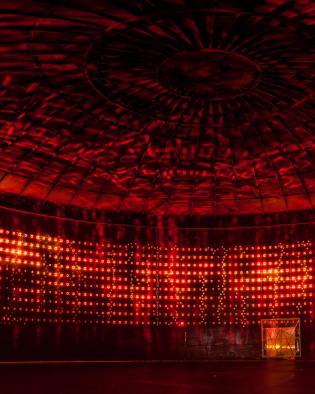
INTERACTIVE LIGHT ART FOR URBAN REDEVELOPMENT SILO 468 HELSINKI Disused oil silo has been converted into mesmerizing light art piece and a public space with the aid of swarm intelligence and interactive lighting. The project is a conversion of oil silo into light art piece and a public space designed by Madrid based Lighting Design Collective (LDC). It sits by the sea facing central Helsinki, Finland. Prevailing winds well known to residents are strongly present. The natural light, wind and the movement of light on the water formed the principles for the lighting concept. Walls are perforated with 2012 holes referring to the Helsinki World Design Capital 2012 year. The lighting signifies the start of a major urban redevelopment for the City of Helsinki. It functions to draw focus to unknown district and creates a landmark and a marketing device for the City. Maybe most importantly through the use of natural and artificial light it created a unique civic space for the citizens to use. Furthermore, it set a precedent for a new district for 11000 people to become the “district of light”. During the first years the silo is mainly viewed from distance when the area starts to get build. 1280 LED domes in 2700K white are fitted inside the silo behind the cut-outs and visible from several kilometres away. LDC developed a bespoke software using swarm intelligence and nature simulating algorithms that refresh responding to parameters such as wind speed, direction, temperature, clear night and snow. System dials out every 5 minutes for new data. The patterns are fluid, natural in feel and never repeat. They are slow but speed up in relation to the wind speeds creating constantly changing mural of light. At midnight the exterior turns deep red for 1 hour. The colour refers to the former use of the silo as a container of energy. At 02:30 when the last ferry goes past to Suomenlinna lights go off. The interior gains importance as the area gets populated. Inside is painted deep red. Daylight seeps through the pattern derived from original rust patterns on the walls. North facing wall has no perforations. 450 steel mirrors moved by winds are fitted behind the holes. With sunlight the silo appears to glimmer and sparkle like surface of water.The warm white LED grid reflects light indirectly via the red walls into the space. The moving patterns read as halos racing across the walls. The Silo is a civic space for the citizens of Helsinki. Floor was added and rigging infrastructure, power, water and emergency & cleaning lighting. Light intervention has created a new space for people.

JURG LEHNI

moving picture show


The current migration from analogue to digital film projection in cinemas across the globe is slowly rendering the medium of 35mm motion picture film obsolete, along with the technical equipment used to produce and screen such films.

In Moving Picture Show, a scenario of animated drawing and text production is created by reappropriating a process normally used by the film industry to etch subtitles into the emulsion layer of 35mm film using a high-powered precision laser. By etching away the emulsion, only the clear base of the film remains. Projected onto the screen, the lines appear bright and clear.

Changing the working range of the laser and replacing the software interface for such a machine leads to new possibilities: animations and full-frame drawings can be realised on top of film. The film can either consist of existing material, film created purely for this purpose, or black, non-developed film.

During the 23rd International Poster and Graphic Design Festival in Chaumont, the Jesuit chapel was transformed into a workshop, a scenario of conception, production and projection of a series of short films produced in this way.

Several contributing designers have been invited to engage with the production facility and collaborate on the contents of the show, producing films that were projected repeatedly during the festival. Meanwhile the laser machine, also present in the chapel, is slowly producing new films for future screenings.

FILE SÃO PAULO 2025: SYNTHETIKA – Juan Manuel Escalante

Music for Control Panels

Juan Manuel Escalante

FILE SÃO PAULO 2025: SYNTHETIKA – Art and Technology – Video Art
Electronic Language International Festival


Music for Control Panels – Mexico

Music for Control Panels is an audiovisual exploration inspired by the aesthetics of machines and control rooms. In the tradition of electronic ambient music, sporadic acoustic events and drones guide the viewer through a contemplative journey. The visual component features a generative graphic score echoing projections of computer terminals, printers, and fax machines. The overall composition pays homage to the early computer systems using contemporary techniques.

BIO

Escalante is an artist and educator working with computer code, modular synthesizers, and analog drawings. His work has been shown in major festivals and exhibitions worldwide. Escalante holds a Ph.D. in Media Arts & Technology (University of California, Santa Barbara).

FILE SÃO PAULO 2025: SYNTHETIKA – Callahan Indovina

Daily Diffusion 53 & 86

Callahan Indovina

FILE SÃO PAULO 2025: SYNTHETIKA – Art and Technology – Shorts Films AI
Electronic Language International Festival


Daily Diffusion 53 & 86 – United States

The Daily Diffusion series by Callahan Indovina was a three-month project launched in 2024, as Generative AI tools and various plat forms to support the automation of animations and workflows were still emergent. The YouTube series aimed to provide workflows, prompts, and examples on how to utilize Stable Diffusion and various enhancements to create psychedelic animations. Like many of his works, the Daily Diffusion series took inspiration from Calalhan’s experiences within his dreams.

Music: https://www.mubert.com

BIO

Callahan Indovina is a spir itual and psychedelic artist from California’s Sierra Nevada. His artistic expression combines traditional digital composition techniques with innovative practices such as generative AI. His creations, described as super natural and dreamlike, reflect his surreal and transcendental vision, drawn from experiences within his dreams

FILE SÃO PAULO 2025: SYNTHETIKA – DMTPortal

Recursive Empyrean

DMTPortal

FILE SÃO PAULO 2025: SYNTHETIKA – Art and Technology – Shorts Films AI
Electronic Language International Festival


Recursive Empyrean – Canada

Recursive Empyrean merges fractal-based visuals with an original ambient soundtrack, guiding viewers through infinite loops of creation and collapse. Each cos mic structure reflects itself into eternity, unveiling deeper mysteries with every shift in perspective. Radiant geometry and ambient pulses draw awareness beyond time and space, where subtle patterns reveal gentle truths, echoing the hum of cosmic purpose.

BIO

John Dobbie, a Classical Animation graduate from Sheridan College in Canada, has spent over 20 years shaping digital worlds for franchises like Call of Duty and God of War. Now based in New York’s Capital Region with his family, he crafts immersive cosmic-themed works as DMTPORTAL, merging technology, mysticism, and decades of experience to expand perception beyond the ordinary.

FILE SÃO PAULO 2025: SYNTHETIKA – ChrisLee

Robot Journey: Part 1, 2 & 3

ChrisLee

FILE SÃO PAULO 2025: SYNTHETIKA – Art and Technology – Cine SYN
Electronic Language International Festival


Robot Journey: Part 1, 2 & 3 – China

In a future where Earth’s environment has become uninhabitable, a lone robot sets out in search of a new home for humanity. After decades of travel, it discovers a planet strikingly similar to Earth — but it’s not alone. In The Last Explorer, the robot encounters mysterious presences and begins to develop emotions while exploring the unfamiliar world. Confronted with challenges, it must make choices that reflect its growing sense of awareness.

BIO

Chris Lee is a visual artist and independent creator from China. Trained in industrial design, he worked as a visual designer before turning to independent filmmaking. A lifelong passion for drawing now drives his ambition to develop an original series that blends animation with live action, showing that small teams and independent creators can produce powerful, high-quality stories.

Música: Karol Skowronek

FILE SÃO PAULO 2025: SYNTHETIKA – Tanja Vujinovica

SynthPets

Tanja Vujinovica

FILE SÃO PAULO 2025: SYNTHETIKA – Art and Technology – Installations
Electronic Language International Festival


SynthPets – Slovenia

SynthPets is inspired by the evolution of artificial intelligence and robotics, paying tribute to the creator’s robotic vacuum cleaner. These mysterious cyber-organic companions emerge through sketches, digital drawings, 3D sculptures, and AI-generated forms. The work explores humanity’s entanglement with electronic pets and devices that have become integral to everyday life.

BIO

Tanja Vujinovic is a multimedia artist who blends video art, games, music, and research to explore how technology shapes human experience. Her work examines the influence of synthetic environments and electronic devices, often featuring playful small figures—drawing inspiration from dolls, figurines, and talismans—that serve as symbolic guardians and companions.

3D computer graphics, digital sculpting and painting, generated AI, sound: Tanja Vujinovic

Production: Tanja Vujinovic/Ultramono, 2024—ongoing.

Consulting

RonBreIan, Software and Audio Engineer

https://www.tanjav.art/

@tanja_vujinovic_ultramono_

FILE SÃO PAULO 2025: SYNTHETIKA – Tin&Ed

Deep Field

Tin&Ed

FILE SÃO PAULO 2025: SYNTHETIKA – Art and Technology – Installations
Electronic Language International Festival


Deep Field – United States

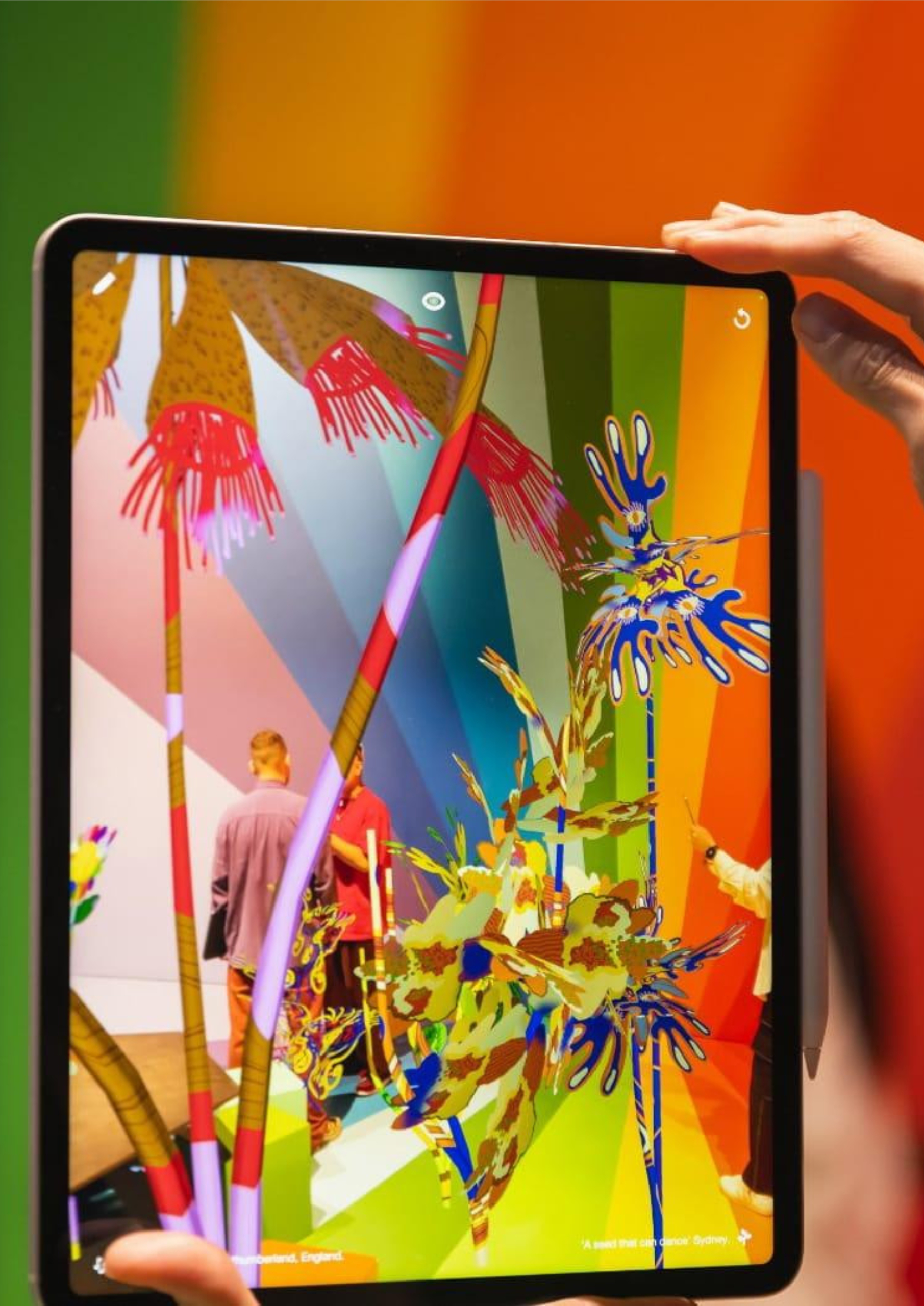
An augmented reality experience where visitors draw fantastical plants that instantly bloom into immersive 3D structures within the space. As people contribute their creations, a collective digital landscape begins to take shape. Layers of recordings of endangered, extinct, and elusive species compose a responsive and evolving soundscape, developed by The Listening Planet.

BIO

Tin & Ed are New York-based artists whose work explores the interconnection of life across biological, geological, and cosmic systems. Through speculative world-building, they reveal connections that transcend human time, spatial boundaries, and sensory thresholds. Their practice spans sculpture, immersive and interactive installations, creating environments that invite audiences to shift perspective and inhabit the world beyond the limits of human perception. Technology is not used as spectacle, but as a perceptual tool that makes the invisible felt and the distant intimately present.

FILE SÃO PAULO 2025: SYNTHETIKA – Arthur Boeira e Gustavo Milward

Aquarela de Íons

Arthur Boeira e Gustavo Milward

FILE SÃO PAULO 2025: SYNTHETIKA – Arte e Tecnologia
Festival Internacional de Linguagem Eletrônica


Aquarela de Íons – Brazil

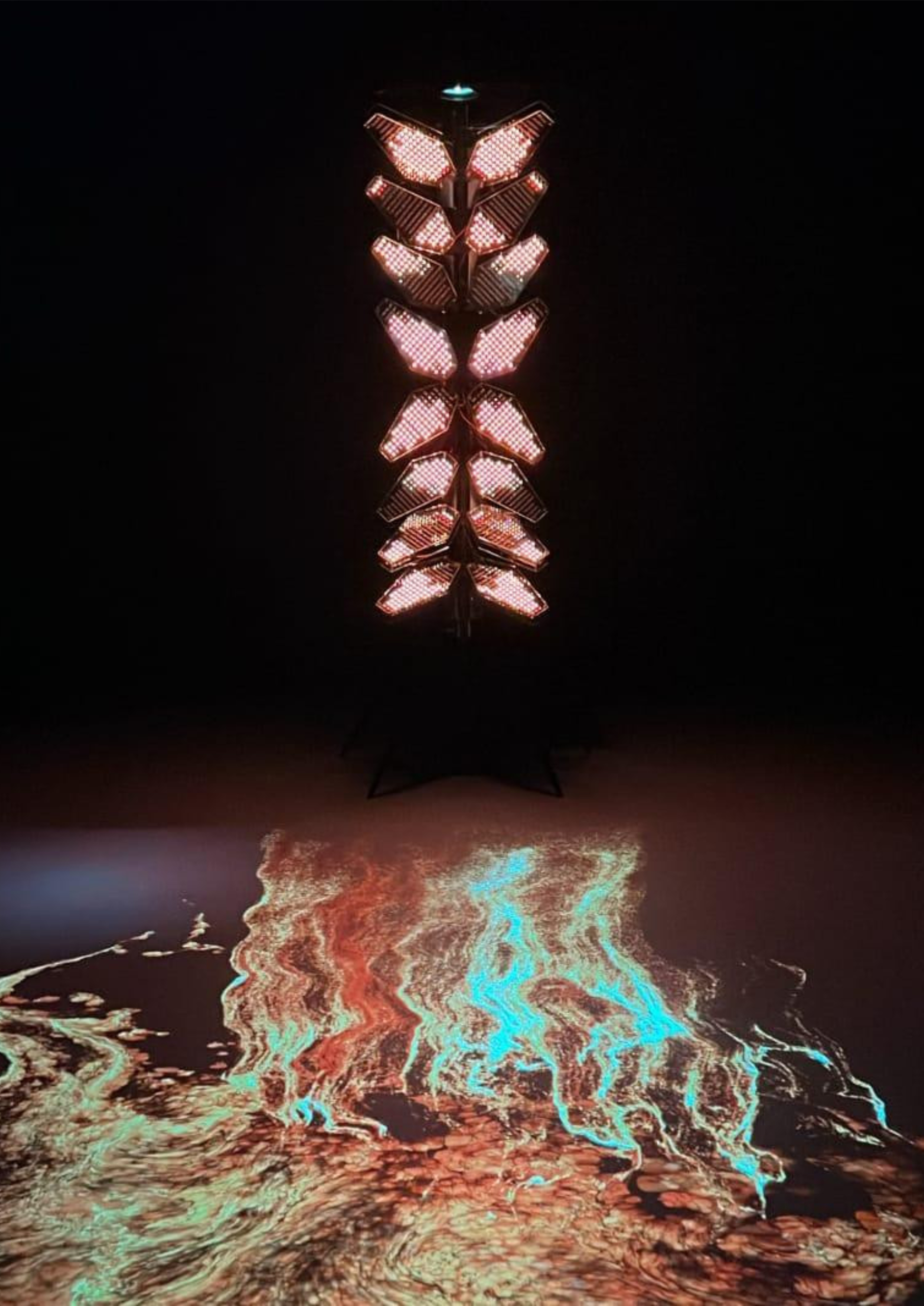
Aquarela de Íons is an artwork-device that translates solar flares and magnetic activity cycles into forces within the exhibition space. Inspired by satellites, the sculpture captures real-time data of solar activity, creating a data-driven artwork that reacts to the presence of viewers in an immersive and generative environment. The system translates spatial information into sound, light, and image, establishing an interface between the cosmos and human territory. The piece invites reflection on the impact of space weather—an aurora borealis brought to life, transforming astronomical data into an aesthetic experience.

BIO

Arthur Boeira has been conducting transdisciplinary research since 2015, exploring the philosophy of science and technology as applied to artistic practices. Gustavo Milward (Drawlim) specializes in interactive art and algorithmic narratives, investigating the relationship between body, space, and code.

Ryoji Ikeda

point of no return

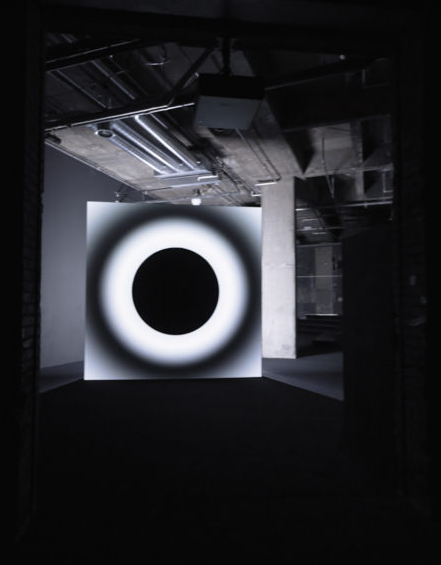
With point of no return, Ryoji Ikeda condenses the unknowable chaos of the event horizon of a black hole into a work of order and balance. Composing a delicate assemblage of basic shapes, sounds, light and shadow, the artist eschews the intricacies of data for a more sculptural approach. While gesturing towards the sublime, the infinite expanse of space and the immense, reality-warping gravitational force of a black hole, he focuses in on the beauty of the physical, bringing together a few simple elements to make sense of something unthinkably complex. Through his own artistic process of playing with space, the artist finds purity in basic structures while drawing inspiration from the vast scope of the universal. “point of no return is a very simple, very intense piece,” he says.

Refik Anadol

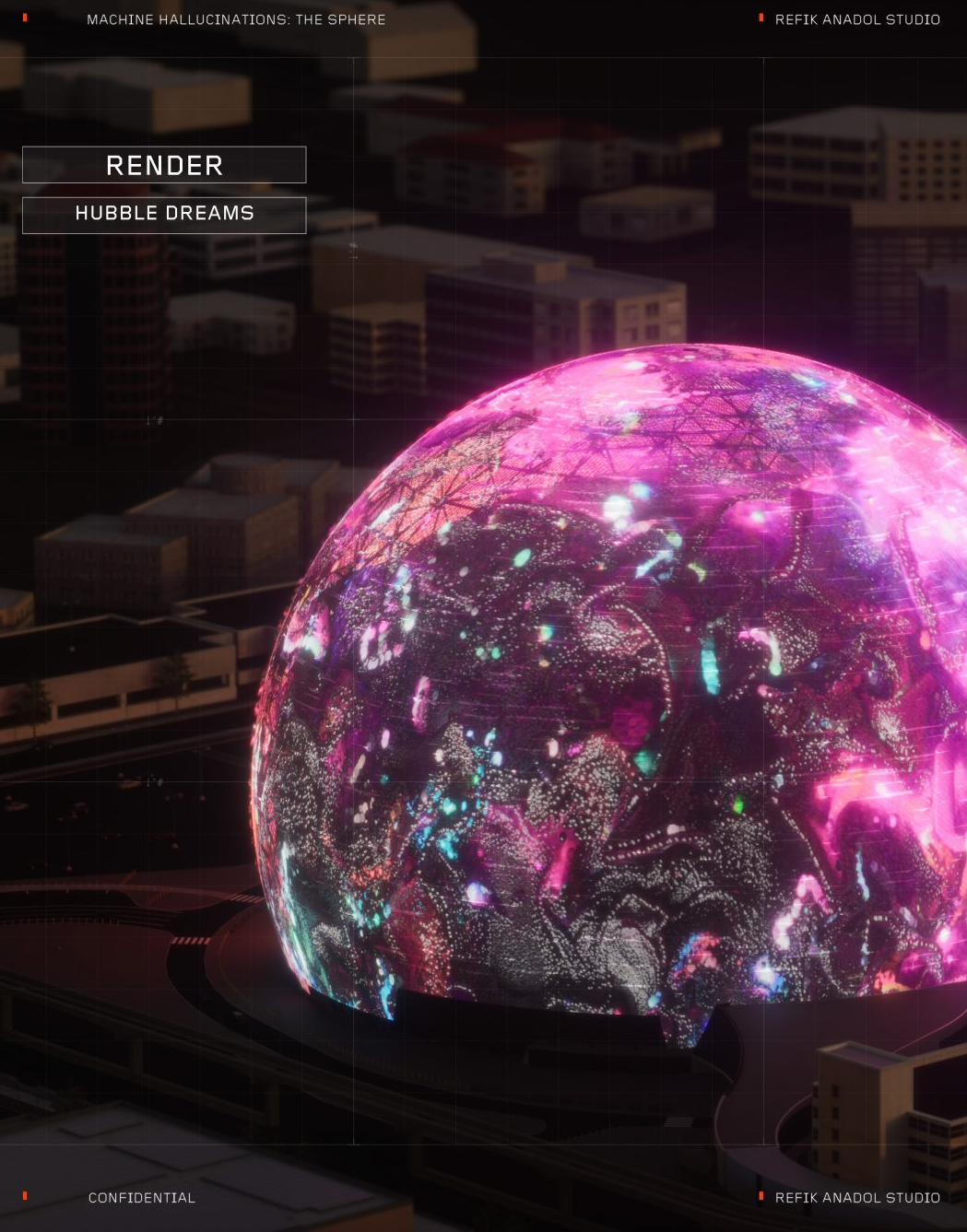
Machine Hallucinations — Sphere

The artwork presents a series of AI Data Sculptures that incorporates vivid pigments, shapes, and patterns, aiming to create a collective, meditative, and multisensory experience. This immersive experience simulates the rhythms of various environments and invites the visitors to imagine alternative realities constructed by invisible data movements around them.
Machine Hallucination: The Sphere features dynamic visualizations of data that are based on vast archives containing visual imageries of space and nature while celebrating the unique architecture of The Sphere. For this project, Anadol and his team used these themed datasets as the building blocks for the three distinct chapters of the artwork and trained a unique AI model with subsets of the collected image archives. After the training, when idle and unsupervised, the “machine mind” generates new aesthetic visuals and color combinations through unique lines drawn by algorithmic connections.

BREAKFAST

Interwoven Existence

The artwork draws inspiration from the concept that individual human beings are interconnected rather than isolated. It is a visual representation of collective strength and diversity. The artwork is divided into sections of various sizes and colors, each symbolizing the diverse origins of people around the world.
As viewers approach the artwork, it becomes interactive, reflecting their image across the piece. Upon stepping away, a recording of their interaction is placed into one of the sections, symbolizing the randomness of a given person’s birthplace and socioeconomic position. Subsequently, recorded video clips of previous viewers are displayed in adjacent sections, integrating new viewers into the existing community of participants.

QUBIT AI: Robert Seidel

HYSTERESIS

FILE 2024 | Aesthetic Synthetics
International Electronic Language Festival
Robert Seidel – HYSTERESIS – Germany

HYSTERESIS intimately weaves a transformative fabric between Robert Seidel’s projections of abstract drawings and queer performer Tsuki’s vigorous choreography. Using machine learning to mediate these delayed re-presentations, the film intentionally corrupts AI strategies to reveal a frenetic, delicate and extravagant visual language that portrays hysteria and hysteresis in this historical moment.

Bio

Robert Seidel is interested in exploring abstract beauty through cinematic techniques and insights from science and technology. His projections, installations and award-winning experimental films have been presented at numerous international festivals, art venues and museums, highlighting his innovative approach to visual art.

Credits

Film: Robert Seidel
Music: Oval
Performer: Tsuki
Graphics: Bureau Now
5.1 Mixing: David Kamp
Support: Miriam Eichner, Carolin Israel, Falk Müller, Paul Seidel
Financing: German Federal Film Board

QUBIT AI: Arnaud Weber

NNY 43 – New York 43

FILE 2024 | Aesthetic Synthetics
International Electronic Language Festival
Arnaud Weber – NNY 43 – Nouvelle New-York 43 – Switzerland

In this short created with Midjourney, Runway and DaVinci Resolve, a futuristic megacity sprawls across an exoplanet, reflecting humanity’s limitless expansion. This fascinating and immense city of tomorrow explores the challenges and wonders of a civilization that goes beyond the limits of human habitation. The work offers a captivating reflection on the future of our societies and the impact of our growth in new and unexplored worlds.

Bio

Arnaud Weber, creative director and founder of Le Village Design has been a pioneer in generative digital art since the 2000s. Educated at École Boulle, his work ranges from Parisian design agencies to international recognition, especially through art and films generated by AI. His projects exemplify the fusion between technology and creativity, questioning the future of organic creativity in the digital age.

Vincent Leroy

Echo Lens
Emerald Lake, Canada
Hybrid, Vincent Leroy’s work oscillates between the real and the virtual, the natural and the artificial, drawing its inspiration from both nature, which often sites his work, and from the digital world. Whether its kinetic sculptures, immersive installations or monumental works, movement is almost always Vincent Leroy’s raw material. The kind of movement that inspires life, amazement, and a permanently shifting viewpoint.

Ying Gao

2526
Polymorphic Robotic Garments
2526 refers to the number of hours invested in the creation of the two polymorphic robotic garments, from ideation to the finish, from the first line of drawing to the last stitch. The two polymorphic outfits of the 2 5 2 6 project are very real: woven, hand-screened, and consolidated materials have been specially designed to create these clothes. They are not virtual at all. However, they simulate the effects of virtual clothing: a surreal undulation generates a play of volume and transparency; their polymorphic movement, as well as their reflectivity, are results of an entirely new flexible material that combines glass, precious metals and silicone.

Elisabeth Chojnacka

Henryk Górecki
Concerto for Harpsichord and String Orchestra Op. 40
Harpsichord: elisabeth chojnacka

Less than nine minutes long, the bipartite Concerto for Harpsichord (or Piano) and String Orchestra, which the composer sometimes called a “prank”, is a veritable volcano that carries the listener away from the very first bars with its immense energy. Its repetitive, motoric nature and rhythmic vigour suit the specific, slightly clattery sound of the harpsichord which is usually somewhat amplified, complemented by the chordal texture of the strings. In both parts, the mood of the piece clearly draws on the highlander music of the southern Podhale region, of which Górecki was a great admirer. In the context of his monumental sacred music from the same period, this Concerto is like the artist’s brief “respite”. It reflects the whirl and “profane” energy of a folk dance.
Elżbieta Chojnacka, to whom the piece was dedicated, has always stressed that every performance of the Concerto, which she has played throughout the world, ends with an encore. The piece meets with such acclaim from the audience, and is one of the most striking – and most joyful – compositions in the composer’s output. “A spectacular plaything”, as Teresa Malecka has described the piece.

Olafur Eliasson

DET LYTTENDE SPEJL
Visitors to DNV-Gødstrup, a new hospital near Herning, Denmark, are greeted at the main entrance by an airy, round pavilion. Two curved pipes, crossing one another perpendicularly, hold a large disc aloft at a slight angle. The reflective underside of the disc mirrors the semicircular pipes, creating the illusion of two complete circles passing through the ceiling and rising into an imaginary space above. As visitors enter the pavilion, they can gaze up at their own reflections in the mirror and see themselves incorporated, upside down, into the artwork, embraced within the globe drawn by the pipes. The tilt of the ceiling allows the reflections to be seen from the outside. As the viewer moves towards and around the pavilion, the rings appear to shift in shape, changing from ellipses to circles and back again.

tabor robak

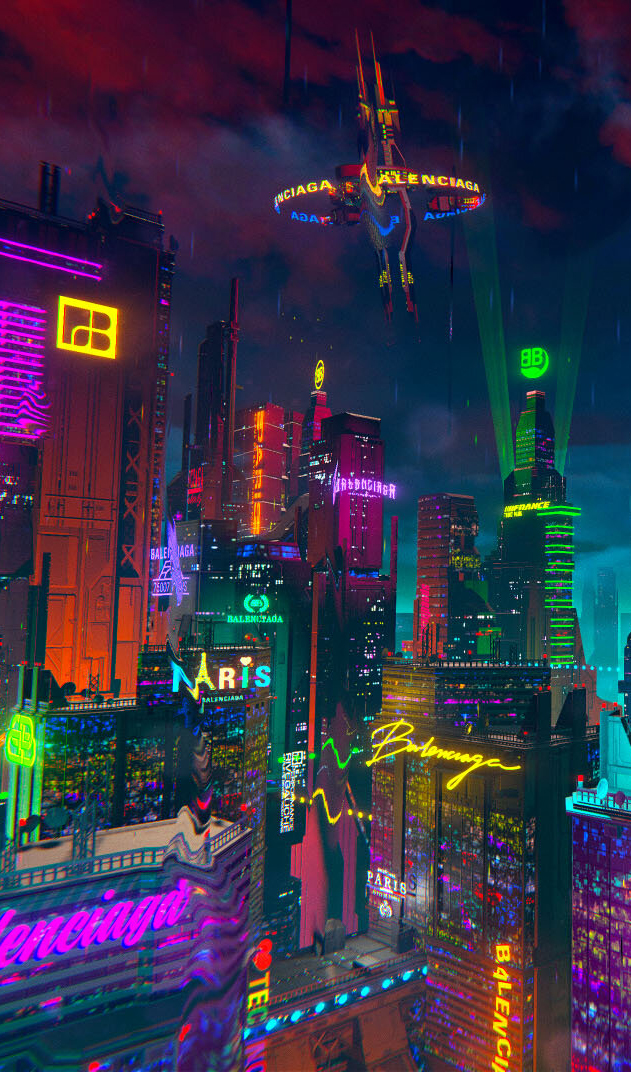
balenciaga collaboration
A 25 minute video loop with previously unreleased tracks by DJ Hell, made in collaboration with Balenciaga.

Here is a dramatic tension in his work between the real and the imagined in his use of often-appropriated digital objects to create virtual landscapes, which frequently contain elements – animals, machines, fragments of videogames – that are recognisable from our day to day life. This creates a symbiotic relationship between the digital and the real. In a very real way digital space has now become an intangible reality. The worlds built by Robak have a distinctly cinematic sensibility that hyperbolises the shine and dramatic effects of 3D rendered animation. The aesthetic of his work is supremely important, drawing the viewer into a truly alluring, indulgent and strangely gratifying environment. There is a further challenge to the void between high-art and the worlds of 3D animation and gaming, in the intersection between depiction and simulation. This can be partially attributed to the vernacular of advertising Robak is so proficient at utilising.

Caitlin Franzmann

Drawn Together, Held Apart

Caitlin is an artist that is interested in intentional social connection in public spaces. She creates experiences that allow participants to quietly communicate and listen to one another. In the live component of her installation, Caitlin hosts an conversation entitled ‘talking and listening about talking and listening’. ‘Drawn Together, Held Apart’ (2017), a custom made table with inbuilt surface transducer speaker, motion sensor activated LED lighting, proximity speakers and audio. Visitors rest their ears on the glass and listen.


Eli Cortiñas

The Body is The House, The House is But Haunted
.
Eli Cortiñas’ artistic practice traverses contemporary and historical visual cultures, which she dissects using montage and collage, displacing limiting attributions and creating space for feminist and decolonial narratives. These methods gradually reveal specific patterns which are often inherent in the images themselves. Juxtaposing what seems disparate, drawing parallels and uncovering commonalities, Cortiñas lays bare traditional conventions of representation and identifies surprisingly rigid narrative patterns.