highlike

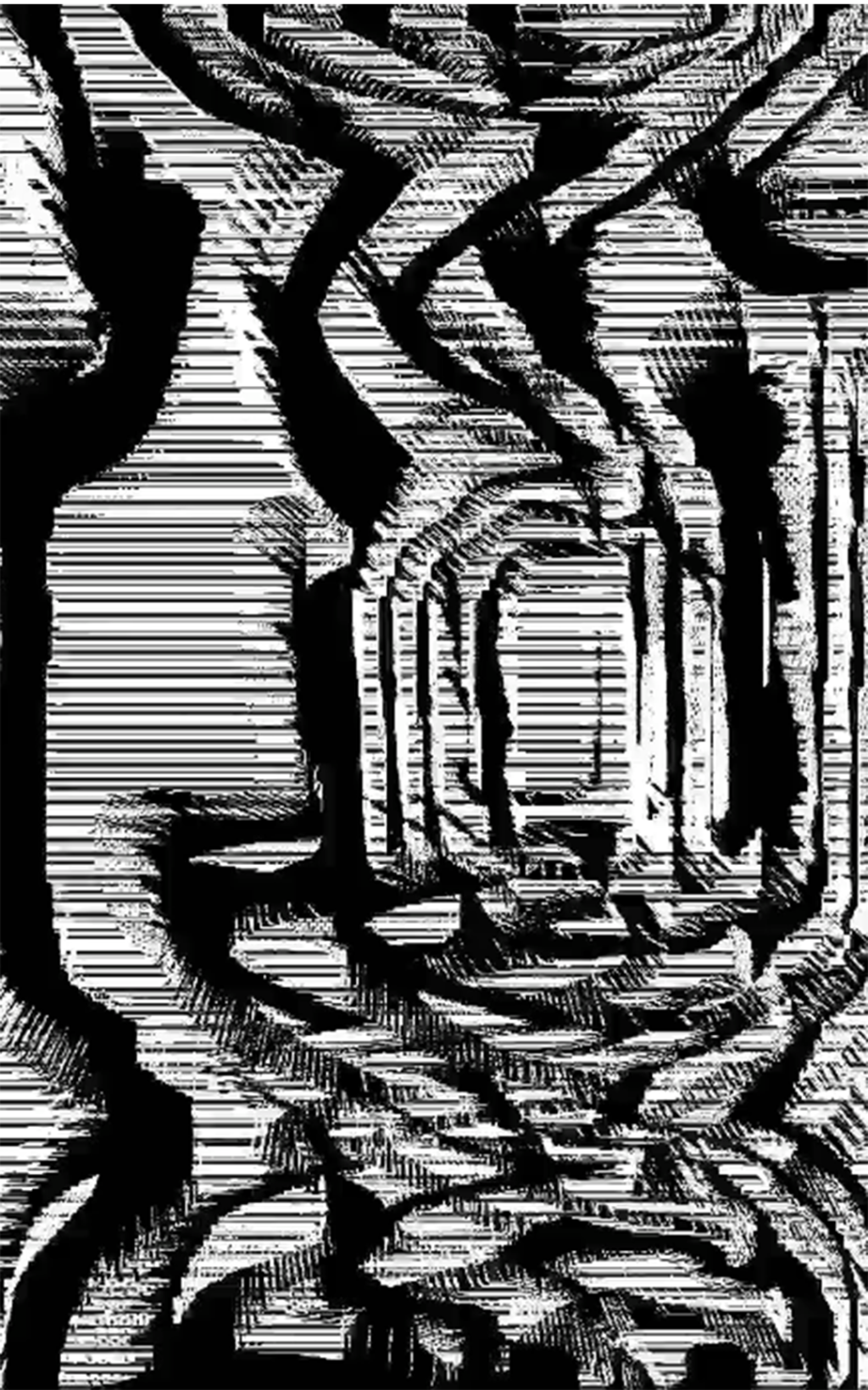
Verônica Gesteira & Paul LiBassi – Minimal Spaces – Brazil / Spain / United States

MINIMAL SPACES

Verônica Gesteira & Paul LiBassi


FILE SÃO PAULO 2026: Inter-creativity – Art and Technology – VIDEO ART SHORT
Electronic Language International Festival


Minimal Spaces – Brazil / Spain / United States

This piece explores the relationship between sound and moving image using noise and feedback. Through creative programming techniques, abstract audio-reactive forms generate small textures that combine into a kind of imaginary relief map. The soundscape conjures elements of simple noise. Drones, sirens, metallic tones… everything is done to define the imaginary space in which this work is located.

BIO

Verônica Gesteira is an engineer, multimedia artist, and music producer born and raised in São Paulo. Paul LiBassi is an American musician, producer, and sound designer living in Spain. Previously, the two created audiovisual art together for live performances and are now exploring the creation of recorded video art works that maintain the unpredictability of live performance.
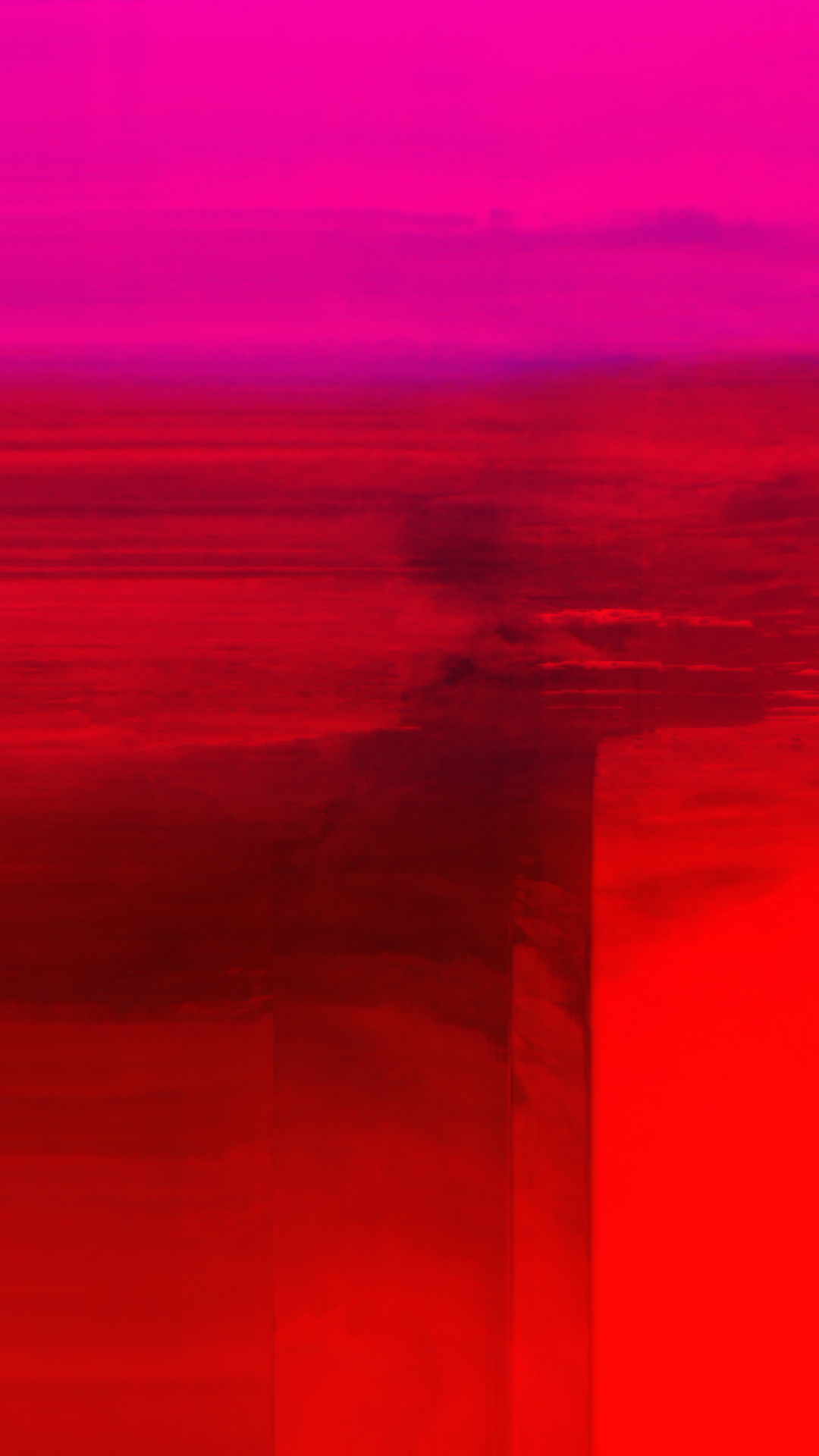
Damien Looney – Troposphere – United Kingdom

TROPOSPHERE

Damien Looney


FILE SÃO PAULO 2026: Inter-creativity – Art and Technology – Randomic Dimension
Electronic Language International Festival


Troposphere – United Kingdom

A long form piece of very slowly shifting sounds and imagery.

BIO

Damien Looney is an Irish video artist creating real-time, audio-reactive animated works using analog video gear and software. He processes unique sound samples (CRT hums, number stations, defective tape) to drive visuals. His work blends flowing, watercolor-like imagery with glitchy digital decay, evoking the warped textures of old VHS tapes, broken TVs, and vintage computer screens.

Patrik Hübner

Chimes
Chimes is an interactive, audio-reactive experience that translates the sound of a room into digital wind, setting in motion an exploration of space, music and time. The installation invites the viewer to surrender to the interplay of spatial sound, touch, air, movement and noise and to discover ever new facets in a constantly changing environment.

andreas lutz

daemon
The reactive audio-visual installation Daemon (in collaboration with Hansi Raber) analyzes the never-sleeping and permanent alertness of an artificial intelligence. Consisting of three semi-translucent, spatial shifted surfaces, the installation represents a solid wall when entering the space. When no visitor is in the room, the installation is in balance and visualizes infinite planned tasks and processes: rational beauty. When visitors enter the room, the installation reacts and the perfect procedure gets more and more distorted. When the visitor walks into, through and behind the surfaces, his silhouette gets merged with the projected visuals and absorbed by the surfaces.

fraction

Entropia
Entropia est une performance audio-visuel initiée par le travail de Fraction sur la spatialisation sonore 3D et rejoint par les artistes LP St Arnault, Nature Graphique et la création ex nihilo afin d’explorer une représentation esthétique d’un système entropique, en rendant hommage au travail de l’architecte Richard Buckminster Fuller. L’oeuvre basée sur une sphère geodesique  audioréactive interragit en permancen avec les projection de visuels immersifs et le son.

Bill Vorn

Prehysterical Machine

The Prehysterical Machine has a spherical body and eight arms made of aluminum tubing. It has a sensing system, a motor system and a control system that functions as an autonomous nervous system (entirely reactive). The machine is suspended from the ceiling and its arms are actuated by pneumatic valves and cylinders. Pyroelectric sensors allow the robot to detect the presence of viewers in the nearby environment. It reacts to the viewers according to the amount of stimuli it receives. The perceived emergent behaviors of this machine engender a multiplicity of interpretations based on single dynamic pattern of events.The aim of this project is to induce empathy of the viewer towards a “character” which is nothing more than an articulated metal structure. The strength of the simulacra is emphasized by perverting the perception of the creature, which is neither animal nor human, carried through the inevitable instinct of anthropomorphism and projection of our internal sensations, a reflex triggered by any phenomenon that challenges our senses.
FILE FESTIVAL

MICHAEL BURTON

Astronomical Bodies

Astronomical Bodies is based on the research of Dr. Terence Kee of the University of Leeds. He proposes that that a reactive form of phosphorus arrived on the early Earth via meteorite impacts. His research found that phosphorus from space was more suitable for the chemical reactions to develop complex life. Astronomical Bodies reverses this process and tries to transform phosphorus harvested from the body — in the form of kidney stones and urine — into manmade meteorites. Rather than the traditional idea of transpermia addressed in a host of science fiction writings and films, Astronomical Bodies proposes that the galactic transferal of life-promoting chemicals is a natural process that we can facilitate.

Jean-François Brun, Dominique Pasqualini and Philippe Thomas

INFORMATION FICTION PUBLICITÉ (IFP)
De temps à autre

Le MAC/VAL donne à son tour un éclairage inédit sur IFP, en parfaite association avec les artistes, Jean-François Brun et Dominique Pasqualini et en misant sur une très forte documentation. Si l’exposition ne présente pas de nouvelles pièces – et pour cause, les activités de l’agence cessent en 1994 –, elle associe volontairement les deux protagonistes à son élaboration même, avec la volonté de réactiver, réactualiser, voire même «amplifier» certaines œuvres emblématiques comme les images de ciels nuageux, les bâches, les caissons lumineux ou autres plots, en plaçant le visiteur au centre du processus.

Scenocosme

Matieres Sensibles
file festival 

Matières sensibles est une série de sculptures réalisées à partir de feuilles de placage de bois très fines et délicates. Ces feuilles de bois possèdent des zones tactiles sonores distinctes qui suivent les veines naturelles du bois. Nos recherches nous ont permis de développer un processus artistique et technique invisible et délicat. Ce travail minutieux nous donne ainsi la possibilité de composer une partition sonore sensible qui se révèle au contact des différents dessins du bois. Nous avons inventé ce procédé de Bio hacking que nous nommons “marqueterie interactive”.Nos sculptures de bois produisent des sons lorsque que les spectateurs les frôlent. Elles frémissent, ronronnent, crissent… émettent des timbres sonores variés. Nous utilisons ici les sons pour stimuler un comportement gestuel et haptique.Ces sculptures de bois proposent une relation intime et sensorielle entre le bois et le corps du spectateur en révélant une mémoire sonore au contact physique de la matière.Depuis plusieurs années, nous inventons des oeuvres interactives qui mettent en scène les éléments naturels et les corps des spectateurs. Dans cette œuvre, nous utilisons le bois comme une surface interactive sensible. En interprétant cette sensorialité nous rappelons que notre environnement est fait non pas de choses inertes, mais vivantes, réactives. L’énergie électrostatique du corps humain est l’élément déclencheur de cette œuvre. Les zones interactives suivent exactement les veines du bois.
.

PAUL VANOUSE

Latent Figure Protocol

Latent Figure Protocol takes the form of a media installation that uses DNA samples to create emergent representational images. The installation includes a live science experiment, the result of which is videotaped and repeated for the duration of the gallery exhibit. Employing a reactive gel and electrical current, Latent Figure Protocol produces images that relate directly to the DNA samples used. The above images were re-produced live. Each performance lasts approximately one hour, during which time audience members see the image slowly emerge. In the first experiment, a copyright symbol is derived from the DNA of an industrially-produced organism (a plasmid called “pET-11a”), illuminating ethical questions around the changing status of organic life and the ownership of living organisms. Future instances of the LFP will use the DNA of other subjects and create other images.

Heather Phillipson

100% Other Fibres
Through collisions of image, noise, objects, language and bodies, Heather Phillipson’s videos and sculptural installations behave as places, musical scores, poems and nervous systems – attending to how physical and affective ‘selves’ are constructed, manipulated and, above all, escape. Often rendered as walk-in conglomerations of readily accessible materials (digital images, paint, cardboard, words, audio loops and reproducible consumer detritus), her works stake out an ambiguous territory in which cultural references and emotional responses are mutually contingent and reactive. Collapsing distinctions between the forthright and the inarticulable, the banal and the ecstatic, and between metaphor and extreme literalisation, Phillipson’s work performs constant tonal shifts, disruptions and bleeds. In so doing, it oscillates between physical intimacies and conceptual distances – desire, sensuality, touching and being touched, shame, anxiety, (over-)exposure, resistant surfaces.

VALÉRIE LAMONTAGNE

peau d’ane
For Montreal-based designer Valerie Lamontagne, the spark of creativity can come from the most unlikely of sources. In the case of her climate-reactive dresses, Lamontagne found inspiration in “Peau d’Âne,” a French fairy tale that begins with a king’s vow to remarry only when he finds a woman who equals his late queen’s beauty and virtue. Pressed to find a new wife, he concludes that his daughter alone qualifies. (Quel scandale!) The princess delays the wedding by demanding impossible prenuptial gifts, including three dresses made from moonbeams, sunlight, and the sky. Lamontagne recreates these fantastic gowns but with a high-tech twist: Each dress reacts—in real time—to changing weather conditions.

EUNHEE JO

New Tangible Interfaces TTI

Interactive surfaces makes everyday objects multi-functional and fun. Reactive technologies have now enabled normal interfaces with new functions and new possibilities. The role of the surface is changing radically, according to how it’s designed and incorporated with objects. My proposal was to re-define the role of the surface in future lifestyle, exploring how surfaces can be an integrated as part of a product or environment.

TTI, (standing for Tangible Textural Interface) is a new sound system that embeds a tactile surface. TTI has flexibility that enables people to physically touch and feel the response through the controls and physical morph of the surface. TTI delivers new aesthetics through integrated flexible surfaces as interface material unlike adapting conventional materials for interfaces such as plastic or glass. Unlike existing 2D interfaces, TTI has a curved 3D surface opening up new possibilities in making flexible forms and shapes within the interface.

TTI consists of 3 main functions, backwards and forwards, volume control and equaliser, having a physical feedback and control interface within one surface. As you control the functions, the left surface physically responds to the controls. Tactile surface also responds to the beat of the music.