highlike

Jacek Doroszenko – Landscape Video Score. Fjord – Poland

LANDSCAPE VIDEO SCORE. FJORD

Jacek Doroszenko


FILE SÃO PAULO 2026: Inter-creativity – Art and Technology – CINEFILE | Short
Electronic Language International Festival


Landscape Video Score. Fjord – Poland

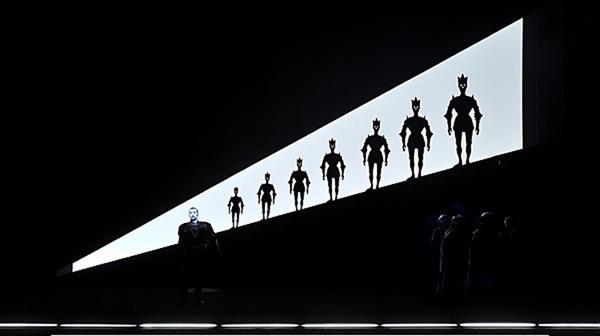
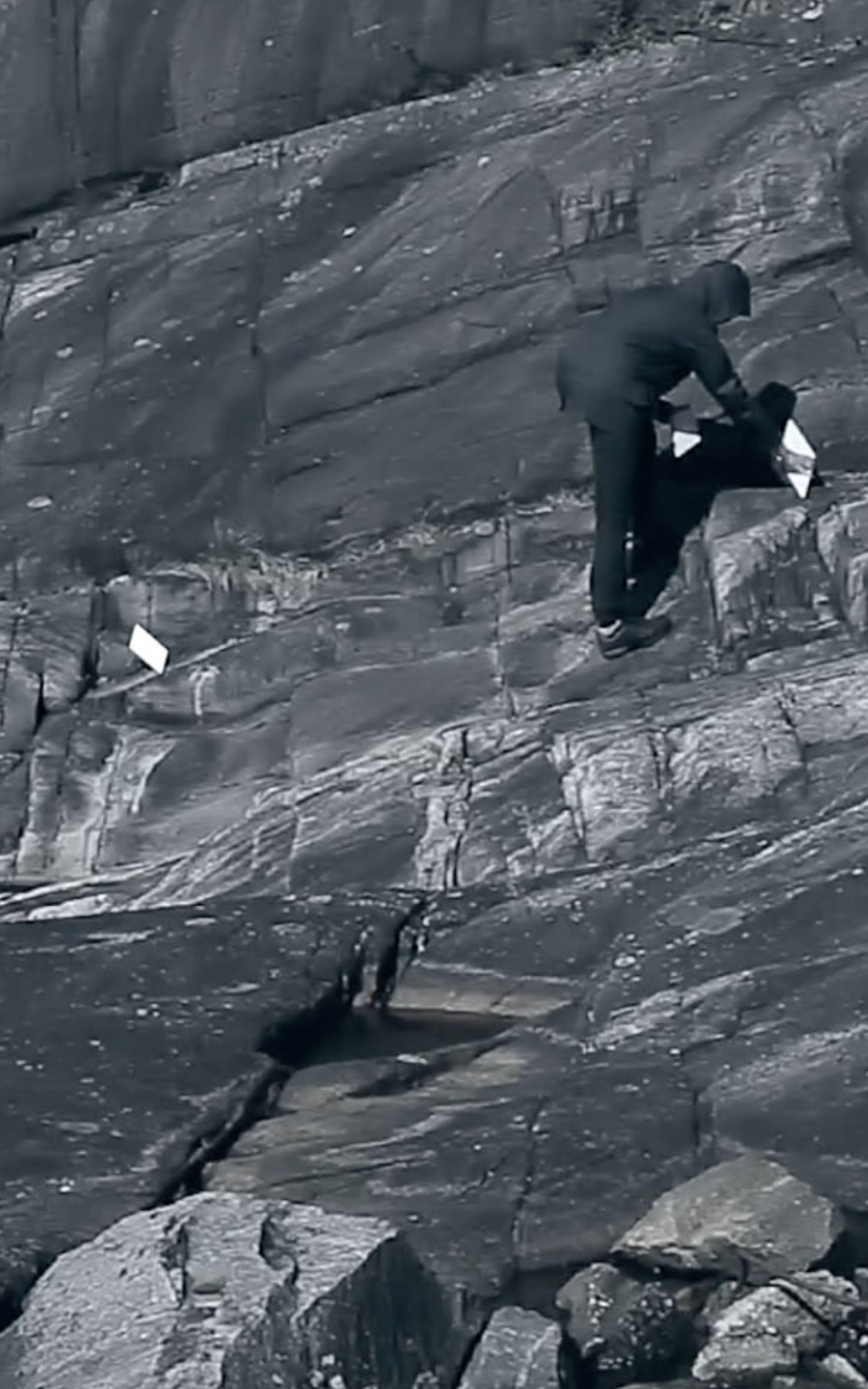
Landscape Video Score. Fjord by Jack Doroszenko is a video art recorded in the landscape of the Hardangerfjord, Norway. Based on the artist’s original concept of a video score, the film combines image and sound: topography and character movement shape the sound composition. The landscape becomes both a visual frame and a sound structure, exploring the performative dialogue between the body, nature and technology.

BIO

Jacek Doroszenko is a Polish intermedia artist. His work deals with topics related to sound phenomena in the context of space. He is a graduate of the Academy of Fine Arts in Krakow, a cultural scholarship holder, a participant in numerous international residencies and exhibitions around the world, and the author of solo music albums released in France, the United Kingdom and the USA.
Richard McCormick – GeoSonic – United Kingdom

GEOSONIC

Richard McCormick


FILE SÃO PAULO 2026: Inter-creativity – Art and Technology – MUSIC
Electronic Language International Festival


GeoSonic – United Kingdom

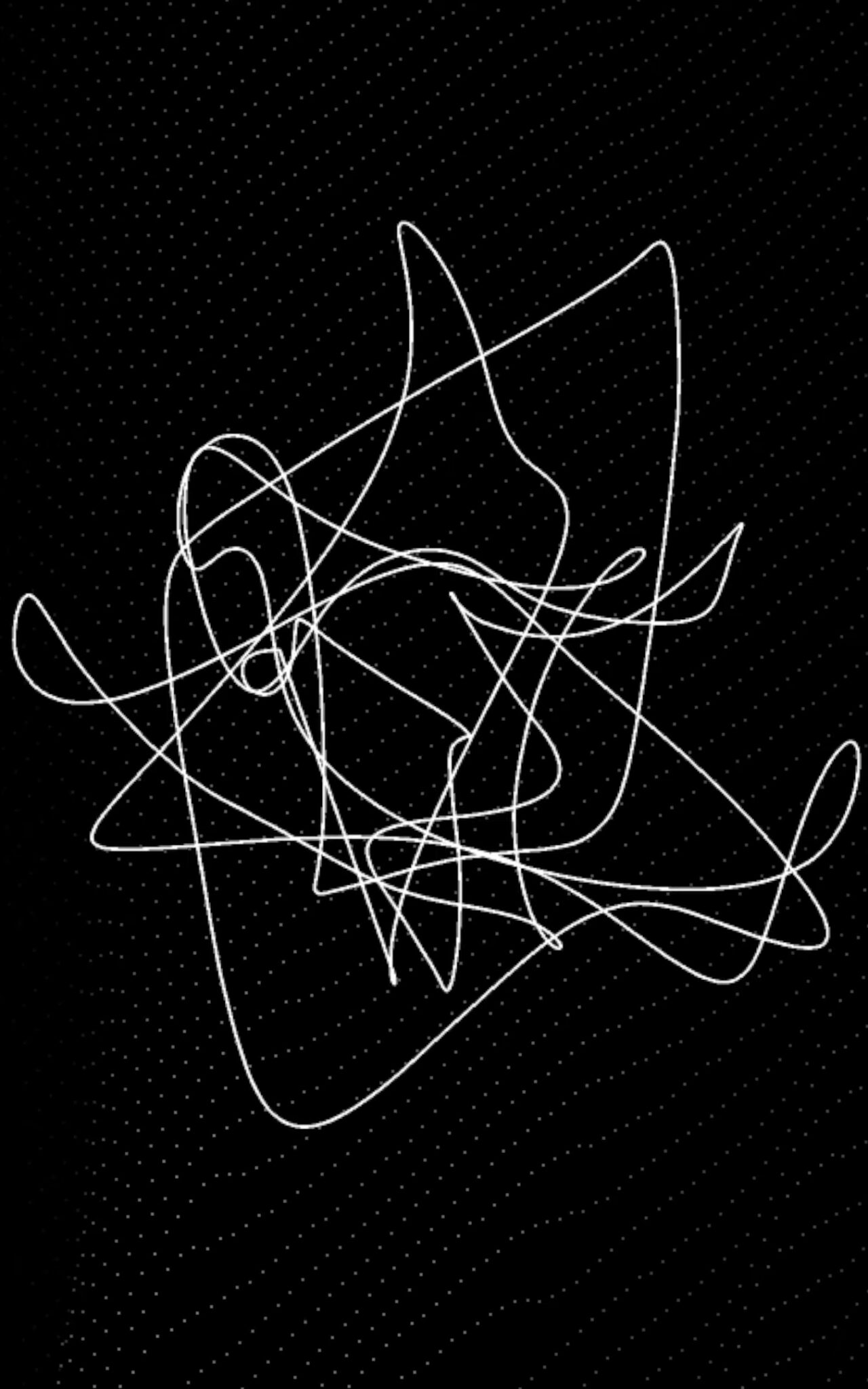
GeoSonic is an audiovisual piece that takes sound from the earth, and other materials and creates visual representations of them with the use of an oscilloscope. Conceptually, the piece is aimed to highlight the fragile nature of the Earth, how each day more and more erodes away. There is a point at which each section breaks or fades to nothing. This is an intentional choice to emphasise the scale of what we are losing and have already lost.

BIO

Richard McCormick is a composer, visual artist and sound designer with previous work ranging from film scores, electroacoustic, audiovisual and his own electronic music. Having studied a Masters in Music Composition at Sheffield University, Richard’s work expanded and developed exponentially under the tutelage of Adrian Moore.

Mirtha Bermegui – Coreografía – Argentina

COREOGRAFÍA

Mirtha Bermegui


FILE SÃO PAULO 2026: Inter-creativity – Art and Technology – VIDEO ART SHORT
Electronic Language International Festival


Coreografía – Argentina 

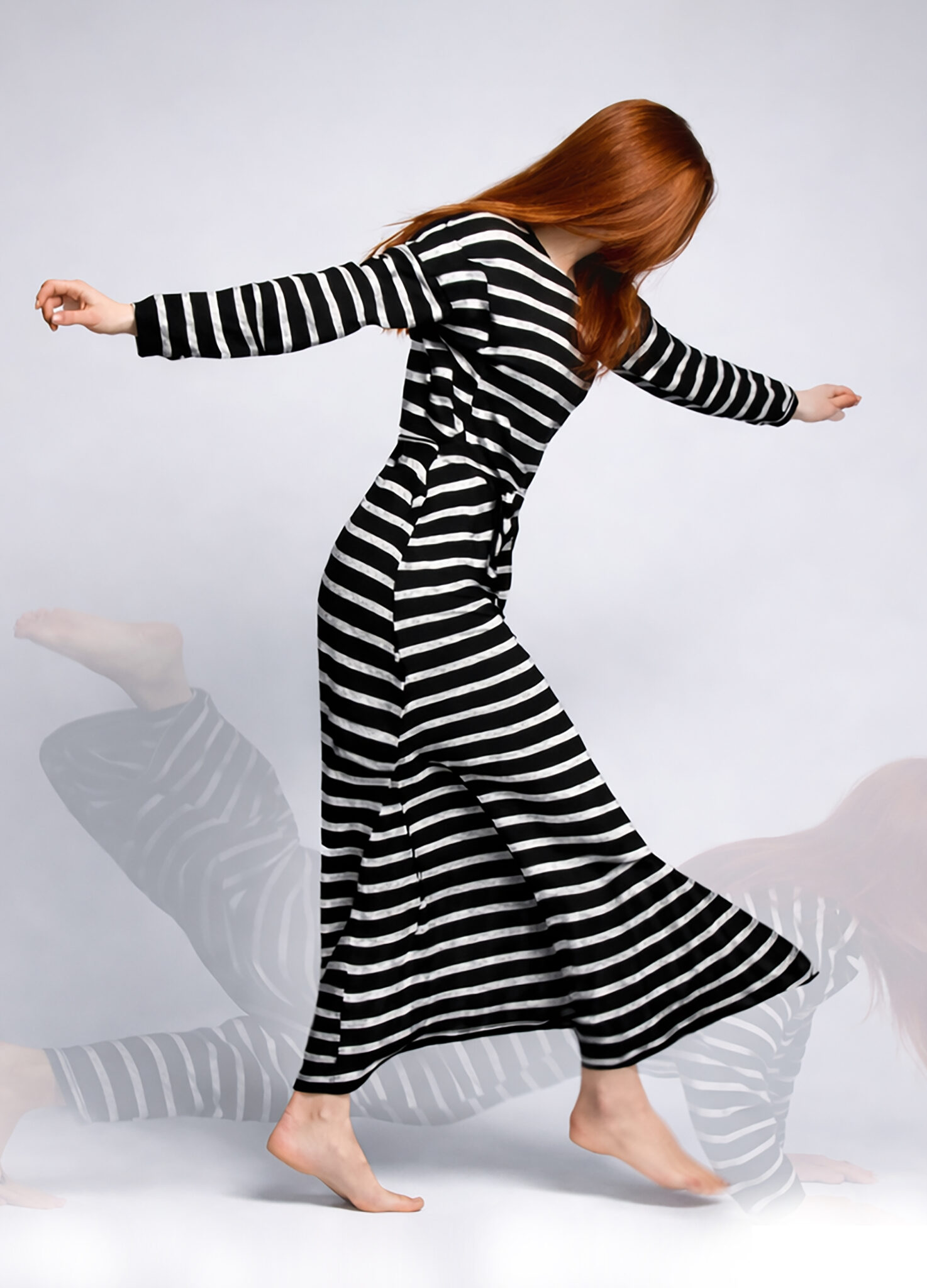
A moving body becomes a visual score. Choreography unfolds a dance suspended between gravity and illusion, where repetition and chance trace gestures that oscillate between the human and the artificial. Artificial intelligence intervenes as malleable matter, recomposing patterns in an unfinished flow. The work is configured as a visual laboratory where time, error, and reiteration are poetic strategies for exploring body, technology, and becoming.

BIO

Argentine multidisciplinary artist, lives in Buenos Aires. Her practice encompasses installations, video art, and transdisciplinary projects, with a presence in national and international exhibitions. She participates in competitions and biennials, and investigates the relationship between art and artificial intelligence in her contemporary production.

Michael Lyons – Circles and Squares – United Kingdom/Japan

CIRCLES AND SQUARES

Michael Lyons


FILE SÃO PAULO 2026: Inter-creativity – Art and Technology – VIDEO ART SHORT
Electronic Language International Festival


Circles and Squares – United Kingdom/Japan

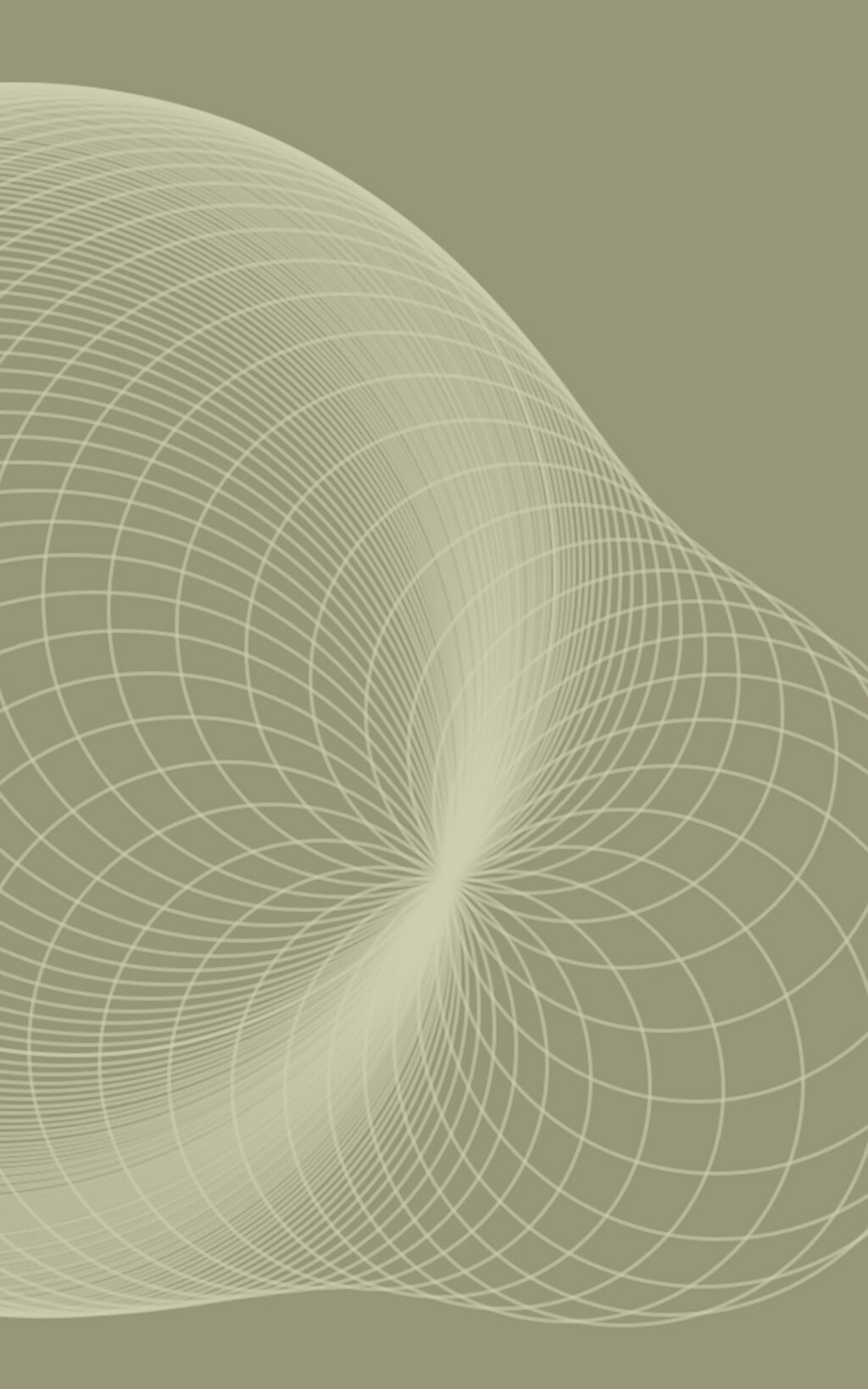
Circles & Squares is an audiovisual work structured around the interaction of geometric motion and sound. Circular forms intersect and recede in continuously shifting configurations, generating patterns of (a)symmetry, interference, and temporal tension. The animation operates as a visual score, organizing the square-wave tones of the soundtrack through evolving spatial relations. Free of narrative or representation, the work foregrounds rhythm, recurrence, and perceptual transformation.

BIO

Michael Lyons (UK, Canada) is an artist and researcher based in Kyoto, Japan. He is currently Professor of Image Arts and Sciences at Ritsumeikan University.

Robbie McFadzean & Glen Johnston – Koji – United Kingdom

KOJI

Robbie McFadzean & Glen Johnston


FILE SÃO PAULO 2026: Inter-creativity – Art and Technology – Animation
Electronic Language International Festival


Koji – United Kingdom

Koji has been entrusted an impossible task by his late Master.

He is the last remaining hope of defeating an ancient evil and restoring balance to his world.

BIO

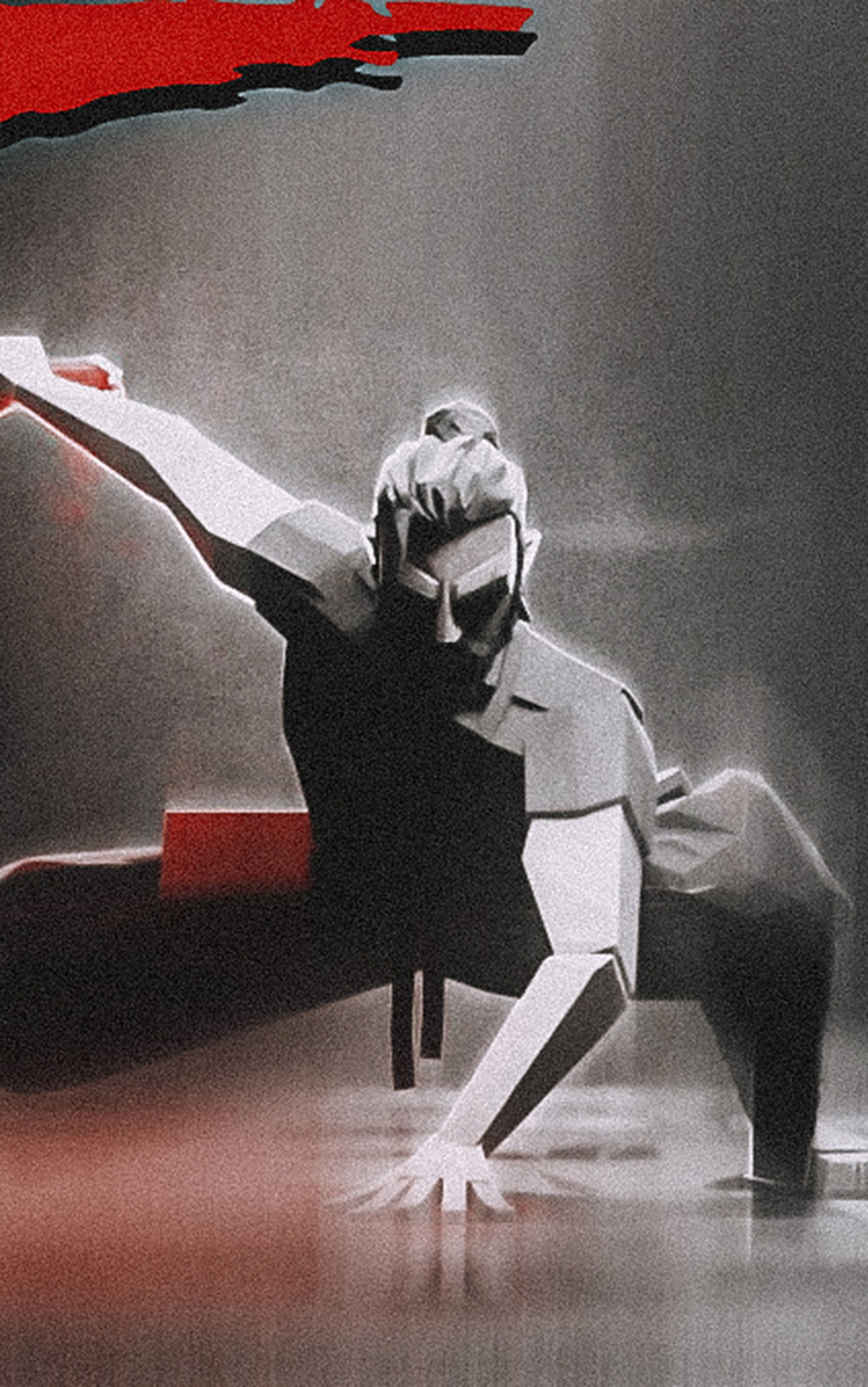
Over the course of two years, Glen and Robbie combined their expertise in live-action filmmaking, fight choreography, and animation to produce this fantasy action short.

By integrating faceted animation with detailed reference footage and a transcendent score, they have brought the world of Koji to life with exceptional precision.

DAVID DAWSON

timelapse/(Mnemosyne)


With his newest creation David Dawson marked his return to the Dutch National Ballet. Here, Dawson reflects upon the legends from Greek Mythology and the ideas of Memory. Each passing scene weaves a magical journey back in time, exploring the ideas that lay within these stories and questions their continued value and meaning to our modern day psyche. With an original new score specially commissioned from Scanner, set design and projection by artist Eno Henze, and also with long term collaborators, light designer Bert Dalhuysen and costume designer Yumiko Takeshima.

ANTOINE SCHMITT & JEAN JACQUES BIRGE

Nabaz’mob


100 Nabaztag smart rabbits play together an opera specially composed by Antoine Schmitt and Jean-Jacques Birgé.

Evoking John Cage, Steve Reich, Conlon Nancarrow and György Ligeti, this musical and choreographic score in three movements, transmitted via wi-fi, plays on the tension between the orchestral ensemble and the individual voices to create a strong and involved showpiece. This opera questions the issues of working together, organization, decision and control, which are increasingly central and difficult in our contemporary world.

Schmitt and Birgé have chosen to twist the industrial object into an artwork in which the choreography of the ears, the play of light and the hundred small loudspeakers hidden in the stomachs of each rabbit create a composition with three voices built on time delay and repetition, programming and disrespect for rules.

FILE SÃO PAULO 2025: SYNTHETIKA – Juan Manuel Escalante

Music for Control Panels

Juan Manuel Escalante

FILE SÃO PAULO 2025: SYNTHETIKA – Art and Technology – Video Art
Electronic Language International Festival


Music for Control Panels – Mexico

Music for Control Panels is an audiovisual exploration inspired by the aesthetics of machines and control rooms. In the tradition of electronic ambient music, sporadic acoustic events and drones guide the viewer through a contemplative journey. The visual component features a generative graphic score echoing projections of computer terminals, printers, and fax machines. The overall composition pays homage to the early computer systems using contemporary techniques.

BIO

Escalante is an artist and educator working with computer code, modular synthesizers, and analog drawings. His work has been shown in major festivals and exhibitions worldwide. Escalante holds a Ph.D. in Media Arts & Technology (University of California, Santa Barbara).

Doug Aitken

Sonic Fountain II

An excavation filled with milky water, Sonic Fountain is surmounted by nine taps distributed in a grid which taste according to a precisely written score. In the water, microphones record the sound of drops of water – sound broadcast live in space, like a concert. In the artist’s words, Sonic Fountain “is a deliberately abstract work that bares architecture and reveals its rhythm, tempo and language”.

MASAKI FUJIHATA

beyond pages

The data projector loads images of a leather bound tome onto a tablet which a light pen activates, animating the objects named in it – stone, apple, door, light, writing. The soundscore immaculately emulates the motion of each against paper, save for the syllabic glyphs of Japanese script, for which a voice pronounces the selected syllable. Stone and apple roll and drag across the page, light illuminates a paper-shaded desklamp; door opens a video door in front of where you read, a naked infant romping, lifesize and laughing, in.

TOSHIO IWAI

Piano
Iwai’s Piano — As Image Media (1995), a later sound work, is related to these early interactive experiments. Here the user, seated at the piano, triggers a flow of images that depress the piano’s keys; a consequence of this action releases yet another flight of images. The resulting interactive installation synthesizes two different aesthetics: sounds (simple melodies), images and a mechanical object (the piano) with digital media. A projected score and computer-generated imagery transform the piano into image media, hence the work’s name. Sound is the triumphant component in these works, for it activates and shapes the visual work. But the visual aspect of Iwai’s installations is lovely. His interactive systems appeal to the creative impulses of adults and children alike with their celebration of animation, computer potential, and the joy of sound.07

ALWIN NIKOLAIS

Noumenon

A truly universal artist, the American Alwin Nikolais (1910-1993) devoted his life to a radical form of staged art he called “dance theater.” Inspired (perhaps unconsciously) by the experiments of Bauhaus members such as Oskar Schlemmer and László Moholy-Nagy in the 1920s, Nikolais devised a style of abstract dance that encompassed costumes, stage sets, choreography, lighting, and music, all under his control. Also in 1963, Nikolais met analog synthesizer pioneer Robert Moog, who was at the time just starting his business in New York. He was fascinated by the sounds of Moog’s machines, and with the money provided by a a Guggenheim Fellowship, Nikolais bought the first ever commercially produced Moog synthesizer. It was the primary sound-source for all of Nikolais’ scores from 1963 to 1975. The instrument is now housed at the Stearns Collection of Musical Instruments at the University of Michigan in Ann Arbor.

Masaki Fujihata

Voices of Aliveness
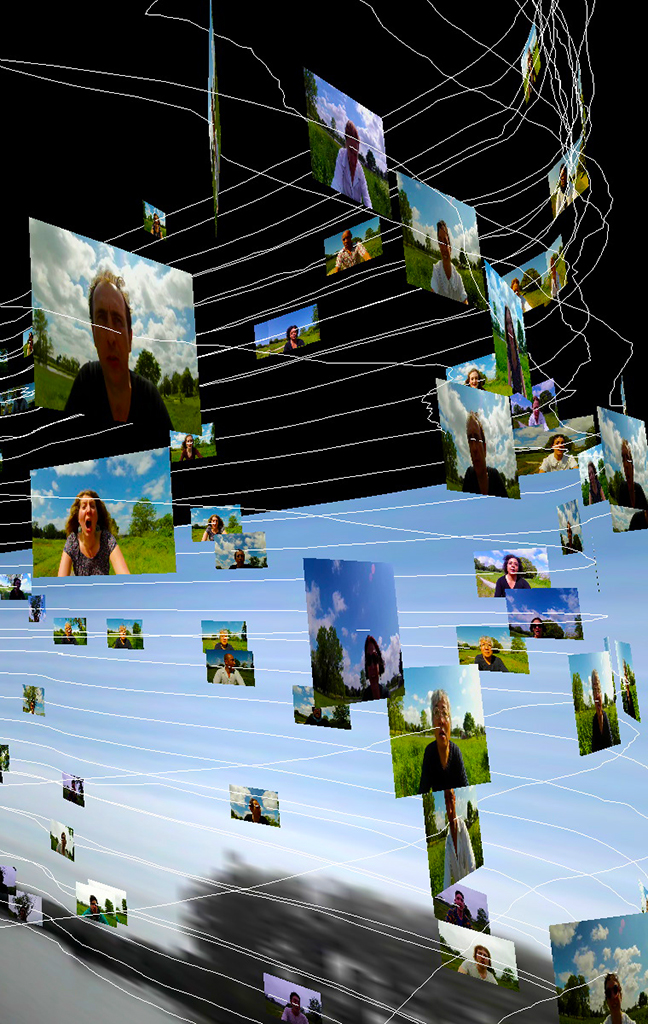
This project, upon the initiative of l’Ecole des Beaux-Arts de Nantes, has been conceived as a meta-monument where are gathered video sequences recorded by a camera with GPS. People are screaming while biking in a 500 m circle in the countryside. The traces of this route can be visualized thanks to lines that form a sort of tower in the virtual space, where it can go on indefinitely. On these lines, in an order that looks more like a music score than a succession of shootings, mobile video screens simultaneously display the image of the performances.

PHILIP GLASS

فيليب الزجاج
菲利普·格拉斯
פיליפ גלאס
フィリップ·グラス
필립 글래스
Филип Гласс
Einstein On The Beach

ROBERT WILSON
Portrait Trilogy:Einstein; Akhnaten; Gandhi

.
Einstein on the Beach is an opera in four acts (framed and connected by five “knee plays” or intermezzos), scored by Philip Glass and directed by theatrical producer Robert Wilson. The opera eschews traditional narrative in favor of a formalist approach based on structured spaces laid out by Wilson in a series of storyboards. The music was written “in the spring, summer and fall of 1975.”Glass recounts the collaborative process: “I put [Wilson’s notebook of sketches] on the piano and composed each section like a portrait of the drawing before me. The score was begun in the spring of 1975 and completed by the following November, and those drawings were before me all the time.”
full opera

Es Devlin

Blueskywhite
Devlin’s latest installtion is ‘BLUESKYWHITE’, a large-scale work commissioned by 180 Studios, which is currently showing at LUX: New Wave of Contemporary Art, a new exhibition co-curated by Fact and SUUM Project. The work combines light, music and language, and was conceived as a sculptural expression of our emotional response to the possible extinction of blue sky. The installation is formed of two parts: In Part I, text from Byron’s 1816 poem Darkness underscores the viewer’s passage through a 24m long red-lit tunnel. Part II draws from contemporary solar geo-engineering models documented by Elizabeth Kolbert and others which suggest that a haze of suspended particles might reduce global temperature to pre-industrial levels and might also turn the blue sky white.

TERMINALBEACH

The Heart Chamber Orchestra
File Festival – Hipersonica 

In the TERMINALBEACH Heart Chamber Orchestra (made up of artists Erich Berger and Peter Vatava), twelve musicians played pieces from the heartbeat, recorded by an electrocardiogram from data sent by sensors placed on their bodies. As the live score created in real time from the physical and emotional states of the musicians, their beats further influenced the resulting musical composition. In this way, the biological feedback loop becomes a self-generating, organic and evolving system, which creates a musical score and a show that adopts the form of open or network art, in which chance and interdependence, thus how emotional changes and computational reasoning create a biological and psychological dynamic at the same time.

Cornelius Cardew

TREATISE
KYMATIC ensemble
Treatise is a graphic musical score comprising 193 pages of lines, symbols, and various geometric or abstract shapes that largely eschew conventional musical notation. Implicit in the title is a reference to the philosophy of Ludwig Wittgenstein, which was of particular inspiration to Cardew in composing the work.

Thom Kubli

Brazil Now
BRAZIL NOW is a composition that addresses increasing militarization and surveillance within urban areas. Its geographical and acoustic reference is São Paulo, the largest megacity in Latin America. The piece is based on field recordings that capture the symptoms of a Latin American variant of turbo-capitalism with its distinctive acoustic features. Eruptive public demonstrations on the streets are often accompanied by loud, carnivalesque elements. These are controlled by a militarized infrastructure, openly demonstrating a readiness to deploy violence. The sonic documents are analyzed by machine learning algorithms searching for acoustic memes, textures, and rhythms that could be symptomatic for predominant social forces. The algorithmic results are then used as a base for a score and its interpretation through a musical ensemble. The piece drafts a phantasmatic auditory landscape built on the algorithmic evaluation of urban conflict zones.

Abel Gance

Napoleon

Kevin Brownlow’ restoration

Gance embarked on his greatest project, a six-part life of Napoléon. Only the first part was completed, tracing Bonaparte’s early life, through the Revolution, and up to the invasion of Italy, but even this occupied a vast canvas with meticulously recreated historical scenes and scores of characters. The film was full of experimental techniques, combining rapid cutting, hand-held cameras, superimposition of images, and, in wide-screen sequences, shot using a system he called Polyvision needing triple cameras (and projectors), achieved a spectacular panoramic effect, including a finale in which the outer two film panels were tinted blue and red, creating a widescreen image of a French flag. The original version of the film ran for around 6 hours. A shortened version received a triumphant première at the Paris Opéra in April 1927 before a distinguished audience that included the future General de Gaulle. The length was reduced still further for French and European distribution, and it became even shorter when it was shown in America. Napoleon is a silent film directed by Abel Gance, dramatising the youth and early career of Napoleon Bonaparte. Its most complete screening, said to be nine hours long, took place in Paris in 1927 – but this version was subsequently lost. British film-maker Kevin Brownlow saw a version as a schoolboy and subsequently restored the film to close to its original length from various prints. His restoration was first shown in London in 1980 with a score by Carl Davis.

Liam Young & John Cale

Loop 60 Hz: Transmissions from the Drone Orchestra
A flock of autonomous DJI copters are programmed as aerial dancers and are mounted with specially engineered wireless speakers to broadcast the instruments of the band. Other copters are dressed in elaborate costumes to disguise their form and reflect light across the audience below. Against a score of original compositions and selected tracks from Cale’s seminal career this collaboration with Young imagines the possibilities of the drones as emerging cultural objects. If these technologies are no longer unseen objects overhead, or propelled along classified flight paths but brought into close and intimate relations with us then how might we see them differently. When their transmission fades, when the drones lose their signal and without their protocols for terror and surveillance, do they drop from the sky, do they fall in love or do the drones drift endlessly, forever on loop.

Hovver

Liminal Scope
Liminal Scope is an immersive light and sound installation, in which three rings frame the transit of light through space. The audiovisual score enmeshes harmonic frequencies, rhythmic motion,
and gradients of color, orchestrating a narrative which navigates tension and release. Our form of reality is mutually constructed by our perceptions along with their limitations. The installation’s rings form an aperture that focuses and reveals a spatial quality of light, which usually remains unseen. Liminal Scope is a meditation on these perceptual limitations as they
relate to our shared and individual perspectives on reality.

Ramy Fischler & Cyril Teste

Exformation, an interactive installation inspired by the concept of “exformation,” was developed for a composition by Jesper Nordin performed by the Diotima string quartet and combines musical, luminous and colorimetric scores. Around the musicians, positioned on a technically equipped stage, three aluminium-edged cubes with LEDs mounted on circular rails move and angle their light in keeping with an algorithmic programme based on analysis of the spectrum, timbre and intensity of the music. This sensitive object becomes a total composition, a poetic, digital entity responding to the work played at its centre.

Studio Drift

Concrete Storm
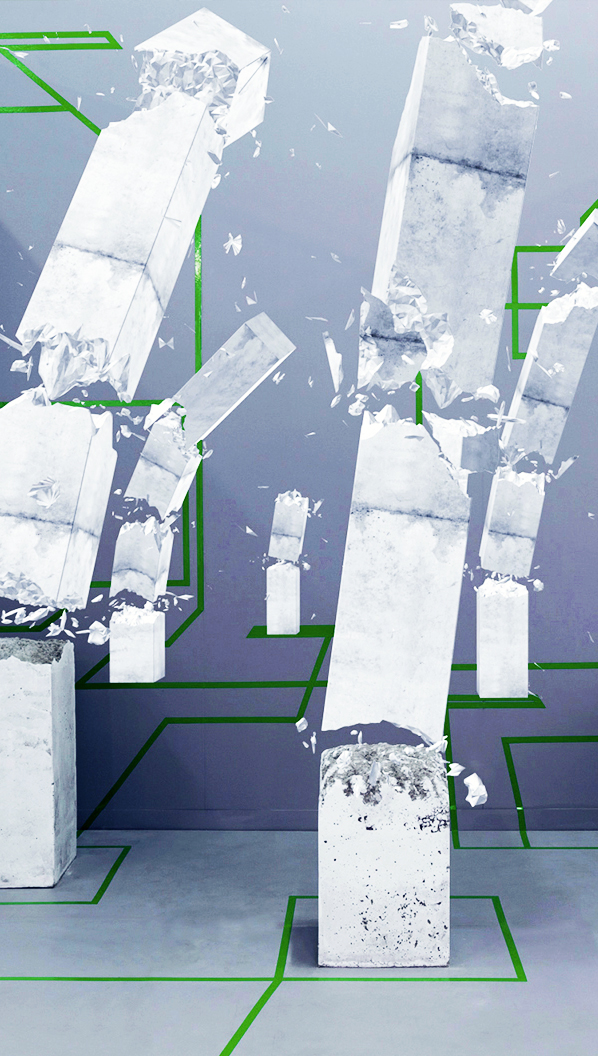
On first impression, visitors experience solid forms, which draw on minimalist motifs and underscore the stable properties of concrete. While wearing the HoloLens, viewers enter a mixed reality, enlivened by responsive holograms that augment the physical environment of the installation. With Concrete Storm, DRIFT explores the layer between the parallel worlds, whereby the real and the virtual worlds co-exist. People’s attention is now constantly divided between these two worlds in which they coexist. The artists believe that combining these two seemingly separate worlds they can study the unlimited possibilities of the unstoppable evolution. Concrete Storm expands the boundaries of the digital world, freed from screens, and integrated into the fabric of physical existence.

Michele Spanghero

Ad lib
The sound sculpture Ad lib. combines a medical machine for automatic pulmonary ventilation with a few organ pipes that play a musical chord to the constant rhythm of the mechanical breath, creating an artificial organ that is metaphorically a mechanical requiem that sounds incessantly. The title of the work Ad lib., an abbreviation of the Latin expression “ad libitum”, is a musical caption that gives the performer discretion of interpretation, allowing for instance to repeat “at will” certain bars of the score. The sculpture aims to refer to the situation in which people, who suffer from critical health conditions, see their survival tied to a breathing machine and, therefore, to the discretion of those who are taking care of them.

Iannis Xenakis

Oresteia Opera

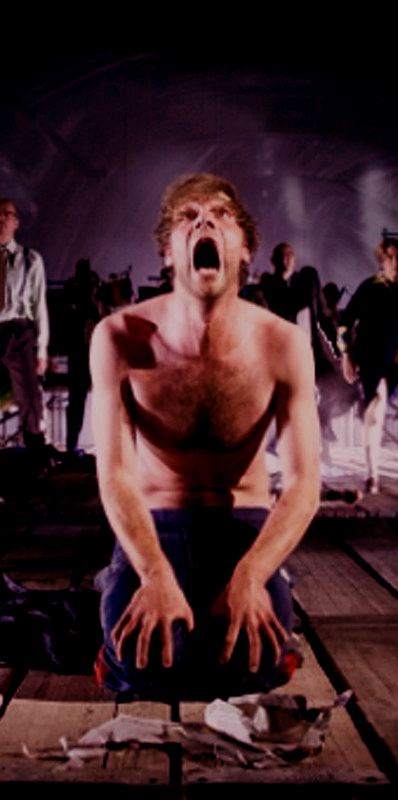
Scored for soloists, mixed chorus, children’s chorus and chamber ensemble, Iannis Xenakis’ music for Oresteia has been cited as “ruggedly dissonant” since its 1987 première in Sicily. A wooden-planked stage is empty save three platforms, one each for the chamber players and percussion, another for a drummer on a separate perch. On a high screen to start, a loop video shows an almost-naked woman stretched out face down in a bathtub who is being hosed down uninterruptedly with water. No forewarning, and the clip changes to a thick forest, a small girl being physically abused by an adult man. While the same video images reappear at the end of the opera, but it’s nebulous soft-edged shapes –mood landscapes as it were – that are the usual backdrop for the 90-minute piece.


GYÖRGY LIGETI

ג’רג’ ליגטי
Дьердь Лигети
ジェルジ·リゲティ
Le Grand Macabre

In the mid-70s, Ligeti wrote his only opera, Le Grand Macabre, loosely based on the 1934 play, La Balade du grand macabre, by Michel De Ghelderode. It is a work of absurd theatre that contains many eschatological references.After having seen Mauricio Kagel’s anti-operatic work Staatstheater, Ligeti came to the conclusion that it was not possible to write any more anti-operas.[citation needed] He therefore resolved to write an “anti-anti-opera”, an opera with an ironic recognition of both operatic traditions and anti-operatic criticism of the genre. From its brief overture, a mixture of rhythmic sounds scored for a dozen car horns, to the closing passacaglia in mock classical style, the work evolves as collage of sonorities ranging from a grouping of urban sounds to snippets of manipulated Beethoven, Rossini and Verdi.

Marshmallow Laser Feast

NEST

Inspired by Homer’s Odyssey
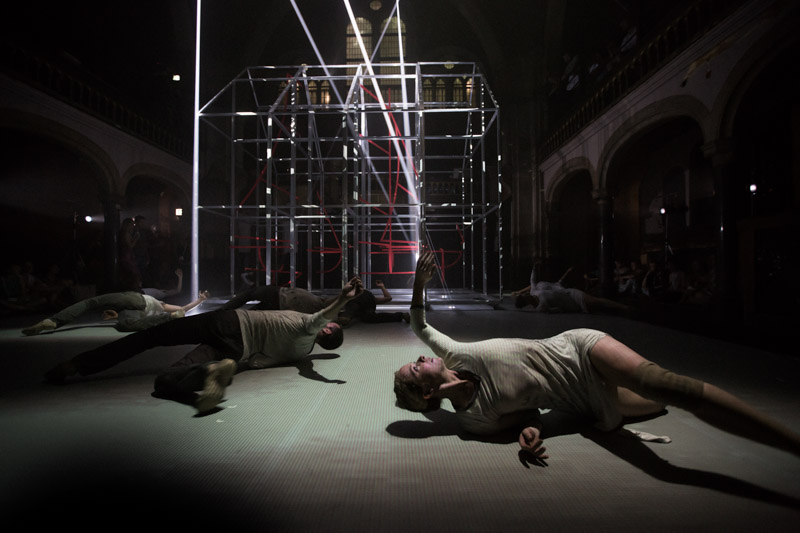
Loosely based on Homer’s The Odyssey, Marshmallow Laser Feast’s light installation lit the primary performance space within the chapel’s hazy internal dome. Grid-like projections crossed with mobile structures (designed by the architectural practice Studio Weave) as agile bodies crept over, in and through the many lit towers and surfaces. This first act was seen by the audience from the left and right balconies above. The second act, down flights of rope-lined staircases in the concrete basement, was more disorienting, lit only with triangular neon tubing and an eerie glow that seeped from an open door. The style of dance, in keeping with the more rapid and percussive score, by Canadian composer Christopher Mayo and electronic music composer / performer Anna Meredith, confronted the audience and was staged without boundaries dividing the dancers (some of whom were in street clothes) and viewers.

Patrick Monte & Brian Questa

Anomy, for U.S.and Mexican News
Anomy, for U.S.and Mexican News uses news media RSS feeds in real time in combination with data sanitization and sound synthesis algorithms in order to create visual displacement and generate a non-linear musical score. Through immersion, adjacency, perpetuity, uncertainty, and content in real time, it offers a contemplative experience with mass media, censorship, and language in contemporary society. Information containing the letter “e” in news briefs from eleven different sources in English and Spanish will be redacted—each triggering a musical note. Inspired by lipogrammatic literature and concrete poetry, this piece uses the lipogram to call attention to subjectivity and control in mainstream news media. The result is both a rhythmically diverse sound piece and a visual document that continuously evolves along with the flow of information published by Mexican and American news outlets.

Guillaume Marmin

TIMÉE
In roughly 360BC, Plato shared his dialogue Timaeus, in which he imagined the universe as a geocentric system, including a concept called Music of the Spheres where each planet had its own sonic tone based on its unique orbital revolution. The entire system was divided into an octave, a fifth, a fourth, and tone, and as all the planets revolved around the Earth, the solar system would comprise a perfect musical score.

SHOHEI FUJIMOTO

Density Compression
With Density Compression [2020], Fujimoto turns his attention towards fundamental behaviours of visible light, focusing on straight lines and reflection. By representing light as a dense network of lines travelling in limited space, the artist renders light as a physical object, allowing him to explore and ultimately change its basic behaviour. The piece is accompanied by an atmospheric score from experimental composer and Raster-Noton affiliate Kyoka.

Merce Cunningham

简宁汉
מרס קנינגהם
マース·カニングハム
머시 디스 커닝햄
МЕРС КАННИНГЕМ
« Scenario » de Merce Cunningham
Rei Kawakubo’s humorous costumes toy with the idea of physical distortions, such as humps and big rear ends. They are in mostly vertical blue stripes on white, or in pale green and white-checkered patterns. For much of the dance, five or six dancers twist and pose, each in his or her own space, with a rush of additional dancers to the stage toward the end of the performance. The bold electronic musical score is by Takehisa Kosugi.

David O’Reilly

Everything
FILE GAMES 2017
Everything is an interactive experience where everything you see is a thing you can be, from animals to planets to galaxies and beyond. Travel between outer and inner space, and explore a vast, interconnected universe of things without enforced goals, scores, or tasks to complete. Everything is a procedural, AI-driven simulation of the systems of nature, seen from the points of view of everything in the Universe.

Robert Battle

Роберт битва
No Longer Silent

Robert Battle’s dramatic ensemble work No Longer Silent, set to Erwin Schulhoff’s percussive score “Ogelala,” features dancers evoking a complex and mysterious ritual. Originally created in 2007 for The Juilliard School, Battle’s alma mater, the work was part of a concert of choreography that brought to life long-forgotten scores by composers whose work the Nazis had banned. Powerful phrases stir the imagination with images of flight and fatigue, chaos and unity, and collectivity and individualism as dancers, clad in all black, travel in military rows.

Kid Koala and K.K. Barret

NUFONIA MUST FALL
Kid Koala’s celebrated “live animated graphic novel”. Directed by oscar-nominated production designer K.K. Barrett (Her, Lost In Translation, Being John Malkovich). Performed, filmed, edited and scored in real time by a team of 15 performers including puppeteers, cinematographers, a string quartet and Kid Koala on piano/turntables. A romantic story about a robot on the verge of obsolescence.

Christine Ödlund

The Admiral’s Garden
Christine Ödlund’s work explores the borders of our knowledge of the world around us, connecting such themes as the chemical communication of plants, synaesthesia and theosophy. She works in a variety of media, including drawing, sculpture, video, watercolour and sound works.
Stress Call of the Stinging Nettle: When a plant reacts to a butterfly larvae feeding on its leaves, it releases chemical substances, or compounds. The characteristics of these compounds have been analyzed in collaboration with the Ecological Chemistry Research Group at the Royal Institute of Technology in Stockholm, and then transposed into amplitude and intensity of sinus tones, recorded at EMS (Electroacoustic Music in Sweden), Stockholm. Thus these beautiful graphic score and soundtrack by Swedish artist Christine Ödlund are direct transpositions of “the plant’s life, struggle and death”.

Lin Hwai-min

White Water and Dust
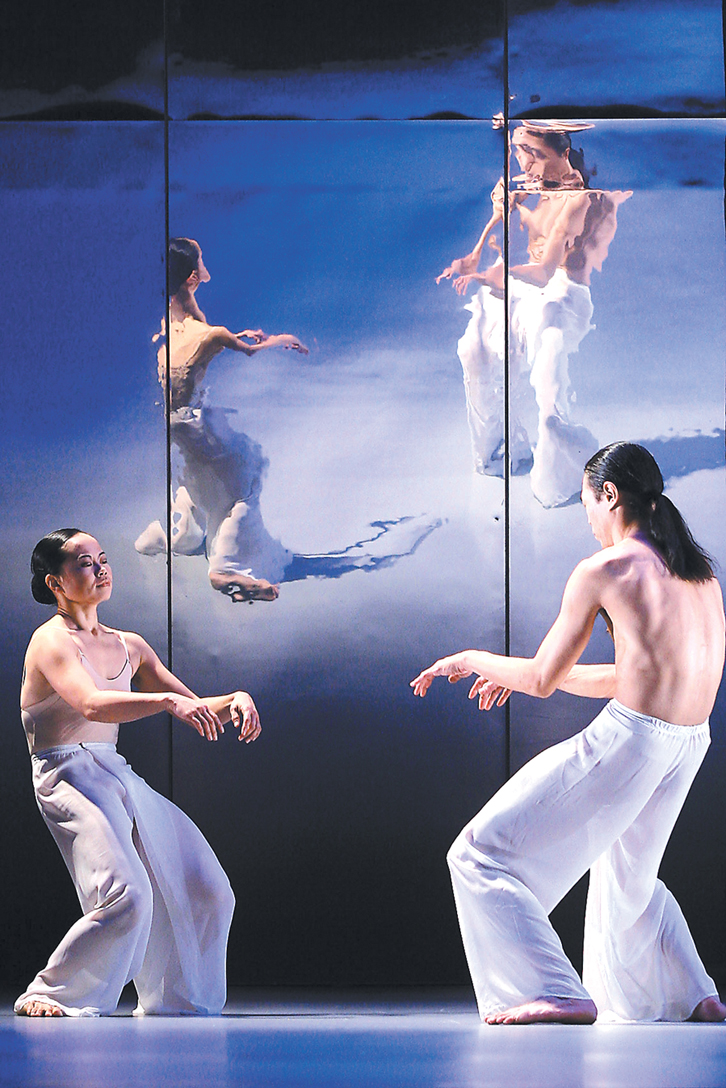
Set to the piano scores by Erik Satie and other composers, White Water is a lyrical dance of pure movement that flows beautifully as its title suggests. The curtain opens to a projected colour image of a flowing river; it slowly transforms into black and white. In serenity and in turbulence, whiteness of waves and ripples streams out of the blackness. Green netting and girds used for digital design interrupt the flow of water, thus revealing the process of creating virtual images and illusion of light, providing a pleasant surprise to the dance.
Cloud Gate
Cloud Gate is the name of the oldest known dance in China. In 1973, choreographer Lin Hwai-min adopted this classical name for the first contemporary dance company in the greater Chinese-speaking community.

Matteo Zamagni

Nature Abstraction

Nature Abstraction is an immersive sensory experience that explores the arcane forms of fractals, mathematical visual representation of natural and biological forms.
The project gives an insight of their aspects through virtual reality, where they appear as three planets: Birth, Communion and Aether; Each accompained with scores designed to facilitate meditative state and relaxation;The audience is guided to explore these planets and dive into their vast complexities as well as observing the contrast between the entirely digital created world inside the VR against the fully analogue created film projected onto the faces of the cube which have been filmed in real life, recreating using analogue visual effects and various chemical elements.

Rebelo de Andrade

House 3000
this bright red house has been designed to stand out amid the vast, uniform landscape of southern portugal. completed by lisbon-based firm rebelo de andrade, ‘house 3000’ is located on a 500 hectare plot populated with scores of cork trees — a constant terrain that, as architect luís rebelo de andrade found when first visiting the site, is particularly difficult to navigate.
architecture

YANN MARUSSICH

LES AVIATEURS
Born in 1966, Yann Marussich, a unique character of the contemporary dance, delivers performances which have a true impact on the audience: « scraped, disturbing, provocative, authentic ». Since 1989, he signed a score of performances and choreographies diffused all over Europe and the World. From 1993 to 2000 he evolves in the field of artistic programation asdirector of the « Théâtre de l’Usine » (Geneva) where he programs almost exclusively contemporary dance and more specifically new forms of expression.

Anna Halprin

Parades & Changes
Parades & Changes, replays is a full scale re-creation of the masterpiece Parades & Changes, a major 1965 work of American postmodern dance legend Anna Halprin. The provocative Parades & Changes, Halprin’s first “collective creation” dynamited the codes dominating dance by exposing the process of performance: improvising around several “scores,” dancers dress and undress, inventing gestures and vanishing naked in rolls of skin colored paper. This “ceremony of trust,” as it was named by Halprin, seeks to utilize dance as a medium for being together: her prolific composition addresses the process, the place, the action, and the performer as both unique and corresponding entities.

WAYNE MCGREGOR

واين ماكغريغور
韦恩·麦格雷戈
웨인 맥그리거
ויין מקגרגור
ウェイン·マクレガー
Уэйн МакГрегор
rAndom International
FAR
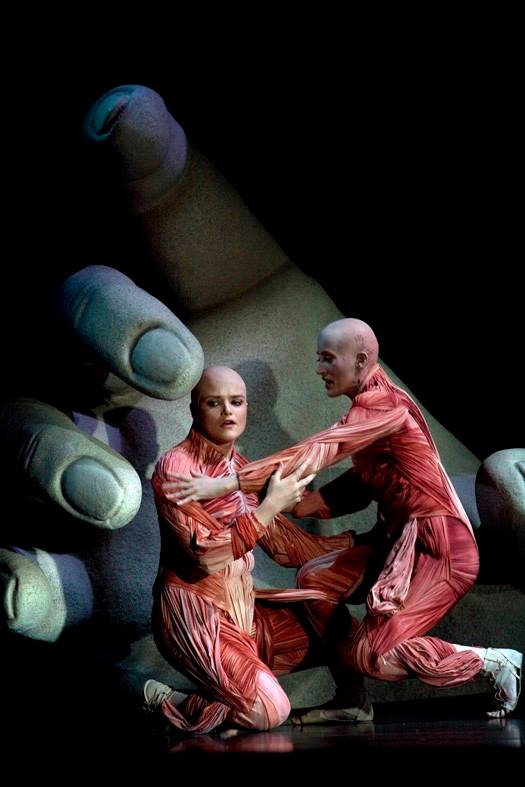
Wayne McGregor’s anatomy-defying choreography and ground-breaking approach across dance, science, film, music, visual art and technology has fuelled a string of truly unique works. FAR is no exception. Inspired by the controversial Age of Enlightenment, FAR mines an era that first placed ‘a body in question’. Ten incredible dancers confront the distortions, sensuality and feeling of the 18th Century‘s searing contemporary sensibility to a haunting score by the critically-acclaimed composer Ben Frost. Staged in a mesmerizing environment of shadow and light (rAndom International, Lucy Carter), object and film (Moritz Junge, Ravi Deepres), FAR binds cutting edge design with choreography made from a radical cognitive research process.

OLGA ZIEMSKA

Ольга Земска
stillness in motion

Via her website, “Olga often attempts to make visible those concepts or properties that are indiscernible to the naked eye, such as cellular formations or magnetism. By making visual associations between the visible and the invisible—or the microscopic and the macrocosmic—Ziemska poetically underscores the interrelatedness of all things.”

Heather Phillipson

100% Other Fibres
Through collisions of image, noise, objects, language and bodies, Heather Phillipson’s videos and sculptural installations behave as places, musical scores, poems and nervous systems – attending to how physical and affective ‘selves’ are constructed, manipulated and, above all, escape. Often rendered as walk-in conglomerations of readily accessible materials (digital images, paint, cardboard, words, audio loops and reproducible consumer detritus), her works stake out an ambiguous territory in which cultural references and emotional responses are mutually contingent and reactive. Collapsing distinctions between the forthright and the inarticulable, the banal and the ecstatic, and between metaphor and extreme literalisation, Phillipson’s work performs constant tonal shifts, disruptions and bleeds. In so doing, it oscillates between physical intimacies and conceptual distances – desire, sensuality, touching and being touched, shame, anxiety, (over-)exposure, resistant surfaces.

Robert Irwin

Double Blind

Double Blind is Irwin’s response to the characteristic features of the main gallery at the Secession. The room’s absence of windows makes it a neutral container for art, its hermetically sealed quality enhancing the impression of a massive, isolated volume. The grid structure of the ceiling and floor underscore the room’s austere appearance and lend it rhythm. The world outside nonetheless becomes tangible through the daylight streaming in from above. The changing intensity of light in the room allows visitors to sense different times of day and what are frequently rapid changes in the weather. The installation Double Blind consists of thirty room-high frames with translucent fabric stretched over them following exactly the lines of the grids that define the room and thus forming three volumes. Depending on where the viewer is standing and on the direction and intensity of the light, the appearance of the installation changes, as does that of the room itself. The door to the garden behind the Secession building stands open, allowing the viewer to see and sense the world outside.

ROBERT WILSON

بوب ويلسون
鲍伯·威尔逊
בוב וילסון
ロバート·ウィルソン
밥 윌슨
Боб Уилсон
Bertold Brecht
Kurt Weill
Berliner Ensemble
Die Dreigroschenoper

Revel in this 30-strong ensemble of actors and musicians performing one of the most familiar scores in musical theatre today. Be warned, with a strictly limited engagement in Perth and following sellout seasons in New York, Hong Kong and Berlin, you need to be quick. In 1928, Bertolt Brecht and Kurt Weill created a masterwork that would change the shape of theatre forever. Eighty-five years later, visionary director Robert Wilson leads Brecht’s own company, the Berliner Ensemble, to perform in Australia for the very first time. Mack the Knife is the original city crim who’s never met a law, a woman or a cop he couldn’t seduce – but when he challenges the supremacy of the Beggar King and his empire of manufactured woes, the fallout threatens to tear the town apart.
.

RADIAL AND BLAUS

MID AND PLAYMODES
radial and blaus
‘radial’ and ‘blaus’ are two interactive lighting installations, both a result of the collaboration between catalonia-based digital research collectives MID (media interactive design) and playmodes. ‘blaus’ introduces the abstract realm of three dimensional geometry through the mediums of audio and illumination – this could manifest as a cube or a blossoming flower, a grid or a jellyfish, a mutant framework of reflecting lights which submerge the audience into a multi-faceted universe, driven by hidden forces of the architecture. ‘blaus’ is an immersive space where audio-visual elements relate
intimately to impact on the visitor. the process led the designers to build most of the software and hardware elements themselves, by means of algorithm design, digital fabrication techniques and craft handwork. on the hardware side, the use of open source technologies, such as arduino, allowed us to create a flexible electronic system easily addressable by opensound – control data. ‘duration open source software by
james george was used in order to independently control, compose, and play a full score for the laser diodes, servomotors, lights and music.on the sound design side, all music and sound effects are made through the use of audio programming environments such as predate and reactor.
custom digital instruments are made in order to exactly match the resonant frequency of the space and its harmonics.
‘blaus’ is an immersive space where audio-visual elements relate intimately to impact on the visitor.

LA LA LA HUMAN STEPS

Amelia

Edouard Locke

“Directed and choreographed by Locke in 2002, Amelia, is a beautiful piece of dance on film that won awards and critical acclaim at numerous festivals when it came out. Amelia features a hypnotic, original, minimalist score written by David Lang for violin, cello, piano and voice, and lyrics from five of Lou Reed’s most famous works that he created in the 60s for the Velvet Underground. It is beautifully shot from multiple angles, some dizzying and swooping, in a space that was tailor-made for the film itself. The shadows and lighting in tandem with the shots and the movement add layers of beauty to the stark visuals.” Sarah Elgart

MEREDITH MONK

מרדיית המונק
Мередит Монк
ميريديث مونك
16mm Earrings
Meredith Monk’s groundbreaking performance work, 16 Millimeter Earrings, was a seamless integration of live performance, objects, film, vocal and instrumental music, movement, text, recorded sound, and light. It marked several, notable “firsts” for Monk: thinking of sound as an overall environment, working with her voice and visual images as primary elements, creating a full sound score, and incorporating film into a live work. The piece was a breakthrough in her quest to discover a visual/sonic/poetic performance form that could weave together multiple modes of perception. Responding to the original performances in 1966, art critic John Perrault wrote in the Village Voice, “Images, movement, film, words and sounds in Miss Monk’s new work are so skillfully interwoven and inter-related that no description can substitute for the kind of magic that she has managed to produce. The whole stage is her canvas and she uses every bit of it. 16 Millimeter Earrings has to do with surfaces, all seen as if through glass or reflected in a mirror. The surface of the human body. The surface of the erotic and the emotional. The radical juxtaposition of apparently contradictory surfaces- film, flesh, colors, and sound- becomes a witty method of deliberation and deliverance, and of complete art.”
video

TESLA ORCHESTRA

Ian Charnas

In the performance Tesla coils generate a massive voltage, creating lightning directed by a pre-composed musical score. Charnas stands between the coils, protected by his chain-mail suit, which conducts the electricity to the ground without electrocuting him. “Each lightning bolt could kill me,” he told me, “but thanks to the Faraday effect I’m shielded in a full body metal suit and my little body stays at zero volts potential.”