highlike

Nueve Voltios – Farol Infinito – Colombia

FAROL INFINITO

Nueve Voltios


FILE SÃO PAULO 2026: Inter-creativity – Art and Technology – LED SHOW
Electronic Language International Festival


Farol Infinito – Colombia

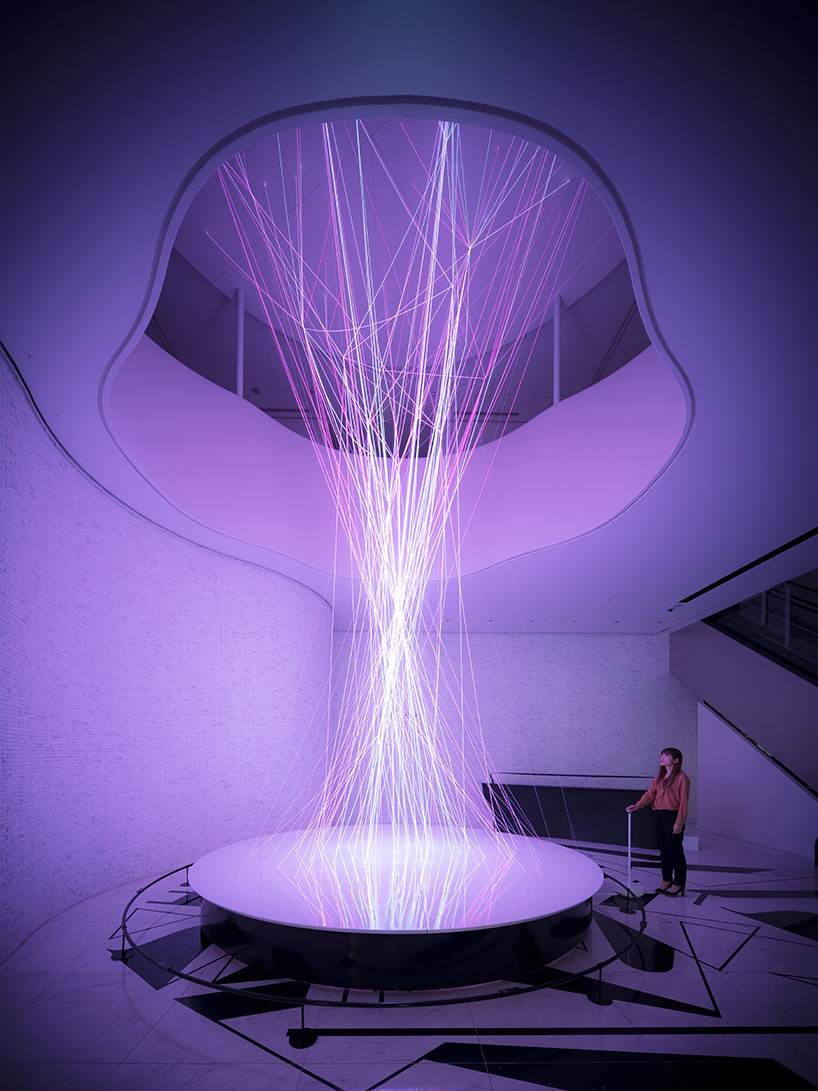
FAROL INFINITO presents an immersive journey in which sound and visual art intertwine to bring to life a poetic and sensory work. Carefully crafted in every detail, its narrative takes the lighthouse as a device for communication and navigation and, from a mythological perspective, explores the infinite fire it contains, a symbol of science and technology, understood as humanity’s ability to harness the forces of nature for the development of civilizations.

BIO

Leonardo González Quevedo, born in 1977, is an architect with 18 years of experience as a video artist and VJ. His audiovisual practice has focused primarily on the creation, development, and design of visual, trans architectural, transmedia, and stage-based languages, implemented in large-scale events, art exhibitions, and television. | Maria José Marulanda, born in 1987, is a singer, industrial designer, and composer with 15 years of experience as a sound artist and producer. Her sonic practice focuses primarily on the creation, development, and design of electronic, transmedia, and stage-based sound languages, presented in large-scale events, concerts, and television broadcasts.
Rita Reis – Naturgemälde V. 2 – Portugal

NATURGEMÄLDE V. 2

Rita Reis


FILE SÃO PAULO 2026: Inter-creativity – Art and Technology – LED SHOW
Electronic Language International Festival


Naturgemälde V. 2 – Portugal

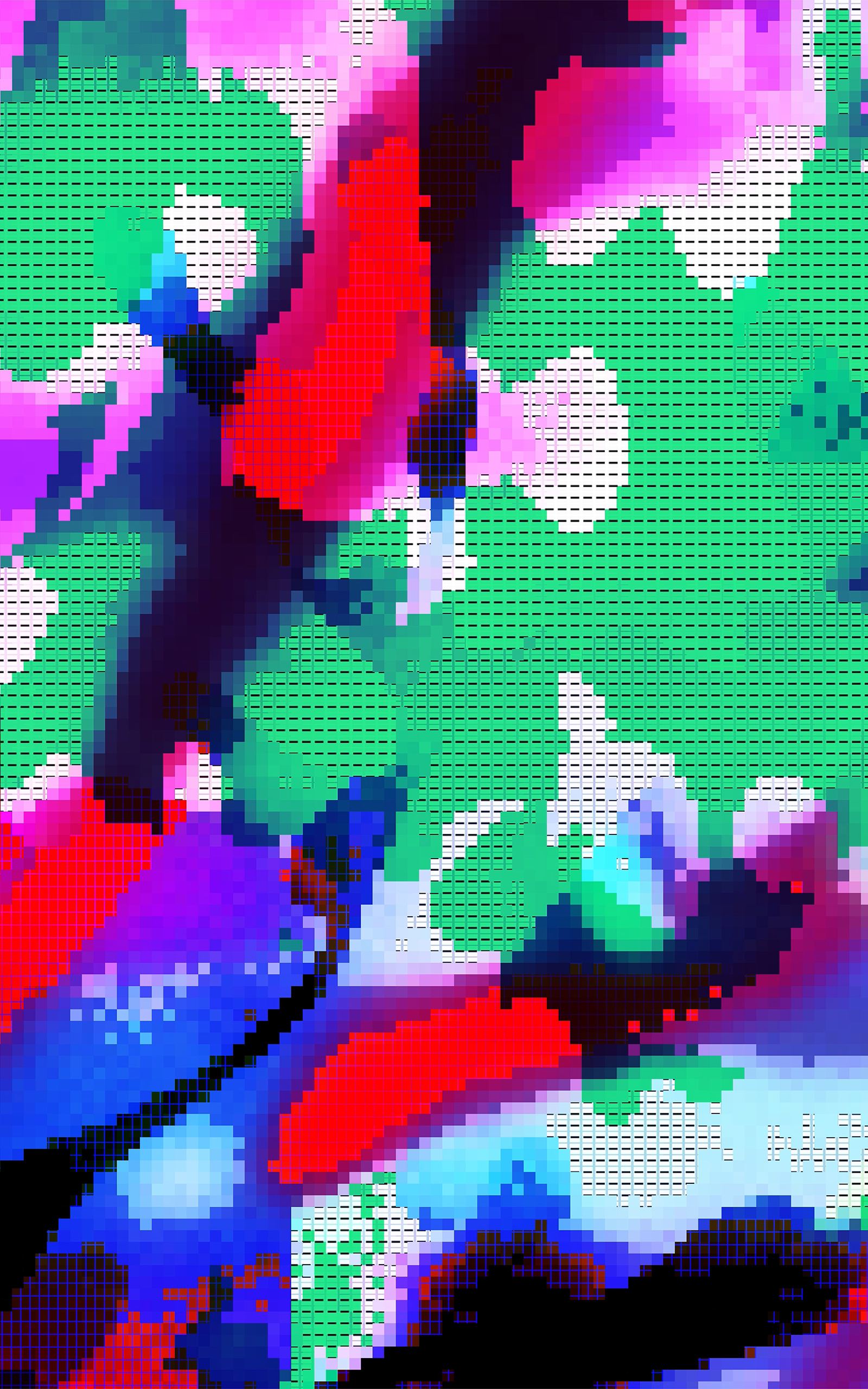
Naturgemälde represents the celebration of the cycle of life through a painting of nature.

It proposes a reflection on the natural world as a unifying sensory experience, through which our perception extracts sensations that nourish our imagination, functioning as a support structure for life.

In this network of interactions, how do we achieve a balance between biological and digital time?

How do we experience nature in the technological age?

BIO

Rita Reis is a multidisciplinary artist who develops projects in different areas. Her creative projects constitute paths for individual and collective reflections that can allow us to rehearse fairer realities, denaturalizing behaviors that promote the fragmentation of communities. Her projects have already been exhibited at various international festivals.

Tassio Caetano – Linha Tênue – Brazil

LINHA TÊNUE

Tassio Caetano


FILE SÃO PAULO 2026: Inter-creativity – Art and Technology – VIDEO ART SHORT
Electronic Language International Festival


Linha Tênue – Brazil

Linha Tênue is an audiovisual work that transforms the line into the protagonist, revealing its ambiguity and ability to unfold between form, gesture, and autonomy. Each stroke moves, connects, dissolves contours, creates figures, and establishes temporal relationships flowing between image and sound. The work invites viewers to experience the tension between structure and freedom, perceive details multiplying through continuous movement, and immerse themselves in a sensory universe.

BIO

Born in Brasília, the artist graduated in Composition from the University of Brasília and is currently pursuing postgraduate studies at UNESPAR. His recent research focuses on electroacoustic, visual, and multimedia composition, with works presented at festivals in Brazil, Latin America, Europe, and the United States.

Sebastián Arriagada – Flujos Rectificados / Rectified Flow – Chile

FLUJOS RECTIFICADOS / RECTIFIED FLOW

Sebastián Arriagada


FILE SÃO PAULO 2026: Inter-creativity – Art and Technology – VIDEO ART SHORT
Electronic Language International Festival


Flujos Rectificados / Rectified Flow – Chile

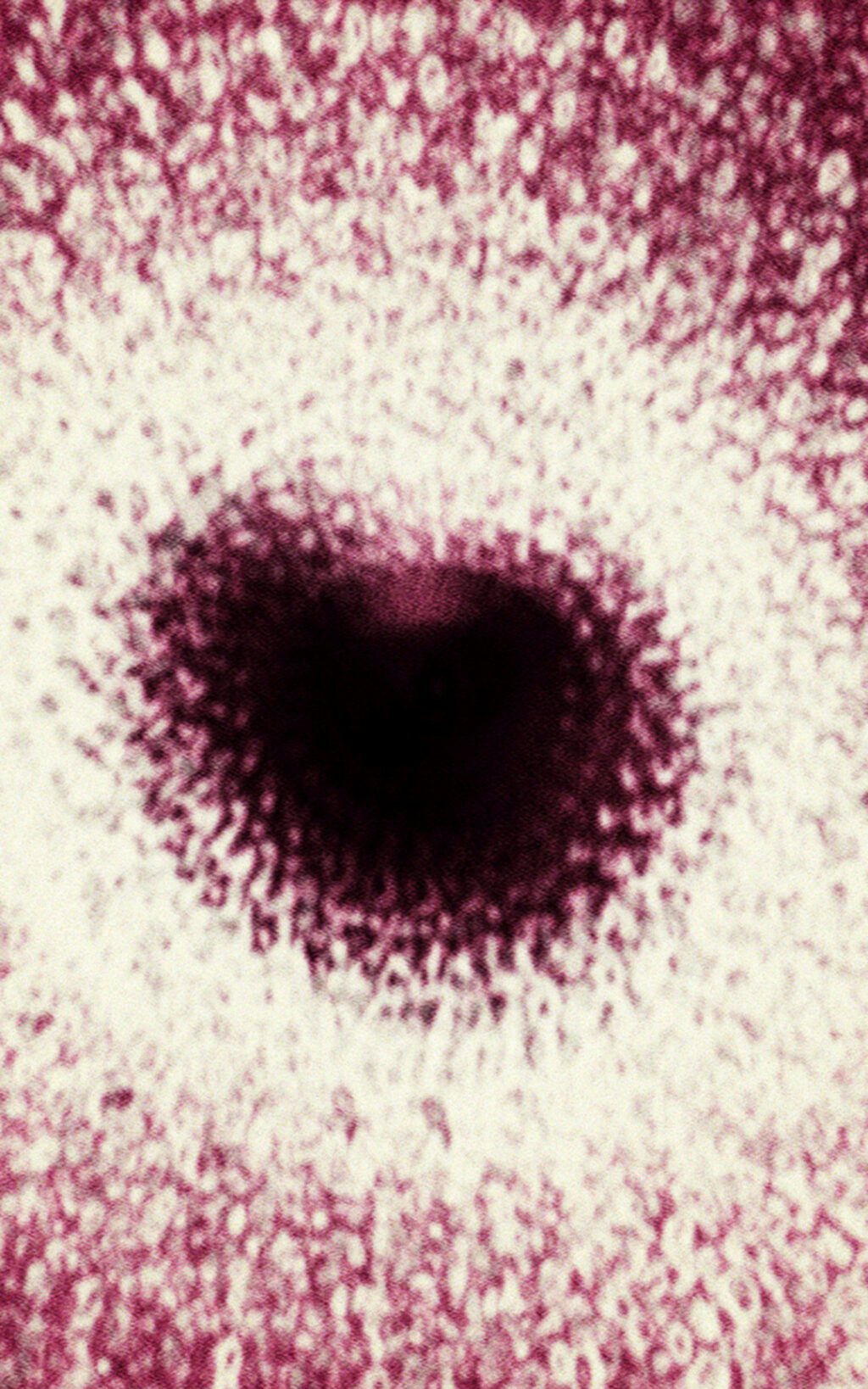
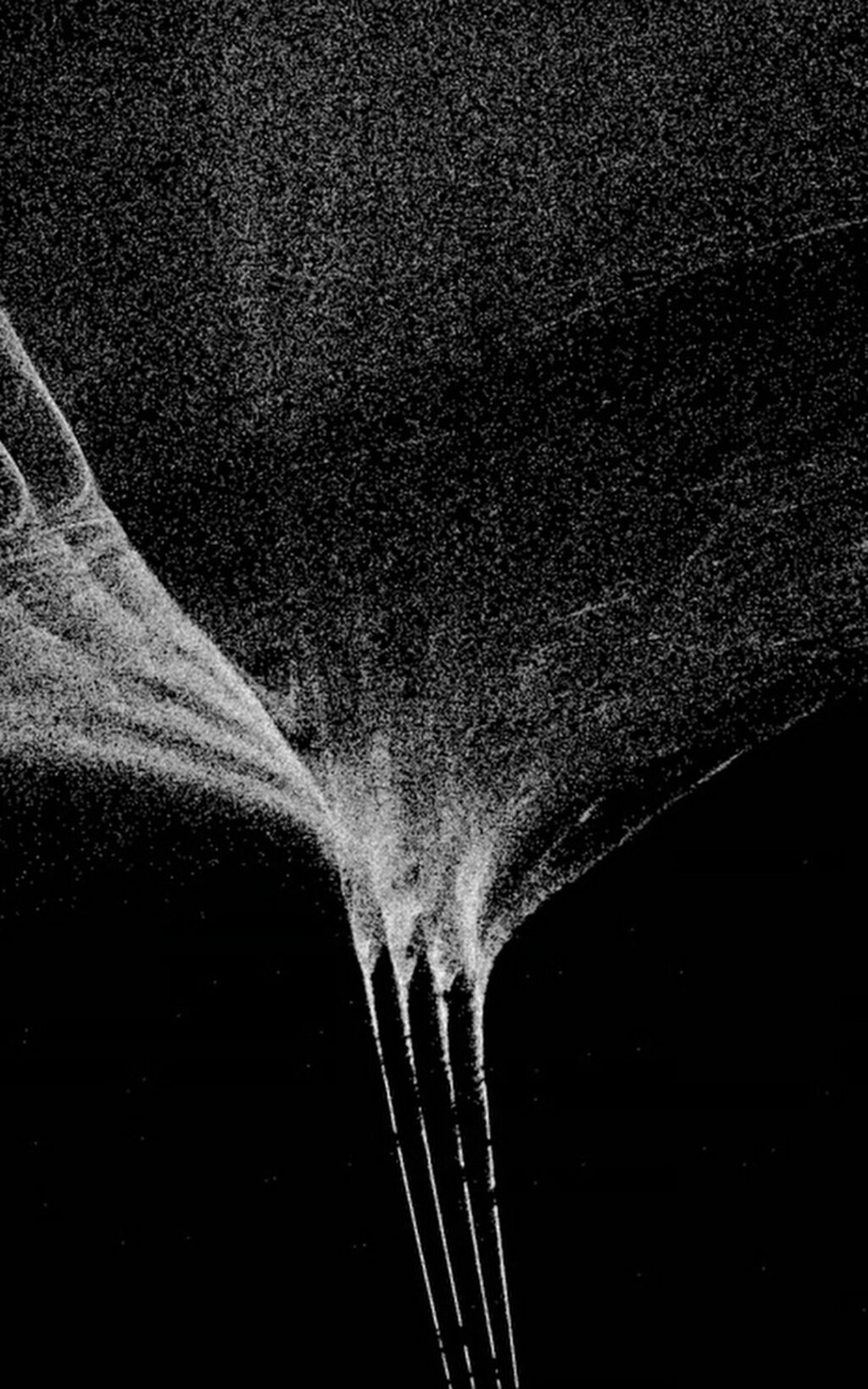
The video essay Flujos Rectificados (Rectified Flows) investigates the paradox of astronomical images not created for contemplation. Using generative art, the project processes FITS data to create dynamic visualizations that liberate these “technical images” from their operational function. The work explores their sensory and material potential, proposing new spaces of appearance and addressing the status of the image in the age of data.

BIO

Sebastián Arriagada (Chile) is an artist, researcher, and filmmaker. A professor at Universidad de Chile and PhD candidate at PUC, his work explores technical images and the limits of representation. His practice has been exhibited at Ars Electronica, Alchemy Film & Moving Image, FIDOCS, and Bienal de Artes Mediales, among other international venues and research hubs.

Ceci Prandini – Critically | Almost Disappeared | Disappeared – Argentina / Spain

CRITICALLY | ALMOST DISAPPEARED | DISAPPEARED

Ceci Prandini


FILE SÃO PAULO 2026: Inter-creativity – Art and Technology – VIDEO ART SHORT
Electronic Language International Festival


Critically | Almost Disappeared | Disappeared – Argentina / Spain

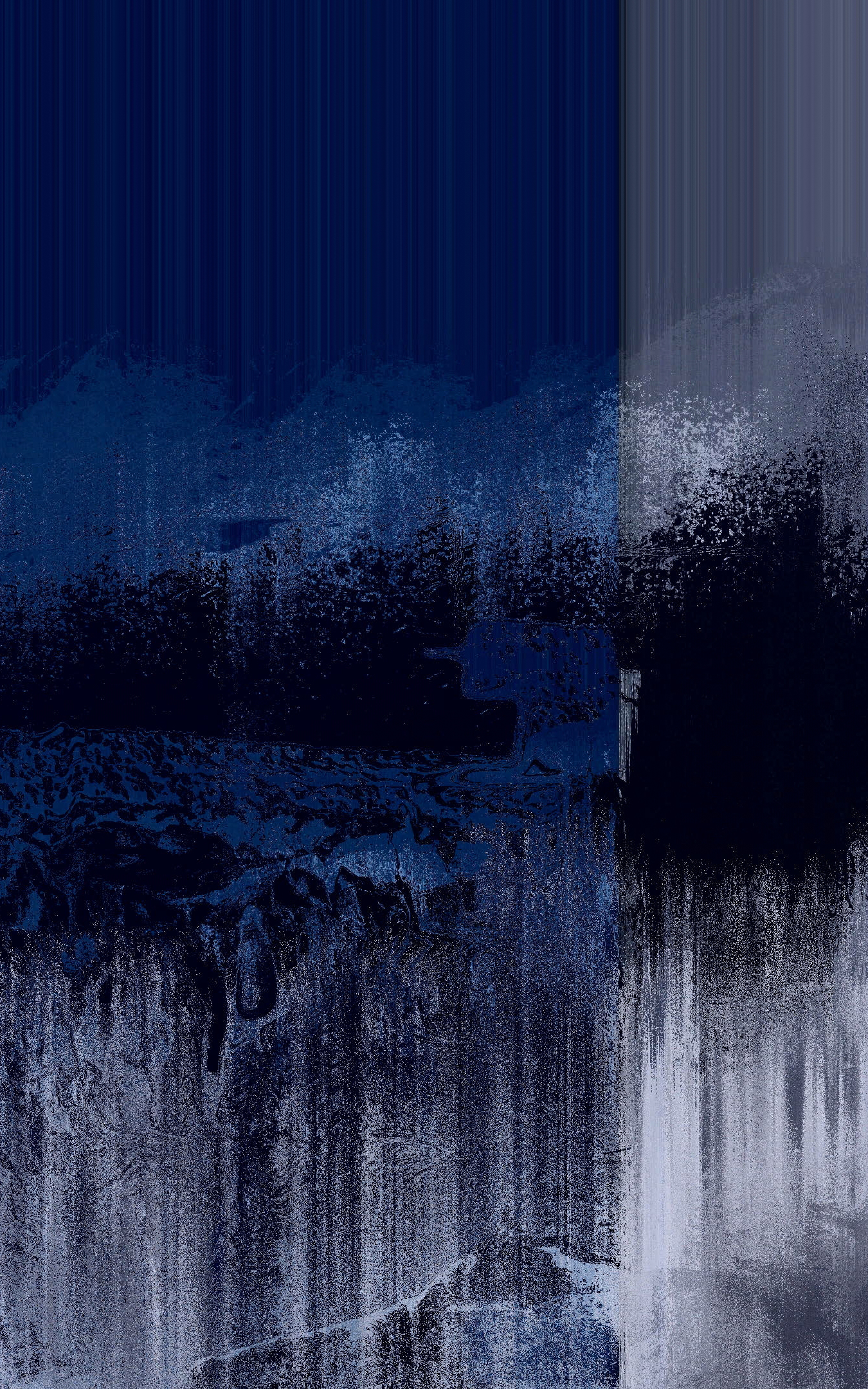
The code alters the shape, texture, and continuity of the images.

Climate change irreversibly alters the natural structures of glaciers.

Digital deformation becomes a reflection of the melting, retreat, and disappearance of glaciers.

Mono/Stereo/UHD/2025

Audiovisual recording carried out on the glaciers of Patagonia (Argentina).

Starting from this documentary source, the piece deliberately moves toward generative art.

BIO

Ceci Prandini is an audiovisual artist whose practice integrates photography, audiovisual production, and technological experimentation. Her work explores the intersection between image, sound, and digitality, developing pieces that unfold across the screen, space, and sensory experience.

Currently focused on digital art, she is noted for her use of TouchDesigner.

Abinadi Meza – Polychora – United States / Mexico

POLYCHORA

Abinadi Meza


FILE SÃO PAULO 2026: Inter-creativity – Art and Technology – VIDEO ART SHORT
Electronic Language International Festival


Polychora – United States / Mexico

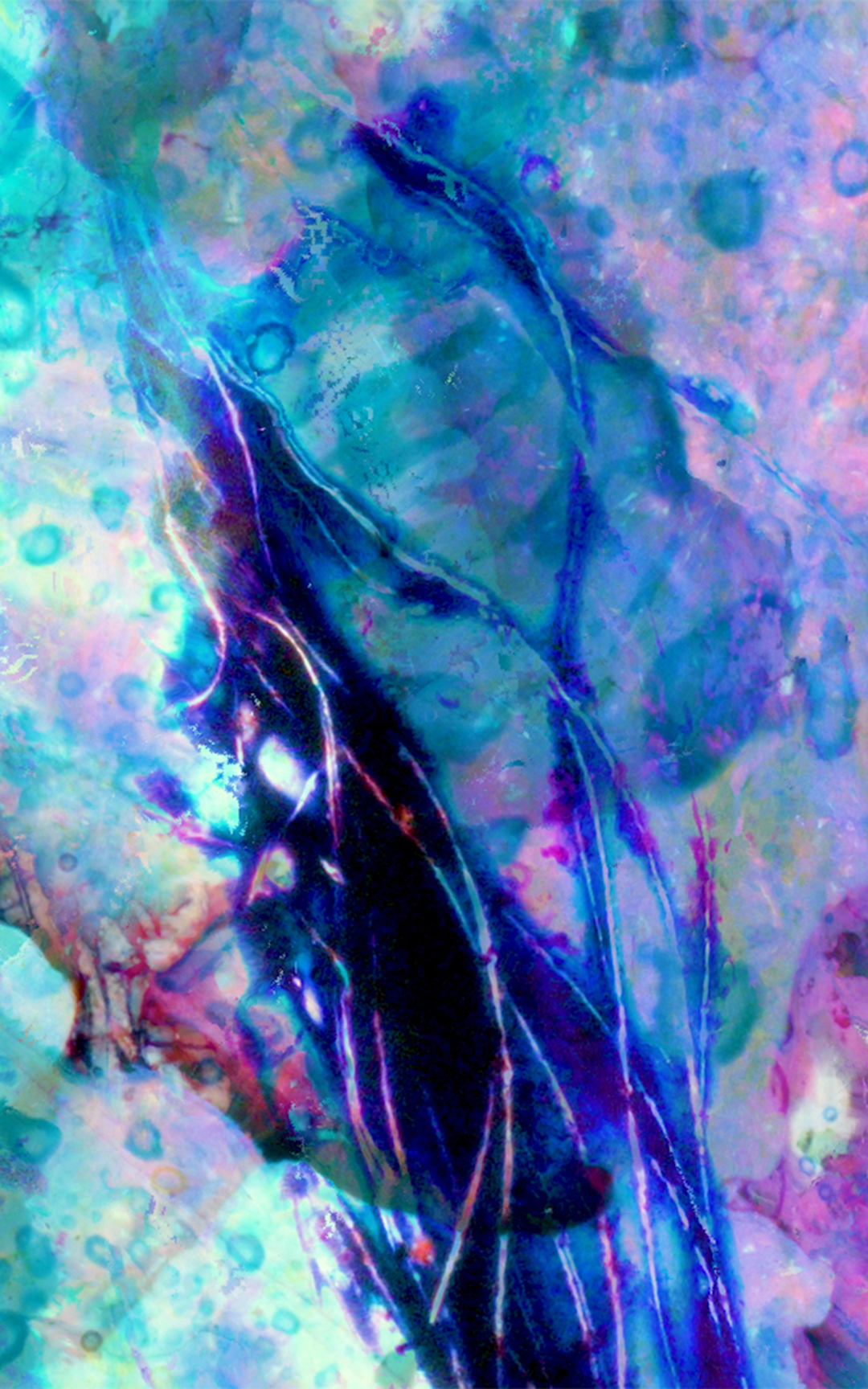
A neuro-refuge; a sensorial ecology. Waves, strands, and masses of light and color interweave as a living prism. “Polychora” are complex shapes that exist in four dimensions.

BIO

Abinadi Meza (US/MX) is a Latinx-Indigenous artist based in Austin, whose practice encompasses experimental film, sound, performance, and installation. Informed by training in both art and architecture, Meza creates multisensory works that explore the porous space where perception and materiality converge. His work has been shown internationally in festivals, galleries, museums, and public spaces.

Peter Burr & Mark Fingerhut – DESCENT – United States

DESCENT

Peter Burr & Mark Fingerhut


FILE SÃO PAULO 2026: Inter-creativity – Art and Technology – Animation
Electronic Language International Festival


DESCENT – United States

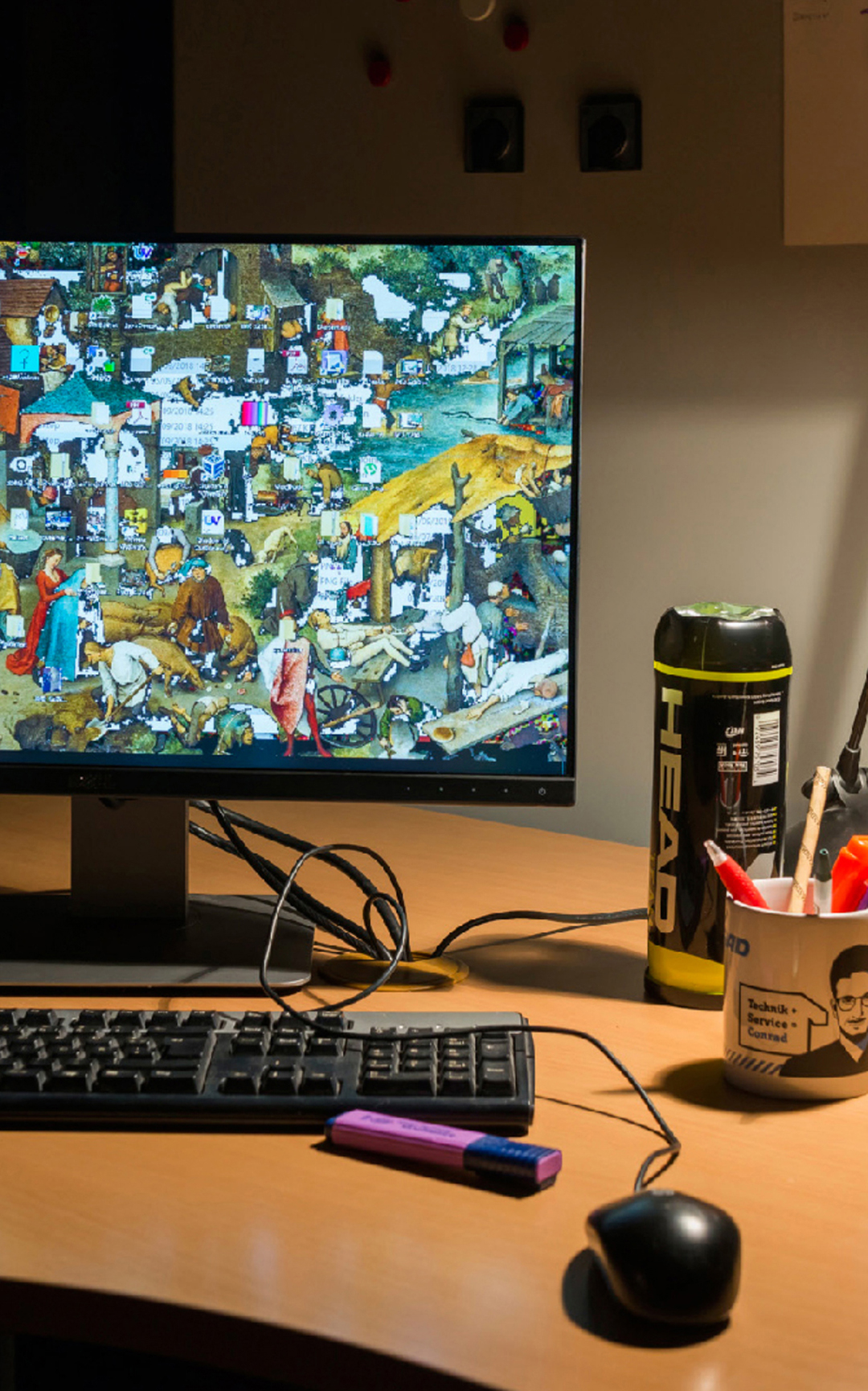
In 1562, Pieter Bruegel the Elder completed The Triumph Of Death, a panorama where black smoke blots out the sky, dead fish litter the shore, and skeletons test a myriad of death techniques. Over 200 years earlier, the Black Death wiped out half of Europe’s population, triggering upheavals that shaped medieval history. Alongside Mark Fingerhut and Forma, Burr created DESCENT, a desktop application that meditates on this darkness through a spiraling digital plague—ending with a single eye watching the rats destroy themselves.

BIO

Peter Burr is a Brooklyn-based artist whose immersive environments transform computational systems into emotional, sensory experiences. Working across video, software, and installation, he explores the relationship between human-machine interfaces and the systems that shape them. A Guggenheim Fellow and Creative Capital grantee, his work has been exhibited internationally at institutions including MoMA, the Whitney, and Centre Pompidou.

Mark Fingerhut is a New York-based artist, programmer, performer, and writer whose work spans software art, video, installation, and live digital performance. Using code, choreography, humor, and experimental storytelling, he creates works that explore network culture, computer interfaces, and the poetics of everyday digital experience.

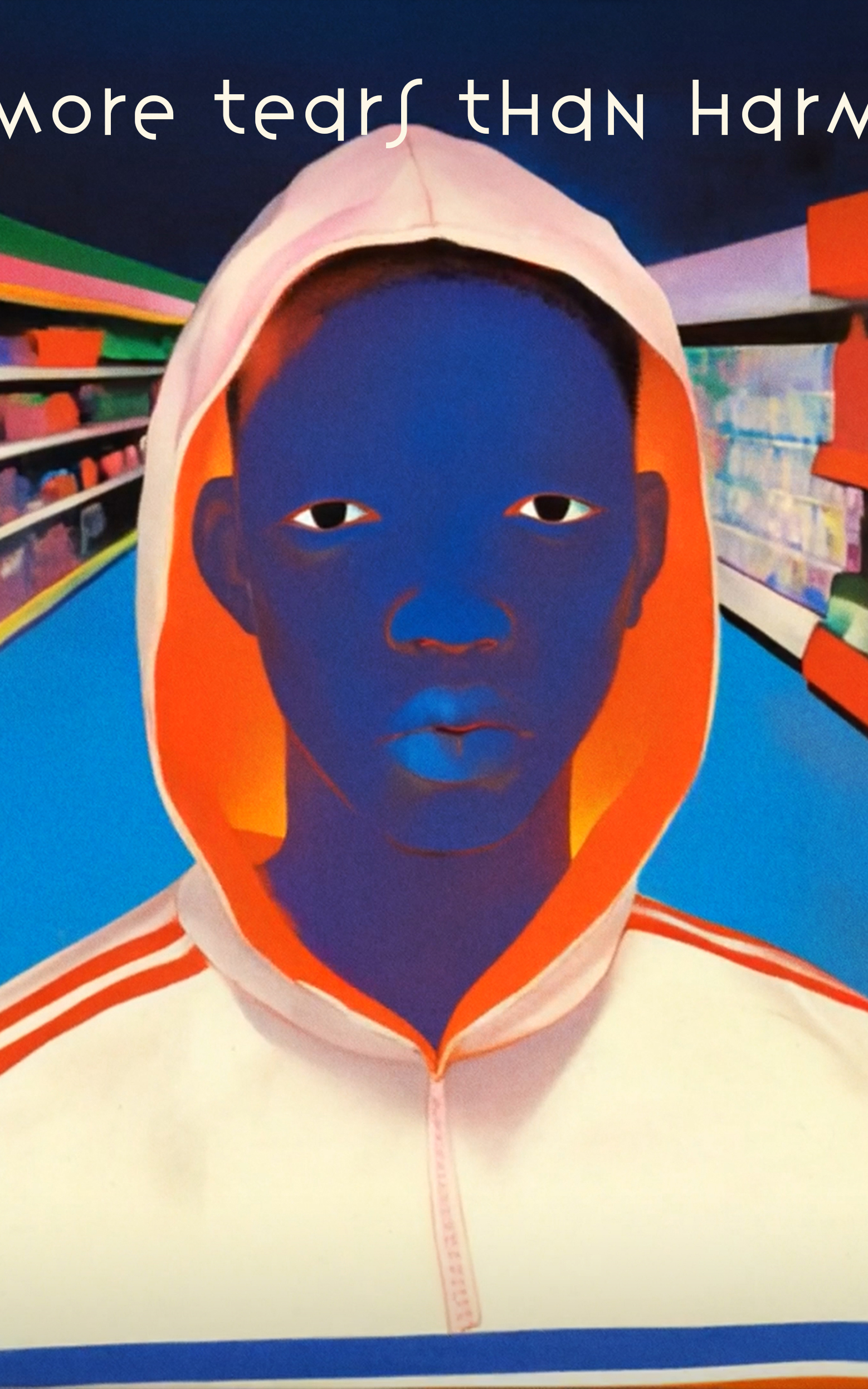
Herinarivo Rakotomanana – More Tears Than Harm – Madagascar/France

MORE TEARS THAN HARM

Herinarivo Rakotomanana


FILE SÃO PAULO 2026: Inter-creativity – Art and Technology – Animation
Electronic Language International Festival


More Tears Than Harm – Madagascar/France

A sensory collage of childhood memories from Madagascar with present-day impressions. Fleeting moments quietly echo within.

BIO

Herinarivo Rakotomanana’s practice unfolds between introspective fiction films and music videos rooted in the urban and Afro scenes, mostly with independent artists from Paris and Congo. Since the early days of GANs, the artist has been exploring the latent space of AI-generated imagery, weaving sensorial cinema and visual experimentation, from photorealistic film to animation.

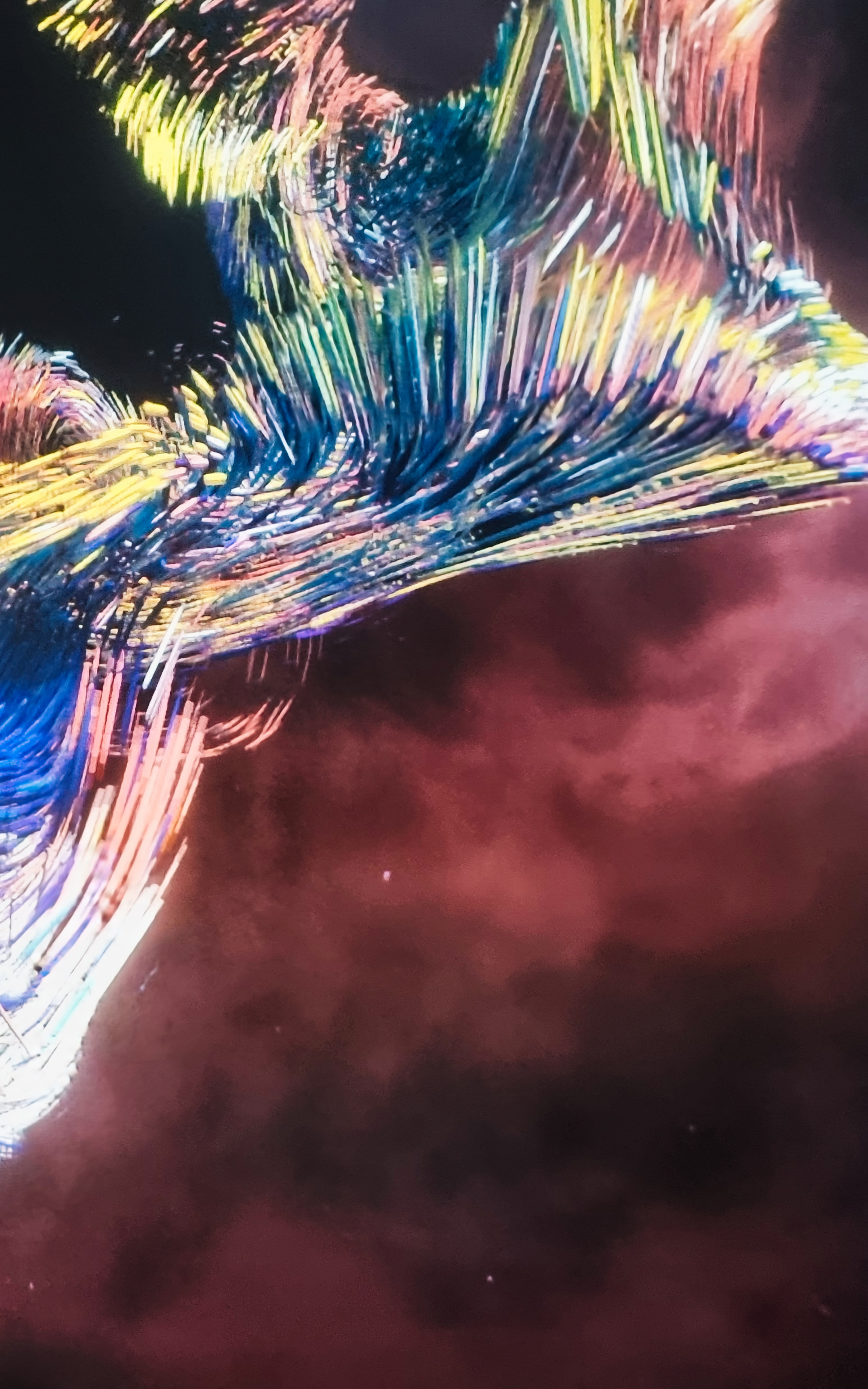
Parse/error – FEATHERS – France

FEATHERS

Parse/error


FILE SÃO PAULO 2026: Inter-creativity – Art and Technology – Installations
Electronic Language International Festival


FEATHERS – France

FEATHERS is a delicate encounter between human and digital, entering into dialogue with the viewer by reacting to their hand movements, modulating shape, rhythm, and colors. A gentle and immersive sensory pause, inspired by organic movements of nature, like schools of fish, bringing to life thousands of simple shapes evolving in symbiosis. It questions the place of the individual within a collective whole, how trajectories intersect, leave a trace, and influence one another.

BIO
Parse/Error (Fabien Bouchard) explores the boundary between art, design, and technology, recreating emotions from omnipresent data flows. With a background in biology and information technology, he works at the interface between technology and human sensitivity, questioning our relationship with the digital world through immersive installations, generative art, light sculptures, and real-time data.

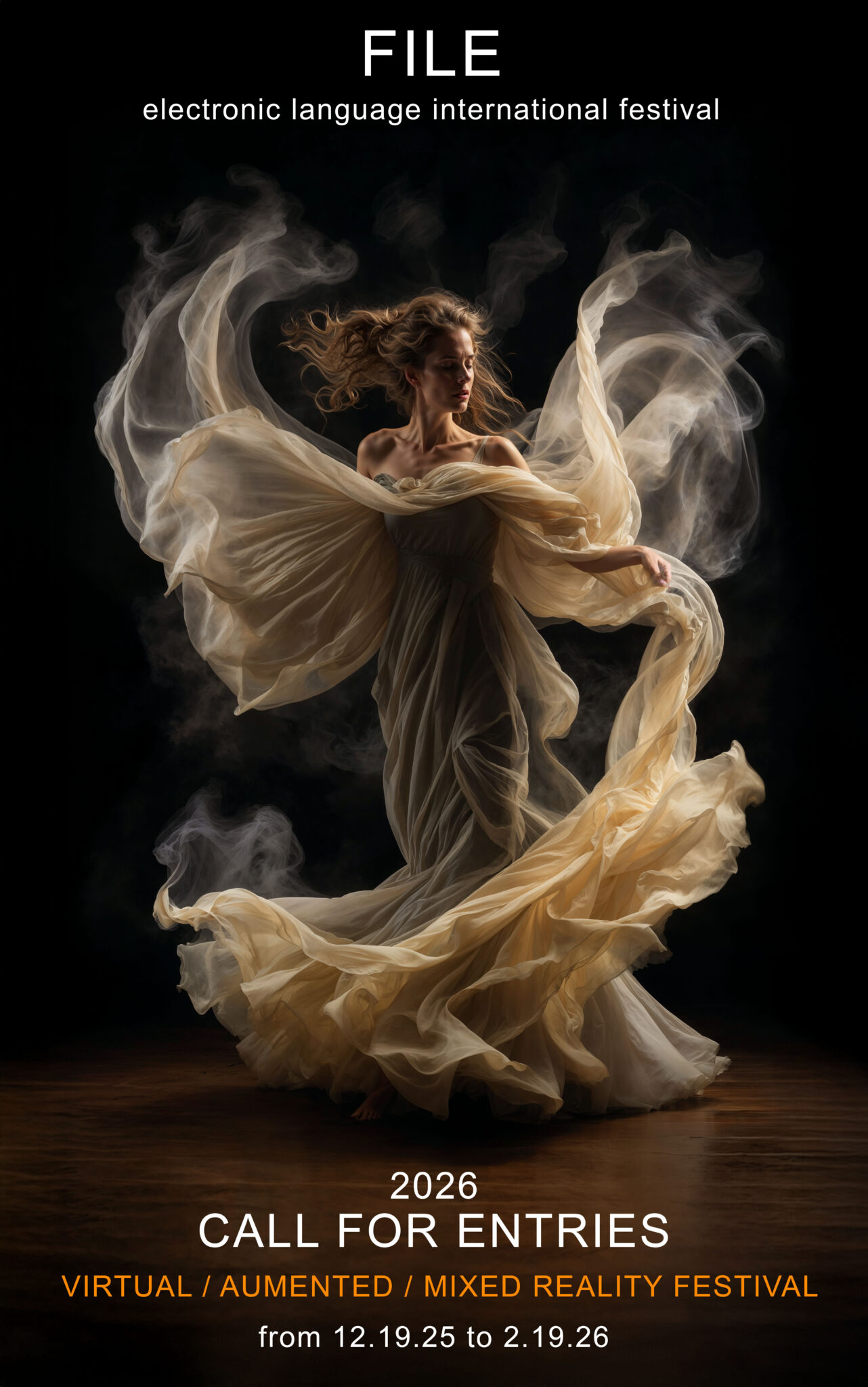
FILE 2026 – Registration Open for Art and Technology Festival

FILE 2026

Registration is now closed for participation in  FILE – Electronic Language International Festival 2026 , one of the most important events dedicated to art and technology. FILE invites Brazilian and international artists , as well as researchers, educators, and creators , to submit original artistic works and educational proposals — lectures, workshops, and training activities — focused on contemporary technological poetics.

Applications were open until February 19, 2026 .

With 26 years of experience , FILE is a non-profit cultural organization dedicated to promoting creation, research, and experimentation in Art and Technology , bringing together artists, scientists, programmers, and thinkers around exhibitions, events, and publications. The selected projects will be part of the FILE 2026 program, scheduled to take place at the FIESP Cultural Center in São Paulo, between August 19 and October 11, 2026,  with the possibility of parallel activities in other Brazilian states.

The call welcomes proposals in a wide variety of languages ​​and formats, intended for indoor or outdoor environments , in which the aesthetic experience emerges from the encounter between interfaces, data, space, and body . FILE 2026 seeks projects that propose new forms of perception, interaction, and critical and poetic reflection , expanding the debate on the aesthetic, cultural, social, and sensory impacts of contemporary technologies.

Access the registration form.

FILE 2026 – Registration Open for AR, VR and XR Festival – Art and Technology

FILE 2026

Augmented and Virtual Reality Festival: brings together immersive practices in simulated three-dimensional environments and expands the perception of reality through the superimposition of digital layers onto physical space.  The works use mobile devices, glasses, and spatial interfaces to insert virtual objects, narratives, and data into the real world or transport the public to sensory and interactive digital universes. These languages ​​challenge the boundaries between the material and the informational, exploring subtle or monumental interventions, creating multidimensionality in the environment. Issues of presence, body, narrative, memory, surveillance, and technological mediation are central, configuring a fertile field of aesthetic and critical investigation into contemporary ways of inhabiting and perceiving space.

Applications were open until February 19, 2026. Access  the application form.

FILE 2026 | GENERAL REGULATIONS

FILE 2026 – Registration Open for Electronic Music and AI Festival – Art and Technology

FILE 2026

Electronic Music and AI Festival: brings together interconnected fields of contemporary sound art, in which sound and technology operate as structuring elements of the aesthetic experience.  These approaches explore sound as spatial, sensory, and conceptual matter, articulating active listening, bodily presence, and synesthetic relationships between audio and video, through digital systems, generative intelligence processes, algorithms, field recordings, and audiovisual performances.

Applications were open until February 19, 2026. Access  the application form.

FILE 2026 | GENERAL REGULATIONS

FILE 2026 – Registration Open for LED SHOW Festival – Art and Technology

FILE 2026

LED SHOW Festival: a program dedicated to exhibiting digital works specifically designed for the Digital Art Gallery, an LED panel located on the facade of the FIESP building, Avenida Paulista, 1313.  The festival investigates the relationship between moving image, light, architecture, and the city, exploring the expressive potential of luminous devices as an artistic medium. The works dialogue with the three-dimensionality of the facades, the urban scale, and the flows of public space, transforming the building into a narrative and sensory support. By integrating technology, art, and urban context, the LED SHOW proposes immersive visual experiences that reconfigure the perception of collective space and expand the field of contemporary audiovisual art. Download the technical specifications of the LED Show file.

Applications were open until February 19, 2026. Access  the application form.

FILE 2026 | GENERAL REGULATIONS

COMPAGNIE MARIE CHOUINARD

Мари Шуинар
Golden Mean


– de profundis – soft virtuosity – state of grace – multiple intelligences conversing – the golden mean – time regained.

The beings performing on stage will appear to have come from a strange yet friendly future; in an absolutely scintillating acuteness of sensory perception, in which the underlying processes are laid bare, they allow us to listen to our senses in a serene and unprecedented way.

The Being is a field of exploration, a crucible of possibilities; here it is on the verge of a thought-provoking and amourous mutation

FILE SÃO PAULO 2025: SYNTHETIKA – Memo Akten & Katie Peyton Hofstadter

Boundaries

Memo Akten & Katie Peyton Hofstadter

FILE SÃO PAULO 2025: SYNTHETIKA – Art and Technology – Installations
Electronic Language International Festival


Boundaries – United States

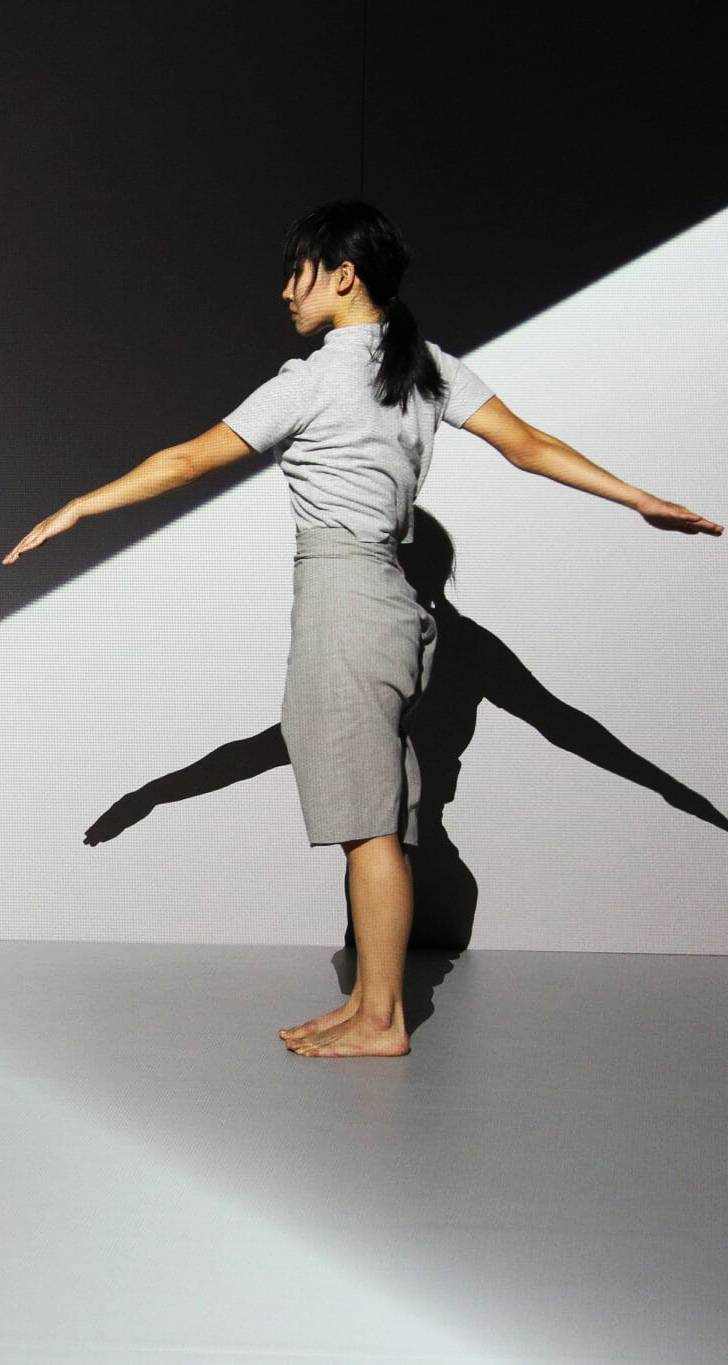
Boundaries is a monumental work that explores the illusion of separation—between self and other, body and environment, matter and mind—and reflects on the interconnectedness of all things, from microorganisms to atoms forged in extinct stars. Created with custom code, AI, computer vision, digital painting, and dance, the work unites technology and bodily expression in an intimate and contemplative experience.

BIO

Memo Akten, a Turkish artist, musician, and researcher based in Los Angeles, creates speculative simulations about the relationship between humans and machines. With a PhD from Goldsmiths, he is a pioneer in the creative use of neural networks under human control. Katie Peyton Hofstadter is an artist, writer, and curator. Her work investigates the intersections between embodiment, technology, and consciousness, exploring how technologies shape cultural narratives and sensory experience.

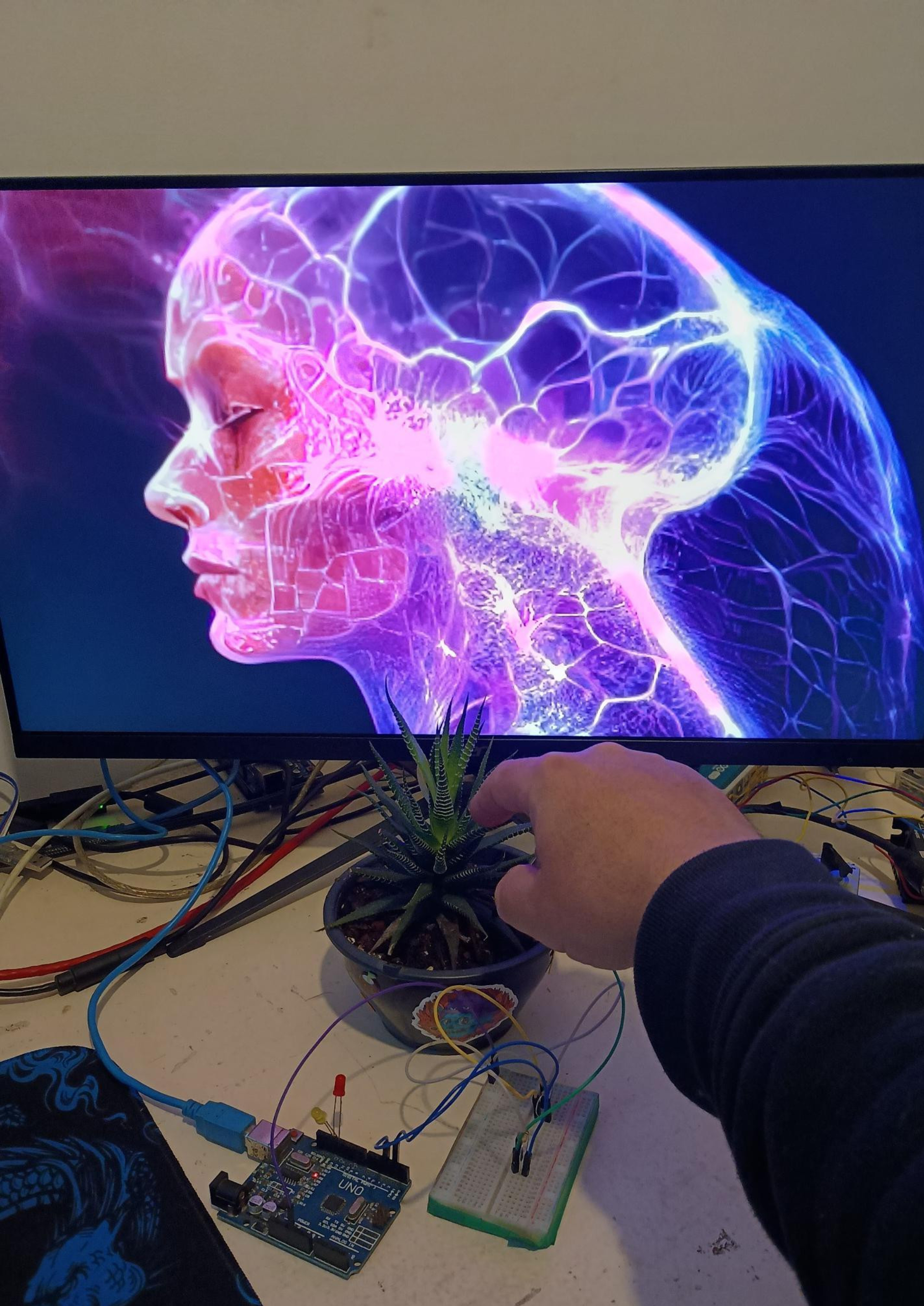
FILE SÃO PAULO 2025: SYNTHETIKA – David Da Paz

Technosoma — Sensitive Circuits in the Flesh of the Machine

David Da Paz

FILE SÃO PAULO 2025: SYNTHETIKA – Art and Technology – WORKSHOP
Electronic Language International Festival


Tecnosoma — Sensitive Circuits in the Flesh of the Machine – Brazil

In this workshop, participants will explore the fusion of body, technology, and artificial intelligence, creating interactive experiences with capacitive sensors and real-time generative models. Inspired by the concept of the Technosome—the machine as a sensitive, pulsating organism—the workshop explores how human touch can generate electrical signals that trigger audiovisual, auditory, and light responses. Microcontrollers (Arduino and ESP32), generative AI, and sensory interactivity will be covered.

BIO

Artist, researcher, and developer specializing in AI, machine learning, and IoT, he has worked for over 10 years with interactive art, generative systems, and sensory installations. He participated in the Artropocode residency (Spain) and the Spontaneous Combustion Residency (London), exploring cyberurban performances and locative media.

FILE SÃO PAULO 2025: SYNTHETIKA – Kenji Kojima

Begins with Chaos

Kenji Kojima

FILE SÃO PAULO 2025: SYNTHETIKA – Art and Technology – Video Art
Electronic Language International Festival


Begins with Chaos — Lascaux – United States

The environment is filled with chaotic information. Sensory organs build the world by extracting only certain elements from this chaos—such as visual and auditory data—acting like filters. It is as if the world is constructed using the “key” of a specific sense, decoding a hidden code. All information is recorded in binary form. The artist transforms this binary data into new formats, turning it into artworks. To do so, a one-time-use key was used to encrypt and decrypt the colors within the image data.

BIO

Kenji Kojima was born in Japan and moved to New York in 1980, during the rapid rise of personal computers. He began creating digital art, exploring the connections between perception, cognition, technology, music, and visual art. His works have been exhibited in New York City and at media art festivals around the world.

FILE SÃO PAULO 2025: SYNTHETIKA – CNDSD & Iván Abreu

Pre(N)atura | Fonocene

CNDSD & Iván Abreu

FILE SÃO PAULO 2025: SYNTHETIKA – Art and Technology – Shorts Films AI
Electronic Language International Festival


Pre(N)atura | Fonocene – Mexico

Speculative audiovisual project inspired by postnatural studies, designed to explore the era of the Fonocene—a period where both human and non-human sounds define sensory experiences and interspecies interactions. In this narrative, Chthulucene beings, hybrid creatures, emerge to challenge traditional forms of communication, using listening as a tool to activate our awareness of interdependence. 

BIO

Iván Abreu is a Mexican-Cuban interdisciplinary artist who uses science, design and technology to create works that question human interaction and social systems. Malitzin Cortés, (CNDSD), is a Mexican artist who explores the intersection of sound, technology and speculative architecture. Her work combines live coding, audiovisuals and critical narratives. 

FILE SÃO PAULO 2025: SYNTHETIKA – Tin&Ed

Deep Field

Tin&Ed

FILE SÃO PAULO 2025: SYNTHETIKA – Art and Technology – Installations
Electronic Language International Festival


Deep Field – United States

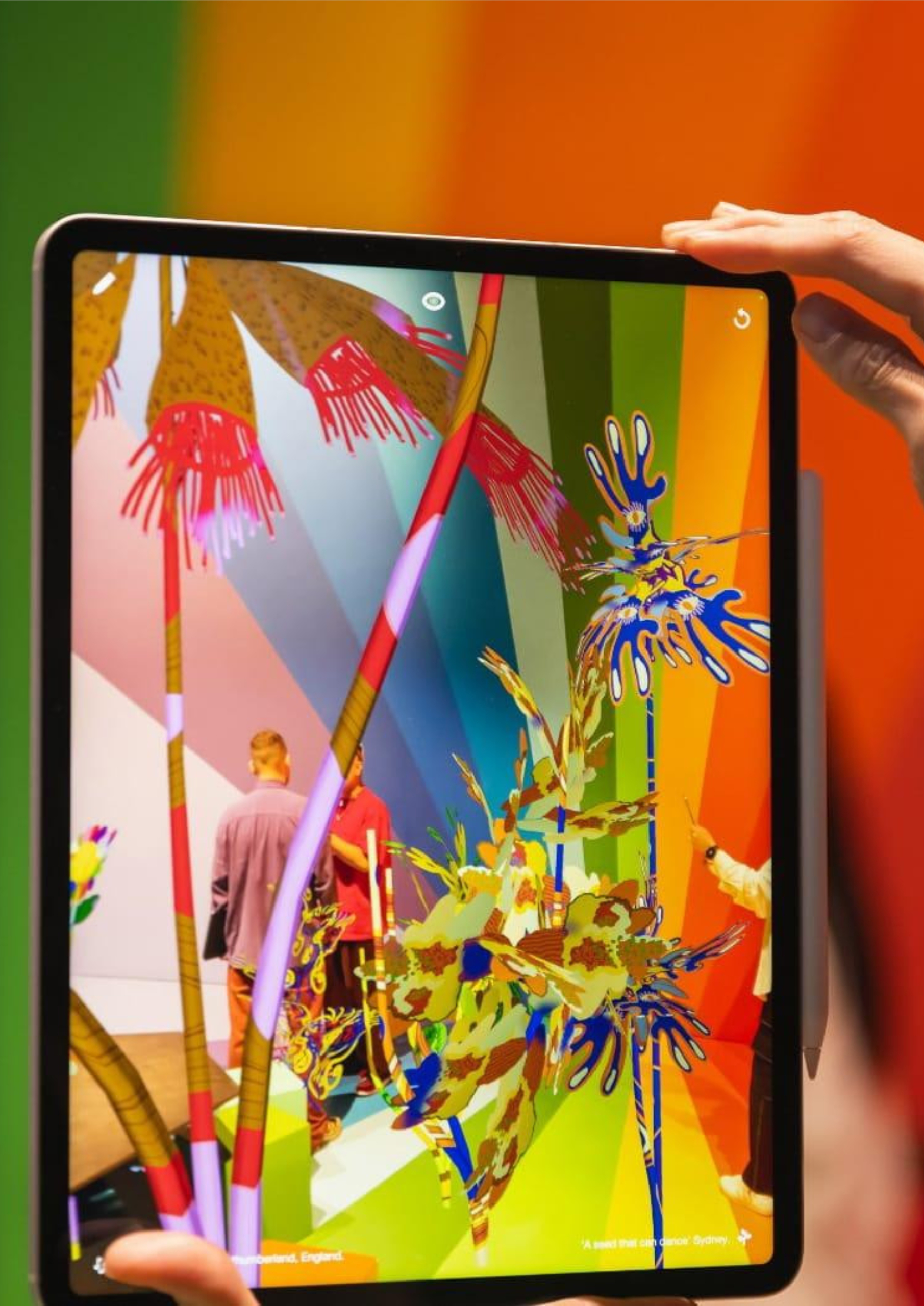
An augmented reality experience where visitors draw fantastical plants that instantly bloom into immersive 3D structures within the space. As people contribute their creations, a collective digital landscape begins to take shape. Layers of recordings of endangered, extinct, and elusive species compose a responsive and evolving soundscape, developed by The Listening Planet.

BIO

Tin & Ed are New York-based artists whose work explores the interconnection of life across biological, geological, and cosmic systems. Through speculative world-building, they reveal connections that transcend human time, spatial boundaries, and sensory thresholds. Their practice spans sculpture, immersive and interactive installations, creating environments that invite audiences to shift perspective and inhabit the world beyond the limits of human perception. Technology is not used as spectacle, but as a perceptual tool that makes the invisible felt and the distant intimately present.

Refik Anadol

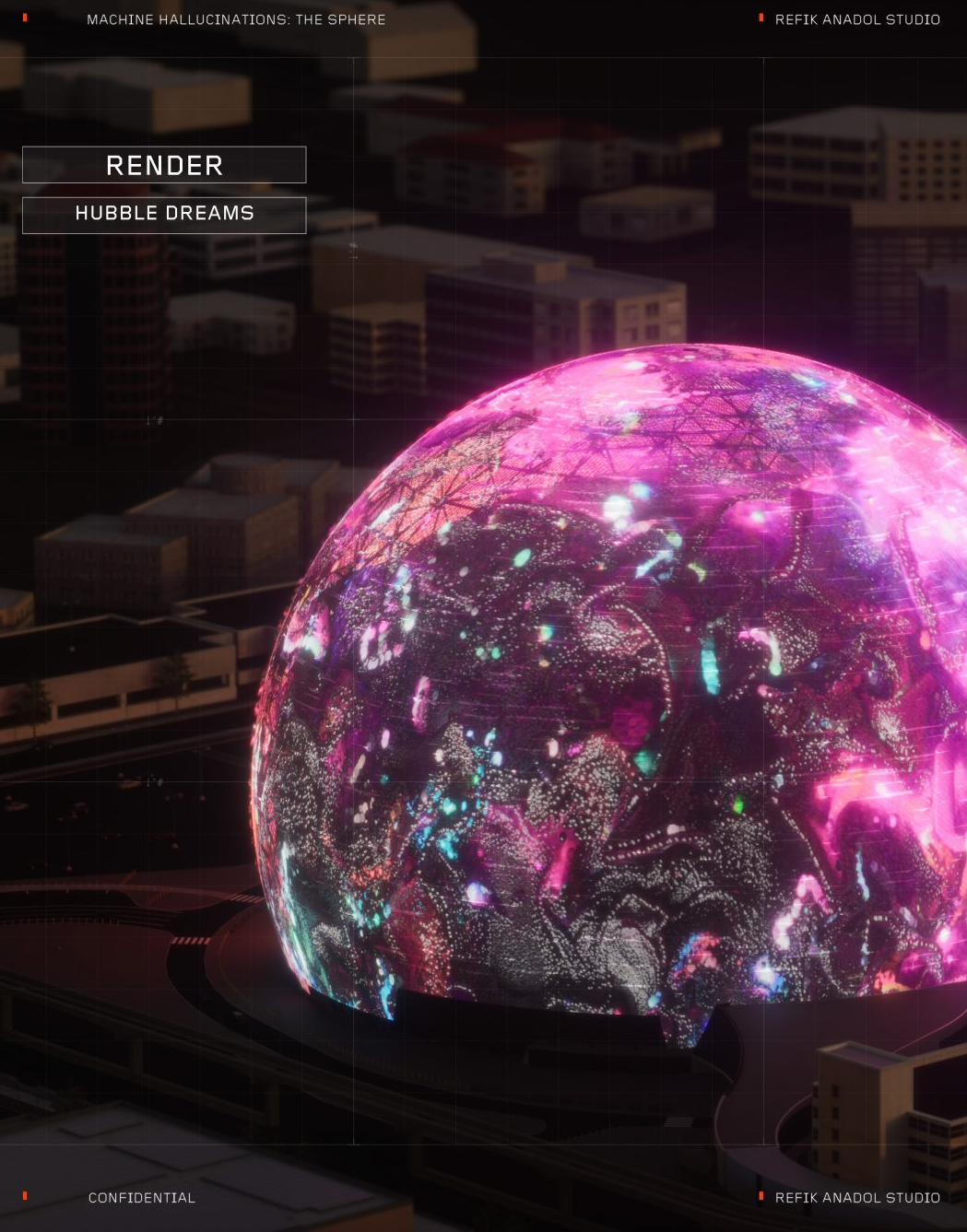
Machine Hallucinations — Sphere

The artwork presents a series of AI Data Sculptures that incorporates vivid pigments, shapes, and patterns, aiming to create a collective, meditative, and multisensory experience. This immersive experience simulates the rhythms of various environments and invites the visitors to imagine alternative realities constructed by invisible data movements around them.
Machine Hallucination: The Sphere features dynamic visualizations of data that are based on vast archives containing visual imageries of space and nature while celebrating the unique architecture of The Sphere. For this project, Anadol and his team used these themed datasets as the building blocks for the three distinct chapters of the artwork and trained a unique AI model with subsets of the collected image archives. After the training, when idle and unsupervised, the “machine mind” generates new aesthetic visuals and color combinations through unique lines drawn by algorithmic connections.

RAQUEL PAIEWONSKY

Guardarropia sensory insulation
siempre me ha interesado mucho como el cuerpo es un recipiente que contiene, a veces de manera misteriosa y sutil y otras veces de manera contundente, las vivencias que experimentamos a través de la vida.more…26

Ryoji Ikeda

micro | macro
micro | macro transforms Hall E in the MuseumsQuartier into an oversized world of moving images and sounds. In his immersive installation, multimedia artist Ryoji Ikeda creates a field of imagination between quantum physics, empirical experimentation and human perception. In collaboration with nuclear scientists at CERN, Ikeda has translated complex physical theories into a sensory experience. The Planck scale is used by scientists to denote extremely small lengths or time intervals. Concepts like space and time lose their meaning beyond this scale, and contemporary physics has to rely on speculative theories. And on art. Visitors to micro | macro enter a world of data, particles, light and sound that makes the extremes of the universe perceptible to the eye and ear. In the micro world we penetrate the smallest dimensions of the unrepresentable, while in the macro world we take off into cosmic expanses that allow us to experience the infinite space beyond the observable universe. In this maelstrom of data, an acoustic and visual firework bridges the gap between theoretical understanding and sensual perception.

Abel Enklaar and Amy Johnson

MetaSensorium은 멀리 있는 사람들 사이에 새로운 수준의 연결을 생성하는 웨어러블 기술의 능력에 대해 추측함으로써 전염병에 만연한 사회적 고립에 대응합니다. 분리, 단절, 타인과 물리적으로 존재하고 싶은 욕망에 대한 디자이너들의 자전적 경험에서 출발한 MetaSensorium은 가상 수단을 통해 물리적, 감각적 연결을 구성할 수 있는 방법에 대한 질문에서 출발했습니다. 그 결과 웨어러블은 두 명의 착용자가 멀리서 서로를 마주할 때 활성화되어 그들의 장치가 스펙트럼 포용으로 상대방의 존재감을 전달하도록 트리거합니다.
.
MetaSensorium started with the question of how to build physical and sensory connections through virtual media. As a result, wearable is activated when two users face each other from a distance, triggering their devices to convey each other’s presence with spectral inclusion.

Rachel Rossin

Stalking the Trace
Stalking the Trace est une installation VR multi-spectateurs qui se déroule dans une série d’enceintes, renforcées par l’audio, l’éclairage et les projections pour créer une atmosphère immersive sensorielle dans la galerie. Rossin utilise le mouvement du spectateur à travers l’espace comme méthode pour interroger le désir humain de contrôle et d’agence, et la notion de temps avec le sujet humain en son centre.
.
Stalking the Trace is a multi viewer VR installation, takes place within a series of enclosures, heightened by audio, lighting and projections to create a sensory immersive atmosphere within the gallery. Rossin utilises the movement of the viewer through the space as a method to interrogate the human desire for control and agency, and the notion of time with the human subject at its centre.
.
Stalking the Trace – это многопользовательская VR-инсталляция, действие которой происходит в серии ограждений, усиленных звуком, освещением и проекциями для создания чувственной иммерсивной атмосферы в галерее. Россин использует движение зрителя в пространстве как метод исследования человеческого стремления к контролю и свободе действий, а также понятия времени с человеческим субъектом в его центре.

ARTECHOUSE NYC

Celestial
Drawing on Pantone Color of the Year 2020 Classic Blue’s inspirational qualities, “Celestial” takes visitors on a journey beyond the skies. This technology-powered, multi-sensory installation transcends space and time— pushing the limits of our imagination and opening up a new realm of possibilities. Submerge yourself in the sights, sounds and sensations of Classic Blue.

Ann Veronica Janssens

Hot Pink Turquoise
Janssens’ works range wide, but they can all be described as sculptures that use the space as a stage for sensory activity. The simple white architecture of Louisiana’s South Wing becomes a resonating surface for Janssens’ both fragile and dizzying art – fragile because the works and their components are very simple while their effect elevates them above the material. Janssens herself often uses the word ‘fluid’ to describe the effect of her works – even for example when they consist of a 6.5 metre long iron girder polished at the top so the room is reflected and it is hard to fix your gaze on the object. Janssens seeks no control of either works or viewers, for as the Dutch theorist Mieke Bal has said, Janssens’ artworks are at one and the same time object and event. Many of the works in the exhibition can evoke the sensation of standing at the threshold of something. They stress transitions and transformations between on the one hand a material level – evoked by glass, colour, liquids and not least light – and on the other hand a dynamic experience of time and space.

Thomas Depas

Princess of Parallelograms
What will happen when our imagination itself is externalized in machines? Artificial intelligence constructs its own world-truth that is beyond our sensory perception. Generative Adversarial Networks (GANs) use algorithms to synthesize and generate images in a completely new way. These images have almost uncanny aesthetic characteristics, seeming to emerge from an ocean of data, a kind of pixel soup. Rather as if we were observing the emergence of artificial “thought.” The machine learns to understand the “essence” of a thing, be it an animal, the face of a celebrity or a body of text. It is then able to generate new images of this thing, including faces of celebrities who do not exist, mutant animals, or new texts. Eventually, AI will be capable of instantaneously and dynamically emulating all representations. The era of the optical machine and the capture of reality will then be at an end, supplanted by the era of machines that generate their own reality.

Whyixd

Through the Membrane
We define the space around us by observing and perceiving light and shadow. That is to say, our perception shapes our basic understanding of this sensory world, and hence the “reality” we believe in. If our experiential knowledge and awareness of space are challenged, would our definition of a “real phenomenon” also be changed? Through the Membrane utilizes optical polarizers to change how light passes through space. The installation does not rely on any electromechanical devices. Simply with creative use of material and structure, it presents a super-sensory experience in space where reality and illusion are inextricably juxtaposed.

Marshmallow Laser Feast

In the Eyes of the Animal
In the Eyes of the Animal, a journey through the food chain, is an artistic interpretation of the sensory perspectives of three British species. Created using Lidar scans, unmanned aerial vehicles (UAVs) or drones & bespoke 360° cameras, the piece is set to a binaural soundscape using audio recordings sourced from Grizedale Forest in the north of England.

Urbanscreen

Spektrum
SPEKTRUM is an interplay of light, music and the performers. The use of projections in a theatrical context was a very pleasant experience for us, for when projections are used indoors, they can be controlled so precisely that amazing changes of perspective are possible. Once the stage is perceived as a platform, once as a white cube, once the spatial perception itself is completely challenged. As the three different elements of the performance merge into one unified language, SPEKTRUM is able to be many things at once: playful and yet fierce, touching and yet disturbing. Less a narrative than an emotional and sensory experience SPEKTRUM challenges the mind of the spectator in a quite a poetic way.

Jonna Kina

Arr. for a Scene

“The sonic force of cinema’s most famous murder scene is investigated.Two foley artists recreate Hitchcock’s shower sequence, deconstructing the associations of aural signifiers, and the synesthetic power of sound. Jonna Kina contextualize this uncanny phenomenon — the “trans-sensory” quality of sound – within both Kina’s oeuvre, as well as other historical and contemporary works inside and outside the realm of art. In Arr. for a Scene (2017), Kina explores the structures and forms of cinematic sound – transforming an iconic image — the horrific shower scene in Alfred Hitchcock’s Psycho (1960) – into the sonic frequencies of quirky, seemingly innocent, domestic objects.” Melissa Ragona


Field.io

Spectra-3
The piece is the latest instalment of their ongoing Spectra series, a merging of physical and virtual sculptures that take inspiration from space, technology, and our relationships to them, to provide elegant and sensory experiences using sound, light, and reflection. Spectra-3’s design and movement is inspired by the radio telescopes of the Very Large Array (VLA) located on the Plains of San Agustin in New Mexico. The piece combines computer-aided design with real-time input from the public’s movements, to inform its physical actions as it rotates on motors, augmenting the space with the enchanting hues and patterns of reflected light and spatialized sound.

Wolfgang Buttress

The Hive  Kew Gardens

“The proposal involves the idea of ​​’temporary’ in an interesting way. It uses the temporary aspect of the installation to carefully engage with the purpose and short and long-term needs of the land,” said the judges. Originally designed for the Expo 2015 from Milan, The Hive was transferred to Kew Gardens, in central London, for two years, where it was part of an event space. Designed to give visitors a glimpse into the life of working bees, the pavilion was built with 169,300 individual aluminum components equipped with hundreds of LED lights. As the meadow surrounding the structure grows, several species of plants begin to flourish, bringing with them the sounds of real bees that enhance the multi-sensory experience of the pavilion.The aesthetic and symbolic installation represents its namesake, with the aim of showing visitors the importance of protecting the honeybee.

Karen Lancel and Hermen Maat

Kissing Data Symphony
Intimacy Data Symphony is a poetic ritual for intimate experience of Kissing and Caressing each other faces, multi-sensory and socially shared in public space of merging realities. In live experiments with Multi-Brain BCI E.E.G. head-sets, visitors are invited as Kissers (or Caressers) and Spectators. Brain activity of people kissing and caressing is measured and visualized in streaming E.E.G. data, real-time circling around them in a floor projection. Simultaneously, the Spectators brain waves are measured, their neurons mirroring activity of intimate kissing and caressing movements, resonating in their imagination. The Spectators brain activity data are interwoven in the data-visualization. Brain activity of all participants, mirroring each others emotional expressions and movements, in interpersonal and aesthetic ways, co-create an immersive visual, Reflexive Datascape.

Constanza Silva

Silverfish Stream
file festival

The sound generated by the friction of the metallic robots against the floor, like that created by the contact between man and machine, is registered, altered and played in real time by the spheres, each with its own tonality, and amplified in the room. What is generated is a stream of multisensory information (visual, auditive, tactile), natural environment for mechanic creatures.

localStyle (Marlena Novak & Jay Alan Yim) in collaboration with Malcolm MacIver

Scale
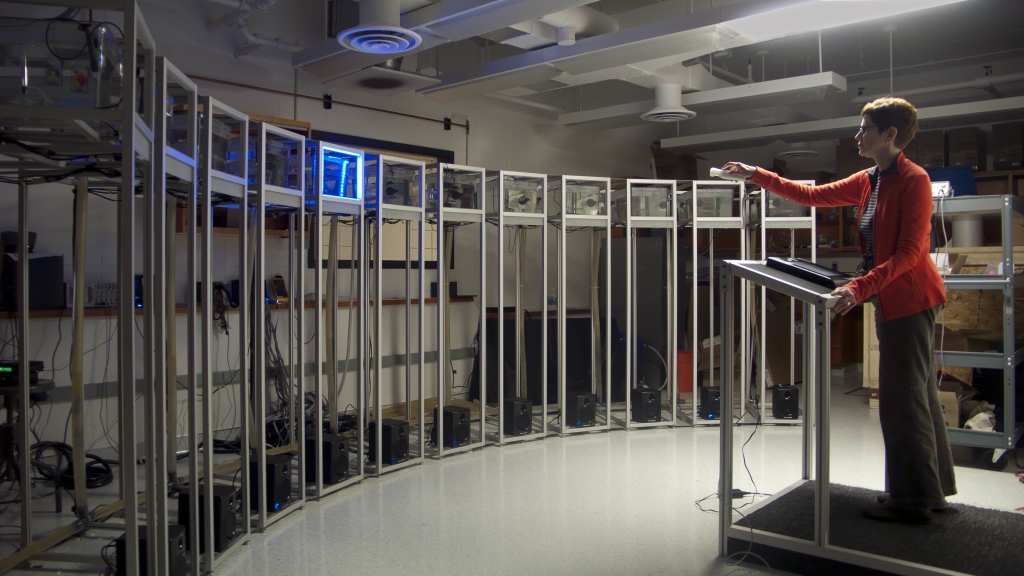
‘scale’ is an interspecies art project: an audience-interactive installation that involves nocturnal electric fish from the Amazon River Basin. Twelve different species of these fish comprise a choir whose sonified electrical fields provide the source tones for an immersive audiovisual environment. The fish are housed in individual tanks configured in a custom-built sculptural arc of aluminum frames placed around a central podium. The electrical field from each fish is translated into sound, and is thus heard — unprocessed or with digital effects added, with immediate control over volume via a touchscreen panel — through a 12-channel surround sound system, and with LED arrays under each tank for visual feedback. All software is custom-designed. Audience members interact as deejays with the system. Amongst the goals of the project is our desire to foster wider public awareness of these remarkable creatures, their importance to the field of neurological research, and the fragility of their native ecosystem.The project leaders comprise visual/conceptual artist Marlena Novak, composer/sound designer Jay Alan Yim, and neural engineer Malcolm MacIver. MacIver’s research focuses on sensory processing and locomotion in electric fish and translating this research into bio-inspired technologies for sensing and underwater propulsion through advanced fish robots. Novak and Yim, collaborating as ‘localStyle’, make intermedia works that explore perceptual themes, addressing both physical and psychological thresholds in the context of behavior, society/politics, and aesthetics.

Índice

Jonattas Poltronieri, Luis Mello, Pedro Venetucci & Rofli Sanches
Phantom Limb

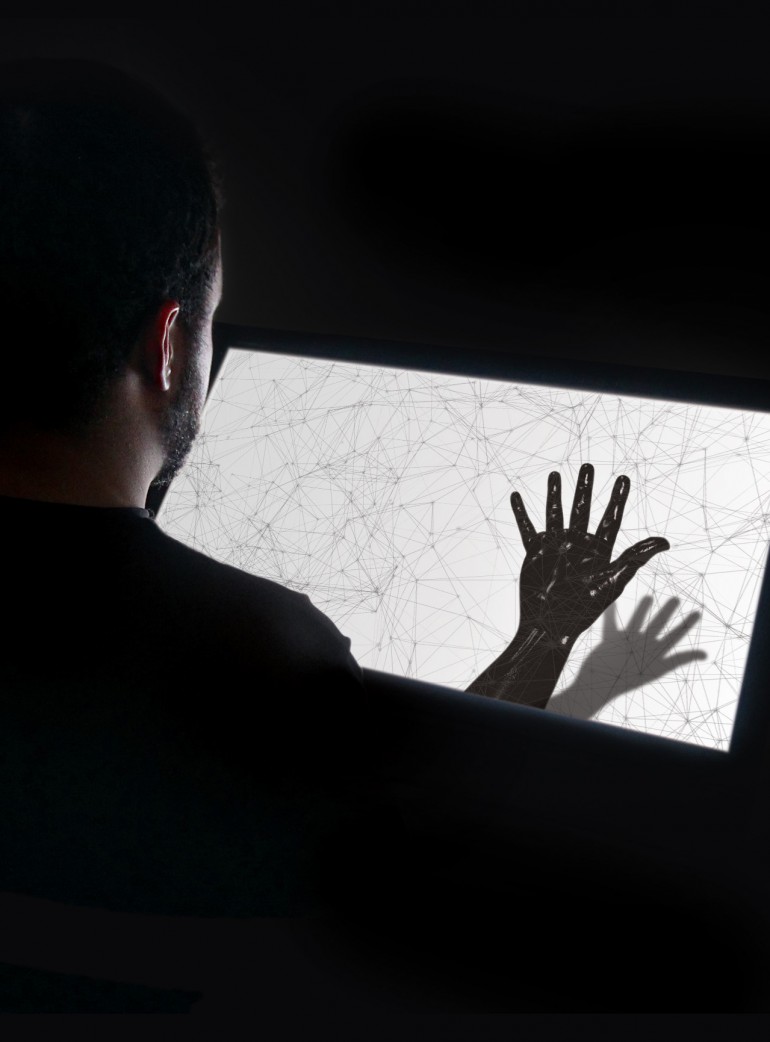
Just like the original box, the installation is a rectangular unit where the user inserts his arm and is urged to move it in different ways. The similarity with the original object disappears as, instead of having a mirror to provide the image that motivates the interaction, there is a screen that mediates the user’s view and the place where his arm actually is. The displayed image of the user’s arm can be reversed, distorted and coloured, among several modifications to simulate in a rich way the strangeness of not having control over a member, and to question whether what is seen is an accurate portrayal of the real body. Although deep and subjective, the topic addressed in this experience is easy and accessible in its interaction, offering various sensory feedbacks to the user. Through it, it is proposed that we experience and reflect upon the disconnection between thought and body, intention and action, sensation and reality.


FILE SAO PAULO 2015

UVA UNITED VISUAL ARTISTS

Harmonics
Harmonics challenges our perception of light and sound unfolding at great speed, an illusion of time blending. As the two kinetic sculptures speed up, rotating beams of light blend to form volumes of colour, while multiple discrete sounds become a major chord. Unable to process extremely fast information, our brain reads sequential sensory inputs as a single event in time. A disconnected reality perceived as a continuum, a harmonious whole.
VIDEO

Void

Abysmal
Abysmal means bottomless; resembling an abyss in depth; unfathomable. Perception is a procedure of acquiring, interpreting, selecting, and organizing sensory information. Perception presumes sensing. In people, perception is aided by sensory organs. In the area of AI, perception mechanism puts the data acquired by the sensors together in a meaningful manner. Machine perception is the capability of a computer system to interpret data in a manner that is similar to the way humans use their senses to relate to the world around them. Inspired by the brain, deep neural networks (DNN) are thought to learn abstract representations through their hierarchical architecture. The work mostly shows the ‘hidden’ transformations happening in a network: summing and multiplying things, adding some non-linearities, creating common basic structures, patterns inside data. It creates highly non-linear functions that map ‘un-knowledge’ to ‘knowledge’.

The OCR

Specimen Box

The OCR began work on Specimen Box in 2014 at the request of Microsoft’s Digital Crimes Unit. Microsoft’s Cybercrime Center monitors communications coming from hundreds of millions of PCs around the world that have become infected by botnet malware. Employing data sonification together with advanced visualization techniques, Specimen Box provides a configurable multi-sensory presentation of botnet signal activity in real time. It also features a multitouch gesture-based interface for navigating, exploring, selecting, and examining the billions of signals that have previously been collected. Users can access the collected signals based on their activity levels, the geographic locations of their sources, or their daily activity patterns over time, using clustering to group sources with similar behavior.

Andrew Schneider

YOUARENOWHERE
Conjuring a futuristic sort of shamanism, Andrew Schneider’s YOUARENOWHERE experiments with the virtues of sensory overload via quantum mechanics, parallel universes, and the “Missed Connections” board on Craigslist. Battling glitchy transmissions, crackling microphones, and lighting instruments falling from the sky, one guy on a mission and a tricked-out interactive new-media landscape merge to transform physical space, warp linear time, and short-circuit preconceived notions of what it means to be here now.

Ann Veronica Janssens

States of Mind
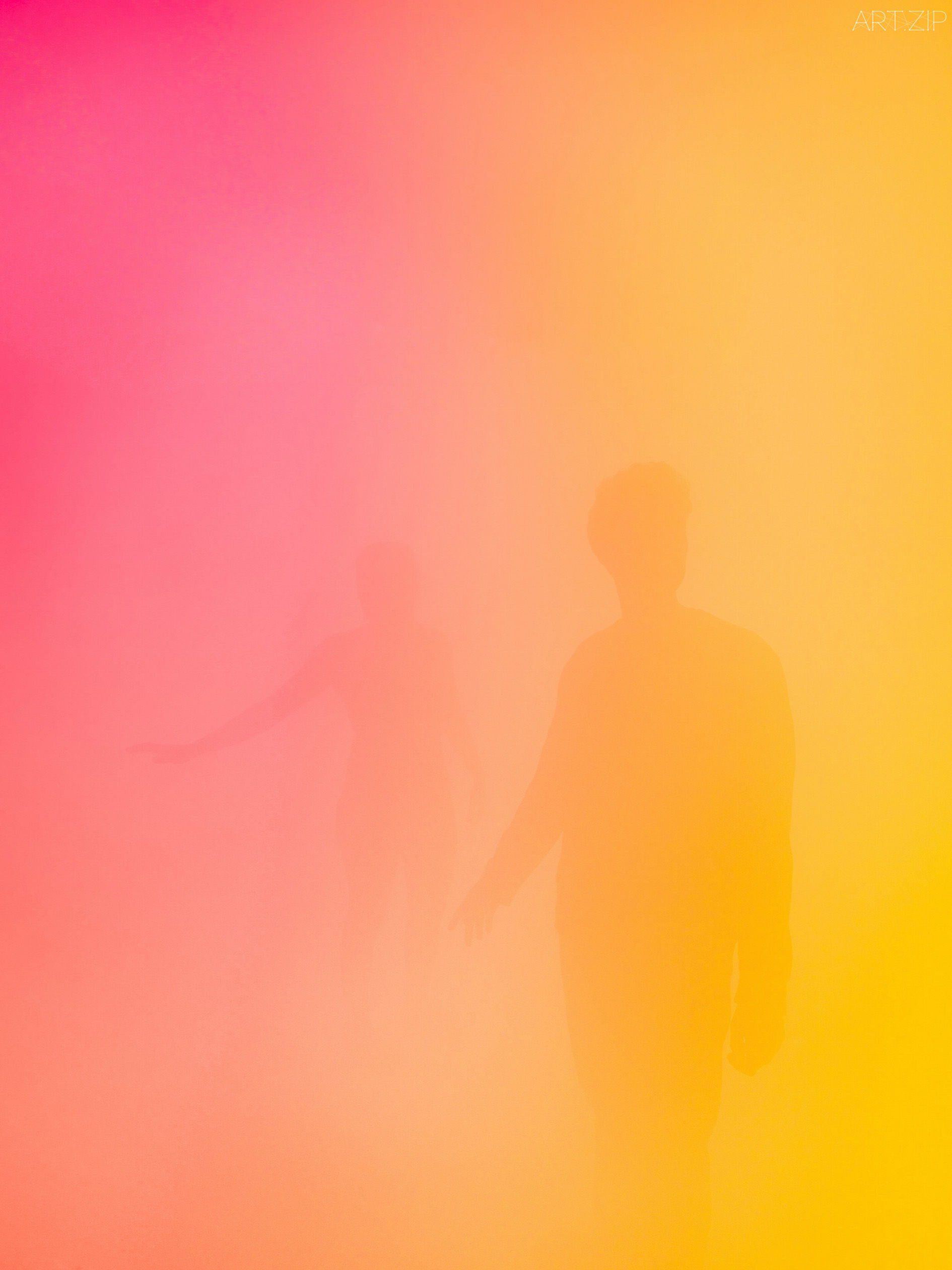
Brussels-based artist Ann Veronica Janssens’ practice is concerned primarily with light, colour, and perception. Janssens makes very few art objects. Instead, her work attempts to escape the ‘tyranny of objects’ and what she describes as their ‘overbearing materiality’. Since the late 1990s, Janssens has filled spaces with washes of coloured light or ‘haze sculptures’: dense, illuminated clouds of vapour that render surroundings unfamiliar and sensory perception altered.

MOUTH CTRLER

The project developed in collaboration with experts from different scientific and creative fields: Dr.Trevor Coward,Dr.Shama Rahman,Nuala Clooney,Matteo Rossetti
A collaboration with designer: Luca Alessandrini and Dr. Michelle Korda
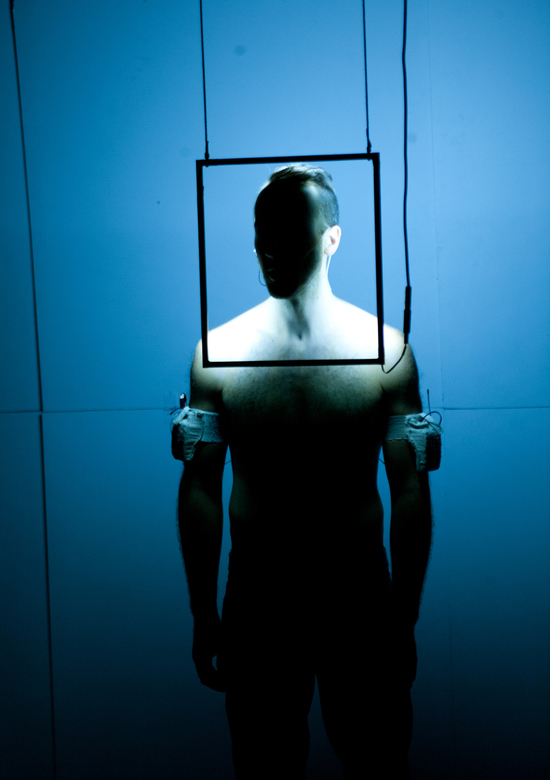
Mouth CTRLer is a transdisciplinary project combining scientific findings about the sensing and sensory capabilities of the oral cavity with prosthetics and interactive technologies. It investigates tangible technological possibilities for human enhancement inside the mouth in the form of wearable prototypes.

iris van herpen

sensory seas
runway LOOK 08

“The first threads of inspiration came from the Spanish neuroanatomist Ramón y Cajal. He wanted to uncover something that no one had yet understood.
Sensory seas’ holds a microscope over the indelible nuances between the anthropology of a marine organism, to the role of dendrites and synapses delivering infinite signals throughout our bodies. It enchants the attention of how two processes of torrential messaging exist in an uninterrupted state of flux. The collection consists 21 silhouettes that illustrate a portrait of liquid labyrinths, where dresses spill onto the floor in elegant train and pigments gather in cloudedpools of blues and lilac, leaking into one another like marble.” Joanna Klein

Philippe Parreno

ФИЛИПП ПАРРЕНО
فيليب بارينو
菲利普·帕雷诺
H {N)Y P N(Y} OSIS
H {N)Y P N(Y} OSIS includes a vast collection of sculptural lighting that suspends from the cavernous ceiling. glowing white shapes informed by the design of movie marquees hang above visitors in bundles and as single geometries, casting dynamic patterns on the ground. as a participant walks through the site, they meet video installations, projections, pianos, chairs, speakers and sounds, all which have been carefully orchestrated to produce an immersive, sensory, and constantly-unfolding creative environment.

Stine Deja

poster sky3

Deja’s work is so effective because it engages with the aesthetics of new technologies in order to critique their sociological, psychological, and physical impact on our embodied selves. At times idealistic and others damning, Deja avoids sorting technology into a
good-bad binary, but instead allows both ends of that spectrum to proliferate, allowing visitors to her supersensory exhibitions come to their own conclusion. She just asks “Technology enhances
and simplifies communication, but are we really more connected?”

WOW inc

Neuro Surge
Measuring about 9 meters in height, the work pierces through the atrium of the ‘shiseido’ ginza building from the first to the second floor and creates an unprecedented display of light with the use of new advanced fibers. WOW inc. attached 150 fibers with a .9 millimeter diameter to a laser module. The laser module transmits light through the fibers, which can be controlled by touch. The interactive work visualizes the complex transmission of sensory nerves and information into a dynamic light show.

ryoichi kurokawa

Unfold
Inspired by the latest discoveries in the field of astrophysics, unfold, an immersive and sensory installation seeks to translate into sounds, images, and vibrations, the phenomena surrounding the formation and evolution of stars and galaxies.

Hrafnhildur Arnardóttir

chromo sapiens
Icelandic artist Hrafnhildur Arnardóttir / Shoplifter has transformed a warehouse in Giudecca into a multi-sensory, cavernous environment with a cacophonous amount of her signature material, synthetic hair. Color, sound and irresistible textures guide visitors through three distinct chambers provoking an immersive experience of visual and auditory stimuli.