highlike

MARTA DI FRANCESCO – TIRESIAS – Italy / United Kingdom

TIRESIAS

MARTA DI FRANCESCO


FILE SÃO PAULO 2026: Inter-creativity – Art and Technology – VIDEO ART SHORT
Electronic Language International Festival


TIRESIAS – Italy / United Kingdom

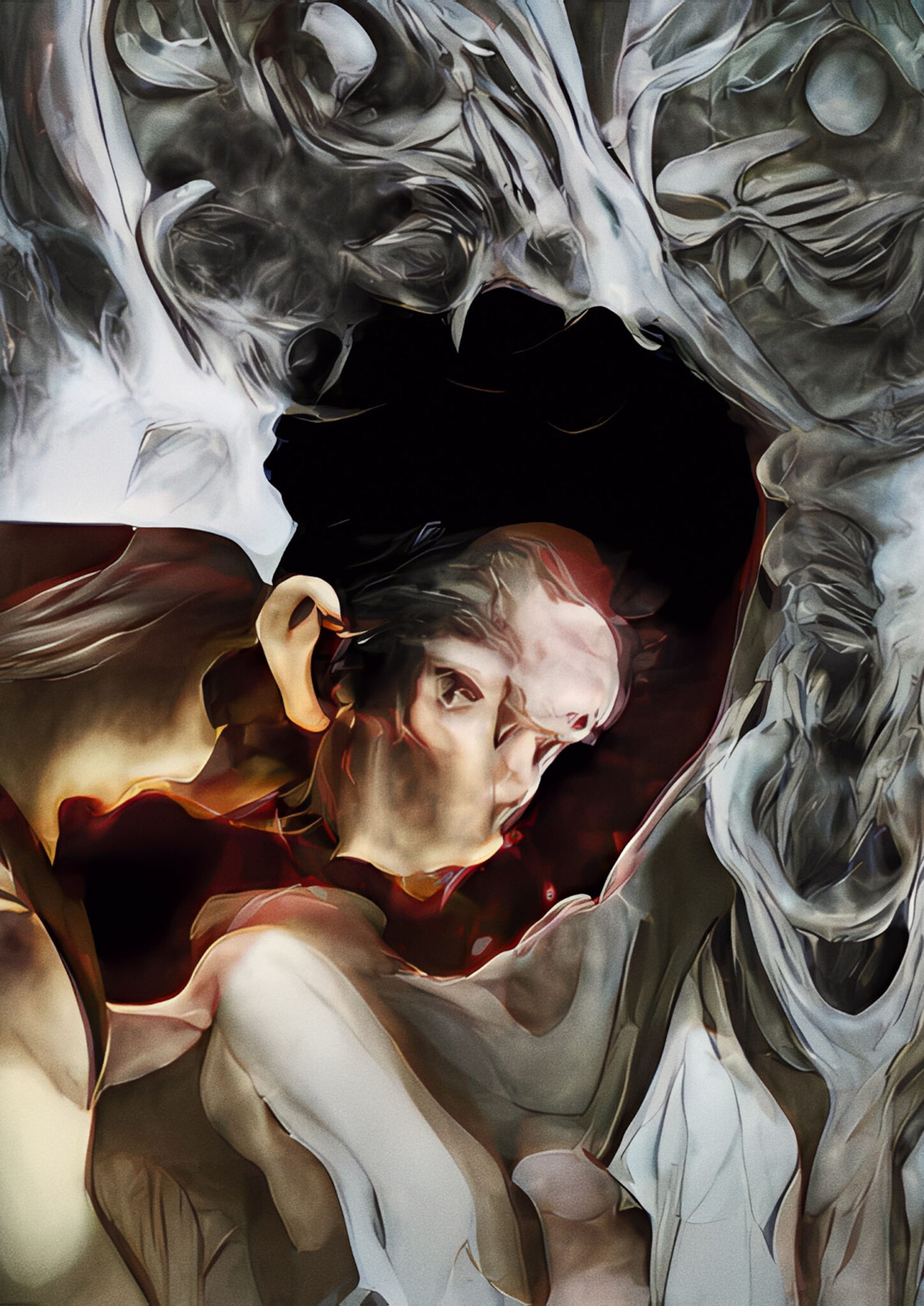
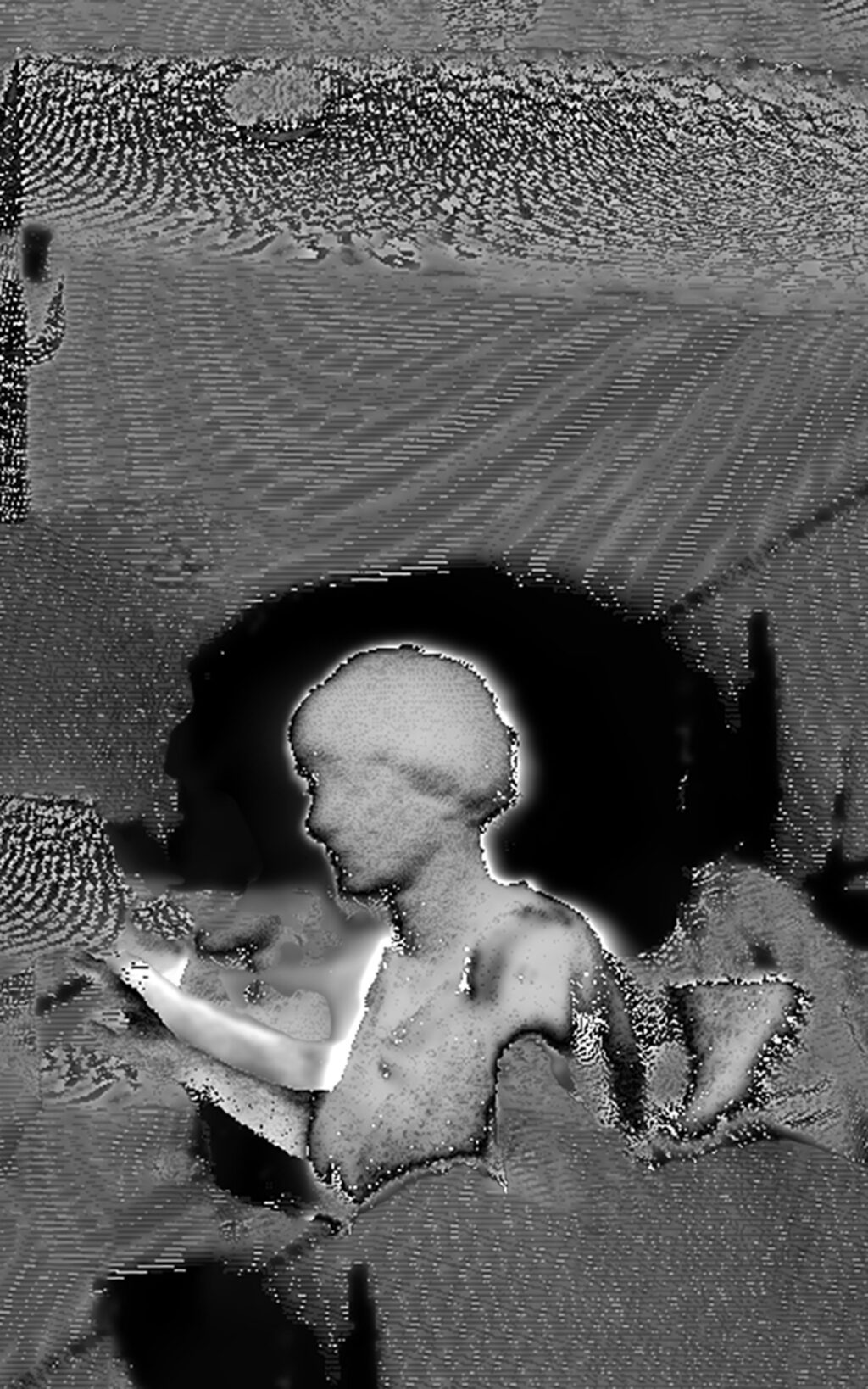
Tiresias is a meditation on blindness as spiritual blindness and lack of foresight. Inspired by the blind prophet of Greek mythology Tiresias, a liminal being who exists as man and woman, between humankind and gods, blindness and sight, the piece critically examines AI recursive mirror by reimagining Tiresias, who can no longer see in darkness because it is replaced by recursion, self-replication, and infinite feedback loops of mirrored images. Blindness is not the absence of sight but its saturation.

BIO

Di Francesco is a London-based artist merging poetics with code across video, text and installation. Her practice takes an existential, critical approach to the human condition in machine-mediated reality. Through meticulous processes, generative and hand-painted frame by frame, she reclaims agency in temporality and time consciousness as forms of resistance against speed, acceleration, distraction.

GOTTFRIED HAIDER

hidden in plain sight


“hidden in plain sight” é uma meditação sobre a natureza da programação de computador. Enquanto um game de computador roda, tanto o jogo quanto o compilador que transforma código legível de programa em código executável de máquina estão sendo compilados. Esse ciclo sem fim e recorrente cria uma miríade de ambientes em 3D de curta duração, que têm o emblema do processo inscrito em suas paredes. O trabalho é basicamente uma peça de software (Quake III Engine modificado, compilador) que roda por conta própria, compilando incessantemente e executando mundos virtuais. Este maquinema é um vídeo gravado de uma dessas interações.

THILO FRANK

Тило Франк
the phonenix is closer than it appears


Thilo Frank (* 1978) lives and works in Berlin. His installations, sculptures and photo series lead the viewer into situations creating interactive physical dialogues. Physical phenomena and environments of our daily life are interpreted in a new context emphasizing our perception of light, space and motion in a poetic and playful way.

His works ask of a visitor to question one‘s relation to action in space and the consequences of one‘s action – an intimate experience.

The viewer functions as a coproducer of the work, perceiving his or her relational aspect as a instrument of measurement. The cognitive aspect in its work is enacted by the viewer, who through his physical reaction to the work, reflects himself to it. Through his physical interaction – the viewer completes the work.

Through the use of everyday technologies Thilo Frank explores the conventions of sight and movement and their visualization. Examination produces a type of measuring standard through which even seemingly random events are viewed equally. Through his works, an attempt is made to illustrate the optical coefficient and with this to analyse the space.

FILE SÃO PAULO 2025: SYNTHETIKA – Gabe Michael

Unknown

Gabe Michael

FILE SÃO PAULO 2025: SYNTHETIKA – Art and Technology – Cine SYN
Electronic Language International Festival


Unknown – United States

Unknown follows a misunderstood creature haunting the halls of an art museum. Its impressionistic visual style earned the short film the Best Art Direction award at Runway Gen:48 – 2nd Edition.

BIO

Gabe Michael is an award-winning filmmaker and creative technologist specializing in artificial intelligence. He serves as Vice President and Executive Producer of AI at Edelman, advising teams, optimizing production workflows, and exploring creative innovation with AI. With extensive experience as a director and producer, he collaborates with major studios, brands, and digital platforms, and shares his insights on LinkedIn, YouTube, and in UCLA classrooms.

Music: ARTLIST

Iregular

Voices In Your Head

There is no better way to measure the influence we exert upon humans than through making them change their behaviour in real time. This is what Iregular’s digital interactive artworks are all about: they attempt to create a language so clear and so universal that it allows the communication between the interactive art piece and the human to flow intuitively every time, without any instruction in sight, as if guided by a voice running through the head.

QUBIT AI: Lukas Radavicius

Architecture Concepts Created by AI – Can AI Become an Architect?

FILE 2024 | Architectural Synthetics
International Electronic Language Festival
Lukas Radavicius – Architecture Concepts Created by AI: Can AI Become an Architect? – Lithuania

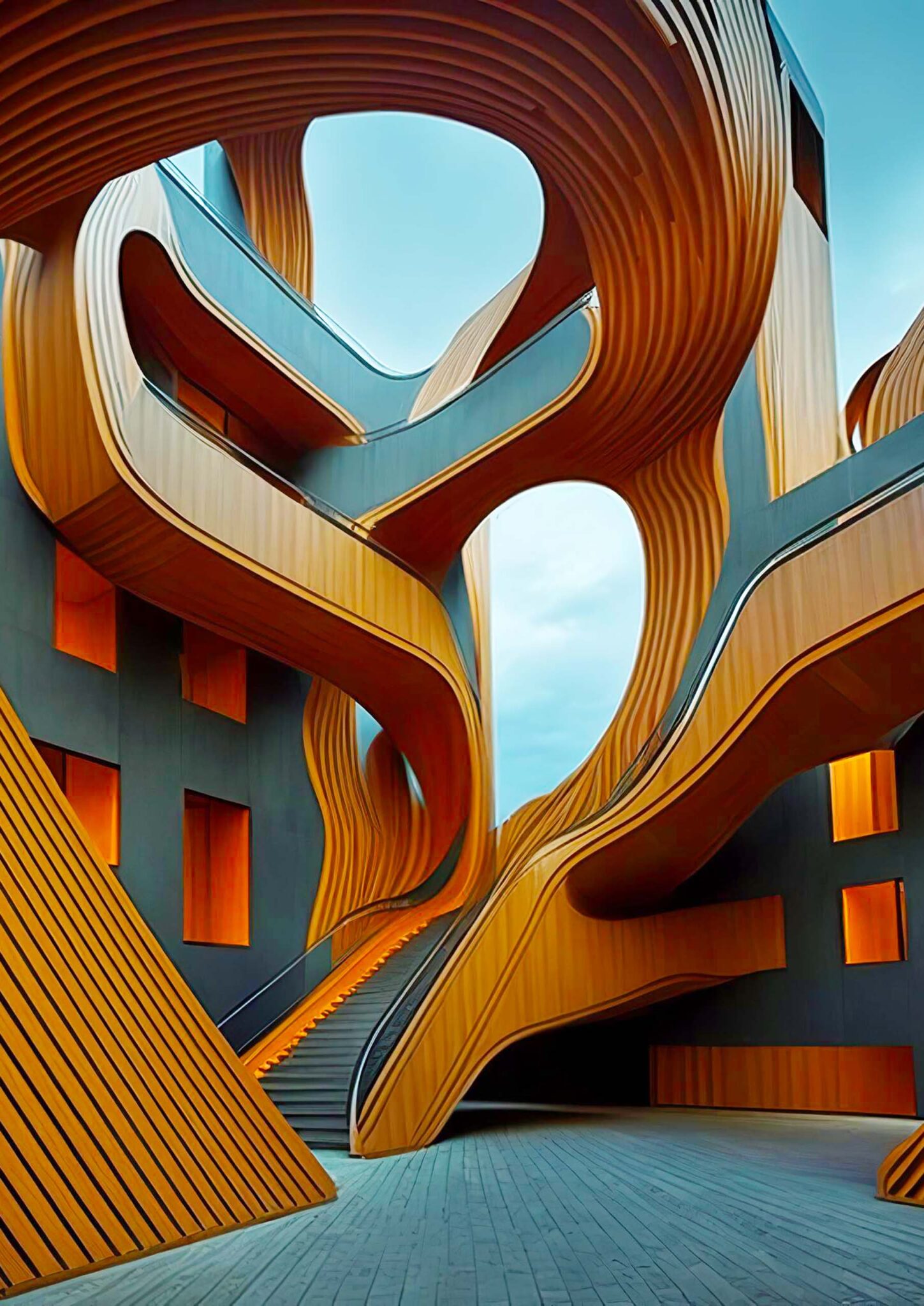
In recent years, artificial intelligence technologies have advanced significantly in the art world, becoming a vital tool for artists in a variety of disciplines, including architecture. Lukas Radavicius has created videos demonstrating the current capabilities of AI in architecture, showcasing innovative designs that offer insights into the potential of AI to shape the future of architecture.

Bio

Lukas Radavicius, born in Kaunas, Lithuania, is a passionate visual artist who began his career in architecture before moving into graphic design and 3D graphics. With a degree in architecture from the Kaunas Academy of Art, he remains active in design-related fields while exploring the fascinating world of AI art in his spare time.

QUBIT AI: Lukas Radavicius

Architecture Concepts Created by AI: Artificial Intelligence Modern Architecture

FILE 2024 | Architectural Synthetics
International Electronic Language Festival
Lukas Radavicius – Architecture Concepts Created by AI: Artificial Intelligence Modern Architecture – Lithuania

In recent years, artificial intelligence technologies have advanced significantly in the art world, becoming a vital tool for artists in a variety of disciplines, including architecture. Lukas Radavicius has created videos demonstrating the current capabilities of AI in architecture, showcasing innovative designs that offer insights into the potential of AI to shape the future of architecture.

Bio

Lukas Radavicius, born in Kaunas, Lithuania, is a passionate visual artist who began his career in architecture before moving into graphic design and 3D graphics. With a degree in architecture from the Kaunas Academy of Art, he remains active in design-related fields while exploring the fascinating world of AI art in his spare time.

QUBIT AI: Lukas Radavicius

Architecture Concepts Created by AI: Architecture Concepts Made by AI

FILE 2024 | Architectural Synthetics
International Electronic Language Festival
Lukas Radavicius – Architecture Concepts Created by AI: Architecture Concepts Made by AI – Lithuania

In recent years, artificial intelligence technologies have advanced significantly in the art world, becoming a vital tool for artists in a variety of disciplines, including architecture. Lukas Radavicius has created videos demonstrating the current capabilities of AI in architecture, showcasing innovative designs that offer insights into the potential of AI to shape the future of architecture.

Bio

Lukas Radavicius, born in Kaunas, Lithuania, is a passionate visual artist who began his career in architecture before moving into graphic design and 3D graphics. With a degree in architecture from the Kaunas Academy of Art, he remains active in design-related fields while exploring the fascinating world of AI art in his spare time.

QUBIT AI: Robert Seidel

HYSTERESIS

FILE 2024 | Aesthetic Synthetics
International Electronic Language Festival
Robert Seidel – HYSTERESIS – Germany

HYSTERESIS intimately weaves a transformative fabric between Robert Seidel’s projections of abstract drawings and queer performer Tsuki’s vigorous choreography. Using machine learning to mediate these delayed re-presentations, the film intentionally corrupts AI strategies to reveal a frenetic, delicate and extravagant visual language that portrays hysteria and hysteresis in this historical moment.

Bio

Robert Seidel is interested in exploring abstract beauty through cinematic techniques and insights from science and technology. His projections, installations and award-winning experimental films have been presented at numerous international festivals, art venues and museums, highlighting his innovative approach to visual art.

Credits

Film: Robert Seidel
Music: Oval
Performer: Tsuki
Graphics: Bureau Now
5.1 Mixing: David Kamp
Support: Miriam Eichner, Carolin Israel, Falk Müller, Paul Seidel
Financing: German Federal Film Board

QUBIT AI: Eduardo Reck Miranda

Sounding Qubits

FILE 2024 | Quantico
International Electronic Language Festival
Eduardo Reck Miranda – Sounding Qubits – Brazil

Although he has learned classical musical instruments since childhood, Eduardo Miranda’s favorite tool for composing is the computer. The researcher has been delving into artificial intelligence and innovative computing methods for compositing for some time, as they offer fresh insights and ideas beyond his own.

A quantum computer deals with information encoded as qubits. A qubit is to a quantum computer what a bit is to a digital one: a basic unit of information. In hardware, qubits exist in the subatomic world. They are subject to the laws of quantum mechanics.

Quantum computers are like super-powered versions of classical digital computers. While a digital computer processes data in a linear, step-by-step fashion, a quantum computer can explore many possibilities at once.

Operating a quantum computer requires different ways of thinking about encoding and processing information. This is where composers can benefit greatly. This technology is destined to facilitate the development of unprecedented ways of creating music.

Bio

Composer who works at the intersection of music, science and new technologies. His background as an artificial intelligence scientist and classical composer with early involvement in avant-garde pop music informs his distinctive music. He has composed for BBC Radio 3, BBC Concert Orchestra, BBC Singers and Scottish Chamber Orchestra. He is a professor at the University of Plymouth and a research associate at Quantinuum, where he explores music composition with quantum computers.

EVERYWARE: HYUNWOO BANG & YUNSIL HEO

Cloud Pink
FILE FESTIVAL

The installation invites participants to “touch the pink clouds” drifting on a giant fabric screen suspended in the air.
Lying down on a hill with your pupils filled with the endless blue sky, perspective of your eyesight suddenly gets distorted and clouds drift at the tip of your nose. You stretch your arms up to the sky to touch the clouds but can’t reach. Another world right above your head, clouds.

FUJIKO NAKAYA

中谷芙二子

fog sculptures
ok-offenens kulturhaus linz

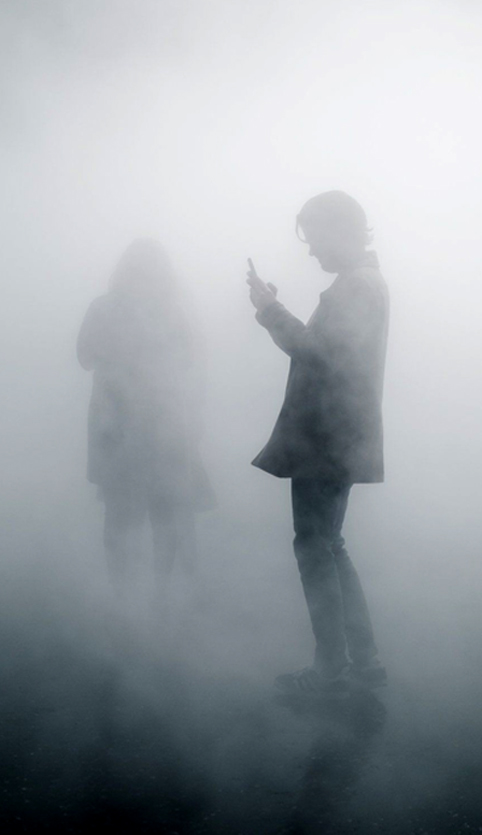
In 1970 Nakaya created her first fog sculpture when commissioned by the group Experiments in Art and Technology (E.A.T) to make a work for the Pepsi Pavillion of the Osaka World Exposition. In creating a work of white mist enclosing the building, Nakaya became the first artist to have used fog as a sculptural medium. E.A.T is an organisation devoted to facilitating working relationships between artists and engineers. Nakaya worked with American engineer Thomas Mee to create the fog for her Osaka commission, the technique for which she has continued to use, with minor moderations, for her subsequent fog sculptures since.Whilst Nakaya has also worked in film and video, it is her use of fog for which she is best known. Nakaya has used pure-water fog to create installations, performances, stage-sets and environmental park designs, often collaborating with other artists or with performers, choreographers and composers. Nakaya’s interest in fog has developed from its relation to our visual sense. In a thick fog we become disorientated, frustrated at our inability to see. In this way, Nakaya’s sculptures activate our other senses, to compensate for our loss of sight.

ARTECHOUSE NYC

Celestial
Drawing on Pantone Color of the Year 2020 Classic Blue’s inspirational qualities, “Celestial” takes visitors on a journey beyond the skies. This technology-powered, multi-sensory installation transcends space and time— pushing the limits of our imagination and opening up a new realm of possibilities. Submerge yourself in the sights, sounds and sensations of Classic Blue.

New Media Tribe

Bloom
BLOOM is kinetic laser and sound installation by TRIBE investigating illusions of stillness unfolding at speeds unable to be registered by human sight. It is named for intangible flower-like shapes produced by moving lasers filling all the space and bringing new dimension to surroundings.

Stine Deja

Synthetic Seduction

Foreigner

Stine Deja and Marie Munk

The title of the exhibition was inspired by Sherry Turkle’s theory of how technology seduces us, making emotions “easy” by offering human relationships without the complexity of being together ‘face to face’. But if machines can become attentive and emotional, what is left to distinguish us as human beings? We are facing a paradigm shift in how we understand ourselves physiologically, as data and algorithms, and are being forced to question the role of our biological body. As the relationship between artificial and human intelligence becomes increasingly intermingled in our everyday lives, Synthetic Seduction provides immersive and timely insight into the limits of human empathy and intimacy. We are glad at SixtyEight Art Institute to host such a space for thought. We hope it will start conversations and maybe even encourage some intimacy among our visiting audiences in the coming weeks.

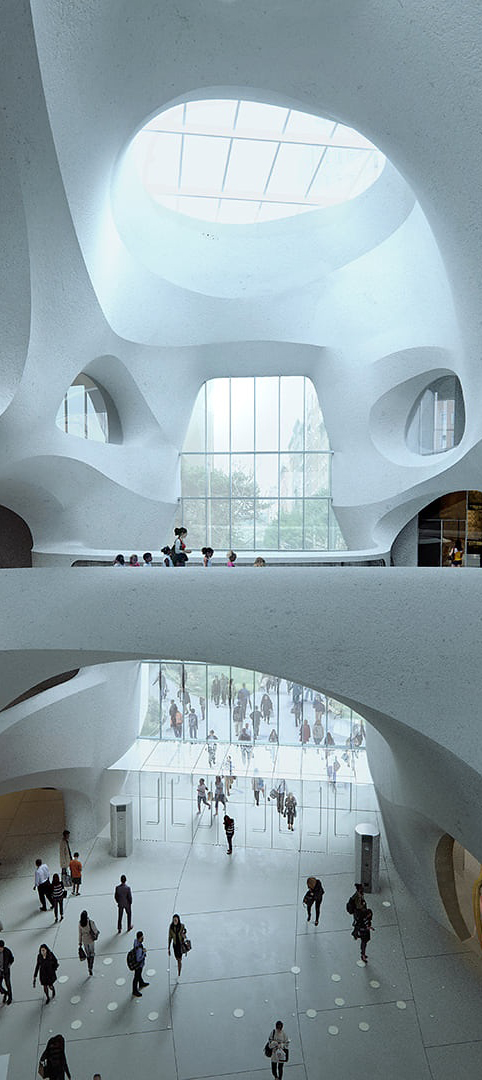
Jeanne Gang

American Museum of Natural History
Richard Gilder Center for Science, Education, and Innovation
“We uncovered a way to vastly improve visitor circulation and museum functionality, while tapping into the desire for exploration and discovery that is so emblematic of science and also such a big part of being human. Upon entering the space, natural daylight from above and sight lines to various activities inside invite movement through the Central Exhibition Hall on a journey toward deeper understanding. The architectural design grew out of the museum’s mission.” Jeanne Gang

Mark Dorf

Contours
Contours proposes a distancing through de-familiarization of what has become concrete by way of image and language. Active contradiction and abstraction are central to the works through a mixture of variables often seen in opposition or as dis-harmonious. Through the presentation of puzzling symbols, both familiar and skewed, a legible illegibility is produced: information being transmitted, but the immediate read obscured and hidden from sight. Through this, current sight-lines are made visible allowing for critical reflection, while simultaneously revealing the flexibility of language and image in order to engender the possibility of alternative understandings of the world: a crucial consideration in context of our contemporary global social and political shifts.
video

EMILIJA ŠKARNULYTĖ

Mirror Matter
In the neutrino observatory rendered in Mirror Matter, slow panning movement gives a sense of the immensity of the nearly 13,000 photo-multipliers that inhabit this strange vessel – their ‘eyes’ engineered to watch light. Another frame depicts the Hadron Collider at CERN; its architecture envisioned through lidar scans, producing a dynamic, transparent imprint in three dimensions. Described as a vision that flows through the body, it is imagined by Škarnulytė as ‘alien archaeological vision’ with the ability to see through, and as the experience of sight farthest from the human realm. Through simultaneous perspectives, the constant surveying motion that weaves a continues thread through each video narrative, and the immersion generated by the reflective black ceiling, the viewer is imparted with this panoptical mode of perception.

Ani Liu

Eyeris
Eyeris is a cultural prosthetic that renders the user dependent on human touch for sight. While many of today’s digital devices extend our abilities to connect with each other, disability of our current digital devices can been seen through our loss of tangible human interaction. I made this piece in trying to explore the importance of human interdependency in a society living under the myth of autonomy driven by technological symbiosis between man and computer. Eyeris is a mechanically operated electronic device powered by digital input that is deliberately over-engineered to call attention to the social behavioral conditioning imposed on us through less discreet technological devices that we assimilate on a daily basis.
Mathias Gartner & Vera Tolazzi

THE TRANSPARENCY OF RANDOMNESS
“The Transparency of Randomness” gives insight into the world of randomness. In this interactive installation, visitors can directly experience the significance of the complex interplay of randomness and stochastics in current mathematical and physical research. 27 transparent boxes, floating in space, continuously generate random numbers by using the well-known medium of the dice.The process of random number generation is influenced by the complexity of nature and its structures, using a variety of natural materials. The ensemble of all generated random numbers forms the basis of a real-time calculation and comprehensibly demonstrates the impressive role in scientific research.

LING LI TSENG

The Search of The Glow
Sprinkling the mist while attaching the tree trunk. Interweaving a scenery with the forest which is inside the deep mountain. Sight with clarity or blur. Light stream lead the mysterious mist to venture the forest. Found a light object under the crowd of trees which is constructed by blend woods. Wood sticks are overlapping and winding as a hollow pinecone. Its construction and pattern go well with the line of the treetop. It’s a whispering between human and the nature.

Greg Dunn and Brian Edward

Self-Reflected

Dr. Greg Dunn (artist and neuroscientist) and Dr. Brian Edwards (artist and applied physicist) created Self Reflected to elucidate the nature of human consciousness, bridging the connection between the mysterious three pound macroscopic brain and the microscopic behavior of neurons. Self Reflected offers an unprecedented insight of the brain into itself, revealing through a technique called reflective microetching the enormous scope of beautiful and delicately balanced neural choreographies designed to reflect what is occurring in our own minds as we observe this work of art. Self Reflected was created to remind us that the most marvelous machine in the known universe is at the core of our being and is the root of our shared humanity.

Gareth Pugh

加勒斯·普
غاريث بوغ
가레스 퓨
גארת פיו
ガレス・ピュー
spring 2018
‘This is not a show.’ Nick Knight and Gareth Pugh offer an exclusive visual insight into Pugh’s S/S 18 collection presented here as fashion film. In collaboration with philosophical artist Olivier de Sagazan, Pugh explores the extremities offered by the elements and the raw physicality of humanity.

Quadrature

Positions of the Unknown
At the very beginning of space exploration the infrastructure to monitor the whole sky was not yet developed. So in order to find out whether foreign countries launched objects, the US government started to train citizens to observe and detect possible artificial satellites. Scattered over the allied world, these amateur scientists played a crucial part in keeping track of all men-made technology orbiting earth, until “Operation Moonwatch” was discontinued in 1975 […] “Positions of the Unknown” locates the current whereabouts of these mysterious objects by simply pointing at them as they revolve around Earth. Missing the legal proof, those unidentified artefacts remain entities of pure speculation, secret companions of us and our planet. Even so they have been sighted several times and their ubiquitous presence is therefore somehow validated, they linger in a state between existence and non-existence. Quadrature’s 52 small machines constantly follow their paths and serve as silent witnesses of the unknown.

Agnes Meyer-Brandis

Cloud Core Scanner

Her current installation IN THE TROPOSPHERE LAB provides insights into the material produced under conditions distant from earth. The exhibition tells of the formation of clouds and shows conditions and combinations of art and science during zero gravity. With the exhibition by Agnes Meyer-Brandis, the project space of the Ernst Schering Foundation once again presents a contemporary art project that stimulates interdisciplinary debate and builds bridges to scientific research. The lab as a gravimetric document of the “Cloud Core Scanner” experiment shows a world alternating between controlled and bound-less states – artistic research in search of the reality level of constructions of the matter that surrounds us.

Matteo Zamagni

Nature Abstraction

Nature Abstraction is an immersive sensory experience that explores the arcane forms of fractals, mathematical visual representation of natural and biological forms.
The project gives an insight of their aspects through virtual reality, where they appear as three planets: Birth, Communion and Aether; Each accompained with scores designed to facilitate meditative state and relaxation;The audience is guided to explore these planets and dive into their vast complexities as well as observing the contrast between the entirely digital created world inside the VR against the fully analogue created film projected onto the faces of the cube which have been filmed in real life, recreating using analogue visual effects and various chemical elements.

isabel berglund

Graduate of the Danish school of design and the Central Saint Martins College of Fashion and Textile in 2000, Isabel Berglund, having already exhibited around the world, is now one of the creative artists who makes use of knitting in contemporary art. Using knitted wool to create sculptures, she creates archaic memories with the mesh, sometimes incorporating clothing fragments so you can curl up in the sculptures and experience the inside. An experimental space where human and material boundaries merge in a knitted web of emotion, her work puts the poetic insight of a child at our fingertips.

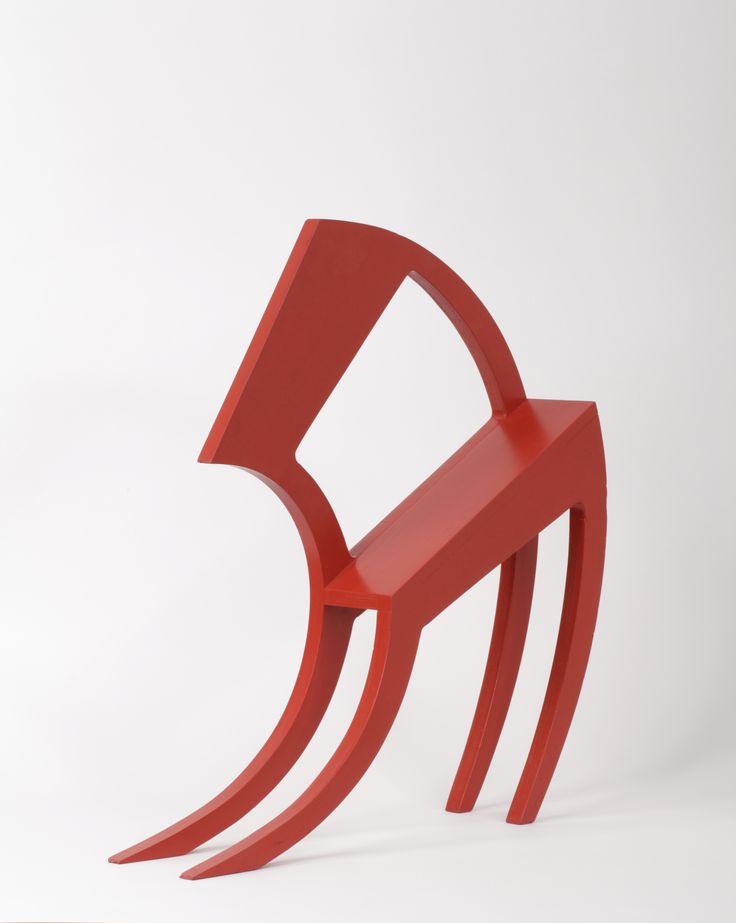
Stefan Wewerka

Class room chair

Polyfunctionality and deconstruction of everyday objects, irony and humour as weapons and moments of profound insight: these are some of the ideas behind the works by the architect, designer, sculptor and film-maker, Stefan Wewerka (born in 1928, in Magdeburg).
In his works, Wewerka pushes against conventional concepts relating to art and aesthetics, rationalism and functionalism. As a result for instance, the Last Supper is turned into a weird affair, the kitchen space turned into a kitchen tree. Wewerka’s unmistakable trademark is the manipulation of chairs. Sawn, hacked and bent out of shape, these chairs subversively thwart previously unquestioned concepts relating to furniture. In stark contrast to this, however, are his sculptural furniture designs, adapted to suit the requirements of the human body and its habits.

IANNIS XENAKIS

Terretektorh
Terretektorh shows more concern for harmonic organization than the earlier, iconoclastic Pithoprakta, with its scatterings of knocking sounds and massed effects. Still, the concentration is decidedly on texture and movement, with narrow lines being bundled with a number of others in the same register to create a rawer sonic intensity that still has some basis in melody. Xenakis concentrates on the high and low registers, as did Varèse before him, and adds some unusual sound effects into the mix as well.

In Terretektorh and Persephassa, Xenakis creates the impression of movement by transferring musical material between groups of musicians using techniques developed from musique concrète. These works are further innovative because of the unique seating arrangements in which the space for the performers and audience are superimposed.
In this thesis,  demonstrating Xenakis’s early approach to spatial composition. The thesis builds on the work of other scholars and provides more insight as to how these fascinating pieces work.

KATEŘINA DRŽKOVÁ

Paraphrases: Anna and Bernhard Blume

“In this work I present a pair of found postcards that looks “totally the same” at first sight, but actually they differ in many details in the picture (a time shift of several minutes is apparent) and also on the back sides. On each postcard it is stated a different photographer; the post offices and the times when the postcards were sent are also varying.. However, the addressee is always the same person.
The pairs of postcards are open to diverse explanations of their origins and possible alternatives of their delivery.”

JILL SCOTT

Electric retina
The Electric Retina is a “neuromedia” sculpture which combines retinal research with interactive media art and metaphorical associations in order to explore the complexity of visual perception. Based on her residency in Neurobiology at the Institute of Zoology, University of Zurich, Scott gained a deeper insight into the genetic control of visual system development and function by analysis of zebra fish mutants, which are used as the main phenotypes for human eye disease research.

RUKPONG RAIMATURAPONG

SITE SIGHT
“site sight”是Rukpong Rainmaturapong的系列产品。在“我们都精神正常的将美好的事物穿在身上来欺骗世界的眼睛”的理念下,该系列的灵感主要来自于隐藏在一个好人外表下的混乱还有不完整。这个想法主要利用了一个朦胧飘渺的形式和材料来表现的。象征着变得完整和出色。像包括天然蚕丝,还有编织在一起的合成纤维这样的材料以及像增强织物耐受性的技术都被应用到了服装的制作之中。

everyware

Cloud Pink
FILE FESTIVAL
Lying down on a hill with your pupils filled with the endless blue sky, perspective of your eyesight suddenly gets distorted and clouds drift at the tip of your nose. You stretch your arms up to the sky to touch the clouds but can’t reach. Another world right above your head, clouds. Today, I visualize my colorful cloud of words right in front of your eyes. Touch the pink clouds drifting on a giant fabric screen, reminisce your childhood clouds of dreams. I spent countless sleepless nights just to realize my unproductive and only romantic cloud of words. But, isn’t it nice if we could feel the clouds at our fingertips?

Karel Fonteyne

Paper Plane
Unlike most photographers, Karel does not take pictures from the outside world. His photographs are extremely intricate and nothing is what it seems at first. He composes and translates his thoughts and feelings into very personal images. In order to achieve this, he identifies elements which at first sight have nothing in common.

Nelo Akamatsu

Chozumaki

CHOZUMAKI by Nelo Akamatsu consists of a glass vessel filled with water. A small winged magnet rotating at the bottom of the vessel produces a vortex. The tiny bubbles cause curious sounds when they are swallowed into the vortex. Viewers will hear these sounds through a spiral pipe shaped like a cochlear duct. Countless vortices exist in the universe, including the enormous revolution of the galaxy and also the minimal spin of electrons. They all have a fractal structure that seems to be one of the fundamental elements of the universe. Water has another important role in this work. In numerous cultures is associated with purification. The sight and sound of the water vortex that is constantly changing shape will remind viewers of crossing the boundary between the physical world and the psychological world, and will extend their perception of vital organs.

Jiun-Shian Lin

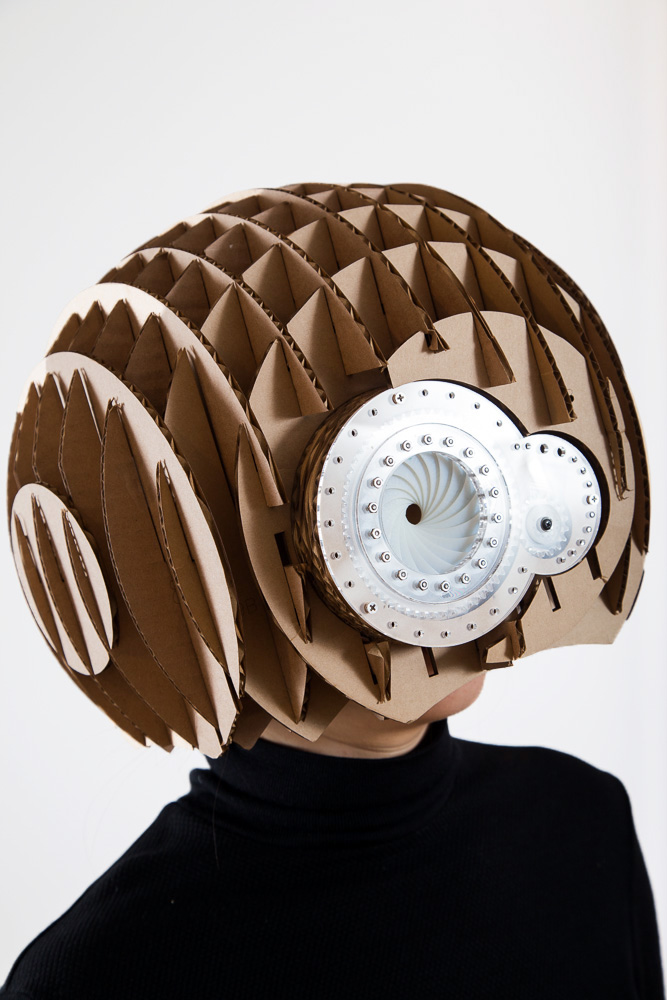
the Reversed Eye

‘The Reversed Eye’ is a cheek-controlled wearable device made by Jiun-Shian Lin in 2013. It provides participants upside-down left-right reversal sight and rear vision in their everyday life, attempting to turn the ordinary life experience into an aesthetic one.

Jacqueline Kiyomi Gordon

It Only Happens All of the Time

Constructed by Jacqueline Kiyomi Gordon within San Francisco’s Yerba Buena Center for the Arts (YBCA) new exhibition series Control: Technology in Culture, It Only Happens All of the Time is an installation that shapes sound, movement, and perception. Architectural in ambition, the installation tasks visitors with exploring a room lined with a droning 11.1.4 surround sound system and custom sound-dampening acoustic panels in order to foreground what the artist describes as the “the exchange between moving within the sound, moving within the sculpture, moving with someone else” and yielding an “intimacy” in the process. Borrowing the materials and geometries of the acoustic panels used in anechoic chambers and acoustic testing labs, Gordon’s immersive sonic environment deploys clinical sound design to engender exploration and interaction.Positioned in the centre of Gordon’s space is “Love Seat”, a pair of adjoined enclosures where visitors can sit and listen. While sharing a common sightline—but physically separated—listeners can enjoy a moment together, each within (relative) acoustic isolation. In the essay accompanying the exhibition, Control: Technology in Culture curator Ceci Moss succinctly describes Gordon’s approach as “sound modulating mood” to “both commune and command” those entering the space.As would be expected, Gordon went to great lengths to sculpt the acoustics within It Only Happens All of the Time and the exhibition saw her working closely with specialists at Meyer Sound Laboratories. She touches on her process briefly in the video below and the Creator’s Project post on the project is worth delving into, as it provides some worthwhile ‘making of’ details as well as comments from collaborators Jon Leidecker (aka Wobbly) and Zackery Belanger.

Szilárd Cseke

Multiple Identities, Sustainable Development
The focus is on multiple identities. There are pale, milky plastic pipes attached to the ceiling of the concrete interior, inside which, moved by fans, roll white balls. One after the other. If the one arrives, a new one is sent to another tube.Such works breathe inner unity. This closeness is sometimes a closeness, if not encryption. Because the language of contemporary installation art is foreign and difficult to read. The viewer’s gaze likes to evaluate subjectively and is always shaped by environmental influences such as culture, trends, styles, beliefs, experiences and politics. This makes the interpretation uncertain, it becomes subjective, often tempting to misconduct. Because anyone who claims that the work of art is created in the eye of the beholder and means that everyone, regardless of where they come from and how educated, can make a valid statement about a work of art is wrong. What Marcel DuChamp meant is that it unfolds in the eye of the beholder. But this development should not mean that simply opening the eyes also brings with it knowledge and insight. These qualities are developed through active participation, through perception. This, in turn, is not only feasible through the visual stimulus in the eye. It is possible, however, if you know who the artist is, what he is doing, what he wishes to express and with which underlying design principles the view is guided in what way to what. Only then does the processing take place, a connection of the causal relationships, which ultimately leads to art in the eye of the beholder. To an inner feeling outside of the spontaneous feelings.

ANNE TYNG

Anatomy of Form
The Divine Proportion in the Platonic Solids

In fact, the Graham Foundation recognized Tyng’s talent nearly half a century ago in 1965, when she was awarded for her project Anatomy of Form: The Divine Proportion in the Platonic Solids:In her research she developed a theory of hierarchies of symmetry—symmetries within symmetries—and a search for architectural insight and revelation in the consistency and beauty of all underlying form.It’s fascinating stuff, and the images alone have piqued my interest in Tyng’s theories, which cover topics from Jungian cycles to the cosmos. Tyng (b. 1920 in Jiangxi, China) was one of the first women to earn a Masters in Architecture from Harvard. She spent nearly three decades collaborating with Louis Kahn before shifting her focus to research at the University of Pennsylvania in the late 60’s. The title of the exhibition and her works belie the understated beauty of their execution, which demonstrate the expressive power of order and geometry. Tyng’s unique command of form is matched by her raw intellect; thus, she elegantly articulates her vision in the models seen here.

ANDREI TARKOVSKY

أندريه تاركوفسكي
塔可夫斯基
アンドレイ·タルコフスキー
Андрей Тарковский
nostalghia
From the opening images of Nostalghia (1983), Andrei Tarkovsky presents the two disparate worlds-the spare, monochromatic landscape of the Russian countryside and the lush, idyllic meadows of rural Italy-that collided within the soul of Russian author, Andrei Gortchakov (Oleg Yankovsky). Gortchakov has travelled to Italy on an extended research expedition to retrace the emigrant journey of an acclaimed eighteenth century Russian composer named Pavel Sosnovsky who, despite achieving international recognition away from his homeland, eschewed fame and returned to the humble life of a feudal serf, only to sink further into despair and commit suicide. Gortchakov, accompanied by his translator, Eugenia (Domiziana Giordano), has travelled to the hills of Tuscany to see Piero della Francesca’s Madonna of Childbirth, but upon arriving, becomes disinterested in the attraction, and forgoes the church visit. Left alone at the foothills as Eugenia ventures alone, Gortchakov quotes a resigned passage that reflects his own feelings of inertia: “I’m tired of these sickeningly beautiful sights. I want nothing more just for myself. That’s enough.”
cinema full