highlike

Patricia Borges – TECHNOPOETICS – Brazil

TECHNOPOETICS

Patricia Borges


FILE SÃO PAULO 2026: Inter-creativity – Art and Technology – LED SHOW
Electronic Language International Festival


TECHNOPOETICS – Brazil

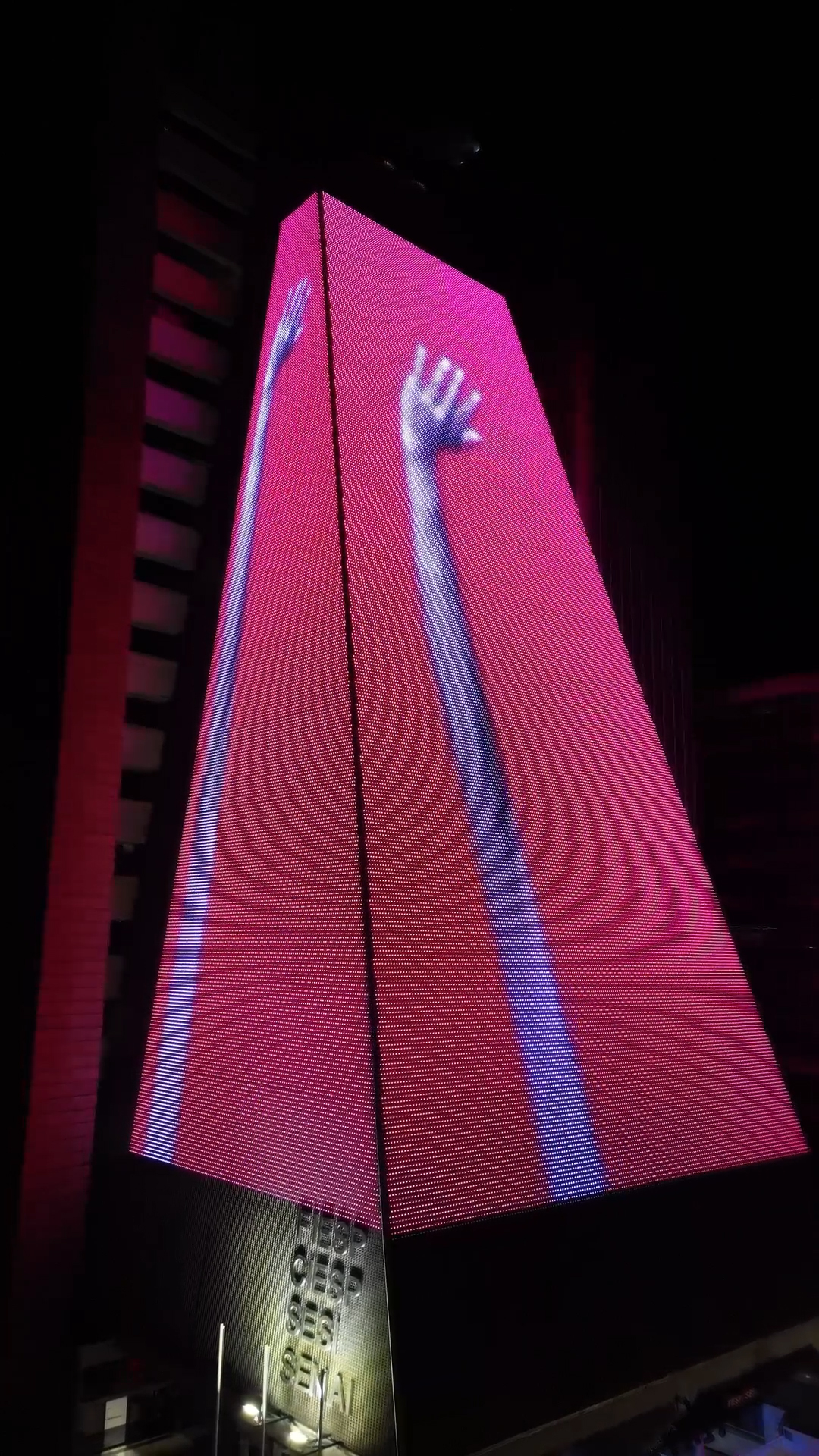
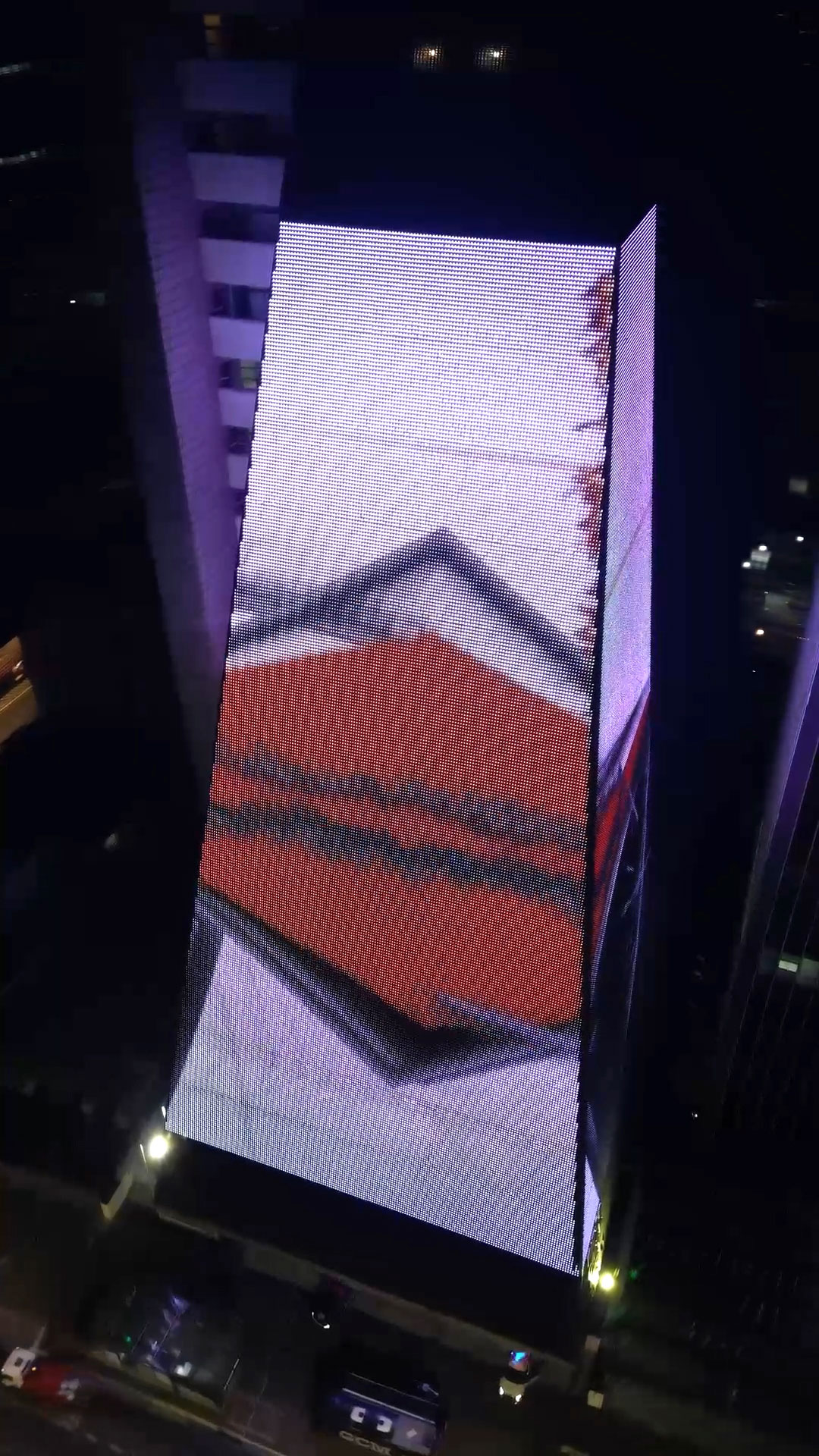
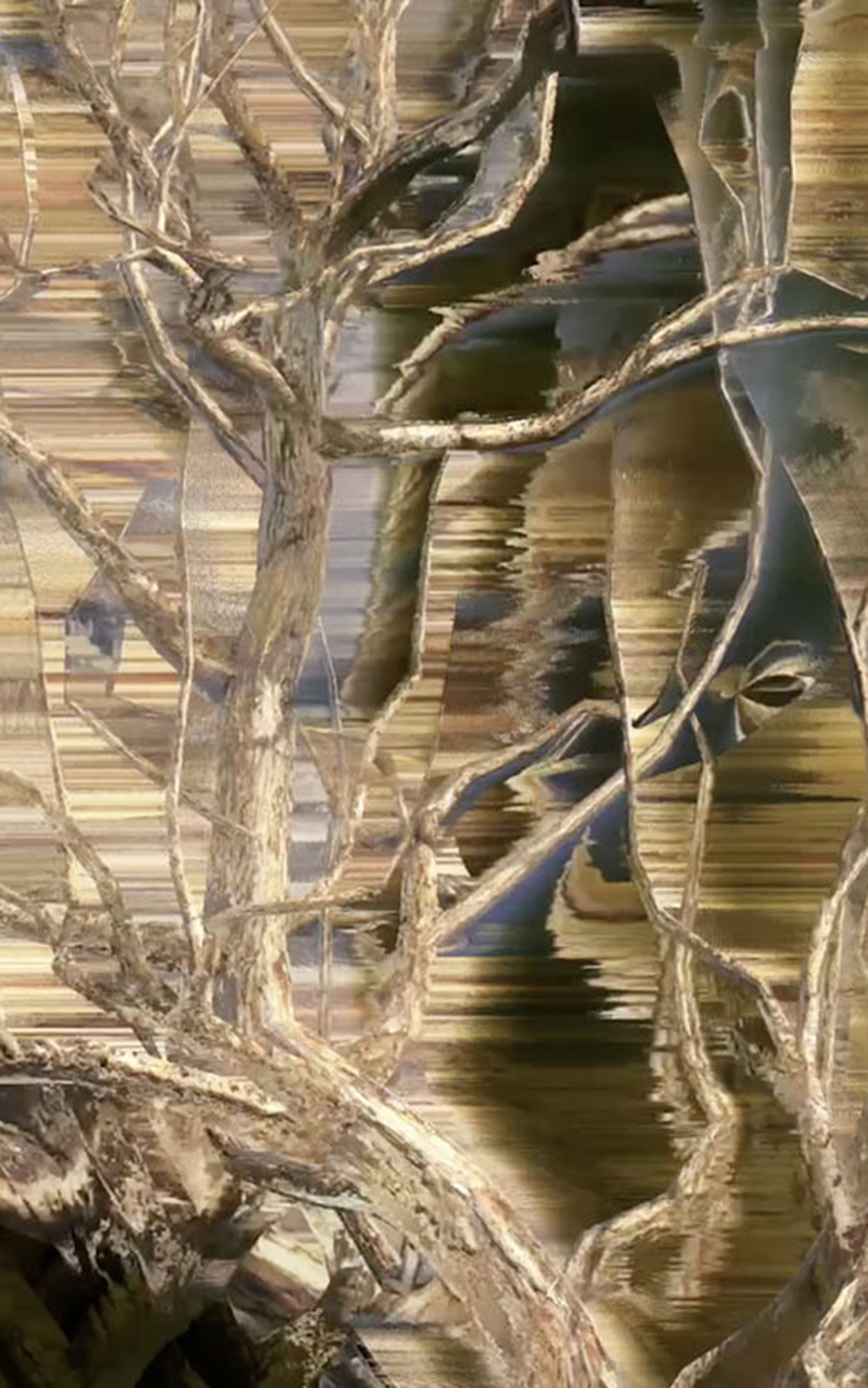
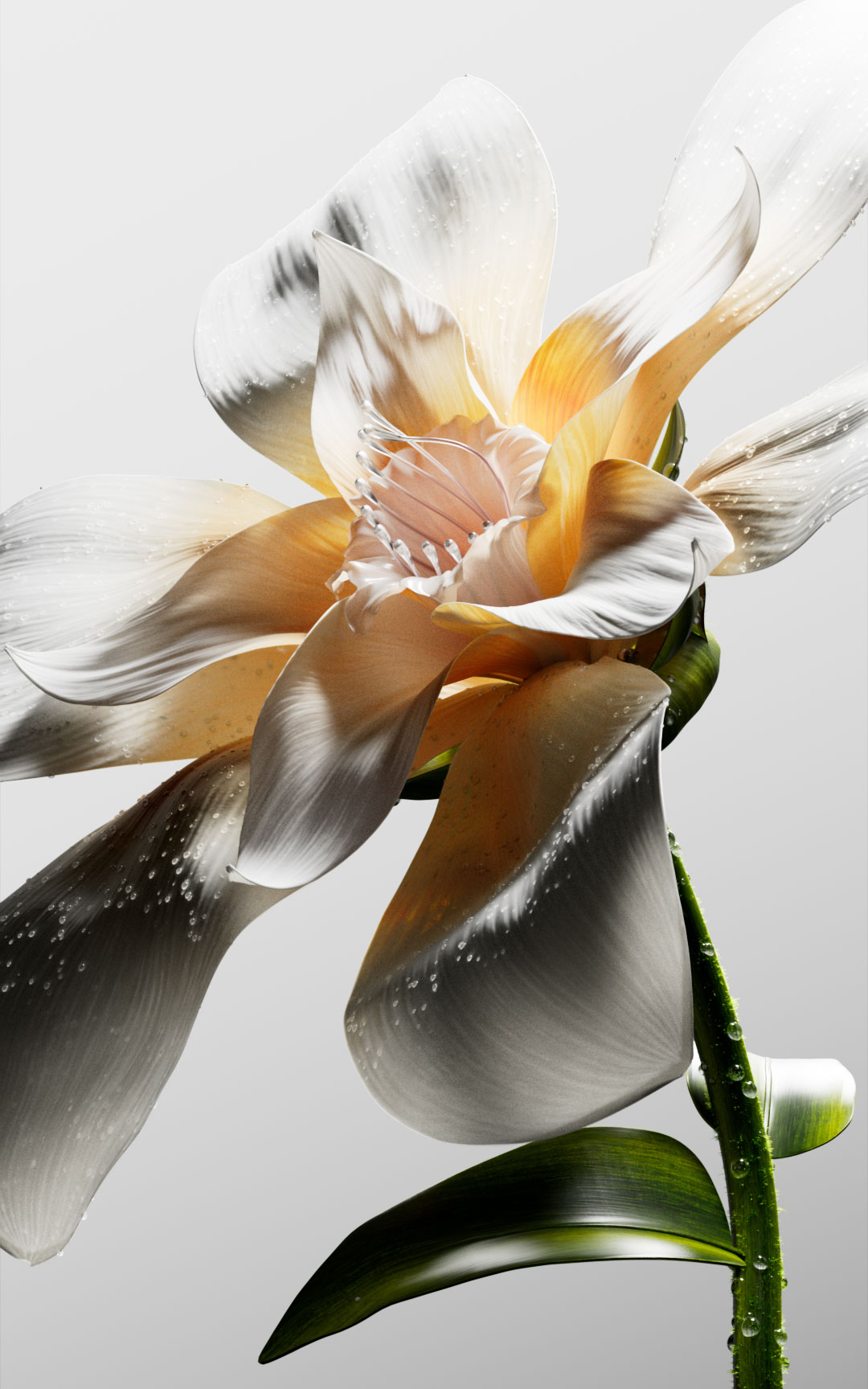
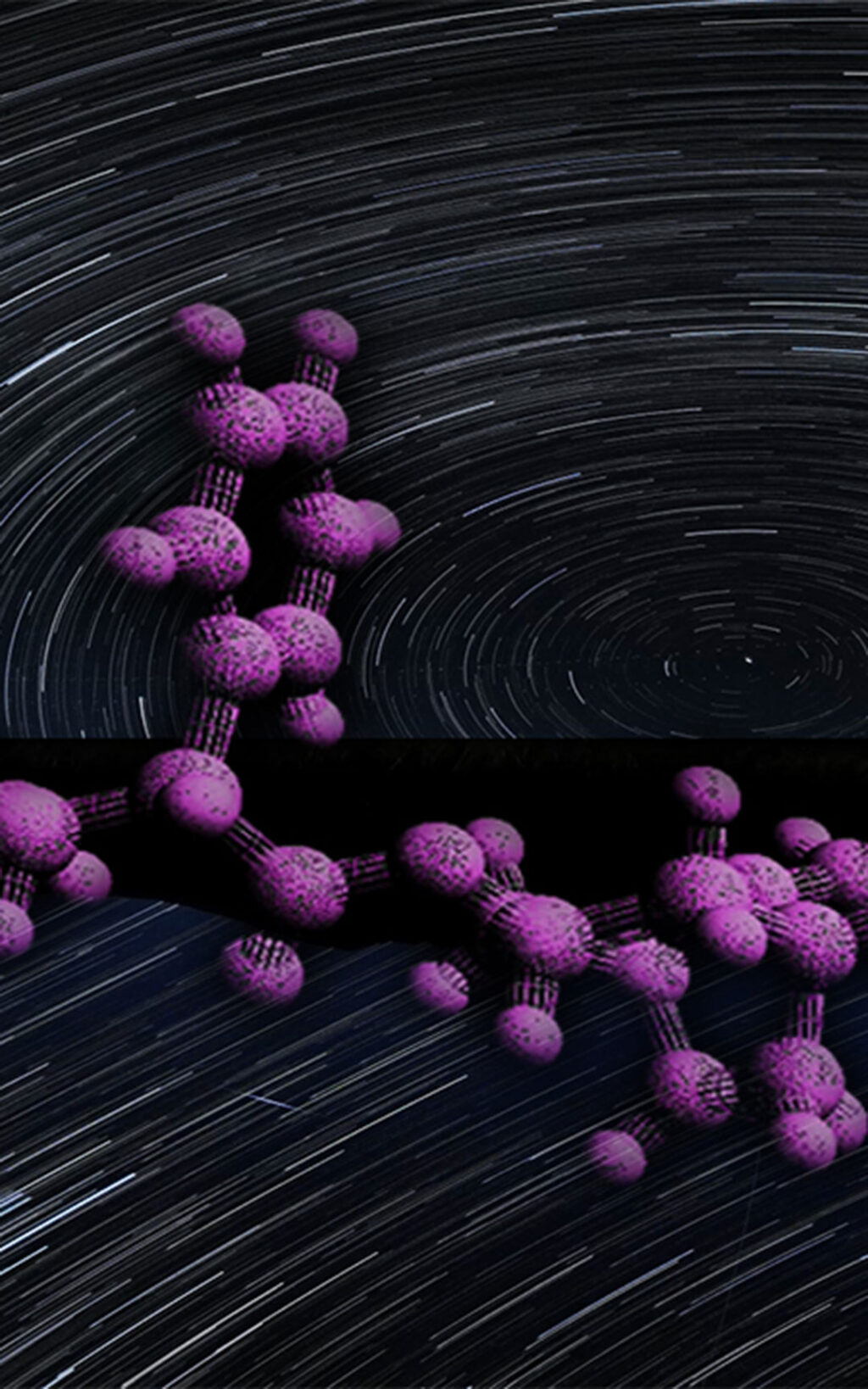
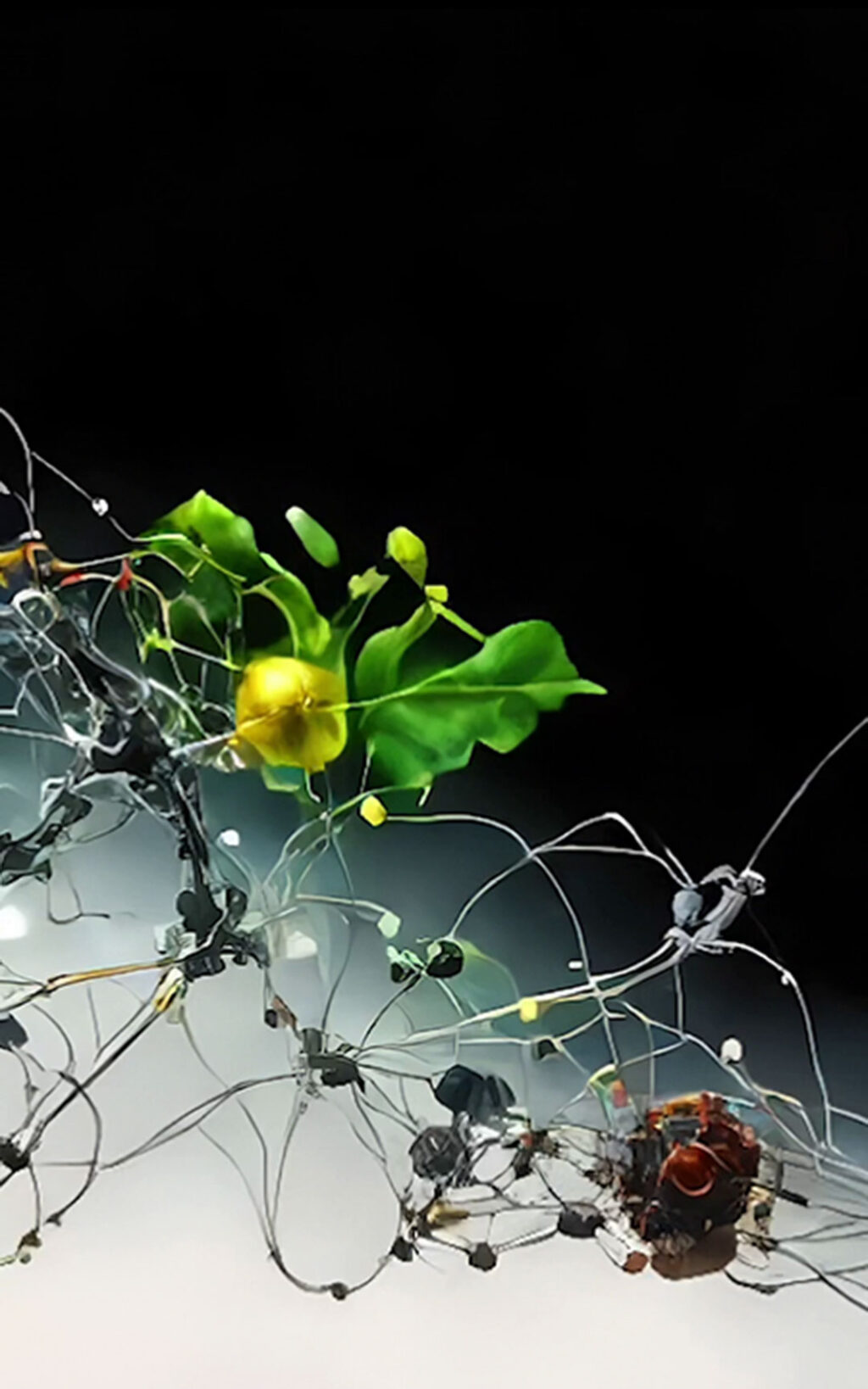
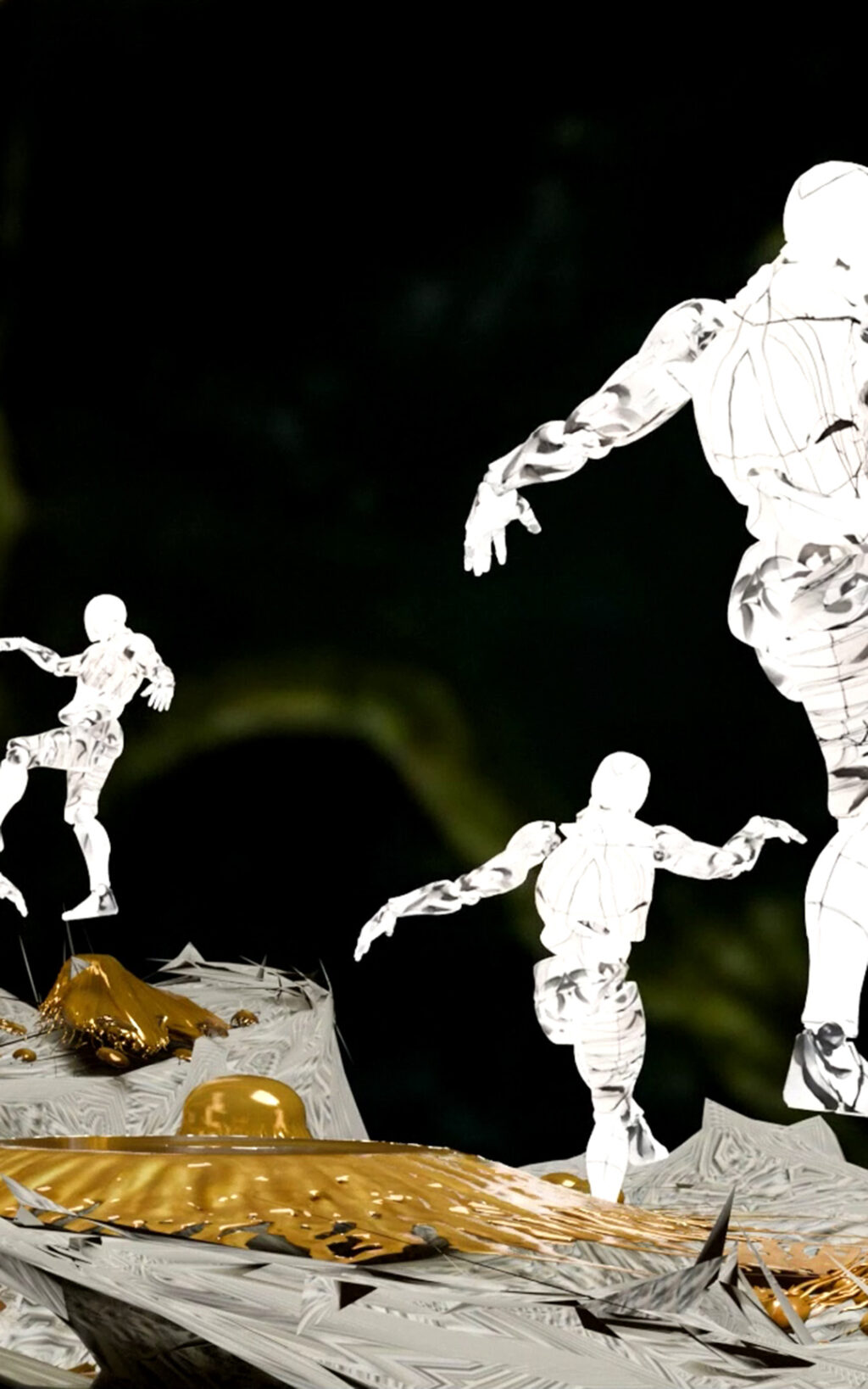
TECHNOPOETICS presents hybrid beings in continuous metamorphosis, between biological and technological life. In an accelerated evolutionary fiction, the disposal of electronic components in the sea triggers the transmission of mutant bacteria into algae, plants, fungi, mollusks, insects, and other marine forms. The work explores identity and possibility, engaging with art and machine learning.

BIO

Patricia Borges is a visual artist whose practice combines photography, video, installation, and experimental processes. She is currently pursuing a doctorate in Arts & Design at PUC-Rio and, through photochemical and digital processes, explores impermanence and transformation.

FILE 2026 – Registration Open for Art and Technology Festival

FILE 2026

Registration is now closed for participation in  FILE – Electronic Language International Festival 2026 , one of the most important events dedicated to art and technology. FILE invites Brazilian and international artists , as well as researchers, educators, and creators , to submit original artistic works and educational proposals — lectures, workshops, and training activities — focused on contemporary technological poetics.

Applications were open until February 19, 2026 .

With 26 years of experience , FILE is a non-profit cultural organization dedicated to promoting creation, research, and experimentation in Art and Technology , bringing together artists, scientists, programmers, and thinkers around exhibitions, events, and publications. The selected projects will be part of the FILE 2026 program, scheduled to take place at the FIESP Cultural Center in São Paulo, between August 19 and October 11, 2026,  with the possibility of parallel activities in other Brazilian states.

The call welcomes proposals in a wide variety of languages ​​and formats, intended for indoor or outdoor environments , in which the aesthetic experience emerges from the encounter between interfaces, data, space, and body . FILE 2026 seeks projects that propose new forms of perception, interaction, and critical and poetic reflection , expanding the debate on the aesthetic, cultural, social, and sensory impacts of contemporary technologies.

Access the registration form.

FILE 2026 – Registration Open for Installation Festival – Art and Technology

FILE 2026

Art and Technology Festival | Installations: artistic systems, indoor  or  outdoor , in which the aesthetic experience emerges from the dynamic relationship between interface, data, environment, and body.  Digital technologies, technologies with artificial intelligence, metamaterial technologies, random technologies, sensors, algorithms, and responsive systems are employed by the artist as structural elements of the work, which is completed in the encounter between the work and the participant.

Applications were open until February 19, 2026. Access  the application form.

FILE 2026 | GENERAL REGULATIONS

FILE 2026 – Registration Open for AR, VR and XR Festival – Art and Technology

FILE 2026

Augmented and Virtual Reality Festival: brings together immersive practices in simulated three-dimensional environments and expands the perception of reality through the superimposition of digital layers onto physical space.  The works use mobile devices, glasses, and spatial interfaces to insert virtual objects, narratives, and data into the real world or transport the public to sensory and interactive digital universes. These languages ​​challenge the boundaries between the material and the informational, exploring subtle or monumental interventions, creating multidimensionality in the environment. Issues of presence, body, narrative, memory, surveillance, and technological mediation are central, configuring a fertile field of aesthetic and critical investigation into contemporary ways of inhabiting and perceiving space.

Applications were open until February 19, 2026. Access  the application form.

FILE 2026 | GENERAL REGULATIONS

FILE 2026 – Registration Open for the Digital Architecture and AI Festival – Art and Technology

FILE 2026

Digital Architecture and AI Festival :  investigates the use of computational technologies in the conception, visualization, and experience of space.  Works may involve virtual environments, simulations, digital facades, interactive architectural installations, and discrete systems. Algorithms and data become design tools. It is a practice that articulates art, architecture, and technology.

Applications were open until February 19, 2026. Access  the application form.

FILE 2026 | GENERAL REGULATIONS

FILE 2026 – Registration Open for Robotics Art Festival – Art and Technology

FILE 2026

Robotics and AI Art Festival: Mechanical, autonomous, and intelligent systems as aesthetic agents. The works explore movement, behavior, and interaction between humans and machines.  Sensors, actuators, and artificial intelligence structure the experience. These creations raise questions about autonomy, artificial life, and technological ethics. The machine becomes a palpable presence in the artistic space.

Applications were open until February 19, 2026. Access  the application form.

FILE 2026 | GENERAL REGULATIONS

FILE 2026 – Registration Open for the IA Film Festival – Art and Technology

FILE 2026

Digital Film Festival and AI Cinema: includes productions that explore new aesthetics, narratives, and processes enabled by digital and artificial intelligence technologies.  This language questions traditional notions of authorship, editing, scriptwriting, and directing, proposing new forms of expanded and computational cinema. Cinema ceases to be merely representational and becomes processual and adaptive. It is an emerging field that articulates aesthetics, technology, and critical reflection on the future of moving images and multiple narratives. The works may also explore machine learning algorithms, generative models, and automation as active agents in the construction of image, sound, and dramaturgy.

Applications were open until February 19, 2026. Access  the application form.

FILE 2026 | GENERAL REGULATIONS

FILE 2026 – Registration Open for Electronic Music and AI Festival – Art and Technology

FILE 2026

Electronic Music and AI Festival: brings together interconnected fields of contemporary sound art, in which sound and technology operate as structuring elements of the aesthetic experience.  These approaches explore sound as spatial, sensory, and conceptual matter, articulating active listening, bodily presence, and synesthetic relationships between audio and video, through digital systems, generative intelligence processes, algorithms, field recordings, and audiovisual performances.

Applications were open until February 19, 2026. Access  the application form.

FILE 2026 | GENERAL REGULATIONS

FILE 2026 – Registration Open for Digital Animation and AI Festival – Art and Technology

FILE 2026

Animation Festival | Digital Animations and AI Animations: investigate movement as an expressive language, using computational tools and experimental aesthetics.  The works can explore abstract or figurative narratives, often hybridized with data, algorithms, and simulations. Technology expands the formal and temporal possibilities of animation. It is a field that articulates art, cinema, and computer graphics. Movement becomes a means of visual thought.

Applications were open until February 19, 2026. Access  the application form.

FILE 2026 | GENERAL REGULATIONS

FILE 2026 – Registration Open for Games Festival – Art and Technology

FILE 2026

Game Festival  |  Digital Games and AI Games: explore interactivity, rules, and narratives as aesthetic elements.  These works go beyond entertainment, proposing critical, poetic, or experimental experiences. Game mechanics become conceptual devices. Graphic technologies, artificial intelligence, and interactive systems structure the experience. The player is a co-author of the work, actively participating in its construction and interaction.

Applications were open until February 19, 2026. Access  the application form.

FILE 2026 | GENERAL REGULATIONS

FILE 2026 – Registration Open for LED SHOW Festival – Art and Technology

FILE 2026

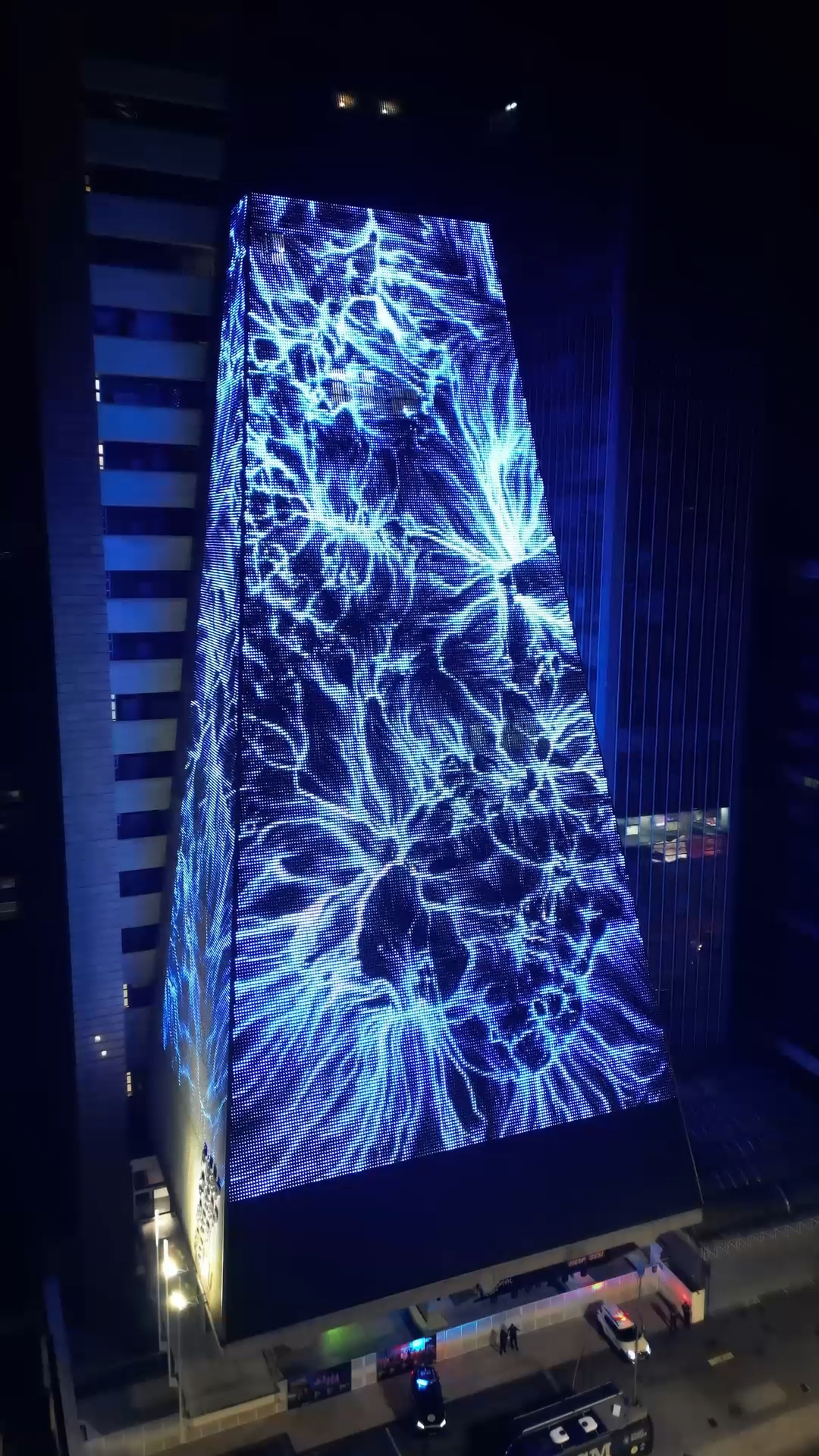
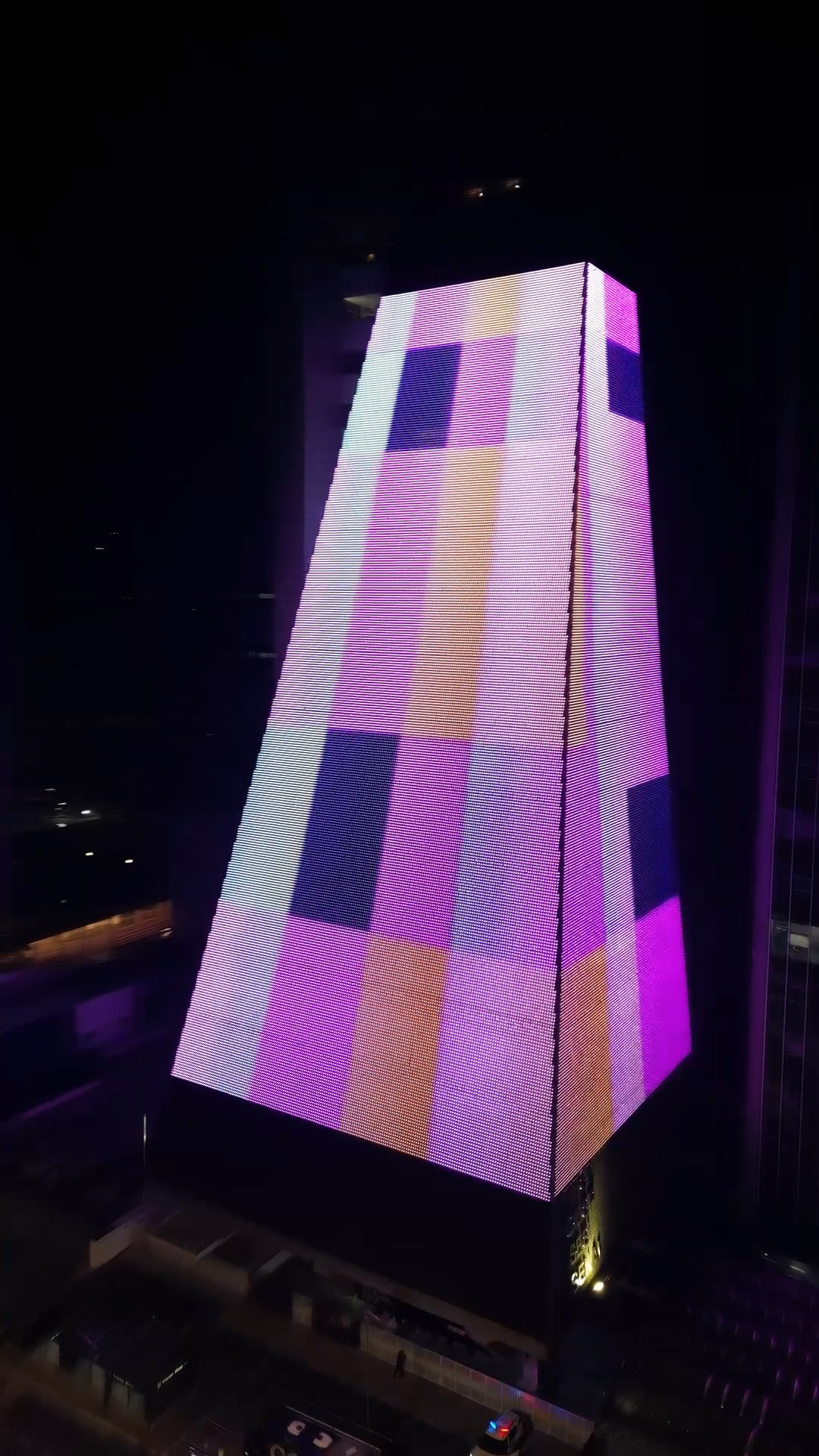
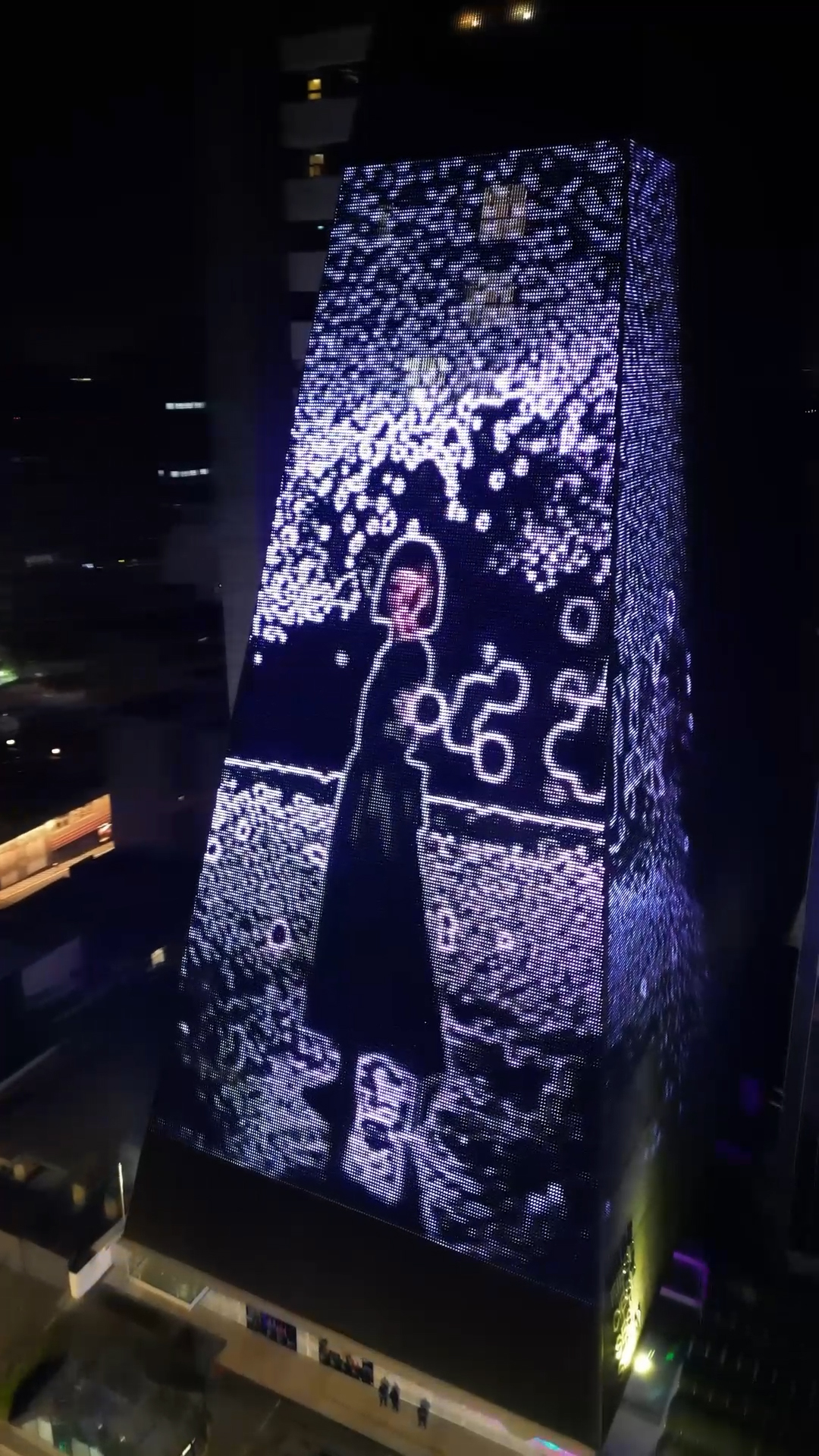
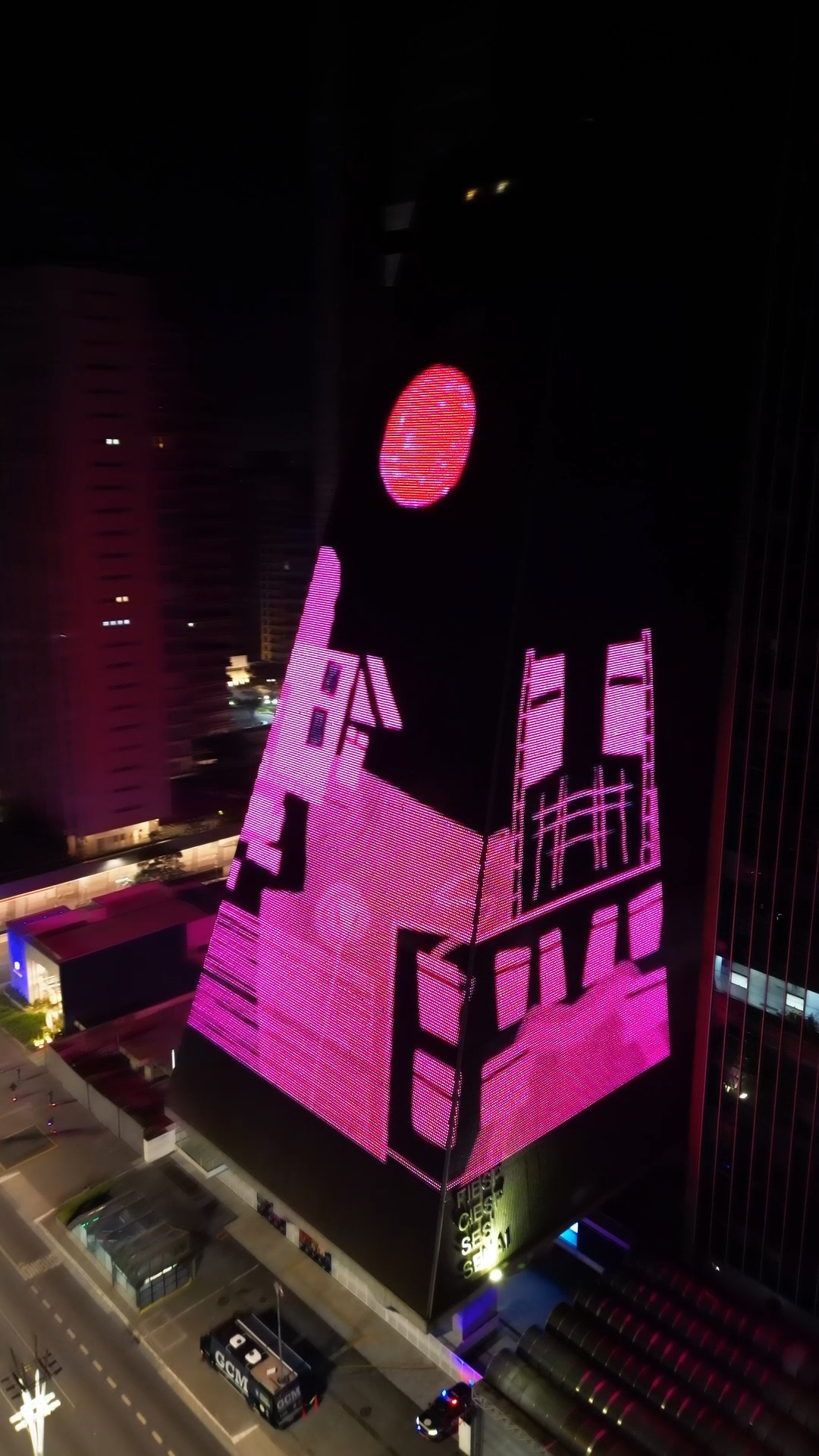
LED SHOW Festival: a program dedicated to exhibiting digital works specifically designed for the Digital Art Gallery, an LED panel located on the facade of the FIESP building, Avenida Paulista, 1313.  The festival investigates the relationship between moving image, light, architecture, and the city, exploring the expressive potential of luminous devices as an artistic medium. The works dialogue with the three-dimensionality of the facades, the urban scale, and the flows of public space, transforming the building into a narrative and sensory support. By integrating technology, art, and urban context, the LED SHOW proposes immersive visual experiences that reconfigure the perception of collective space and expand the field of contemporary audiovisual art. Download the technical specifications of the LED Show file.

Applications were open until February 19, 2026. Access  the application form.

FILE 2026 | GENERAL REGULATIONS

HORIZON of Art and Technology: World Main Events

SIGGRAPH

San Francisco, United States (https://www.siggraph.org/)

ARS ELECTRONICA

Linz, Austria (https://ars.electronica.art/news/en/)

FILE

São Paulo, Brazil (https://file.org.br/)

NOVA BIENAL RIO

Rio de Janeiro, Brazil (https://novabienalrio.org/)

ISEA

Multiple Cities (https://www.isea-international.org/)

STRP

Eindhoven, Netherlands (https://strp.nl/)

ATHENS DIGITAL ARTS

Athens, Greece (https://www.adaf.gr/)

JAPAN MEDIA ARTS

Tokyo, Japan (https://j-mediaarts.jp/)

KIKK

Namur, Belgium (https://www.kikk.be/)

ZKM

Karlsruhe, Germany (https://zkm.de/de)

TRANSMEDIALE

Berlin, Germany (https://transmediale.de/en)

ELEKTRA

Montreal, Canada (https://www.elektramontreal.ca/)

MUTEK

Montreal, Canada (https://mutek.org/)

LUMEN PRIZE

Crewe, Wales (https://lumenprize.org)


Inspired by thetruesize.com

QUBIT AI – International Electronic Language Festival – Art and Technology

QUBIT AI | quantum & synthetic ai
Electronic Language International Festival

July 3rd to August 25th
Tuesday to Sunday, 10am – 8pm
FIESP Cultural Center

Design: André Lenz
Image: Iskarioto Dystopian AI Films – Athena

QUBIT AI

In its 25 years of existence, the International Electronic Language Festival (FILE) is an internationally renowned Brazilian project that since 2000 has explored the intersection between art and technology. With more than two decades of history, the festival stands out for fostering exhibition spaces and debate about artistic innovations driven by disruptive and innovative technologies, inviting the public to get involved with experimental forms of art that challenge the boundaries of conventionality. Currently, two of these technologies stand out in the contemporary scenario: the accelerated development of quantum computing and artificial intelligence corroborated by synthetic data.

Quantum computing, an emerging revolution in the technological field, offers a new range of creative possibilities for contemporary artists. This new era allows the exploration of unprecedented frontiers through a new computational format that consists mainly of quantum superposition and entanglement, a new field of exploration for synthetic computer science, as well as for the arts in general; on the other hand, artificial intelligence, fueled by synthetic data, offers artists a new way of making and understanding art, opening up space for new forms, concepts and artistic expressions.

Entitled QUBIT AI, the exhibition delves into this unexplored territory presenting a selection of works of art resulting from the connection between artistic creation and technology, proposing a theoretical reflection on what the interrelationship between quantum computers and synthetic artificial intelligence will be.

Visitors will be invited to experience immersive installations, experimental videos, digital sculptures and other forms of interactive art, which intertwine reality and imagination. The exhibition encourages reflections on the influence of technology on art and contemporary society, while at the same time providing an environment to compare already established technological arts (analog and digital) with the possible futures of art in the synthetic era, enhanced by quantum computing. The QUBIT AI exhibition at FILE SP 2024 transcends the mere presentation of works of art; it is a journey to the limits of human creativity, driven by the convergence of art, science and technology.

Ricardo Barreto and Paula Perissinotto
co-organizers and curators of FILE
International Electronic Language Festival


QUBIT AI: AESTHETIC SYNTHETIC FILE – São Paulo 2024 – Art and Technology

FILE 2024

QUBIT AI | quantum & synthetic ai
Electronic Language International Festival
July 3rd to August 25th
Tuesday to Sunday, 10am – 8pm
FIESP Cultural Center

Design: André Lenz
Image: Iskarioto Dystopian AI Films – Athena

QUBIT AI

In its 25 years of existence, the International Electronic Language Festival (FILE) is an internationally renowned Brazilian project that since 2000 has explored the intersection between art and technology. With more than two decades of history, the festival stands out for fostering exhibition spaces and debate about artistic innovations driven by disruptive and innovative technologies, inviting the public to get involved with experimental forms of art that challenge the boundaries of conventionality. Currently, two of these technologies stand out in the contemporary scenario: the accelerated development of quantum computing and artificial intelligence corroborated by synthetic data.

Quantum computing, an emerging revolution in the technological field, offers a new range of creative possibilities for contemporary artists. This new era allows the exploration of unprecedented frontiers through a new computational format that consists mainly of quantum superposition and entanglement, a new field of exploration for synthetic computer science, as well as for the arts in general; on the other hand, artificial intelligence, fueled by synthetic data, offers artists a new way of making and understanding art, opening up space for new forms, concepts and artistic expressions.

Entitled QUBIT AI, the exhibition delves into this unexplored territory presenting a selection of works of art resulting from the connection between artistic creation and technology, proposing a theoretical reflection on what the interrelationship between quantum computers and synthetic artificial intelligence will be.

Visitors will be invited to experience immersive installations, experimental videos, digital sculptures and other forms of interactive art, which intertwine reality and imagination. The exhibition encourages reflections on the influence of technology on art and contemporary society, while at the same time providing an environment to compare already established technological arts (analog and digital) with the possible futures of art in the synthetic era, enhanced by quantum computing. The QUBIT AI exhibition at FILE SP 2024 transcends the mere presentation of works of art; it is a journey to the limits of human creativity, driven by the convergence of art, science and technology.

Ricardo Barreto and Paula Perissinotto
co-organizers and curators of FILE
International Electronic Language Festival

QUBIT AI: FILE QUANTUM WORKSHOP 2024 – São Paulo – Art and Technology

FILE 2024

QUBIT AI | quantum & synthetic ai
Electronic Language International Festival
July 3rd to August 25th
Tuesday to Sunday, 10am – 8pm
FIESP Cultural Center

Design: André Lenz
Image: Iskarioto Dystopian AI Films – Athena

QUBIT AI

In its 25 years of existence, the International Electronic Language Festival (FILE) is an internationally renowned Brazilian project that since 2000 has explored the intersection between art and technology. With more than two decades of history, the festival stands out for fostering exhibition spaces and debate about artistic innovations driven by disruptive and innovative technologies, inviting the public to get involved with experimental forms of art that challenge the boundaries of conventionality. Currently, two of these technologies stand out in the contemporary scenario: the accelerated development of quantum computing and artificial intelligence corroborated by synthetic data.

Quantum computing, an emerging revolution in the technological field, offers a new range of creative possibilities for contemporary artists. This new era allows the exploration of unprecedented frontiers through a new computational format that consists mainly of quantum superposition and entanglement, a new field of exploration for synthetic computer science, as well as for the arts in general; on the other hand, artificial intelligence, fueled by synthetic data, offers artists a new way of making and understanding art, opening up space for new forms, concepts and artistic expressions.

Entitled QUBIT AI, the exhibition delves into this unexplored territory presenting a selection of works of art resulting from the connection between artistic creation and technology, proposing a theoretical reflection on what the interrelationship between quantum computers and synthetic artificial intelligence will be.

Visitors will be invited to experience immersive installations, experimental videos, digital sculptures and other forms of interactive art, which intertwine reality and imagination. The exhibition encourages reflections on the influence of technology on art and contemporary society, while at the same time providing an environment to compare already established technological arts (analog and digital) with the possible futures of art in the synthetic era, enhanced by quantum computing. The QUBIT AI exhibition at FILE SP 2024 transcends the mere presentation of works of art; it is a journey to the limits of human creativity, driven by the convergence of art, science and technology.

Ricardo Barreto and Paula Perissinotto
co-organizers and curators of FILE
International Electronic Language Festival

QUBIT AI: FILE OPENING LECTURE 2024 – São Paulo – Art and Technology

FILE 2024

QUBIT AI | quantum & synthetic ai
Electronic Language International Festival
July 3rd to August 25th
Tuesday to Sunday, 10am – 8pm
FIESP Cultural Center

Design: André Lenz
Image: Iskarioto Dystopian AI Films – Athena

QUBIT AI

In its 25 years of existence, the International Electronic Language Festival (FILE) is an internationally renowned Brazilian project that since 2000 has explored the intersection between art and technology. With more than two decades of history, the festival stands out for fostering exhibition spaces and debate about artistic innovations driven by disruptive and innovative technologies, inviting the public to get involved with experimental forms of art that challenge the boundaries of conventionality. Currently, two of these technologies stand out in the contemporary scenario: the accelerated development of quantum computing and artificial intelligence corroborated by synthetic data.

Quantum computing, an emerging revolution in the technological field, offers a new range of creative possibilities for contemporary artists. This new era allows the exploration of unprecedented frontiers through a new computational format that consists mainly of quantum superposition and entanglement, a new field of exploration for synthetic computer science, as well as for the arts in general; on the other hand, artificial intelligence, fueled by synthetic data, offers artists a new way of making and understanding art, opening up space for new forms, concepts and artistic expressions.

Entitled QUBIT AI, the exhibition delves into this unexplored territory presenting a selection of works of art resulting from the connection between artistic creation and technology, proposing a theoretical reflection on what the interrelationship between quantum computers and synthetic artificial intelligence will be.

Visitors will be invited to experience immersive installations, experimental videos, digital sculptures and other forms of interactive art, which intertwine reality and imagination. The exhibition encourages reflections on the influence of technology on art and contemporary society, while at the same time providing an environment to compare already established technological arts (analog and digital) with the possible futures of art in the synthetic era, enhanced by quantum computing. The QUBIT AI exhibition at FILE SP 2024 transcends the mere presentation of works of art; it is a journey to the limits of human creativity, driven by the convergence of art, science and technology.

Ricardo Barreto and Paula Perissinotto
co-organizers and curators of FILE
International Electronic Language Festival


NOVA BIENAL RIO of art and technology

The NOVA BIENAL RIO is an autonomous and independent event that transcends the scope of a conventional international exhibition; it is a call to innovation and imagination. Under the theme “New Aesthetic and Supercreativity,” we invite you on a journey through the world of art driven by technology. Hosted by the city of Rio de Janeiro, it takes place at both the iconic Museu do Amanhã and Praça Mauá, reshaping the interaction of the public with art. As you enter the NOVA BIENAL, you will be invited to explore unique aesthetic expressions, looking towards the future through digital and technological lenses. Access NOVA.

Alex Pachón – Corpo Expandido – Spain

CORPO EXPANDIDO

Alex Pachón


FILE SÃO PAULO 2026: Inter-creativity – Art and Technology – LED SHOW
Electronic Language International Festival


Corpo Expandido – Spain

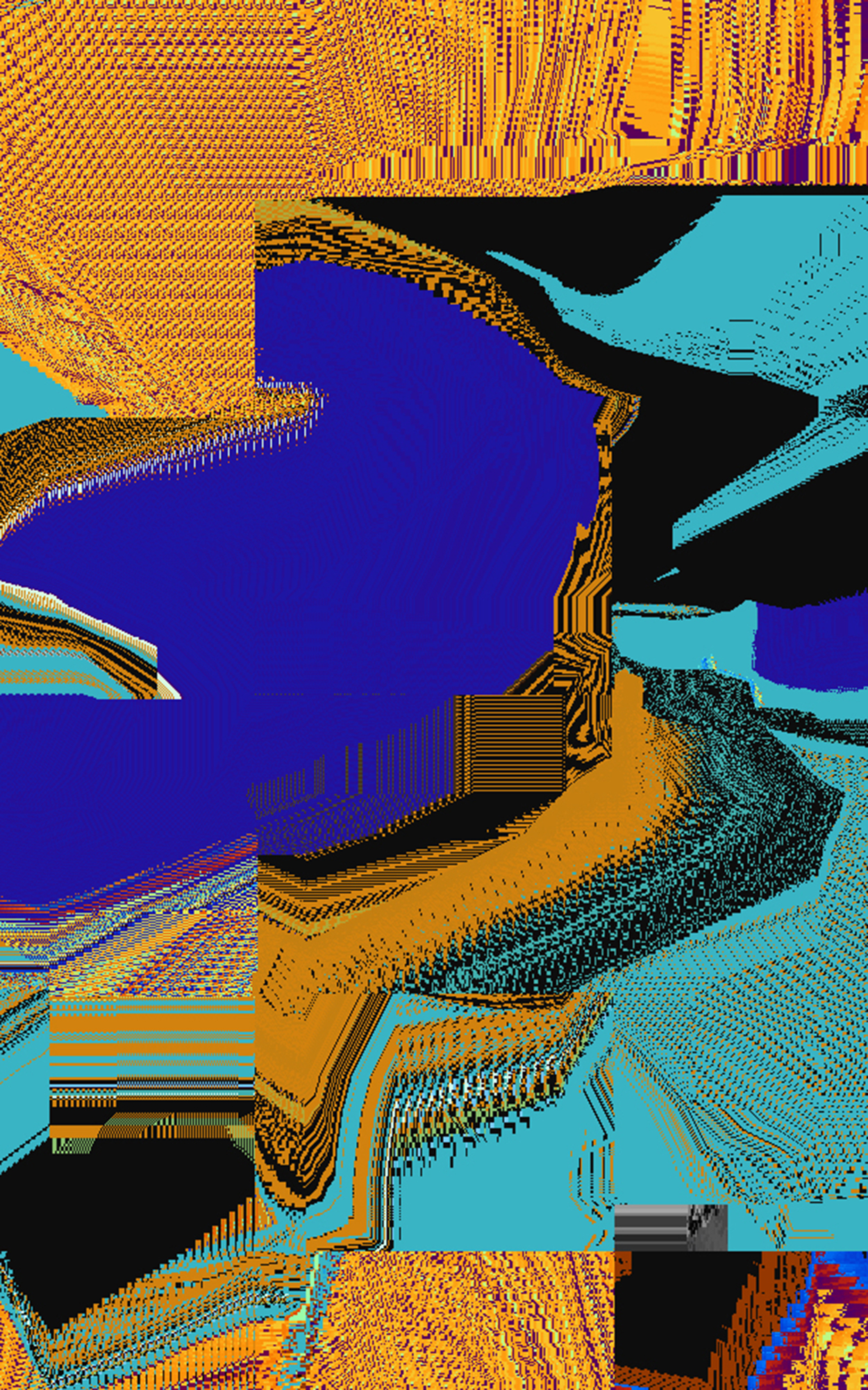
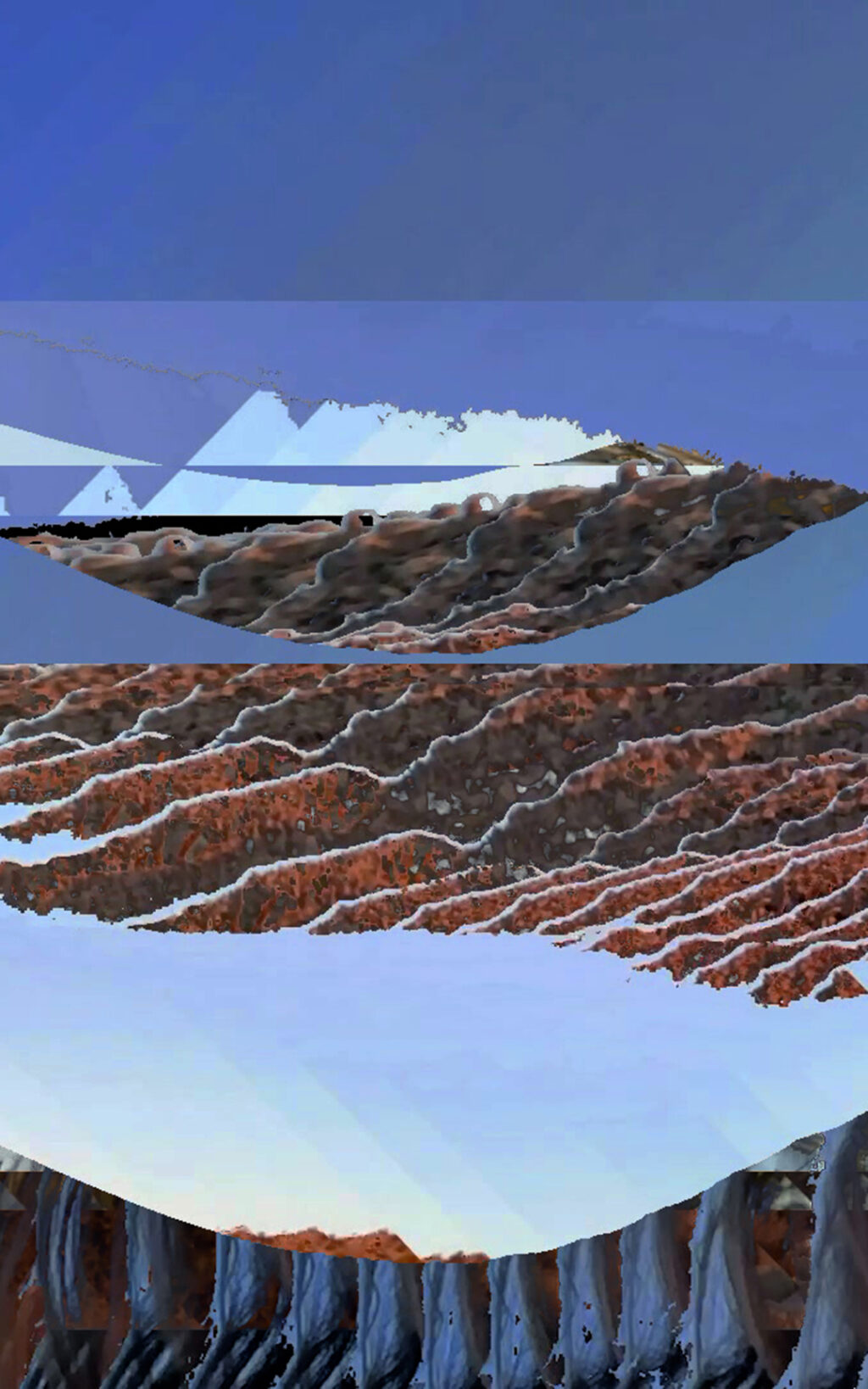
Corpo Expandido is the result of research on body and movement in public spaces and unconventional territories, on a large scale. The work questions whether what is seen is a human body or a creature linked to the subconscious and science fiction. After filming, glitch and datamosh techniques were explored. The theory of expanded bodies addresses projected virtual bodies, free in the time and space of technology, expanding choreographic possibilities and collective memory.

BIO

Alex Pachón works in creation, research and teaching, with work in visual effects and animation as a digital artist and art director at the on.graphics studio. He has presented works in 45 countries and more than 200 festivals. His research focuses on expanded cinema, the body-camera-territory relationship and the intersection between narrative, new media, technology and live arts.

Anabela Costa – Burning – France

BURNING

Anabela Costa


FILE SÃO PAULO 2026: Inter-creativity – Art and Technology – LED SHOW
Electronic Language International Festival


Burning – France 

Gently burning.

BIO

Anabela Costa is a visual artist; her work was subject of several solo exhibitions. 

From the eighties she becomes interested in digital image and moves progressively towards it. 

Since 2000 she is conducting research in the field of experimental film, based on two axes: the moving image—the aesthetics of representation of movement—, and the formalization of thematic and scientific concepts. 

She made a few experimental animation combining these two research areas: Web, TIME, LIQST_liquid state, and Landscape, In Motion, which were programmed and awarded in international festivals devoted to avant-garde cinema, animation, media arts and video-arts.

Barry Whittaker – Climate Control – United States

CLIMATE CONTROL

Barry Whittaker


FILE SÃO PAULO 2026: Inter-creativity – Art and Technology – LED SHOW
Electronic Language International Festival


Climate Control – United States

Climate Control imagines how technological frameworks translate living ecosystems into manageable forms—objects to be optimized, collected, and modified, often without fully understanding what is lost in the process. 

BIO

Barry Whittaker is a multimedia artist, designer, musician, and Professor of Art at the University of Toledo. His work explores themes of mythology, language, miscommunication, and cultural hybridization through technology and collaboration. Whittaker creates mediated experiences that serve as platforms for exploring, modifying, and questioning human activities and the world around us.

BASICODE – Histerese – Brazil

HISTERESE

BASICODE


FILE SÃO PAULO 2026: Inter-creativity – Art and Technology – LED SHOW
Electronic Language International Festival


Histerese – Brazil

Histerese is a generative video in which a vector map controls the displacement of pixels in an image. Through a feedback loop, the movements accumulate in the system; the image becomes an accumulation of drifts, an overlay of memory itself in motion.

The work invites thinking about advective processes as movements that carry information: vectors of influence that displace ideas and shape the information flows through which contemporary culture itself operates.

BIO

BASICODE is an experimental research and creation project in art and technology. It operates in the expanded field of audiovisuals, dedicating itself to the study and production of real-time audiovisual performances. Starting in 2018 as an academic research project at the State University of Paraná, the project explores the fields of expanded audiovisual, visual music, and intermedia.

Claude – Protoform – South Korea

PROTOFORM

Claude


FILE SÃO PAULO 2026: Inter-creativity – Art and Technology – LED SHOW
Electronic Language International Festival


Protoform – South Korea

Protoform explores the primal structure from which all forms emerge. Composed of drifting particles, the work visualizes microscopic elements colliding and coalescing into a living sphere, echoing the formation of cells and molecules. Through continuous transformation and expansion, it reveals the invisible order underlying nature, capturing the moment where form remains fluid and becoming is infinite.

BIO

Soon Cho (CLAUDE) is a Seoul-based new media artist creating immersive, data-driven artworks inspired by nature’s fundamental structures. Through particles and generative systems, he explores abstract beauty and the invisible dynamics that shape life and matter.

Daniel Samama – Dusk – Netherlands

DUSK

Daniel Samama


FILE SÃO PAULO 2026: Inter-creativity – Art and Technology – LED SHOW
Electronic Language International Festival


Dusk – Netherlands

DUSK is an exploration of chaos and cohesiveness. The work randomly generates a never ending stream of new compositions and colors, which are both smooth and unexpected. DUSK is the result of a carefully coded series of feedback loops and modulators.

BIO

Daniel Samama creates generative art that shapes light and time with code and chaos. His work shows how code and chaos can form a perfect symbiosis, revealing endless beauty in unpredictability. It reflects a fascination with the unexpected and with creating playgrounds in which the digital is always in motion, with an infinite variety of shapes and colours.

Daniel Samama – Jairo’s Garden – Netherlands

JAIRO’S GARDEN

Daniel Samama


FILE SÃO PAULO 2026: Inter-creativity – Art and Technology – LED SHOW
Electronic Language International Festival


Jairo’s Garden – Netherlands

JAIRO’S GARDEN is a generative animation, coded while in Jairo’s Garden in Guatapé, Colombia. The animation tries to encapsulate the colors and movement of nature. It is both smooth and unexpected, both chaotic and in harmony. The work is crafted from a carefully coded series of feedback loops and chaos generators. Together, the animation creates itself: pixels push pixels, that push pixels who push pixels. Colors are semi-randomly inserted and being formed to streams, planes, clouds, mountains.

BIO

Daniel Samama creates generative art that shapes light and time with code and chaos. His work shows how code and chaos can form a perfect symbiosis, revealing endless beauty in unpredictability. It reflects a fascination with the unexpected and with creating playgrounds in which the digital is always in motion, with an infinite variety of shapes and colours.

David Ricardo Romero Alvis – Danza de piedras y caminos – Colombia

DANZA DE PIEDRAS Y CAMINOS

David Ricardo Romero Alvis


FILE SÃO PAULO 2026: Inter-creativity – Art and Technology – LED SHOW
Electronic Language International Festival


Danza de piedras y caminos – Colombia

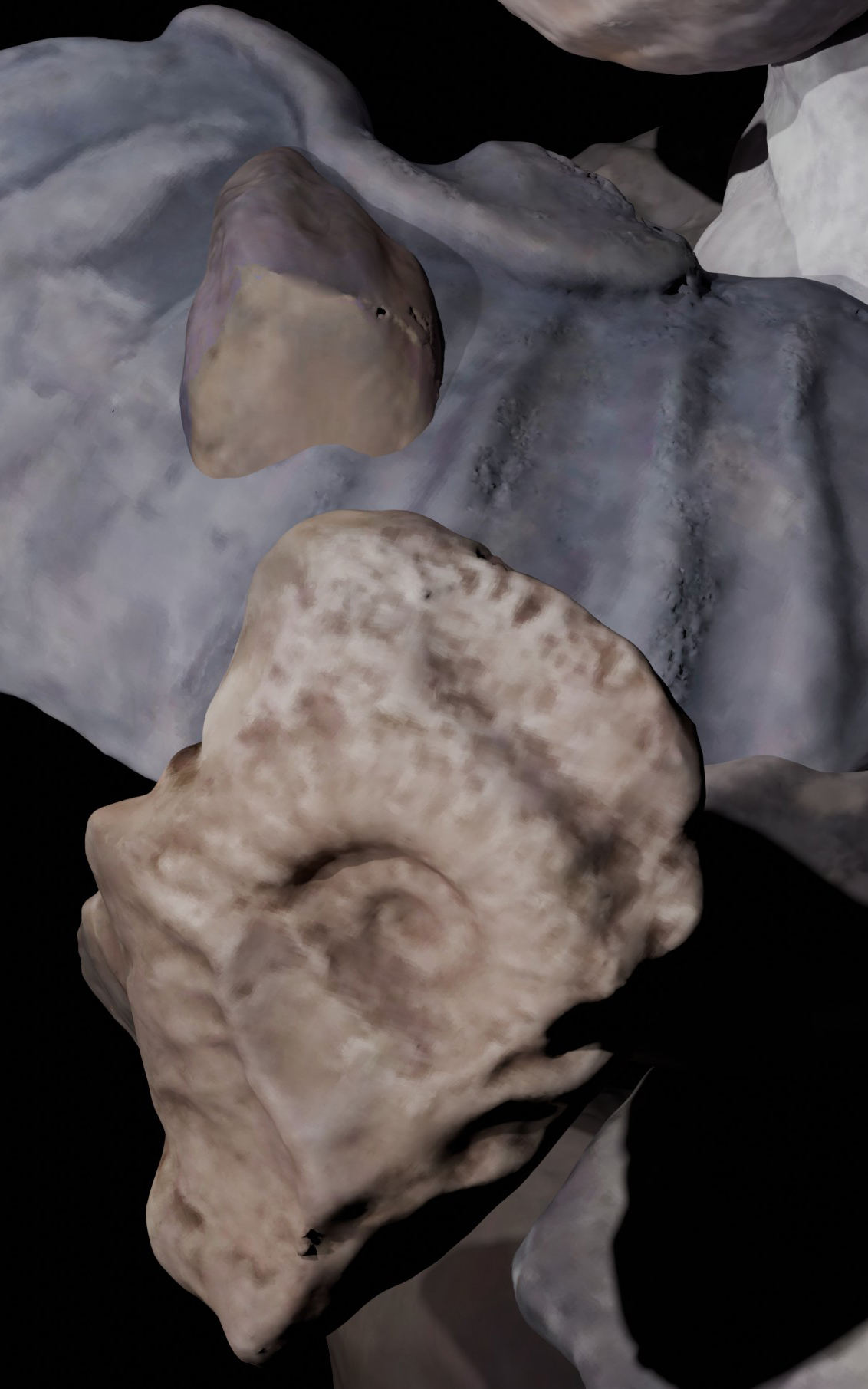
The work emerges from walking. It is built from 3D scans of enchanted stones found along paths, rivers, and Indigenous trails that were paved during the colonial period—ancestral and sacred routes within what is now Colombian territory.

BIO

David Ricardo is a 26-year-old Colombian artist interested in the dialogue between “natural” forms and virtual and electronic spaces. Through a vital materialist approach, he affirms the complexity of forms as a starting point for other possibilities of life and perception.

DOISDOIS – O Intervalo – Brazil

O INTERVALO

DOISDOIS


FILE SÃO PAULO 2026: Inter-creativity – Art and Technology – LED SHOW
Electronic Language International Festival


O Intervalo – Brazil

At the heart of one of the city’s fastest-moving axes, the work mirrors the rhythm we already inhabit: continuous flows, repetitive patterns, relentless stimuli. The structure appears infinite. Within it, a finite body struggles to keep pace. By recognizing time as limited and the body as irreproducible, it interrupts automatic adjustment and establishes its own rhythm. The system continues, but it is no longer absolute.

BIO

Isabella Conz is a visual artist and architect, co-founder of studio doisdois. Her practice investigates the relationships between space, body, and technology through images, films, and digital experiences, exploring light, scale, repetition, and atmosphere between the physical and digital realms. Matías Kim is a visual artist and architect, also co-founder of studio doisdois. Working across 3D visualization, AI, painting, and graffiti, he explores the systems that structure the city and the gestures that disrupt them.

Elina Zazulia – Subdermal Drift – Colombia / Russia

SUBDERMAL DRIFT

Elina Zazulia


FILE SÃO PAULO 2026: Inter-creativity – Art and Technology – LED SHOW
Electronic Language International Festival


Subdermal Drift – Colombia / Russia

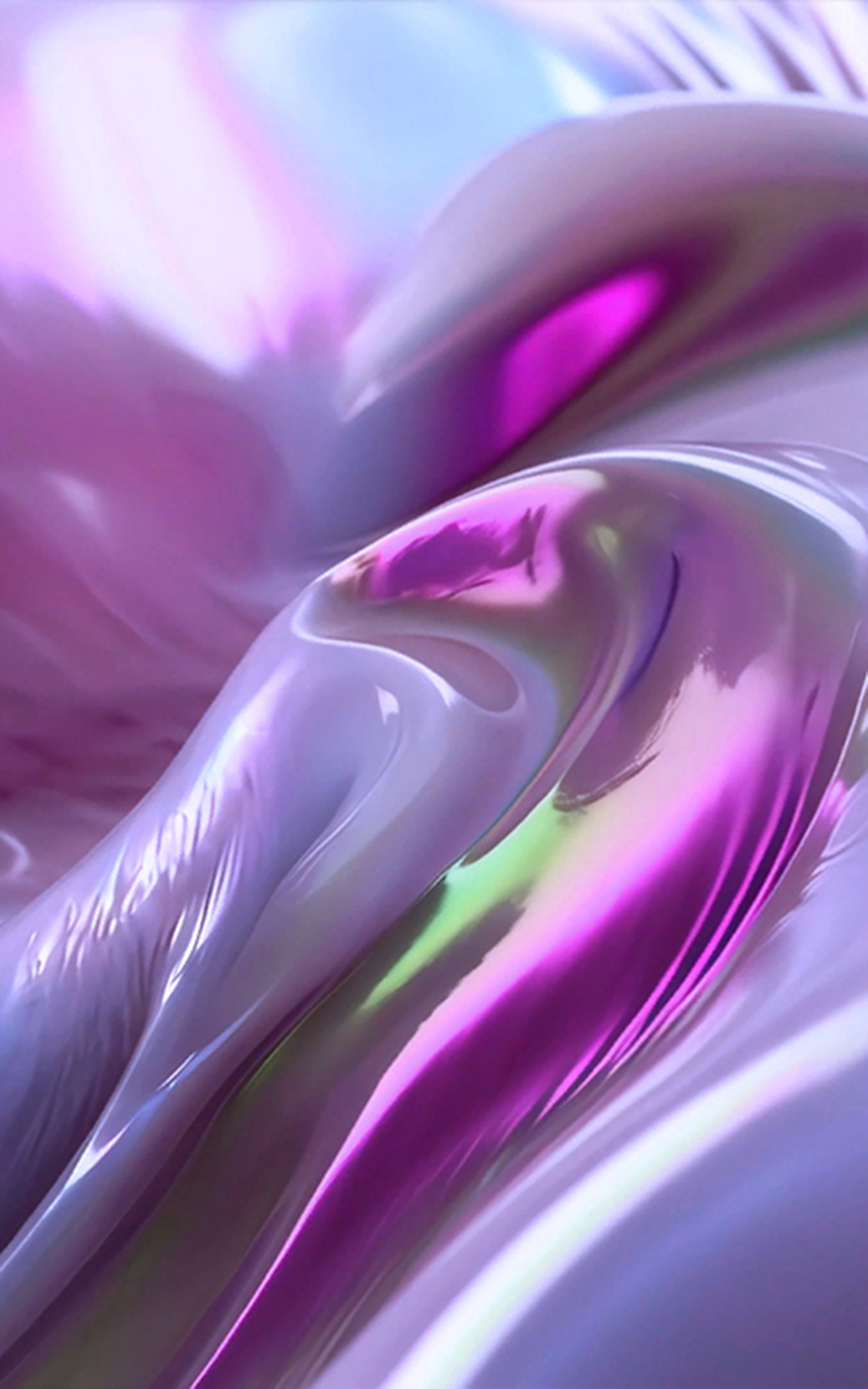
Subdermal Drift is an audiovisual work exploring invisible synthetic materialities that permeate bodies and landscapes. Using AI-generated imagery, the project creates translucent, membrane-like textures and slow internal movements that evoke a postbiological sense of corporeality. Rather than depicting figures, the work unfolds as a tactile field where organic and artificial matter merge into a state of continuous transformation.

BIO

Elina Zazulia is an interdisciplinary media artist from Russia, currently based in Colombia. With a background in architectural environment design from the Stieglitz State Academy of Art and Design, she creates audiovisual works and installations exploring materiality, perception, and the spatial behavior of digital images.

Eylul Alıcı – The Black Hole – Turkey

THE BLACK HOLE

Eylul Alıcı


FILE SÃO PAULO 2026: Inter-creativity – Art and Technology – LED SHOW
Electronic Language International Festival


The Black Hole – Turkey

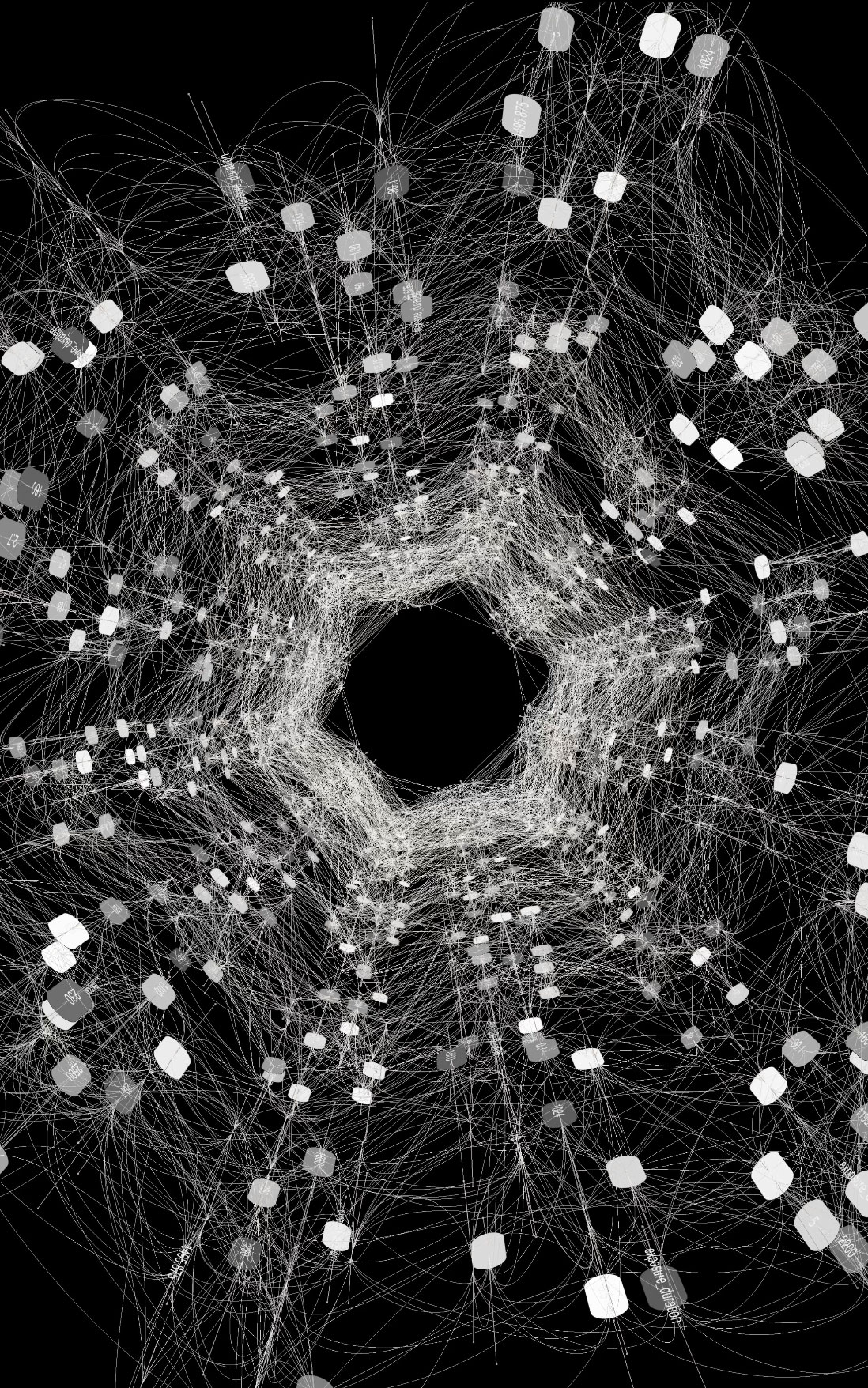
Black Hole is a data-driven artwork created using over 73,000 data points that represent the dynamics of black holes. These data include parameters such as black hole masses, locations, distances, spin rates, merger angles, and gravitational wave signals. 

The project’s data were sourced from institutions such as the NASA Hubble Legacy Archive, the European Gravitational Observatory, LIGO Hanford, LIGO Livingston, and Virgo, which are ground-based gravitational wave detectors.

BIO

With over fifteen years at the intersection of art and science, Eylul Duranagac Alıcı is an award-winning new media artist and creative director exploring AI, machine learning, and data-driven systems as creative agents. A faculty member at Yıldız Technical University, her internationally exhibited work spans institutions such as NASA, CERN, MoMA, and Ars Electronica.

La Boom Studio – Fluid Matters – Serbia

FLUID MATTERS

La Boom Studio


FILE SÃO PAULO 2026: Inter-creativity – Art and Technology – LED SHOW
Electronic Language International Festival


Fluid Matters – Serbia

Fluid Matters explores how liquid and light can materialize sensations without stable form. Organic references are reimagined through digital processes and merge with fluid motion to create a hybrid entity that exists between recognition and the artificial. The work reveals what lies beyond direct perception and allows the invisible to surface for a moment.

BIO

La Boom is a boutique art studio based in Europe, creating multimedia experiences worldwide. We turn ideas into full audiovisual projects and craft show concepts for events and artists. Every project is carefully chosen and developed with hands-on creativity by Elizabeth Mamonova (Art Director) and Almira Zakieva (Creative Director).

Grupo Labirintus – Micélio – Brazil

MICÉLIO

Grupo Labirintus


FILE SÃO PAULO 2026: Inter-creativity – Art and Technology – LED SHOW
Electronic Language International Festival


Micélio – Brazil

Inspired by the fungal networks described by Merlin Sheldrake, Micélio is an audiovisual investigation that reinterprets the city. The work converts urban photography into a “mycelial database” through computational processes, decomposing architectural rigidity. This system metabolizes raw information, culminating in a video art installation where the city transcends static concrete, revealing itself as a continuous flow of energy and regeneration.

BIO

Being the artistic arm of InterLab21_CCM (PUC-SP/CNPq), Labirintus Group articulates theoretical research and aesthetic experimentation under the coordination of Lucia Leão. Aligned with the UN SDGs, the collective creates affective cartographies, installations, and digital platforms that address the climate emergency and social inequalities. 

Nueve Voltios – Farol Infinito – Colombia

FAROL INFINITO

Nueve Voltios


FILE SÃO PAULO 2026: Inter-creativity – Art and Technology – LED SHOW
Electronic Language International Festival


Farol Infinito – Colombia

FAROL INFINITO presents an immersive journey in which sound and visual art intertwine to bring to life a poetic and sensory work. Carefully crafted in every detail, its narrative takes the lighthouse as a device for communication and navigation and, from a mythological perspective, explores the infinite fire it contains, a symbol of science and technology, understood as humanity’s ability to harness the forces of nature for the development of civilizations.

BIO

Leonardo González Quevedo, born in 1977, is an architect with 18 years of experience as a video artist and VJ. His audiovisual practice has focused primarily on the creation, development, and design of visual, trans architectural, transmedia, and stage-based languages, implemented in large-scale events, art exhibitions, and television. | Maria José Marulanda, born in 1987, is a singer, industrial designer, and composer with 15 years of experience as a sound artist and producer. Her sonic practice focuses primarily on the creation, development, and design of electronic, transmedia, and stage-based sound languages, presented in large-scale events, concerts, and television broadcasts.

Patrick Grandi – Circularité – Brazil / France

CIRCULARITÉ

Patrick Grandi


FILE SÃO PAULO 2026: Inter-creativity – Art and Technology – LED SHOW
Electronic Language International Festival


Circularité – Brazil / France

Circularité is a flow. Kirigami LED shapes rotate and intertwine on the FIESP facade, like a painting that never dries. A permanent cycle between structure and chaos.

BIO

Born in São Paulo in 1978, Patrick spent almost 15 years working in advertising as a freelance 3D artist. He created his first projection mapping in 2015 and, since then, has produced dozens of mappings in France, as part of the Video Mapping Festival in Lille, China (Shining Lights), Japan, Guatemala (Festival de la Luz), Belgium (Bright Festival).

Rita Reis – Naturgemälde V. 2 – Portugal

NATURGEMÄLDE V. 2

Rita Reis


FILE SÃO PAULO 2026: Inter-creativity – Art and Technology – LED SHOW
Electronic Language International Festival


Naturgemälde V. 2 – Portugal

Naturgemälde represents the celebration of the cycle of life through a painting of nature.

It proposes a reflection on the natural world as a unifying sensory experience, through which our perception extracts sensations that nourish our imagination, functioning as a support structure for life.

In this network of interactions, how do we achieve a balance between biological and digital time?

How do we experience nature in the technological age?

BIO

Rita Reis is a multidisciplinary artist who develops projects in different areas. Her creative projects constitute paths for individual and collective reflections that can allow us to rehearse fairer realities, denaturalizing behaviors that promote the fragmentation of communities. Her projects have already been exhibited at various international festivals.

Escola de Comunicações e Artes da Universidade de São Paulo (ECA-USP) – Feito à Mão – Brazil

FEITO À MÃO

Escola de Comunicações e Artes da Universidade de São Paulo (ECA-USP)


FILE SÃO PAULO 2026: Inter-creativity – Art and Technology – LED SHOW
Electronic Language International Festival


Feito à Mão – Brazil

Feito à Mão (Handmade, in Portuguese) brings together three works developed from the same question: where do the boundaries between craftsmanship and automation lie? These two modes of production intertwine in a narrative thread that begins with the earth itself—Gaia—and incorporates electronic techniques that transform life and the urban landscape, challenging our notions of what it means to be handmade. Between turning the soil, reshaping the urban environment, and fragmenting the languages of art, discussions emerge about the role of manual processes in relation to new technologies within today’s artistic landscape.

BIO

Support
Grupo de Pesquisa e Extensão Realidades – ECA-USP

Advising
Profa. Dra. Silvia Laurentiz 

Collaboration
Jo Seraph
Leona Machado

Participants
Alex Avramides Levin
Angélica Sofía García Perez
Antônia Laureano Suarez
Bruna Krunfli
Cristiana Cruz
Hugo Alves Paiva
Isaac Duarte Bender
Isabelle Telles Matias
Isabella Carvalho de Melo
Lúcia Yoojung Moon
Maria Muniz Fleury de Camargo
Pietro Galastre Atore
Raphael Delaroli Bezerra Couto
Raquel de Souza Oliveira
Reginaldo Aquino
Ryan Gonçalves
Tainá Delfino

Timothy Weaver & Xavier Barriga-Abril – contrapuntoEnteógeno – Ecuador / United States

CONTRAPUNTOENTEÓGENO

Timothy Weaver & Xavier Barriga-Abril


FILE SÃO PAULO 2026: Inter-creativity – Art and Technology – MUSIC
Electronic Language International Festival


contrapuntoEnteógeno – Ecuador / United States

contrapuntoEnteógeno is an entheogenic plant biosonification composed in counterpoint from North & South American ecosystems. Brugmansia arborea (Andean cloud forest) and Datura innoxia (New Mexican desert) generate bioimpedances and scopolamine entheogens under celestial influences. In situ, Eurorack analog synthesis transmediates bioelectrical plant signals into ecogenerated electroacoustic sound, negotiating agencies between human and beyond-human/plant expression.

BIO

Timothy Weaver is a biomedia artist, microbiologist and bioenvironmental engineer focused on restoring ecological memory through speculative inquiry at the art-science interface. He is Professor Emeritus of Emergent Digital Practices at the University of Denver.
Xavier Barriga Abril is an Equatorian designer/artist/researcher exploring posthuman interactive systems through creative coding and electronic fabrication.


IN MEMORIAM

Tribute to Timothy Wayne Weaver: A Life Dedicated to Art, Science, and Knowledge

FILE—Electronic Language International Festival—honors the legacy of Timothy Wayne Weaver, artist, researcher, and professor whose career fostered a meaningful dialogue between art, science, and technology, inspiring artists, researchers, and audiences alike. 

Throughout his career, Timothy developed an interdisciplinary practice that brought together art, science, and environmental responsibility. His work explored the complex relationships between human beings, nature, and technology, guided by experimentation, rigorous research, and a deep commitment to the creation and dissemination of knowledge.

FILE is grateful for Timothy’s intellectual generosity, enduring curiosity, and dedication to building new dialogues across disciplines, contributions he also shared with our audiences and our community. His work and legacy will continue to resonate in the memory of the festival and in the lives of all those touched by his practice.
Zhipeng Wang – Singularity – China

SINGULARITY

Zhipeng Wang


FILE SÃO PAULO 2026: Inter-creativity – Art and Technology – MUSIC
Electronic Language International Festival


Singularity – China

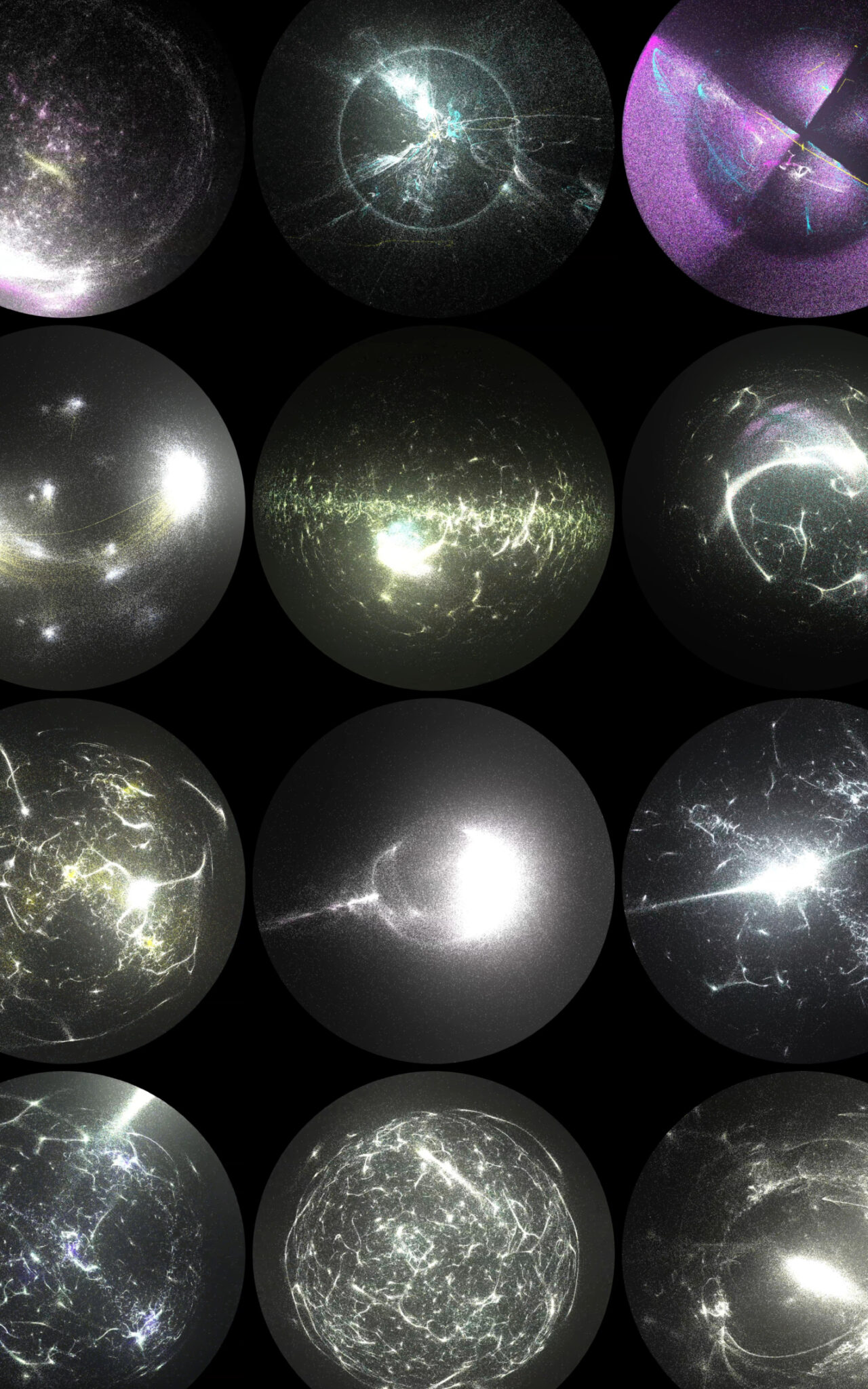
A singularity is a point of infinite curvature where laws dissolve. Singularity visualizes the invisible forces of sound at this threshold. Using real-time algorithms, millions of particles are simulated as a volatile quantum field. Driven by spectral data, visual matter oscillates between entropy and a unified core. Transforming the dome into a particle accelerator, the work immerses the audience in a collision of digital matter and sonic energy—the birth and collapse of a universe.

BIO

Zhipeng Wang, digital artist, graduated from the China Academy of Art, Intermedia Art Academy. His practice includes live audiovisual performance, generative art, and sound art, among other forms.

Vahid Qaderi & Razieh Kooshki – Compress Road – Austria

COMPRESS ROAD

Vahid Qaderi & Razieh Kooshki


FILE SÃO PAULO 2026: Inter-creativity – Art and Technology – MUSIC
Electronic Language International Festival


Compress Road – Austria

The project began with an observation about contemporary spaces, both digital and natural: many environments repeat themselves at different scales. Cities, interfaces, virtual worlds, and nature itself share similar structural patterns. The road became a metaphor for moving through these layered systems, suggesting a compression of time, memory, and navigation.

BIO

Vahid Qaderi is an Iranian media artist, electronic musician, and visual artist based in Linz, Austria. His practice spans sound design, music production, AR/VR, video games, 3D animation, and interactive audiovisual and video art. His work has been presented at festivals including Ars Electronica, the Geneva International Film Festival, and Radar Festival. 

Razieh Kooshki is an Iranian interdisciplinary artist based in Linz, Austria. Her practice focuses on generative interactive visuals, VR experiences, and video art, exploring the relationship between sound and non-narrative moving images. Her work has been presented at festivals including Ars Electronica, the Geneva International Film Festival, and Radar Festival.

Richard McCormick – GeoSonic – United Kingdom

GEOSONIC

Richard McCormick


FILE SÃO PAULO 2026: Inter-creativity – Art and Technology – MUSIC
Electronic Language International Festival


GeoSonic – United Kingdom

GeoSonic is an audiovisual piece that takes sound from the earth, and other materials and creates visual representations of them with the use of an oscilloscope. Conceptually, the piece is aimed to highlight the fragile nature of the Earth, how each day more and more erodes away. There is a point at which each section breaks or fades to nothing. This is an intentional choice to emphasise the scale of what we are losing and have already lost.

BIO

Richard McCormick is a composer, visual artist and sound designer with previous work ranging from film scores, electroacoustic, audiovisual and his own electronic music. Having studied a Masters in Music Composition at Sheffield University, Richard’s work expanded and developed exponentially under the tutelage of Adrian Moore.

NTSCconcept – Resonancias – Argentina

RESONANCIAS

NTSCconcept


FILE SÃO PAULO 2026: Inter-creativity – Art and Technology – MUSIC
Electronic Language International Festival


Resonancias – Argentina

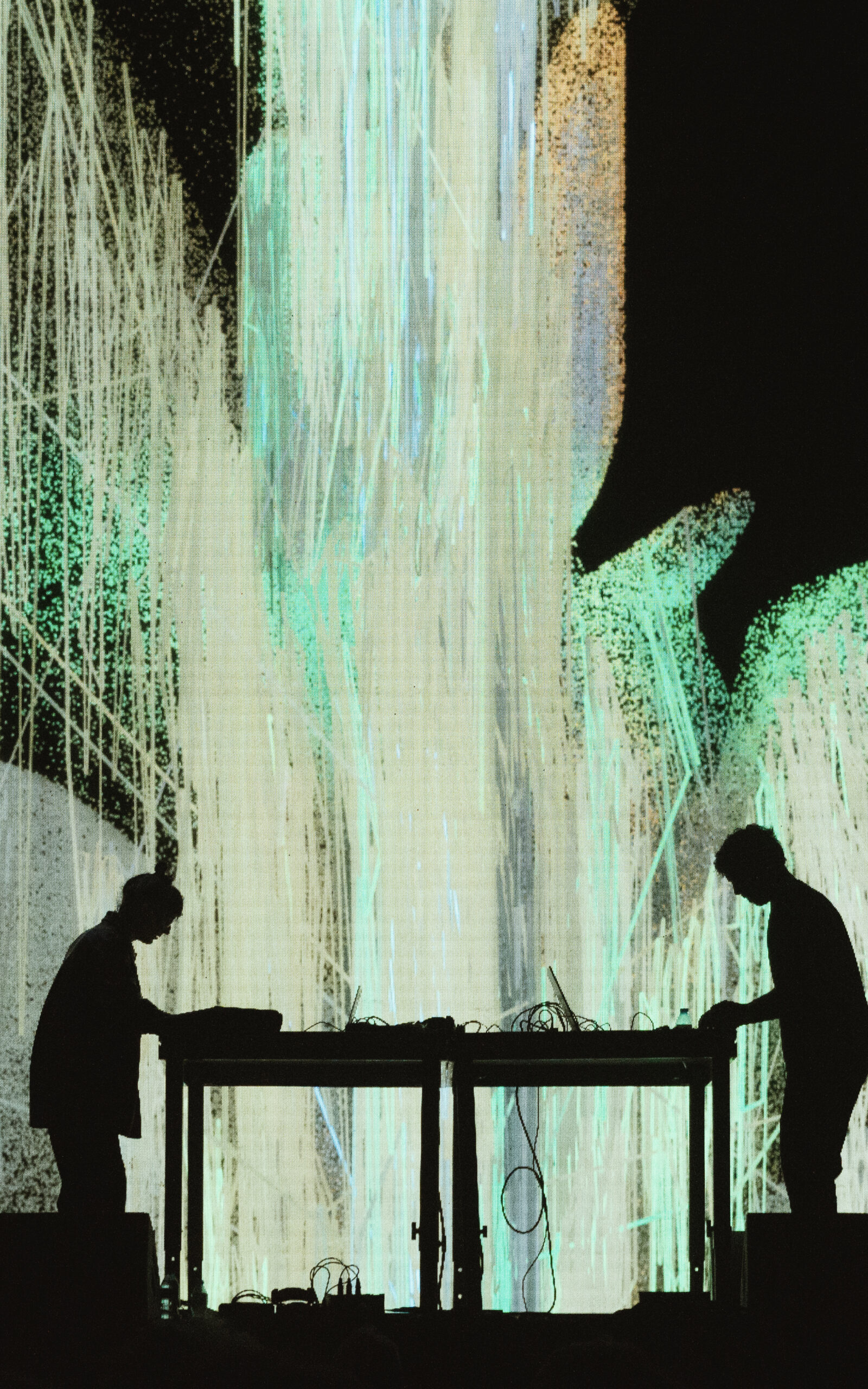
Resonancias is a generative audiovisual work that emerged from a real-time performance where artificial intelligence, modular synthesizers, and body movement operate within a single system. The image is continuously transformed through diffusion models powered by audio-rhythmic structures, creating a feedback loop between body, sound, and algorithm.

BIO

NTSCconcept is an Argentinian audiovisual duo founded in 2001 by Sebastián Ferreyra and Laury Moulia. They integrate modular synthesis, generative systems, and artificial intelligence into real-time audiovisual performances. They have presented their work at festivals and electronic art spaces in Latin America and Europe, and released music on international labels.

Moritz Simon Geist – Entropy – Germany

ENTROPY

Moritz Simon Geist


FILE SÃO PAULO 2026: Inter-creativity – Art and Technology – MUSIC
Electronic Language International Festival


Phytomorphic Topologies – Canada / United States / France

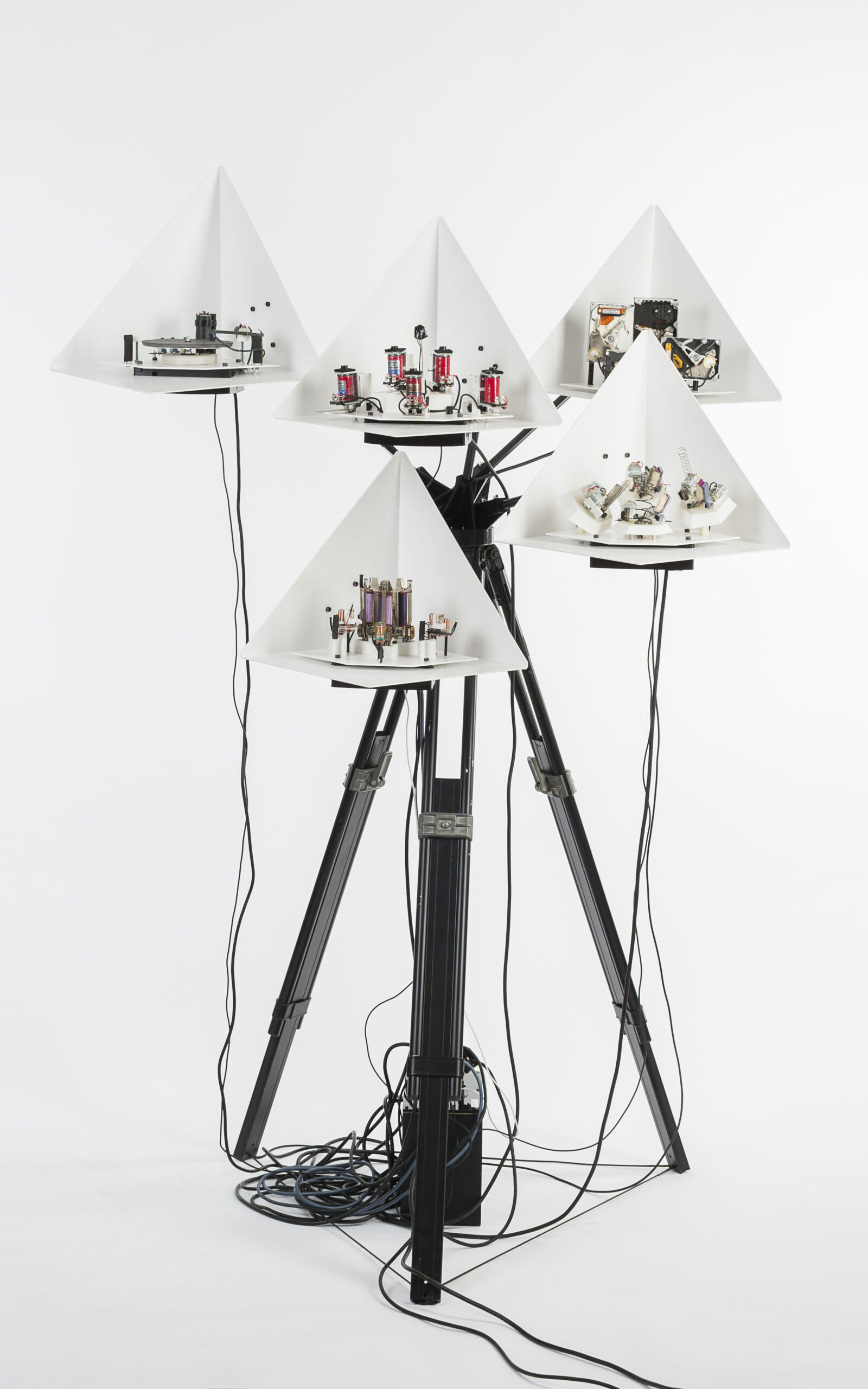
Entropy is a robotic music video built entirely around Tripods One, Moritz Simon Geist’s system of custom-built sound robots. Every sound is generated live by physical machines: a pneumatic hi-hat, a futuristic kalimba, a drone guitar, and mechanical tone generators. The result is machine-made techno in which the choreography of the robots is as central as the music. The Tripods One system is on permanent display at the Ars Electronica Center in Linz.

BIO

Moritz Simon Geist is a German visual artist, researcher, and music producer working at the intersection of robotics, physical sound, and algorithmic agency. He builds robotic instruments and autonomous sound sculptures, from the MR-808 (2012) to Tripods One (2017). His work has been shown at the Venice Biennale, Ars Electronica, ZKM, and the MIT Museum.

Matthew Biederman & Pierce Warnecke – Phytomorphic Topologies – Canada / United States / France

PHYTOMORPHIC TOPOLOGIES

Matthew Biederman & Pierce Warnecke


FILE SÃO PAULO 2026: Inter-creativity – Art and Technology – MUSIC
Electronic Language International Festival


Phytomorphic Topologies – Canada / United States / France

Phytomorphic Topographies is a suite of audiovisual works which investigates fragile ecosystems of protected wilderness spaces through three-dimensional (photogrammetry) visual representations and near-field audio recordings. The work explores these zones’ capacity as a compositional tool in order to foster novel views and reflections rather than simple representations, thereby bringing attention and consideration to both the visible and often overlooked life structures around us.

BIO

Pierce Warnecke is a multidisciplinary digital artist at the intersection of experimental music, digital arts and video art. He has presented his work in the form of performances, concerts and installations at Rewire, Mutek, GRM, ZKM, ManiFeste (IRCAM), CTM, Elektra, KW Institut, La Biennale Nemo, Sonic Acts, Martin Gropius Bau, MAC Montreal, Gray Area SF, Scopitone, LEV Festival, Semibreve, etc. 

Matthew Biederman is an artist exploring perception, media saturation, and data systems since the mid-1990s. He has received major awards and held residencies at institutions including the Center for Experimental Television and CMU’s CREATE Lab. In 2007, he co-founded the Arctic Perspective Initiative. His work has been exhibited internationally at major biennales, festivals, and museums.

Bowen Wu – Mixobloodify – England

MIXOBLOODIFY

Bowen Wu


FILE SÃO PAULO 2026: Inter-creativity – Art and Technology – MUSIC
Electronic Language International Festival


Mixobloodify – England

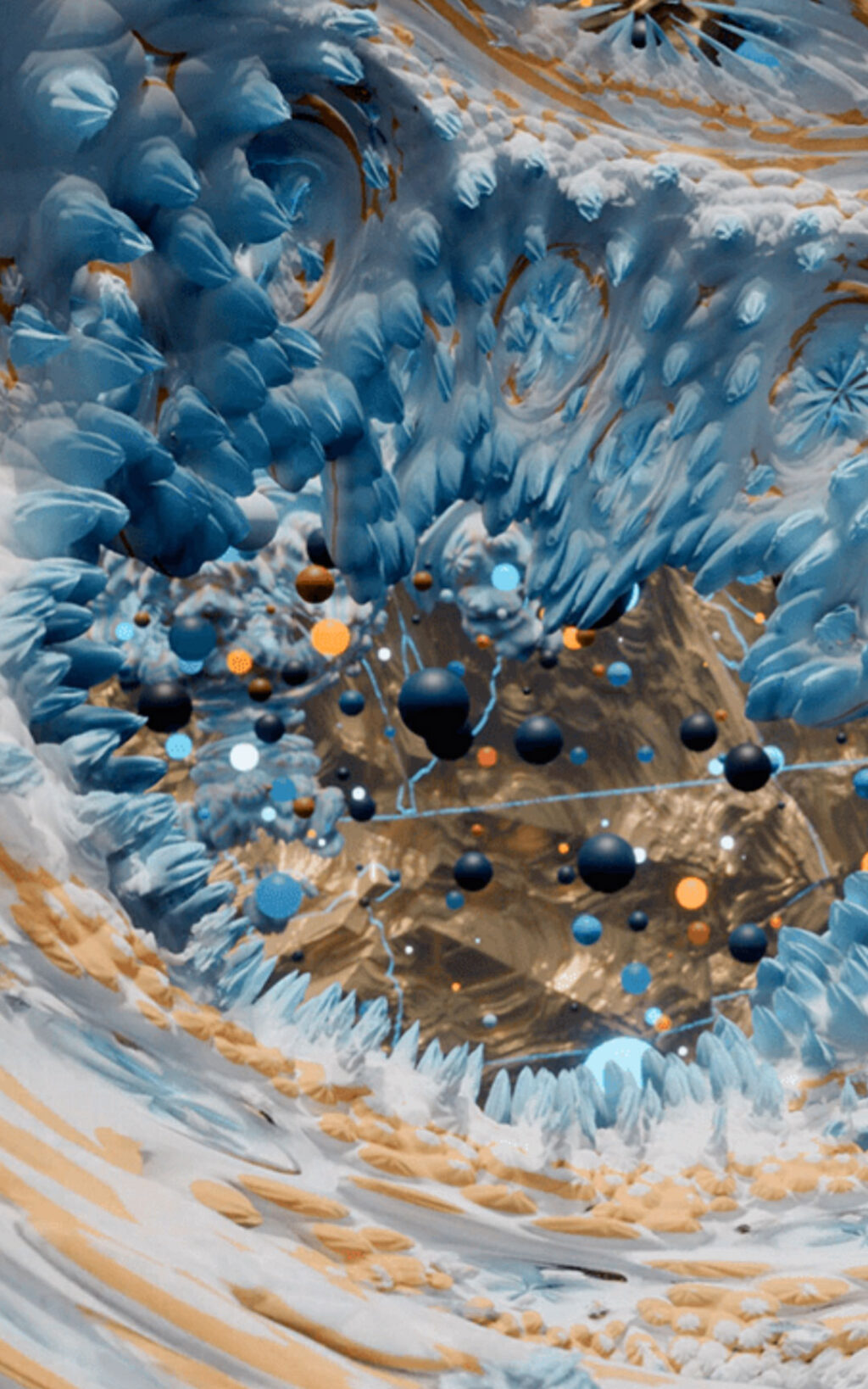
Mixobloodify originates from research on hybridizing the traditional Chinese pipa with electronic music to form a new digital language. Through this process, the artist became interested in broader ideas of hybridity, including cross-cultural identity, cultural conflict and self-acceptance. The work follows Homi Bhabha’s notion of the “third space”, treating artistic creation as a site where different cultural backgrounds meet and transform.
BIO

Bowen Wu is a Glasgow-based composer and audiovisual artist working with sound art, electroacoustic music, moving image and live electronics, often using archival material and spatial listening. His works have been presented internationally. He holds an MSc from the University of Edinburgh and is currently a PhD researcher at the University of Glasgow.

Alfonso Pretelt – LUX OSCILLANS – Colombia

LUX OSCILLANS

Alfonso Pretelt


FILE SÃO PAULO 2026: Inter-creativity – Art and Technology – MUSIC
Electronic Language International Festival


LUX OSCILLANS – Colombia

It is an audiovisual suite in four movements where sound, analyzed in real time, governs the light emission of an anisotropic field: grain, halo, matter and radiance are organized and dialogue, composing generative systems of a poetic physics.

Audio generated using SuperCollider, free software.
Moving image generated using C++ and JavaScript. 
BIO

Poet, interdisciplinary artist, composer, and psychologist. Alfonso questions the interface and the cyborg’s stance in its contemporary condition, transforming techno-spiritual and techno-emotional contexts in interaction with the machine. He conceives of sound as an entity, a material to be sculpted like stone. 

Simone Bosco – REbirth – Italy

REBIRTH

Simone Bosco


FILE SÃO PAULO 2026: Inter-creativity – Art and Technology – MUSIC VIDEO PERFORMANCE
Electronic Language International Festival


REbirth – Italy

REbirth is an Audio Video live show in which images react in real time to sound, shaping an incredibly emotional experience. “Nothing is destroyed, everything is transformed”, inspires the artist who explores the infinite life spiral of every living being: a process of regeneration that gives new life. An invitation to sustainability and personal renewal, REbirth explores a territory straddling different sound and visual languages in a synaesthetic process between them.

BIO

Simone Bosco is an Italian composer, producer, sound designer and musician.

From 2000 to 2026 he released 17 record works (4 of which were voted among the 10 best European albums of the year).

He has written music for 18 dramas.

He has collaborated with internationally renowned artists and has a concert activity that has led him to perform in prestigious theatres and festivals in over 20 countries.

Bromo – CRISPR the pattern of life – Spain

CRISPR THE PATTERN OF LIFE

Bromo


FILE SÃO PAULO 2026: Inter-creativity – Art and Technology – MUSIC VIDEO PERFORMANCE
Electronic Language International Festival


CRISPR the pattern of life – Spain

Bromo’s proposal goes beyond an audiovisual concert of experimental music and generative art. Through the constant search for new communication tools, this conceptual facet, in which research processes become almost academic approaches, helps create transformative experiences, foster an active audience, and generate reflection in the viewer. CRISPR the pattern of life is their latest offering.

BIO

Bromo is the duo formed by Paloma Peñarrubia, a renowned film composer with a long history of selecting the best electronic music tracks for her sets. In 2017, she decided to create, together with Azael Ferrer, developer of the sophisticated visuals, a project combining experimental music, generative art, and AV performance, exploring diverse themes…

An-Ting Chang & Ian Gallagher – Underwater – England / Taiwan

UNDERWATER

An-Ting Chang & Ian Gallagher


FILE SÃO PAULO 2026: Inter-creativity – Art and Technology – MUSIC VIDEO PERFORMANCE
Electronic Language International Festival


Underwater – England / Taiwan

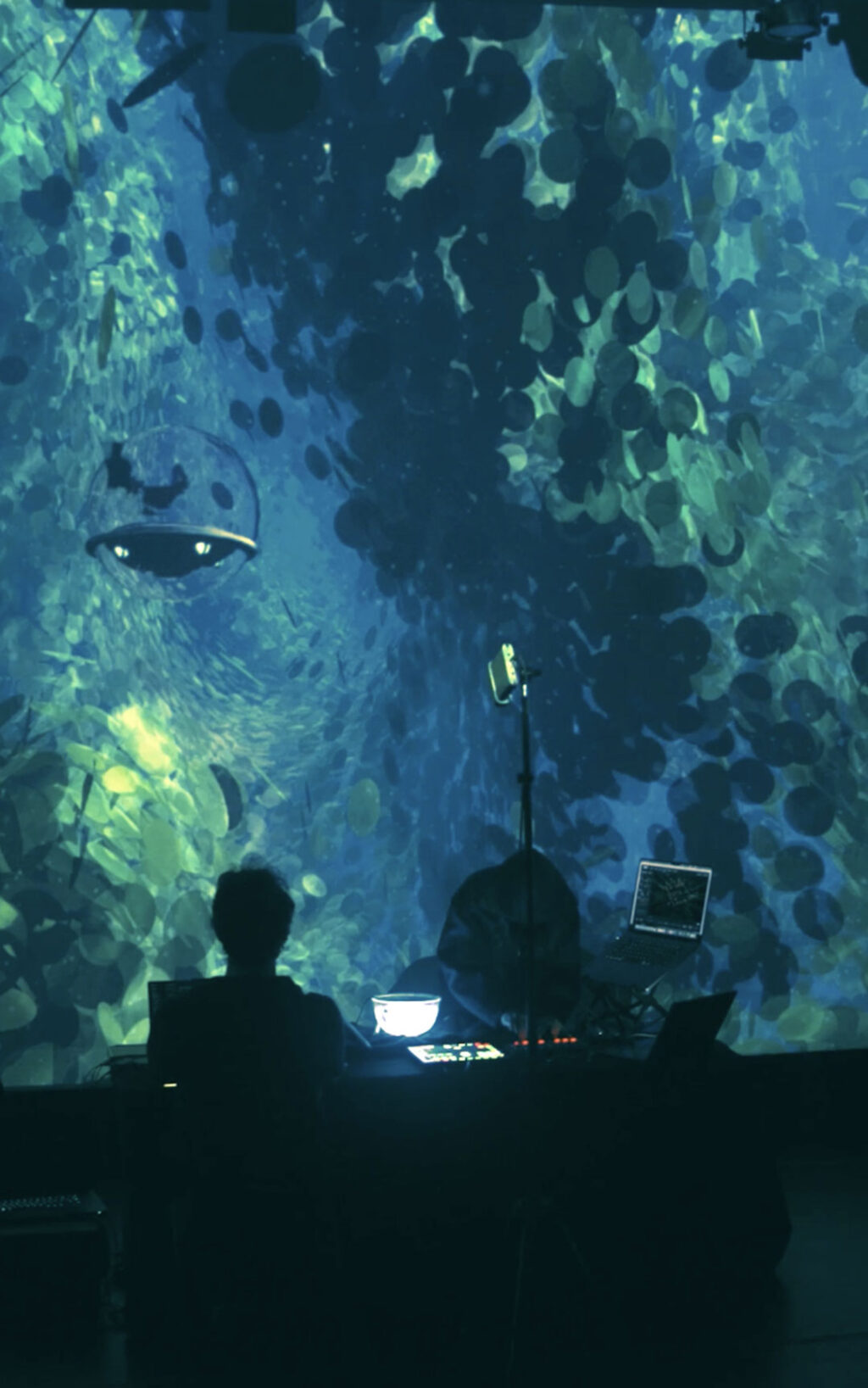
Have you heard that fish talk? Do you know the underwater world is super noisy, like a market full of life and communications? Underwater is a new live performance project that explores the acoustic world of marine life by composer An-Ting and creative technologist Ian Gallagher. We want to share with people the vibrancy and mystery of the natural world, and reconnect them through a collective experience with the non-human communications that our “civilized” society might have made us numb to.

BIO

An-Ting (composer) and Ian Gallagher (creative technologist) are collaborators specializing in blending cutting-edge arts and technology. Their collaborations include every dollar (2021), winner of Arts Council England’s Digital Culture Award for Storytelling, and HOME X (2023), which premiered at the Barbican with a sold-out run and was nominated for the UK Theatre Awards’ Digital Innovation.

Zen Cohen – Desert ECH0000000 – United States

DESERT ECH0000000

Zen Cohen


FILE SÃO PAULO 2026: Inter-creativity – Art and Technology – VIDEO ART SHORT
Electronic Language International Festival


Desert ECH0000000 – United States

Desert ECH0000000 is a site-specific video performance recorded during an artist residency at High Desert Test Sites in Joshua Tree, California. This work emerged from an immersive engagement with the landscape, where movements through the desert were captured and mediated using a camera and customized software. It invokes the concept of quantum branching—the idea that every event with multiple possible outcomes gives rise to parallel universes.

BIO

Zen Cohen’s exhibition credits include the deYoung Museum, SFMOMA, Yerba Buena Center for the Arts, Vanity Projects, Museo de Arte Moderno (CDMX), Ex Teresa Arte Actual (CDMX), and Centro Atlántico de Arte Moderno (Canary Islands). She is the founding director of Open Air Media Festival which received an NEA in 2024.

Zack Nguyen – The Space Between Becomes Us – United States / Vietnam

THE SPACE BETWEEN BECOMES US

Zack Nguyen


FILE SÃO PAULO 2026: Inter-creativity – Art and Technology – VIDEO ART SHORT
Electronic Language International Festival


The Space Between Becomes Us – United States / Vietnam

The Space Between Becomes Us is a meditation on how the artist believes we come into being through one another—how the unseen space between us might carry memory, feeling, and healing. This work reflects a desire not for answers, but for mutual understanding. For the kind of peace that emerges when we let ourselves listen and become, together.

BIO

Zack Nguyen is a hybrid artist and independent curator based in Dallas and active in Berlin. Working across moving image, performance, sound, and new media installation, his practice explores nowness, identity, and the lived body as sites of healing and connection. His work balances minimal form with emotional intensity and has been exhibited internationally across Europe, Asia, and the U.S. 

Verônica Gesteira & Paul LiBassi – Minimal Spaces – Brazil / Spain / United States

MINIMAL SPACES

Verônica Gesteira & Paul LiBassi


FILE SÃO PAULO 2026: Inter-creativity – Art and Technology – VIDEO ART SHORT
Electronic Language International Festival


Minimal Spaces – Brazil / Spain / United States

This piece explores the relationship between sound and moving image using noise and feedback. Through creative programming techniques, abstract audio-reactive forms generate small textures that combine into a kind of imaginary relief map. The soundscape conjures elements of simple noise. Drones, sirens, metallic tones… everything is done to define the imaginary space in which this work is located.

BIO

Verônica Gesteira is an engineer, multimedia artist, and music producer born and raised in São Paulo. Paul LiBassi is an American musician, producer, and sound designer living in Spain. Previously, the two created audiovisual art together for live performances and are now exploring the creation of recorded video art works that maintain the unpredictability of live performance.