highlike

David Ricardo Romero Alvis – Danza de piedras y caminos – Colombia

DANZA DE PIEDRAS Y CAMINOS

David Ricardo Romero Alvis


FILE SÃO PAULO 2026: Inter-creativity – Art and Technology – LED SHOW
Electronic Language International Festival


Danza de piedras y caminos – Colombia

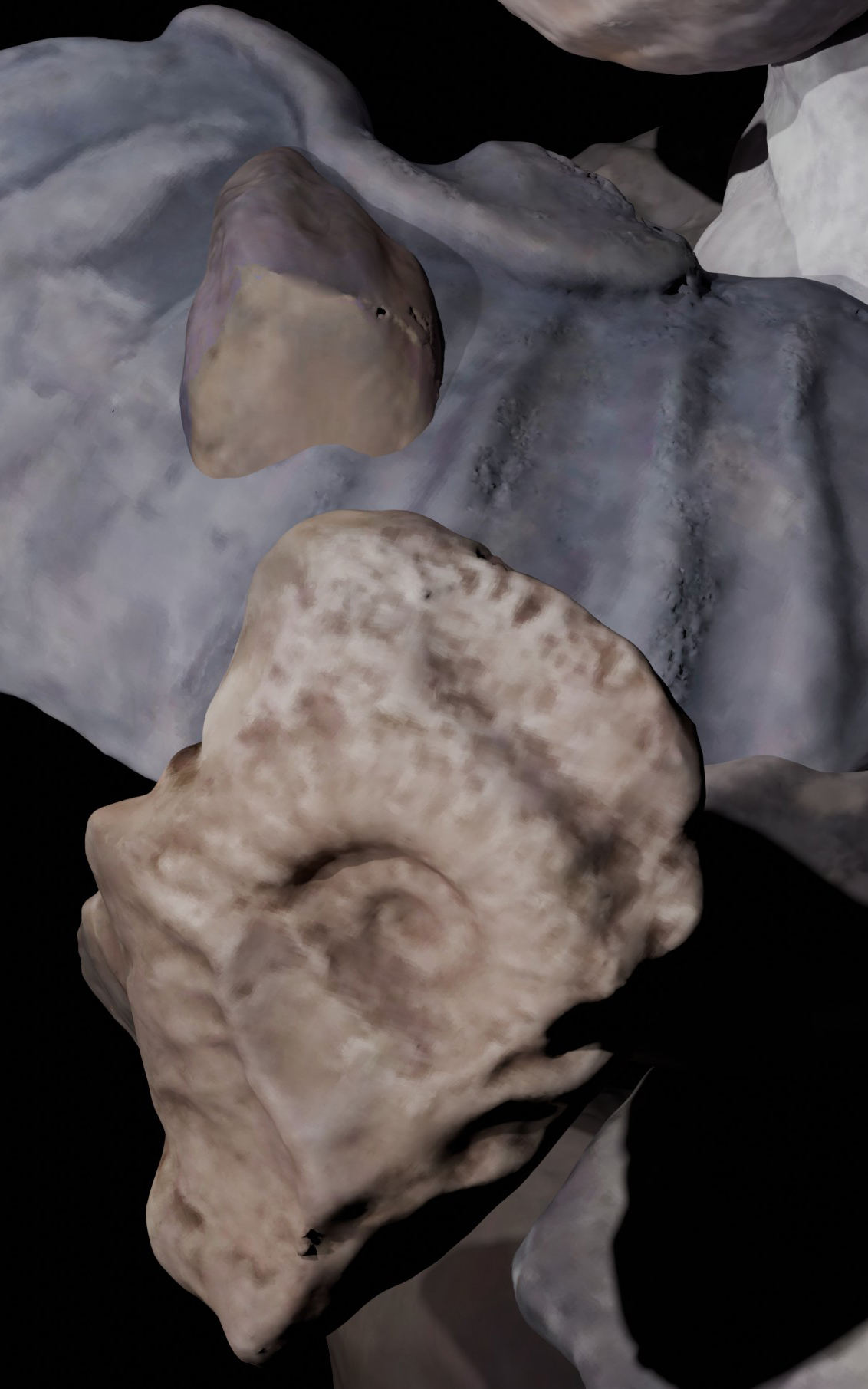
The work emerges from walking. It is built from 3D scans of enchanted stones found along paths, rivers, and Indigenous trails that were paved during the colonial period—ancestral and sacred routes within what is now Colombian territory.

BIO

David Ricardo is a 26-year-old Colombian artist interested in the dialogue between “natural” forms and virtual and electronic spaces. Through a vital materialist approach, he affirms the complexity of forms as a starting point for other possibilities of life and perception.
Verônica Gesteira & Paul LiBassi – Minimal Spaces – Brazil / Spain / United States

MINIMAL SPACES

Verônica Gesteira & Paul LiBassi


FILE SÃO PAULO 2026: Inter-creativity – Art and Technology – VIDEO ART SHORT
Electronic Language International Festival


Minimal Spaces – Brazil / Spain / United States

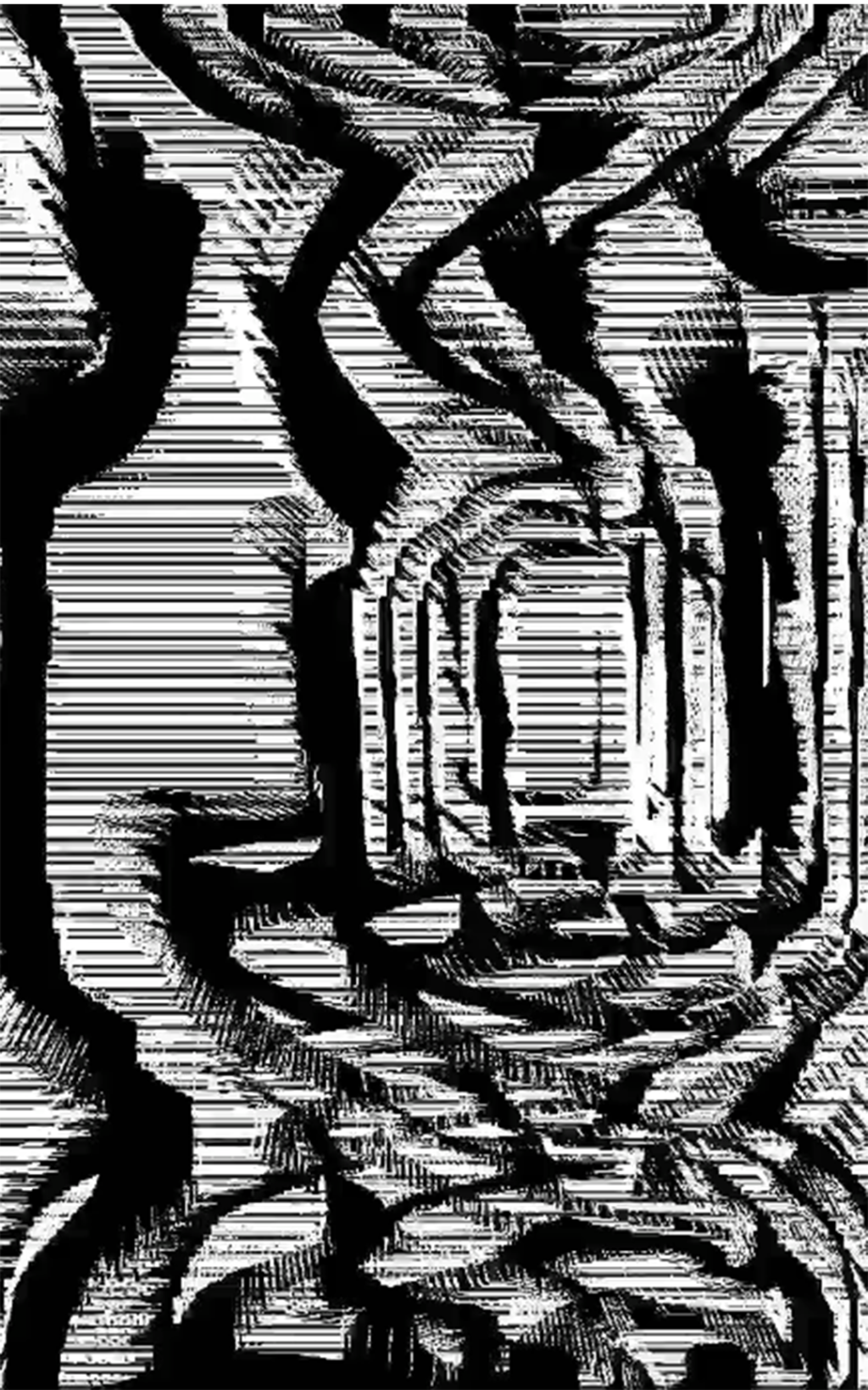
This piece explores the relationship between sound and moving image using noise and feedback. Through creative programming techniques, abstract audio-reactive forms generate small textures that combine into a kind of imaginary relief map. The soundscape conjures elements of simple noise. Drones, sirens, metallic tones… everything is done to define the imaginary space in which this work is located.

BIO

Verônica Gesteira is an engineer, multimedia artist, and music producer born and raised in São Paulo. Paul LiBassi is an American musician, producer, and sound designer living in Spain. Previously, the two created audiovisual art together for live performances and are now exploring the creation of recorded video art works that maintain the unpredictability of live performance.

Michael Lyons – Circles and Squares – United Kingdom/Japan

CIRCLES AND SQUARES

Michael Lyons


FILE SÃO PAULO 2026: Inter-creativity – Art and Technology – VIDEO ART SHORT
Electronic Language International Festival


Circles and Squares – United Kingdom/Japan

Circles & Squares is an audiovisual work structured around the interaction of geometric motion and sound. Circular forms intersect and recede in continuously shifting configurations, generating patterns of (a)symmetry, interference, and temporal tension. The animation operates as a visual score, organizing the square-wave tones of the soundtrack through evolving spatial relations. Free of narrative or representation, the work foregrounds rhythm, recurrence, and perceptual transformation.

BIO

Michael Lyons (UK, Canada) is an artist and researcher based in Kyoto, Japan. He is currently Professor of Image Arts and Sciences at Ritsumeikan University.

ESTEBAN DIÁCONO

Ólafur Arnalds – Ljósið


This project was inspired by two things: the wonderful music of the neoclasical icelandic musician Ólafur Arnalds and the incredibly awesome Trapcode Particular 2 plugin by Peder Nordby.

It started as an experimental take on an organic music visualizer. I used two color palletes (helped by my talented friend Sol Valladares) to visually separate the piano and the strings; the blue tones representing the melancholic part of the song and the warmer colors representing the hope and the joy.


aes+f

allegoria sacra

This piece by AES+F takes the Italian Renaissance art piece Allegoria Sacra in order to show a modern representation of perjury. There are political and religious tones but there is not an overt statement trying to be made. AES+F are asking their audience to take a deeper look at how we see the Western and Eastern worlds, and how all people are judged.

Liam Lee

Untitled 05
“I look at forms in nature for inspiration – from microscopic organisms like bacteria and viruses, to moss covered stones, branches of trees, the human body, seedpods, landscapes, star charts, etc., then try to bring all of these disparate elements together in the work”

Daniel Canogar

Loom
Loom showcases abstract animations developed with data from real-time Google Trends. Popular queries appear momentarily as overlaid text before dissolving into a smoky abstraction. These terms are approached with an accidental lyricism —each word appears and disappears in a trail of saturation. Colors within the animation are determined by the prevalence of a specific topic; the more viral the search is online, the warmer the tones become. Stripped from headlines, graphic imagery, and statistics, each phrase inspires a contemplative experience, a chance for the viewer to ruminate on what is streaming through the collective consciousness at any given time. Loom weaves a social fabric, mixing the transcendental with the banal, to present the spirit of our time in generative motion.

localStyle (Marlena Novak & Jay Alan Yim) in collaboration with Malcolm MacIver

Scale
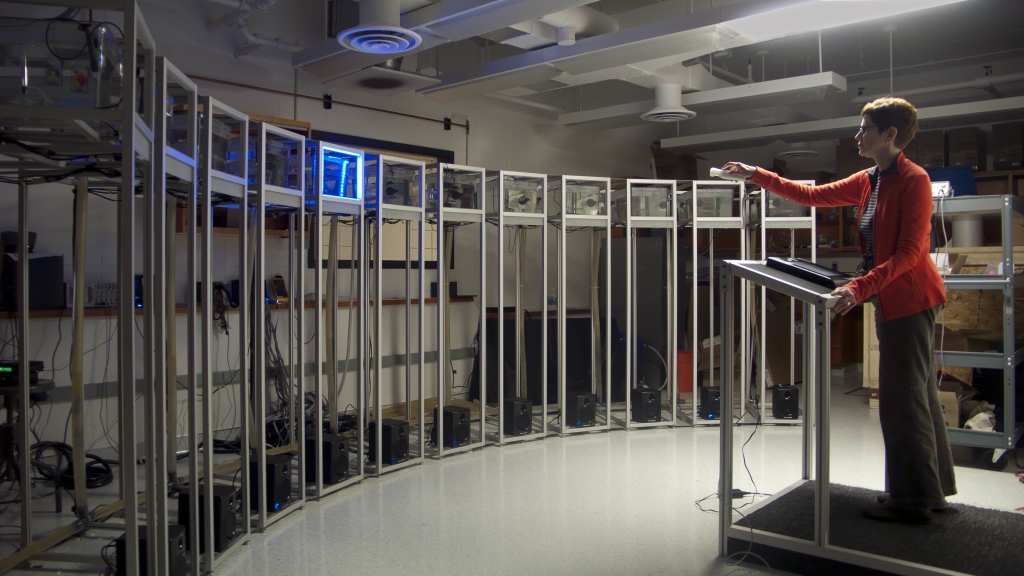
‘scale’ is an interspecies art project: an audience-interactive installation that involves nocturnal electric fish from the Amazon River Basin. Twelve different species of these fish comprise a choir whose sonified electrical fields provide the source tones for an immersive audiovisual environment. The fish are housed in individual tanks configured in a custom-built sculptural arc of aluminum frames placed around a central podium. The electrical field from each fish is translated into sound, and is thus heard — unprocessed or with digital effects added, with immediate control over volume via a touchscreen panel — through a 12-channel surround sound system, and with LED arrays under each tank for visual feedback. All software is custom-designed. Audience members interact as deejays with the system. Amongst the goals of the project is our desire to foster wider public awareness of these remarkable creatures, their importance to the field of neurological research, and the fragility of their native ecosystem.The project leaders comprise visual/conceptual artist Marlena Novak, composer/sound designer Jay Alan Yim, and neural engineer Malcolm MacIver. MacIver’s research focuses on sensory processing and locomotion in electric fish and translating this research into bio-inspired technologies for sensing and underwater propulsion through advanced fish robots. Novak and Yim, collaborating as ‘localStyle’, make intermedia works that explore perceptual themes, addressing both physical and psychological thresholds in the context of behavior, society/politics, and aesthetics.

Anke Eckardt

Between I you I and I me
BETWEEN | YOU | AND | ME is a wall of sound and light. Like any other wall, it defines an architectural space. Given its ephemeral, dynamic media – ultrasound and beams of light – the wall can be perceived only when the visitor comes close and interacts with it. Two thin membranes of light form a visible frame filled with sound. Multichannel, extremely vectored hypersonic speakers render audible various textures of broken glass: a sound architecture within the wall, comprised of juxtaposed single sound beams, whose constellation changes depending on the visitor’s position. Observed from a distance, the wall fades away: clear transparency and only faintly resonant tones attest to its non-existence.

Christoph De Boeck

Staalhemel

The intimate topography of the brain is laid out across a grid of 80 steel ceiling tiles as a spatialized form of tapping. The visitor can experience the dynamics of his cognitive self by fitting a wireless EEG interface on his head, that allows him to walk under the acoustic representation of his own brain waves.The accumulating resonances of impacted steel sheets generates penetrating overtones. The spatial distribution of impact and the overlapping of reverberations create a very physical soundspace to house an intangible stream of consciousness.‘Staalhemel’ (‘steel sky’, 2009) articulates the contradictory relationship we entertain with our own nervous system. Neurological feedback makes that the cognitive focus is repeatedly interrupted by the representation of this focus. Concentrated thinking attempts to portray itself in a space that is reshaped by thinking itself nearly every split second.

Isaac Julien

艾萨克·朱利安
아이작 줄리앙
АЙЗЕКА ДЖУЛИАНА
Stones Against Diamonds
The pictures for the film were taken in isolated glacial ice caves in the South East region of Vatnajökull in Island. The work was inspired by a passage from a letter taken from the anthology Stones Against Diamonds, written by the modernist architect and designer Lina Bo Bardi.

MICHAEL BURTON

Astronomical Bodies

Astronomical Bodies is based on the research of Dr. Terence Kee of the University of Leeds. He proposes that that a reactive form of phosphorus arrived on the early Earth via meteorite impacts. His research found that phosphorus from space was more suitable for the chemical reactions to develop complex life. Astronomical Bodies reverses this process and tries to transform phosphorus harvested from the body — in the form of kidney stones and urine — into manmade meteorites. Rather than the traditional idea of transpermia addressed in a host of science fiction writings and films, Astronomical Bodies proposes that the galactic transferal of life-promoting chemicals is a natural process that we can facilitate.

Christine Ödlund

The Admiral’s Garden
Christine Ödlund’s work explores the borders of our knowledge of the world around us, connecting such themes as the chemical communication of plants, synaesthesia and theosophy. She works in a variety of media, including drawing, sculpture, video, watercolour and sound works.
Stress Call of the Stinging Nettle: When a plant reacts to a butterfly larvae feeding on its leaves, it releases chemical substances, or compounds. The characteristics of these compounds have been analyzed in collaboration with the Ecological Chemistry Research Group at the Royal Institute of Technology in Stockholm, and then transposed into amplitude and intensity of sinus tones, recorded at EMS (Electroacoustic Music in Sweden), Stockholm. Thus these beautiful graphic score and soundtrack by Swedish artist Christine Ödlund are direct transpositions of “the plant’s life, struggle and death”.

Marga Weimans

Fictitious fashion house
“The realistic everyday environment of her studio is reflected in her work and transforms into a sublime dreamlike world. She incorporates elements of nature and space and uses earth tones and natural fabrics.”

HILARY FAYE

Хилари Фэй
Faye has a magical eye for composition and colour, which especially shines through in her photography. Her collages meld objects, people, animals and landscapes together with haphazard cropping and appropriation, and the outcomes are compelling and enigmatic. She dabbles in layering and geometry; her chosen textures and tones are evocative of another era, with use of nostalgic film grains, which is at the forefront of her mixed media mantra. She has a knack of combining a myriad of elements and arranging them into a rich formation of imagery.

Kyle Dunn

КАЙЛ ДАНН
Kyle Austin Dunn uses sculpture and painting to create his abstract geometric pieces. Dunn manages to bring inanimate objects to life as his varied shapes take on behaviour and emotion via his keen use of colour and neutral tones. The gap between sculpture and painting is easily bridged by Dunn, his pieces seem to flow between both disciplines effortlessly. Dunn creates from his studio just north of San Francisco in the US, making his living by building custom furniture for clients around the Bay Area.

Jo Ann Callis

Other Rooms
Since she emerged in the late 1970s as one of the first important practitioners of the “fabricated photographs” movement, Jo Ann Callis has made adventurous contributions in the areas of color photography, sculpture, painting, and digital imagery. For her, photography is another studio tool to be used, along with the sets she creates and the models she directs, to render the sensual tones and textures of fabric and food, or to animate clay figures of her own making. The persistent inventiveness of Callis’s work has made her a force in Southern California art and in recent photographic practice.

Marc Swanson

Marc Swanson (American, b.1969) works in diverse media, including sculpture, drawing, collage, photography, video, and installation. The artist employs a refined range of materials, relying on a concentrated vocabulary of wood, glass, textile, naturally-shed animal antlers, and precious metals. He often juxtaposes “high” and “low” materials in the same work: rhinestones, gold and silver chain, and black mirrored panels meet lumberyard two-by-fours and white cotton t-shirts coated in latex.

CARLOS NO

Pillar
Portuguese artist carlos nogueira‘s series of sculptural works ‘villa bidão’ (braggart city) draw attention to societal issues such as poverty and deprivation, particularly the lives of billions of people without access to housing or drinking water. The improvised dwellings made from makeshift and recycled materials lack a stable framework and basic sanitation, recall the idea of a shanty town as a place unsuitable for habitation. through their metaphorical undertones — huge barrels evocative of a heavy burden and worn materials personifying neglect, the objects present subjects of scarcity and exclusion through visual artworks.

YE Cheng

野城
Kong Shanshui – 空山水

The base of the installation consists of layers of white stones which fill the ancient palace’s courtyard, echoing peaceful, meditative gardens. On top of the stones are piles or gatherings of petri dishes, some ten thousand in total, stacked in various forms, resembling miniature hills, mountains and rock formations.

Leslie Henshaw

Chromatophores Collection
“Chromatophores are the cells that give some creatures of nature the miraculous ability to change their colour to protect themselves,” says Leslie. “Like chameleons, jellyfish, cuttlefish and frogs they can change from muted tones into brightly coloured and vibrant stripes or patches of colours that are mesmerising. With this collection I imagined what it would be like if humans could perform this amazing feat with their hair.”

Luca Francesconi

pane pane pane vino canale di scolo
Working with materials often sourced from the artist’s immediate environment such as stones, shells, vegetables, flowers but also dried fishes or reptiles, LUCA FRANCESCONI holds an intense fascination with the natural world and the countless manifestations of human culture within it. Uniting organic, artistic, and technological forms, FRANCESCONI makes the relationships between natural, found and modified forms imprecise while liberating marginalized materials and narratives.

STUDIO ANDREEA MANDRESCU

MATERIALITY
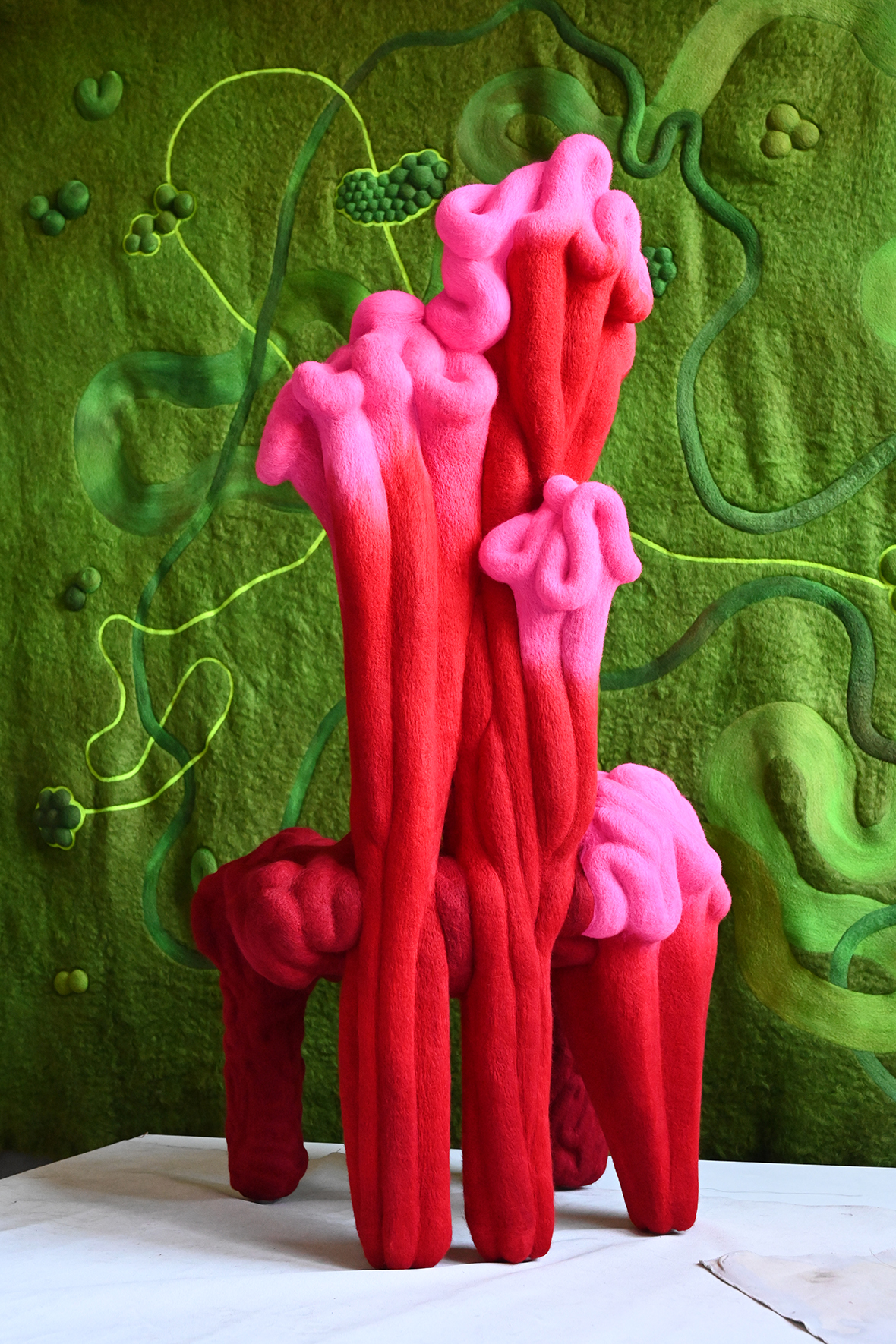
With the introduction of “Materiality,” a stunning continuation of her previous works, but with new vision and just as much revelation, Andreea manages to create another incredible tactile and visual experience. Inspired by jewelry and precious stones, the collection takes a flexible, fluid, and much more playful approach to adornment.

EASTERN DESIGN OFFICE

On the Corner
A shuffle of stones, concretes, and glass. Keen edge of each material is too sharp. A shuffle of mass and void. The design “on the corner” consists of blue and the cross. A composition of line and plane surface is created by the clearly distinguished edges of the material.

STARGATE

Roland Emmerich
In 1994, Egyptologist and linguist Daniel Jackson, Ph.D., is invited by Catherine Langford to translate Egyptian hieroglyphs on cover stones, also known as casing stones, that her father had unearthed in Giza, Egypt, in 1928. Jackson is taken to a U.S. Air Force installation and told by its commander, Special Operations Colonel Jack O’Neil, that the project is classified information. Jackson determines that the hieroglyphs refer to a “stargate” which uses constellations as spatial coordinates. On this revelation, Jackson is shown that the base has this Stargate, also discovered by Langford’s father. They use Jackson’s coordinates to align the Stargate’s metal ring with markings along its outside, and once all seven are locked in, a wormhole opens, connecting the Stargate with a distant planet. Jackson joins O’Neil and his team, consisting of Reilly, Porro, Freeman, Brown, Ferretti, and Kawalsky, as they pass through the wormhole.
CINEMA

KRIJN DE KONING

laberinto cromatico
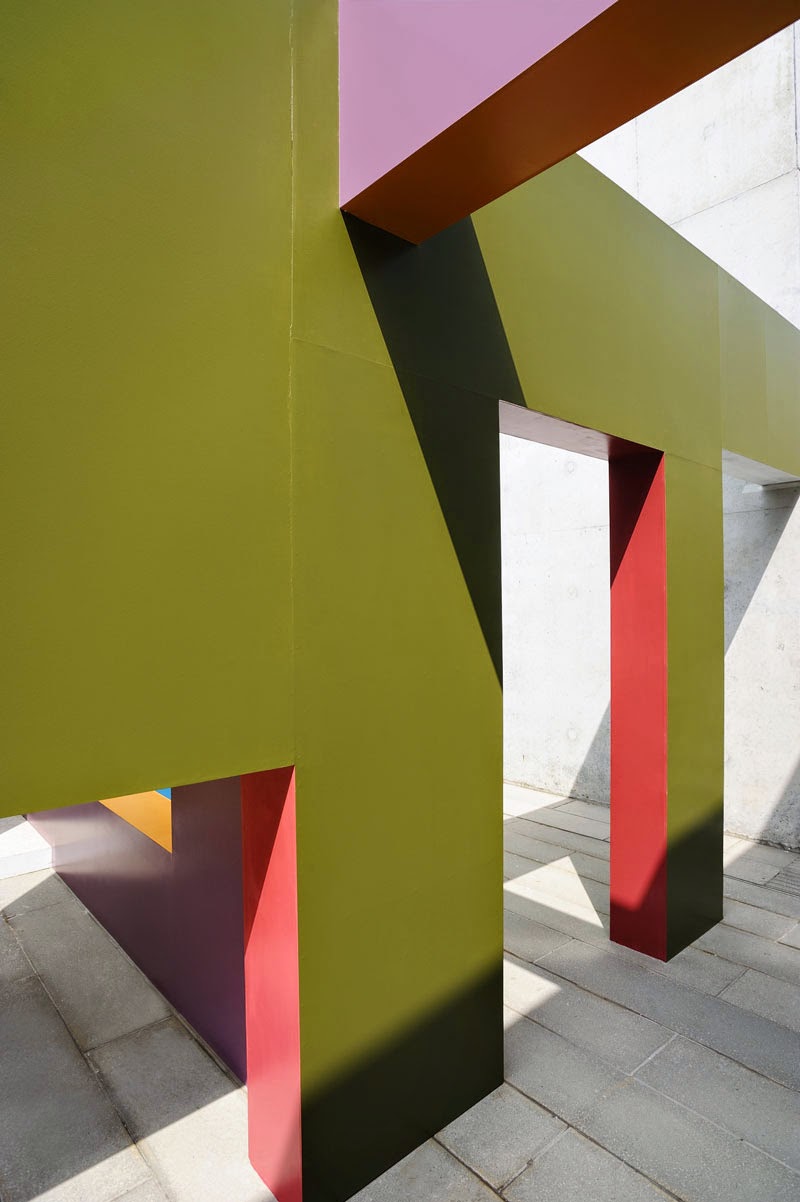
Dutch artist Krijn de Koning has created a labyrinthine walkway between brightly coloured walls on a terrace at the Turner Contemporary gallery in Margate, England.
The first public commission in England by De Koning, the Dwelling installation comprises a series of angled walls punctured with doorways and windows that create a trail for visitors to navigate through.Situated on the south terrace of the David Chipperfield-designed Turner Contemporary, the walls are positioned between the exterior of the gallery building and the site boundary.The elements slot between existing structures, incorporating changes in floor level and abutting permanent concrete balustrades.“The artist’s site-specific works – part architecture, part sculpture – challenge the viewer, offering new possibilities to navigate and experience the space the works inhabit,” said a statement from the gallery.Perpendicular surfaces, including door and window recesses, are all painted in different colours.The bright tones reference traditional seaside pavilions and beach huts, a common feature along the UK coast.The maze is open to the sky so shadows move across the surfaces of installation through the day.Architectural features including windows and doors are different sizes and positioned at various heights, allowing some to be clambered over or crawled beneath.

NINA CANELL

Temporary Encampment (Five Blue Solids)

The precarious installations of Nina Canell (born 1979 in Växjö, Sweden, lives and works in Berlin, Germany) could be read as essays on changeability and uncertainty. Hinged upon a fabric of electromagnetics, her communities of objects quietly interact with each other through modest arrangements, balancing careful ambitions to sustain certain frequencies, movements or altitudes. Electrical debris, wires and neon gas establish temporary, almost performative sculptural unions with natural findings such as water, wood or stones, yielding open-ended moments of synchronicity. An improvisational methodology and a flexibility of form highlight Canell’s quest for sculpture, which exists somewhere in between the material and the immaterial, forming and questioning the conductive relations between solid objects and mental events.
.


GIUSEPPE RANDAZZO

Джузеппе Рандаццо
stone fields (Using computer algorithms)

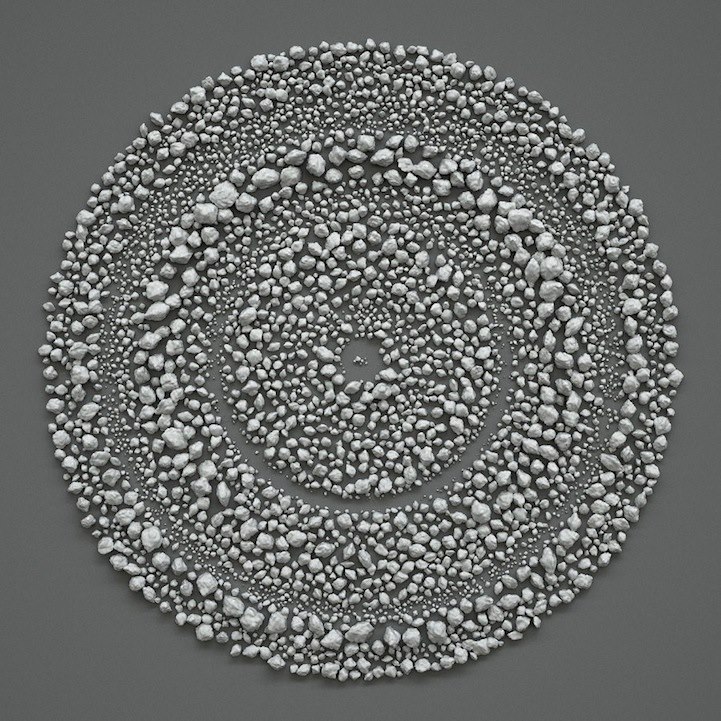
This project has started from a search for a 3d-objects optimal packing algorithm over a surface, but evolved in something rather different. I love the work by Richard Long, from which this project takes its cue. The way he fills lonely landscapes with arcaic stones patterns and its eroic artistic practice, in his monumental vision, is in strong contrast with this computational approach that – ironically – allows virtual stones creation and sorting in a non physical, mental way, a ‘lazy’ version, so to speak. The virtual stones created from several fractal subdivision strategies, find their proper position within the circle, with a trial and error hierarchical algorithm. A mix of attractors and scalar fields (some with Perlin noise) drives the density and size of the stones. The code is a C++ console application that outputs a OBJ 3d file.

Kevin Beasley

Strange Fruit
Using both sculpture and musical performance in his practice, Kevin Beasley explores the physical materiality and cultural connotations of both objects and sound. His sculptures typically incorporate everyday items like clothing, housewares, or sporting goods, bound together using tar, foam, resin, or other materials. Often they also contain embedded audio equipment that warps and amplifies the ambient tones of their surroundings. For Storylines, Beasley has created two new works specifically for the Guggenheim’s Frank Lloyd Wright–designed building. Within this vast and open sonic environment, Strange Fruit (Pair 1) and Strange Fruit (Pair 2) (both 2015) offer an experience of intimacy, absorbing and reflecting the sound of the crowd at the scale of a personal conversation. Each work embodies this spirit of dialogue in its two-part structure—at its core are two athletic shoes, one merged with microphones, the other with speakers. Suspending these objects in space, Beasley compounds their technological interchange with additional layers of meaning, bringing to mind the urban phenomenon of shoes hanging from overhead wires or poles (itself an open-ended form of communication). At the same time the works’ titles refer to history of lynchings in the American South memorialized by Bronx schoolteacher Abel Meerepol in the 1937 protest song “Strange Fruit.” In these contexts, the hanging forms of Beasley’s sculptures resonate not only with his body, which molded them by hand, or with the bodies moving through the museum, but also with those inscribed in the problematic history of race and class in the United States.

Ryota Matsumoto

the Indistinct Notion of an Object Trajectory

Ryota Matsumoto’s drawings develop and demonstrate the hybrid/multi-layered process where varying scale, juxtaposition of different forms, intertwined textures/tones are applied to reinvent and question the spatial conditions of architectural drawings. His work explore a hybrid drawing technique combining both traditional media (ink, acrylic, and graphite) and digital media (algorithmic processing, scripting and image compositing with custom software ) .
FILE FESTIVAL

Ryota Matsumoto

First Subtle Sign of Evolving Drones

Architecture, Art & Design – Ryota Matsumoto’s drawings develop and demonstrate the hybrid/multi-layered process where varying scale, juxtaposition of different forms, intertwined textures/tones are applied to reinvent and question the spatial conditions of architectural drawings. His work explore a hybrid drawing technique combining both traditional media (ink, acrylic, and graphite) and digital media (algorithmic processing, scripting and image compositing with custom software ) .
.

HENNING LARSEN ARCHITECTS

ヘニング·ラーセン·アーキテクト
헤닝 라슨 건축가
亨宁·拉森建筑师
المهندسين المعماريين هينينغ لارسن
Batumi Aquarium

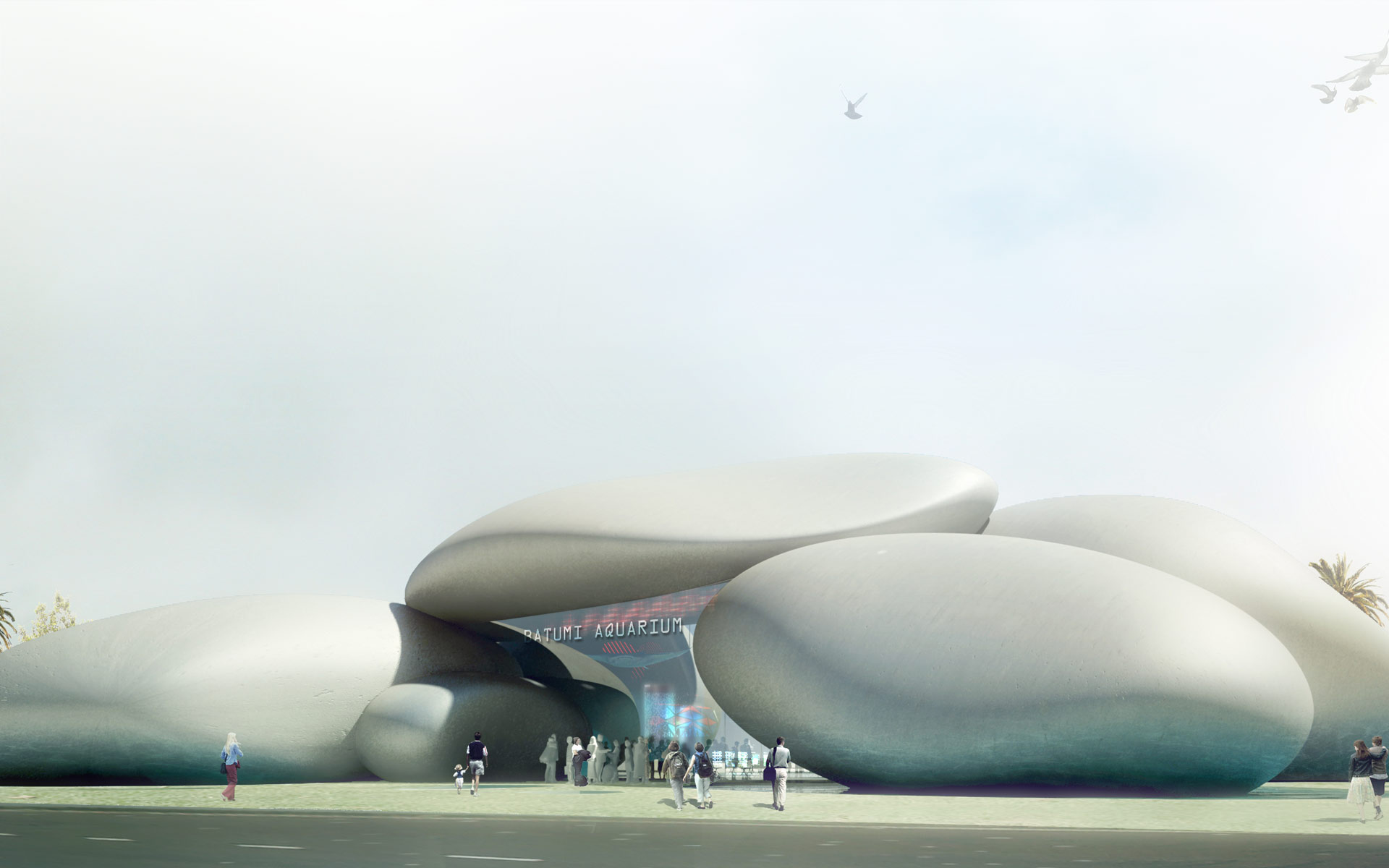
Inspired by the characteristic pebbles of the Batumi beach, continually shaped by the wash of the waves through millennia, the building stands out as an iconic rock formation visible from both land and sea. The formation constitutes four self-supporting exhibition areas where each of the four stones represents a unique marine biotype – the Aegean Sea & the Mediterranean Sea, the Indian Ocean, the Black Sea & the Red Sea and finally the more interactive exhibition space for teaching and “edutainment”.”The building will become a landmark and an organic reference to all elements of the sea”, explains Design Director and Partner at Henning Larsen Architects, Louis Becker. “It captures the special atmosphere by the sea and thus becomes a tribute to the power of the sea!”

SUZAN DRUMMEN

kaleidoscopic crystal floor
dutch artist suzan drummen’s large-scale floor installations are mesmerizing and complex circular patterns made out of mirrors and brightly colored glass. the fractal-like arrangements feature ornate and elaborate circles growing exponentially out of each other and vibrant rings of spiraling colors winding into the surface of the floor. they are composed of crystals, chromed metal, precious stones, mirrors and optical glass. a sensory experience, and visually stimulating, the glittering installations play with the architecture of the space — climbing up walls and sweeping across the surfaces — examining the idea of illusion and optical effects.

OLAFUR ELIASSON

オラファー·エリアソン
اولافور الياسون
奥拉维尔·埃利亚松
אולאפור אליאסון
Олафур Элиассон
Your Rainbow Panorama

Olafur Eliasson’s dazzling “Your Rainbow Panorama” is a permanent installation on the rooftop of the ARoS Museum in Aarhus, Denmark. The spectacular work of art has a diameter of 52 metres and is mounted on slender columns 3.5 metres above the roof of the museum. Visitors can literally walk through the entire color spectrum viewing the world for the first time in all pink, green, blue and yellow tones.
“Your rainbow panorama enters into a dialogue with the existing architecture and reinforces what is assured beforehand, that is to say the view of the city. I have created a space which virtually erases the boundaries between inside and outside – where people become a little uncertain as to whether they have stepped into a work or into part of the museum. This uncertainty is important to me, as it encourages people to think and sense beyond the limits within which they are accustomed to moving”. -Olafur Eliasson