highlike

Mirtha Bermegui – Coreografía – Argentina

COREOGRAFÍA

Mirtha Bermegui


FILE SÃO PAULO 2026: Inter-creativity – Art and Technology – VIDEO ART SHORT
Electronic Language International Festival


Coreografía – Argentina 

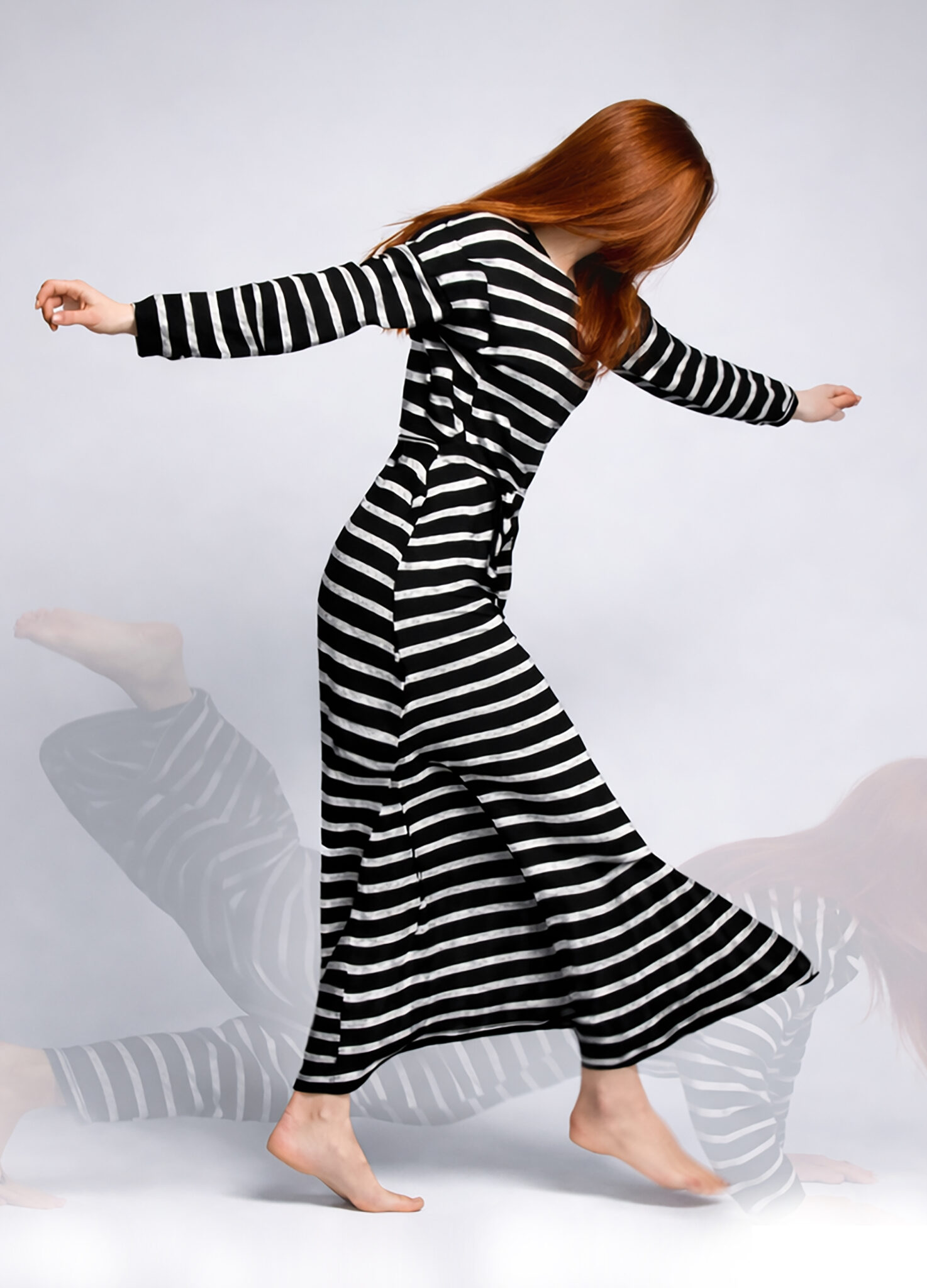
A moving body becomes a visual score. Choreography unfolds a dance suspended between gravity and illusion, where repetition and chance trace gestures that oscillate between the human and the artificial. Artificial intelligence intervenes as malleable matter, recomposing patterns in an unfinished flow. The work is configured as a visual laboratory where time, error, and reiteration are poetic strategies for exploring body, technology, and becoming.

BIO

Argentine multidisciplinary artist, lives in Buenos Aires. Her practice encompasses installations, video art, and transdisciplinary projects, with a presence in national and international exhibitions. She participates in competitions and biennials, and investigates the relationship between art and artificial intelligence in her contemporary production.

Danièle Huillet and Jean-Marie Straub

Moses und Aron
Oper in drei Akten Arnold Schoenberg
.
Jean-Marie Straub
homage
R.I.P
.
Moses und Aron, known in English as Moses and Aaron, is a 1975 film by the French filmmaking duo of Jean-Marie Straub and Danièle Huillet based on the unfinished opera of the same title by c. During its 1975 run at US festivals, it was also known as Aaron and Moses, and was frequently reviewed as such.
It is one of three films based on Schoenberg works Straub and Huillet directed, the other two being Einleitung zu Arnold Schoenbergs Begleitmusik zu einer Lichtspielscene , a short film made directly before Moses und Aron, and, over two decades later, an adaptation of the one-act comic opera Von heute auf morgen. The film retains the unfinished nature of the original opera, with the third act consisting of a single shot with no music as Moses delivers a monologue based on Schoenberg’s notes.The film was shot on location in Italy and Egypt. It utilized the same team of cinematographers as Straub and Huillet’s Chronicle of Anna Magdalena Bach. The soundtrack and cast of the film is the same as the 1974 recording conducted by Michael Gielen (Philips 6700 084).The original German version of the film was dedicated to Holger Meins, a former cinematography student who joined the Red Army Faction in the early 1970s and died on hunger strike in prison. This dedication was censored by German broadcasters for the film’s first transmission in 1975. The English subtitles of Schoenberg’s dense German libretto were prepared by assistant Gregory Woods, who is credited on the DVD.The film was shown at the 1975 Cannes Film Festival, but was not entered into the main competition.

.

cinema full

QUAYOLA

Captives
Captives is an ongoing series of digital and physical sculptures by Quayola and a contemporary homage to Michelangelo’s unfinished series “Prigioni” (1513-1534) and his technique of “non-finito”. The project explores tensions and equilibrium between form and matter, man-made objects of perfection and complex, chaotic forms of nature. In this series mathematical functions and processes describe computer-generated geological formations, endlessly evolving and morphing into classical figures resulting into life-size ‘unfinished’ sculptures.

QUAYOLA

captives
“Captives is an ongoing series of digital and physical sculptures, a contemporary interpretation of Michelangelo’s unfinished series “Prigioni” (1513-1534) and his technique of “non-finito”.
The work explores the tension and equilibrium between form and matter, man-made objects of perfection and complex, chaotic forms of nature. Whilst referencing Renaissance sculptures, the focus of this series shifts from pure figurative representation to the articulation of matter itself. As in the original “Prigioni” the classic figures are left unfinished, documenting the very history of their creation and transformation.

TOMMY STØCKEL

Art of Tomorrow
My sculptures and installations are based upon fiction and speculations. The works are often visual “what-if?” scenarios mixing up ideas of pasts and futures, where sculptures (or whole exhibitions) are imagines to be either in states of artificial decay; still unfinished or even yet to be made in some undefined future. Often, the works are constructed from simple materials, which gives the objects a feeling of being temporary models or props.

Aisha Zeijpveld

What Remains
By crafting bodily optical illusions, the Aisha Zeijpveld ‘What Remains’ series obscures reality. These captures were taken by Amsterdam-based photographer Aisha Zeijpveld. According to her website, Zeijpveld’s “focus on people their nakedness and vulnerability yet simultaneously their potency and pride characterizes her photography.” In order to create that capacity in her work, the ‘What Remains’ series was based around the sketches of Austrian artist Egon Schiele. By translating these sketches into photographs, Zeijpveld recreates the expressive figures portrayed by Schiele often were “unfinished.”

XAVIER LE ROY

Self Unfinished

French choreographer Xavier Le Roy defies categorisation as a dance-maker, drawing on diverse influences from the worlds of science, performance art and contemporary dance.
In Self Unfinished (1998), Le Roy takes the audience on a journey of metamorphosis as he transforms into an extraordinary hybrid creature part machine, part alien, part human.
Employing all manner of physical devices, Le Roy creates a world of illusion that is as unsettling as it is transfixing.