highlike

Nivaldo Godoy Jr. – POIESIS I-III – Brazil

POIESIS I-III

Nivaldo Godoy Jr.


FILE SÃO PAULO 2026: Inter-creativity – Art and Technology – VIDEO ART SHORT
Electronic Language International Festival


POIESIS I-III – Brazil

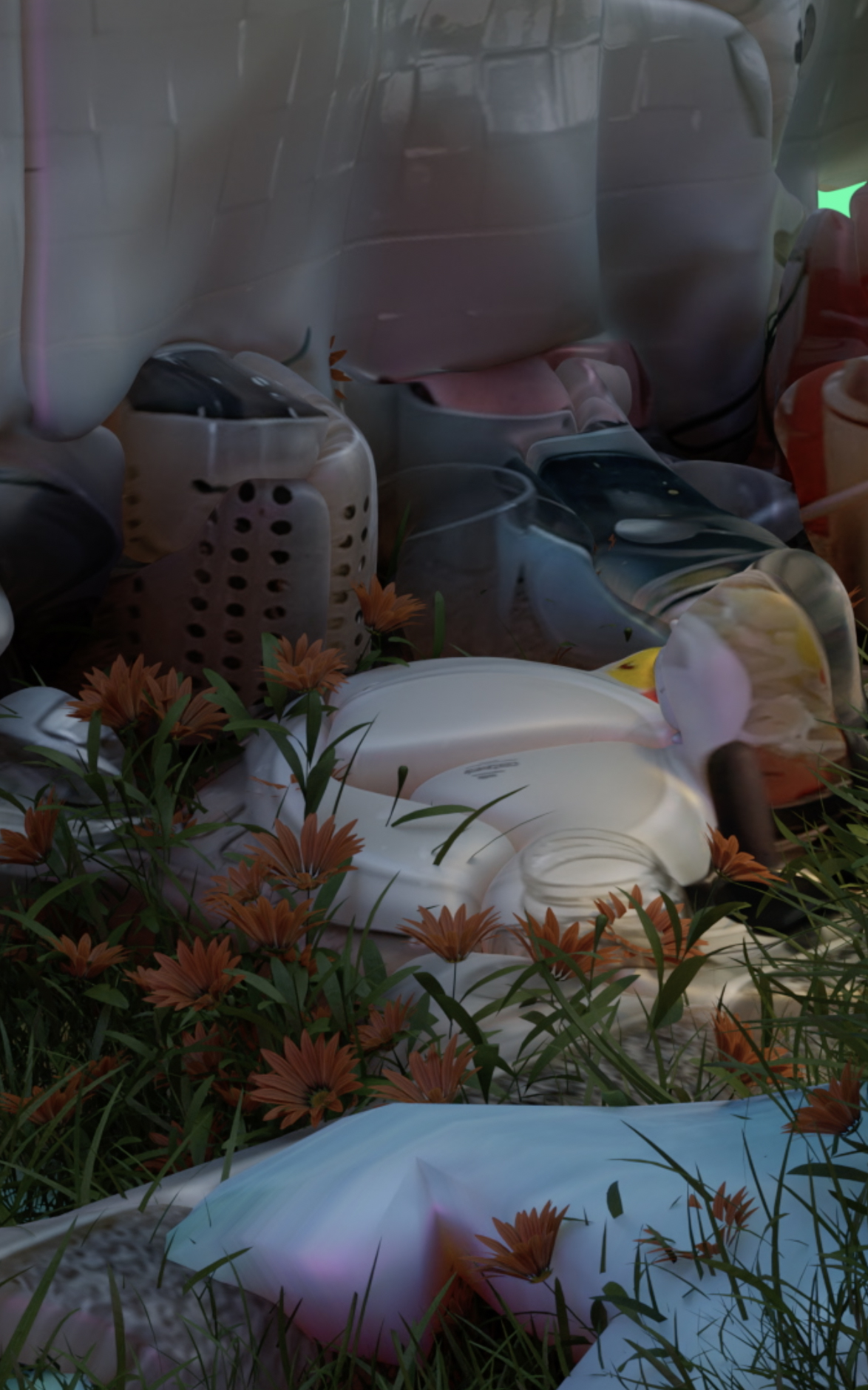
POIESIS I–III is an experimental triptych that investigates image production through artificial intelligence and generative systems. Situated between the organic and the synthetic, the works present unstable materialities in continuous processing, revealing the codes, glitches, and structures of the image itself. Organized in temporal cycles and accompanied by an immersive sound mesh, the videos propose a perceptual experience in which transformation and artificiality become language.

BIO

Nivaldo Godoy Jr. is an artist, researcher, and architect whose work explores the relationships between art, technology, and the city. He develops immersive works using AI, audiovisual media, and experimental narratives, with pieces presented at institutions and festivals such as the FILE Festival. His practice articulates critical research, innovation, and aesthetic experimentation.
Gerald Trimmel – GARGANTUA (20250302) – Austria

GARGANTUA (20250302)

Gerald Trimmel


FILE SÃO PAULO 2026: Inter-creativity – Art and Technology – VIDEO ART SHORT
Electronic Language International Festival


GARGANTUA (20250302) – Austria

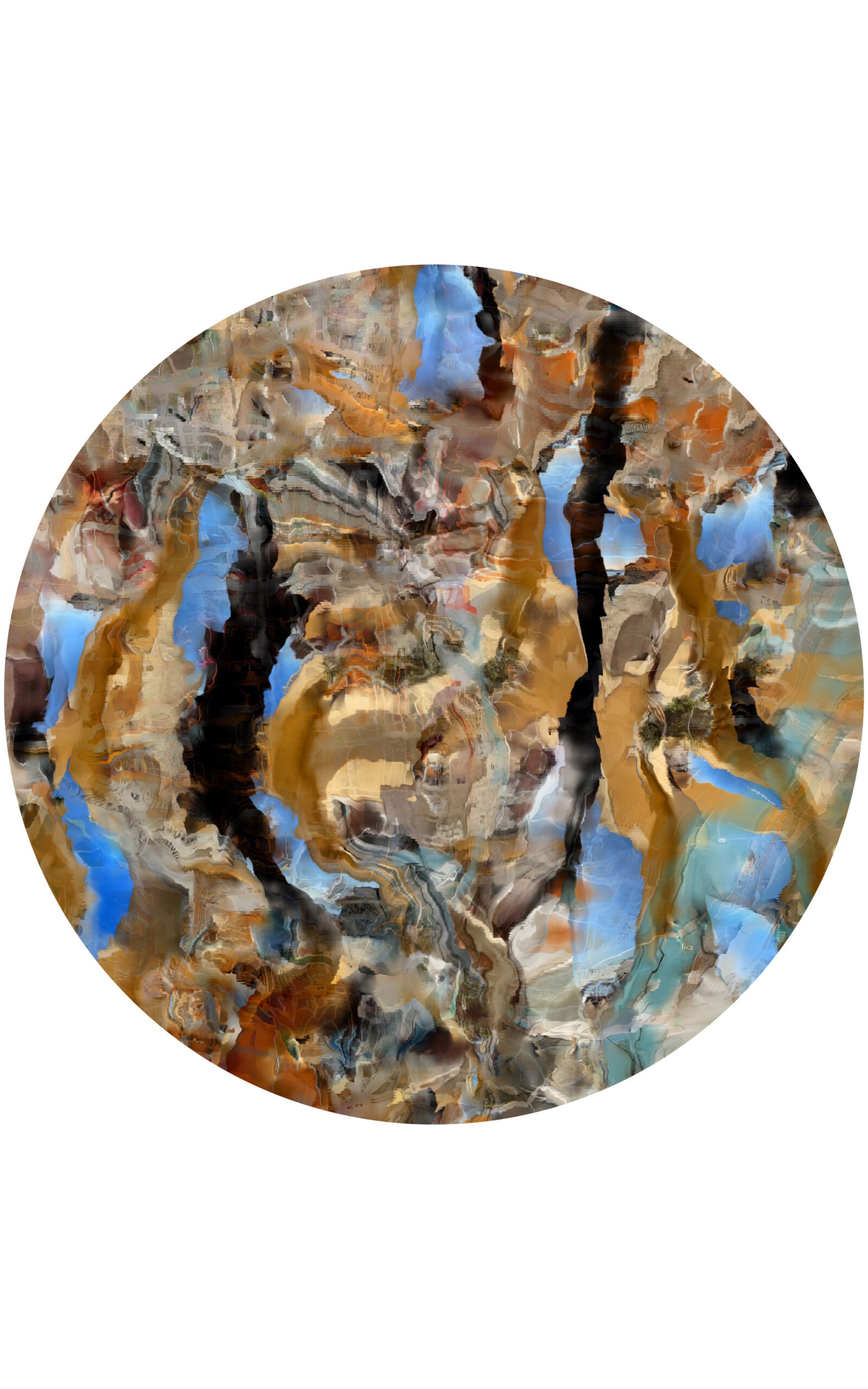
GARGANTUA (20250302) is a dynamic Cybernetic Canvas exploring AI-based image transformation as a metabolic process. Hybrid source materials—osmotic paintings, scans, chemical micro-scenarios, and dismantled diagrams—are processed through algorithmic recombination into a continuously shifting circular field. The work stages an unstable dialogue between visual matter and electroacoustic sound, forming a dense system of feedback, drift, and perceptual unrest.

BIO

Gerald Trimmel is a Vienna-based media artist, composer, and art therapist. His work explores transformation processes between analog material, digital systems, and AI-based image generation, often in circular audiovisual formats (Cybernetic Canvas). Recent presentations include Chongqing (China), ArteScienza Festival (Rome), and The Wrong Biennale (São Paulo | online).

Mirage Bureau & Rene Cardillo – Shifting – Brazil

SHIFTING

Mirage Bureau & Rene Cardillo


FILE SÃO PAULO 2026: Inter-creativity – Art and Technology – CINEFILE | Short
Electronic Language International Festival


Shifting – Brazil

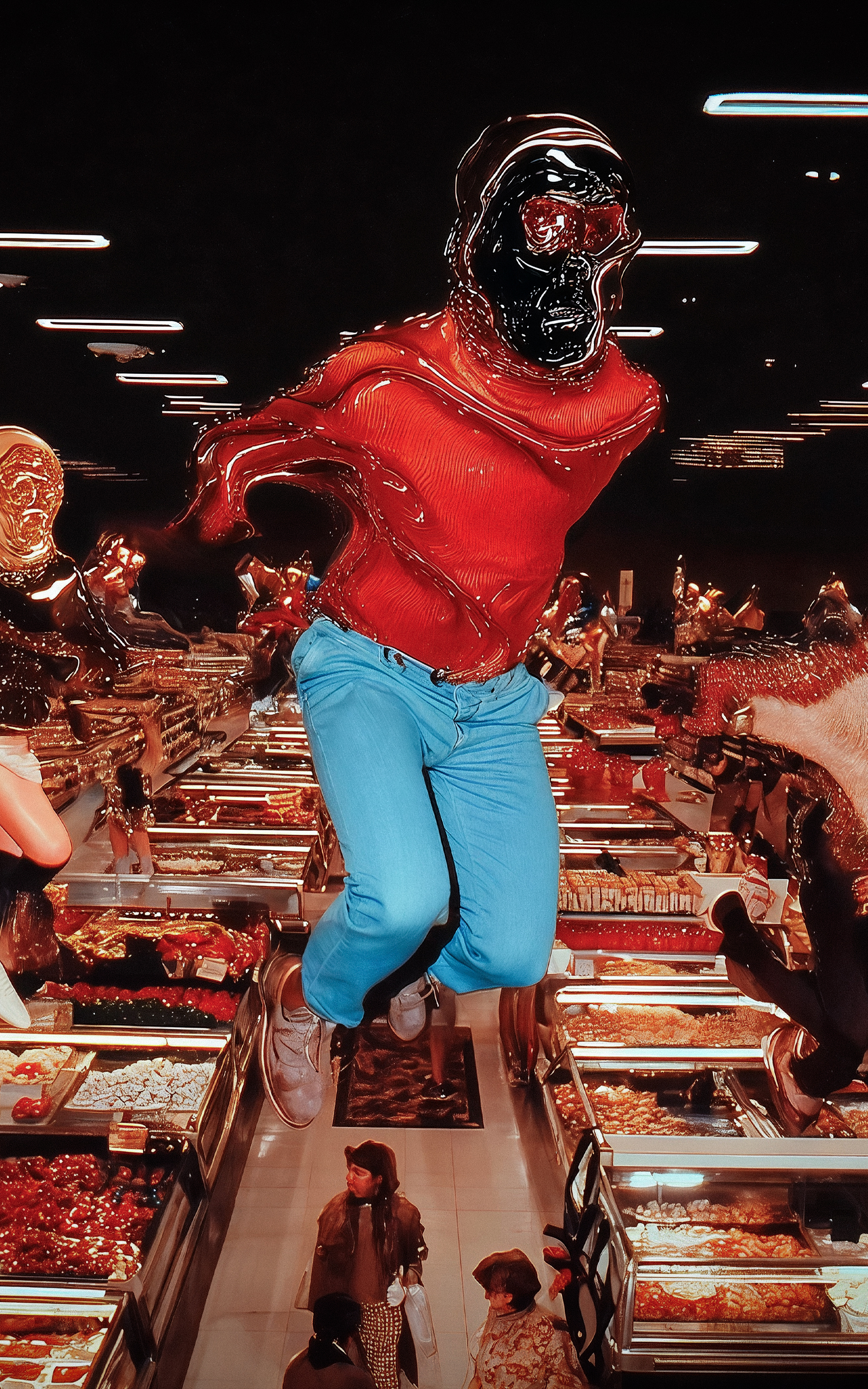
In seemingly ordinary supermarkets, everything stands on the verge of transformation. The everyday environment along with everyone undergoes a transition into an unstable spatial condition.

Shifting traces this process: people and objects appear to traverse invisible layers of reality following the emergence of an extradimensional presence. What was once familiar becomes indeterminate, as if space itself were recalibrating according to an unfamiliar logic.

BIO

Mirage Bureau is an artist working at the intersection of artificial intelligence, poetics, and visual storytelling. His practice explores emerging frontiers of AI-generated image-making, treating the body and language as delicate instruments of connection, continually disrupted by noise, projection, and emotional overflow.

S4RA – lil~mér~maid~~ ~ – Portugal

LIL~MÉR~MAID~~ ~

S4RA


FILE SÃO PAULO 2026: Inter-creativity – Art and Technology – Animation
Electronic Language International Festival


lil~mér~maid~~ ~ – Portugal

Emerging from the liquid space between myth and simulacrum, a mermaid who once gave up her voice and tail reappears multiplied across digital surfaces, where the body fragments and expands through states of desire and silence. An echo, foam and ghost of an unstable presence. It unfolds a restless hybridity, haunted by scripted roles and metamorphosis to exist in the age of hyperreality.

BIO

S4RA works with video installation and immersive digital environments. Explores consensual power relations, desire and confinement, crossing the political body with liquid and post-capitalist landscapes. Waves are imagined as an affective system and interface of information — an economy between pleasure & surveillance. Moves in cycles of liberation, where the virtual environment is simultaneously territory.

Kaoru Tanaka – Reborn – Japan

REBORN

Kaoru Tanaka


FILE SÃO PAULO 2026: Inter-creativity – Art and Technology – Randomic Dimension
Electronic Language International Festival


Reborn – Japan

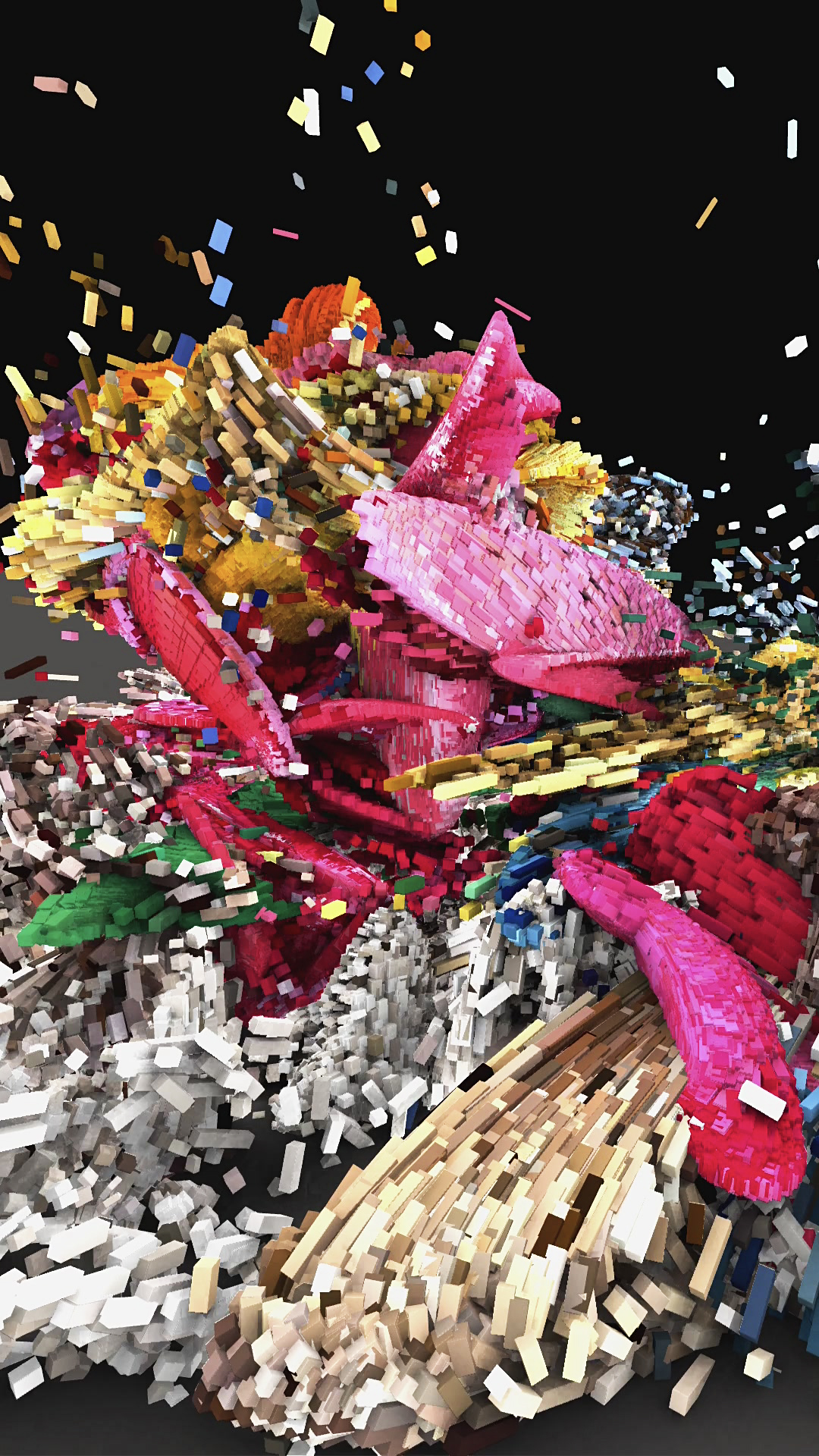
Reborn is a generative artwork created from real point cloud data. The piece depicts a playground slide, a symbolic fragment of childhood memory, continuously deconstructing and reconstructing itself in space. Fragments scatter, collapse, and reconnect over time, reflecting the unstable nature of memory and how experiences are constantly reinterpreted and given new meaning. Through transforming accumulated data into shifting structures, the work explores remembrance, perception, and reconstruction.

BIO

Kaoru Tanaka is a Japanese generative artist who creates real-time digital artworks and installations using computational processes. Inspired by nature, memory, dreams, and perception, her works explore transformation through particles, light, and evolving structures. Her works have been exhibited internationally in museums, public spaces, and digital art festivals.

QUBIT AI: Paul Gründorfer & Leonhard Peschta

The Sea

FILE 2024 | Installations
International Electronic Language Festival

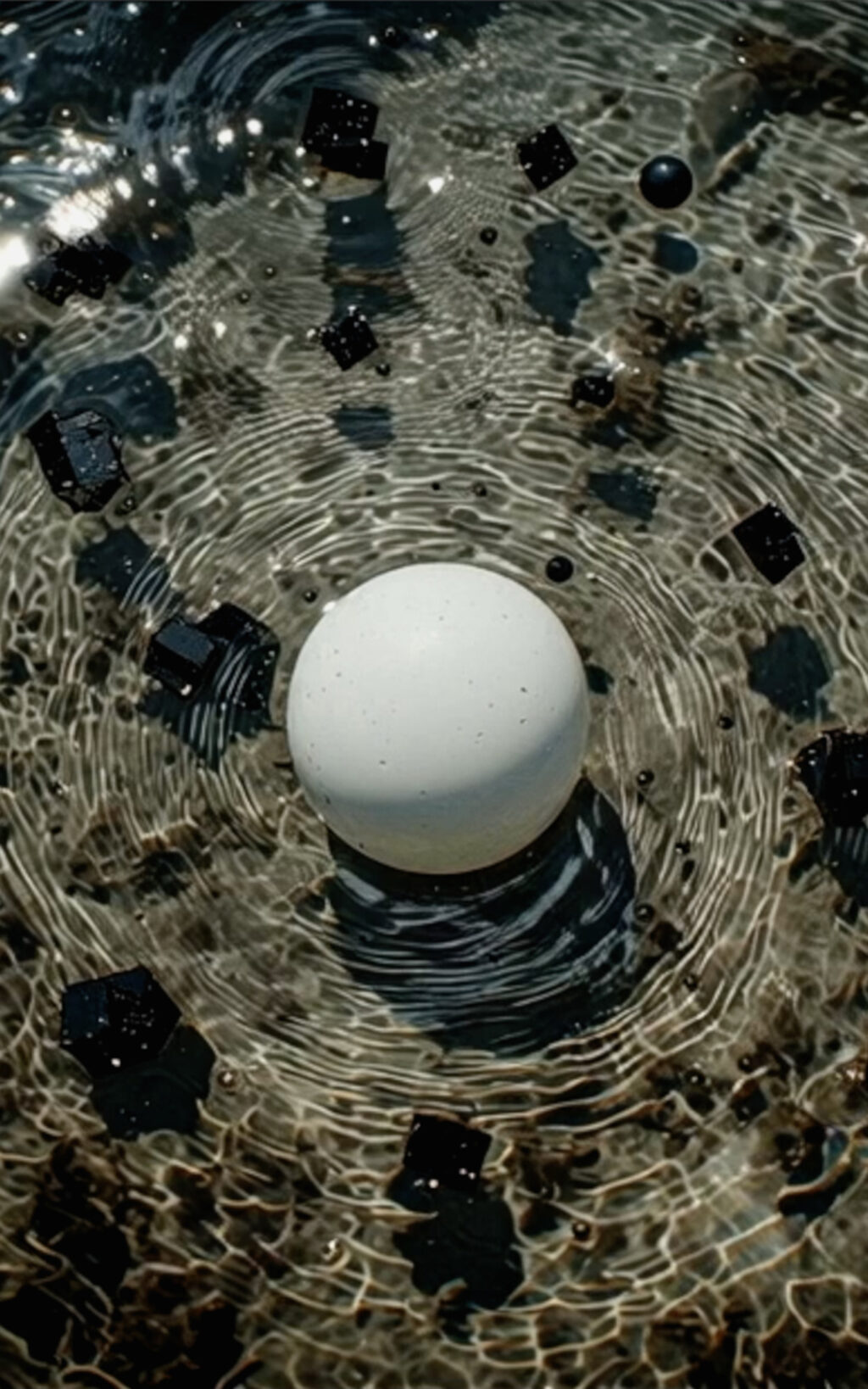
The Sea is an extraction of a complex natural phenomenon, resulting in an artificial emulation that develops a life form of its own. Just like the sea with its endless waves, this artificial system follows the impact of an immersive state, leading to a unique vision of an artificial generator. Despite appearing chaotic, it is capable of generating associations ranging from the movement of waves to science fiction scenarios.

Bio

Paul Gründorfer develops process-related systems and explores variable or unstable conditions in the occurrence of sound when exposed to amplification, feedback, and multiple signal streams. His works focus on processes that evolve in a social space. Leo Peschta is an artist and researcher. During his studies, he worked in various fields of media arts, including sound, installations and software, developing over the years a special interest in robotics and machinery.

Credits

Austrian Embassy

Ani Liu

Untitled: (A Search for Ghosts in the Meat Machine)
What does it mean to be human? At first glance a simple question, the idea of being human is an unstable construct, continuously recrafted. Recent technological innovations allow us to redesign ourselves profoundly— from networked prosthetics and artificial intelligence, to the genetic code of life itself. Can our behaviors be reduced to algorithms? Can our bodies be upgraded with nonorganic integrations? Can sentience itself by manufactured in a lab? This set of nine sculptures examines personhood from anatomical, psychological, genetic, biochemical, behavioral, algorithmic, personal narrative and memory. In many ways, this installation is an emotional confrontation with being quantifiable.

TZUSOO

SCHRÖDINGER’S BABY
Schrödinger’s Baby(2019/20), TZUSOO alludes to the popular thought experiment devised by Austrian physicist Erwin Schrödinger in 1935. Schrödinger proposed a scenario in which a cat is locked in a box with an unstable radioactive atom that could potentially begin to emit radiation and release a toxic gas. However, there is no way to say with certainty when or indeed whether this will happen without opening the box. The result is a paradox, with Schrödinger asserting that the cat enters a state of superposition that makes it impossible to say whether it is alive or dead.The South Korean artist translates this famous paradox into the reality of her own life, creating a digital baby in virtual space. Based on her inner grappling with potential motherhood, TZUSOO bought the digital model of a developing embryo, refining it according to her own ideas. She is free to determine the sex, skin colour and other characteristics or to dispense with all specifications so as to avoid stereotyping. In Schrödinger’s Baby, TZUSOO thus discuss core aspects of her work including reflection on gender and origin for which she also draws on her personal experience as a South Korean artist in Europe.

TEUN VONK

FILE SAO PAULO 2017
THE PHYSICAL MIND
“The Physical Mind” is Vonk’s attempt to let participants experience the relation between their physical and mental states by applying physical pressure to the body. The installation consists of two inflatable objects in-between which a participant lays down to subsequently get lifted up and be gently squeezed between the curves of the two objects. While the lifting creates an unstable feeling, this stressful sensation is soon thereafter contrasted with the secure feeling of being gently squeezed between two soft objects. Besides this experience for participants, the installation also evokes feelings of empathy amongst bystanders who witness participants undergo the experience.

ALLORA & CALZADILLA

АЛЛОРА И КАЛЬСАДИЛЬЯ
Never Mind That Noise You Heard

Through sculpture, photography, performance, sound and video, Allora and Calzadilla’s works have been informed by questions of mark making, traces, and survival in a way that is simultaneously conceptual, metaphorical and spatial. Their understanding of material and metaphor as a couple is crucial; for them a material is never simply self-evident in its meaning, it is always marked with histories, cultures, and politics that are at once irreducible to and indivisible from the material in question. Another recurrent trope in their work is that of animality, and its unstable relationship to the realm of the human. Most recently, they have created a series of works that explore the interplay between militarism and sound in the context of today’s global state of war.

Emily Motto

Эмили Мотто
My Cell

I make playful sculptures that perform and evolve throughout, and beyond, my creation – especially in terms of their shape, and the physicality of the unstable materials that I build them from. When creating parasites I was inspired by how the materials I made and used fed off each other’s properties; the net, dough and string of my recent sculpture series structurally supporting each other, and these responses creating new, and often quite fragile, forms

Hickey Heart

Magnetic Urges
Magnetic Urges is a project, created in inspiration of Newton’s “Laws of Motion”* and as a point of view that expresses and visualises “action” as any part of human body’s getting in unstable form due to forces of attraction which can easily reconciled with magnetism. Although it refers to stated matters, the project has an independent psyche from theories or laws in the domain of science. Human, as a mystic trinity, only aims to contact these unrestrictable “forces”** which form it’s own self (metaphorically) to a geometric shape.

LEANDRO ERLICH

Леандро Эрлих
莱安德罗·埃利希
Swimming Pool

[…]Erlich creates spaces with fluid and unstable boundaries. Before one tries to make sense of his sculptures and installations, one senses the uncanny. A single change (up is down, inside is out) can be enough to upset the seemingly normal situation, collapsing and exposing our reality as counterfeit. Through this transgression of limits, the artist undermines certain absolutes and the institutions that reinforce them.

NAJA & DEOSTOS

ECTOPLASMATIC HOUSING
File Festival
‘Ectoplasmatic Housing’ aims to speculate about how architecture can mediate the pervasiveness of the contemporary ‘infocalypse’ age. An architectural experiment of physical and digital space through the use of interactive design and augmented reality.

Browsing through a domestic safari of Trojan savannas or sterilised virus forests while contemplating the emergence of thousands of cheap-friends-facebook flowers blossoming among the pulsating cocoons of dying obsolete apps… Quantum reality theories are ripe for the picking from wiki branches of tweeting pink daily hit dwarfing trees…
Ectoplasmatic Housing aims to speculate about how architecture can mediate the pervasiveness of the contemporary ‘infocalypse’ age. It cultivates data for a spatial interactive second nature manifestation. It grows, blossoms, dies and haunts. Overlayed with the physical this unstable ectoplasmatic nature may shift radically into a rapid nuke ecology of nightmares.