highlike

Peter Burr & Mark Fingerhut – DESCENT – United States

DESCENT

Peter Burr & Mark Fingerhut


FILE SÃO PAULO 2026: Inter-creativity – Art and Technology – Animation
Electronic Language International Festival


DESCENT – United States

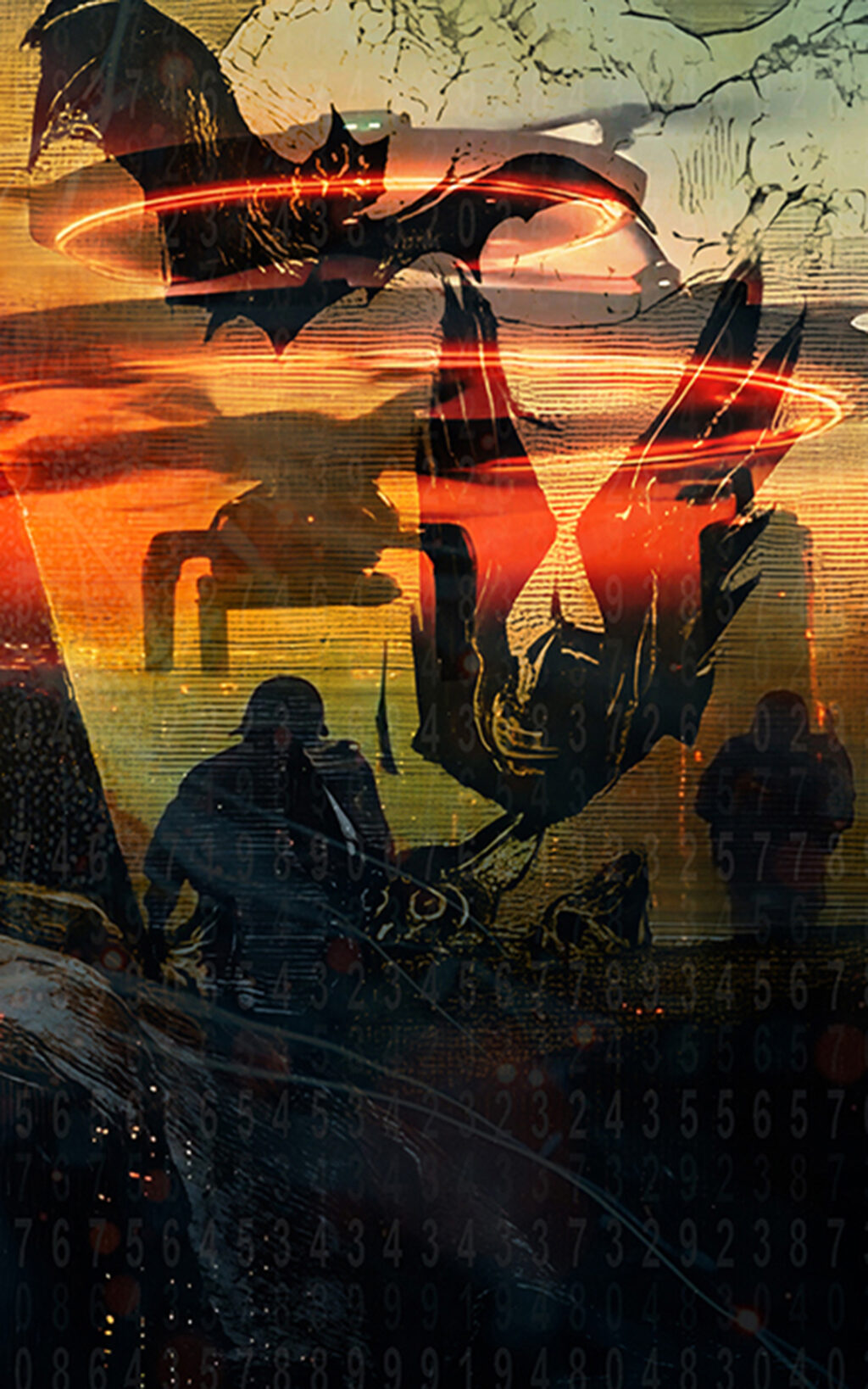
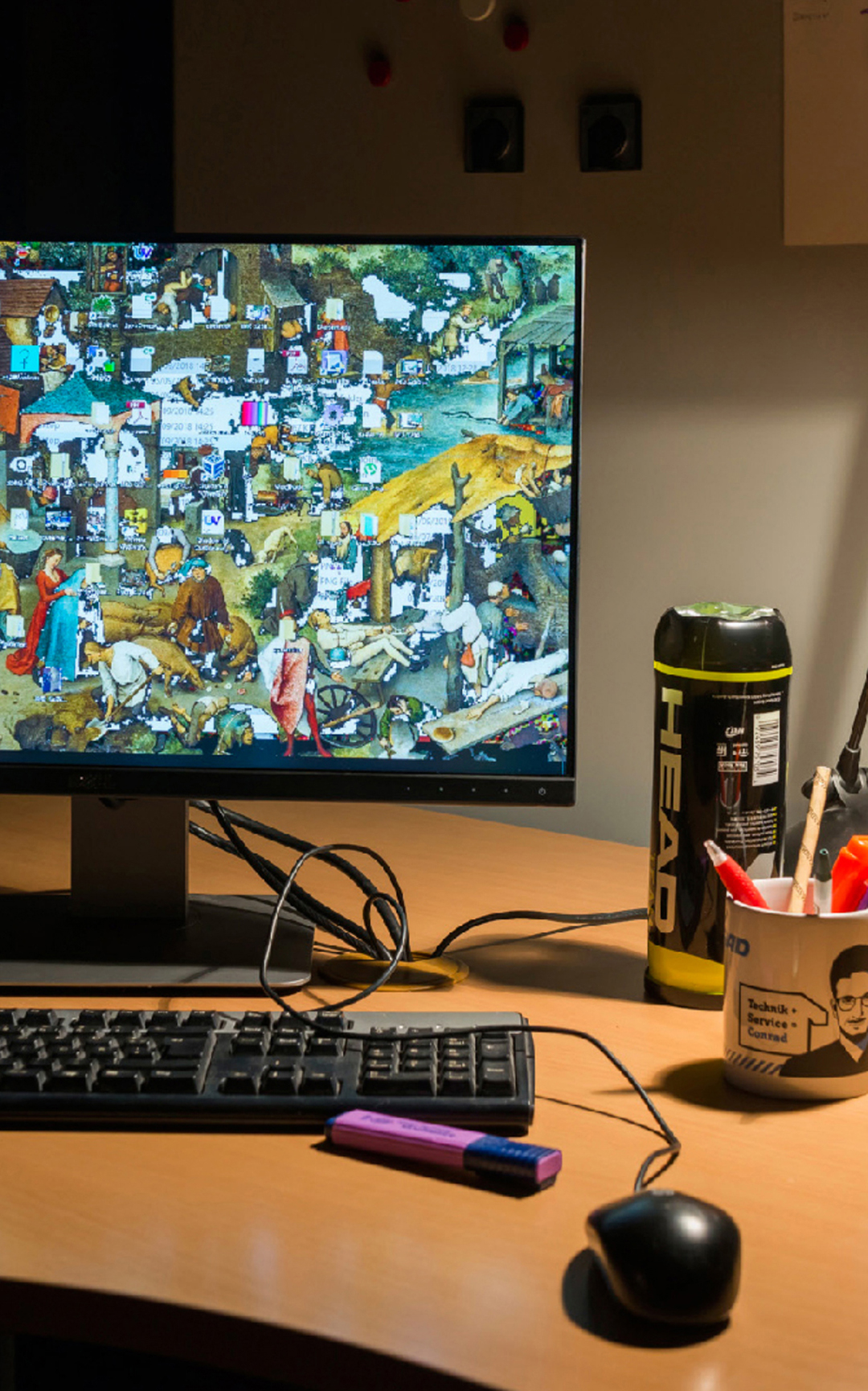
In 1562, Pieter Bruegel the Elder completed The Triumph Of Death, a panorama where black smoke blots out the sky, dead fish litter the shore, and skeletons test a myriad of death techniques. Over 200 years earlier, the Black Death wiped out half of Europe’s population, triggering upheavals that shaped medieval history. Alongside Mark Fingerhut and Forma, Burr created DESCENT, a desktop application that meditates on this darkness through a spiraling digital plague—ending with a single eye watching the rats destroy themselves.

BIO

Peter Burr is a Brooklyn-based artist whose immersive environments transform computational systems into emotional, sensory experiences. Working across video, software, and installation, he explores the relationship between human-machine interfaces and the systems that shape them. A Guggenheim Fellow and Creative Capital grantee, his work has been exhibited internationally at institutions including MoMA, the Whitney, and Centre Pompidou.

Mark Fingerhut is a New York-based artist, programmer, performer, and writer whose work spans software art, video, installation, and live digital performance. Using code, choreography, humor, and experimental storytelling, he creates works that explore network culture, computer interfaces, and the poetics of everyday digital experience.

Galina Bleikh – The Sleep of Reason Produces Monsters – Israel

THE SLEEP OF REASON PRODUCES MONSTERS

Galina Bleikh


FILE SÃO PAULO 2026: Inter-creativity – Art and Technology – VIDEO ART SHORT
Electronic Language International Festival


The Sleep of Reason Produces Monsters – Israel

Inverting Goya’s warning, AI Ballet asks: if reason’s sleep produces monsters, what emerges from AI’s eternal wakefulness? The installation explores algorithmic mind control through surveillance and behavioral prediction. Empty halls with silent pianos symbolize obsolete human creativity, while text evolving from “AI” to “GOD” reveals algorithms’ quasi-religious authority. Using AI-generated choreography, the work questions who controls our consciousness and whether autonomy survives.

BIO

Galina Bleikh is a multidisciplinary artist at the intersection of art, technology, and science. She holds an MA from Stieglitz Academy, St. Petersburg, and has been based in Jerusalem since 1993. Her practice spans AI, generative, bio, and digital art. Bleikh exhibits internationally at venues including CICA Museum (South Korea), NordArt (Germany), Haifa Museum of Art, Art Asia Miami, etc.

Maria Takeuchi & Frederico Phillips

asphyxia
The performance is centered in an eloquent choreography that stresses the desire to be expressive without bounds. Motion data was captured using inexpensive sensors and that data paved the way through an extensive number of steps. Once all the scanned point cloud data were combined, they were used as the base for the creative development on the piece. A series of iterative studies on styles followed and several techniques and dynamic simulations were then applied using a number 3D tools for various results.