highlike

Christopher Knowlton – Deus Ex Machina Doctrina: The AI Dances – United States

DEUS EX MACHINA DOCTRINA: THE AI DANCES

Christopher Knowlton


FILE SÃO PAULO 2026: Inter-creativity – Art and Technology – CINEFILE | Short
Electronic Language International Festival


Deus Ex Machina Doctrina: The AI Dances – United States

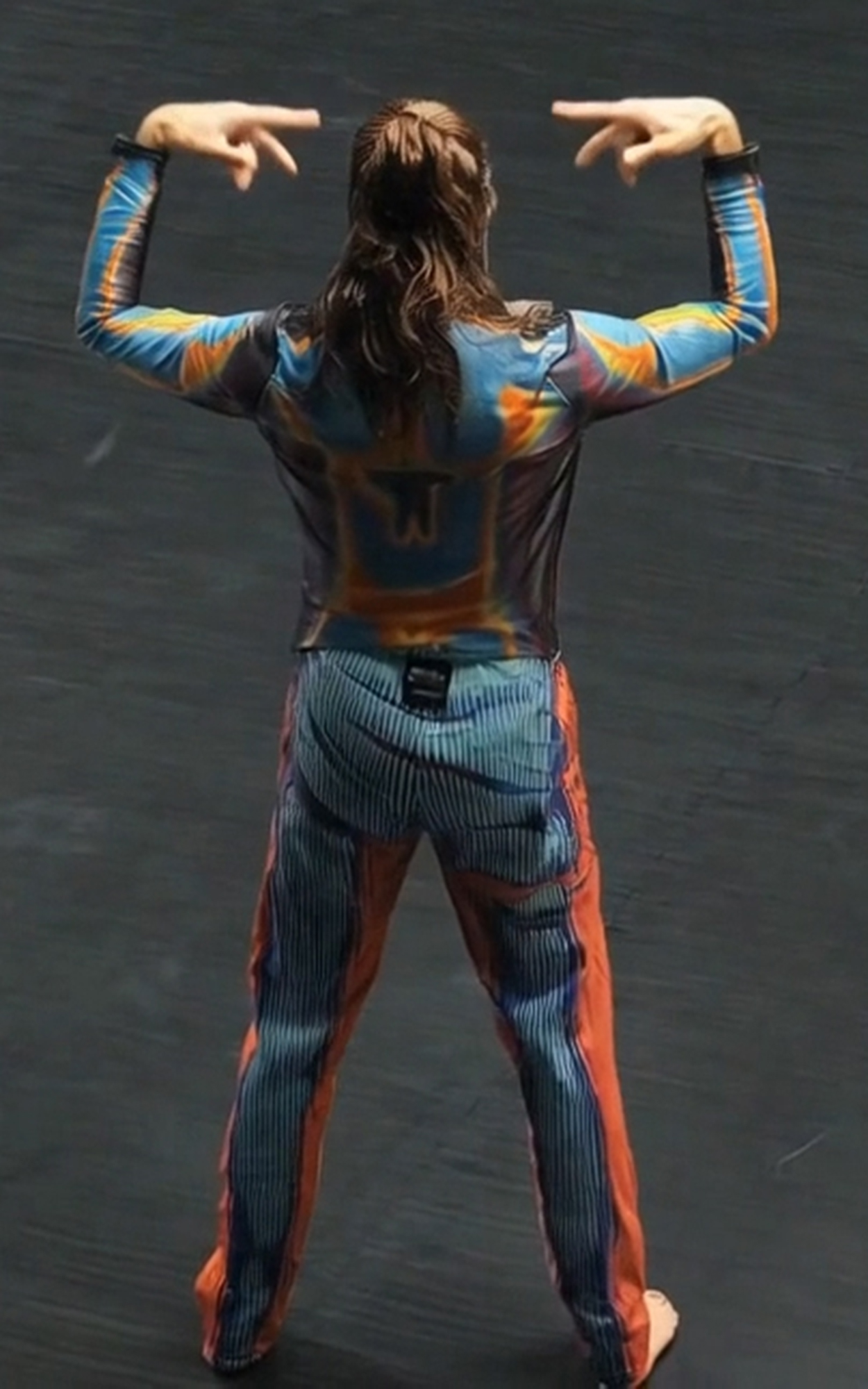
Deus Ex Machina Doctrina: The AI Dances is an experimental dance film that examines the deification of new technologies, the implications of artificial intelligence (AI) for dance, and the extractive forces underpinning generative AI. Images of the artist in motion feed commercial AI video generators to hallucinate impossible choreographies. In doing so, movement prompting as a new mode of interaction with AI reveals emergent aesthetics and treatments of the body embedded in these systems. 

BIO

Christopher Knowlton, Ph.D., is a queer transdisciplinary movement artist and research scientist who uses emerging technologies to create augmented performance work. Based in Chicago, he has created many solo and collaborative dance works that have been featured locally and internationally, spanning dance, film, new media, puppetry and storytelling.

Skylar Tibbits

Aerial Assemblies
Self-Assembly is a process by which disordered parts build an ordered structure through local interaction. We have demonstrated that this phenomenon is scale-independent and can be utilized for self-constructing and manufacturing systems at nearly every scale. We have also identified the key ingredients for self-assembly as a simple set of responsive building blocks, energy and interactions that can be designed within nearly every material and machining process available. Self-assembly promises to enable breakthroughs across every applications of biology, material science, software, robotics, manufacturing, transportation, infrastructure, construction, the arts, and even space exploration.

tangible media group

transdock
Ken Nakagaki, Yingda (Roger) Liu, Chloe Nelson-Arzuaga, and Hiroshi Ishii
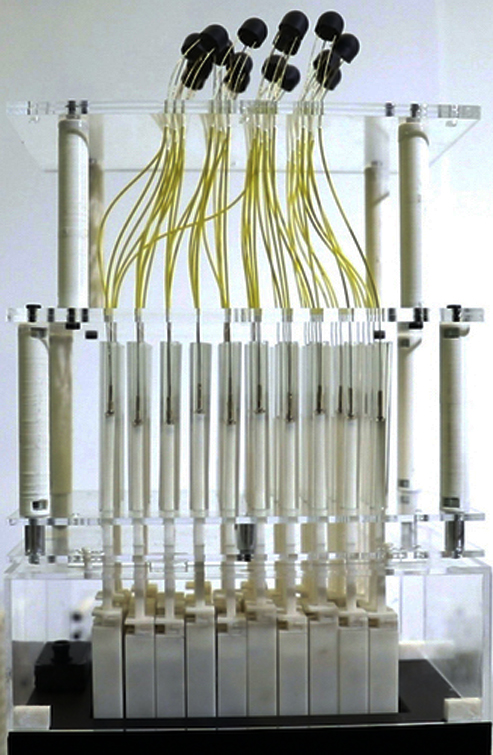
TRANS-DOCK is a docking system for pin-based shape displays that expand their interaction capabilities for both the output and input. By simply interchanging the transducer modules, composed of passive mechanical structures, to be docked on a shape display, users can selectively switch between different configurations including display sizes, resolutions, and even motion modalities such as rotation, bending, and inflation.
In our paper accepted to TEI 2020, we introduce a design space consisting of several mechanical elements and enabled interaction capabilities. Our proof-of-concept prototype explores the development of the docking system based on our previously developed 10 x 5 shape display, inFORCE. A number of transducer examples are shown to demonstrate the range of interactivity and application space achieved with the approach of TRANS-DOCK.