highlike

Doug Aitken

The Garden
The Garden is a living artwork that embraces the dichotomy between the natural environment and a synthetic man-made experience. Aitken’s The Garden installation brings the viewer into the center of the artwork and asks them to physically immerse, participate and become the subject of the installation. Set inside a dark warehouse space the viewer walks inside, their eyes adjusting to become aware of thick lush jungle growing under artificial grow lights. Walking closer, the viewer enters inside the jungle and discovers a huge rectangular glass cube. Inside the glass room is a man-made environment replete with generic elements of modern life: tables and chairs, a cabinet, a sterile tableau set under bright raking lights.
ROB MULHOLLAND

روب مولهولاند
罗布穆赫兰
롭 멀홀랜드
ロブマルホランド
Роб Малхолланд

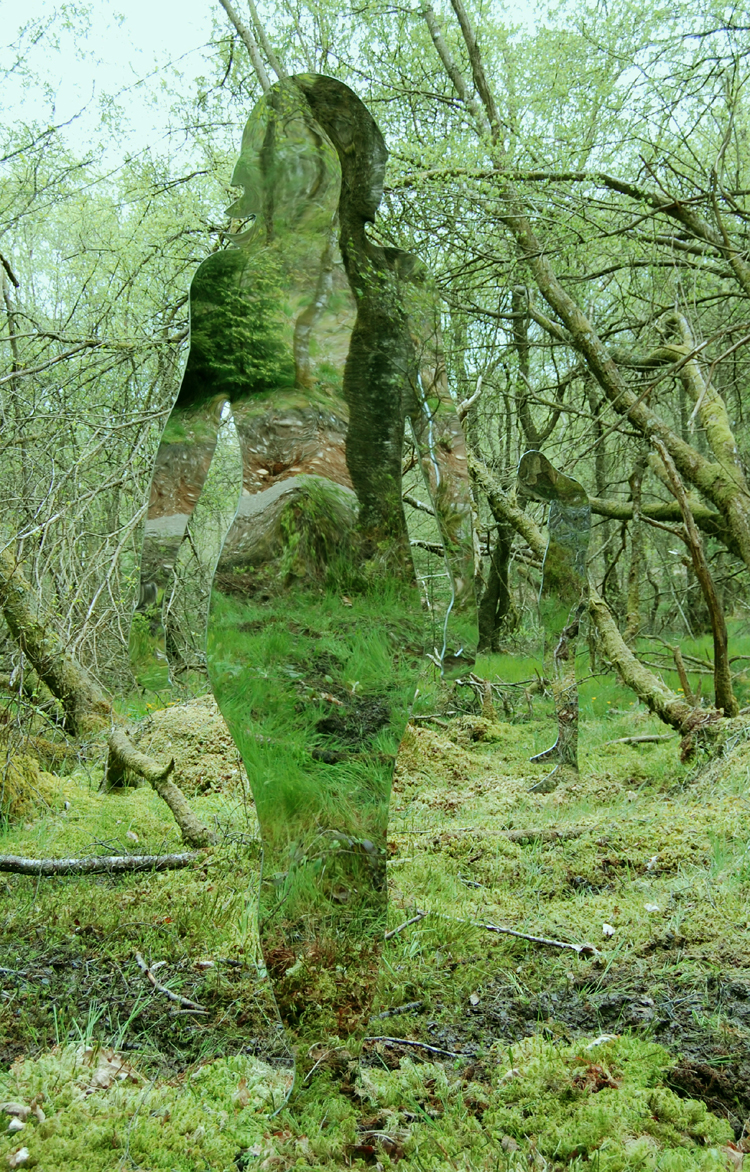
Rob studied at Edinburgh College of Art and graduated with a BA [Hon ] degree in 1986[…] His work explores the human relationship with the wider environment. His approach is not judgmental, more reflective and questioning about the ever-changing world around us. The human desire to leave a trace of ones-self for future generations has always intrigued him. It’s a driving force to create and leave a semblance of our-selves as individuals and as a society. The reflective figures ask us to look again and consider the symbiotic relationship we have with our natural and man-made environment.

GIUSEPPE LICARI

朱塞佩 利卡里
The sky in a room

“Nature has always been a big passion and the relation of nature and man-made environments is something I often try to confront in my work. The Sky in a Room was first inspired by the forests’ fires that in 2007 destroyed a big part of the south of Europe. They were largely man-made fires, intending to generate new land available for building speculation. A sick tree was cut down by the municipality of Rotterdam, cut in smaller pieces, archived and re-built inside the exhibition space, against the architectural surfaces of the gallery. The trunk of the tree was removed in order to give the public a different physical relation to the tree itself and to the white sterilized space of the gallery. The dead tree presents its branches covered with a layer of moss and molds creating a suspended landscape.”

FILE SÃO PAULO 2025: SYNTHETIKA – Edwin van der Heide

Spiral of Time — Amazonas Brazil — UFAM

Edwin van der Heide

Interact with Spiral of Time — Amazonas Brazil — UFAM via FILE ARCHIVE


FILE SÃO PAULO 2025: SYNTHETIKA – Art and Technology – Installations
Electronic Language International Festival


Spiral of Time — Amazonas Brazil — UFAM – Netherlands

Spiral of Time captures and stages the diverse soundscape of a specific location over the course of several years. By documenting the unique natural, cultural, spatial, and temporal dynamics of a place, the work honors the contributions of all its actors. Every hour, a one-minute recording is made, resulting in a vast sonic archive over time. It is accessible online through a spiral-shaped interface, allowing listeners to explore the cyclical patterns revealed by navigating the material across different time intervals. 


Since July 17th, 2024, the artist has been recording the sounds of the square in front of MACBA (Museum of Contemporary Art of Barcelona). It is a very interesting, diverse, and vibrant urban space. The work is accessible online via https://www.macba.cat/en/spiral-of-time-placa-dels-angels/ and will also be presented physically in the museum starting July 10th, 2025.


Edwin is expanding the project to include other recording locations around the world—not only in urban contexts (dominated by humans) but also in areas governed by nature. The artist dedicated himself to a recording site in the Amazon region. Since February 11th, 2025 Spiral of Time has been installed at the Amazon Rainforest surrounding The UFAM (Federal University of Amazonas) in Manaus. It is home to one of the world’s largest urban forest fragments. Completely surrounded by the dense urban matrix of Manaus, this forest has been isolated since the late 1980s. The forest retains rich ecological features, including areas of mature terra-firme forest, late-stage secondary vegetation, and small patches of white-sand forests. This unique setting offers a rare opportunity to study tropical forest dynamics within a metropolitan environment. 

Spiral of Time-UFAM immerses the listeners in the acoustic life of one of the most biodiverse ecosystems on the planet. This contrast between the natural rhythms of the forest and the human-made patterns of the city enriches the broader narrative of the Spiral of Time, offering a deeper reflection on coexistence, change, and continuity across different environments.

BIO

Edwin van der Heide is an artist, composer, and researcher focused on sound, space, and interaction. His work pushes the boundaries of musical composition toward spatial, interactive, and interdisciplinary directions. He creates installations, performances, and immersive environments where the audience is placed at the center, encouraged to engage sensorially and investigatively.


Euglena

Watage
An interactive installation using naturally-generated power rather than man-made sources like electricity. Dandelion fluff (watage in Japanese) soaked in water to form drop-like shapes, untreated fluff, and so on serve as modules, bonded with liquid paste to be reconstructed. The fluff sways in response to viewers’ breath or movement, even in the absence of breeze, immaculately revalidating the viewer’s own existence by making their influence on surroundings visible without use of technology. Using its surrounding environment to send off its seeds, the dandelion has achieved a lightness and form in its fluff specialized to the purpose and sprouts up each year no matter how the world may change. Having been drawn into the quietly-paced world of plants, the artist looked to dandelion fluff for a new form of expression able to hold its own against showy, rapidly evolving technological expression.

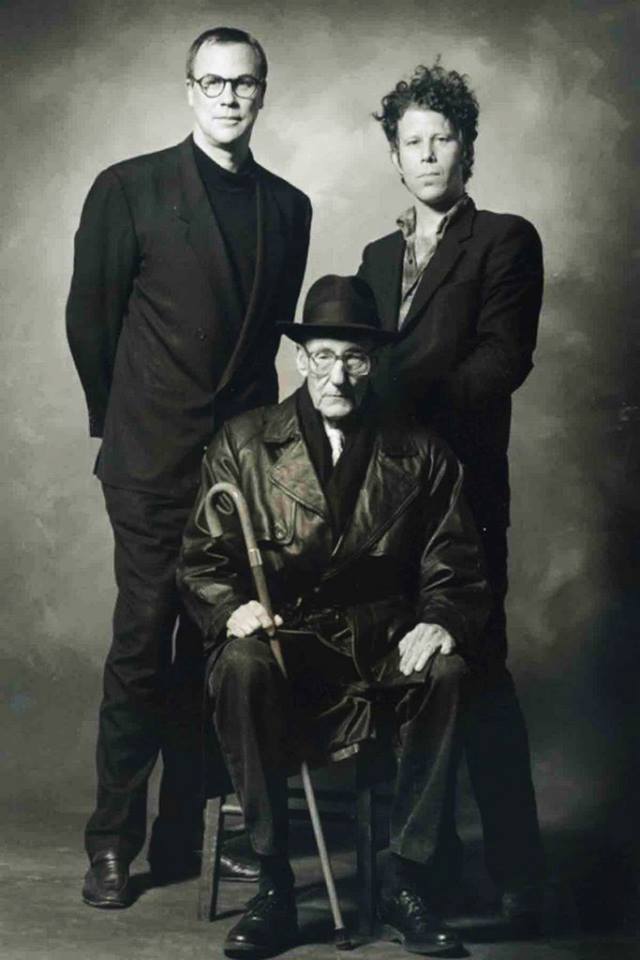
ROBERT WILSON, WILLIAM BURROUGHS AND TOM WAITS

The Black Rider
The Black Rider is in twelve parts and a prologue. I had the idea that there would be indoor and outdoor scenes, man-made and natural environments, and that the scenes would alternate. I made a prologue to introduce the company. It begins with a black box standing up. The devil and the entire company come out of the box until they all stand in a line in front of the stage, as in a circus where all artists are introduced at the beginning. Then the devil sings a song: “Come on along with the Black Rider, we’ll have a gay old time. Take off your skin and dance around in your bones. I’ll drink your blood like wine. Come on along with the Black Rider, we’ll have a gay old time…” Anyways, the audience gets a certain idea what the piece is going to be like. Then the characters disappear and the black box gets bigger and bigger, until the whole stage is engulfed in this black spot. The first scene takes place in the interior of a room, with an old family portrait on the back wall – played by an actor.

SOU FUJIMOTO ARCHITECTS

على فوجيموتو
후지모토에
על פוג’ימוטו
НА ФУДЗИМОТО
serpentine gallery pavilion

He described his Serpentine project as “…an architectural landscape: a transparent terrain that encourages people to interact with and explore the site in diverse ways. Within the pastoral context of Kensington Gardens, I envisage the vivid greenery of the surrounding plant life woven together with a constructed geometry. A new form of environment will be created, where the natural and the man-made merge; not solely architectural nor solely natural, but a unique meeting of the two.”