highlike

Michael Betancourt – Zersetzung – United States

ZERSETZUNG

Michael Betancourt


FILE SÃO PAULO 2026: Inter-creativity – Art and Technology – Animation
Electronic Language International Festival


Zersetzung – United States

The term “Zersetzung” [decomposition] identifies the psychological repression employed by the Stasi in the DDR that attacked their victims’ self-perception, confidence, and capacity for resistance through deliberate alienation and paranoia. Victims found themselves isolated, doubting their own memories and relationships, as the secret police manipulated their social environment to create chronic uncertainty about what is real, true, authentic; precisely the same instabilities created by AI.

BIO

Michael Betancourt is a distinguished Cuban-American (Latinx) critical theorist, moviemaker, and research artist known for his work in the fields of digital capitalism, motion graphics, and Glitch Art; a pioneer of Glitch Art, he has made visually seductive digital art since 1990 that brings the visionary tradition into the present by glitching still and moving images. 
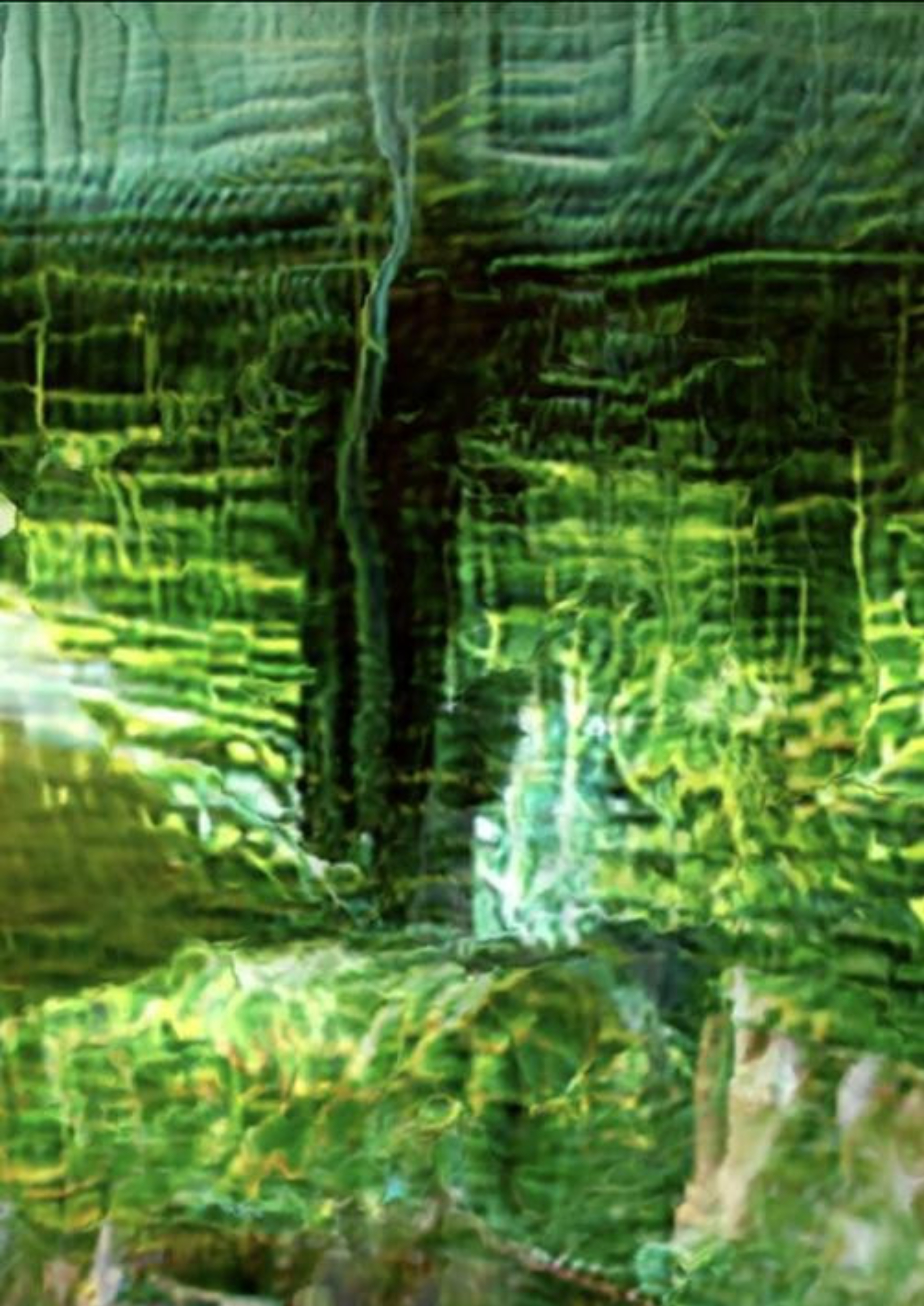
FILE SÃO PAULO 2025: SYNTHETIKA – Michael Betancourt

Garden

Michael Betancourt

FILE SÃO PAULO 2025: SYNTHETIKA – Art and Technology – CGI VIDEOS
Electronic Language International Festival


Garden – United States

Garden is a generative glitches animation created by deliberately conflicting AI (LoRA) models. Using multiple LoRA models to generate images that evoke flowers in a garden, the work transforms traditional representations of plant life into a fluid and hallucinatory exploration of growth, decay, and metamorphosis. These transformations suggest alternative ways of understanding organic growth, where the boundaries between individual organisms become fluid and permeable.

BIO

Michael Betancourt is a contemporary Cuban-American critical theorist, filmmaker, and artist-researcher known for his pioneering work in the fields of Digital Capitalism, Motion Graphics , and Glitch Art . Since 1990, he has explored the intersection of technology, culture, and aesthetics in a diverse practice unified by a constant concern with the poetic potential of images generated by errors.

MICHAEL CLARK COMPANY

マイケル·クラーク·カンパニー
Tate Project Part I ]

The choreography rehearsed and performed in 2010 paired the rigour of classical steps with contemporary movement, a juxtaposition that paralleled Clark’s training as a ballet dancer at the Royal Ballet, and his later anti-hierarchical, anti-authoritarian choreographic experiments. Balletic poses, jumps and steps were isolated from traditional narrative sequences and made strange through repetition. The graceful leaps and turns of the trained dancers seemed awkward and uneven, just as they were often out of sync and oriented in different directions. This choreography paralleled the performance space, which was demarcated by geometric and striped floor mats designed by Charles Atlas, which resembled the large windows at the back of the hall and the black beams that extend vertically from floor to ceiling.

Milton Montenegro – Hallucination – Brazil

HALLUCINATION

Milton Montenegro


FILE SÃO PAULO 2026: Inter-creativity – Art and Technology – Animation
Electronic Language International Festival


Hallucination – Brazil

When veteran cartoonist Joe K. is falsely accused of plagiarism, his life turns into a Kafkaesque nightmare.

His only hope is Onion-Man, the odd superhero he has been drawing for decades, who magically escapes from the comic books into the real world.

Together, they must outwit an authoritarian AI and unleash the deadliest of superpowers to avoid prison.

BIO

Michael Betancourt is a distinguished Cuban-American (Latinx) critical theorist, moviemaker, and research artist known for his work in the fields of digital capitalism, motion graphics, and Glitch Art; a pioneer of Glitch Art, he has made visually seductive digital art since 1990 that brings the visionary tradition into the present by glitching still and moving images. 

Jascha Dormann

Sounds of Silence
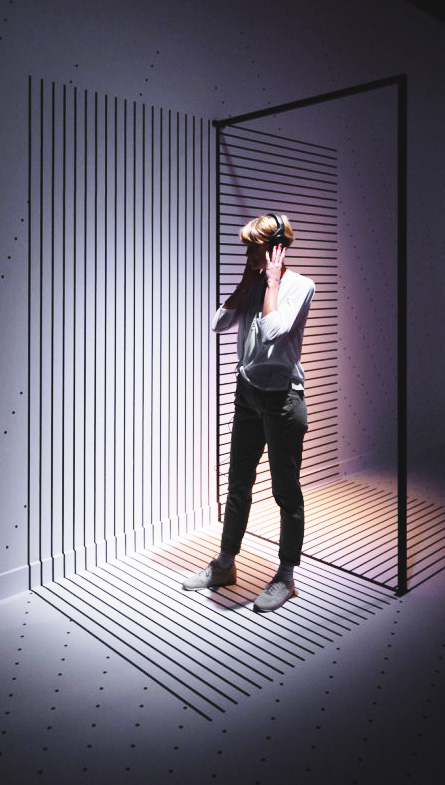
Inside the exhibition, there’s not a word of written text, and few traditional photos or videos. Instead, you get abstract spatial graphics. Tracking systems respond as you navigate the exhibit, and an unseen voice hints at what you might do. There’s a snowy cotton-like entry, radio-like sound effects, and then a pathway to explore silence from the start of the universe until this century.