highlike

FILE SÃO PAULO 2025: SYNTHETIKA – Frederik De Wilde

Hunter and Dog

Frederik De Wilde

FILE SÃO PAULO 2025: SYNTHETIKA – Art and Technology – Installations
Electronic Language International Festival

Hunter and Dog – Belgium

Genetic and evolutionary algorithms reinterpret an existing artwork. De Wilde uses digital scans and custom genetic and evolutionary algorithms as a deconstruction technique to reinterpret and update the nineteenth-century work Hunter and Dog from sculptor John Gibson R. A. (1790–1866).

Frederik De Wilde’s Hunter and Dog interrogates the intersections of human evolution, genetic engineering, and the hybridization of technology and biology. De Wilde reinterprets the historical sculpture through the lens of post-evolutionary theory, engaging with contemporary debates on CRISPR, synthetic biology, and the implications of human-directed genetic modification. CRISPR, the revolutionary gene-editing technology, has introduced an unprecedented rupture in the trajectory of evolution. No longer constrained by the slow mechanisms of natural selection, humans now possess the ability to intervene directly in their own genetic blueprint, marking a shift toward a post-Darwinian paradigm. This technological power, however, is not neutral; it emerges from a historical lineage of scientific inquiry deeply entangled with colonialism. The history of genetic manipulation is inseparable from colonial bioprospecting, eugenics, and exploitative medical experimentation on marginalized populations. Colonial regimes treated bodies—both human and non-human—as sites of intervention, control, and optimization, a logic that persists in contemporary biotechnological frameworks. Post-colonial discourse reveals how genetic engineering risks perpetuating these legacies, reinforcing power asymmetries between those who wield biotechnological control and those subjected to its consequences. CRISPR, while offering the promise of eradicating disease and expanding human potential, also raises ethical concerns about genetic stratification, bio-capitalism, and the commodification of life itself. De Wilde’s work visualizes these tensions, making visible the processes of cell division and morphogenesis—the very biological mechanisms now subject to human intervention. Hunter and Dog does not merely depict the transformation of a neoclassical form but speculates on the future of the human body as a site of engineered evolution. From a decolonial perspective, the artwork questions who has the authority to edit life and to what ends. It challenges the techno-utopian narratives that frame genetic modification as an inevitable progress while obscuring its social, ethical, and ecological implications. By hybridizing art, science, and technology, Hunter and Dog compels us to confront the uncertainties of a CRISPR-driven future: Will genetic editing reinforce existing inequalities, or can it be decolonized and democratized? How do we navigate this post-natural frontier without losing the human—and more-than-human—dimensions of our existence? De Wilde’s work invites us into this speculative space, where the hunter, the dog, and the algorithm coalesce into a vision of a world where biology is no longer destiny, but a site of contested agency.

Where are we going from here? 

BIO

Frederik De Wilde fuses art, science, and tech. Known for his Blackest-Black works that inspired Kapoor’s Vantablack, he has shown at Venice Biennale, BOZAR, MAAT, Pompidou, and ZKM, winning awards like Ars Electronica.

John Butler

Gaitkeeper
“Just be yourself, and nobody else”. Our motions, as distinctive as our faces, will soon be captured and interned. Gaitkeeper is a biometric control suite designed to counter the challenge of ‘Locomotive Camouflage’. LoCam, which combines the physical control of dance with the unpredictability of performance art, is rapidly being adopted by civic insurgents. Gaitkeeper units, based on the off-the-shelf Kiva chassis, are now being deployed as standard counter measures.

Mark Napier

Mark Napier has been creating artwork exclusively for the Web since 1995. He combines his training as a painter with his expertise as a software developer to create “art interfaces,” software that addresses issues of authority, ownership, and territory in the virtual world.
.
smoke
“A symbol of the human desire to monumentalize ideas in physical form, the Empire State Building is a subject of Mark Napier’s artwork in the past four years. This icon of American hegemony is key to exploring shifting structures of power, specifically the transition from steel to software as the medium of power in our time.”Mark Napier

Kohei Nawa

Throne
This work attempts to express that premonition as an immense “floating vacant throne”. If instances of power and authority have ruled since ancient times, and the pyramids provide one example—we must ask what the future will hold. Created with reference to the forms of festival floats and portable shrines that appear in the rituals and festivities of the East, the sculpture fuses today’s 3D modeling techniques with gold leaf applications that date back to ancient Egypt. In the frontal center is an empty room, space enough for a 2 to 3-year-old child to sit, suggesting that the new intelligence is still in a young state. Shining, spherical mirrors placed at the center in front and back. Made of platinum foil, they represent “the eyes overlooking the world”, where the frontal one faces the future and the back reflects into the past.

Jonathan Monaghan

Den of Wolves
Den of Wolves is a video installation drawing on a range of references to weave a new multi-layered mythology. The work follows three bizarre wolves through a series of increasingly surreal retail stores as they search for the regalia of a monarch. Composed of one continuous camera shot, the work is an immersive, dreamlike journey drawing connections between popular culture, institutional authority and technological over-dependence.

Hito Steyerl

Power Plants
Hito Steyerl’s series of projects at the Serpentine Galleries is positioned around ideas of ‘power’. Beginning from the premise that ‘power is the necessary condition for any digital technology’, the artist considers the multiple meanings of the word, including electrical currents, the ecological powers of plants or natural elements, and the complex networks of authority that shape our environments. She addresses the notion of power through three interrelated research strands and projects: Actual Realityos, a collectively-produced digital tool; Power Walks, a series of guided walks and a tour that draws upon conversations with campaigners, community groups and organizations in the local area surrounding the Serpentine, and finally this exhibition, Power Plants, which features new video installations created using artificial intelligence trained to predict the future.

David Spriggs

Regisole
Spriggs’ ‘Regisole’ is inspired by the ancient equestrian statue of the same name originally erected during the 3rd century AD for a Roman Emperor in Ravenna, Italy. ‘Regisole’ means ‘Sun King’. Regis is Latin for king, and Sol means the sun. The original ‘Regisole’ was destroyed after the French Revolution since it was seen as a symbol of monarchy. Spriggs’ positioning of the police officer and horse accurately represent the description of the positioning of the original ‘Regisole’, such as with the outstretched hand of the officer in the ‘adlocutio‘ position (Latin: addressing) exercising power and authority.

kim simonsson

Ким Симонcсон
little bubble gum

Finnish artist Kim Simonsson is a ceramic sculptor based out of Helsinki who creates adolescent characters carrying out mischievous acts. “Authority in it’s many forms fascinates me and in my works I want to reverse the common beliefs by making the weak powerful.” -Kim Simonsson

JAMES LAW

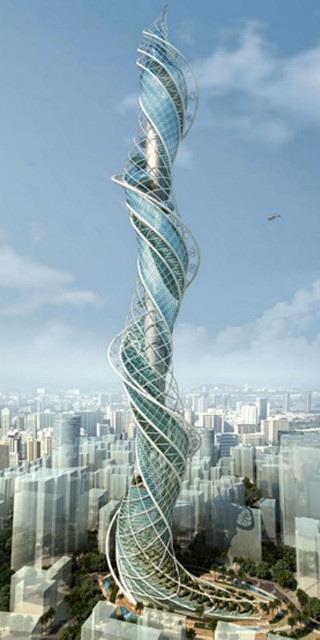
Wadala tower
Tower of India is a one kilometre tall mixed used super tower comprising of residential apartments, hotels, offices, urban farms, sky park, museums, shopping mall and concert halls. Situated in the Wadala District of Mumbai, the design was invited by the Mumbai Metropolitan Regional Development Authority (MMRDA) to achieve the world’s tallest tower in India and also as a new vertical urban district without the need for sprawling road networks. more