highlike

FILE SÃO PAULO 2025: SYNTHETIKA – Frederik De Wilde

Hunter and Dog

Frederik De Wilde

FILE SÃO PAULO 2025: SYNTHETIKA – Art and Technology – Installations
Electronic Language International Festival

Hunter and Dog – Belgium

Genetic and evolutionary algorithms reinterpret an existing artwork. De Wilde uses digital scans and custom genetic and evolutionary algorithms as a deconstruction technique to reinterpret and update the nineteenth-century work Hunter and Dog from sculptor John Gibson R. A. (1790–1866).

Frederik De Wilde’s Hunter and Dog interrogates the intersections of human evolution, genetic engineering, and the hybridization of technology and biology. De Wilde reinterprets the historical sculpture through the lens of post-evolutionary theory, engaging with contemporary debates on CRISPR, synthetic biology, and the implications of human-directed genetic modification. CRISPR, the revolutionary gene-editing technology, has introduced an unprecedented rupture in the trajectory of evolution. No longer constrained by the slow mechanisms of natural selection, humans now possess the ability to intervene directly in their own genetic blueprint, marking a shift toward a post-Darwinian paradigm. This technological power, however, is not neutral; it emerges from a historical lineage of scientific inquiry deeply entangled with colonialism. The history of genetic manipulation is inseparable from colonial bioprospecting, eugenics, and exploitative medical experimentation on marginalized populations. Colonial regimes treated bodies—both human and non-human—as sites of intervention, control, and optimization, a logic that persists in contemporary biotechnological frameworks. Post-colonial discourse reveals how genetic engineering risks perpetuating these legacies, reinforcing power asymmetries between those who wield biotechnological control and those subjected to its consequences. CRISPR, while offering the promise of eradicating disease and expanding human potential, also raises ethical concerns about genetic stratification, bio-capitalism, and the commodification of life itself. De Wilde’s work visualizes these tensions, making visible the processes of cell division and morphogenesis—the very biological mechanisms now subject to human intervention. Hunter and Dog does not merely depict the transformation of a neoclassical form but speculates on the future of the human body as a site of engineered evolution. From a decolonial perspective, the artwork questions who has the authority to edit life and to what ends. It challenges the techno-utopian narratives that frame genetic modification as an inevitable progress while obscuring its social, ethical, and ecological implications. By hybridizing art, science, and technology, Hunter and Dog compels us to confront the uncertainties of a CRISPR-driven future: Will genetic editing reinforce existing inequalities, or can it be decolonized and democratized? How do we navigate this post-natural frontier without losing the human—and more-than-human—dimensions of our existence? De Wilde’s work invites us into this speculative space, where the hunter, the dog, and the algorithm coalesce into a vision of a world where biology is no longer destiny, but a site of contested agency.

Where are we going from here? 

BIO

Frederik De Wilde fuses art, science, and tech. Known for his Blackest-Black works that inspired Kapoor’s Vantablack, he has shown at Venice Biennale, BOZAR, MAAT, Pompidou, and ZKM, winning awards like Ars Electronica.

Kachi Chan

Sisyphus
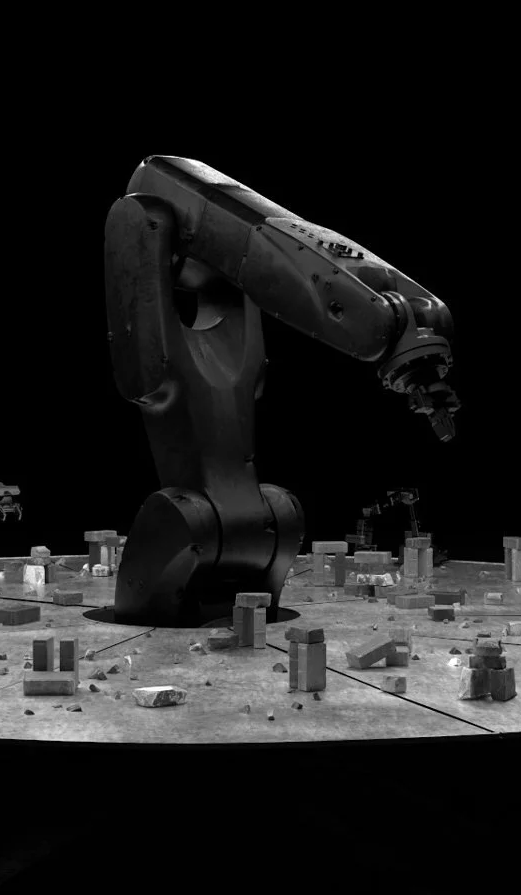
Sisyphus est une installation d’art robotique qui présente deux robots engagés dans un mécanisme cyclique sans fin. Une équipe de petits robots continue de construire des arches en briques tandis qu’un robot géant les pousse vers le bas. Les systèmes robotiques propulsent un récit de construction et de déconstruction.

Olivier Ratsi – Antivj

Onion Skin
Principalement basé sur l’expérience de la réalité et les représentations de la perception de l’espace, Olivier Ratsi considère la réalité objective, le temps, l’espace et la matière comme des notions d’information intangibles.
Son travail consiste à concevoir des processus de discontinuité avec ces notions afin de pouvoir partager avec le spectateur un autre point de vue.
Par le biais de ce processus, Ratsi crée une cassure dans cette réalité objective, altérant notre perception du réel.
Toutefois cette cassure significative et perturbante est assez modérée afin de ne pas priver le spectateur de sa capacité subjective de reconstruction/reconstitution de la réalité, via son expérience et sa propre culture. Le processus de création basé sur la déconstruction des repères spatio-temporels et les dispositifs utilisant la technique de l’anamorphose, développée au cours de ses recherches, jouent principalement le rôle de déclencheurs d’émotions, qui n’ont pas seulement pour but de montrer ce que peuvent être les choses autrement, mais plutôt de questionner leurs références.

Trisha Brown

Newark & M.G
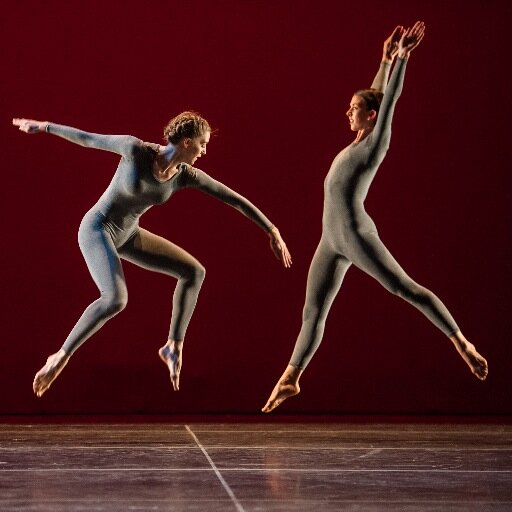
La place de Trisha Brown dans l’histoire de la création Outre-Atlantique est unique : après Martha Graham et sa modern dance, Merce Cunningham qui dynamite les codes, Trisha Brown va s’imposer dans un courant, la danse postmodern qui a influencé nombre de chorégraphes actuels. La danse ici est jaillissante, faite de duos de plus en plus complexes avec bien sûr ce jeu des équilibres instables comme autant de coups d’arrêt au geste. Le plus souvent, sous nos yeux, un couple d’interprètes voit surgir un autre tandem dans un incessant jeu de déconstruction des lignes. Des marches, des courses, des dialogues féconds s’instaurent en scène. Newark est pour beaucoup une des grandes pièces de Trisha Brown.

Stefan Wewerka

Class room chair

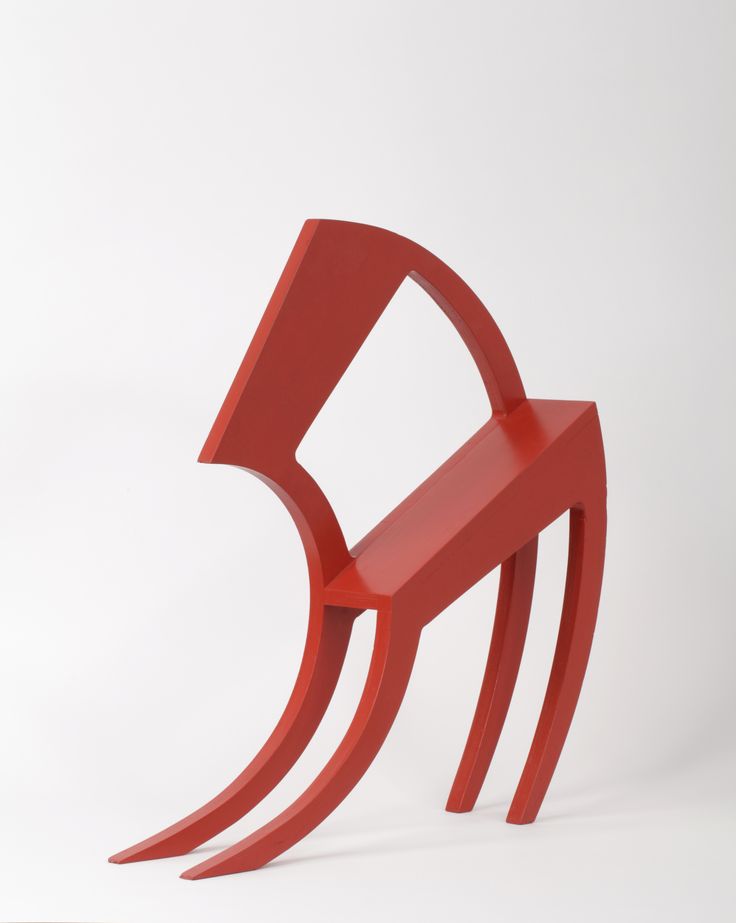
Polyfunctionality and deconstruction of everyday objects, irony and humour as weapons and moments of profound insight: these are some of the ideas behind the works by the architect, designer, sculptor and film-maker, Stefan Wewerka (born in 1928, in Magdeburg).
In his works, Wewerka pushes against conventional concepts relating to art and aesthetics, rationalism and functionalism. As a result for instance, the Last Supper is turned into a weird affair, the kitchen space turned into a kitchen tree. Wewerka’s unmistakable trademark is the manipulation of chairs. Sawn, hacked and bent out of shape, these chairs subversively thwart previously unquestioned concepts relating to furniture. In stark contrast to this, however, are his sculptural furniture designs, adapted to suit the requirements of the human body and its habits.
ERWIN OLAF

欧文奥拉夫
ארווין אולף
アーウィンオラフ
어윈 올라프
Эрвин Олаф
deconstruction
オランダの写真家アーウィン オラフさんは商業および個人的な写真で有名です。彼はリーバイス、マイクロソフト、ノキアなどの国際的な大企業のための広告キャンペーンの写真を撮ります。

THILO FRANK

the phonenix is closer than it appears
L’artiste allemand Thilo Frank a développé ce projet qu’il appelle “Le Phénix est plus proche qu’il n’y paraît”, une installation dont la dimension est de 4 x 4 x 8m et se compose d’une structure faite de miroirs et de cristaux, à la fois à l’extérieur et à l’intérieur, à la recherche de la distorsion de la réalité issue de l’agrandissement ou de la déconstruction de l’espace.A l’intérieur du cube, les gens peuvent expérimenter une sorte de désorientation en devenant le point focal spatial en étant entouré de leurs propres réflexions physiques dans la pièce environnante le corps du spectateur pour devenir une réflexion imaginaire et hallucinante.

ANNIE OK

My Life as an Avatar 06.08
File Festival – Machinima

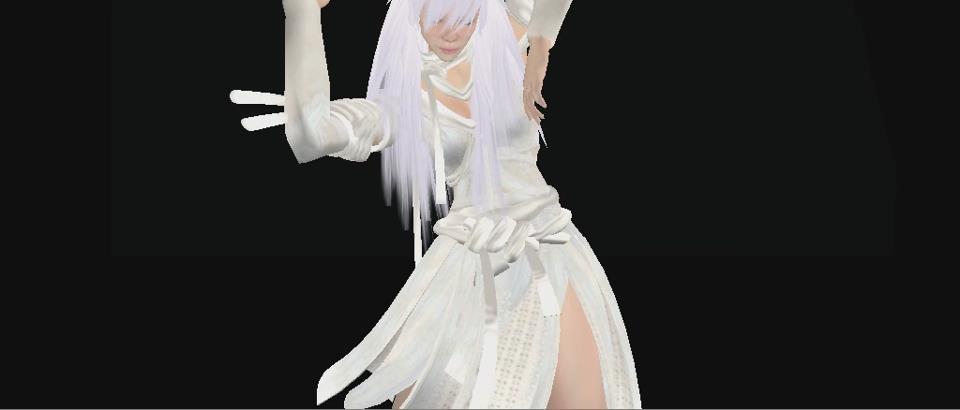
Annie Ok is an interdisciplinary artist. Her work is an expression of entropic congruity and organic abstract deconstruction, inspired by nature, science, mathematics, evolution, dysfunction, ambivalence and ambiguity.

OLIVIER RATSI

Once Upon a Time the Presidents
Deconstruction Time
Ronald Reagan, Barack Obama e Richard Nixon

BRIAN ENO

Брайан Ино
브라이언 이노
ブライアン·イーノ
בריאן אינו
براين إينو
Брайан Ино
Music for Airports
Initially, he referred to these quiet soundscapes as “discreet” music, and on Discreet Music (a wry deconstruction of “Pachelbel’s Canon in D”) demonstrates his basic tools: minimal melodies, subtle textures, and variable repetition. Around this time, he had also been collaborating with the German synth duo Cluster on a pair of moody, coloristic electronic albums, selections from which may be found on the Begegnungen and Begegnungen II compilations. But it was Music for Airports that finally codified these experiments into an aesthetic, and even provided a label for the sound: ambient music.