highlike

FILE SÃO PAULO 2025: SYNTHETIKA – Yukang Tao

ArtiPerception

Yukang Tao

FILE SÃO PAULO 2025: SYNTHETIKA – Art and Technology – Short Films AI
Electronic Language International Festival


ArtiPerception – United States

Based on scientific dogmatism, which assumes itself capable of absolute and supreme knowledge, and even strictly lingers to objectivity, eliminating all delusions of our sensationsBut when we rupture those scientific peculiarities, what is the naive essence underneath physical particles and waves, or scientific approximation?

BIO

Yukang Tao is an interdisciplinary artist who works in the fields of electronic arts, animation, video, and performance. While all of his artwork alludes to the concept of gender and observes the relationship between technology, nature and humanity, it also encompasses themes such as surveillance and self-absorption of society in media

FILE SÃO PAULO 2025: SYNTHETIKA – Frederik De Wilde

Hunter and Dog

Frederik De Wilde

FILE SÃO PAULO 2025: SYNTHETIKA – Art and Technology – Installations
Electronic Language International Festival

Hunter and Dog – Belgium

Genetic and evolutionary algorithms reinterpret an existing artwork. De Wilde uses digital scans and custom genetic and evolutionary algorithms as a deconstruction technique to reinterpret and update the nineteenth-century work Hunter and Dog from sculptor John Gibson R. A. (1790–1866).

Frederik De Wilde’s Hunter and Dog interrogates the intersections of human evolution, genetic engineering, and the hybridization of technology and biology. De Wilde reinterprets the historical sculpture through the lens of post-evolutionary theory, engaging with contemporary debates on CRISPR, synthetic biology, and the implications of human-directed genetic modification. CRISPR, the revolutionary gene-editing technology, has introduced an unprecedented rupture in the trajectory of evolution. No longer constrained by the slow mechanisms of natural selection, humans now possess the ability to intervene directly in their own genetic blueprint, marking a shift toward a post-Darwinian paradigm. This technological power, however, is not neutral; it emerges from a historical lineage of scientific inquiry deeply entangled with colonialism. The history of genetic manipulation is inseparable from colonial bioprospecting, eugenics, and exploitative medical experimentation on marginalized populations. Colonial regimes treated bodies—both human and non-human—as sites of intervention, control, and optimization, a logic that persists in contemporary biotechnological frameworks. Post-colonial discourse reveals how genetic engineering risks perpetuating these legacies, reinforcing power asymmetries between those who wield biotechnological control and those subjected to its consequences. CRISPR, while offering the promise of eradicating disease and expanding human potential, also raises ethical concerns about genetic stratification, bio-capitalism, and the commodification of life itself. De Wilde’s work visualizes these tensions, making visible the processes of cell division and morphogenesis—the very biological mechanisms now subject to human intervention. Hunter and Dog does not merely depict the transformation of a neoclassical form but speculates on the future of the human body as a site of engineered evolution. From a decolonial perspective, the artwork questions who has the authority to edit life and to what ends. It challenges the techno-utopian narratives that frame genetic modification as an inevitable progress while obscuring its social, ethical, and ecological implications. By hybridizing art, science, and technology, Hunter and Dog compels us to confront the uncertainties of a CRISPR-driven future: Will genetic editing reinforce existing inequalities, or can it be decolonized and democratized? How do we navigate this post-natural frontier without losing the human—and more-than-human—dimensions of our existence? De Wilde’s work invites us into this speculative space, where the hunter, the dog, and the algorithm coalesce into a vision of a world where biology is no longer destiny, but a site of contested agency.

Where are we going from here? 

BIO

Frederik De Wilde fuses art, science, and tech. Known for his Blackest-Black works that inspired Kapoor’s Vantablack, he has shown at Venice Biennale, BOZAR, MAAT, Pompidou, and ZKM, winning awards like Ars Electronica.

Felix Worseck

parabolic soap

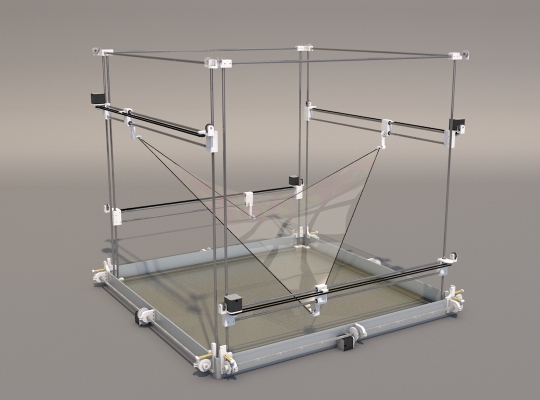
Créée par Felix Worseck à l’Université des Arts de Berlin (Digitale Klasse), l’installation «savon parabolique» est une fusion de comportement artificiel / mécanique et naturel. Le but de l’installation est de produire une surface paraboloïde qui peut être déplacée pendant environ 60 secondes. Cette surface minimale n’est créée qu’après la connexion de la membrane et la rupture de la piscine de savon. Les mouvements des moteurs pas à pas sont arbitraires. Ils sont contrôlés par un programme Arduino qui attribue des valeurs aléatoires à chaque passage à la hauteur des quatre axes de contrôle. Une fois la membrane de savon séparée de la base, la machine revient à l’état initial et la séquence recommence.

Alisa Andrasek

Cloud Pergola
Inspired by the cloud formations and weather events, this mathematized cloud plays with visitor’s perception. Movement through the structure generates a series of dynamic interference views in its deep fabric, drifts and ruptures in visibility. A sea of redirecting vectors is pulling the visitor like an invisible gravity force through the fabric.

Sasha Waltz

Sacre
Sacre is Waltz’s forceful version of The Rite of Spring. The stage is smoke-filled, and a cone of rocks and ash lies centre stage like the remains of a fire. Couples invade the stage, and clump into ragged groups that rupture and re-form: fracturing along gender lines, or splintering into disparate parts. Though she ends up overloading the piece with too many sub-scenes – too many rites, really – Waltz is terrific at simultaneously marshalling and unleashing the wild energies of her dancers, skewering the stage with images of birth, sex and death, of savage conformity and naked revolt.

MARIA HSU

TranStructures
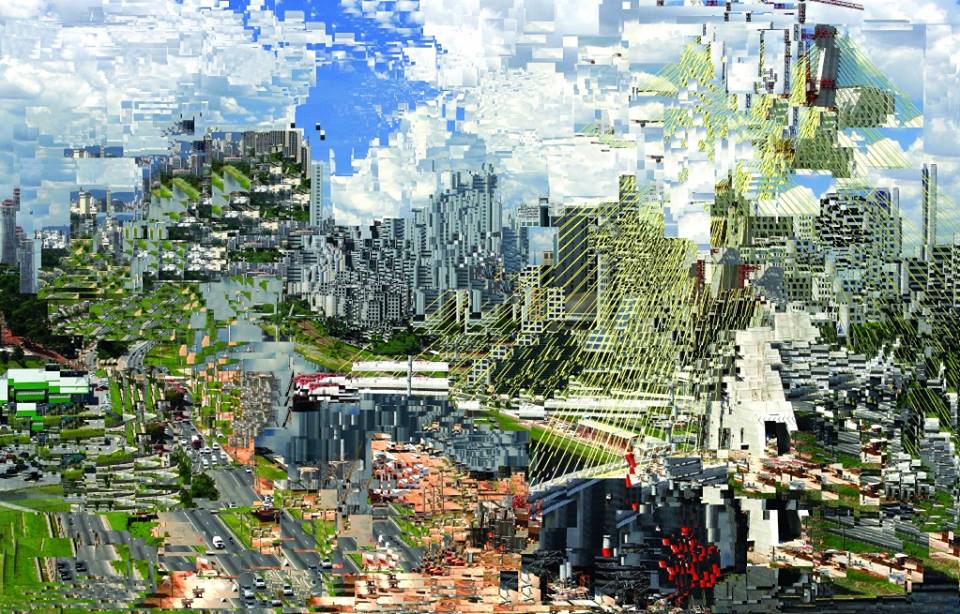
TranStructures Big cities are unceasingly in motion: growth, decay, changes. São Paulo is the source of my look and thoughts on metropolis. Recompose, redo continuously, from the probable to the improbable, allow us to try infinite possibilities that can lead us from sublime to disaster. Billions of hyperexpressions are induced always at random. The mechanisms that regulate the normal, the pre-established, rupture allowing the appearance of the possible others.

JON SHIREMAN

Broken Flower
Liquid Nitrogen

Throughout his career, Shireman has maintained a connection with flowers in decay; in other still lifes, he has cataloged the wilting of tulips and mums. This series, unlike those previous, is brutal and instantaneous. Where his other flowers underwent a slow, gradual death, these broken flowers are quickly frozen and violently ruptured. The process captured here is not a natural one but one that necessitates the use of a manmade element.

Eliane Radigue

Islas resonantes

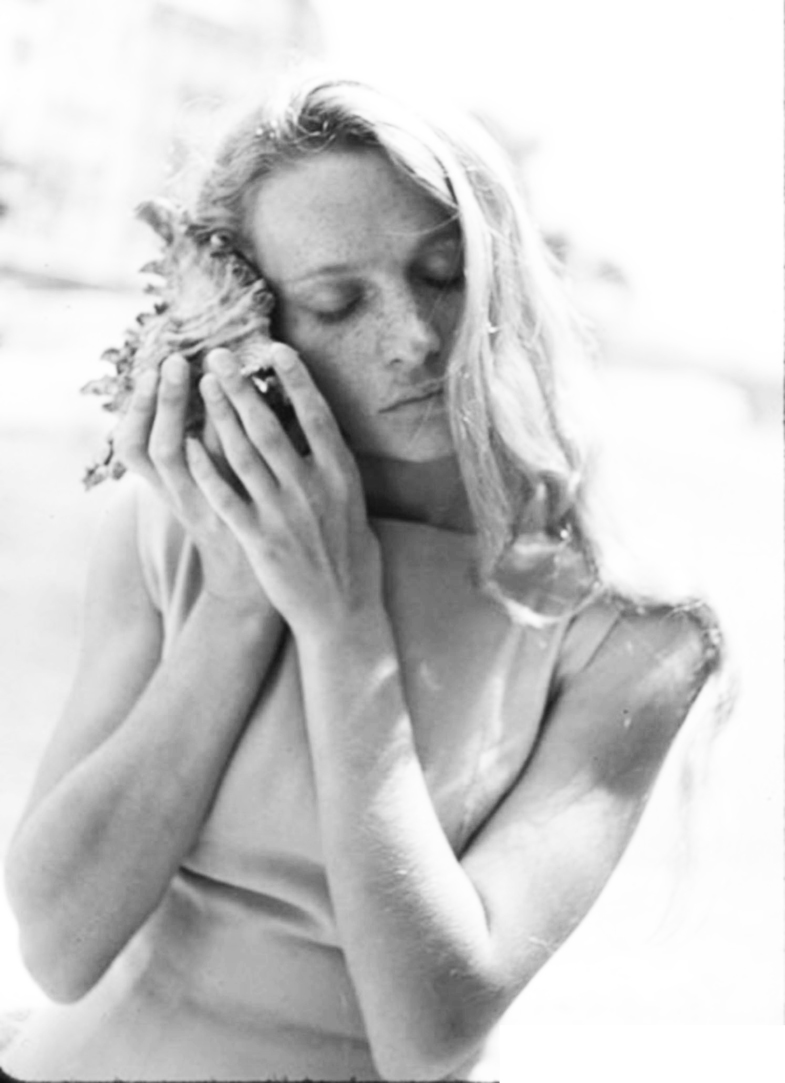
c’est un des apanages de la musique minimaliste basée sur des sons longuement tenus, lorsqu’elle est conçue de manière adéquate et irriguée par une réelle inspiration, que d’être susceptible de plonger l’auditeur dans un état second, une sorte de rêve éveillé qui décuple paradoxalement l’acuité de son écoute et lui permet de percevoir les détails les plus infimes et les nuances les plus subtiles de ce qui lui est donné à entendre. c’est à une aventure de ce type que nous convie éliane radigue avec « l’île re-sonante », jusqu’à des confins poétiques qui n’appartiennent qu’à son univers musical.

si cette pièce a été composée pour être écoutée d’une traite et qu’aucun effet de rupture n’y est brutalement marqué, elle offre cependant la particularité d’être constituée d’une succession de séquences qui crée une sorte d’architecture impalpable aux proportions harmonieusement établies. c’est bien d’une oeuvre musicale au sens que l’on donne habituellement à ce terme en occident qu’il s’agit, et non d’un simple environnement sonore à caractère plus ou moins expérimental.

Jeff Carter

Construction N
Often occupying both physical and temporal space, my sculpture has always incorporated both conventional and experimental media, including woodcarving, metalworking, installation, kinetics, microelectronics and video. While it tends to be visually diverse, the friction between object and memory has been at the conceptual core of my sculptural practice since 1994. The images, objects and narratives of a particular place or experience undergo distortions each time they are represented, and it is these forms of abstraction I explore in my sculpture.
Earlier bodies of work have utilized the physical residue of my traveling – the souvenirs, postcards, snapshots and videotapes – as central elements of the sculpture, forcing them to reveal their own inadequacy, disengagement or transformation, to subvert the nostalgic ideal, or to disrupt the usual implications of value and validation in a cultural artifact. In later works I utilize the physicality of scale, motion, and orientation to extend and challenge the conventional representation of landscape. These pieces define specific places as indefinite spatial constructs that complicate the certainty of “being there,” and are part of a larger attempt to relate a fragmented travel narrative through architecture, landscapes and souvenirs.
I have been using IKEA products as raw material for several years, and continue to be interested in extracting conceptual value from it. I am currently exploring the relationship between the Modern avant-garde and contemporary consumer design culture. In my recent work, I attempt to articulate various points of connection and rupture between IKEA and the Bauhaus by constructing scale models of demolished or unrealized buildings by Bauhaus founder Walter Gropius using “hacked” IKEA products such as tables, bookshelves and flooring.
THIERRY DREYFUS

티에리 드레퓌스
ティエリー·ドレフュス
Тьерри Дрейфус
Wall Rupture