highlike

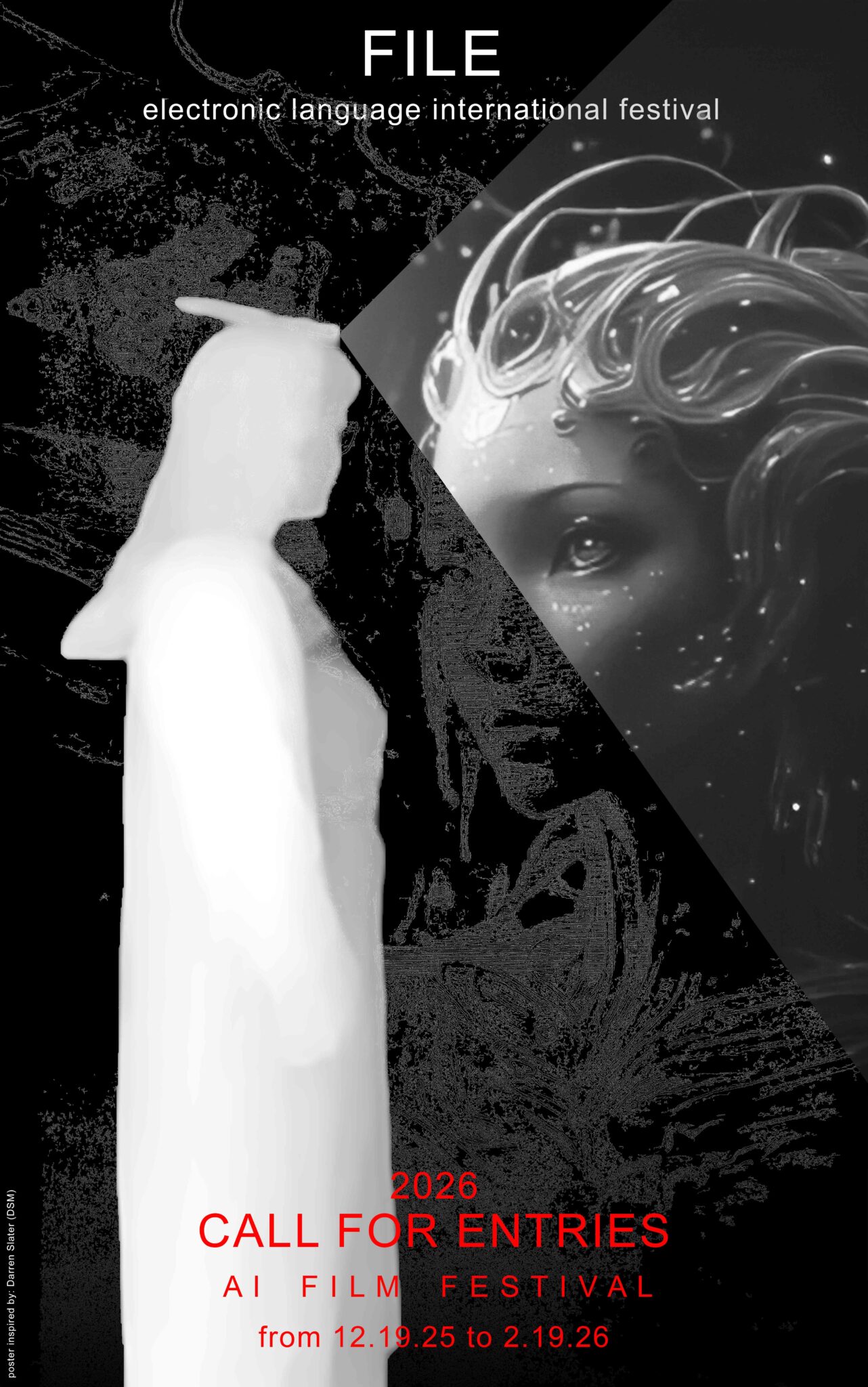
FILE 2026 – Registration Open for the IA Film Festival – Art and Technology

FILE 2026

Digital Film Festival and AI Cinema: includes productions that explore new aesthetics, narratives, and processes enabled by digital and artificial intelligence technologies.  This language questions traditional notions of authorship, editing, scriptwriting, and directing, proposing new forms of expanded and computational cinema. Cinema ceases to be merely representational and becomes processual and adaptive. It is an emerging field that articulates aesthetics, technology, and critical reflection on the future of moving images and multiple narratives. The works may also explore machine learning algorithms, generative models, and automation as active agents in the construction of image, sound, and dramaturgy.

Applications were open until February 19, 2026. Access  the application form.
FILE 2026 | GENERAL REGULATIONS

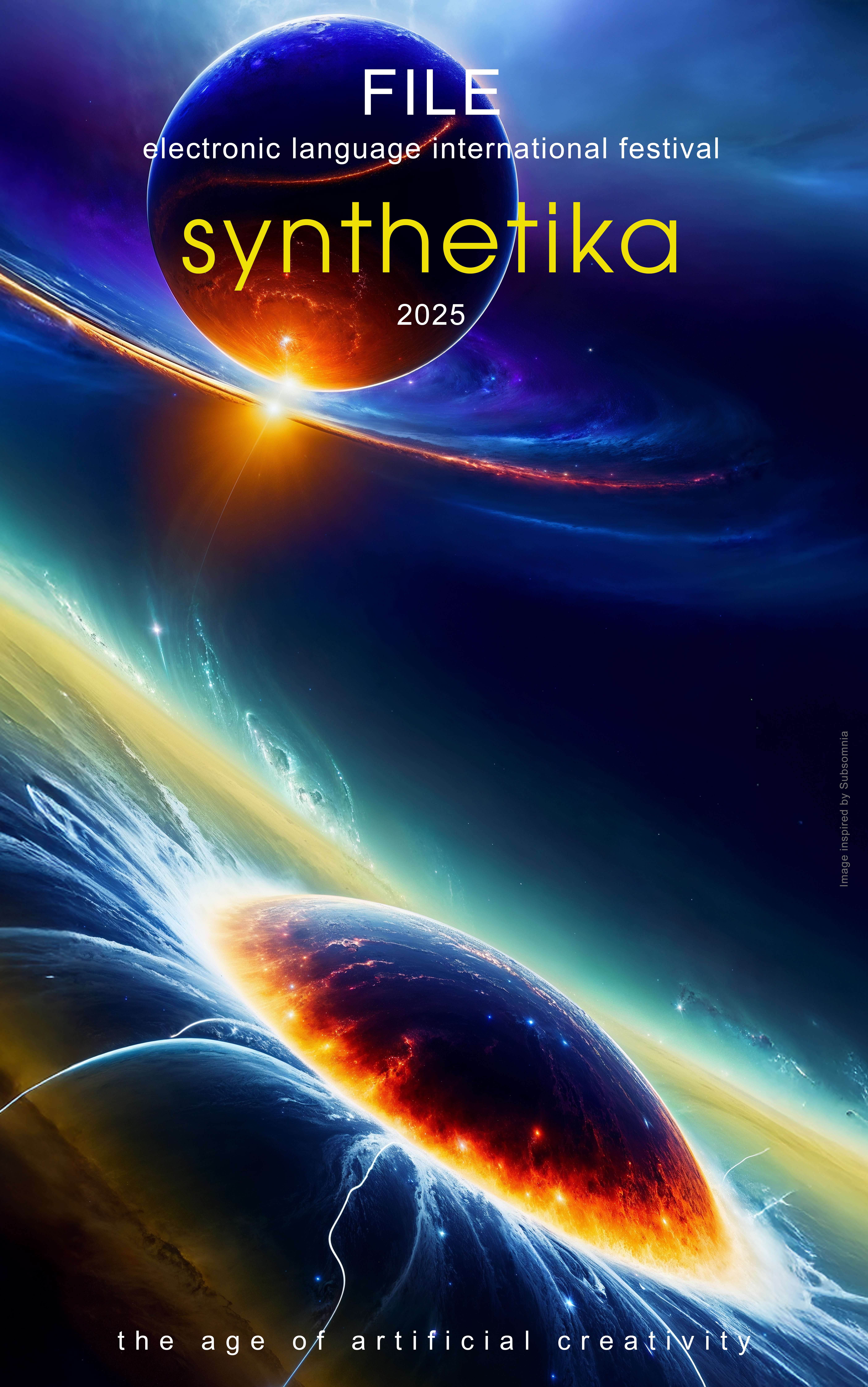
Synthetika: the age of artificial creativity | FILE 2025

Synthetika

Unlike Hegel, who called the set of ideas of a given era the “spirit of the times” (Zeitgeist), we could call our era “Zeitsynthetik” (the time of the synthetic). In the classical period, art was inseparable from religion, whose essence was spirituality; in modernity, spirituality was replaced by the ideologies of grand narratives (capitalism and socialism). The classical arts invented poetics and aesthetics: the beautiful and the sublime. Modern art invented the avant-garde that proposed to be revolutionary, its driving force was the dialectic of the new without the old, and on the other hand, postmodernists mixed everything with everything, including the old with the new. Today we live in the era of synthetic technologies, the era of disruptive technologies. In which the new of modernity is no longer sufficient or surprising. Syntheticity is the new vector: synthetic algorithms; synthetic virtual realities; synthetic intelligences. The driving force behind synthetic art is: 1) the fusion of new art and technological innovation, and 2) the inter-creativity between the artist and artificial creativity. Prompt engineers strategically simulate personas for AIs in order to move away from triviality and thus obtain more creative results. Synthetic intelligences are no longer just instruments, but partners of artists in the construction of a creative and innovative symbiosis.

Art and culture are going through a moment in which creativity ceases to be just human, it becomes artificial; syntheticity thus prospects a post-culture, a new FORM: the form SYNTHETIKA.

Ricardo Barreto

Curator and co-founder of FILE

Electronic Language International Festival

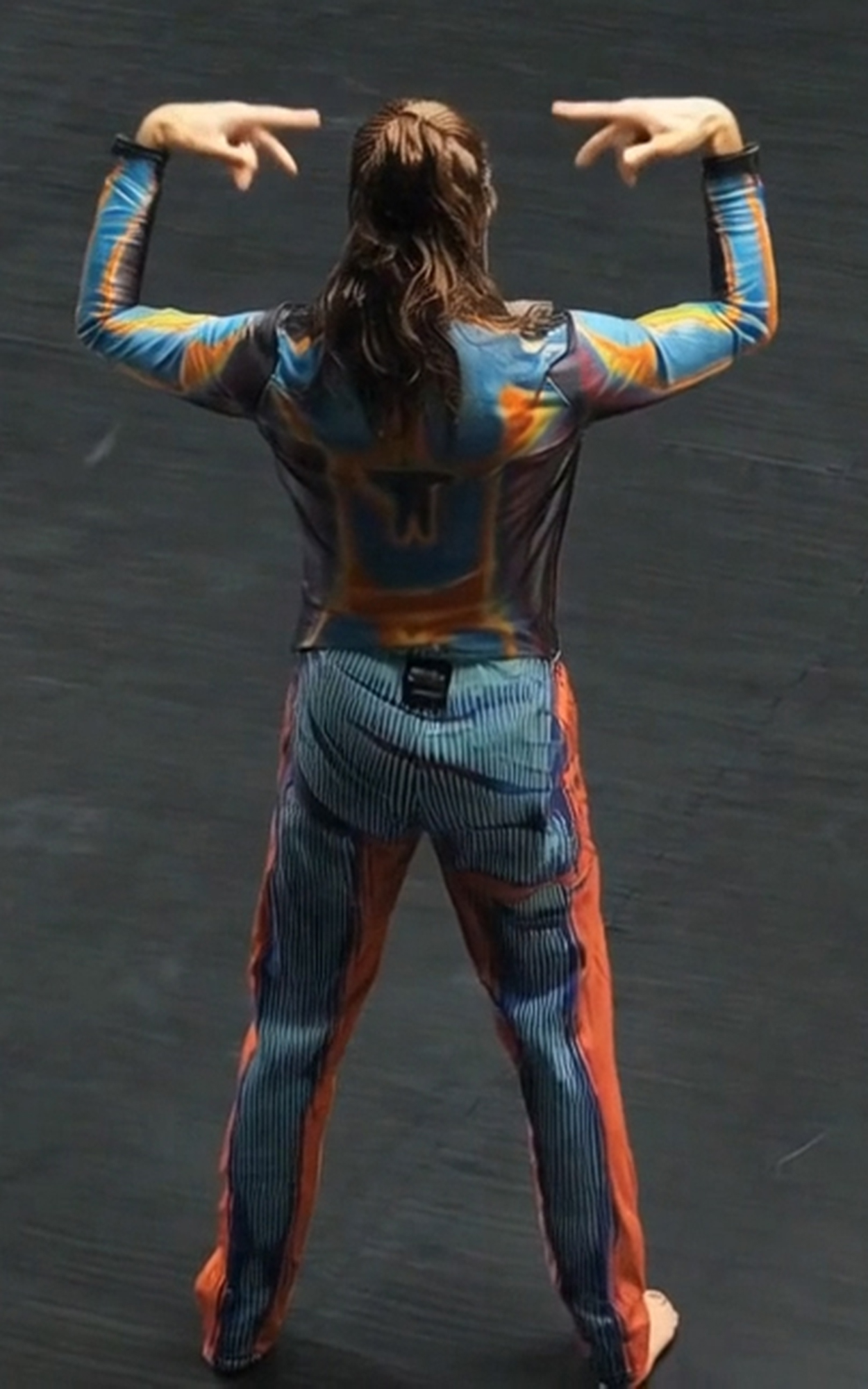
Christopher Knowlton – Deus Ex Machina Doctrina: The AI Dances – United States

DEUS EX MACHINA DOCTRINA: THE AI DANCES

Christopher Knowlton


FILE SÃO PAULO 2026: Inter-creativity – Art and Technology – CINEFILE | Short
Electronic Language International Festival


Deus Ex Machina Doctrina: The AI Dances – United States

Deus Ex Machina Doctrina: The AI Dances is an experimental dance film that examines the deification of new technologies, the implications of artificial intelligence (AI) for dance, and the extractive forces underpinning generative AI. Images of the artist in motion feed commercial AI video generators to hallucinate impossible choreographies. In doing so, movement prompting as a new mode of interaction with AI reveals emergent aesthetics and treatments of the body embedded in these systems. 

BIO

Christopher Knowlton, Ph.D., is a queer transdisciplinary movement artist and research scientist who uses emerging technologies to create augmented performance work. Based in Chicago, he has created many solo and collaborative dance works that have been featured locally and internationally, spanning dance, film, new media, puppetry and storytelling.

Driessens & Verstappen – E-volved Formula #23 – Netherlands

E-VOLVED FORMULA #23

Driessens & Verstappen


FILE SÃO PAULO 2026: Inter-creativity – Art and Technology – Randomic Dimension
Electronic Language International Festival


E-volved Formula #23 – Netherlands

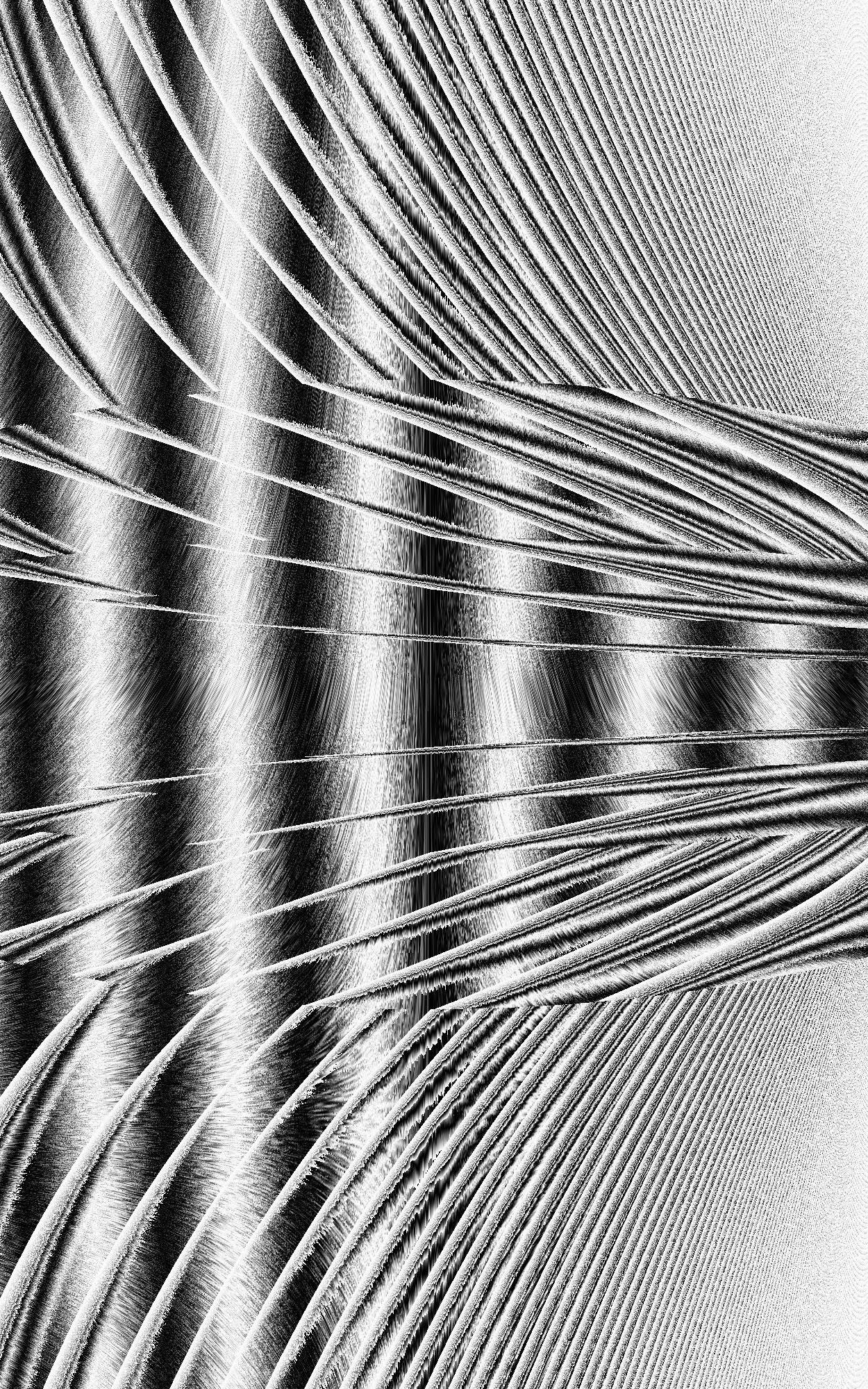
E-volved Formula #23 was “cultivated” using evolutionary software. Mathematical elements are linked together into formulas and displayed. These visualizations are evaluated, and through a process of variation and selection, each new generation adapts better to the viewer’s taste. The collaboration between a breeding machine and a human “gardener” yields results that neither could create on its own. The machine has no sense of aesthetics; for humans, the complex formulas are incomprehensible.

BIO

Driessens & Verstappen have worked together since 1990. In their generative art, they explore the significance of both physical and computer algorithms. The duo has participated in numerous exhibitions; their work is held in collections including Centre Pompidou, MoMA Frankfurt, and Boijmans Van Beuningen. They were awarded by Telefónica (Spain) and Witteveen+Bos (Netherlands).

Che-Yu Wu – 240507: Reality Lens – Taiwan

240507: REALITY LENS

Che-Yu Wu


FILE SÃO PAULO 2026: Inter-creativity – Art and Technology – Randomic Dimension
Electronic Language International Festival


240507: Reality Lens – Taiwan

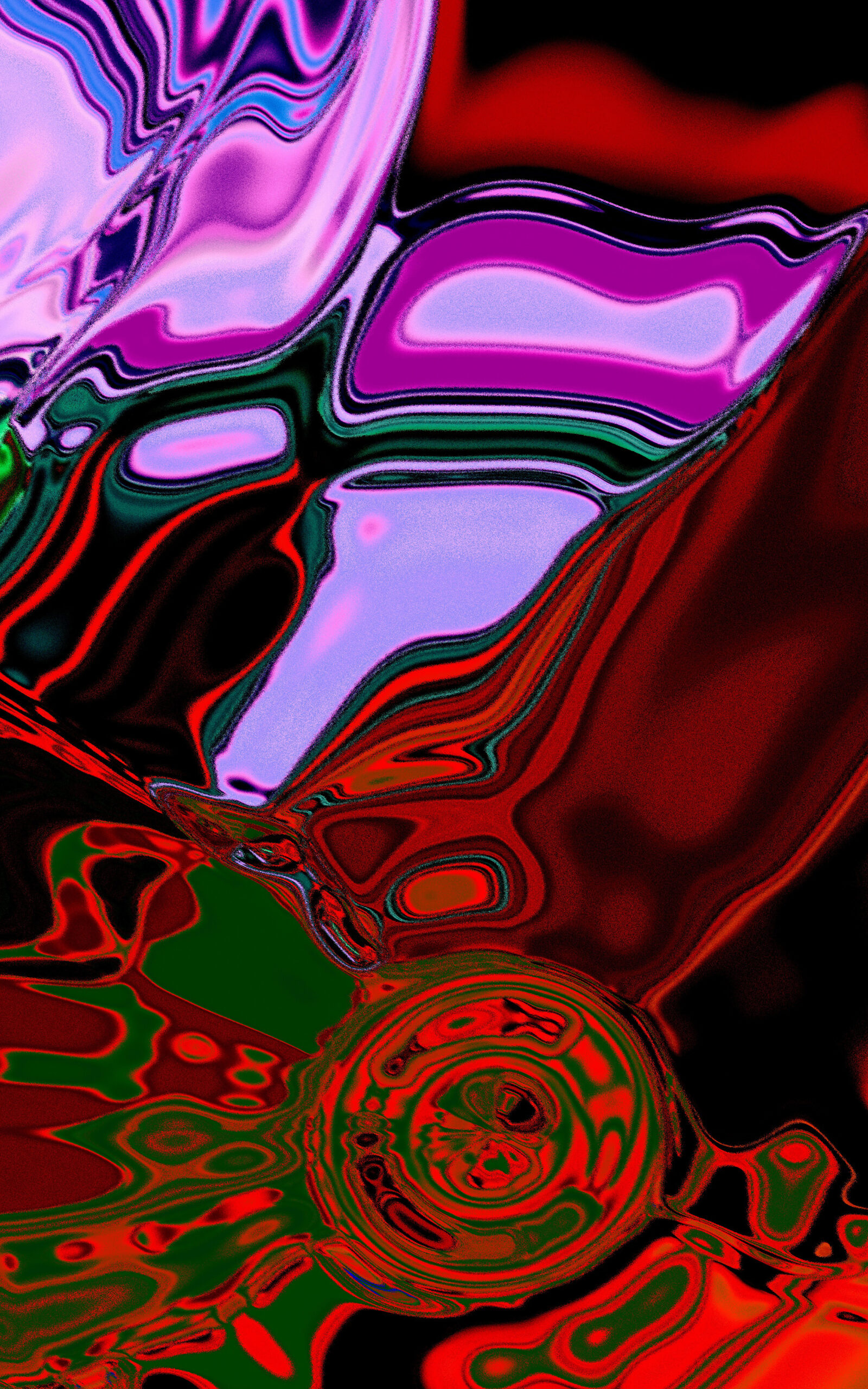
Real-time WebGL meditation where fifteen vortex points distort every pixel through layers of noise, angle, and time. The work makes algorithmic perception visible: there is no unmediated image—every color and edge arrives already refracted. Like liquid marble between order and chaos, it asks how mathematics becomes felt aesthetics, and whether any perception of “the real” is not itself a lens of computation.

BIO

Founder of MonoLab, dedicated to “casting eternal life and emotion in the digital world.” His practice is staked on creating “living artworks”—emergent digital entities that develop, respond, and persist through an improvisational loop between algorithm, audience, and author. By exploring “Digital Holobionts”—co-evolving systems of humans, AI, and code—Wu cultivates semantic lifeforms as a new category of contemporary art, bridging engineering with poetic philosophy.

Weidi Zhang & Rodger Luo – A Walled City – China / United States

A WALLED CITY

Weidi Zhang & Rodger Luo


FILE SÃO PAULO 2026: Inter-creativity – Art and Technology – Installations
Electronic Language International Festival


A Walled City – China / United States

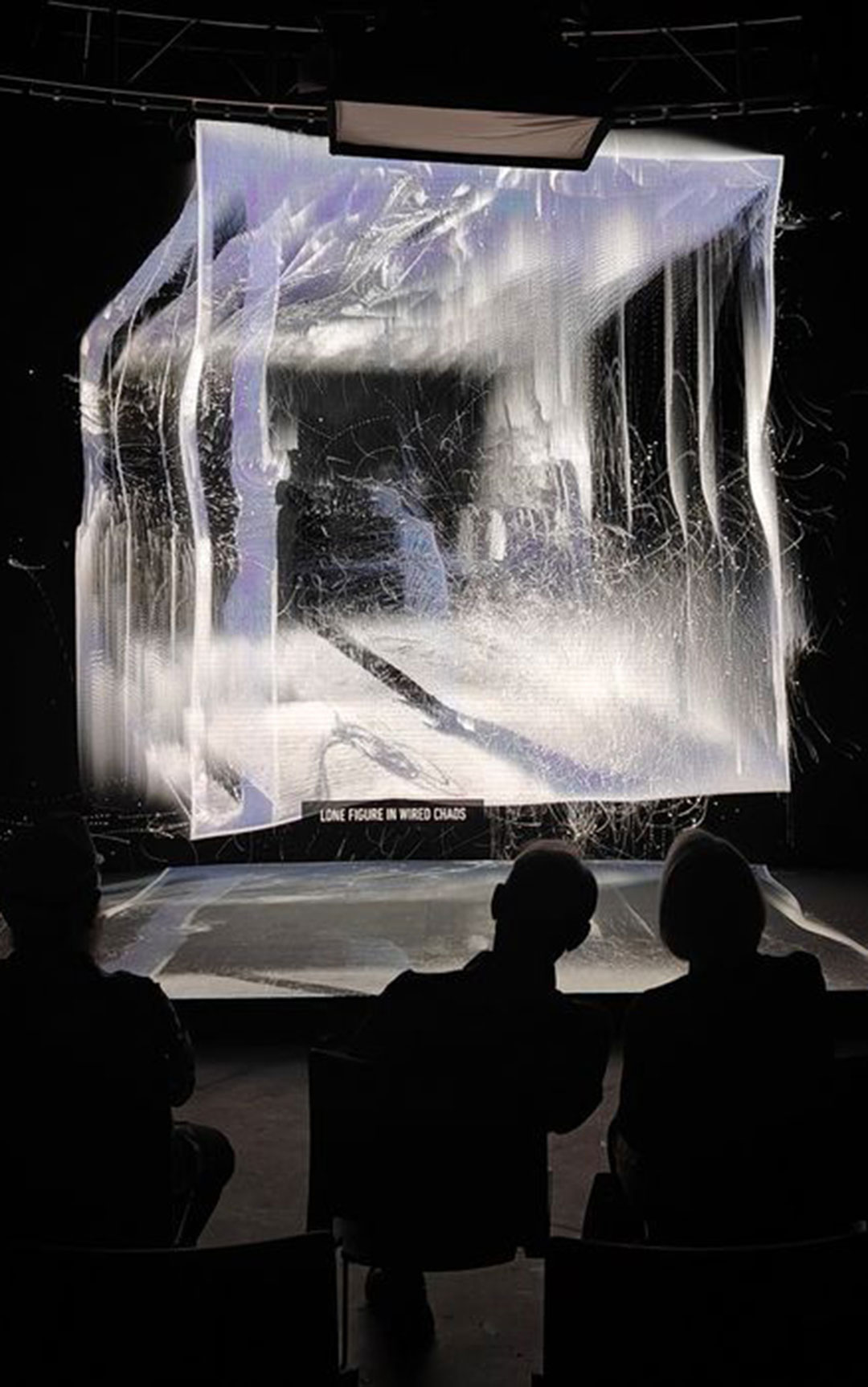
A Walled City is an interactive AI installation that transforms personal and collective visual memories into a decentralized city. Grounded in the spatial logic, zoning, and aesthetics of the historical Kowloon Walled City (Hongkong), a self-built hyper-dense enclave that grew in a legal and political void from the 1950s to 1993, the work builds a multi-agent AI system to turn participant-uploaded images into architectural chambers, forming a living structure where data, memory and history converge.

BIO

Weidi Zhang is a new media artist and designer based in Los Angeles and Phoenix. She is a tenure-track Assistant Professor of Immersive Experience Design at the Media and Immersive eXperience (MIX) Center at Arizona State University.

Refik Anadol

Quantum memories
Quantum Memories is Refik Anadol Studio’s epic scale investigation of the intersection between Google AI Quantum Supremacy experiments, machine learning, and aesthetics of probability. Technological and digital advancements of the past century could as well be defined by the humanity’s eagerness to make machines go to places that humans could not go, including the spaces inside our minds and the non-spaces of our un- or sub-conscious acts. Quantum Memories utilizes the most cutting-edge, Google AI’s publicly available quantum computation research data and algorithms to explore the possibility of a parallel world by processing approximately 200 million nature and landscape images through artificial intelligence. These algorithms allow us to speculate alternative modalities inside the most sophisticated computer available, and create new quantum noise-generated datasets as building blocks of these modalities. The 3D visual piece is accompanied by an audio experience that is also based on quantum noise–generated data, offering an immersive experience that further challenges the notion of mutual exclusivity. The project is both inspired by and a speculation of the Many-Worlds Interpretation in quantum physics – a theory that holds that there are many parallel worlds that exist at the same space and time as our own.

Ryoji Ikeda

池田亮司
이케다 료지
РЕДЗИ ИКЕДА
Data-verse
Ryoji Ikeda’s new trilogy data-verse, commissioned by Audemars Piguet, is an audiovisual symphonic suite that attempts to encompass the tiniest (elementary particles) to the greatest (Universe) scale in Nature.Data-verse is the ultimate chapter of Ikeda’s audiovisual series that first began in 2000, which focuses on his own data-driven research and aesthetics.Through his mathematical composition and aesthetics, massive scientific data set will be processed, transcribed, converted, transformed, de/re/meta-constructed and orchestrated to visualize and sonify the different dimensions that co-exist in our world between the visible and the invisible.

RYOICHI KUROKAWA

黒川良一
Syn
2011 –
Audiovisual Concert
Diptych | 2.1ch sound
Duration: 30’00” – 45’00”
The Japanese artist Ryoichi Kurokawa has been a pioneer in audiovisual art in the past fifteen years, working with multiple media that bring together sound and image in a totally new language. Currently based in Berlin, Kurokawa continues to explore the symbiosis between technology and nature, order and chaos.Kurokawa stands as out as a new international reference in the field of digital art, a creator of trends and a pioneer in new aesthetics in artistic work.