highlike

Seohyo – Tidal Tessellation – South Korea

TIDAL TESSELLATION

Seohyo


FILE SÃO PAULO 2026: Inter-creativity – Art and Technology – Randomic Dimension
Electronic Language International Festival


Tidal Tessellation – South Korea

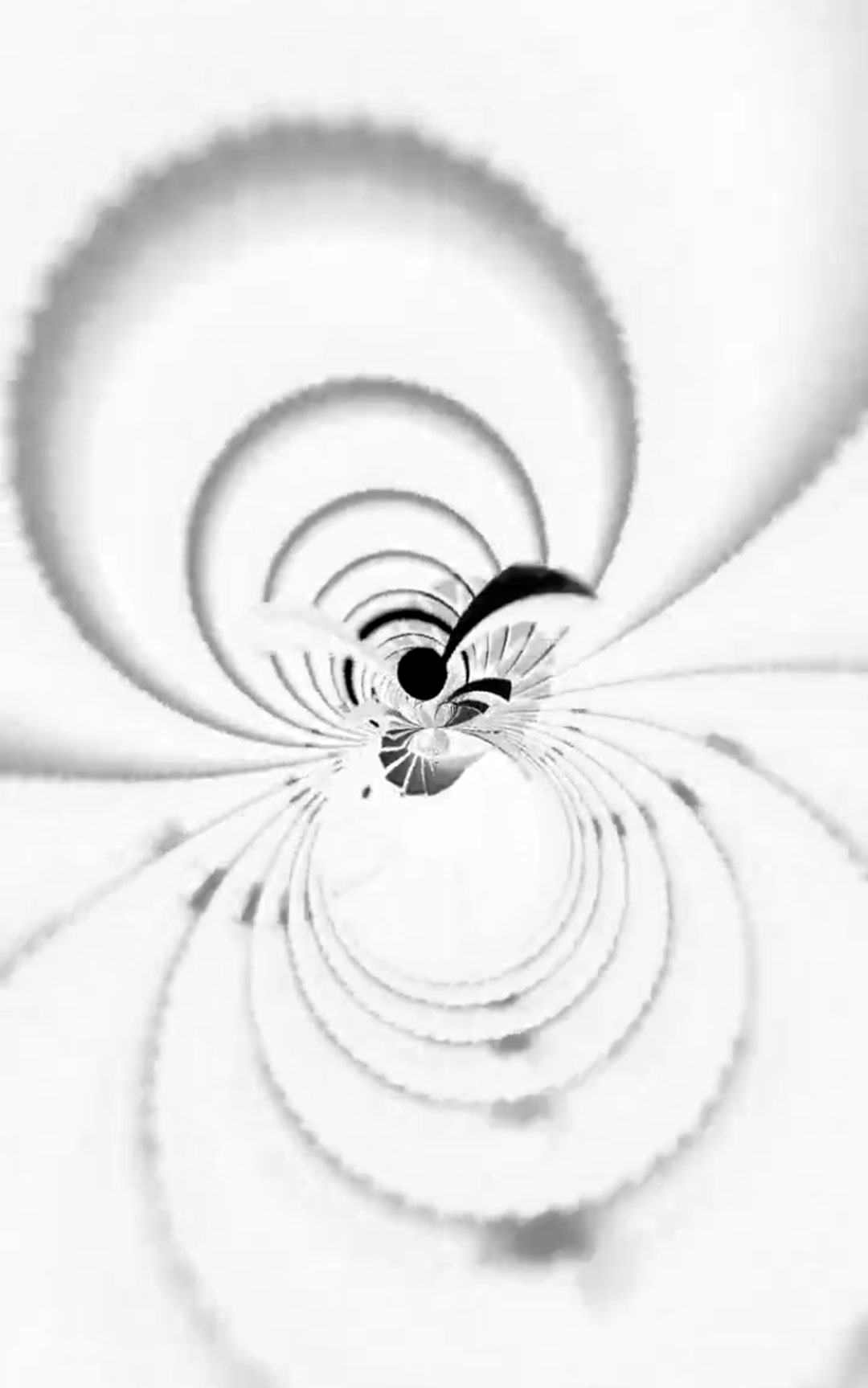
Tidal Tessellation is a generative animation reinterpreting urban flow as fluid movement. The artist projects the energy of city crowds onto the ebb and flow of tides. Using Perlin noise, geometric grids deform according to organic rules, overlaying natural rhythms onto rigid architecture. This work transforms static LED screens into breathing canvases where natural order permeates everyday life, harmonizing the city’s pulse with algorithmic vitality.

BIO

Seohyo  is a generative artist and educator exploring the intersection of algorithmic order and randomness. She expands public art by utilizing urban LED screens as canvases for code-based abstractions. Rather than focusing on static outputs, she emphasizes the generative process to let art naturally permeate everyday life, capturing the living pulses of the city through data and logic.
mole^3 – Atomic-Color Automatism – Japan

ATOMIC-COLOR AUTOMATISM

mole^3


FILE SÃO PAULO 2026: Inter-creativity – Art and Technology – Randomic Dimension
Electronic Language International Festival


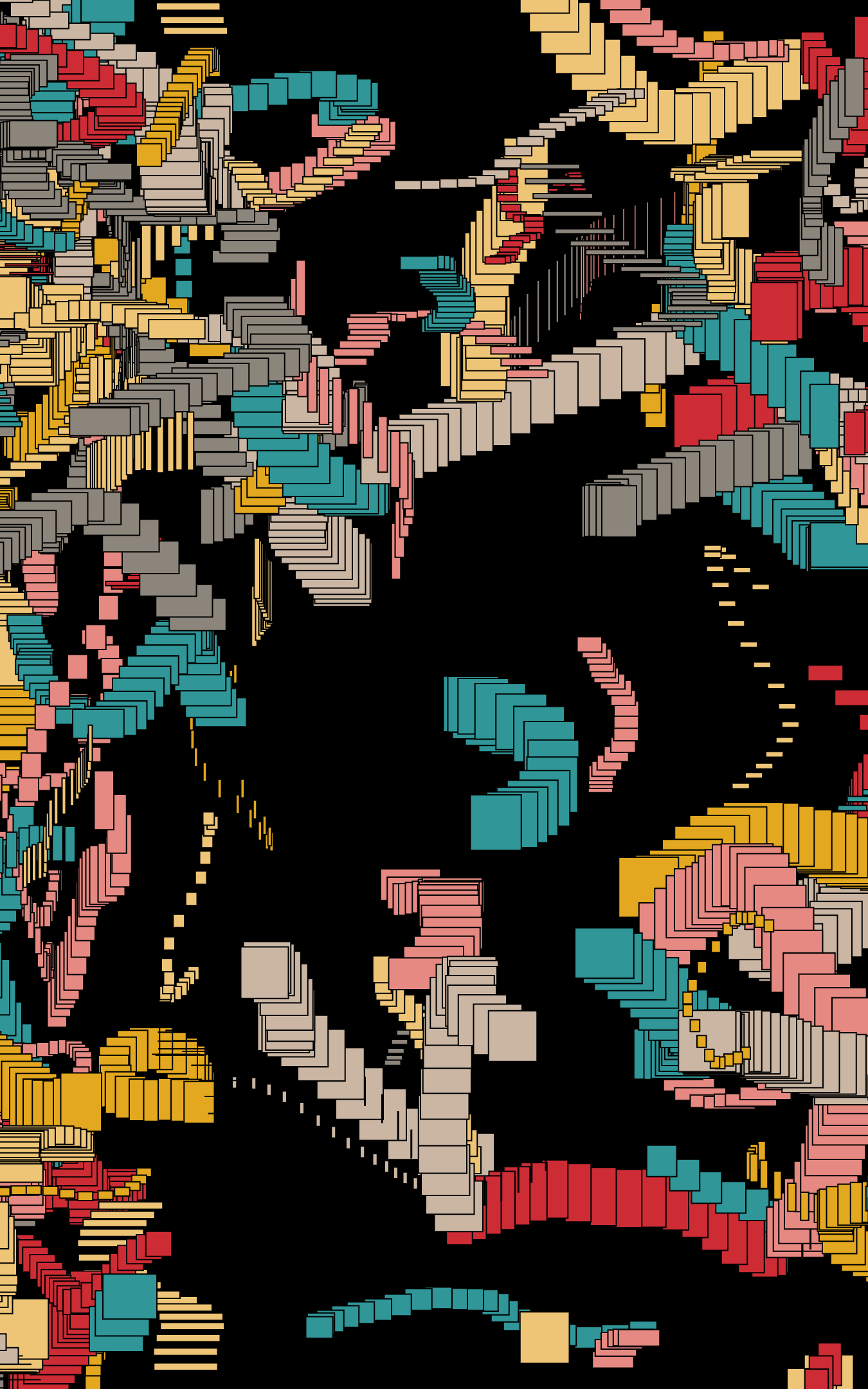
Atomic-Color Automatism – Japan

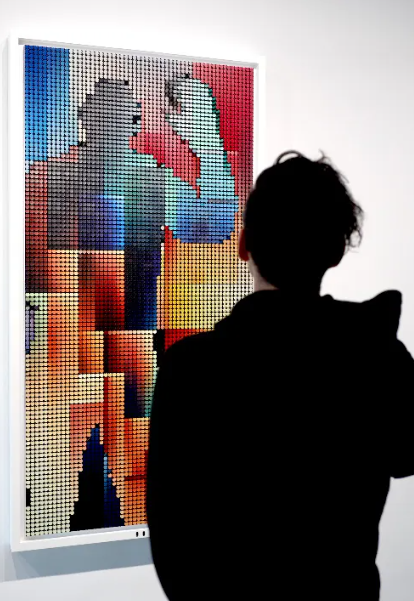
This work attempts to relinquish control. The canvas is irregularly divided, and randomly selected colors are layered as thin strata, treated as minimal units of color. Each layer behaves like an independent entity, moving across fragments of the division. The algorithm consists only of simple division and movement, with all variables entrusted to randomness. The resulting image is a process emerging from this seemingly accidental system.

Chris Barber – Confetti – United States

CONFETTI

Chris Barber


FILE SÃO PAULO 2026: Inter-creativity – Art and Technology – Randomic Dimension
Electronic Language International Festival


Confetti – United States

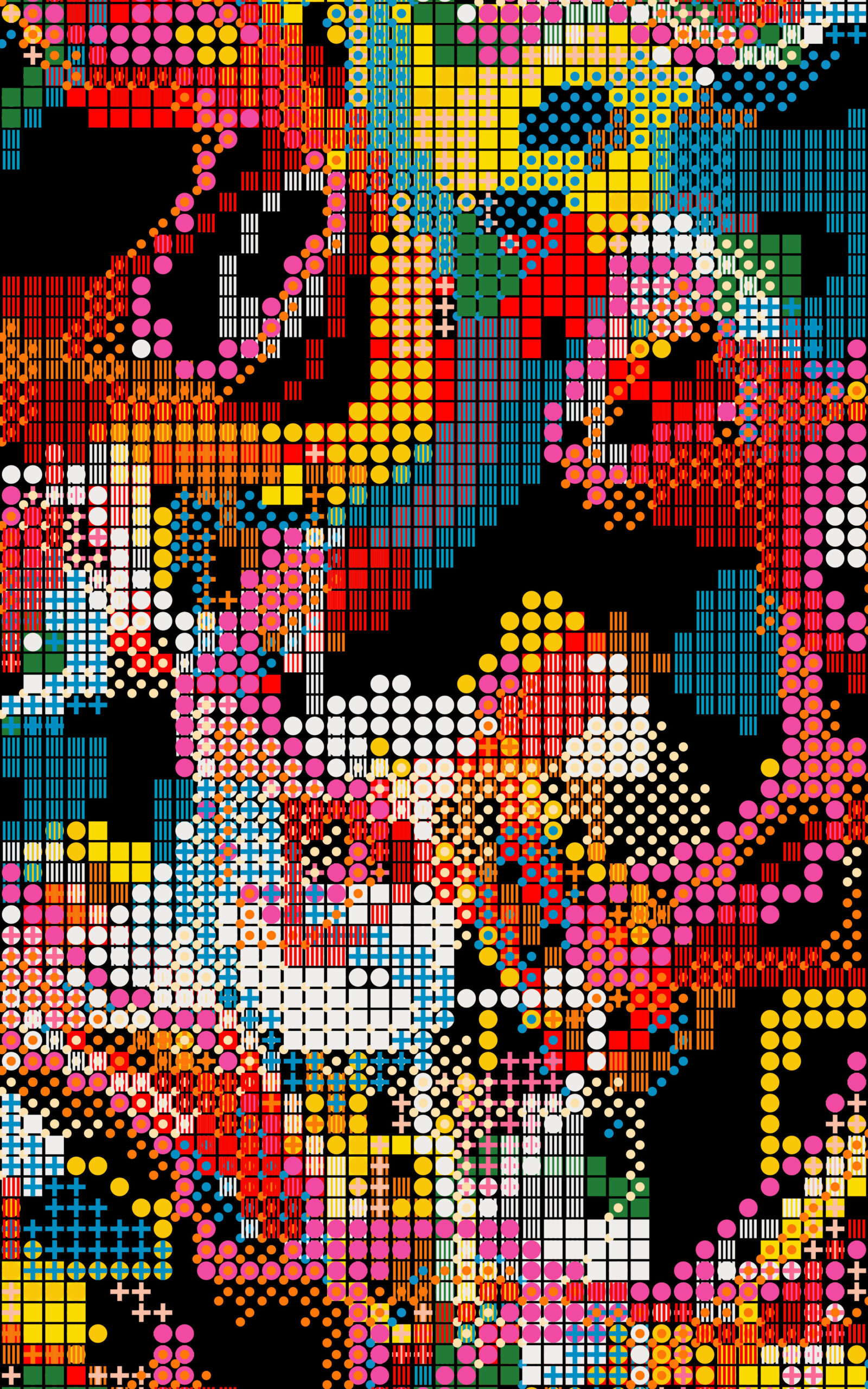
Confetti is a generative composition built from a swarm of random walkers, particles that move step by step in unpredictable directions, each trailing a ribbon of bright, saturated squares. Their motion is shaped by Perlin noise, a smooth, natural-feeling randomness often used to simulate organic phenomena, pairing fluid movement with crisp geometric form. With every refresh the field reorganizes itself, never repeating, never still: a celebration of color and structured chance.

BIO

Chris Barber is a generative artist working at the intersection of code and creativity. Using tools like p5.js and openFrameworks, he brings algorithms to life as dynamic, animated digital art. By combining technology, randomness, and a sharp visual sensibility, his work generates unique compositions with every refresh—known for its vibrant palettes, fluid motion, and mesmerizing patterns.

Ayumu Nagamatsu – ACW SunaoSystem – Japan

ACW SUNAOSYSTEM

Ayumu Nagamatsu


FILE SÃO PAULO 2026: Inter-creativity – Art and Technology – Randomic Dimension
Electronic Language International Festival


ACW SunaoSystem – Japan

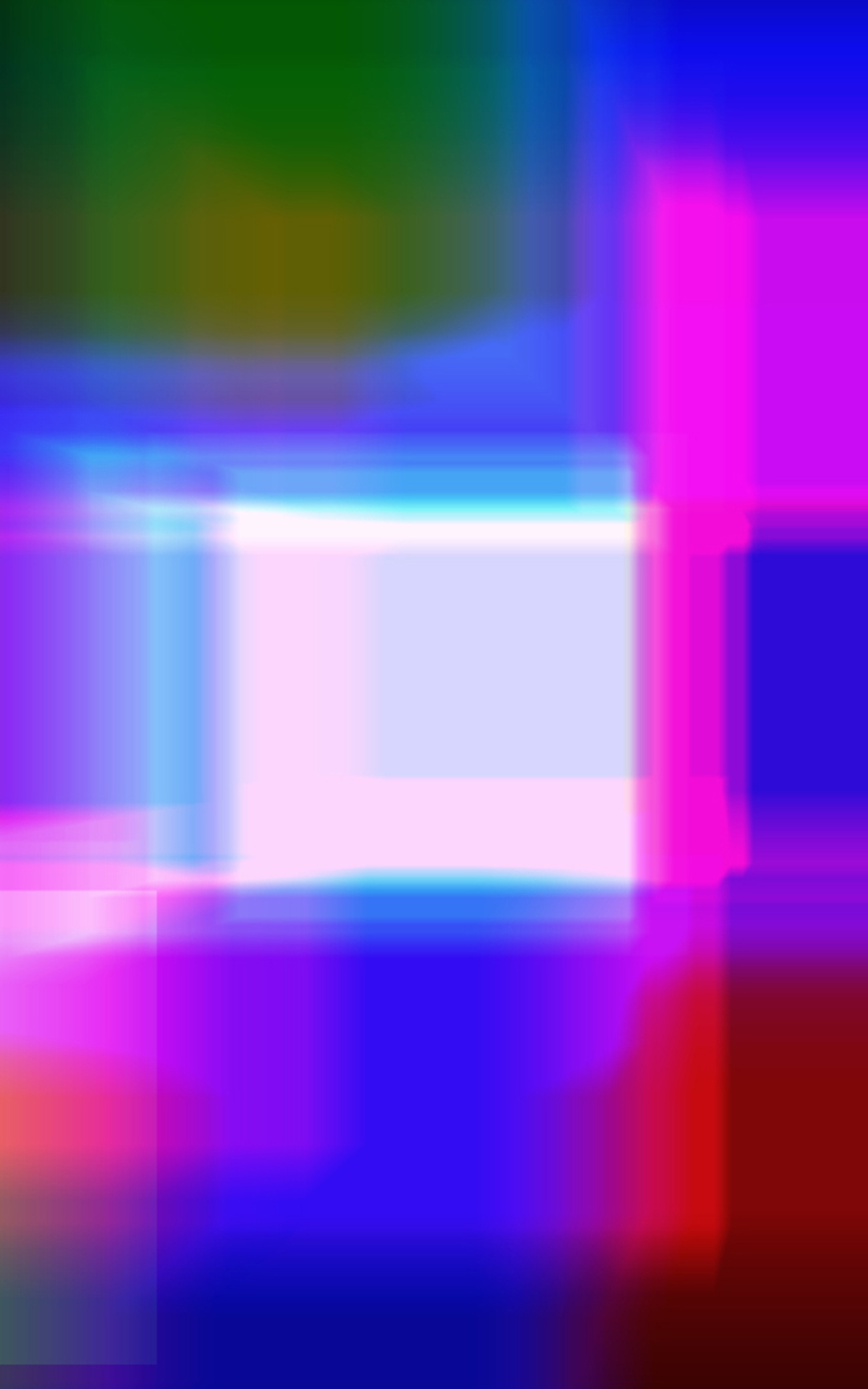
This work uses a sound file within a custom audiovisual system to generate and record visuals. Instead of CG software, all forms are produced in C/C++ with openFrameworks. The program detects audio attacks and autonomously changes scenes, effects, and parameters. Drawing on early CG methods such as randomness, coordinate transforms, continuous mappings, and fractals, it creates real-time images that are both geometric and photorealistic. The source code is fully open online.

BIO

Studied art history before moving into app development and generative art. He studied at Keio University, Japan, Kunstuniversität Linz, Austria, and in 2018 completed an MA in Media Art at IAMAS, Japan. His work, inspired by Generative Art and Visual Music, combines computational geometry with sound, video, interaction, and real-time environments.

BREAKFAST

Interwoven Existence

The artwork draws inspiration from the concept that individual human beings are interconnected rather than isolated. It is a visual representation of collective strength and diversity. The artwork is divided into sections of various sizes and colors, each symbolizing the diverse origins of people around the world.
As viewers approach the artwork, it becomes interactive, reflecting their image across the piece. Upon stepping away, a recording of their interaction is placed into one of the sections, symbolizing the randomness of a given person’s birthplace and socioeconomic position. Subsequently, recorded video clips of previous viewers are displayed in adjacent sections, integrating new viewers into the existing community of participants.

Nicolas Bernier

frequencies (light quanta)

The project is part of an ongoing process entitled «frequencies», exploring basic sound and light dichotomic systems. Here, frequencies (light quanta) stems from a fascination towards science, light, and granular synthesis allowing to create clouds/grains of sounds. The conceptual focus lies in the quantum — the smallest measurable value of energy —, on the smallness of matter. The whole project is based on the possible conceptual relationships between basic quantum physics principles applied to the audio-visual creative process: particles, probabilities, wave/particle duality and discontinuity. Metaphorically structured around these notions, the audio-visual composition stems from 100 sound and light micro-sequences that develop themselves, generating an ever expending but yet disruptive form in time and space. With the use of randomness, the vectorial graphics are always creating new ways to look at the visual, physically superimposing pattern images.

CHRISTIAN BOLTANSKI

基督教波尔坦斯基
בולטנסקי
クリスチャン·ボルタンスキー
Кристиан Болтански

Homage

R.I.P 1944-2021

Preoccupied with collective memory, mortality, and the passage of time, Christian Boltanski creates paintings, sculptures, films, and mixed-media installations that approach these themes in a range of styles, symbolic to direct. Boltanski often makes metaphorical use of found objects, as in No Man’s Land (2010), an enormous pile of discarded jackets set to the soundtrack of thousands of human heartbeats, suggesting the anonymity, randomness, and inevitability of death. In Monuments (1985), electrical bulbs cast a seemingly bittersweet light on pictures of child holocaust victims. Describing his interest in personal histories, Boltanski has said, “What drives me as an artist is that I think everyone is unique, yet everyone disappears so quickly. […] We hate to see the dead, yet we love them, we appreciate them.”

Mathias Gartner & Vera Tolazzi

THE TRANSPARENCY OF RANDOMNESS
“The Transparency of Randomness” gives insight into the world of randomness. In this interactive installation, visitors can directly experience the significance of the complex interplay of randomness and stochastics in current mathematical and physical research. 27 transparent boxes, floating in space, continuously generate random numbers by using the well-known medium of the dice.The process of random number generation is influenced by the complexity of nature and its structures, using a variety of natural materials. The ensemble of all generated random numbers forms the basis of a real-time calculation and comprehensibly demonstrates the impressive role in scientific research.

Ryoji Ikeda

池田亮司
이케다 료지
РЕДЗИ ИКЕДА
superposition

superposition is a project about the way we understand the reality of nature on an atomic scale and is inspired by the mathematical notions of quantum mechanics. Performers will appear in his piece for the first time, performing as operator/conductor/observer/examiners. All the components on stage will be in a state of superposition; sound, visuals, physical phenomena, mathematical concepts, human behaviour and randomness – these will be constantly orchestrated and de-orchestrated simultaneously in a single performance piece.

IANNIS XENAKIS

PITHOPRAKTA
During the 1950s and early 1960s‚ Iannis Xenakis represented an alternative avant­garde‚ with a radical approach to form and texture that rejected the serial mechanics of Boulez and Stockhausen‚ and involved a uniquely intense interpretation of ideas about probability and randomness. A world away from John Cage’s laid­back experiments[…] The two short orchestral works‚ Metastasis and Pithoprakta‚ are undoubtedly far more austere‚ more primitive in their overall effect‚ than the exuberant‚ hyperactive Eonta‚ whose ferociously demanding writing for piano and five brass players pulsates with the kind of creative energy that the orchestral pieces seek to suppress.