highlike

Datapaulette

Topographie digitale
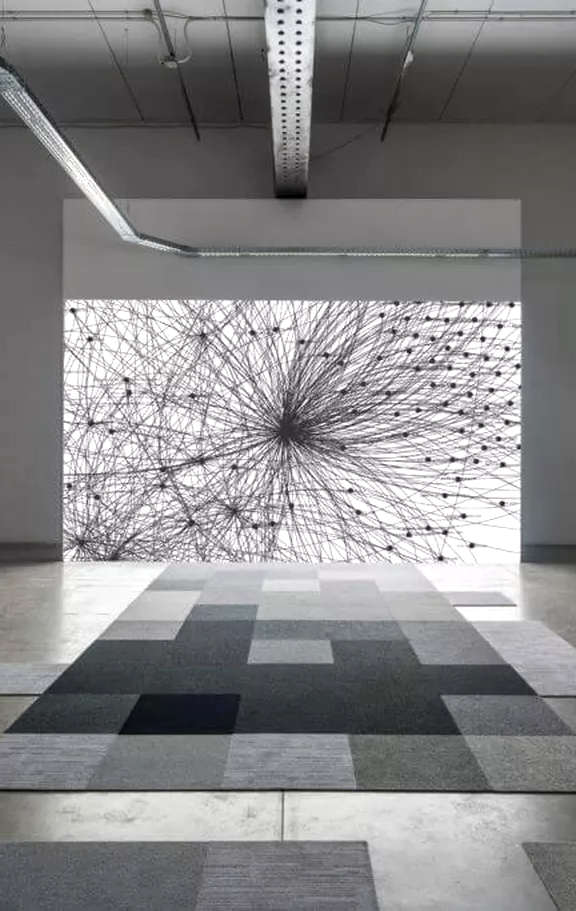
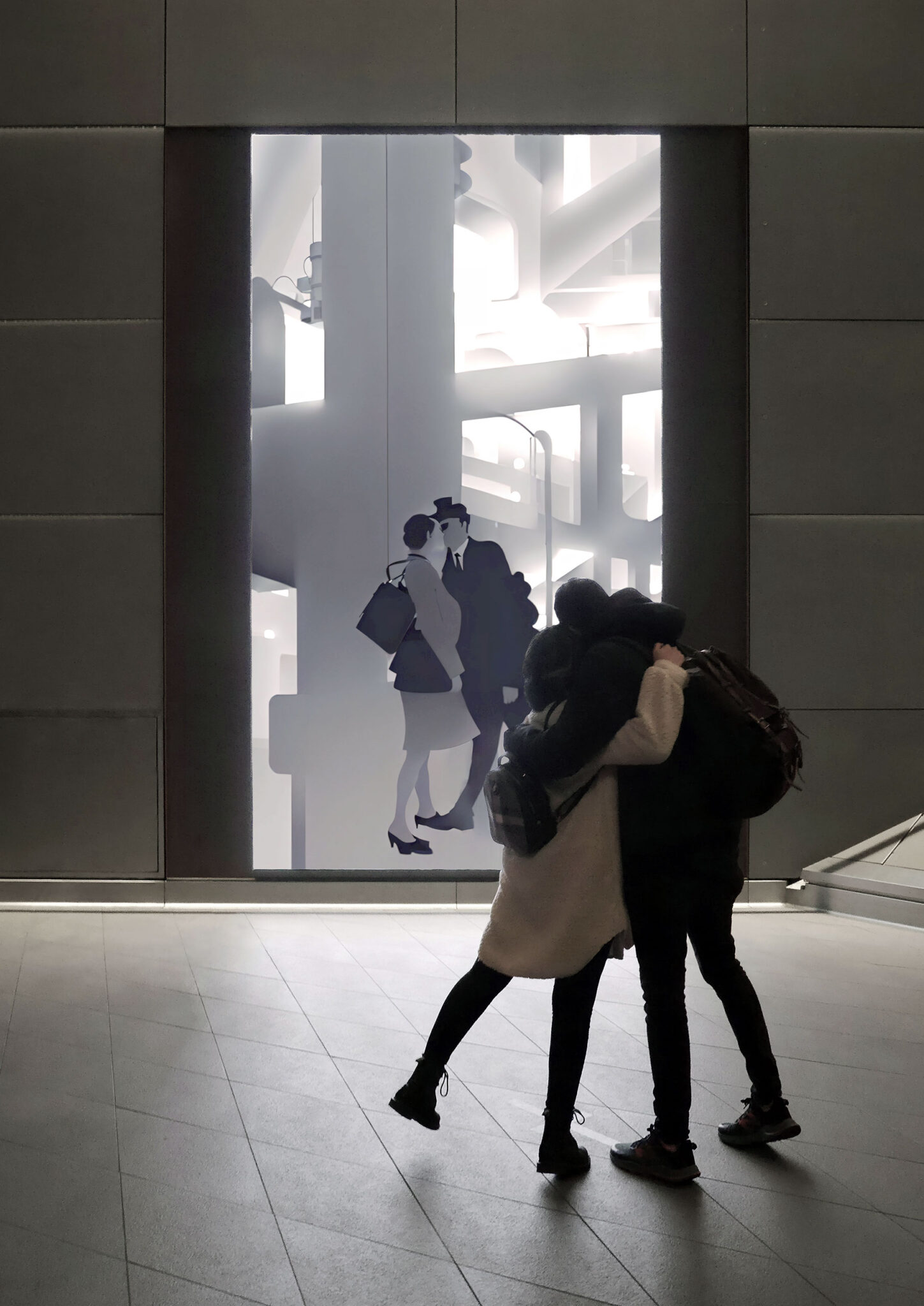
“Topographie Digitale” is an interactive installation created by DataPaulette. This landscape uses electrically functionalized and pleated textiles as sensitive surfaces reacting to touch. This interaction brings to life a “digital clone”, video-projected. This mirrored scene reveals an organic side contrasting with the mineral aspect of the physical scene.

FILE 2026 – Registration Open for Art and Technology Festival

FILE 2026

Registration is now open for participation in  FILE – Electronic Language International Festival 2026 , one of the most important events dedicated to art and technology. FILE invites Brazilian and international artists , as well as researchers, educators, and creators , to submit original artistic works and educational proposals — lectures, workshops, and training activities — focused on contemporary technological poetics.

Applications are open until February 19, 2026 .

With 26 years of experience , FILE is a non-profit cultural organization dedicated to promoting creation, research, and experimentation in Art and Technology , bringing together artists, scientists, programmers, and thinkers around exhibitions, events, and publications. The selected projects will be part of the FILE 2026 program, scheduled to take place at the FIESP Cultural Center in São Paulo, between August 18 and October 11, 2026,  with the possibility of parallel activities in other Brazilian states.

The call welcomes proposals in a wide variety of languages ​​and formats, intended for indoor or outdoor environments , in which the aesthetic experience emerges from the encounter between interfaces, data, space, and body . FILE 2026 seeks projects that propose new forms of perception, interaction, and critical and poetic reflection , expanding the debate on the aesthetic, cultural, social, and sensory impacts of contemporary technologies.

Access the registration form.

FILE 2026 – Registration Open for Installation Festival – Art and Technology

FILE 2026

Art and Technology Festival | Installations: artistic systems, indoor  or  outdoor , in which the aesthetic experience emerges from the dynamic relationship between interface, data, environment, and body.  Digital technologies, technologies with artificial intelligence, metamaterial technologies, random technologies, sensors, algorithms, and responsive systems are employed by the artist as structural elements of the work, which is completed in the encounter between the work and the participant.

Applications are open until February 19, 2026. Access  the application form.

FILE 2026 | GENERAL REGULATIONS

FILE 2026 – Registration Open for AR, VR and XR Festival – Art and Technology

FILE 2026

Augmented and Virtual Reality Festival: brings together immersive practices in simulated three-dimensional environments and expands the perception of reality through the superimposition of digital layers onto physical space.  The works use mobile devices, glasses, and spatial interfaces to insert virtual objects, narratives, and data into the real world or transport the public to sensory and interactive digital universes. These languages ​​challenge the boundaries between the material and the informational, exploring subtle or monumental interventions, creating multidimensionality in the environment. Issues of presence, body, narrative, memory, surveillance, and technological mediation are central, configuring a fertile field of aesthetic and critical investigation into contemporary ways of inhabiting and perceiving space.

Applications are open until February 19, 2026. Access  the application form.

FILE 2026 | GENERAL REGULATIONS

FILE 2026 – Registration Open for the Digital Architecture and AI Festival – Art and Technology

FILE 2026

Digital Architecture and AI Festival :  investigates the use of computational technologies in the conception, visualization, and experience of space.  Works may involve virtual environments, simulations, digital facades, interactive architectural installations, and discrete systems. Algorithms and data become design tools. It is a practice that articulates art, architecture, and technology.

Applications are open until February 19, 2026. Access  the application form.

FILE 2026 | GENERAL REGULATIONS

FILE 2026 – Registration Open for Digital Animation and AI Festival – Art and Technology

FILE 2026

Animation Festival | Digital Animations and AI Animations: investigate movement as an expressive language, using computational tools and experimental aesthetics.  The works can explore abstract or figurative narratives, often hybridized with data, algorithms, and simulations. Technology expands the formal and temporal possibilities of animation. It is a field that articulates art, cinema, and computer graphics. Movement becomes a means of visual thought.

Applications are open until February 19, 2026. Access  the application form.

FILE 2026 | GENERAL REGULATIONS

LAB[AU]

f5x5x5
f5x5x5 is a kinetic light sculpture conceived of and realized by the belgian design studio lab[au]. the project was most recently installed in the basilique de saint denis in paris for nuit blanche 2009. the design consists of fixed and kinetic aluminum frames that can move randomly or be programmed for use as a low resolution display. the piece is designed as a framework, taking inspiration from software development
frameworks. in the case of the project, the framework is a five by five module which is repeated five times to create the final form. one side of the work is white, while the other is black. the 125 pixel screen works on binary language and can transform captured data from the physical environment into kinetic actions.

EVAN ROTH

GRAFFITI ANALYSIS
SCULPTURES


Graffiti Analysis is an extensive ongoing study into the motion of graffiti. Custom software designed for graffiti writers creates visualizations of the often unseen motion involved in the creation of a tag. Motion data is recorded, analyzed and archived in a free and open database, 000000book.com, where writers can share analytical representations of their hand styles. Influential graffiti artist such as SEEN, TWIST, AMAZE, KETONE, JONONE, and KATSU have had their tags motion captured using the Graffiti Analysis software. All tags created in Graffiti Analysis are saved as Graffiti Markup Language (GML) files, a new digital standard used by other popular graffiti applications such as Laser Tag and EyeWriter. Graffiti Analysis 3.0 is an open source project that is available online for free in OSX, Windows and Linux. Graffiti writers are invited to capture and share their own tags, and computer programmers are invited to create new applications and visualizations of the resulting data. What Martha Cooper did for archiving graffiti on film, and Chalfant/Silver did for archiving graffiti in video, Graffiti Analysis intends to do for archiving graffiti in code. The project aims to build the worlds largest archive of graffiti motion, and bring together two seemingly disparate communities that share an interest hacking systems, whether found in code or in the city.

LIGHTING DESIGN COLLECTIVE

Silo 468 Light Art Helsinki


INTERACTIVE LIGHT ART FOR URBAN REDEVELOPMENT SILO 468 HELSINKI Disused oil silo has been converted into mesmerizing light art piece and a public space with the aid of swarm intelligence and interactive lighting. The project is a conversion of oil silo into light art piece and a public space designed by Madrid based Lighting Design Collective (LDC). It sits by the sea facing central Helsinki, Finland. Prevailing winds well known to residents are strongly present. The natural light, wind and the movement of light on the water formed the principles for the lighting concept. Walls are perforated with 2012 holes referring to the Helsinki World Design Capital 2012 year. The lighting signifies the start of a major urban redevelopment for the City of Helsinki. It functions to draw focus to unknown district and creates a landmark and a marketing device for the City. Maybe most importantly through the use of natural and artificial light it created a unique civic space for the citizens to use. Furthermore, it set a precedent for a new district for 11000 people to become the “district of light”. During the first years the silo is mainly viewed from distance when the area starts to get build. 1280 LED domes in 2700K white are fitted inside the silo behind the cut-outs and visible from several kilometres away. LDC developed a bespoke software using swarm intelligence and nature simulating algorithms that refresh responding to parameters such as wind speed, direction, temperature, clear night and snow. System dials out every 5 minutes for new data. The patterns are fluid, natural in feel and never repeat. They are slow but speed up in relation to the wind speeds creating constantly changing mural of light. At midnight the exterior turns deep red for 1 hour. The colour refers to the former use of the silo as a container of energy. At 02:30 when the last ferry goes past to Suomenlinna lights go off. The interior gains importance as the area gets populated. Inside is painted deep red. Daylight seeps through the pattern derived from original rust patterns on the walls. North facing wall has no perforations. 450 steel mirrors moved by winds are fitted behind the holes. With sunlight the silo appears to glimmer and sparkle like surface of water.The warm white LED grid reflects light indirectly via the red walls into the space. The moving patterns read as halos racing across the walls. The Silo is a civic space for the citizens of Helsinki. Floor was added and rigging infrastructure, power, water and emergency & cleaning lighting. Light intervention has created a new space for people.

KEITA ONISHI

大西景太
Forest and Trees

空間内に12個のデジタルフォトフレームを配置した 
インスタレーション作品です。 
  
各フォトフレームにはそれぞれ異なる3分のアニメーションを配し、 
それぞれの動きに対し効果音を施しています。 
12カ所から再生される音と動きは次第にリズムをなし、ひとつの音楽をかたづくります。 
  
タイトルの「Forest and Trees」は「木を見てを見ず」という言葉の反転で、 
全体と細部を行き来するような見方、聴き方を示しています。 

REFIK ANADOL

Augmented Structures v1 Acoustic Formations
Istiklal Street


“Augmented Structures v1.1 : Acoustic Formations/Istiklal Street” is an augmented data structure, a data installation by Refik Anadol and Alper Derinboğaz which is created through the use of innovative parametric architecture and audiovisual techniques. The projects deals with a new mediated space: How to translate the logic of media into architecture? In this first experiment field recordings of Istiklal Street will be transformed in to parametric architectural structure. The sound data recordings were made by Kerim Karaoglu who also used these recordings to create an electro-acoustical composition. The project seeks interactions between space, sound, visual, data and light. A similar connection between architecture and media has been experienced in Philips Pavilion of Le Courbusier in 1958.

FILE SÃO PAULO 2025: SYNTHETIKA – Andy Thomas

Visual Bird Sounds

Andy Thomas

FILE SÃO PAULO 2025: SYNTHETIKA – Art and Technology – INTERATOR

Electronic Language International Festival

Visual Bird Sounds – Australia

Visual Bird Sounds transforms bird songs and sounds into computer-generated 3D visualizations. The recordings are converted into animated figures that resemble living digital organisms—like virtual representations of the birds themselves. The work invites the audience to reflect on the beauty of nature and the urgency of preserving its habitats.


BIO

Thomas is an artist specializing in the creation of “sonic lifeforms” and creative sound visualization. He collects recordings and images of birds and other animals on expeditions to remote regions, transforming these data into videos and digital works. His work unites science and art by fusing elements of flora and fauna into abstract visual compositions.

FILE SÃO PAULO 2025: SYNTHETIKA – Kenji Kojima

Begins with Chaos

Kenji Kojima

FILE SÃO PAULO 2025: SYNTHETIKA – Art and Technology – Video Art
Electronic Language International Festival


Begins with Chaos — Lascaux – United States

The environment is filled with chaotic information. Sensory organs build the world by extracting only certain elements from this chaos—such as visual and auditory data—acting like filters. It is as if the world is constructed using the “key” of a specific sense, decoding a hidden code. All information is recorded in binary form. The artist transforms this binary data into new formats, turning it into artworks. To do so, a one-time-use key was used to encrypt and decrypt the colors within the image data.

BIO

Kenji Kojima was born in Japan and moved to New York in 1980, during the rapid rise of personal computers. He began creating digital art, exploring the connections between perception, cognition, technology, music, and visual art. His works have been exhibited in New York City and at media art festivals around the world.

FILE SÃO PAULO 2025: SYNTHETIKA – Erika Kassnel-Henneberg

Deep Paula

Erika Kassnel-Henneberg

FILE SÃO PAULO 2025: SYNTHETIKA – Art and Technology – Shorts Films AI
Electronic Language International Festival


Deep Paula – Germany

An old photograph is “brought to life” by artificial intelligence. What happens when flawed memory gives way to artificial vividness? Today, a perfect, seemingly alive digital self can be created. Will we become eternal puppets wandering the web? Who pulls the strings? And if a lost loved one is replaced by a digital twin, what becomes of grief?

BIO

Erika Kassnel-Henneberg (1973) is a conceptual artist. Her work explores a new humanism in the face of digital complexity. She investigates memory through AI-driven data analysis and questions perception as a construct between reality and fiction.

Music: AI-generated.

FILE SÃO PAULO 2025: SYNTHETIKA – An-Ting e Ian Gallagher

Black-collared Starling 烏領椋鳥 (Hong Kong)

An-Ting e Ian Gallagher

FILE SÃO PAULO 2025: SYNTHETIKA – Art and Technology – Shorts Films AI
Electronic Language International Festival


Black-collared Starling 烏領椋鳥 (Hong Kong) – Taiwan | United Kingdom

An-Ting blends bird song recordings, experimental electronic music, soundscapes, and driving beats. Ian Gallagher employs cutting-edge artificial intelligence technologies to document the duo’s experiences, with live visuals that react in real time to An-Ting’s music.

BIO

An-Ting 安婷 is a versatile artist who moves between piano, electronic compositions, and various other forms of artistic expression. She transforms her life experiences into musical creations, exploring the relationship between humanity, nature, and the spiritual universe.

Ian Gallagher studied Theoretical Physics in Edinburgh before completing a PhD in Complex Systems at the University of Manchester. He has been deeply involved in Manchester’s music scene, working as a sound engineer, show producer, and performer on stage, collaborating with artists such as Daniel Johnston and Neva Dinova.

This work was supported by the British Council and the organization Cryptic Glasgow.

FILE SÃO PAULO 2025: SYNTHETIKA – Seongmin Kim

Green Light

Seongmin Kim

FILE SÃO PAULO 2025: SYNTHETIKA – Art and Technology – Cine SYN
Electronic Language International Festival


Green Light – South Korea

With the ecosystem destroyed after a nuclear war, Mari, a survivor, does everything she can to rebuild it. When she encounters a robot soldier in an abandoned city, everything changes.

BIO
Seongmin Kim is an animation film director. Born in South Korea, he studied 3D animation and earned a master’s degree in digital media. He has worked on several projects at VFX and animation companies in South Korea. Green Light was completed in 2016 with the support of KOCCA, and has won awards at numerous film festivals, both national and international.

FILE SÃO PAULO 2025: SYNTHETIKA – Arthur Boeira e Gustavo Milward

Aquarela de Íons

Arthur Boeira e Gustavo Milward

FILE SÃO PAULO 2025: SYNTHETIKA – Arte e Tecnologia
Festival Internacional de Linguagem Eletrônica


Aquarela de Íons – Brazil

Aquarela de Íons is an artwork-device that translates solar flares and magnetic activity cycles into forces within the exhibition space. Inspired by satellites, the sculpture captures real-time data of solar activity, creating a data-driven artwork that reacts to the presence of viewers in an immersive and generative environment. The system translates spatial information into sound, light, and image, establishing an interface between the cosmos and human territory. The piece invites reflection on the impact of space weather—an aurora borealis brought to life, transforming astronomical data into an aesthetic experience.

BIO

Arthur Boeira has been conducting transdisciplinary research since 2015, exploring the philosophy of science and technology as applied to artistic practices. Gustavo Milward (Drawlim) specializes in interactive art and algorithmic narratives, investigating the relationship between body, space, and code.

FILE SÃO PAULO 2025: SYNTHETIKA – Weidi Zhang & Rodger Luo

ReCollection

Weidi Zhang & Rodger Luo

FILE SÃO PAULO 2025: SYNTHETIKA – Art and Technology – Installations
Electronic Language International Festival


ReCollection – China | United States

ReCollection is an interactive installation that uses artificial intelligence to construct synthetic collective visual memories from natural language input. The work blurs the line between memory and imagination through experimental visualizations and AI systems, prompting reflection on how narratives of memory are shaped by emerging technologies.

BIO

Weidi Zhang is a new media artist and designer based in Los Angeles and Phoenix. She is an Assistant Professor of Immersive Experience Design at Arizona State University. Her interdisciplinary research explores speculative assemblages at the intersection of immersive media, experimental data visualization, and interactive AI art. Dr. Jieliang (Rodger) Luo is the CEO and Head of Research at Minus AI, a research-driven startup focused on leveraging AI technology to empower the creative industry. He holds a Ph.D. in Media Arts and Technology from the University of California, Santa Barbara, and has previously served as a Senior Principal Research Scientist at the Autodesk AI Lab.

Ryoji Ikeda

point of no return

With point of no return, Ryoji Ikeda condenses the unknowable chaos of the event horizon of a black hole into a work of order and balance. Composing a delicate assemblage of basic shapes, sounds, light and shadow, the artist eschews the intricacies of data for a more sculptural approach. While gesturing towards the sublime, the infinite expanse of space and the immense, reality-warping gravitational force of a black hole, he focuses in on the beauty of the physical, bringing together a few simple elements to make sense of something unthinkably complex. Through his own artistic process of playing with space, the artist finds purity in basic structures while drawing inspiration from the vast scope of the universal. “point of no return is a very simple, very intense piece,” he says.

Refik Anadol

Machine Hallucinations — Sphere

The artwork presents a series of AI Data Sculptures that incorporates vivid pigments, shapes, and patterns, aiming to create a collective, meditative, and multisensory experience. This immersive experience simulates the rhythms of various environments and invites the visitors to imagine alternative realities constructed by invisible data movements around them.
Machine Hallucination: The Sphere features dynamic visualizations of data that are based on vast archives containing visual imageries of space and nature while celebrating the unique architecture of The Sphere. For this project, Anadol and his team used these themed datasets as the building blocks for the three distinct chapters of the artwork and trained a unique AI model with subsets of the collected image archives. After the training, when idle and unsupervised, the “machine mind” generates new aesthetic visuals and color combinations through unique lines drawn by algorithmic connections.

Trust

Hivemind

Hivemind is a knowledge game for artists to navigate the inner workings of their practice. The game is part of the Serpentine R&D Platform’s continued effort to reimagine how artists and institutions can bring audiences into the research phases of their work. Created by Trust members Calum Bowden, Will Freudenheim and Joanna Pope, the game allows for narrativised walkthroughs by artists of their back-end working environments. The artists approached the creation of Hivemind with this question in mind: how can you build a game that allows artists to archive and share, not only a finished artwork, but the tools, data and experiments they’ve built to bring their work into existence?

QUBIT AI – International Electronic Language Festival – Art and Technology

QUBIT AI | quantum & synthetic ai
Electronic Language International Festival

July 3rd to August 25th
Tuesday to Sunday, 10am – 8pm
FIESP Cultural Center

Design: André Lenz
Image: Iskarioto Dystopian AI Films – Athena

QUBIT AI

In its 25 years of existence, the International Electronic Language Festival (FILE) is an internationally renowned Brazilian project that since 2000 has explored the intersection between art and technology. With more than two decades of history, the festival stands out for fostering exhibition spaces and debate about artistic innovations driven by disruptive and innovative technologies, inviting the public to get involved with experimental forms of art that challenge the boundaries of conventionality. Currently, two of these technologies stand out in the contemporary scenario: the accelerated development of quantum computing and artificial intelligence corroborated by synthetic data.

Quantum computing, an emerging revolution in the technological field, offers a new range of creative possibilities for contemporary artists. This new era allows the exploration of unprecedented frontiers through a new computational format that consists mainly of quantum superposition and entanglement, a new field of exploration for synthetic computer science, as well as for the arts in general; on the other hand, artificial intelligence, fueled by synthetic data, offers artists a new way of making and understanding art, opening up space for new forms, concepts and artistic expressions.

Entitled QUBIT AI, the exhibition delves into this unexplored territory presenting a selection of works of art resulting from the connection between artistic creation and technology, proposing a theoretical reflection on what the interrelationship between quantum computers and synthetic artificial intelligence will be.

Visitors will be invited to experience immersive installations, experimental videos, digital sculptures and other forms of interactive art, which intertwine reality and imagination. The exhibition encourages reflections on the influence of technology on art and contemporary society, while at the same time providing an environment to compare already established technological arts (analog and digital) with the possible futures of art in the synthetic era, enhanced by quantum computing. The QUBIT AI exhibition at FILE SP 2024 transcends the mere presentation of works of art; it is a journey to the limits of human creativity, driven by the convergence of art, science and technology.

Ricardo Barreto and Paula Perissinotto
co-organizers and curators of FILE
International Electronic Language Festival


QUBIT AI: Matthias Oostrik

The Forgettable Art Machine

FILE 2024 | Installations

International Electronic Language Festival

The Forgettable Art Machine is an artificial intelligence-driven video installation. When facing the panel, the public has their image captured, starting a cycle of analysis, creation and destruction. From this data, a composite emerges, slowly transforming the visitors’ image into a generative visualization. Once the cycle is complete, the composition is deleted, waiting for a new audience to be captured.

Bio

Matthias Oostrik works at the intersection of digital art, installation art, cinema and architecture. His works establish unpredictable relationships between people and their surroundings. Using digital technology, his installations allow visitors to reshape their environment and their relationships with each other. Oostrik collaborates with renowned professionals and, above all, with his audience, who often become an integral part of his work.

Credits

Co-production: Zester
IA Music: Than van Nispen

QUBIT AI: AESTHETIC SYNTHETIC FILE – São Paulo 2024 – Art and Technology

FILE 2024

QUBIT AI | quantum & synthetic ai
Electronic Language International Festival
July 3rd to August 25th
Tuesday to Sunday, 10am – 8pm
FIESP Cultural Center

Design: André Lenz
Image: Iskarioto Dystopian AI Films – Athena

QUBIT AI

In its 25 years of existence, the International Electronic Language Festival (FILE) is an internationally renowned Brazilian project that since 2000 has explored the intersection between art and technology. With more than two decades of history, the festival stands out for fostering exhibition spaces and debate about artistic innovations driven by disruptive and innovative technologies, inviting the public to get involved with experimental forms of art that challenge the boundaries of conventionality. Currently, two of these technologies stand out in the contemporary scenario: the accelerated development of quantum computing and artificial intelligence corroborated by synthetic data.

Quantum computing, an emerging revolution in the technological field, offers a new range of creative possibilities for contemporary artists. This new era allows the exploration of unprecedented frontiers through a new computational format that consists mainly of quantum superposition and entanglement, a new field of exploration for synthetic computer science, as well as for the arts in general; on the other hand, artificial intelligence, fueled by synthetic data, offers artists a new way of making and understanding art, opening up space for new forms, concepts and artistic expressions.

Entitled QUBIT AI, the exhibition delves into this unexplored territory presenting a selection of works of art resulting from the connection between artistic creation and technology, proposing a theoretical reflection on what the interrelationship between quantum computers and synthetic artificial intelligence will be.

Visitors will be invited to experience immersive installations, experimental videos, digital sculptures and other forms of interactive art, which intertwine reality and imagination. The exhibition encourages reflections on the influence of technology on art and contemporary society, while at the same time providing an environment to compare already established technological arts (analog and digital) with the possible futures of art in the synthetic era, enhanced by quantum computing. The QUBIT AI exhibition at FILE SP 2024 transcends the mere presentation of works of art; it is a journey to the limits of human creativity, driven by the convergence of art, science and technology.

Ricardo Barreto and Paula Perissinotto
co-organizers and curators of FILE
International Electronic Language Festival
QUBIT AI: Dennis Schöneberg

Transparency

FILE 2024 | Interator – Sound Synthetics
International Electronic Language Festival
Dennis Schöneberg – Transparenza – Germany

Music controls camera settings, the weight of prompts, and the creativity of the AI. The objective of the project is to create a symbiosis between music and images, in which both elements complement and enhance each other. By directly linking musical parameters to AI creative processes, a unique audiovisual experience is created.

Bio

Dennis Schöneberg, German AI artist, data science student and developer of open source AI models, integrates his passion for electronic music into his creative endeavors. Merging art with technology, he explores the synergy between creativity and artificial intelligence.

Credits

Music: Transparenza by Michael Mayer & Reinhard Voigt

QUBIT AI: Dennis Schöneberg

Russian Roulette

FILE 2024 | Interator – Sound Synthetics
International Electronic Language Festival
Dennis Schöneberg – Russian Roulette – Germany

An incessant bass drum drives the journey through an eccentric world populated by fruity alien creatures in a cheerful and colorful environment.

Bio

Dennis Schöneberg, German AI artist, data science student and developer of open source AI models, integrates his passion for electronic music into his creative endeavors. Merging art with technology, he explores the synergy between creativity and artificial intelligence.

Credits

Music: Believe by Russian Roulette

QUBIT AI: Dennis Schöneberg

N-DRA

FILE 2024 | Interator – Sound Synthetics
International Electronic Language Festival

Dennis Schöneberg – N-DRA – Germany

Created during the pandemicN-DRA is a video that explores the nostalgia of pre-pandemic times. Through a dreamlike and psychedelic journey through the artist’s memories, it reflects feelings of loneliness, isolation and the desire for connection.

Bio

Dennis Schöneberg, German AI artist, data science student and developer of open source AI models, integrates his passion for electronic music into his creative endeavors. Merging art with technology, he explores the synergy between creativity and artificial intelligence.

Credits

Music: N-DRA by Ricardo Villalobos

QUBIT AI: Dennis Schöneberg

Bodydub

FILE 2024 | Interator – Sound Synthetics
International Electronic Language Festival
Dennis Schöneberg – Bodydub – Germany

This video experiment combines music properties with AI generation settings to create a unique audiovisual experience. The synthesizer works as a control instrument for movement in the 3D space of the video.

Bio

Dennis Schöneberg, German AI artist, data science student and developer of open source AI models, integrates his passion for electronic music into his creative endeavors. Merging art with technology, he explores the synergy between creativity and artificial intelligence.

Credits

Music: Bodydub (Bangkok Impact Remix) by Unit4

QUBIT AI: Eduardo Reck Miranda

Sounding Qubits

FILE 2024 | Quantico
International Electronic Language Festival
Eduardo Reck Miranda – Sounding Qubits – Brazil

Although he has learned classical musical instruments since childhood, Eduardo Miranda’s favorite tool for composing is the computer. The researcher has been delving into artificial intelligence and innovative computing methods for compositing for some time, as they offer fresh insights and ideas beyond his own.

A quantum computer deals with information encoded as qubits. A qubit is to a quantum computer what a bit is to a digital one: a basic unit of information. In hardware, qubits exist in the subatomic world. They are subject to the laws of quantum mechanics.

Quantum computers are like super-powered versions of classical digital computers. While a digital computer processes data in a linear, step-by-step fashion, a quantum computer can explore many possibilities at once.

Operating a quantum computer requires different ways of thinking about encoding and processing information. This is where composers can benefit greatly. This technology is destined to facilitate the development of unprecedented ways of creating music.

Bio

Composer who works at the intersection of music, science and new technologies. His background as an artificial intelligence scientist and classical composer with early involvement in avant-garde pop music informs his distinctive music. He has composed for BBC Radio 3, BBC Concert Orchestra, BBC Singers and Scottish Chamber Orchestra. He is a professor at the University of Plymouth and a research associate at Quantinuum, where he explores music composition with quantum computers.

QUBIT AI: FILE QUANTUM WORKSHOP 2024 – São Paulo – Art and Technology

FILE 2024

QUBIT AI | quantum & synthetic ai
Electronic Language International Festival
July 3rd to August 25th
Tuesday to Sunday, 10am – 8pm
FIESP Cultural Center

Design: André Lenz
Image: Iskarioto Dystopian AI Films – Athena

QUBIT AI

In its 25 years of existence, the International Electronic Language Festival (FILE) is an internationally renowned Brazilian project that since 2000 has explored the intersection between art and technology. With more than two decades of history, the festival stands out for fostering exhibition spaces and debate about artistic innovations driven by disruptive and innovative technologies, inviting the public to get involved with experimental forms of art that challenge the boundaries of conventionality. Currently, two of these technologies stand out in the contemporary scenario: the accelerated development of quantum computing and artificial intelligence corroborated by synthetic data.

Quantum computing, an emerging revolution in the technological field, offers a new range of creative possibilities for contemporary artists. This new era allows the exploration of unprecedented frontiers through a new computational format that consists mainly of quantum superposition and entanglement, a new field of exploration for synthetic computer science, as well as for the arts in general; on the other hand, artificial intelligence, fueled by synthetic data, offers artists a new way of making and understanding art, opening up space for new forms, concepts and artistic expressions.

Entitled QUBIT AI, the exhibition delves into this unexplored territory presenting a selection of works of art resulting from the connection between artistic creation and technology, proposing a theoretical reflection on what the interrelationship between quantum computers and synthetic artificial intelligence will be.

Visitors will be invited to experience immersive installations, experimental videos, digital sculptures and other forms of interactive art, which intertwine reality and imagination. The exhibition encourages reflections on the influence of technology on art and contemporary society, while at the same time providing an environment to compare already established technological arts (analog and digital) with the possible futures of art in the synthetic era, enhanced by quantum computing. The QUBIT AI exhibition at FILE SP 2024 transcends the mere presentation of works of art; it is a journey to the limits of human creativity, driven by the convergence of art, science and technology.

Ricardo Barreto and Paula Perissinotto
co-organizers and curators of FILE
International Electronic Language Festival

QUBIT AI: FILE OPENING LECTURE 2024 – São Paulo – Art and Technology

FILE 2024

QUBIT AI | quantum & synthetic ai
Electronic Language International Festival
July 3rd to August 25th
Tuesday to Sunday, 10am – 8pm
FIESP Cultural Center

Design: André Lenz
Image: Iskarioto Dystopian AI Films – Athena

QUBIT AI

In its 25 years of existence, the International Electronic Language Festival (FILE) is an internationally renowned Brazilian project that since 2000 has explored the intersection between art and technology. With more than two decades of history, the festival stands out for fostering exhibition spaces and debate about artistic innovations driven by disruptive and innovative technologies, inviting the public to get involved with experimental forms of art that challenge the boundaries of conventionality. Currently, two of these technologies stand out in the contemporary scenario: the accelerated development of quantum computing and artificial intelligence corroborated by synthetic data.

Quantum computing, an emerging revolution in the technological field, offers a new range of creative possibilities for contemporary artists. This new era allows the exploration of unprecedented frontiers through a new computational format that consists mainly of quantum superposition and entanglement, a new field of exploration for synthetic computer science, as well as for the arts in general; on the other hand, artificial intelligence, fueled by synthetic data, offers artists a new way of making and understanding art, opening up space for new forms, concepts and artistic expressions.

Entitled QUBIT AI, the exhibition delves into this unexplored territory presenting a selection of works of art resulting from the connection between artistic creation and technology, proposing a theoretical reflection on what the interrelationship between quantum computers and synthetic artificial intelligence will be.

Visitors will be invited to experience immersive installations, experimental videos, digital sculptures and other forms of interactive art, which intertwine reality and imagination. The exhibition encourages reflections on the influence of technology on art and contemporary society, while at the same time providing an environment to compare already established technological arts (analog and digital) with the possible futures of art in the synthetic era, enhanced by quantum computing. The QUBIT AI exhibition at FILE SP 2024 transcends the mere presentation of works of art; it is a journey to the limits of human creativity, driven by the convergence of art, science and technology.

Ricardo Barreto and Paula Perissinotto
co-organizers and curators of FILE
International Electronic Language Festival
 

VTOL

ADAD
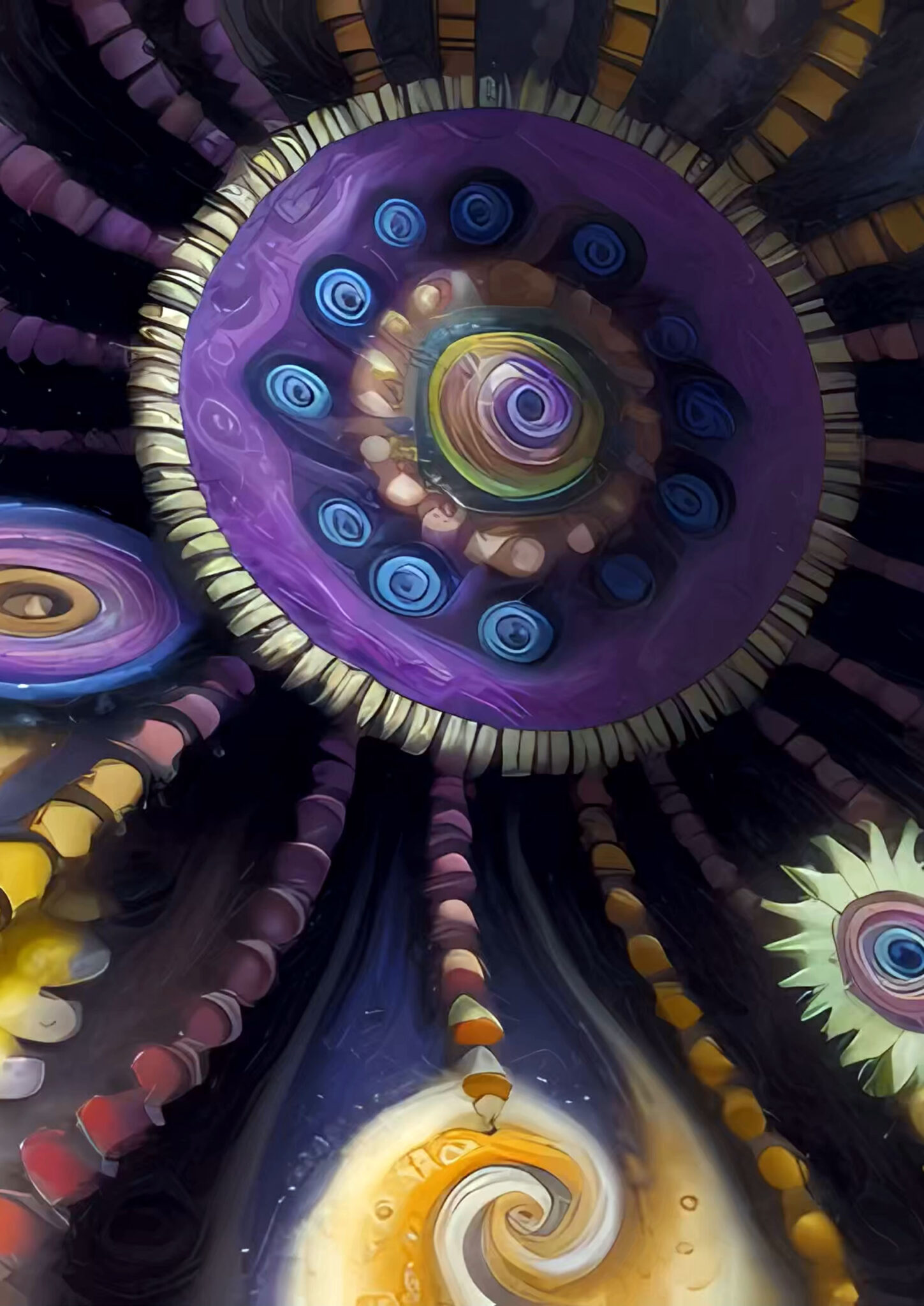
This installation is a mechanism that serves as a kind of interface between planetary processes and an audience. It consists of 12 transparent piezocrystals, grown especially for the project, and 12 motorized hammers that strike them. The installation is connected to the internet. Its core algorithm is controlled by data from a meteorological site which shows lightning strikes in real time (on average, 10~200 lightning flashes occur on the planet every minute). Each time the installation receives information about a lightning strike, a hammer strikes one of the crystals, resulting in a small electrical discharge produced by the crystal under mechanical stress. Each of these charges activates a powerful lamp and sound effects.

Frei Otto

Flexible Column

“Frei Otto “hesitates to pursue a project unless he is certain that its realization will be temporary enough to not be in man’s way.”
This position indicates a polite anarchism through death. A delicate rebellion against the monumental architectural quest.” Helen Levin

.

„Frei Otto „zögert, ein Projekt zu verfolgen, es sei denn, er ist sich sicher, dass seine Realisierung nur vorübergehend genug ist, um dem Menschen nicht im Weg zu stehen.“ Diese Position weist auf einen höflichen Anarchismus durch den Tod hin. Eine zarte Rebellion gegen die monumentale architektonische Suche.” Helen Levin

.

«Фрей Отто« не решается продолжать проект, если не уверен, что его реализация будет достаточно временной, чтобы не мешать человеку ». Эта позиция указывает на вежливый анархизм через смерть. Тонкое восстание против монументального архитектурного поиска ». Елена Левин

Alexander Ekman and Mikael Karlsson

Eskapist
Palco : Royal Swedish Opera, Stockholm

.
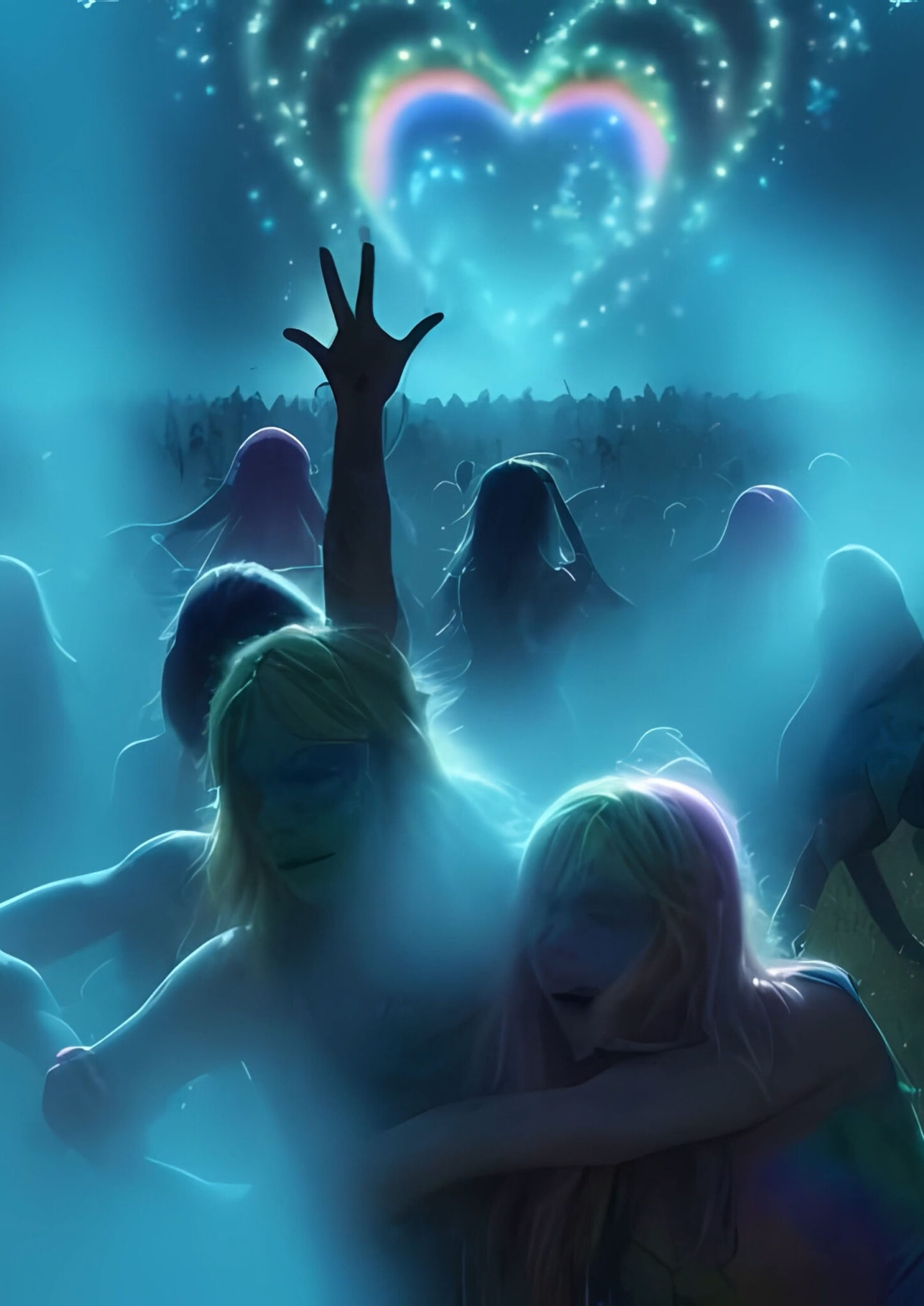
…sem nunca sacrificar a beleza lírica e a contemplação profunda à incongruência inútil, Eskapist prova mais uma vez que o palco teatral é verdadeiramente mágico lugar, onde o mundo como o conhecemos muda de forma apenas para se dissolver nas fantasias mais poéticas que alguém poderia imaginar.

.

Skapist

Stage : Royal Swedish Opera, Stockholm

. …without ever sacrificing lyrical beauty and deep contemplation to pointless incongruity, Eskapist proves once again that the theatrical stage is a truly magical place, where the world as we know it changes shape only to dissolve into more poetic fantasies than anyone else. could imagine.


CASEY REAS

KTTV
This documentation video captures a few minutes of a continuous, generative collage. The source for the collage is one hour of edited signals captured from KTTV (198 – 204 MHz @ 34°13′29″N, 118°3′47″W) in August 2015.
The sound was created by Philip Rugo

.

KTTV Cette vidéo de documentation capture quelques minutes d’un collage continu et génératif. La source du collage est une heure de signaux édités capturés par KTTV (198 – 204 MHz @ 34°13′29″N, 118°3′47″W) en août 2015.

Le son a été créé par Philip Rugo


Mima

MIMA

Aniara

“Early in the beginning of the film, we are introduced to a woman (Emelie Jonsson) who works on a kind of “attraction” of the spaceship called MIMA, which, at first, is not very popular. It is a technology capable of capturing people’s emotions. and turn them into images, or rather into a kind of vivid dream in their minds. As the ship wanders aimlessly through space, while it is not yet known if it is possible to return to the correct route, days become weeks, weeks become it takes months and the demand for MIMA increases. Aniara explores very well what makes us human as a race and also the importance of having a place to call her own. What was supposed to be a simple transport, over time becomes, in fact, a kind of “mini-planet”.” Marcio Melo

MARTIN HESSELMEIER & ANDREAS MUXEL

CAPACITIVE BODY
file festival

The installation “capacitive body” is a modular light system that reacts to the sound of its environment. Each custom-built module consists of an electro-luminescent light wire linked to a piezoelectric sensor and a microcontroller. Through its modular setup it can easily be adapted to various urban spaces. The sensors are used to measure vibrations of architectural solids in a range of low frequencies. These oscillations are triggered by surrounding ambient noise, for example traffic noise. The data sensor controls the light wires, which are tensed to a spatial net structure. According to the values of the measurement, light flashes are generated. With increasing vibrations the time between flashes becomes shorter and shorter. The stability of this nervous system gets to an end where it collapses and restarts again. A dynamic light space is thereby created, which creates a visual feedback of the aural activity around the installation.

Ryoji Ikeda

micro | macro
micro | macro transforms Hall E in the MuseumsQuartier into an oversized world of moving images and sounds. In his immersive installation, multimedia artist Ryoji Ikeda creates a field of imagination between quantum physics, empirical experimentation and human perception. In collaboration with nuclear scientists at CERN, Ikeda has translated complex physical theories into a sensory experience. The Planck scale is used by scientists to denote extremely small lengths or time intervals. Concepts like space and time lose their meaning beyond this scale, and contemporary physics has to rely on speculative theories. And on art. Visitors to micro | macro enter a world of data, particles, light and sound that makes the extremes of the universe perceptible to the eye and ear. In the micro world we penetrate the smallest dimensions of the unrepresentable, while in the macro world we take off into cosmic expanses that allow us to experience the infinite space beyond the observable universe. In this maelstrom of data, an acoustic and visual firework bridges the gap between theoretical understanding and sensual perception.

Hiroshi Matoba

Sun and Moon Room
Sun and Moon Room in the Art Museum of Nature and Human Non-Homogeneity, located in Bungotakada City, Oita, houses one of the interactive art installations designed to extend one’s physicality in contact with the nature. The concept of this work is a room where visitors can play with sunlight. As visitors walk through the room, small apertures on the ceiling automatically open and close, following their movements. The aperture system is designed to envelop the visitors’ bodies in light and to change the shape of the light cast at their feet, mimicking the waxing and waning of the moon. Visitors’ movements are detected by sensors, which trigger to open only the apertures located in the direction of the sun. The room is controlled to create an interior condition that represents the weather of the moment using a program for analyzing live data released by the Japan Meteorological Agency.

Eva Mattes + Franco Mattes

My Little Big Data
O ensaio em vídeo de 24 minutos My Little Big Data foi realizado em colaboração com o analista de dados Vladan Joler, a quem os artistas entregaram voluntariamente todos os e-mails trocados nos últimos 13 anos (mais de 70.000 e-mails pessoais enviados e recebidos) e vários meses de histórico de navegação.
O vídeo analisa a enorme riqueza de informação que muitas vezes revela detalhes íntimos da vida privada dos dois artistas, como preferências políticas ou culinárias, processos de trabalho, locais visitados ou locais onde viveram, de forma a criar um retrato de extraindo e examinando esses dados pessoais e metadados.

A Writer’s Odyssey

A Writer’s Odyssey

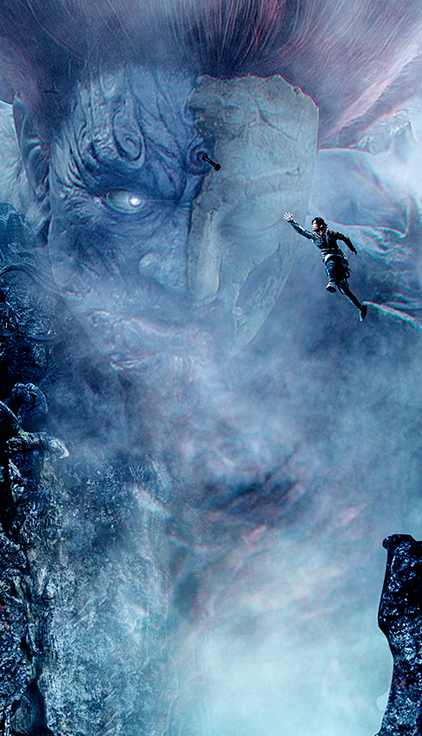
Seis anos após o sequestro de sua filha, um homem é contratado para matar o autor de um romance de fantasia, mas o mundo do romance parece se cruzar com a realidade. No romance, Redmane é o governante de uma aldeia que ele comanda com punho de ferro. Um jovem herói está em uma missão para acabar com o governo de Redmane. De alguma forma, o romance parece estar impactando a vida no mundo real e, portanto, a corporação quer impedir o autor de continuar seu trabalho.

Coralie Vogelaar

infinite posture dataset

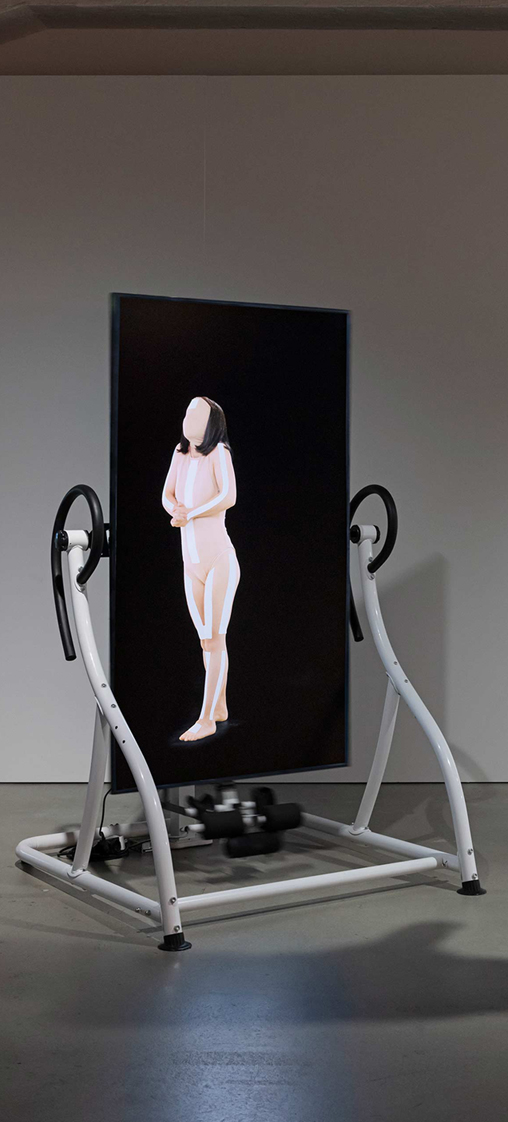
She moves by endlessly morphing to the rhythm of the device – strapped in the frame of the screen – following or giving instructions; part human, part machine. The design of the device is inspired by a gadget to cheat the step-counter on your smartphone. Technology tricked by technology. Her movements, caught within a motion capture like tight suit deconstructing her body parts, talk of complex and conflicting emotions, but her face, from which we usually read how someone is feeling, is hidden. But is the machine that is observing her deconstructed and re-sequenced postures actually capable of recognizing what the body is communicating? Are we?

The Collective

2°C
2°C is a unique AI generated art installation imagined through the mind of a machine. Utilising machine learning algorithms trained on thousands of archival images of geometric structures of man made cities and naturally occurring organic corals forms, the AI takes this learned data to visualise an otherwise unseen coral city. 2°C is about coral bleaching, one of the phenomenon mainly caused by rising sea temperature brought about by climate change. To prevent the massive, irreversible impacts of ocean warming on the coral reefs and their services, it is crucial to limit the global average temperature increase to below 2°C above pre-industrial levels.
Ryoichi Kurokawa

ad/ab Atom

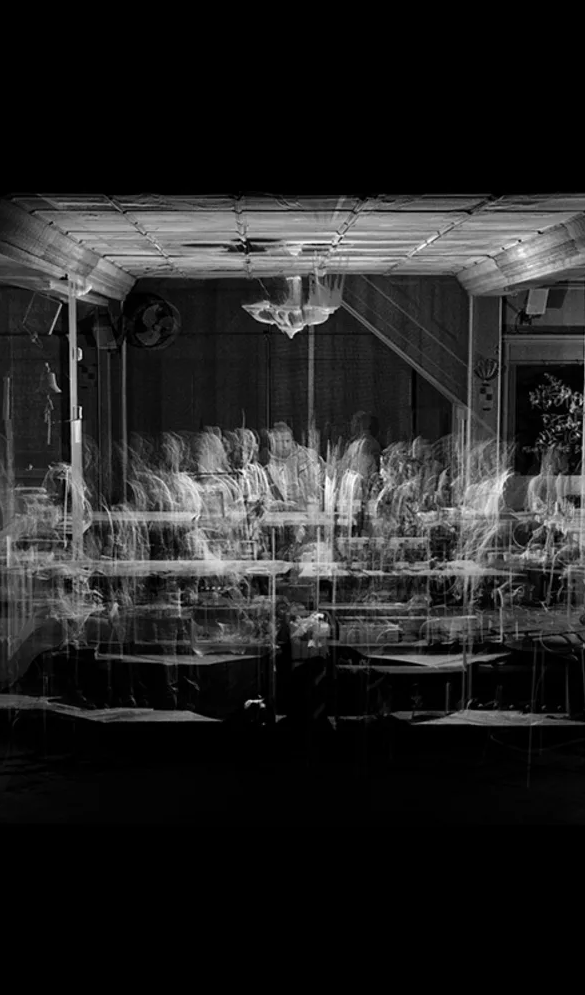
Kurokawa then analyses, filters and distorts this data into an artistic rendering of an atomic space in which the laws of quantum mechanics would theoretically be visible. “The term ‘ad’ in the title means ‘to/toward’ etymologically as a prefix in words of Latin origin and ‘ab’ means ‘away from'”. he explains. “It is recombinant of neologism ‘adatom/abatom’ which means ‘to atom/from atom’, where the laws governing nature blur“.

UVA UNITED VISUAL ARTISTS

Present Shock
Present Shock confronts the viewer with a barrage of statistical clocks representing real-time information about the world—from life-changing global events to the banal trivia of everyday existence—highlighting how the speed and volume of data in the Information Age present new challenges to our limited cognitive apparatus. Many of the statistics presented occur at timescales and spatial horizons that similarly defy our perception or comprehension. Disturbing the inertia of the here and now, they reveal the fluctuating state of dynamic transformation that characterizes life on earth.

MASAKI FUJIHATA

beyond pages

The data projector loads images of a leather bound tome onto a tablet which a light pen activates, animating the objects named in it – stone, apple, door, light, writing. The soundscore immaculately emulates the motion of each against paper, save for the syllabic glyphs of Japanese script, for which a voice pronounces the selected syllable. Stone and apple roll and drag across the page, light illuminates a paper-shaded desklamp; door opens a video door in front of where you read, a naked infant romping, lifesize and laughing, in.

Studio Above&Below

‘Semi-Diurnal Spaces’ is a site specific immersive installation in form of a full dome which makes use of local tidal and atmospheric data of South Wales. Locals were invited to experience their close-by waterbody through a meditative environment, connecting to it in a poetic, technological and tele present way. Tidal patterns and atmospheric data such as wind and humidity influence a digital NVIDIA FleX particle system in real-time. The site-specific data influences the gravitational forces, fluid viscosity and flow rate within the dome as a body, resulting in a living digital sculpture and AV experience connecting to aspects of the channel itself.

Alex Ekman

COW

Ekman talents extend to the lighting and stage design and his eye for structuring an environment is unerring. There is no set as such, excepting the plaster cow which dangles overhead, but the stage surface has its share of movement as little island-blocks rise up and pits sink down. The extreme tilting of the stage at one point causes unfortunate Bauch to roll, cow-like, almost into the pit. COW has its iconic Ekman moment in the scene that opens on a stage full of swirling dancers in white skirts set in a magical silvery mist. Mikael Karlsson, whose music partners the piece provides a subtle and evocative soundscape. He offers a hint of percussive rhythm picked up by the dancers who launch into an ecstatic dance: a stage full of whirling dervishes, until they collapse exhausted.

.

Ekmans Talente erstrecken sich auf die Beleuchtung und das Bühnenbild, und sein Auge für die Strukturierung einer Umgebung ist unfehlbar. Es gibt kein Set als solches, außer der Gipskuh, die über ihnen baumelt, aber die Bühnenoberfläche hat ihren Anteil an Bewegung, wenn kleine Inselblöcke aufsteigen und Gruben sinken. Das extreme Kippen der Bühne an einer Stelle führt dazu, dass der unglückliche Bauch kuhartig fast in die Grube rollt. COW hat seinen legendären Ekman-Moment in der Szene, die auf einer Bühne voller wirbelnder Tänzer in weißen Röcken in einem magischen silbernen Nebel beginnt. Mikael Karlsson, dessen Musikpartner das Stück ist, bietet eine subtile und eindrucksvolle Klanglandschaft. Er bietet einen Hauch von perkussivem Rhythmus, der von den Tänzern aufgenommen wurde, die einen ekstatischen Tanz beginnen: eine Bühne voller wirbelnder Derwische, bis sie erschöpft zusammenbrechen.