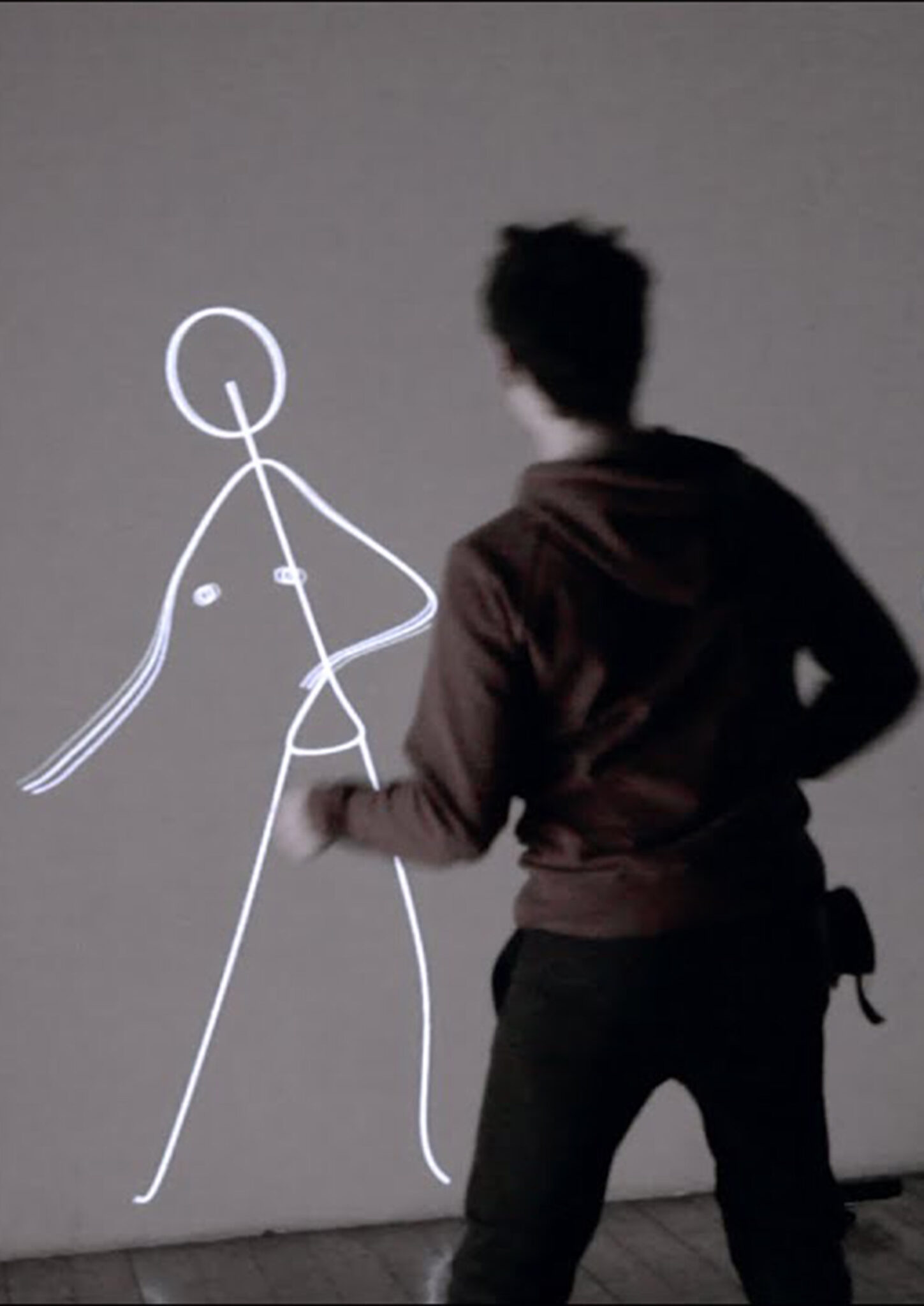
QUBIT AI: Klaus Obermaier, Stefano D’Alessio & Martina Menegon
EGO
FILE 2024 | Installations
International Electronic Language Festival
The mirror stage in psychology explains how the Ego forms through objectification, where one’s visual appearance comes into conflict with emotional experience, a concept called ‘alienation‘ by psychoanalyst Jacques Lacan. The interactive installation EGO reenacts and reverses this process by distorting the mirror image based on the user’s movements, highlighting the tension between the real and the symbolic, the Ego and the It, subject and object.
Bio
Klaus Obermaier is an interdisciplinary artist, director and composer who creates innovative works in the performing arts, music and installations using new media. Stefano D’Alessio researches social issues induced by the internet and explores how the web and its derivatives influence human behavior and the body. Martina Menegon creates intricate assemblages of physical and virtual elements, exploring the contemporary self and its hybrid corporeality.

QUBIT AI: Infratonal
Useless Hands
FILE 2024 | Aesthetic Synthetics
International Electronic Language Festival
Infratonal – Useless Hands – France
When our hands become useless, what will we choose to do with them? We can use AI to visualize the unthinkable, the strangely familiar yet indescribable forms and structures. Generative AI could be used as an amplifier of our ability to explore abstraction and surrealism rather than a simple mirror of our usual perceptions.
Bio
Infratonal is an artistic project led by Louk Amidou, a Paris-based multidisciplinary artist who works at the intersection of digital arts, electronic music and interaction design. He uses algorithms to create hybrid visual and sound pieces which aim to be performed by the human gesture as intangible instruments. He questions the artwork’s nature at the age of AI and the relationship between the artist and the algorithm.

Beeple
Human One
This is the story of the first human born in the metaverse. Human One is the first dynamically changing hybrid digital/ physical artwork. The artwork is an ongoing journey that will continue to evolve over the course of the artist’s life.

Vincent Leroy
Echo Lens
Emerald Lake, Canada
Hybrid, Vincent Leroy’s work oscillates between the real and the virtual, the natural and the artificial, drawing its inspiration from both nature, which often sites his work, and from the digital world. Whether its kinetic sculptures, immersive installations or monumental works, movement is almost always Vincent Leroy’s raw material. The kind of movement that inspires life, amazement, and a permanently shifting viewpoint.
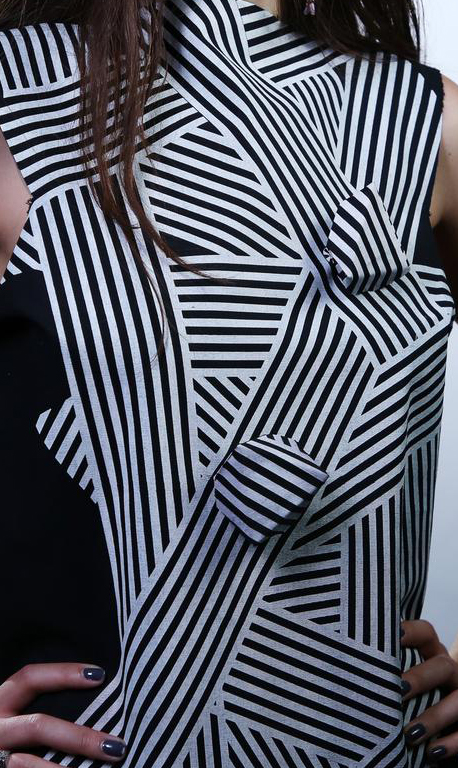
Kino
MIT Media Lab, Stanford University
This work explores a dynamic future where the accessories we wear are no longer static, but are instead mobile, living objects on the body. Engineered with the functionality of 18 robotics, this “living” jewelry roams on unmodified clothing, changing location and reconfiguring appearance according to social context and enabling multitude presentations of self. With the addition of sensor devices, they transition into active devices which can react to environmental conditions. They can also be paired with existing mobile devices to become personalized on-body assistants to help complete tasks. Attached to garments, they generate shape-changing clothing and kinetic pattern designs–creating a new, dynamic fashion.
It is our vision that in the future, these robots will be miniaturized to the extent that they can be seamlessly integrated into existing practices of body ornamentation. With the addition of kinetic capabilities, traditionally static jewelry and accessories will start displaying life-like qualities, learning, shifting, and reconfiguring to the needs and preferences of the wearer, also assisting in fluid presentation of self. We envision a new class of future wearables that possess hybrid qualities of the living and the crafted, creating a new on-body ecology for human-wearable symbiosis.

Sara Sadik
Ultimate Vatos
Les vidéos, performances, installations et photographies de Sara Sadik prennent la forme de mangas, de jeux vidéo, de docu-fictions ainsi que de films d’animation CGI. Ce faisant, l’artiste aux racines maroco-algériennes explore les manifestations de ce qu’elle appelle « Beurcore« – la culture des jeunes qui a émergé parmi les membres de la classe ouvrière de la diaspora nord-africaine. Beurcore définit à la fois une identité hybride et un mouvement collectif constitué à travers la musique comme le rap et le hip-hop, la langue, la mode, des symboles spécifiques et les médias sociaux.

Van Grimde Corps Secrets
Eve 2050
Nous sommes en 2050, dans un monde ou être humain ne signifie plus la même chose. Les avancées technologiques et biomédicales des 30 dernières années ont bouleversé le statut du corps et redéfini les identités. Certains humains ont embrassé les progrès technologiques, jusqu’à augmenter leurs corps avec des dispositifs artificiels. D’autres ont préféré s’hybrider avec d’autres espèces, faisant du biologique et du vivant leur technologie à eux. D’autres encore chérissent et honorent le corps originel, refusant toute modification corporelle ou n’ayant pas les moyens de s’augmenter. La web série Eve 2050 nous emmène au cœur de ce monde étonnant à travers 5 épisodes qui suivent le parcours d’Eve. Personnage symbolique, de toutes origines culturelles, à la fois enfant et adulte, homme, femme, transgenre, être de chair, virtuel ou artificiel. Eve 2050 propose un voyage inédit vers les corps et les êtres de demain.

Dragan Ilic
Re)Evolution
With the machine programed to draw, the robot becomes a medium for interaction and for “symbiosis” with the artist, creating a kind of “hybrid body” of man and machine, whose nervous system and brain waves administer “software commands” to the robot during the drawing performance. A key actor in the exhibition will be the new model of the KUKA KR 210 robot, that has a multi-functioning performative role: from drawing, experimental dance, music – through the production of industrial sound, and a six channel video projection that documents Ilić’s projects.

Marjan Moghaddam
Mit 3D-CG in Spielfilmqualität und Motion Capture improvisierter Performance kreiert Marjan Moghaddam seit 2008 filmische und fantastische virtuelle Welten, die von ihren charakteristischen digitalen Körpern bevölkert werden. Diese Körper sind manchmal maschinell, organisch, hybrid oder energiebasiert, als unterbrochene und diskontinuierliche Figuren, die unser hybrides virtuelles und physisches Leben repräsentieren. Diese Szenen und Figuren ähneln filmischen Gemälden mit Videospiel-Ästhetik und Spezialeffekten für das postdigitale Zeitalter.

GUTO NÓBREGA
Breathing
File Festival
Breathing is a work of art based on a hybrid creature made of a living organism and an artificial system. The creature responds to its environment through movement, light and the noise of its mechanical parts. Breathing is the best way to interact with the creature.
This work is the result of an investigation of plants as sensitive agents for the creation of art. The intention was to explore new forms of artistic experience through the dialogue of natural and artificial processes. Breathing is a pre-requisite for life, and is the path that links the observer to the creature.Breathing is a small step towards new art forms in which subtle processes of organic and non-organic life may reveal invisible patterns that interconnect us.Breathing is a work of art driven by biological impulse. Its beauty is neither found isolated on the plant nor in the robotic system itself. It emerges at the very moment in which the observer approaches the creature and their energies are exchanged through the whole system. It is in that moment of joy and fascination, in which we find ourselves in a very strange dialogue, that a life metaphor is created.Breathing is the celebration of that moment.
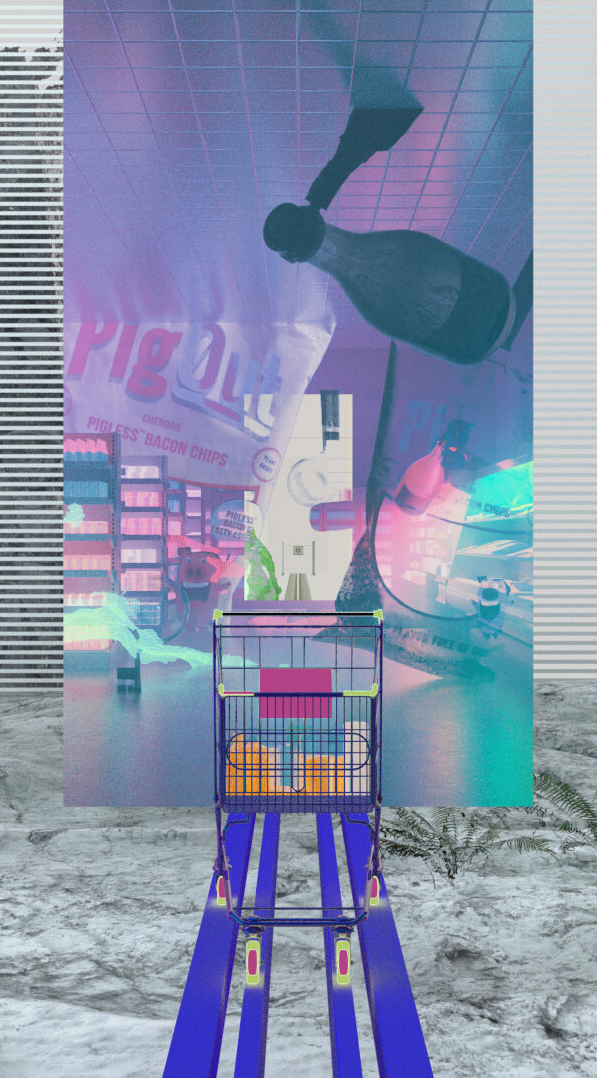
Nix Liu Xin
Three Supermarkets
Three Supermarkets is an infinite loop film with a shopping cart riding across multiple coexisting fictional supermarkets. As the first episode of the Phygital Supermarket Trilogy, this film explores the hybrid compositing of the emerging physical and digital media and techniques. The production process of this film uses industrial-grade six-axis Staubli robot arm as shooting equipment, green screen shooting, volumetric video capture, photogrammetry, Cinema 4D Mograph, Redshift shading & rendering, 2D/3D compositing, and other custom build techniques and workflows. Familiar but neglected objects, such as apples and snack bags, were scanned as either static models or animated model sequences from the physical world to the digital space.

Bill Vorn
Copacabana Machine Sex
Copacabana Machine Sex is een 30 minuten durende burleske muzikale robotvoorstelling met uitsluitend biomorfe machines als acteurs, muzikanten en dansers. Mijn doel is niet om een echt cabaret na te bootsen, maar om een metaforisch spektakel te bedenken als antwoord op de vraag: “Wat zou er gebeuren als machines op een cabaretpodium zouden staan?” Esthetisch gezien is de set een vreemde hybride mix tussen de klassieke Broadway-kitsch en de donkere industriële look van mijn eerdere werken. Zoals het meeste van mijn werk is het een verkenning van robotachtige vormen en bewegingen door middel van muziek, geluid en licht.

Caroline Rothwell
Infinite Herbarium
Infinite Herbarium heeft tot doel onze ervaring van de uitgestrekte, diverse botanische wereld uit te breiden – door connectiviteit te creëren met planten en hun bedreigde ecosystemen. Via een proces van interactief leren en kunstproductie worden de ontmoetingen van deelnemers met echte planten gefilterd door datasets en historische archieven met behulp van een combinatie van Machine Learning (ML)-technieken. Verbindingen tussen botanie, data en kunst leiden tot fantasierijke ontmoetingen met merkwaardige hybride soorten – het creëren van een digitale weerspiegeling van de constante stroom van levende systemen.

STUDIO INI
Urban imprint
“If there is to be a “new urbanism… it will no longer be concerned with the arrangement of more or less permanent … but for the creation of enabling fields….that refuse to be crystallized into definitive form; it will no longer be about meticulous definitions, the imposition of limits, but about expanding notions, denying boundaries, not about separating and identifying entities, but about discovering hybrids; it will no longer be obsessed with the city but with the manipulation of infrastructure for endless intensifications and diversifications, shortcuts and redistributions – the reinvention of psychological space.”, Dutch architect + Harvard Professor, Koolhaas 959, writer of Delirious New York. URBAN IMPRINT is how we design a piece of this new urbanism, an augmented materiality , as we define it. An environment that is a ‘blank canvas’ to be reshaped by the future self.
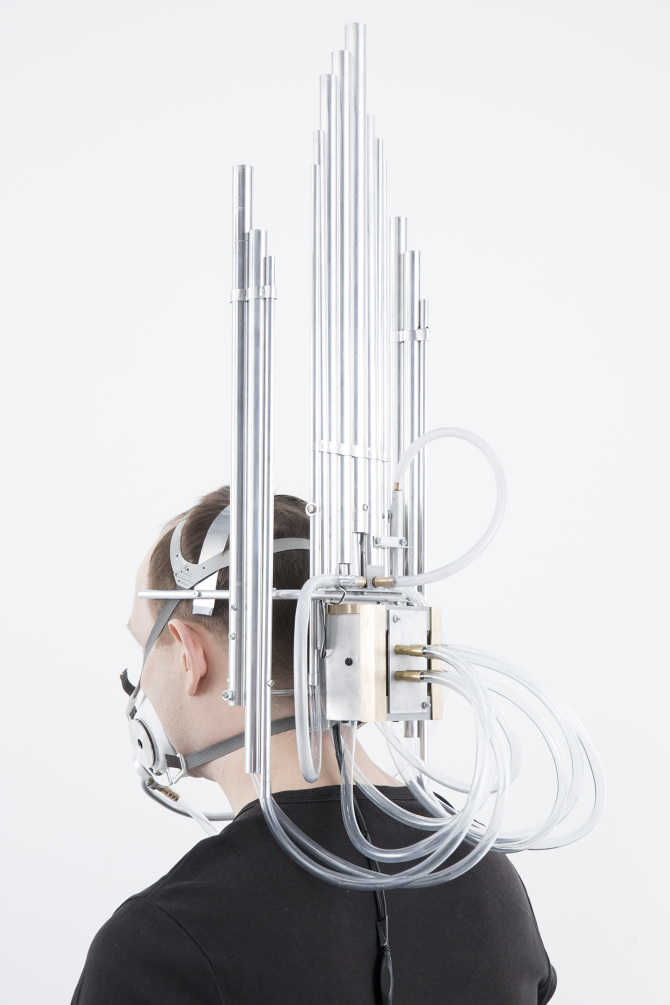
VTOL
Letzter Atemzug
Ich verstehe passive Instrumente als verschiedene Multimedia-Objekte, für die weniger Management als Koexistenz erforderlich ist, basierend auf Beziehungen, die aus einer gegenseitigen „hybriden“ Symbiose hervorgehen. Das Funktionsprinzip des Objekts ist recht einfach: Die ausgeatmete Luft (ihr Druck und ihre Durchflussrate) aktiviert den generativen Prozess, der von den Ausatmungsparametern abhängt und von der Luftbewegung im Organ gesteuert wird. Das Objekt erfordert keine spezielle Spieltechnik, obwohl jede Änderung der Atmung (entweder vorsätzlich oder durch physiologische Faktoren verursacht) direkt von der Spieldynamik und auch von allen anderen Parametern abhängt, die zur Erzeugung des Schallflusses verwendet werden.

Jonathan Pepe
EXO-BIOTE
The Exo-biote project aims to invent a typology of possible forms and movements by diverting “soft robotics” technologies. The installation features moving sculpture-objects. These hybrid objects swell with air and seem to be alive, to breathe. These components are part of a whole, they belong to the same body, one whose humours and pulsing organs we can observe. A spasmodic choreography leads the viewer on an inner journey, into the meanders of one of those absurd reasoning processes that logicians calls “apagogies” by proposing hypothetical prostheses for the consumer market. It is as if the objects presented here were commodities, objects ready to use, mass-produced surrogate organs.
Isabella Münnich
Immersed Garden
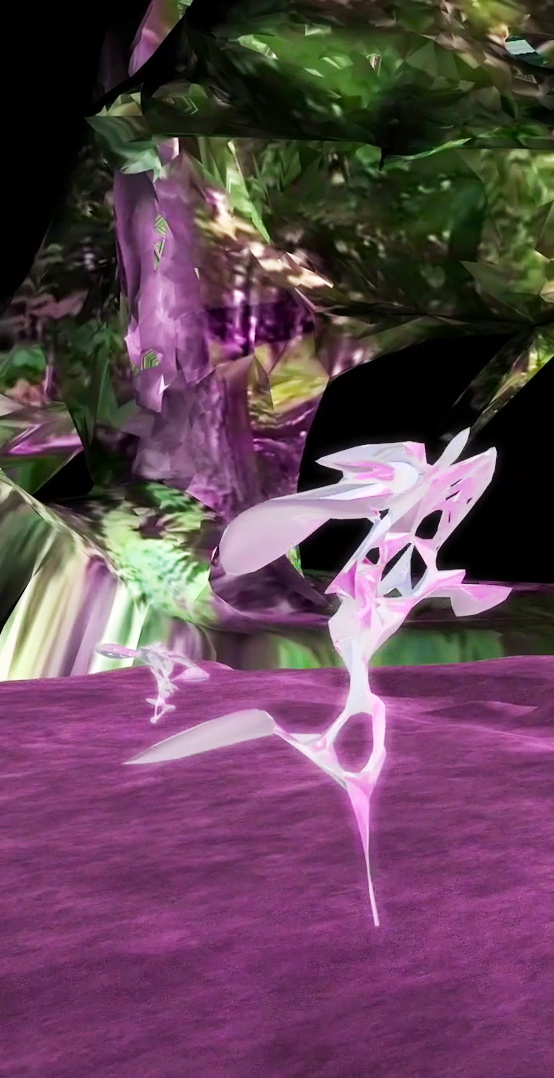
Immersed Garden is in its true sense a sunken world. Floating bodiless in an underwater garden, natural sounds guide you through an immersive surrounding, somewhere between calming and irritating, natural and artificial. It is a playful exploration of the individual conception of safety and confusion and a personal approach to aesthetic references to habits of introspection and retreat in digital environments. It was created by fusing different digital processes like photogrammetry of selected natural places around Karlsruhe and field recordings in a local natural reserve. Underwater videos hybridize with 3D scans of trees and plants while invisible frogs are croaking and humming birds are buzzing by synthetic flowers. The artistic aim was to explore the personal perception of calming and irritating, playing with the concept of immaterialness and attentiveness. The artwork creates aesthetic references to philosophical and scientific theories of introspection and identity.
Takuya Matsunobu and Yasuaki Kakehi
Coworo
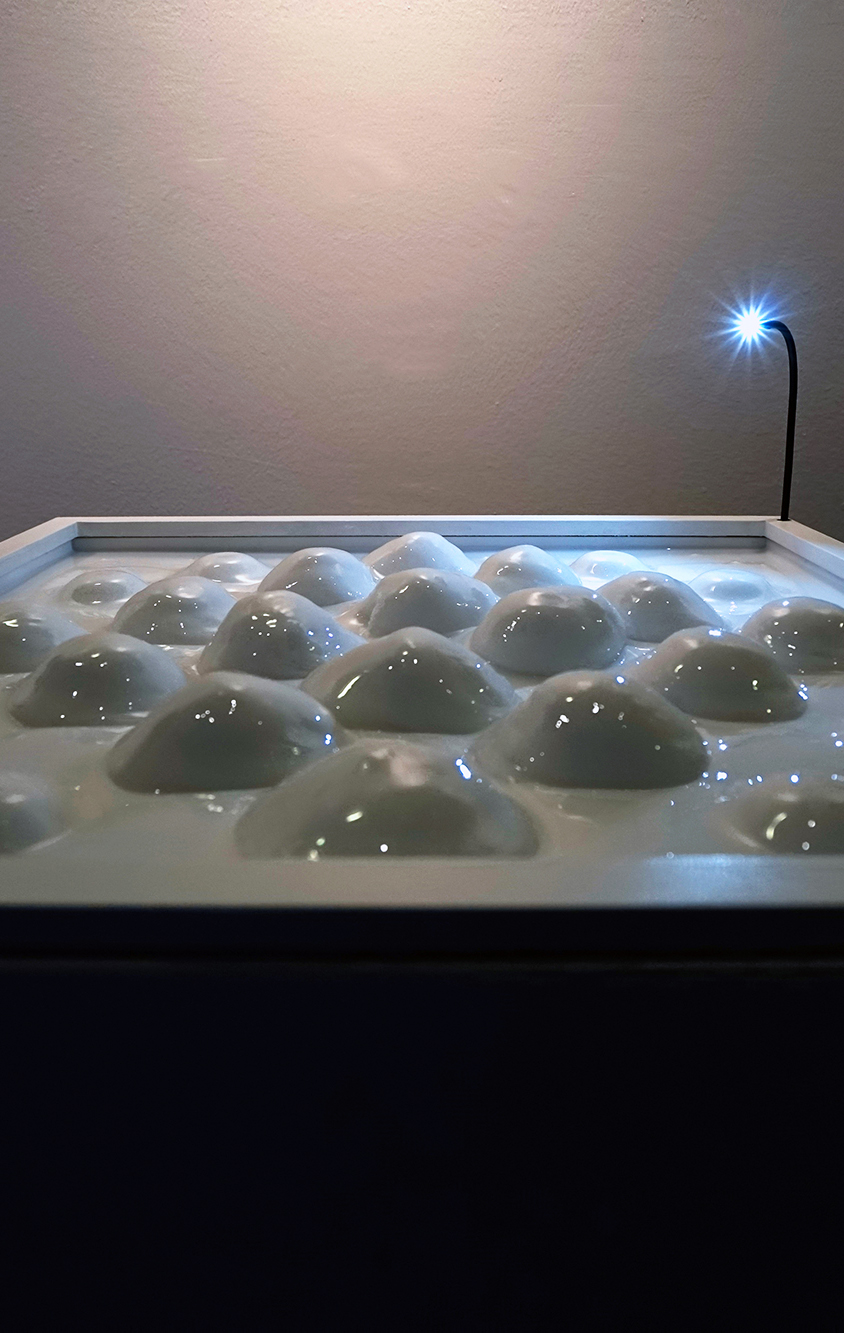
Coworo is an installation with a shape changing liquid that loses its texture under a spotlight and looks almost solid. After a while, bubbles appear on the surface and disappear again, as if it were breathing. The waves gradually change their size, position, and frequency and develop into physical, continual, kinetic, three-dimensional animations that extend beyond the discrete 2D pixel pattern. Through the hybrid combination of the digitally programmed machine and the organic properties of the physical material, the object creates a constant flux of ephemeral shapes and patterns.

Mika Tajima
New Humans
In New Humans, emergent gatherings of synthetic humans rise from the surface of a black ferrofluid pool. Appearing to morph like a supernatural life form, these dynamic clusters of magnetic liquid produced by machine learning processes are images of communities of synthetic people–hybrid profiles modeled from actual DNA, fitness, and dating profile data sets sourced from public and leaked caches. The work questions how we can radically conceptualize the “user profile” to embody a self whose bounds are indefinable and multiple. Generative algorithm using machine learning (GAN, T-SNE) and fluid simulation (Navier Stokes), countour generation (OpenCV), user profile data caches (DNA, fitness, and dating), software production (Processing), ferrofluid, custom electromagnet matrix, custom PCB control system, computer, steel, wood, aluminum.

Assocreation
Solar Pink Pong
file festival
Solar Pink Pong” is a hybrid of street and video game. Players of this game can interact with an animated pink sunlight reflection on the street using their bodies and shadows. The device that makes this game possible can be mounted on utility poles or building sides.

vtol
last breath
I understand passive instruments to be different multimedia objects that do not require management so much as co-existence with them based on relations born of a mutual “hybrid” symbiosis. The operating principle of the object is fairly simple – the exhaled air (its pressure and flow rate) activates the generative process, which depends on the exhalation parameters and is managed by the air movement in the organ. The object does not require any special game technique, although any change in the breathing (either premeditated or caused by physiological factors) is directly dependent on game dynamics and also on all the other parameters used to generate the sonic flow.
Lionel Hun and Pixel n’Pepper
Black and White
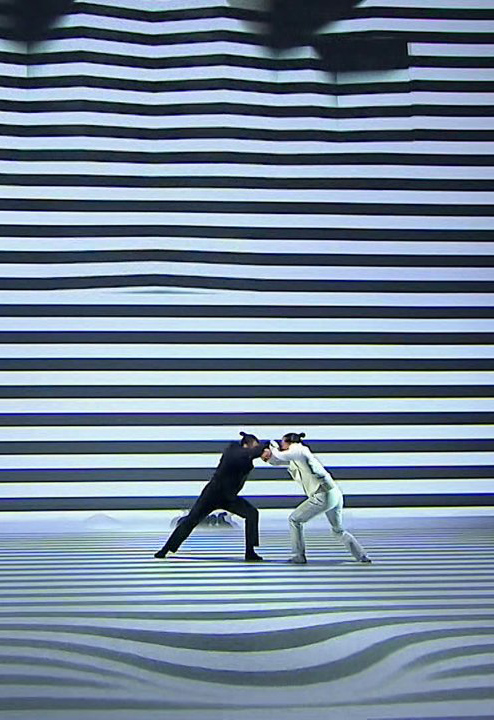
Dedicated to the design and distribution of live shows combining the arts in all its forms, Compagnie Hybride offers a fusion of aesthetics. It is positioned at the crossroads of creativity where the bodies and new technology meet. Land on which confronts, body language and visual arts, in order to promote a work interdisciplinary research, choreography and artistic innovation. Through its creations, productions, performances, films, exhibitions, installations, educational workshops and event services, Compagnie Hybride, carried primarily by a desire to exchange, sharing, research and development, has a mandate to create and disseminate its designs in the artistic and cultural networks nationally and internationally.
PHILIP BEESLEY
菲力浦 畢斯雷
Hylozoic Ground
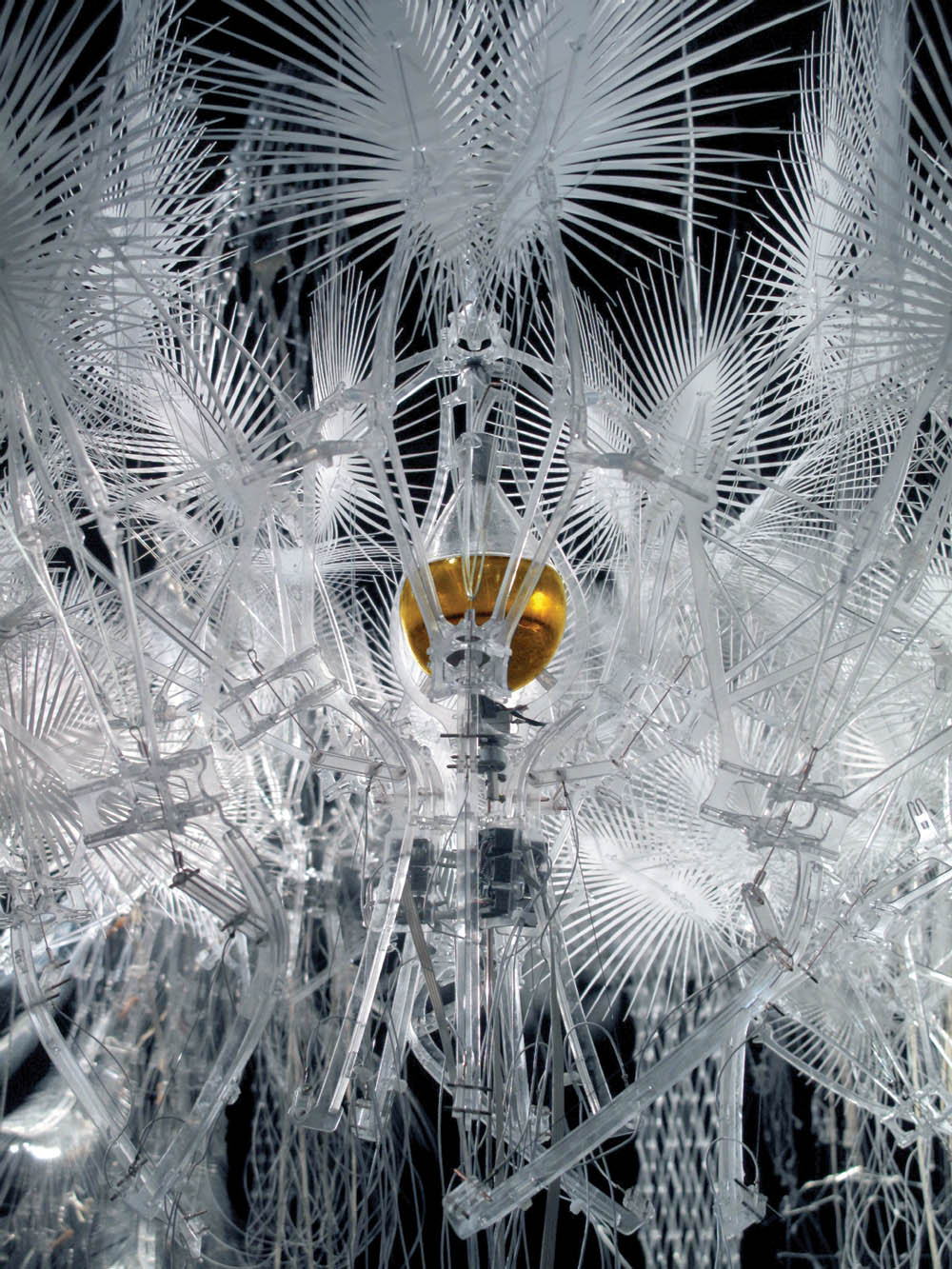
The project’s title refers to ‘hylozoism’, the ancient belief that all matter has life. Hylozoic Ground offers a vision for a new generation of responsive architecture. The Hylozoic Ground environment can be described as a suspended geotextile that gradually accumulates hybrid soil from ingredients drawn from its surroundings. Akin to the functions of a living system, embedded machine intelligence allows human interaction to trigger breathing, caressing, and swallowing motions and hybrid metabolic exchanges. These empathic motions ripple out from hives of kinetic valves and pores in peristaltic waves, creating a diffuse pumping that pulls air, moisture and stray organic matter through the filtering Hylozoic membranes.

Karina Smigla-Bobinski
Ada
File Festival
Similar to Tinguely’s “Méta-Matics”, “ADA” is an artwork with a soul. It acts itself. At Tinguely’s it is sufficient to be an unawarely struggling mechanical being. He took it wryly: the machine produces nothing but its industrial self-destruction. Whereas “ADA”, by Karina Smigla-Bobinski, is a post-industrial “creature“, visitor-animated, creatively acting artist-sculpture, self-forming artwork, resembling a molecular hybrid, such as a one from nanobiotechnology. It develops the same rotating silicon-carbon-hybrids, midget tools, miniature machines able to generate simple structures. “ADA” is much larger, esthetically much more complex, an interactive art-making machine.

MIT Media Lab
Hybrid living materials (HLMs)
A method for printing 3D objects that can control living organisms in predictable ways has been developed by an interdisciplinary team of researchers at MIT and elsewhere. The technique may lead to 3D printing of biomedical tools, such as customized braces, that incorporate living cells to produce therapeutic compunds such as painkillers or topical treatments, the researchers say.

KATE COOPER
Rigged
A hybrid of consumer associations, ranging from the glossy iconography of the TV commercial and the sterility of video game graphics to the luminosity of the department store poster and the smell of freshly opened cosmetics, create a subconscious lure. Her use of CGI technology in her artistic practice surpasses a simple study of digital textures (think nostalgic glitch-making) to occupy a full-fleshed, hyperreal space, usually reserved to corporate giants in advertising or entertainment.

Thomas Glassford
Afterglow Hybrid Pendant 3

Saya Woolfalk
ChimaTEK- Hybridity Visualization System

Lars Jan
Holoscenes
Lars Jan is a director, media artist and artistic director of Early Morning Opera, a Los Angeles-based art lab specializing in live performance. Along with co-producers MAPP International Productions, Early Morning Opera is currently developing HOLOSCENES, a hybrid of performance, installation and public spectacle featuring a series of rituals gathered from sacred and secular spheres and performed in a triptych of hydraulically-animated, jumbo aquariums.
PETER HAMMAR
Time Space Cube
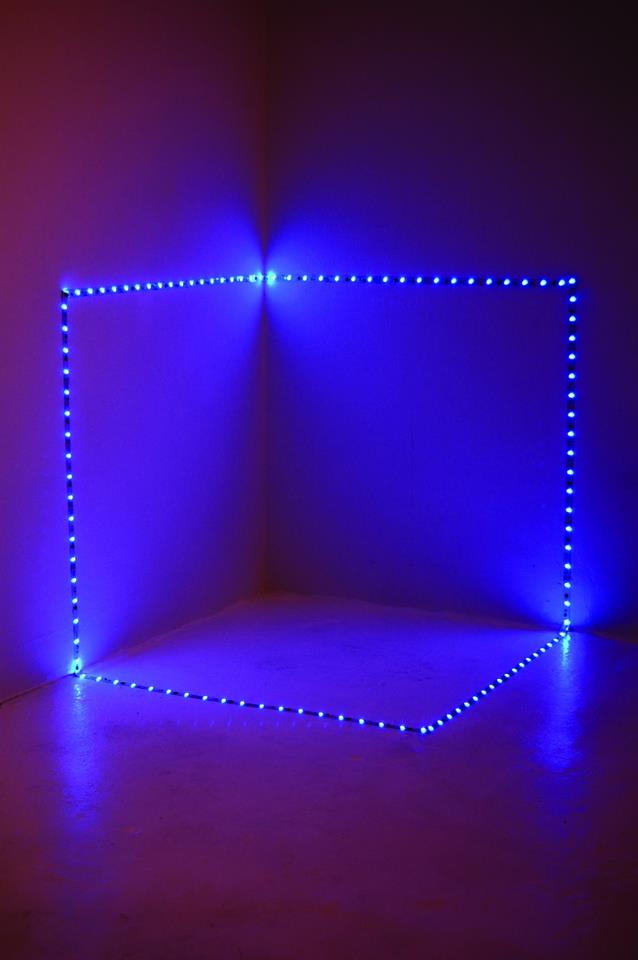
Peter Hammar is a visual artist who creates mixed media collage paintings and installations. His work is in Flux and the status of the work is in question, fragmented, dislocated and failing, exploring the Meta qualities of art, mixing unusual materials with traditional practices. Multiple shaped collage canvases morph into hybrids in an attempt to re-address an ongoing query upon the visually apparent versus the embodied. Found objects altered and juxtaposed and by so, give a new order and meaning to installations that engage in a dialogue within the architectural space.

Akram Khan
Kaash
Inspired by Akram Khan’s early training in the Indian classical dance form Kathak, and the hybrid language that organically emerged when Akram’s kathak training encountered contemporary dance in his teens, a vision began to form, fuelled by a desire to learn and create through collaboration with the very best people across all the disciplines in the arts.
The rules were simple: take risks, think big and daring, explore the unfamiliar, avoid compromise and tell stories through dance that are compelling and relevant, with artistic integrity.
.

NICK ERVINCK
Olnetop
OLNETOP has something monstrous, a hybrid shape in which one can recognize various elements. The work is not clearly defined but points in different directions. The imagery used is clearly inspired by macro photographic images of splashing water, and thus sculpturally interprets the encounter between nature and technology.

Anne Ferrer
Anne Ferrer is a sculptor based in Paris, France who makes inflatable, kinetic objects that are either worn on the body or appear free-standing. Since completing her MFA at Yale University in 1988, Ferrer has worked as a painter who places colors in space, playing with versatile and hybrid forms that are inspired by the human, animal, and floral worlds. Air serves as a solution that resolves space and transport issues making each piece seem as if they literally breathe.
Mathilde Laurent
OSNI
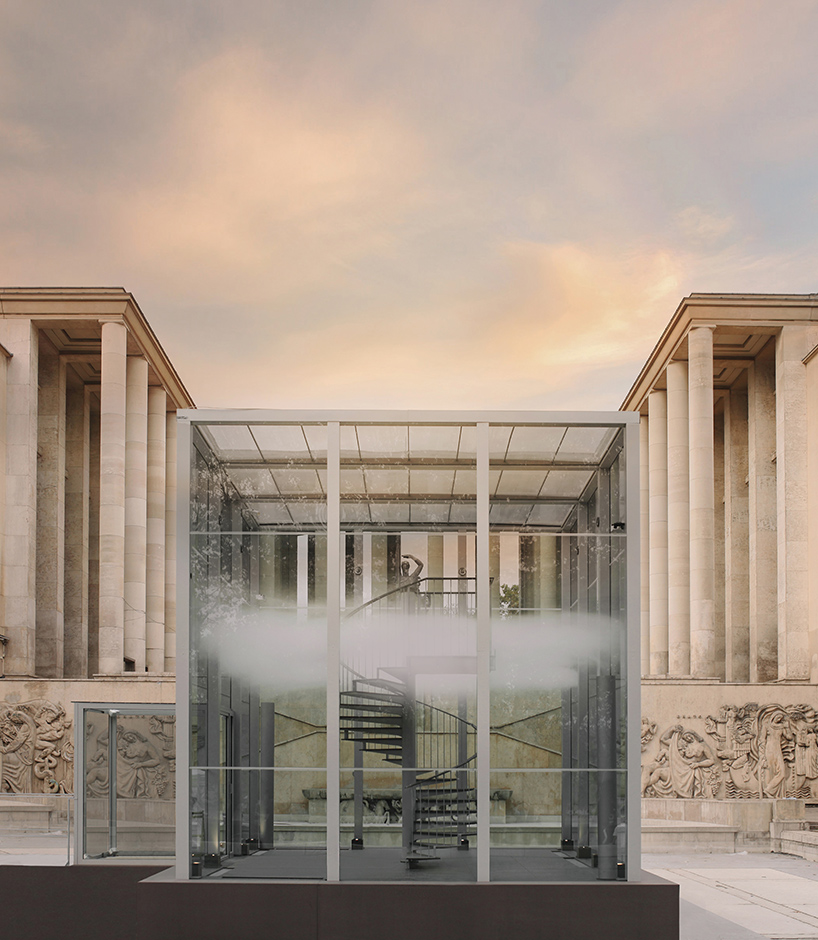
‘the goal of the project is to present the fragrances of maison cartier to the public beyond any commercial or advertising context, in order to show that smell is an unrivaled vector of emotions‘, explains lead perfumer mathilde laurent. ‘[scent] is a source of wonderment, of questioning and surprise. an incredible sensation- making machine!’ OSNI symbolizes the hybridization of two distant worlds: olfaction and climate technology. a great amount of research and experiments ensured that the ‘perfuming’ of the cloud was possible, held in balance between two strata of air in an artful and elegant installation[…]

Alisa Baremboym
Syphon Solutions
Alisa Baremboym is an American artist based in New York who draws her source from domesticity and the handling of objects that are affiliated to this environment. Blurring the line between photography and other mediums such as sculpture and painting, she creates hybrid objects that investigate, appropriate, and extend critical aspects of materiality, process, abstraction, and pictorial ideas.

OLAFUR ELIASSON
オラファー·エリアソン
اولافور الياسون
奥拉维尔·埃利亚松
אולאפור אליאסון
ОЛАФУР ЭЛИАССОН
Visual mediation
Eliasson constructions, at once eccentric and highly geometric, use multicolored washes, focused projections of light, mirrors, and elements such as water, stone, and moss to shift the viewer’s perception of place and self. By transforming the gallery into a hybrid space of nature and culture, Eliasson prompts an intensive engagement with the world and offers a fresh consideration of everyday life.


Oliver Laric
Versions
Versions ist ein laufendes Projekt von Oliver Laric, das sich mit historischen und zeitgenössischen Ideen in Bezug auf Bildhierarchien befasst. Es wird vorgeschlagen, dass gegenwärtige Methoden der kreativen Produktion die Hierarchie eines authentischen oder auratischen „Originalbildes“ in Frage stellen. Anstatt ein primäres Objekt zu privilegieren, schlägt Versions eine Neuausrichtung für die Bilderzeugung vor, bei der Bootlegs, Kopien und Remixe im Zeitalter der digitalen Produktion zunehmend „Originale“ an sich reißen.
Versionen nehmen verschiedene Formen und Iterationen an, darunter eine Reihe von Monologen im Dokumentarfilmstil über montierten Bildern und Videoclips, Polyurethanabgüsse, die auf reformationsgeschädigten religiösen Figuren basieren, eine neu herausgegebene Bootleg-Veröffentlichung von Margaret Biebers Ancient Copies (ein akademischer Text, der sich mit dem Thema befasst) Protraktion der griechischen Ästhetik in die römische Kunst) sowie andere Skulpturen und angeeignete Gegenstände, die die zeitgenössische Bildzirkulation und ihren Austausch durch gegenwärtige und historische Bedingungen erklären.
Das Projekt dient als konzeptioneller Bezugspunkt für den Rest von Larics Praxis, in der eine abgeflachte Bildwirtschaft für die kreative Produktion abgebaut wird und dabei die Konsequenzen für die Hybridität in der zeitgenössischen Kultur untersucht werden. Aktuelle Soloprojekte umfassen: Versionen bei MIT List Visual Arts Center, CAS Annual Award im Lincoln Museum, Art Statements Einzelpräsentation auf der Art | 43 | Basel, Getränkekritik in der Skulpturhalle Basel, Frieze Projects auf der Frieze Art Fair 2011.
highlike book
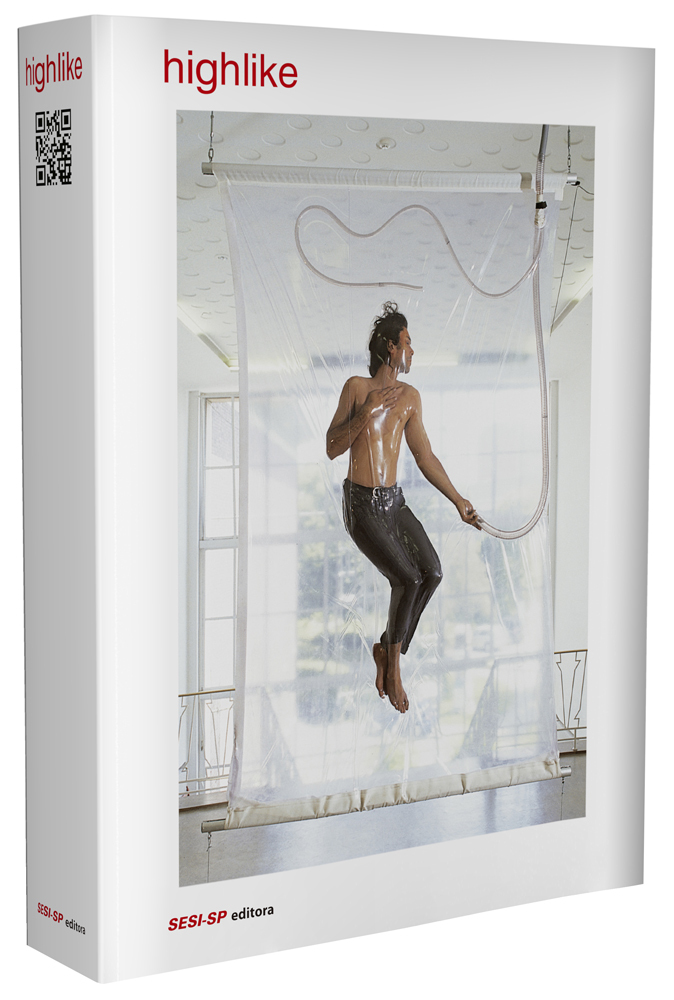
FILE – Electronic Language International Festival and SESI publishing house launch the “highlike book”. This is a yearbook on global contemporary ART and CULTURE. Its first edition has 584 pages with 577 artists from 35 countries. The “highlike book” encompasses several aspects of contemporary culture, providing the user a new form of appreciation of an art book. This is a book connected to the cloud. All information, images, videos and texts, is connected to their on-line counterparts in several languages, in a hybrid book which maintains its physical aspects and the virtual simultaneity of multimedia information. Its main purpose is to provide users with a new way of access culture in a global diversified view on the contemporary creativity in its transversal and heuristic aspect, by means of technologies currently available.

RALF BAECKER
Ральф Беккер
The Conversation
Pataphysical Processing Environment
À travers des installations et des machines, Baecker explore les mécanismes d’action fondamentaux et les effets des nouveaux médias et technologies. Dans ses représentations et spatialisations de processus microscopiques, il cherche à perturber complètement notre perception. Au cœur de ses objets se trouve l’intrication du virtuel avec le réel, ou plutôt avec le monde. Avec une perspective médiatique et archéologique, Ralf Baecker fouille dans des dispositifs obsolètes des traces et des fonctions encore détectables dans les technologies d’aujourd’hui. Son travail cherche à former un hybride entre l’esthétique numérique actuelle et une compréhension historique des matériaux. En conséquence, il appréhende la technologie non pas comme un outil mais plutôt comme un instrument épistémologique, afin de poser des questions élémentaires sur un monde perçu à travers les impressions technologiques.

Refik Anadol, Kilroy Realty Corporation and SOM Architects
Virtual Depictions
Parametric data sculptures
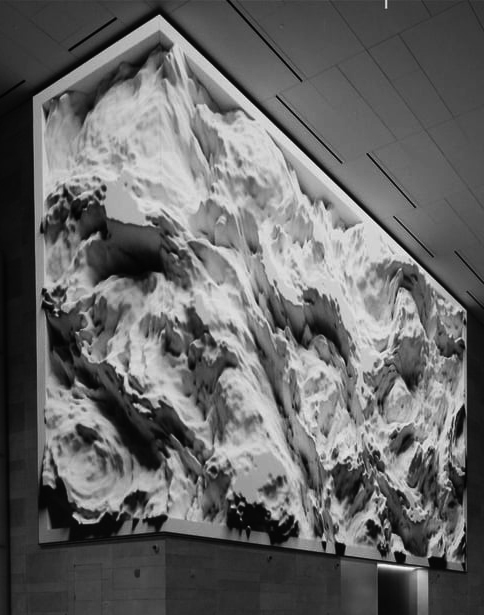
The main idea of ‘Virtual Depictions:San Francisco’ is to bring 21st century approach to public art to define new poetics of space through media arts and architecture and to create a unique parametric data sculptures that has an intelligence, memory and culture. Through architectural transformations of media wall located in 350 Mission’ lobby, home of Salesforce, main motivation with this seminal media architecture approach is to frame this experience with a meticulously abstract and cinematic site-specific data-driven narration. As a result, this media wall turns into a spectacular public event making direct and phantasmagorical connections to its surroundings through simultaneous juxtapositions. The project also intends to contribute to contemporary discourse of public art by proposing a hybrid blend of media arts and architecture in 21st century.

Ryota Matsumoto
the Indistinct Notion of an Object Trajectory
Ryota Matsumoto’s drawings develop and demonstrate the hybrid/multi-layered process where varying scale, juxtaposition of different forms, intertwined textures/tones are applied to reinvent and question the spatial conditions of architectural drawings. His work explore a hybrid drawing technique combining both traditional media (ink, acrylic, and graphite) and digital media (algorithmic processing, scripting and image compositing with custom software ) .
FILE FESTIVAL

XAVIER LE ROY
Self Unfinished
French choreographer Xavier Le Roy defies categorisation as a dance-maker, drawing on diverse influences from the worlds of science, performance art and contemporary dance.
In Self Unfinished (1998), Le Roy takes the audience on a journey of metamorphosis as he transforms into an extraordinary hybrid creature part machine, part alien, part human.
Employing all manner of physical devices, Le Roy creates a world of illusion that is as unsettling as it is transfixing.
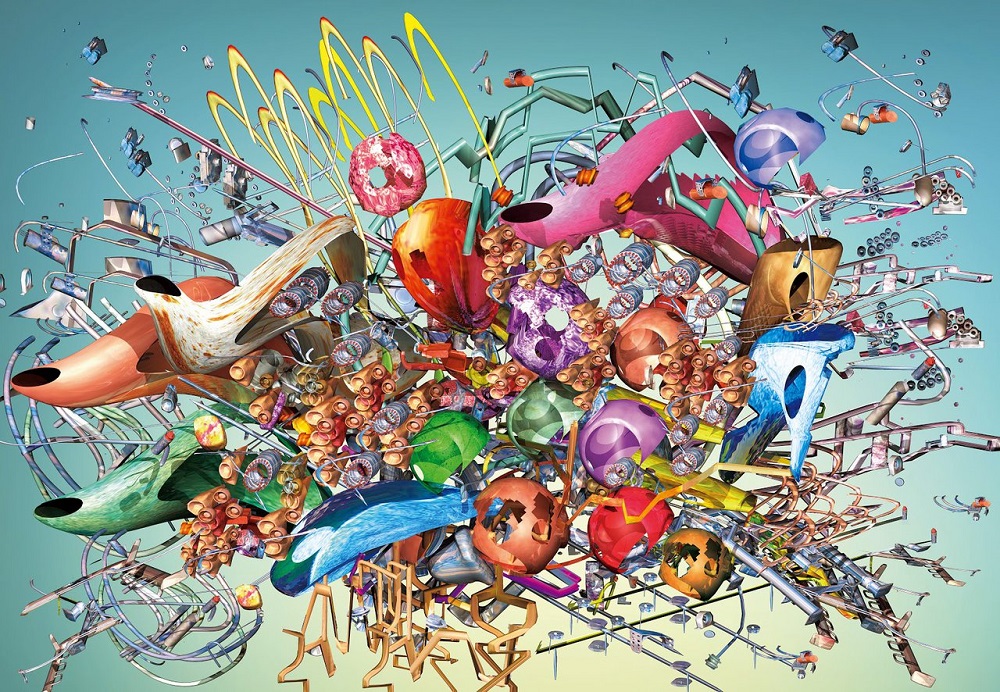
Ryota Matsumoto
First Subtle Sign of Evolving Drones
Architecture, Art & Design – Ryota Matsumoto’s drawings develop and demonstrate the hybrid/multi-layered process where varying scale, juxtaposition of different forms, intertwined textures/tones are applied to reinvent and question the spatial conditions of architectural drawings. His work explore a hybrid drawing technique combining both traditional media (ink, acrylic, and graphite) and digital media (algorithmic processing, scripting and image compositing with custom software ) .
.
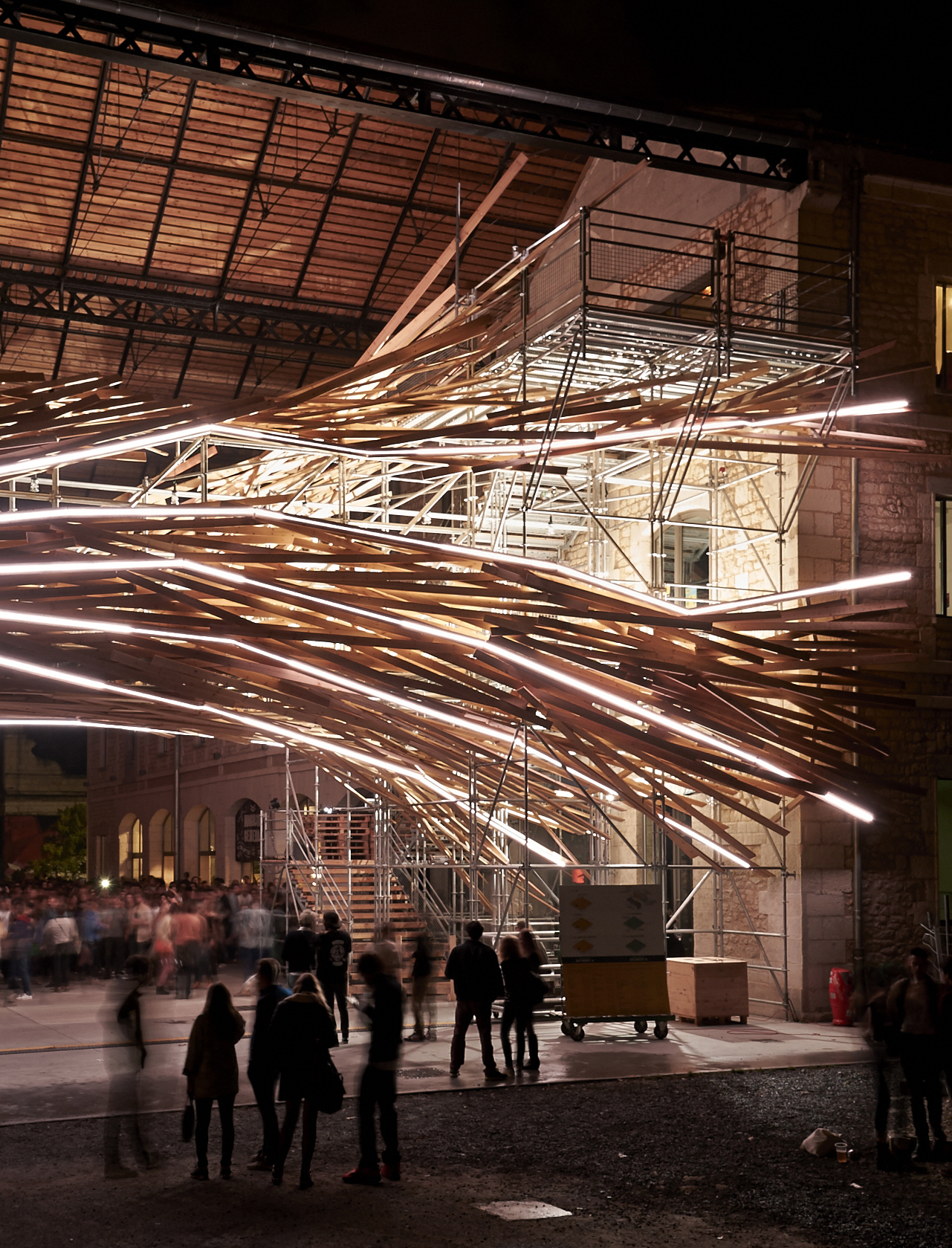
1024 architecture
VORTEX
Architectural fragment made from scaffolding, VORTEX has a raw wood skin highlighted by 12 lines of LED light as many generative and constructive project’s lines. Merging organic materials with new technologies, this hybrid architectural artwork wraps around and embraces the footbridge between the complex’s two buildings, revealing and enhancing the venue’s dynamic energy while working as a live visualizer of energy consumption. VORTEX evolves like a living organism; it breathes, trembles and emits pulses of light created using 1024’s MadMapper software. Manually controlled via a joystick, the structure can be synchronized to music and also displays its location’s energy consumption through a series of illuminated tubes. It ultimately answers to the ambient environment around it, capturing the Darwin Ecosystem Project’s unique energy consumption footprint, and converting it into data that is processed to spawn realtime visuals.
.
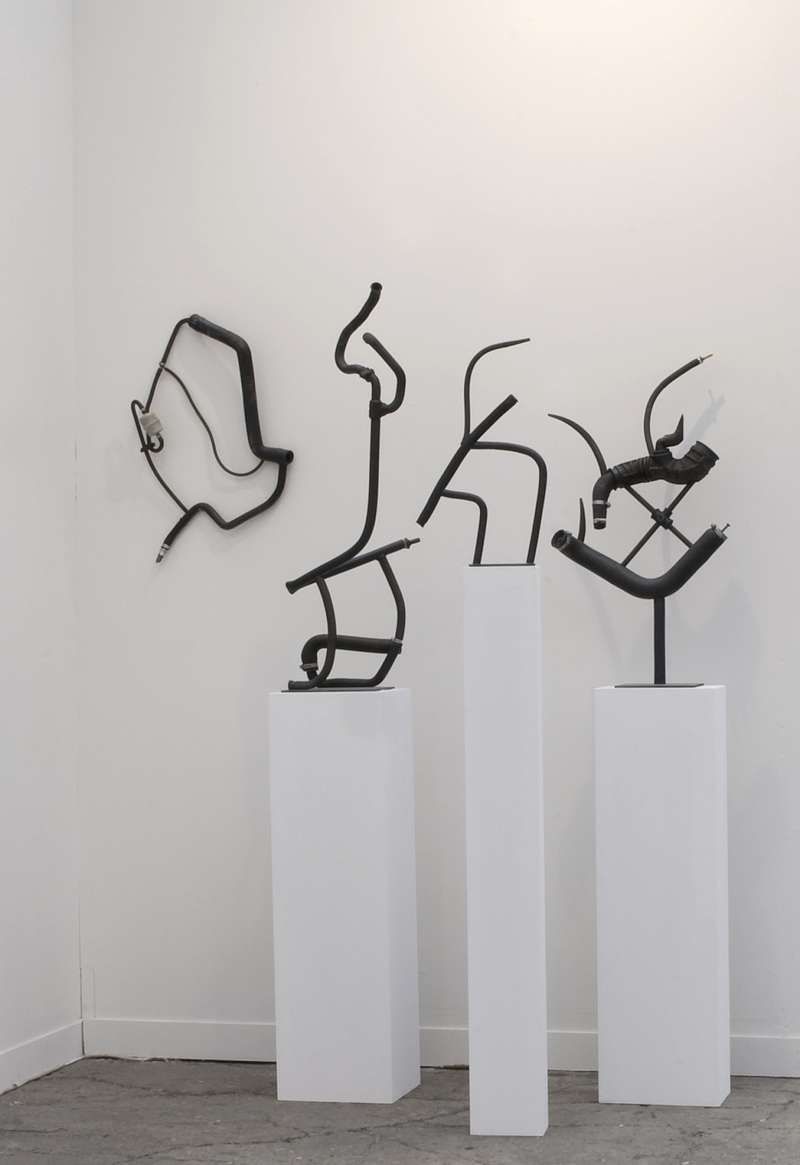
Camille Henrot
Endangered Species
Best-known for her videos and animated films combining drawn art, music and occasionally scratched or reworked cinematic images, Camille Henrot’s work blurs the traditionally hierarchical categories of art history. Her recent work, adapted into the diverse media of sculpture, drawing, photography and, as always, film, considers the fascination with the “other” and “elsewhere” in terms of both geography and sexuality. This fascination is reflected in popular modern myths that have inspired her, such as King Kong and Frankenstein. The artist’s impure, hybrid objects cast doubt upon the linear and partitioned transcription of Western history and highlight its borrowings and grey areas. In the series of sculptures Endangered Species, for example, the artist has created objects inspired by African art by using pieces from car engines; placed on tall pedestals, these slender silhouettes with zoomorphic allure make reference to the migration of symbols and forms as well as to the economic circulation of objects. This survival of the past, full of misunderstandings, shifts and projections (as shown in the slideshow Egyptomania, the film Cynopolis, drawings of the Sphinx, and even in the photographs of prehistoric flints) troubles cultural codes and conventions. In this way, Camille Henrot’s work questions mental resistances and the past’s resonance, whether it be drawn from myth or from reality.

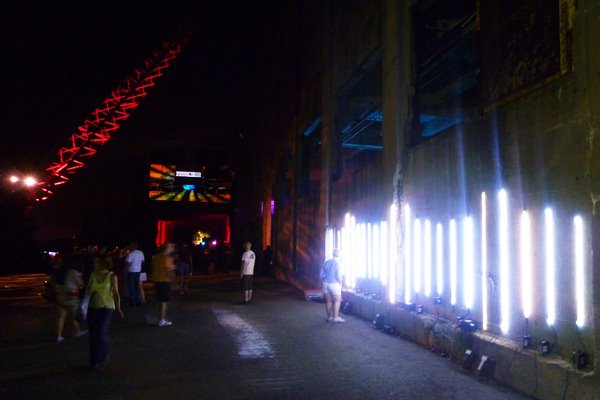
PHILLIP STEARNS
فيليب ستيرنز
Impact Study No. 1
Impact Study #1 is a light installation consisting of 24 white neon tubes of varying length. These tubes are installed along a wall, each oriented vertically and arranged according to a horizontal contour. Tubes vary in size from 3.5 ft to 8 ft and are spaced 1.5ft. The overall dimensions of the work as documented are 36 ft wide and 8 ft tall.The tubes are lit sequentially according to hybrid analog-digital control circuitry. The circuitry detects radioactivity and translates it into a pattern of signals that are visualized as light moving along the formation of neon tubes. The effect will be that of rippling waves of light moving back and forth through the formation. The ambient lighting cast by the installation resembles light reflecting off the surface of a body of water.