highlike

The Great Animal Orchestra

Bernie Krause

Bernie Krause is one of the world’s experts in natural sound, and here we listen through Krause’s ears as he collects the sounds of purring jaguars, snapping shrimp, cracking glaciers–and the roar of the wild. It is an intensely personal narrative of life as it hits the ears, and of the planet‘s deeply connected natural sounds and music.

ALEXANDRA DEMENTIEVA

Drama House
File Festival

“Drama house” is a house when the simple ring at the doorbell can have unpredictable consequences; event, one is stranger then another and in the same time all, what happens with habitants belongs to everyday life. Sometimes these circumstances are a little bit exaggerated. Spectator stands in front of low fence with a door-gate. There are 8 doorbells on it. The act of ringing provokes an action in an apartment window. Based on chance and the choices that viewers make, the project explores the contemporary trends in the construction of a narrative and the interplay between diverse informative sub-layers effected through the impact of digital, non-linear media. It also questions the very process of story telling and at the same time considers the way of audience reading. It investigates the differences of individual and collective perception. In other words, the sequence and choices that each viewer selects reflect his own perspectives and behavioral patterns, thus makes the viewer much more than an active participant. By interacting with the installation the viewer is engaged in the creative process: re-telling the ever-changing story through the utilization of the primary capability of the digitization: reshaping the information. Therefore, each participant walks away with a unique, slightly different vision, each shaped according to his own choices and directions. Interactive media and the digital environment of the DH and its narrative function through a recognizable metaphor that makes access to the information meaningful: a house as a conceptual society model and an apartment as a private space. This reference transforms the objects and stories in the project into the metaphors and reminds us of the art cultural function: as a site of memory of the social collective imagination and as a site of representation and power.

FILE SÃO PAULO 2025: SYNTHETIKA – Valezart

AI Museum

Valezart

FILE SÃO PAULO 2025: SYNTHETIKA – Art and Technology – Cine SYN
Electronic Language International Festival


AI Museum – Spain

AI Museum is an AI-generated short film that explores art, memory, and artificial consciousness. During a night shift, security guard James Foster encounters a mysterious force that brings museum masterpieces to life. As paintings step out of their frames, the line between art and reality dissolves in a post-apocalyptic world, culminating in a finale where humanity’s legacy merges with the digital.

BIO

Valezart is a multidisciplinary artist from Barcelona working across music, film, and game development. With award-winning soundtracks and a strong narrative focus, his work spans animated shorts, feature films, and immersive experiences. He currently explores filmmaking with AI, delving into the edges of artificial creativity.

FILE SÃO PAULO 2025: SYNTHETIKA – Edwin van der Heide

Spiral of Time — Amazonas Brazil — UFAM

Edwin van der Heide

Interact with Spiral of Time — Amazonas Brazil — UFAM via FILE ARCHIVE


FILE SÃO PAULO 2025: SYNTHETIKA – Art and Technology – Installations
Electronic Language International Festival


Spiral of Time — Amazonas Brazil — UFAM – Netherlands

Spiral of Time captures and stages the diverse soundscape of a specific location over the course of several years. By documenting the unique natural, cultural, spatial, and temporal dynamics of a place, the work honors the contributions of all its actors. Every hour, a one-minute recording is made, resulting in a vast sonic archive over time. It is accessible online through a spiral-shaped interface, allowing listeners to explore the cyclical patterns revealed by navigating the material across different time intervals. 


Since July 17th, 2024, the artist has been recording the sounds of the square in front of MACBA (Museum of Contemporary Art of Barcelona). It is a very interesting, diverse, and vibrant urban space. The work is accessible online via https://www.macba.cat/en/spiral-of-time-placa-dels-angels/ and will also be presented physically in the museum starting July 10th, 2025.


Edwin is expanding the project to include other recording locations around the world—not only in urban contexts (dominated by humans) but also in areas governed by nature. The artist dedicated himself to a recording site in the Amazon region. Since February 11th, 2025 Spiral of Time has been installed at the Amazon Rainforest surrounding The UFAM (Federal University of Amazonas) in Manaus. It is home to one of the world’s largest urban forest fragments. Completely surrounded by the dense urban matrix of Manaus, this forest has been isolated since the late 1980s. The forest retains rich ecological features, including areas of mature terra-firme forest, late-stage secondary vegetation, and small patches of white-sand forests. This unique setting offers a rare opportunity to study tropical forest dynamics within a metropolitan environment. 

Spiral of Time-UFAM immerses the listeners in the acoustic life of one of the most biodiverse ecosystems on the planet. This contrast between the natural rhythms of the forest and the human-made patterns of the city enriches the broader narrative of the Spiral of Time, offering a deeper reflection on coexistence, change, and continuity across different environments.

BIO

Edwin van der Heide is an artist, composer, and researcher focused on sound, space, and interaction. His work pushes the boundaries of musical composition toward spatial, interactive, and interdisciplinary directions. He creates installations, performances, and immersive environments where the audience is placed at the center, encouraged to engage sensorially and investigatively.


FILE SÃO PAULO 2025: SYNTHETIKA – Arthur Boeira e Gustavo Milward

Aquarela de Íons

Arthur Boeira e Gustavo Milward

FILE SÃO PAULO 2025: SYNTHETIKA – Arte e Tecnologia
Festival Internacional de Linguagem Eletrônica


Aquarela de Íons – Brazil

Aquarela de Íons is an artwork-device that translates solar flares and magnetic activity cycles into forces within the exhibition space. Inspired by satellites, the sculpture captures real-time data of solar activity, creating a data-driven artwork that reacts to the presence of viewers in an immersive and generative environment. The system translates spatial information into sound, light, and image, establishing an interface between the cosmos and human territory. The piece invites reflection on the impact of space weather—an aurora borealis brought to life, transforming astronomical data into an aesthetic experience.

BIO

Arthur Boeira has been conducting transdisciplinary research since 2015, exploring the philosophy of science and technology as applied to artistic practices. Gustavo Milward (Drawlim) specializes in interactive art and algorithmic narratives, investigating the relationship between body, space, and code.

FILE SÃO PAULO 2025: SYNTHETIKA – Frederik De Wilde

Hunter and Dog

Frederik De Wilde

FILE SÃO PAULO 2025: SYNTHETIKA – Art and Technology – Installations
Electronic Language International Festival

Hunter and Dog – Belgium

Genetic and evolutionary algorithms reinterpret an existing artwork. De Wilde uses digital scans and custom genetic and evolutionary algorithms as a deconstruction technique to reinterpret and update the nineteenth-century work Hunter and Dog from sculptor John Gibson R. A. (1790–1866).

Frederik De Wilde’s Hunter and Dog interrogates the intersections of human evolution, genetic engineering, and the hybridization of technology and biology. De Wilde reinterprets the historical sculpture through the lens of post-evolutionary theory, engaging with contemporary debates on CRISPR, synthetic biology, and the implications of human-directed genetic modification. CRISPR, the revolutionary gene-editing technology, has introduced an unprecedented rupture in the trajectory of evolution. No longer constrained by the slow mechanisms of natural selection, humans now possess the ability to intervene directly in their own genetic blueprint, marking a shift toward a post-Darwinian paradigm. This technological power, however, is not neutral; it emerges from a historical lineage of scientific inquiry deeply entangled with colonialism. The history of genetic manipulation is inseparable from colonial bioprospecting, eugenics, and exploitative medical experimentation on marginalized populations. Colonial regimes treated bodies—both human and non-human—as sites of intervention, control, and optimization, a logic that persists in contemporary biotechnological frameworks. Post-colonial discourse reveals how genetic engineering risks perpetuating these legacies, reinforcing power asymmetries between those who wield biotechnological control and those subjected to its consequences. CRISPR, while offering the promise of eradicating disease and expanding human potential, also raises ethical concerns about genetic stratification, bio-capitalism, and the commodification of life itself. De Wilde’s work visualizes these tensions, making visible the processes of cell division and morphogenesis—the very biological mechanisms now subject to human intervention. Hunter and Dog does not merely depict the transformation of a neoclassical form but speculates on the future of the human body as a site of engineered evolution. From a decolonial perspective, the artwork questions who has the authority to edit life and to what ends. It challenges the techno-utopian narratives that frame genetic modification as an inevitable progress while obscuring its social, ethical, and ecological implications. By hybridizing art, science, and technology, Hunter and Dog compels us to confront the uncertainties of a CRISPR-driven future: Will genetic editing reinforce existing inequalities, or can it be decolonized and democratized? How do we navigate this post-natural frontier without losing the human—and more-than-human—dimensions of our existence? De Wilde’s work invites us into this speculative space, where the hunter, the dog, and the algorithm coalesce into a vision of a world where biology is no longer destiny, but a site of contested agency.

Where are we going from here? 

BIO

Frederik De Wilde fuses art, science, and tech. Known for his Blackest-Black works that inspired Kapoor’s Vantablack, he has shown at Venice Biennale, BOZAR, MAAT, Pompidou, and ZKM, winning awards like Ars Electronica.

COD.ACT

Coro pêndulo
Pendulum Choir é uma peça coral original para 9 vozes A Cappella e 18 macacos hidráulicos. O coro é constituindo por um corpo vivo e sonoro. Esse corpo se expressa por meio de vários estados físicos. Sua plasticidade varia de acordo com sua sonoridade. Varia entre sons abstratos, sons repetitivos e sons líricos ou narrativos. Os corpos dos cantores e suas vozes brincam com e contra a gravidade. Eles se tocam e se evitam, criando polifonias vocais sutis. Ou, apoiados por sons eletrônicos, rompem sua coesão e explodem em um voo lírico ou se dobram em um ritual obsessivo e sombrio. O órgão viaja da vida à morte em uma alegoria robótica onde a complexidade tecnológica e o lirismo dos corpos em movimento se combinam em uma obra com acentos prometéicos.
.
Pendulum Choir is an original choral piece for 9 A Cappella voices and 18 hydraulic jacks. The choir is constituted by a living and sonorous body. This body expresses itself through various physical states. Its plasticity varies according to its sound. It varies between abstract sounds, repetitive sounds and lyrical or narrative sounds. The singers’ bodies and their voices play with and against gravity. They touch and avoid each other, creating subtle vocal polyphonies. Or, supported by electronic sounds, they break their cohesion and explode in a lyrical flight or bend in an obsessive and dark ritual. The organ travels from life to death in a robotic allegory where technological complexity and the lyricism of moving bodies combine in a work with Promethean accents.

Heavy Duty Love

Lucy Mcrae
HEAVY DUTY LOVE
A cautionary narrative in an uncomfortable, complex debate on the scientific acceleration directing our evolutionary path —from gene-edited babies to CRISPR to AI — Heavy Duty Love is a mental health prop existent as a tactile mechanical structure, asking, “As we head toward a life designed from scratch, will we seek new types of intimacy?”. Realised as a speculative domestic device compensating for a lack of human touch in early life, Heavy Duty Love sandwiches the body between layers of soft, dampening materials normally used in contemporary camping or construction.

Ani Liu

Untitled: (A Search for Ghosts in the Meat Machine)
What does it mean to be human? At first glance a simple question, the idea of being human is an unstable construct, continuously recrafted. Recent technological innovations allow us to redesign ourselves profoundly— from networked prosthetics and artificial intelligence, to the genetic code of life itself. Can our behaviors be reduced to algorithms? Can our bodies be upgraded with nonorganic integrations? Can sentience itself by manufactured in a lab? This set of nine sculptures examines personhood from anatomical, psychological, genetic, biochemical, behavioral, algorithmic, personal narrative and memory. In many ways, this installation is an emotional confrontation with being quantifiable.

Circus Family

Triph
“When left alone with no audience, the object glows dimly as if it were asleep. Yet when visitors approach, the installation slowly comes back to life. Colour gradients pour into each shape, whilst mirrored surfaces start reflecting light – all to the orchestra of an encompassing soundscape. This project invites visitors to become part of something. An immersive light experience in which the audience directs the intensity, audio and colour palettes simply by approaching, moving around in and between the large geometric shapes of the installation. Truly, a merging of art, interaction design, sound, tech and vision. As visual architects, our aim with ‘TRIPH” is to demonstrate that a number of different techniques can be combined into a mix of unexpected shapes and materials, that in turn help to create a new truly unique way of experiencing a story. Both in daylight condition and at night. With our self-initiated work, we aim to find undiscovered methods of narrative, questioning the ways people discover and open themselves up to new conceptual work.” Circus Family

Roy Andersson

World of Glory
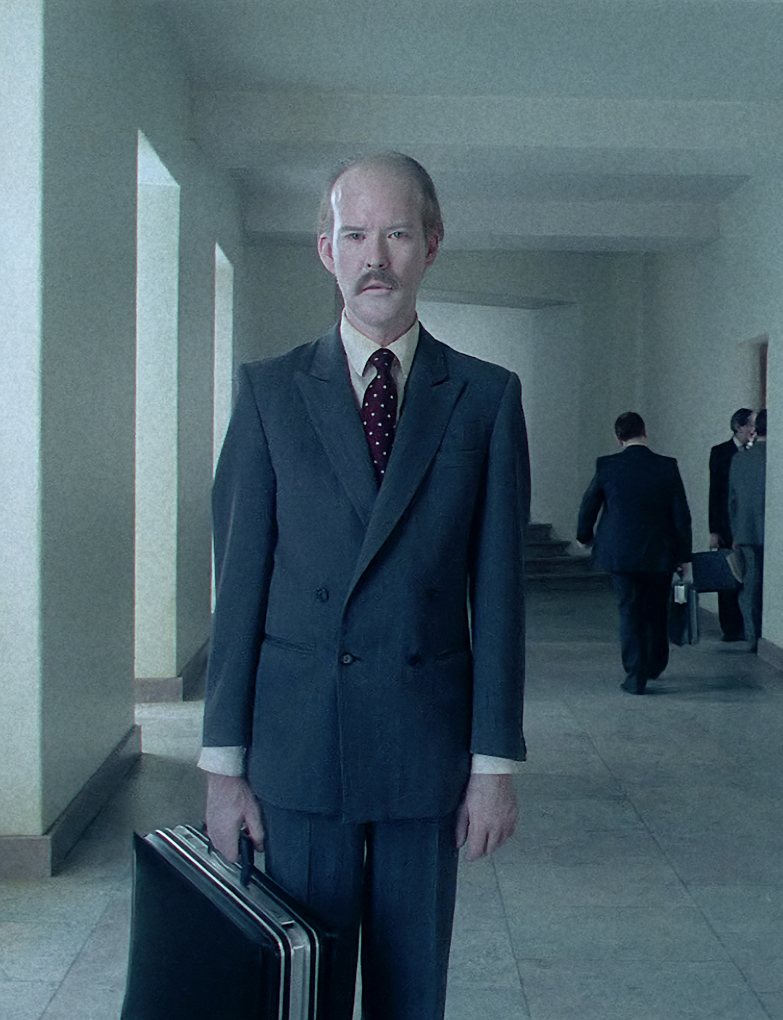
World of Glory is a 1991 Swedish short film written and directed by Roy Andersson. Its original Swedish title is Härlig är jorden, which means “Lovely is the Earth”, and is the Swedish title of the hymn “Fairest Lord Jesus”. The narrative portrays a man in white make-up who guides the viewer through his life in a bleakly stylised world. The film was Andersson’s critical comeback to cinema, after many years in advertising

Wow

Beyond Cassini
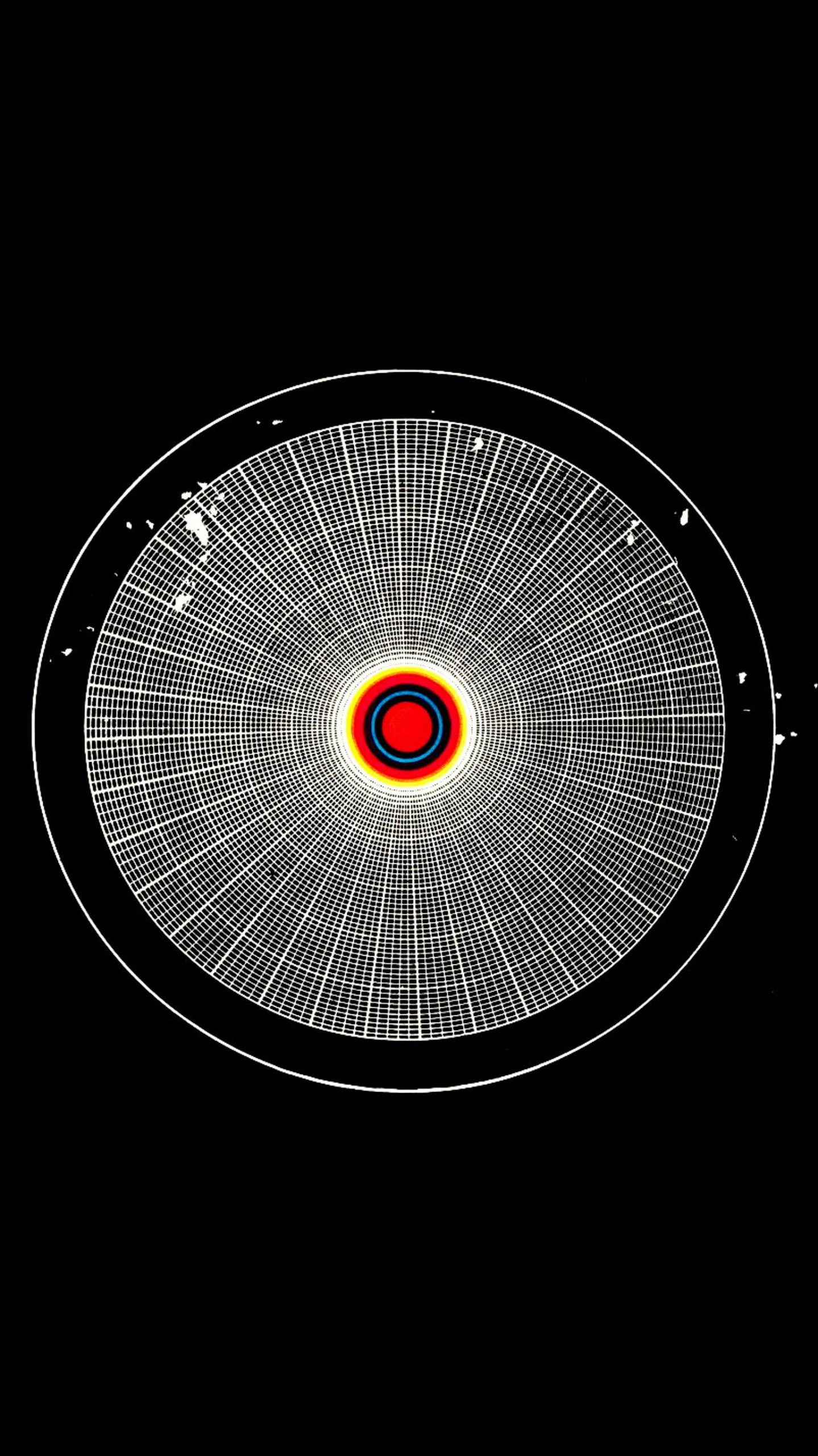
“BEYOND CASSINI” uses this narrative to celebrate the accomplishments of one of the most successful and beloved Satellites in space exploration history. As Cassini begins its final flight into Saturn’s upper atmosphere with a mission of disintegration, visuals flash back through time giving viewers highlights of this dying satellite’s life.

ANDREI TARKOVSKY

أندريه تاركوفسكي
塔可夫斯基
アンドレイ·タルコフスキー
Андрей Тарковский
Solaris
In Solaris (1972), Andrei Tarkovsky presents a vision of contemporary society as one that has become cut off from nature, and provides a narrative that illustrates the possibility of remaining human in the inhuman world that is the result. The film contrasts a life-affirming natural landscape to an urban, constructed landscape where the natural world is submerged and invisible. The Solaris space station is both a projection of this second, inhuman, landscape and an allegory for Tarkovsky’s view of urban life. The narrative of the film concerns the journey by the central character, Kris Kelvin (Donatas Banionis), from emotional deadness to a rediscovery of his humanity as he charts a course between these two worlds, and the role that art, whether painting, music or film, plays in this.
cinema full

Cod.Act

振り子の合唱団
Pendulum Choir

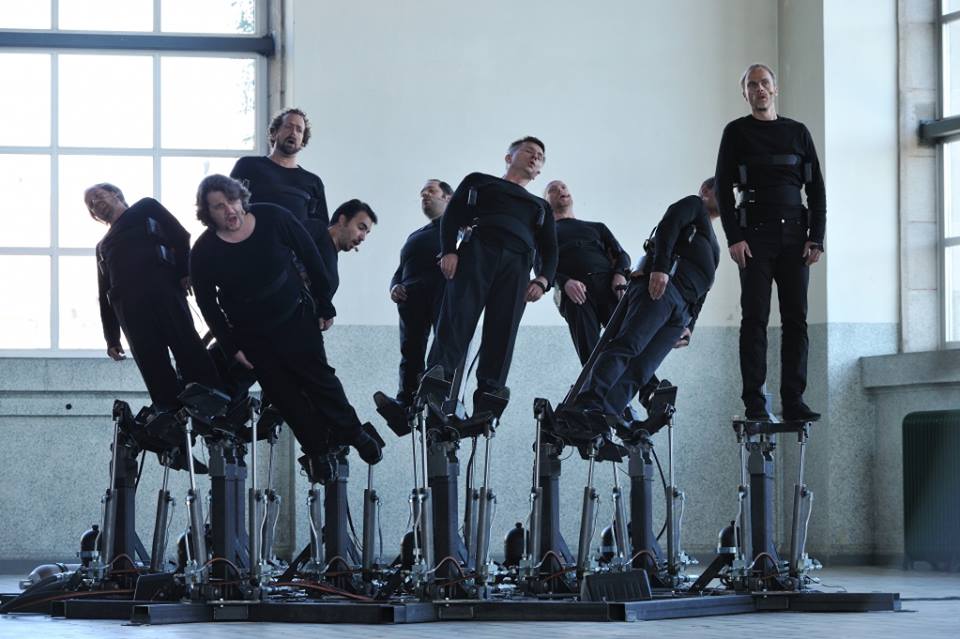
Pendulum Choir is an original choral piece for 9 A Cappella voices and 18 hydraulic jacks. The choir stands on tilting platforms, constituting a living, sonorous body. That body expresses itself through various physical states. Its plasticity varies at the mercy of its sonority. It varies between abstract sounds, repetitive sounds, and lyrical or narrative sounds. The bodies of the singers and their voices play with and against gravity. They brush and avoid each other creating subtle vocal polyphonies. Or, supported by electronic sounds, they break their cohesion and burst into lyrical flight or fold up into an obsessional and dark ritual. The organ travels from life to death in a robotic allegory where the technological complexity and the lyricism of the moving bodies combine into a work with Promethean accents.

Mandy Greer

Мэнди Грир
曼迪·格里尔
Dare alla Luce

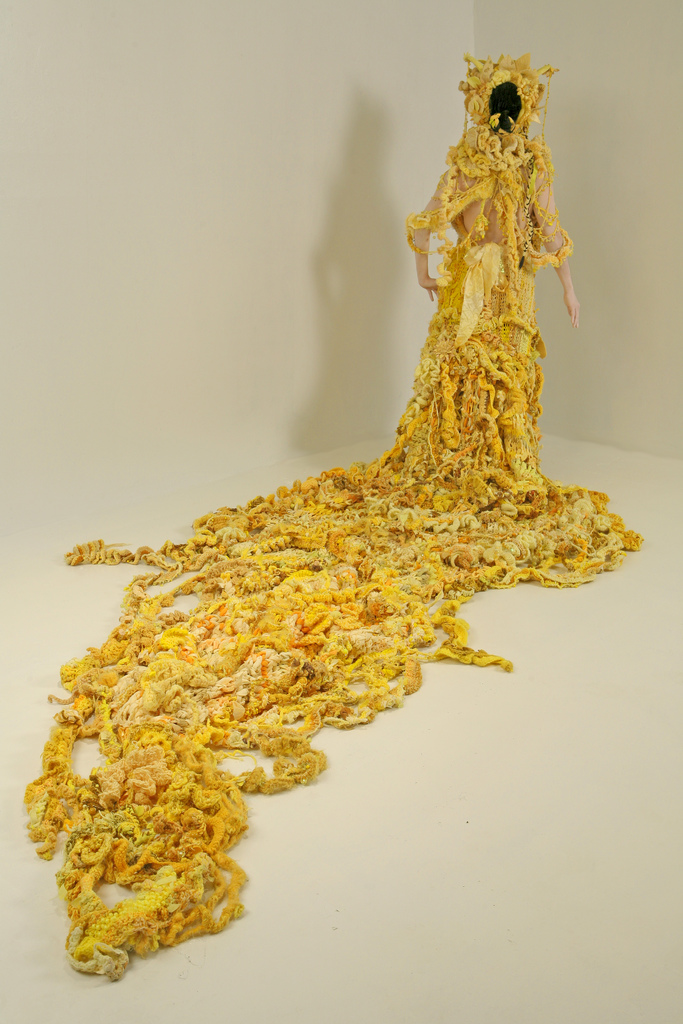
“The immensity of the installations push my own body’s endurance, as I grind up piles upon piles of thriftstore flotsam and jetsam, a remaking into the image of revamped mythological story, amped up on glitter and beads. I wade through fairy tales, archetypes, mythology, allegory and folk tales looking for moments that coincide with my own experience of everyday life, where animals perform us. These narratives are, after all, the ordinary human dramas that perpetually reoccur, until they become mythos.”

KELLY RICHARDSON

ケリーリチャードソン
켈리 리처드슨
קלי ריצ’רדסון/
凯利·理查森
mariner 9
Mariner 9 presents a panoramic view of a Martian landscape set hundreds of years into the future, littered with the rusting remains from various missions to the planet. Despite its suggested abandoned state, several of the spacecraft continue to partially function, to do their intended jobs, to ultimately find signs of life, possibly transmitting the data back to no one.
Mariner 9 was created using scenery-generation software employed by the film and gaming industries in combination with technical data from NASA’s missions to Mars to produce a faithful artist’s rendering of Martian terrain, populated by the debris from centuries of exploration through real and imagined spacecraft in the centre of a duststorm. “Cinematic tropes of sci-fi films abound, but any search for a clear narrative is frustrated. Presented with minimal action, we wonder instead about the search for life beyond our own planet and the simultaneous destruction of life on earth.” (Laurel MacMillan, Programmer for TIFF Future Projections)