highlike

D.A.ST. ARTEAM: DANAE STRATOU AND ALEXANDRA STRATOU

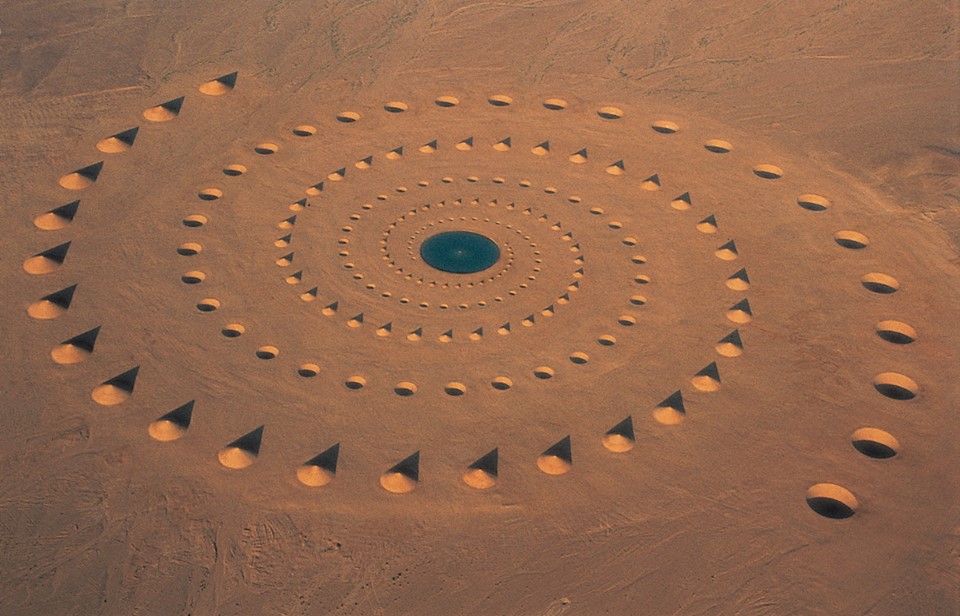
Desert Breath

I imagine two parallel realities in the way that we view the world. There is the world inside and the world outside of us. It is through the senses that we are able to connect the inside to the outside world. My whole life, including the choice to become an artist, has been an attempt to re-search, to understand, and to connect these two parallel realities. To bridge what is within to what is without…
Naturally my works are triggered or have a point of departure either in the external or in the internal world. Initially, an idea is generated in the form of an internal image, which in turn needs to be answered intellectually and put into context. This process seems to me to have its point of departure in the world of the subconscious, which then surfaces into the conscious realm. Following from there, the initial idea decodes itself as it evolves into realisation and ends up ‘translating itself’ in to an artwork. It is a bit like a journey, which slowly reveals itself as I journey towards it.

Engineered Arts

AMECA
“Multiply the power of artificial Intelligence with an artificial body. Ameca is the physical presence that brings your code to life. The most advanced lifelike humanoid you can use to develop and show off your greatest machine learning interactions. This robot is the digital interface to the real world.” Engineered Arts
.
“A U.K. robotics firm called Engineered Arts just debuted the first videos of its new humanoid robot, which is able to make hyper-realistic facial expressions. It’s a pretty stunning achievement in the world of robotics; it just also happens to be absolutely terrifying.
Named Ameca, the robot’s face features eyes, cheeks, a mouth, and forehead that contort and change shape to show off emotions ranging from awe to surprise to happiness. One of the new videos of Ameca shows it waking up and seemingly coming to grips with its own existence for the first time ever.” Neel V.Patel

Seohyo – Tidal Tessellation – South Korea

TIDAL TESSELLATION

Seohyo


FILE SÃO PAULO 2026: Inter-creativity – Art and Technology – Randomic Dimension
Electronic Language International Festival


Tidal Tessellation – South Korea

Tidal Tessellation is a generative animation reinterpreting urban flow as fluid movement. The artist projects the energy of city crowds onto the ebb and flow of tides. Using Perlin noise, geometric grids deform according to organic rules, overlaying natural rhythms onto rigid architecture. This work transforms static LED screens into breathing canvases where natural order permeates everyday life, harmonizing the city’s pulse with algorithmic vitality.

BIO

Seohyo  is a generative artist and educator exploring the intersection of algorithmic order and randomness. She expands public art by utilizing urban LED screens as canvases for code-based abstractions. Rather than focusing on static outputs, she emphasizes the generative process to let art naturally permeate everyday life, capturing the living pulses of the city through data and logic.

Karl Sims – Seven Experiments in Procedural Animation – United States

SEVEN EXPERIMENTS IN PROCEDURAL ANIMATION

Karl Sims


FILE SÃO PAULO 2026: Inter-creativity – Art and Technology – Randomic Dimension
Electronic Language International Festival


Seven Experiments in Procedural Animation – United States

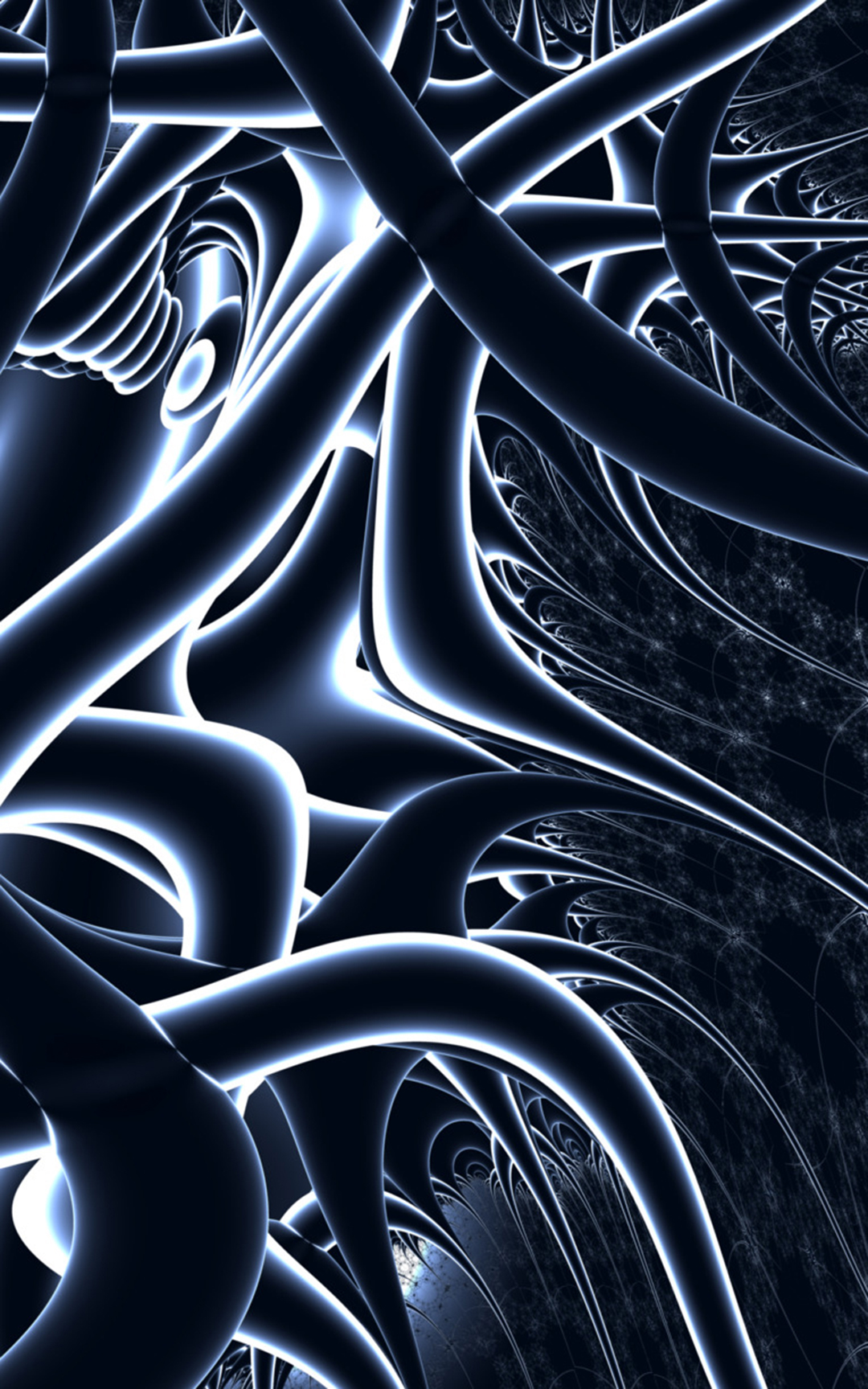
Animated textures and patterns created from custom computer code employing various fractal algorithms, procedural noise, and reaction-diffusion techniques. The moving images are purely defined by mathematics, but are meant to evoke a biological aesthetic by resembling sea creatures, neurons, or other microscopic structures that transform from one emergent pattern to another.

BIO

Digital media artist and visual effects software developer. He founded GenArts Inc., which created special effects software tools for the motion picture industry. Karl studied computer graphics at the MIT Media Lab, and Life Sciences as an undergraduate at MIT. He is the recipient of various awards including two Ars Electronica Golden Nicas, a MacArthur Genius Grant, and an Emmy Award.

Chris Barber – Confetti – United States

CONFETTI

Chris Barber


FILE SÃO PAULO 2026: Inter-creativity – Art and Technology – Randomic Dimension
Electronic Language International Festival


Confetti – United States

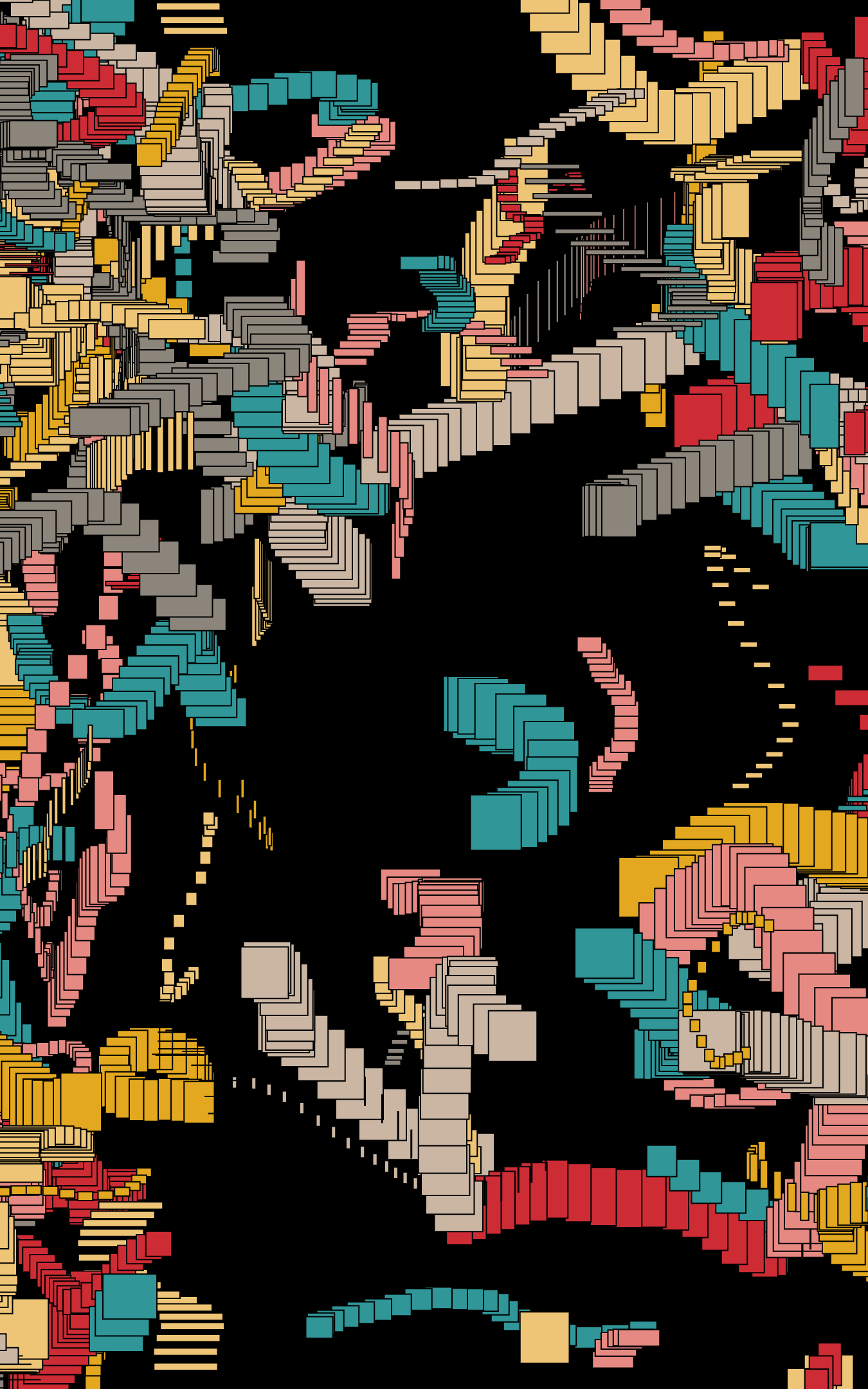
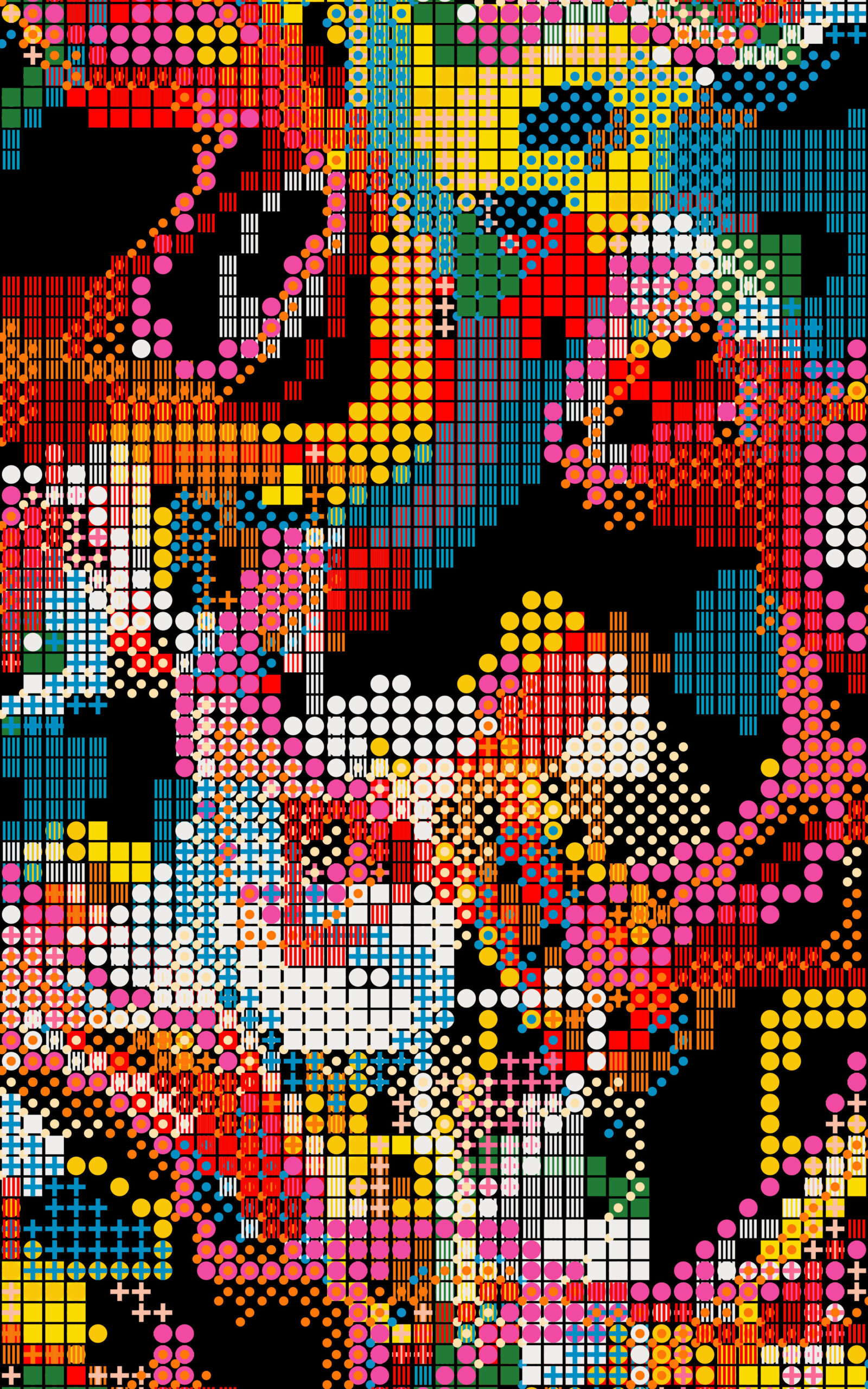
Confetti is a generative composition built from a swarm of random walkers, particles that move step by step in unpredictable directions, each trailing a ribbon of bright, saturated squares. Their motion is shaped by Perlin noise, a smooth, natural-feeling randomness often used to simulate organic phenomena, pairing fluid movement with crisp geometric form. With every refresh the field reorganizes itself, never repeating, never still: a celebration of color and structured chance.

BIO

Chris Barber is a generative artist working at the intersection of code and creativity. Using tools like p5.js and openFrameworks, he brings algorithms to life as dynamic, animated digital art. By combining technology, randomness, and a sharp visual sensibility, his work generates unique compositions with every refresh—known for its vibrant palettes, fluid motion, and mesmerizing patterns.

Che-Yu Wu – 240507: Reality Lens – Taiwan

240507: REALITY LENS

Che-Yu Wu


FILE SÃO PAULO 2026: Inter-creativity – Art and Technology – Randomic Dimension
Electronic Language International Festival


240507: Reality Lens – Taiwan

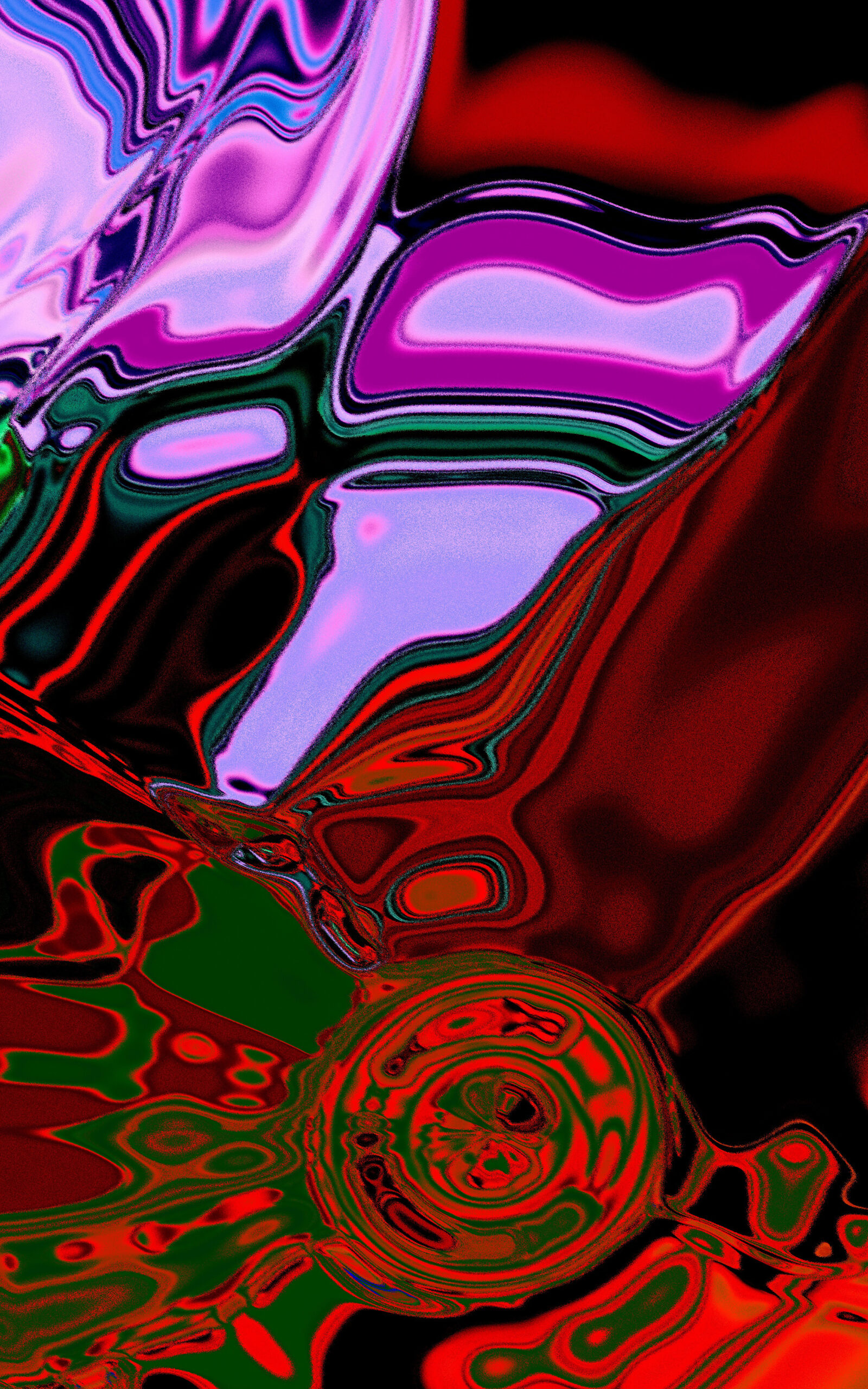
Real-time WebGL meditation where fifteen vortex points distort every pixel through layers of noise, angle, and time. The work makes algorithmic perception visible: there is no unmediated image—every color and edge arrives already refracted. Like liquid marble between order and chaos, it asks how mathematics becomes felt aesthetics, and whether any perception of “the real” is not itself a lens of computation.

BIO

Founder of MonoLab, dedicated to “casting eternal life and emotion in the digital world.” His practice is staked on creating “living artworks”—emergent digital entities that develop, respond, and persist through an improvisational loop between algorithm, audience, and author. By exploring “Digital Holobionts”—co-evolving systems of humans, AI, and code—Wu cultivates semantic lifeforms as a new category of contemporary art, bridging engineering with poetic philosophy.

Anna Carreras – Arrels #64 – Spain

ARRELS #64

Anna Carreras


FILE SÃO PAULO 2026: Inter-creativity – Art and Technology – Randomic Dimension
Electronic Language International Festival


Arrels #64 – Spain

Arrels has a strong relationship to the Spanish landscape, connecting drawing, code, and repetitive loops to the environment through a cycle of growth and decay.

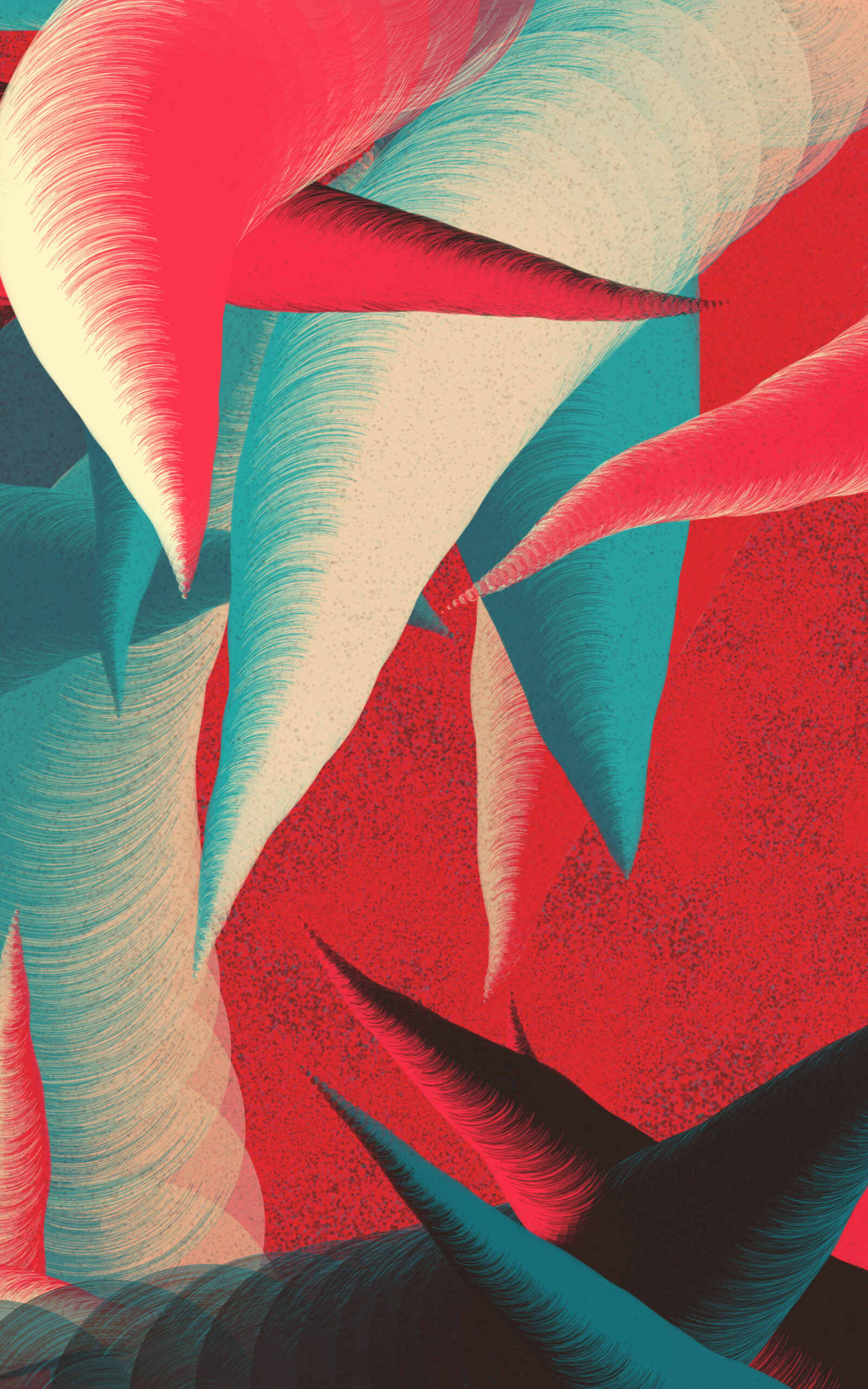
With nature as its inspiration, it becomes a carefully choreographed generative animation. In Arrels, growing roots in the colors of earth and sky collide in a vibrant dance. New growth in the arid soil overtakes the old, and the cycle continues.

BIO

Anna Carreras is a generative artist focusing her work on the use of algorithms to create visuals that depict generic concepts, foster memories, and evoke new discussions.

Working from scratch, she codes “dumb” minimal procedural systems that explore the intrinsic characteristics of the medium, showing how simple rules can produce complex, unexpected, beautiful results that question our understanding of technology, life, and relationships.

FILE SÃO PAULO 2025: SYNTHETIKA – Arthur Boeira e Gustavo Milward

Aquarela de Íons

Arthur Boeira e Gustavo Milward

FILE SÃO PAULO 2025: SYNTHETIKA – Arte e Tecnologia
Festival Internacional de Linguagem Eletrônica


Aquarela de Íons – Brazil

Aquarela de Íons is an artwork-device that translates solar flares and magnetic activity cycles into forces within the exhibition space. Inspired by satellites, the sculpture captures real-time data of solar activity, creating a data-driven artwork that reacts to the presence of viewers in an immersive and generative environment. The system translates spatial information into sound, light, and image, establishing an interface between the cosmos and human territory. The piece invites reflection on the impact of space weather—an aurora borealis brought to life, transforming astronomical data into an aesthetic experience.

BIO

Arthur Boeira has been conducting transdisciplinary research since 2015, exploring the philosophy of science and technology as applied to artistic practices. Gustavo Milward (Drawlim) specializes in interactive art and algorithmic narratives, investigating the relationship between body, space, and code.

Universal Everything

Primordial
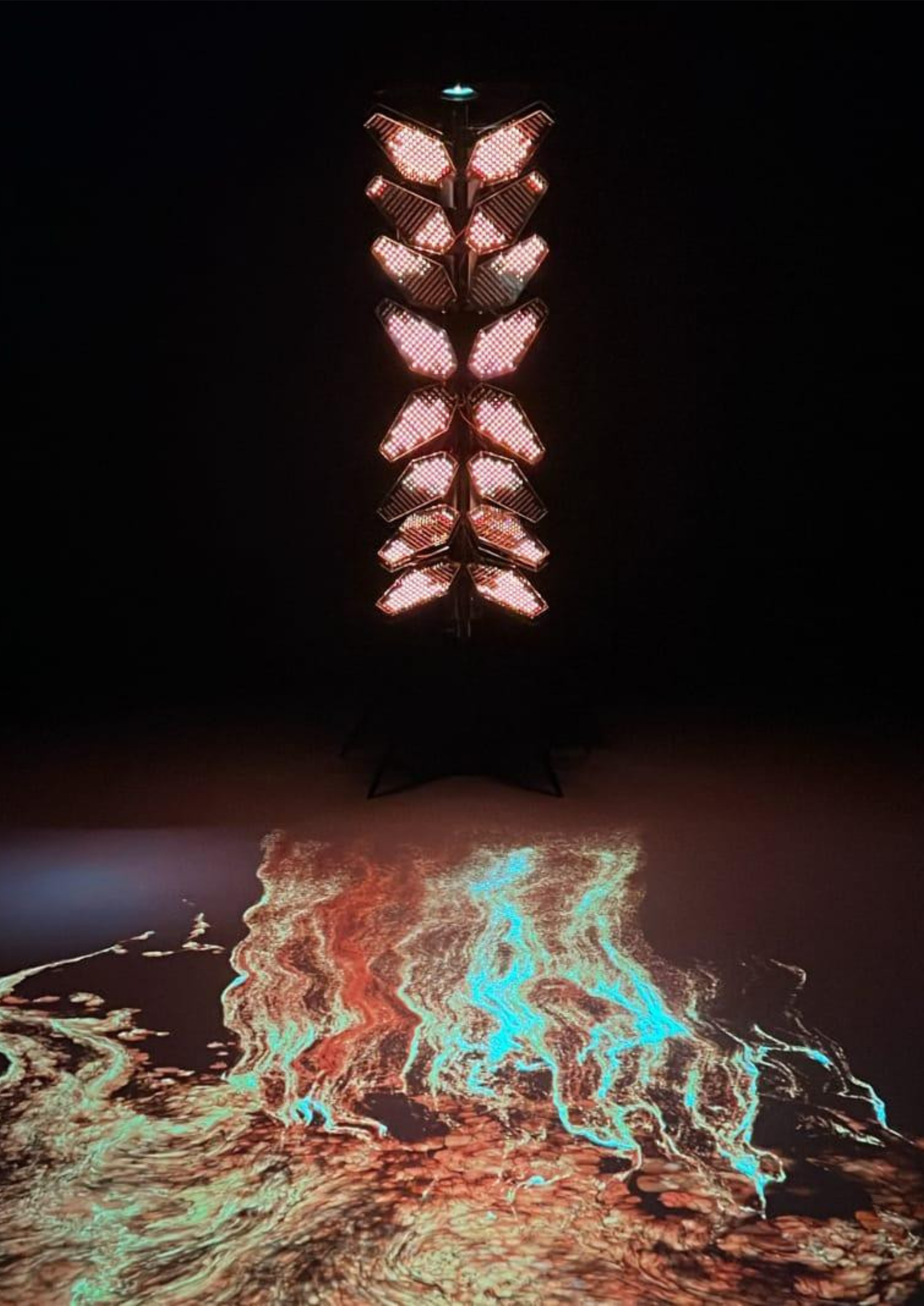
Primordial is a generative artwork made from code, depicting a stylised, coloured take on cellular microscopic life. The flow of organisms projected onto the floor are audio responsive, moving and growing to the pulse of sound. These creatures navigate the space in their own freeform way, naturally encouraging viewers to flow into the exhibition.

UVA UNITED VISUAL ARTISTS

Blueprint
Blueprint embraces the relationship and parallels between art and science, creating compositions through the mathematical principles of logic that underpin life. Exploring analogies between DNA and computer code, UVA have created the Blueprint series; works that pair genetics and code as the blueprints of artificial and natural systems. As the work slowly changes over time, patterns fluctuate between varying degrees of complexity. Blueprint uses the basic concepts of evolution to create an ever-transitioning image. With cells literally transferring their genes to their adjoining others, colour flows like paint across the canvas. Drawing up a unique colourful composition every minute, Blueprint presents the unlimited outcome that results from a single algorithm; a single set of rules.

Ani Liu

Untitled: (A Search for Ghosts in the Meat Machine)
What does it mean to be human? At first glance a simple question, the idea of being human is an unstable construct, continuously recrafted. Recent technological innovations allow us to redesign ourselves profoundly— from networked prosthetics and artificial intelligence, to the genetic code of life itself. Can our behaviors be reduced to algorithms? Can our bodies be upgraded with nonorganic integrations? Can sentience itself by manufactured in a lab? This set of nine sculptures examines personhood from anatomical, psychological, genetic, biochemical, behavioral, algorithmic, personal narrative and memory. In many ways, this installation is an emotional confrontation with being quantifiable.

Leo Villareal

Star Ceiling
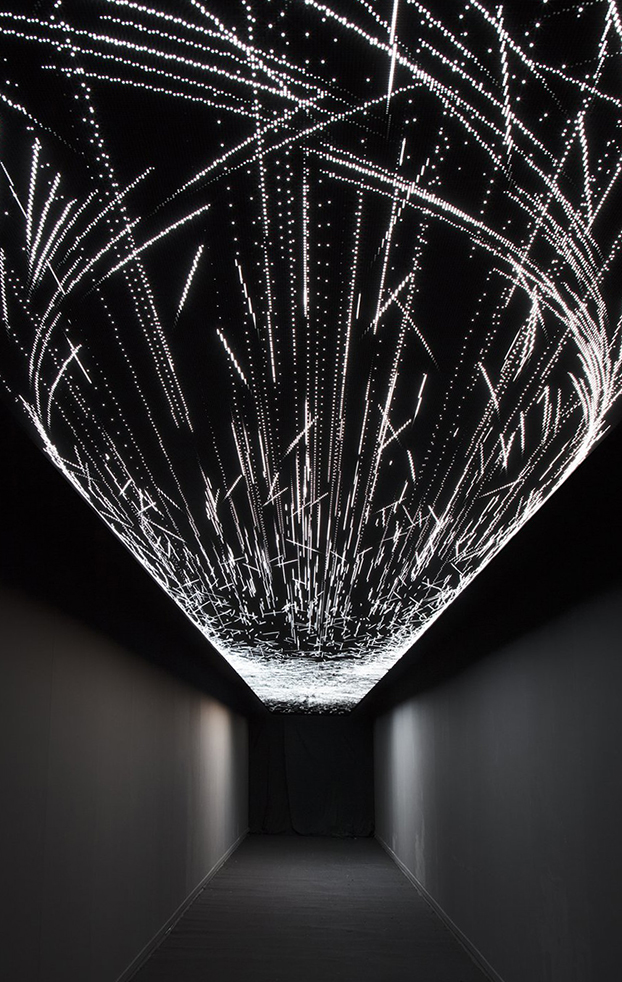
Expressing the vibrant dynamism of nature—from billowing cosmic clouds and swarming masses to radial bursts, spiraling vortices, and turbulent waves—Star Ceiling​ explores the tension between the rational and the transcendent, between the human and the non-human worlds. Villareal’s artwork gives life to inanimate matter through the invisible medium of code and induces a deep connectedness and rare experiential awareness.

Wayne McGregor

Autobiography
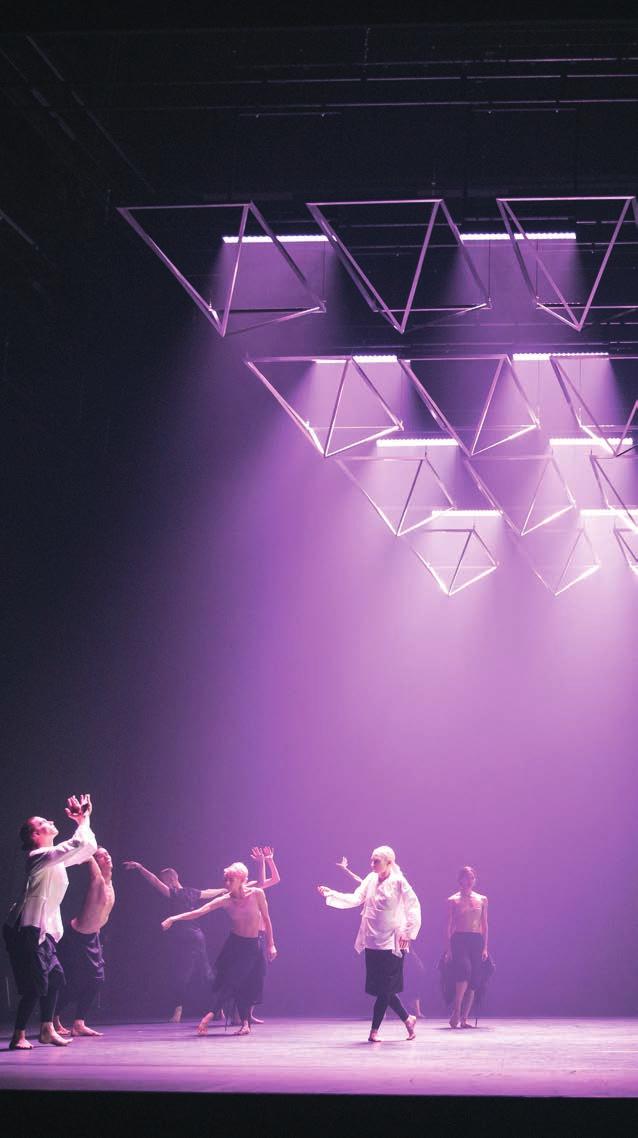
Autobiography is an abstract meditation on aspects of self, life and writing, a non-linear approach to a life story refracting both remembered pasts and speculative futures. McGregor worked with dancers from his company in 2017 to create choreography from old writings, personal memories, pieces of art and music that have been important in his life. From these elements, 23 sections of movement material were created, reflecting the 23 pairs of chromosomes of the human genome. The choreographic events from the 23 sections were then fed into an algorithm based on McGregor’s genetic code.

GILES ASKHAM

Aquaplayne
file festival

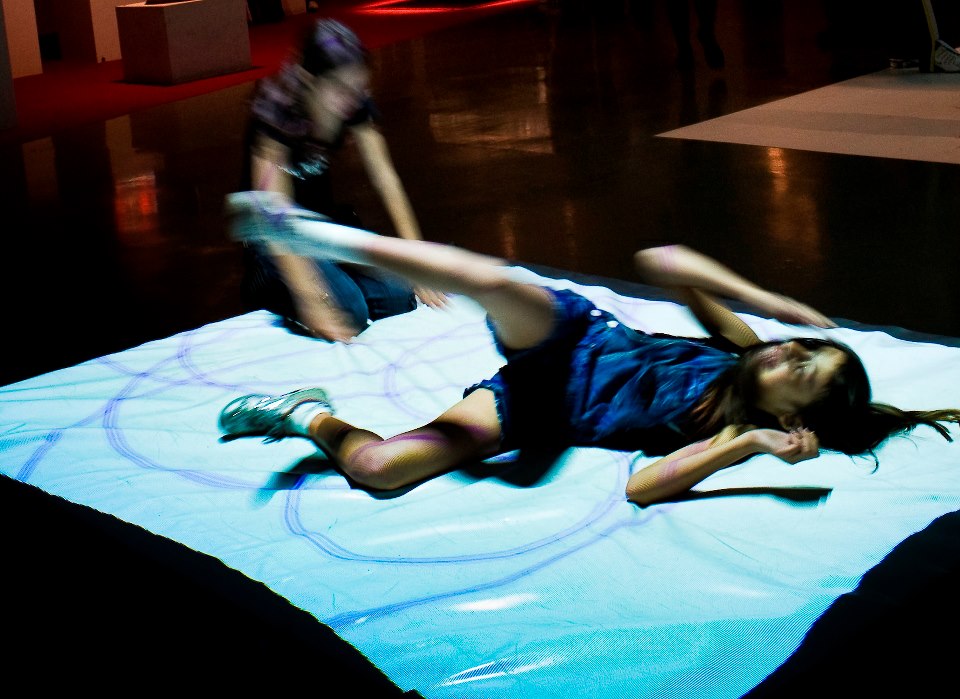
Aquaplayne lays out a new field of expression by extending the framework for immediate experience. The horizontal plane bypasses recognition and “sets up” an interactive surface, making a play of art by providing the viewer with instant access to the creative flow. In the movement from observation to participation we interface with an intelligent canvas through the automatic rendering of action into effect. The “body in motion” plays across a field of sensation, making the ripples of possibility appear as an ever-changing artwork. Unlike the action painter, whose technique is to offload creative energy in the painterly gesture, the activator retrieves what has already been deposited as data and brings it to the surface, aquaplaning on a stream of information. The virtual is restored to the actuality of expression, brought back to life in the flux between cause and effect, between code and composition. The calibrated experience of Aquaplayne is the art of permutation, the programmed initiative played and replayed as the artwork in formation.

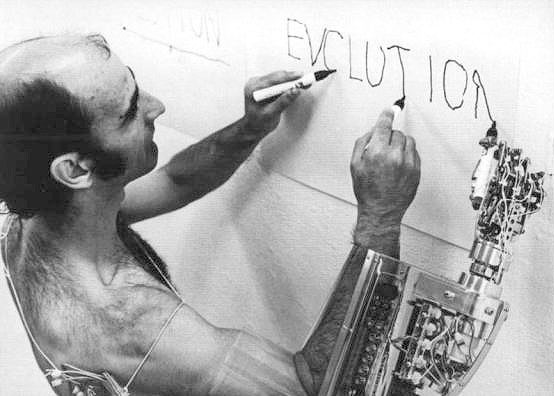
STELARC

drawing with robot arm
“With gene mapping, gender reassignment, prosthetic limbs and neural implants, what a body is and how a body operates becomes problematic. We generate Fractal Flesh and Phantom Flesh, extended operational systems and virtual task environments. Meat and metal mesh into unexpected and alternate anatomical architectures that perform remotely beyond the boundaries of the skin and beyond the local space it inhabits. The monstrous is no longer the alien other. We inhabit an age of Circulating Flesh. Organs are extracted from one body and inserted into other bodies. Limbs that are amputated from a dead body can be reattached and reanimated on a living body. A face from a donor stitched to the skull of the recipient becomes a Third Face. A skin cell from an impotent male can be recoded into a sperm cell. And more interestingly a skin cell from a female body might be recoded into a sperm cell. Turbine hearts circulate blood without pulsing. In the near future you might rest you head on your loved one’s chest. They are warm to the touch, they are breathing, they are certainly alive. But they will have no heartbeat. A cadaver can be preserved forever through plastination whilst simultaneously a comatose body can be sustained indefinitely on a life-support system. Dead bodies need not decompose, near-dead bodies need not die. Most people will no longer die biological deaths. They will die when their life-support systems are switched off. The dead, the near-dead, the not-yet-born and the partially living exist simultaneously. And cryongenically preserved bodies await reanimation at some imagined future. We live in an age of the Cadaver, the Comatose and the Chimera. Liminal spaces proliferate. Engineering organs, stem-cell growing them or by bio-printing will result in an abundence of organs. An excess of organs. Of organs awaiting bodies. Of Organs Without Bodies.” STELARC