QUBIT AI: Matthias Oostrik
The Forgettable Art Machine
FILE 2024 | Installations
International Electronic Language Festival
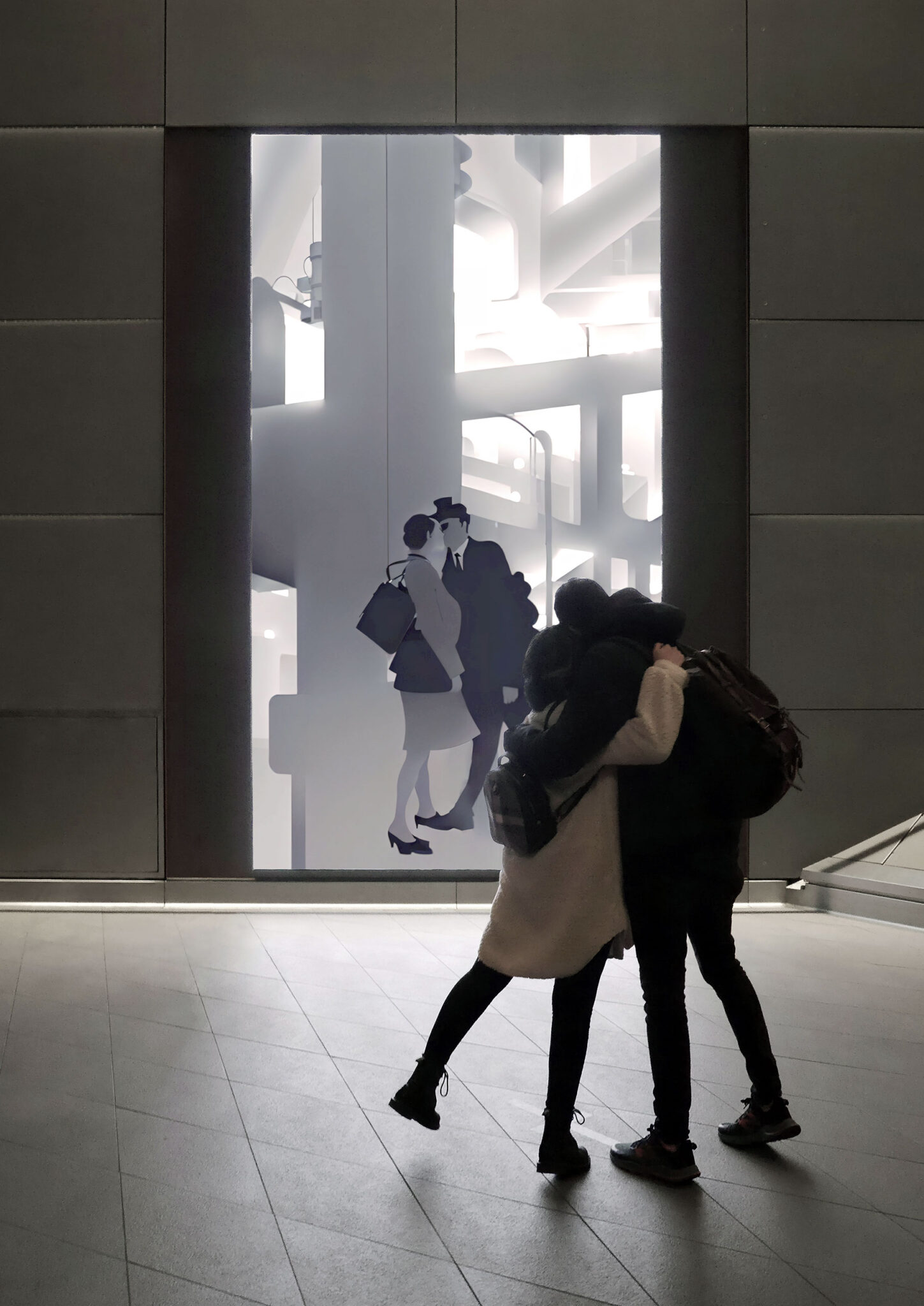
The Forgettable Art Machine is an artificial intelligence-driven video installation. When facing the panel, the public has their image captured, starting a cycle of analysis, creation and destruction. From this data, a composite emerges, slowly transforming the visitors’ image into a generative visualization. Once the cycle is complete, the composition is deleted, waiting for a new audience to be captured.
Bio
Matthias Oostrik works at the intersection of digital art, installation art, cinema and architecture. His works establish unpredictable relationships between people and their surroundings. Using digital technology, his installations allow visitors to reshape their environment and their relationships with each other. Oostrik collaborates with renowned professionals and, above all, with his audience, who often become an integral part of his work.
Credits
Co-production: Zester
IA Music: Than van Nispen

QUBIT AI: Kelly Luck
Kelly Luck
Strangeland 1 (excerpt)
FILE 2024 | Aesthetic Synthetics
International Electronic Language Festival
Kelly Luck – Strangeland 1 (excerpt) – United States
From a surrealist point of view, the main attraction of generative AI, for the artist, is its lack of memory. At any given moment, she only has the current frame and instructions on how to proceed, similar to free association in dreams. This work is part of a series of long-term environments designed to immerse the viewer in a constantly evolving and never-ending landscape, inviting relaxation and engagement.
Bio
As part of the first generation to grow up around computers, Kelly Luck quickly became fascinated with the creative possibilities of this new technology. Her journey has ranged from pixel art and graphic ‘hacks’ to the 90s demoscene, 2D and later 3D graphics, and now the modern tools of digital art. With the emergence of generative AI, it endlessly explores how technology continues to blur the line between imagination and reality.

Soichiro Mihara
三原 聡一郎
The Blank to Overcome
file festival
Part of the ”blank” project that the artist has been creating since 2011, “The Blank to Overcome” utilizes air pumps, power supply control circuitry, water, solution, glycerin, ethanol and electricity to produce bubbles in the air. The theme of ”blanks” denotes a space for an unsolved ”inquiry” through the perspectives for thinking about the post-3.11 present: how the bubbles are always shifting as a giant cluster, almost without mass or structure, and the facing up to this; and the framework since modernity that has prescribed society, and the ”involved” or the ”other”. From this work debate will surely emerge.
.
克服するための空白
アーティストが2011年から作成している「ブランク」プロジェクトの一部である「TheBlankto Overcome」は、エアポンプ、電源制御回路、水、溶液、グリセリン、エタノール、電気を利用して空気中に気泡を生成します。 「空白」のテーマは、3.11以降の現在について考えるための視点を通して、未解決の「問い合わせ」のためのスペースを示しています。泡は、ほとんど質量や構造がなく、巨大なクラスターとして常にシフトしており、これに直面しています。 ; そして、社会を規定してきた近代以来の枠組み、そして「関与する」または「その他」。 この仕事から議論が確実に浮かび上がるでしょう。
ポンプ
POLYMORF: Marcel Van Brakel & Frederik Duerinck
Hardwired
FILE FESTIVAL
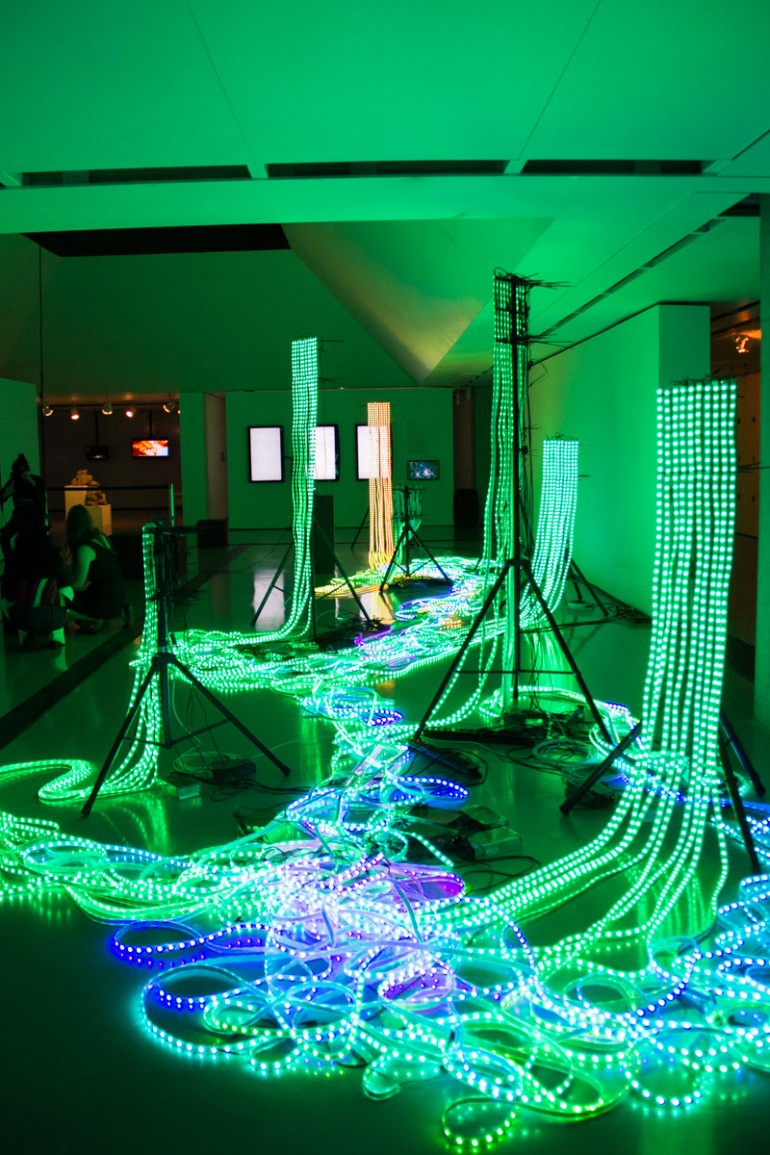
“Hardwired” consists of around 18,000 LED-lights that symbolize the transfer of knowledge. Individual luminous pixels connect and then disappear. In a process of constant transformation, new patterns, interrelations and complexities emerge.
.

Andy Wen
Shenzhen Genzon Technology Innovation Center
Aedas
Cette image vivante implique les possibilités infinies dans l’intégration de la technologie, de l’énergie et de l’innovation. La conception propose des ascenseurs-navettes et des terrasses partagées le long du côté centripète de chaque tour pour engendrer un environnement de bureau relaxant à expansion verticale. La zone ouverte s’étend longitudinalement et se rejoint naturellement au fond; accentué par l’éclairage intérieur, des contours d’étamines dorées émergent et les panneaux de verre incurvés se présentent comme des pétales, faisant allusion à la muse florale du projet.

Neri Oxman
MAN-NAHĀTA
Computational growth across material and urban scales offers a framework for design through self-organization, enabling the generation of vast, diverse forms exhibiting characteristics like those that emerge through the biological growth processes found in Nature. In this project, we construct an oriented volume spanned by surface normals of the shape at every point. The value of the oriented volume drives the iterative deformation of the shape. Depending on the parameterization of this process, we can obtain distinctly different growing forms. Importantly, the emergence of these forms is driven only by the time evolution of a geometric operator acting on the shapes iteratively, thereby connecting geometry and growth through an algorithm. To form the Man-Nahata landscape, the buildings of the urban landscape are transformed through repeated morphological closing operations, where the field of influence follows a gradient from the center to the outskirts of a circular region.

Sara Sadik
Ultimate Vatos
Les vidéos, performances, installations et photographies de Sara Sadik prennent la forme de mangas, de jeux vidéo, de docu-fictions ainsi que de films d’animation CGI. Ce faisant, l’artiste aux racines maroco-algériennes explore les manifestations de ce qu’elle appelle « Beurcore« – la culture des jeunes qui a émergé parmi les membres de la classe ouvrière de la diaspora nord-africaine. Beurcore définit à la fois une identité hybride et un mouvement collectif constitué à travers la musique comme le rap et le hip-hop, la langue, la mode, des symboles spécifiques et les médias sociaux.

Filippo Nassetti and Vincenzo Reale
Thalassic Masks
The Thalassic Masks project focuses on rethinking the protective mask, transforming a medical product, born in a state of emergency, into a design statement expressing contemporary identities.

GUTO NÓBREGA
Breathing
File Festival
Breathing is a work of art based on a hybrid creature made of a living organism and an artificial system. The creature responds to its environment through movement, light and the noise of its mechanical parts. Breathing is the best way to interact with the creature.
This work is the result of an investigation of plants as sensitive agents for the creation of art. The intention was to explore new forms of artistic experience through the dialogue of natural and artificial processes. Breathing is a pre-requisite for life, and is the path that links the observer to the creature.Breathing is a small step towards new art forms in which subtle processes of organic and non-organic life may reveal invisible patterns that interconnect us.Breathing is a work of art driven by biological impulse. Its beauty is neither found isolated on the plant nor in the robotic system itself. It emerges at the very moment in which the observer approaches the creature and their energies are exchanged through the whole system. It is in that moment of joy and fascination, in which we find ourselves in a very strange dialogue, that a life metaphor is created.Breathing is the celebration of that moment.
Yi-Fei Chen
Tear Gun
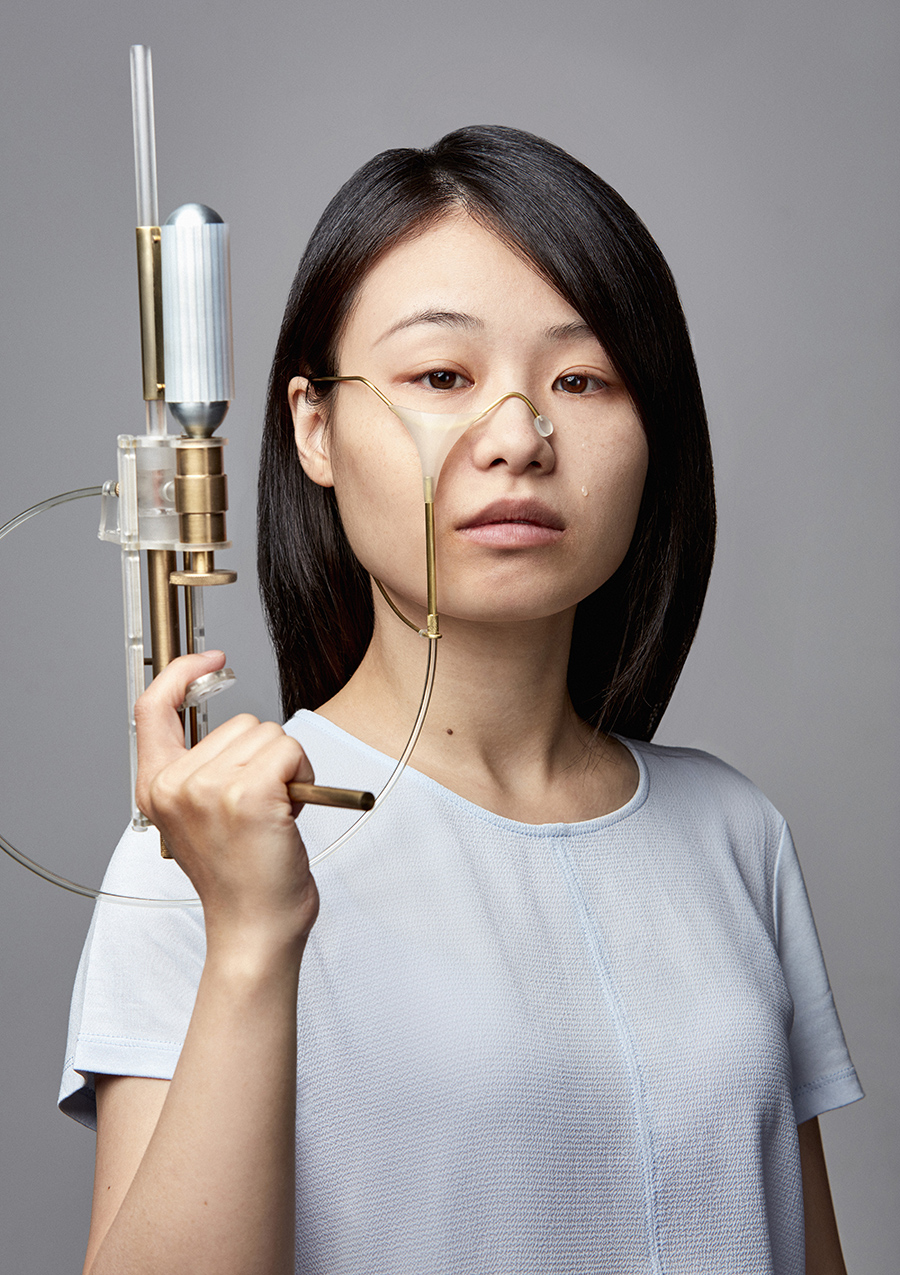
For Yi-Fei Chen, a graduate from Design Academy Eindhoven, her impossibility to speak up in self-defense during a confrontation with her tutors resulted in an internal burst of frustration, but externally only defenseless tears emerged. After that she decided to acknowledge this weakness, but reacting to it through her graduation project: “Tear Gun”, a minimal device that freezes tears instantly, ready to be fired in self-defense.
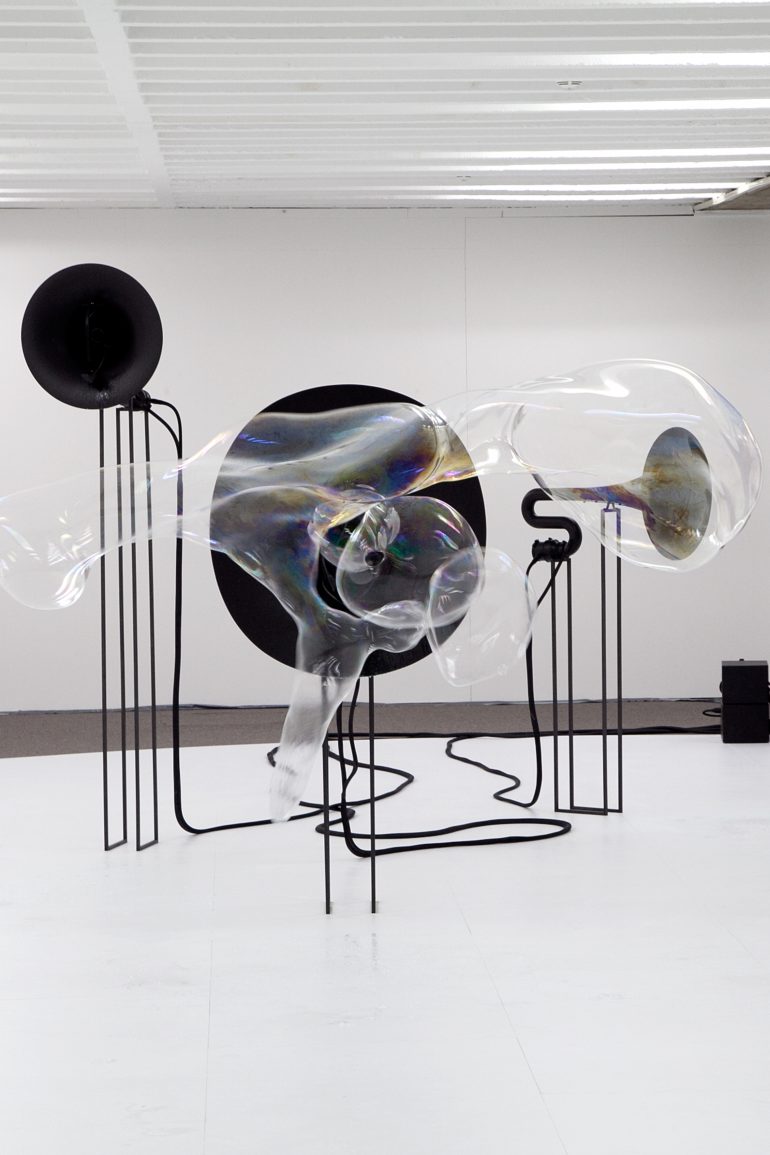
THOM KUBLI
FILE SAO PAULO 2017
BLACK HOLE HORIZON
The nucleus of the installation is the invention of an apparatus resembling a ship horn. With the sounding of each tone, a huge soap bubble emerges from the horn. It grows while the tone sounds, peels off the horn, lingers through the exhibition space and finally bursts at an erratic position within the room.
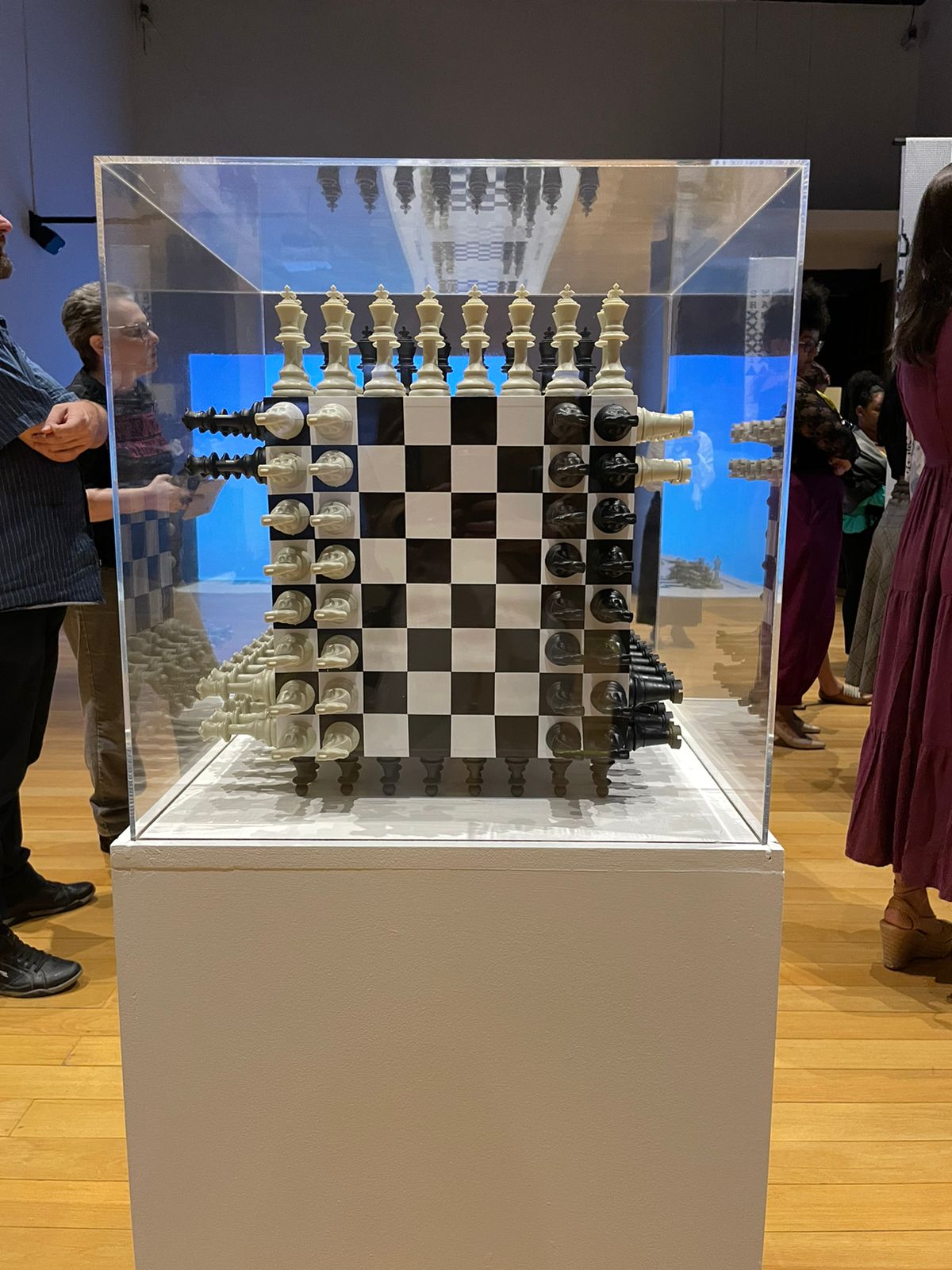
Ricardo Barreto & Raquel Fukuda
Chess Auto-Creative (Self-Replicating)
.
‘Chess Auto-Creative (CHEAC)’, takes the form of a cube where each face corresponds to an 8 x 8 chessboard. The six chessboards can also be arranged in a line to make them easier to see. There are 16 white pieces and 16 black pieces on each of the chessboards, made up of elements such as: kings, queens, bishops, knights, castles and pawns, each of which moves according to the rules of the game. However, instead of the pieces being arranged as normal, they are first set out in patterns where each element is repeated […]Each time a piece is moved to a new position, symmetrically or asymmetrically, a new variation of proto-chess is produced – in other words, a new game emerges. All games generated in this way are, in principle, variations of proto-chess – including the official chess game itself. This means that ‘Chess Auto-Creative’ is not a variant of the official chess game, but its origin.

SUNG ROK CHOI
Great Chain of Being
FILE FESTIVAL
The great chain of being, an ancient philosophical concept, attempted to explain the structures and relationships of the world as a form of hierarchy or set of strata. This philosophical idea is here expressed in the form of the entities that constitute the contemporary world. The philosophers of the past believed that the structure of the world had at its top a god, and that beneath there were angels, animals, plants, and elements. But this conception of the world, as a result of the changes in civilization and culture, resulted in the elements that constitute the world undergoing a transition and sustaining an unforeseen hierarchy. The works of art depict the contemporary structure in the form of robots, machines, people, animals, and virtual or digital entities. Within virtual systems, these entities undergo a process of creation, arrangement, use, disposal and recycling, through which they emerge and disappear. The work depicts the stories emerging from these processes, against the background of a systemically designed landscape akin to a factory.
video

Thom Browne
Mens SS 2020
“After the scene shifted from a selection of 2D garments, removed to reveal Browne’s brilliant designs below, the show began in earnest. The looks, as gleefully playful as ever, took on elements of Browne’s typical offerings and elevated them to the level of supreme costume design. Several imposing silhouettes recalled dresses worn by Antoinette-era aristocracy, with gargantuan trousers and shapely sportcoats crafted to resemble distorted Ivy League staples. Elsewhere, pleated skirts emerged as a prime trouser replacement, with cropped jackets and seersucker jockstraps to introduce a sporty motif.” Jake Silbert

Jon McCormack
Colourfield
Colourfield is an evolutionary ecosystem of colour. Colour agents try to exist in a simple universe by producing colours that are suited to their environment. This environment is determined by the other agents and the colours they produce. Entering into complex feedback cycles, Colourfield presents an evolving palette of shifting colours. Different configurations emerge based on the strategies the ecosystem discovers for co-existance and co-dependency. Harmonious configurations often remain stable for a short while, before eventually being replaced by new relations, better able to survive in the ever shifting environment.
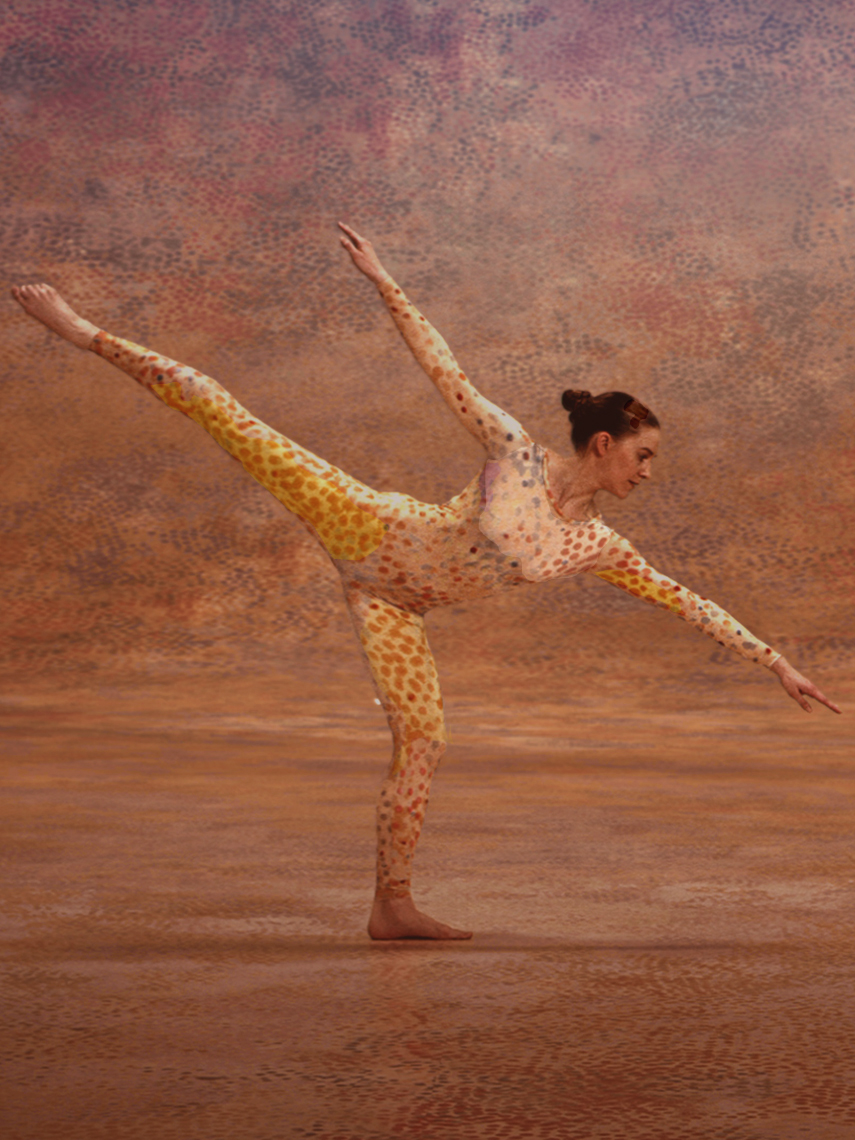
MERCE CUNNINGHAM
Cunningham Clip -Summerspace
CUNNINGHAM is a 3D cinematic experience about the legendary American choreographer, Merce Cunningham, orchestrated through his iconic works and performed by the last generation of his dancers. This poetic film traces Merce’s artistic evolution over three decades of risk and discovery (1944–1972), from his early years as a struggling dancer in postwar New York to his emergence as one of the most visionary and influential choreographers worldwide. 3D technology weaves together Merce’s philosophies and stories, creating a visceral journey through the choreographer’s world.

MEMO AKTEN
Pittura del corpo
File Festival
L’interazione è semplice, il movimento crea pittura. Nascosti nella semplicità ci sono strati di dettagli sottili. Diversi aspetti del movimento: dimensione, velocità, accelerazione, curvatura, hanno tutti un effetto sul risultato: colpi, schizzi, gocciolamenti, spirali; ed è lasciato agli utenti per giocare e scoprire. L’installazione è progettata per funzionare con qualsiasi numero di persone ed è scalabile per coprire aree piccole o grandi. Mentre l’installazione è adatta ad un singolo utente, quando sono presenti più utenti emerge una nuova dinamica. Un’interazione da utente a utente nasce quando il pubblico inizia a giocare con l’altro attraverso l’installazione, lanciandosi pittura virtuale l’uno sull’altro, cercando di completare o distruggere i dipinti dell’altro.
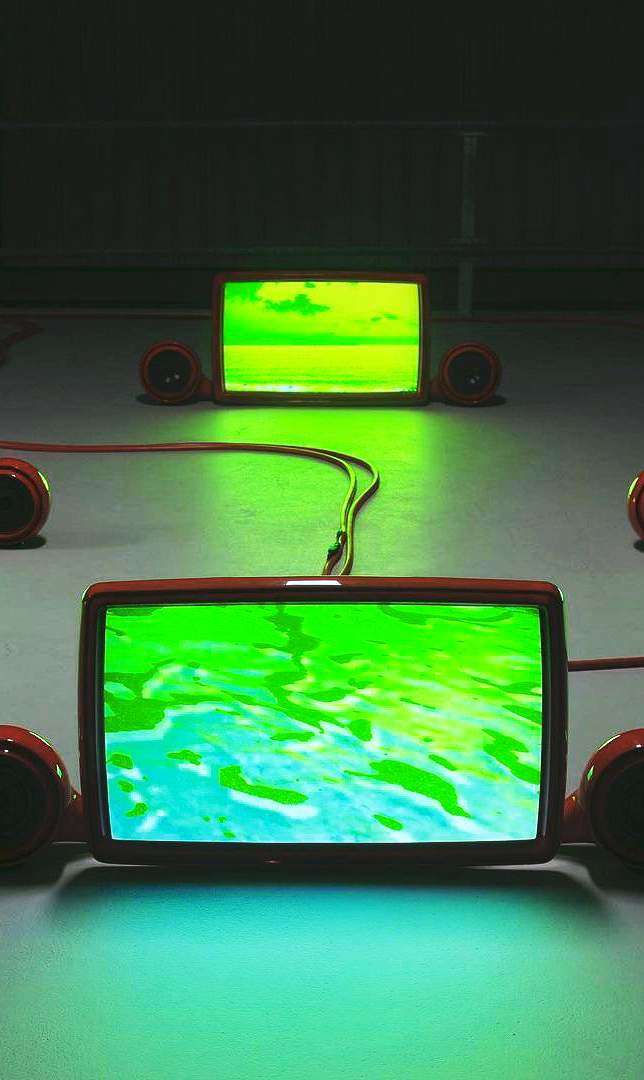
Studio Stallinga
Heimweh
‘Heimweh’ displays the breaking of waves on a sandy beach fragmented across 12 screens. The waves and their sound move gradually towards the feet of the spectator. At one point the waves turn into a green haze. ‘Heimweh’ started as a reflection on earthly life by considering what most embodies being on earth. When traveling to Mars, for instance, the major missing element would be the sea. As the waves turn green, they deform, similar to memories that get blurred over time. When the green finally subsides, the clear sky and sea emerge again with a sense of relief.

Zoro Feigl
POPPY
FILE FESTIVAL SÃO PAULO
As a giant poppy flower, this piece of tarpaulin unfolds itself above the viewer to show an elegant dance of waves and curls while within this dance a violent battle emerges between gravity, friction and centrifugal forces.

Teamlab
Moss Garden of Resonating Microcosms
TeamLab essaie de mettre à jour le concept de couleur. Ovoid change avec 61 couleurs, un nouveau concept de couleur nommé “couleur de lumière solidifiée”. On dit que les bryophytes sont les premières créatures terrestres à apparaître dans un monde de roches et de sable, où il n’y a pas encore de créatures sur terre. Avec l’émergence des mousses et des ptérophytes et la formation des forêts, divers animaux sont devenus capables de vivre sur terre. Les organismes meurent lorsque leur corps manque d’eau car l’eau à l’intérieur des cellules est essentielle. D’autre part, les plantes de mousse ont une résistance à la déshydratation en raison de la propriété particulière du changement d’eau, dans laquelle la teneur en eau dans les cellules fluctue en raison des changements d’humidité ambiante, ne meurent pas longtemps à l’état sec, et si l’eau est étant donné, ils peuvent exercer les activités de la vie. Étant donné que la mousse modifie l’eau, sa couleur et sa forme changent considérablement selon que l’air est sec ou humide, par exemple lorsqu’il pleut ou qu’il s’agit de brume. Les tardigrades qui vivent entre les mousses deviennent également dormants, un état de dormance non métabolique, et arrêtent leur activité lorsque l’environnement devient sec, mais lorsque de l’eau est donnée, ils récupèrent et commencent leur activité.

Ian Cheng
Life after bob
Ian Cheng’s Life After BOB is an episodic anime series built in the Unity game engine and presented live in real-time. Bridging the artist’s interest in simulation’s capacity to generate emergent surprising phenomena, with cinematic storytelling’s capacity to evoke deep psychological truths, Life After BOB imagines a future world in which our minds are co-inhabited by AI entities. Life After BOB asks: How will life lived with AI transform the archetypal scripts that guide our sense of a meaningful existence?

ROBERT HENKE
光
光正在使用高精度激光在屏幕上绘制连续的抽象形状,并与声音完美同步。强烈的光线与完全的黑暗形成对比,缓慢的动作和微小细节的演化与强而有力的手势一样重要。结果既是古朴的又是未来主义的。新兴的模式为许多可能的解释留出了空间。象形文字,一种未知语言的符号,建筑图纸,数据点之间的连接或类似Tron的早期视频游戏放大了1000倍。
.
Light
Light is using high-precision lasers to draw continuous abstract shapes on the screen, perfectly synchronized with the sound. Intense light contrasts with total darkness, and slow movements and the evolution of small details are as important as strong gestures. The result is both quaint and futuristic. Emerging models leave room for many possible explanations. Hieroglyphs, symbols in an unknown language, architectural drawings, connections between data points, or early video games like Tron are magnified 1,000 times.
.
Lumière
La lumière utilise des lasers de haute précision pour dessiner des formes abstraites continues sur l’écran, parfaitement synchronisées avec le son. La lumière forte contraste avec l’obscurité totale, le ralenti et l’évolution des petits détails sont aussi importants que les gestes forts. Le résultat est à la fois pittoresque et futuriste. Les modèles émergents laissent place à de nombreuses explications possibles. Les hiéroglyphes, les symboles dans une langue inconnue, les dessins d’architecture, les connexions entre les points de données ou les premiers jeux vidéo comme Tron sont agrandis 1 000 fois.

Universal Everything
Hype Cycle
Machine Learning
Set in a spacious, well-worn dance studio, a dancer teaches a series of robots how to move. As the robots’ abilities develop from shaky mimicry to composed mastery, a physical dialogue emerges between man and machine – mimicking, balancing, challenging, competing, outmanoeuvring.

Robert Breer
Float
The Floats – or floating sculptures – that Robert Breer took up producing again at the end of the 1990s, emerged in 1965. The word “float” meaning something floating – a marker, fishing float or buoy – and which also describes those carnival vehicles whose pretend wheels give them the appearance of floating above the tarmac, enabled Robert Breer to apply this principle to works of a new genre. Primary shapes, neutral colours and, for the most recent, an industrial aspect, the Floats were then made with polystyrene, foam, painted plywood, and, more latterly, out of fibreglass. At first glance, these simple structures appear immobile. In fact, they are moving, imperceptibly, within the space they inhabit. Motorised and on mini-rollers – which raise them slightly above ground, giving them an air of weightlessness – they glide unbeknown to the visitor, following random paths that are interrupted by the slightest obstacle that they encounter.

MEMO AKTEN
Body Paint
File Festival
The interaction is simple, movement creates paint. Hidden in the simplicity are layers of subtle details. Different aspects of the motion: size, speed, acceleration, curvature, all have an effect on the outcome: strokes, splashes, drips, spirals; and is left up to the users to play and discover. The installation is designed to work with any number of people and is scalable to cover small or large areas. While the installation is suitable for a single user, when multiple users are present a new dynamic emerges. A user-to-user interaction is born when the audience starts playing with each other via the installation, throwing virtual paint on each other, trying to complete or destroy each other’s paintings.
Troika
AVA
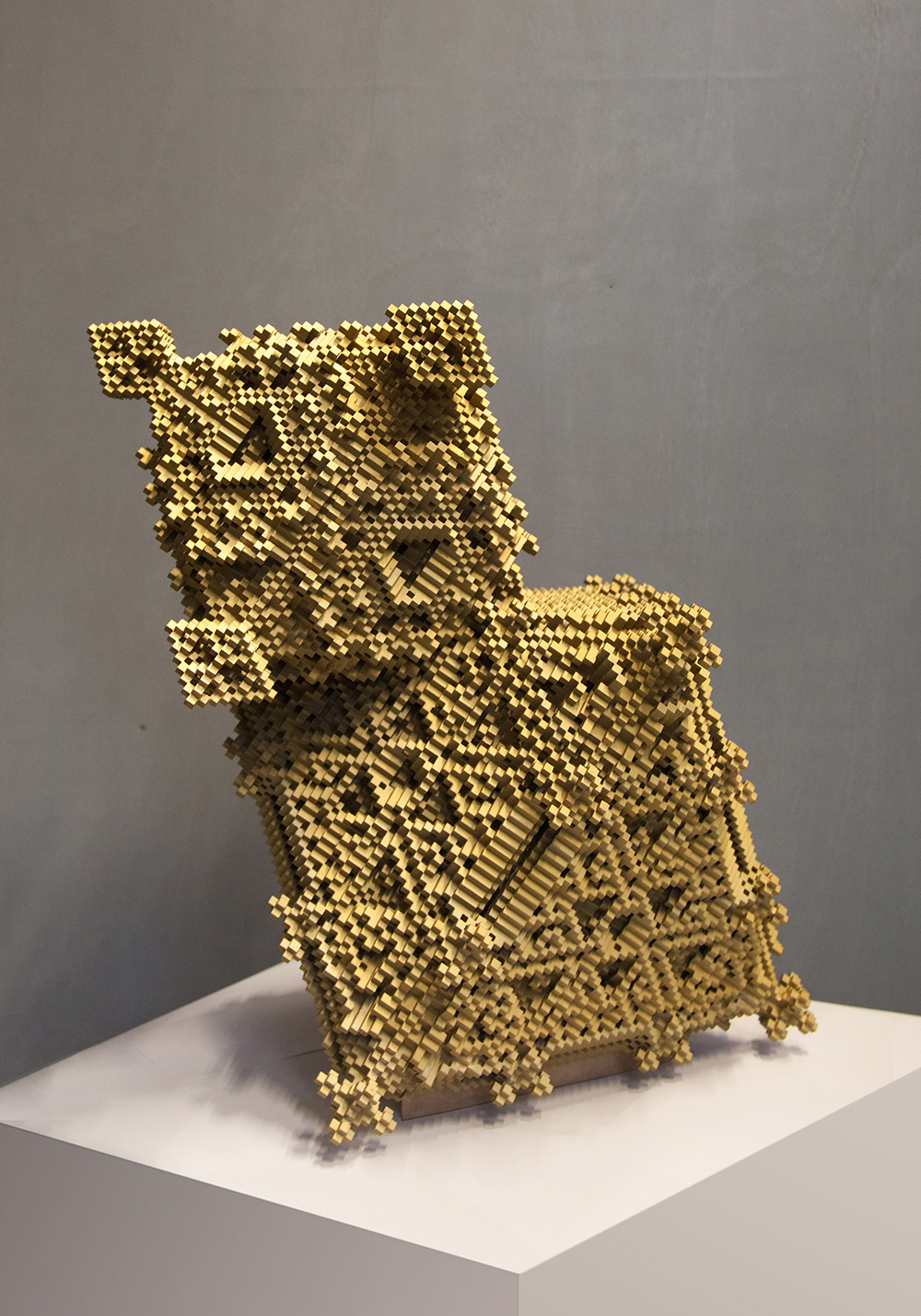
Ava’ is Troika’s first sculptural manifestation of their exploration of algorithms. ‘Ava’ is the physical result of emergence and self organisation brought about by ‘growing’ a sculpture through the use of a computer algorithm that imitates the emergence of life by which complexity arises from the simplest of things. As such the sculpture probes at the nature of becoming, existence and our strive to understand and replicate the complexities of life.In a landscape where our personal data is a raw material, and where we, humans, have become subordinate spectators of algorithms and a computerised infrastructure, we ask the question how much or little are we capable of influencing our surrounding reality, how much is predetermined, how much is down to chance.

OLAFUR ELIASSON
L’ouverture indicible des choses
Le titre de l’exposition, L’ouverture indicible des choses, est une phrase que le philosophe Timothy Morton utilise pour décrire l’art et qui résonne fortement avec l’artiste. Eliasson décrit comment «l’art existe à la fois dans et au-delà du domaine de la langue. Avant que la forme d’une œuvre n’émerge, il y a un sentiment pas tout à fait saisissable qui pénètre dans le processus artistique – et qui reste dans l’œuvre finie comme quelque chose qui ne peut pas être pleinement exprimé. Dans le même temps, l’œuvre est fondamentalement ouverte aux visiteurs. Il est prêt à les écouter et à accueillir leurs questions et leurs expériences. »
ANOUK WIPPRECHT
PANGOLIN DRESS
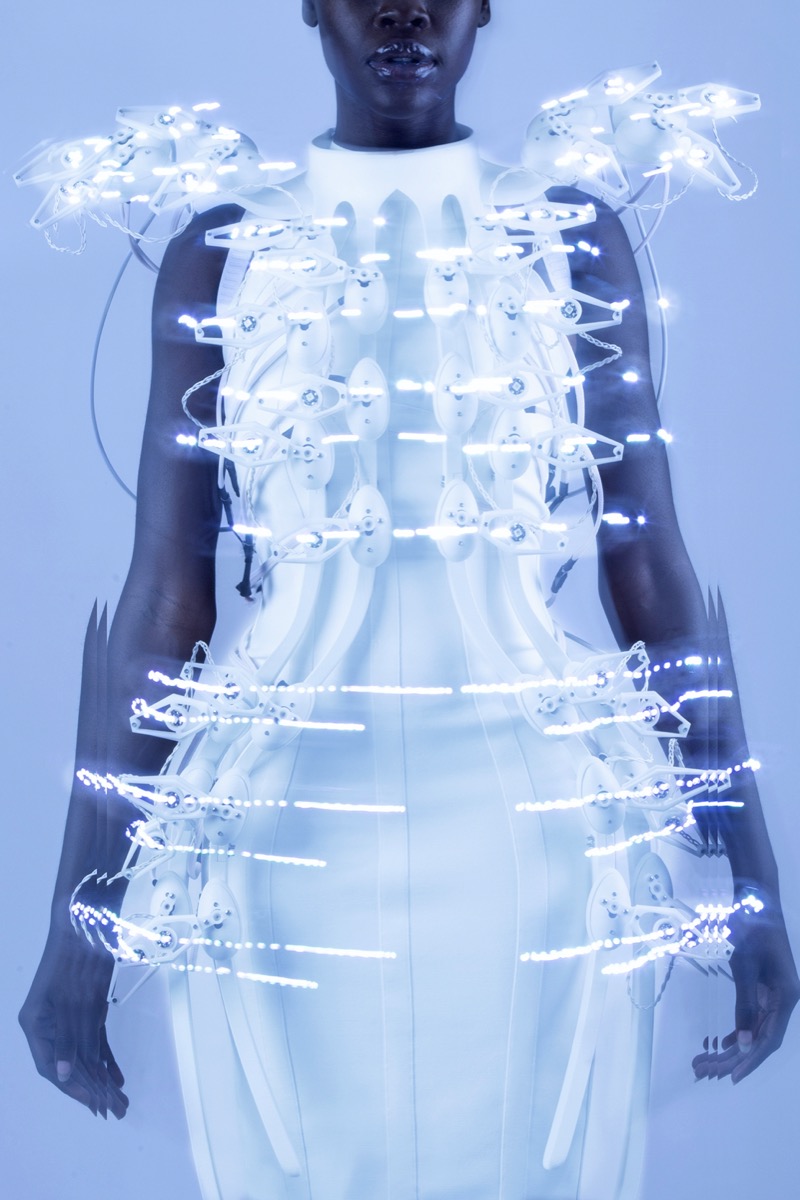
The Pangolin Scales Project demonstrates a 1.024 channel BCI (Brain-Computer Interface) that is able to extract information from the human brain with an unprecedented resolution. The extracted information is used to control the Pangolin Scale Dress interactively into 64 outputs.The dress is also inspired by the pangolin, cute, harmless animals sometimes known as scaly anteaters. They have large, protective keratin scales covering their skin (they are the only known mammals with this feature) and live in hollow trees or burrows.As such, Pangolins and considered an endangered species and some have theorized that the recent coronavirus may have emerged from the consumption of pangolin meat.Wipprecht’s main challenge in the project’s development was to not overload the dress with additional weight. She teamed up 3D printing experts Shapeways and Igor Knezevic in order to create an ‘exo-skeleton’ like dress-frame (3mm) that was light enough to be worn but sturdy enough to hold all the mechanics in place
Neri Oxman and MIT Develop Programma
Aguahoja
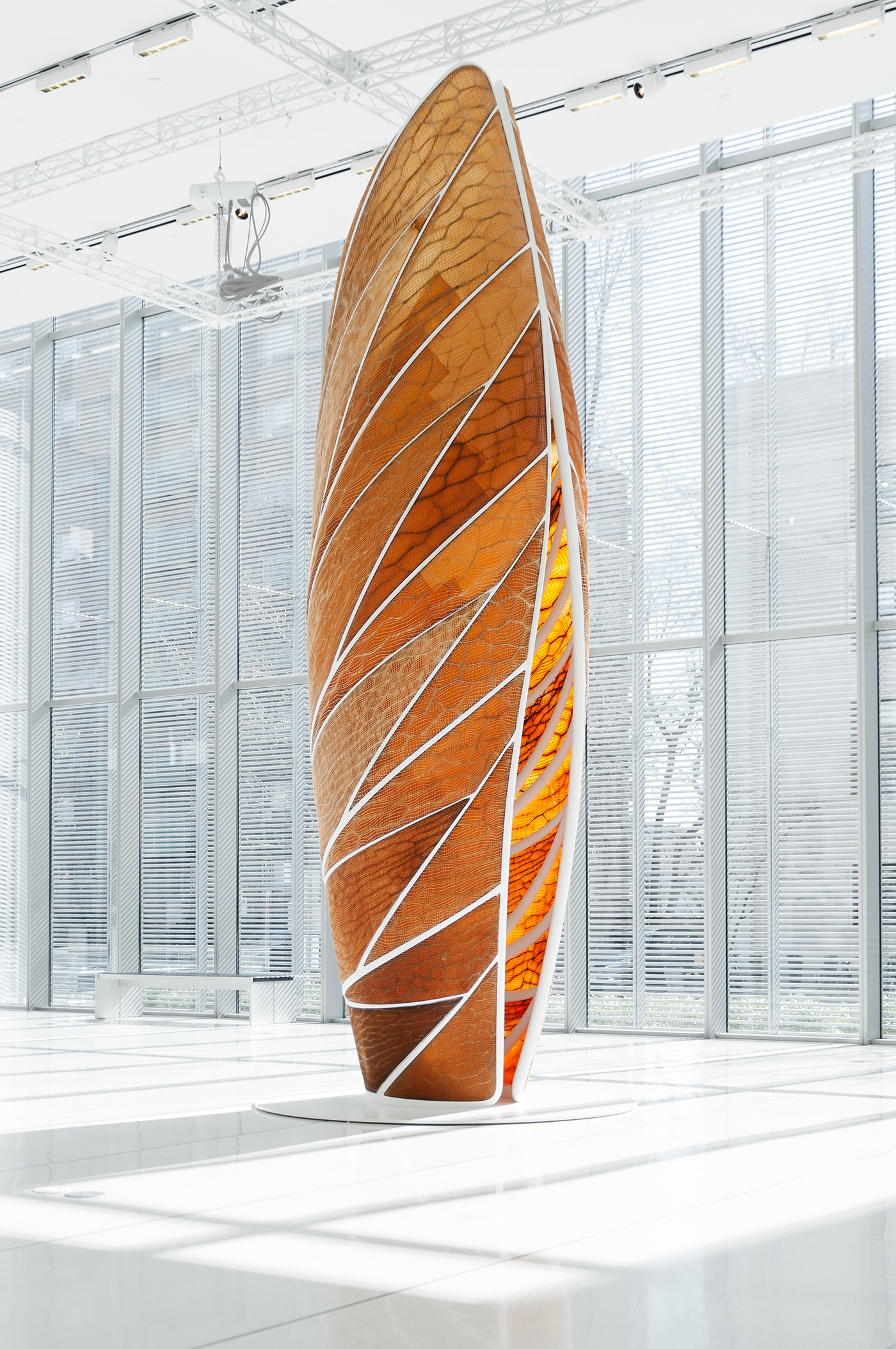
La variedad de formas y comportamientos exhibidos por estas piezas refleja la forma en que se expresan en la naturaleza, donde un material como la quitina puede componer tanto el exoesqueleto de los crustáceos como las paredes celulares de los hongos. A diferencia del acero y el hormigón, los materiales compuestos formados por estos materiales están en constante diálogo con su entorno. Algunos artefactos exhiben cambios dramáticos en la conformación en respuesta a la humedad y el calor, mientras que otros se oscurecen o aligeran a medida que cambian las estaciones. Algunos son frágiles y transparentes con una textura vítrea, mientras que otros permanecen flexibles y resistentes como el cuero. A pesar de su diversidad emergente, estos artefactos comparten una calidad común: en la vida, sus propiedades están mediadas por la humedad; en la muerte se disocian en el agua y regresan al ecosistema.

ANDY LOMAS
Morphogenetic Creations
Created by a mathematician, digital artist and Emmy award winning supervisor of computer generated effects – Andy Lomas, Morphogenetic Creations is a collection of works that explore the nature of complex forms that can be produced by digital simulation of growth systems. These pieces start with a simple initial form which is incrementally developed over time by adding iterative layers of complexity to the structure.The aim is to create structures emergently: exploring generic similarities between many different forms in nature rather than recreating any particular organism. In the process he is exploring universal archetypal forms that can come from growth processes rather than top-down externally engineered design.Programmed using C++ with CUDA, the series use a system of growth by deposition: small particles of matter are repeatedly deposited onto a growing structure to build incrementally over time. Rules are used to determine how new particles are created, and how they move before being deposited. Small changes to these rules can have dramatic effects on the final structure, in effect changing the environment in which the form is grown. To create these works, Andy uses the GPU as a compute device rather than as a display device. All the data is held in memory on the GPU and various kernel functions are called to do things like apply forces to the cells, make cells split, and to render the cells using ray-tracing. The simulations and rendering for each of the different animated structures within this piece take about 12 hours to run, Andy explains. By the end of the simulations there are over 50,000,000 cells in each structure.The Cellular Forms use a more biological model, representing a simplified system of cellular growth. Structures are created out of interconnected cells, with rules for the forces between cells, as well as rules for how cells accumulate internal nutrients. When the nutrient level in a cell exceeds a given threshold the cell splits into two, with both the parent and daughter cells reconnecting to their immediate neighbours. Many different complex organic structures are seen to arise from subtle variations on these rules, creating forms with strong reminiscences of plants, corals, internal organs and micro-organisms.

KOHEI NAWA
Biomatrix
«Biomatrix» est une installation d’extrémités scycles de bulles de cellules éruptives émergeant à la surface de l’huile de silicone liquide. Cette circulation du liquide coloré évoque le comportement du magma ou du sang et, en raison de la viscosité élevée de l’huile de silicium, illustre le mouvement du matériau à une vitesse faussement plus lente que l’attente du spectateur. La piscine à commande électrique devient une interface qui amplifie l’impact visuel et produit à l’infini des motifs cellulaires. Une formation de grille ordonnée apparaît comme une matrice numérique, tandis qu’une observation plus approfondie révèle des irrégularités telles qu’une effervescence sporadique et simultanée et des sons plosifs brisant la tension superficielle.
MARCEL VAN BRAKEL & FREDERIK DUERINCK
Câblé
FILE FESTIVAL
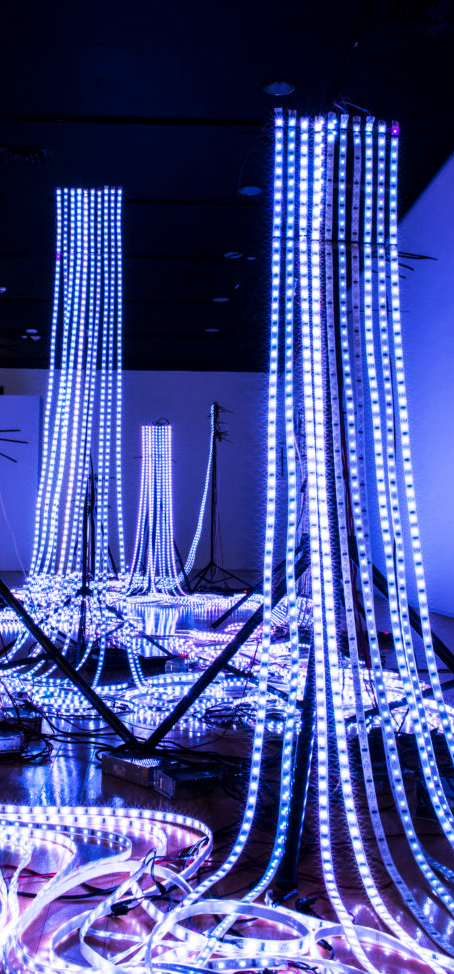
Câblé se compose d’environ 18 000 lampes LED qui symbolisent le transfert de connaissances. Les pixels lumineux individuels se connectent puis disparaissent. Dans un processus de transformation constante, de nouveaux modèles, interrelations et complexités émergent.
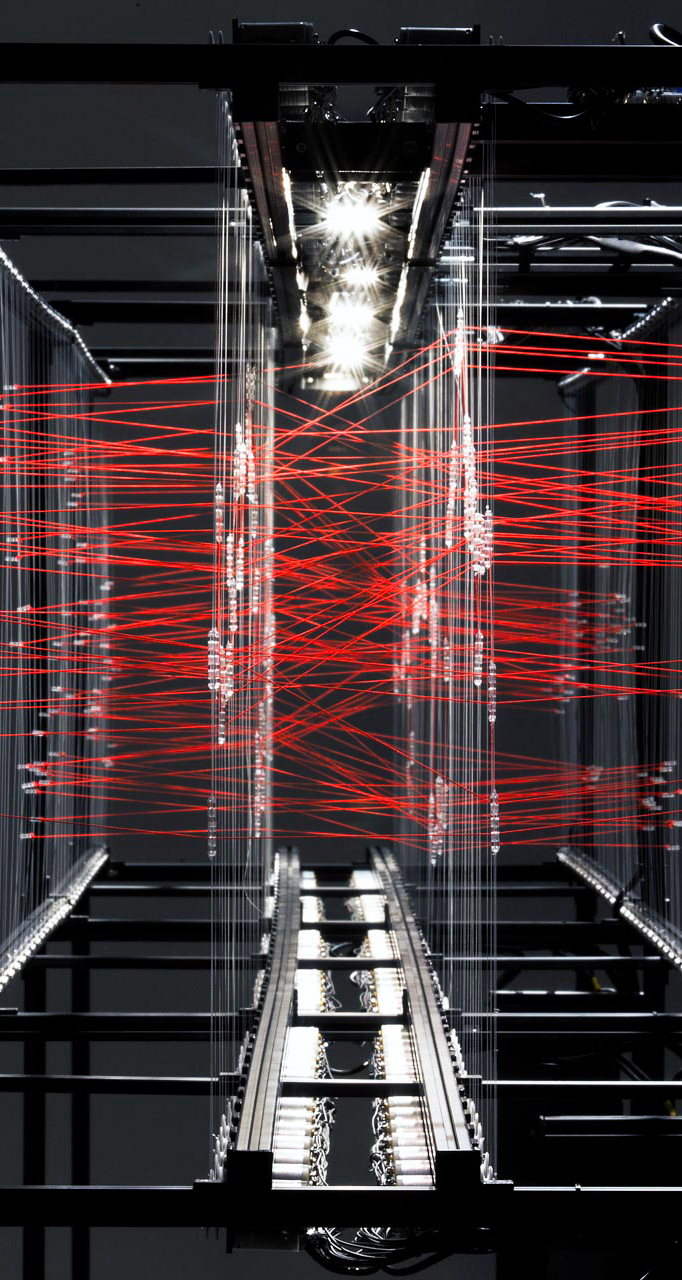
RALF BAECKER
Schnittstelle
Schnittstelle I untersucht die Grenze zwischen zwei interagierenden Systemen, die in das Physische übertragen werden. Jedes System besteht aus Motoren, Saiten und Gummibändern, die horizontal angeordnet sind. Die beiden Einheiten stehen sich vertikal gegenüber (eine oben, eine unten). Jeder Motor einer Ebene (oben, unten) ist mit einer Schnur mit seinem Gegner verbunden und trifft sich in der Mitte. Beide Motoren ziehen ihre Schnur in die entgegengesetzte Richtung (wie bei einem Tauziehen). An der Verbindungsstelle der Saiten verbindet ein Netz aus Gummibändern die Saite mit ihren Nachbarn. Das Netz koppelt jedes Element mit seinen umgebenden Elementen, um ein lokales emergentes Verhalten zu erreichen.

Dorian Gaudin
The coffee cup spring
The monotone repetition of the movement created by the conveyor belt recalls the pace and the landscape of animation or video games. As an extension of the conveyor, several geometric and orthogonal motifs evoking a Tetris composition are slotted together and suggest the shapes of a table, a chair or stairs. The objects are exposed on thin metal structures with fringed ends, and seem to peel off from their construction, as if they were undressing and exchanging skins, depriving themselves of sculptural depth and allowing only the surface to emerge. The technique developed by the artist to produce the sculptures inverts the usual steps of printing: first the pattern is created, then the background to which the fiberglass support is apposed. The pieces are therefore ripped off their mold, revealing their final texture, and the motif on every sculpture seems to remain the same, yet is altered by the shape of the object itself. A series of wall works using this procedure extends from the installation into the gallery space.
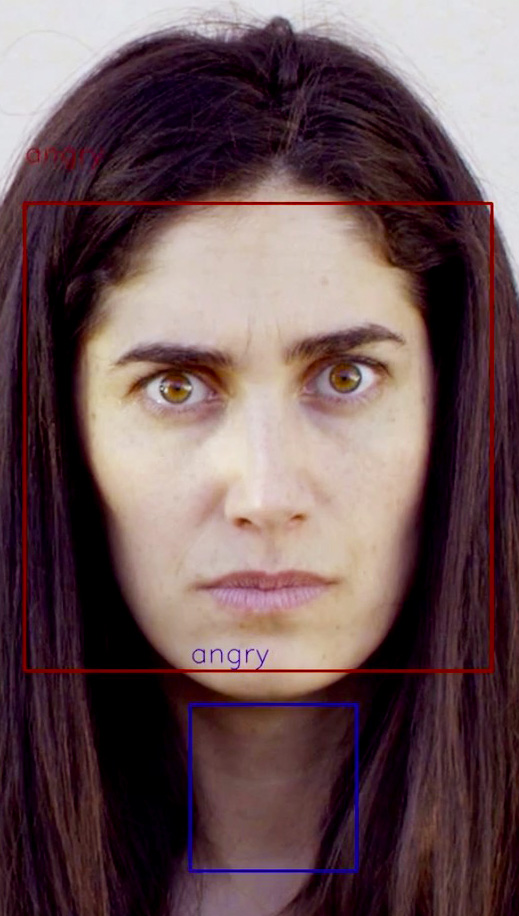
Thomas Depas
Princess of Parallelograms
What will happen when our imagination itself is externalized in machines? Artificial intelligence constructs its own world-truth that is beyond our sensory perception. Generative Adversarial Networks (GANs) use algorithms to synthesize and generate images in a completely new way. These images have almost uncanny aesthetic characteristics, seeming to emerge from an ocean of data, a kind of pixel soup. Rather as if we were observing the emergence of artificial “thought.” The machine learns to understand the “essence” of a thing, be it an animal, the face of a celebrity or a body of text. It is then able to generate new images of this thing, including faces of celebrities who do not exist, mutant animals, or new texts. Eventually, AI will be capable of instantaneously and dynamically emulating all representations. The era of the optical machine and the capture of reality will then be at an end, supplanted by the era of machines that generate their own reality.
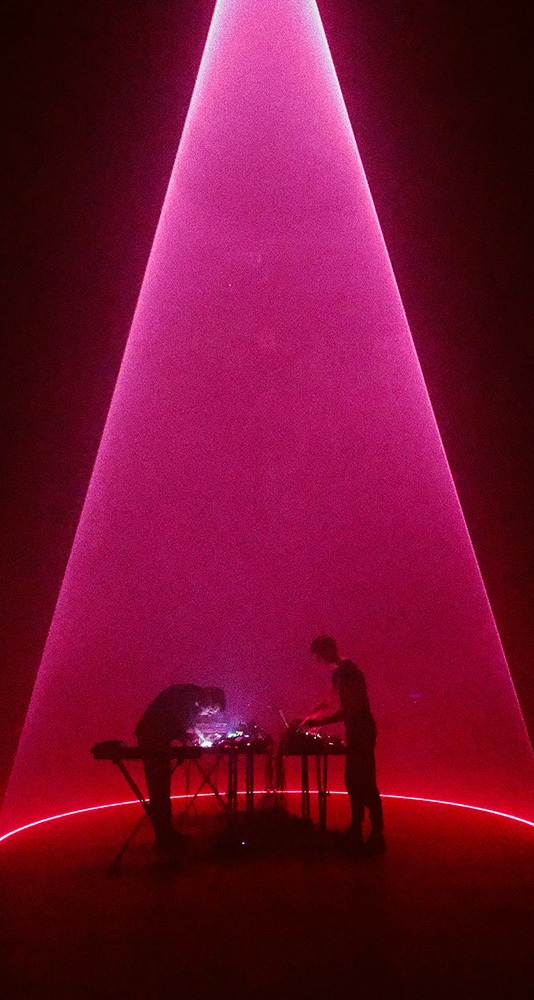
Nick Verstand
Aether
AETHER is an audiovisual live performance using spatial sound and light, designed location specific for each iteration. Walls of materialized laser light surround the artists while constantly reshaping the environment, organically modulating synchronous to the surrounding sound.
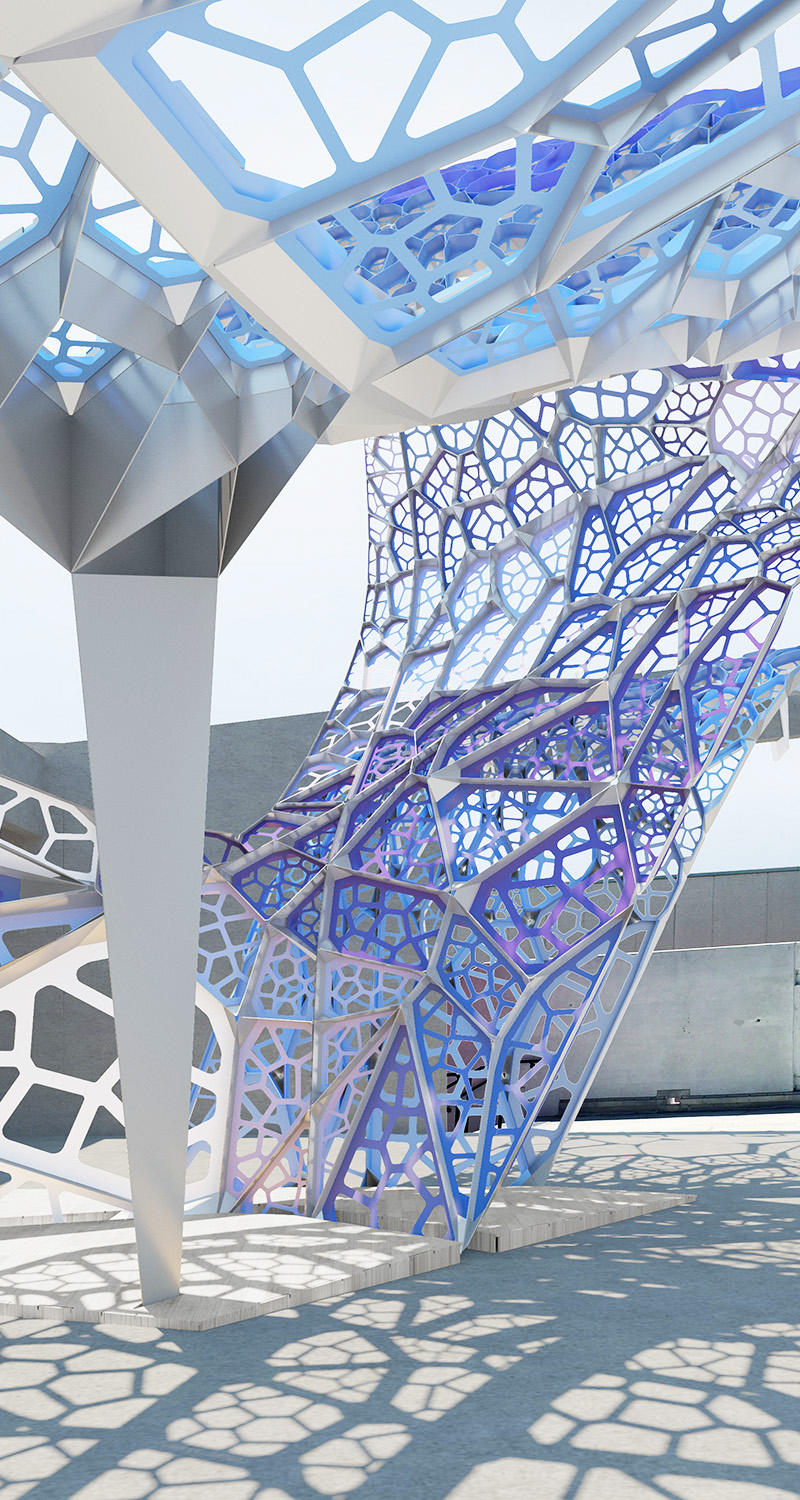
OTA+
Lumifoil
Lumifoil is a temporary roof canopy at the Florida International University Paul L. Cejas School of Architecture. Our goal was to introduce a new “intrusion” at the heart of what FIU Architect Bernard Tschumi coined the “red generator,” thereby heeding his call for provocation in the form of an architectural intervention. This proposal responds to Tschumi’s discourse and the building itself might apply to the parametric digital project. Rather than design a canopy that is entirely emergent – a bottom up strategy in which the whole is the sum of its parts, and be definition, disconnected from its environment – we began with an overall form that is derived via a series of projected geometries generated directly from the cut out’s in the building’s envelope. These invisible forms intersect inside the empty container, providing a framework for generating a new surface.
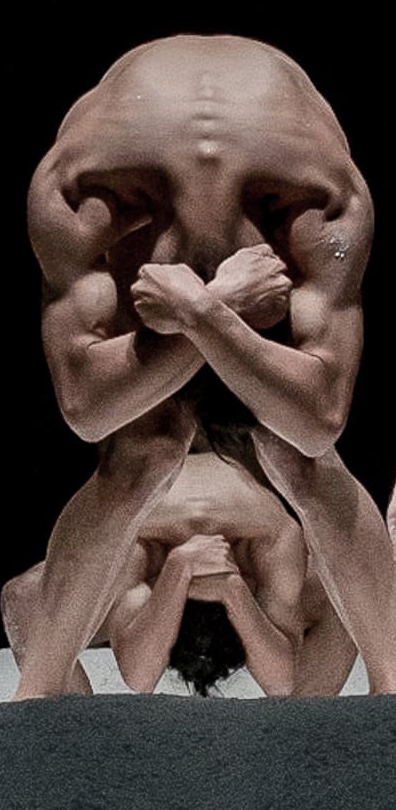
Damien Jalet and Kohei Nawa
Vessel
les corps se rassemblent alors pour former les vaisseaux de naissance. Avec un mélange de jambes et de bras, la forme des danseurs crée des roches comme des entités vaginales, d’où émergent de nouvelles créatures. C’est une scène de prison. Il est intelligent et vient clairement d’esprits exceptionnellement créatifs.

Encor Studio
Initiation
Initiation is an open-end ceremony initiating the audience to the cult of infinity. The gigantic human-machine-interface is driven by the officiants controlling ancestral tools. As time seems to suspend itself, the crowd emerges into an ever hypnotizing state of oscillation. In this place the swing of the pendulum acts as the ever stimulating vector to guide the audience onto higher grounds.

Roman Hill
As above
As Above is a short film exploring the tight link between the microscopic world and immensity of the universe. Illustrating our universe’s never ending dance of destruction and creation, in which life can emerge. As Above was made of one single shot filmed on the 8mm2 (0.3 square inch) surface of a chemical reaction. The environment in which we live, is at the constant mercy of the ever changing flow of planets, stars and galaxies… As well as the composition of the microscopic world. “As Above” is an invitation to contemplate the beauty of this perpetual movement of which we are part of… And perhaps invite the viewer to reflect on his position in the universe and the preciosity of life.
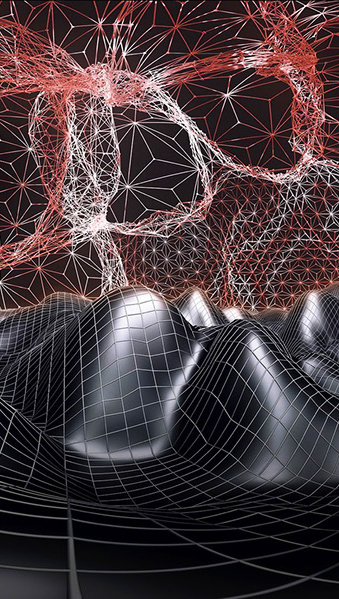
Can Büyükberber
Morphogenesis
Morphogenesis (from the Greek morphê ‘’shape” and genesis “creation”; literally, “beginning of the shape”) is the biological process that causes an organism to develop its shape. As a fulldome and virtual reality piece inspired by the phenomenon of emergence in self-organized systems, Morphogenesis consists of continuous transformation of fundamental geometrical patterns and uses them as the building blocks of immersive spaces.
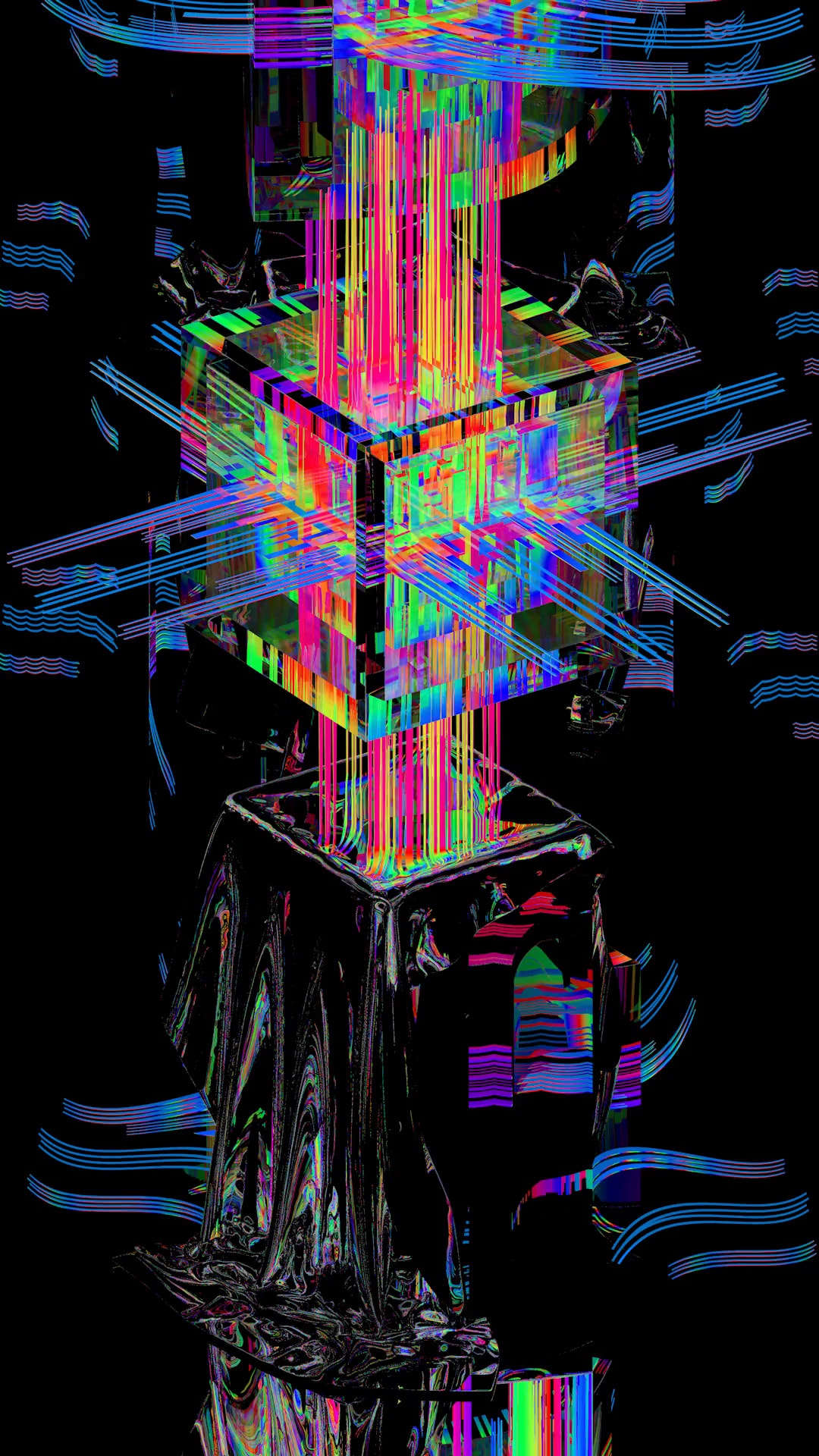
MSHR
Threshold Release Ornament
MSHR is the art collective of Birch Cooper and Brenna Murphy. The duo collaboratively builds and explores systems composed of sound, light, sculpture, software and circuitry. Their practice is a self-transforming cybernetic entity with its outputs patched into its inputs, the resulting emergent form serving as its navigational system. These outputs primarily take the form of installations and performances that integrate interface design with generative systems and a distinctive formalist approach. MSHR’s name is a modular acronym, designed to hold varied ideas over time. MSHR emerged from the art collective Oregon Painting Society in 2011 in Portland, Oregon, USA.

Andrea Polli
Particle Falls
Particle Falls is a large-scale, real-time visualization of air-quality data.On a background of falling blue light, spots of bright, fiery color emerge and crackle, representing the presence of fine particulate matter, as detected by a nearby air monitor. Fewer bright spots over the falls mean fewer particles in the air.Particle Falls draws our attention to the invisible particles that surround us and that may affect our health. While the visible smog that plagued many U.S. urban centers decades ago has been mitigated by technology and regulatory measures, microscopic threats to our air continue to exist and often go unnoticed. Particle Falls is one way we can learn more about the quality of air around us.

Daan Brinkmann & Nenad Popov
Cellwise
Cellwise is a generative projection specifically designed for the city hall of The Hague. During the festival the city hall becomes the new habitat of a kind of ‘visual lifeform’. From the façade’s neatly arranged grid of white tiles, structures of a more entropic nature emerge. Shapes start growing, bursting, dripping, crawling and creeping. Cellwise is exploring the city hall’s sterile architecture, while at the same time challenging it to look for its visual counterpoints.
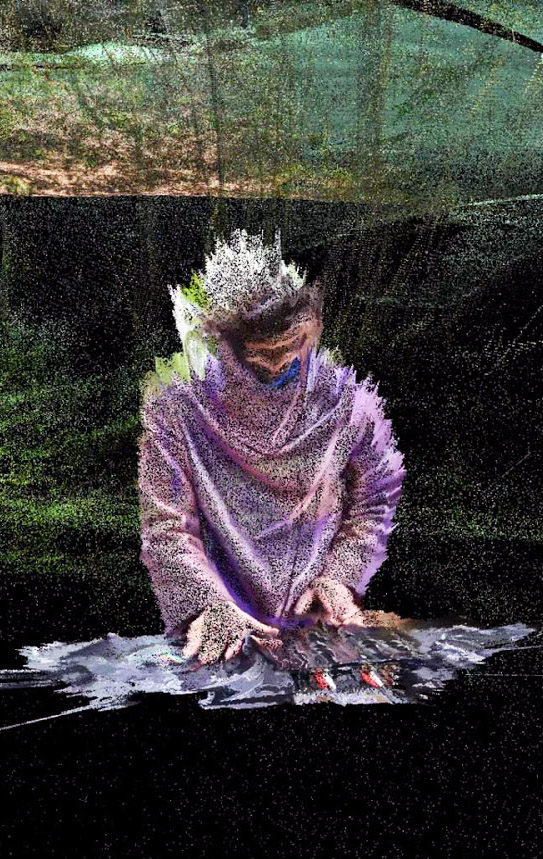
Liam Young
Where the City Can’t See
Directed by speculative architect Liam Young and written by fiction author Tim Maughan, ‘Where the City Can’t See’ is the world’s first narrative fiction film shot entirely with laser scanners, designed in collaboration with Alexey Marfin. The computer vision systems of driverless cars google maps, urban management systems and CCTV surveillance are now fundamentally reshaping urban experience and the cultures of our city. Set in the Chinese owned and controlled Detroit Economic Zone (DEZ) and shot using the same scanning technologies used in autonomous vehicles, we see this near future city through the eyes of the robots that manage it. Exploring the subcultures that emerge from these new technologies the film follows a group of young car factory workers across a single night, as they drift through the smart city point clouds in a driverless taxi, searching for a place they know exists but that the map doesn’t show.
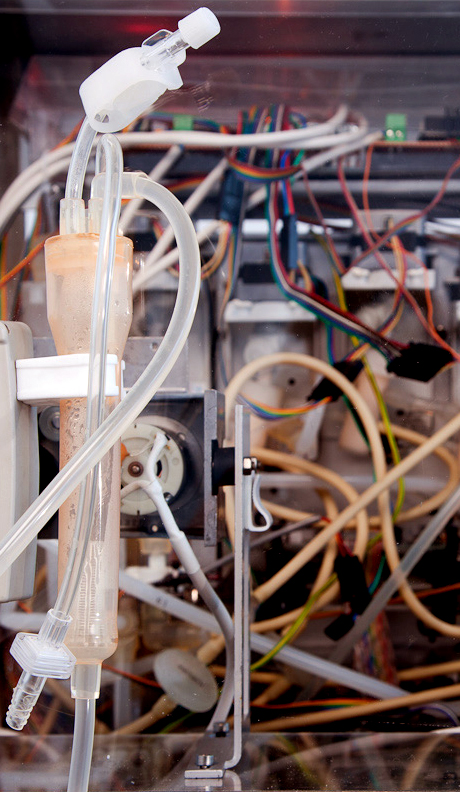
REVITAL COHEN & TUUR VAN BALEN
The Immortal
A number of life-support machines are connected to each other, circulating liquids and air in attempt to mimic a biological structure.
The Immortal investigates human dependence on electronics, the desire to make machines replicate organisms and our perception of anatomy as reflected by biomedical engineering.
A web of tubes and electric cords are interwoven in closed circuits through a Heart-Lung Machine, Dialysis Machine, an Infant Incubator, a Mechanical Ventilator and an Intraoperative Cell Salvage Machine. The organ replacement machines operate in orchestrated loops, keeping each other alive through circulation of electrical impulses, oxygen and artificial blood.
Salted water acts as blood replacement: throughout the artificial circulatory system minerals are added and filtered out again, the blood gets oxygenated via contact with the oxygen cycle, and an ECG device monitors the system’s heartbeat. As the fluid pumps around the room in a meditative pulse, the sound of mechanical breath and slow humming of motors resonates in the body through a comforting yet disquieting soundscape.Life support machines are extraordinary devices; computers designed to activate our bodies when anatomy fails, hidden away in hospital wards. Although they are designed as the ultimate utilitarian appliances, they are extremely meaningful and carry a complex social, cultural and ethical subtext. While life prolonging technologies are invented as emergency measures to combat or delay death, my interest lies in considering these devices as a human enhancement strategy.This work is a continuation of my investigation of the patient as a cyborg, questioning the relationship between medicine and techno- fantasies about mechanical bodies, hyper abilities and posthumanism.

Maotik
Erratic Weather
Despite some world leaders skepticism, climate change is a reality and the world isn’t just warming, in some parts of the planet the weather is becoming more erratic. During the last years, our generation has started to observe the effects and consequences of this shift, witnessing violent and unexpected climate phenomenons. Erratic Weather is a digital art project aiming to represent changing atmospheric conditions into an immersive multimedia experience. During the performance, the system uses various source of weather information retrieved from an online database and processed on real time to generate a visual and a surround sound composition. During 30 minutes the audience will experience the life cycle of swirling phenomenons such typhoon, hurricane and tropical cyclone , demonstrating the devastating power of the nature and the emergency to preserve it.

Mika Tajima
New Humans
In New Humans, emergent gatherings of synthetic humans rise from the surface of a black ferrofluid pool. Appearing to morph like a supernatural life form, these dynamic clusters of magnetic liquid produced by machine learning processes are images of communities of synthetic people–hybrid profiles modeled from actual DNA, fitness, and dating profile data sets sourced from public and leaked caches. The work questions how we can radically conceptualize the “user profile” to embody a self whose bounds are indefinable and multiple. Generative algorithm using machine learning (GAN, T-SNE) and fluid simulation (Navier Stokes), countour generation (OpenCV), user profile data caches (DNA, fitness, and dating), software production (Processing), ferrofluid, custom electromagnet matrix, custom PCB control system, computer, steel, wood, aluminum.

Can Buyukberber
Noumenon
Noumenon is a site-specific large-scale architectural and year-long installation in ZeroSpace, New York City; a compilation of Buyukberber’s last 4 year of audiovisual work and explorations; from emergent systems to out-of-body experiences; from transcendental objects to the symbols of the collective unconscious.