
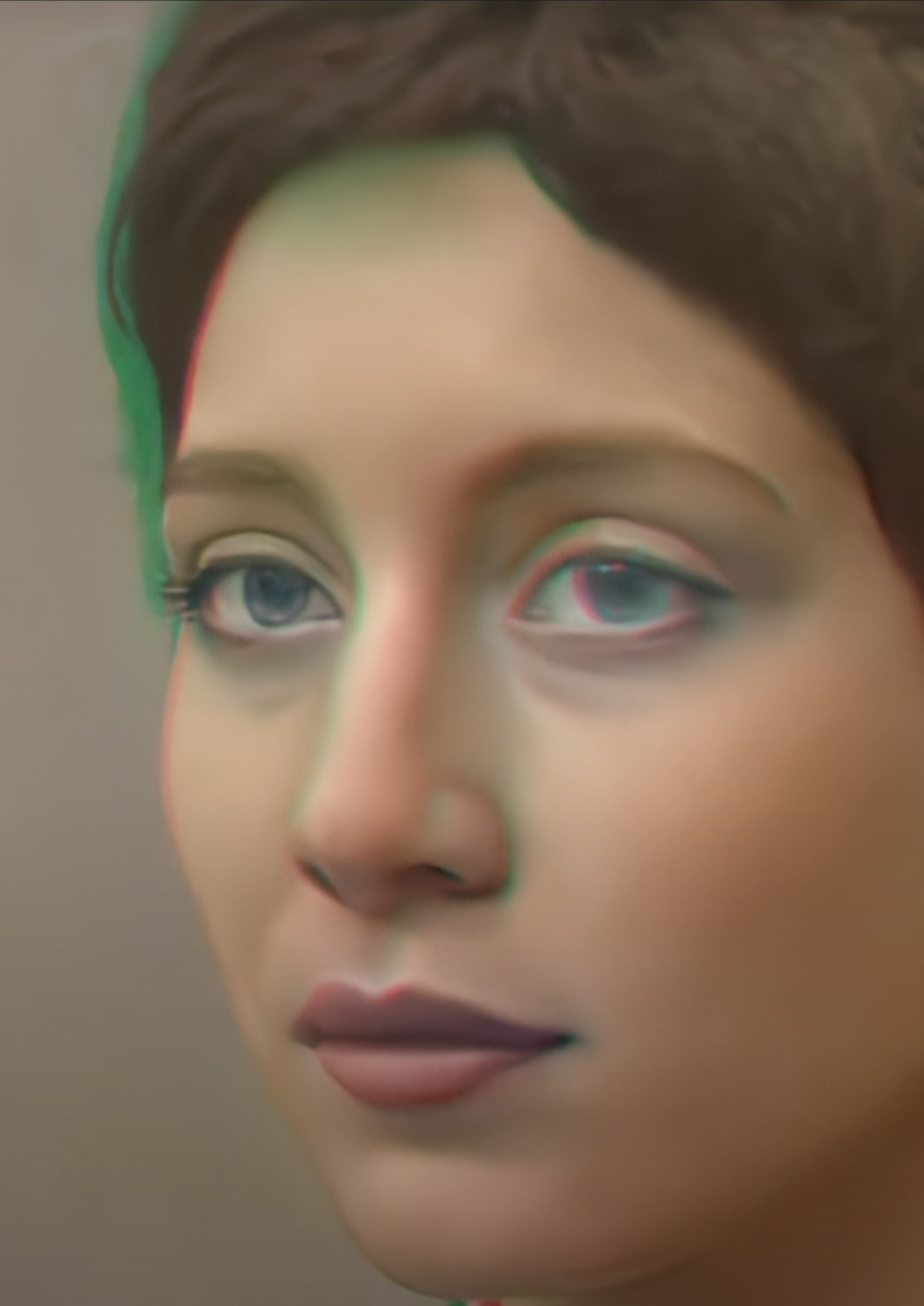
FILE SÃO PAULO 2025: SYNTHETIKA – Mario Klingemann
The Noise of Art
Mario Klingemann
FILE SÃO PAULO 2025: SYNTHETIKA – Arte e Tecnologia
Festival Internacional de Linguagem Eletrônica
The Noise of Art – Alemanha
Dançando pelo Espaço Latente
Mario Klingemann ama dançar — não profissionalmente — mas, sempre que o faz, tenta traduzir sua interpretação do movimento e dos gestos da música para o espaço multidimensional de seu corpo. Trabalhando com os espaços latentes de redes neurais, particularmente com GANs, encontrou um processo paralelo: traduzir som em imagens. A dança torna a música visível por meio do movimento; sua arte tenta fazer o mesmo com inteligência artificial, permitindo que a música molde imagens. As três obras em vídeo apresentadas — Freeda Beast — Bringing Things to an End (GAN generated beta) (2017), The Noise of Art (2020) e Liberation (2020) — são experimentos nessa tradução, cada uma criada de uma só vez por um código escrito por ele, que responde ao ritmo e ao clima das músicas. Bringing Things to an End, provavelmente um dos primeiros videoclipes totalmente gerados por IA no mundo, utiliza um modelo de geração de rostos treinado pelo artista.
Mario Klingemann é um artista e cético com uma mente curiosa. Seu trabalho explora a interseção entre arte e tecnologia, com foco em inteligência artificial, aprendizado profundo e estruturas algorítmicas, investigando continuamente os mecanismos internos tanto das máquinas quanto do processo criativo.
BIO
Mario Klingemann é um artista e cético com uma mente curiosa. Seu trabalho explora a interseção entre arte e tecnologia, com foco em inteligência artificial, aprendizado profundo e estruturas algorítmicas, investigando continuamente os mecanismos internos tanto das máquinas quanto do processo criativo.
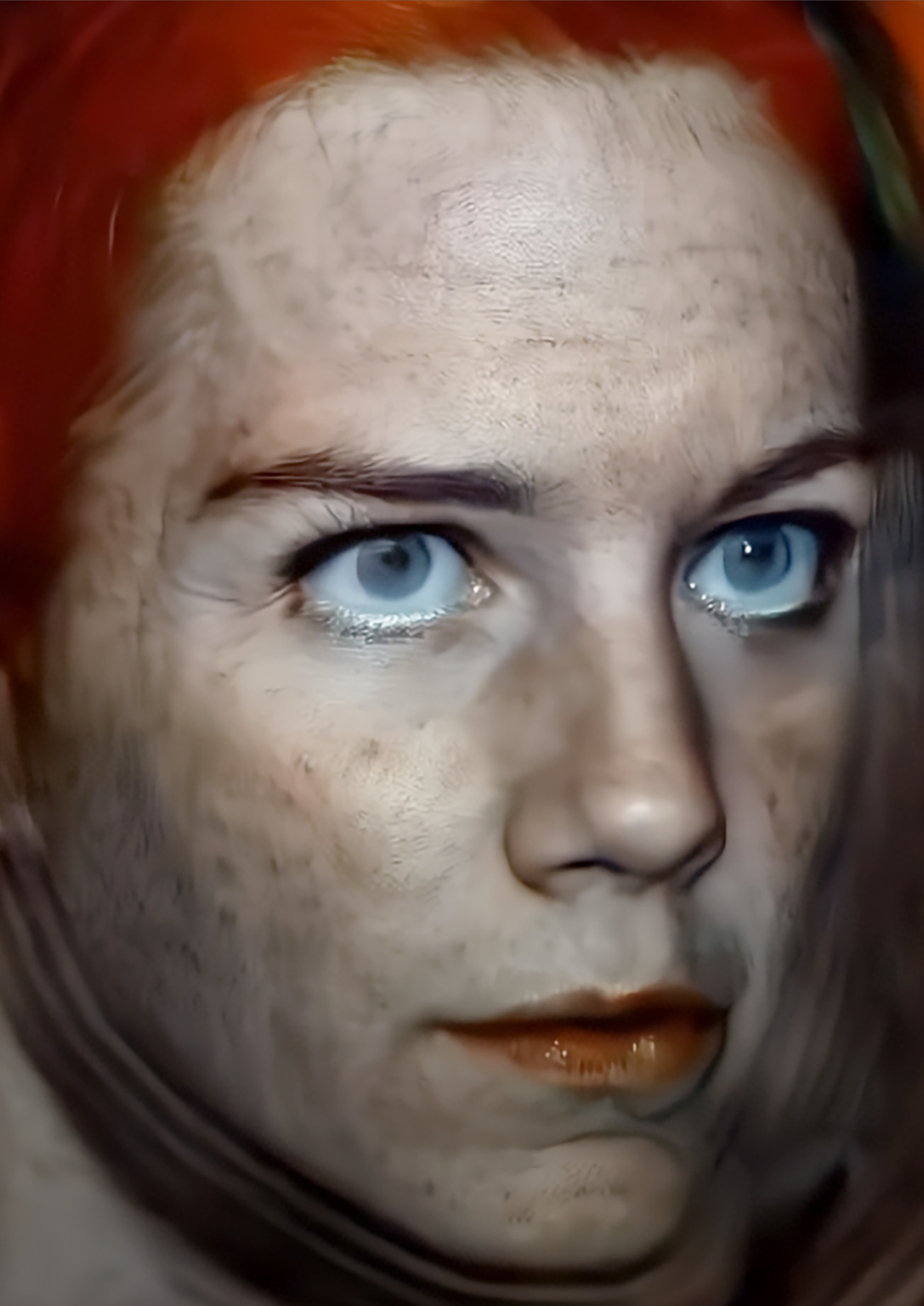
FILE SÃO PAULO 2025: SYNTHETIKA – Mario Klingemann
Liberation
Mario Klingemann
FILE SÃO PAULO 2025: SYNTHETIKA – Arte e Tecnologia
Festival Internacional de Linguagem Eletrônica
Liberation – Alemanha
Dançando pelo Espaço Latente
Mario Klingemann ama dançar — não profissionalmente — mas, sempre que o faz, tenta traduzir sua interpretação do movimento e dos gestos da música para o espaço multidimensional de seu corpo. Trabalhando com os espaços latentes de redes neurais, particularmente com GANs, encontrou um processo paralelo: traduzir som em imagens. A dança torna a música visível por meio do movimento; sua arte tenta fazer o mesmo com inteligência artificial, permitindo que a música molde imagens. As três obras em vídeo apresentadas — Freeda Beast — Bringing Things to an End (GAN generated beta) (2017), The Noise of Art (2020) e Liberation (2020) — são experimentos nessa tradução, cada uma criada de uma só vez por um código escrito por ele, que responde ao ritmo e ao clima das músicas. Bringing Things to an End, provavelmente um dos primeiros videoclipes totalmente gerados por IA no mundo, utiliza um modelo de geração de rostos treinado pelo artista.
Mario Klingemann é um artista e cético com uma mente curiosa. Seu trabalho explora a interseção entre arte e tecnologia, com foco em inteligência artificial, aprendizado profundo e estruturas algorítmicas, investigando continuamente os mecanismos internos tanto das máquinas quanto do processo criativo.
BIO
Mario Klingemann é um artista e cético com uma mente curiosa. Seu trabalho explora a interseção entre arte e tecnologia, com foco em inteligência artificial, aprendizado profundo e estruturas algorítmicas, investigando continuamente os mecanismos internos tanto das máquinas quanto do processo criativo.
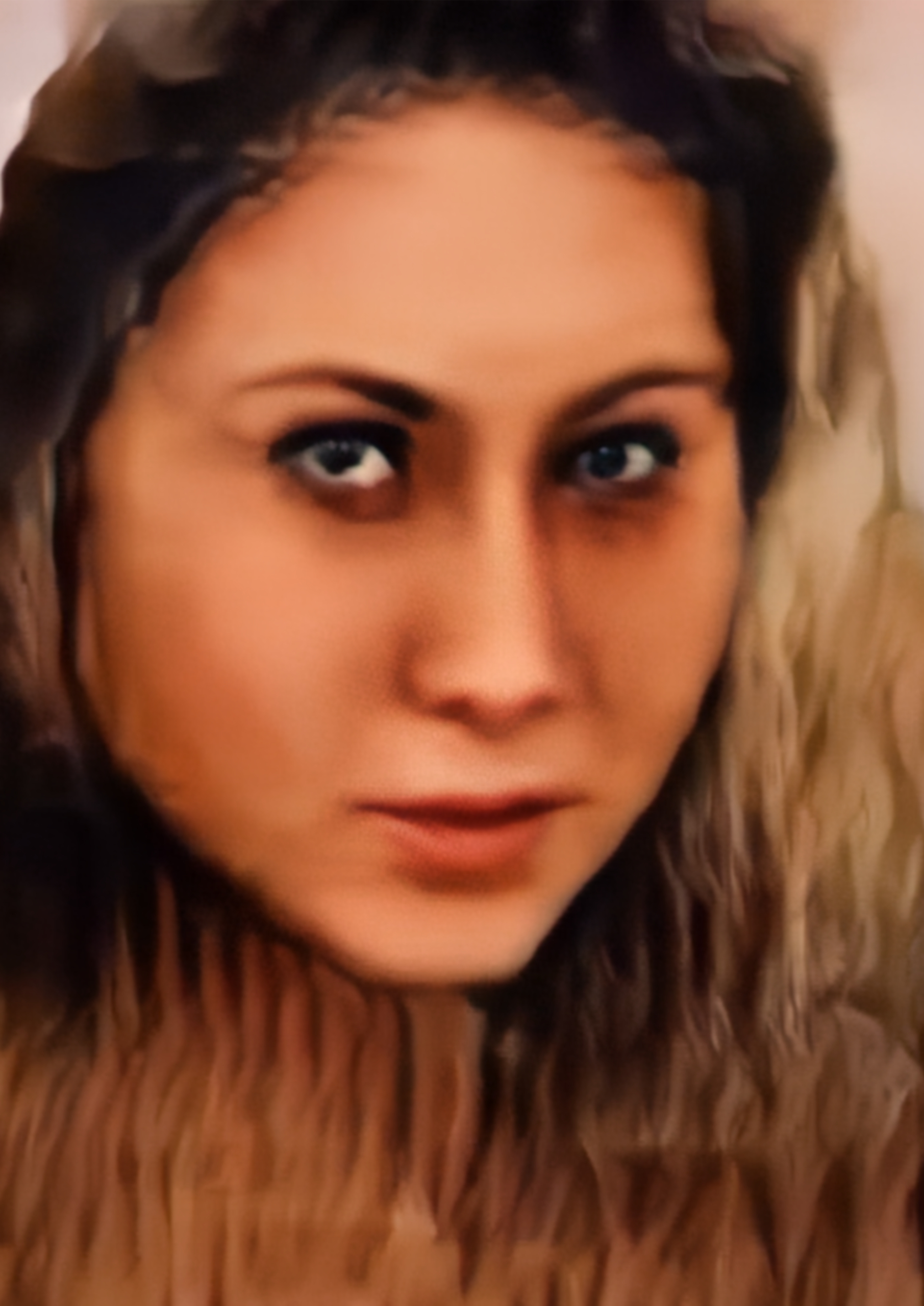
FILE SÃO PAULO 2025: SYNTHETIKA – Mario Klingemann
Freeda Beast
Mario Klingemann
FILE SÃO PAULO 2025: SYNTHETIKA – Arte e Tecnologia
Festival Internacional de Linguagem Eletrônica
Freeda Beast – Alemanha
Dançando pelo Espaço Latente
Mario Klingemann ama dançar — não profissionalmente — mas, sempre que o faz, tenta traduzir sua interpretação do movimento e dos gestos da música para o espaço multidimensional de seu corpo. Trabalhando com os espaços latentes de redes neurais, particularmente com GANs, encontrou um processo paralelo: traduzir som em imagens. A dança torna a música visível por meio do movimento; sua arte tenta fazer o mesmo com inteligência artificial, permitindo que a música molde imagens. As três obras em vídeo apresentadas — Freeda Beast — Bringing Things to an End (GAN generated beta) (2017), The Noise of Art (2020) e Liberation (2020) — são experimentos nessa tradução, cada uma criada de uma só vez por um código escrito por ele, que responde ao ritmo e ao clima das músicas. Bringing Things to an End, provavelmente um dos primeiros videoclipes totalmente gerados por IA no mundo, utiliza um modelo de geração de rostos treinado pelo artista.
Mario Klingemann é um artista e cético com uma mente curiosa. Seu trabalho explora a interseção entre arte e tecnologia, com foco em inteligência artificial, aprendizado profundo e estruturas algorítmicas, investigando continuamente os mecanismos internos tanto das máquinas quanto do processo criativo.
BIO
Mario Klingemann é um artista e cético com uma mente curiosa. Seu trabalho explora a interseção entre arte e tecnologia, com foco em inteligência artificial, aprendizado profundo e estruturas algorítmicas, investigando continuamente os mecanismos internos tanto das máquinas quanto do processo criativo.

FILE LED SHOW Neuroscientific-Installation
saccade
OUCHHH STUDIO
Neuroscientific-Installation
We are invited to São Paulo for our vertical light and sound installation which will transform the facade of São Paulo’s one of the most important architecture which is Fiesp Led Building.
We started this project with the idea that Neuroscience and simultaneous movement of both eyes between two or more phases of fixation in the same direction algorithms, and we transform the high-resolution led screen into a media canvas which transformed into living architecture.

DORETTE STURM
FILE SAO PAULO 2017
THE BREATHING CLOUD
“The Breathing Cloud” is a monumental floating organism. The work transforms a space by its motion, light, and rhythmic breathing. With this light art the phrase “let a room come to life” gets a new meaning. The clouds skin looks fragile and soft, and the movements are rhythmic, yet random, so the whole room feels like a living being. The technology is designed so that the strong LED modules and the mechanism support the pervasive breathing. It gets physically bigger and smaller and embraces with its bright light space.
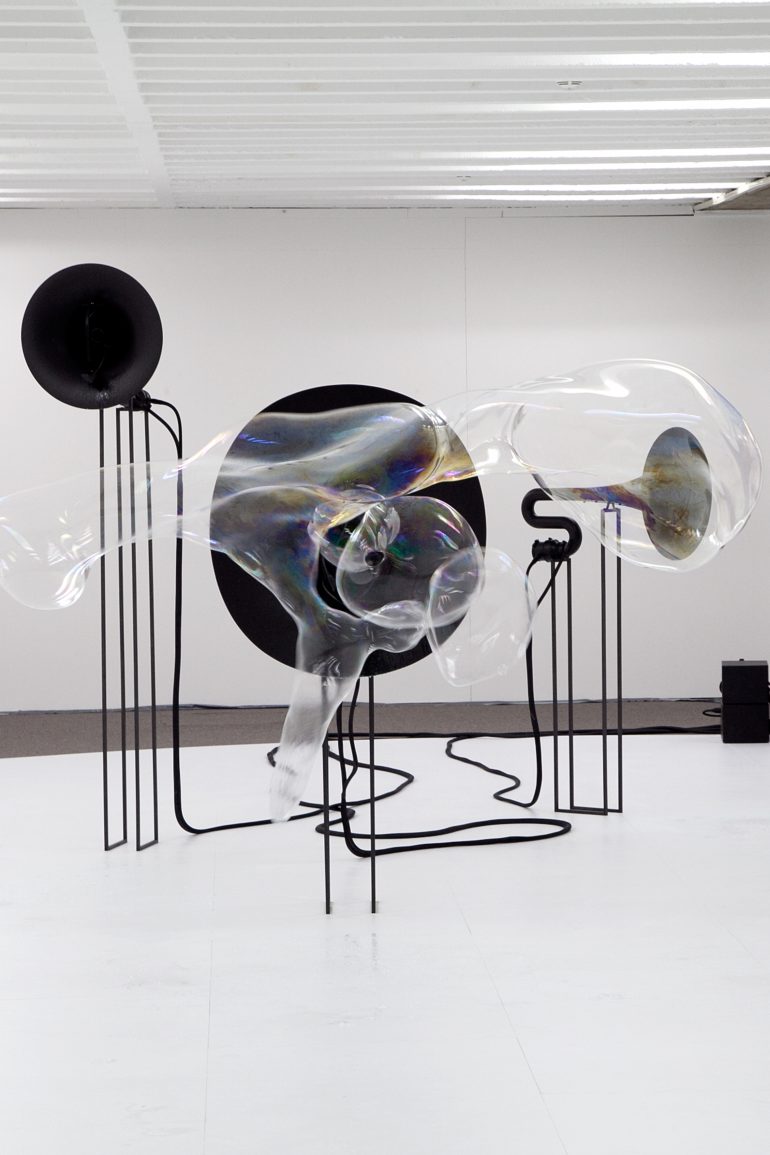
THOM KUBLI
FILE SAO PAULO 2017
BLACK HOLE HORIZON
The nucleus of the installation is the invention of an apparatus resembling a ship horn. With the sounding of each tone, a huge soap bubble emerges from the horn. It grows while the tone sounds, peels off the horn, lingers through the exhibition space and finally bursts at an erratic position within the room.

INFINITE
Hibanana Studio
Liu Chang & Miao Jing
FILE SAO PAULO 2017
FILE LED SHOW
“INFINITE” is an audiovisual installation created by New York-based visual artist duo Liu Chang and Miao Jing, in collaboration with sound artist Gan Jian. “INFINITE” explores the connection between time and space, discusses about spatial gravity and its influence to human’s perception. Sound and visual elements are in completely in sync in order to contribute the immersive experience.

Daniel Jolliffe
Daniel Jolliffe
R.I.P
FILE SÃO PAULO 2017
Perfect View
the viewer encounters a badly damaged Cloisonné vase, mounted on a white plinth. When the viewer comes within a few meters of the piece, the vase begins to turn silently, adjusting its position so as to always show the viewer a perfect view of its undamaged side.

One Life Remains: André Berlemont, Kevin Lesur, Brice Roy & Franck Weber
FILE SAO PAULO 2017
LES DISCIPLINES DU RECTANGLE
Inspired by Michel Foucault’s work, Les disciplines du rectangle is a videogame proposition about the nature of rules and norms at the digital age. If society provides models of accomplishment we are supposed to fit inside, then the rectangle is the pure abstraction of this idea. The geometrical shape works as a symbol of the very nature of normativity, blind to individual differences. The rectangle, existing only on the screen, reveals how digital technologies can in some ways become the new location for this normativity and the ambivalent results of their intangible and invisible nature. Besides, the installation offers an occasion to think about the way games can become manipulation tools. The fact that in the end, players act as if they were piloted by the rectangle (an inversion of the traditional relationship between player and avatar) gives an aesthetical highlight to this.
.
Inspirado en el trabajo de Michel Foucault, Les disciplines du rectangle es una propuesta de videojuego sobre la naturaleza de las reglas y normas en la era digital. Si la sociedad proporciona modelos de realización en los que se supone que encajamos, entonces el rectángulo es la pura abstracción de esta idea. La forma geométrica funciona como símbolo de la naturaleza misma de la normatividad, ciega a las diferencias individuales. El rectángulo, que existe solo en la pantalla, revela cómo las tecnologías digitales pueden convertirse de alguna manera en la nueva ubicación de esta normatividad y los resultados ambivalentes de su naturaleza intangible e invisible. Además, la instalación ofrece la oportunidad de pensar en cómo los juegos pueden convertirse en herramientas de manipulación. El hecho de que, al final, los jugadores actúen como si fueran piloteados por el rectángulo (una inversión de la relación tradicional entre jugador y avatar) le da un toque estético a esto.

Lawrence Malstaf
FILE SAO PAULO 2017
OVERVIEW
Astronauts who were able to observe planet Earth from outer space for the first time, all experienced a strong emotional reaction later called the overview effect. A euphoric feeling of oneness with the planet and all living beings as a collective biotope where ‘my molecules are yours’ and vice versa and individuality seems an illusion.
The Overview-installation consists of a motorized video screen that can slowly pan, tilt and lift. The screen is 3m x 4m wide and has LED light on the backside. An abstracted globe is projected on the front.

TEUN VONK
FILE SAO PAULO 2017
THE PHYSICAL MIND
“The Physical Mind” is Vonk’s attempt to let participants experience the relation between their physical and mental states by applying physical pressure to the body. The installation consists of two inflatable objects in-between which a participant lays down to subsequently get lifted up and be gently squeezed between the curves of the two objects. While the lifting creates an unstable feeling, this stressful sensation is soon thereafter contrasted with the secure feeling of being gently squeezed between two soft objects. Besides this experience for participants, the installation also evokes feelings of empathy amongst bystanders who witness participants undergo the experience.

PLAPLAX
FILE SAO PAULO 2017
KAGE-TABLE
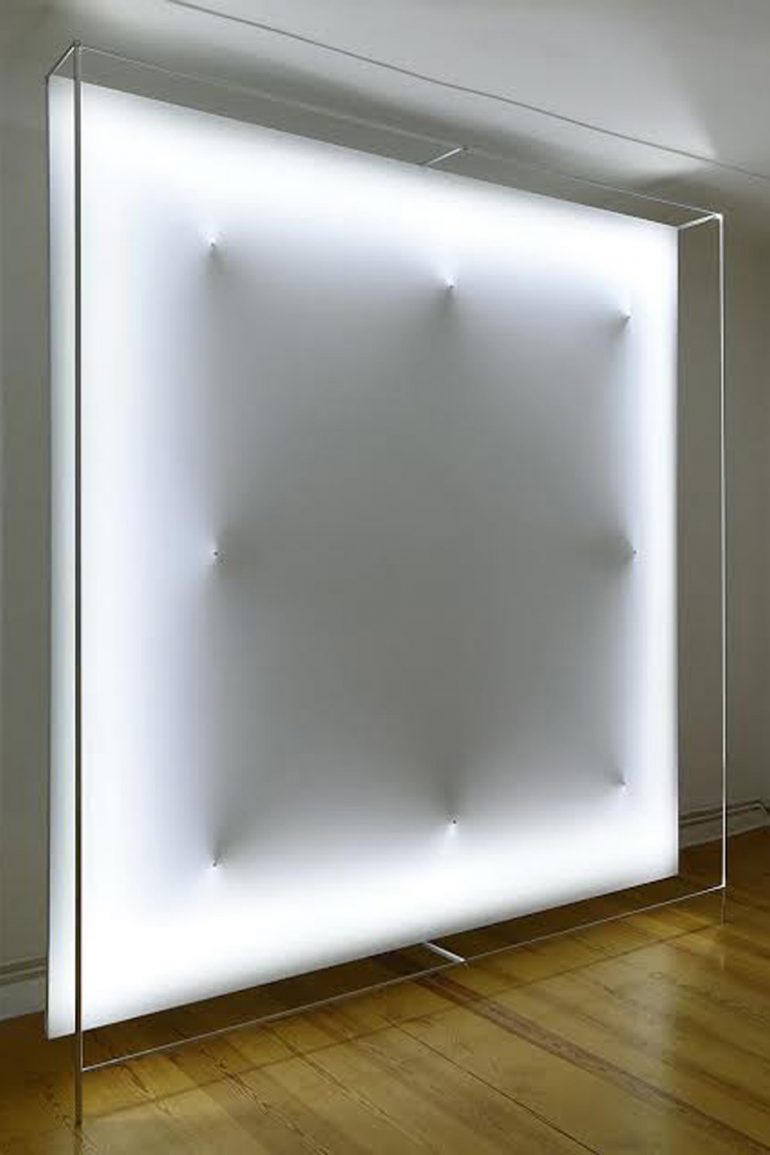
Since old times, the shadow proved the existence (for a ghost has no shadow). However, like the image projected on the TV monitor (which is “virtual” in this sense) the shadow itself doesn’t have substance. And at the same time, as we can see in the shadow picture, the shadow or silhouette stands as the basis of the image. In “KAGE-table”, we took the notice of this shadow-substance characteristic and by using cone-shaped object I created its shadow with computer graphics.
ANDREAS LUTZ
FILE SAO PAULO 2017
HYPERGRADIENT
“Hypergradient” analyzes the different interpretations of an impartial consistent statement. The installation repeatedly changes between two states: the “statement” state and the “interpretation” state. The statement state displays a sequence of characters of a distinct semiotic system, which can be described as a deputy for all known semiotic systems. These single characters are grouped to strings and then form string orders into an abstract proposition.

Håkan Lidbo & Max Björverud
FILE SAO PAULO 2017
THE FLOOOR
“The Flooor” is a collaborative music instrument and a social meeting place. 36 sensors under a carpet, connected to a music computer mounted under the floor and loudspeakers mounted in the ceiling.
The patterns printed on the carpet invite people to explore different combinations. 6 groups with different instruments, 6 zones in each group. By standing or dancing on different combinations of the 6 zones, 64 different loops can be triggered.

Amy Karle
Internal Collection
FILE SAO PAULO 2017
Internal Collection
Switching up conventions about the body and beauty, the selections from her “Internal Collection” showing at FILE represent internal anatomy in external wearable form. Merging anatomy, fashion, and technology, each piece is created by hand and digital manufacturing technologies. By depicting designs inspired by anatomy, this work communicates that, when we share our likeness and what is going on inside of us, an opportunity is offered for finding beauty within ourselves and connection with others.
Moritz Simon Geist – Entropy – Germany
ENTROPY
Moritz Simon Geist
FILE SÃO PAULO 2026: Inter-creativity – Art and Technology – MUSIC
Electronic Language International Festival
Phytomorphic Topologies – Canada / United States / France
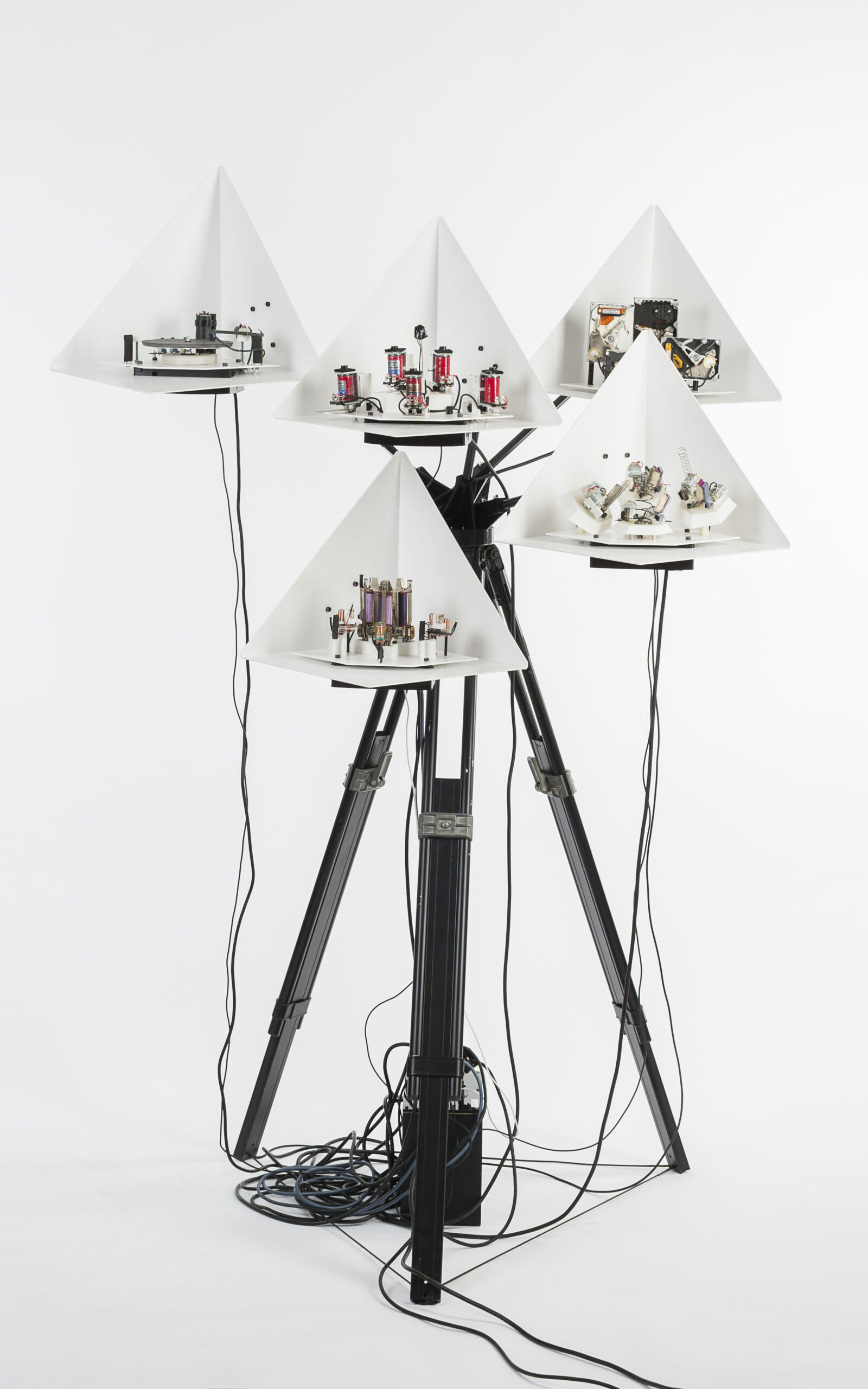
Entropy is a robotic music video built entirely around Tripods One, Moritz Simon Geist’s system of custom-built sound robots. Every sound is generated live by physical machines: a pneumatic hi-hat, a futuristic kalimba, a drone guitar, and mechanical tone generators. The result is machine-made techno in which the choreography of the robots is as central as the music. The Tripods One system is on permanent display at the Ars Electronica Center in Linz.
BIO
Moritz Simon Geist is a German visual artist, researcher, and music producer working at the intersection of robotics, physical sound, and algorithmic agency. He builds robotic instruments and autonomous sound sculptures, from the MR-808 (2012) to Tripods One (2017). His work has been shown at the Venice Biennale, Ars Electronica, ZKM, and the MIT Museum.
Bromo – CRISPR the pattern of life – Spain
CRISPR THE PATTERN OF LIFE
Bromo
FILE SÃO PAULO 2026: Inter-creativity – Art and Technology – MUSIC VIDEO PERFORMANCE
Electronic Language International Festival
CRISPR the pattern of life – Spain
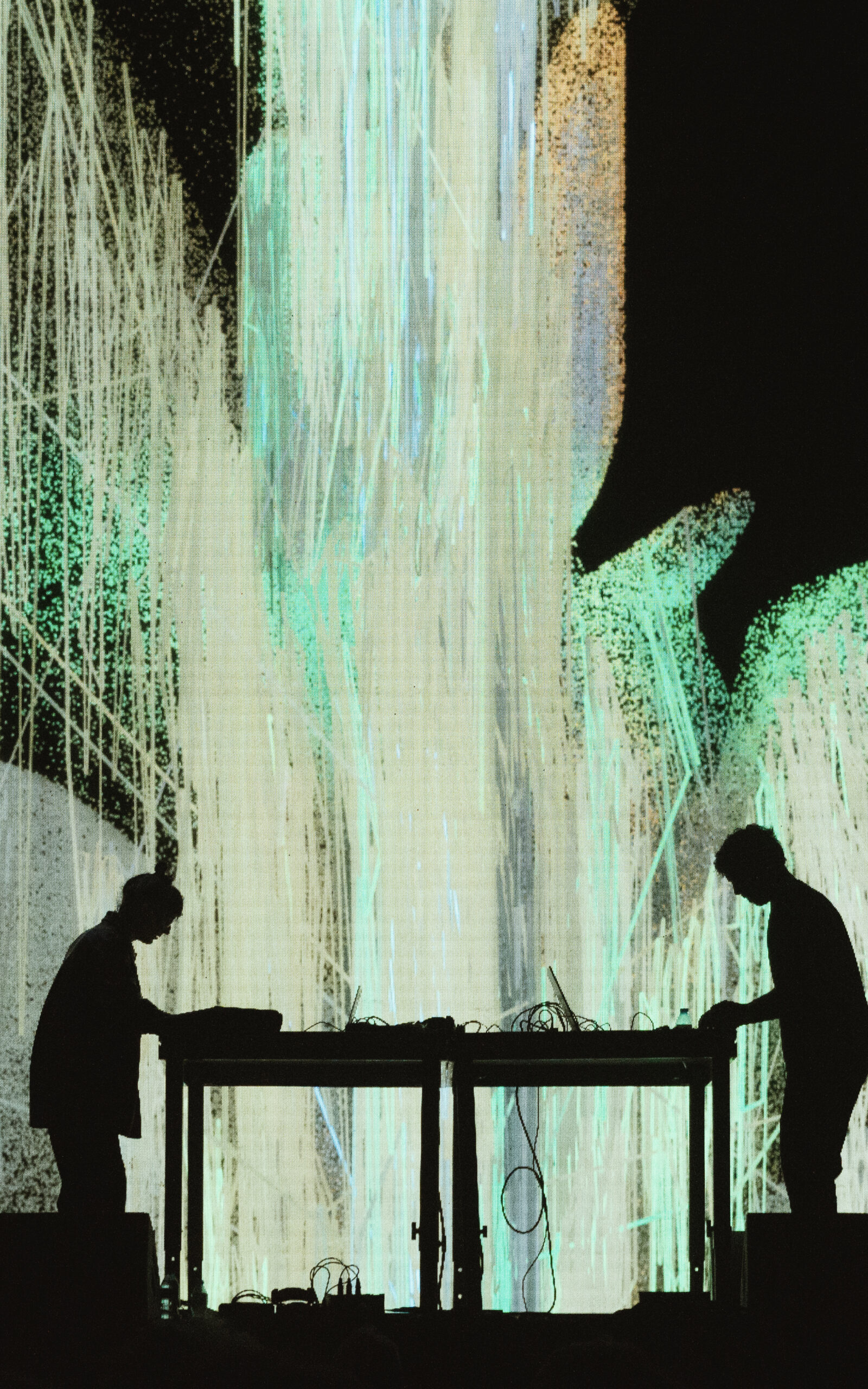
Bromo’s proposal goes beyond an audiovisual concert of experimental music and generative art. Through the constant search for new communication tools, this conceptual facet, in which research processes become almost academic approaches, helps create transformative experiences, foster an active audience, and generate reflection in the viewer. CRISPR the pattern of life is their latest offering.
BIO
Bromo is the duo formed by Paloma Peñarrubia, a renowned film composer with a long history of selecting the best electronic music tracks for her sets. In 2017, she decided to create, together with Azael Ferrer, developer of the sophisticated visuals, a project combining experimental music, generative art, and AV performance, exploring diverse themes…

Hiroya Sakurai – The Stream XIV – Japan
THE STREAM XIV
Hiroya Sakurai
FILE SÃO PAULO 2026: Inter-creativity – Art and Technology – VIDEO ART SHORT
Electronic Language International Festival
The Stream XIV – Japan
The artist observed how the landscape transforms when the wind blows through the fields. By using a wind chime, he perceived the invisible presence of the wind through sound, and through the ripples of wind that arose in the fields, he also captured its presence visually.
BIO
Born in Yokohama, Japan. Emeritus Professor at Seian University of Art and Design. Sakurai’s work can be found in the collections of the National Gallery of Canada and J. Paul Getty Trust. Sakurai was awarded at 35th Asolo Art Film Festival (2016), Italy, 39th Tokyo Video Festival, 18th FILE 2017, São Paulo (2017) and 56th Ann Arbor Film Festival.
Andres Isaza Giraldo – last_movie_on_earth_run_01 – Colombia / Portugal
LAST_MOVIE_ON_EARTH_RUN_01
Andres Isaza Giraldo
FILE SÃO PAULO 2026: Inter-creativity – Art and Technology – CINEFILE | Short
Electronic Language International Festival
last_movie_on_earth_run_01 – Colombia / Portugal
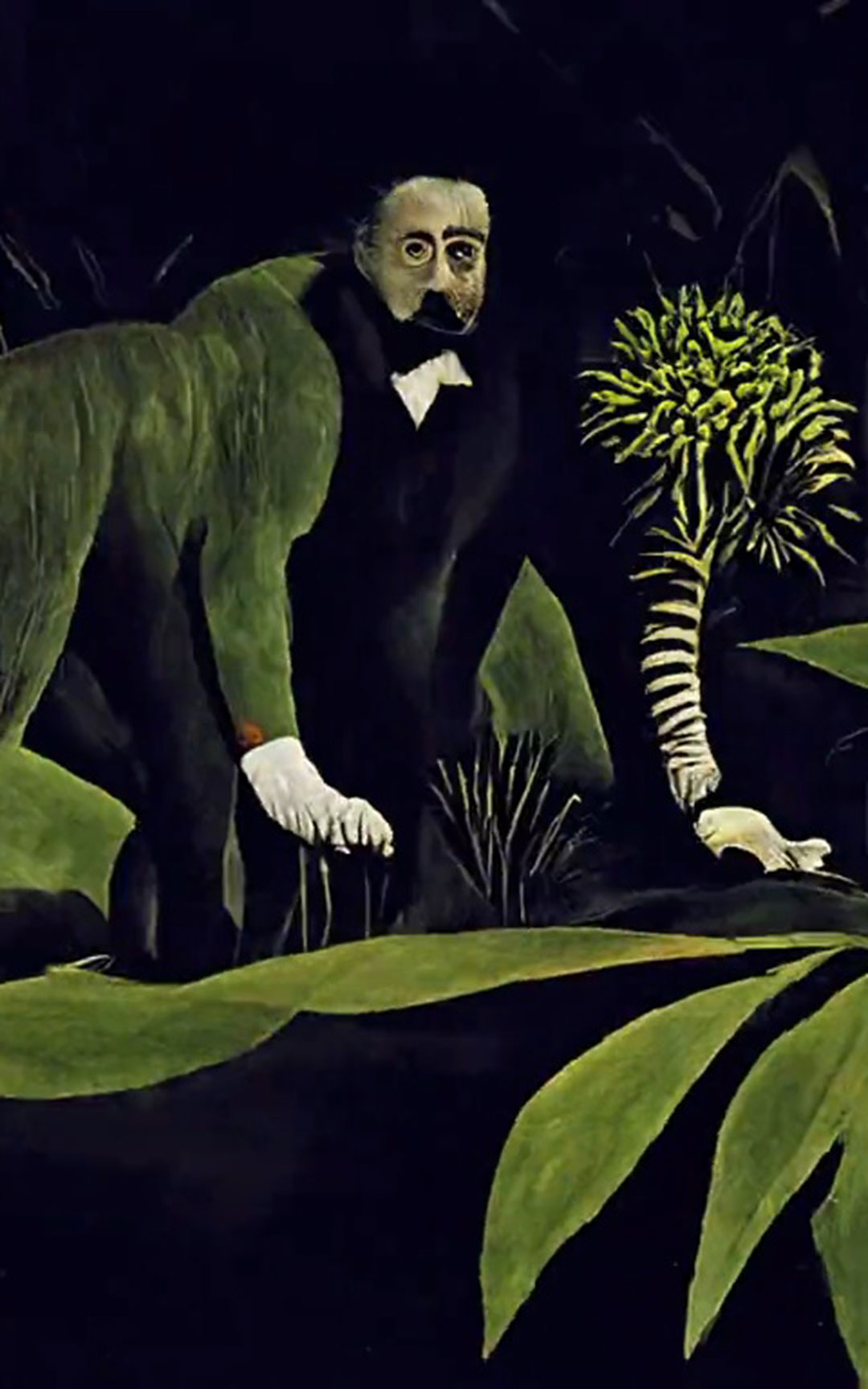
Following the extinction of humanity, a machine revives the life of its programmer and all his ancestors. In a matter of seconds, it has primal dreams of an exuberant pilgrimage of which almost no ruins remain.
BIO
Filmmaker born in Colombia. He studied Film and Television at the National University of Colombia and Multimedia Art at the University of Lisbon. He directed the short films Medias blancas (2017), Sereno (2022) and The Last Film on Earth (2023), which premiered at festivals such as FICUNAM, FICCI and the Beijing International Short Film Festival. His work explores cinematic time in the personal world.

AMY KARLE
Coleção interna
FILE FESTIVAL
Mudando as convenções sobre o corpo e a beleza, a “Coleção interna” exibida no FILE representa a anatomia interna em uma forma vestível externa. Unindo anatomia, moda e tecnologia, cada peça é criada por tecnologias de manufaturas manuais e digitais. Ao retratar designs inspirados na anatomia, esta obra comunica que, quando compartilhamos nossa semelhança e o que se passa dentro de nós, é oferecida a oportunidade de encontrar a beleza dentro de nós e nos conectarmos com os outros.