highlike

ANNETT ZINSMEISTER

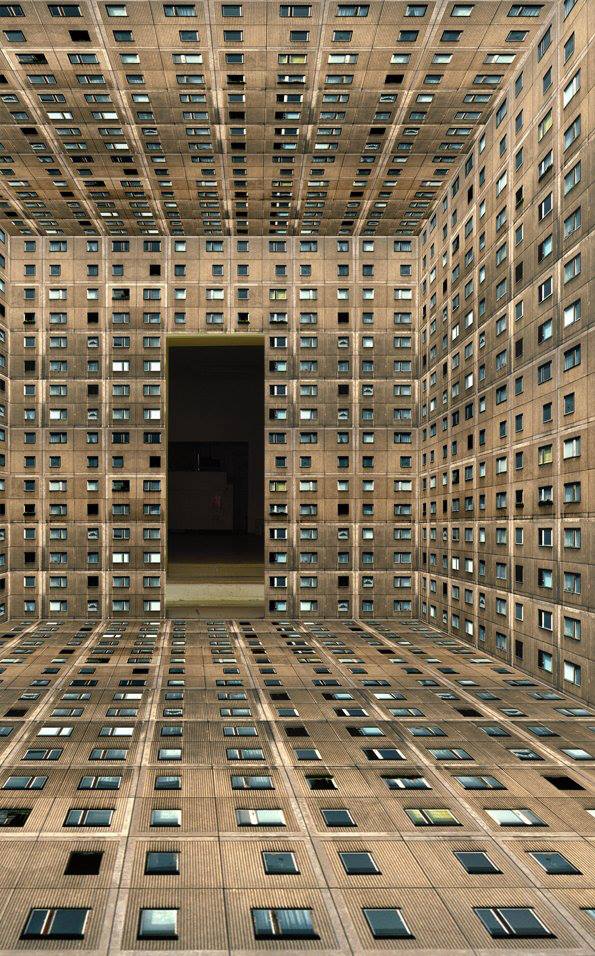
Annett Zinsmeister is a german artist based in Berlin. She received her diploma at UDK – University of Arts and Design in Berlin[…] Her work has been shown in international exhibitions and museums, it is part of public and private collections and published in numerous publications. In her work she focuses on the intersection of art and architecture. She creates large-scale installations, conceptual and built spaces, photography, drawings, films and collages dealing with space. Recurring fundamentals in her oeuvre are the analysis, use and creation of modular principles, multiples, structures, patterns; and themes referring to the search for identity and utopian ideas, social interaction, communication, and the transformation of urban space.
Non-Linear – Transmissions into the Void – India

TRANSMISSIONS INTO THE VOID

Non-Linear


FILE SÃO PAULO 2026: Inter-creativity – Art and Technology – Installations
Electronic Language International Festival


Transmissions into the Void – India

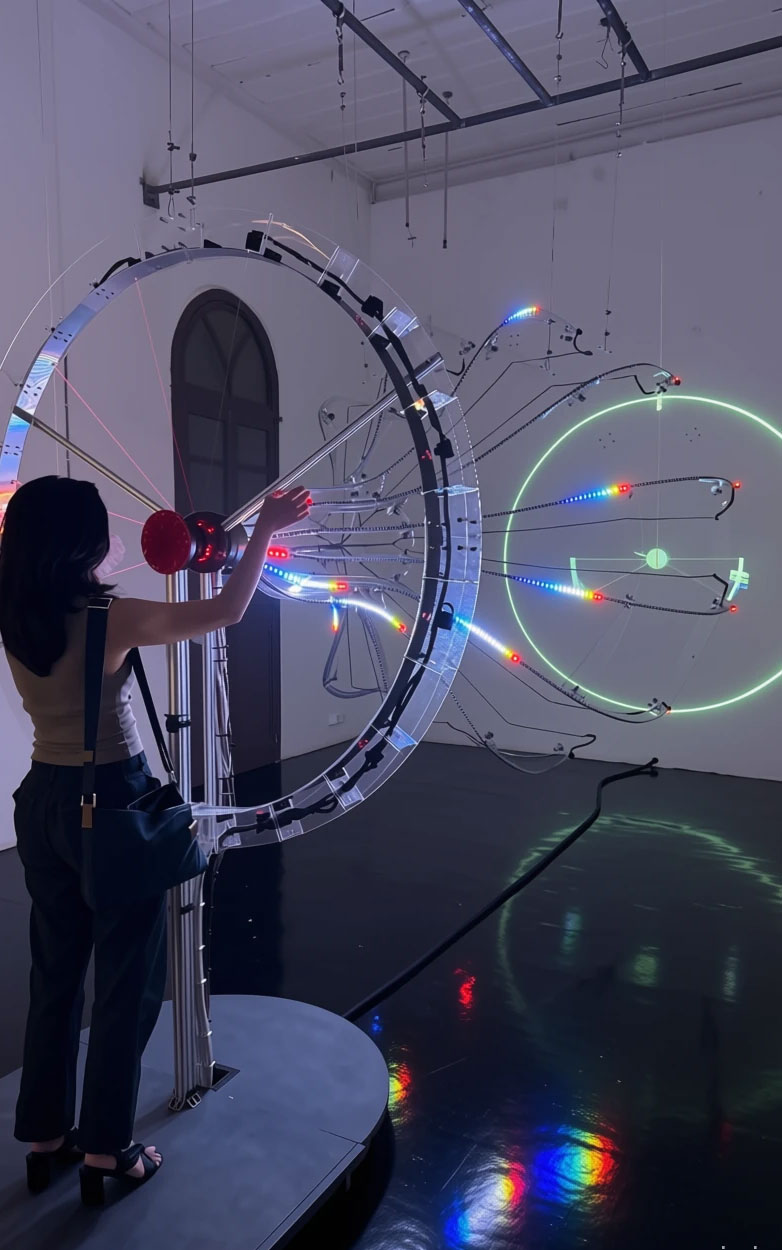
Transmissions into the Void explores the temporal nature of improvisation and the inevitable decay of information, transforming the space into an immersive sound and light machine. Influenced by science fiction and the modular design principles of modern engineering, the room becomes a dynamic interface between viewer and technology. Ultimately, the piece serves as a meditation on the temporal fragility of all information and data—whether biological, digital, or analog—and how time irreversibly erodes it.

BIO
Non-Linear is the creative project of Dennis Peter, an interaction designer and artist redefining the intersection of technology, nature, and creative expression. With a background in architecture and an ever-evolving curiosity, his work spans kinetic installations, generative art, and algorithmic music. From hacking old calculators as a child to crafting immersive, interactive experiences, Dennis continuously expands the boundaries of digital creativity.

ICD and ITKE Research Pavilion

bionic research pavilion

The Institute for Computational Design (ICD) and the Institute of Building Structures and Structural Design (ITKE) of the University of Stuttgart have constructed another bionic research pavilion. The project is part of a successful series of research pavilions which showcase the potential of novel design, simulation and fabrication processes in architecture. The project was planned and constructed within one and a half years by students and researchers within a multi-disciplinary team of architects, engineers and biologists.
The focus of the project is a parallel bottom-up design strategy for the biomimetic investigation of natural fiber composite shells and the development of novel robotic fabrication methods for fiber reinforced polymer structures. The aim was the development of a winding technique for modular, double layered fiber composite structures, which reduces the required formwork to a minimum while maintaining a large degree of geometric freedom. Therefore, functional principles of natural lightweight structures were analyzed and abstracted in cooperation with the University of Tübingen and the Karlsruhe Institute of Technology. Through the development of a custom robotic fabrication method, these principles were transferred into a modular prototype pavilion.