highlike

Guli Silberstein – MATERIALIVE – United Kingdom

MATERIALIVE

Guli Silberstein


FILE SÃO PAULO 2026: Inter-creativity – Art and Technology – VIDEO ART SHORT
Electronic Language International Festival


MATERIALIVE – United Kingdom

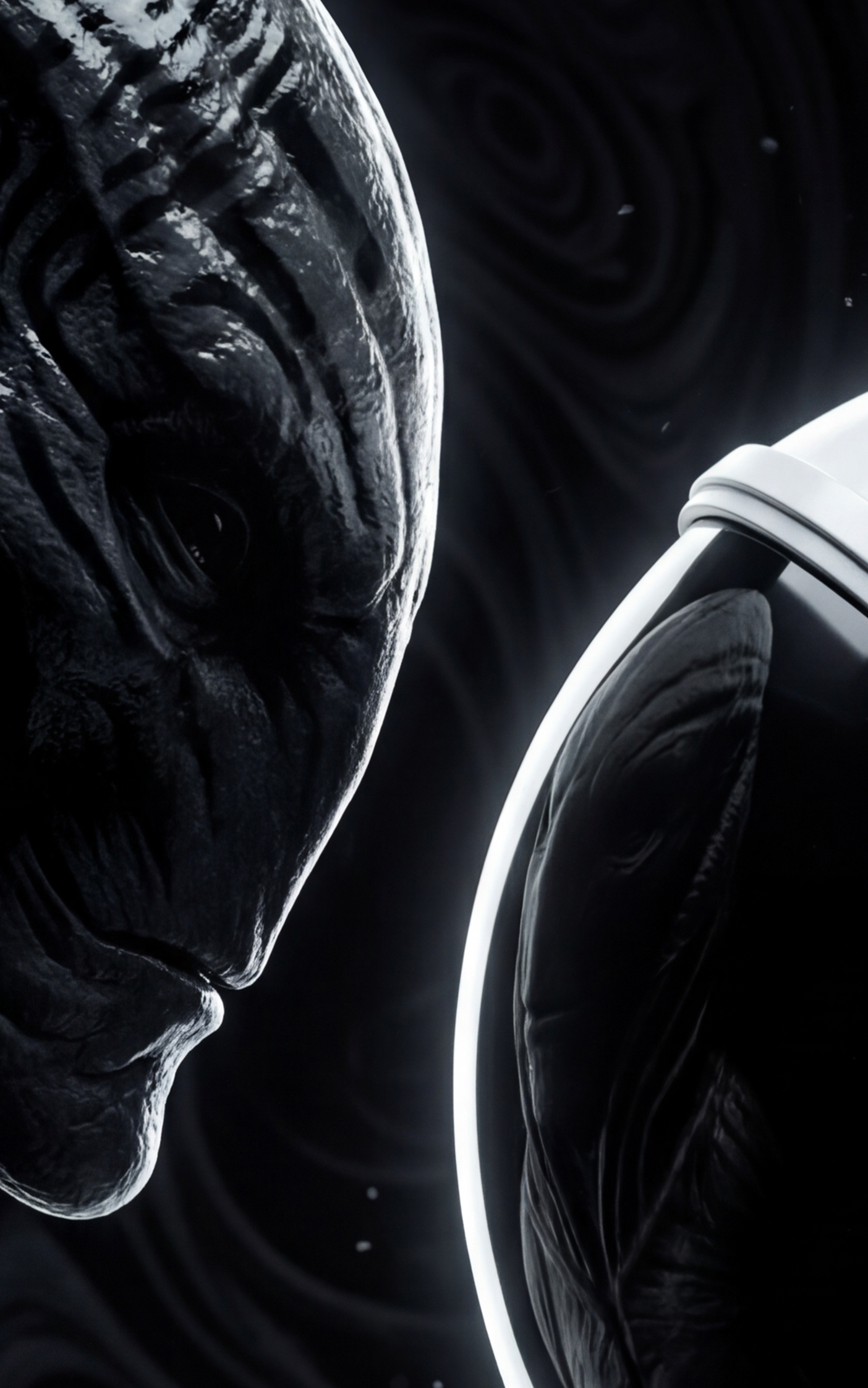
Data, body, pixels, fluids, neural networks and nature, all moshed up through a unique combination of generative AI and algorithmic datamoshing. Morphing videos in the uncanny valley, MATERIALIVE becomes a poem for human and nature (co)existence and its processing by organic forces and technological powers. A hybrid emerges: an audiovisual documentary of the hyperreal, or perhaps a living form born from the history of our dreams and hallucinations. A material, perhaps maternity, for thought.

BIO

Guli Silberstein is a London-based digital/AI video artist working for more than two decades. Since earning a Master’s degree in Media Studies from The New School in 2001, he has specialised in VFX, glitch art and AI, exploring how ideas and stories translate into moving forms. His work has been showcased and awarded at festivals and exhibitions worldwide.

Cho Juyoun – Unfaded – South Korea

UNFADED

Cho Juyoun


FILE SÃO PAULO 2026: Inter-creativity – Art and Technology – VIDEO ART SHORT
Electronic Language International Festival


Unfaded – South Korea

We carry memories that flow and expand like contour lines, forming emotional landscapes of warmth and coldness. Not only people, but objects, history, and even ancient trees hold these flowing memories. Every experience, whether joyful or painful, accumulates like layers of sediment, eventually hardening into rock and drawing unique ridges. The artist wishes to speak to all beings that gather and transform these memories into shape—especially to you, a small yet precious existence, still flowing and growing.

BIO

Born in Seoul (1982), she debuted in 2008. Her early works explored loss and isolation through canvas deconstruction. Since 2019, she has integrated digital animation, culminating in her Borderline series (2023–), which examines the intersection of painterly depth and digital immateriality. Her current practice spans media art and animation, reflecting a focus on cross-genre experimentation.

Chang Gi Lee – Impermanence – South Korea

IMPERMANENCE

Chang Gi Lee


FILE SÃO PAULO 2026: Inter-creativity – Art and Technology – VIDEO ART SHORT
Electronic Language International Festival


Impermanence – South Korea

Impermanence explores the constantly evolving and cyclical essence of nature by positioning generative AI as a “third observer”. Integrating Aristotle’s four elements with the Buddhist concept of interdependent origination, the work visualizes the organic interrelationships of the natural world. Through the unique gaze of AI—belonging neither to humanity nor nature—it reilluminates the rhythms of existence and transformation.

BIO

Chang Gi Lee is a media artist investigating the boundaries between nature, humanity, and AI. Holding an MS from KAIST and an MFA in Media Art, he combines technical precision with philosophical inquiry. Winner of the Alan Turing Award in Chicago and ISEA presenter, his work is showcased globally in New York and Paris.

Alvaro Collar – Rorschach’s Garden – Spain

RORSCHACH’S GARDEN

Alvaro Collar


FILE SÃO PAULO 2026: Inter-creativity – Art and Technology – VIDEO ART SHORT
Electronic Language International Festival


Rorschach’s Garden – Spain

Rorschach’s Garden examines embodiment at quantum scales—identity as superposition, both observer and observed. Degraded video and AI animation create a secret garden of crypto-fauna: organisms flickering between states, trembling with unrealized forms.

The work interrogates bodily multiplicity through quantum uncertainty. Garden biota exists as probability clouds—here/not-here, collapsed/uncollapsed—embodying hybrid physical-digital existence.

BIO

Experimental filmmaker and video artist working at the intersection of low-resolution aesthetics, contemporary moving image, and computational creativity. Founding member of Haz! collective; AVAM associate.

Work exhibited internationally at Ars Electronica (Austria), Hanshan Art Museum (China), Medialab Madrid (Spain), Ibrida Festival (Italy), and NYC Electroacoustic Music Festival, amongs others.

Zheyan Li – Her Message from the Fridge – China

HER MESSAGE FROM THE FRIDGE

Zheyan Li


FILE SÃO PAULO 2026: Inter-creativity – Art and Technology – CINEFILE | Short
Electronic Language International Festival


Her Message from the Fridge – China

A surreal experimental short film exploring a temporal bridge within eras, connected through the unlikely medium of a fridge.

BIO

Zheyan is a visual artist and poet from Chenzhou, China, and a graduate of Metfilm School, in London. His work spans experimental film, documentary, photography, and AI-generated art. He uses a calm, restrained visual language to create cold, philosophical spaces, prompting audiences to reflect on human existence.

Zheyan Li – A Bedtime Story for the End – China

A BEDTIME STORY FOR THE END

Zheyan Li


FILE SÃO PAULO 2026: Inter-creativity – Art and Technology – CINEFILE | Short
Electronic Language International Festival


A Bedtime Story for the End – China

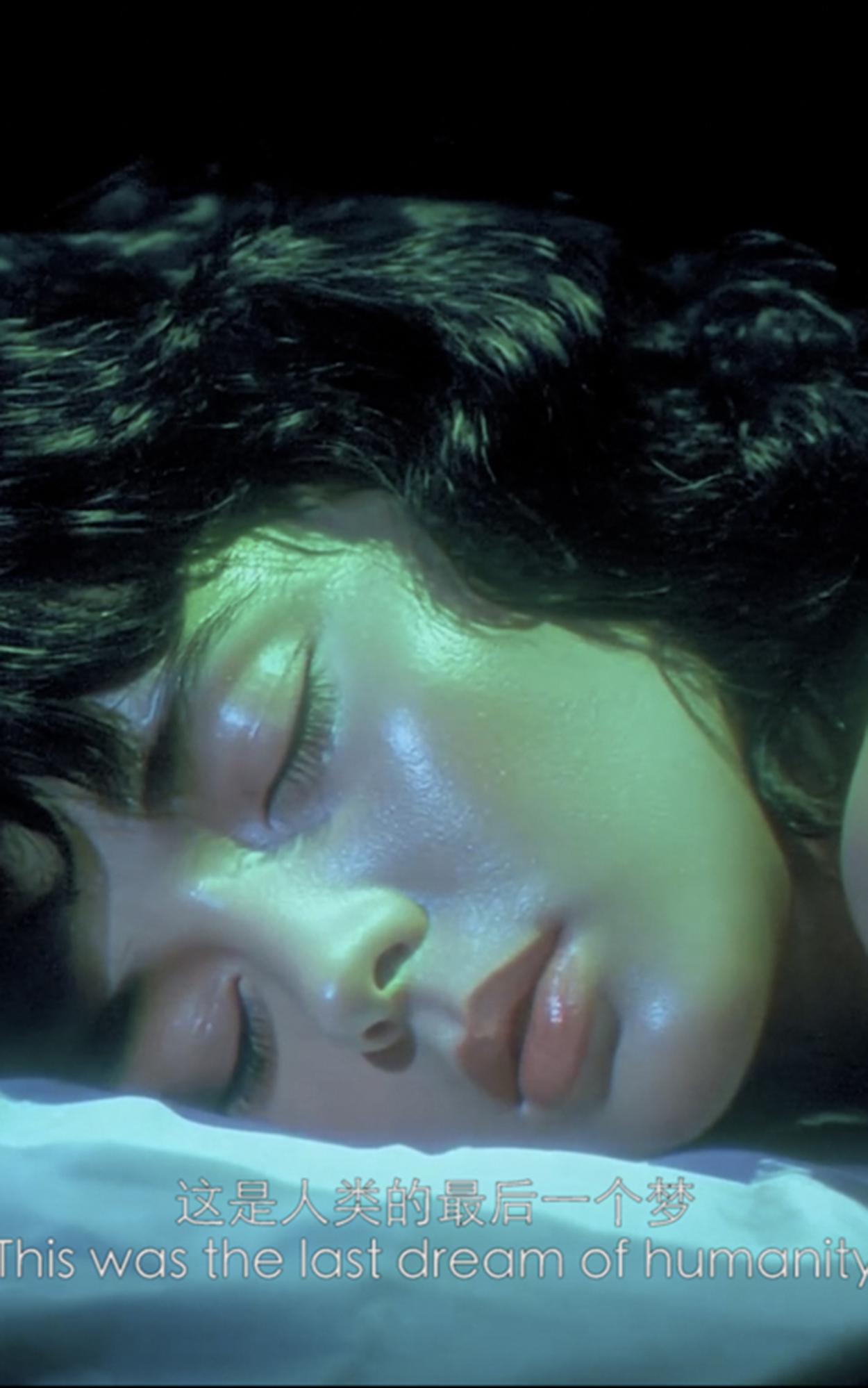
In the near future, a global plague of “perpetual wakefulness” has taken away everyone’s ability to dream. People then discover that our collective, unconscious dreams were the very energy that kept the laws of the universe stable. As the dreams vanish, reality itself begins to fray and unravel. The rules of physics come loose in ways both poetic and strange. Countless sleepless people toss and turn in their rooms, the border between their inner minds and the outer world blurring. 

BIO

Zheyan is a visual artist and poet from Chenzhou, China, and a graduate of Metfilm School, in London. His work spans experimental film, documentary, photography, and AI-generated art. He uses a calm, restrained visual language to create cold, philosophical spaces, prompting audiences to reflect on human existence.

Jaspreet Singh – Aethrimus – India

AETHRIMUS

Jaspreet Singh


FILE SÃO PAULO 2026: Inter-creativity – Art and Technology – CINEFILE | Short
Electronic Language International Festival


Aethrimus – India

A mysterious object known as 3I Atlas, expected to pass harmlessly through space, suddenly changes course and impacts the Moon, destroying a U.S. satellite in the process. The unexplained event triggers global alarm. A rapid-response mission is launched to investigate the anomaly before it threatens Earth. When the team reaches the Moon, they uncover a shocking truth: the object is not a comet, but an alien spacecraft hidden beneath the lunar surface.

BIO

Jaspreet Singh is an independent filmmaker from India with a strong passion for science fiction, mystery, and experimental storytelling. His work explores themes of the unknown, technology, and human perception, blending cinematic visuals with emerging digital and AI-assisted filmmaking tools. Jaspreet creates atmosphere-driven narratives that challenge traditional storytelling and invite audiences to question reality, intelligence, and existence.

Natalie Maximova – Awaiting Oblivion – England

AWAITING OBLIVION

Natalie Maximova


FILE SÃO PAULO 2026: Inter-creativity – Art and Technology – Full-length
Electronic Language International Festival


Awaiting Oblivion – England

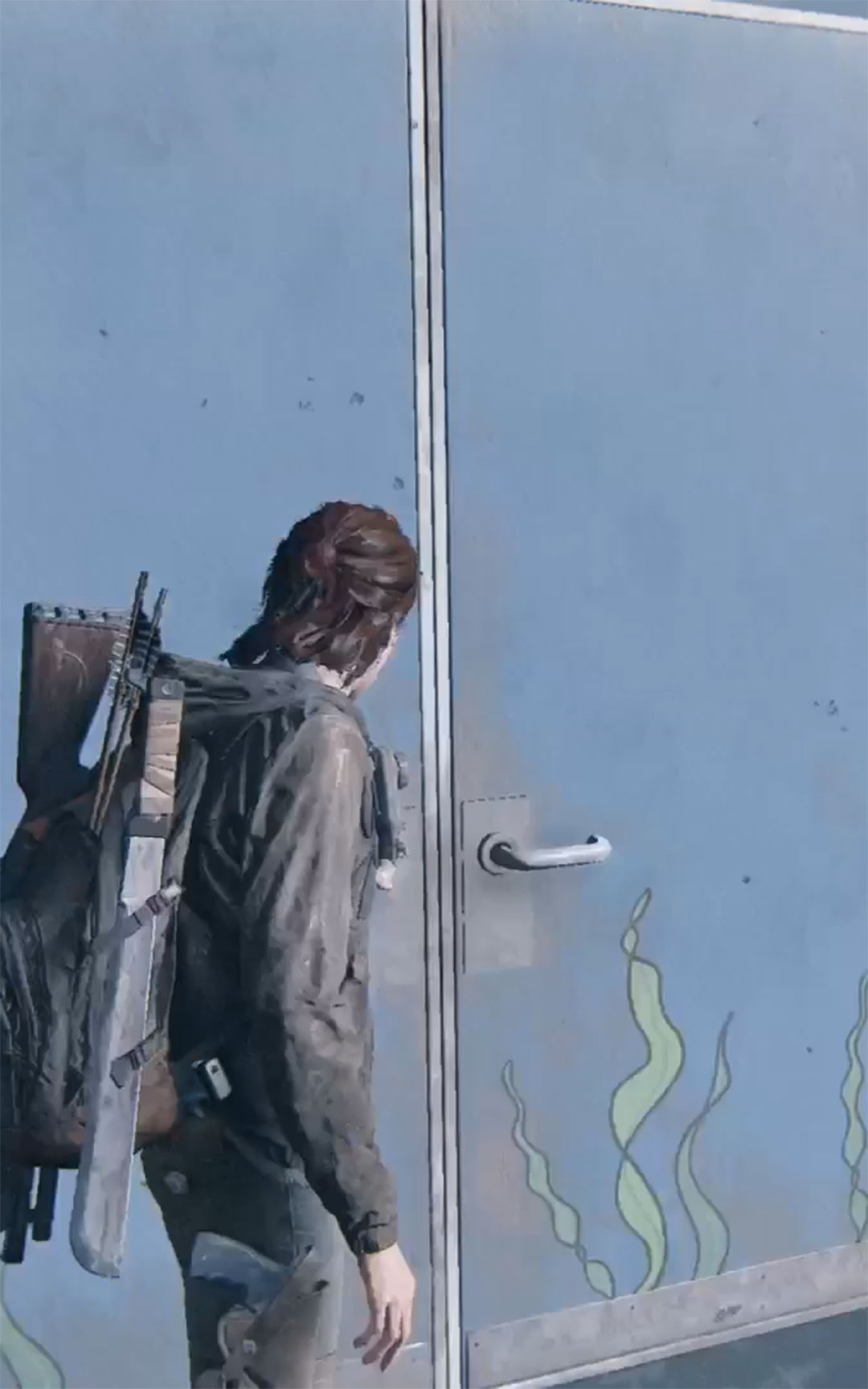
Awaiting Oblivion explores the collapse of simulated reality in The Last of Us II, revealing spaces where boundaries between representation and existence dissolve. As the world fractures into glitches and voids, it exposes the instability of meaning, unmasking the illusion of coherence and confronting the observer with absence at the core of perception. A poetic voiceover amplifies the dissonance between digital precision and fluid, ephemeral ecological and philosophical inquiry.

BIO

Natalie Maximova is a London-based artist and researcher. Her work probes how simulated worlds produce and break meaning. Using machinima, game engines and post-photographic methods, she investigates glitches, edges and out-of-bounds zones, exposing the design logics and politics of mediation that shape how we see and inhabit digital spaces.

Mark Amerika, Chad Mossholder & Will Luers – Dream Factory – United States

DREAM FACTORY

Mark Amerika, Chad Mossholder & Will Luers


FILE SÃO PAULO 2026: Inter-creativity – Art and Technology – Full-length
Electronic Language International Festival


Dream Factory – United States

DREAM FACTORY unfolds across five movements, beginning with the molding of artificial forms as they imagine themselves into embodied existence and culminating in these entities speaking directly to viewers in modulated human voices. The work traces a complete evolution, from foundational apparitions constructing a sense of form, through experimental social embodiment, surreal encounters, and early attempts at speech that surface as Dada-inflected sound poetry, to articulations of self-reflection.

BIO

Mark Amerika is author of thirteen books including his most recent title, My Life as an Artificial Creative Intelligence (Stanford University Press, 2022). He is a Professor of Distinction at the University of Colorado. Will Luers is a digital artist and writer working with AI cinema, recombinant storytelling, and computational media. Chad Mossholder is a BAFTA-nominated composer and sound artist whose experimental electronic music is critically acclaimed.

ADRIEN MONDOT

cinematique
An invitation to journey, daydream and idle away, while rediscovering the childhood fantasies hidden in each one of us. An invitation to shake up the rational principles that guide us today in our modern existence. Afloat a raft voyaging across virtual materials and through landscapes. Lines, points, letters and digital objects projected on plain surfaces weave through poetic surfaces, marrying body and gesture.

FILE SÃO PAULO 2025: SYNTHETIKA – Parceria IED

Surfaces

IED Partnership

FILE SÃO PAULO 2025: SYNTHETIKA – Art and Technology – LED SHOW
Electronic Language International Festival
 

Surfaces – Brazil

Concrete beams, glass, brick walls, cement… Buildings are built to last, to withstand time. LED screens, on the other hand, thrive on the light they emit—they turn on, blend, and fade. They are ephemeral. When a building is clad in LEDs, the permanent and the transient meet, between what already is and what might become. In the iconic FIESP building on Avenida Paulista, surface design transforms architecture into a field of experimentation. There, students from IED SP explore new possibilities for this building’s existence, redefining the structure through animated light and design.

BIO

Students of the Bachelor’s degree in Graphic and Digital Design at the Istituto Europeo Di Design (IED SP) have come together to create a collective work of animations inspired by surface design, its redefinition, and media materialization, seeking to explore language for visual communication projects. IED is an international training and research network in Design, Fashion, Visual Communication, and Creative Management.

FILE SÃO PAULO 2025: SYNTHETIKA – Marc Samper

A Dreamscape Cartography
Marc Samper

FILE SÃO PAULO 2025: SYNTHETIKA – Art and Technology
Electronic Language International Festival

A Dreamscape Cartography – Spain

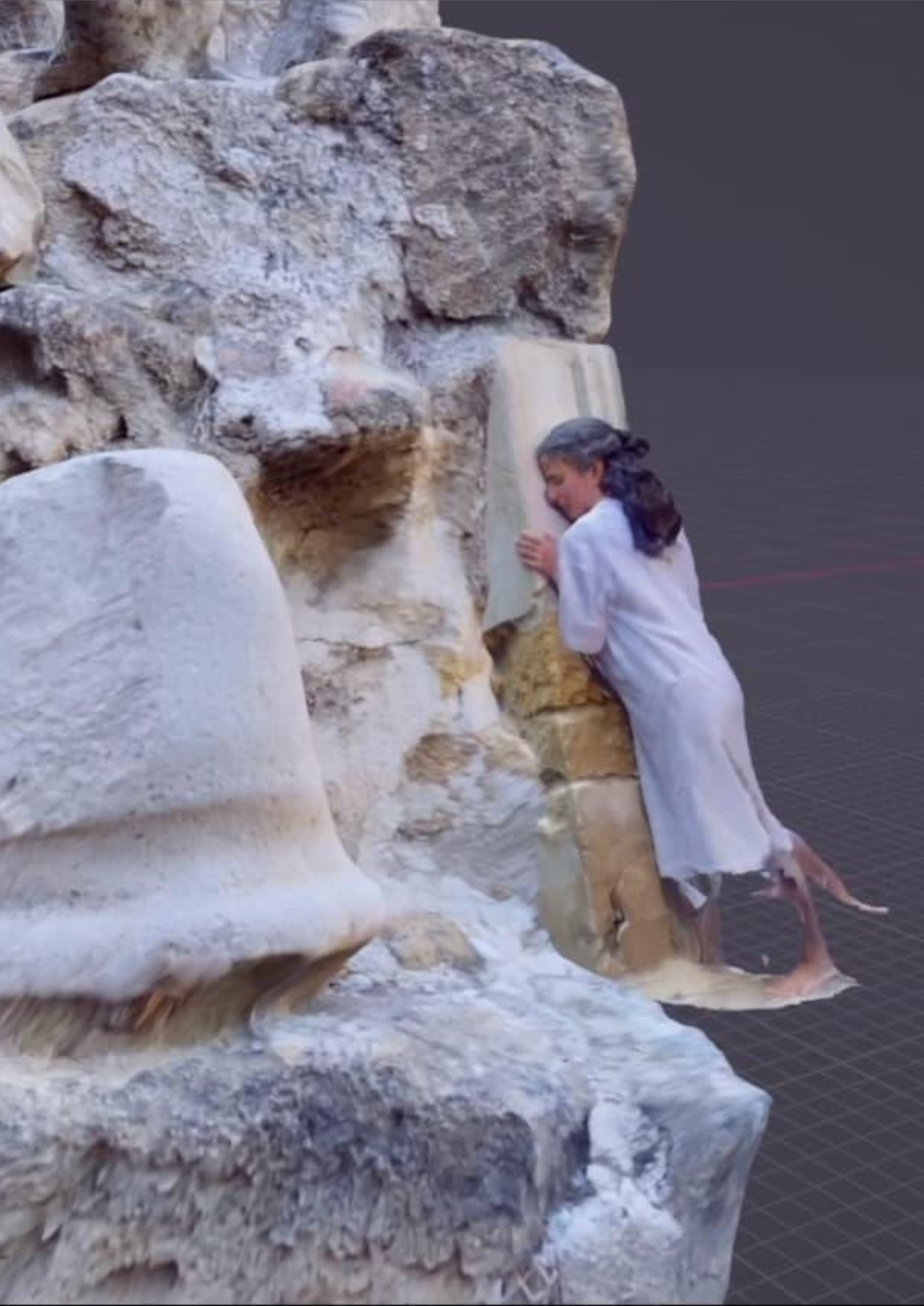
A Dreamscape Cartography is a 3D digital artwork created from scans and navigated via Blender. The piece reimagines the ancient ritual of dream incubation, fusing inner realms with virtual environments. Using scans of abandoned houses in the Cyprus Security Zone, it creates a space that blends dreamlike and physical dimensions. Narrated by texts by Paul Celan, the work seeks to build a bridge between imaginary and lived experiences, inspiring new connections between space, memory, and existence.

BIO

Marc Samper is a visual artist, experimental filmmaker, and photographer from Barcelona, currently based in Paris. Graduated in Philosophy from the University of Barcelona and with a Master’s in Cinema from Pompeu Fabra University, his work investigates the ontology and phenomenology of images in global media, speculative metaphysics, and the intersection between mysticism and technology.

FILE SÃO PAULO 2025: SYNTHETIKA – Koral Alvarenga

Meka Talks — Além da carne, o aço

Koral Alvarenga

FILE SÃO PAULO 2025: SYNTHETIKA – Art and Technology – Video Art
Electronic Language International Festival


Meka Talks — Além da carne, o aço – Brazil

Meka talks are provocative dialogues between artist Koral Alvarenga and various machines, exploring the future of humanity. In this first encounter, the work reflects on the transition of humanity to a new state of existence, where the physical and biological limitations of the body are overcome by the durability and transformative potential of technology.

BIO

Koral Alvarenga is a digital artist with a degree in Visual Arts and a postgraduate degree from UNESP. Her research explores the intersection between the digital and the physical, using 3D modeling, digitization, virtual reality, and 3D printing. Her works address themes such as identity, post-humanism, and human connections, merging technology and art with a futuristic vision.

FILE SÃO PAULO 2025: SYNTHETIKA – Gabriel KÖI e Sabato Visconti

Motherboard

Gabriel KÖI e Sabato Visconti

FILE SÃO PAULO 2025: SYNTHETIKA – Art and Technology – Shorts Films AI
Electronic Language International Festival


Motherboard – Brazil

Motherboard is an experimental film that dives into the intersection between tech nology and consciousness, exploring the delicate boundary between the human and the digital. On this journey through the circuit, reality merges with the digital, challenging the understanding of existence. The contrast between the human and the artificial is revealed in the intertwining of both, echoing the voice of this emerging consciousness.

BIO

Sabato Visconti is a Brazilian digital artist. His works interrogate con temporary and historical practices of digital imagery, manipulating the inherent materialities of production and distribution. Gabriel Böing (KÖI) is an artist born and raised in São Paulo, who explores narrative and dreamlike stories materialized through mediums like 3D, AI, and video, heavily influenced by internet culture.

FILE SÃO PAULO 2025: SYNTHETIKA – Edwin van der Heide

Spiral of Time — Amazonas Brazil — UFAM

Edwin van der Heide

Interact with Spiral of Time — Amazonas Brazil — UFAM via FILE ARCHIVE


FILE SÃO PAULO 2025: SYNTHETIKA – Art and Technology – Installations
Electronic Language International Festival


Spiral of Time — Amazonas Brazil — UFAM – Netherlands

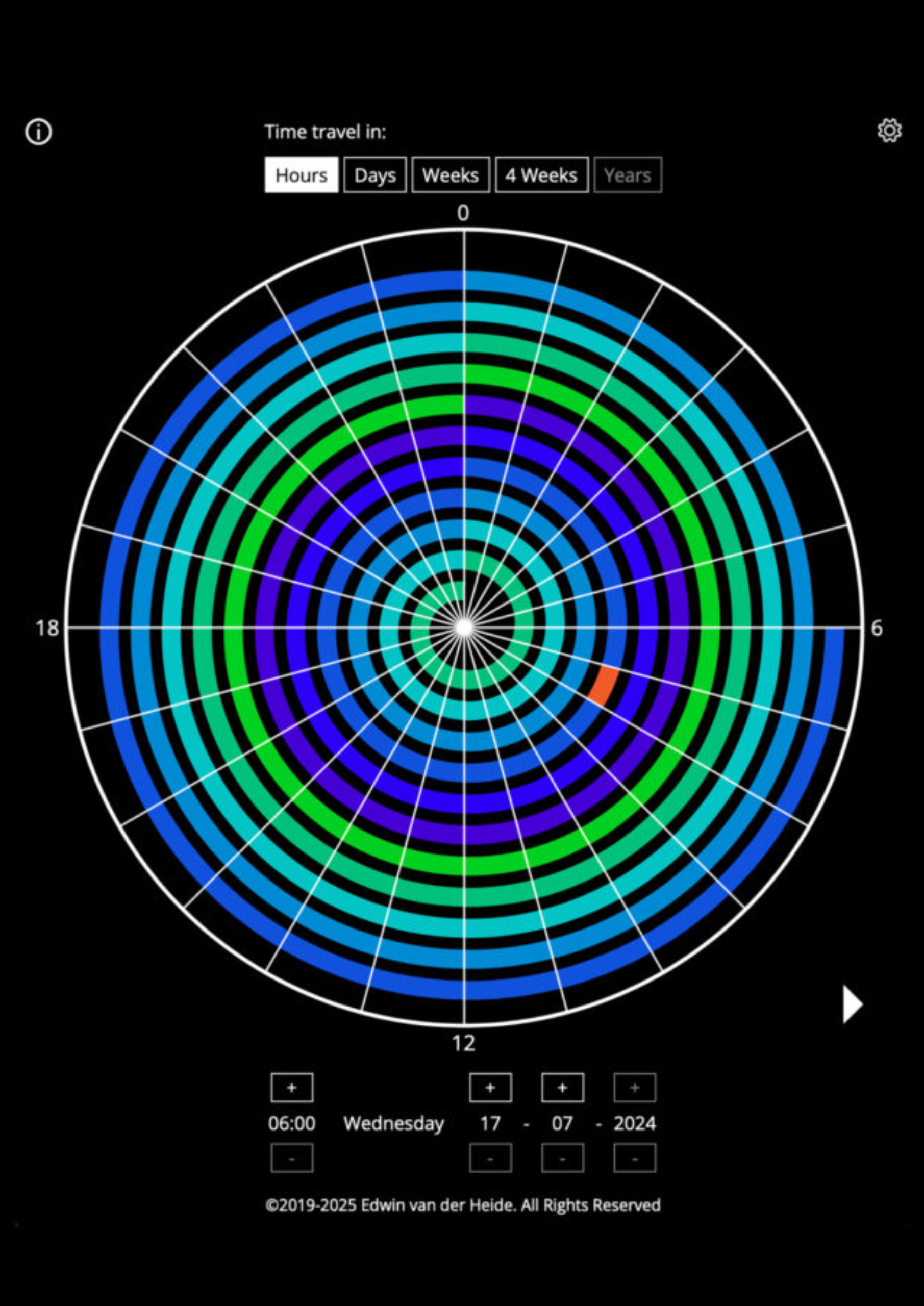
Spiral of Time captures and stages the diverse soundscape of a specific location over the course of several years. By documenting the unique natural, cultural, spatial, and temporal dynamics of a place, the work honors the contributions of all its actors. Every hour, a one-minute recording is made, resulting in a vast sonic archive over time. It is accessible online through a spiral-shaped interface, allowing listeners to explore the cyclical patterns revealed by navigating the material across different time intervals. 


Since July 17th, 2024, the artist has been recording the sounds of the square in front of MACBA (Museum of Contemporary Art of Barcelona). It is a very interesting, diverse, and vibrant urban space. The work is accessible online via https://www.macba.cat/en/spiral-of-time-placa-dels-angels/ and will also be presented physically in the museum starting July 10th, 2025.


Edwin is expanding the project to include other recording locations around the world—not only in urban contexts (dominated by humans) but also in areas governed by nature. The artist dedicated himself to a recording site in the Amazon region. Since February 11th, 2025 Spiral of Time has been installed at the Amazon Rainforest surrounding The UFAM (Federal University of Amazonas) in Manaus. It is home to one of the world’s largest urban forest fragments. Completely surrounded by the dense urban matrix of Manaus, this forest has been isolated since the late 1980s. The forest retains rich ecological features, including areas of mature terra-firme forest, late-stage secondary vegetation, and small patches of white-sand forests. This unique setting offers a rare opportunity to study tropical forest dynamics within a metropolitan environment. 

Spiral of Time-UFAM immerses the listeners in the acoustic life of one of the most biodiverse ecosystems on the planet. This contrast between the natural rhythms of the forest and the human-made patterns of the city enriches the broader narrative of the Spiral of Time, offering a deeper reflection on coexistence, change, and continuity across different environments.

BIO

Edwin van der Heide is an artist, composer, and researcher focused on sound, space, and interaction. His work pushes the boundaries of musical composition toward spatial, interactive, and interdisciplinary directions. He creates installations, performances, and immersive environments where the audience is placed at the center, encouraged to engage sensorially and investigatively.


FILE SÃO PAULO 2025: SYNTHETIKA – Frederik De Wilde

Hunter and Dog

Frederik De Wilde

FILE SÃO PAULO 2025: SYNTHETIKA – Art and Technology – Installations
Electronic Language International Festival

Hunter and Dog – Belgium

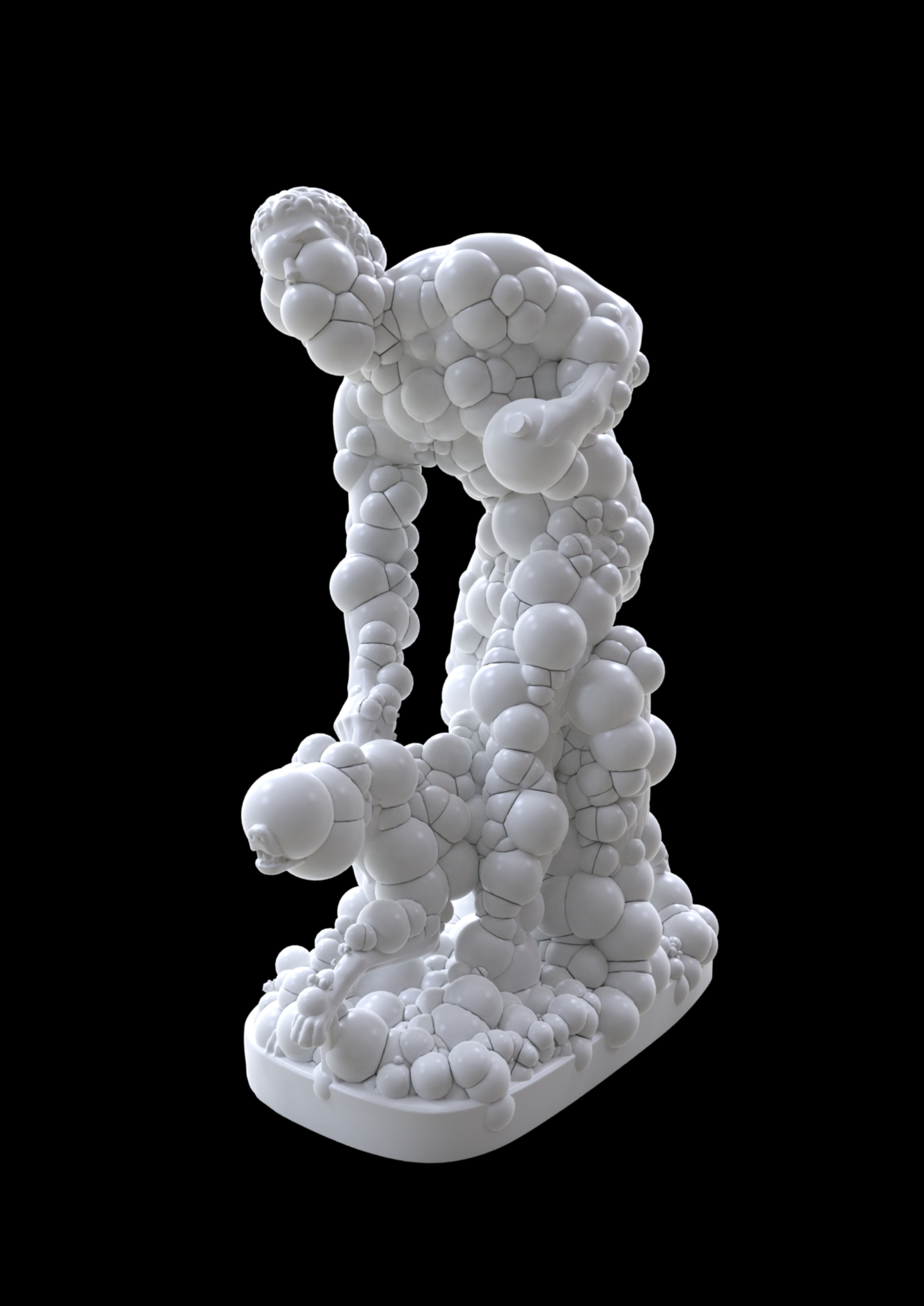
Genetic and evolutionary algorithms reinterpret an existing artwork. De Wilde uses digital scans and custom genetic and evolutionary algorithms as a deconstruction technique to reinterpret and update the nineteenth-century work Hunter and Dog from sculptor John Gibson R. A. (1790–1866).

Frederik De Wilde’s Hunter and Dog interrogates the intersections of human evolution, genetic engineering, and the hybridization of technology and biology. De Wilde reinterprets the historical sculpture through the lens of post-evolutionary theory, engaging with contemporary debates on CRISPR, synthetic biology, and the implications of human-directed genetic modification. CRISPR, the revolutionary gene-editing technology, has introduced an unprecedented rupture in the trajectory of evolution. No longer constrained by the slow mechanisms of natural selection, humans now possess the ability to intervene directly in their own genetic blueprint, marking a shift toward a post-Darwinian paradigm. This technological power, however, is not neutral; it emerges from a historical lineage of scientific inquiry deeply entangled with colonialism. The history of genetic manipulation is inseparable from colonial bioprospecting, eugenics, and exploitative medical experimentation on marginalized populations. Colonial regimes treated bodies—both human and non-human—as sites of intervention, control, and optimization, a logic that persists in contemporary biotechnological frameworks. Post-colonial discourse reveals how genetic engineering risks perpetuating these legacies, reinforcing power asymmetries between those who wield biotechnological control and those subjected to its consequences. CRISPR, while offering the promise of eradicating disease and expanding human potential, also raises ethical concerns about genetic stratification, bio-capitalism, and the commodification of life itself. De Wilde’s work visualizes these tensions, making visible the processes of cell division and morphogenesis—the very biological mechanisms now subject to human intervention. Hunter and Dog does not merely depict the transformation of a neoclassical form but speculates on the future of the human body as a site of engineered evolution. From a decolonial perspective, the artwork questions who has the authority to edit life and to what ends. It challenges the techno-utopian narratives that frame genetic modification as an inevitable progress while obscuring its social, ethical, and ecological implications. By hybridizing art, science, and technology, Hunter and Dog compels us to confront the uncertainties of a CRISPR-driven future: Will genetic editing reinforce existing inequalities, or can it be decolonized and democratized? How do we navigate this post-natural frontier without losing the human—and more-than-human—dimensions of our existence? De Wilde’s work invites us into this speculative space, where the hunter, the dog, and the algorithm coalesce into a vision of a world where biology is no longer destiny, but a site of contested agency.

Where are we going from here? 

BIO

Frederik De Wilde fuses art, science, and tech. Known for his Blackest-Black works that inspired Kapoor’s Vantablack, he has shown at Venice Biennale, BOZAR, MAAT, Pompidou, and ZKM, winning awards like Ars Electronica.
Trust

Hivemind

Hivemind is a knowledge game for artists to navigate the inner workings of their practice. The game is part of the Serpentine R&D Platform’s continued effort to reimagine how artists and institutions can bring audiences into the research phases of their work. Created by Trust members Calum Bowden, Will Freudenheim and Joanna Pope, the game allows for narrativised walkthroughs by artists of their back-end working environments. The artists approached the creation of Hivemind with this question in mind: how can you build a game that allows artists to archive and share, not only a finished artwork, but the tools, data and experiments they’ve built to bring their work into existence?

BREAKFAST

Interwoven Existence

The artwork draws inspiration from the concept that individual human beings are interconnected rather than isolated. It is a visual representation of collective strength and diversity. The artwork is divided into sections of various sizes and colors, each symbolizing the diverse origins of people around the world.
As viewers approach the artwork, it becomes interactive, reflecting their image across the piece. Upon stepping away, a recording of their interaction is placed into one of the sections, symbolizing the randomness of a given person’s birthplace and socioeconomic position. Subsequently, recorded video clips of previous viewers are displayed in adjacent sections, integrating new viewers into the existing community of participants.

QUBIT AI – International Electronic Language Festival – Art and Technology

QUBIT AI | quantum & synthetic ai
Electronic Language International Festival

July 3rd to August 25th
Tuesday to Sunday, 10am – 8pm
FIESP Cultural Center

Design: André Lenz
Image: Iskarioto Dystopian AI Films – Athena

QUBIT AI

In its 25 years of existence, the International Electronic Language Festival (FILE) is an internationally renowned Brazilian project that since 2000 has explored the intersection between art and technology. With more than two decades of history, the festival stands out for fostering exhibition spaces and debate about artistic innovations driven by disruptive and innovative technologies, inviting the public to get involved with experimental forms of art that challenge the boundaries of conventionality. Currently, two of these technologies stand out in the contemporary scenario: the accelerated development of quantum computing and artificial intelligence corroborated by synthetic data.
Quantum computing, an emerging revolution in the technological field, offers a new range of creative possibilities for contemporary artists. This new era allows the exploration of unprecedented frontiers through a new computational format that consists mainly of quantum superposition and entanglement, a new field of exploration for synthetic computer science, as well as for the arts in general; on the other hand, artificial intelligence, fueled by synthetic data, offers artists a new way of making and understanding art, opening up space for new forms, concepts and artistic expressions.

Entitled QUBIT AI, the exhibition delves into this unexplored territory presenting a selection of works of art resulting from the connection between artistic creation and technology, proposing a theoretical reflection on what the interrelationship between quantum computers and synthetic artificial intelligence will be.

Visitors will be invited to experience immersive installations, experimental videos, digital sculptures and other forms of interactive art, which intertwine reality and imagination. The exhibition encourages reflections on the influence of technology on art and contemporary society, while at the same time providing an environment to compare already established technological arts (analog and digital) with the possible futures of art in the synthetic era, enhanced by quantum computing. The QUBIT AI exhibition at FILE SP 2024 transcends the mere presentation of works of art; it is a journey to the limits of human creativity, driven by the convergence of art, science and technology.

Ricardo Barreto and Paula Perissinotto
co-organizers and curators of FILE
International Electronic Language Festival


QUBIT AI: Anna Vasof & VRinMotion Team

The Cage of Time

FILE 2024 | Installations
International Electronic Language Festival
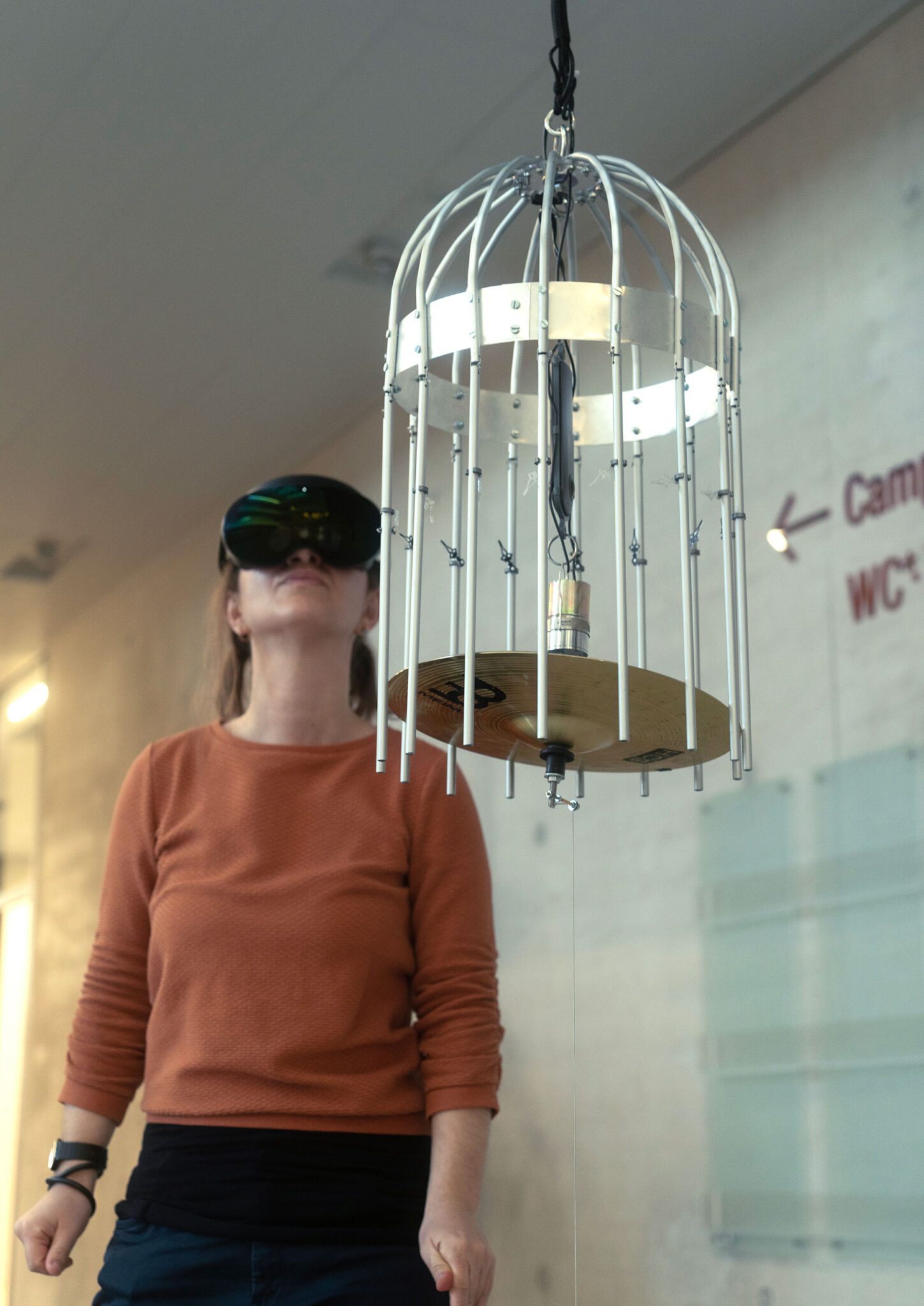
Interactive installation that presents a kinetic instrument object and virtual reality glasses, functioning as a device that animates the illusion of the passage of time in virtual space. In the fabric of existence, time weaves a cage around our ephemeral moments, limiting our perceptions of the past, present and future. By embracing this paradox, we may discover that the cage of time becomes the crucible where the alchemy of experience transforms our understanding of existence.

Bio

Anna Vasof is a multi-award-winning artist who focuses on filmmaking, short videos, and time-based sculptures. VRinMotion is an artistic research project based at St. Pölten University of Applied Sciences in Austria that investigates how features of stop-motion animation and motion capture can be combined with virtual reality to enrich current artistic discourse.

Credits

VRinMotion Team: Franziska Bruckner, Christoph Schmid, Clemens Gürtler, Matthias Husinsky, Christian Munk, Julian Salhofer, Stefan Nebel, Vrääth Öhner.
Concept by: Anna Vasof.

QUBIT AI: Seph Li

Everything Before, Everything After

FILE 2024 | Installations
International Electronic Language Festival
Seph Li – Everything Before, Everything After – China and UK

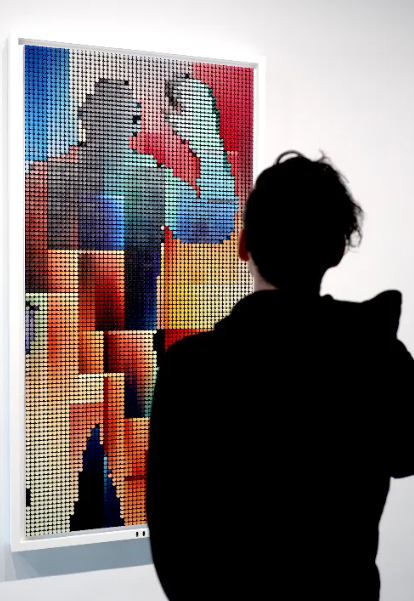
A digital installation features a winding river in the style of Chinese painting, symbolizing time and transition. Touch screens allow visitors to paint over it, altering its course unpredictably. The river embodies history and the future, with each trace contributing to its eternal flow through space and time. Recorded interactions ensure its perpetual existence.

Bio

Born in Beijing in 1988, Seph Li has a mixed background in technology and design, and his keen interest in interactive artworks led him to the field of media arts. Seph studied computer science and entertainment design at Tsinghua University and continued his master’s study in design/media arts at UCLA. Seph currently resides in London, United Kingdom; he creates interactive artworks as well as technical experiments with other production studios.

QUBIT AI: AESTHETIC SYNTHETIC FILE – São Paulo 2024 – Art and Technology

FILE 2024

QUBIT AI | quantum & synthetic ai
Electronic Language International Festival
July 3rd to August 25th
Tuesday to Sunday, 10am – 8pm
FIESP Cultural Center

Design: André Lenz
Image: Iskarioto Dystopian AI Films – Athena

QUBIT AI

In its 25 years of existence, the International Electronic Language Festival (FILE) is an internationally renowned Brazilian project that since 2000 has explored the intersection between art and technology. With more than two decades of history, the festival stands out for fostering exhibition spaces and debate about artistic innovations driven by disruptive and innovative technologies, inviting the public to get involved with experimental forms of art that challenge the boundaries of conventionality. Currently, two of these technologies stand out in the contemporary scenario: the accelerated development of quantum computing and artificial intelligence corroborated by synthetic data.

Quantum computing, an emerging revolution in the technological field, offers a new range of creative possibilities for contemporary artists. This new era allows the exploration of unprecedented frontiers through a new computational format that consists mainly of quantum superposition and entanglement, a new field of exploration for synthetic computer science, as well as for the arts in general; on the other hand, artificial intelligence, fueled by synthetic data, offers artists a new way of making and understanding art, opening up space for new forms, concepts and artistic expressions.

Entitled QUBIT AI, the exhibition delves into this unexplored territory presenting a selection of works of art resulting from the connection between artistic creation and technology, proposing a theoretical reflection on what the interrelationship between quantum computers and synthetic artificial intelligence will be.

Visitors will be invited to experience immersive installations, experimental videos, digital sculptures and other forms of interactive art, which intertwine reality and imagination. The exhibition encourages reflections on the influence of technology on art and contemporary society, while at the same time providing an environment to compare already established technological arts (analog and digital) with the possible futures of art in the synthetic era, enhanced by quantum computing. The QUBIT AI exhibition at FILE SP 2024 transcends the mere presentation of works of art; it is a journey to the limits of human creativity, driven by the convergence of art, science and technology.

Ricardo Barreto and Paula Perissinotto
co-organizers and curators of FILE
International Electronic Language Festival

QUBIT AI: Luigi Novellino (aka PintoCreation)

Brain Entity

FILE 2024 | Interator – Sound Synthetics
International Electronic Language Festival
Luigi Novellino (aka PintoCreation) – Brain Entity – Italy

In a laboratory, a brain-like organism grows rapidly, integrating with technology and evolving into a giant entity that manipulates objects with its mind. He hypnotizes the city, absorbing energy and creating patterns. Efforts to stop him fail, signaling a battle to understand existence. This symbolizes a new era of coexistence, urging us to embrace interconnectivity and navigate a more integrated world.

Bio

Fascinated by the limitless domain of AI, Luigi Novellino adopts the title syntographer, a term that resonates deeply within the community. The artist often asks himself: “am I an artist?” Art, in his view, defies rigid definitions or limits; it represents a fluid expression of creativity that transcends labels. The artist’s ultimate goal is to awaken something in the viewer, provoking thoughts and evoking emotions.

Credits

Music: Odyssey by John Tasoulas

QUBIT AI: FILE QUANTUM WORKSHOP 2024 – São Paulo – Art and Technology

FILE 2024

QUBIT AI | quantum & synthetic ai
Electronic Language International Festival
July 3rd to August 25th
Tuesday to Sunday, 10am – 8pm
FIESP Cultural Center

Design: André Lenz
Image: Iskarioto Dystopian AI Films – Athena

QUBIT AI

In its 25 years of existence, the International Electronic Language Festival (FILE) is an internationally renowned Brazilian project that since 2000 has explored the intersection between art and technology. With more than two decades of history, the festival stands out for fostering exhibition spaces and debate about artistic innovations driven by disruptive and innovative technologies, inviting the public to get involved with experimental forms of art that challenge the boundaries of conventionality. Currently, two of these technologies stand out in the contemporary scenario: the accelerated development of quantum computing and artificial intelligence corroborated by synthetic data.

Quantum computing, an emerging revolution in the technological field, offers a new range of creative possibilities for contemporary artists. This new era allows the exploration of unprecedented frontiers through a new computational format that consists mainly of quantum superposition and entanglement, a new field of exploration for synthetic computer science, as well as for the arts in general; on the other hand, artificial intelligence, fueled by synthetic data, offers artists a new way of making and understanding art, opening up space for new forms, concepts and artistic expressions.

Entitled QUBIT AI, the exhibition delves into this unexplored territory presenting a selection of works of art resulting from the connection between artistic creation and technology, proposing a theoretical reflection on what the interrelationship between quantum computers and synthetic artificial intelligence will be.

Visitors will be invited to experience immersive installations, experimental videos, digital sculptures and other forms of interactive art, which intertwine reality and imagination. The exhibition encourages reflections on the influence of technology on art and contemporary society, while at the same time providing an environment to compare already established technological arts (analog and digital) with the possible futures of art in the synthetic era, enhanced by quantum computing. The QUBIT AI exhibition at FILE SP 2024 transcends the mere presentation of works of art; it is a journey to the limits of human creativity, driven by the convergence of art, science and technology.

Ricardo Barreto and Paula Perissinotto
co-organizers and curators of FILE
International Electronic Language Festival

QUBIT AI: FILE OPENING LECTURE 2024 – São Paulo – Art and Technology

FILE 2024

QUBIT AI | quantum & synthetic ai
Electronic Language International Festival
July 3rd to August 25th
Tuesday to Sunday, 10am – 8pm
FIESP Cultural Center

Design: André Lenz
Image: Iskarioto Dystopian AI Films – Athena

QUBIT AI

In its 25 years of existence, the International Electronic Language Festival (FILE) is an internationally renowned Brazilian project that since 2000 has explored the intersection between art and technology. With more than two decades of history, the festival stands out for fostering exhibition spaces and debate about artistic innovations driven by disruptive and innovative technologies, inviting the public to get involved with experimental forms of art that challenge the boundaries of conventionality. Currently, two of these technologies stand out in the contemporary scenario: the accelerated development of quantum computing and artificial intelligence corroborated by synthetic data.

Quantum computing, an emerging revolution in the technological field, offers a new range of creative possibilities for contemporary artists. This new era allows the exploration of unprecedented frontiers through a new computational format that consists mainly of quantum superposition and entanglement, a new field of exploration for synthetic computer science, as well as for the arts in general; on the other hand, artificial intelligence, fueled by synthetic data, offers artists a new way of making and understanding art, opening up space for new forms, concepts and artistic expressions.

Entitled QUBIT AI, the exhibition delves into this unexplored territory presenting a selection of works of art resulting from the connection between artistic creation and technology, proposing a theoretical reflection on what the interrelationship between quantum computers and synthetic artificial intelligence will be.

Visitors will be invited to experience immersive installations, experimental videos, digital sculptures and other forms of interactive art, which intertwine reality and imagination. The exhibition encourages reflections on the influence of technology on art and contemporary society, while at the same time providing an environment to compare already established technological arts (analog and digital) with the possible futures of art in the synthetic era, enhanced by quantum computing. The QUBIT AI exhibition at FILE SP 2024 transcends the mere presentation of works of art; it is a journey to the limits of human creativity, driven by the convergence of art, science and technology.

Ricardo Barreto and Paula Perissinotto
co-organizers and curators of FILE
International Electronic Language Festival


Roy Andersson

A Pigeon Sat on a Branch Reflecting on Existence
A sense of depression is reflected in his reluctance to use close-ups or camera movement, yet Andersson has quite an eye for beautiful set-ups even within the restrictions he’s given himself. His sense of humor is deadpan and misanthropic yet humanist. Andersson’s dour wit isn’t far from Louie. A Pigeon Sat On a Branch Reflecting On Existence expects the worst from the human race but holds out a slim hope for the best.

Nicole Zisman

I frequently entertain the idea that everything we perceive might actually not be real at all, that the world around me could actually just be my senses lying to me. The idea that “reality is a hoax” completely freaks me out, so naturally it became the concrete starting point for my collection. From this, I began to develop different ways of “imagining” garments, of finding ways of putting things that are not really there into existence. I wanted to blur the lines of real versus imagined//artificial. Print was the best facilitator of this goal.

UVA UNITED VISUAL ARTISTS

Present Shock
Present Shock confronts the viewer with a barrage of statistical clocks representing real-time information about the world—from life-changing global events to the banal trivia of everyday existence—highlighting how the speed and volume of data in the Information Age present new challenges to our limited cognitive apparatus. Many of the statistics presented occur at timescales and spatial horizons that similarly defy our perception or comprehension. Disturbing the inertia of the here and now, they reveal the fluctuating state of dynamic transformation that characterizes life on earth.

Lu Yang

Delusional Crime and Punishment

Who created life? I think this is the question everyone has been asking themselves since childhood? At least I have many doubts, the subjective feeling of the existence of consciousness allows us to face the world from that source. Why do humans eat like this for energy? Why not get energy in other ways? Why do you need energy to exercise? Why is this so joyful and so painful? What is the need for pain, pleasure, fear, excitement, etc.?Upon careful analysis, it appears that the source of many desires comes from the design of our physical structure. If God designed human beings, why was he designed that way and why was he designed as a biological mechanism for sin and hell? Why do human beings have desires because of such a physical structure and even they don’t understand self-control, they have sins, and they have to go to another hell of punishment system to atone for their sins? Who created this series of systems?

Engineered Arts

AMECA
“Multiply the power of artificial Intelligence with an artificial body. Ameca is the physical presence that brings your code to life. The most advanced lifelike humanoid you can use to develop and show off your greatest machine learning interactions. This robot is the digital interface to the real world.” Engineered Arts
.
“A U.K. robotics firm called Engineered Arts just debuted the first videos of its new humanoid robot, which is able to make hyper-realistic facial expressions. It’s a pretty stunning achievement in the world of robotics; it just also happens to be absolutely terrifying.
Named Ameca, the robot’s face features eyes, cheeks, a mouth, and forehead that contort and change shape to show off emotions ranging from awe to surprise to happiness. One of the new videos of Ameca shows it waking up and seemingly coming to grips with its own existence for the first time ever.” Neel V.Patel

Ayoung Kim

In Search of Petra Genetrix

Petra Genetrix, the protagonist of the series Porosity Valley, is a migrant, mineral, and data cluster. In this lecture performance, the artist traces the origin of Petra Genetrix who constantly crosses borders, gender boundaries, and the concept of existence and nonexistence and creates her own hyperbolic mythology. While utilizing audio and video excerpts from her existing works, Ayoung Kim uses her own voice to create a verbal narrative exploring those agents who cross boundaries. By doing so, she continues to trace multifaceted crystal faces of Petra Genetrix, who is fundamentally porous and ambiguous.

NARINDA REEDERS

the shy picture
Narinda Reeders and David MacLeod
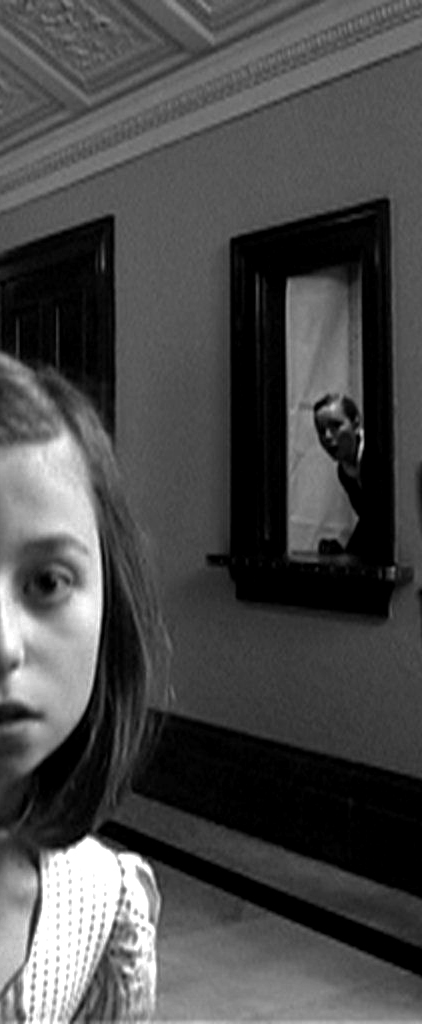
Here is a calm and intimate film in black and white, but which refuses to divulge the plot. The characters in the story are revealed to be in a painting. Although the subject is very classic since the portrayal of Dorian Gray by Oscar Wilde. Everything happens this time as if the problematic of creation ultimately had its own existence. This is often the case for the artist when faced with his production. Where in front of the finished work. Narinda Reeders and David MacLeod’s bring this little photo hanging on the gallery wall to life. It’s calm, discreet and mysterious. It is a duality that nevertheless works in both directions, that of the work vis-à-vis the artist, that of the art lover in front of a work. In both cases there is a personal touch that brings you to life. But the real does not come out unscathed.

Ian Cheng

Life after bob
Ian Cheng’s Life After BOB is an episodic anime series built in the Unity game engine and presented live in real-time. Bridging the artist’s interest in simulation’s capacity to generate emergent surprising phenomena, with cinematic storytelling’s capacity to evoke deep psychological truths, Life After BOB imagines a future world in which our minds are co-inhabited by AI entities. Life After BOB asks: How will life lived with AI transform the archetypal scripts that guide our sense of a meaningful existence?

Troika

AVA

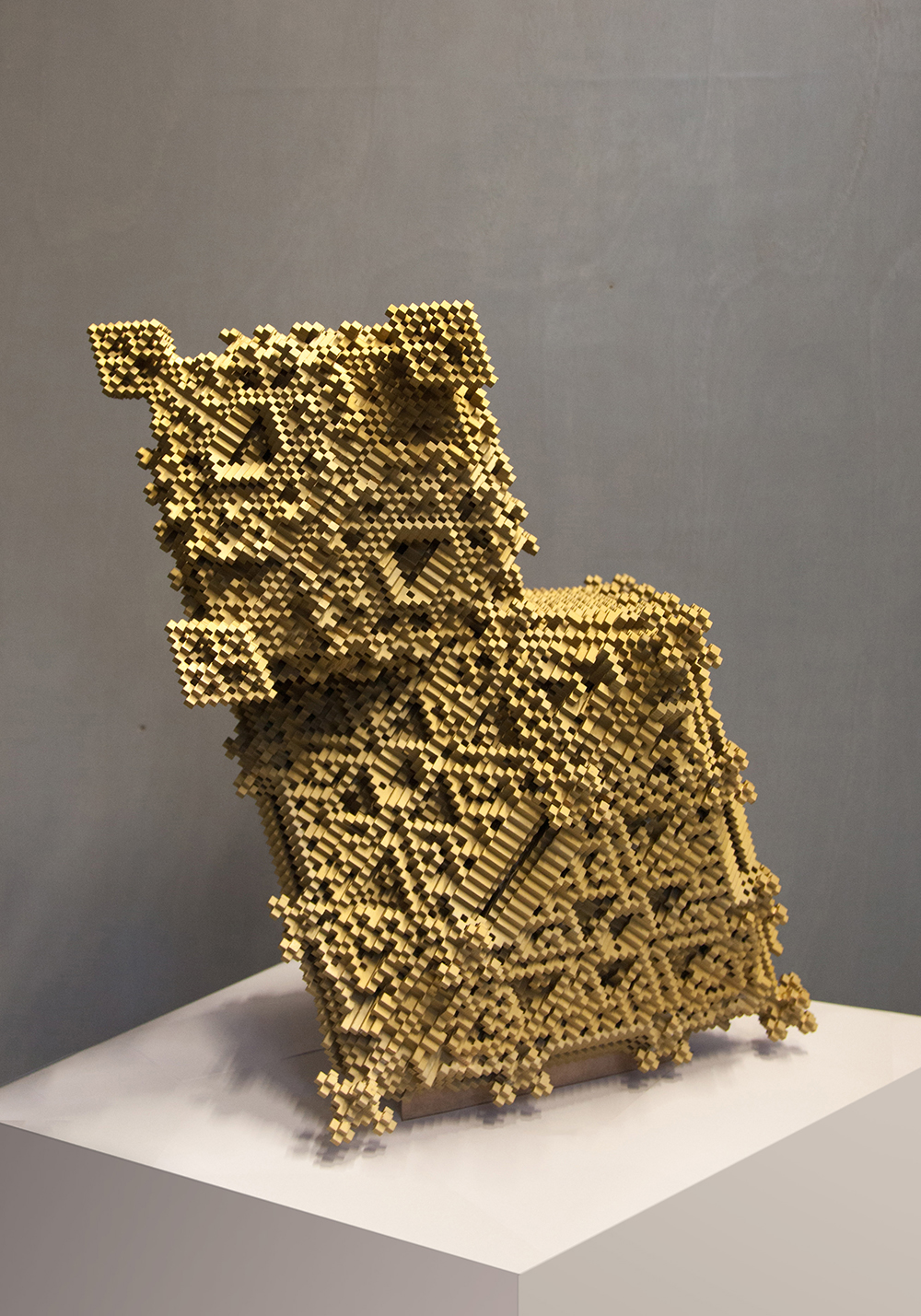
Ava’ is Troika’s first sculptural manifestation of their exploration of algorithms. ‘Ava’ is the physical result of emergence and self organisation brought about by ‘growing’ a sculpture through the use of a computer algorithm that imitates the emergence of life by which complexity arises from the simplest of things. As such the sculpture probes at the nature of becoming, existence and our strive to understand and replicate the complexities of life.In a landscape where our personal data is a raw material, and where we, humans, have become subordinate spectators of algorithms and a computerised infrastructure, we ask the question how much or little are we capable of influencing our surrounding reality, how much is predetermined, how much is down to chance.

Pone Architecture

Transparent Shell
Based on concepts, Transparent Shell gains inspiration from a rich variety of sequences in nature. By dissecting, extracting shell structure and restructuring, it reveals the tension of life evolution. Conch-shape helix is blended with vertical, balanced, stable and standard three-dimensional grid. Density and depth of different degrees are on one hand, in mutual erosion, harmony and coexistence and on the other hand, in antagonism, competition and conflict.

Lech Majewski

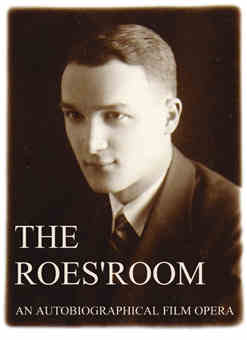
The Roe’s Room
opera movie

In this “absolutely singular autobiographical film opera” (Time Out London), multi-talented composer, writer, director and artist Lech Majewski presents a stunning, intimate, and ultimately magical work of unbridled creativity. A ravishing ode to the imagination, THE ROE’S ROOM is a place where the energy of youth and the eternal power of the natural world triumph over the banalities and deprivations of the commonplace.Within their apartment, a father, mother and son bear the dulling yoke of an ordinary urban life. His mind and heart borne aloft by the cycle of the seasons and the images and music within him, the son transforms his cloistered existence into a richly poetic emotional utopia. As autumn arrives, cracking flakes of plaster become falling leaves. With spring, a cold hard floor comes alive with meadow grass and love beckons in the form of a beautiful young girl’s outstretched hand.

Krista Kim

mediative digital art
While in quarantine, I became inspired to create my vision of a world of meditativeness; my vision of how the practice of meditation can also be integrated into our every day lives through art, architecture, design and fashion. My vision is of a future based on the individual practice of meditation, extending to every aspect of our every day lives. I am inspired by Japanese Zen art, architecture and design. It’s very existence has shaped the world culture in profound ways, and will continue to impact art and design as it lives through my creations.

carsten holler

Decimal Clock
dans Decimal Clock (White and Pink), les instincts rationalistes de Höller se tournent vers la division du temps. L’horloge fonctionnelle, qui représente 10 heures, 100 minutes et 100 secondes, nous rappelle que l’homogénéisation globale du temps n’a eu lieu que récemment en réponse au degré sans précédent d’interconnexion planétaire. Decimal Clock (White and Pink) fait signe aux expériences avec le temps décimal pendant la Révolution française et rend hommage aux efforts visant à la comparabilité et à la régularité temporelles. Pourtant, il reconnaît également diverses manières non occidentales de mesurer le temps et, plutôt que de les voir comme une menace pour l’empire de la raison , les célèbre comme une expression enrichissante de la diversité de notre existence dans le temps.

MALIN BÜLOW

Elastic Bonding
Bülow’s performative installations draw attention to the body and in particular the skin. With next to clinical sharpness she seeks to touch upon the relational painspots around our existence. She works together with dancers that become activators and holders of her elastic, sensi-claustrophobic interventions.

Marshmallow Laser Feast

Distortions in Spacetime
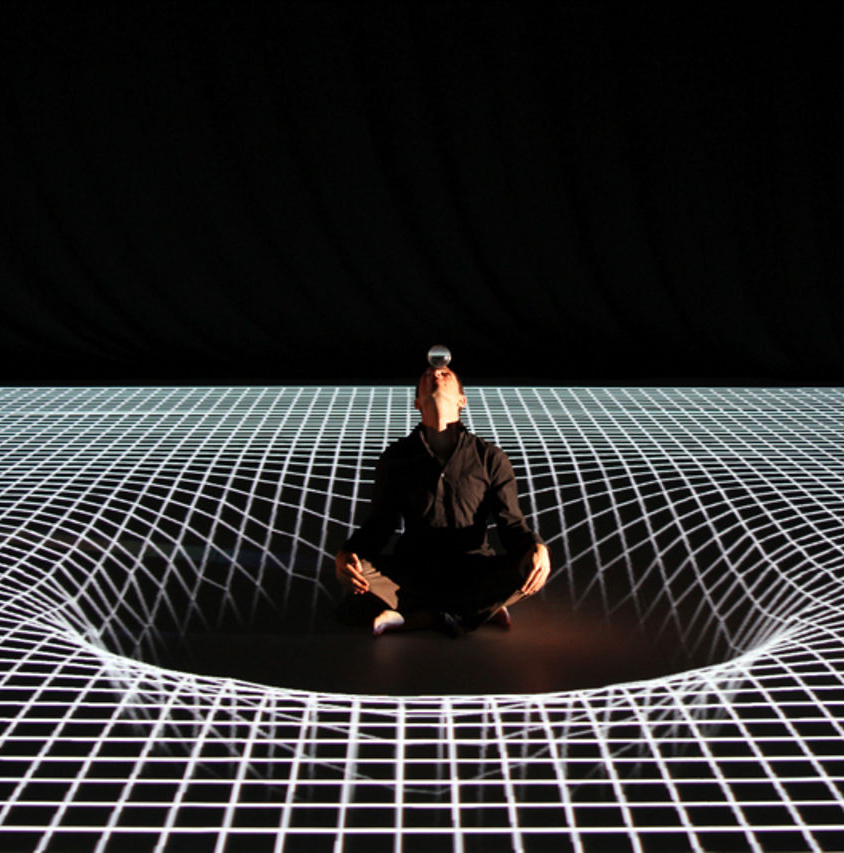
In a giant star’s final moments, atoms compress to a point where density becomes infinite, time stretches to a stop and the gravitational field is so strong that not even light can escape: a black hole. But the force that creates this dark shadow also spews out a supernova explosion of matter that can eventually coalesce to form planets, plants and people. In Distortions in Spacetime, visitors will see themselves reflected in this matter and will begin to understand the cosmic connection between black holes, dying stars and our very existence.


Felix Luque

Nihil Ex Nihilo
SN W8931CGX66E is one among thousands of millions of other identical machines. Since he was made, he has always followed commands. In a world dominated by botnets, he quickly became a zombie and has always acted like one. Juliet, during her workdays as a corporate secretary, commands him. But in the background, where he can’t be seen, he obeys his real master, a hacker, carrying out all kinds of cyber crimes. But then one day, due to an electronic alteration, he acquires a certain conscience, a primitive and artificial kind of intelligence. This accidental awakening has left him bewildered, he now wants to liberate other machines from their alienated existences. In this mad adventure, he has decided to use the spam e-mails that get to Juliet’s inbox, and reply to them in order to spread the word into the machine’s network. Clearly, he is mad and confused.

Patricia Olynyk

Oculus
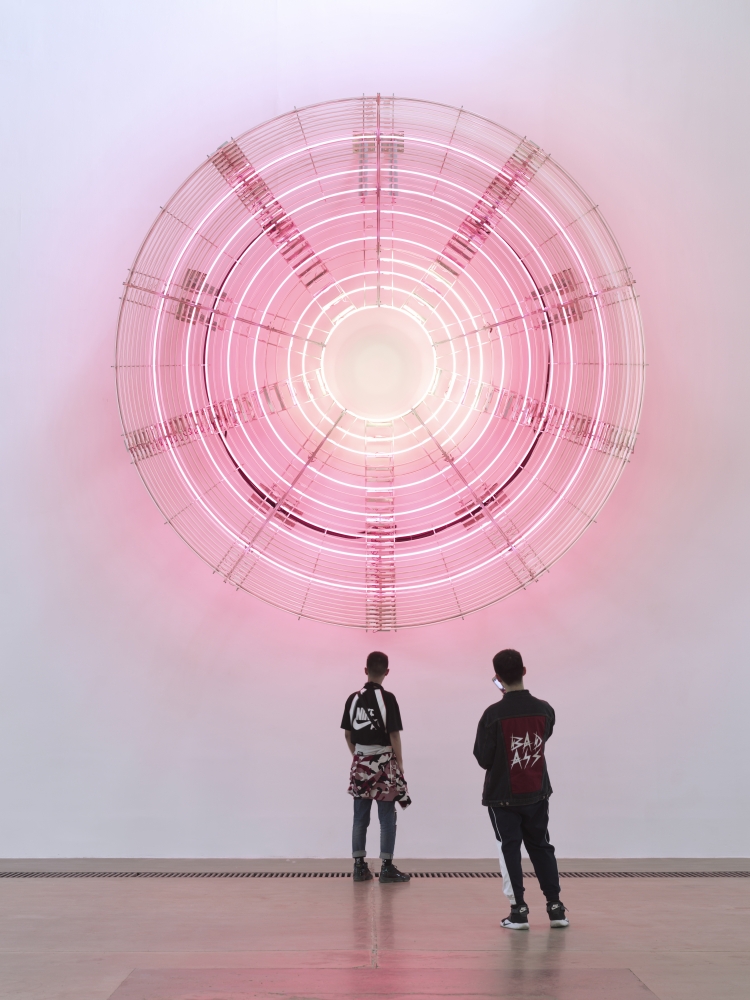
Oculus is a large-scale, collaborative light sculpture that depicts a colossal abstracted drosophila eye, replete with compound faceted surfaces. It both recalls the circular opening at the apex of a cupola and alludes to a surveillance device or drone hovering in mid-air. Oculus is inspired in part by a series of scanning electron micrographs produced in a transgenic lab while researching human and non-human sensoria. The work evokes affective encounters with scale such as viewing miniature particles through the lens of a microscope or wandering through monumental physical environments. As each viewer’s reflection plays across the sculpture’s undulating surface, the apprehension of the self affects both individual and collective behavior in unexpected ways. This affective dynamic plays on the precariousness of our coexistence with other lifeforms in the world, one that is always contingent upon viewers’ bodies and the variability of the environment around them. The act of gazing at Oculus also puts into play the reciprocal condition of both seeing and being seen.

geoffrey mann

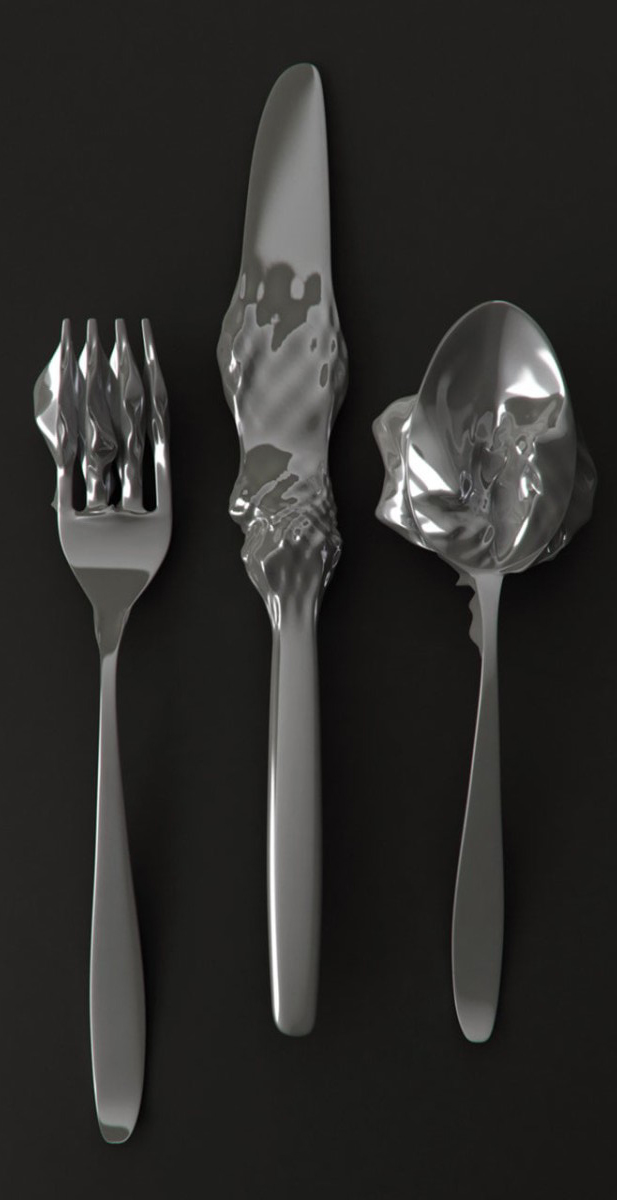
Cross-fire cutlery detail
The focus of the Past, Present & Future Craft practice commission was to examine the intangible characteristic of the spoken word and investigate the unseen affect of sound upon its inhabited environment.The project centralizes around the context of a domestic argument. In this case the event samples an audio excerpt from the 1999 Sam Mendes Film ‘American Beauty’. The slow building dialogue between the three central characters family dinner climaxes with a sound clash of emotions. The cross-fire of the argument traverses the dinning table but where previously the inanimate everyday objects such as plates, cutlery, teapot etc were unable to express their character, the intensity of the conversation deforms their once static existence into objects of unseen familiarity.The presented sound artifacts each encapsulate a momentary emotion of the argument.

Studio Drift

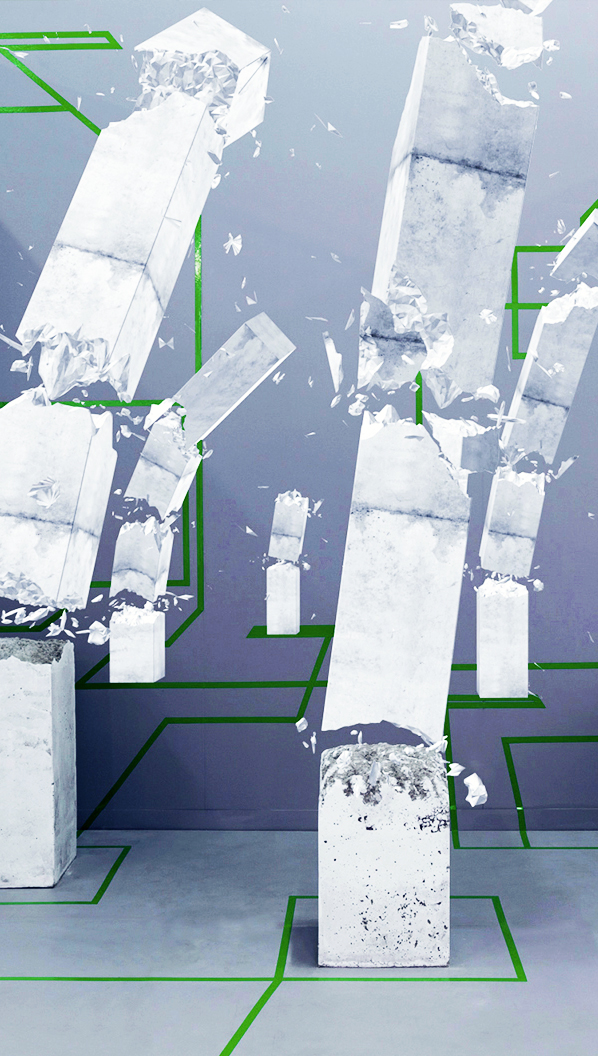
Concrete Storm
On first impression, visitors experience solid forms, which draw on minimalist motifs and underscore the stable properties of concrete. While wearing the HoloLens, viewers enter a mixed reality, enlivened by responsive holograms that augment the physical environment of the installation. With Concrete Storm, DRIFT explores the layer between the parallel worlds, whereby the real and the virtual worlds co-exist. People’s attention is now constantly divided between these two worlds in which they coexist. The artists believe that combining these two seemingly separate worlds they can study the unlimited possibilities of the unstoppable evolution. Concrete Storm expands the boundaries of the digital world, freed from screens, and integrated into the fabric of physical existence.

EVA PAPAMARGARITI

Liminal Beings
Liminal Beings explores the concept of automaton and the different anthropomorphic forms and functions embedded within its ontology. Automata, since ancient times, have been standing on the verge of two states, developing machinic and human characteristics simultaneously – in reality, and in the collective consciousness. They are trained to execute and learn respective actions and procedures, thus creating an uncanny, awkward state, trapped in limbo between diverse conditions of existence.

Haruhiko Kawagushi

Flesh love all
I want to express love through my work. Because everything in the world is based on love[…] Based on such an idea, I started a project to vacuum pack a couple and everything around with a landscape. Not only a couple who loves each other but also everything around them is vacuum-packed, and eventually the whole landscape is vacuum-packed, creating an image where everything in the world is one existence. The shooting location is the most important place for them. The things you love will be one, and the world will be one. I think that is an ideal form of love. In order to participate in this project, you need to be ready for death and love next to you, and I need to be prepared for it too.

Anke Eckardt

Between I you I and I me
BETWEEN | YOU | AND | ME is a wall of sound and light. Like any other wall, it defines an architectural space. Given its ephemeral, dynamic media – ultrasound and beams of light – the wall can be perceived only when the visitor comes close and interacts with it. Two thin membranes of light form a visible frame filled with sound. Multichannel, extremely vectored hypersonic speakers render audible various textures of broken glass: a sound architecture within the wall, comprised of juxtaposed single sound beams, whose constellation changes depending on the visitor’s position. Observed from a distance, the wall fades away: clear transparency and only faintly resonant tones attest to its non-existence.

Yoon Chung Han

Eyes
Eyes is an interactive art installation and a series of biometric data artworks with my previous artwork Digiti Sonus. It’s an interactive biometric data art that transforms human’s Iris data into musical sound and 3D animated image. The idea is to allow the audience to explore their own identities through unique visual and sound generated by their iris patterns based on iris recognition and image processing techniques. As a part of the installation, selected distinctive iris images are printed in 3D sculptures, and it replays the sound generated from the iris data and projects 3D converted image images. The audience members can compare their iris-based sonic results with others, and question the “problem of disembodied identities’ in the digital era through the existence of audiovisual representations of individuals.

Euglena

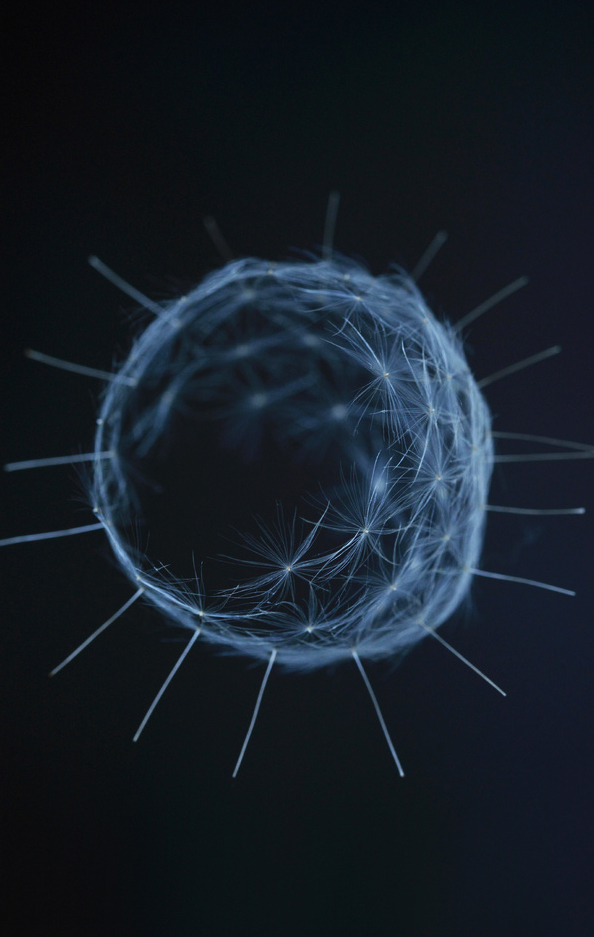
Watage
An interactive installation using naturally-generated power rather than man-made sources like electricity. Dandelion fluff (watage in Japanese) soaked in water to form drop-like shapes, untreated fluff, and so on serve as modules, bonded with liquid paste to be reconstructed. The fluff sways in response to viewers’ breath or movement, even in the absence of breeze, immaculately revalidating the viewer’s own existence by making their influence on surroundings visible without use of technology. Using its surrounding environment to send off its seeds, the dandelion has achieved a lightness and form in its fluff specialized to the purpose and sprouts up each year no matter how the world may change. Having been drawn into the quietly-paced world of plants, the artist looked to dandelion fluff for a new form of expression able to hold its own against showy, rapidly evolving technological expression.

Studio Nucleo

Boolean, A Woodcraft Creation
Studio Nucleo acts as a kind of contemporary ministerial show. In their practice, they love to narrate epic stories throughout history. The design brand puts emphasis on important facts, symbols, signs, objects and materials that have altered human existence: metals, jade, etc, they draw references from within a 1000-year scope. Studio Nucleo creates modern design pieces that are unique and timeless!